[SANTE, Gerrit van].Biblio.com
9.361 resultados
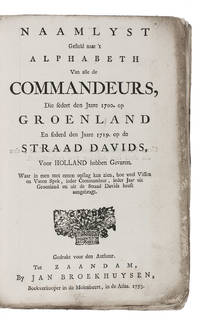
1753ref. 18827Zaandam 1753. 8vo. for the author by Jan Broekhuysen Contemporary decorated paper wrappers preserved in half cloth chemise and matching slipcase. 28 96 pp. Extremely rare first edition of a list of Dutch data concerning the whaling trade in and around Greenland compiled by Gerrit van Sante 1728-1779. The book was designed with blank spance to add new data in the years following 1753. The present copy has been updated probably by the first owner till the year 1761. Besides the names of the commanders for every Dutch voyage to Greenland and the Davis Strait and the names of the directors for whom they sailed it also includes an annual record of the number of whales caught tonnes of blubber and barrels of whale oil both for each commander individually and for the industry as a whole. "Van Sante understood completely the enormous economic importance of whaling for the Netherlands and mentions the results of every voyage of every ship" Catalogue library of G.J. Honig. "Greenland" is broadly interpreted to include the waters around Spitsbergen and Jan Mayen Island and the Davis Strait fleets fishing between Greenland and America are not separately recorded until 1719. With manuscript owner's inscription the warrant signature of the author on the back of the title-page and manuscript additions throughout. Otherwise in very good condition and wholly untrimmed.l Bookauction catalogue The library of G.J. Honig Utrecht 1969 item 375 this copy; JBC III p. 1766; Sabin 76854; STCN 1 copy; WorldCat 2 other copies. ABE CAT Alaska Canada & Greenland AMERICAS MARITIME HISTORY NATURAL HISTORY / Zoology Canada & Greenland Fishery & Whaling hardcover
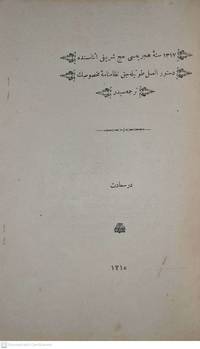
1900ref. 00020819 p. Ottoman Turkish text. Official report of the hajj and health quarantine law in 1889-1900. Consists of 20 articles. The Anglo-ottoman Hajj policy conflict. Rare. Osmaniye press paperback
1774ref. ABC_501841774. Loosely inserted in contemporary wrappers with the manuscript title on the front. The work is kept in a brown cloth folder with a red morocco title label on the front lettered in gold. Folio. Three manuscript reports concerning sickness scurvy hospital conditions and mortality aboard ships of the VOC Dutch East India Company specifically on voyages between the Cape of Good Hope and Batavia and in connection with the Bengal trade.The first document is from 1783 written by the doctor C. J. de Jamars and addressed to the VOC Chamber at Amsterdam this report discusses the uncommon sicknesses and deaths occurring on outward-bound ships between the Cape and Batavia. It refers to earlier resolutions and records that mortality up to the Cape had decreased following improved regulations.Particular emphasis is laid upon scurvy and putrid fevers and upon the inadequacy of medical stores supplied at the Cape. De Jamars argues for a substantial increase in China cinchona bark the principal febrifuge of the period recommending as much as 50 lb for a complement of 300 men. The document reflects the increasing institutional awareness within the VOC of shipboard hygiene provisioning and preventative medicine.The second document is an extract of a report submitted to Mr Willem Arnold Alting 1724-1800 Governor-General of the VOC by several medical officers including B. S. Engelbert. It offers a detailed investigation into the heavy mortality on ships sailing from the Cape to Batavia.The Cape hospital is identified as a principal source of contagion described as dilapidated foul and lacking segregation of patients. Criticism is levelled at the premature discharge of convalescents who were allegedly forced into heavy labour under harsh conditions before full recovery thereby spreading infection aboard ship. Other causes listed include: the embarkation of inexperienced sailors elderly men and boys climatic factors humid oppressive air near the tropics insufficient medicines especially cinchona bark and spirits of vitriol severe restrictions on fresh water for both sick and healthy men.The report makes extensive practical recommendations: improved hospital hygiene provision of clean clothing and bedding prohibition on the sale of sailors garments better victualling including sauerkraut dried fruits barley beans butter and raisins increased water rations and the preparation of restorative drinks in extreme heat.There are vivid observations of men reduced to destitution lacking shoes or bedding when transferred from hospital to ship and of theft and neglect among the lower ranks. The text provides valuable insight into 18th-century naval medicine dietetics and the administrative challenges of long-distance maritime empire.The third document is a memorandum concerning the prevention of scurvy during prolonged stays in Texel prior to departure. Again written by De Famard he observes that idleness lack of exercise and exposure to damp sea air predispose crews to scorbutic disease even before sailing.The wrappers have been reinforced with gauze on the outside. Otherwise in very good condition. hardcover
1983ref. SBBIH-YYALJB4ANPLRStationery Office Books 1983. paperback. Acceptable. Please see the condition note after this for details if this is missing please consider Acceptable to mean poor quality that could include major staining water damage writing missing dustjacket etc etc. Our books are dispatched from a Yorkshire former cotton mill. We list via barcode/ISBN so please note that the images are stock images and may not be the exact copy you receive furthermore the details about edition and year might not be accurate as many publishers reuse the same ISBN for multiple editions and as we simply scan a barcode or enter an ISBN we do not check the validity of the edition data when listing. If you're looking for an exact edition please don't order at least not without checking with us first although we don't always have time to check. We aim to dispatch prompty the service used will depend on order value and book size. We can ship to most countries see our shipping policies. Payment is via Abe only. Stationery Office Books paperback
2008Hardcover Like New. Ships directly from publishers being a new release book . Pls. allow a minimum of 25 business days delivery time.
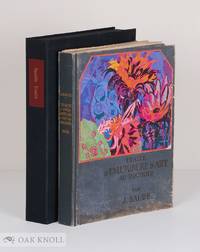
1925ref. 134580One of 60 Copies Signed by the Author with additional material One of 500 numbered copies of which this is one of 60 copies signed by Saudé. Also included are the three supplements and subscribers 'prospectus' sheet as well as proofs on heavier blue paper of the front and rear cover illustrations. Additional loosely inserted are four proofs of the pochoir decorated pastedowns of the chemise. Rubbing along the edges spine and hinges of the chemise. All-in-all a spectacular copy of the deluxe edition with additional material loosely inserted. The plates include work by Lepape Rodin Albert Besnard Andre-Morisset and others. The text on the technique of pochoir printing is by Antoine Bourdelle Lucien Descanves and Sem. "Jean Saudé took over the Ibis studios in Paris and set up the Editions de l'Ibis as a publishing art. Saudé specialized in fine illustrated books and collector's pieces. Above all he is remembered for his Traité d'Enluminure an illustrated manual and historical treatise on the art of pochoir. This was in fact the only published work of any lenght on the subject. Printed in an edition limited to five hundred copies and lavishly illustrated the Traité is now a rare and valuable work" Elizabeth Harris "Pochoir" Smithsonian 1977 p.3. Twenty-five pochoir plates in thirty-five states plus illustrations some color in the text by Benedictus Brunetta & Chapuis. Unsewn as issued in folder with pochoir by Benedictus pochoir endpapers by Chapuis. Scarce with the three supplements and prospectus. Paris France: Editions de l'Ibis 1925. illustrated chamis cover custom cloth clamshell box with cloth label with the author and title in gilt loose signatures as issued. 4to. illustrated chamis cover custom cloth clamshell box with cloth label with the author and title in gilt loose signatures as issued. xxv 75 pages 20 plates. Editions de l'Ibis
1925ref. 134580One of 60 Copies Signed by the Author with additional material One of 500 numbered copies of which this is one of 60 copies signed by Saudé. Also included are the three supplements and subscribers 'prospectus' sheet as well as proofs on heavier blue paper of the front and rear cover illustrations. Additional loosely inserted are four proofs of the pochoir decorated pastedowns of the chemise. Rubbing along the edges spine and hinges of the chemise. All-in-all a spectacular copy of the deluxe edition with additional material loosely inserted. The plates include work by Lepape Rodin Albert Besnard Andre-Morisset and others. The text on the technique of pochoir printing is by Antoine Bourdelle Lucien Descanves and Sem. "Jean Saudé took over the Ibis studios in Paris and set up the Editions de l'Ibis as a publishing art. Saudé specialized in fine illustrated books and collector's pieces. Above all he is remembered for his Traité d'Enluminure an illustrated manual and historical treatise on the art of pochoir. This was in fact the only published work of any lenght on the subject. Printed in an edition limited to five hundred copies and lavishly illustrated the Traité is now a rare and valuable work" Elizabeth Harris "Pochoir" Smithsonian 1977 p.3. Twenty-five pochoir plates in thirty-five states plus illustrations some color in the text by Benedictus Brunetta & Chapuis. Unsewn as issued in folder with pochoir by Benedictus pochoir endpapers by Chapuis. Scarce with the three supplements and prospectus. Paris France: Editions de l'Ibis 1925. illustrated chamis cover custom cloth clamshell box with cloth label with the author and title in gilt loose signatures as issued. 4to. illustrated chamis cover custom cloth clamshell box with cloth label with the author and title in gilt loose signatures as issued. xxv 75 pages 20 plates. Editions de l'Ibis books
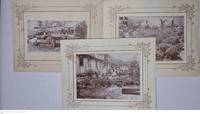
1910ref. 000180Each 16.5 x 14 11 x 8 cm. Contains 2 of which published in the book listed in our inventory; health reform and organizations in Hejaz during the Hajj season 1330 AH. By Dr. Kasim Izzeddin. The other 3 photos are not published in this book.
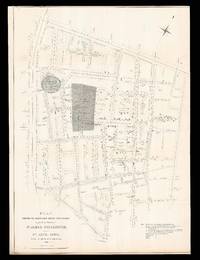
1855ref. 16264London: HMSO 1855. 810 by 580mm. 32 by 22.75 inches. Folding lithograph plan. Rare epidemiological plan of Soho that accompanied the General Board of Health's exhaustive report into the 1854 Broad Street cholera outbreak. Cholera is a contagious disease caused by the bacterium vibrio cholerae. The bacteria lives in warm salty stagnant waters and is contracted when an individual ingests water or food contaminated with the bacteria. In the most severe strains the bacteria multiplies dramatically within the individual's gut causing the intestine to release increasing amounts of water leading to severe diarrhoea vomiting and rapid loss of the fluids and can if untreated lead to death within 24 hours. The majority of epidemics are caused when the faecal matter of an infected individual contaminates the water supply. It has been estimated that since the beginning of the nineteenth century cholera has been responsible for some 50 million deaths and although relatively simple rehydration treatments are now readily available according to the World Health Organisation some 120000 people a year still die from the disease. The Broad Street outbreak The London epidemic of 1853-54 was part of the larger 1846-1860 cholera pandemic - the third such pandemic to occur since 1817 - and the second time that the disease had spread to British shores. The Broad Street outbreak which was to be traced by Dr John Snow to a contaminated water pump outside number 40 Broad Street was a particularly virulent strain and would result in the deaths of 500 people over a period of just ten days; by the end of the outbreak a total of 619 people would have succumbed to cholera leading the Observer newspaper to note that "such mortality in so short a time is almost unparalleled in this country". The Broad Street outbreak led to the publication of two reports and a monograph: The General Board of Health BoH The Report on the Cholera Epidemic of 1854 1855; The Cholera Inquiry Committee 1855 set up by the Parish of St James's; and Doctor John Snow On the Mode and Communication of Cholera 2nd edition 1855. Although Snow's work is now seen as one of the foundation stones of epidemiology its argument - that cholera was a waterborne disease - was not widely held by the Victorian medical establishment with prominent people such as Edwin Chadwick head of the first General Board of Health expounding the view that cholera was an airborne disease brought about by foul odours caused by unsanitary conditions. Although Snow was to prove that the airborne hypothesis was erroneous the 'miasmatic' theory with its instance that "all smell is disease" would be the catalyst for many of the great municipal sanitary improvements - such as Bazalgette's great sewer - carried out during the Victorian era. Formation of the General Board of Health In 1848 Parliament passed the Public Health Act which instituted the Board of Health for a period of five years with powers to sanction expenditure for sanitary improvements requested by local government and in the event of an epidemic to provide guidance to the government's response. The board was headed by and was the brainchild of Edwin Chadwick whose 1842 General report on the Sanitary condition of the Labouring Population of Great Britain has been called the "fundamental document on modern public health" Rosen. "The creation of the Board of Health was a high point of the great Victorian enterprise of sanitary reform whose central idea was that environmental circumstances particularly pollution of the air and water defective sanitation dampness filth and overcrowding were causes of disease particularly epidemic disease and these diseases often killed the wage earners left poor working families impoverished pushed widows and orphans into workhouses and undermined the moral fibre of the working classes" Paneth. Although the Board was successful in enacting a great many sanitary improvements over the next five years Chadwick's brusque and arrogant manner led to the board's charter not being renewed by Parliament and on 31st July 1854 the members of the board were dismissed. Unfortunately for the government the disbanding of the board coincided with a sharp increase in the number of cholera cases in London from 1 a week to 133 a week during the month of July. On Augsut 1st Parliament instituted another but much weaker Board of Health: its charter had to be renewed annually and consisted of only one board member which had to be filled by a sitting Member of Parliament. The MP chosen was Sir Benjamin Hall who by dint of not being Chadwick was deemed eminently qualified for the job; by the time he assumed his role on the 12th August cases of cholera in London had increased to 644 a week. The Board of Health's Cholera Investigation On the 13th August Hall met with his advisory council which he had rapidly put together the council consisted of some of the most eminent medical practitioners of the day including: John Ayrton Paris and James Alderson president and treasurer respectively of the Royal College of Physicians; William Lawrence vice-president of the Royal College of Surgeons; James Clark physician ordinary to the Queen; Benjamin Babington founder and president of the London Epidemiological Society; and William Farr compiler of the Weekly Returns which included among other statistics deaths and cause of death - a resource that greatly aided Snow in his research. The council divided itself into three sub committees: Committee for Scientific Inquiries CSI which would be responsible for the majority of the cholera report; the Committee for Treatments; and the Committee for Foreign Correspondence. The work of the CSI started on the 5th September 1854 when Drs Fraser Hughes and Ludlow began house to house investigations of the Golden Square area around the same time that Snow was also commencing his investigations; and three days before St James's parish would remove the handle from the water pump on Broad Street on the advice of Snow. The report details some 800 houses listing their inhabitants any deaths from cholera and the sanitary state of the premises which was often terrible and included the condition of any cesspools "bad-smells from water-closets" and untrapped drains. The house to house investigations were supplemented by the scientific report. Hall employed three men to carry out investigations for the committee: James Glaisher superintendent of the magnetic and meteorological department at Greenwich and a founder of the British Meteorological Society; Richard Dundas Thomson professor of chemistry at St. Thomas Hospital; and Arthur Hill Hassall author of the first textbook of microscopic anatomy in English 1846 and famed for his revelations through microscopy of the extraordinarily frequent contamination of food and water in London by adulterants and animalcules Paneth. Although Chadwick was no longer in charge a brief look at the committee's make up clearly shows that the sanitarians still dominated. Their belief that the atmosphere was critical in the spread of disease is demonstrated by the fact that almost a third of the scientific report contains the investigations of meteorologist James Glashier. The Map The map that accompanies the report is a great deal larger and includes much more information than the map that Snow produced for his monograph. Based on the map produced by the Metropolitan Commission of Sewers which was also published in the report carried out by the St James's Parish it covers a much greater area and marks not only cholera deaths and pump locations but also: house numbers new and old sewers sewer grates trapped and untrapped side entrances and ventilators. The map has been updated with the number of cholera deaths in the area tracing people who were hospitalised and those that worked or visited the area. To the upper left are two shaded areas. The first a circle which bisects Little Marlborough Street titled: The erroneously supposed position of the ancient plague pit shewn in the map of the Commissioners of Sewers and the second a rectangle titled: Extent of Craven Estate corresponding with site of pest-field three acres two chains which covers much of Marshall Street and houses either side and ends just west of the water pump on Broad Street - the epicentre of the outbreak. Both sites mark supposed burial pits dug during the Great Plague of 1665. Many had argued that the disturbance of the pits when new sewers where dug in the 1840s and 1850s was responsible for the severity of the Golden Square outbreak. However this theory is conclusively dismissed in the report stating that no burial remains were encountered when the sewers were dug. A comparison of the maps that accompany Snow's monogram and the BoH's report clearly illustrates the authors' varying approach to the epidemic. Snow's map is narrowly focused on the centre of the outbreak and marks only the individual deaths marked by black coffin like lines to each house together with the position of the water pumps; Snow clearly wanting the viewer to draw the causal link between the Broad Street pump and its proximity to a large number of cholera deaths. The BoH's map on the other hand shows a much great area and contains much more information sewers drains plague pits etc. Snow's correlation just like the report that this map accompanied is lost under a mass of miasmic information. In hindsight the report just like the present map can be seen as too large and unwieldy the miasma theory at its heart "predicted to much and therefor was difficult to contradict or falsify"Paneth. In contrast Snow's economy of purpose his monograph at just 162 pages is almost a third the length of the BoH report shines through. "The strength of Snow's hypothesis lies in its exclusion of other alternatives; by insisting on the singular mode of transmission i.e. water Snow was able to imagine circumstances that would invalidate his hypothesis" Paneth. For example the exclusion of both the Broad Street Brewery works and the local Poor House from the cholera epidemic led Snow to investigate their water supply both drew them from independent sources; as did the death of a widow from cholera in faraway Hampstead who was so fond of the Broad Street water that she had her nephews send her bottles of it. Snow is keen to challenge his hypothesis where ever possible alas the BoH report contains no such challenges with the authors suffering from a large degree of confirmation bias. Although the BoH report is now largely forgotten and its hypothesis discredited it was favourably received at the time and would be the catalyst for the creation of The Metropolitan Board of Works arguably the body whose policies would make the greatest impact on the health and wellbeing of Londoners in the nineteenth century. Setup by the head of the BoH Joseph Hall in 1855 it would be responsible for among other things the clearing of slums the creation of London's numerous parks and Bazalgette's great sewerage works. Rarity We are unaware of individual examples of the plan appearing on the market in the last fifty years. HMSO, unknown
1618ref. 163261618, Francofurti apud Lucamiennis, in-8 plein vélin jaune, texte en latin. Inventaire des gravures : gravure sur la page de titre de l'Opus chymicum, 1 gravure «Les 12 clefs de Basile Valentin » sur page de titre du Basilica Chymica, 1 gravure (femmes assises sur des lions) sur page de titre du Basilica Philosophica, figures noir et blanc sur les pages 71, 72, 74 et 77. 1/ Basilica medica : Physiologiam, Pathologiam, Therapeuticam, 2/ Basilica chymica : anatomiam auri, argenti & mercurii, Jovis, Martis ac Veneris, tractat de gemmis, examinat mineralia, vegetabilia resoluit, animalia explicat, 3/ Basilica philosophica : horum prior [...] | Etat : Assez bon état général pour un ouvrage de cette époque, vélin noirci, dos désolidarisé, rousseurs, quelques écritures à la plume dans les marges, partie 3 : pages 59 à 88 vermoulues en un point précis (empêchant la lecture de quelques mots sur les pages), pages foncées au début des 2ème et 3ème parties (ne nuisant pas à la lecture), quelques pages réparées. (Ref.: g430)
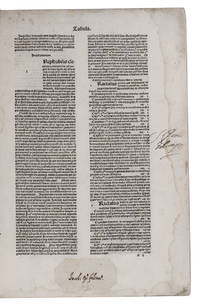
1492ref. I1IBX3XL9PHDColophon: Venice: Bernardino Rizzo 1492. Modern black- and gold-tooled calf. Folio 42 x 28 cm. Set in in 2 columns in 2 sizes of rotunda gothic types with spaces left for numerous 3-line and 4-line and a few larger initials with printed guide letters none filled in. First edition of a work on poisons compiled by Sante Arduino or Ardoini of Pesaro: an elaborate compendium on poisons in eight books which Sante Ardoini of Pesaro compiled in the years 1424-1426 from Greek Arabic and Latin works on medicine and nature and which was printed at Venice in 1492 and at Basel in 1518 and 1562. Although Ardoini quotes previous authors at great length his work is no mere compilation since he does not hesitate to disagree with such medical authorities as Peter of Abano and Gentile da Foligno and refers to his own medical experience or observation of nature at Venice and to what fisherman or collectors of herbs have told him. He also seems to have known Arabic and his occasional practice of giving the names of herbs in several Italian dialects is of some linguistic value Thorndike. Arduino makes extensive use of the works of Avicenna Ibn Sina who held a high place in Western European medical studies ranking together with Hippocrates and Galen as an acknowledged authority" Weisser. Among the numerous other sources he used are Galen Avenzoar Ibn Zuhr Rasis al-Razi Andromachus Albucasis Al-Zahrawi Serapion the younger and Dioscorides.A very good copy with only a few marginal water stains. Binding slightly rubbed along the extremities and with a few scratches on boards.l BMC STC Italian p. 927; GW 2318; ISTC ia00950000; Thorndike III p. 545. Bernardino Rizzo, unknown