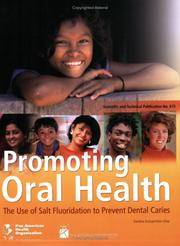
ref. 1904671861.Gpaperback. Good. Access codes and supplements are not guaranteed with used items. May be an ex-library book. paperback
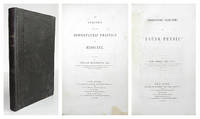
1846ref. 000508New York / Boston / Philadelphia: William Radde and J.T.S. Smith / Otis Clapp / C.L. Rademacher 1846. Hardcover. See Description. First U.S. Edition. Three tracts together - pp. 154 2; pp. 58 2 blank; pp. 66. Bound in period blind-stamped brown publishers cloth rubbed. Neatly re-backed preserving the original spine. The corner tips and outer edges of the boards are professionally repaired; some cloth discoloration is visible on the bottom corner of each board. The interior contains occasional mild scattered foxing. Damp staining is present on the lower corner edges of the pages. A penciled inscription is lightly marked on the front free fly-leaf. Page 54 of Forbess tract contains a marginal corner crease and a lightly penciled note. The corner tip of the rear fly-leaf is chipped. William Henderson 1810-1872 was a distinguished British doctor and fellow of the Royal College of Physicians of Edinburgh. He created a scandal by adopting the practice of homoeopathy. Hendersons book "An Inquiry into the homoeopathic practice of medicine" London 1845 contains a description and defense of homeopathy followed by numerous case studies and treatments. In response Doctor John Forbes published a critique of Hendersons book in the January 1846 edition of the "British and foreign medical review" entitled "Homoeopathy allopathy and young physic." The critique was viewed as overly favorable toward homeopathy and Forbes therefore resigned editorship of that periodical. Hendersons subsequent "Letter to John Forbes" appeared both in the "British journal of homoeopathy" 1846 and separately See DNB. All three tracts are included in the New York 1846 edition of Hendersons "Inquiry" each with a separate title page and pagination. William Radde and J.T.S. Smith / Otis Clapp / C.L. Rademacher hardcover
1998ref. 058684New York/London: Drawing Center/Merrel Holberton 1998. 1st . Paper Back. Near Fine/No Jacket. 4to - over 9¾" - 12" tall. Hugo Victor. 160pp.; SC white&brwn.w/brwn.-pic.cover; slight rub w/cleantight pgs. Catalog of exhibition held April 16-June 13 1998 at The Drawing Center New York. illus. Drawing Center/Merrel Holberton unknown
2000ref. 058822Santa Fe NM: Arena Editions 2000. First Edition . Hardcover. Very Good/Very Good. 4to - over 9¾" - 12" tall. D'Orazio Sante photos. unpaginated; HB lt.blue w/white; some rub w/wear on edges&corners; cleantight pgs. DJ white w/blue spine-b/w photocovers; rubbed w/wear on edges&corners; 1"teartp.ft. " .such entertainment personalities as Catherine Zeta-Jones Angelina Jolie Jennifer Lopez Mariah Carey Cameron Diaz Johnny Depp Sean Penn and Antonio Banderas to name just a few. . This book is a sexy tribute to one of today's most impressive photographers." full-page b/w photos w/some color. isbn 1892041308 Arena Editions hardcover
1984ref. 007724Washington D. C.: National Council for International Health NCIH 1984. Paper Back. Near Fine/No Jacket. 4to - over 9¾" - 12" tall. 145pp.; SC gray w/brwn.; slight rub w/cleantight pgs. This monograph addresses the utilization of alternative health delivery mechanisms within the context of development policy. National Council for International Health (NCIH) unknown
1973ref. 019934New York NY: Simon and Schuster 1973. Book. Very Good condition. Paperback. First thus edition. Quarto 4to. xii 276 pages of text. Paperback binding has minor creasing and handling wear to the front cover and a few pages have creases to the corners. Illustrated. First Thus Edition. Stated on copyright page: First printing. This work is revised and expanded from the 1971 First Edition. The text is clean and unmarked. Simon and Schuster Paperback
ref. 0160358264.Gpaperback. Good. Access codes and supplements are not guaranteed with used items. May be an ex-library book. paperback
ref. 25517240like new. unknown
2010ref. GPB40Complete six volume set in excellent condition Salem Press hardcover
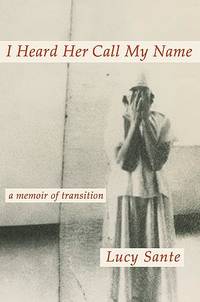
2024ref. 2493New York City: The Penguin Press 2024. First. Fine/Fine. Fine cloth First Edition in a Fine dust-wrapper 227 pages of brilliance from a writer who is a living national treasure. Like all great works it's about transformation. Signed by Lucy Sante on the title page. The Penguin Press unknown
ref. 45195069like new. unknown
ref. 0597834733.Gpaperback. Good. Access codes and supplements are not guaranteed with used items. May be an ex-library book. paperback
1992ref. 1iiiCa0027New York: A Touchstone Book/Published by Simon & Schuster Inc. 1992. Book. Illus. by Barbara Marks Book Design. Very Good. Soft Cover . Updated & Expanded Edition . 4to or 4° Quarto: over 9¾" x 12" tall. 751 pp. Solidly bound copy with minimal external wear crisp pages and clean text. Corners slightly bumped and worn. Small damage on top of spine. Over-sized and/or over weight book; may require additional postage. Please note that large and/or heavy items may incur extra shipping charge for both domestic and/or international shipments. A Touchstone Book/Published by Simon & Schuster, Inc. Paperback
ref. 9241208821.Gpaperback. Good. Access codes and supplements are not guaranteed with used items. May be an ex-library book. paperback
ref. 0597832773.Gpaperback. Good. Access codes and supplements are not guaranteed with used items. May be an ex-library book. paperback
1907ref. 201SMALL-POX: ITS PREVENTION RESTRICTION and SUPPRESSION Published by The Illinois State Board of Health 1907 Condition: near fine; several unopened uncut pages. Dimensions: 6 inches by 9 inches; 56 pages llustrated with photographs. Disease. Epidemics. Medical illnesses and prevention. COLORADO ARTIFACTUAL Illinois State Board of Health paperback
ref. 0872589900.Gpaperback. Good. Access codes and supplements are not guaranteed with used items. May be an ex-library book. paperback
ref. 1583838589.Gpaperback. Good. Access codes and supplements are not guaranteed with used items. May be an ex-library book. paperback
2020ref. 054706London and Philadelphia: Singing Dragon 2020. 1st Edition . Hardcover. Very Good/No Jacket. 4to - over 9¾ - 12" tall. Quarto. 280 pages indexed. Hardcover bound in yellow glossy paper-covered boards. Light wear to the binding. A few pages are dog eared. Otherwise a sound copy with secure inner hinges and clean text. Illustrated with some drawings and a few photos. Singing Dragon hardcover
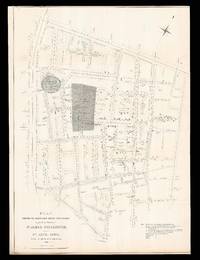
1855ref. 16264London: HMSO 1855. 810 by 580mm. 32 by 22.75 inches. Folding lithograph plan. Rare epidemiological plan of Soho that accompanied the General Board of Health's exhaustive report into the 1854 Broad Street cholera outbreak. Cholera is a contagious disease caused by the bacterium vibrio cholerae. The bacteria lives in warm salty stagnant waters and is contracted when an individual ingests water or food contaminated with the bacteria. In the most severe strains the bacteria multiplies dramatically within the individual's gut causing the intestine to release increasing amounts of water leading to severe diarrhoea vomiting and rapid loss of the fluids and can if untreated lead to death within 24 hours. The majority of epidemics are caused when the faecal matter of an infected individual contaminates the water supply. It has been estimated that since the beginning of the nineteenth century cholera has been responsible for some 50 million deaths and although relatively simple rehydration treatments are now readily available according to the World Health Organisation some 120000 people a year still die from the disease. The Broad Street outbreak The London epidemic of 1853-54 was part of the larger 1846-1860 cholera pandemic - the third such pandemic to occur since 1817 - and the second time that the disease had spread to British shores. The Broad Street outbreak which was to be traced by Dr John Snow to a contaminated water pump outside number 40 Broad Street was a particularly virulent strain and would result in the deaths of 500 people over a period of just ten days; by the end of the outbreak a total of 619 people would have succumbed to cholera leading the Observer newspaper to note that "such mortality in so short a time is almost unparalleled in this country". The Broad Street outbreak led to the publication of two reports and a monograph: The General Board of Health BoH The Report on the Cholera Epidemic of 1854 1855; The Cholera Inquiry Committee 1855 set up by the Parish of St James's; and Doctor John Snow On the Mode and Communication of Cholera 2nd edition 1855. Although Snow's work is now seen as one of the foundation stones of epidemiology its argument - that cholera was a waterborne disease - was not widely held by the Victorian medical establishment with prominent people such as Edwin Chadwick head of the first General Board of Health expounding the view that cholera was an airborne disease brought about by foul odours caused by unsanitary conditions. Although Snow was to prove that the airborne hypothesis was erroneous the 'miasmatic' theory with its instance that "all smell is disease" would be the catalyst for many of the great municipal sanitary improvements - such as Bazalgette's great sewer - carried out during the Victorian era. Formation of the General Board of Health In 1848 Parliament passed the Public Health Act which instituted the Board of Health for a period of five years with powers to sanction expenditure for sanitary improvements requested by local government and in the event of an epidemic to provide guidance to the government's response. The board was headed by and was the brainchild of Edwin Chadwick whose 1842 General report on the Sanitary condition of the Labouring Population of Great Britain has been called the "fundamental document on modern public health" Rosen. "The creation of the Board of Health was a high point of the great Victorian enterprise of sanitary reform whose central idea was that environmental circumstances particularly pollution of the air and water defective sanitation dampness filth and overcrowding were causes of disease particularly epidemic disease and these diseases often killed the wage earners left poor working families impoverished pushed widows and orphans into workhouses and undermined the moral fibre of the working classes" Paneth. Although the Board was successful in enacting a great many sanitary improvements over the next five years Chadwick's brusque and arrogant manner led to the board's charter not being renewed by Parliament and on 31st July 1854 the members of the board were dismissed. Unfortunately for the government the disbanding of the board coincided with a sharp increase in the number of cholera cases in London from 1 a week to 133 a week during the month of July. On Augsut 1st Parliament instituted another but much weaker Board of Health: its charter had to be renewed annually and consisted of only one board member which had to be filled by a sitting Member of Parliament. The MP chosen was Sir Benjamin Hall who by dint of not being Chadwick was deemed eminently qualified for the job; by the time he assumed his role on the 12th August cases of cholera in London had increased to 644 a week. The Board of Health's Cholera Investigation On the 13th August Hall met with his advisory council which he had rapidly put together the council consisted of some of the most eminent medical practitioners of the day including: John Ayrton Paris and James Alderson president and treasurer respectively of the Royal College of Physicians; William Lawrence vice-president of the Royal College of Surgeons; James Clark physician ordinary to the Queen; Benjamin Babington founder and president of the London Epidemiological Society; and William Farr compiler of the Weekly Returns which included among other statistics deaths and cause of death - a resource that greatly aided Snow in his research. The council divided itself into three sub committees: Committee for Scientific Inquiries CSI which would be responsible for the majority of the cholera report; the Committee for Treatments; and the Committee for Foreign Correspondence. The work of the CSI started on the 5th September 1854 when Drs Fraser Hughes and Ludlow began house to house investigations of the Golden Square area around the same time that Snow was also commencing his investigations; and three days before St James's parish would remove the handle from the water pump on Broad Street on the advice of Snow. The report details some 800 houses listing their inhabitants any deaths from cholera and the sanitary state of the premises which was often terrible and included the condition of any cesspools "bad-smells from water-closets" and untrapped drains. The house to house investigations were supplemented by the scientific report. Hall employed three men to carry out investigations for the committee: James Glaisher superintendent of the magnetic and meteorological department at Greenwich and a founder of the British Meteorological Society; Richard Dundas Thomson professor of chemistry at St. Thomas Hospital; and Arthur Hill Hassall author of the first textbook of microscopic anatomy in English 1846 and famed for his revelations through microscopy of the extraordinarily frequent contamination of food and water in London by adulterants and animalcules Paneth. Although Chadwick was no longer in charge a brief look at the committee's make up clearly shows that the sanitarians still dominated. Their belief that the atmosphere was critical in the spread of disease is demonstrated by the fact that almost a third of the scientific report contains the investigations of meteorologist James Glashier. The Map The map that accompanies the report is a great deal larger and includes much more information than the map that Snow produced for his monograph. Based on the map produced by the Metropolitan Commission of Sewers which was also published in the report carried out by the St James's Parish it covers a much greater area and marks not only cholera deaths and pump locations but also: house numbers new and old sewers sewer grates trapped and untrapped side entrances and ventilators. The map has been updated with the number of cholera deaths in the area tracing people who were hospitalised and those that worked or visited the area. To the upper left are two shaded areas. The first a circle which bisects Little Marlborough Street titled: The erroneously supposed position of the ancient plague pit shewn in the map of the Commissioners of Sewers and the second a rectangle titled: Extent of Craven Estate corresponding with site of pest-field three acres two chains which covers much of Marshall Street and houses either side and ends just west of the water pump on Broad Street - the epicentre of the outbreak. Both sites mark supposed burial pits dug during the Great Plague of 1665. Many had argued that the disturbance of the pits when new sewers where dug in the 1840s and 1850s was responsible for the severity of the Golden Square outbreak. However this theory is conclusively dismissed in the report stating that no burial remains were encountered when the sewers were dug. A comparison of the maps that accompany Snow's monogram and the BoH's report clearly illustrates the authors' varying approach to the epidemic. Snow's map is narrowly focused on the centre of the outbreak and marks only the individual deaths marked by black coffin like lines to each house together with the position of the water pumps; Snow clearly wanting the viewer to draw the causal link between the Broad Street pump and its proximity to a large number of cholera deaths. The BoH's map on the other hand shows a much great area and contains much more information sewers drains plague pits etc. Snow's correlation just like the report that this map accompanied is lost under a mass of miasmic information. In hindsight the report just like the present map can be seen as too large and unwieldy the miasma theory at its heart "predicted to much and therefor was difficult to contradict or falsify"Paneth. In contrast Snow's economy of purpose his monograph at just 162 pages is almost a third the length of the BoH report shines through. "The strength of Snow's hypothesis lies in its exclusion of other alternatives; by insisting on the singular mode of transmission i.e. water Snow was able to imagine circumstances that would invalidate his hypothesis" Paneth. For example the exclusion of both the Broad Street Brewery works and the local Poor House from the cholera epidemic led Snow to investigate their water supply both drew them from independent sources; as did the death of a widow from cholera in faraway Hampstead who was so fond of the Broad Street water that she had her nephews send her bottles of it. Snow is keen to challenge his hypothesis where ever possible alas the BoH report contains no such challenges with the authors suffering from a large degree of confirmation bias. Although the BoH report is now largely forgotten and its hypothesis discredited it was favourably received at the time and would be the catalyst for the creation of The Metropolitan Board of Works arguably the body whose policies would make the greatest impact on the health and wellbeing of Londoners in the nineteenth century. Setup by the head of the BoH Joseph Hall in 1855 it would be responsible for among other things the clearing of slums the creation of London's numerous parks and Bazalgette's great sewerage works. Rarity We are unaware of individual examples of the plan appearing on the market in the last fifty years. HMSO, unknown
ref. 0597831408.Gpaperback. Good. Access codes and supplements are not guaranteed with used items. May be an ex-library book. paperback
ref. 9275116156.Gpaperback. Good. Access codes and supplements are not guaranteed with used items. May be an ex-library book. paperback
2000ref. b30172Arena Editions 2000-08-15. hardcover. Very Good. 9x0x11. Hardcover with dust jacket. Book is in very nice condition text is unmarked and pages are tight. Arena Editions hardcover
1999ref. SL-9241545178World Health Organization 1999-12-31. Paperback. New. In shrink wrap. Looks like an interesting title! World Health Organization paperback
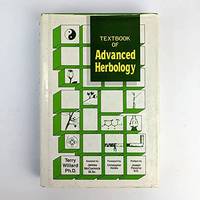
1992ref. 067635Wild Rose College of Natural Healing 1992. Book. Good. Hardcover. 8vo - over 7¾" - 9¾" tall. Minor shelf wear to book and dust jacket. About 20 pages have some HIGHLIGHTING. Otherwise a nice solid book. Index. viii 436 pp. Wild Rose College of Natural Healing Hardcover