Charayron, A and Jean SaudeBiblio.com

12.208 resultados
ref. 63-0468Dourdan France: Thezard ca. 1910. 44 x 32 cm. Color pochoir printed by Charalron and colored by Saude. Good with small tears light creasing. Dourdan, France: Thezard, [ca. 1910]. unknown
ref. 0260873683.Gpaperback. Good. Access codes and supplements are not guaranteed with used items. May be an ex-library book. paperback
ref. 0331480360.Ghardcover. Good. Access codes and supplements are not guaranteed with used items. May be an ex-library book. hardcover
1976ref. 2090202120405654Association for Promoting Ishida Atomic Bomb Lawsuits 1976. Soft Cover. Fine. Number of books: 1 Association for Promoting Ishida Atomic Bomb Lawsuits paperback
1925223pp., 2e éd., bon état
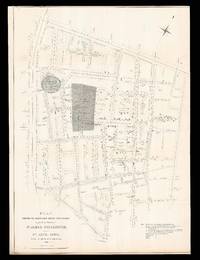
1855ref. 16264London: HMSO 1855. 810 by 580mm. 32 by 22.75 inches. Folding lithograph plan. Rare epidemiological plan of Soho that accompanied the General Board of Health's exhaustive report into the 1854 Broad Street cholera outbreak. Cholera is a contagious disease caused by the bacterium vibrio cholerae. The bacteria lives in warm salty stagnant waters and is contracted when an individual ingests water or food contaminated with the bacteria. In the most severe strains the bacteria multiplies dramatically within the individual's gut causing the intestine to release increasing amounts of water leading to severe diarrhoea vomiting and rapid loss of the fluids and can if untreated lead to death within 24 hours. The majority of epidemics are caused when the faecal matter of an infected individual contaminates the water supply. It has been estimated that since the beginning of the nineteenth century cholera has been responsible for some 50 million deaths and although relatively simple rehydration treatments are now readily available according to the World Health Organisation some 120000 people a year still die from the disease. The Broad Street outbreak The London epidemic of 1853-54 was part of the larger 1846-1860 cholera pandemic - the third such pandemic to occur since 1817 - and the second time that the disease had spread to British shores. The Broad Street outbreak which was to be traced by Dr John Snow to a contaminated water pump outside number 40 Broad Street was a particularly virulent strain and would result in the deaths of 500 people over a period of just ten days; by the end of the outbreak a total of 619 people would have succumbed to cholera leading the Observer newspaper to note that "such mortality in so short a time is almost unparalleled in this country". The Broad Street outbreak led to the publication of two reports and a monograph: The General Board of Health BoH The Report on the Cholera Epidemic of 1854 1855; The Cholera Inquiry Committee 1855 set up by the Parish of St James's; and Doctor John Snow On the Mode and Communication of Cholera 2nd edition 1855. Although Snow's work is now seen as one of the foundation stones of epidemiology its argument - that cholera was a waterborne disease - was not widely held by the Victorian medical establishment with prominent people such as Edwin Chadwick head of the first General Board of Health expounding the view that cholera was an airborne disease brought about by foul odours caused by unsanitary conditions. Although Snow was to prove that the airborne hypothesis was erroneous the 'miasmatic' theory with its instance that "all smell is disease" would be the catalyst for many of the great municipal sanitary improvements - such as Bazalgette's great sewer - carried out during the Victorian era. Formation of the General Board of Health In 1848 Parliament passed the Public Health Act which instituted the Board of Health for a period of five years with powers to sanction expenditure for sanitary improvements requested by local government and in the event of an epidemic to provide guidance to the government's response. The board was headed by and was the brainchild of Edwin Chadwick whose 1842 General report on the Sanitary condition of the Labouring Population of Great Britain has been called the "fundamental document on modern public health" Rosen. "The creation of the Board of Health was a high point of the great Victorian enterprise of sanitary reform whose central idea was that environmental circumstances particularly pollution of the air and water defective sanitation dampness filth and overcrowding were causes of disease particularly epidemic disease and these diseases often killed the wage earners left poor working families impoverished pushed widows and orphans into workhouses and undermined the moral fibre of the working classes" Paneth. Although the Board was successful in enacting a great many sanitary improvements over the next five years Chadwick's brusque and arrogant manner led to the board's charter not being renewed by Parliament and on 31st July 1854 the members of the board were dismissed. Unfortunately for the government the disbanding of the board coincided with a sharp increase in the number of cholera cases in London from 1 a week to 133 a week during the month of July. On Augsut 1st Parliament instituted another but much weaker Board of Health: its charter had to be renewed annually and consisted of only one board member which had to be filled by a sitting Member of Parliament. The MP chosen was Sir Benjamin Hall who by dint of not being Chadwick was deemed eminently qualified for the job; by the time he assumed his role on the 12th August cases of cholera in London had increased to 644 a week. The Board of Health's Cholera Investigation On the 13th August Hall met with his advisory council which he had rapidly put together the council consisted of some of the most eminent medical practitioners of the day including: John Ayrton Paris and James Alderson president and treasurer respectively of the Royal College of Physicians; William Lawrence vice-president of the Royal College of Surgeons; James Clark physician ordinary to the Queen; Benjamin Babington founder and president of the London Epidemiological Society; and William Farr compiler of the Weekly Returns which included among other statistics deaths and cause of death - a resource that greatly aided Snow in his research. The council divided itself into three sub committees: Committee for Scientific Inquiries CSI which would be responsible for the majority of the cholera report; the Committee for Treatments; and the Committee for Foreign Correspondence. The work of the CSI started on the 5th September 1854 when Drs Fraser Hughes and Ludlow began house to house investigations of the Golden Square area around the same time that Snow was also commencing his investigations; and three days before St James's parish would remove the handle from the water pump on Broad Street on the advice of Snow. The report details some 800 houses listing their inhabitants any deaths from cholera and the sanitary state of the premises which was often terrible and included the condition of any cesspools "bad-smells from water-closets" and untrapped drains. The house to house investigations were supplemented by the scientific report. Hall employed three men to carry out investigations for the committee: James Glaisher superintendent of the magnetic and meteorological department at Greenwich and a founder of the British Meteorological Society; Richard Dundas Thomson professor of chemistry at St. Thomas Hospital; and Arthur Hill Hassall author of the first textbook of microscopic anatomy in English 1846 and famed for his revelations through microscopy of the extraordinarily frequent contamination of food and water in London by adulterants and animalcules Paneth. Although Chadwick was no longer in charge a brief look at the committee's make up clearly shows that the sanitarians still dominated. Their belief that the atmosphere was critical in the spread of disease is demonstrated by the fact that almost a third of the scientific report contains the investigations of meteorologist James Glashier. The Map The map that accompanies the report is a great deal larger and includes much more information than the map that Snow produced for his monograph. Based on the map produced by the Metropolitan Commission of Sewers which was also published in the report carried out by the St James's Parish it covers a much greater area and marks not only cholera deaths and pump locations but also: house numbers new and old sewers sewer grates trapped and untrapped side entrances and ventilators. The map has been updated with the number of cholera deaths in the area tracing people who were hospitalised and those that worked or visited the area. To the upper left are two shaded areas. The first a circle which bisects Little Marlborough Street titled: The erroneously supposed position of the ancient plague pit shewn in the map of the Commissioners of Sewers and the second a rectangle titled: Extent of Craven Estate corresponding with site of pest-field three acres two chains which covers much of Marshall Street and houses either side and ends just west of the water pump on Broad Street - the epicentre of the outbreak. Both sites mark supposed burial pits dug during the Great Plague of 1665. Many had argued that the disturbance of the pits when new sewers where dug in the 1840s and 1850s was responsible for the severity of the Golden Square outbreak. However this theory is conclusively dismissed in the report stating that no burial remains were encountered when the sewers were dug. A comparison of the maps that accompany Snow's monogram and the BoH's report clearly illustrates the authors' varying approach to the epidemic. Snow's map is narrowly focused on the centre of the outbreak and marks only the individual deaths marked by black coffin like lines to each house together with the position of the water pumps; Snow clearly wanting the viewer to draw the causal link between the Broad Street pump and its proximity to a large number of cholera deaths. The BoH's map on the other hand shows a much great area and contains much more information sewers drains plague pits etc. Snow's correlation just like the report that this map accompanied is lost under a mass of miasmic information. In hindsight the report just like the present map can be seen as too large and unwieldy the miasma theory at its heart "predicted to much and therefor was difficult to contradict or falsify"Paneth. In contrast Snow's economy of purpose his monograph at just 162 pages is almost a third the length of the BoH report shines through. "The strength of Snow's hypothesis lies in its exclusion of other alternatives; by insisting on the singular mode of transmission i.e. water Snow was able to imagine circumstances that would invalidate his hypothesis" Paneth. For example the exclusion of both the Broad Street Brewery works and the local Poor House from the cholera epidemic led Snow to investigate their water supply both drew them from independent sources; as did the death of a widow from cholera in faraway Hampstead who was so fond of the Broad Street water that she had her nephews send her bottles of it. Snow is keen to challenge his hypothesis where ever possible alas the BoH report contains no such challenges with the authors suffering from a large degree of confirmation bias. Although the BoH report is now largely forgotten and its hypothesis discredited it was favourably received at the time and would be the catalyst for the creation of The Metropolitan Board of Works arguably the body whose policies would make the greatest impact on the health and wellbeing of Londoners in the nineteenth century. Setup by the head of the BoH Joseph Hall in 1855 it would be responsible for among other things the clearing of slums the creation of London's numerous parks and Bazalgette's great sewerage works. Rarity We are unaware of individual examples of the plan appearing on the market in the last fifty years. HMSO, unknown
1983ref. 768084PN. New. 1983. Soft Cover. Date is original print. This is a reprint edition. . PN paperback
1999ref. 11239ABRBA Realizaciones Editoriales, 1999. 27 cm. 158 S. Mit zahlr. farb. Abb. Illustrierter Pappband (Hardcover). 2nda ed. Eine Ecke minimal bestoßen, sonst tadelloses Exemplar. integral - Los Libros de La Botica de la Abuela.
1976ref. 052611Praeger Publishers 1976. Book. Fine. Hardcover. Tight copy in mylar-protected dust jacket. 194pp. Praeger Publishers Hardcover
ref. 049700884X.Gpaperback. Good. Access codes and supplements are not guaranteed with used items. May be an ex-library book. paperback
ref. ria9780470122365_inpHardback. New. New Book; Fast Shipping from UK; Not signed; Not First Edition; Experts in each of the ten most popular play therapy models apply their model to the two sample cases allowing readers to understand the theoretical and practical implications of each model. New edition covers current diagnostic and tr hardcover
ref. Z1-X-011-03377The Stationery Office Books. Used - Good. Ships from UK in 48 hours or less usually same day. Your purchase helps support Sri Lankan Children's Charity 'The Rainbow Centre'. Ex-library so some stamps and wear but in good overall condition. 100% money back guarantee. We are a world class secondhand bookstore based in Hertfordshire United Kingdom and specialize in high quality textbooks across an enormous variety of subjects. We aim to provide a vast range of textbooks rare and collectible books at a great price. Our donations to The Rainbow Centre have helped provide an education and a safe haven to hundreds of children who live in appalling conditions. We provide a 100% money back guarantee and are dedicated to providing our customers with the highest standards of service in the bookselling industry. The Stationery Office Books unknown
ref. 024409sans nom, sans lieu, ni date 0 un album in-8° oblong, 16 pp. Reliure souple de l'époque (fin xixe - début xxe), plein cuir rouge, armes ( ville de Plombières ) et titre doré.e.s au premier plat. (plats légèrement voilés, frottis à la reliure). Album comportant douze planches en noir & blanc (photogravures).
1992ref. 100062876Editions d'Organisation 1992 171 pages 14x21x2cm. 1992. Broché. 4 volume(s). 171 pages.
1988ref. 100058428Fixot 1988 258 pages in8. 1988. Broché. 2 volume(s). 258 pages. Acupuncteur chiropracteur kinésithérapeute rhumatologue guérisseur rebouteux... Qui aller voir comment savoir ? Pour bien choisir sachez qu'on ne soigne pas un dos uniquement avec des manipulations des massages des infiltrations des anti-inflammatoires des aiguilles. Il faut aussi - et c'est le thème de ce livre - traiter l'individu dans son ensemble (le cœur les muscles le ventre...). Lui redonner une nouvelle force physique et mentale une nouvelle énergie lui réapprendre à déplacer son corps dans l'espace. Pour vous aider à guérir par vous-même Pierre Pallardy vous propose une méthode simple et efficace que vous pouvez pratiquer chez vous au bureau à l'usine en voiture dans les transports en commun et dans toutes les circonstances de la vie : activités sportives bricolage jardinage avant et après une naissance etc. Une méthode qui vous permettra enfin de n'avoir Plus jamais mal au dos
1988ref. 100097250Fixot 1988 258 pages in8. 1988. Broché. 258 pages.
ref. 2137539Contentum Ltd. Loose sheet. New. High-quality art print based on an original work from the Rijksmuseum. Created in the 17th century 1645. Professionally printed on premium fine-art paper Photo Rag Bright White premium quality in size A2. The artwork is printed with a white border museum-style presentation. Contentum Ltd. unknown
ref. 2137538Contentum Ltd. Loose sheet. New. High-quality art print based on an original work from the Rijksmuseum. Created in the 17th century 1645. Professionally printed on premium fine-art paper Photo Matt Fibre in size A2. The artwork is printed with a white border museum-style presentation. Contentum Ltd. unknown
ref. 2137540Contentum Ltd. Loose sheet. New. High-quality art print based on an original work from the Rijksmuseum. Created in the 17th century 1645. Professionally printed on premium fine-art paper Museum Etching museum quality in size A2. The artwork is printed with a white border museum-style presentation. Contentum Ltd. unknown
ref. 2137537Contentum Ltd. Loose sheet. New. High-quality art print based on an original work from the Rijksmuseum. Created in the 17th century 1645. Professionally printed on premium fine-art paper Museum Etching museum quality in size A3. The artwork is printed with a white border museum-style presentation. Contentum Ltd. unknown
ref. 9312616Short description: In Russian. Mattson, Sante Emil. Soil colloids. Moscow: Selkhozgiz, 1934: 18 type of trust Polygraphbook. You are welcome to reach out to us for a detailed description of the copies currently available. Delivery of this book may take longer than usual including extended processing and pre-shipping time, no expedited shipping is available. Please advise us if you have a set date or a deadline to receive your order.SKU9312616
ref. 9312616Short description: In Russian. Mattson Sante Emil. Soil colloids. Moscow: Selkhozgiz 1934: 18 type of trust Polygraphbook. Please feel free to contact us for a detailed description of the copies available. SKU9312616 unknown
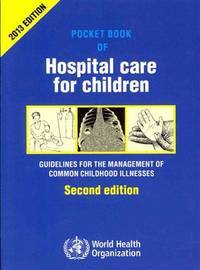
ref. 697060404World Health Organization . Papeback. New. pp. 410 2nd Edition World Health Organization unknown
2005ref. Q-9241546700World Health Organization 2005-03-01. Paperback. New. New. In shrink wrap. Looks like an interesting title! World Health Organization paperback
ref. 44247686-nnew. unknown