299 risultati
rif. P003067Berlin: Deutscher Zweig der Internationalen Frauenliga für Frieden und Freiheit 1929. Octavo 24 × 15.8 cm. Original pictorial wrappers; 74 4 pp. Wrappers worn chipped to corners; front wrapper re-attached; else internally good or better. Scarce proceedings of the first public conference held in Germany against opium and other drugs organized by the International League for Peace and Freedom following a visit of delegates to China in 1927. The conference featured an honorary committee staffed by numerous noted women's rights activists such as Helene Stöcker Lida Gustava Heymann Anita Augspurg and the French feminist Gabrielle Duchêne as well as figures such as Käthe Kollwitz Albert Einstein and the writer Ricarda Huch. Related events were organized in other German cities such as Munich Bremen and Hamburg. With numerous ads for other publications by the German branch of the Women's International League for Peace and Freedom. With a striking woodcut illustration to front wrapper typical for the period signed Brigitte Nagel or Hagel and the caption "Fort mit den Rauschgiften!" Away with the drugs!. We are unable to find any information on the artist. As of April 2020 KVK and OCLC show only one copy in North America. unknown books
1975rif. 70271Washington DC: US Government Printing Office 1975. First edition. 789 pp. Very near fine in printed wrappers. Inked ownership signature of Wormwood Review editor Marvin Malone on the front cover. The first volume of this epic presentation. Illustrated. Washington DC: US Government Printing Office, unknown books
1892rif. 28464Gwalior India 1892-93 1892. Paper browning but generally sound; chips and tears at the edges and folds; in very good condition. All approximately 34.5 x 49.5 printed on the recto only in ten columns. Each column serves a different purpose: serial number; date; name of the trader; number of bags; destination; number of wooden crates; weight; taxes; signature of the recipient; and instructions for the tax collector. Documents permitting and taxing the movement of opium by the Government of Gwalior. The name of the trader on one of the documents has been identified as "Bhakim Chand Pijara." These documents were sold in a single lot at Superior Galleries Los Angeles January 16 2001 Session Two lot 847. The translation was done by an academic in New Delhi India for a librarian at Stanford University on behalf of the previous owner a private collector. Gwalior, India, 1892-93 unknown books
1911rif. SJ13639London:: Society of Chemical Industry 1911. 1911. Series: Journal of the Society of Chemical Industry no. 16 vol. XXX August 31 1911. 4to. xii 995-1036 pp. Figs. Original printed wrappers; spine torn waterstained. Poor. Complete issue of the Journal of the Society of Chemical Industry. Society of Chemical Industry, 1911. unknown books
1870rif. 304527Chicago: Evening Journal Print No. 46 Dearborn Street 1870. First edition possibly a later state. 73 3 pp. 1 vols. 8vo. Original blue morocco title blocked in gilt on upper cover leafy roll border to boards marbled endsheets. Some rubbing. First edition possibly a later state. 73 3 pp. 1 vols. 8vo. Rare Work on Treating Opium Addiction. First edition of this work on opium addiction in the U.S. concerning the discovery of a patent cure of Opium addiction by Samuel B. Collins and his correspondence with Fitz Hugh Ludlow editor of the Easy Chair column in Harper's and an acknowledged opium addict. Ludlow had published several chapters in The Opium Habit with Suggestions as to the Remedy 1868. Collins titles the first section An Answer to "What Shall They Do To Be Saved". The work shows signs of being hastily printed referring to letters dated June 1870 and the Harper's column for August 1870. The last few pages are set in a smaller font but forming part of the last gathering and record a dispute with Henry Read over the marketing of Collins' cure and pledges of testimonials to be published in the Easy Chair that were never honored because of Ludlow's death; the last page bears memorial bands across top and bottom and begins: "A letter conveying the mournful tidings of the death of Fitz Hugh Ludlow was received by Dr. Collins ."; the elegy concludes ". for He has found the Fountain of Eternal Youth Fitz Hugh Ludlow can never grow old." Ludlow died in Switzerland on 12 September 1870. Scarce institutionally and in the trade. Only the copy recorded at the Toner Collection Library of Congress shelfmark RC371.O6 C7 1870a has pagination similar to this copy. It appears to have been regularly reprinted: a sixth edition is noted with date 1871 Library Company of Philadelphia. A copy digitized at the National Library of Medicine http://resource.nlm.nih.gov/66640200R bears the date 1870 on the title page but the pagination is different and the book manifestly printed later blurred type in the imprint and the text on page 69 referring to a letter dated 26 January 1871; the digitized copy from the Library of Congress has a date of 1870 on the title but a preliminary page bears an accession stamp dated 1881; this would appear to be the copy cited by Cordasco 109 pp. Cordasco 70-021 Evening Journal Print, No. 46 Dearborn Street unknown books
1989rif. 51180Beltsville MD: Sea Island Information Group 1989. Pamphlet. 19p. second edition first printing wraps. African American poet. Sea Island Information Group unknown books
1830rif. WRCLIT72359Philadelphia: Published at No. 108 Chestnut Street 1830. 385-390384pp. Octavo. Old calf. Volume index bound in front. Usual foxing and tanning and some occasional light water staining binding rubbed one label chipped but a sound copy with a pencil sketch of a soldier in uniform on the rear endsheet. The first volume of this periodical - consisting of 24 numbers dated 9 Sept. 1829 - 25 Aug. 1830. Published by John Bell. It would appear a total of four volumes were published with eventual participation of D.F. Condie. OCLC/Worldcat locates volumes one through four at the British Library. Apart from that only two other locations appear there NYPL and Pennsylvania Historical and like the present example the entry of record for those locations bears the denotation "4th improved edition." A substantial number of the articles refer to tobacco use others to intoxicants and one to opium use: "A hint to snuff-takers" p. 14. "Tobacco consumption in France and England" p. 27. "Tobacco" p. 36-38. "Mentorian or mnemosynean snuff" p. 62-63. "Snuff-taking" p. 153-155. "Tobacco smoking" p. 219-220. "Opium-eaters and snuff- chewers" p. 297-299. E. Hitchcock on the effect of alcohol and tobacco on the national constitution p. 313. "M'Allister's dissertation on snuffing" p. 329-331. "Confessions of a Drunkard" p.113. etc. Published at No. 108 Chestnut Street unknown books
1762rif. ABC_508791762. Various sizes. Ad 1-3: Contemporary sturdy paper wrappers sewn on 3 vellum supports; ad 4: the 12 documents are held together by a narrow paper wrapper with the text: "Onafgedaane Indiësche zaaken concentreerende de Amphioen Societeyt" and a string. With 12 manuscript documents and a manuscript on paper in 2 different hands. 15 1 blank; 3 ll. Collection of thirteen Dutch manuscripts concerning the Amfioensociëteit Amfioen Society documenting both its establishment in 1745 and its dissolution half a century later. Founded by the Dutch East India Company VOC to maintain its monopoly on the opium trade in the Dutch East Indies the Amfioensociëteit controlled one of the colony's most profitable monopolies until its liquidation in 1794.The earliest manuscript ads 1-3 contains the charter octrooi granted to the society for the period 1745-1755 together with its renewal for 1755-1765. Although the original charter was printed in Batavia in 1745 and survives in a single known copy that edition does not include the renewal. The present manuscript further contains a third text added in a different hand and dated November 1762 concerning the management of the society's outstanding affairs. Written on paper bearing the watermark of the VOC Chamber of Amsterdam it was probably intended for official administrative use.The remaining twelve documents relate to the financial settlement following the dissolution of the society in 1794. Most date from 1793 1794 and 1797 with one document dated 1807 reflecting the prolonged liquidation process. They concern the distribution of assets among shareholders outstanding debts and other administrative matters arising from the winding up of the company. Several documents are signed by Pieter van de Weert dates unknown cashier of the Amfioensociëteit while others mention Jacob Mossel 1704-1761 governor-general of the Dutch East Indies and the society's first director and Gerard Maximiliaan Taets van Amerongen 1727-1788 who was married to Mossel's daughter. Although several documents are headed "Copie" they are contemporary manuscript records rather than later transcripts many containing calculations annotations and other traces of active administrative use. Together they document the final years of the Amfioen Sociëteit and the administration of its dissolution.The wrappers of ads 1-3 are somewhat water stained with worm holes in the back wrapper and final leaf. The leaves are somewhat water stained especially the 3 final leaves an ink stain on leaf 12; the remaining 12 documents are folded several with small tears in the margins without loss of text occasional mild soiling. Otherwise in good condition.l Cf. Landwehr VOC 1449 printed copy of ad 1; STCN 240022416 1 copy; Wit Herman de 2012. Aandeelhouders van de opgeheven Amfioensociëteit in 1801. AUTOGRAPHS DOCUMENTS & MANUSCRIPTS ECONOMY TRADE & NUMISMATICS LOW COUNTRIES Autographs & Letters Economic History & Trade Indonesia / Dutch East Indies Manuscripts & Documents VOC hardcover
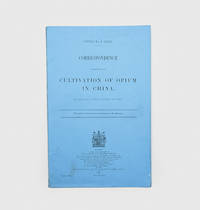
1921rif. 195579London: His Majesty's Stationery Office 1921. First edition the correspondence centring on Sir John Jordan and Sir Beilby Alston Jordan's successor as the British minister to the Republic of China. Jordan in particular had a strong aversion to the opium trade and exerted pressure on the Government of India to curtail exports. The collection begins in June with reports on efforts to limit cultivation in Zhejiang province. During the 1910s political instability set back the regulation and policing of the opium trade leaving Alston only able to report in spring 1921 "that the reports. from the various provinces received since the beginning of this year are uniformly bad. It is of course almost impossible to estimate how far China as a whole has receded from the position in 1917 when the country was officially recognised to have been purged of opium growing" pp. 113-14. Large quarto. Original blue wrappers spine and front cover lettered in black. Traces of old pencil ownership inscription at head of front cover. A few marks to wrappers small split at head of spine a little creasing internally: a very good copy indeed. unknown
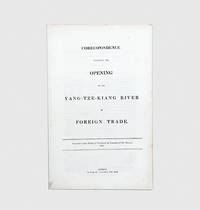
1861rif. 195583London: Printed by Harrison and Sons 1861. First edition. The Treaty of Tianjin and its ratification at the 1860 Convention of Peking gave the British the right to trade along the Yangtse's lower and middle reaches as far as Hankow and opened several ports including Hankow and Zhenjiang to foreign vessels. The documents in this collection cover the first three months of 1861 during which Admiral Sir James Hope and Harry Parkes led a naval expedition up the river to enforce Britain's treaty privileges. Large quarto 322 x 200 mm. Disbound. Leaves foliated in contemporary hand. Old vertical crease spine folds repaired with archival paper: very good. unknown
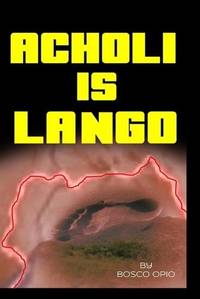
rif. ria9798325053788_inpPaperback. New. New Book; Fast Shipping from UK; Not signed; Not First Edition; For long the origins of Acholi and Lango have been formally documented and taught in schools as unrelated. However as spelt out in this book there are indisputable proofs that the two groups actually have a common origin. An analysis paperback
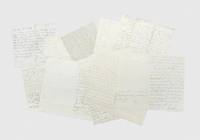
1841rif. 192022September 1840-February 1841. Noble fragments A moving and historically significant record of companionship in confinement Anne Noble being one of the few Western women to see the interior of China before the opening of the treaty ports. These notes sent surreptitiously by two British officers detained in nearby cells are the most important surviving artefacts of her extraordinary five-month imprisonment. An experienced seafarer and traveller Noble née Watson 1814-1877 ventured to China in the late 1830s onboard the Kite a trading ship captained by her husband James Smith Noble. Following the outbreak of the First Opium War the ship was requisitioned as a transport ship but ran aground on 15 September off the Chinese coast near Zhenhai. The survivors - Noble's husband and infant son both drowned - were carried in cages to Ningbo where Noble and the ship's military commander Lieutenant Charles Douglas were incarcerated in separate lice-ridden cells at the residence of the city's ranking mandarin. Douglas was soon joined by Captain Philip Anstruther known to contemporaries as "the life of every party he joined" quoted in D'Arcy-Brown p. 92 who was captured in mid-September while reconnoitring near Dinghai. The captives met only when they were carried in cages to meet Chinese officials and they were not released until 21 February 1841. By bribing jailers and locals with money received from Chinese officials and British forces Noble and Anstruther & Douglas could exchange notes hastily written on whatever paper they had to hand. The 40 here - the only that appear to have survived - convey the camaraderie and close bond shared by the prisoners their hopes and uncertainty concerning their detention and their experiences of isolation. The two cells frequently shared suggestions and snippets of gossip concerning the prospects of their release; Anstruther & Douglas could communicate with British forces by letter and pass on to Noble morale-boosting reassurances "They dare not keep us longer" - Douglas 15 November 1840; "do not give way to doubt and fear" - Anstruther undated. Noble occupied her time mending clothes sent by the men while they advised on how to deal with the corruptible jailers. They sent money and soup; she provided needle and thread in return. During the five months they were assisted by the enterprising Bu Dingbang - known as "the comprador" - who had been arrested for treason while assisting the British fleet near Chusan. Despite being a convict Bu appears to have had regular access to the outside world and to the Westerners including to cook them food and Noble acted as an indispensable conduit of information between Bu and the men. Some of these concerned the matter of their release but the officers were equally concerned with their health and the well-being of the rank-and-file British soldiers and sailors held in the city jail. Anstruther was seemingly often preoccupied with the state of Bu's cooking "a little less garlic and more chilly sic" - undated but likely mid-October 1840. Unfortunately for him the beer wine and cheroots ran out by mid-November. The final firmly dated note in this collection was sent on 18 February 1841. The preceding month British ships sacked the forts at Canton which forced Ningbo's officials to release their hostages on 21 February. Noble and her ordeal became a sensation in China and back home and her account of her confinement was rushed into print in the Chinese Repository "Loss of the ship Kite and Mrs. Noble's narrative of her captivity and sufferings in prison in China in 1840-41; in a letter to a friend". The British community around Canton raised $8000 for her passage back to England and her prison cage was displayed in London. In 1844 she emigrated to the United States. This collection surfaced in the early 21st century as part of a broader group of papers from the Noble family sold at a New Hampshire auction. They were bought from the purchaser a member of the American trade by an American private collector in 2015. The contents of the notes are discussed on pages 108-110 and in Chapter VI of "A White Barbarian Lady" by Liam D'Arcy-Brown who used a rough transcription made when the material was offered for sale in the early 2010s. The notes are accompanied by five letters sent to Noble shortly after her release including one from Douglas as well as 44 letters and documents associated with Noble and her family. Together 40 sheets or bifolia ranging in size up to 210 x 260 mm many on fragile paper. Written in ink or pencil ink annotations in a different hand perhaps Noble's. Full listing available on request. Old folds 5 split into two or more fragments and with small losses slightly affecting sense 1 seemingly a fragment of a much longer note: a well-preserved collection of delicate material. Liam D'Arcy-Brown "A White Barbarian Lady": The Story of Anne Noble a Victorian Woman Imprisoned in China 2016. hardcover
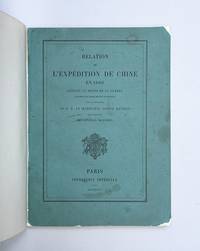
1862rif. 160274Paris: Imprimerie Impériale 1862. With the atlas of eight finely engraved maps First edition with the scarce wrappers retained of this official French account of the Franco-British expedition northwards to Beijing together with a well-preserved first edition of the accompanying atlas volume. The detailed narrative encompasses such pivotal moments as the third battle of the Taku Forts the taking of Tianjin the burning of the Summer Palace and the battles of Zhangjiawan and Tongzhou. The finely engraved atlas includes maps of the Chinese coast the December 1857 capture of Canton the occupation of Tianjin by Anglo-French naval forces in May 1859 and the Western camp at Chefoo. Four other maps all folding show the Franco-British landing at Peh-tang the battles of Zhangjiawan and Baliqiao and the route of the Western advance from the mouth of the Peiho to Beijing. These works were produced at the behest of the Dépôt de la Guerre the country's principal military archive and cartographic institution. Between 1852 and 1867 the Dépôt was run by Antoine Lucien Blondel 1801-1883 a major military cartographer. From 1859 Blondel reported to Jacques Louis César Alexandre Randon 1795-1871 a veteran of Napoleon's European campaigns and Marshal of France from 1856. Two works. Atlas comprising 8 maps 4 folding with occasional hand-colouring all engraved by Erhard Schièble. Relation: quarto 281 x 200 mm. Mid-20th-century green boards Claude Honnelaitre brown spine label lettered in gilt original green wrappers tipped-in top and bottom edge trimmed fore edge untrimmed. Atlas: folio. Original green cloth-backed orange boards front cover lettered in black. Wrappers well-preserved with some staining and a few small losses atlas volume with soiling to boards couple of surface losses on rear cover and wear to extremities text and maps clean atlas with just occasional foxing. Very good copies indeed. Cordier 2nd edition 2496. hardcover
rif. 40673768-nnew. unknown
1849rif. 56871Edo Tokyo: n.p. Kaei 2 1849. Five vols. Tall 8vo. 40; 44; 48; 42; 34 pp. With 1 double-page colour woodblock map 18 double-page woodblocks 7 w/ colour 1 single-page woodblock plate. Uniformly bound in textured embossed pattern limp softcovers manuscript titles punch-sewn at gutter margins wear soiling some worming through fore-edges text in portions thumbing to fore-edges soiling lower 2/3 of front title leaf stating “Forbidden from Sale” torn away still a G- reference set of this noted rarity. First edition of the author’s “second series” recounting further events in the First Opium War fought between Great Britain and China in 1839-1842. The text and illustrations vividly stressed the terrible effects of opium on Qing Dynasty China and the brave Chinese resisting the British military. Buttressed with striking illustrations by Utagawa Sadahide 1807-1879/79 which depict such incidents as Chinese fire-boats approaching a British warship; a captured spy; Chenshi the Monk putting up a valiant fight; a Chinese Woman warrior fighting the British; a Taiwanese fort sinking a British Warship; the fall of Zhenhai; French diplomatic ships arriving on the Yangtze and even an omen appearing in the heavens. In addition there are a number of woodblock prints depicting British cannons mortars and firearms employed during the Opium Wars. The Kaigai Shinwa printed on Mino paper was written in a sensationalistic and simple style with Japanese syllabaries attached to all Chinese characters and intended as a cautionary tale advising Japan and other Asian countries of the pitfalls of foreign invaders and intervention just four years before the appearance of Perry’s squadron in Tokyo Bay. Mineta Fuko 1817-1883 was thrown into prison for having published the work without official consent and later after he was released was deprived of the right to live in Edo Kyoto or Osaka -- the santo kamae tri-urban banishment and many of the volumes were seized and others were censored or removed. See: Timothy Brook & Bob Tadashi Wakabayashi Opium Regimes: China Britain and Japan 1839-1952 2000 pp. 60-65; Masuda Wataru Seigaku tozen to Chukoku jijo: zassho sakki The Eastern Spread of Western Learning and Conditions in China: Notes on Various Books 14. Kaigai Shinwa. . . Tokyo 1979 Translated by Joshua A. Fogel UCSB pp. 27-39. n.p., paperback
rif. 44969679-nnew. unknown
rif. 45215700-nnew. unknown
1909rif. 173663London.: Printed for the HMSO by Darling & Son. February1909. Two Parliamentary Papers: Volume I: title contents 98pp final blank; Volume III. title Index three large folding charts one coloured showing the sales of opium between 1902-1905 Appendices Subject Index 280 pp; both 32.5 x 21.1cm original blue title wrappers slightly creased spines discoloued with wear and slight loss to the head and foot of each volume III with two blue ink library stamps but very good clean examples. Important and scarce primary material relating to the use of opium in the Straits Settlements and Federated Malay States. Volumes I and III were issued in the series of Parliamentary papers of Great Britain as Papers by command. Volume II containing the Minutes of Evidence was not published for sale. Volume I publishes 17 sections which include the effects and prevalence of opium use attempts at prohibition and restrictive measures including the registration of smokers reduction in the number of opium outlets and increasing price. Volume III includes analysis and evidence given by 74 witnesses on a range of issues relating to opium smoking followed by 99 short appendices. Both de-accessioned from the University of Hull Library sold with a copy of a letter of confirmation of de-accession. . Printed for the HMSO by Darling & Son. unknown
rif. ria9781920033668_inpPaperback. New. New Book; Fast Shipping from UK; Not signed; Not First Edition; Hollywood and Africa - recycling the ‘Dark Continent’ myth from 1908–2020 is a study of over a century of stereotypical Hollywood film productions about Africa. It argues that the myth of the Dark Continent continues t paperback
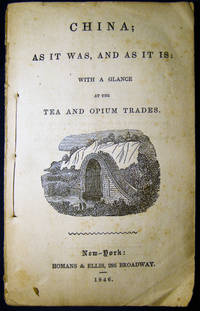
1846rif. 030214New York: Homans & Ellis 1846. 90 pages 2 pages of publishers' announcements at back; title page with a woodcut China moon bridge scene. Contents with an overview of Chinese geography religion history culture trade manners and aspects of culture. This is a later edition of a British printing; those are noted as having 64 pages; this is longer by some 26 pages. Somewhat crudely and solidly side-sewn without covers. Approx. 3 3/4" x 6" size; some dustiness and tip-curling; in good condition. . First Edition. Soft Cover. Good. Homans & Ellis paperback
2026rif. LRB48054825Paris: Editions Recreasoft 2026 Language: English. Approximately 544 pages. Volume 4 of a multi-volume work. English: Print-on-demand reprint. Original edition : 1894. Text in English. This comprehensive report presents the findings of the Royal Commission on Opium established to investigate the opium trade and its social and economic impacts. The volume includes detailed minutes of evidence from witnesses appendices and supplementary materials providing a thorough examination of the subject during the late 19th century. It reflects the perspectives of key figures such as the Maharajah of Darbhanga and Lord Brassey offering valuable insights into historical debates on opium regulation and international trade. Book images are non-contractual. Editions Recreasoft. Softcover. New. Editions Recreasoft paperback
2026rif. LRB48054829Paris: Editions Recreasoft 2026 Language: English. Approximately 688 pages. Volume 2 of a multi-volume work. English: Print-on-demand reprint. Original edition : 1894. Text in English. This volume presents the first report of the Royal Commission on Opium including minutes of evidence and appendices. The commission examined the opium trade its economic and social impacts and related correspondence with the Straits Settlements and China. The report is structured in multiple parts covering evidence sessions appendices and historical analyses with an index of witnesses and a glossary of Indian terms used in the proceedings. Book images are non-contractual. Editions Recreasoft. Softcover. New. Editions Recreasoft paperback
2026rif. LRB48054826Paris: Editions Recreasoft 2026 Language: English. Approximately 598 pages. Volumes 6 to 7 of a multi-volume work bound together in a single book. English: Print-on-demand reprint. Original edition : 1894. Text in English. This volume presents the first report of the Royal Commission on Opium established to investigate the opium trade and its social and economic impacts. The report includes detailed minutes of evidence taken from various witnesses as well as appendices and supplementary materials. It provides a comprehensive examination of the opium trade particularly in relation to British colonial territories and China. The commission's findings and recommendations are of significant historical and political interest reflecting the debates and policies of the late 19th century. Book images are non-contractual. Editions Recreasoft. Softcover. New. Editions Recreasoft paperback
rif. 43390278-nnew. unknown
rif. 43390278like new. unknown