Antiquariat.de
323 results
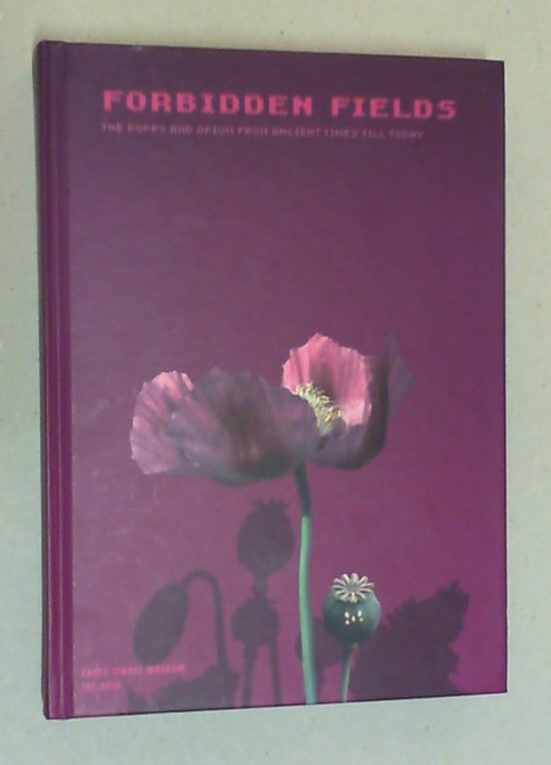
2006ref. 11358Tel Aviv, Eretz Israel Museum, 2006. Gr.-8°. Mit einigen farbigen Abbildungen. 59, 133 S. OPp.
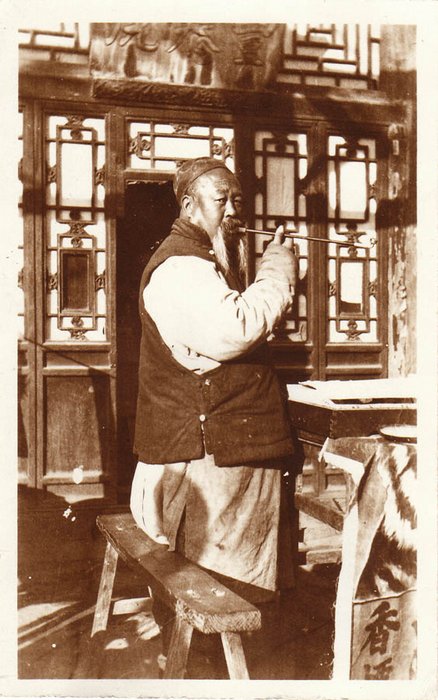
1926ref. 950957China. 1926. Opened: 590 x 127 mm. (Wohlerhalten. - Fine.) [3 Warenabbildungen] Calendar: [12] leaves 41 x 77 mm. Mattbrauner Karton mit eingeschobener Photopostkarte. Alle zwölf Monatsblätter vorhanden. Original pale brown cardboard,
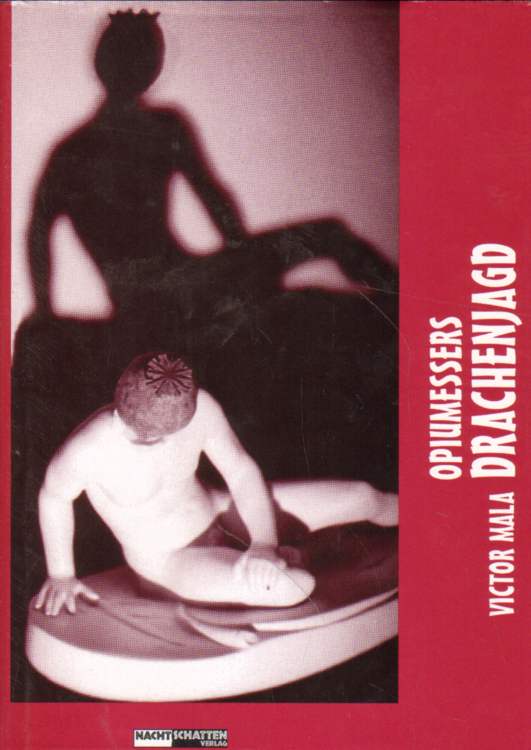
2002ref. 86715Solothurn, Nachtschatten Verlag, 2002. 252 S. 8° Oktav, Hardcover/Pappeinband
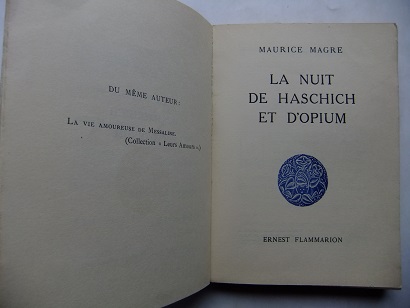
1930ref. 63122Paris. Ernest Flammarion. (1930. 131, (3) Seiten. Mit Buchschmuck. Schöner zweifarbiger Druck. Sehr einfacher, späterer Leinwand-Einband mit handgeschriebenem Rückentitel u. eingebundenem Originalumschlag. (Teils etwas fleckig u. mit geringeren Gebrauchsspuren). 17x12 cm
1839ref. 62231Heidelberg: C. F. Winter. 1839. 4 Bll., 352 S. 8°. Moderner Halbleinenband (um 1960) mit goldgepr. Rückentitel..
1922ref. 2214ABMinden (Westf.), J.C.C.Bruns, [1922]. 8° (19,5 x 14,5 cm). 366 S. Schwarzer Original-Pappband mit goldgeprägtem Deckeltitel und Goldverzierungen, geprägtem Rückentitel sowie dreiseitigem Rotschnitt. (=Charles Baudelaires Werke; 2).
1924ref. 119118ABDresden / Leipzig, Th.Steinkopff, 1924. Gr.8° (23,5 x 15,5 cm). 306 S. mit 187 meist photographischen Abb., 15 Tafeln, 1 Karte. Gelber Original-Leinenband mit farbigerTypographie und farbiger Einbandillustration von O.Peters.
1853ref. 34322New York, Herrmann J. Meyer, um 1853. 12°, 220 & 223 S.; Mit Kupfern und Karten; Mit einer Ansicht von Damaskus; Regalsp. a. Fußschnitt, KEINE Schönheit! Bibl. Ex., Bezahlung per PayPal möglich, we accept PayPal, Einb. beschabt u. bestoßen u. angeschmutzt, fingerspurig, stockfleckig, Schnitte angeschmutzt, altersbed. Bräunungen, Gebr.sp., Halbleinen
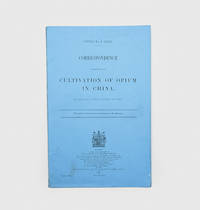
1921ref. 195579London: His Majesty's Stationery Office 1921. First edition the correspondence centring on Sir John Jordan and Sir Beilby Alston Jordan's successor as the British minister to the Republic of China. Jordan in particular had a strong aversion to the opium trade and exerted pressure on the Government of India to curtail exports. The collection begins in June with reports on efforts to limit cultivation in Zhejiang province. During the 1910s political instability set back the regulation and policing of the opium trade leaving Alston only able to report in spring 1921 "that the reports. from the various provinces received since the beginning of this year are uniformly bad. It is of course almost impossible to estimate how far China as a whole has receded from the position in 1917 when the country was officially recognised to have been purged of opium growing" pp. 113-14. Large quarto. Original blue wrappers spine and front cover lettered in black. Traces of old pencil ownership inscription at head of front cover. A few marks to wrappers small split at head of spine a little creasing internally: a very good copy indeed. unknown
1882ref. 196617London: Hodder & Stoughton 1882. Second edition following the first of the same year and equally difficult to find in commerce; we have traced no others currently on the market. This attack on opium's manufacture in India - Britain's "national sin" - was compiled by the missionary Benjamin Broomhall and centres on China reproducing testimonies by numerous Westerners on the deleterious impact of the drug on Chinese society. The submissions were made to a public meeting at Exeter Hall London in March 1882. They are followed by rebuttals to common arguments especially economic in favour of opium's manufacture. Several fine illustrations portray typical examining mixing and drying rooms used in India. Octavo. Illustrations in text. Original blue printed wrappers. Recent ownership signature on inner rear cover. Wrappers toned and spotted wear on spine in places: very good. unknown
1964ref. 196825Rangoon: Superintendent Central Press 1964. First edition thus of this official handbook superseding the version issued in 1945 and incorporating amendments passed before Ne Win's coup. Ne's regime adopted a contradictory policy on opium both banning production in the Shan States and allowing local militia to grow poppies in return for fighting insurgency forces. Octavo. Tables in text. Original light blue boards brown cloth backstrip front cover lettered in black. Contemporary red ink seal "bai lian hua" - "white lotus flower" on title page; recent ink ownership inscription on rear pastedown. Light toning and wear to covers: very good. hardcover
1925ref. 196816Cinnamara: R. K. Hatibarua 1925. First edition with the typescript compliments slip of the anti-opium campaigner Charles Freer Andrews 1871-1940 an associate of Gandhi and Tagore who was a driving force behind the enquiry and wrote the introduction. During the 1920s the deleterious impact of opium consumption became increasingly enmeshed in the cause of Indian independence. Andrews was originally tasked in 1924 by the All-India Congress Committee with co-ordinating the investigation in Assam but he handed over the reins when required to accompany Tagore on his tour of China and Malaya. Octavo. Folding map tables in text. Original blue quarter linen printed spine label grey boards front cover lettered in black. Ex-editorial department The Living Age with its ink stamps on the front cover; recent ownership inscription on rear pastedown. Spine toned small loss to label: very good. hardcover
2020ref. x-303062661XPalgrave Macmillan 2020. Hardcover. New. 191 pages. 8.25x5.75x0.75 inches. Palgrave Macmillan hardcover
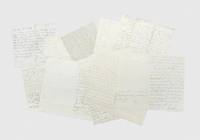
1841ref. 192022September 1840-February 1841. Noble fragments A moving and historically significant record of companionship in confinement Anne Noble being one of the few Western women to see the interior of China before the opening of the treaty ports. These notes sent surreptitiously by two British officers detained in nearby cells are the most important surviving artefacts of her extraordinary five-month imprisonment. An experienced seafarer and traveller Noble née Watson 1814-1877 ventured to China in the late 1830s onboard the Kite a trading ship captained by her husband James Smith Noble. Following the outbreak of the First Opium War the ship was requisitioned as a transport ship but ran aground on 15 September off the Chinese coast near Zhenhai. The survivors - Noble's husband and infant son both drowned - were carried in cages to Ningbo where Noble and the ship's military commander Lieutenant Charles Douglas were incarcerated in separate lice-ridden cells at the residence of the city's ranking mandarin. Douglas was soon joined by Captain Philip Anstruther known to contemporaries as "the life of every party he joined" quoted in D'Arcy-Brown p. 92 who was captured in mid-September while reconnoitring near Dinghai. The captives met only when they were carried in cages to meet Chinese officials and they were not released until 21 February 1841. By bribing jailers and locals with money received from Chinese officials and British forces Noble and Anstruther & Douglas could exchange notes hastily written on whatever paper they had to hand. The 40 here - the only that appear to have survived - convey the camaraderie and close bond shared by the prisoners their hopes and uncertainty concerning their detention and their experiences of isolation. The two cells frequently shared suggestions and snippets of gossip concerning the prospects of their release; Anstruther & Douglas could communicate with British forces by letter and pass on to Noble morale-boosting reassurances "They dare not keep us longer" - Douglas 15 November 1840; "do not give way to doubt and fear" - Anstruther undated. Noble occupied her time mending clothes sent by the men while they advised on how to deal with the corruptible jailers. They sent money and soup; she provided needle and thread in return. During the five months they were assisted by the enterprising Bu Dingbang - known as "the comprador" - who had been arrested for treason while assisting the British fleet near Chusan. Despite being a convict Bu appears to have had regular access to the outside world and to the Westerners including to cook them food and Noble acted as an indispensable conduit of information between Bu and the men. Some of these concerned the matter of their release but the officers were equally concerned with their health and the well-being of the rank-and-file British soldiers and sailors held in the city jail. Anstruther was seemingly often preoccupied with the state of Bu's cooking "a little less garlic and more chilly sic" - undated but likely mid-October 1840. Unfortunately for him the beer wine and cheroots ran out by mid-November. The final firmly dated note in this collection was sent on 18 February 1841. The preceding month British ships sacked the forts at Canton which forced Ningbo's officials to release their hostages on 21 February. Noble and her ordeal became a sensation in China and back home and her account of her confinement was rushed into print in the Chinese Repository "Loss of the ship Kite and Mrs. Noble's narrative of her captivity and sufferings in prison in China in 1840-41; in a letter to a friend". The British community around Canton raised $8000 for her passage back to England and her prison cage was displayed in London. In 1844 she emigrated to the United States. This collection surfaced in the early 21st century as part of a broader group of papers from the Noble family sold at a New Hampshire auction. They were bought from the purchaser a member of the American trade by an American private collector in 2015. The contents of the notes are discussed on pages 108-110 and in Chapter VI of "A White Barbarian Lady" by Liam D'Arcy-Brown who used a rough transcription made when the material was offered for sale in the early 2010s. The notes are accompanied by five letters sent to Noble shortly after her release including one from Douglas as well as 44 letters and documents associated with Noble and her family. Together 40 sheets or bifolia ranging in size up to 210 x 260 mm many on fragile paper. Written in ink or pencil ink annotations in a different hand perhaps Noble's. Full listing available on request. Old folds 5 split into two or more fragments and with small losses slightly affecting sense 1 seemingly a fragment of a much longer note: a well-preserved collection of delicate material. Liam D'Arcy-Brown "A White Barbarian Lady": The Story of Anne Noble a Victorian Woman Imprisoned in China 2016. hardcover
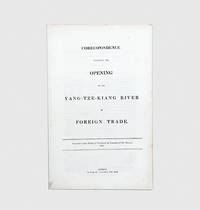
1861ref. 195583London: Printed by Harrison and Sons 1861. First edition. The Treaty of Tianjin and its ratification at the 1860 Convention of Peking gave the British the right to trade along the Yangtse's lower and middle reaches as far as Hankow and opened several ports including Hankow and Zhenjiang to foreign vessels. The documents in this collection cover the first three months of 1861 during which Admiral Sir James Hope and Harry Parkes led a naval expedition up the river to enforce Britain's treaty privileges. Large quarto 322 x 200 mm. Disbound. Leaves foliated in contemporary hand. Old vertical crease spine folds repaired with archival paper: very good. unknown
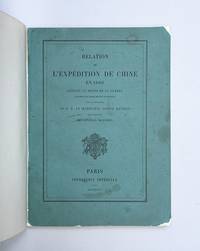
1862ref. 160274Paris: Imprimerie Impériale 1862. With the atlas of eight finely engraved maps First edition with the scarce wrappers retained of this official French account of the Franco-British expedition northwards to Beijing together with a well-preserved first edition of the accompanying atlas volume. The detailed narrative encompasses such pivotal moments as the third battle of the Taku Forts the taking of Tianjin the burning of the Summer Palace and the battles of Zhangjiawan and Tongzhou. The finely engraved atlas includes maps of the Chinese coast the December 1857 capture of Canton the occupation of Tianjin by Anglo-French naval forces in May 1859 and the Western camp at Chefoo. Four other maps all folding show the Franco-British landing at Peh-tang the battles of Zhangjiawan and Baliqiao and the route of the Western advance from the mouth of the Peiho to Beijing. These works were produced at the behest of the Dépôt de la Guerre the country's principal military archive and cartographic institution. Between 1852 and 1867 the Dépôt was run by Antoine Lucien Blondel 1801-1883 a major military cartographer. From 1859 Blondel reported to Jacques Louis César Alexandre Randon 1795-1871 a veteran of Napoleon's European campaigns and Marshal of France from 1856. Two works. Atlas comprising 8 maps 4 folding with occasional hand-colouring all engraved by Erhard Schièble. Relation: quarto 281 x 200 mm. Mid-20th-century green boards Claude Honnelaitre brown spine label lettered in gilt original green wrappers tipped-in top and bottom edge trimmed fore edge untrimmed. Atlas: folio. Original green cloth-backed orange boards front cover lettered in black. Wrappers well-preserved with some staining and a few small losses atlas volume with soiling to boards couple of surface losses on rear cover and wear to extremities text and maps clean atlas with just occasional foxing. Very good copies indeed. Cordier 2nd edition 2496. hardcover
2003ref. DADAX1920033661Nisc Pty Ltd 2020-03-05. paperback. New. 6.50x0.75x9.25. Buy with confidence. Excellent Customer Service & Return policy. Nisc (Pty) Ltd paperback
1762ref. ABC_508791762. Various sizes. Ad 1-3: Contemporary sturdy paper wrappers sewn on 3 vellum supports; ad 4: the 12 documents are held together by a narrow paper wrapper with the text: "Onafgedaane Indiësche zaaken concentreerende de Amphioen Societeyt" and a string. With 12 manuscript documents and a manuscript on paper in 2 different hands. 15 1 blank; 3 ll. Collection of thirteen Dutch manuscripts concerning the Amfioensociëteit Amfioen Society documenting both its establishment in 1745 and its dissolution half a century later. Founded by the Dutch East India Company VOC to maintain its monopoly on the opium trade in the Dutch East Indies the Amfioensociëteit controlled one of the colony's most profitable monopolies until its liquidation in 1794.The earliest manuscript ads 1-3 contains the charter octrooi granted to the society for the period 1745-1755 together with its renewal for 1755-1765. Although the original charter was printed in Batavia in 1745 and survives in a single known copy that edition does not include the renewal. The present manuscript further contains a third text added in a different hand and dated November 1762 concerning the management of the society's outstanding affairs. Written on paper bearing the watermark of the VOC Chamber of Amsterdam it was probably intended for official administrative use.The remaining twelve documents relate to the financial settlement following the dissolution of the society in 1794. Most date from 1793 1794 and 1797 with one document dated 1807 reflecting the prolonged liquidation process. They concern the distribution of assets among shareholders outstanding debts and other administrative matters arising from the winding up of the company. Several documents are signed by Pieter van de Weert dates unknown cashier of the Amfioensociëteit while others mention Jacob Mossel 1704-1761 governor-general of the Dutch East Indies and the society's first director and Gerard Maximiliaan Taets van Amerongen 1727-1788 who was married to Mossel's daughter. Although several documents are headed "Copie" they are contemporary manuscript records rather than later transcripts many containing calculations annotations and other traces of active administrative use. Together they document the final years of the Amfioen Sociëteit and the administration of its dissolution.The wrappers of ads 1-3 are somewhat water stained with worm holes in the back wrapper and final leaf. The leaves are somewhat water stained especially the 3 final leaves an ink stain on leaf 12; the remaining 12 documents are folded several with small tears in the margins without loss of text occasional mild soiling. Otherwise in good condition.l Cf. Landwehr VOC 1449 printed copy of ad 1; STCN 240022416 1 copy; Wit Herman de 2012. Aandeelhouders van de opgeheven Amfioensociëteit in 1801. hardcover
ref. 80102N.p. no date 19th c. Creased where folded; small voids at the center fold not affecting text. 12-1/2 x 8-1/2 inches. Dr. Horwitz regrets relying on memory; describes the collection preparation appearance consistency and odor of "good fresh" opium. He discusses the preparation and use of infusions tinctures brown powder and beneficial effects in small doses. Despite his opening remarks it seems Dr. Horwitz has considerable experience in the use of opium along and in combination with calomel in connection with numerous ailmetns. unknown
1849ref. 56871Edo Tokyo: n.p. Kaei 2 1849. Five vols. Tall 8vo. 40; 44; 48; 42; 34 pp. With 1 double-page colour woodblock map 18 double-page woodblocks 7 w/ colour 1 single-page woodblock plate. Uniformly bound in textured embossed pattern limp softcovers manuscript titles punch-sewn at gutter margins wear soiling some worming through fore-edges text in portions thumbing to fore-edges soiling lower 2/3 of front title leaf stating “Forbidden from Sale” torn away still a G- reference set of this noted rarity. First edition of the author’s “second series” recounting further events in the First Opium War fought between Great Britain and China in 1839-1842. The text and illustrations vividly stressed the terrible effects of opium on Qing Dynasty China and the brave Chinese resisting the British military. Buttressed with striking illustrations by Utagawa Sadahide 1807-1879/79 which depict such incidents as Chinese fire-boats approaching a British warship; a captured spy; Chenshi the Monk putting up a valiant fight; a Chinese Woman warrior fighting the British; a Taiwanese fort sinking a British Warship; the fall of Zhenhai; French diplomatic ships arriving on the Yangtze and even an omen appearing in the heavens. In addition there are a number of woodblock prints depicting British cannons mortars and firearms employed during the Opium Wars. The Kaigai Shinwa printed on Mino paper was written in a sensationalistic and simple style with Japanese syllabaries attached to all Chinese characters and intended as a cautionary tale advising Japan and other Asian countries of the pitfalls of foreign invaders and intervention just four years before the appearance of Perry’s squadron in Tokyo Bay. Mineta Fuko 1817-1883 was thrown into prison for having published the work without official consent and later after he was released was deprived of the right to live in Edo Kyoto or Osaka -- the santo kamae tri-urban banishment and many of the volumes were seized and others were censored or removed. See: Timothy Brook & Bob Tadashi Wakabayashi Opium Regimes: China Britain and Japan 1839-1952 2000 pp. 60-65; Masuda Wataru Seigaku tozen to Chukoku jijo: zassho sakki The Eastern Spread of Western Learning and Conditions in China: Notes on Various Books 14. Kaigai Shinwa. . . Tokyo 1979 Translated by Joshua A. Fogel UCSB pp. 27-39. n.p., paperback
ref. 45215700-nnew. unknown
ref. B9781920033668Paperback / softback. New. paperback
ref. B9798574856130Paperback / softback. New. paperback
ref. B9798702690148Paperback / softback. New. paperback
ref. B9798678671479Paperback / softback. New. paperback