3 231 résultats
français Sans date (1976). Affiche originale du film. 120x160 cm. Pliée.
réf. 16698Sans lieu, Editions Vacance, 1957. Gr. in-8°, 79p. Broché, couverture illustrée. Edition originale numérotée 1/20 exemplaires sur Arches. Illustré de 14 lithographies originales de l"auteur.
1957réf. 004552Toulon Vacance 1957 In-8 Broché Edition originale
1997275X215 mm. 123 pages. Softcover. Cover slightly stained. Else in good condition.
1974réf. YRG-24Editions G. de BUSSAC, Clermont-Ferrand - collection le bibliophile en auvergne. Ouvrage tiré à 1600 exemplaires outre les HC dont le présent ouvrage.
2002IN HEBREW AND ENGLISH. Contain color plates. 27X21.5 cm. 96 pages. Softcover. Cover edges slightly stained. Else in good condition.
1972réf. 14767Paris, Maeght, 1972. In-folio de 22-[8] pages, en feuilles, sous couverture lithographiée couleurs.
réf. 35849Paris, Flammarion, 1978. 21 x 28, 95 pp., très nombreuses illustrations N/B et couleurs, cartonnage éditeur + jaquette, très bon état.
1825réf. 60174Florence circa. 1825 | 23.20 x 16.80 cm | une feuille sous marie-louise
19841.5kg. 285x245 mm. 178 pages. Hardcover with dust jacket. Jacket edges slightly wrinkled. Spine edges slightly bumped. Inner cover yellowing. Text block edges slightly age stained. Pages slightly yellowing. Else in good condition. PLEASE NOTE: This item is overweight. We may ask for extra shipping costs.
1887réf. 113992I. D. Sytin. Moscow. 1887. I. D. Sytin. Moscow. 1887. First edition. Small landscape sewn paperback with gilt and coloured front cover containing 32 coloured examples using the lithographic process. Covers worn and lightly creased ownership name and doodle to rear cover. SCARCE. paperback
réf. R300263372. Non daté. In-12. En feuillets. Bon état, Couv. convenable, Dos satisfaisant, Intérieur frais. Lithographie en couleurs. Format 65 x 50 cm . . . . Classification Dewey : 763-Lithographies
199421X24 cm. 71 pages. Softcover with dust jacket. Cover edges stained. Cover edges and corners slightly wrinkled. Ex-Libris sticker on title page. Else in good condition.
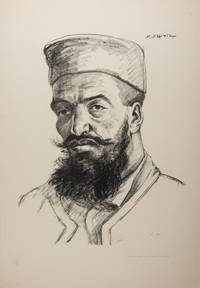
1916réf. 43931Berlin: Dietrich Reimer Ernst Vohsen 1916. Limited First edition. Hardcover. g- to vg. 1/50. Folio 19 1/2 x 13 1/2". 6 28pp Booklet 100 loose leaves Plates as issued. Original full vellum portfolio with lettering and publisher's logo in gilt to front cover. Booklet's front cover gold-lettered numbered and hand-signed by the artist Hermann Struck. The plates are housed in their stiff paper chemise as issued with printed title to front cover. In this spectacular monograph artist Hermann Struck who was serving in the Imperial German army as a translator liaison officer and military artist sketched the faces of one hundred prisoners of war in the German camps. Among the French British Belgian and Russian inmates were also included soldiers from the British Empire mostly from India as well as the French Empire Algeria Tunisia Morocco and Senegal. The prisoners' age range from 12 Anton Matyszewski a volunteer from Lomza Russian Poland to 56 Mohammed ben Ahmed Spahi from Djelfa French Algeria. It is interesting to note that the Jewish prisoners were identified first by their religion then by the place they came from exemple: Chacus Krasikow Jew from Lubin Russian Poland; Isaak Chotoran Jew from Kiev Ukraine; Bomblatt David Polish Jew from Warsaw etc. Bomblatt David is sketched twice: After Struck drew his face he added a second sketch depicting the prisoner reading the Talmud. Each plate is handsigned in pencil by the artist. The booklet contains a foreword and an essay on ethnology in the World War by Prof. Dr. Felix von Luschan 1854-1924 an Austrian doctor anthropologist explorer archaeologist and ethnographer who joined the German Society for Racial Hygiene in 1908. The society was an eugenic organization whose goal was "for society to return to a healthy and blooming strong and beautiful life." As Alfred Ploetz its founder put it the Nordic race was supposed to regain its "purity" through selective reproduction and sterilization. The society ceased to exist after WWI. One of 50 numbered copies of which this is No. 30. Some foxing to portfolio with strings missing. Minor age-toning and foxing to wrappers of booklet. 5" closed tear at lower front joint of chemise. Only plates 4 and 5 are foxed along edges not affecting illustrations. Text in German Gothic script Booklet captions of plates in German. Portfolio in overall fair to good booklet in very good chemise in fair to good- plates in very good condition. Hermann Struck 1876-1944 was a German Jewish artist known for his etchings. A fervent Zionist and Jewish activist Struck visited the Land of Israel in 1903 displayed his art at the Fifth Zionist Congress and was a founder of the Mizrachi Religious Zionist movement. At the same time he was a German patriot and volunteered for military service in World War I serving as a translator liaison officer and military artist. Hermann Struck was awarded the Iron Cross 1st Class and promoted to an officer for bravery in 1917 he became the referent for Jewish affairs at the German Eastern Front High Command. Struck immigrated to Palestine in 1922 taught at Bezalel Academy and helped establish the Tel Aviv Museum of Art. He visited Berlin every summer until the Nazis rose to power. From the beginning of the war the German authorities found themselves confronted with an unexpected influx of prisoners. In September 1914 125050 French soldiers and 94000 Russian ones were held captive. Before 1915 conditions of detention in Germany were very harsh and marked by temporary lodging and the absence of infrastructure. The prisoners slept in hangars or tents where they dug holes to keep warm. The humid forts requisitioned to serve as places of detention led to numerous cases of pulmonary illness. The German authorities also commandeered schools barns and various other types of shelters. Camps were established in the countryside as well as near the towns which had consequences when epidemics of cholera or typhus threatened to spread to the civilian population. Not all the camps were situated on German territory; a certain number were built in occupied territories notably in northern and eastern France. They began to be developed starting in 1915 when the number of prisoners being held captive in Germany reached 652000. According to official directives each prisoner had to have use of 26.9 square foot 2.5 m². The camps mixed a large number of nationalities sharing the same quarters: French Russian British American Canadian Belgian Italian Romanian Serbian Montenegrin Portuguese and Japanese prisoners were found there as well as Greeks and Brazilians. Equally soldiers of various social origins rubbed elbows: workers peasants bureaucrats and intellectuals were among those held. The number of prisoners rose very quickly. From February to August 1915 it went from 652000 to 1045232. In August 1916 it reached 1625000 jumping to 2415000 by October 1918. For more information see: Uta Hinz's "Gefangen im Großen Krieg: Kriegsgefangenschaft in Deutschland 1914-1921" in German. Essen Klartext Verlag 2006. Dietrich Reimer (Ernst Vohsen) hardcover books
1916réf. 43931Berlin: Dietrich Reimer Ernst Vohsen 1916. Limited First edition. Hardcover. g- to vg. 1/50. Folio 19 1/2 x 13 1/2". 6 28pp Booklet 100 loose leaves Plates as issued. Original full vellum portfolio with lettering and publisher's logo in gilt to front cover. Booklet's front cover gold-lettered numbered and hand-signed by the artist Hermann Struck. The plates are housed in their stiff paper chemise as issued with printed title to front cover. In this spectacular monograph artist Hermann Struck who was serving in the Imperial German army as a translator liaison officer and military artist sketched the faces of one hundred prisoners of war in the German camps. Among the French British Belgian and Russian inmates were also included soldiers from the British Empire mostly from India as well as the French Empire Algeria Tunisia Morocco and Senegal. The prisoners' age range from 12 Anton Matyszewski a volunteer from Lomza Russian Poland to 56 Mohammed ben Ahmed Spahi from Djelfa French Algeria. It is interesting to note that the Jewish prisoners were identified first by their religion then by the place they came from exemple: Chacus Krasikow Jew from Lubin Russian Poland; Isaak Chotoran Jew from Kiev Ukraine; Bomblatt David Polish Jew from Warsaw etc. Bomblatt David is sketched twice: After Struck drew his face he added a second sketch depicting the prisoner reading the Talmud. Each plate is handsigned in pencil by the artist. The booklet contains a foreword and an essay on ethnology in the World War by Prof. Dr. Felix von Luschan 1854-1924 an Austrian doctor anthropologist explorer archaeologist and ethnographer who joined the German Society for Racial Hygiene in 1908. The society was an eugenic organization whose goal was "for society to return to a healthy and blooming strong and beautiful life." As Alfred Ploetz its founder put it the Nordic race was supposed to regain its "purity" through selective reproduction and sterilization. The society ceased to exist after WWI. One of 50 numbered copies of which this is No. 30. Some foxing to portfolio with strings missing. Minor age-toning and foxing to wrappers of booklet. 5" closed tear at lower front joint of chemise. Only plates 4 and 5 are foxed along edges not affecting illustrations. Text in German Gothic script Booklet captions of plates in German. Portfolio in overall fair to good booklet in very good chemise in fair to good- plates in very good condition. Hermann Struck 1876-1944 was a German Jewish artist known for his etchings. A fervent Zionist and Jewish activist Struck visited the Land of Israel in 1903 displayed his art at the Fifth Zionist Congress and was a founder of the Mizrachi Religious Zionist movement. At the same time he was a German patriot and volunteered for military service in World War I serving as a translator liaison officer and military artist. Hermann Struck was awarded the Iron Cross 1st Class and promoted to an officer for bravery in 1917 he became the referent for Jewish affairs at the German Eastern Front High Command. Struck immigrated to Palestine in 1922 taught at Bezalel Academy and helped establish the Tel Aviv Museum of Art. He visited Berlin every summer until the Nazis rose to power. From the beginning of the war the German authorities found themselves confronted with an unexpected influx of prisoners. In September 1914 125050 French soldiers and 94000 Russian ones were held captive. Before 1915 conditions of detention in Germany were very harsh and marked by temporary lodging and the absence of infrastructure. The prisoners slept in hangars or tents where they dug holes to keep warm. The humid forts requisitioned to serve as places of detention led to numerous cases of pulmonary illness. The German authorities also commandeered schools barns and various other types of shelters. Camps were established in the countryside as well as near the towns which had consequences when epidemics of cholera or typhus threatened to spread to the civilian population. Not all the camps were situated on German territory; a certain number were built in occupied territories notably in northern and eastern France. They began to be developed starting in 1915 when the number of prisoners being held captive in Germany reached 652000. According to official directives each prisoner had to have use of 26.9 square foot 2.5 m². The camps mixed a large number of nationalities sharing the same quarters: French Russian British American Canadian Belgian Italian Romanian Serbian Montenegrin Portuguese and Japanese prisoners were found there as well as Greeks and Brazilians. Equally soldiers of various social origins rubbed elbows: workers peasants bureaucrats and intellectuals were among those held. The number of prisoners rose very quickly. From February to August 1915 it went from 652000 to 1045232. In August 1916 it reached 1625000 jumping to 2415000 by October 1918. For more information see: Uta Hinz's "Gefangen im Großen Krieg: Kriegsgefangenschaft in Deutschland 1914-1921" in German. Essen Klartext Verlag 2006. Dietrich Reimer (Ernst Vohsen) hardcover
1853réf. 11073Bruxelles, Charles Muquardt, 1853. 2 volumes in-folio non paginés de [48] pages suivies des planches et de la table, et de [38] pages suivies des planches et de la table. Plein chagrin bleu, dos lisses ornés de motifs végétaux et filets dorés, plats encadrés d'un décor végétal doré, titre et tomaison dorés aux premiers plats, filet doré sur les coupes, gardes moirées, filet doré encadrant les contreplats. Reliures un peu frottées, minuscules épidermures, quelques pâles rousseurs.
1870réf. WOC-610Dessinées d'après nature pendant le siège de Strasbourg,J. Broutta. Album de 12 lithographies en 2 tons dessinées par Broutta et J. Crettez lith., avec le titre en noir d'une vue allégorique. Genève, Lithographie Art Braun & Cie, Editeurs, sans date. En feuilles sous chemise cartonnage éditeur, plat supérieur très orné, dos toile rouge et lacet. Complet des lithographies de l'Incendie de la Cathédrale dans la nuit du 23 au 24 Août 1870 à la Bibliothèque et les maisons environnantes,le lendemain du bombardement du 23 Août 1870. Quelques rousseurs sur certaines planches.
1955réf. 7068[Paris], les Editeurs Français Réunis, 1955. In-4 broché de 59-[4] pages, couverture muette lithographiée en noir. Traces de scotch sur les gardes, autrement bel état.
1920COPY #337 OUT OF 500. 120X185 mm. 234 pages. Hardcover. Cover and spine yellowing. Cover corners bumped and worn. Spine taped. Spine edges worn. Ex-Libris stamp on first whitepage and title page. Pages yellowing and age-stained. Else in good condition.
1947réf. 535008London: Frederick Muller 1947. Hardcover. Very Good/Near Fine. First edition. Faint dampstain on bottom corner of the pages just registering at the edges of the margins else very good in near fine dust jacket. Anthology illustrated with attractive color lithographs. Because of the fragile binding copies are usually found with the binding cracked or signatures or plates loose. This is a tight and clean copy and is scarce thus. Frederick Muller hardcover books
1947réf. 535008London: Frederick Muller 1947. Hardcover. Very Good/Near Fine. First edition. Faint dampstain on bottom corner of the pages just registering at the edges of the margins else very good in near fine dust jacket. Anthology illustrated with attractive color lithographs. Because of the fragile binding copies are usually found with the binding cracked or signatures or plates loose. This is a tight and clean copy and is scarce thus. Frederick Muller hardcover
1965pp. xix, 302 + Plus Frontis and full page lithographs washed in blue and some in red by Lynd Ward. Color lithograph chapter headings. 4to. Original full dark blue cloth binding decorated and lettered in silver. Original silver slip case. Hardbound. Very nice copy. THESE HERITAGE PRESS BOOKS MAKE GREAT GIFTS. W82
1920réf. 3713Frankfurt, Tiedmann & Uzielli, 1920. 1 vol. (126 x 289) de 214-[2] pages. Demi-veau blond teinté à coins, dos à nerfs orné, pièce de titre de maroquin bleu, tête violette. Belle condition.
réf. R300263367. Non daté. In-Folio. En feuillets. Bon état, Couv. convenable, Dos satisfaisant, Intérieur frais. Lithographie en noir et blanc. Tirage à 400 exemplaires. Format 38 x 28 cm. . . . . Classification Dewey : 763-Lithographies
réf. R300263366. Non daté. In-Folio. En feuillets. Bon état, Couv. convenable, Dos satisfaisant, Intérieur frais. Lithographie en noir et blanc. Tirage à 100 exemplaires. Format 28 x 37 cm. . . . . Classification Dewey : 763-Lithographies