3 243 résultats
1958CONTAINS TWO LITHOGRAPHS. 32.5x27.5 cm. XXXIII+108 pages. Hardcover in dust jacket. Spine slightly chafed at top and bottom edges. Else in good condition. PLEASE NOTE: This item is overweight. We may ask for extra shipping costs.
1993Contains many color plates. 290x225mm. 327 pages. Hardcover. In good condition. PLEASE NOTE: This item is overweight. We may ask for extra shipping costs.
1972réf. 82762Ediciones Poligrafa S. A 1972-01-01. Hardcover. Very Good. Large format hardcover in jacket with text in Spanish light chip to head of spine of the jacket. All 11 original lithographs are intact. Tight binding no marks. oversized and overweight. Please email for photos. Ediciones Poligrafa, S. A hardcover
français Sans date (1976). Affiche originale du film. 120x160 cm. Pliée.
1841RARE travel journal of a journey to the Holy Land in the early 19th century, written from a British aristocratic point of view. It includes 4 b&w plates depicting sights and people from the region and one b&w figure. 150x230mm. 141 pages. Green embossed cloth hardcover with gilt lettering on spine. Cover rubbed and slightly stained. Cover edges rubbed and bumped. Cover corners bumped and worn. Spine stained. Spine edges tattered and peeling. Library sticker residues on spine bottom edge. Two small stickers on front inner cover corners. Small ink inscription on title page. Binding somewhat loose and visible between several pages. All pages detached from binding. One plate detached from binding and age-stained. Pages yellowing and rough-cut as published. [SUMMARY]: This extremely book has suffered external damage, but is still in good reading condition. PLEASE NOTE: This book's cover is very worn, loose or missing. If you'd like, we can send this book to be rebound for an extra charge.
320X255mm. 10 black and white lithographs. Softcover. Cover slightly stained. Cover edges slightly bumped. Spine partly cracked. Page corners slightly bumped. Else in good condition.
200825.5x25.5 cm. 91+179 pages. Gilt hardcover with dust jacket. As new. PLEASE NOTE: This item is overweight. We may ask for extra shipping costs.
1920RARE book illustrated by Joseph Budko (1888-1940) - one of the greatest Jewish graphic artists, who started the revival of woodcut and one of the first great modern book illustrators. Includes FOUR ORIGINAL LITHOHRAPHS depicting Theodor Herzl, Marko Baruch, J.L.Perez, and Baruch Spinoza. 295x245mm. 114 pages. Illustrated board Hardcover with gilt cloth spine. Cover yellowing, age-stained, slightly stained and curved. Cover corners and edges bumped and peeling. Spine partly detached from binding (hinges partly cracked). Spine upper edge tattered, bottom edge missing. Ink writing on front whitepage upper edge. Inner cover and pages age-stained to various degrees. Some pages upper edge water-stained - no damage to text or plates. Pages yellowing, wavy and rough-cut (as published). [SUMMARY]: This extremely rare book with four original lithographs by one of the greatest modern Jewish artists is otherwise in good condition.
1893réf. 60582L'Estampe originale | Paris 1893 | 31.50 x 43 cm | en feuilles
1893- L'Estampe originale, Paris 1893, 31,5x43cm, en feuilles. - Original print by Henri-Gabriel Ibels, from the series Café-Concert published by the Publications de l'Estamppe Originale. Very rare and beautiful lithography is one of the 500 original proofs drawn on vellum by Edouard Ancourt's printing press. [FRENCH VERSION FOLLOWS] Estampe originale d'Henri-Gabriel Ibels, de la série Le Café-Concert éditée par les Publications de l'Estampe Originale. Très rare et belle lithographie faisant partie des 500 épreuves originales tirées sur vélin par l'imprimerie d'Edouard Ancourt. Portrait de l'artiste de cabaret Camille Périer, dit Kam-Hill, par Henri-Gabriel Ibels. Se produisant à cette période à la Gaîté-Montparnasse, il était connu pour agrémenter son chant par des sauts, des gambades et des coups en tous sens. Il est dessiné par Ibels vêtu de son costume de scène habituel : des gants blancs, une capote et des pantalons de soie noire. Souvent accompagné de la célèbre Yvette Guilbert, ils dominèrent ensemble la scène des café-concerts durant la fin du siècle. Véritable ode au café-concert, cette série réalisée par Toulouse-Lautrec et Henri-Gabriel Ibels capture l'essence de la vie parisienne et le dynamisme de ses nuits. Les planches étaient accompagnées d'un pamphlet de l'écrivain Georges Montorgueil chantant les louanges de ces établissements injustement méprisés, qu'il qualifie de « toniques pour la vie moderne ». Bien loin de l'atmosphère empesée des salles de théâtre ou de concert, ces lieux du « sans-gêne » prennent un essor considérable à la Belle Epoque et lancent des artistes d'une remarquable modernité. Les deux peintres dressent ici le portrait des vedettes de cabaret les plus célèbres de l'époque, dans le mouvement de leur « chorégraphie épileptique » ou la grâce de leurs poses. Les grands noms des cafés-concerts, dont Jane Avril, Yvette Guilbert - devenue muse de Toulouse-Lautrec - ou Aristide Bruant apparaissent sous des traits francs et assurés, inspirés des gravures sur bois japonaises. En filigrane, l'influence de l'impressionnisme est également palpable - le style prenant un élan à la fin du siècle. Toulouse-Lautrec figure d'ailleurs régulièrement au salon des Indépendants depuis 1889 et y livre sa vision du Tout-Paris, allant des salons de la haute société aux bordels de la capitale en passant par les cabarets dont le Moulin Rouge, pour qui il réalise une affiche restée célèbre. Autre maître de l'affiche et du dessin, Ibels aura plusieurs collaborations avec les éditions de l'Estampe Originale, dont une série de dessins sur le cirque et réalise en parallèle de nombreuses illustrations pour des journaux populaires, dans un style vigoureux et incisif. Rare estampe en parfait état de conservation, qui renvoie aux fastes du "Paris by night fin de siècle".
1999A clean, unmarked book with a tight binding. 9 1/2"w x 10 3/4"h. 224 pages. Exhibition catalog reproducing over 130 works on paper in full color.
Contains b&w plates. 28.5x21cm. Unpaginated (40 pages & 20 plates). Softcover. Cover slightly wrinkled. Else in good condition.Holzinger, Hans ( Druck)
français Sans date (circa 1860). In-8 oblong de titre, 23 planches sous serpentes; toile noire ornée à froid avec titre en lettres dorées au premier plat (cartonnage de l'éditeur). Charmant album illustré de 23 lithographies en couleurs. Légères épidermures en particulier sur les serpentes.
1938réf. 14326Bruxelles, Editions des Artistes, (1938). Un vol. au format in-4 (327 x 252 mm) de 62 pp. Plein cartonnage illustré d'édition, dos toilé rouge.
1938réf. 143261938. Bruxelles Editions des Artistes 1938. Un vol. au format in-4 327 x 252 mm de 62 pp. Plein cartonnage illustr d'dition dos toil rouge. Edition originale de cette publication peu commune agrmente - ici en premier tirage - des dlicieuses lithographies en couleurs d'Olga Kovalevsky. Angles mousses. Plats prsentant un clat lgÂrement altr. Annotations au stylo et tches parses au premier. Un cahier dsolidaris. Quelques discrÂes marques sombres en marge infrieure des feuillets. Du reste bonne condition. Rare. b42961 unknown
1959réf. 15884Paris à la Galerie 1959 1 Une affiche de dimensions 51 x 71 cm; belle lithographie de Mourlot.
1959Une affiche de dimensions 51 x 71 cm; belle lithographie de Mourlot. Discrète trace d'adhésif en pied; sinon bien fraîche. Voir photo.
1949réf. 2234Paris, Manuel Bruker, 1949 ; in-4, en feuillets ; 77 pp., (4) ff. (notes, justification, 1 bl.) ; 17 lithographies en noir hors-texte ; couverture blanche à rabats imprimée rouge et noir.
réf. 6557, London, The Tate Gallery, 1962, Paperback, originale wrappers illustrated in color ( photo), 20x21cm, 120pp, illustrated b/w.
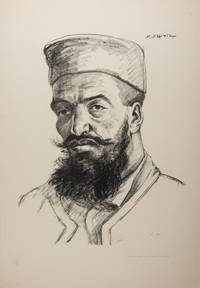
1916réf. 43931Berlin: Dietrich Reimer Ernst Vohsen 1916. Limited First edition. Hardcover. g- to vg. 1/50. Folio 19 1/2 x 13 1/2". 6 28pp Booklet 100 loose leaves Plates as issued. Original full vellum portfolio with lettering and publisher's logo in gilt to front cover. Booklet's front cover gold-lettered numbered and hand-signed by the artist Hermann Struck. The plates are housed in their stiff paper chemise as issued with printed title to front cover. In this spectacular monograph artist Hermann Struck who was serving in the Imperial German army as a translator liaison officer and military artist sketched the faces of one hundred prisoners of war in the German camps. Among the French British Belgian and Russian inmates were also included soldiers from the British Empire mostly from India as well as the French Empire Algeria Tunisia Morocco and Senegal. The prisoners' age range from 12 Anton Matyszewski a volunteer from Lomza Russian Poland to 56 Mohammed ben Ahmed Spahi from Djelfa French Algeria. It is interesting to note that the Jewish prisoners were identified first by their religion then by the place they came from exemple: Chacus Krasikow Jew from Lubin Russian Poland; Isaak Chotoran Jew from Kiev Ukraine; Bomblatt David Polish Jew from Warsaw etc. Bomblatt David is sketched twice: After Struck drew his face he added a second sketch depicting the prisoner reading the Talmud. Each plate is handsigned in pencil by the artist. The booklet contains a foreword and an essay on ethnology in the World War by Prof. Dr. Felix von Luschan 1854-1924 an Austrian doctor anthropologist explorer archaeologist and ethnographer who joined the German Society for Racial Hygiene in 1908. The society was an eugenic organization whose goal was "for society to return to a healthy and blooming strong and beautiful life." As Alfred Ploetz its founder put it the Nordic race was supposed to regain its "purity" through selective reproduction and sterilization. The society ceased to exist after WWI. One of 50 numbered copies of which this is No. 30. Some foxing to portfolio with strings missing. Minor age-toning and foxing to wrappers of booklet. 5" closed tear at lower front joint of chemise. Only plates 4 and 5 are foxed along edges not affecting illustrations. Text in German Gothic script Booklet captions of plates in German. Portfolio in overall fair to good booklet in very good chemise in fair to good- plates in very good condition. Hermann Struck 1876-1944 was a German Jewish artist known for his etchings. A fervent Zionist and Jewish activist Struck visited the Land of Israel in 1903 displayed his art at the Fifth Zionist Congress and was a founder of the Mizrachi Religious Zionist movement. At the same time he was a German patriot and volunteered for military service in World War I serving as a translator liaison officer and military artist. Hermann Struck was awarded the Iron Cross 1st Class and promoted to an officer for bravery in 1917 he became the referent for Jewish affairs at the German Eastern Front High Command. Struck immigrated to Palestine in 1922 taught at Bezalel Academy and helped establish the Tel Aviv Museum of Art. He visited Berlin every summer until the Nazis rose to power. From the beginning of the war the German authorities found themselves confronted with an unexpected influx of prisoners. In September 1914 125050 French soldiers and 94000 Russian ones were held captive. Before 1915 conditions of detention in Germany were very harsh and marked by temporary lodging and the absence of infrastructure. The prisoners slept in hangars or tents where they dug holes to keep warm. The humid forts requisitioned to serve as places of detention led to numerous cases of pulmonary illness. The German authorities also commandeered schools barns and various other types of shelters. Camps were established in the countryside as well as near the towns which had consequences when epidemics of cholera or typhus threatened to spread to the civilian population. Not all the camps were situated on German territory; a certain number were built in occupied territories notably in northern and eastern France. They began to be developed starting in 1915 when the number of prisoners being held captive in Germany reached 652000. According to official directives each prisoner had to have use of 26.9 square foot 2.5 m². The camps mixed a large number of nationalities sharing the same quarters: French Russian British American Canadian Belgian Italian Romanian Serbian Montenegrin Portuguese and Japanese prisoners were found there as well as Greeks and Brazilians. Equally soldiers of various social origins rubbed elbows: workers peasants bureaucrats and intellectuals were among those held. The number of prisoners rose very quickly. From February to August 1915 it went from 652000 to 1045232. In August 1916 it reached 1625000 jumping to 2415000 by October 1918. For more information see: Uta Hinz's "Gefangen im Großen Krieg: Kriegsgefangenschaft in Deutschland 1914-1921" in German. Essen Klartext Verlag 2006. Dietrich Reimer (Ernst Vohsen) hardcover
1916réf. 43931Berlin: Dietrich Reimer Ernst Vohsen 1916. Limited First edition. Hardcover. g- to vg. 1/50. Folio 19 1/2 x 13 1/2". 6 28pp Booklet 100 loose leaves Plates as issued. Original full vellum portfolio with lettering and publisher's logo in gilt to front cover. Booklet's front cover gold-lettered numbered and hand-signed by the artist Hermann Struck. The plates are housed in their stiff paper chemise as issued with printed title to front cover. In this spectacular monograph artist Hermann Struck who was serving in the Imperial German army as a translator liaison officer and military artist sketched the faces of one hundred prisoners of war in the German camps. Among the French British Belgian and Russian inmates were also included soldiers from the British Empire mostly from India as well as the French Empire Algeria Tunisia Morocco and Senegal. The prisoners' age range from 12 Anton Matyszewski a volunteer from Lomza Russian Poland to 56 Mohammed ben Ahmed Spahi from Djelfa French Algeria. It is interesting to note that the Jewish prisoners were identified first by their religion then by the place they came from exemple: Chacus Krasikow Jew from Lubin Russian Poland; Isaak Chotoran Jew from Kiev Ukraine; Bomblatt David Polish Jew from Warsaw etc. Bomblatt David is sketched twice: After Struck drew his face he added a second sketch depicting the prisoner reading the Talmud. Each plate is handsigned in pencil by the artist. The booklet contains a foreword and an essay on ethnology in the World War by Prof. Dr. Felix von Luschan 1854-1924 an Austrian doctor anthropologist explorer archaeologist and ethnographer who joined the German Society for Racial Hygiene in 1908. The society was an eugenic organization whose goal was "for society to return to a healthy and blooming strong and beautiful life." As Alfred Ploetz its founder put it the Nordic race was supposed to regain its "purity" through selective reproduction and sterilization. The society ceased to exist after WWI. One of 50 numbered copies of which this is No. 30. Some foxing to portfolio with strings missing. Minor age-toning and foxing to wrappers of booklet. 5" closed tear at lower front joint of chemise. Only plates 4 and 5 are foxed along edges not affecting illustrations. Text in German Gothic script Booklet captions of plates in German. Portfolio in overall fair to good booklet in very good chemise in fair to good- plates in very good condition. Hermann Struck 1876-1944 was a German Jewish artist known for his etchings. A fervent Zionist and Jewish activist Struck visited the Land of Israel in 1903 displayed his art at the Fifth Zionist Congress and was a founder of the Mizrachi Religious Zionist movement. At the same time he was a German patriot and volunteered for military service in World War I serving as a translator liaison officer and military artist. Hermann Struck was awarded the Iron Cross 1st Class and promoted to an officer for bravery in 1917 he became the referent for Jewish affairs at the German Eastern Front High Command. Struck immigrated to Palestine in 1922 taught at Bezalel Academy and helped establish the Tel Aviv Museum of Art. He visited Berlin every summer until the Nazis rose to power. From the beginning of the war the German authorities found themselves confronted with an unexpected influx of prisoners. In September 1914 125050 French soldiers and 94000 Russian ones were held captive. Before 1915 conditions of detention in Germany were very harsh and marked by temporary lodging and the absence of infrastructure. The prisoners slept in hangars or tents where they dug holes to keep warm. The humid forts requisitioned to serve as places of detention led to numerous cases of pulmonary illness. The German authorities also commandeered schools barns and various other types of shelters. Camps were established in the countryside as well as near the towns which had consequences when epidemics of cholera or typhus threatened to spread to the civilian population. Not all the camps were situated on German territory; a certain number were built in occupied territories notably in northern and eastern France. They began to be developed starting in 1915 when the number of prisoners being held captive in Germany reached 652000. According to official directives each prisoner had to have use of 26.9 square foot 2.5 m². The camps mixed a large number of nationalities sharing the same quarters: French Russian British American Canadian Belgian Italian Romanian Serbian Montenegrin Portuguese and Japanese prisoners were found there as well as Greeks and Brazilians. Equally soldiers of various social origins rubbed elbows: workers peasants bureaucrats and intellectuals were among those held. The number of prisoners rose very quickly. From February to August 1915 it went from 652000 to 1045232. In August 1916 it reached 1625000 jumping to 2415000 by October 1918. For more information see: Uta Hinz's "Gefangen im Großen Krieg: Kriegsgefangenschaft in Deutschland 1914-1921" in German. Essen Klartext Verlag 2006. Dietrich Reimer (Ernst Vohsen) hardcover books
1927réf. 005871Praze Prague: V. Neubert 1927. First Edition . Illustrated Wrappers. Very Good. 11 7/8" Tall. First Edition. 32 Pp Of Stunning Full-Color Lithographs Including Covers Endpapers Title Page Etc. Every Side Of Covers And Every Side Of Every Page Is So Illustrated. Apparently The Translator's Copy For The 1929 New York Edition In English As Translations For Each Page Are Laid In Loosely. A Bright Clean Copy. Three Small Chips Along Bottom Of Front Cover Spine Partially Split And All Pages And Cover Have A 3/4" Closed Tear Along The Bottom Edge. V. Neubert unknown
1949260X330mm. 25 pages + 83 black and white plates. Softcover in dust jacket and cardboard box. Cardboard box slightly yellowing. Else in good condition.
réf. 135890aafGera-Untermhaus, Verlag v. Fr. Eugen Köhler, (Druck des Textes von Ramm & Seemann, Leipzig), 1887, gr. in-4°, 4 Bl. + 54 S. (Liste d. Pflanzen n.d. Eichler System) + 115 n.n. S. (Beschreibung d. Pflanzentafeln) + 92 Tafeln in Farbendruck nach O.-Zeichnungen v. Walther Müller in Gera, Original-Lederband mit Ecken (J.A. Hodel relieur à Neuchâtel).
réf. 11813Moulins, P. A. Desrosiers [1835] ; Titre, 1 dessin original et 40 planches. / Vannes, Cauderan, 1847 ; 20 planches. 1 volume in-4. Demi-percaline verte, dos muet. papier parfois jauni.