Kokoschka, OskarAntiquariat.de

3,227 results
1972ref. 4270Luzern, Edition Bucher, 1972. mit 24 farbigen ganzseitigen Lithographie - Tafeln. ill. OLn., OLn.-Schuber, 6 S. + 24 Tafeln, Folio (=47,6 x 36,7 cm (48,5 x 37 cm für den Schuber)
1983ref. jk1706180397zbvkBerlin (West), Neue Gesellschaft für Literatur / Edition Mariannenpresse, 1983. 52 (3) Seiten auf getöntem Papier, 4 zwischengebundene einseitig bedruckte weiße Kartons mit den Orig.-Lithographien. - Graubrauner kartonierter illustrierter Originaleinband mit Deckel- und Rückentitel; 4to.(ca. 27,5 x 18 cm).
1974ref. k2111363110xbvkZürich, im Dezember/Januar 1974/75. 20 unnumerierte Seiten (inkl. Umschlag) auf verschiedenen Papieren, mit mehreren teils farbigen bzw. ganzseitigen Original-Grafiken. - Illustrierter Original-Umschlag mit Deckeltitel; Folio (ca. 44 x 31 cm).
1975ref. k2111365110xbvkZürich, September 1975. 20 unnumerierte Seiten (inkl. Umschlag) auf verschiedenen Papieren, mit mehreren teils farbigen bzw. ganzseitigen Original-Grafiken. - Farblithographischer Original-Umschlag mit Deckeltitel; Folio (ca. 44 x 31 cm).
1959ref. 2001160045xbvkZürich, Zwingli-Verlag, 1959. 55 Seiten auf kräftigem 'fein-weiß Zerkallbütten' der Firma Kappel und Stamm in Thalwil, mit 8 farbigen einseitig bedruckten originalgraphischen Bildtafeln. - Farbig orig.-graphisch illustrierter fester Originaleinband mit bedruckter Orig.-Bauchbinde; gr.-4to.(ca. 35 x 25 cm).
1975ref. 105856BBParis, La Pierre d'Angle, (1975). Folio (37,5 x 28,5 cm.). [36] S., 64 (1 signierte) Orig.-Farblithographien, [2] Bl. mit 1 Portrait, [10] Bl. (Tafel-Verzeichnis). Orig.-Chemise.
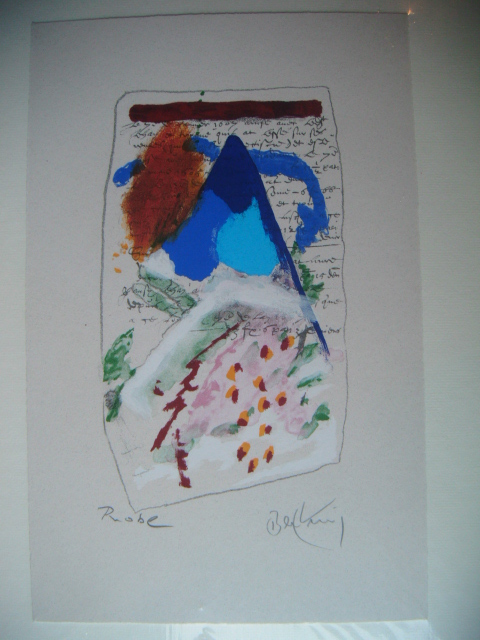
ref. 7634und o.J, als `Probedruck` o.O. Format 30 x 19 cm (HxB) auf Bütten-Karton (40x30 cm) montiert. Von Becking signiert. Horst Becking ist neben Emil Schumacher der bekannteste Nachkriegskünstler aus Hagen. Zahlreiche Ausstellungen im In- und Ausland (u.a. Benelux, New York, Venedig).
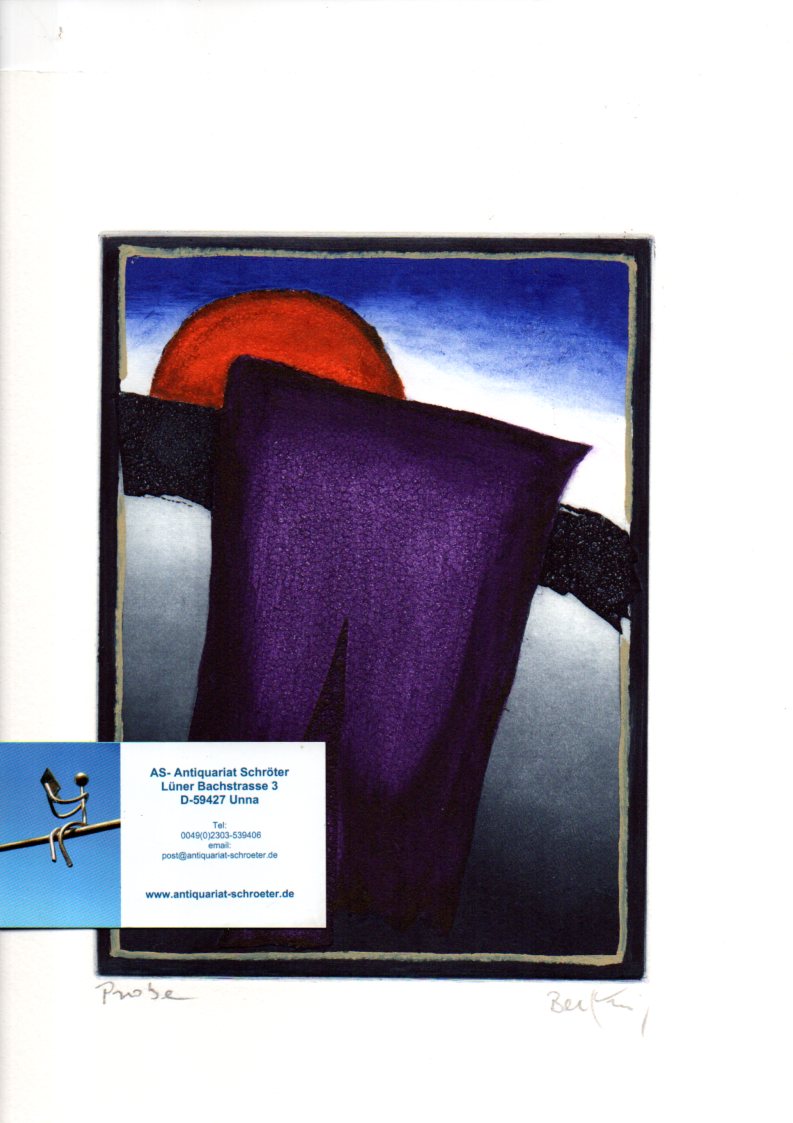
ref. 11584und o.J, als `Probedruck` o.O. Format 20 x 14,5 cm (HxB) auf Bütten-Karton (29,5x24cm). Von Becking signiert und als `Probe` bezeichnet. Horst Becking ist neben Emil Schumacher der bekannteste Nachkriegskünstler aus Hagen. Zahlreiche Ausstellungen im In- und Ausland (u.a. Benelux, New York, Venedig).
1949ref. 63103Lausanne, Henri Kaeser Éditeur, o. J. (1949). Fol. Mit 11 (2 farb.) num u. sign. Orig.-Lithographien. 4 (2 weiße) Bll., lose in OKart. m. illustr. OUmschlag.
1957ref. 3122734Woerth: Sutter 1957. 60 Seiten. Mit einigen Illustrationen auf Tafeln. 4° (25-35 cm). Orig.-Broschur mit illustriertem Orig.-Schutzumschlag. [Softcover / Paperback].
ref. 110850Day & Son, [London]. 32 x 24 cm ; Leinen
1968ref. 59386London, Sotheby&Co., 1968. origi.Pappband mit Schutzumschlag, kl.4°, 51 Blatt.
1973ref. 145730Dietrich Verlag. Memmingen 1973. 197 Seiten. Originaleinband und zweifarbiger', illustrierterer Original-Schutzumschlag. Noch originalverpacktes Exemplar. 19x12 cm
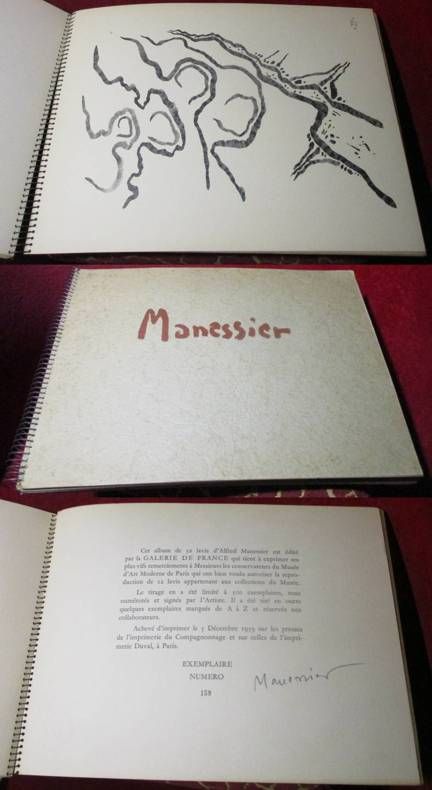
1959ref. 028355Galerie De France, Paris 1959. Karton Tadellos
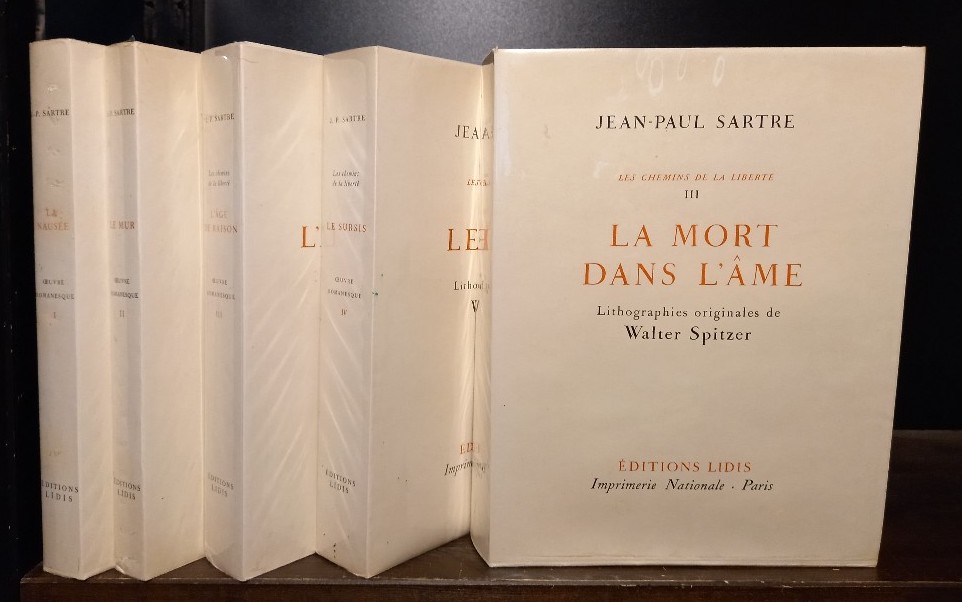
1964ref. 2135619Paris: Éditions Lidis Imprimerie Nationale 1964. Unbeschnitten. 4° (25-35 cm). Fadengeheftete Orig.-Broschuren mit zweifarbig bedrucktem Orig.-Schutzumschlag und Klarsicht-Schutzumschlägen. [Softcover / Paperback].
1880ref. EEzz6159(Cassel, Fischer o. J. ca 1880). quer ca 42,5 x 31 cm, Bildformat ca 26 x 22,5 cm, 23 (statt 24) farb. Orig. Lithogr. auf Karton mont., in dunkelgrüner OLn.-Flügelmappe m. farb., leicht eingelass. Deckelbild in Goldumrahmung sowie gldgepr. Deckelschrift, schwach berieben, Ecken geringf. bestoß., kl. helle Farbspur am Vorderdeckel, gemust. Spiegel u. Flügel, Kartonbll. an den Rändern schwach verfärbt, insges. jedoch gutes und dekoratives Exemplar. Vorhanden: Der Wildkater auf dem Raube. Fischotter. Hausmarder mit Geheck. Grosses Wiesel mit einem Hamster im Kampfe. An die Jagdtasche angelegter Schweisshund auf dem Pürschgang. Eisvögel. Fischreiher auf der Lauer. Im Vordergrunde: Krick- und Stockente, im Hintergrunde: Schopf- oder Morrenten. Dachs und Dachshund. Edelmarder, Wildtauben beschleichend. Auerhahn. Kukuk. Rohrsängernest. Siebenschläfer. Grosser Buntspecht. Langohrige Fledermäuse in Ruhe. Wasserschwätzer. Kämpfende Pirole. Waldschnepfe. Wolf. Treibender Rehbock. Der Fuchs. 1 Tafel der verschied. Stadien d. Geweihwuchses.
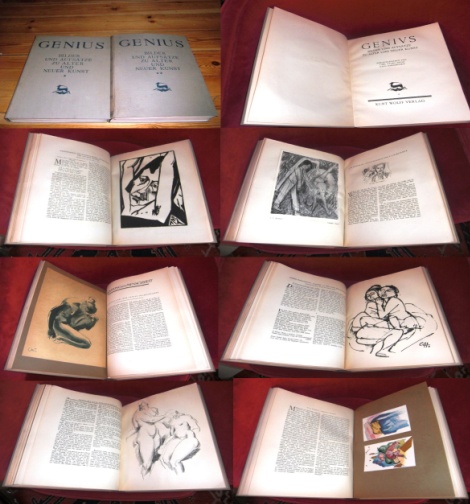
1920ref. 013774Kurt Wolff Verlag., München 1920. Leinen Sehr gut
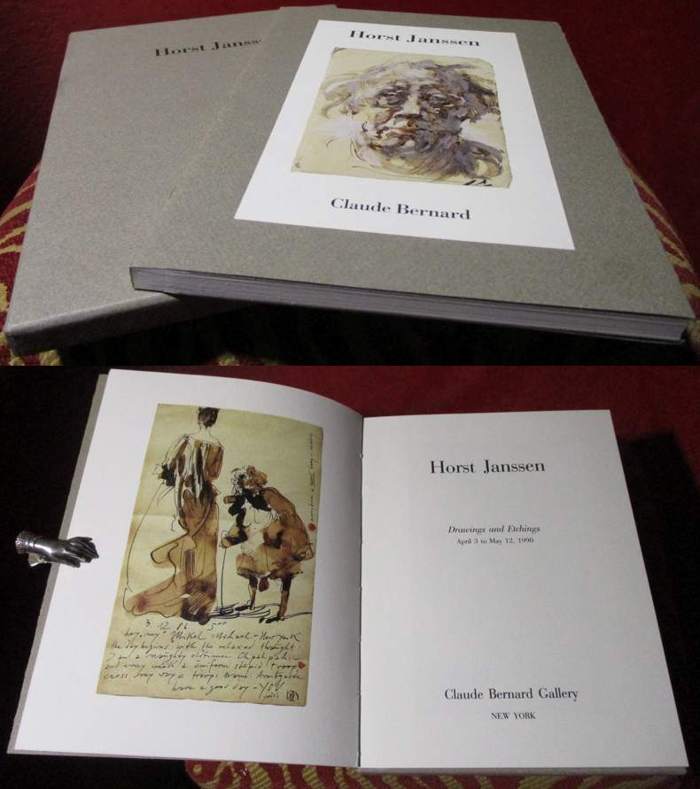
1991ref. 026425Claude Bernard Gallery, New York 1991. 2nd Completed Edition Karton Tadellos
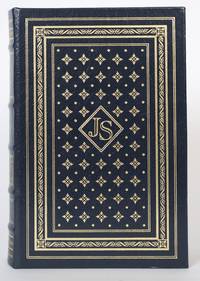
1968ref. 1418562Norwalk CT: The Easton Press 1968. Collector's Edition. Hardcover. Octavo xxii 559 pages. In Very Good minus condition. Bound in publisher's navy blue leather with gilt lettering to spine. Mild general shelf wear. Textblock sunken. Edges of textblock gilt lightly worn on bottom edge and scratched on fore edge. With silk endpapers and a silk ribbon bookmark. Interior pages clean. Note from the publisher laid in. Shelved in Easton Press. 1418562. Shelved Dupont Bookstore. The Easton Press hardcover books
1947ref. 535008London: Frederick Muller 1947. Hardcover. Very Good/Near Fine. First edition. Faint dampstain on bottom corner of the pages just registering at the edges of the margins else very good in near fine dust jacket. Anthology illustrated with attractive color lithographs. Because of the fragile binding copies are usually found with the binding cracked or signatures or plates loose. This is a tight and clean copy and is scarce thus. Frederick Muller hardcover books
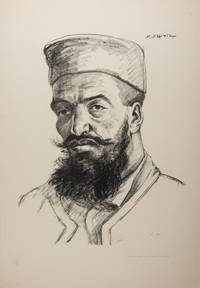
1916ref. 43931Berlin: Dietrich Reimer Ernst Vohsen 1916. Limited First edition. Hardcover. g- to vg. 1/50. Folio 19 1/2 x 13 1/2". 6 28pp Booklet 100 loose leaves Plates as issued. Original full vellum portfolio with lettering and publisher's logo in gilt to front cover. Booklet's front cover gold-lettered numbered and hand-signed by the artist Hermann Struck. The plates are housed in their stiff paper chemise as issued with printed title to front cover. In this spectacular monograph artist Hermann Struck who was serving in the Imperial German army as a translator liaison officer and military artist sketched the faces of one hundred prisoners of war in the German camps. Among the French British Belgian and Russian inmates were also included soldiers from the British Empire mostly from India as well as the French Empire Algeria Tunisia Morocco and Senegal. The prisoners' age range from 12 Anton Matyszewski a volunteer from Lomza Russian Poland to 56 Mohammed ben Ahmed Spahi from Djelfa French Algeria. It is interesting to note that the Jewish prisoners were identified first by their religion then by the place they came from exemple: Chacus Krasikow Jew from Lubin Russian Poland; Isaak Chotoran Jew from Kiev Ukraine; Bomblatt David Polish Jew from Warsaw etc. Bomblatt David is sketched twice: After Struck drew his face he added a second sketch depicting the prisoner reading the Talmud. Each plate is handsigned in pencil by the artist. The booklet contains a foreword and an essay on ethnology in the World War by Prof. Dr. Felix von Luschan 1854-1924 an Austrian doctor anthropologist explorer archaeologist and ethnographer who joined the German Society for Racial Hygiene in 1908. The society was an eugenic organization whose goal was "for society to return to a healthy and blooming strong and beautiful life." As Alfred Ploetz its founder put it the Nordic race was supposed to regain its "purity" through selective reproduction and sterilization. The society ceased to exist after WWI. One of 50 numbered copies of which this is No. 30. Some foxing to portfolio with strings missing. Minor age-toning and foxing to wrappers of booklet. 5" closed tear at lower front joint of chemise. Only plates 4 and 5 are foxed along edges not affecting illustrations. Text in German Gothic script Booklet captions of plates in German. Portfolio in overall fair to good booklet in very good chemise in fair to good- plates in very good condition. Hermann Struck 1876-1944 was a German Jewish artist known for his etchings. A fervent Zionist and Jewish activist Struck visited the Land of Israel in 1903 displayed his art at the Fifth Zionist Congress and was a founder of the Mizrachi Religious Zionist movement. At the same time he was a German patriot and volunteered for military service in World War I serving as a translator liaison officer and military artist. Hermann Struck was awarded the Iron Cross 1st Class and promoted to an officer for bravery in 1917 he became the referent for Jewish affairs at the German Eastern Front High Command. Struck immigrated to Palestine in 1922 taught at Bezalel Academy and helped establish the Tel Aviv Museum of Art. He visited Berlin every summer until the Nazis rose to power. From the beginning of the war the German authorities found themselves confronted with an unexpected influx of prisoners. In September 1914 125050 French soldiers and 94000 Russian ones were held captive. Before 1915 conditions of detention in Germany were very harsh and marked by temporary lodging and the absence of infrastructure. The prisoners slept in hangars or tents where they dug holes to keep warm. The humid forts requisitioned to serve as places of detention led to numerous cases of pulmonary illness. The German authorities also commandeered schools barns and various other types of shelters. Camps were established in the countryside as well as near the towns which had consequences when epidemics of cholera or typhus threatened to spread to the civilian population. Not all the camps were situated on German territory; a certain number were built in occupied territories notably in northern and eastern France. They began to be developed starting in 1915 when the number of prisoners being held captive in Germany reached 652000. According to official directives each prisoner had to have use of 26.9 square foot 2.5 m². The camps mixed a large number of nationalities sharing the same quarters: French Russian British American Canadian Belgian Italian Romanian Serbian Montenegrin Portuguese and Japanese prisoners were found there as well as Greeks and Brazilians. Equally soldiers of various social origins rubbed elbows: workers peasants bureaucrats and intellectuals were among those held. The number of prisoners rose very quickly. From February to August 1915 it went from 652000 to 1045232. In August 1916 it reached 1625000 jumping to 2415000 by October 1918. For more information see: Uta Hinz's "Gefangen im Großen Krieg: Kriegsgefangenschaft in Deutschland 1914-1921" in German. Essen Klartext Verlag 2006. Dietrich Reimer (Ernst Vohsen) hardcover books
1963ref. 43686Monte Carlo: Andre Sauret 1963. Limited first edition. Softcover. vg- to near fine. 1/4125. Small folio. 12.5x9.5". 183pp. 5. Tan paper-covered slipcase housing a softcover binding with a lithographically illustrated dust jacket over stiff white cardstock wrappers. Dj protected by mylar. This is #3838 from a total limited edition of 4125 copies. The publication is a complete catalogue raisonné of George Braque's lithographs containing 3 original lithographs covers frontispiece and title page and 146 lithographic reproductions in color and b/w. The lithograph's are arranged chronologically and date from 1921-1962. Each of the reproductions is protected by a coated waxpaper guard and contains physical and historical information about the work on the opposite page. Detailed list of works at the back of the book. Text in French. Slipcase with with some light rubbing to extremities and some light stains scratches and smudges. Dj with very minor foxing. Mylar with some small chips at corners. Interior with minor sporadic foxing to a few pages with images almost entirely unaffected clean and bright. Slipcase in very good- covers and interior in overall very good to near fine. Andre Sauret unknown books
1898ref. 40799Troyes: Société Académique de l'Aube 1898. First edition. Softcover. g- to vg. Quarto. LII 2 273 1pp Text; LXXIII leaves Lithographic plates. Uncut. Original printed wrappers with publisher's logo to front cover and title page. Illustrated with 73 striking lithographic plates including 16 double-page this work is a splendid catalogue raisonné of the Musée de Troyes collection of bronzes from the Celtic Gaul Roman-Gaul Franque Carlovingian Gothic Renaissance and Modern periods. Wrappers age-toned along spine and edges. Text in French. Wrappers in overall good- to good interior in very good condition. Société Académique de l'Aube unknown books
1946ref. 39144Paris: Compagnie Française des Arts Graphiques 1946. Limited First edition. Softcover. g to vg. 1/355. Quarto. 61 5 loose pages as issued. Original glassine over illustrated dust-jacket and blind wrappers. The frontispiece is a striking color lithograph of Paris. "Réminiscences" is Louise Hervieu's charming recollection of her Parisian life at the turn of the century. It is composed of the following five essays: "Réminiscences" "La petite fille de Montsouris" "Le Parc Montsouris" "La Laitière de Montsouris et les pots cassés" and "Le Marchand d'oublies." This work is splendidly illustrated throughout with one color lithograph frontispiece 4 b/w lithographic plates and 5 b/w in-text lithographs. One of 355 copies on Velin pur fil of which this is No. 327. Glassine age-toned with tiny chipping and previous owner's inscription the author's name along upper spine and sticker at tail of spine. Text in French. Glassine in fair to good- dust-jacket wrappers and interior in overall very good condition. Compagnie Française des Arts Graphiques unknown books
1950ref. 269432Barcelona: Editorial Juventud 1950. Quarter Leather. Very Good binding. A handsome production printed in Barcelona and in 2 volumes. Backed in green morocco over cream linen-covered boards. The spine have elaborate stamping. The colored illustrations by Jose Narro as well as the headpieces to each chapter are charming. There is some light soiling to the linen boards; but overall a clean copy without any marks. Mylar has been custom cut to protect the bindings. Very Good binding. Editorial Juventud unknown books