3,033 results
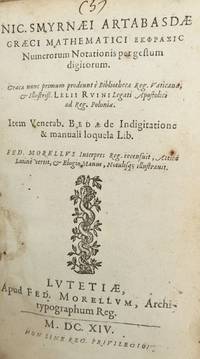
1614ref. 3296Lutetiae Paris: Apud Fed. Morellum Architypographum Reg 1614. First edition. In later vellum using old book binding materials. First title page restored at the gutter not affecting the text. A tiny wormhole at the lower outer edge on the first three leaves. Contemporary ink numerals on first and last title pages. Brown spottings here and there. Overall in very good condition. First edition. In later vellum using old book binding materials. 2 3–7 1; 8; 8 p. Coll.: A4 A4 a4. Scarce first edition of Rhabdas’ work on finger reckoning together with Bede’s text on the same subject. Nicolaus Rhabdas’ work on the notation of numbers through finger gestures represents an important contribution to the mathematical knowledge of his era. This volume the first printed edition of his work presents the original Greek text alongside a Latin translation by the printer and publisher Fédéric Morel Federicus Morellus; c. 1523–1583 a renowned humanist scholar based in Paris during the Renaissance. In addition to Rhabdas' treatise the volume includes a summarized version of Bede the Venerable's work De computo vel loquela per gestum digitorum which addresses the same subject. The book is divided into three sections. The first section titled “… Artabasdae … ΕΚΦΡΑΣΙC numerorum notationis … Bedae de Indigitatione & manuali loquela Lib. …” contains preliminary texts by Fédéric Morel including a dedication to Lelio Ruini a distinguished book collector and Apostolic Nuncio to Poland. The second section features Rhabdas' Expositio notationis numerorum digitalis presented in its original Greek with Morel's accompanying Latin translation. The final section includes Bede's Liber de loquela per gestum digitorum which provides a condensed overview of the first part of Bede's treatise. Both Rhabdas’ and Bede's works explore the practice of representing numbers through finger positions. Often referred to as finger reckoning this technique primarily served as a mnemonic tool for remembering numbers. It was also used in markets and fairs where traders lacked a common language. Nicolaus Rhabdas Artabasda or Nicolaus of Smyrna originally from Smyrna and active in Constantinople between 1320 and 1340 was among the last Greek mathematicians to write in his native language before Greek mathematical texts were revisited in their original form during the Renaissance. He was recognized for his expertise in arithmetic and geometry though only three of his mathematical works are known to have survived. Rare on the market RBH has documented the sale of only one copy in the past sixty years. Ref.: Erwin Tomash Library A 104; USTC 6001670 LIterature: Manolova D. Acerbi F. & Pérez Martín I. 2019. The Source of Nicholas Rhabdas’ Letter to Khatzykes: An Anonymous Arithmetical Treatise in Vat. Barb. gr. 4. Jahrbuch der Österreichischen Byzantinistik 682018 1-37. . Apud Fed. Morellum, Architypographum Reg unknown
ref. CBS-9780122276000Elsevier. New. Elsevier unknown
ref. CBS-9780122276000Elsevier. New. Elsevier unknown
2024ref. CBS-9781804064436Ed Tech Press 2024. New. Ed Tech Press unknown
2024ref. CBS-9781804064436Ed Tech Press 2024. New. Ed Tech Press unknown
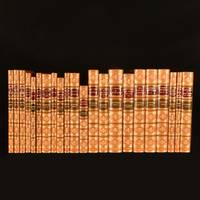
1853ref. 878P39DLondon: Nathaniel Cooke; H. Ingram & Co; Geo. Routledge & Co; Ward and Lock; James Blackwood; Charles H. Clarke; Richard Bentley; Saunders Otley & Co; Simpkin Marshall & Co 1853-86. First edition. Leather. Fine. 7.5" by 5"; 6" by 5". Cuthbert Bede; Edward Bradley; W. M'Connell; Alfred Crowquill. A beautiful fine set of the collected first editions works of Cuthbert Bede pen name of Edward Bradley a set of his scarce novels uniformly bound by Bickers. A very smart first edition set of of the works of 'Cuthbert Bede' the pseudonym of Edward Bradley.In a full tan calf binding by Bickers.Edward Bradley was a prolific but now largely forgotten novelist who wrote under the pen name 'Cuthbert Bede' a name taken from his time at Durham University. He is best known for his character 'Verdant Green'.This set includes;'Adventures of Mr. Verdant Green' published in 1853. With in-text illustrations by the author throughout. Six pages of adverts to the rear. 'Further Adventures of Mr. Verdant Green' published in 1854. Original wraps are bound in. Illustrated with a frontispiece and in-text illustrations throughout by the author. Four pages of adverts to the rear.'The Diverting Pathetic and Humorous Adventures of Mr. Sydenham Greenfinch Gentleman and of His Friends in London' published in 1854. A very scarce work. Original wraps are bound in. Illustrated with a frontispiece and in-text illustrations throughout by W. M'Connell. Eight pages of adverts to the rear.'Love's Provocations' published in 1855. A very scarce work. Original wraps are bound in with adverts to the reverse of each wrap and to the recto of the front endpaper and verso of the rear endpaper. Illustrated with a frontispiece three plates and in-text engravings by the author. 'Motley' published in 1855. A scarce work. Half-title is present. Illustrated with a frontispiece engraved title and in-text engravings by the author. 'Book of Beauty' published in 1856. A very scarce work. Illustrated with a frontispiece engraved title and in-text engravings throughout. 'Tales of College Life' published in 1856 also bound with 'Medley' and 'Motley'. 'Medley' illustrated with an engraved title and in-text engravings bound without the title page. 'Motley' with half-title illustrated with a frontispiece engraved title and in-text engravings throughout. 'Medley' undated dated 1856 from Jisc from a copy held at the British Library. A very scarce work. Original wraps are bound in. Bound without engraved title. Illustrated with in-text engravings throughout. Four pages of adverts to the rear. 'Nearer and Dearer' published in 1857. An uncommon work. Half title present. Illustrated with a frontispiece nine plates and in-text engravings. 'Mr. Verdant Green Married and Done For' published in 1857. An uncommon work. Original wraps bound in. Illustrated with in-text engravings throughout. Twelve pages of adverts to the rear.'Fairy Fables' undated dated 1858 from Jisc from a copy held at the British Library. A very scarce work. Publisher's original cloth bound in to the rear. Illustrated with in-text engravings by Alfred Crowquill. 'Happy Hours; at Wynford Grange' published in 1859. A very scarce work. Publisher's original cloth bound in to the rear. Illustrated with a hand-coloured frontispiece three hand-coloured plates and in-text engravings throughout'Our New Rector' published in 1861. A very scarce work. Half-title is present. Publisher's original cloth bound in to the rear.'The Curate of Cranston; With Other Prose and Verse' published in 1862. A very scarce work. Half-title is present. 'A Tour in Tartan-Land' published in 1863. A very scarce work. Publisher's original cloth bound in to the rear.'The White Wife; With Other Stories Supernatural Romantic and Legendary' published in 1865. A scarce work. Publisher's original cloth bound in to the rear. Half-title is present. Illustrated with a frontispiece and in-text engravings throughout by the author. 'The Rook's Garden' published in 1865. A very scarce work. Half-title is present. Publisher's original cloth bound in to the rear. 'Mattins & Muttons' Volumes I and II published in 1856. A very scarce work. Publisher's original cloth bound in to the rear of each volume. 'Little Mr. Bouncer and His Friend Verdant Green' undated dated 1873 from Jisc from a copy held at the British Library. Half-title is present. With in-text engravings throughout by the author.'Figaro at Hastings St. Leonards' undated dated 1877 from Jisc from a copy held at the British Library. A very scarce work. Original wraps are bound in with adverts to the reverse of the wraps to the verso of the rear endpaper and to the recto and verso of both the front endpaper and front free. With in-text engravings throughout by the author. 'Fotheringhay and Mary Queen of Scots' published in 1886. A scarce work.Illustrated with a frontispiece being an original contemporary portrait of Mary now first published. Further illustrated with nine plates most by the author. Publisher's original cloth bound in to the rear.Bookplate of W. A. Foyle of Beeleigh Abbey to the front paste downs. In a full calf binding by Bickers. Externally smart with only a few small marks and patches of rubbing. Bookplate to the front paste downs. Internally firmly bound. Pages are bright and clean with only the occasional scattered spot. Prior owner has coloured the hair of the figure to the vignette to the final page of text of 'Mr Verdant Green is Married and Done For'. Some spots to the last pages of some volumes due to the original cloth being bound in. Fine Nathaniel Cooke; H. Ingram & Co; Geo. Routledge & Co; Ward and Lock; James Blackwood; Charles H. Clarke; Richard Bentley; Saunde hardcover
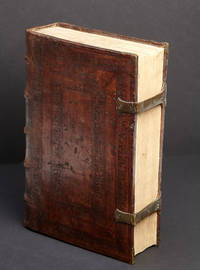
ref. 6759Numerous fine woodcut initials diagrams tables & maps in the text. Woodcut printer’s device at end. 14 p.l. 18 leaves 6 leaves 30 xxxi-cxxvi leaves 4 leaves. Folio cont. Flemish blindstamped calf binding over wooden boards rather well rebacked a few unimportant stains rolls of medallion heads & foliage forming a double panel orig. clasps and catches metal corner guards. Cologne: J. Prael for P. Quentel 1537. bound after: ANSELM ARCHBISHOP OF CANTERBURY. In Omnes Pauli Apostili Epistolas enarrationes. Title within fine woodcut border by Anton Woensam of Worms. Some fine large woodcut initials. 8 p.l. 531 pp. Folio. Cologne: E. Cervicornus for G. Hittorp 1533. A most attractive sammelband of two well-illustrated books in an attractive contemporary blind-stamped binding probably made at the Stavelot monastery in Belgium. I. First collected and illustrated edition of the scientific writings of the Venerable Bede including De Natura Rerum dealing with cosmology and natural history and De Temporum Ratione a work on chronology that still exercises a considerable influence over our daily life today. This edition was edited and commented upon by Joannes Noviomagus i.e. Jan van Bronchorst of Nijmegen 1494-1570 philosopher and mathematician then a professor of philosophy at the Collegium Montanum in Cologne. It would appear that he used the manuscript at the Dombibliothek no. 103 of Cologne to prepare this edition. The De Temporum Ratione is a significant book in several ways. Most notably “this book helped to establish the custom of counting years from the birth of Christ. When we say that Queen Elizabeth II was born in 1926 not ‘in the 16th year of the reign of George V’ or ‘in the year 2678 after the foundation of Rome’ or in the ‘2nd year of the 481st Olympiad’ we are indebted to the Venerable Bede.”–Printing & the Mind of Man 16n. “Bede’s greatest practical effect was on the Western calendar. His decisions beginning the year calculation of Easter names of days and months calculations of eras and so forth in most instances finally determined usage that was only refined not changed by Gregorian reform.”–D.S.B. I p. 565. “The De Ratione Temporum first published in 1505 is particularly important. It contains a remarkable theory of tides based upon Pliny but also upon personal observation; first mention of the establishment of a port i.e. the mean interval between the moon’s meridian passage and high water following; this interval is different in different ports.”–Sarton I p. 511. Pierre Duhem described Bede’s establishment of a port as the only original formulation of nature to be made in the West for some eight centuries. Also contained here is the De Natura Rerum 1st printing: 1529 which contains such physical science as was then known. It collects the wisdom of the ancient world on these subjects and has the special merit of referring phenomena to natural causes. It contains a particularly important section — the “De Comptu vel Loquela digitorum” — which is “our main almost our only source for the study of mediaeval finger reckoning or symbolism.”–Sarton I pp. 510-11. See also Smith History of Mathematics II p. 200. The rest of the book contains further treatises by Bede on arithmetic astronomy and the calendar and chronology. II. Very rare. PROVENANCE: Early inscription of “Antonius abbatis a Sancto Remaclo” on front flyleaf; Benedictine monastery of Stavelot Belgium inscription “Liber Monasterii Stabulensis” on title-page of Anselm; auction sale of the monastery library Catalogue d’une belle Collection de Livres et Manuscrits précieux sur vélin du VIIIe et du IXe siècle Ghent 26 April 1847 lot 42; Michel Chasles 1793-1880 the mathematician with bookplate his sale Paris 27 June-18 July 1881 lot 28; Robert B. Honeyman 1897-1987 his sale Sotheby’s 30 October 1978 lot 265. BINDING: Stavelot had its own bindery at this time and it is quite likely that this binding was executed there see Goldschmidt Gothic & Renaissance Bookbindings no. 90. Fine large copies preserved in a box. ⧠I. Adams B448–calling for two additional preliminary leaves but no other collation calls for them. Smith Rara Arithmetica p. 159n. Zinner 1657. II. Adams A1174. unknown
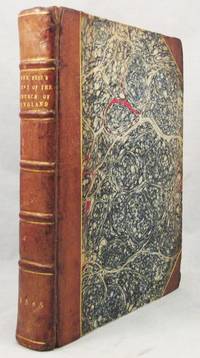
1565ref. 32099Antwerp: John Laet 1565. Five books in one volume. A VERY RARE COMPLETE COPY the First Edition of Historia ecclesiastica gentis Anglorum translated into English. Provenance: Montanus 1602 -- Sir Roger Twysden 1648 and Sir John Saunders Sebright armorial bookplate. With woodcut device on titlepage woodcut armorial dedication to Queen Elizabeth woodcut plate of St. Augustin with Elbert King of Kent in anno 596 woodcut plate of King Oswald uniting the Umbrian kingdoms halfpage woodcut of Elbert building St. Paul's and with many large and handsome woodcut initials all throughout. The woodcuts are possibly by Arnaud Nicolai. Small 4to 188 x 140 mm in antique three-quarter russia over marbled boards the spine with raised bands ruled in gilt one compartment gilt lettered gilt dating at the tail gilt lined back and cornerpieces. 1-6 >1-4 #1-4 192 9 pp. A truly excellent survival of a book rarely found complete. The text-block is especially fresh and well preserved crisp and very clean. The blanks date from the time of the binding but the text is otherwise wholly complete and original the binding is handsome though its age is evident and there was restoration some time ago to the hinges the front of which is also strengthened from within. VERY RARE FIRST EDITION IN ENGLISH OF THE FIRST AND GREATEST WORK OF ENGLISH HISTORY BY THE FATHER OF ENGLISH HISTORY. RARE IN COMPLETE STATE when one reads the catalogue entries of copies in even some of the worlds most prestigious institutions one finds descriptions of missing signatures facsimile titles or entire sections excised to be quite the norm. This copy but for its probable early 19th century blank flies and endpapers is wholly intact and in a truly exceptional state of preservation. The Venerable Bede's title of "The Father of English History" is well deserved. He was England’s greatest historian in the Middle Ages. His greatest work is the Historia Ecclesiastica here in its first English edition. It is an ecclesiastical history of the English people. Bede begins with Caesar’s invasion in 55 BCE and St. Alban’s martyrdom in Roman Britain tracks the spread of Christianity following St. Augustine’s mission to England in 597 and provides an account of critical events such as the Council of Whitby which decided that Roman rather than Celtic Christian customs would be followed in Britain. Bede drew on the many manuscripts in the Jarrow monastery’s outstanding library and correspondents provided him materials. He was a diligent scholar and properly credited his sources. To the benefit of historical scholarship Historia Ecclesiastica spread widely throughout Europe in the Middle Ages with some 160 manuscripts still surviving. Not long after his death he became known as the Venerable Bede. His was one of the first printed history books published in Latin in Strasbourg about 1475. Highly popular on the Continent and in Britain it was reprinted in 1500 1506 and 1514. Due to its strong association with Catholicism this first translation into the English tongue was published in Antwerp as the book was then prohibited in England as traitorous. Stapleton was educated in Oxford where he became a fellow in 1553. On Queen Elizabeth’s accession he left England to study theology in Louvain and Paris. His translation of Bede was his first of many fine works. Stapleton used Bede’s history to remind the reader that “we Englishmen also these many hundred of years kept and preserved sound and whole the precious perle of right faith and belefe” and he admonished that “after we forsooke the first paterne off the Christen faith delievered to us we have fallen in to plenty of heresies.” He added that the Venerable Bede a most reliable source describes many miracles that occurred in Britain under the true faith. Stapleton's translation has been called an "enduring contribution to this sparkling collection of recusant prose" -DNB This is also a copy of fine and established provenience. It was formerly owned by the renown historian and antiquary Roger Twysden whose ownership signature is dated 1648. Having been caught up in civil war strife Twysden retired to his seat Roydon Hall and devoted himself to his study and writings particularly on early English histories and monasticism. His collection passed to Sir John Sebright who sold the main portion at auction in 1807. Much of Twysden's collection later passed to Sir John Sebright whose fine engraved armorial plate is afixed to the front paste-down. The present binding was likely made while the book was in Sebright's possession. Contrary to the implications of Stapleton's edition of Bede Twysden's Historical vindication of the Church of England 1657 argued that it was the Church of England rather than Rome which had held fast to the true faith and that the pope's powers over England gained gradually over the centuries had been submitted to voluntarily out of love not duty for the archbishop of Canterbury had no mediate superior but only Christ and God see Jessup Sir Roger Twysden pp. 192-5. Completed in 731 Bede's Historia ecclesiastica gentis Anglorum is 'probably one of the most popular history books in any language and has certainly retained it popularity longer than any rival. The enthusiasm shown for his writings in the eighth century by English missionaries on the Continent such as Boniface Lul and others led to the spread of knowledge of his works not only in England but also in western Europe . . . . From then on as the spread of his manuscripts shows the History became popular all over western Europe and 160 of them survive today in spite of all the wars and other dangers to which manuscripts are always subject' Colgrave & Mynors p. xvii. It was first printed c. 1475 at Strasbourg PMM 16. 'Bede provided for over a thousand years and to a large extent still provides nearly all the knowledge available of the early history of England. His Historia is the only work other than parts of the Bible which has been read by every English generation from his own day to the present. It has the power to move and to convey something of the personality of its author to a degree which has called forth not only admiration but a kind of affection' Oxford DNB. John Laet hardcover