1 040 résultats
réf. DADAX0412310600New unknown
réf. DADAX0199535086New unknown
réf. DADAX0367387549New unknown
réf. DADAX0412150204New unknown
réf. DADAX0412260808New unknown
réf. DADAX0071780432New unknown
réf. SONG197518548XUsed: Good unknown
réf. DADAX0199654999New unknown
1997réf. DADAX3428087690Duncker & Humblot 1997-04-08. perfect. New. 6.26x0.67x9.13. Buy with confidence. Excellent Customer Service & Return policy. Duncker & Humblot unknown
réf. DADAX3319576747New unknown
réf. DADAX1461276209New unknown
réf. DADAX0071799281New unknown
réf. DADAX0323328342New unknown
réf. DADAX1455775584New unknown
1865réf. 14130Paris G. Masson No year but presumably 1871. 4to. Cont. hcalf. Top edge gilt. Raised bands gilt back. Head a. foot of spine frayed. Hinges repaired for splitting. Titlepage and 105 pp. with explanation to each plate. Titlepage somewhat brownspotted. With 105 fine chromolithographed plates among these are 11 showing surgical instruments. Plates "Dessiné et Lithogr. dap. nat. par Emile Beau". Plates ocassional a little brownspotted. This fine atlas the first edition is wholly devoted to obstetrics. hardcover

réf. DADAX1461275563New unknown
réf. DADAX0071369783New unknown
réf. DADAX0071458204New unknown
réf. DADAX0412075016New unknown
réf. DADAX0387979727New unknown
réf. DADAX0306418657New unknown
réf. DADAX0443054584New unknown
réf. SONG0199218471Used: Good unknown
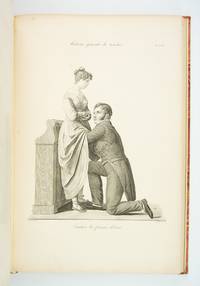
1840réf. ST20999Paris: Bechet jeune et Labé 1840. Second Edition. 447 x 303 mm. 17 1/2 x 12". Plate volume only without the text as frequently. Modern half cinnabar buckram over marbled boards smooth spine with black morocco label. Original paper covers bound in at front and back. WITH 81 SOMETIMES MEMORABLE ANATOMICAL PLATES engraved by Forestier and Couché fils after drawings by Antoine Chazal. Corners a bit bumped title page and first plate a bit foxed just a hint of foxing elsewhere otherwise quite fine--the plates clean fresh and bright and the binding showing little significant wear. Engraved to accompany a treatise on pregnancy and childbirth by the most eminent French obstetrician of the time the engravings here in Waller's words are "splendid" and "executed with the utmost accuracy." "Heirs of Hippocrates" observes that these plates "cover virtually every phase of childbirth including pelvic deformities pelvimetry transverse presentations Caesarean section the use of forceps and even a section on infant feeding and lactation." There is also a demure depiction of a doctor's discreet "touch only" examination of a standing clothed woman which is surely one of the most memorable images in the literature. Considered one of the best men in his field Jacques-Pierre Maygrier 1771-1835 studied with Ambrose du Bois the doctor who attended Empress Marie Louise at the birth of Napoleon's son and heir. In addition to practicing at Cochin hospital and the Hotel-Dieu Maygrier taught courses in anatomy and physiology and succeeded Jean-Louis Baudelocque as Chair of the department of obstetrics at the Maternité de Port Royal the first specialized medical chair in France. The illustrations here are the work of Antoine Chazal 1793-1854 best known for his botanical paintings but also a renowned anatomical engraver illustrating works that included Cruveilhier's classic "Anatomie Pathologique du Corps Humain." The images here are much more artful than technical with an appropriate softness and sympathy that encourage a strong connection between the viewer and the mothers and children who are sometimes depicted in intimate settings. Bechet j[eun]e et Labé unknown
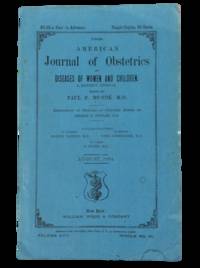
1884réf. 228731884. Mundé Paul F. ed. The American Journal of Obstetrics and Diseases of Women and Children August 1884 documents late nineteenth-century medical approaches to women's health reproduction and social organization including a significant clinical study of the Oneida Community. This issue supports research into the history of gynecology medicalized interpretations of alternative social systems and the intersection of reproductive science with utopian communal experiments in the United States. Appearing in the postbellum period of expanding professional medicine the journal situates women's bodies within emerging clinical frameworks while also engaging with controversial social practices such as communal marriage and controlled reproduction. Mundé Paul F. ed. The American Journal of Obstetrics and Diseases of Women and Children. New York: William Wood & Company August 1884. Vol. XVII No. 8. Octavo. Original printed blue paper wrappers. The issue includes the article "A Gynecological Study of the Oneida Community" by Ely Van de Warker M.D. which examines the reproductive and social practices of the Oneida Community known for its system of "complex marriage" and regulated procreation. The Oneida Community was a Christian perfectionist communal society founded by John Humphrey Noyes and his followers in 1848 near Oneida New York. It was a utopian religious community dedicated to living as one family sharing all property work and love and is recognized as one of the longest-lasting communal experiments of the 19th centuryAdditional contents include original medical articles society proceedings reviews and abstracts printed in double-column format on wove paper. The front wrapper presents the journal title editorial staff subscription pricing and a list of European collaborators within a decorative border while the rear wrapper features a full-page advertisement for "Imperial Granum" illustrated with engraved portraits of children and promotional text. Interior pages are continuously paginated pp. 801-872 with publisher advertisements at the front. Single issue. Original printed wrappers. Octavo format approximately 9 x 6 inches. Wrappers clean and bright with a few small circular stains and light soiling minor corner wear and short splits at spine ends; spine lightly rubbed but legible; interior lightly age-toned at edges and otherwise clean and sound; overall good condition. Issued during a period when medical professionals increasingly analyzed and categorized alternative social arrangements through clinical frameworks this issue provides direct evidence of how nineteenth-century gynecology engaged with experimental communities offering value for the study of women's health reproductive history and the medical interpretation of social reform movements. unknown