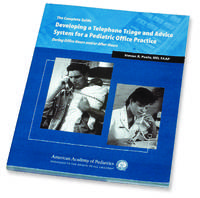
Evanston IL: American Academy of Pediatrics 1971. First Edition; First Printing. Softcover. Very Good in wrappers. Large owner name to title page. ; 8vo 8" - 9" tall. American Academy of Pediatrics unknown
Philadelphia: University of Pennsylvania Press for the American Academy of Political and Social Science 1980. First Edition. First Printing. Hardcover. Very good. 2 volumes in slipcase. Volume I xi 318 pages. Illustrations. Notes. Index. Volume II 476 pages. Biographical Information on Conferees. Notes to Discussion Material. Reflections on the Conference by Herbert Wechsler. Index. Volume II has minor corner bumping. Slipcase has some wear and soililng. Foreword by Chief Justice Warren E. Burger. Whose view of the Constitution should be authoritative The Constitution itself did not explicitly say. In 1803 the Supreme Court under Chief Justice John Marshall laid claim to the power of judicial review. In the case of Marbury v. Madison Marshall asserted the judiciary's power to interpret the Constitution and to nullify laws it deemed unconstitutional. Noting that Article VI Section 2 enjoins the courts to enforce only laws that are "in pursuance" of the Constitution. Marshall contended that before the court is entitled to enforce a law it must first determine whether the law is in fact in pursuance of the Constitution. <br/><br/>The Constitution Marshall declared in that decision was "intended to endure for ages to come and consequently to be adapted to the various crises of human affairs.To have declared that the best means shall not be used but those alone without which the power given would be nugatory would have been to deprive the legislature of the capacity to avail itself of experience to exercise its reason and to accommodate its legislation to circumstances." Champions of states' rights and of a strict construction of the Constitution were hardly silenced by the decision. Marshall and the court were frequently criticized. And there was considerable opposition to judicial review. Jefferson repeatedly contended that giving the Supreme Court the exclusive right to interpret the Constitution would make it "a mere thing of wax in the hands of the judiciary which they may twist and shape into any form they please."<br/><br/>If the Constitution was admired in the pre-Civil War era it was venerated in the last quarter of the 19th century. In 1913 however the conservative world was scandalized-and Progressives were cheered-by a book about the matchless instrument An Economic Interpretation of the Constitution of the United States by historian Charles A. Beard. Beard contended that the "overwhelming majority" of the members of the Constitutional Convention far from being "disinterested" had been "immediately directly and personally interested in the outcome of their labors at Philadelphia and were to a greater or less extent economic beneficiaries from the adoption of the Constitution." They had built the new government "upon the only foundations which could be stable: fundamental economic interests." Liberal reformers continued to be frustrated by the Supreme Court. Sen. Robert LaFollette the Wisconsin Progressive argued in 1922 that the court had usurped the power of judicial review. In the half-century since. Howard has noted the court while abandoning "judicial activism" in the economic sphere "has made vigorous use of the Constitution to police governmental acts in other areas. In a sense it has turned its attention from 'property rights' to 'human rights.'" The court's landmark decisions-among them. Brown v. Board of Education 1954 on school segregation. Baker v. Carr 1962 on proportional representation in state legislatures Gideon v. Wainright 1963 and Escobedo v. Illinois 1964 on the right to counsel Miranda v. Arizona 1966 on the right to avoid self-incrimination and Roe v. Wade 1973 on abortion and the right to privacy-have gladdened the hearts of liberals and given conservatives reason to complain of "judicial supremacy."<br/><br/>One noted political conservative Attorney General Edwin Meese Ill called in 1985 for a return to "a jurisprudence of original intention." Rejecting Meese's views Justice William J. Brennan Jr. said. "The ultimate question must be what do the words of the text mean in our time. For the genius of the Constitution rests not in any static meaning it might have had in a world that is dead and gone but in the adaptability of its great principles to cope with current problems and current needs." Whether judicial activism over the decades has found critical favor or disfavor among liberals and conservatives seems often to have depended on whose political ox was being gored. But when the power of the judges is viewed in perspective it appears rather limited. University of Pennsylvania Press for the American Academy of Political and Social Science hardcover
Bookseller reference : 72447 ISBN : 0812277635 9780812277630
Brand: University of PA Press 1980-06-01. 3. hardcover. Used: Good. 0.00x0.00x0.00. Buy with confidence. Excellent Customer Service & Return policy. Brand: University of PA Press hardcover
Bookseller reference : SONG0812277635 ISBN : 0812277635 9780812277630
Washington DC: American Academy of Achievement 1998. Presumed first edition/first printing thus. Hardcover. Very good. Includes illustrations. Approximately 140 pages. Decorative endpapers. Some Illustrations in color. Cover title "1998 Banquet of the Golden Plate American Academy of Achievement". Secretary of Energy Steven Chu was among the 1998 Captains of Achievement recipients of the Golden Plate award as "representatives of the many who excel: in the great walks of life. The Achievement Summit was held May 20-24 1998 in Jackson Hole WYoming. From Wikipedia: "The Academy of Achievement is a United States-based non-profit organization that aims to bring high profile successful people from various fields together with "young achievers" to inspire them to succeed. The Academy was founded in 1961 by Hy Peskin who later changed his name to Brian Blaine Reynolds and is now run by his son Wayne Reynolds. The organization is based in Washington D.C. The organization presents its annual "Golden Plate" award to high achieving individuals. Notable recipients of the award include Barack Obama Jonas Salk Wole Soyinka Ronald Reagan Maya Angelou Desmond Tutu and Steve Jobs.The International Achievement Summit was first hosted in 1961. The meeting was originally called the annual "Salute to Excellence" and was later renamed the "Annual Achievement Summit". This annual meeting gives exceptional graduate students the opportunity to interact one-on-one with Nobel Prize-winners in the arts and sciences public servants prize-winning journalists explorers humanitarians financiers athletes and entertainers. The Academy invites leaders in these categories to attend the Summit and address the students at a series of symposiums and roundtable discussions. The Academy also organizes dinners and other social events where the students are able to meet with honorees or to listen to them speak on various topics. Approximately 30 previous awardees and 20 new ones interact with 200 domestic and international graduate students in an informal setting over the course of four days. The summit ends with a formal dinner where that year's honorees are officially presented with their awards and inducted into the Academy.Until 1999 the meeting was held in a different U.S. city each year. In 1999 the event became the "International Achievement Summit" when the Academy held its first international meeting in Budapest Hungary. Subsequent Summits have been held in London England 2000 Dublin Ireland 2002 Washington D.C. 2003 Chicago Illinois New York City 2005 Los Angeles California 2006 Washington D.C. 2007 Kailua-Kona Hawaii 2008 Cape Town and Singita Sabi Sand Game Reserve South Africa 2009 Washington D.C. 2010 and Washington D.C. 2012. The "Golden Plate" is the Academy of Achievement's official award which is presented to honorees at the end of its annual Summit. The Academy s Golden Plate Awards Council annually reviews a broad spectrum of candidates for invitation to the Summit. From this list the council composed of past "Golden Plate" honorees of the Academy selects the 20 new awardees. Award recipients are selected for significant achievement in their fields. The Academy has presented awards to over 1 000 honorees who have included Nobel Prize winners presidents scientists athletes authors and entertainers. Notable awardees include Muhammad Ali Steven Spielberg Clare Boothe Luce Willie Mays Rosa Parks Elie Wiesel Jimmy Carter Bill Gates Coretta Scott King Bob Dylan and Desmond Tutu. Steve Jobs received the award in 1982 when he was 26 and in his speech to students attending the summit advised that they travel and get to know Zen Buddhists." American Academy of Achievement hardcover

 Receive by email
 Download as PDF document
 RSS feed
 Permanent link