|
[World War II]: [Film]
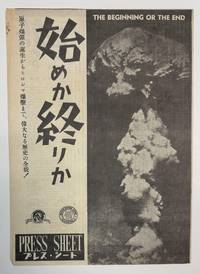
Japanese Press Sheet for The Beginning or the End the First Hollywood Film to Dramatize the Story of the Atomic Bombing of Japan
N.p. probably Washington D.C. or Los Angeles: MGM / Motion Picture Export Association 1952. Single sheet folded into a four page brochure with black and white photographic illustrations on front and rear 9.75 x 7 inches. Text mainly in Japanese but the list of "players" and production credits in both English and Japanese. A few tiny marks and mild edge wear else very good. A Japanese-language flyer advertising the 1947 MGM movie The Beginning or the End a docu-drama about the development of the atomic bomb to the Japanese market. Interestingly in spite of the press release it seems highly likely the film was not released in cinemas in Japan; we have been unable to find any record of the film being shown there. The film mixed dramatized scenes with actual footage of the bombing in telling the story beginning with the Manhattan Project and proceeding through the bombing.  Major Hollywood actors participated in the project including Brian Donlevy Robert Walker and Hume Cronyn as J. Robert Oppenheimer in a film directed by Norman Taurog responsible for 180 films during his career and produced by Samuel Marx MGM stalwart with a screenplay by Frank Wead from an original story by Robert Considine. The film was made commercially with the blessings of the United States government President Truman reportedly suggested the film's title as well as the input of Robert Oppenheimer who found the script lacking in authenticity.<br /> <br /> The present advertising piece was produced some years after the initial release date of the film during the Korean War and appears to be addressed primarily to distributors of the film in Japan. It asks the distributors to do their best to promote press interest in the film and to seek tie-ins with books about atomic weapons. Rather surprisingly given the film's largely uncritical presentation of the bombing of Hiroshima the text includes the words "in the midst of the Korean War this film should be a force for inspiring Japanese citizens' wish for peace.†The pamphlet goes on to suggest advertising slogans for the film such as: "The whole historical account of events leading up to the atomic bombing of Hiroshima from an American perspective†and "A must-see movie for all Japanese people. In the face of this shock and emotion you must strengthen a new commitment to peace!" A fascinating document of its time and place. Though the film's reception in the English-speaking world was lukewarm it is difficult to imagine the reception of such a film in war-torn and still-occupied Japan. MGM / Motion Picture Export Association unknown
书商的参考编号 : 12641
|
|
|
[WORLD WAR II -- HOME FRONT SCRAPBOOK & PHOTO ALBUM/WOMEN]. [OTIS, Patricia Eileen].
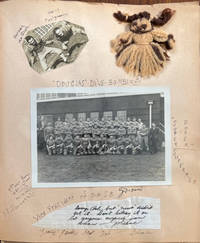
Junior Jive. . . A fascinating photo album and scrapbook filled with 100s of cards souvenirs drawings school schedules newspaper clippings rodeo programs theater programs pressed corsages 17 tipped-in original photos and Real Photo Postcards recording documenting the life and experiences of this young woman who serves as Student Body President for Newberg Union High School cheerleader reporter Miss Columbia actress artist and later her life on the World War II home front as a Willamette University Student.
Newberg & Springbrook OR: Patricia Eileen Otis 1941-1944. Thick 4to. 116 pp unpaginated comprised of thick beige leaves 100s of newspaper clippings ditto copies printed packets menus theatre programs announcements permission forms documents 17 tipped-in original photographs drawings in pencil coloured pencil paint corsages 1 orchid a couple carnations and much more. Contemporary embossed post binder brown boards gilt raised lettering on front cover bound at gutter margin w/ brown silk braid some toning fraying to some samples minor tears still a VG piece. This outstanding World War II-era home front scrapbook chronicles the high school and college career of young Patricia Otis b. 1925 providing an excellent historical document of life in the Pacific Northwest during the 1940s. Patricia Otis appears to have been a remarkable young woman heavily involved in just about every high school activity running for Student Body President cheerleading drama school newspaper & yearbook staff and much more. She includes souvenirs of participation in the Music for America Operetta a patriotic piece held in Newberg in March 1942 set just after the events of Pearl Harbor; clipping and drawings of Newberg students filling trucks with sand to put out incendiary bombs should be dropped on the Pacific Northwest; War Bond drives held by the Disabled American Veterans in conjunction with the High School and election of Miss Columbia; photos of the Newberg Union football team nicknamed the Douglas Dive-Bombers; clippings about Patricia as Miss Columbia at Veterans ceremony honoring Henry Hopkins who in 1943 was one of the oldest living Civil War Veterans; a list of service men in South Pacific who had been classmates; describes the shortages of photographic paper due to wartime rationing as well as clippings announcing the christening of the Liberty ship John W. Troy launched at the Oregon Shipyards in 1944 by her roommate Nancy Merki. In addition there are 100s of notes drawings school souvenirs dance cards and much more recording everyday high school and college life. The Romig and Otis family had many military veterans including Patricia Otis’ grandfather Dr. Edward A. Romig 1852-1939 Army Surgeon for the 40th Infantry during the Philippine Insurrection who settled in Newberg OR following his discharge from the Army in 1903; and her father Ralph Grey Otis 1891-1959 served from 1918-1919 as a Corporal in the US Army Battery D 27th Artillery and later operated the family farm in Rex OR for many decades. See: The Community of Rex Oregon In: The West Side Feb. 2009 pp. 6-8. Patricia Eileen Otis, hardcover
书商的参考编号 : 49953
|
|
|
[World War I Photographica]. Tolman, William H
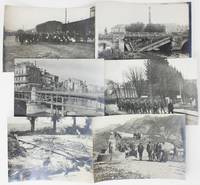
Large Group of Over 200 Images Taken and Collected by an American Aid Worker During World War I
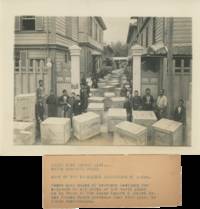
Various locations in Europe mostly France 1918. Very good. 206 original black-and-white photographs between 3.5 x 2.5 inches and 5 x 7 inches. Occasional minor wear light chipping or short tears to images but most are in very good or better condition. An informative collection of contemporary photographs detailing the impact of the First World War in France. The images include numerous images showing the destruction of the war across France some casualties of the war group portraits of military officers and politicians street scenes and parade shots picturing dignitaries and military figures often in motorized vehicles but sometimes on horseback or on foot scenes along railroad lines scenes in factories both functional and bombed out numerous shots featuring the architecture and statuary in France street scenes in numerous French towns and villages and much more. A handful of small groups of images are held within a single sheet of paper identifying a common location or shared subject matter such as a pair of images from Saint-Quentin including a photo of a group of German prisoners at a rail station there seven images of flowers in Toulouse several images in Amiens including street scenes and a few with military content numerous images in Reims and Verdun three images documenting the destruction in Noyon and so forth. In addition to the war content the collection provides a broad view of the urban architecture and variety of landscape in World War I-era France among other research-worthy topics. <br /> <br /> Particularly interesting images feature a group of women busily writing dispatches a larger group of women working in a textile factory the statue of Joan of Arc in Reims soldiers cutting vegetables outside the citadel at Verdun the ruins of Sainte-Genevieve a town scene in the village of St. Martin a large group of men repairing the railroad an elderly woman standing below a bombed-out elevated railroad in Charleville and a crowded street scene and parade in Reichshoffen. Two images feature soldiers and resident of Reims rescuing large framed paintings from the Hôtel de Ville; both images feature men carrying a single large painting down the cobblestoned streets of the city.<br /> <br /> In addition to the images featuring human subjects and scenery four photographs memorialize signage the photographer came across in his time in Europe. One concerns the evacuation of a town in France in April 1916 another informs the French public that German soldiers are only allowed to pay for goods with certain vouchers the third sign lists the officials responsible for railway security in Noyon dated October 8 1916 and the last pictures a British Red Cross poster. The collection is rounded out by a handful of images in Sweden England and Egypt. The photographs are occasionally annotated on the verso in pencil identifying the subject location and/or the setting of the images. Several of the images include a personal stamp on the verso belonging to William H. Tolman Ph.D. of Pawtucket Rhode Island and New York City. According to newspaper records Dr. William H. Tolman 1861-1958 was a "social economist" and "social service expert lecturer and writer" who graduated from Brown University was an active citizen of Pawtucket was decorated by the regent of Hungary for creating a chapter of the YMCA in that country and while in New York City founded and served as the director of the American Museum of Safety and Sanitation from which he resigned in 1916. From about that year to 1920 Tolman engaged in welfare work in Europe and served as director of the YMCA in Bordeaux France spurring his personal interest in France and the First World War. A fascinating group of photographs documenting numerous scenes during the First World War. unknown
书商的参考编号 : 4184
|
|
|
[World War II – Philippines – Jesuits – POWs] Unknown Author
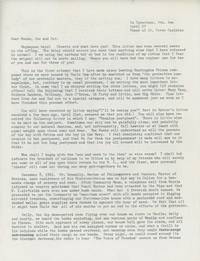
Letter Home from an American Missionary in the Philippines Describing the Japanese Takeover of Manila and His Subsequent Experience as a POW
Philippines 1945. Single letter; five 8.5 x 11†pages. Pinhole at top of first page missing final pages overall fine. The unknown author of this letter was an American Jesuit missionary in the Philippines who before the war was a novice living in Novaliches just outside Manila. He apparently had not written a significant letter home for a long time: in this letter written in April of what is likely 1945 he recounts his experiences from between December 8 1941 and early January of 1945 shortly before the civilian POW camp in which he was interned was liberated.<br /> <br /> After the “Nips†bomb Pearl Harbor “A feverish month ensuedâ€:<br /> <br /> “We proceeded to put the Community on ‘war-time alert’ with all hands occupied in digging air-raid trenches camouflaging our fortress-like house with a garlanded roof and mud-daubed walls; grain supplies were rushed in against the hour of need. We felt that all it might take Uncle Sam all of six months to put an end to the efforts of the pretender.â€<br /> Around Christmas they evacuated to the Jesuit Ateneo Grade School then in Intramuros as the Japanese were advancing quickly towards Novaliches. Of course this did not prove to be much safer:<br /> <br /> “When darkness came the Japs began their bombing of the Port Area. The bombs began to bounce off the pavement; bombers just skimming our roof-top on their way. We spent the night on our tummies and how we prayed. We thought that each decade of the beads would be our last this side of Purgatory. . When the church sto Domingo was hit the floor beneath us did some tricks and we were lifted up a bit and let down amidst the dust and smoke that poured in from above.â€<br /> <br /> The missionaries try to “salvage important papers and other valuables from the Mission House prior to abandoning it to the fire which threatened the entire Walled City.†During this time they and “a thousand refugees†live in the Ateneo while “Dawn and night raids were supplied by the Japs with nary an American plane to say to them no†– American forces had taken a serious hit and withdrawn outside Manila. It was declared an open city before “the little scrawny but arrogant Japs came into the city and took over†in January of 1942.<br /> <br /> The missionaries persuade the Japanese to let them stay in the Ateneo:<br /> <br /> “We convinced them that it was impossible for us to give up the building because it belonged to the Pope and the Vatican State would hold us responsible. This argument with many ingenious trimmings enabled us to hold on to the Ateneo until June ‘43 when the main building was taken for a military hospitalâ€.<br /> <br /> The author describes how despite what he calls his “partial internment†in Manila he is able to get around checkpoints by pretending to be Belgian. He finishes his studies and begins work at a Belgian convent in Paranaque in February of 1943 living between there and Manila:<br /> <br /> “Incidentally none of this would have been possible if the Japs had gumption enough to find out that I was one of the hated Americans. . All vehicles were obliged to stop here a checkpoint at Baclaran and all passengers get down and file between a Jap sentry and a Filipino constabulary soldier to be searched for hidden arms etc. Since several Belgian Fathers not considered enemy aliens frequently passed this way I was able to walk through unmolested as an unoffending Belgian. . I carefully kept my helmet covering the tell-tale red arm-band which was worn on the arm furtherest away from the Jap. The Filipino would do no more than give me a knowing grin.â€<br /> <br /> On July 10 1944 all of the American civilian POWs are taken to internment camps in Santo Tomas and then Los Baños. In Los Baños the POWs cut wood repair roads and farm. Los Baños would be liberated in February of 1945; the author paints a slightly confusing picture of the leadup to this:<br /> <br /> “Conditions generally ‘worsened’ when on Jan. 8th about the time that the American troops landed at Mindero an island just across from Batangas the Japs got jittery believing that the Yanks were going to do the obvious and cross over the bay to Batangas and they the Japs at Batanga decamped! ‘You are free but remain in camp until the Americans come. Outside your camp Japanese troops will shoot any who leave.’ Great was the joy in Mudville. From nowhere came flag poles on which we quickly unfurled American and British flags .; a short-wave radio was set up and we enjoyed daily Frisco broadcasts .â€<br /> <br /> It sounds as if the missionary was reporting contrary to the usual narrative of the Los Baños raid that the Japanese had essentially given up control of the camp and were like the prisoners simply waiting for the Americans to come get their people. Perhaps something further happened in the nearly two intervening months; however the remainder of the letter is missing.<br /> <br /> Of interest to scholars of modern Jesuit history and of the civilian POW experience during the Second World War. unknown
书商的参考编号 : List2748
|
|
|
[World War I – Ottoman Empire – Turkish War of Independence] "HC" H C
Letters Home from an American Professor Working in the Ottoman Empire in the Aftermath of World War I.
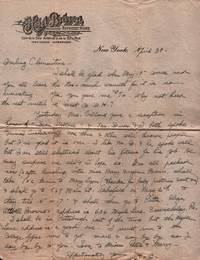
Constantinople New York City and others 1922. Four letters totaling seven pages. Folded else fine. A small collection of letters from “H.C.†who seems to have been an American university professor in Constantinople to his “Darling Clementine†back home. H.C. may have taught at Robert College a Christian college founded in 1863 now a prestigious private highschool.<br /> <br /> It is not clear when H.C. first arrived in Constantinople but he had been there for several years already by the time the letters begin and was certainly there at a critical point in its history. He writes in 1918 shortly after the arrival of occupying forces:<br /> <br /> “conditions are still very bad in town I long to see the suffering diminished. Some say it will be months yet. Sometimes now there is no coal no electric light no bread no water. Can you imagine the state of an Oriental city under such conditions We have had are still having trouble about light water-supply but we have steam heat plenty of food of a plain kind. We all keep well. . I hear that an American Red Cross boat will arrive next week I am eager to see its passengers. We may have a chance to leave on it but I can not see my way clear to skip because our faculty is depleted ever since the exodus at the time of the panic long ago when Miss Lyon left. . We have a good college now – boarders about 90 in the College-department – and many day scholars but lately the Spanish fever the lack of tram-car service has kept many students away. As soon as our cousins supply coal we hope for improvement. The Ententists are spreading over the city thoroughly quietly – like oil. It is a delight to see so many manly looking officers after the ones we have had here for years. There is a spiritual look in the eyes of the present occupants a look of bull-dog determination.†December 6 1918<br /> <br /> H.C. enjoys a “real yachting cruise†on his way back to Constantinople from the States in 1921 tells Clementine about his plans for his commencement speech in 1922 and describes a college reception in New York City which “General Custer’s wife†Elizabeth Bacon Custer attended undated letter. Meanwhile Turkey was engaged in its brutal war for independence. At some point H.C. befriended Electra—probably a Greek woman—whom he sent along to visit Clementine in part to help Electra cope with her traumatic experiences during the war:<br /> <br /> “As you will recall my young friend’s father was executed – tho innocent – with about 70 others. At first E. bore this with wonderful fortitude but after Xmas a reaction set in naturally enough. She developed morbidness a hyper sensitive attitude toward all of my looks words – probably a condition due to shock. I am confident that travel new scenes interests will bring her back to her old self your wholesome household will chase all gloom away. A doctor told her lately that she has hysteria that she must think of cheerful things only. I tell you this thinking that you might keep her from talking about the nation that does cruel things. The truth is that cruelty is pretty generally distributed a judicial mind finds it difficult to pick choose. Some nations get the public ear so the pot can call the kettle black!†June 6 1922<br /> <br /> Indeed both sides of the Greco-Turkish war—part of the larger Turkish campaign for independence—massacred each other. However only the Turkish contingent’s actions have been argued by historians to constitute ethnic cleansing or genocide.<br /> <br /> Of interest to historians of the Ottoman Empire and Turkey post-World War I especially Americans’ experience thereof. unknown
书商的参考编号 : List3039
|
|
|
[World War II]
LETTERS OF A U.S. NAVY LIEUTENANT DEPLOYED IN THE PACIFIC THEATER
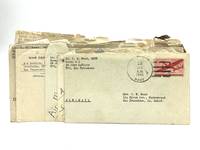
Small group of letters written by U.S. Navy Lieutenant Orville Hockett "Bud" Read 1910-91 to his wife Ruth LeMay "Mimi" Read nee DeVault 1917-2002 during his deployment in the waning months of World War II and the early postwar period. His detailed letters describe conditions in Japan a soldier who went AWOL transporting military personnel and his opinion of the war.<br /> <br /> Read served on the SS Jean LaFitte a Sumter-class attack transport ship. He wrote that it could carry as many as 1800 people packed in tightly.<br /> <br /> Writing from an undisclosed location on January 17 1945 Read describes a brief excursion to a warehouse where his ship is docked: "In it there are tons and tons of Chinese coins which the Japs confiscated and hauled over here. I am getting 3 different sizes and enough to make a set of poker chips. It's the first time I ever walked around in money piled knee-deep. None of it of course is any good anymore but it looks impressive."<br /> <br /> "We just got back from a brief jeep ride having gotten the troops off the ship about 10:30 pm" he wrote on November 2 1945 "Couldn't see too much because it was dark but there was no question about the town being a total wreck. There were a lot of very fine buildings here but they are in ruins - most of it demolition work by the Japs when they found they were whipped."<br /> <br /> The collection includes twelve handwritten and typed letters during his naval tour and three postwar letters written from Cuba where he was traveling on business. All are in their original mailing envelopes and in very good condition. unknown
书商的参考编号 : 77282
|
|
|
[WORLD WAR II POSTER -- WAR BONDS]. [PERLIN, Bernard (Artist).]
Let’em have it: buy extra bonds. We bought extra War Bonds 4th War Loan. No. O-563183. WFD 879-A.
Washington D.C.: U.S. Government Printing Office 1943. One atlas folio colour-lithograph poster sized 20 x 27.75 in. minor age-toning couple very minor closed tears at fold creases still a VG bright copy folded as issued. First edition of this large version of famed poster issued during the 4th War Loan Campaign which ran from January 18-Feb. 15 1944 by the US Treasury to funds for the War Effort. The campaign issued this painting by Perlin depicting a US soldier preparing to hurl a grenade across the smoke-filled battlefield of the image. Perlin 1918-2014 was a gay Jewish-American born in Richmond VA studied in Poland before the War and while traveling personally witnessed the rising Nazi racist tide and discrimination against Jews. Although banned from serving in the US military due to his homosexuality he designed several propaganda posters for the war effort and would later work as war correspondent for Life and Fortune magazines. U.S. Government Printing Office, unknown
书商的参考编号 : 64077
|
|
|
[WORLD WAR I -- SHIPBUILDING]. [REMINGTON, Franklin (Pres); COLLINS, Dean (Editor)].
Longest timber comes to yard; Haviside’s riggers out to beat slogan; Liberty loan going strong; Yard Three beats jinx of Friday the Thirteenth in night launching; “Carry On†war orphans; Fifteenth span in “bridge of ships;†Yard 3 launces eighteenth hull. . . In: “Do your bit†Vol. 2 Nos. 1-18.
Portland OR: The Foundation Company Employees’ Club August 30 1918 - Dec. 24 1918. Eighteen parts in one vol. 9.5 x 12.25 in. 240 pp issues all separately paginated. With 100s of text illustrations lithograph illustrations photos illustrated masthead. Limp dark brown pebbled cloth gilt lettering stamped on front cover clay-sized brown endpapers retaining the original illustrated wrappers for the Christmas edition No. 18 some very slight rubbing shelfwear NF copy. First editions of these very scarce in-house magazine publications for shipyard workers at the Foundation Company’s Yard No. Three which had been ordered by the Emergency Fleet Corporation during World War I to construct wooden vessels for the War effort. The shipyard on the Willamette adjoined two of Portland’s largest lumber mills and by Dec. 1918 the Shipyard No. 3 had produced 20 ships nearly al of which were wrecked burned or scrapped from 1920-1927. Sporting events such as baseball and football games were integral to the morale building and were even affected by the 1918 Spanish Flu influenza pandemic which by October 1918 was quarantining bases shipyards and military posts across the country as the planned game against Camp Perry was canceled. Of particular interest are the series of lithographs and woodcuts included in these issues executed by noted artist Carl Walters 1883-1955 who first studied in Minneapolis trained under Robert Henri in New York until 1911 and after marrying Helen Lawrence moved to Portland Oregon where he worked as a prominent painter and illustrator until 1918 when they returned to New York. Worldcat locates 1 set of Vol. 2 Univ. of Oregon; See: Fred Hopkins Emergency Fleet Corporation Ship Construction in World War I in the Pacific Northwest The Northern Mariner pp. 15-22; Michael Munk The Portland Period of Artist Carl Walters Oregon Historical Quarterly Vol. 101 No. 2 Summer 2000 pp. 134-161; Micheal A. Karczewski The Ceramic Sculptures of Carl Walters 1883-1955 Univ. of Georgia 2008. The Foundation Company Employees’ Club], hardcover
书商的参考编号 : 57246
|
|
|
[World War II – Germany – Nazism] Bliwernitz, Annemarie
Looking Back. A World War II Memoir by Annemarie Bliwernitz
St. Petersburg Florida: unpublished 1974. Ninety-four typed and photocopied pages measuring 8 ½ x 11 inches in a soft binding. Binding with wear; pages generally excellent to Near Fine. Overall excellent to Near Fine. Annemarie Bliwernitz 1905–2005 née Entz was born in Notzendorf East Prussia. In 1952 after surviving both World Wars she and her husband Bruno 1900–1992 immigrated first to Canada and then to the United States. Offered here is Annemarie’s unpublished memoir written between 1972 and 1974.<br /> <br /> Bliwernitz grew up in a wealthy land-owning country family which she remembers lived far west enough that they did not have to flee the Russians during World War I and was less affected by the postwar economic situation than were city residents. Most of the memoir is taken up by Bliwernitz’s remembrances of World War II and life leading up to it. Of Hitler’s rise she writes:<br /> <br /> “During these years conditions got worse in Germany . A new name came up ‘Adolf Hitler.’ – It was not hard for him to find followers now by the thousands and soon by the millions. He dared to stand up against the Communists with his brown uniformed S.A. men and a new wind seemed to blow over our illfated land. No wonder young people looked up to him and followed the new star nobody had much to lose. . Bruno and brother-in-law Willy after some meetings attended showed up in the new brown uniform also and farmers and laborers seemed to be united in that new idea. – It really changed Germany in a short time nobody could deny that unemployment ceased people got jobs again and housewives and mothers could buy the necessities of life for their families especially food. And it brought us to our feet again also.â€<br /> <br /> Though of course Bliwernitz maintains that the “Concentration Camps and what happened in them was not known to the German people" she mentions that Bruno quickly became an Arbeitsdienstführer—essentially a labor camp overseer—and remembers dissenters being disappeared:<br /> <br /> “As an example I will tell about Bruno’s oldest brother Alfred. He was all against Hitler from the beginning. One day he came home and picked up his neighbor’s paper at his frontdoor and wrote his ideas about Hitler and his lies down with pencil. This neighbor reported him they picked him up and that was the last his family saw of him. They were told ½ year later that he had died in Stuhm West Prussia a Concentration Camp. No explanation to his wife whatsoever. The same destiny happened to my co-worker a highly educated person at the Translation Office. She said in the lavatory where many ladies could hear: Hitler’s big picture in the office should be placed here in the toilet-rooms where it belongs. One of the ‘kind’ co-workers reported her and she came next day only to pick up her belongings and was not seen any more.â€<br /> <br /> While Bruno is sent to the Eastern Front Bliwernitz and their children flee the Russians trying to reach the Americans on the Western Front. Along the way they encounter deserting German soldiers and near Hamburg liberated camp inmates:<br /> <br /> “Shooting started close to us and we heard bombs exploding would we be hit We found out that the Concentration Camp near us had been opened and those freed inmates had shot their guardians. At daybreak we met the first one still in his black and white striped prison-suit kneeling on the ground by the chicken-coop and with his both hands feeding himself out of the bowl with the chicken food. . They came to us begging for a little bit of salt to cook the horse-meat they had cut out of the dead horses lying along the ditches . We talked to them and I remember one told me he was imprisoned because of his religion not to go to any war. He was from Elbing where I had gone to school as a young girl.â€<br /> <br /> The family are reunited with Bruno and shortly before they surrender to the Americans they destroy the evidence of their party involvement: “Bruno’s N.S.D.A.P. membership-card my certificate for the ‘mother’s cross’ the passports of Horst and Juergen showing that they had been students of the Nazi-school in Stuhm etc.†After the German surrender the family is sent back east where they struggle to avoid starvation then return west where they are sent to live in Hardegsen. They finally decide in 1951 to emigrate as life in postwar Germany is simply too difficult but make the mistake of being honest about their history:<br /> <br /> “Another big obstacle for us was that Bruno had been in a member in a Nazi-party though not an active one. But it was still a handicap in those days for any undertaking. We had not kept it secret in our immigration papers and they wanted a detailed description about our political involvement. That we did wrote a long letter in German didn’t have the money for an interpreter and never got an answer. . That was a bitter pill to swallow.â€<br /> <br /> After this they decide to try for Canada instead and this time savvily “didn’t mention any Nazi-party attachmentâ€. This is a success; the family moves to Winnipeg and eventually to St. Petersburg Florida where the narrative was written. Bliwernitz recalls working as a housekeeper which she contrasts with her previous life in which she and her family would not allow maids farm hands or tradesmen to eat at their table with them.<br /> <br /> Of interest to historians of the German civilian experience during the Second World War especially that of women and children. unpublished unknown
书商的参考编号 : List3157

|
|
|
[World War I]: [Texas]: Scheu, Fred H
Manuscript Journal Kept by Fred Henry Scheu a Texas Soldier in Training and Then Serving in France During the Final Year of World War I
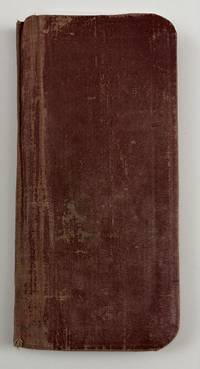
Various locations in the United States and France 1918. Good. 60pp. of manuscript entries. Contemporary pocket notebook 5.25 x 2.5 inches with a small collection of news clippings and a few ephemeral items laid in. Moderate wear and soiling as expected hinges cracked but holding. A manuscript journal and daybook maintained by Corporal Fred Henry Scheu 1895-1974 during his training time in Oklahoma and his wartime service in France during the latter period of the First World War. Fred Scheu was born in Fayetteville Texas to German immigrants Fritz and Alwine Scheu later of Malone Texas. At the time of his enlistment and for a long period after the war Scheu was a clerk and station agent for various iterations of the Santa Fe Railway in Texas and Oklahoma. Scheu hailed from a large family himself but after marrying Ida Christine Ender Scheu the couple had just two children Idaleene and Fred Scheu Jr. Scheu passed away in Temple in 1974 and is buried in Waco Memorial Park in Robinson Texas.<br /> <br /> Fred Scheu enlisted in the Army on February 26 1918 and was discharged just a little over a year later on April 16 1919. Between those two dates Scheu served in training at Camp Travis Texas and Camp Mills Long Island as a private in Company B of the 343rd Machine Gun Battalion. Scheu and his unit disembarked from Brooklyn New York on June 20 1918 headed for Liverpool. They served in various camps in England before crossing the English Channel and serving in numerous locations in France from early July until the end of the war and well after departing Brest France in March 1919. Scheu's journal opens with a detailed six-page timeline of his service from his enlistment until the end of his service in France which provided the preceding information.<br /> <br /> Scheu's journal is not written in the traditional mode of a diary but rather in a few distinct sections which together paint a picture of his service in the war. The main record of his service is memorialized in an eight-page section titled "As Days Rocked By." This section is similar to the timeline described above also titled by Scheu "As Days Rocked By" but includes more detailed information on his time in France including some mentions of engagement with the Germans. Dated entries are brief but closely written without line breaks; a typical example of a few consecutive daily entries which take up just seven lines reads: "9-24-18. Arrived front lines near Pagney and Preney west side of Moselle River 4:15 AM. 9-25-18. German counter attack at 5AM. 9/26. Caught in German box barrage from 11AM until 5:20PM." Another sequence reads: "10/30/18. Arrived in woods large hill about 2 miles N-W of Romange. Fired barrage after barrage at 4:30AM. 10/1/18. Over with 360 Inf Co K Advanced 6 kilo to near little village St. Gerey. Heavy MG fire. 11/2/18. Advanced from St. Gerey 4 kilo to large hill. Little piece of shrapnel from shell that hurt Cpl. C.C.J. hit my foot." Scheu's timeline continues in much the same manner through the end of the war "Armistice signed 11/10/18" and beyond when he remained in France on guard duty and hiked and trained across the country. In addition to Scheu's detailed timeline he writes a similarly-detailed page on his experiences during the "Second Battle Argonne" in October 1918.<br /> <br /> Scheu also includes a detailed seven-page account of a portion of his service entitled "Dedicated to the service Griesencourt France 9/20/18." He initials the ending of the account "F.H.S." The account reads like it was written to be read aloud. It begins "We came here today to be deloused 'Bath' after being relieved on St. Michel front. Most of our dead were buried -- some in valley 1 kilo south of Fey-en-Haye." Scheu then provides a much more detailed account of his battle experiences in September expounding on just a short portion of his timeline over the course of the remaining six pages. He recounts "enemy shells falling at intervals" "an enemy plane flying real low" details the death of Captain Dryson of Co. A "He set down beside a tree himself where he was killed when a shrapnel bursted in the tree and a piece came down hitting him in the head" and other stark details which took place amid the intense battle. In the course of his narrative Scheu reveals that he was "in charge of Intelligence Section 'Runners.'" After a slightly more detailed account of finding out that Captain Dryson had been killed Scheu ends his account on a rather forlorn note: "Where do we go from here -- Boys where do we go from here."<br /> <br /> Peppered throughout the journal Scheu also includes other information about his service including a detailed listing of other members of Company B of the 343rd "Members My Organization Co B 343 MGBN"; several pages listing which American military units were present in Europe with another list totaling up the troop count of twelve company and division units of infantry artillery medical units and more; a few basic morning reports surrounding the Battle of St. Michel; a page listing "Headquarters Troops Landed by Division;" three pages of notes on the history leading up to the war; and more. In addition to the wartime content a few pages at the front of the journal were utilized as an address book before the war; among the entries is "Miss Ida Ender" whom Scheu would marry in June 1919 shortly after his return from France. A brief but nonetheless detailed account of one young Texas man's service during the final months of World War I with much to mine for historians and scholars alike. unknown
书商的参考编号 : 4995
|
|
|
[WORLD WAR II -- HOMEFRONT WOMEN]. [PALMER, Mabel Evelyn].
Memory book. Fascinating scrapbook filled with clippings menus invitations letters thank you notes itineraries mimeograph publications and more. compiled by the Vice President and then President of the Business and Professional Women’s Clubs by a Eugene Oregon beauty and fashion shop owner during World War II.
Eugene OR: Mabel Evelyn Palmer Business and Professional Women’s Clubs 1940-1946. Oblong 4to. 13.25 x 9.75 in. 56 pp unpaginated. on thick black paper stock. With 140 pieces of ephemera tipped-in including 12 printed & dittoed conference booklets w/ itineraries & menus schedules of events and participants 12 issues of the B.P.W. News magazine numerous TLS & ALS notes some on letterhead many on decorative cards Homefront Wartime fundraiser events and more. Half-black cloth over pinkish boards sewn at gutter margin through nickel-plated rivets w/ black lace occasional loose pieces toning to clippings still a NF exemplar. This remarkable scrapbook preserves and documents the many different activities meetings conferences banquets and programs by Vice President and President Mabel Palmer for the Eugene Professional and Business Women’s Club. Established initially during World War I the Business and Professional Women’s Clubs helped to organize and direct the resources of professional American women and were the first organization to focus on working women’s issues and repeal and prohibit legislation across America denying jobs to married women and end the legality of favoring young unmarried women for cheap labor. Palmer 1906-1983 during her tenure from 1941-1942 helped the Eugene BPW the largest in Oregon to focus on defense and home front war activities. As evidenced by the many clippings printed programs and in-house journal publications within the scrapbook the Eugene club donated money to the Salvation Army raised funds for the benefit of Chinese Nurses sponsored lectures on promoting American Democracy and protecting against Nazi sympathizers raised funds for War Bonds and the Red Cross and even organized fashion show fundraisers. There are menus and souvenir brochures from the BPW conference at Eugene in 1941 the Timberline Conference held in Sept. 1940 sponsored programs such as “Strengthen Democracy in our Town†“Our Country in a War Torn World†“Training for Defense†and many others. Mabel Evelyn Palmer, Business and Professional Women’s Clubs, hardcover
书商的参考编号 : 53620
|
|
|
[WORLD WAR II -- NAVAL ESPIONAGE]. SHUTE, Nevil
Most secret.
New York: William Morrow & Co. 1945. 8vo. 6 310 pp. Beige-coloured publisher’s cloth red lettering & decoration on spine very slight bumping to couple corners minor shelfwear w/ d.j. slight bumping head of spine very minor dustsoiling still VG/VG bright copy. First American edition of this scarce World War II nautical fiction espionage adventure by Shute originally written in 1942 but suppressed by the censors until published by Heinemann in 1945. The work is set against the backdrop of a converted French fishing vessel manned by four British officers and a crew of Free French ex-fishermen armed with a flame-thrower and small arms infiltrating the French fishing fleet controlled by Nazi Germany off the Atlantic coast. William Morrow & Co., hardcover
书商的参考编号 : 60880
|
|
|
[World War I].
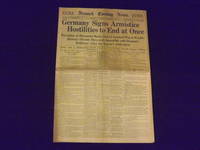
Newark Evening News. Germany Signs Armistice. Monday November 11 1918. No. 10780.
<p>Newspaper folio illustrated 8 pp. Paper brittle as expected folded chips and tears with some loss at center fold normal aging and browning; otherwise in fair or better condition. Historically significant newspaper that announces the end of WWI. Several articles about the armistice including the abdication of the Kaiser. While the paper is a little brittle it is still a readable copy. </p>
书商的参考编号 : 106230
|
|
|
[World War II]
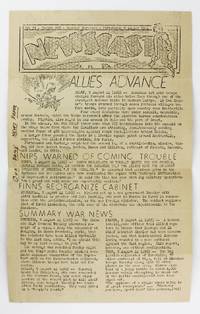
Newscast Vol. II Number 218 caption title
Whitehorse Yukon Canada: August 9 1944. Very good. Broadsheet 13 x 8 inches. Old folds minor toning and light thumb-soiling ink notation in left margin reading "Our Daily News Paper." The August 9 1944 issue of a very rare American military newsletter issued through the CFWH radio station in Whitehorse Yukon Canada. The radio station was started by the United States Army Service Forces responsible for the maintenance of the Alaskan Highway in February 1944 with programming furnished by the Army's Special Services. The present issue contains stories on the advancement of the Canadian First Army troops and Allied Forces in Caen reports in Tokyo of Japanese expectations of a direct American assault a new government in Finland a summary of war news as well as National News Sports and more. Also includes a schedule of radio programs for August 9 1944 which included shows by Bob Hope Dinah Shore and others. We could locate no other examples of this apparently very rare World War II American military periodical. August 9 unknown
书商的参考编号 : 3173
|
|
|
[World War II] US Army, Army Information Branch U S
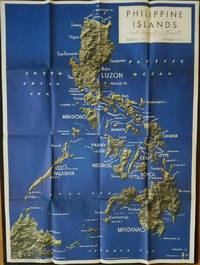
Newsmap Monday 21 August 1944. with map of Philippine Islands.
<p><i>Newsmap</i> was a poster/newspaper issued weekly during World War II by the U.S. War Department to military installations and government and civic groups working on War Department projects. Issues generally contained one or more maps as well as reports of recent military actions. A good overview of the history and content of the <i>Newsmaps</i> is provided by the University of North Texas Digital Library. https://digital.library.unt.edu/explore/collections/NMAP/</p><p>This issue features a large and dramatic map of the Philippine Islands. The reverse has two additional maps: Southern France and an untitled map of the Pacific and Indian Oceans.</p><p><b>Reference: </b> Not in <i>David Rumsey Historical Map Collection</i>.</p><p><b>Condition:</b> Sheet size: about 47 x 35" folding to 8 ¾ x 11 ¾." Folded as issued. Some soiling; a few minor breaks at fold intersections;. </p><p>Note: Several other <i>Newsmaps</i> from World War II are currently in stock. Please inquire if interested. </p>ICN7729.3. U.S. Army.
书商的参考编号 : 3801
|
|
|
[WORLD WAR I -- BAKER]. PALMER, Frederick
Newton D. Baker. America at war. Based on the personal papers of the Secretary of War in the World War; his correspondence with the President and important leaders at home and abroad; the confidential cablegrams between the War Department and headquarters in France. . . .
New York: Dodd Mead & Co. 1931. Two vols. 8vo. xiv 421 1; x 2 451 1 pp. Photo frntsps. in both vols. numerous photos illusts. Uniformly bound in blue cloth gilt lettrng w/ glassine d.j.s preserved in open-backd slipcase rubbng edgewear VG/VG- set. First edition of this excellent biography and account of World War I. Dodd, Mead & Co., hardcover
书商的参考编号 : 37951
|
|
|
[WORLD WAR II -- MACHINE GUNS].
Nomenclature of the Thompson Sub-machine Gun. B-1351.
Fort Lewis WA: United States Army 752nd Tank Battalion Medium 1941. Oblong 4to. 10.5 x 8 in. 64 pp assorted paginations. mimeographed 1 pp. large folding. With photo illustrations and blueprint diagrams for Thompson submachine guns throughout. Front cover w/ mimeograph title stapled at gutter margin as issued B-1351 stamped on 3 different section titles on multi-coloured papers age toning to fore-edges minor scuffing edgewear still VG copy from library of Sergeant Bill Godwin of the 752nd Tank M.edium Battalion stationed in 1941 after being activated in Fort Knox KY at Fort Lewis Washington. First edition of this exceedingly scarce World War II manual for the Thompson Submachine gun which clearly illustrates the disassembly and assembly of the gun; all the parts; blueprints of the gun features; and specific care and cleaning instructions. All of these steps are clearly delineated in large photos with step-by-step descriptions. First conceived and designed in 1918 by John T. Thompson for a high velocity and lightweight weapon for soldiers on the Western Front during World War I the submachine gun did not start rolling off the assembly lines until 1921 and subsequently became known as the ruthless weapon of the mob wars and later soldiers during World War II with monikers of “Chicago Organ Grinder†“Trench Broomâ€and “The Annihilator.†It was initially not issued to police departments around the country due to the fact that the rapid fire of the gun was uncontrollable and could potentially injure or kill an innocent bystander. No copies in Worldcat. United States Army, 752nd Tank Battalion (Medium), unknown
书商的参考编号 : 61344
|
|
|
[WORLD WAR II -- POSTER]. BEALL, C[ecil] C[alvert] (Artist).
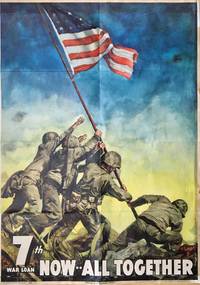
Now. . . all together: 7th War Loan. WFD 11A. Official U.S. Treasury Poster. U.S. Marines at Iwo Jima painted by . . . from Associated Press Photo. . . .
Washington D.C.: U.S. Government Printing Office 1945. Atlas folio. 18.5 x 25.5 in. Colour lithograph toning to verso edgewear minor wear at fold creases couple very slight tears to fore-edges still VG bright exemplar. First edition of this original War Bonds drive poster issued as part of the 7th War Loan subscription in May 1945 days after the Victory in Europe and with many in the US Treasury concerned demand would slack off with Japan undefeated in the Pacific and Asia. Based on the famed Joe Rosenthal AP photograph of the second American flag being raised on Iwo Jima. The War Loan drive proved so successful the U.S. Treasury garnered over $ 156 billion. Beall 1892-1967 was a very successful commercial artist who launched his career with ad campaigns for Maxwell House Coffee as well as cover art for Collier’s Magazine and later became known for his very popular World War II propaganda posters. U.S. Government Printing Office, unknown
书商的参考编号 : 57615
|
|
|
[WORLD WAR II -- NSBO]. STARCKE, Gerhard
NSBO. Und Deutsche Arbeitsfront von . . . .
Berlin: Verlag von Reimar Hobbing 1934. Tall 8vo. 258 2 pp. Photo frontispiece 52 photo illusts. 1 large folding table with the organizational structure of the NSBO. Gray linen black lettering & decoration on front cover spine removed ex-lib spine label ffep. pasted to front pastedown small ex-lib stamp on title minor shelfwear still G copy. First edition of this very scarce work tracing how the NSBO Labor Front was broken from its Socialist leanings and brought within the Nazi Party ranks. After the unions were dissolved by Hitler in May 1933 many of the NSBO thought they would become a state-sanctioned monopoly instead they were relegated to a minority position and the youth organization was transferred entirely over to the control of the Hitler Youth. After the purges of the SA the labor leaders were forced to report directly to the Nazi Party and were no longer allowed to intervene in State or local affairs. Within a very short amount of time the Labor Front turned from being an economic revolution of the masses into a characteristic Nazi bureaucracy. See: Schoenbaum Hitler’s Social Revolution: Class and status in Nazi Germany 1933-1939 pp. 82-87. Verlag von Reimar Hobbing, unknown
书商的参考编号 : 45751
|
|
|
[WORLD WAR II -- OLDSMOBILE].
Oldsmobile 37mm. M4 automatic gun training manual. Restricted. Book No. 5672.
Lansing MI: Oldsmobile Division General Motors Corp. 1943. 4to. 2 76 pp. With photo illustrations diagrams throughout 1 large folding plate. Printed blue softcovers black lettering front cover stapled at gutter margin as issued logo of the GM War Products Training Service on front cover minor edgewear bumping to corners some minor dustsoiling still VG copy w/ former ownership markings at upper fore-edge front cover. First edition of this training manual used at the Air Forces Technical School in Lowry Field CO for the M4 autocannon which was developed by Colt and used primarily in the Bell P-39 Airacobra and P-63 Kingcobra pursuit fighter aircraft largely sold to the Soviet Union during World War II for operations on the Eastern Front. Worldcat locates 1 copy Kentucky Hist. Soc. Library. Oldsmobile Division, General Motors Corp., paperback
书商的参考编号 : 59566
|
|
|
[WORLD WAR I, WOMEN] Putnam, Elizabeth Cabot
On Duty and Off Letters of Elizabeth Cabot Putnam Written in France May 1917-September 1918
Cambridge: The Riverside Press 1919. First Edition. Hardcover. Very good. 222 pp 7.5 x 5.25 inches in publisher's blue cloth with mounted spine label. Spine toned label rubbed but legible one small stain on front board. Internally clean and sound. No dust jacket. Elizabeth Cabot Putnam was the daughter of Harvard neurologist James Jackson Putnam. She graduated from Radcliffe in 1910 and in 1917 went to Paris where she worked as a secretary for the American Expeditionary Force's Air Service and as a Red Cross volunteer. Her letters home to her family discuss both her work and her general experiences as a young woman in a foreign country at war. Occasionally she comes across as a breezy society girl rather than someone viewing the horrors of war but at other times she is clearly deeply affected. Finally getting to rest after working at a hospital until three AM she looks out a window at the beautiful sky and writes "It was more than one could bear with equanimity -- so heavenly outside and so horrible inside -- all the blood and the hacked-up flesh and the thought of how each one is going to suffer when he gets out of ether." She cared for French soldiers ar the American Ambulance Hospital in Paris and for wounded Marines at a hospital in Neuilly. In mid-1918 she worked as a Red Cross searcher helping to track down missing servicemen. The Riverside Press hardcover
书商的参考编号 : 21532

|
|
|
[World War II]
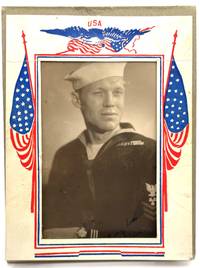
Original Photo Portrait of U.S. Navy Machinist Mate "Bud" circa 1942
Some staining and creasing with wear to card cover. Very good. <p>Original sepia tone photo depicting a U.S. Naval Machinist Mate giving a sly look and inscribed in ink: "all my love / Bud."</p> <br /> <p>Measures approx. 5 x 4 inches. Blank to verso. Housed in original card cover/standing frame with American flag themed border.</p> . unknown
书商的参考编号 : 1564
|
|
|
[World War I Film]. Keaton, Buster
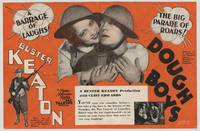
Original Pictorial Herald for: DOUGH BOYS
Los Angeles: Metro-Goldwyn Mayer 1930. Original. Original pictorial leaflet folded to 14.5 x 11 cm. 4pp. A bit rumpled and smudged but a good bright copy. <br /> <br /> A publicity herald for this "War Comedy of Comedies" based on a story idea by Keaton and others scripted by Richard Schayer directed by Edward Sedgwick. Buster Keaton and Sally Eilers lead the cast and are pictured. The blank rear panel intended for localized advertising copy promotes the Imperial Theatre "The Home of Big Hits" in Newton NC. Metro-Goldwyn Mayer unknown
书商的参考编号 : 772
|
|
|
[WORLD WAR I]. WHITEHAIR, Charles W
Out there. Illustrated.
New York: D. Appleton & Co. 1918. 8vo. 10 11-248 2 pp. plus 4 pp. publisher’s ads. Photo frontisp. numerous photo plates. Red cloth gilt lettering front cover & spine minor soiling front cover shelfwear slight bumping to couple corners a few leaves w/ dog-eared corners w/ d.j. wraparound cover art photo of destruction on the Western Front minor chipping head of spine closed tear front cover minor dustsoiling edgewear still VG-/VG- copy. First American edition of this memoir by a YMCA worker and service at the front with the English and French forces during World War I in Egypt Belgium England and Scotland. D. Appleton & Co., hardcover
书商的参考编号 : 56435
|
|
|
[WORLD WAR II]. SMITH, J Floyd
Parachutes. Development use maintenance.
n.p.: J. Floyd Smith 1942. 8vo. 91 1 pp. Numerous photos diagrams. Colour-printed boards spiral-bound as issued rounded crnrs mnr rubbng VG copy. First edition of this scarce early work on the parachute by the pioneering author who invented the use of the ripcord in parachutes first demonstrating his work in 1918. He is also credited with teaching Bill Boeing how to fly as well as founding the Smith Parachute company in San Diego California. J. Floyd Smith, hardcover
书商的参考编号 : 39998
|
|
|
[World War II]. [Anti-Conscription Committee]
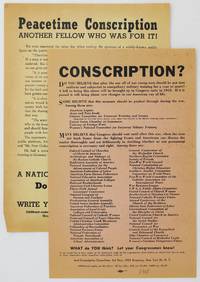
Peacetime Conscription -- Another Fellow Who Was for It! with: Conscription
New York 1945. Still very good. Two small broadsides each measuring approximately 11 x 7 inches. Some toning at edges. Two broadside flyers issued by a little known pacifist group the Anti-Conscription Committee during the last year of World War II. The first titled "Peacetime Conscription." invokes Hitler's introduction of compulsory military training in Germany in 1935 and quotes an enthusiastic editorial from the Des Moines Tribune calling for the same in America. The broadside intones at its foot "A nation followed these ideas! Do you want America to do the same" The second flyer "Conscription" warns its reader of the imminence of a Congressional bill that would mandate a year of military training that would "Bring about vast changes in our American way of life." Following this warning is a laundry list of diverse associations arrayed against the potential law including the Rabbinical Association of America the N.A.A.C.P. the American Federation of Labor the Society of Friends and the W.T.C.U. to name but a few. A pair of scarce survivors. unknown
书商的参考编号 : 4262
|
|
|
[WORLD WAR II -- SEABEES, GUAM, OKINAWA, IWO JIMA, SAIPAN, HAWAII, et al].
Pictorial record: 301st U.S. Naval Construction Battalion April 1944 to December 1945.
Guam & Pearl Harbor H.T.: 301st U.S. Naval Construction Battalion 1946. Oblong 4to. 12.5 x 9.25 in. 247 1 pp. With 100’s of photo illustrations a colour plate map plates. Navy-blue coloured boards 301st NCB Seabee badge in gilt on front cover gilt title on cover some edgewear scuffing to spine minor rubbing still a VG- copy. First edition of this very scarce souvenir yearbook chronicling the Herculean efforts of the storied 301st U.S. Naval Construction Battalion Seabees affectionately known as the “Harbor Stretchers†as they were specifically activated and formed to expand and deepen vital deep-water harbors at advance bases in the South Pacific during World War II. Activated April 1 1944 in Port Hueneme Advanced Base Depot CA they were dispatched to Guam starting April 21 1944 to begin clearing vast War debris from the defeated Japanese Naval units and were a specialized unit often operating under sustained constant enemy fire during the War. Based out of Guam 12 detachments scattered over the Pacific War zone dredging harbors under adverse conditions at some of the bloodiest island hopping battles such as Kwajalein Saipan Iwo Jima Okinawa Peleliu and Tinian. Dredges included the “Tualatin†moved to Midway in May 1944 the USS City of Dahlart at Pearl Harbor Dredge Indiana at Midway. Many of their salvage operations are depicted here along with an extended photographic synopsis of Guam during World War II. Worldcat locates 5 copies NYPL SF Maritime Nat. Hist. Park Navy Dept. Naval Hist. Lib. Heinz Center WI Vet Mus. Res. Ctr. 301st U.S. Naval Construction Battalion, hardcover
书商的参考编号 : 62004
|
|
|
[WORLD WAR II -- MARINES]. [WENGERT, Leo L & ERKE, Herman E]
Pictorial arrowhead. Occupation of Japan by Second Marine Division.
Nagasaki Kyushu Japan: 2nd Marine Division Division Special Services Section Division Photographic and Reproduction Sections 1946. Oblong folio. 82 pp unpaginated. Over 250 photo illustrations tinted blue 1 large map all with identifying text. Illustrated printed softcovers showing the devastation of Nagasaki cover art by Wengert punch sewn at gutter margin with brown silk ribbon as issued minor shelfwear minor bumping to corners slight creasing still VG copy. First edition of this photo-illustrated work chronicling the movements of the 2nd Marine division commanded by Major General LeRoy Hunt in occupying Japan between Sept. 23 1945 and July 1 1946. The 2nd Marine Division was composed of the 2nd 6th and 8th Regimental Combat Teams along with an Artillery group of the 10th Marine Regiment as well as a Headquarters Battalion Service Troops an Engineer Group a Tank Battalion and other smaller organizations. The images show troops bedding down in a ruined Mistubishi Factory inventorying Japanese war materials and subsequent destruction before and after pictures recording the devastation from the Atomic Bomb the troops interacting with the Japanese survivors along with numerous scenes of life in Japan after the War. 2nd Marine Division, Division Special Services Section, Division Photographic and Reproduction Sections, paperback
书商的参考编号 : 48056
|
|
|
[WORLD WAR II -- FRENCH POSTER]. GASTON RY [ROSTAGNY, Rene (Artist).]
Pour la France emprunt Africain. Souscrivez c’est votre devoir tous les Francais doivent forger la Victoire. Nos soldats donnent leur sang. Pretez votre argent. C’es votre interet. . . .
Algiers Algeria: Imp. Baconnier ca. 1943. One large elephant folio colour-lithograph poster sized 24 x 35.5 in. fold creases as issued lithographed on very thin wartime paper stock minor creasing a couple other minor closed tears at folds moderate toning still a VG copy. First edition of this original large propaganda poster issued from Henri Baconnier’s printing and poster imprint during World War II employing another of his noted artists who has centered the appeal to invest into French Relief Fund War Bonds A & B overlain on a map of France with field of the French flag. Gaston Ry 1902-1978 traveled between France Barcelona and Algeria worked as an illustrator author and journalist and was satirical artist for the Le Canard Sauvage from 1943-1946. Imp. Baconnier, unknown
书商的参考编号 : 64079
|
|
|
[WORLD WAR II -- FRENCH POSTER]. FERNEZ, Louis (Artist).
Pour la France emprunt Africain. . . .
Algiers Algeria: Imp. Baconnier ca. 1943. One large elephant folio colour-lithograph poster sized 23 x 33 in. fold creases as issued lithographed on very thin wartime paper stock minor creasing a couple other minor closed tears at folds couple minor paper repairs on verso at fold creases moderate toning still a VG- copy. First edition of this original large propaganda poster issued from Henri Baconnier’s printing and poster imprint during World War II employing another of his noted artists who has centered the appeal to invest into French Relief Fund War Bonds with image of Marianne of Algiers the French Symbol of Resistance appealing to all with French U.S. & British flags in background along with fleets of Navy Ship and air forces of bombers and fighters. Louis Fernez 1900-1984 who was a notable French painter who spent most of his career in Algiers famed for having designed the postmark of Marianne of Algiers in French Algeria created travel posters for Baconnier as well as painted murals for several public buildings in Algeria. Imp. Baconnier, unknown
书商的参考编号 : 64081
|
|
|
[WORLD WAR II -- FRENCH POSTER]. CAILLET, [Henri (Artist).]
Pour la liberte par la victoire.
Algiers Algeria: Imp. Baconnier ca. 1943. One large elephant folio colour-lithograph poster sized 23.5 x 35 in. fold creases as issued lithographed on very thin wartime paper stock minor creasing 1 closed tear repaired on verso a couple other minor closed tears at folds moderate toning still a VG- copy. First edition of this original large propaganda poster issued from Henri Baconnier’s printing and poster imprint during World War II employing one of his favorite artists. Caillet has centered the poster with the Statue of Liberty holding a torch with globe and flags of the U.S. U.K. and France behind her. The artist is perhaps best remembered for his lush posters promoting visits to Algeria between-the-wars. Imp. Baconnier, unknown
书商的参考编号 : 64078
|
|
|
[World War II – Japan – Industrial History] Unknown Photographer
Press Photos of “The Paralyzed Industries of Japan†after the US and UK Froze Its Assets 1941
Japan: Brown Brothers 1941. Five photographs. Photos measuring 6 ½ x 8 ½ inches. With typed captions previously affixed typed captions verso or manuscript captions verso; with Brown Brothers stamps verso. Fine contrast and slight marginal damage; overall excellent to Near Fine. Following the outbreak of the Second Sino-Japanese War the United States imposed a number of economic sanctions against Japan including the 1939 termination of its trade treaty with the country 1940 oil export embargo and 1941 executive order freezing Japanese assets in the US. Great Britain followed suit shortly thereafter. Offered here is a collection of press photographs documenting the effects of the US and UK’s economic sanctions on Japanese industry. One caption explains:<br /> <br /> “The industries of Japan veritable bee hives until the trade treaty abrogatio by the United States followed by the freezing of funds belonging to the Niponese Government resulting in the dripping of exports from Japan from $18000000 to $500 in the past year has brought about the condition seen in this series of photos.â€<br /> <br /> The factories pictured include a locomotive plant textile mill match factory and crockery exporter. The sanctions had a devastating impact on Japan’s economy which is partly blamed for their attack on Pearl Harbor. Brown Brothers unknown
书商的参考编号 : List3158
|
|
|
[WORLD WAR I -- OTTOMAN EMPIRE & MIDDLE EAST]. PYE, Ernest
Prisoner of War 31163 Bedros M. Sharian Bedros Kirkyasharian.
New York NY: Fleming H. Revell Co. 1938. 12mo. 202 pp. Photo frontisp. photo plates map printed letter facsimile. Dark green publisher’s cloth yellow lettering on spine minor shelfwear w/ d.j. photo cover art of captured artillery minor scuffing couple very minor closed tears slight tear upper right corner still VG/VG- copy. First edition of this very uncommon World War account of an Armenian-American who was forced into the Ottoman Empire’s Army participated in the 10-month Gallipoli campaign at Aru Burnu against the Anzacs and as a medical orderly burying the 3000 Turkish dead during a nine-hour truce. Following the withdrawal of the British from the Dardanelles his 16th Division was transferred to Syria fights General Allenby at the capture of Jerusalem and was taken prisoner and interned in Egypt. Subsequently he served with the British as an interpreter for British Intelligence and then returned as a POW at Belbeis until July 12 1920 when discharged eventually immigrating to the U.S. attending and earning degrees before opening businesses in Georgia. Very scarce in original dustjacket. Fleming H. Revell Co., hardcover
书商的参考编号 : 63875
|
|
|
[WORLD WAR II -- B-24 SPERRY BALL TURRET].
Reference manual: retracting mechanism of the Sperry lower ball turret B-24 D & E. . . .
Lowry Field CO: Air Forces Technical School 1943. 4to. 5 20 3 pp. mimeograph typescript. With diagrams text illustrations blueprints. Illustrated blue softcovers stapled at gutter margin as issued cover art of B-24 featuring the Sperry Ball turrets below the belly of the aircraft minor dustsoiling wear & minor creasing to corners some shelfwear still VG copy. First edition of this exceedingly scarce instruction manual designed for training heavy bomber crew ball gunners at the Lowry Field Army Air Forces Technical School during World War II. The Lowry Field schools trained strategic heavy bomber gunners and crews and after 1943 concentrated on training and qualifying B-29 operational bomber crews. The B-24 Liberator bomber featured an electric spherical-shaped ball turret and the Sperry ball turret was not only smaller and featured a mandated retracting mount as detailed in this manual as the Liberator’s tricycle landing gear would cause the turret to strike the ground if not retracted. Besides the twin light-barrel Browning AM/M2 .50 caliber machine guns the gunner was also required to be familiar with the mechanical Sperry K-4 Auto Computing sight also used in the B-17. No copies in Worldcat. [Air Forces Technical School], paperback
书商的参考编号 : 59564
|
|
|
[World War II]. [Philippines]
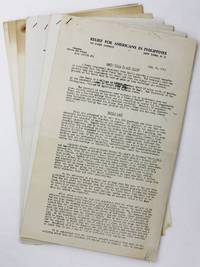
Relief for American War Prisoners in the Philippines caption title
New York 1945. Very good. Sixteen issues totaling 75pp. Legal-size sheets stapled. Previously folded. Light wear and toning. An extensive run of newsletters by a New York-based aid group Relief for Americans in the Philippines. Included here are issues 9 12 14 through 18 and 20 through 28 which were published between 1942 and 1945. The organization was devoted to the support of Americans who were imprisoned at San Tomas Gabuio and other camps after Japan occupied the Philippines during World War II. At the outset of the war the Philippines were a commonwealth of the United States but within three weeks of the attack on Pearl Harbor the Japanese seized control. The 20000 American and 80000 Filipino troops on the ground departed and any remaining American or British citizens were rounded up in Manila and transferred to the University of Santo Tomas where they were left to fend for themselves. The only exceptions were a 7:30 pm roll call each night and the use of room monitors. The background of the captives varied wildly from business executives and retired soldiers to prostitutes. At the end of the war the total number of prisoners liberated was 3785 2870 of which were American.<br />  <br /> Issue 14 remarks on the first anniversary of the non-profit organization: “On May 8th 1942 just a year ago and two days after the fall of Corregidor our organization came into being for furthering plans for the shipment of food medical supplies and other necessities for the internees and also to serve as a clearing house and point of dissemination for information concerning the welfare of these internees.†The monthly newsletter prints news and developments from the camps in the Pacific and documents the efforts of the organization to provide aid to the prisoners there. The issues also print a running list of all those believed to be in the Philippines “solely for the purpose of obtaining names and addresses of the nearest relatives of who we have no record.†A scarce record of this little-known relief effort during World War II. unknown
书商的参考编号 : 4668
|
|
|
[WORLD WAR I -- RED CROSS DOGS]. SALTEN, Felix
Renni the rescuer: a dog of the battlefield. Translation by Kenneth C. Kaufman. Drawings by Diana Thorne.
Indianapolis: Bobbs-Merrill Co. 1940. 8vo. 326 pp. Frontisp. illust. on title numerous text illustrations some full page. Yellow cloth red lettering & decoration front cover & spine very slight shelfwear w/ d.j. wraparound cover art by Diane Thorne of Renni the German Shepherd minor shelfwear rubbing NF/NF copy. First edition stated of this surprisingly uncommon and well-written dog story about Renni a Red Cross rescue dog during World War I who tracked down wounded soldiers and also carried medial supplies to the wounded amidst incoming fire. German Shepherds were amongst the most common breeds used because of their agility and dark coats and trainable natures. Tens of thousands of dogs served during the War and also served as sentries scouts messengers and mascots. Thorne 1895-1963 was a beloved Ukrainian-Jewish-American artist noted for her many book illustrations and artists’s renderings of dogs and dog breeds as well as commercial artist and contributor to magazines and children’s books. Bobbs-Merrill Co., hardcover
书商的参考编号 : 60841
|
|
|
[WORLD WAR II]. Associated Press
Reporting to remember: unforgettable stories and pictures of World War II. . . .
New York: Associated Press 1945. 4to. 9 x 12 in. 71 33 pp. including numerous text illustrations many photo plates some double-page. Colour-illustrated softcovers cover art by Howell Dodd b. 1910 with scene of an AP reporter typing on a portable typewriter in the midst of a battle landing plastic comb binding as issued pictorial map endpapers minor edgewear creasing couple minor tears at foot of spine still VG- copy. First edition of this anthology of wartime reporting by AP correspondents in European and Pacific Theatres up to and including the Nuremberg Trials dropping of the atomic bombs on Hiroshima & Nagasaki and the surrender on the USS Missouri. The photos graphically portray the participants and the carnage of the War. Associated Press, paperback
书商的参考编号 : 57113
|
|
|
[WORLD WAR I]. WALDRON, Captain William H
Scouting and patrolling. . . .
Washington D.C.: United States Infantry Association 1916. 12mo. 156 pp. plus 2 pp. publ. ads. Many diagrams text illustrations several large folding plates. Olive-green publisher’s cloth black lettering on front cover minor wear rubbing some soiling front cover slightly shaken still VG- copy from the library of former Sergeant Errol George Sinclair 1895-1971 enlisted in 1917 trained with the Machine Gun Company at Fort Logan CO and Fort Douglas UT and then transferred in 1918 to the 10th Division at Camp Funston Fort Riley KS together with Sinclair’s Sergeant’s stripes and Registration Certificate June 1917. Third edition of this volume in the “Waldron Books†series which proved to be vital training handbooks with this title focusing on scouting concealment patrols reconnaissance messages and more. Waldron 1877-1947 fought in the Philippines during the Philippine Insurrection and in China with the 9th Infantry and was later awarded the Distinguished Service Cross in 1922. United States Infantry Association, hardcover
书商的参考编号 : 53950
|
|
|
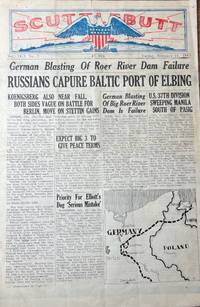
[World War II] [Newspaper] [Scuttlebutt]
Scuttlebutt At Sea. Sunday February 11 1945
New York: Captain J. T. Talbert 1945. First Edition. Newspaper. Fair. Newspaper. Approx. 14" 9". 4 pages. Illustrated. Seperated with several folds. Obscure World War II publication. Titles include "German Blasting of Roer River Dam Failure"; "Russians Capture Baltic Port of Elbing"; "U.S. 37th Division Sweepeing Manila South of Pasig" etc. Captain J. T. Talbert unknown
书商的参考编号 : 34397
|
|
|
[WORLD WAR II -- WAR MANUFACTURING]. [JOHNSON, Frederick H; HARRIS, John Robert Grant (General Manager); GORDON, JD (Sales Mana
Services and facilities proffered by Progressive Welder Sales Co. . . Salesman sample advertising album filled with 83 silver gelatin photographs promoting the company’s innovative welding technology and applications in building aircraft gliders and amphibious landing craft for the U.S. Army during World War II.
Detroit MI: Progressive Welder Sales Co. ca. 1944-1945. Thick 4to. 10 x 11.75 x 2 in. 88 pp unpaginated. mylar leaves each w/ black paper insert with 83 silver gelatin photos all sized 8 x 10 in. inserted into glassine sleeves nearly all w/ typed captions affixed to lower margin of image and/or negative numbers w/in image at lower margin. Original U.S. Army Brown pebbled cloth patented Burco Prong Binder prong screw posts at gutter marbins rounded corners stamping on front cover & spine minor rubbing shelfwear light rubbing still retaining the original black flexible board flyleaves VG copy. An exceedingly scarce photographic sample album for the groundbreaking and innovative Progressive Welder Sales Co. during World War II. The company was founded in 1935 by Johnson b. 1896 noted Chrysler engineer and trouble-shooter who invented the first multiple-point spot welders for use in auto production who quickly began developing and creating resistance welder machines which redefined fabrication techniques to meet wartime production demands. These extraordinary photographs show the jigs and machinists creating the necessary welding equipment in constructing tanks tank gun turrets extra belly tanks for aircraft and the necessary machined parts. Also shown are the checking fixtures designed and built for the various manufacturers producing the Fairchild C-82 Packet a twin-engine twin-boom cargo aircraft used by the USAAF during World War II which was also designed as cargo carrier troop transport dropping parachute troops and glider towing. Also shown are mount welding fixtures for the Glenn L. Martin version of the B-29 Superfortress jigs and equipment to properly and quickly manufacture B-29 wings B-24 Liberator Wings drilling gauges for Curtiss fighter planes along with the many fabricated fixtures and welding equipment designed for Chevrolet’s St. Louis plant producing DUKW Amphibious transports Duck’s used heavily on the D-Day beaches of Normandy and in the Pacific theatre on Saipan and Guam. Fred Johnson and his company invented scissors-type welding guns rotisserie jigs for turning pieces under manufacture and his multi-spot welder machines were combination hybrid presses and fixtures which sped up aircraft production in World War II by unparalleled amounts. Progressive Welder Sales Co. was very active during World War II often producing these massive thick sales albums featuring their latest innovations on resistance welding technology all of the factory fixtures they were producing and how they could speed up production but we can find no institutional listings of other survivors. In 1950 Progressive Welder Sales Co. was converted over into the innovative and groundbreaking Creative Industries of Detroit which launched itself into national consciousness by building President Truman’s Lincoln Cosmo and would go onto build the concept cars such as the FX-Atmos Mercury XM-800 Dodge Granada Packard Balboa Ford Mystere Corvette Corvair Dodge Charger 500 and the Plymouth Superbird. No copies located in Worldcat; See: Leon Dixon Creative Industries of Detroit: The Untold Story of Detroit’s Secret Concept Car Builder 2017 pp. 16-30. Progressive Welder Sales Co., hardcover
书商的参考编号 : 56291
|
|
|
[World War II - Japanese Invasion Money]
Set of Twenty-Five Japanese Government Philippines Occupation Money Banknotes
1942. Ephemera. Set of twenty-five banknotes issued by the Japanese government after the occupation of the Philippines. Includes 3 Five Hundred Pesos notes; 3 One Hundred Pesos notes; 8 1942 10 Pesos notes; 1 1942 10 Peso note; 1 1942 10 Gulden note; 1 1942 Five Cents note; 1 1942 Five Pesos note; 1 1943 One Peso note; 2 1942 One Peso notes; 2 1942 Fify Centavos notes; 2 1942 Five Centavos notes. All are circulated. unknown
书商的参考编号 : 34966

|
|
|
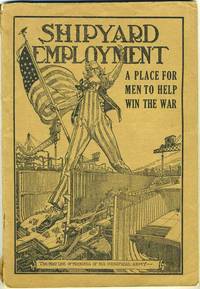
[WORLD WAR II]. RICKENBACKER, Captain Edward V
Seven came through: Rickenbackers full story with an introduction by W.L. White. . . Extra-illustrated with TLS from Rickenbacker newspaper clippings and ALS by Ted Wolfe.
Garden City NY: Doubleday Doran & Co. Inc. 1943. 8vo. x 118 pp. Numerous photo plates. Three-quarter burgundy-coloured morocco raised bands gilt lettering by the Barrett Bindery in Chicago IL slight rubbing to joints edgewear very slight chipping head of spine still VG copy from library of E.H. Ted Wolfe president of the Barrett Bindery and former secretary of the Adventurer’s Club with bookplate on ffep. pastedown images of the Ernest Hamlin Baker Time Magazine cover portrait of Rickenbacker signed TLS from Rickenbacker to Ted Wolfe inscribed on ffep. by Rickenbacker to Ted Wolfe several newspaper & magazine clippings tipped-in some offset toning to pages and long manuscript reminiscence by Ted Wolfe of Rickenbacker’s fighter plane tactics during World War I. First edition signed & extra-illustrated of this harrowing account of survival during World War II in the South Pacific. In the TLS dated Sept. 17 1964 from Rickenbacker to Ted Wolfe on Rickenbacker’s Rockefeller Plaza letterhead the flier thanks him for the invitation to speak before the Chicago-based Adventurer’s Club but “unfortunately I am unable to accept as I am on the road day and night all over the country in behalf of Senator Barry Goldwater†and also inscribed this copy to Ted Wolfe. In the page of manuscript on the verso of the Table of Contents page Wolfe notes that one of his mountain climber friends Jack Horton of the US Forest service was not a fan of Rickenbacker’s because “It seems that in World War I Eddie conceived the idea that he should shoot down German planes before they could do more damage -- so -- he would hang up in the clouds dive out and shoot down his 22 German planes and for balloons -- most unsporting!†Doubleday, Doran & Co., Inc., hardcover
书商的参考编号 : 56664
|
|
|
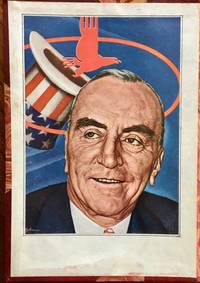
[World War I]
Shipyard Employment. A Place for Men to Help Win the War
Washington DC: Bureau of Vocational Guidance Harvard Univeristy 1918. Paperback. Very good condition. Ships! Ships! Ships! America's first duty in the War is to furnish Ships. That is the message of our Allies to this nation . that is the message of the United States Shipping Board to YOU!" An instructional booklet to encourage men to enroll as members of the US Shipyard Volunteers.<br /> <br /> Describes the leading trades and departments of US shipyards from the mold loft to painting and cement work illustrated in b&w. 4to 54pp. Illustrated tan paper wrappers. Striking illustration of an enormous Uncle Sam striding through a busy shipyard. Title in black at front wrapper no title at spine. A bit worn at spine ends.<br /> OCLC: 5045283 internet copy only. Bureau of Vocational Guidance, Harvard Univeristy paperback
书商的参考编号 : 20931
|
|
|
[WORLD WAR II]. GRANT, Howard Lyle
Shot down but not defeated. . . .
Thatcher AZ: Howard Lyle Grant 2000. 4to. 158 2 pp. Numerous photos illustrations maps. Colour-illustrated softcovers colour front cover art of flyer parachuting photo on rear cover very minor shelfwear VG copy signed by author on cover. Second printing signed of this memoir by Sergeant Grant a ball turret gunner on a B-17G 833rd Squadron 486th Bombardment Group 8th Air Force shot down on Oct. 5 1944 and was POW until April 25 1945 and managed to survive the Black Hunger March across Germany. Howard Lyle Grant, paperback
书商的参考编号 : 48697
|
|
|
[WORLD WAR II] [MALAYSIA] ONN, Chin Kee
Silent Army
New York: Longmans Green and Company 1953. First Edition. First Printing. Octavo 19.5cm; red boards titled in black on spine; dustjacket; vi2593pp. Light wear to spine ends else a clean Near Fine copy. Dustjacket is unclipped priced $2.50 lightly edgeworn and dust-soiled with light foxing to flaps and a few very faint damp marks evident on verso; Very Good. <br /> <br /> A novel centered around the Japanese occupation of Malaysia during World War II. The author who is of Malaysian-Chinese descent has "drawn on his personal experience of life under the Japanese reign of terror to recreate in his characters the dazed reaction of the people first to the terrible speed of the Japanese advance and later to the displays of inhuman brutality that he know at first hand" from front flap. 87010. Longmans, Green and Company unknown
书商的参考编号 : 87010
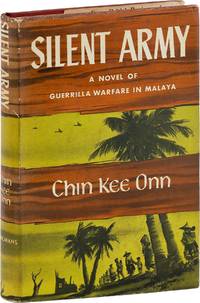
|
|
|
[WORLD WAR I -- ORDINANCE PHOTOGRAPH]. [HEATH, Charles D (Photographer).]
Silver gelatin photo of gun crew standing on the 16-inch M1895 at the Sandy Hook Proving Ground New Jersey.
Sandy Hook NJ: Charles D. Heath Landscape Photographer Ordinance Detachment Jan. 1 1915. One tinted silver gelatin photo sized 4.6 x 7.5 in. mounted on gray studio board sized 6.5 x 8.5 in. w/ printed text & photogapher’s stamp on verso minor wear & chipping to corners of studio board minor soiling still a VG image retaining good contrast. First edition of this scarce image shot by Corporal Heath of the famed M1895 16-inch defense gun while it was tested at the Sandy Hook Proving Ground on a barbette carriage depicting 36 US Army soldiers standing atop the massive artillery piece. Designed and built at Watervliet Arsenal only one was ever built and after testing was later installed in Fort Grant on the Pacific Side of the Panama Canal Zone and operated by the US Army Coast Artillery Corps. The gun itself weighted 130 tons fired a 2400 pound shell with 650 pounds of powder and a range of 21 miles. A manuscript note on the text notes that if the gun had been converted into wire of ordinary fineness the strand would stretch 709 miles. Heath b. 1869 was a Massachusetts photographer who served with the Coast Artillery Corps. Sandy Hook Proving Grounds from 1899 through World War I. Charles D. Heath, Landscape Photographer, Ordinance Detachment, unknown
书商的参考编号 : 56709
|
|
|
[World War II] Spriggs, John H
SMALL ARCHIVE OF LETTERS from an Ohio infantryman killed in action 1943-44
1944. Unbound. Very good. Unbound. A poignant group of wartime letters from John H. Spriggs 1925–1944 of Urbana Ohio a U.S. Army infantryman who was wounded in Italy and later died in a German POW camp. The archive includes three autograph letters one a V-Mail written between 1943 and 1944 with their envelopes together with a newspaper article about Spriggs and the Urbana VFW Post that bears his name.<br> <br> The correspondence begins with a V-Mail dated October 27 1943 addressed to Miss Rafferty followed by a single page on American Red Cross stationery apparently a fragment of a longer letter to “Marybel.†The final and most affecting letter dated February 7 1944 runs seven pages on six sheets and is addressed to Miss Eileen Scott “Dearest Marybelâ€.<br> <br> Written while convalescing in North Africa after being wounded in Italy—a wound that earned him the Purple Heart—Spriggs’s letters are tender reflective and deeply personal. In his February letter he speaks of his hopes for life after the war: returning to Urbana attending college and finding his place again among friends. The tone grows wistful as he contemplates his feelings for Marybel acknowledging that his affection may not be returned. “I’ll never marry†he writes “you know why—but I can be your best friend in reserve.â€<br> <br> Spriggs was released from the hospital on February 15 and returned to Italy. Within two weeks he was captured by German forces near Cisterna di Latina and died at Stalag XI-A Altengrabow Germany on April 27 1944. His name lives on in the Urbana VFW Post dedicated in his memory.<br> <br> Also included is an unrelated 1941 letter from another Urbana soldier William Rafferty Jr. to his mother in Ohio. A moving and highly personal World War II correspondence documenting the brief life and final reflections of a young Midwestern soldier whose letters survived though he did not. <br /> <br /> PLEASE NOTE that all our First Editions are also First Printings unless we specifically note otherwise. All our dust jackets are protected in clear mylar covers. unknown
书商的参考编号 : 51222
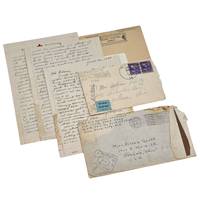
|
|
|
[WORLD WAR I]. BITTLE, Father Celestine N
Soldiering for cross and flag: impressions of a war chaplain.
Milwaukee WI: Bruce Publishing Co. 1929. 8vo. 6 331 1 pp. Photo frontisp. numerous plates. Red ribbed publisher’s cloth gilt lettering front cover & spine w/ d.j. striking wraparound cover art of World War I troop convoy under fire NF/NF copy. First edition of an American Expeditionary Force Army Chaplain’s experiences during World War I providing a dramatic picture of the war as a Capuchin father saw it. Scarce in original dustjacket. Bruce Publishing Co., hardcover
书商的参考编号 : 55095
|
|
|
[WORLD WAR I -- SPRUCE DIVISION]. CROSSLEY, Rod
Soldiers in the woods: the U.S. Army’s Spruce Production Division in World War One.
Portland OR: Timber Times 2014. 4to. vii 320 pp. With 100s photo illustrations text illustrations maps maps on endpapers. Green cloth gilt lettering front cover & spine w/ d.j. cover art painting of Spruce Production Division loggers and Shay Locomotive F/F copy. First edition. An invaluable and detailed history of the Spruce Production Division -- a unit of the Army Signal Corps’ Aviation Section -- which was established to guarantee Sitka Spruce supplies for aviation during World War I. Although the headquarters was in Portland OR the main operations center was at the Vancouver Barracks in Vancouver WA establishing the largest spruce sawmill in the world. The Division established over 60 military logging camps throughout the Pacific Northwest mostly near existing privately owned sawmills operated under the direction of the Army. The Division was able to produce nearly 150000000 board feet in 18 months. The photo illustrations show the building of logging railroad trestle bridges road building ferry boats to transfer cut-up mills many of the sawmills set up in Coos Bay Clatsop Yaquina Bay Grays Harbor Willapa Bay and more. Timber Times, hardcover
书商的参考编号 : 56864 ???????? : 0983197717 9780983197713
|
|
|
[WORLD WAR II -- SKIING]. WHITLOCK, Flint, & BISHOP, Bob
Soldiers on skis: a pictorial memoir of the 10th Mountain Division. . . Foreword by Sen. Robert J. Dole.
Boulder CO: Paladin Press 1992. Oblong 4to. x 234 pp. Photo-illustrated title photo illustrations & text illustrations throughout. Gray publisher’s cloth silver lettering w/ d.j. cover art photo of skiing soldiers slight shelfwear NF/NF copy w/ former ownership label on ffep. First edition of this well-illustrated history and memoir of the 10th Division comprised of some of the world’s finest skiers athletes and mountaineers who slogged through the Italian Alps to defeat the German Army in 1944-1945. They were equipped with the M29 Weasel winter weather gear white camouflage and specially designed skis and commanded by General Hays recipient of Medal of Honor during World War I. Paladin Press, hardcover
书商的参考编号 : 58744 ???????? : 0873646762 9780873646765
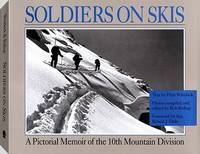
|
|

 ?????????
 ?????PDF???
 RSS feed
 ??
??


