|
|
|
PISANI Vittorio -
Un atto di clemenza del Re. In occasione della sua recente visita in Cirenaica, il Sovrano ha concesso la grazia a vari condannati per reati comuni e politici.
Roma, 1933, 21 maggio, copertina illustrata a colori in fascicolo originale completo di pp. 20 de "La Tribuna illustrata - Supplemento illustrato de La Tribuna".

|
|
|
PISANI Vittorio -
Un vecchio conto regolato. Appena occupata Macallè, il 3° Bersaglieri si portava sull'Enda Jesus e qui, tra il balenio delle armi e la commozione degli animi, sulle rovine del forte cui è legato il nome eroico del tenente colonnello Galliano, issava la bandiera italiana, che era stata ammainata il 22 gennaio 1896.
Roma, 1935, 24 novembre, copertina illustrata a colori in fascicolo originale completo di pp. 16 de "La Tribuna illustrata".

|
|
|
PISANI Vittorio -
Una carovana salvata dai soldati italiani. Avuta notizia che una carovana di indigeni diretta a Cufra si era sperduta nel Sahara, il maggiore Rolle, comandante delle Oasi di Cufra, organizzava una spedizione con un autocarro e riusciva a trarre in salvo gli sperduti.
Roma, 1932 luglio 10, copertina illustrata a colori in fascicolo originale completo di pp. 16 de "La Tribuna illustrata - Supplemento illustrato de La Tribuna"

|
|
|
PISANI Vittorio -
Uno scontro durante le operazioni di rastrellamento della zona del Tembien. Reparti di cavalleria indigena e leggere colonne di ascari compiono continue operazioni di polizia che servono a liberare definitivamente il territorio conquistato dai nuclei abissini e dai banditi che terrorizzano quelle popolazioni.
Roma, 1935, 15 dicembre, copertina illustrata a colori in fascicolo originale completo di pp. 16 de "La Tribuna illustrata".

|
|
|
PISCICELLI Maurizio -
Da Broken Hill al Luapula.
Roma, Società Geografica Italiana, 1910, 8vo stralcio con copertina posticcia muta, pp. 865/876 con 15 illustrazioni. - !! ATTENZIONE !!: Con il termine estratto (o stralcio) intendiamo riferirci ad un fascicolo contenente un articolo, completo in se, sia che esso sia stato stampato a parte utilizzando la stessa composizione sia che provenga direttamente da una rivista. Le pagine sono indicate come "da/a", ad esempio: 229/231 significa che il testo è composto da tre pagine. Quando la rivista di provenienza non viene indicata é perché ci è sconosciuta. - !! ATTENTION !!: : NOT A BOOK : “extract” or “excerpt” means simply a few pages, original nonetheless, printed in a magazine. Pages are indicated as in "from” “to", for example: 229/231 means the text comprises three pages (229, 230 and 231). If the magazine that contained the pages is not mentioned, it is because it is unknown to us.

|
|
|
PISCICELLI Maurizio -
Dal Tanganica al Vittoria Nianza.
Roma, Società Geografica Italiana, 1910, 8vo stralcio con copertina posticcia muta, pp. 1329/1344 con 11 fotoincisioni. - !! ATTENZIONE !!: Con il termine estratto (o stralcio) intendiamo riferirci ad un fascicolo contenente un articolo, completo in se, sia che esso sia stato stampato a parte utilizzando la stessa composizione sia che provenga direttamente da una rivista. Le pagine sono indicate come "da/a", ad esempio: 229/231 significa che il testo è composto da tre pagine. Quando la rivista di provenienza non viene indicata é perché ci è sconosciuta. - !! ATTENTION !!: : NOT A BOOK : “extract” or “excerpt” means simply a few pages, original nonetheless, printed in a magazine. Pages are indicated as in "from” “to", for example: 229/231 means the text comprises three pages (229, 230 and 231). If the magazine that contained the pages is not mentioned, it is because it is unknown to us.

|
|
|
PISCICELLI TAEGGI Oderisio
DIARIO di un COMBATTENTE nell'AFRICA SETTENTRIONALE. Prefazione di Benedetto CROCE. [Con DEDICA AUTOGRAFA firmata "l'autore" alla sguardia]
In-8° (cm. 20.5), pp. 193. Brossura editoriale ornata. Notevolissima e riflessiva memoria di un monarchico, tenente e poi maggiore di artiglieria; partecipò a tutte le operazioni belliche sul fronte libico-egiziano, dal febbraio del 1941 alla primavera del 1942. Nell'aprile del 1943, rinviato dal gen. Messe in Tunisia, in un contrattacco quasi suicida, dove fu gravemente ferito e catturato. Sdegno per la condotta della guerra e accusa a Mussolini di non aver amato la patria, esponendola alla catastrofe (cfr. F. Lamendola in ariannaeditrice.it).
|
|
|
PISCICELLI TAEGGI Oderisio
DIARIO DI UN COMBATTENTE. Nell'Africa settentrionale.
In-16 (cm. 19.80), tela non editoriale, titoli impressi in oro su tassello al dorso, pp. (6), 193, (3). Conservato il piatto anteriore originale (rifilato). Dedica a stampa alla sorella Maria Teresa Orilia. Carte brunite, soprattutto ai tagli, peraltro volume in buono stato (good copy).
|
|
|
PISKO, J
Die Südhalbkugel im Weltverkehr.
Wien, Spiess, (etwa 1905). 243, (3) S. m. zahlr. Abb., 1 Faltkarte. OLwdbd m. montierter farb. Deckelillustr. (berieben, gering fleckig, innen leicht gebräunt, Titel etwas braunfleckig).
Referentie van de boekhandelaar : 1318999
|
|
|
PISTES
24 coll?giens au Mali. (Coll?ge Jean Vilar, Angers). Photos et dessins hors-texte.
Broch?. 72 pages.
|
|
|
PISTOLESE Gennaro E.
L'economia dell'impero. (Seconda edizione).
in-16°, pp. 205 con due tavole ripiegate f.t. di cui una mappa dell'impero dell'Africa Orientale italiana. Leg. in mezza tela con tit. in oro al dorso. Margini rifilati.
|
|
|
Pitcher, Diana
Erstermann und Erstefrau
Afrikanische Schöpfungsgeschichten. Aus dem Englischen von Susanne Koehler. Wuppertal, Peter Hammer, 1991. Mit Illustrationen von Meg Rutherford. 96 S., 2 Bl. Farbiger Or.-Pp.
Referentie van de boekhandelaar : 179590

|
|
|
Pithawalla, M
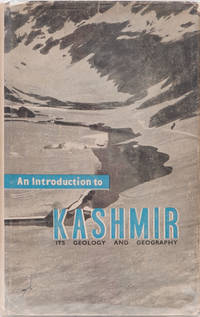
An Introduction to Kashmir
Pakistan: Geoffrey Cumberledge 1953. First. Hardcover. VG/VG. Its Geology and Geography. 128 pp bibliography and numerous folding maps as well as text maps. VG in like dj. Geoffrey Cumberledge hardcover
Referentie van de boekhandelaar : 2040
|
|
|
PITTALUGA Rosetta
Rievocazioni africane (con diario inedito della campagna eritrea 1895. Materiale illustrativo fuori testo in parte inedito: 17 illustrazioni - 4 schizzi - 8 cartine delle quali 5 a colori - 2 quadri
In 8, pp. 208 con 2 tabelle rip. e molte tavv. f. t. fot. Br. ed. Dedica aut. dell'a. Edizione originale dedicata dalla figlia al Generale Giovanni Pittaluga. Si tratta di una storia delle esplorazioni italiane in Africa con accluse le memorie del inedite del Pittaluga di umn viaggio in Eritrea dell'allora colonnello Pittaluga nel settembre - dicembre 1895. Un capitolo finale e' dedicato al Duca degli Abruzzi in Africa.
|
|
|
PITTE (Jean-Robert)
Nouakchott, capitale de la Mauritanie.
Paris-Sorbonne, 1977. In-8 broché, sous jaquette, 198 pp. ill. in et h.-t. dont une planche en couleurs en frontispice. Bibliogr., index (Publications du Département de Géographie de l'Universite de Paris-Sorbonne, N°5).
Referentie van de boekhandelaar : 562479
|
|
|
Pittermann B
Mensch und Staat 2 Bde.
Wien: Danubia Verlag. Gebunden. Danubia Verlag unknown
Referentie van de boekhandelaar : 31357
|
|
|
Pizzi Gabrielle a cura di
Pitture e sculture dell'Australia Aborigena (stampa 1977)
in 4° piccolo, bross. edit. ill., piega in cop., pp. 80
|
|
|
Plaatje, Sol T
Mhudi : an epic of South African native life a hundred years ago.
Jeppestown : Donker, 1995. 202 pp. 8°. Repr. Orig. pb. (Paperbooks)
Referentie van de boekhandelaar : 39196 ISBN : 868521078
|
|
|
PLANAT (Jules).
Histoire de la régénération de l'Égypte.
Genève et Paris, J. Barbezat, 1830. In-8 de (2) ff., iv-374 pp.; demi-maroquin havane, dos à nerfs orné de caissons à froid, tranches mouchetées (reliure légèrement postérieure).
Referentie van de boekhandelaar : LBW-7783

|
|
|
PLANCHON Michel
Jacques Chancel et l'équipe d'Antenne 2 au Cameroun : Le guide et l'enfant
NATHAN. 1977. In-4. Relié. Bon état, Couv. convenable, Dos satisfaisant, Intérieur frais. 69 pages. Illsutré de nombreuses photographies en couleurs dans le texte et sur la couverture.. . . . Classification Dewey : 966-Afrique occidentale
Referentie van de boekhandelaar : RO20026737
|
|
|
Planckh Franciscum Zachariam
Abraham Mortuus et Adhuc Vivens Oder Der Todte und annoch Lebende Abraham Dass ist Kurtze Traer-Rede oder Weheklagen . Carl . Herrn von Waecklberg und Landau u. .
Crembs: Johann Jacob Kopitz 1710. kart. Johann Jacob Kopitz unknown
Referentie van de boekhandelaar : 80848
|
|
|
PLANCQUAERT M. S.J.
Les Yaka - Essai d'histoire
xii + 172pp.avec 6 ills. & 9 cartes, brochure originale, 27x18cm., dans la série "Annales - série in-8, Sciences humaines" nr.71, cachet, bon état, C39068
|
|
|
PLANCQUAERT M. S.J.
Les Yaka - Essai d'histoire
Tervuren, Musée royal de l'Afrique centrale 1971 xii + 172pp.avec 6 ills. & 9 cartes, brochure originale, 27x18cm., dans la série "Annales - série in-8, Sciences humaines" nr.71, cachet, bon état, C39068
Referentie van de boekhandelaar : C39068
|
|
|
PLANCY Comte de
Notice sur la taille du melon
in 8 broché, couverture papier gris, muette. Titre, 20 pages, Bine complet des 6 planches coloriées, hors-texte. Chez Madame Huzard 1837.édition originale.Une tache claire en demi-cercle, sans gravité. Peu courant
Referentie van de boekhandelaar : 8793

|
|
|
Plangger, Albert B. / Diethelm, Marcel (Hrsg.)
Serima. Ein Versuch in afrikanisch-christlicher Kunst / Towards an African expression of Christian belief. [Text englisch und deutsch, zahlreiche Abbildungen].
Mambo Press, Gwela, 1974. 77 Seiten. Quer-8vo. Pappe.
Referentie van de boekhandelaar : 16177

|
|
|
PLANHOL Xavier de
L'Islam et la Mer , La Mosquée et le Matelot . VII° - XX° siècle
Paris Perrin 2000 Grand In 8 Collection " Histoire et Décadence " . Très fort volume . Histoire , Afrique , Géographie - 660 p. , 990 gr.
Referentie van de boekhandelaar : 023532

|
|
|
Planiscig Leo
Collezione Castiglioni Catalogo di Bronzi
Vienna: Schroll 1923. Gebunden. Schroll unknown
Referentie van de boekhandelaar : 89096
|
|
|
PLANKENSTEINER (Barbara).
Bénin : cinq siècles d'art royal.
Paris Musée du Quai Branly 2007 1 vol. broché in-4, broché, couv. illustrée à rabats, 535 pp., nombreuses reproductions en couleurs, bibliographie. Excellent état.
Referentie van de boekhandelaar : 111716
|
|
|
PLANKENSTEINER (Barbara).
Bénin : cinq siècles d'art royal.
Paris Musée du Quai Branly 2007 1 vol. broché in-4, broché, couv. illustrée à rabats, 535 pp., nombreuses reproductions en couleurs, bibliographie. Excellent état.
Referentie van de boekhandelaar : 111716
|
|
|
PLATEAU M. F., LIENARD M. V.
Observations sur l'anatomie de l'elephant d'Afrique (loxodon africanus) adulte
In 8, pp. 38 con 1 tav. in lit. f.t. Qualche alone al p. ant. Br. ed.
|
|
|
Platen Silvio
VISINTINI il pilota solitario
Collezione 'Eroi e avventure della nostra guerra, a cura del Ministero della Cultura popolare, n.12 - Copertina disegnata a colori da Latini 1 24x16,5 cm., in brossura, pp. 80, in retro copertina illustrazioni in nero - Il capitano pilota Mario Visintini e 9 copertine di volumi - nel testo 8 tavole disegnate da Latini, piccolo strappo parte superiore dorso, normali segni del tempo, buon esemplare. Ex libris
|
|
|
Platon, Alan
Aber das Wort sagte ich nicht. [Aus dem Engl. übers. v. M. Hackel.]
Hamburg, Krüger, 1959. Leineneinband ohne Schutzumschlag, 8°, 210 S.; -Einband minimal fleckspurig, Buchschnitt grau und fleckig, Name auf Vorsatz, innen sehr guter Zustand.
Referentie van de boekhandelaar : 3071
|
|
|
Platon, Alan
Denn sie sollen getröstet werden: Roman. [Aus dem Engl. übers. v. M. Hackel.]
Frankfurt a.M., Fischer, 1982. Broschiert, kl. 8°, 271 S.; -sehr guter Zustand.
Referentie van de boekhandelaar : 3072
|
|
|
Platon, Alan
Und deinen Nächsten wie dich selbst: Erlebtes aus Südafrika. [Aus dem Engl. übers. v. M. Hackel.]
Frankfurt a.M., Fischer, 1966. Broschiert, kl. 8°, 139 S.; -guter Zustand.
Referentie van de boekhandelaar : 3073
|
|
|
PLATT, Thomas Pell ; [ ABU RUMI ; ASSELIN DE CHERVILLE ]
Novum Testamentum Domini Nostri et Servatoris Jesu Christi sub auspiciis D. Asselini rerum gallicarum apude Aegyptios procuratoris in Linguam Amharicam vertit Abu-Rumi Habessinus [ The first translation of the New testament into Amharic ]
Edidit Thomas Pell Platt A.M., 1 vol. petit in-4 reliure de l'époque pleine basane marron estampée à froid, impression en deux couleurs, Impensis Societatis Ad Biblia sacra in Britannia et apud exteras gentes evulganda Institutae, Impressit Ricardus Watts [Richard Watts ], Londini [ Londres, London ], 1829, [-]2, B-Z4 2A-2Q4, 2R2, B*-Z*4, AA*-ZZ*4, AAA*-DDD*4, DDD**4.
Referentie van de boekhandelaar : 37035

|
|
|
Platz, Bonif(az)
Afrika. Populäre Schilderung des Landes und der Lebensweise, Sitten und Gebräuche der eingeborenen Bevölkerung. Neubearb. und hrsg. von Gustav A. Ritter.
Berlin, Merkur, o. J. (ca. 1910). 704 S. mit zahlr. teils ganzseit. Textxylographien. Gr.-8°. OLwd. (etw. berieben und bestoßen).
Referentie van de boekhandelaar : 9406
|
|
|
PLAUCHUT Edmond
France et Madagascar
- Extrait de la Revue des deux mondes, s.l. (Paris) 1884, 15,5x25cm, agrafé. - First edition. Plain paper cover. Rare. [FRENCH VERSION FOLLOWS] Edition originale. Sous couverture muette. Rare.
|
|
|
PLAUCHUT Edmond
L'Egypte et la domination anglaise
- Extrait de la Revue des deux mondes, s.l. (Paris) 1888, 15,5x25cm, agrafé. - First edition. Plain paper cover. Rare. [FRENCH VERSION FOLLOWS] Edition originale. Sous couverture muette. Rare.
|
|
|
PLAUCHUT Edmond
La France en Tunisie. La Régence. Le protectorat
- Extraits de la Revue des deux mondes, s.l. (Paris) 1890, 15,5x25cm, agrafé. - First edition. Plain paper cover. Rare. [FRENCH VERSION FOLLOWS] Edition originale. Sous couverture muette. Rare.
|
|
|
PLAUCHUT Edmond
La guerre des Achantis
- Extrait de la Revue des deux mondes, s.l. (Paris) s.d.(1873), 15,5x25cm, agrafé. - First edition. Plain paper cover. Rare. [FRENCH VERSION FOLLOWS] Edition originale. Sous couverture muette. Rare.
|
|
|
PLAYER, Ian
The White Rhino Saga
8vo [22 x 15 cm]; 254 pp, illustrations from photos on plates, maps, index. original cloth-backed boards, gilt spine title lettering, dj (light wear at spine edges, not price clipped), near fine and clean in very good dj. A picture of this book is available upon request by email. The story and adventure of the saving of the near extinct white rhino in South Africa. 'The danger of the captures, the disappointments, the ultimate successes, make a splendid tale' [Alan Paton, introduction]. Includes a loose presentation note that refers to the author.
|
|
|
PLAYFAIR (Sir R. Lambert)
A Bibliography of Algeria, from the Expedition of Charles V. in 1541 to 1887.
Sans nom d'éditeur et sans date, (1887). In-8, rel. bradel demi-toile bleu, pièce de titre de cuir rouge, titre, fleuron et doubles filets dorés, papier granité sur les plats ; 304 pp., 4745 numéros décrits, index. Ex-libris.
Referentie van de boekhandelaar : 537536
|
|
|
PLAYFAIR R. Lambert.
Handbook for travellers in Algeria and Tunis. Algiers, Oran, Constantine, Carthage, etc. Third edition, revised and greatly augmented
con 8 carte a colori ripiegate. Bibliografia ed indici. Testo su due colonne. Timbretto di estinta biblioteca. Tagli appena colorati, titolo in oro e lievi segni del tempo alla
|
|
|
Playfair, R.L. u. R.Brown
A Bibliography of Morocco, from the Earliest Times to the End of 1891. Reprint d. Ausg. London 1892 (Bibliography of the Barbary States, Part IV).
Mansfield, Martino o.J. 2243 Nrn. neuw. Zust.
Referentie van de boekhandelaar : 5982AB
|
|
|
PLEBANO Achille -
I possedimenti italiani. Impressioni e note di viaggio in Africa.
Roma, Ciotola, 1890, 8vo brossura originale, pp. 87. Seconda edizione.

|
|
|
PLEE
DESCRIPTION DE L'EGYPTE. Botanique. Anthemis melampodina, Inula crispa, Senecio belbeysius. (Histoire Naturelle, planche 45)
- Imprimerie Impériale, Paris 1809-1829, 71x54cm, une feuille. - Original, unshaved, full-page etching from the "Imperial edition" of the Description de l'Égypte, or 'Recueil des observations et recherches faites en Égypte pendant l'expédition française, publié par les ordres de Sa Majesté l'Empereur Napoléon le Grand [A Collection of the observations and research carried out in Egypt during the French expedition, published on the orders of his Majesty the Emperor Napoleon the Great]'. Produced between February 1802 and 1830 on the orders of Naopleon Bonaparte and published between 1809 and 1828, 1,000 copies were printed and distributed to institutions, on vergé paper with an 'Égypte ancienne et moderne' watermark, visible when held up to the light. Light marginal spotting not touching image, otherwise in very fresh, fine condition. An engraving from the Description de l'Egypte, one of the masterpieces of French printing and the birth of a new field: Egyptology. A gigantic survey of Egypt at the time of Bonaparte's conquests in 1798 and 1799, the work is divided into 13 volumes of engravings making up 892 plates, of which 72 colored, as well as presenting the splendors of the Egypt of the Pharaohs in 9 volumes. The other volumes discuss natural history and present a fascinating portrait of Coptic and Islamic Egypt as it was seen by Bonaparte's Eastern Armies. The 'Egyptian campaign', militarily a disaster, demonstrates, through the engravings of the Description d'Egypte, the scientific success it nonetheless became thanks to the 167 expert members of the Commission of the Sciences and Arts of the Institut d'Egypte [Egyptian Institute] who followed Napoleon's army. The Institut gathered together in Egypt the mathematician Monge, the chemist Berthollet, the naturalist Geoffroy Saint-Hilaire as well as numerous artists, engineers, architects and doctors. They were tasked with re-discovering modern and ancient Egypt and displaying its natural treasures as well as the know-how of its inhabitants. This edition, the so-called "Imperial" edition of the plates for the Description de l'Egypte was printed in four large formats, two of which were specially created for it and christened "Moyen-Egypte" and "Grand-Egypte". A special press was built to print it, the process extending over 20 years, from 1809 to 1829. The "Imperial" edition proved so popular that a second edition, this time in black and white and without the "Egypte ancienne et moderne" watermark - known as the "Royal Edition" - was published during the Restoration by the printing house of C.-L.-F. Panckoucke (Paris). The engravings of the Description d'Egypte owe a great deal to Baron Dominique-Vivant Denon, illustrator, diplomat, collector and later Director of the Musée Napoléon (the Louvre). His exploration of the South of Egypt gave Bonaparte the idea of sending the experts of the Institut there, thus creating a faithful and complete portrait of the area. This was the research gathered together from 1802 in the mammoth Description de L'Egypte. Denon embarked on this story of archeological exploration at the age of 51, reaching first Alexandria and then Cairo before exploring Upper Egypt. Along with the members of the Institut d'Egypte, the Natural History Museum's painter H.J. Redouté (brother of Pierre-Joseph Redouté, author of Roses), the mineralogist Dolomiue, and the draughtsman Joly, Denon then explored the Nile Delta and Lower Egypt. When, however, he joined the 21st Light Infantry Regiment as it marched across Upper Egypt in pursuit of the retreating Mameluks in November 1798, he found himself the only civilian. In the very midst of the battle itself, he reeled off sketches of the works of art that peppered his path right up to the threshold of the Sudan. He said that he had crossed "a country that is, apart from its name, entirely unknown to Europeans, and therefore everything was worth describing" (Voyages dans la Basse et la Haute Egypte pendant le

|
|
|
PLEE
DESCRIPTION DE L'EGYPTE. Botanique. Artemisia monosperma, Artemisia inculta, Atremisia judaica. (Histoire Naturelle, planche 43)
- Imprimerie Impériale, Paris 1809-1829, 71x54cm, une feuille. - Original, unshaved, full-page etching from the "Imperial edition" of the Description de l'Égypte, or 'Recueil des observations et recherches faites en Égypte pendant l'expédition française, publié par les ordres de Sa Majesté l'Empereur Napoléon le Grand [A Collection of the observations and research carried out in Egypt during the French expedition, published on the orders of his Majesty the Emperor Napoleon the Great]'. Produced between February 1802 and 1830 on the orders of Naopleon Bonaparte and published between 1809 and 1828, 1,000 copies were printed and distributed to institutions, on vergé paper with an 'Égypte ancienne et moderne' watermark, visible when held up to the light. Light marginal spotting not touching image, otherwise in very fresh, fine condition. An engraving from the Description de l'Egypte, one of the masterpieces of French printing and the birth of a new field: Egyptology. A gigantic survey of Egypt at the time of Bonaparte's conquests in 1798 and 1799, the work is divided into 13 volumes of engravings making up 892 plates, of which 72 colored, as well as presenting the splendors of the Egypt of the Pharaohs in 9 volumes. The other volumes discuss natural history and present a fascinating portrait of Coptic and Islamic Egypt as it was seen by Bonaparte's Eastern Armies. The 'Egyptian campaign', militarily a disaster, demonstrates, through the engravings of the Description d'Egypte, the scientific success it nonetheless became thanks to the 167 expert members of the Commission of the Sciences and Arts of the Institut d'Egypte [Egyptian Institute] who followed Napoleon's army. The Institut gathered together in Egypt the mathematician Monge, the chemist Berthollet, the naturalist Geoffroy Saint-Hilaire as well as numerous artists, engineers, architects and doctors. They were tasked with re-discovering modern and ancient Egypt and displaying its natural treasures as well as the know-how of its inhabitants. This edition, the so-called "Imperial" edition of the plates for the Description de l'Egypte was printed in four large formats, two of which were specially created for it and christened "Moyen-Egypte" and "Grand-Egypte". A special press was built to print it, the process extending over 20 years, from 1809 to 1829. The "Imperial" edition proved so popular that a second edition, this time in black and white and without the "Egypte ancienne et moderne" watermark - known as the "Royal Edition" - was published during the Restoration by the printing house of C.-L.-F. Panckoucke (Paris). The engravings of the Description d'Egypte owe a great deal to Baron Dominique-Vivant Denon, illustrator, diplomat, collector and later Director of the Musée Napoléon (the Louvre). His exploration of the South of Egypt gave Bonaparte the idea of sending the experts of the Institut there, thus creating a faithful and complete portrait of the area. This was the research gathered together from 1802 in the mammoth Description de L'Egypte. Denon embarked on this story of archeological exploration at the age of 51, reaching first Alexandria and then Cairo before exploring Upper Egypt. Along with the members of the Institut d'Egypte, the Natural History Museum's painter H.J. Redouté (brother of Pierre-Joseph Redouté, author of Roses), the mineralogist Dolomiue, and the draughtsman Joly, Denon then explored the Nile Delta and Lower Egypt. When, however, he joined the 21st Light Infantry Regiment as it marched across Upper Egypt in pursuit of the retreating Mameluks in November 1798, he found himself the only civilian. In the very midst of the battle itself, he reeled off sketches of the works of art that peppered his path right up to the threshold of the Sudan. He said that he had crossed "a country that is, apart from its name, entirely unknown to Europeans, and therefore everything was worth describing" (Voyages dans la Basse et la Haute Egypte pendant le

|
|
|
PLEE
DESCRIPTION DE L'EGYPTE. Botanique. Avena arundinacea, Avena forskalii, Trisetaria linearis. (Histoire Naturelle, planche 12)
- Imprimerie Impériale, Paris 1809-1829, 71x54cm, une feuille. - Original, unshaved, full-page etching from the "Imperial edition" of the Description de l'Égypte, or 'Recueil des observations et recherches faites en Égypte pendant l'expédition française, publié par les ordres de Sa Majesté l'Empereur Napoléon le Grand [A Collection of the observations and research carried out in Egypt during the French expedition, published on the orders of his Majesty the Emperor Napoleon the Great]'. Produced between February 1802 and 1830 on the orders of Naopleon Bonaparte and published between 1809 and 1828, 1,000 copies were printed and distributed to institutions, on vergé paper with an 'Égypte ancienne et moderne' watermark, visible when held up to the light. Light marginal spotting not touching image, otherwise in very fresh, fine condition. An engraving from the Description de l'Egypte, one of the masterpieces of French printing and the birth of a new field: Egyptology. A gigantic survey of Egypt at the time of Bonaparte's conquests in 1798 and 1799, the work is divided into 13 volumes of engravings making up 892 plates, of which 72 colored, as well as presenting the splendors of the Egypt of the Pharaohs in 9 volumes. The other volumes discuss natural history and present a fascinating portrait of Coptic and Islamic Egypt as it was seen by Bonaparte's Eastern Armies. The 'Egyptian campaign', militarily a disaster, demonstrates, through the engravings of the Description d'Egypte, the scientific success it nonetheless became thanks to the 167 expert members of the Commission of the Sciences and Arts of the Institut d'Egypte [Egyptian Institute] who followed Napoleon's army. The Institut gathered together in Egypt the mathematician Monge, the chemist Berthollet, the naturalist Geoffroy Saint-Hilaire as well as numerous artists, engineers, architects and doctors. They were tasked with re-discovering modern and ancient Egypt and displaying its natural treasures as well as the know-how of its inhabitants. This edition, the so-called "Imperial" edition of the plates for the Description de l'Egypte was printed in four large formats, two of which were specially created for it and christened "Moyen-Egypte" and "Grand-Egypte". A special press was built to print it, the process extending over 20 years, from 1809 to 1829. The "Imperial" edition proved so popular that a second edition, this time in black and white and without the "Egypte ancienne et moderne" watermark - known as the "Royal Edition" - was published during the Restoration by the printing house of C.-L.-F. Panckoucke (Paris). The engravings of the Description d'Egypte owe a great deal to Baron Dominique-Vivant Denon, illustrator, diplomat, collector and later Director of the Musée Napoléon (the Louvre). His exploration of the South of Egypt gave Bonaparte the idea of sending the experts of the Institut there, thus creating a faithful and complete portrait of the area. This was the research gathered together from 1802 in the mammoth Description de L'Egypte. Denon embarked on this story of archeological exploration at the age of 51, reaching first Alexandria and then Cairo before exploring Upper Egypt. Along with the members of the Institut d'Egypte, the Natural History Museum's painter H.J. Redouté (brother of Pierre-Joseph Redouté, author of Roses), the mineralogist Dolomiue, and the draughtsman Joly, Denon then explored the Nile Delta and Lower Egypt. When, however, he joined the 21st Light Infantry Regiment as it marched across Upper Egypt in pursuit of the retreating Mameluks in November 1798, he found himself the only civilian. In the very midst of the battle itself, he reeled off sketches of the works of art that peppered his path right up to the threshold of the Sudan. He said that he had crossed "a country that is, apart from its name, entirely unknown to Europeans, and therefore everything was worth describing" (Voyages dans la Basse et la Haute Egypte pendant le

|
|
|
PLEE
DESCRIPTION DE L'EGYPTE. Botanique. Cordia crenata, Cynanchum argel, Cynanchum pyrotechnicum. (Histoire Naturelle, planche 20)
- Imprimerie Impériale, Paris 1809-1829, 71x54cm, une feuille. - Original, unshaved, full-page etching from the "Imperial edition" of the Description de l'Égypte, or 'Recueil des observations et recherches faites en Égypte pendant l'expédition française, publié par les ordres de Sa Majesté l'Empereur Napoléon le Grand [A Collection of the observations and research carried out in Egypt during the French expedition, published on the orders of his Majesty the Emperor Napoleon the Great]'. Produced between February 1802 and 1830 on the orders of Naopleon Bonaparte and published between 1809 and 1828, 1,000 copies were printed and distributed to institutions, on vergé paper with an 'Égypte ancienne et moderne' watermark, visible when held up to the light. Light marginal spotting not touching image, otherwise in very fresh, fine condition. An engraving from the Description de l'Egypte, one of the masterpieces of French printing and the birth of a new field: Egyptology. A gigantic survey of Egypt at the time of Bonaparte's conquests in 1798 and 1799, the work is divided into 13 volumes of engravings making up 892 plates, of which 72 colored, as well as presenting the splendors of the Egypt of the Pharaohs in 9 volumes. The other volumes discuss natural history and present a fascinating portrait of Coptic and Islamic Egypt as it was seen by Bonaparte's Eastern Armies. The 'Egyptian campaign', militarily a disaster, demonstrates, through the engravings of the Description d'Egypte, the scientific success it nonetheless became thanks to the 167 expert members of the Commission of the Sciences and Arts of the Institut d'Egypte [Egyptian Institute] who followed Napoleon's army. The Institut gathered together in Egypt the mathematician Monge, the chemist Berthollet, the naturalist Geoffroy Saint-Hilaire as well as numerous artists, engineers, architects and doctors. They were tasked with re-discovering modern and ancient Egypt and displaying its natural treasures as well as the know-how of its inhabitants. This edition, the so-called "Imperial" edition of the plates for the Description de l'Egypte was printed in four large formats, two of which were specially created for it and christened "Moyen-Egypte" and "Grand-Egypte". A special press was built to print it, the process extending over 20 years, from 1809 to 1829. The "Imperial" edition proved so popular that a second edition, this time in black and white and without the "Egypte ancienne et moderne" watermark - known as the "Royal Edition" - was published during the Restoration by the printing house of C.-L.-F. Panckoucke (Paris). The engravings of the Description d'Egypte owe a great deal to Baron Dominique-Vivant Denon, illustrator, diplomat, collector and later Director of the Musée Napoléon (the Louvre). His exploration of the South of Egypt gave Bonaparte the idea of sending the experts of the Institut there, thus creating a faithful and complete portrait of the area. This was the research gathered together from 1802 in the mammoth Description de L'Egypte. Denon embarked on this story of archeological exploration at the age of 51, reaching first Alexandria and then Cairo before exploring Upper Egypt. Along with the members of the Institut d'Egypte, the Natural History Museum's painter H.J. Redouté (brother of Pierre-Joseph Redouté, author of Roses), the mineralogist Dolomiue, and the draughtsman Joly, Denon then explored the Nile Delta and Lower Egypt. When, however, he joined the 21st Light Infantry Regiment as it marched across Upper Egypt in pursuit of the retreating Mameluks in November 1798, he found himself the only civilian. In the very midst of the battle itself, he reeled off sketches of the works of art that peppered his path right up to the threshold of the Sudan. He said that he had crossed "a country that is, apart from its name, entirely unknown to Europeans, and therefore everything was worth describing" (Voyages dans la Basse et la Haute Egypte pendant le

|
|
|
PLEE
DESCRIPTION DE L'EGYPTE. Botanique. Croton oblongifolium, Menispermum leaeba femina, Menispermum leaeba masc. (Histoire Naturelle, planche 51)
- Imprimerie Impériale, Paris 1809-1829, 71x54cm, une feuille. - Original, unshaved, full-page etching from the "Imperial edition" of the Description de l'Égypte, or 'Recueil des observations et recherches faites en Égypte pendant l'expédition française, publié par les ordres de Sa Majesté l'Empereur Napoléon le Grand [A Collection of the observations and research carried out in Egypt during the French expedition, published on the orders of his Majesty the Emperor Napoleon the Great]'. Produced between February 1802 and 1830 on the orders of Naopleon Bonaparte and published between 1809 and 1828, 1,000 copies were printed and distributed to institutions, on vergé paper with an 'Égypte ancienne et moderne' watermark, visible when held up to the light. Light marginal spotting not touching image, otherwise in very fresh, fine condition. An engraving from the Description de l'Egypte, one of the masterpieces of French printing and the birth of a new field: Egyptology. A gigantic survey of Egypt at the time of Bonaparte's conquests in 1798 and 1799, the work is divided into 13 volumes of engravings making up 892 plates, of which 72 colored, as well as presenting the splendors of the Egypt of the Pharaohs in 9 volumes. The other volumes discuss natural history and present a fascinating portrait of Coptic and Islamic Egypt as it was seen by Bonaparte's Eastern Armies. The 'Egyptian campaign', militarily a disaster, demonstrates, through the engravings of the Description d'Egypte, the scientific success it nonetheless became thanks to the 167 expert members of the Commission of the Sciences and Arts of the Institut d'Egypte [Egyptian Institute] who followed Napoleon's army. The Institut gathered together in Egypt the mathematician Monge, the chemist Berthollet, the naturalist Geoffroy Saint-Hilaire as well as numerous artists, engineers, architects and doctors. They were tasked with re-discovering modern and ancient Egypt and displaying its natural treasures as well as the know-how of its inhabitants. This edition, the so-called "Imperial" edition of the plates for the Description de l'Egypte was printed in four large formats, two of which were specially created for it and christened "Moyen-Egypte" and "Grand-Egypte". A special press was built to print it, the process extending over 20 years, from 1809 to 1829. The "Imperial" edition proved so popular that a second edition, this time in black and white and without the "Egypte ancienne et moderne" watermark - known as the "Royal Edition" - was published during the Restoration by the printing house of C.-L.-F. Panckoucke (Paris). The engravings of the Description d'Egypte owe a great deal to Baron Dominique-Vivant Denon, illustrator, diplomat, collector and later Director of the Musée Napoléon (the Louvre). His exploration of the South of Egypt gave Bonaparte the idea of sending the experts of the Institut there, thus creating a faithful and complete portrait of the area. This was the research gathered together from 1802 in the mammoth Description de L'Egypte. Denon embarked on this story of archeological exploration at the age of 51, reaching first Alexandria and then Cairo before exploring Upper Egypt. Along with the members of the Institut d'Egypte, the Natural History Museum's painter H.J. Redouté (brother of Pierre-Joseph Redouté, author of Roses), the mineralogist Dolomiue, and the draughtsman Joly, Denon then explored the Nile Delta and Lower Egypt. When, however, he joined the 21st Light Infantry Regiment as it marched across Upper Egypt in pursuit of the retreating Mameluks in November 1798, he found himself the only civilian. In the very midst of the battle itself, he reeled off sketches of the works of art that peppered his path right up to the threshold of the Sudan. He said that he had crossed "a country that is, apart from its name, entirely unknown to Europeans, and therefore everything was worth describing" (Voyages dans la Basse et la Haute Egypte pendant le

|
|
|

 De zoekresultaten per email ontvangen
 Zoekresultaten downloaden als PDF
 RSS feed
 Permanente link


