|
|
|
PLEE
DESCRIPTION DE L'EGYPTE. Botanique. Dolichos nilotica, Trigonella anguina, Dolichos memnonia. (Histoire Naturelle, planche 38)
- Imprimerie Impériale, Paris 1809-1829, 71x54cm, une feuille. - Gravure originale à l'eau-forte in plano, non rognée, extraite de l'édition dite « Impériale » de la Description de l'Égypte ou Recueil des observations et recherches faites en Égypte pendant l'expédition française, publié par les ordres de Sa Majesté l'Empereur Napoléon le Grand. Réalisée entre février 1802 et 1829 sur ordre de Napoléon Bonaparte et publiée à partir de 1809 [en réalité 1810], elle fut tirée à 1000 exemplaires sur Vergé filigrané « Égypte ancienne et moderne » et offerte aux institutions. Légères et marginales rousseurs sans atteinte à la gravure, sinon très bel état de fraîcheur et de conservation. Volume HISTOIRE NATURELLE, botanique : Ces gravures montrent le génie scientifique des savants français à l'uvre sur le sol égyptien, préparant celui-ci à devenir une colonie française. Ce projet colonisateur en gestation depuis le règne de Louis XIV s'accompagne avec l'arrivée de Bonaparte d'une étude approfondie de la faune et la flore à travers les travaux des plus grands naturalistes, minéralogistes, entomologistes de l'époque. La Description de l'Egypte révèle l'intégralité de cette immense entreprise scientifique au fil de ses gravures, d'après les dessins des membres de l'Académie des sciences dont Etienne Geoffroy Saint-Hillaire, Alire Raffenau-Delile ou Henri-Joseph Redouté. Selon les mots de Geoffroy Saint-Hilaire « Nous avons recueilli les matériaux du plus bel ouvrage qu'une nation ait pu faire entreprendre. En déplorant le sort de tant de braves guerriers, qui après tant de glorieux exploits ont succombé en Egypte, on se consolera par l'existence d'ouvrages aussi précieux. » LA DESCRIPTION DE L'EGYPTE, édition IMPERIALE (1809-1829) : La Description de l'Egypte est un des chefs d'uvre de l'édition française et le point de départ d'une nouvelle science : l'égyptologie. Titanesque exposé de l'Egypte au temps des conquêtes de Bonaparte entre 1798 et 1799, elle est répartie en 23 volumes dont 13 volumes de gravures rassemblant près de 1000 planches en noir et 72 en couleur. Les 6 volumes de planches intitulées Antiquités sont consacrés aux splendeurs de l'Egypte pharaonique. L'Histoire naturelle est répartie en 3 volumes de gravures. Un volume est consacré aux Cartes géographiques et topographiques tandis que les 3 volumes : Etat Moderne dressent un portrait saisissant de l'Egypte copte et islamique telle qu'elle était vue par les armées d'Orient de Bonaparte. La « campagne d'Egypte », désastre militaire, dévoile à travers les gravures de la Description de l'Egypte la réussite scientifique qu'elle est devenue, grâce aux quelques 167 savants membres de la Commission des sciences et des arts de l'Institut d'Egypte qui suivaient l'armée de Napoléon. L'Institut a réuni en Egypte le mathématicien Monge, le chimiste Berthollet, le naturaliste Geoffroy Saint-Hilaire, ainsi que de nombreux artistes, ingénieurs, architectes, médecins... Ils eurent la charge de redécouvrir l'Egypte moderne et antique, d'en montrer les richesses naturelles, et le savoir-faire de ses habitants. L'édition originale, dite « Impériale », de la Description de l'Egypte fut réalisée sur quatre formats de grande taille, deux d'entre eux spécialement créés pour elle et baptisés formats « Moyen-Egypte » et « Grand-Egypte ». On construisit une presse spécifique pour son impression, qui s'étala sur vingt ans, entre 1809 et 1829. L'édition Impériale s'avéra si populaire qu'une deuxième édition en 37 volumes entièrement en noir et sans le filigrane « Egypte ancienne et moderne », dite édition « Panckoucke », fut publiée à partir de 1821 par l'imprimerie C.-L.-F. Panckoucke (Paris). La réalisation de ce monument d'érudition doit beaucoup au baron Dominique Vivant Denon, illustrateur, diplomate, collectionneur et par la suite directeur du musée Napoléon du Louvre qui accompagna Napoléon en Egypte avec de nombreux autres savants mais décida seul de s'aventurer dans le Sud du p

|
|
|
PLEE
DESCRIPTION DE L'EGYPTE. Botanique. Echium prostratum, Echium setosum, Anchusa spinocarpos. (Histoire Naturelle, planche 17)
- Imprimerie Impériale, Paris 1809-1829, 71x54cm, une feuille. - Original, unshaved, full-page etching from the "Imperial edition" of the Description de l'Égypte, or 'Recueil des observations et recherches faites en Égypte pendant l'expédition française, publié par les ordres de Sa Majesté l'Empereur Napoléon le Grand [A Collection of the observations and research carried out in Egypt during the French expedition, published on the orders of his Majesty the Emperor Napoleon the Great]'. Produced between February 1802 and 1830 on the orders of Naopleon Bonaparte and published between 1809 and 1828, 1,000 copies were printed and distributed to institutions, on vergé paper with an 'Égypte ancienne et moderne' watermark, visible when held up to the light. Light marginal spotting not touching image, otherwise in very fresh, fine condition. An engraving from the Description de l'Egypte, one of the masterpieces of French printing and the birth of a new field: Egyptology. A gigantic survey of Egypt at the time of Bonaparte's conquests in 1798 and 1799, the work is divided into 13 volumes of engravings making up 892 plates, of which 72 colored, as well as presenting the splendors of the Egypt of the Pharaohs in 9 volumes. The other volumes discuss natural history and present a fascinating portrait of Coptic and Islamic Egypt as it was seen by Bonaparte's Eastern Armies. The 'Egyptian campaign', militarily a disaster, demonstrates, through the engravings of the Description d'Egypte, the scientific success it nonetheless became thanks to the 167 expert members of the Commission of the Sciences and Arts of the Institut d'Egypte [Egyptian Institute] who followed Napoleon's army. The Institut gathered together in Egypt the mathematician Monge, the chemist Berthollet, the naturalist Geoffroy Saint-Hilaire as well as numerous artists, engineers, architects and doctors. They were tasked with re-discovering modern and ancient Egypt and displaying its natural treasures as well as the know-how of its inhabitants. This edition, the so-called "Imperial" edition of the plates for the Description de l'Egypte was printed in four large formats, two of which were specially created for it and christened "Moyen-Egypte" and "Grand-Egypte". A special press was built to print it, the process extending over 20 years, from 1809 to 1829. The "Imperial" edition proved so popular that a second edition, this time in black and white and without the "Egypte ancienne et moderne" watermark - known as the "Royal Edition" - was published during the Restoration by the printing house of C.-L.-F. Panckoucke (Paris). The engravings of the Description d'Egypte owe a great deal to Baron Dominique-Vivant Denon, illustrator, diplomat, collector and later Director of the Musée Napoléon (the Louvre). His exploration of the South of Egypt gave Bonaparte the idea of sending the experts of the Institut there, thus creating a faithful and complete portrait of the area. This was the research gathered together from 1802 in the mammoth Description de L'Egypte. Denon embarked on this story of archeological exploration at the age of 51, reaching first Alexandria and then Cairo before exploring Upper Egypt. Along with the members of the Institut d'Egypte, the Natural History Museum's painter H.J. Redouté (brother of Pierre-Joseph Redouté, author of Roses), the mineralogist Dolomiue, and the draughtsman Joly, Denon then explored the Nile Delta and Lower Egypt. When, however, he joined the 21st Light Infantry Regiment as it marched across Upper Egypt in pursuit of the retreating Mameluks in November 1798, he found himself the only civilian. In the very midst of the battle itself, he reeled off sketches of the works of art that peppered his path right up to the threshold of the Sudan. He said that he had crossed "a country that is, apart from its name, entirely unknown to Europeans, and therefore everything was worth describing" (Voyages dans la Basse et la Haute Egypte pendant le

|
|
|
PLEE
DESCRIPTION DE L'EGYPTE. Botanique. Elatine luxurians, Sodada decidua. (Histoire Naturelle, planche 26)
- Imprimerie Impériale, Paris 1809-1829, 71x54cm, une feuille. - Original, unshaved, full-page etching from the "Imperial edition" of the Description de l'Égypte, or 'Recueil des observations et recherches faites en Égypte pendant l'expédition française, publié par les ordres de Sa Majesté l'Empereur Napoléon le Grand [A Collection of the observations and research carried out in Egypt during the French expedition, published on the orders of his Majesty the Emperor Napoleon the Great]'. Produced between February 1802 and 1830 on the orders of Naopleon Bonaparte and published between 1809 and 1828, 1,000 copies were printed and distributed to institutions, on vergé paper with an 'Égypte ancienne et moderne' watermark, visible when held up to the light. Light marginal spotting not touching image, otherwise in very fresh, fine condition. An engraving from the Description de l'Egypte, one of the masterpieces of French printing and the birth of a new field: Egyptology. A gigantic survey of Egypt at the time of Bonaparte's conquests in 1798 and 1799, the work is divided into 13 volumes of engravings making up 892 plates, of which 72 colored, as well as presenting the splendors of the Egypt of the Pharaohs in 9 volumes. The other volumes discuss natural history and present a fascinating portrait of Coptic and Islamic Egypt as it was seen by Bonaparte's Eastern Armies. The 'Egyptian campaign', militarily a disaster, demonstrates, through the engravings of the Description d'Egypte, the scientific success it nonetheless became thanks to the 167 expert members of the Commission of the Sciences and Arts of the Institut d'Egypte [Egyptian Institute] who followed Napoleon's army. The Institut gathered together in Egypt the mathematician Monge, the chemist Berthollet, the naturalist Geoffroy Saint-Hilaire as well as numerous artists, engineers, architects and doctors. They were tasked with re-discovering modern and ancient Egypt and displaying its natural treasures as well as the know-how of its inhabitants. This edition, the so-called "Imperial" edition of the plates for the Description de l'Egypte was printed in four large formats, two of which were specially created for it and christened "Moyen-Egypte" and "Grand-Egypte". A special press was built to print it, the process extending over 20 years, from 1809 to 1829. The "Imperial" edition proved so popular that a second edition, this time in black and white and without the "Egypte ancienne et moderne" watermark - known as the "Royal Edition" - was published during the Restoration by the printing house of C.-L.-F. Panckoucke (Paris). The engravings of the Description d'Egypte owe a great deal to Baron Dominique-Vivant Denon, illustrator, diplomat, collector and later Director of the Musée Napoléon (the Louvre). His exploration of the South of Egypt gave Bonaparte the idea of sending the experts of the Institut there, thus creating a faithful and complete portrait of the area. This was the research gathered together from 1802 in the mammoth Description de L'Egypte. Denon embarked on this story of archeological exploration at the age of 51, reaching first Alexandria and then Cairo before exploring Upper Egypt. Along with the members of the Institut d'Egypte, the Natural History Museum's painter H.J. Redouté (brother of Pierre-Joseph Redouté, author of Roses), the mineralogist Dolomiue, and the draughtsman Joly, Denon then explored the Nile Delta and Lower Egypt. When, however, he joined the 21st Light Infantry Regiment as it marched across Upper Egypt in pursuit of the retreating Mameluks in November 1798, he found himself the only civilian. In the very midst of the battle itself, he reeled off sketches of the works of art that peppered his path right up to the threshold of the Sudan. He said that he had crossed "a country that is, apart from its name, entirely unknown to Europeans, and therefore everything was worth describing" (Voyages dans la Basse et la Haute Egypte pendant le

|
|
|
PLEE
DESCRIPTION DE L'EGYPTE. Botanique. Festuca fusca, Bromus rubens, Dinaeba aegyptiaca. (Histoire Naturelle, planche 11)
- Imprimerie Impériale, Paris 1809-1829, 71x54cm, une feuille. - Original, unshaved, full-page etching from the "Imperial edition" of the Description de l'Égypte, or 'Recueil des observations et recherches faites en Égypte pendant l'expédition française, publié par les ordres de Sa Majesté l'Empereur Napoléon le Grand [A Collection of the observations and research carried out in Egypt during the French expedition, published on the orders of his Majesty the Emperor Napoleon the Great]'. Produced between February 1802 and 1830 on the orders of Naopleon Bonaparte and published between 1809 and 1828, 1,000 copies were printed and distributed to institutions, on vergé paper with an 'Égypte ancienne et moderne' watermark, visible when held up to the light. Light marginal spotting not touching image, otherwise in very fresh, fine condition. An engraving from the Description de l'Egypte, one of the masterpieces of French printing and the birth of a new field: Egyptology. A gigantic survey of Egypt at the time of Bonaparte's conquests in 1798 and 1799, the work is divided into 13 volumes of engravings making up 892 plates, of which 72 colored, as well as presenting the splendors of the Egypt of the Pharaohs in 9 volumes. The other volumes discuss natural history and present a fascinating portrait of Coptic and Islamic Egypt as it was seen by Bonaparte's Eastern Armies. The 'Egyptian campaign', militarily a disaster, demonstrates, through the engravings of the Description d'Egypte, the scientific success it nonetheless became thanks to the 167 expert members of the Commission of the Sciences and Arts of the Institut d'Egypte [Egyptian Institute] who followed Napoleon's army. The Institut gathered together in Egypt the mathematician Monge, the chemist Berthollet, the naturalist Geoffroy Saint-Hilaire as well as numerous artists, engineers, architects and doctors. They were tasked with re-discovering modern and ancient Egypt and displaying its natural treasures as well as the know-how of its inhabitants. This edition, the so-called "Imperial" edition of the plates for the Description de l'Egypte was printed in four large formats, two of which were specially created for it and christened "Moyen-Egypte" and "Grand-Egypte". A special press was built to print it, the process extending over 20 years, from 1809 to 1829. The "Imperial" edition proved so popular that a second edition, this time in black and white and without the "Egypte ancienne et moderne" watermark - known as the "Royal Edition" - was published during the Restoration by the printing house of C.-L.-F. Panckoucke (Paris). The engravings of the Description d'Egypte owe a great deal to Baron Dominique-Vivant Denon, illustrator, diplomat, collector and later Director of the Musée Napoléon (the Louvre). His exploration of the South of Egypt gave Bonaparte the idea of sending the experts of the Institut there, thus creating a faithful and complete portrait of the area. This was the research gathered together from 1802 in the mammoth Description de L'Egypte. Denon embarked on this story of archeological exploration at the age of 51, reaching first Alexandria and then Cairo before exploring Upper Egypt. Along with the members of the Institut d'Egypte, the Natural History Museum's painter H.J. Redouté (brother of Pierre-Joseph Redouté, author of Roses), the mineralogist Dolomiue, and the draughtsman Joly, Denon then explored the Nile Delta and Lower Egypt. When, however, he joined the 21st Light Infantry Regiment as it marched across Upper Egypt in pursuit of the retreating Mameluks in November 1798, he found himself the only civilian. In the very midst of the battle itself, he reeled off sketches of the works of art that peppered his path right up to the threshold of the Sudan. He said that he had crossed "a country that is, apart from its name, entirely unknown to Europeans, and therefore everything was worth describing" (Voyages dans la Basse et la Haute Egypte pendant le

|
|
|
PLEE
DESCRIPTION DE L'EGYPTE. Botanique. Fucus trinodis, Fucus latifolus. (Histoire Naturelle, planche 54)
- Imprimerie Impériale, Paris 1809-1829, 71x54cm, une feuille. - Original, unshaved, full-page etching from the "Imperial edition" of the Description de l'Égypte, or 'Recueil des observations et recherches faites en Égypte pendant l'expédition française, publié par les ordres de Sa Majesté l'Empereur Napoléon le Grand [A Collection of the observations and research carried out in Egypt during the French expedition, published on the orders of his Majesty the Emperor Napoleon the Great]'. Produced between February 1802 and 1830 on the orders of Naopleon Bonaparte and published between 1809 and 1828, 1,000 copies were printed and distributed to institutions, on vergé paper with an 'Égypte ancienne et moderne' watermark, visible when held up to the light. Light marginal spotting not touching image, otherwise in very fresh, fine condition. An engraving from the Description de l'Egypte, one of the masterpieces of French printing and the birth of a new field: Egyptology. A gigantic survey of Egypt at the time of Bonaparte's conquests in 1798 and 1799, the work is divided into 13 volumes of engravings making up 892 plates, of which 72 colored, as well as presenting the splendors of the Egypt of the Pharaohs in 9 volumes. The other volumes discuss natural history and present a fascinating portrait of Coptic and Islamic Egypt as it was seen by Bonaparte's Eastern Armies. The 'Egyptian campaign', militarily a disaster, demonstrates, through the engravings of the Description d'Egypte, the scientific success it nonetheless became thanks to the 167 expert members of the Commission of the Sciences and Arts of the Institut d'Egypte [Egyptian Institute] who followed Napoleon's army. The Institut gathered together in Egypt the mathematician Monge, the chemist Berthollet, the naturalist Geoffroy Saint-Hilaire as well as numerous artists, engineers, architects and doctors. They were tasked with re-discovering modern and ancient Egypt and displaying its natural treasures as well as the know-how of its inhabitants. This edition, the so-called "Imperial" edition of the plates for the Description de l'Egypte was printed in four large formats, two of which were specially created for it and christened "Moyen-Egypte" and "Grand-Egypte". A special press was built to print it, the process extending over 20 years, from 1809 to 1829. The "Imperial" edition proved so popular that a second edition, this time in black and white and without the "Egypte ancienne et moderne" watermark - known as the "Royal Edition" - was published during the Restoration by the printing house of C.-L.-F. Panckoucke (Paris). The engravings of the Description d'Egypte owe a great deal to Baron Dominique-Vivant Denon, illustrator, diplomat, collector and later Director of the Musée Napoléon (the Louvre). His exploration of the South of Egypt gave Bonaparte the idea of sending the experts of the Institut there, thus creating a faithful and complete portrait of the area. This was the research gathered together from 1802 in the mammoth Description de L'Egypte. Denon embarked on this story of archeological exploration at the age of 51, reaching first Alexandria and then Cairo before exploring Upper Egypt. Along with the members of the Institut d'Egypte, the Natural History Museum's painter H.J. Redouté (brother of Pierre-Joseph Redouté, author of Roses), the mineralogist Dolomiue, and the draughtsman Joly, Denon then explored the Nile Delta and Lower Egypt. When, however, he joined the 21st Light Infantry Regiment as it marched across Upper Egypt in pursuit of the retreating Mameluks in November 1798, he found himself the only civilian. In the very midst of the battle itself, he reeled off sketches of the works of art that peppered his path right up to the threshold of the Sudan. He said that he had crossed "a country that is, apart from its name, entirely unknown to Europeans, and therefore everything was worth describing" (Voyages dans la Basse et la Haute Egypte pendant le

|
|
|
PLEE
DESCRIPTION DE L'EGYPTE. Botanique. Gnaphalium pulvinatum, Gnaphalium spathulatum, Gnaphalium crispatulum. (Histoire Naturelle, planche 44)
- Imprimerie Impériale, Paris 1809-1829, 71x54cm, une feuille. - Original, unshaved, full-page etching from the "Imperial edition" of the Description de l'Égypte, or 'Recueil des observations et recherches faites en Égypte pendant l'expédition française, publié par les ordres de Sa Majesté l'Empereur Napoléon le Grand [A Collection of the observations and research carried out in Egypt during the French expedition, published on the orders of his Majesty the Emperor Napoleon the Great]'. Produced between February 1802 and 1830 on the orders of Naopleon Bonaparte and published between 1809 and 1828, 1,000 copies were printed and distributed to institutions, on vergé paper with an 'Égypte ancienne et moderne' watermark, visible when held up to the light. Light marginal spotting not touching image, otherwise in very fresh, fine condition. An engraving from the Description de l'Egypte, one of the masterpieces of French printing and the birth of a new field: Egyptology. A gigantic survey of Egypt at the time of Bonaparte's conquests in 1798 and 1799, the work is divided into 13 volumes of engravings making up 892 plates, of which 72 colored, as well as presenting the splendors of the Egypt of the Pharaohs in 9 volumes. The other volumes discuss natural history and present a fascinating portrait of Coptic and Islamic Egypt as it was seen by Bonaparte's Eastern Armies. The 'Egyptian campaign', militarily a disaster, demonstrates, through the engravings of the Description d'Egypte, the scientific success it nonetheless became thanks to the 167 expert members of the Commission of the Sciences and Arts of the Institut d'Egypte [Egyptian Institute] who followed Napoleon's army. The Institut gathered together in Egypt the mathematician Monge, the chemist Berthollet, the naturalist Geoffroy Saint-Hilaire as well as numerous artists, engineers, architects and doctors. They were tasked with re-discovering modern and ancient Egypt and displaying its natural treasures as well as the know-how of its inhabitants. This edition, the so-called "Imperial" edition of the plates for the Description de l'Egypte was printed in four large formats, two of which were specially created for it and christened "Moyen-Egypte" and "Grand-Egypte". A special press was built to print it, the process extending over 20 years, from 1809 to 1829. The "Imperial" edition proved so popular that a second edition, this time in black and white and without the "Egypte ancienne et moderne" watermark - known as the "Royal Edition" - was published during the Restoration by the printing house of C.-L.-F. Panckoucke (Paris). The engravings of the Description d'Egypte owe a great deal to Baron Dominique-Vivant Denon, illustrator, diplomat, collector and later Director of the Musée Napoléon (the Louvre). His exploration of the South of Egypt gave Bonaparte the idea of sending the experts of the Institut there, thus creating a faithful and complete portrait of the area. This was the research gathered together from 1802 in the mammoth Description de L'Egypte. Denon embarked on this story of archeological exploration at the age of 51, reaching first Alexandria and then Cairo before exploring Upper Egypt. Along with the members of the Institut d'Egypte, the Natural History Museum's painter H.J. Redouté (brother of Pierre-Joseph Redouté, author of Roses), the mineralogist Dolomiue, and the draughtsman Joly, Denon then explored the Nile Delta and Lower Egypt. When, however, he joined the 21st Light Infantry Regiment as it marched across Upper Egypt in pursuit of the retreating Mameluks in November 1798, he found himself the only civilian. In the very midst of the battle itself, he reeled off sketches of the works of art that peppered his path right up to the threshold of the Sudan. He said that he had crossed "a country that is, apart from its name, entirely unknown to Europeans, and therefore everything was worth describing" (Voyages dans la Basse et la Haute Egypte pendant le

|
|
|
PLEE
DESCRIPTION DE L'EGYPTE. Botanique. Inula undulata, Chrysocoma candicans, Chrysocoma spinosa. (Histoire Naturelle, planche 46)
- Imprimerie Impériale, Paris 1809-1829, 71x54cm, une feuille. - Original, unshaved, full-page etching from the "Imperial edition" of the Description de l'Égypte, or 'Recueil des observations et recherches faites en Égypte pendant l'expédition française, publié par les ordres de Sa Majesté l'Empereur Napoléon le Grand [A Collection of the observations and research carried out in Egypt during the French expedition, published on the orders of his Majesty the Emperor Napoleon the Great]'. Produced between February 1802 and 1830 on the orders of Naopleon Bonaparte and published between 1809 and 1828, 1,000 copies were printed and distributed to institutions, on vergé paper with an 'Égypte ancienne et moderne' watermark, visible when held up to the light. Light marginal spotting not touching image, otherwise in very fresh, fine condition. An engraving from the Description de l'Egypte, one of the masterpieces of French printing and the birth of a new field: Egyptology. A gigantic survey of Egypt at the time of Bonaparte's conquests in 1798 and 1799, the work is divided into 13 volumes of engravings making up 892 plates, of which 72 colored, as well as presenting the splendors of the Egypt of the Pharaohs in 9 volumes. The other volumes discuss natural history and present a fascinating portrait of Coptic and Islamic Egypt as it was seen by Bonaparte's Eastern Armies. The 'Egyptian campaign', militarily a disaster, demonstrates, through the engravings of the Description d'Egypte, the scientific success it nonetheless became thanks to the 167 expert members of the Commission of the Sciences and Arts of the Institut d'Egypte [Egyptian Institute] who followed Napoleon's army. The Institut gathered together in Egypt the mathematician Monge, the chemist Berthollet, the naturalist Geoffroy Saint-Hilaire as well as numerous artists, engineers, architects and doctors. They were tasked with re-discovering modern and ancient Egypt and displaying its natural treasures as well as the know-how of its inhabitants. This edition, the so-called "Imperial" edition of the plates for the Description de l'Egypte was printed in four large formats, two of which were specially created for it and christened "Moyen-Egypte" and "Grand-Egypte". A special press was built to print it, the process extending over 20 years, from 1809 to 1829. The "Imperial" edition proved so popular that a second edition, this time in black and white and without the "Egypte ancienne et moderne" watermark - known as the "Royal Edition" - was published during the Restoration by the printing house of C.-L.-F. Panckoucke (Paris). The engravings of the Description d'Egypte owe a great deal to Baron Dominique-Vivant Denon, illustrator, diplomat, collector and later Director of the Musée Napoléon (the Louvre). His exploration of the South of Egypt gave Bonaparte the idea of sending the experts of the Institut there, thus creating a faithful and complete portrait of the area. This was the research gathered together from 1802 in the mammoth Description de L'Egypte. Denon embarked on this story of archeological exploration at the age of 51, reaching first Alexandria and then Cairo before exploring Upper Egypt. Along with the members of the Institut d'Egypte, the Natural History Museum's painter H.J. Redouté (brother of Pierre-Joseph Redouté, author of Roses), the mineralogist Dolomiue, and the draughtsman Joly, Denon then explored the Nile Delta and Lower Egypt. When, however, he joined the 21st Light Infantry Regiment as it marched across Upper Egypt in pursuit of the retreating Mameluks in November 1798, he found himself the only civilian. In the very midst of the battle itself, he reeled off sketches of the works of art that peppered his path right up to the threshold of the Sudan. He said that he had crossed "a country that is, apart from its name, entirely unknown to Europeans, and therefore everything was worth describing" (Voyages dans la Basse et la Haute Egypte pendant le

|
|
|
PLEE
DESCRIPTION DE L'EGYPTE. Botanique. Panicum obtusifolium, Cervicina campanuloides, Cyperus proctractus. (Histoire Naturelle, planche 5)
- Imprimerie Impériale, Paris 1809-1829, 71x54cm, une feuille. - Original, unshaved, full-page etching from the "Imperial edition" of the Description de l'Égypte, or 'Recueil des observations et recherches faites en Égypte pendant l'expédition française, publié par les ordres de Sa Majesté l'Empereur Napoléon le Grand [A Collection of the observations and research carried out in Egypt during the French expedition, published on the orders of his Majesty the Emperor Napoleon the Great]'. Produced between February 1802 and 1830 on the orders of Naopleon Bonaparte and published between 1809 and 1828, 1,000 copies were printed and distributed to institutions, on vergé paper with an 'Égypte ancienne et moderne' watermark, visible when held up to the light. Light marginal spotting not touching image, otherwise in very fresh, fine condition. An engraving from the Description de l'Egypte, one of the masterpieces of French printing and the birth of a new field: Egyptology. A gigantic survey of Egypt at the time of Bonaparte's conquests in 1798 and 1799, the work is divided into 13 volumes of engravings making up 892 plates, of which 72 colored, as well as presenting the splendors of the Egypt of the Pharaohs in 9 volumes. The other volumes discuss natural history and present a fascinating portrait of Coptic and Islamic Egypt as it was seen by Bonaparte's Eastern Armies. The 'Egyptian campaign', militarily a disaster, demonstrates, through the engravings of the Description d'Egypte, the scientific success it nonetheless became thanks to the 167 expert members of the Commission of the Sciences and Arts of the Institut d'Egypte [Egyptian Institute] who followed Napoleon's army. The Institut gathered together in Egypt the mathematician Monge, the chemist Berthollet, the naturalist Geoffroy Saint-Hilaire as well as numerous artists, engineers, architects and doctors. They were tasked with re-discovering modern and ancient Egypt and displaying its natural treasures as well as the know-how of its inhabitants. This edition, the so-called "Imperial" edition of the plates for the Description de l'Egypte was printed in four large formats, two of which were specially created for it and christened "Moyen-Egypte" and "Grand-Egypte". A special press was built to print it, the process extending over 20 years, from 1809 to 1829. The "Imperial" edition proved so popular that a second edition, this time in black and white and without the "Egypte ancienne et moderne" watermark - known as the "Royal Edition" - was published during the Restoration by the printing house of C.-L.-F. Panckoucke (Paris). The engravings of the Description d'Egypte owe a great deal to Baron Dominique-Vivant Denon, illustrator, diplomat, collector and later Director of the Musée Napoléon (the Louvre). His exploration of the South of Egypt gave Bonaparte the idea of sending the experts of the Institut there, thus creating a faithful and complete portrait of the area. This was the research gathered together from 1802 in the mammoth Description de L'Egypte. Denon embarked on this story of archeological exploration at the age of 51, reaching first Alexandria and then Cairo before exploring Upper Egypt. Along with the members of the Institut d'Egypte, the Natural History Museum's painter H.J. Redouté (brother of Pierre-Joseph Redouté, author of Roses), the mineralogist Dolomiue, and the draughtsman Joly, Denon then explored the Nile Delta and Lower Egypt. When, however, he joined the 21st Light Infantry Regiment as it marched across Upper Egypt in pursuit of the retreating Mameluks in November 1798, he found himself the only civilian. In the very midst of the battle itself, he reeled off sketches of the works of art that peppered his path right up to the threshold of the Sudan. He said that he had crossed "a country that is, apart from its name, entirely unknown to Europeans, and therefore everything was worth describing" (Voyages dans la Basse et la Haute Egypte pendant le

|
|
|
PLEE
DESCRIPTION DE L'EGYPTE. Botanique. Scrophularia deserti, Acanthodium spicatum, Sinapis philaeana. (Histoire Naturelle, planche 33)
- Imprimerie Impériale, Paris 1809-1829, 71x54cm, une feuille. - Gravure originale à l'eau-forte in plano, non rognée, extraite de l'édition dite « Impériale » de la Description de l'Égypte ou Recueil des observations et recherches faites en Égypte pendant l'expédition française, publié par les ordres de Sa Majesté l'Empereur Napoléon le Grand. Réalisée entre février 1802 et 1829 sur ordre de Napoléon Bonaparte et publiée à partir de 1809 [en réalité 1810], elle fut tirée à 1000 exemplaires sur Vergé filigrané « Égypte ancienne et moderne » et offerte aux institutions. Légères et marginales rousseurs sans atteinte à la gravure, sinon très bel état de fraîcheur et de conservation. Volume HISTOIRE NATURELLE, botanique : Ces gravures montrent le génie scientifique des savants français à l'uvre sur le sol égyptien, préparant celui-ci à devenir une colonie française. Ce projet colonisateur en gestation depuis le règne de Louis XIV s'accompagne avec l'arrivée de Bonaparte d'une étude approfondie de la faune et la flore à travers les travaux des plus grands naturalistes, minéralogistes, entomologistes de l'époque. La Description de l'Egypte révèle l'intégralité de cette immense entreprise scientifique au fil de ses gravures, d'après les dessins des membres de l'Académie des sciences dont Etienne Geoffroy Saint-Hillaire, Alire Raffenau-Delile ou Henri-Joseph Redouté. Selon les mots de Geoffroy Saint-Hilaire « Nous avons recueilli les matériaux du plus bel ouvrage qu'une nation ait pu faire entreprendre. En déplorant le sort de tant de braves guerriers, qui après tant de glorieux exploits ont succombé en Egypte, on se consolera par l'existence d'ouvrages aussi précieux. » LA DESCRIPTION DE L'EGYPTE, édition IMPERIALE (1809-1829) : La Description de l'Egypte est un des chefs d'uvre de l'édition française et le point de départ d'une nouvelle science : l'égyptologie. Titanesque exposé de l'Egypte au temps des conquêtes de Bonaparte entre 1798 et 1799, elle est répartie en 23 volumes dont 13 volumes de gravures rassemblant près de 1000 planches en noir et 72 en couleur. Les 6 volumes de planches intitulées Antiquités sont consacrés aux splendeurs de l'Egypte pharaonique. L'Histoire naturelle est répartie en 3 volumes de gravures. Un volume est consacré aux Cartes géographiques et topographiques tandis que les 3 volumes : Etat Moderne dressent un portrait saisissant de l'Egypte copte et islamique telle qu'elle était vue par les armées d'Orient de Bonaparte. La « campagne d'Egypte », désastre militaire, dévoile à travers les gravures de la Description de l'Egypte la réussite scientifique qu'elle est devenue, grâce aux quelques 167 savants membres de la Commission des sciences et des arts de l'Institut d'Egypte qui suivaient l'armée de Napoléon. L'Institut a réuni en Egypte le mathématicien Monge, le chimiste Berthollet, le naturaliste Geoffroy Saint-Hilaire, ainsi que de nombreux artistes, ingénieurs, architectes, médecins... Ils eurent la charge de redécouvrir l'Egypte moderne et antique, d'en montrer les richesses naturelles, et le savoir-faire de ses habitants. L'édition originale, dite « Impériale », de la Description de l'Egypte fut réalisée sur quatre formats de grande taille, deux d'entre eux spécialement créés pour elle et baptisés formats « Moyen-Egypte » et « Grand-Egypte ». On construisit une presse spécifique pour son impression, qui s'étala sur vingt ans, entre 1809 et 1829. L'édition Impériale s'avéra si populaire qu'une deuxième édition en 37 volumes entièrement en noir et sans le filigrane « Egypte ancienne et moderne », dite édition « Panckoucke », fut publiée à partir de 1821 par l'imprimerie C.-L.-F. Panckoucke (Paris). La réalisation de ce monument d'érudition doit beaucoup au baron Dominique Vivant Denon, illustrateur, diplomate, collectionneur et par la suite directeur du musée Napoléon du Louvre qui accompagna Napoléon en Egypte avec de nombreux autres savants mais décida seul de s'aventurer dans le Sud du p

|
|
|
PLEE
DESCRIPTION DE L'EGYPTE. Botanique. Utricularia inflexa, Peplidium humifusum, Cyperus dives. (Histoire Naturelle, planche 4)
- Imprimerie Impériale, Paris 1809-1829, 71x54cm, une feuille. - Original, unshaved, full-page etching from the "Imperial edition" of the Description de l'Égypte, or 'Recueil des observations et recherches faites en Égypte pendant l'expédition française, publié par les ordres de Sa Majesté l'Empereur Napoléon le Grand [A Collection of the observations and research carried out in Egypt during the French expedition, published on the orders of his Majesty the Emperor Napoleon the Great]'. Produced between February 1802 and 1830 on the orders of Naopleon Bonaparte and published between 1809 and 1828, 1,000 copies were printed and distributed to institutions, on vergé paper with an 'Égypte ancienne et moderne' watermark, visible when held up to the light. Light marginal spotting not touching image, otherwise in very fresh, fine condition. An engraving from the Description de l'Egypte, one of the masterpieces of French printing and the birth of a new field: Egyptology. A gigantic survey of Egypt at the time of Bonaparte's conquests in 1798 and 1799, the work is divided into 13 volumes of engravings making up 892 plates, of which 72 colored, as well as presenting the splendors of the Egypt of the Pharaohs in 9 volumes. The other volumes discuss natural history and present a fascinating portrait of Coptic and Islamic Egypt as it was seen by Bonaparte's Eastern Armies. The 'Egyptian campaign', militarily a disaster, demonstrates, through the engravings of the Description d'Egypte, the scientific success it nonetheless became thanks to the 167 expert members of the Commission of the Sciences and Arts of the Institut d'Egypte [Egyptian Institute] who followed Napoleon's army. The Institut gathered together in Egypt the mathematician Monge, the chemist Berthollet, the naturalist Geoffroy Saint-Hilaire as well as numerous artists, engineers, architects and doctors. They were tasked with re-discovering modern and ancient Egypt and displaying its natural treasures as well as the know-how of its inhabitants. This edition, the so-called "Imperial" edition of the plates for the Description de l'Egypte was printed in four large formats, two of which were specially created for it and christened "Moyen-Egypte" and "Grand-Egypte". A special press was built to print it, the process extending over 20 years, from 1809 to 1829. The "Imperial" edition proved so popular that a second edition, this time in black and white and without the "Egypte ancienne et moderne" watermark - known as the "Royal Edition" - was published during the Restoration by the printing house of C.-L.-F. Panckoucke (Paris). The engravings of the Description d'Egypte owe a great deal to Baron Dominique-Vivant Denon, illustrator, diplomat, collector and later Director of the Musée Napoléon (the Louvre). His exploration of the South of Egypt gave Bonaparte the idea of sending the experts of the Institut there, thus creating a faithful and complete portrait of the area. This was the research gathered together from 1802 in the mammoth Description de L'Egypte. Denon embarked on this story of archeological exploration at the age of 51, reaching first Alexandria and then Cairo before exploring Upper Egypt. Along with the members of the Institut d'Egypte, the Natural History Museum's painter H.J. Redouté (brother of Pierre-Joseph Redouté, author of Roses), the mineralogist Dolomiue, and the draughtsman Joly, Denon then explored the Nile Delta and Lower Egypt. When, however, he joined the 21st Light Infantry Regiment as it marched across Upper Egypt in pursuit of the retreating Mameluks in November 1798, he found himself the only civilian. In the very midst of the battle itself, he reeled off sketches of the works of art that peppered his path right up to the threshold of the Sudan. He said that he had crossed "a country that is, apart from its name, entirely unknown to Europeans, and therefore everything was worth describing" (Voyages dans la Basse et la Haute Egypte pendant le

|
|
|
Plessis, A. Martineau, Richer, Bourlon, Bernard
Djibouti.
Delroisse. non daté. In-4. Relié. Etat d'usage, Couv. légèrement passée, Coiffe en tête abîmée, Papier jauni. 128 pages, jaquette conservée légèrement abimée, nombreuses photos en couleur hors texte - coins frottés.. Avec Jaquette. . . Classification Dewey : 966-Afrique occidentale
Referencia librero : R200131592

|
|
|
Pleticha, Heinrich. (Hrsg.)
Nur Neues unter der Sonne. Der erregende Wandel aller Kontinente in Berichten, Reportagen, Erzählungen und Bildern. Herausgegeben von Heinrich Pleticha unter Mitarbeit von Franz Braumann, Hugo Kocher, Vitalis Pantenburg, Herbert Ruland und Heinrich Schiffers. Mit vielen Zeichnungen von Klaus Gelbhaar sowie zahlreichen Schwarzweiss-Abbildungen auf 32 Kunstdrucktafeln.
Wien/St. Pölten, Buchgemeinschaft "Welt und Heimat" Lizenzausgabe., (um 1965). Gr.8°. [17 : 24 cm]. 509 Seiten, 1 Blatt Buchanzeigen. Blauer Originalleinenband mit goldgeprägter Deckelvignette und reicher Rückenvergoldung. (Umschlagtitelschatten auf Leinenrücken). - 4. Auflage. Ansonsten ein sehr gut erhaltenes, sauberes Exemplar ohne Eintragungen.
Referencia librero : 53065AB

|
|
|
Pletsch, A
Strukturwandlungen in d. Oase Dra. Untersuchungen zur Wirtschafts- u. Bevölkerungsentwicklung im Oasengebiet Südmarokkos. (Diss.).
Marburg, Selbstvlg. 1971. M. 19 Ktn. u. 42 Abb. 259 S. OBr. M. Exlibris. (Marburger geogr. Schr. 46).
Referencia librero : 208996
|
|
|
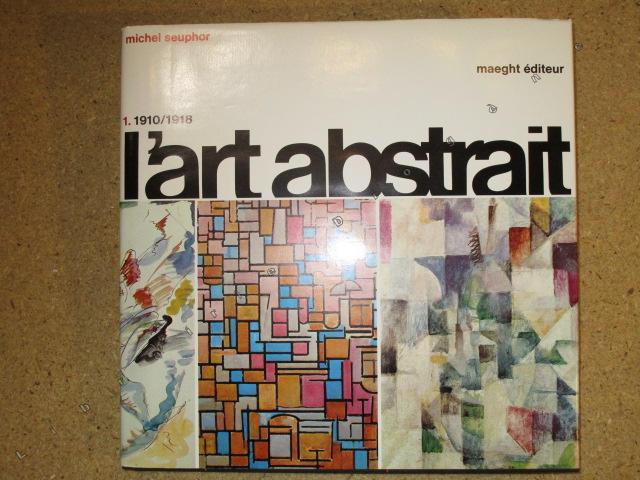
PLEYNET Marcelin / RAGON Michel / SEUPHOR Michel
L'art abstrait : 1910-1918, origines et premier maîtres / 1918-1938 / 1939-1970 en Europe / 1945-1970 Amérique, Afrique, Asie, Océanie / 1970-1987 (5 volumes).
Maeght Maeght, 5 volumes imprimés de 1971 à 1988, 227-240-306-330 et 359 pp, cartonnages éditeurs sous jaquette, environ 29x29cm, bords des jaquettes un peu frottés par endroits, haut du dos des jaquettes des tomes 2, 4 et 5 fendillés, les tomes 1 à 4 ont un rhodoïd (un peu sali et jauni), bon état pour le reste et intérieurs très propres.
Referencia librero : 102858
|
|
|
Plieninger, Gustav
David Livingstone : e. Lebensbild d. großen Entdeckers u. Missionars, für d. dt. Lesewelt, besonders d. reifere Jugend / nach d. Quellen dargest. von Gustav Plieninger.
Stuttgart : Kröner, 1885. IV, 270, [2] S. Mit Livingstones Porträt, 43 in d. Text gedr. Ill., 6 Farbdruckbildern u. 1 Kt. 8°. OLwd mit Goldpräg. u. marmorierten Schnitten.
Referencia librero : 32291
|
|
|
Plimpton, Ruth T.
Operation Crossroads Africa
142p. Hardcover Very good condition good
|
|
|
Plishcke, Hans / Machold, Hertha [Ed.]
Monumenta Ethnographica: Schwarzafrika
375X270 mm. 37 pages. Soft cover. Ex library copy with the usual marks. Cover yellowing and slightly stained. Cover corners and edges wrinkled and torn. Cover rubbed. Cover corners wrinkled and slightly worn. Some page corners wrinkled. Pages yellowing. Else in good condition.
|
|
|
Plisnier, Valentine
Le primitivisme dans la photographie. L'impact des arts extra-européens sur la modernité photographique de 1918 à nos jours. - Primitivism and Photography. Non-Western Art and Modern Photography: From 1918to the Present.
(Pari)s, Editions Trocadéro, (2012). 4° (28 x 22 cm). 321 Seiten.Mit zahlreichen, teils farbigen und ganzseitigen Abbildungen. Orig.-Leinenband mit illustr. Schutzumschlag., 11304ab Umschlag minimal berieben.
Referencia librero : 11304AB

|
|
|
PLISNIER-LADAME F.
Les Pygmées [dans: Enquetes bibliographiques, XVII]
[10] + xxviii + 257pp., 23cm., br.orig., bon état, [contient 1338 références bibliographiques sur les pygmées, d'après un manuscrit de F. Plisnier-Ladame], C98361
|
|
|
PLISNIER-LADAME F.
Les Pygmées [dans: Enquetes bibliographiques, XVII]
Bruxelles, Centre de Documentation economique et sociale africaine 1970 [10] + xxviii + 257pp., 23cm., br.orig., bon état, [contient 1338 références bibliographiques sur les pygmées, d'après un manuscrit de F. Plisnier-Ladame], C98361
Referencia librero : C98361
|
|
|
Pliya Jean
Les tresseurs de corde
Hatier Collection monde noir poche Dos carré collé In-12 (10,5 x 17,5 cm), dos carré collé, 239 pages ; livre légèrement de biais et défraîchi, quelques rousseurs sur les tranches et les premières et dernières pages, par ailleurs assez bon état général. Livraison a domicile (La Poste) ou en Mondial Relay sur simple demande.
Referencia librero : vd115

|
|
|
Plomer William
Turbott Wolfe Introduzione di Laurens van der Post
Trad. di Bruno Oddera n. 24 bross. edit. con bandelle, firma di appartenenza, dorso brunito, manca cellophane, piccole rotture ai bordi
|
|
|
PLOMER William -
Turbott Wolfe.
Milano, Longanesi, 1971, 8vo br. pp. 320 (a fogli chiusi)

|
|
|
Plomer, William
Turbott Wolfe
<p>cm.19, brossura editoriale; pp. 315, una fotografia dell'autore, parzialmente intonso, qualche segno a matita</p>

|
|
|
Plomer, William
Turbott Wolfe.
Zürich:, Diogenes, 1965. Kl.-8°. 309 S. Leinen (gut erhalten)
Referencia librero : 2392AB

|
|
|
PLONCARD D'ASSAC J.
L'Afrique trahie
PLONCARD D'ASSAC J. L'Afrique trahie. Paris, La Voix de l'Occident S.d. (1964), In 8° piccolo, brossura, pp. 208 Buono (Good) . <br> <br> <br>

|
|
|
PLONCARD D'ASSAC Jacques
L'Afrique trahie. Sans date.
Broch?. 208 pages.
|
|
|
PLOUSSARD Jean
CARNETS DE ROUTE. Textes rassemblés par T Rey- Mermet.
P, Seuil 1964, in8br, 339pp, 3 cartes, photos hors texte. Langue: Français
Referencia librero : ML1199
|
|
|
Plozner Lisio
Ville dell'Africa meridionale
illustrazioni a colori

|
|
|
PLUSS Werner
Friedliche Durchdringung oder militaerische Unterwerfung ? Die Etablierung der französischen Herrschaft in der Elfenbeinküste bis 1914
243pp., 29cm., text in German, Doctoral Dissertation (Abhandlung zur Erlangung der Doktorwuerde der Philosophischen Fakultaet I der Universitaet Zuerich), stamp at verso of title page, text is clean and bright, weight: 1.3kg., C112418
|
|
|
PLUSS Werner
Friedliche Durchdringung oder militaerische Unterwerfung ? Die Etablierung der französischen Herrschaft in der Elfenbeinküste bis 1914
Zürich, 1975 243pp., 29cm., text in German, Doctoral Dissertation (Abhandlung zur Erlangung der Doktorwuerde der Philosophischen Fakultaet I der Universitaet Zuerich), stamp at verso of title page, text is clean and bright, weight: 1.3kg., C112418
Referencia librero : C112418
|
|
|
Plutarch
Werke
Stuttgart: Metzler 1818. Gebunden. Metzler unknown
Referencia librero : 85769
|
|
|
PNUD.
PROGRAMME DES NATIONS UNIES POUR LE DEVELOPPEMENT DU DAHOMEY - Document de travail pour le programme de PNUD 1973-1976 en République du Dahomey.
(Codice VF/0607) In 4° (cm 30) 75 pages. Texte policopié, avec une carte. Quelques légères jaunissures, petite mouillure. Broché, notation au crayon "Wallis de Vries" a la couverture. Bon état. ~~~ SPEDIZIONE IN ITALIA SEMPRE TRACCIATA

|
|
|
Poch, Fernando
Il Maresciallo Badoglio telegrafa : dalla riconquista di Adua, alla occupazione di Addis Abeba, attraverso i comunicati di guerra
In-16°, cm 19, pp. 59, con ritratti fotografici. Brossura editoriale spillata, titolo al piatto. Piccoli segni a pastello all'ultima carta bianca, peraltro molto ben conservato.

|
|
|
Pochhammer Hans
Graf Spees letzte Fahrt
Leipzig: Koehler 1924. Gebunden. Koehler unknown
Referencia librero : 55992
|
|
|
Poeschel, H
Afrikanische Impressionen. African Impressions. Deutsch-engl. Paralleltext. 1. A.
Aichtal, J. Margraf 1985. Quer 8°. 165 S. Mit zahlr. Zeichnungen. Original-Leinenband mit Schutzumschlag.
Referencia librero : 185750-1
|
|
|
Poeschel, Helmut
Afrikanische Impressionen : African impressions ( = Übertragung ins Englische von Dr. Helmut Schmalfuss ; Naturkundemuseum Stuttgart ) 2. Aufl.
Weikersheim : Margraf 1989. 164 S., zahlr. schw.-w. Abb., 22 cm x 30 cm Gebundene Ausgabe
Referencia librero : 6120027
|
|
|
Poeschel, Helmut (Zeichnungen und Text)
Afrikanische Impressionen / African Impressions.
Weikersheim, Markgraf, 1989. Quer-4°. 165 S. Mit zahlr. Illustr. v. H. Poeschel. OPappband. Hardcover
Referencia librero : 8626
|
|
|
Poeschel, Sabine
Studien zur Ikonographie der Erdteile in der Kunst des 16.-18. Jahrhunderts.
München, Scaneg, 1985. 8° (18,5-22,5 cm). 451 S. Illustr. OKartonage
Referencia librero : 12822

|
|
|
POESIE 1 -
Poésie 1. N° 43/44/45 : Nouvelle poésie négro-africaine. La parole noire. Depestre, Diakhaté, Maunick, Mudimbé, Ouologuem, Tchicaya U Tam'si…
Couverture souple. Format de poche. 255 pages.
Referencia librero : 135998

|
|
|
Poesie der Tuareg
Herausgegeben von Heike Miethe Sommer
Stuttgart, Niedlich, 1994. Mit einigen farbigen fotografischen Abbildungen. 113 S., 7 Bl. Or.-Lwd.
Referencia librero : 143537

|
|
|
POGGIALI CIRO
ALBORI DELL'IMPERO.
L'Etiopia come è e come sarà. Prima edizione. In 8vo, cm. 15x22h; pag. VIII + 526 8); con 5 carte geografiche f.t. anche p.v.r. volume intonso. Brossura editoriale con bandelle. Buona la conservazione. Codice inv.1029271 5/2a
|
|
|
POGGIALI Ciro -
Ricordi del "Closed Country". Quando un lembo di Somalia si chiamava "Somaliland".
Milano, 1941, estratto con copertina posticcia muta pp. 71/83 con ill. - !! ATTENZIONE !!: Con il termine estratto (o stralcio) intendiamo riferirci ad un fascicolo contenente un articolo di rivista, sia che esso sia stato stampato a parte utilizzando la stessa composizione sia che provenga direttamente da una rivista. Le pagine sono indicate come "da/a", ad esempio: 229/231 significa che il testo è composto da tre pagine. Quando la rivista di provenienza non viene indicata é perchè ci è sconosciuta. - !! ATTENTION !!: : NOT A BOOK : “estratto” or “stralcio” means simply a few pages, original nonetheless, printed in a magazine. Pages are indicated as in "from” “to", for example: 229/231 means the text comprises three pages (229, 230 and 231). If the magazine that contained the pages is not mentioned, it is because it is unknown to us.

|
|
|
Poggiali Ciro.
ALBORI DELL'IMPERO. L'Etiopia come è e come sarà. Con 5 carte geografiche
(Codice CO/0911) In 8° VIII-525 pp., 5 carte fuori testo di cui 3 ripiegate. Prima edizione. Firmetta e timbrino. Brossura editoriale a risvolti, sovraccoperta protettiva in plastica. Ottimo stato. ~~~ SPEDIZIONE IN ITALIA SEMPRE TRACCIATA

|
|
|
POGGIANI Euno.
Periplo Africano. Con prefazione di S. Ecc. l’Ammiraglio E. Cuturi. Brescia, Lega Navale Italiana / Rovetta, 1935.
8°, br. edit., pp. 64 + 7 tavv. ill. f.t. Dedica autografa dell’Autore. Corrispondenze di viaggio estratte dal quotidiano “Il Regime Fascista” di Cremona a cura della Sezione di Brescia della Lega Navale con fotografie originali.
|
|
|
Poglayen, E
In den Wildnissen Afrikas. Jagd- und Reiseerlebnisse.
Klagenfurt, Joh. Leon sen., 1907. Gr.-8°. Mit 54 Illustrationen nach Originalaufnahmen des Verfassers. 130 S., 1 Bl., OLwd.
Referencia librero : 66681

|
|
|
Poinssot
protectorat français gouvernement tunisien. Notes et document -II : Les Inscriptions d'Uchi Majus d'Après les Recherches du Capitaine Gondouin
Ernest leroux ,1908, in-8 de 126 pages ,carte , br. ,Etat correct ,rousseurs .(2 photos du livre sur mon site https://www.vieuxlivre.fr) .Les frais de port pour la France sont offerts à partir de 25 euros d'achat (Mondial relay ). (colissimo suivi +6,90 ).
Referencia librero : 19327
|
|
|
POIRIER (Jean) dir.
Ethnologie régionale I. Afrique - Océanie.
In-8, XVI-1608p. Edition établie sous la direction de Jean Poirier. A l'état de neuf.
|
|
|
POIRIER Léon.
Charles de Foucauld et l'appel du silence.
Photographies du film. Tours. Mame 1936. Petit in-4, 234 pages. Toile éditeur décorée, sous jaquette illustrée.
Referencia librero : 9654
|
|
|
POIRIER, Jules.
De l’Oubanghi à Fachoda. Marchand et la mission Congo - Nil. Deuxième édition. Ouvrage orné de gravures.
Paris, J. Lefort sans date, vers 1901, 220x150mm, 114pages, reliure demi-chagrin. Plats frottés. Auteur et titre dorés au dos.
Referencia librero : 48426

|
|
|

 Recibir por correo electrónico
 Descargar en documento PDF
 Flujo RSS
 Link permanente


