|
|
|
Probenius Leo
Il Liuto di Gassire Leggenda africana con una nota di Ezra Pound
Collana Serie Oltremare a cura di Giacomo Prampolini, n.15 a cura di Vanni Scheiwiller impresso dalla Stamperia Valdonega di Verona - Significato di Leo Probenius - traduzione dal tedesco di Siegfried Walter De Rachewiltz 1 9x5,5 cm., legatura in piena pelle, nervi e titolo in oro al dorso, taglio superiore in oro, segnalibro, conservata brossura originale, pp. 39 /1), copertina illustrata a colori, in italiano, rivestimento in pelle al piatto staccato in parte, ma buon esemplare.
|
|
|
Probst, Peter
Text im Kontext. Eine Untersuchung zum politischen Verhältnis von Schrift und Gesellschaft bei den Wimbum im Grasland von Kamerun. Inaugural-Dissertation ... FB Philosophie und Sozialwissenschaften II; Freie Universität Berlin.
1990. II; 227 Seiten; 29,5 cm; A4-Kopien; geheftet.
Bookseller reference : 1197884

|
|
|
Procacci G.
Il socialismo internazionale e la guerra dÕEtiopia
Cm 14x22, pp. 318. Legato in cartoncino morbido con alette. Ottimo
|
|
|
Procacci Giuliano
Il socialismo internazionale e la guerra dÕEtiopia
Cm. 14x21, pp. 319, cartoncino morbido illustrato con alette. Nuovo.
|
|
|
Prochazka ( von ) Barone R.
Abissinia – prericolo Nero – pref. di O.Dinale - Coll. “ Libri scelti “
Ottima copia
|
|
|
PROCHAZKA, (Barone) Roman von
Abissinia pericolo nero. Prefazione di O. Dinale(Farinata)
1 Vol. In-8 pag. 143 36 ill.in tavv.f.t.Sovracpt.ill(stanca) PROG 5362 CATT_ATT 34
|
|
|
Proche, Charles und Hans G. Isenberg
Luxus-Schiffe.
Augsburg: Bechtermünz Verlag, 2000. 189 Seiten mit zahlr. Abbildungen; 4°; gebunden, illustrierter Orig.-Pappband,
Bookseller reference : 98249

|
|
|
Proelss J
Das junge Deutschland ein Buch deutscher Geistesgeschichte
Stuttgart: Cotta 1892. Gebunden. Cotta unknown
Bookseller reference : 33238
|
|
|
PROF. ANGIOLO MORI
MANUALE DI LEGISLAZIONE DELLA COLONIA ERITREA - INDICI GENERALI
LEGATURA EDITORIALE RIGIDA IN TELA ROSSA numero pagine: 846 formato: 18.5X14.5 stato conservazione: BUONO, NORMALI BRUNITURE AI TAGLI collana: MANUALI COLONIALI PUBBLICATI A CURA DEL MINISTERO DELLE COLONIE
|
|
|
PROF. ING. ATTILIO ARCANGELI
LA CAMIONALE MAR ROSSO - ALTIPIANO ERITREO (MASSAUA - NEFASIT - DECAMERE')
LEGATURA IN BROSSURA EDITORIALE CARTONATA CON MEDAGLIONE IN ORO AL PIATTO AL CENTRO DI UN QUADRATO DI COLORE VERDE. CON 7 TAVOLE PIU' VOLTE RIPIEGATE E NUMEROSISSIME BELLE ILLUSTRAZIONI FOTOGRAFICHE numero pagine: 156 formato: 33.3X24.8 stato conservazione: BUONO, NORMALI BRUNITURE IN COPERTINA ED AI RISVOLTI, INTERNO OTTIMO. PICCOLO TAGLIO AL PIATTO VICINO AL DORSO SUPERIORE

|
|
|
PROF. ING. ATTILIO ARCANGELI
LA CAMIONALE MAR ROSSO ALTIPIANO ERITREO (MASSAUA-NEFASIT-DECAMERE')
LEGATURA IN BROSSURA EDITORIALE CARTONATA CON MEDAGLIONE IN ORO AL PIATTO. INTERNO CON 7 TAVOLE PIU’ VOLTE RIPIEGATE E NUMEROSISSIME BELLE ILLUSTRAZIONI FOTOGRAFICHE numero pagine: 156 formato: 33.4X25 stato conservazione: BUONO
|
|
|
Prof. J.M. Winterbottom
A preliminary check list of the birds of South West Africa
S.W.A. Scientific Society, Windhoek, 1971. 268 S., 8°, Einband etwas berieben, sonst gutes Exemplar + 1 Karte Pepublic of Seychelles praslin with la digue & adjacent islands
Bookseller reference : 8979
|
|
|
PROFESSEUR B. A. OGOT
Histoire Générale de L'Afrique . Tome V - L'Afrique Du XVI° Au XVIII° Siècle .
Edition abrégée . L'Africain a toujours été et demeure créateur de cultures originales qui se sont épanouies et perpétuées , à travers des siècles , dans des voies qui leur sont propres . Histoire Afrique . - 606 p. , 700 gr.

|
|
|
Professor Jameson, James Wilson and Hugh Murray
Narrative of Discovery and Adventure in Africa - Harper's Family Library
New York: Harper & Brothers 1839 Book. Good. Hardcover. Harper Library Edition. From Harper's The Family Library Number16. Title continues "from the earliest ages to the present time: with illustrations of the geology mineralogy and zoology; with a map; plans of the routes of park and of Denham and Clapperton; and several engravings". Harper's Stereotype Edition. Light wear/foxing. Harper & Brothers hardcover
Bookseller reference : 110493
|
|
|
Prokesch-Osten, (Anton) Graf:
Mehmed-Ali. Vize-König von Aegypten. Aus meinem Tagebuche 1826-1841.
173 S. Neue HLwd., Vorderdeckel mit mont. vord. Orig.-Umschlag. Kosch III 335; ADB XXVI 644. - Erste Ausgabe dieses posthum erschienenen Abdrucks aus den Erinnerungen des österreichischen Diplomaten, verdienten Generals, begeisterten Philhellenen und Orientreisenden Anton Graf Prokesch von Osten (1795-1876). Graf Prokesch, dessen Beiname "von Osten" sich seiner Leidenschaft für den Orient verdankt, wurde u. a. 1833 im Auftrag Metternichs nach Alexandria geschickt, um dort erfolgreich bei den Friedensverhandlungen zwischen Mehmed-Ali und der Pforte zu vermitteln. Aufgrund seiner Vertrautheit mit den dortigen Verhältnissen und seinen großen Sympathien für die Menschen der Region wurde er hochgeachtet. - "Innerhalb der österreichischen Diplomatie nahm Prokesch eine eigenthümliche, ja in ihrer Art einzige Stellung ein. Man hat ihn als militärischen Diplomaten wohl mit Schwarzenberg und Ficquelmont verglichen. Richtiger würde ein Vergleich mit Männern wie Brunnow und Humboldt sein, insoferne er mit weltmännischer Bildung und staatsmännischer Erfahrung einen unendlich reichen Schatz des Wissens, empfänglichen Sinn für alles Schöne und Edle im Leben und die glückliche Gabe, seine Gedanken in anmuthige Formen zu kleiden, verband. Trotzdem muß uns eine Laufbahn fast beispiellos bedünken, die den bürgerlich Geborenen fast lediglich durch sein eigenes hervorragendes Verdienst, dem, wenigstens in jüngeren Jahren, die gewinnendste Liebenswürdigkeit zur Seite stand, von den untersten Stufen des Dienstes bis zu den höchsten Höhen des gesellschaftlichen und staatlichen Lebens emporhob" (ADB XXVI, 645). Bücher de
|
|
|
Prokosch, Frederic
Sturm und Echo.
Hamburg, Rowohlt, 1952. (rororo Leinenrücken ; 61), 177 Seiten, H 19 x 11,5 cm, TB, OKart. - Seiten gebräunt. Guter Zustand. broschiert/ Taschenbuch/ paperback
Bookseller reference : ROW2670
|
|
|
PROKSCH, M. F
Die Landwirtschaft auf dem Hochlande des Oberen Oranje. (Oranje Freistaat und Südtransvaal) auf naturwissenschaftlicher, historischer und nationalökonomischer Grundlage.
Wien, Hölder, 1906. 130 S. Hlwd.
Bookseller reference : 3325448
|
|
|
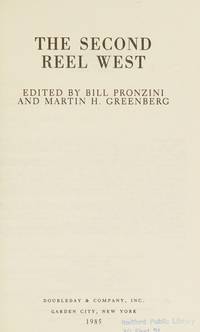
Pronzini, Bill, and Martin H Greenberg, editors
THE SECOND REEL WEST
Garden City NY: Doubleday & Company 1985. First edition first printing . Hardcover. Fine. Collects 10 classic western short stories made into classic western films. Fine in fine and bright dust jacket. <br/> <br/> Doubleday & Company hardcover
Bookseller reference : 16302 ISBN : 0385231032 9780385231039
|
|
|
Prorok, B. Graf Khun de
Göttersuche in Afrikas Erde : Fünf Jahre Ausgrabung in Karthago, Utica und der Sahara.
Leipzig, F.A.Brockhaus, 1928. Mit 44 Abb.und einer Karte. 8°, 259 S., hellbrauner Org.-Lwd. mit gold. Rücken- u. Deckeltitel, hellblauem Rückenschild u. Deckelvignette
Bookseller reference : 119

|
|
|
Prosdocimo Giorgio
Tra i libici del Sud Tripolino Etnologia e criminologia con 40 figure e 12 tavole f.t.
In 8°, pp. XII+340. Legatura in mz tela. Rare fioriture.

|
|
|
PROSPECTIVE
Revue Num?ro 13. L'Afrique en devenir. Essai sur l'avenir de l'Afrique noire.
Broch?. 139 pages.
|
|
|
Prosperi Franco
Gran Comora
tela edit., manca sovrac., lievi tracce d'uso alla tela, tagli fioriti
|
|
|
Prosperi Franco
Gran Comora
In 8° tela edit, tracce d'uso pp 281-2. 17 fotografie a colori, 39 in nero e 1 cartina
|
|
|
PROTAIN & BOUILLARD (sculpsit)
DESCRIPTION DE L'EGYPTE. Le Kaire [Le Caire]. Vue perspective intérieure de la Mosquée de Touloun. (ETAT MODERNE, volume I, planche 31)
- Imprimerie Impériale, Paris 1809-1829, 53,5x70,5cm, une feuille. - Original, unshaved, full-page etching from the "Imperial edition" of the Description de l'Égypte, or 'Recueil des observations et recherches faites en Égypte pendant l'expédition française, publié par les ordres de Sa Majesté l'Empereur Napoléon le Grand [A Collection of the observations and research carried out in Egypt during the French expedition, published on the orders of his Majesty the Emperor Napoleon the Great]'. Produced between February 1802 and 1830 on the orders of Naopleon Bonaparte and published between 1809 and 1828, 1,000 copies were printed and distributed to institutions, on vergé paper with an 'Égypte ancienne et moderne' watermark, visible when held up to the light. Light marginal spotting not touching image, otherwise in very fresh, fine condition. An engraving from the Description de l'Egypte, one of the masterpieces of French printing and the birth of a new field: Egyptology. A gigantic survey of Egypt at the time of Bonaparte's conquests in 1798 and 1799, the work is divided into 13 volumes of engravings making up 892 plates, of which 72 colored, as well as presenting the splendors of the Egypt of the Pharaohs in 9 volumes. The other volumes discuss natural history and present a fascinating portrait of Coptic and Islamic Egypt as it was seen by Bonaparte's Eastern Armies. The 'Egyptian campaign', militarily a disaster, demonstrates, through the engravings of the Description d'Egypte, the scientific success it nonetheless became thanks to the 167 expert members of the Commission of the Sciences and Arts of the Institut d'Egypte [Egyptian Institute] who followed Napoleon's army. The Institut gathered together in Egypt the mathematician Monge, the chemist Berthollet, the naturalist Geoffroy Saint-Hilaire as well as numerous artists, engineers, architects and doctors. They were tasked with re-discovering modern and ancient Egypt and displaying its natural treasures as well as the know-how of its inhabitants. This edition, the so-called "Imperial" edition of the plates for the Description de l'Egypte was printed in four large formats, two of which were specially created for it and christened "Moyen-Egypte" and "Grand-Egypte". A special press was built to print it, the process extending over 20 years, from 1809 to 1829. The "Imperial" edition proved so popular that a second edition, this time in black and white and without the "Egypte ancienne et moderne" watermark - known as the "Royal Edition" - was published during the Restoration by the printing house of C.-L.-F. Panckoucke (Paris). The engravings of the Description d'Egypte owe a great deal to Baron Dominique-Vivant Denon, illustrator, diplomat, collector and later Director of the Musée Napoléon (the Louvre). His exploration of the South of Egypt gave Bonaparte the idea of sending the experts of the Institut there, thus creating a faithful and complete portrait of the area. This was the research gathered together from 1802 in the mammoth Description de L'Egypte. Denon embarked on this story of archeological exploration at the age of 51, reaching first Alexandria and then Cairo before exploring Upper Egypt. Along with the members of the Institut d'Egypte, the Natural History Museum's painter H.J. Redouté (brother of Pierre-Joseph Redouté, author of Roses), the mineralogist Dolomiue, and the draughtsman Joly, Denon then explored the Nile Delta and Lower Egypt. When, however, he joined the 21st Light Infantry Regiment as it marched across Upper Egypt in pursuit of the retreating Mameluks in November 1798, he found himself the only civilian. In the very midst of the battle itself, he reeled off sketches of the works of art that peppered his path right up to the threshold of the Sudan. He said that he had crossed "a country that is, apart from its name, entirely unknown to Europeans, and therefore everything was worth describing" (Voyages dans la Basse et la Haute Egypte pendan

|
|
|
PROTAIN & BOUILLARD (sculpsit)
DESCRIPTION DE L'EGYPTE. Le Kaire [Le Caire]. Vue extérieure de la Mosquée de Touloun. (ETAT MODERNE, volume I, planche 29)
- Imprimerie Impériale, Paris 1809-1829, 70,5x53,5cm, une feuille. - Original etching in plano, untrimmed, extracted from the'' Imperial Edition 'of the Description of Egypt or Collection of Observations and Research made in Egypt during the French expedition, published by order of His Majesty the Emperor Napoleon Grand. Conducted between 1802 and 1830 and published between 1809 and 1828, she was taken in 1000 copies available to institutions. Laid the watermark visible by transparency ancient and modern Egypt paper. This engraving shows a great view of the Tulun Mosque and its minaret in Cairo. The Ibn Tulun Mosque (named Ahmad Ibn Tulun) is the oldest mosque in the city that is in its original state and the oldest Islamic monument in the country. It is also the largest in terms of floor space. It is located near the Citadel of Saladin and the Mosque of Sultan Hassan. Its spiral minaret reminds Samarra. Its construction was ordered by Ahmad Ibn Tulun, the Abbasid governor of Egypt, who ruled the country virtually self-Way 868-884 According to historian Al Maqrizi, the construction of the building began in 876.; a registration date of the completion year 265 AH, that is to say, the year AD 879. Marginal tiny bites do not affect any of the board and without a hitch lack in upper left margin, otherwise excellent freshness and preservation. The monumental first edition of the Description of Egypt in 13 volumes contained 892 colored plates of which 72, including 9 volumes involved antiquity. Other volumes dealt with the Natural History and modern Egypt as Napoleon Bonaparte had brought with him a commission of scholars from all disciplines so that it was said, in his description was stored the richest museum of universe. This book was written in part by Baron Dominique Vivant Denon, before he is appointed Managing Director of the Louvre Museum Napoleon. More than 80 artists and 400 writers were hired for this huge project. The unusually large size boards necessitated the creation of a special press and a specific piece of furniture to keep them ...! --- Please note that the translation in english is done automatically, we apologize if the formulas are inaccurate. Contact us for any information! [FRENCH VERSION FOLLOWS] Gravure originale à l'eau-forte in plano, non rognée, extraite de l'édition dite « Impériale » de la Description de l'Égypte ou Recueil des observations et recherches faites en Égypte pendant l'expédition française, publié par les ordres de Sa Majesté l'Empereur Napoléon le Grand. Réalisée entre février 1802 et 1829 sur ordre de Napoléon Bonaparte et publiée à partir de 1809 [en réalité 1810], elle fut tirée à 1000 exemplaires sur Vergé filigrané « Égypte ancienne et moderne » et offerte aux institutions. Cette gravure présente une superbe vue de la Mosquée de Touloun et de son minaret au Caire. La mosquée Ibn Touloun (du nom d'Ahmad Ibn Touloun) est la plus ancienne mosquée de cette ville qui soit dans son état originel et le plus ancien monument islamique du pays. C'est aussi la plus vaste en termes de surface au sol. Elle se trouve non loin de la Citadelle de Saladin et de la mosquée du Sultan Hassan. Son minaret en forme de spirale rappelle Samarra. Sa construction fut ordonnée par Ahmad Ibn Touloun, gouverneur abbasside d'Égypte, qui gouverna le pays de manière pratiquement autonome de 868 à 884. Selon l'historien Al Maqrizi, la construction de l'édifice commença en 876 ; une inscription date son achèvement de l'an 265 de l'Hégire, c'est-à-dire l'année 879 de notre ère. Infimes piqûres marginales n'affectant pas du tout la planche et un accroc sans manque en marge supérieure gauche, sinon excellent état de fraîcheur et de conservation. ARCHITECTURE ISLAMIQUE DU CAIRE : L'ensemble de gravures auquel cette planche appartient constitue une des premières études raisonnées des monuments de l'Egypte islamique au Caire, rassemblant plans, coupes et élévations de mosquées, de mausolées et de fortifications, depuis l

|
|
|
PROTAIN & CECILE (delineavit) & REVILLE (sculpsit)
DESCRIPTION DE L'EGYPTE. Alexandrie. Vue d'une rue conduisant au port vieux, Vue du grand bazar ou marché principal. (ETAT MODERNE, volume II, planche 96)
- Imprimerie Impériale, Paris 1809-1829, 71x53,5cm, une feuille. - Original, unshaved, full-page etching from the "Imperial edition" of the Description de l'Égypte, or 'Recueil des observations et recherches faites en Égypte pendant l'expédition française, publié par les ordres de Sa Majesté l'Empereur Napoléon le Grand [A Collection of the observations and research carried out in Egypt during the French expedition, published on the orders of his Majesty the Emperor Napoleon the Great]'. Produced between February 1802 and 1830 on the orders of Naopleon Bonaparte and published between 1809 and 1828, 1,000 copies were printed and distributed to institutions, on vergé paper with an 'Égypte ancienne et moderne' watermark, visible when held up to the light. Light marginal spotting not touching image, otherwise in very fresh, fine condition. An engraving from the Description de l'Egypte, one of the masterpieces of French printing and the birth of a new field: Egyptology. A gigantic survey of Egypt at the time of Bonaparte's conquests in 1798 and 1799, the work is divided into 13 volumes of engravings making up 892 plates, of which 72 colored, as well as presenting the splendors of the Egypt of the Pharaohs in 9 volumes. The other volumes discuss natural history and present a fascinating portrait of Coptic and Islamic Egypt as it was seen by Bonaparte's Eastern Armies. The 'Egyptian campaign', militarily a disaster, demonstrates, through the engravings of the Description d'Egypte, the scientific success it nonetheless became thanks to the 167 expert members of the Commission of the Sciences and Arts of the Institut d'Egypte [Egyptian Institute] who followed Napoleon's army. The Institut gathered together in Egypt the mathematician Monge, the chemist Berthollet, the naturalist Geoffroy Saint-Hilaire as well as numerous artists, engineers, architects and doctors. They were tasked with re-discovering modern and ancient Egypt and displaying its natural treasures as well as the know-how of its inhabitants. This edition, the so-called "Imperial" edition of the plates for the Description de l'Egypte was printed in four large formats, two of which were specially created for it and christened "Moyen-Egypte" and "Grand-Egypte". A special press was built to print it, the process extending over 20 years, from 1809 to 1829. The "Imperial" edition proved so popular that a second edition, this time in black and white and without the "Egypte ancienne et moderne" watermark - known as the "Royal Edition" - was published during the Restoration by the printing house of C.-L.-F. Panckoucke (Paris). The engravings of the Description d'Egypte owe a great deal to Baron Dominique-Vivant Denon, illustrator, diplomat, collector and later Director of the Musée Napoléon (the Louvre). His exploration of the South of Egypt gave Bonaparte the idea of sending the experts of the Institut there, thus creating a faithful and complete portrait of the area. This was the research gathered together from 1802 in the mammoth Description de L'Egypte. Denon embarked on this story of archeological exploration at the age of 51, reaching first Alexandria and then Cairo before exploring Upper Egypt. Along with the members of the Institut d'Egypte, the Natural History Museum's painter H.J. Redouté (brother of Pierre-Joseph Redouté, author of Roses), the mineralogist Dolomiue, and the draughtsman Joly, Denon then explored the Nile Delta and Lower Egypt. When, however, he joined the 21st Light Infantry Regiment as it marched across Upper Egypt in pursuit of the retreating Mameluks in November 1798, he found himself the only civilian. In the very midst of the battle itself, he reeled off sketches of the works of art that peppered his path right up to the threshold of the Sudan. He said that he had crossed "a country that is, apart from its name, entirely unknown to Europeans, and therefore everything was worth describing" (Voyages dans la Basse et la Haute Egypte pendant

|
|
|
PROTAIN & DAVID & REVILLE (sculpsit)
DESCRIPTION DE L'EGYPTE. Le Kaire [Le Caire]. Plan d'une partie de la ville des tombeaux & Plans et élévations de plusieurs tombeaux de Mamlouks. (ETAT MODERNE, volume I, planche 64)
- Imprimerie Impériale, Paris 1809-1829, 53,5x70cm, une feuille. - Original, unshaved, full-page etching from the "Imperial edition" of the Description de l'Égypte, or 'Recueil des observations et recherches faites en Égypte pendant l'expédition française, publié par les ordres de Sa Majesté l'Empereur Napoléon le Grand [A Collection of the observations and research carried out in Egypt during the French expedition, published on the orders of his Majesty the Emperor Napoleon the Great]'. Produced between February 1802 and 1830 on the orders of Naopleon Bonaparte and published between 1809 and 1828, 1,000 copies were printed and distributed to institutions, on vergé paper with an 'Égypte ancienne et moderne' watermark, visible when held up to the light. Light marginal spotting not touching image, otherwise in very fresh, fine condition. An engraving from the Description de l'Egypte, one of the masterpieces of French printing and the birth of a new field: Egyptology. A gigantic survey of Egypt at the time of Bonaparte's conquests in 1798 and 1799, the work is divided into 13 volumes of engravings making up 892 plates, of which 72 colored, as well as presenting the splendors of the Egypt of the Pharaohs in 9 volumes. The other volumes discuss natural history and present a fascinating portrait of Coptic and Islamic Egypt as it was seen by Bonaparte's Eastern Armies. The 'Egyptian campaign', militarily a disaster, demonstrates, through the engravings of the Description d'Egypte, the scientific success it nonetheless became thanks to the 167 expert members of the Commission of the Sciences and Arts of the Institut d'Egypte [Egyptian Institute] who followed Napoleon's army. The Institut gathered together in Egypt the mathematician Monge, the chemist Berthollet, the naturalist Geoffroy Saint-Hilaire as well as numerous artists, engineers, architects and doctors. They were tasked with re-discovering modern and ancient Egypt and displaying its natural treasures as well as the know-how of its inhabitants. This edition, the so-called "Imperial" edition of the plates for the Description de l'Egypte was printed in four large formats, two of which were specially created for it and christened "Moyen-Egypte" and "Grand-Egypte". A special press was built to print it, the process extending over 20 years, from 1809 to 1829. The "Imperial" edition proved so popular that a second edition, this time in black and white and without the "Egypte ancienne et moderne" watermark - known as the "Royal Edition" - was published during the Restoration by the printing house of C.-L.-F. Panckoucke (Paris). The engravings of the Description d'Egypte owe a great deal to Baron Dominique-Vivant Denon, illustrator, diplomat, collector and later Director of the Musée Napoléon (the Louvre). His exploration of the South of Egypt gave Bonaparte the idea of sending the experts of the Institut there, thus creating a faithful and complete portrait of the area. This was the research gathered together from 1802 in the mammoth Description de L'Egypte. Denon embarked on this story of archeological exploration at the age of 51, reaching first Alexandria and then Cairo before exploring Upper Egypt. Along with the members of the Institut d'Egypte, the Natural History Museum's painter H.J. Redouté (brother of Pierre-Joseph Redouté, author of Roses), the mineralogist Dolomiue, and the draughtsman Joly, Denon then explored the Nile Delta and Lower Egypt. When, however, he joined the 21st Light Infantry Regiment as it marched across Upper Egypt in pursuit of the retreating Mameluks in November 1798, he found himself the only civilian. In the very midst of the battle itself, he reeled off sketches of the works of art that peppered his path right up to the threshold of the Sudan. He said that he had crossed "a country that is, apart from its name, entirely unknown to Europeans, and therefore everything was worth describing" (Voyages dans la Basse et la Haute Egypte pendant

|
|
|
PROTAIN & DE BUIGNE Louis-Alexandre
DESCRIPTION DE L'EGYPTE. Le Kaire [Le Caire]. Plan, coupe et vues perspectives d'un bain public. (ETAT MODERNE, volume I, planche 49)
- Imprimerie Impériale, Paris 1809-1829, 53,5x70cm, une feuille. - Original, unshaved, full-page etching from the "Imperial edition" of the Description de l'Égypte, or 'Recueil des observations et recherches faites en Égypte pendant l'expédition française, publié par les ordres de Sa Majesté l'Empereur Napoléon le Grand [A Collection of the observations and research carried out in Egypt during the French expedition, published on the orders of his Majesty the Emperor Napoleon the Great]'. Produced between February 1802 and 1830 on the orders of Naopleon Bonaparte and published between 1809 and 1828, 1,000 copies were printed and distributed to institutions, on vergé paper with an 'Égypte ancienne et moderne' watermark, visible when held up to the light. Light marginal spotting not touching image, otherwise in very fresh, fine condition. An engraving from the Description de l'Egypte, one of the masterpieces of French printing and the birth of a new field: Egyptology. A gigantic survey of Egypt at the time of Bonaparte's conquests in 1798 and 1799, the work is divided into 13 volumes of engravings making up 892 plates, of which 72 colored, as well as presenting the splendors of the Egypt of the Pharaohs in 9 volumes. The other volumes discuss natural history and present a fascinating portrait of Coptic and Islamic Egypt as it was seen by Bonaparte's Eastern Armies. The 'Egyptian campaign', militarily a disaster, demonstrates, through the engravings of the Description d'Egypte, the scientific success it nonetheless became thanks to the 167 expert members of the Commission of the Sciences and Arts of the Institut d'Egypte [Egyptian Institute] who followed Napoleon's army. The Institut gathered together in Egypt the mathematician Monge, the chemist Berthollet, the naturalist Geoffroy Saint-Hilaire as well as numerous artists, engineers, architects and doctors. They were tasked with re-discovering modern and ancient Egypt and displaying its natural treasures as well as the know-how of its inhabitants. This edition, the so-called "Imperial" edition of the plates for the Description de l'Egypte was printed in four large formats, two of which were specially created for it and christened "Moyen-Egypte" and "Grand-Egypte". A special press was built to print it, the process extending over 20 years, from 1809 to 1829. The "Imperial" edition proved so popular that a second edition, this time in black and white and without the "Egypte ancienne et moderne" watermark - known as the "Royal Edition" - was published during the Restoration by the printing house of C.-L.-F. Panckoucke (Paris). The engravings of the Description d'Egypte owe a great deal to Baron Dominique-Vivant Denon, illustrator, diplomat, collector and later Director of the Musée Napoléon (the Louvre). His exploration of the South of Egypt gave Bonaparte the idea of sending the experts of the Institut there, thus creating a faithful and complete portrait of the area. This was the research gathered together from 1802 in the mammoth Description de L'Egypte. Denon embarked on this story of archeological exploration at the age of 51, reaching first Alexandria and then Cairo before exploring Upper Egypt. Along with the members of the Institut d'Egypte, the Natural History Museum's painter H.J. Redouté (brother of Pierre-Joseph Redouté, author of Roses), the mineralogist Dolomiue, and the draughtsman Joly, Denon then explored the Nile Delta and Lower Egypt. When, however, he joined the 21st Light Infantry Regiment as it marched across Upper Egypt in pursuit of the retreating Mameluks in November 1798, he found himself the only civilian. In the very midst of the battle itself, he reeled off sketches of the works of art that peppered his path right up to the threshold of the Sudan. He said that he had crossed "a country that is, apart from its name, entirely unknown to Europeans, and therefore everything was worth describing" (Voyages dans la Basse et la Haute Egypte pendant

|
|
|
PROTAIN & LEBE-GIGUN (sculpsit) & REVILLE (sculpsit)
DESCRIPTION DE L'EGYPTE. Le Kaire [Le Caire]. Plan, élévation et coupe longitudinale de la mosquée de Soultân Hasan. (ETAT MODERNE, volume I, planche 33)
- Imprimerie Impériale, Paris 1809-1829, 53,5x70cm, une feuille. - Original, unshaved, full-page etching from the "Imperial edition" of the Description de l'Égypte, or 'Recueil des observations et recherches faites en Égypte pendant l'expédition française, publié par les ordres de Sa Majesté l'Empereur Napoléon le Grand [A Collection of the observations and research carried out in Egypt during the French expedition, published on the orders of his Majesty the Emperor Napoleon the Great]'. Produced between February 1802 and 1830 on the orders of Naopleon Bonaparte and published between 1809 and 1828, 1,000 copies were printed and distributed to institutions, on vergé paper with an 'Égypte ancienne et moderne' watermark, visible when held up to the light. Light marginal spotting not touching image, otherwise in very fresh, fine condition. An engraving from the Description de l'Egypte, one of the masterpieces of French printing and the birth of a new field: Egyptology. A gigantic survey of Egypt at the time of Bonaparte's conquests in 1798 and 1799, the work is divided into 13 volumes of engravings making up 892 plates, of which 72 colored, as well as presenting the splendors of the Egypt of the Pharaohs in 9 volumes. The other volumes discuss natural history and present a fascinating portrait of Coptic and Islamic Egypt as it was seen by Bonaparte's Eastern Armies. The 'Egyptian campaign', militarily a disaster, demonstrates, through the engravings of the Description d'Egypte, the scientific success it nonetheless became thanks to the 167 expert members of the Commission of the Sciences and Arts of the Institut d'Egypte [Egyptian Institute] who followed Napoleon's army. The Institut gathered together in Egypt the mathematician Monge, the chemist Berthollet, the naturalist Geoffroy Saint-Hilaire as well as numerous artists, engineers, architects and doctors. They were tasked with re-discovering modern and ancient Egypt and displaying its natural treasures as well as the know-how of its inhabitants. This edition, the so-called "Imperial" edition of the plates for the Description de l'Egypte was printed in four large formats, two of which were specially created for it and christened "Moyen-Egypte" and "Grand-Egypte". A special press was built to print it, the process extending over 20 years, from 1809 to 1829. The "Imperial" edition proved so popular that a second edition, this time in black and white and without the "Egypte ancienne et moderne" watermark - known as the "Royal Edition" - was published during the Restoration by the printing house of C.-L.-F. Panckoucke (Paris). The engravings of the Description d'Egypte owe a great deal to Baron Dominique-Vivant Denon, illustrator, diplomat, collector and later Director of the Musée Napoléon (the Louvre). His exploration of the South of Egypt gave Bonaparte the idea of sending the experts of the Institut there, thus creating a faithful and complete portrait of the area. This was the research gathered together from 1802 in the mammoth Description de L'Egypte. Denon embarked on this story of archeological exploration at the age of 51, reaching first Alexandria and then Cairo before exploring Upper Egypt. Along with the members of the Institut d'Egypte, the Natural History Museum's painter H.J. Redouté (brother of Pierre-Joseph Redouté, author of Roses), the mineralogist Dolomiue, and the draughtsman Joly, Denon then explored the Nile Delta and Lower Egypt. When, however, he joined the 21st Light Infantry Regiment as it marched across Upper Egypt in pursuit of the retreating Mameluks in November 1798, he found himself the only civilian. In the very midst of the battle itself, he reeled off sketches of the works of art that peppered his path right up to the threshold of the Sudan. He said that he had crossed "a country that is, apart from its name, entirely unknown to Europeans, and therefore everything was worth describing" (Voyages dans la Basse et la Haute Egypte pendant les cam

|
|
|
PROTAIN & LEISNIER (sculpsit)
DESCRIPTION DE L'EGYPTE. Le Kaire [Le Caire]. Élévation et coupe transversale de la mosquée de Soultân Hasan & Détail de la porte d'entrée. (ETAT MODERNE, volume I, planche 34)
- Imprimerie Impériale, Paris 1809-1829, 70x53,5cm, une feuille. - Original, unshaved, full-page etching from the "Imperial edition" of the Description de l'Égypte, or 'Recueil des observations et recherches faites en Égypte pendant l'expédition française, publié par les ordres de Sa Majesté l'Empereur Napoléon le Grand [A Collection of the observations and research carried out in Egypt during the French expedition, published on the orders of his Majesty the Emperor Napoleon the Great]'. Produced between February 1802 and 1830 on the orders of Naopleon Bonaparte and published between 1809 and 1828, 1,000 copies were printed and distributed to institutions, on vergé paper with an 'Égypte ancienne et moderne' watermark, visible when held up to the light. Light marginal spotting not touching image, otherwise in very fresh, fine condition. An engraving from the Description de l'Egypte, one of the masterpieces of French printing and the birth of a new field: Egyptology. A gigantic survey of Egypt at the time of Bonaparte's conquests in 1798 and 1799, the work is divided into 13 volumes of engravings making up 892 plates, of which 72 colored, as well as presenting the splendors of the Egypt of the Pharaohs in 9 volumes. The other volumes discuss natural history and present a fascinating portrait of Coptic and Islamic Egypt as it was seen by Bonaparte's Eastern Armies. The 'Egyptian campaign', militarily a disaster, demonstrates, through the engravings of the Description d'Egypte, the scientific success it nonetheless became thanks to the 167 expert members of the Commission of the Sciences and Arts of the Institut d'Egypte [Egyptian Institute] who followed Napoleon's army. The Institut gathered together in Egypt the mathematician Monge, the chemist Berthollet, the naturalist Geoffroy Saint-Hilaire as well as numerous artists, engineers, architects and doctors. They were tasked with re-discovering modern and ancient Egypt and displaying its natural treasures as well as the know-how of its inhabitants. This edition, the so-called "Imperial" edition of the plates for the Description de l'Egypte was printed in four large formats, two of which were specially created for it and christened "Moyen-Egypte" and "Grand-Egypte". A special press was built to print it, the process extending over 20 years, from 1809 to 1829. The "Imperial" edition proved so popular that a second edition, this time in black and white and without the "Egypte ancienne et moderne" watermark - known as the "Royal Edition" - was published during the Restoration by the printing house of C.-L.-F. Panckoucke (Paris). The engravings of the Description d'Egypte owe a great deal to Baron Dominique-Vivant Denon, illustrator, diplomat, collector and later Director of the Musée Napoléon (the Louvre). His exploration of the South of Egypt gave Bonaparte the idea of sending the experts of the Institut there, thus creating a faithful and complete portrait of the area. This was the research gathered together from 1802 in the mammoth Description de L'Egypte. Denon embarked on this story of archeological exploration at the age of 51, reaching first Alexandria and then Cairo before exploring Upper Egypt. Along with the members of the Institut d'Egypte, the Natural History Museum's painter H.J. Redouté (brother of Pierre-Joseph Redouté, author of Roses), the mineralogist Dolomiue, and the draughtsman Joly, Denon then explored the Nile Delta and Lower Egypt. When, however, he joined the 21st Light Infantry Regiment as it marched across Upper Egypt in pursuit of the retreating Mameluks in November 1798, he found himself the only civilian. In the very midst of the battle itself, he reeled off sketches of the works of art that peppered his path right up to the threshold of the Sudan. He said that he had crossed "a country that is, apart from its name, entirely unknown to Europeans, and therefore everything was worth describing" (Voyages dans la Basse et la Haute Egypte pendant les cam

|
|
|
PROTAIN & REVILLE (sculpsit)
DESCRIPTION DE L'EGYPTE. Alexandrie. Vues perspectives intérieures d'une maison particulière. (ETAT MODERNE, volume II, planche 92)
- Imprimerie Impériale, Paris 1809-1829, 53,5x71cm, une feuille. - Original, unshaved, full-page etching from the "Imperial edition" of the Description de l'Égypte, or 'Recueil des observations et recherches faites en Égypte pendant l'expédition française, publié par les ordres de Sa Majesté l'Empereur Napoléon le Grand [A Collection of the observations and research carried out in Egypt during the French expedition, published on the orders of his Majesty the Emperor Napoleon the Great]'. Produced between February 1802 and 1830 on the orders of Naopleon Bonaparte and published between 1809 and 1828, 1,000 copies were printed and distributed to institutions, on vergé paper with an 'Égypte ancienne et moderne' watermark, visible when held up to the light. Light marginal spotting not touching image, otherwise in very fresh, fine condition. An engraving from the Description de l'Egypte, one of the masterpieces of French printing and the birth of a new field: Egyptology. A gigantic survey of Egypt at the time of Bonaparte's conquests in 1798 and 1799, the work is divided into 13 volumes of engravings making up 892 plates, of which 72 colored, as well as presenting the splendors of the Egypt of the Pharaohs in 9 volumes. The other volumes discuss natural history and present a fascinating portrait of Coptic and Islamic Egypt as it was seen by Bonaparte's Eastern Armies. The 'Egyptian campaign', militarily a disaster, demonstrates, through the engravings of the Description d'Egypte, the scientific success it nonetheless became thanks to the 167 expert members of the Commission of the Sciences and Arts of the Institut d'Egypte [Egyptian Institute] who followed Napoleon's army. The Institut gathered together in Egypt the mathematician Monge, the chemist Berthollet, the naturalist Geoffroy Saint-Hilaire as well as numerous artists, engineers, architects and doctors. They were tasked with re-discovering modern and ancient Egypt and displaying its natural treasures as well as the know-how of its inhabitants. This edition, the so-called "Imperial" edition of the plates for the Description de l'Egypte was printed in four large formats, two of which were specially created for it and christened "Moyen-Egypte" and "Grand-Egypte". A special press was built to print it, the process extending over 20 years, from 1809 to 1829. The "Imperial" edition proved so popular that a second edition, this time in black and white and without the "Egypte ancienne et moderne" watermark - known as the "Royal Edition" - was published during the Restoration by the printing house of C.-L.-F. Panckoucke (Paris). The engravings of the Description d'Egypte owe a great deal to Baron Dominique-Vivant Denon, illustrator, diplomat, collector and later Director of the Musée Napoléon (the Louvre). His exploration of the South of Egypt gave Bonaparte the idea of sending the experts of the Institut there, thus creating a faithful and complete portrait of the area. This was the research gathered together from 1802 in the mammoth Description de L'Egypte. Denon embarked on this story of archeological exploration at the age of 51, reaching first Alexandria and then Cairo before exploring Upper Egypt. Along with the members of the Institut d'Egypte, the Natural History Museum's painter H.J. Redouté (brother of Pierre-Joseph Redouté, author of Roses), the mineralogist Dolomiue, and the draughtsman Joly, Denon then explored the Nile Delta and Lower Egypt. When, however, he joined the 21st Light Infantry Regiment as it marched across Upper Egypt in pursuit of the retreating Mameluks in November 1798, he found himself the only civilian. In the very midst of the battle itself, he reeled off sketches of the works of art that peppered his path right up to the threshold of the Sudan. He said that he had crossed "a country that is, apart from its name, entirely unknown to Europeans, and therefore everything was worth describing" (Voyages dans la Basse et la Haute Egypte pendant

|
|
|
PROTAIN & REVILLE (sculpsit)
DESCRIPTION DE L'EGYPTE. Le Kaire [Le Caire]. Vue perspective d'une partie de la ville des tombeaux. (ETAT MODERNE, volume I, planche 66)
- Imprimerie Impériale, Paris 1809-1829, 53,5x70,5cm, une feuille. - Original, unshaved, full-page etching from the "Imperial edition" of the Description de l'Égypte, or 'Recueil des observations et recherches faites en Égypte pendant l'expédition française, publié par les ordres de Sa Majesté l'Empereur Napoléon le Grand [A Collection of the observations and research carried out in Egypt during the French expedition, published on the orders of his Majesty the Emperor Napoleon the Great]'. Produced between February 1802 and 1830 on the orders of Naopleon Bonaparte and published between 1809 and 1828, 1,000 copies were printed and distributed to institutions, on vergé paper with an 'Égypte ancienne et moderne' watermark, visible when held up to the light. Light marginal spotting not touching image, otherwise in very fresh, fine condition. An engraving from the Description de l'Egypte, one of the masterpieces of French printing and the birth of a new field: Egyptology. A gigantic survey of Egypt at the time of Bonaparte's conquests in 1798 and 1799, the work is divided into 13 volumes of engravings making up 892 plates, of which 72 colored, as well as presenting the splendors of the Egypt of the Pharaohs in 9 volumes. The other volumes discuss natural history and present a fascinating portrait of Coptic and Islamic Egypt as it was seen by Bonaparte's Eastern Armies. The 'Egyptian campaign', militarily a disaster, demonstrates, through the engravings of the Description d'Egypte, the scientific success it nonetheless became thanks to the 167 expert members of the Commission of the Sciences and Arts of the Institut d'Egypte [Egyptian Institute] who followed Napoleon's army. The Institut gathered together in Egypt the mathematician Monge, the chemist Berthollet, the naturalist Geoffroy Saint-Hilaire as well as numerous artists, engineers, architects and doctors. They were tasked with re-discovering modern and ancient Egypt and displaying its natural treasures as well as the know-how of its inhabitants. This edition, the so-called "Imperial" edition of the plates for the Description de l'Egypte was printed in four large formats, two of which were specially created for it and christened "Moyen-Egypte" and "Grand-Egypte". A special press was built to print it, the process extending over 20 years, from 1809 to 1829. The "Imperial" edition proved so popular that a second edition, this time in black and white and without the "Egypte ancienne et moderne" watermark - known as the "Royal Edition" - was published during the Restoration by the printing house of C.-L.-F. Panckoucke (Paris). The engravings of the Description d'Egypte owe a great deal to Baron Dominique-Vivant Denon, illustrator, diplomat, collector and later Director of the Musée Napoléon (the Louvre). His exploration of the South of Egypt gave Bonaparte the idea of sending the experts of the Institut there, thus creating a faithful and complete portrait of the area. This was the research gathered together from 1802 in the mammoth Description de L'Egypte. Denon embarked on this story of archeological exploration at the age of 51, reaching first Alexandria and then Cairo before exploring Upper Egypt. Along with the members of the Institut d'Egypte, the Natural History Museum's painter H.J. Redouté (brother of Pierre-Joseph Redouté, author of Roses), the mineralogist Dolomiue, and the draughtsman Joly, Denon then explored the Nile Delta and Lower Egypt. When, however, he joined the 21st Light Infantry Regiment as it marched across Upper Egypt in pursuit of the retreating Mameluks in November 1798, he found himself the only civilian. In the very midst of the battle itself, he reeled off sketches of the works of art that peppered his path right up to the threshold of the Sudan. He said that he had crossed "a country that is, apart from its name, entirely unknown to Europeans, and therefore everything was worth describing" (Voyages dans la Basse et la Haute Egypte pendan

|
|
|
PROTAIN & REVILLE (sculpsit)
DESCRIPTION DE L'EGYPTE. Le Kaire [Le Caire]. Vue perspective extérieure de la mosquée de Soultân Hasan. (ETAT MODERNE, volume I, planche 38)
- Imprimerie Impériale, Paris 1809-1829, 53,5x70cm, une feuille. - Original, unshaved, full-page etching from the "Imperial edition" of the Description de l'Égypte, or 'Recueil des observations et recherches faites en Égypte pendant l'expédition française, publié par les ordres de Sa Majesté l'Empereur Napoléon le Grand [A Collection of the observations and research carried out in Egypt during the French expedition, published on the orders of his Majesty the Emperor Napoleon the Great]'. Produced between February 1802 and 1830 on the orders of Naopleon Bonaparte and published between 1809 and 1828, 1,000 copies were printed and distributed to institutions, on vergé paper with an 'Égypte ancienne et moderne' watermark, visible when held up to the light. Light marginal spotting not touching image, otherwise in very fresh, fine condition. An engraving from the Description de l'Egypte, one of the masterpieces of French printing and the birth of a new field: Egyptology. A gigantic survey of Egypt at the time of Bonaparte's conquests in 1798 and 1799, the work is divided into 13 volumes of engravings making up 892 plates, of which 72 colored, as well as presenting the splendors of the Egypt of the Pharaohs in 9 volumes. The other volumes discuss natural history and present a fascinating portrait of Coptic and Islamic Egypt as it was seen by Bonaparte's Eastern Armies. The 'Egyptian campaign', militarily a disaster, demonstrates, through the engravings of the Description d'Egypte, the scientific success it nonetheless became thanks to the 167 expert members of the Commission of the Sciences and Arts of the Institut d'Egypte [Egyptian Institute] who followed Napoleon's army. The Institut gathered together in Egypt the mathematician Monge, the chemist Berthollet, the naturalist Geoffroy Saint-Hilaire as well as numerous artists, engineers, architects and doctors. They were tasked with re-discovering modern and ancient Egypt and displaying its natural treasures as well as the know-how of its inhabitants. This edition, the so-called "Imperial" edition of the plates for the Description de l'Egypte was printed in four large formats, two of which were specially created for it and christened "Moyen-Egypte" and "Grand-Egypte". A special press was built to print it, the process extending over 20 years, from 1809 to 1829. The "Imperial" edition proved so popular that a second edition, this time in black and white and without the "Egypte ancienne et moderne" watermark - known as the "Royal Edition" - was published during the Restoration by the printing house of C.-L.-F. Panckoucke (Paris). The engravings of the Description d'Egypte owe a great deal to Baron Dominique-Vivant Denon, illustrator, diplomat, collector and later Director of the Musée Napoléon (the Louvre). His exploration of the South of Egypt gave Bonaparte the idea of sending the experts of the Institut there, thus creating a faithful and complete portrait of the area. This was the research gathered together from 1802 in the mammoth Description de L'Egypte. Denon embarked on this story of archeological exploration at the age of 51, reaching first Alexandria and then Cairo before exploring Upper Egypt. Along with the members of the Institut d'Egypte, the Natural History Museum's painter H.J. Redouté (brother of Pierre-Joseph Redouté, author of Roses), the mineralogist Dolomiue, and the draughtsman Joly, Denon then explored the Nile Delta and Lower Egypt. When, however, he joined the 21st Light Infantry Regiment as it marched across Upper Egypt in pursuit of the retreating Mameluks in November 1798, he found himself the only civilian. In the very midst of the battle itself, he reeled off sketches of the works of art that peppered his path right up to the threshold of the Sudan. He said that he had crossed "a country that is, apart from its name, entirely unknown to Europeans, and therefore everything was worth describing" (Voyages dans la Basse et la Haute Egypte pendant

|
|
|
PROTAIN & REVILLE (sculpsit) & LEISNIER (sculpsit) & REVILLE (sculpsit)
DESCRIPTION DE L'EGYPTE. Le Kaire [Le Caire]. Porte d'entrée de la maison de Hasân Kâchef & Vue et détails de la treille du jardin. (ETAT MODERNE, volume I, planche 56)
- Imprimerie Impériale, Paris 1809-1829, 53,5x70cm, une feuille. - Original, unshaved, full-page etching from the "Imperial edition" of the Description de l'Égypte, or 'Recueil des observations et recherches faites en Égypte pendant l'expédition française, publié par les ordres de Sa Majesté l'Empereur Napoléon le Grand [A Collection of the observations and research carried out in Egypt during the French expedition, published on the orders of his Majesty the Emperor Napoleon the Great]'. Produced between February 1802 and 1830 on the orders of Naopleon Bonaparte and published between 1809 and 1828, 1,000 copies were printed and distributed to institutions, on vergé paper with an 'Égypte ancienne et moderne' watermark, visible when held up to the light. Light marginal spotting not touching image, otherwise in very fresh, fine condition. An engraving from the Description de l'Egypte, one of the masterpieces of French printing and the birth of a new field: Egyptology. A gigantic survey of Egypt at the time of Bonaparte's conquests in 1798 and 1799, the work is divided into 13 volumes of engravings making up 892 plates, of which 72 colored, as well as presenting the splendors of the Egypt of the Pharaohs in 9 volumes. The other volumes discuss natural history and present a fascinating portrait of Coptic and Islamic Egypt as it was seen by Bonaparte's Eastern Armies. The 'Egyptian campaign', militarily a disaster, demonstrates, through the engravings of the Description d'Egypte, the scientific success it nonetheless became thanks to the 167 expert members of the Commission of the Sciences and Arts of the Institut d'Egypte [Egyptian Institute] who followed Napoleon's army. The Institut gathered together in Egypt the mathematician Monge, the chemist Berthollet, the naturalist Geoffroy Saint-Hilaire as well as numerous artists, engineers, architects and doctors. They were tasked with re-discovering modern and ancient Egypt and displaying its natural treasures as well as the know-how of its inhabitants. This edition, the so-called "Imperial" edition of the plates for the Description de l'Egypte was printed in four large formats, two of which were specially created for it and christened "Moyen-Egypte" and "Grand-Egypte". A special press was built to print it, the process extending over 20 years, from 1809 to 1829. The "Imperial" edition proved so popular that a second edition, this time in black and white and without the "Egypte ancienne et moderne" watermark - known as the "Royal Edition" - was published during the Restoration by the printing house of C.-L.-F. Panckoucke (Paris). The engravings of the Description d'Egypte owe a great deal to Baron Dominique-Vivant Denon, illustrator, diplomat, collector and later Director of the Musée Napoléon (the Louvre). His exploration of the South of Egypt gave Bonaparte the idea of sending the experts of the Institut there, thus creating a faithful and complete portrait of the area. This was the research gathered together from 1802 in the mammoth Description de L'Egypte. Denon embarked on this story of archeological exploration at the age of 51, reaching first Alexandria and then Cairo before exploring Upper Egypt. Along with the members of the Institut d'Egypte, the Natural History Museum's painter H.J. Redouté (brother of Pierre-Joseph Redouté, author of Roses), the mineralogist Dolomiue, and the draughtsman Joly, Denon then explored the Nile Delta and Lower Egypt. When, however, he joined the 21st Light Infantry Regiment as it marched across Upper Egypt in pursuit of the retreating Mameluks in November 1798, he found himself the only civilian. In the very midst of the battle itself, he reeled off sketches of the works of art that peppered his path right up to the threshold of the Sudan. He said that he had crossed "a country that is, apart from its name, entirely unknown to Europeans, and therefore everything was worth describing" (Voyages dans la Basse et la Haute Egypte pendant

|
|
|
PROUST Louis.
Visions d' Afrique
con 15 illustrazioni f.t. Indici.
|
|
|
PROVENZAL Giulio.
Ricordanze tunisine. Roma, 1908.
8°, br. mod., pp.12. Espunto dalla Rivista d’Italia. Ricordi d’infanzia a Tunisi dove il padre del giornalista era rifugiato per razgioni politiche.
|
|
|
PROVOOST D. Pierre & KOULIFA S. Pierre
Essai sur la langue Uldeme
xxxv + 249pp., br.orig., très bel état, 29x21cm., dans la série "Archives d'anthropologie" nr.30
|
|
|
PROYART (Abbé)
HISTOIRE DE LOANGO, KAKONGO, ET AUTRES ROYAUMES D'AFRIQUE. Enrichie d'une carte utile aux navigateurs.
In-16 p., tela editoriale, pp. VIII,390,(4), con una carta geografica, più volte ripiegata. Ristampa anastatica dell’edizione di Parigi, 1776 “rédigée d'après les Mémoires des Préfets Apostoliques de la Mission françoise”. In buono stato (good copy).

|
|
|
PRUDHOMME Sylvain
Les grands
Paris, "Gallimard, "L'arbalète", 2014, 14 x 19, 256 pages cousues sous couverture rempliée illustrée. "Guinée-Bissau, 2012. Guitariste d'un groupe fameux de la fin des années 1970, Couto vit désormais d'expédients. Alors qu'un coup d'Etat se prépare, il apprend la mort de Dulce, la chanteuse du groupe, qui fut aussi son premier amour. Le soir tombe sur la capitale, les rues bruissent, Couto marche, va de bar en terrasse, d'un ami à l'autre. Dans ses pensées trente ans défilent, souvenirs d'une femme aimée, de la guérilla contre les Portugais, mais aussi des années fastes d'un groupe qui joua aux quatre coins du monde une musique neuve, portée par l'élan et la fierté d'un pays. Au coeur de la ville où hommes et femmes continuent de s'affairer, indifférents aux premiers coups de feu qui éclatent, Couto et d'autres anciens du groupe ont rendez-vous : c'est soir de concert au Chiringuitó."
Bookseller reference : LITTFRAAAA95162310224

|
|
|
Pruys KH
Bequem war er nie
Berlin: edition q 2000. Gebunden mit Schutzumschlag. edition q unknown
Bookseller reference : 15279
|
|
|
Pruyssenaere, E. de
Reisen und Forschungen im Gebiete des Weissen und Blauen Nil. Nach seinen hinterlassenen Aufzeichnungen bearbeitet und herausgegeben von K. Zöppritz. 2. Hälfte.
Gotha, Perthes, 1877. 4to. 1 Bl., 48 S. Mit 1 Tafel und 1 gefalt. Karte. Bedruckte Orig.-Broschur. (Petermanns Mitteilungen. Ergänzungsheft Nr. 51).
Bookseller reference : 43883AB
|
|
|
Präsidium des Deutschen Kolonialkrieger-Bundes
Unvergessenes Heldentum. Das Kolonisationswerk der Deutschen Schutztruppe und Marine. Ein Gedenkbuch.
Berlin, Kolonialwarte, 1928.
Bookseller reference : 175932

|
|
|
Présidence du Conseil
Afrique du Sud. Carte économique de l'Afrique du Sud, au format 990 x 680 mm
Carte au format 990 x 680 mm, Présidence du Conseil, Secrétariat Général du Gouvernement, Direction de la Documentation, 1956, Paris, Carte n°76
Bookseller reference : 28508

|
|
|
Président Diomaye
Le projet pour un Sénégal souverain, juste et prospère.
Sirius éditions. 2024. In-8. Broché. Bon état, Couv. convenable, Dos satisfaisant, Intérieur frais. 273 pages, couverture contrepliée.. . . . Classification Dewey : 966-Afrique occidentale
Bookseller reference : R200139508

|
|
|
Présidence du Conseil
Afrique du Sud. Carte économique de l'Afrique du Sud, au format 990 x 680 mm
Carte au format 990 x 680 mm, Présidence du Conseil, Secrétariat Général du Gouvernement, Direction de la Documentation, 1956, Paris, Carte n°76 Bel exemplaire en parfait état. Français

|
|
|
PSICHARI (Ernest).
Le voyage du centurion.
Paris, Louis Conrad, 1926 ; in-8, XXII-232pp.Demi chagrin brun, dos à faux-nerfs, titre direct. Bois gravés in et hors-texte par Victor Dutertre d'après des dessins de Gustave Assire. Préface de Paul Bouget. Portrait gravé en frontispice.
Bookseller reference : 200
|
|
|
PSICHARI (Ernest)
Les voix qui crient dans le désert. Souvenirs d'Afrique.
Paris, Louis Conard, 1938. In-12 broché, XI-345 pp.
Bookseller reference : 11599
|
|
|
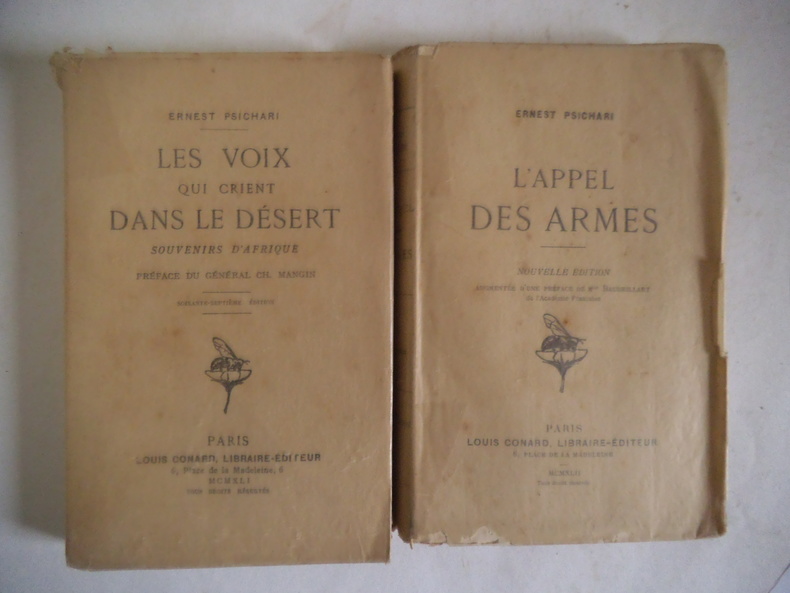
PSICHARI Ernest
les voix qui crient dans le désert souvenirs d’Afrique- les voix qui crient dans le désert
deux volumes in 12 brochés,1)les voix qui crient dans le désert: faux-titre, titre, 345 pages, petites rousseurs aux pages de table des matières. 2)les voix qui crient dans le désert nouvelle édition augmentée d’une préface de Mgr BAUDRILLART.Faux-titre, titre, VIII, Louis Conard libraire éditeur 1941( petites rousseurs en fin de volume) - 10 décembre 1942
Bookseller reference : 11691
|
|
|
PSICHARI Ernest
LES VOIX QUI CRIENT DANS LE DESERT - Souvenirs d'Afrique
Paris Louis Conard 1938 In-12 Broché Moyen
Bookseller reference : 003647
|
|
|
Psichari Ernest
Les voix qui crient dans le désert souvenirs d'Afrique préface du général mangin
paris Louis Conard 1947 in12 342 pp exemplaire non coupé, en excellent état
Bookseller reference : 7242
|
|
|

 Receive by email
 Download as PDF document
 RSS feed
 Permanent link


