|
|
|
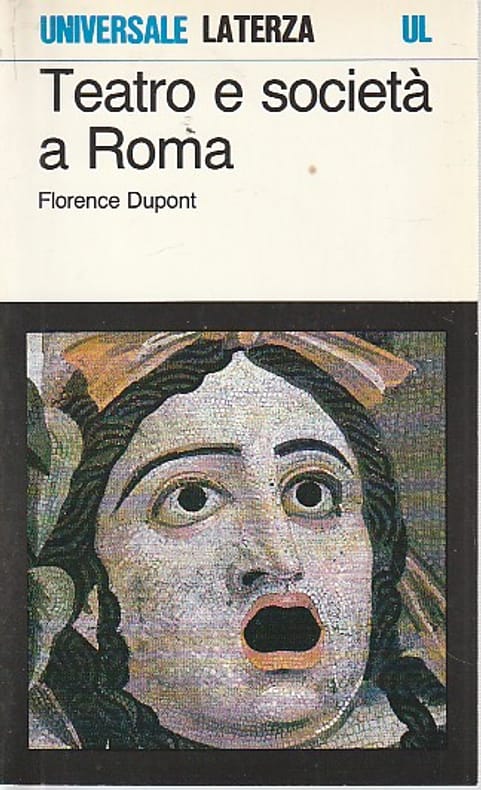
DUPONT Florence
Teatro e società a Roma
Lingua italiana, Universale Laterza, 1991,125 pp., brossura editore, condizioni buone.
Référence libraire : 65400
|
|
|
DUPERAC Etienne (1525-1604)
(Roma Antica)
Pianta archeologica a proiezione verticale con elevazione dei soli monumenti antichi. Disegnata ed incisa da Etienne Duperac per l’editore Antonio Lafreri. Si tratta di un’elegante rappresentazione della pianta archeologica, che mostra in alzato prospettico i monumenti principali. La morfologia segue quella della pianta del Bufalini (1551), ma per l’orografia, molto ben delineata, anche quella del Paciotto (1557) edita sempre da Lafreri. La pianta è inserita in alcuni esemplari dello Speculum Romanae Magnificentiae dell’editore francese. La lastra è descritta nel catalogo del Lafreri (n. 113), come “Roma con tutti gli edificii che hoggi si vegono in piede et che se ne può veder vestigie”. Quindi è inclusa nell’inventario di Stefano Duchetti del 1581 (n. 31) come “Roma con li monti dif.o Imperaiale” ed infine compare nel catalogo di Pietro de Nobili (inv. 1585, n. 32, come “La Roma antiqua de Stefano imperiale”, che la ristampa invariata aggiungendo il proprio excudit. Figura anche nell’atto della divisione della tipografia de Nobili del 30 maggio 1589, dove la lastra, denominata “Roma in pianta imperiale”, passa al figlio Pietro Paolo. Il primo stato della lastra era stato congetturato da Destombes sulla base dell’evidente integrazione nella data MDLXXIII, dove l’ultimo numerale è addossato alla parola seguente, suggerendo che sia stato aggiunto successivamente. Durante lo studio per questa pubblicazione abbiamo riscontrato l’esistenza di una prova della pianta con la data 1572 nella collezione della Bibliothèque Nationale de France. Oltre alla differenza nella data, la prima stesura dell’opera si distingue per la dedica allo STVDIOSO LECTORI preceduta dal termine TIPOGRAPHUS – ovvero Antonio Lafreri – che, nella ristampa del 1573, verrà sostituito dalla firma STEPHANUS DU PERAC ARCHITET. Nel lato sinistro, al centro, si legge: STEPHANUS DU PERAC ARCHITET STVDIOSO LECTORI. En tibi lector nuc prodit specimen, seu perfecta urbis antquae imago ex piscis illis monumentis scriptorum veterum, et cunctis quae ad hunc usq[ue] diem superesse videntur reliquijs, et parietibus quam acuratissime delineata: quecumque oculis nostri subiecta esse possunt exigua tabella comprehendens; opus ut immensum sanè, sic nec minus antiquitatis omnigenae studiosis apprime necessarium, his recentibus formis aencis, typis exaratum impensa Antonij lafrerij Anno MDLXXIII Hoc fruere libens et Vale. Nell’angolo inferiore destro, in un cartiglio, è incisa una legenda numerica di 89 rimandi a luoghi notabili, distribuita su tre colonne. Segue l’iscrizione: DE VESTIGITS URBIS ANTIQUAE EPIGRAMA: Quam brevis haec presens oculis sit carta requiris Urbem dum modico continet in spatio Desine mirari: vestigia maxima claudit Quae modo ROMA potens subijcit his oculis. Antiquae monstrans Urbis signacula promptè Dum numeris certis cuncta notata signat Discuta mira solers: novanu sint prima vetustis: Anue vetusta novis nunc manifesta patent. Nella tavola sono fornite ulteriori indicazioni toponomastiche. Orientazione nei quattro lati al centro con il nome dei punti cardinali: SEPTENTRIO, MERIDIES, ORIENS, OCIDENS, il nord è a sinistra.Acquaforte e bulino in ottime condizioni di conservazione. Esemplare nel secondo stato di tre, con la dedica che inizia con "STEPHANUS DU PERAC ARCHITET STVDIOSO LECTORI" (cfr. Bifolco-Ronca p. 2354).Altra Bibliografia:Alberti (2009): p. 153, n. 33; Frutaz (1962): n. XXI e tav. 36; Hülsen (1915): X, pp. 58-59, nn. 51-52; Hülsen (1921): p. 142, n. 1a-b; Hülsen (1933): p. 107, X; Lincoln (2000): p. 185; Marigliani (2016): n. XI.6; Pagani (2008): pp. 15, 374; Pagani (2011): p. 133; Rubach (2016): n. 259; Scaccia Scarafoni (1939: n. 17. Alberti (2009): p. 153, n. 33; Frutaz (1962): n. XXI e tav. 36; Hülsen (1915): X, pp. 58-59, nn. 51-52; Hülsen (1921): p. 142, n. 1a-b; Hülsen (1933): p. 107, X; Lincoln (2000): p. 185; Marigliani (2016): n. XI.6; Pagani (2008): pp. 15, 374; Pagani ... Pianta archeologica a proiezione verticale con elevazione dei soli monumenti antichi. Disegnata ed incisa da Etienne Duperac per l’editore Antonio Lafreri. Si tratta di un’elegante rappresentazione della pianta archeologica, che mostra in alzato prospettico i monumenti principali. La morfologia segue quella della pianta del Bufalini (1551), ma per l’orografia, molto ben delineata, anche quella del Paciotto (1557) edita sempre da Lafreri. La pianta è inserita in alcuni esemplari dello Speculum Romanae Magnificentiae dell’editore francese. La lastra è descritta nel catalogo del Lafreri (n. 113), come “Roma con tutti gli edificii che hoggi si vegono in piede et che se ne può veder vestigie”. Quindi è inclusa nell’inventario di Stefano Duchetti del 1581 (n. 31) come “Roma con li monti dif.o Imperaiale” ed infine compare nel catalogo di Pietro de Nobili (inv. 1585, n. 32, come “La Roma antiqua de Stefano imperiale”, che la ristampa invariata aggiungendo il proprio excudit. Figura anche nell’atto della divisione della tipografia de Nobili del 30 maggio 1589, dove la lastra, denominata “Roma in pianta imperiale”, passa al figlio Pietro Paolo. Il primo stato della lastra era stato congetturato da Destombes sulla base dell’evidente integrazione nella data MDLXXIII, dove l’ultimo numerale è addossato alla parola seguente, suggerendo che sia stato aggiunto successivamente. Durante lo studio per questa pubblicazione abbiamo riscontrato l’esistenza di una prova della pianta con la data 1572 nella collezione della Bibliothèque Nationale de France. Oltre alla differenza nella data, la prima stesura dell’opera si distingue per la dedica allo STVDIOSO LECTORI preceduta dal termine TIPOGRAPHUS – ovvero Antonio Lafreri – che, nella ristampa del 1573, verrà sostituito dalla firma STEPHANUS DU PERAC ARCHITET. Nel lato sinistro, al centro, si legge: STEPHANUS DU PERAC ARCHITET STVDIOSO LECTORI. En tibi lector nuc prodit specimen, seu perfecta urbis antquae imago ex piscis illis monumentis scriptorum veterum, et cunctis quae ad hunc usq[ue] diem superesse videntur reliquijs, et parietibus quam acuratissime delineata: quecumque oculis nostri subiecta esse possunt exigua tabella comprehendens; opus ut immensum sanè, sic nec minus antiquitatis omnigenae studiosis apprime necessarium, his recentibus formis aencis, typis exaratum impensa Antonij lafrerij Anno MDLXXIII Hoc fruere libens et Vale. Nell’angolo inferiore destro, in un cartiglio, è incisa una legenda numerica di 89 rimandi a luoghi notabili, distribuita su tre colonne. Segue l’iscrizione: DE VESTIGITS URBIS ANTIQUAE EPIGRAMA: Quam brevis haec presens oculis sit carta requiris Urbem dum modico continet in spatio Desine mirari: vestigia maxima claudit Quae modo ROMA potens subijcit his oculis. Antiquae monstrans Urbis signacula promptè Dum numeris certis cuncta notata signat Discuta mira solers: novanu sint prima vetustis: Anue vetusta novis nunc manifesta patent. Nella tavola sono fornite ulteriori indicazioni toponomastiche. Orientazione nei quattro lati al centro con il nome dei punti cardinali: SEPTENTRIO, MERIDIES, ORIENS, OCIDENS, il nord è a sinistra.Acquaforte e bulino in ottime condizioni di conservazione. Esemplare nel secondo stato di tre, con la dedica che inizia con "STEPHANUS DU PERAC ARCHITET STVDIOSO LECTORI" (cfr. Bifolco-Ronca p. 2354).LiteratureAlberti (2009): p. 153, n. 33; Frutaz (1962): n. XXI e tav. 36; Hülsen (1915): X, pp. 58-59, nn. 51-52; Hülsen (1921): p. 142, n. 1a-b; Hülsen (1933): p. 107, X; Lincoln (2000): p. 185; Marigliani (2016): n. XI.6; Pagani (2008): pp. 15, 374; Pagani (2011): p. 133; Rubach (2016): n. 259; Scaccia Scarafoni (1939: n. 17. Alberti (2009): p. 153, n. 33; Frutaz (1962): n. XXI e tav. 36; Hülsen (1915): X, pp. 58-59, nn. 51-52; Hülsen (1921): p. 142, n. 1a-b; Hülsen (1933): p. 107, X; Lincoln (2000): p. 185; Marigliani (2016): n. XI.6; Pagani (2008): pp. 15, 374; Pagani (2011): p... Bifolco Ronca (2018): tav. 1212, II/III

|
|
|
DUPERAC Etienne (1525-1604)
(Vestigia dell'Antoniana…)
Veduta tratta dall'opera I vestigi dell'antichità di Roma raccolti et ritratti in perspettiva da Stefano Du Perac parisino, pubblicata per la prima volta a Roma nel 1575 da Lorenzo Vaccari. Il volume consta di quaranta fogli tutti di tavole: il primo funge da frontespizio; nel secondo è ospitata la dedica a “Giacomo Buoncompagni governator generale di Santa Chiesa”. Étienne Du Pérac vi palesa le proprie intenzioni e in particolare sottolinea che “sarà dunque utile il libro […] et grato, et accetto agli studiosi dell’antichità per la diligenza che io ho usata in rappresentare fedelmente i residui della Romana grandezza”. Si affida poi all’ “autorità e virtù” del dedicatario perché possa favorire l’opera “bisognosa di molto lume” a causa dell’“oscurità dell’auttore”. In realtà, quando pubblica il libro, Étienne du Pérac è a Roma da oltre quindici anni, ed è noto se non altro per aver fornito la propria opera all’erudito veronese Onofrio Panvinio e aver dato alle stampe nel 1574 la pianta archeologica Urbis Romae Sciographia, ricostruzione topografica della Roma antica, cui sarebbe seguita, nel 1577, la pianta della Roma moderna, la Nova urbis Romae descriptio. Certo il mercato dell’editoria antiquaria era piuttosto affollato: nello stesso 1575 esce ad esempio per iniziativa di un altro francese, lo stampatore Antonio Lafreri (Antoine Lafréry), con il quale peraltro lo stesso Du Perac collabora, la raccolta iconografica Speculum Romanae Magnificentiae, che riunisce, incise da vari artisti, molte più immagini de I vestigi, non seguendo un’impostazione topografica e non, limitandosi agli edifici antichi ma inserendone di moderni nonché un repertorio di statue. Qui Du Pérac, partendo dal Campidoglio, scandisce il suo itinerario in trentanove tappe: in calce a ogni pagina una didascalia di poche righe fornisce le informazioni essenziali sugli edifici e le rovine. Non si tratta però di raffigurazioni di singoli monumenti, né tanto meno di ricostruzioni ideali, ma di vere e proprie vedute: immagini di grande qualità, paragonabili a quelle edite nel 1551 dall’incisore fiammingo Hieronymus Cock. Etienne Du Pérac o Duperac, nativo di Bordeaux o Parigi, si trasferisce presto a Venezia, dove apprende l’arte dell’incisione realizzando vari soggetti da Tiziano, principalmente per l’editore Giovanni Francesco Camocio. Arriva a Roma nel 1559 dove si dedica allo studio dell’architettura e delle antichità, con particolare attenzione alle opere di Michelangelo. A Roma conosce Onofrio Panvinio, archeologo ed antiquario, che lo influenza e lo introduce allo studio delle antichità romane. Come tutti gli artisti provenienti dal Nord Europa, rimane affascinato dalla maestosità delle rovine romane, decidendo di studiarle e raffigurarle. Le precedenti rappresentazioni dei monumenti di Roma, ad esempio quelle eseguite da Hieronimus Cock intorno al 1550, erano pittoriche ed arricchite da elementi di fantasia. La notevole importanza delle vedute di Roma del Duperac sta nel fatto che furono rappresentate con assoluta precisione archeologica e topografica, tanto da essere oggi studiate con grande attenzione dagli studiosi di archeologia, poiché spesso rappresentano monumenti e siti oggi andati perduti. L'opera ebbe ben 8 edizioni successive, alcune a cura della tipografia De Rossi. Incisione in rame, in ottimo stato di conservazione. View taken from the work I vestigi dell'antichità di Roma raccolti et ritratti in perspettiva da Stefano Du Perac parisino, published for the first time in Rome in 1575 by Lorenzo Vaccari. The volume consists of forty plates: the first serves as a frontispiece; the second contains the dedication to "Giacomo Buoncompagni governator generale di Santa Chiesa". Étienne Du Pérac expresses his intentions and in particular emphasizes that "the book [...] will therefore be useful and grateful, and accepted by scholars of antiquity for the diligence I have used in faithfully representing the remains of Roman grandeur". He then relies on the "authority and virtue" of the dedicatee so that he can encourage the work "in need of much light" because of the "obscurity of the author". When he published the book, Étienne du Pérac had been in Rome for more than fifteen years, and was known, if only for having supplied his work to the Veronese scholar Onofrio Panvinio and for having printed in 1574 the archaeological map Urbis Romae Sciographia, a topographical reconstruction of ancient Rome, which would be followed, in 1577, by the map of modern Rome, the Nova urbis Romae descriptio. Certainly the market of antiquarian publishing was quite crowded: in the same year 1575, for example, another Frenchman, the printer Antonio Lafreri (Antoine Lafréry), with whom Du Perac also collaborated, published the iconographic collection Speculum Romanae Magnificentiae, which brought together, engraved by various artists, many more images than I vestigi, not following a topographical approach and not limiting himself to ancient buildings but including modern ones as well as a repertoire of statues. Here Du Pérac, starting from the Capitol, outlines his itinerary in thirty-nine stages: at the bottom of each page a caption of a few lines provides essential information about the buildings and ruins. However, these are not representations of individual monuments, nor ideal reconstructions, but real views: images of great quality, comparable to those published in 1551 by the Flemish engraver Hieronymus Cock. Etienne Du Pérac or Duperac, born in Bordeaux or Paris, soon moved to Venice, where he learned the art of engraving by making various subjects from Titian, mainly for the publisher Giovanni Francesco Camocio. He arrived in Rome in 1559 where he devoted himself to the study of architecture and antiquities, with particular attention to the works of Michelangelo. In Rome he knows Onofrio Panvinio, archaeologist and antiquarian, who influences him and introduces him to the study of Roman antiquities. As all the artists coming from Northern Europe, he remains fascinated by the majesty of the Roman ruins, deciding to study and represent them. The previous representations of the monuments of Rome, for example those made by Hieronimus Cock around 1550, were pictorial and enriched with fantasy elements. The remarkable importance of the views of Rome by Duperac lies in the fact that they were represented with absolute archaeological and topographical precision, so as to be studied today with great attention by scholars of archaeology, since they often represent monuments and sites now lost. The work had 8 subsequent editions, some by the De Rossi printing house. Copper engraving, in excellent condition.

|
|
|
DUPERAC Etienne (1525-1604)
Disegno della colonna Antonina che è alta CLXXV. Piedi, e hebbe CCVI gradi per montarui su nella cima, questa colonna fu da
Veduta tratta dall'opera I vestigi dell'antichità di Roma raccolti et ritratti in perspettiva da Stefano Du Perac parisino, pubblicata per la prima volta a Roma nel 1575 da Lorenzo Vaccari. Il volume consta di quaranta fogli tutti di tavole: il primo funge da frontespizio; nel secondo è ospitata la dedica a “Giacomo Buoncompagni governator generale di Santa Chiesa”. Étienne Du Pérac vi palesa le proprie intenzioni e in particolare sottolinea che “sarà dunque utile il libro […] et grato, et accetto agli studiosi dell’antichità per la diligenza che io ho usata in rappresentare fedelmente i residui della Romana grandezza”. Si affida poi all’ “autorità e virtù” del dedicatario perché possa favorire l’opera “bisognosa di molto lume” a causa dell’“oscurità dell’auttore”. In realtà, quando pubblica il libro, Étienne du Pérac è a Roma da oltre quindici anni, ed è noto se non altro per aver fornito la propria opera all’erudito veronese Onofrio Panvinio e aver dato alle stampe nel 1574 la pianta archeologica Urbis Romae Sciographia, ricostruzione topografica della Roma antica, cui sarebbe seguita, nel 1577, la pianta della Roma moderna, la Nova urbis Romae descriptio. Certo il mercato dell’editoria antiquaria era piuttosto affollato: nello stesso 1575 esce ad esempio per iniziativa di un altro francese, lo stampatore Antonio Lafreri (Antoine Lafréry), con il quale peraltro lo stesso Du Perac collabora, la raccolta iconografica Speculum Romanae Magnificentiae, che riunisce, incise da vari artisti, molte più immagini de I vestigi, non seguendo un’impostazione topografica e non, limitandosi agli edifici antichi ma inserendone di moderni nonché un repertorio di statue. Qui Du Pérac, partendo dal Campidoglio, scandisce il suo itinerario in trentanove tappe: in calce a ogni pagina una didascalia di poche righe fornisce le informazioni essenziali sugli edifici e le rovine. Non si tratta però di raffigurazioni di singoli monumenti, né tanto meno di ricostruzioni ideali, ma di vere e proprie vedute: immagini di grande qualità, paragonabili a quelle edite nel 1551 dall’incisore fiammingo Hieronymus Cock. Etienne Du Pérac o Duperac, nativo di Bordeaux o Parigi, si trasferisce presto a Venezia, dove apprende l’arte dell’incisione realizzando vari soggetti da Tiziano, principalmente per l’editore Giovanni Francesco Camocio. Arriva a Roma nel 1559 dove si dedica allo studio dell’architettura e delle antichità, con particolare attenzione alle opere di Michelangelo. A Roma conosce Onofrio Panvinio, archeologo ed antiquario, che lo influenza e lo introduce allo studio delle antichità romane. Come tutti gli artisti provenienti dal Nord Europa, rimane affascinato dalla maestosità delle rovine romane, decidendo di studiarle e raffigurarle. Le precedenti rappresentazioni dei monumenti di Roma, ad esempio quelle eseguite da Hieronimus Cock intorno al 1550, erano pittoriche ed arricchite da elementi di fantasia. La notevole importanza delle vedute di Roma del Duperac sta nel fatto che furono rappresentate con assoluta precisione archeologica e topografica, tanto da essere oggi studiate con grande attenzione dagli studiosi di archeologia, poiché spesso rappresentano monumenti e siti oggi andati perduti. L'opera ebbe ben 8 edizioni successive, alcune a cura della tipografia De Rossi. Incisione in rame, in ottimo stato di conservazione. View taken from the work I vestigi dell'antichità di Roma raccolti et ritratti in perspettiva da Stefano Du Perac parisino, published for the first time in Rome in 1575 by Lorenzo Vaccari. The volume consists of forty plates: the first serves as a frontispiece; the second contains the dedication to "Giacomo Buoncompagni governator generale di Santa Chiesa". Étienne Du Pérac expresses his intentions and in particular emphasizes that "the book [...] will therefore be useful and grateful, and accepted by scholars of antiquity for the diligence I have used in faithfully representing the remains of Roman grandeur". He then relies on the "authority and virtue" of the dedicatee so that he can encourage the work "in need of much light" because of the "obscurity of the author". When he published the book, Étienne du Pérac had been in Rome for more than fifteen years, and was known, if only for having supplied his work to the Veronese scholar Onofrio Panvinio and for having printed in 1574 the archaeological map Urbis Romae Sciographia, a topographical reconstruction of ancient Rome, which would be followed, in 1577, by the map of modern Rome, the Nova urbis Romae descriptio. Certainly the market of antiquarian publishing was quite crowded: in the same year 1575, for example, another Frenchman, the printer Antonio Lafreri (Antoine Lafréry), with whom Du Perac also collaborated, published the iconographic collection Speculum Romanae Magnificentiae, which brought together, engraved by various artists, many more images than I vestigi, not following a topographical approach and not limiting himself to ancient buildings but including modern ones as well as a repertoire of statues. Here Du Pérac, starting from the Capitol, outlines his itinerary in thirty-nine stages: at the bottom of each page a caption of a few lines provides essential information about the buildings and ruins. However, these are not representations of individual monuments, nor ideal reconstructions, but real views: images of great quality, comparable to those published in 1551 by the Flemish engraver Hieronymus Cock. Etienne Du Pérac or Duperac, born in Bordeaux or Paris, soon moved to Venice, where he learned the art of engraving by making various subjects from Titian, mainly for the publisher Giovanni Francesco Camocio. He arrived in Rome in 1559 where he devoted himself to the study of architecture and antiquities, with particular attention to the works of Michelangelo. In Rome he knows Onofrio Panvinio, archaeologist and antiquarian, who influences him and introduces him to the study of Roman antiquities. As all the artists coming from Northern Europe, he remains fascinated by the majesty of the Roman ruins, deciding to study and represent them. The previous representations of the monuments of Rome, for example those made by Hieronimus Cock around 1550, were pictorial and enriched with fantasy elements. The remarkable importance of the views of Rome by Duperac lies in the fact that they were represented with absolute archaeological and topographical precision, so as to be studied today with great attention by scholars of archaeology, since they often represent monuments and sites now lost. The work had 8 subsequent editions, some by the De Rossi printing house. Copper engraving, in excellent condition.

|
|
|
DUPERAC Etienne (1525-1604)
Parte del monte Quirinale che guarda verso Ponente…
Veduta tratta dall'opera I vestigi dell'antichità di Roma raccolti et ritratti in perspettiva da Stefano Du Perac parisino, pubblicata per la prima volta a Roma nel 1575 da Lorenzo Vaccari. Il volume consta di quaranta fogli tutti di tavole: il primo funge da frontespizio; nel secondo è ospitata la dedica a “Giacomo Buoncompagni governator generale di Santa Chiesa”. Étienne Du Pérac vi palesa le proprie intenzioni e in particolare sottolinea che “sarà dunque utile il libro […] et grato, et accetto agli studiosi dell’antichità per la diligenza che io ho usata in rappresentare fedelmente i residui della Romana grandezza”. Si affida poi all’ “autorità e virtù” del dedicatario perché possa favorire l’opera “bisognosa di molto lume” a causa dell’“oscurità dell’auttore”. In realtà, quando pubblica il libro, Étienne du Pérac è a Roma da oltre quindici anni, ed è noto se non altro per aver fornito la propria opera all’erudito veronese Onofrio Panvinio e aver dato alle stampe nel 1574 la pianta archeologica Urbis Romae Sciographia, ricostruzione topografica della Roma antica, cui sarebbe seguita, nel 1577, la pianta della Roma moderna, la Nova urbis Romae descriptio. Certo il mercato dell’editoria antiquaria era piuttosto affollato: nello stesso 1575 esce ad esempio per iniziativa di un altro francese, lo stampatore Antonio Lafreri (Antoine Lafréry), con il quale peraltro lo stesso Du Perac collabora, la raccolta iconografica Speculum Romanae Magnificentiae, che riunisce, incise da vari artisti, molte più immagini de I vestigi, non seguendo un’impostazione topografica e non, limitandosi agli edifici antichi ma inserendone di moderni nonché un repertorio di statue. Qui Du Pérac, partendo dal Campidoglio, scandisce il suo itinerario in trentanove tappe: in calce a ogni pagina una didascalia di poche righe fornisce le informazioni essenziali sugli edifici e le rovine. Non si tratta però di raffigurazioni di singoli monumenti, né tanto meno di ricostruzioni ideali, ma di vere e proprie vedute: immagini di grande qualità, paragonabili a quelle edite nel 1551 dall’incisore fiammingo Hieronymus Cock. Etienne Du Pérac o Duperac, nativo di Bordeaux o Parigi, si trasferisce presto a Venezia, dove apprende l’arte dell’incisione realizzando vari soggetti da Tiziano, principalmente per l’editore Giovanni Francesco Camocio. Arriva a Roma nel 1559 dove si dedica allo studio dell’architettura e delle antichità, con particolare attenzione alle opere di Michelangelo. A Roma conosce Onofrio Panvinio, archeologo ed antiquario, che lo influenza e lo introduce allo studio delle antichità romane. Come tutti gli artisti provenienti dal Nord Europa, rimane affascinato dalla maestosità delle rovine romane, decidendo di studiarle e raffigurarle. Le precedenti rappresentazioni dei monumenti di Roma, ad esempio quelle eseguite da Hieronimus Cock intorno al 1550, erano pittoriche ed arricchite da elementi di fantasia. La notevole importanza delle vedute di Roma del Duperac sta nel fatto che furono rappresentate con assoluta precisione archeologica e topografica, tanto da essere oggi studiate con grande attenzione dagli studiosi di archeologia, poiché spesso rappresentano monumenti e siti oggi andati perduti. L'opera ebbe ben 8 edizioni successive, alcune a cura della tipografia De Rossi. Incisione in rame, in ottimo stato di conservazione. View taken from the work I vestigi dell'antichità di Roma raccolti et ritratti in perspettiva da Stefano Du Perac parisino, published for the first time in Rome in 1575 by Lorenzo Vaccari. The volume consists of forty plates: the first serves as a frontispiece; the second contains the dedication to "Giacomo Buoncompagni governator generale di Santa Chiesa". Étienne Du Pérac expresses his intentions and in particular emphasizes that "the book [...] will therefore be useful and grateful, and accepted by scholars of antiquity for the diligence I have used in faithfully representing the remains of Roman grandeur". He then relies on the "authority and virtue" of the dedicatee so that he can encourage the work "in need of much light" because of the "obscurity of the author". When he published the book, Étienne du Pérac had been in Rome for more than fifteen years, and was known, if only for having supplied his work to the Veronese scholar Onofrio Panvinio and for having printed in 1574 the archaeological map Urbis Romae Sciographia, a topographical reconstruction of ancient Rome, which would be followed, in 1577, by the map of modern Rome, the Nova urbis Romae descriptio. Certainly the market of antiquarian publishing was quite crowded: in the same year 1575, for example, another Frenchman, the printer Antonio Lafreri (Antoine Lafréry), with whom Du Perac also collaborated, published the iconographic collection Speculum Romanae Magnificentiae, which brought together, engraved by various artists, many more images than I vestigi, not following a topographical approach and not limiting himself to ancient buildings but including modern ones as well as a repertoire of statues. Here Du Pérac, starting from the Capitol, outlines his itinerary in thirty-nine stages: at the bottom of each page a caption of a few lines provides essential information about the buildings and ruins. However, these are not representations of individual monuments, nor ideal reconstructions, but real views: images of great quality, comparable to those published in 1551 by the Flemish engraver Hieronymus Cock. Etienne Du Pérac or Duperac, born in Bordeaux or Paris, soon moved to Venice, where he learned the art of engraving by making various subjects from Titian, mainly for the publisher Giovanni Francesco Camocio. He arrived in Rome in 1559 where he devoted himself to the study of architecture and antiquities, with particular attention to the works of Michelangelo. In Rome he knows Onofrio Panvinio, archaeologist and antiquarian, who influences him and introduces him to the study of Roman antiquities. As all the artists coming from Northern Europe, he remains fascinated by the majesty of the Roman ruins, deciding to study and represent them. The previous representations of the monuments of Rome, for example those made by Hieronimus Cock around 1550, were pictorial and enriched with fantasy elements. The remarkable importance of the views of Rome by Duperac lies in the fact that they were represented with absolute archaeological and topographical precision, so as to be studied today with great attention by scholars of archaeology, since they often represent monuments and sites now lost. The work had 8 subsequent editions, some by the De Rossi printing house. Copper engraving, in excellent condition.

|
|
|
DUPERAC Etienne (1525-1604)
Urbis Romae Sciographia ex Antiquis Monumentis Accuratiss Delineata
Pianta archeologica a proiezione verticale con alzato incisa da Etienne Duperac per l’editore Lorenzo Vaccari. Ricostruzione ideale della Roma Antica eseguita dal Duperac dopo un serio esame della pianta Severiana e della pianta archeologica di Pirro Ligorio, il maggiore studioso dei monumenti antichi di Roma dell’epoca. All’interno della città, è delineato ciascun edificio, riportando i nomi di quelli principali; questi includono il Colosseo, il Pantheon, le Terme di Diocleziano e il Circo Massimo. Fuori città sono contrassegnati le tenute di campagna (per esempio, i Giardini di Domiziano), i monumenti funerari (come i Mausolei di Adriano e di Augusto, ed i circhi di Nerone e Adriano). La lastra è stata intagliata dall’incisore ed editore parigino Étienne Dupérac, che si fece chiamare Stephanus durante il suo periodo di lavoro a Roma (1569-1582). Nella dedica a Carlo IX, l’autore stesso spiega come questa carta sia il frutto di quindici anni di studio di tutte le rovine e dei monumenti della Roma Antica e dei testi letterari correlati. In particolare, viene riportato un dettagliato resoconto della scoperta della pianta Severiana, i cui resti furono scoperti nella chiesa dei SS. Cosma e Damiano nel 1562. Hülsen segnala come unico esemplare originale conosciuto quello conservato al British Museum, che reca il nome dello stampatore Francesco Villamena. Inoltre, aggiunge che, nel catalogo della stamperia dei Vaccari è annoverata la “Roma antica d’otto fogli reali, intagliata per mano di Stefano Duperach Parisino”, a lui sconosciuta. Frutaz obietta giustamente che la tiratura di Villamena sia solo una ristampa, databile ai primi del ‘600, quando l’editore era attivo a Roma. Nelle nostre ricerche, abbiamo finalmente rinvenuto un esemplare originale della pianta, finora sconosciuto, che è assolutamente da identificarsi con la “Roma antica d’otto fogli reali” del catalogo Vaccari, citata da Hülsen. Infatti l’esemplare, conservato nella collezione cartografica della Newberry Library di Chicago, reca proprio l’imprint di Lorenzo Vaccari, editore anche della raccolta I Vestigi dell’Antichità di Roma Raccolti et Ritratti in Perspettiva con ogni diligentia da Stefano Dv Perac Parisino (1575). Tra il 1649 ed il 1660, Gian Giacomo de Rossi ne pubblica una ristampa, utilizzando i medesimi rami (presumibilmente acquisiti dalla bottega del Villamena), ma aggiungendo scene dell’Antica Roma e una legenda tipografica con 159 richiami a monumenti. L’opera è descritta nell’ultimo catalogo della tipografia de Rossi, redatto da Lorenzo Filippo nel 1735 (p. 16, n. 1) come “Roma Antica di Stefano du Perac Parigino intagliata a bulino da Francesco Villamena co’ trionfi de Romani antichi, intagliati a bulino da Jacopo Lauro in dodici fogli reali grandi”. Dunque le tavole aggiuntive dei trionfi sono, secondo il catalogo, incise da Giacomo Lauro. Tale attribuzione viene respinta da Ashby e quindi da Hollstein, che attribuisce la lastre a Peter de Jode. La tipografia de Rossi fu venduta da Lorenzo Filippo, costituendo il fondo principale della neonata (1738) Calcografia Camerale (poi Regia, quindi Nazionale e oggi Istituto Centrale per la Grafica), luogo in cui sono ancora conservati i rami originali, erroneamente sotto il nome di Francesco Villamena. In alto, lungo il bordo superiore, è impresso il titolo: URBIS ROMAE SCIOGRAPHIA EX ANTIQUIS MONUMENTIS ACCURATISS. DELINEATA. A sinistra lo stemma con la sigla S.P.Q.R. (Senatus Populus Que Romanus). Nel cartiglio in basso a destra, con la raffigurazione dei gemelli Romolo e Remo, troviamo incisa la dedica: KAROLO IX GALLIARUM REGI CHRISTIANISSIMO STEPHANUS DU PERAC PARISIENSIS Quanta fuerit veteris illius popuki R. potentia atque amplitudo, karole regu[m] maxime, omnes sciunt:quae autem ipsius urbis, antiquis temporibus, maiestas ac pulchritudo, non alinde melius ac certius cognosci potest, quam ex admirabilibus veterum aedifitioru[m] vestigiis, q... Vertical projection archaeological map, engraved by Etienne Duperac for the publisher Lorenzo Vaccari. Ideal reconstruction of Ancient Rome carried out by Duperac after a serious examination of the Severian map and the archaeological work by Pirro Ligorio, the greatest scholar of ancient monuments in Rome at the time. Inside the city, each building is outlined with the names of the main ones; these include the Colosseum, the Pantheon, the Baths of Diocletian and the Circus Maximus. Outside the city are marked the country estates (for example, the Gardens of Domitian), the funerary monuments (such as the Mausoleums of Hadrian and Augustus, and the circuses of Nero and Hadrian). The plate was carved by the Parisian engraver and publisher Étienne Dupérac, who called himself Stephanus during his period of work in Rome (1569-1582). In the dedication to Charles IX, the author himself explains how this work is the result of fifteen years of study of all the ruins and monuments of Ancient Rome and related literary texts. In particular, a detailed account is given of the discovery of the Severian map, the remains of which were discovered in the church of Saints Cosma and Damiano in 1562. Hülsen reports as the only known original example the one preserved at the British Museum, which bears the name of the printer Francesco Villamena. Furthermore, he adds that the catalogue of the Vaccari print shop includes the "Roma antica d’otto fogli reali, intagliata per mano di Stefano Duperach Parisino”, unknown to him. Frutaz rightly objects that the Villamena's edition is only a reprint, datable to the early 17th century, when the publisher was active in Rome. In our research, we finally found an original example of the map, hitherto unknown, which is absolutely to be identified with the "Ancient Rome of eight royal sheets" of the Vaccari catalogue, quoted by Hülsen. In fact the exemplar, preserved in the cartographic collection of the Newberry Library of Chicago, bears the imprint of Lorenzo Vaccari, publisher also of the collection I Vestigi dell'Antichità di Roma Raccolti et Ritratti in Perspettiva con ogni diligentia by Stefano Dv Perac Parisino (1575). Between 1649 and 1660, Gian Giacomo de Rossi published a reprint, using the same plates(presumably acquired from the Villamena workshop), but adding scenes from Ancient Rome and a typographical legend with 159 references to monuments. The work is described in the last catalogue of de Rossi's printing house, edited by Lorenzo Filippo in 1735 (p. 16, n. 1) as "Roma Antica di Stefano du Perac Parigino intagliata a bulino da Francesco Villamena co’ trionfi de Romani antichi, intagliati a bulino da Jacopo Lauro in dodici fogli reali grandi”. So the additional plates of the triumphs are, according to the catalogue, engraved by Giacomo Lauro. This attribution is rejected by Ashby and then by Hollstein, who attributes the plate to Peter de Jode. The de Rossi printing house was sold by Lorenzo Filippo, constituting the main fund of the newborn (1738) Calcografia Camerale (later Regia, then Nazionale and now Istituto Centrale per la Grafica), where the original plates are still preserved, mistakenly under the name of Francesco Villamena. Example of the third state of four (cfr. Bifolco-Ronca, p. 2359) with the imprint Cura et Tipis Io. Iacobi de Rubeis in Romae ad Templ. Stae. Mae. De Pace cum Privil. Sum. Pont. Excudebat Romae Io. Iacob. De Rubeis. Etching with engraving, a very good example of the De Rossi edition, with decorations and the key-numbers on the lower part; minor repairs perfectly realized, otherwise in excellent condition. Literature Bifolco-Ronca, Cartografia e topografia italiana del XVI secolo, pp. 2358-59, tav. 1214, III/IV; Destombes (1970): n. 96; Caldana (2013): n. I.12; Frutaz (1962): n. XXII e tavv. 37-50; Grelle Iusco (1996): pp. 172, 379; Hollstein (1952): IX, p. 202, nn. 403-414; Hülsen (1915): XI, pp. 60-62, nn. 56-59; Mostra Bergamo (2016): n. 72; Sca...

|
|
|
DUPERAC Etienne (1525-1604)
Vestigi del monumento overo mole d'Adriano....
Veduta tratta dall'opera I vestigi dell'antichità di Roma raccolti et ritratti in perspettiva da Stefano Du Perac parisino, pubblicata per la prima volta a Roma nel 1575 da Lorenzo Vaccari. Il volume consta di quaranta fogli tutti di tavole: il primo funge da frontespizio; nel secondo è ospitata la dedica a “Giacomo Buoncompagni governator generale di Santa Chiesa”. Étienne Du Pérac vi palesa le proprie intenzioni e in particolare sottolinea che “sarà dunque utile il libro […] et grato, et accetto agli studiosi dell’antichità per la diligenza che io ho usata in rappresentare fedelmente i residui della Romana grandezza”. Si affida poi all’ “autorità e virtù” del dedicatario perché possa favorire l’opera “bisognosa di molto lume” a causa dell’“oscurità dell’auttore”. In realtà, quando pubblica il libro, Étienne du Pérac è a Roma da oltre quindici anni, ed è noto se non altro per aver fornito la propria opera all’erudito veronese Onofrio Panvinio e aver dato alle stampe nel 1574 la pianta archeologica Urbis Romae Sciographia, ricostruzione topografica della Roma antica, cui sarebbe seguita, nel 1577, la pianta della Roma moderna, la Nova urbis Romae descriptio. Certo il mercato dell’editoria antiquaria era piuttosto affollato: nello stesso 1575 esce ad esempio per iniziativa di un altro francese, lo stampatore Antonio Lafreri (Antoine Lafréry), con il quale peraltro lo stesso Du Perac collabora, la raccolta iconografica Speculum Romanae Magnificentiae, che riunisce, incise da vari artisti, molte più immagini de I vestigi, non seguendo un’impostazione topografica e non, limitandosi agli edifici antichi ma inserendone di moderni nonché un repertorio di statue. Qui Du Pérac, partendo dal Campidoglio, scandisce il suo itinerario in trentanove tappe: in calce a ogni pagina una didascalia di poche righe fornisce le informazioni essenziali sugli edifici e le rovine. Non si tratta però di raffigurazioni di singoli monumenti, né tanto meno di ricostruzioni ideali, ma di vere e proprie vedute: immagini di grande qualità, paragonabili a quelle edite nel 1551 dall’incisore fiammingo Hieronymus Cock. Etienne Du Pérac o Duperac, nativo di Bordeaux o Parigi, si trasferisce presto a Venezia, dove apprende l’arte dell’incisione realizzando vari soggetti da Tiziano, principalmente per l’editore Giovanni Francesco Camocio. Arriva a Roma nel 1559 dove si dedica allo studio dell’architettura e delle antichità, con particolare attenzione alle opere di Michelangelo. A Roma conosce Onofrio Panvinio, archeologo ed antiquario, che lo influenza e lo introduce allo studio delle antichità romane. Come tutti gli artisti provenienti dal Nord Europa, rimane affascinato dalla maestosità delle rovine romane, decidendo di studiarle e raffigurarle. Le precedenti rappresentazioni dei monumenti di Roma, ad esempio quelle eseguite da Hieronimus Cock intorno al 1550, erano pittoriche ed arricchite da elementi di fantasia. La notevole importanza delle vedute di Roma del Duperac sta nel fatto che furono rappresentate con assoluta precisione archeologica e topografica, tanto da essere oggi studiate con grande attenzione dagli studiosi di archeologia, poiché spesso rappresentano monumenti e siti oggi andati perduti. L'opera ebbe ben 8 edizioni successive, alcune a cura della tipografia De Rossi. Incisione in rame, in ottimo stato di conservazione. View taken from the work I vestigi dell'antichità di Roma raccolti et ritratti in perspettiva da Stefano Du Perac parisino, published for the first time in Rome in 1575 by Lorenzo Vaccari. The volume consists of forty plates: the first serves as a frontispiece; the second contains the dedication to "Giacomo Buoncompagni governator generale di Santa Chiesa". Étienne Du Pérac expresses his intentions and in particular emphasizes that "the book [...] will therefore be useful and grateful, and accepted by scholars of antiquity for the diligence I have used in faithfully representing the remains of Roman grandeur". He then relies on the "authority and virtue" of the dedicatee so that he can encourage the work "in need of much light" because of the "obscurity of the author". When he published the book, Étienne du Pérac had been in Rome for more than fifteen years, and was known, if only for having supplied his work to the Veronese scholar Onofrio Panvinio and for having printed in 1574 the archaeological map Urbis Romae Sciographia, a topographical reconstruction of ancient Rome, which would be followed, in 1577, by the map of modern Rome, the Nova urbis Romae descriptio. Certainly the market of antiquarian publishing was quite crowded: in the same year 1575, for example, another Frenchman, the printer Antonio Lafreri (Antoine Lafréry), with whom Du Perac also collaborated, published the iconographic collection Speculum Romanae Magnificentiae, which brought together, engraved by various artists, many more images than I vestigi, not following a topographical approach and not limiting himself to ancient buildings but including modern ones as well as a repertoire of statues. Here Du Pérac, starting from the Capitol, outlines his itinerary in thirty-nine stages: at the bottom of each page a caption of a few lines provides essential information about the buildings and ruins. However, these are not representations of individual monuments, nor ideal reconstructions, but real views: images of great quality, comparable to those published in 1551 by the Flemish engraver Hieronymus Cock. Etienne Du Pérac or Duperac, born in Bordeaux or Paris, soon moved to Venice, where he learned the art of engraving by making various subjects from Titian, mainly for the publisher Giovanni Francesco Camocio. He arrived in Rome in 1559 where he devoted himself to the study of architecture and antiquities, with particular attention to the works of Michelangelo. In Rome he knows Onofrio Panvinio, archaeologist and antiquarian, who influences him and introduces him to the study of Roman antiquities. As all the artists coming from Northern Europe, he remains fascinated by the majesty of the Roman ruins, deciding to study and represent them. The previous representations of the monuments of Rome, for example those made by Hieronimus Cock around 1550, were pictorial and enriched with fantasy elements. The remarkable importance of the views of Rome by Duperac lies in the fact that they were represented with absolute archaeological and topographical precision, so as to be studied today with great attention by scholars of archaeology, since they often represent monuments and sites now lost. The work had 8 subsequent editions, some by the De Rossi printing house. Copper engraving, in excellent condition.

|
|
|
DUPERAC Etienne (1525-1604)
Vestigi dell'arco di Settimio Severo…
Veduta tratta dall'opera I vestigi dell'antichità di Roma raccolti et ritratti in perspettiva da Stefano Du Perac parisino, pubblicata per la prima volta a Roma nel 1575 da Lorenzo Vaccari. Il volume consta di quaranta fogli tutti di tavole: il primo funge da frontespizio; nel secondo è ospitata la dedica a “Giacomo Buoncompagni governator generale di Santa Chiesa”. Étienne Du Pérac vi palesa le proprie intenzioni e in particolare sottolinea che “sarà dunque utile il libro […] et grato, et accetto agli studiosi dell’antichità per la diligenza che io ho usata in rappresentare fedelmente i residui della Romana grandezza”. Si affida poi all’ “autorità e virtù” del dedicatario perché possa favorire l’opera “bisognosa di molto lume” a causa dell’“oscurità dell’auttore”. In realtà, quando pubblica il libro, Étienne du Pérac è a Roma da oltre quindici anni, ed è noto se non altro per aver fornito la propria opera all’erudito veronese Onofrio Panvinio e aver dato alle stampe nel 1574 la pianta archeologica Urbis Romae Sciographia, ricostruzione topografica della Roma antica, cui sarebbe seguita, nel 1577, la pianta della Roma moderna, la Nova urbis Romae descriptio. Certo il mercato dell’editoria antiquaria era piuttosto affollato: nello stesso 1575 esce ad esempio per iniziativa di un altro francese, lo stampatore Antonio Lafreri (Antoine Lafréry), con il quale peraltro lo stesso Du Perac collabora, la raccolta iconografica Speculum Romanae Magnificentiae, che riunisce, incise da vari artisti, molte più immagini de I vestigi, non seguendo un’impostazione topografica e non, limitandosi agli edifici antichi ma inserendone di moderni nonché un repertorio di statue. Qui Du Pérac, partendo dal Campidoglio, scandisce il suo itinerario in trentanove tappe: in calce a ogni pagina una didascalia di poche righe fornisce le informazioni essenziali sugli edifici e le rovine. Non si tratta però di raffigurazioni di singoli monumenti, né tanto meno di ricostruzioni ideali, ma di vere e proprie vedute: immagini di grande qualità, paragonabili a quelle edite nel 1551 dall’incisore fiammingo Hieronymus Cock. Etienne Du Pérac o Duperac, nativo di Bordeaux o Parigi, si trasferisce presto a Venezia, dove apprende l’arte dell’incisione realizzando vari soggetti da Tiziano, principalmente per l’editore Giovanni Francesco Camocio. Arriva a Roma nel 1559 dove si dedica allo studio dell’architettura e delle antichità, con particolare attenzione alle opere di Michelangelo. A Roma conosce Onofrio Panvinio, archeologo ed antiquario, che lo influenza e lo introduce allo studio delle antichità romane. Come tutti gli artisti provenienti dal Nord Europa, rimane affascinato dalla maestosità delle rovine romane, decidendo di studiarle e raffigurarle. Le precedenti rappresentazioni dei monumenti di Roma, ad esempio quelle eseguite da Hieronimus Cock intorno al 1550, erano pittoriche ed arricchite da elementi di fantasia. La notevole importanza delle vedute di Roma del Duperac sta nel fatto che furono rappresentate con assoluta precisione archeologica e topografica, tanto da essere oggi studiate con grande attenzione dagli studiosi di archeologia, poiché spesso rappresentano monumenti e siti oggi andati perduti. L'opera ebbe ben 8 edizioni successive, alcune a cura della tipografia De Rossi. Incisione in rame, in ottimo stato di conservazione. View taken from the work I vestigi dell'antichità di Roma raccolti et ritratti in perspettiva da Stefano Du Perac parisino, published for the first time in Rome in 1575 by Lorenzo Vaccari. The volume consists of forty plates: the first serves as a frontispiece; the second contains the dedication to "Giacomo Buoncompagni governator generale di Santa Chiesa". Étienne Du Pérac expresses his intentions and in particular emphasizes that "the book [...] will therefore be useful and grateful, and accepted by scholars of antiquity for the diligence I have used in faithfully representing the remains of Roman grandeur". He then relies on the "authority and virtue" of the dedicatee so that he can encourage the work "in need of much light" because of the "obscurity of the author". When he published the book, Étienne du Pérac had been in Rome for more than fifteen years, and was known, if only for having supplied his work to the Veronese scholar Onofrio Panvinio and for having printed in 1574 the archaeological map Urbis Romae Sciographia, a topographical reconstruction of ancient Rome, which would be followed, in 1577, by the map of modern Rome, the Nova urbis Romae descriptio. Certainly the market of antiquarian publishing was quite crowded: in the same year 1575, for example, another Frenchman, the printer Antonio Lafreri (Antoine Lafréry), with whom Du Perac also collaborated, published the iconographic collection Speculum Romanae Magnificentiae, which brought together, engraved by various artists, many more images than I vestigi, not following a topographical approach and not limiting himself to ancient buildings but including modern ones as well as a repertoire of statues. Here Du Pérac, starting from the Capitol, outlines his itinerary in thirty-nine stages: at the bottom of each page a caption of a few lines provides essential information about the buildings and ruins. However, these are not representations of individual monuments, nor ideal reconstructions, but real views: images of great quality, comparable to those published in 1551 by the Flemish engraver Hieronymus Cock. Etienne Du Pérac or Duperac, born in Bordeaux or Paris, soon moved to Venice, where he learned the art of engraving by making various subjects from Titian, mainly for the publisher Giovanni Francesco Camocio. He arrived in Rome in 1559 where he devoted himself to the study of architecture and antiquities, with particular attention to the works of Michelangelo. In Rome he knows Onofrio Panvinio, archaeologist and antiquarian, who influences him and introduces him to the study of Roman antiquities. As all the artists coming from Northern Europe, he remains fascinated by the majesty of the Roman ruins, deciding to study and represent them. The previous representations of the monuments of Rome, for example those made by Hieronimus Cock around 1550, were pictorial and enriched with fantasy elements. The remarkable importance of the views of Rome by Duperac lies in the fact that they were represented with absolute archaeological and topographical precision, so as to be studied today with great attention by scholars of archaeology, since they often represent monuments and sites now lost. The work had 8 subsequent editions, some by the De Rossi printing house. Copper engraving, in excellent condition.

|
|
|
DUPERAC Etienne (1525-1604)
Vestigii d'uno Amphiteatro, nominato da gli Antichi Castrense...
Veduta tratta dall'opera I vestigi dell'antichità di Roma raccolti et ritratti in perspettiva da Stefano Du Perac parisino, pubblicata per la prima volta a Roma nel 1575 da Lorenzo Vaccari. Il volume consta di quaranta fogli tutti di tavole: il primo funge da frontespizio; nel secondo è ospitata la dedica a “Giacomo Buoncompagni governator generale di Santa Chiesa”. Étienne Du Pérac vi palesa le proprie intenzioni e in particolare sottolinea che “sarà dunque utile il libro […] et grato, et accetto agli studiosi dell’antichità per la diligenza che io ho usata in rappresentare fedelmente i residui della Romana grandezza”. Si affida poi all’ “autorità e virtù” del dedicatario perché possa favorire l’opera “bisognosa di molto lume” a causa dell’“oscurità dell’auttore”. In realtà, quando pubblica il libro, Étienne du Pérac è a Roma da oltre quindici anni, ed è noto se nonaltro per aver fornito la propria opera all’erudito veronese Onofrio Panvinio e aver dato alle stampe nel 1574 la pianta archeologica Urbis Romae Sciographia, ricostruzione topografica della Roma antica, cui sarebbe seguita, nel 1577, la pianta della Roma moderna, la Nova urbis Romae descriptio. Certo il mercato dell’editoria antiquaria era piuttosto affollato: nello stesso 1575 esce ad esempio per iniziativa di un altro francese, lo stampatore Antonio Lafreri (Antoine Lafréry), con il quale peraltro lo stesso Du Perac collabora, la raccolta iconografica Speculum Romanae Magnificentiae, che riunisce, incise da vari artisti, molte più immagini de I vestigi, non seguendo un’impostazione topografica e non, limitandosi agli edifici antichi ma inserendone di moderni nonché un repertorio di statue. Qui Du Pérac, partendo dal Campidoglio, scandisce il suo itinerario in trentanove tappe: in calce a ogni pagina una didascalia di poche righe fornisce le informazioni essenziali sugli edifici e le rovine. Non si tratta però di raffigurazioni di singoli monumenti, né tanto meno di ricostruzioni ideali, ma di vere e proprie vedute: immagini di grande qualità, paragonabili a quelle edite nel 1551 dall’incisore fiammingo Hieronymus Cock. Etienne Du Pérac o Duperac, nativo di Bordeaux o Parigi, si trasferisce presto a Venezia, dove apprende l’arte dell’incisione realizzando vari soggetti da Tiziano, principalmente per l’editore Giovanni Francesco Camocio. Arriva a Roma nel 1559 dove si dedica allo studio dell’architettura e delle antichità, con particolare attenzione alle opere di Michelangelo. A Roma conosce Onofrio Panvinio, archeologo ed antiquario, che lo influenza e lo introduce allo studio delle antichità romane. Come tutti gli artisti provenienti dal Nord Europa, rimane affascinato dalla maestosità delle rovine romane, decidendo di studiarle e raffigurarle. Le precedenti rappresentazioni dei monumenti di Roma, ad esempio quelle eseguite da Hieronimus Cock intorno al 1550, erano pittoriche ed arricchite da elementi di fantasia. La notevole importanza delle vedute di Roma del Duperac sta nel fatto che furono rappresentate con assoluta precisione archeologica e topografica, tanto da essere oggi studiate con grande attenzione dagli studiosi di archeologia, poiché spesso rappresentano monumenti e siti oggi andati perduti. L'opera ebbe ben 8 edizioni successive, alcune a cura della tipografia De Rossi. Incisione in rame, in ottimo stato di conservazione. View taken from the work I vestigi dell'antichità di Roma raccolti et ritratti in perspettiva da Stefano Du Perac parisino, published for the first time in Rome in 1575 by Lorenzo Vaccari. The volume consists of forty plates: the first serves as a frontispiece; the second contains the dedication to "Giacomo Buoncompagni governator generale di Santa Chiesa". Étienne Du Pérac expresses his intentions and in particular emphasizes that "the book [...] will therefore be useful and grateful, and accepted by scholars of antiquity for the diligence I have used in faithfully representing the remains of Roman grandeur". He then relies on the "authority and virtue" of the dedicatee so that he can encourage the work "in need of much light" because of the "obscurity of the author". When he published the book, Étienne du Pérac had been in Rome for more than fifteen years, and was known, if only for having supplied his work to the Veronese scholar Onofrio Panvinio and for having printed in 1574 the archaeological map Urbis Romae Sciographia, a topographical reconstruction of ancient Rome, which would be followed, in 1577, by the map of modern Rome, the Nova urbis Romae descriptio. Certainly the market of antiquarian publishing was quite crowded: in the same year 1575, for example, another Frenchman, the printer Antonio Lafreri (Antoine Lafréry), with whom Du Perac also collaborated, published the iconographic collection Speculum Romanae Magnificentiae, which brought together, engraved by various artists, many more images than I vestigi, not following a topographical approach and not limiting himself to ancient buildings but including modern ones as well as a repertoire of statues. Here Du Pérac, starting from the Capitol, outlines his itinerary in thirty-nine stages: at the bottom of each page a caption of a few lines provides essential information about the buildings and ruins. However, these are not representations of individual monuments, nor ideal reconstructions, but real views: images of great quality, comparable to those published in 1551 by the Flemish engraver Hieronymus Cock. Etienne Du Pérac or Duperac, born in Bordeaux or Paris, soon moved to Venice, where he learned the art of engraving by making various subjects from Titian, mainly for the publisher Giovanni Francesco Camocio. He arrived in Rome in 1559 where he devoted himself to the study of architecture and antiquities, with particular attention to the works of Michelangelo. In Rome he knows Onofrio Panvinio, archaeologist and antiquarian, who influences him and introduces him to the study of Roman antiquities. As all the artists coming from Northern Europe, he remains fascinated by the majesty of the Roman ruins, deciding to study and represent them. The previous representations of the monuments of Rome, for example those made by Hieronimus Cock around 1550, were pictorial and enriched with fantasy elements. The remarkable importance of the views of Rome by Duperac lies in the fact that they were represented with absolute archaeological and topographical precision, so as to be studied today with great attention by scholars of archaeology, since they often represent monuments and sites now lost. The work had 8 subsequent editions, some by the De Rossi printing house. Copper engraving, in excellent condition.

|
|
|
DUPERAC Etienne (1525-1604)
Vestigii delle Terme di Antonino Caracalla, dalla parte di fuora…
Veduta tratta dall'opera I vestigi dell'antichità di Roma raccolti et ritratti in perspettiva da Stefano Du Perac parisino, pubblicata per la prima volta a Roma nel 1575 da Lorenzo Vaccari. Il volume consta di quaranta fogli tutti di tavole: il primo funge da frontespizio; nel secondo è ospitata la dedica a “Giacomo Buoncompagni governator generale di Santa Chiesa”. Étienne Du Pérac vi palesa le proprie intenzioni e in particolare sottolinea che “sarà dunque utile il libro […] et grato, et accetto agli studiosi dell’antichità per la diligenza che io ho usata in rappresentare fedelmente i residui della Romana grandezza”. Si affida poi all’ “autorità e virtù” del dedicatario perché possa favorire l’opera “bisognosa di molto lume” a causa dell’“oscurità dell’auttore”. In realtà, quando pubblica il libro, Étienne du Pérac è a Roma da oltre quindici anni, ed è noto se non altro per aver fornito la propria opera all’erudito veronese Onofrio Panvinio e aver dato alle stampe nel 1574 la pianta archeologica Urbis Romae Sciographia, ricostruzione topografica della Roma antica, cui sarebbe seguita, nel 1577, la pianta della Roma moderna, la Nova urbis Romae descriptio. Certo il mercato dell’editoria antiquaria era piuttosto affollato: nello stesso 1575 esce ad esempio per iniziativa di un altro francese, lo stampatore Antonio Lafreri (Antoine Lafréry), con il quale peraltro lo stesso Du Perac collabora, la raccolta iconografica Speculum Romanae Magnificentiae, che riunisce, incise da vari artisti, molte più immagini de I vestigi, non seguendo un’impostazione topografica e non, limitandosi agli edifici antichi ma inserendone di moderni nonché un repertorio di statue. Qui Du Pérac, partendo dal Campidoglio, scandisce il suo itinerario in trentanove tappe: in calce a ogni pagina una didascalia di poche righe fornisce le informazioni essenziali sugli edifici e le rovine. Non si tratta però di raffigurazioni di singoli monumenti, né tanto meno di ricostruzioni ideali, ma di vere e proprie vedute: immagini di grande qualità, paragonabili a quelle edite nel 1551 dall’incisore fiammingo Hieronymus Cock. Etienne Du Pérac o Duperac, nativo di Bordeaux o Parigi, si trasferisce presto a Venezia, dove apprende l’arte dell’incisione realizzando vari soggetti da Tiziano, principalmente per l’editore Giovanni Francesco Camocio. Arriva a Roma nel 1559 dove si dedica allo studio dell’architettura e delle antichità, con particolare attenzione alle opere di Michelangelo. A Roma conosce Onofrio Panvinio, archeologo ed antiquario, che lo influenza e lo introduce allo studio delle antichità romane. Come tutti gli artisti provenienti dal Nord Europa, rimane affascinato dalla maestosità delle rovine romane, decidendo di studiarle e raffigurarle. Le precedenti rappresentazioni dei monumenti di Roma, ad esempio quelle eseguite da Hieronimus Cock intorno al 1550, erano pittoriche ed arricchite da elementi di fantasia. La notevole importanza delle vedute di Roma del Duperac sta nel fatto che furono rappresentate con assoluta precisione archeologica e topografica, tanto da essere oggi studiate con grande attenzione dagli studiosi di archeologia, poiché spesso rappresentano monumenti e siti oggi andati perduti. L'opera ebbe ben 8 edizioni successive, alcune a cura della tipografia De Rossi. Incisione in rame, in ottimo stato di conservazione. View taken from the work I vestigi dell'antichità di Roma raccolti et ritratti in perspettiva da Stefano Du Perac parisino, published for the first time in Rome in 1575 by Lorenzo Vaccari. The volume consists of forty plates: the first serves as a frontispiece; the second contains the dedication to "Giacomo Buoncompagni governator generale di Santa Chiesa". Étienne Du Pérac expresses his intentions and in particular emphasizes that "the book [...] will therefore be useful and grateful, and accepted by scholars of antiquity for the diligence I have used in faithfully representing the remains of Roman grandeur". He then relies on the "authority and virtue" of the dedicatee so that he can encourage the work "in need of much light" because of the "obscurity of the author". When he published the book, Étienne du Pérac had been in Rome for more than fifteen years, and was known, if only for having supplied his work to the Veronese scholar Onofrio Panvinio and for having printed in 1574 the archaeological map Urbis Romae Sciographia, a topographical reconstruction of ancient Rome, which would be followed, in 1577, by the map of modern Rome, the Nova urbis Romae descriptio. Certainly the market of antiquarian publishing was quite crowded: in the same year 1575, for example, another Frenchman, the printer Antonio Lafreri (Antoine Lafréry), with whom Du Perac also collaborated, published the iconographic collection Speculum Romanae Magnificentiae, which brought together, engraved by various artists, many more images than I vestigi, not following a topographical approach and not limiting himself to ancient buildings but including modern ones as well as a repertoire of statues. Here Du Pérac, starting from the Capitol, outlines his itinerary in thirty-nine stages: at the bottom of each page a caption of a few lines provides essential information about the buildings and ruins. However, these are not representations of individual monuments, nor ideal reconstructions, but real views: images of great quality, comparable to those published in 1551 by the Flemish engraver Hieronymus Cock. Etienne Du Pérac or Duperac, born in Bordeaux or Paris, soon moved to Venice, where he learned the art of engraving by making various subjects from Titian, mainly for the publisher Giovanni Francesco Camocio. He arrived in Rome in 1559 where he devoted himself to the study of architecture and antiquities, with particular attention to the works of Michelangelo. In Rome he knows Onofrio Panvinio, archaeologist and antiquarian, who influences him and introduces him to the study of Roman antiquities. As all the artists coming from Northern Europe, he remains fascinated by the majesty of the Roman ruins, deciding to study and represent them. The previous representations of the monuments of Rome, for example those made by Hieronimus Cock around 1550, were pictorial and enriched with fantasy elements. The remarkable importance of the views of Rome by Duperac lies in the fact that they were represented with absolute archaeological and topographical precision, so as to be studied today with great attention by scholars of archaeology, since they often represent monuments and sites now lost. The work had 8 subsequent editions, some by the De Rossi printing house. Copper engraving, in excellent condition. Robert Dusmenil, Peintre Graveur Francais, vol. VIII, pp. 92-99, 1-40; Reed & Wallace, Italian Etchers of the Renaissance & Barocque, p. 83,84.

|
|
|
DUPERAC Etienne (1525-1604)
Vestigii delle Terme di Antonino Caracalla, della parte dentro qualle era un Atriolo…
Veduta tratta dall'opera I vestigi dell'antichità di Roma raccolti et ritratti in perspettiva da Stefano Du Perac parisino, pubblicata per la prima volta a Roma nel 1575 da Lorenzo Vaccari. Il volume consta di quaranta fogli tutti di tavole: il primo funge da frontespizio; nel secondo è ospitata la dedica a “Giacomo Buoncompagni governator generale di Santa Chiesa”. Étienne Du Pérac vi palesa le proprie intenzioni e in particolare sottolinea che “sarà dunque utile il libro […] et grato, et accetto agli studiosi dell’antichità per la diligenza che io ho usata in rappresentare fedelmente i residui della Romana grandezza”. Si affida poi all’ “autorità e virtù” del dedicatario perché possa favorire l’opera “bisognosa di molto lume” a causa dell’“oscurità dell’auttore”. In realtà, quando pubblica il libro, Étienne du Pérac è a Roma da oltre quindici anni, ed è noto se non altro per aver fornito la propria opera all’erudito veronese Onofrio Panvinio e aver dato alle stampe nel 1574 la pianta archeologica Urbis Romae Sciographia, ricostruzione topografica della Roma antica, cui sarebbe seguita, nel 1577, la pianta della Roma moderna, la Nova urbis Romae descriptio. Certo il mercato dell’editoria antiquaria era piuttosto affollato: nello stesso 1575 esce ad esempio per iniziativa di un altro francese, lo stampatore Antonio Lafreri (Antoine Lafréry), con il quale peraltro lo stesso Du Perac collabora, la raccolta iconografica Speculum Romanae Magnificentiae, che riunisce, incise da vari artisti, molte più immagini de I vestigi, non seguendo un’impostazione topografica e non, limitandosi agli edifici antichi ma inserendone di moderni nonché un repertorio di statue. Qui Du Pérac, partendo dal Campidoglio, scandisce il suo itinerario in trentanove tappe: in calce a ogni pagina una didascalia di poche righe fornisce le informazioni essenziali sugli edifici e le rovine. Non si tratta però di raffigurazioni di singoli monumenti, né tanto meno di ricostruzioni ideali, ma di vere e proprie vedute: immagini di grande qualità, paragonabili a quelle edite nel 1551 dall’incisore fiammingo Hieronymus Cock. Etienne Du Pérac o Duperac, nativo di Bordeaux o Parigi, si trasferisce presto a Venezia, dove apprende l’arte dell’incisione realizzando vari soggetti da Tiziano, principalmente per l’editore Giovanni Francesco Camocio. Arriva a Roma nel 1559 dove si dedica allo studio dell’architettura e delle antichità, con particolare attenzione alle opere di Michelangelo. A Roma conosce Onofrio Panvinio, archeologo ed antiquario, che lo influenza e lo introduce allo studio delle antichità romane. Come tutti gli artisti provenienti dal Nord Europa, rimane affascinato dalla maestosità delle rovine romane, decidendo di studiarle e raffigurarle. Le precedenti rappresentazioni dei monumenti di Roma, ad esempio quelle eseguite da Hieronimus Cock intorno al 1550, erano pittoriche ed arricchite da elementi di fantasia. La notevole importanza delle vedute di Roma del Duperac sta nel fatto che furono rappresentate con assoluta precisione archeologica e topografica, tanto da essere oggi studiate con grande attenzione dagli studiosi di archeologia, poiché spesso rappresentano monumenti e siti oggi andati perduti. L'opera ebbe ben 8 edizioni successive, alcune a cura della tipografia De Rossi. Incisione in rame, in ottimo stato di conservazione. View taken from the work I vestigi dell'antichità di Roma raccolti et ritratti in perspettiva da Stefano Du Perac parisino, published for the first time in Rome in 1575 by Lorenzo Vaccari. The volume consists of forty plates: the first serves as a frontispiece; the second contains the dedication to "Giacomo Buoncompagni governator generale di Santa Chiesa". Étienne Du Pérac expresses his intentions and in particular emphasizes that "the book [...] will therefore be useful and grateful, and accepted by scholars of antiquity for the diligence I have used in faithfully representing the remains of Roman grandeur". He then relies on the "authority and virtue" of the dedicatee so that he can encourage the work "in need of much light" because of the "obscurity of the author". When he published the book, Étienne du Pérac had been in Rome for more than fifteen years, and was known, if only for having supplied his work to the Veronese scholar Onofrio Panvinio and for having printed in 1574 the archaeological map Urbis Romae Sciographia, a topographical reconstruction of ancient Rome, which would be followed, in 1577, by the map of modern Rome, the Nova urbis Romae descriptio. Certainly the market of antiquarian publishing was quite crowded: in the same year 1575, for example, another Frenchman, the printer Antonio Lafreri (Antoine Lafréry), with whom Du Perac also collaborated, published the iconographic collection Speculum Romanae Magnificentiae, which brought together, engraved by various artists, many more images than I vestigi, not following a topographical approach and not limiting himself to ancient buildings but including modern ones as well as a repertoire of statues. Here Du Pérac, starting from the Capitol, outlines his itinerary in thirty-nine stages: at the bottom of each page a caption of a few lines provides essential information about the buildings and ruins. However, these are not representations of individual monuments, nor ideal reconstructions, but real views: images of great quality, comparable to those published in 1551 by the Flemish engraver Hieronymus Cock. Etienne Du Pérac or Duperac, born in Bordeaux or Paris, soon moved to Venice, where he learned the art of engraving by making various subjects from Titian, mainly for the publisher Giovanni Francesco Camocio. He arrived in Rome in 1559 where he devoted himself to the study of architecture and antiquities, with particular attention to the works of Michelangelo. In Rome he knows Onofrio Panvinio, archaeologist and antiquarian, who influences him and introduces him to the study of Roman antiquities. As all the artists coming from Northern Europe, he remains fascinated by the majesty of the Roman ruins, deciding to study and represent them. The previous representations of the monuments of Rome, for example those made by Hieronimus Cock around 1550, were pictorial and enriched with fantasy elements. The remarkable importance of the views of Rome by Duperac lies in the fact that they were represented with absolute archaeological and topographical precision, so as to be studied today with great attention by scholars of archaeology, since they often represent monuments and sites now lost. The work had 8 subsequent editions, some by the De Rossi printing house. Copper engraving, in excellent condition.

|
|
|
DUPERAC Etienne (1525-1604)
Vestigii delle Therme di Dioclitiano, dalla parte di fuori qual risguarda verso Libecchio et Roma…
Veduta tratta dall'opera I vestigi dell'antichità di Roma raccolti et ritratti in perspettiva da Stefano Du Perac parisino, pubblicata per la prima volta a Roma nel 1575 da Lorenzo Vaccari. Il volume consta di quaranta fogli tutti di tavole: il primo funge da frontespizio; nel secondo è ospitata la dedica a “Giacomo Buoncompagni governator generale di Santa Chiesa”. Étienne Du Pérac vi palesa le proprie intenzioni e in particolare sottolinea che “sarà dunque utile il libro […] et grato, et accetto agli studiosi dell’antichità per la diligenza che io ho usata in rappresentare fedelmente i residui della Romana grandezza”. Si affida poi all’ “autorità e virtù” del dedicatario perché possa favorire l’opera “bisognosa di molto lume” a causa dell’“oscurità dell’auttore”. In realtà, quando pubblica il libro, Étienne du Pérac è a Roma da oltre quindici anni, ed è noto se non altro per aver fornito la propria opera all’erudito veronese Onofrio Panvinio e aver dato alle stampe nel 1574 la pianta archeologica Urbis Romae Sciographia, ricostruzione topografica della Roma antica, cui sarebbe seguita, nel 1577, la pianta della Roma moderna, la Nova urbis Romae descriptio. Certo il mercato dell’editoria antiquaria era piuttosto affollato: nello stesso 1575 esce ad esempio per iniziativa di un altro francese, lo stampatore Antonio Lafreri (Antoine Lafréry), con il quale peraltro lo stesso Du Perac collabora, la raccolta iconografica Speculum Romanae Magnificentiae, che riunisce, incise da vari artisti, molte più immagini de I vestigi, non seguendo un’impostazione topografica e non, limitandosi agli edifici antichi ma inserendone di moderni nonché un repertorio di statue. Qui Du Pérac, partendo dal Campidoglio, scandisce il suo itinerario in trentanove tappe: in calce a ogni pagina una didascalia di poche righe fornisce le informazioni essenziali sugli edifici e le rovine. Non si tratta però di raffigurazioni di singoli monumenti, né tanto meno di ricostruzioni ideali, ma di vere e proprie vedute: immagini di grande qualità, paragonabili a quelle edite nel 1551 dall’incisore fiammingo Hieronymus Cock. Etienne Du Pérac o Duperac, nativo di Bordeaux o Parigi, si trasferisce presto a Venezia, dove apprende l’arte dell’incisione realizzando vari soggetti da Tiziano, principalmente per l’editore Giovanni Francesco Camocio. Arriva a Roma nel 1559 dove si dedica allo studio dell’architettura e delle antichità, con particolare attenzione alle opere di Michelangelo. A Roma conosce Onofrio Panvinio, archeologo ed antiquario, che lo influenza e lo introduce allo studio delle antichità romane. Come tutti gli artisti provenienti dal Nord Europa, rimane affascinato dalla maestosità delle rovine romane, decidendo di studiarle e raffigurarle. Le precedenti rappresentazioni dei monumenti di Roma, ad esempio quelle eseguite da Hieronimus Cock intorno al 1550, erano pittoriche ed arricchite da elementi di fantasia. La notevole importanza delle vedute di Roma del Duperac sta nel fatto che furono rappresentate con assoluta precisione archeologica e topografica, tanto da essere oggi studiate con grande attenzione dagli studiosi di archeologia, poiché spesso rappresentano monumenti e siti oggi andati perduti. L'opera ebbe ben 8 edizioni successive, alcune a cura della tipografia De Rossi. Incisione in rame, in ottimo stato di conservazione. View taken from the work I vestigi dell'antichità di Roma raccolti et ritratti in perspettiva da Stefano Du Perac parisino, published for the first time in Rome in 1575 by Lorenzo Vaccari. The volume consists of forty plates: the first serves as a frontispiece; the second contains the dedication to "Giacomo Buoncompagni governator generale di Santa Chiesa". Étienne Du Pérac expresses his intentions and in particular emphasizes that "the book [...] will therefore be useful and grateful, and accepted by scholars of antiquity for the diligence I have used in faithfully representing the remains of Roman grandeur". He then relies on the "authority and virtue" of the dedicatee so that he can encourage the work "in need of much light" because of the "obscurity of the author". When he published the book, Étienne du Pérac had been in Rome for more than fifteen years, and was known, if only for having supplied his work to the Veronese scholar Onofrio Panvinio and for having printed in 1574 the archaeological map Urbis Romae Sciographia, a topographical reconstruction of ancient Rome, which would be followed, in 1577, by the map of modern Rome, the Nova urbis Romae descriptio. Certainly the market of antiquarian publishing was quite crowded: in the same year 1575, for example, another Frenchman, the printer Antonio Lafreri (Antoine Lafréry), with whom Du Perac also collaborated, published the iconographic collection Speculum Romanae Magnificentiae, which brought together, engraved by various artists, many more images than I vestigi, not following a topographical approach and not limiting himself to ancient buildings but including modern ones as well as a repertoire of statues. Here Du Pérac, starting from the Capitol, outlines his itinerary in thirty-nine stages: at the bottom of each page a caption of a few lines provides essential information about the buildings and ruins. However, these are not representations of individual monuments, nor ideal reconstructions, but real views: images of great quality, comparable to those published in 1551 by the Flemish engraver Hieronymus Cock. Etienne Du Pérac or Duperac, born in Bordeaux or Paris, soon moved to Venice, where he learned the art of engraving by making various subjects from Titian, mainly for the publisher Giovanni Francesco Camocio. He arrived in Rome in 1559 where he devoted himself to the study of architecture and antiquities, with particular attention to the works of Michelangelo. In Rome he knows Onofrio Panvinio, archaeologist and antiquarian, who influences him and introduces him to the study of Roman antiquities. As all the artists coming from Northern Europe, he remains fascinated by the majesty of the Roman ruins, deciding to study and represent them. The previous representations of the monuments of Rome, for example those made by Hieronimus Cock around 1550, were pictorial and enriched with fantasy elements. The remarkable importance of the views of Rome by Duperac lies in the fact that they were represented with absolute archaeological and topographical precision, so as to be studied today with great attention by scholars of archaeology, since they often represent monuments and sites now lost. The work had 8 subsequent editions, some by the De Rossi printing house. Copper engraving, in excellent condition.

|
|
|
DUPERAC Etienne (1525-1604)
Vestigii duna porta de la Citta, chiamata Antichamente porta Nervia, hora detta Porta maggiore…
Veduta tratta dall'opera I vestigi dell'antichità di Roma raccolti et ritratti in perspettiva da Stefano Du Perac parisino, pubblicata per la prima volta a Roma nel 1575 da Lorenzo Vaccari. Il volume consta di quaranta fogli tutti di tavole: il primo funge da frontespizio; nel secondo è ospitata la dedica a “Giacomo Buoncompagni governator generale di Santa Chiesa”. Étienne Du Pérac vi palesa le proprie intenzioni e in particolare sottolinea che “sarà dunque utile il libro […] et grato, et accetto agli studiosi dell’antichità per la diligenza che io ho usata in rappresentare fedelmente i residui della Romana grandezza”. Si affida poi all’ “autorità e virtù” del dedicatario perché possa favorire l’opera “bisognosa di molto lume” a causa dell’“oscurità dell’auttore”. In realtà, quando pubblica il libro, Étienne du Pérac è a Roma da oltre quindici anni, ed è noto se non altro per aver fornito la propria opera all’erudito veronese Onofrio Panvinio e aver dato alle stampe nel 1574 la pianta archeologica Urbis Romae Sciographia, ricostruzione topografica della Roma antica, cui sarebbe seguita, nel 1577, la pianta della Roma moderna, la Nova urbis Romae descriptio. Certo il mercato dell’editoria antiquaria era piuttosto affollato: nello stesso 1575 esce ad esempio per iniziativa di un altro francese, lo stampatore Antonio Lafreri (Antoine Lafréry), con il quale peraltro lo stesso Du Perac collabora, la raccolta iconografica Speculum Romanae Magnificentiae, che riunisce, incise da vari artisti, molte più immagini de I vestigi, non seguendo un’impostazione topografica e non, limitandosi agli edifici antichi ma inserendone di moderni nonché un repertorio di statue. Qui Du Pérac, partendo dal Campidoglio, scandisce il suo itinerario in trentanove tappe: in calce a ogni pagina una didascalia di poche righe fornisce le informazioni essenziali sugli edifici e le rovine. Non si tratta però di raffigurazioni di singoli monumenti, né tanto meno di ricostruzioni ideali, ma di vere e proprie vedute: immagini di grande qualità, paragonabili a quelle edite nel 1551 dall’incisore fiammingo Hieronymus Cock. Etienne Du Pérac o Duperac, nativo di Bordeaux o Parigi, si trasferisce presto a Venezia, dove apprende l’arte dell’incisione realizzando vari soggetti da Tiziano, principalmente per l’editore Giovanni Francesco Camocio. Arriva a Roma nel 1559 dove si dedica allo studio dell’architettura e delle antichità, con particolare attenzione alle opere di Michelangelo. A Roma conosce Onofrio Panvinio, archeologo ed antiquario, che lo influenza e lo introduce allo studio delle antichità romane. Come tutti gli artisti provenienti dal Nord Europa, rimane affascinato dalla maestosità delle rovine romane, decidendo di studiarle e raffigurarle. Le precedenti rappresentazioni dei monumenti di Roma, ad esempio quelle eseguite da Hieronimus Cock intorno al 1550, erano pittoriche ed arricchite da elementi di fantasia. La notevole importanza delle vedute di Roma del Duperac sta nel fatto che furono rappresentate con assoluta precisione archeologica e topografica, tanto da essere oggi studiate con grande attenzione dagli studiosi di archeologia, poiché spesso rappresentano monumenti e siti oggi andati perduti. L'opera ebbe ben 8 edizioni successive, alcune a cura della tipografia De Rossi. Incisione in rame, in ottimo stato di conservazione. View taken from the work I vestigi dell'antichità di Roma raccolti et ritratti in perspettiva da Stefano Du Perac parisino, published for the first time in Rome in 1575 by Lorenzo Vaccari. The volume consists of forty plates: the first serves as a frontispiece; the second contains the dedication to "Giacomo Buoncompagni governator generale di Santa Chiesa". Étienne Du Pérac expresses his intentions and in particular emphasizes that "the book [...] will therefore be useful and grateful, and accepted by scholars of antiquity for the diligence I have used in faithfully representing the remains of Roman grandeur". He then relies on the "authority and virtue" of the dedicatee so that he can encourage the work "in need of much light" because of the "obscurity of the author". When he published the book, Étienne du Pérac had been in Rome for more than fifteen years, and was known, if only for having supplied his work to the Veronese scholar Onofrio Panvinio and for having printed in 1574 the archaeological map Urbis Romae Sciographia, a topographical reconstruction of ancient Rome, which would be followed, in 1577, by the map of modern Rome, the Nova urbis Romae descriptio. Certainly the market of antiquarian publishing was quite crowded: in the same year 1575, for example, another Frenchman, the printer Antonio Lafreri (Antoine Lafréry), with whom Du Perac also collaborated, published the iconographic collection Speculum Romanae Magnificentiae, which brought together, engraved by various artists, many more images than I vestigi, not following a topographical approach and not limiting himself to ancient buildings but including modern ones as well as a repertoire of statues. Here Du Pérac, starting from the Capitol, outlines his itinerary in thirty-nine stages: at the bottom of each page a caption of a few lines provides essential information about the buildings and ruins. However, these are not representations of individual monuments, nor ideal reconstructions, but real views: images of great quality, comparable to those published in 1551 by the Flemish engraver Hieronymus Cock. Etienne Du Pérac or Duperac, born in Bordeaux or Paris, soon moved to Venice, where he learned the art of engraving by making various subjects from Titian, mainly for the publisher Giovanni Francesco Camocio. He arrived in Rome in 1559 where he devoted himself to the study of architecture and antiquities, with particular attention to the works of Michelangelo. In Rome he knows Onofrio Panvinio, archaeologist and antiquarian, who influences him and introduces him to the study of Roman antiquities. As all the artists coming from Northern Europe, he remains fascinated by the majesty of the Roman ruins, deciding to study and represent them. The previous representations of the monuments of Rome, for example those made by Hieronimus Cock around 1550, were pictorial and enriched with fantasy elements. The remarkable importance of the views of Rome by Duperac lies in the fact that they were represented with absolute archaeological and topographical precision, so as to be studied today with great attention by scholars of archaeology, since they often represent monuments and sites now lost. The work had 8 subsequent editions, some by the De Rossi printing house. Copper engraving, in excellent condition. Robert Dusmenil, Peintre Graveur Francais, vol. VIII, pp. 92-99, 1-40; Reed & Wallace, Italian Etchers of the Renaissance & Barocque, p. 83,84.

|
|
|
DUPERAC Etienne (1525-1604)
Vestigii et parte del monte Palatino verso mezzogiorno…
Veduta tratta dall'opera I vestigi dell'antichità di Roma raccolti et ritratti in perspettiva da Stefano Du Perac parisino, pubblicata per la prima volta a Roma nel 1575 da Lorenzo Vaccari. Il volume consta di quaranta fogli tutti di tavole: il primo funge da frontespizio; nel secondo è ospitata la dedica a “Giacomo Buoncompagni governator generale di Santa Chiesa”. Étienne Du Pérac vi palesa le proprie intenzioni e in particolare sottolinea che “sarà dunque utile il libro […] et grato, et accetto agli studiosi dell’antichità per la diligenza che io ho usata in rappresentare fedelmente i residui della Romana grandezza”. Si affida poi all’ “autorità e virtù” del dedicatario perché possa favorire l’opera “bisognosa di molto lume” a causa dell’“oscurità dell’auttore”. In realtà, quando pubblica il libro, Étienne du Pérac è a Roma da oltre quindici anni, ed è noto se non altro per aver fornito la propria opera all’erudito veronese Onofrio Panvinio e aver dato alle stampe nel 1574 la pianta archeologica Urbis Romae Sciographia, ricostruzione topografica della Roma antica, cui sarebbe seguita, nel 1577, la pianta della Roma moderna, la Nova urbis Romae descriptio. Certo il mercato dell’editoria antiquaria era piuttosto affollato: nello stesso 1575 esce ad esempio per iniziativa di un altro francese, lo stampatore Antonio Lafreri (Antoine Lafréry), con il quale peraltro lo stesso Du Perac collabora, la raccolta iconografica Speculum Romanae Magnificentiae, che riunisce, incise da vari artisti, molte più immagini de I vestigi, non seguendo un’impostazione topografica e non, limitandosi agli edifici antichi ma inserendone di moderni nonché un repertorio di statue. Qui Du Pérac, partendo dal Campidoglio, scandisce il suo itinerario in trentanove tappe: in calce a ogni pagina una didascalia di poche righe fornisce le informazioni essenziali sugli edifici e le rovine. Non si tratta però di raffigurazioni di singoli monumenti, né tanto meno di ricostruzioni ideali, ma di vere e proprie vedute: immagini di grande qualità, paragonabili a quelle edite nel 1551 dall’incisore fiammingo Hieronymus Cock. Etienne Du Pérac o Duperac, nativo di Bordeaux o Parigi, si trasferisce presto a Venezia, dove apprende l’arte dell’incisione realizzando vari soggetti da Tiziano, principalmente per l’editore Giovanni Francesco Camocio. Arriva a Roma nel 1559 dove si dedica allo studio dell’architettura e delle antichità, con particolare attenzione alle opere di Michelangelo. A Roma conosce Onofrio Panvinio, archeologo ed antiquario, che lo influenza e lo introduce allo studio delle antichità romane. Come tutti gli artisti provenienti dal Nord Europa, rimane affascinato dalla maestosità delle rovine romane, decidendo di studiarle e raffigurarle. Le precedenti rappresentazioni dei monumenti di Roma, ad esempio quelle eseguite da Hieronimus Cock intorno al 1550, erano pittoriche ed arricchite da elementi di fantasia. La notevole importanza delle vedute di Roma del Duperac sta nel fatto che furono rappresentate con assoluta precisione archeologica e topografica, tanto da essere oggi studiate con grande attenzione dagli studiosi di archeologia, poiché spesso rappresentano monumenti e siti oggi andati perduti. L'opera ebbe ben 8 edizioni successive, alcune a cura della tipografia De Rossi. Incisione in rame, in ottimo stato di conservazione. View taken from the work I vestigi dell'antichità di Roma raccolti et ritratti in perspettiva da Stefano Du Perac parisino, published for the first time in Rome in 1575 by Lorenzo Vaccari. The volume consists of forty plates: the first serves as a frontispiece; the second contains the dedication to "Giacomo Buoncompagni governator generale di Santa Chiesa". Étienne Du Pérac expresses his intentions and in particular emphasizes that "the book [...] will therefore be useful and grateful, and accepted by scholars of antiquity for the diligence I have used in faithfully representing the remains of Roman grandeur". He then relies on the "authority and virtue" of the dedicatee so that he can encourage the work "in need of much light" because of the "obscurity of the author". When he published the book, Étienne du Pérac had been in Rome for more than fifteen years, and was known, if only for having supplied his work to the Veronese scholar Onofrio Panvinio and for having printed in 1574 the archaeological map Urbis Romae Sciographia, a topographical reconstruction of ancient Rome, which would be followed, in 1577, by the map of modern Rome, the Nova urbis Romae descriptio. Certainly the market of antiquarian publishing was quite crowded: in the same year 1575, for example, another Frenchman, the printer Antonio Lafreri (Antoine Lafréry), with whom Du Perac also collaborated, published the iconographic collection Speculum Romanae Magnificentiae, which brought together, engraved by various artists, many more images than I vestigi, not following a topographical approach and not limiting himself to ancient buildings but including modern ones as well as a repertoire of statues. Here Du Pérac, starting from the Capitol, outlines his itinerary in thirty-nine stages: at the bottom of each page a caption of a few lines provides essential information about the buildings and ruins. However, these are not representations of individual monuments, nor ideal reconstructions, but real views: images of great quality, comparable to those published in 1551 by the Flemish engraver Hieronymus Cock. Etienne Du Pérac or Duperac, born in Bordeaux or Paris, soon moved to Venice, where he learned the art of engraving by making various subjects from Titian, mainly for the publisher Giovanni Francesco Camocio. He arrived in Rome in 1559 where he devoted himself to the study of architecture and antiquities, with particular attention to the works of Michelangelo. In Rome he knows Onofrio Panvinio, archaeologist and antiquarian, who influences him and introduces him to the study of Roman antiquities. As all the artists coming from Northern Europe, he remains fascinated by the majesty of the Roman ruins, deciding to study and represent them. The previous representations of the monuments of Rome, for example those made by Hieronimus Cock around 1550, were pictorial and enriched with fantasy elements. The remarkable importance of the views of Rome by Duperac lies in the fact that they were represented with absolute archaeological and topographical precision, so as to be studied today with great attention by scholars of archaeology, since they often represent monuments and sites now lost. The work had 8 subsequent editions, some by the De Rossi printing house. Copper engraving, in excellent condition. Robert Dusmenil, Peintre Graveur Francais, vol. VIII, pp. 92-99, 1-40; Reed & Wallace, Italian Etchers of the Renaissance & Barocque, p. 83,84.

|
|
|
DUPERAC Etienne (1525-1604)
Vestigij d'una parte del monte Aventino…
Veduta tratta dall'opera I vestigi dell'antichità di Roma raccolti et ritratti in perspettiva da Stefano Du Perac parisino, pubblicata per la prima volta a Roma nel 1575 da Lorenzo Vaccari. Il volume consta di quaranta fogli tutti di tavole: il primo funge da frontespizio; nel secondo è ospitata la dedica a “Giacomo Buoncompagni governator generale di Santa Chiesa”. Étienne Du Pérac vi palesa le proprie intenzioni e in particolare sottolinea che “sarà dunque utile il libro […] et grato, et accetto agli studiosi dell’antichità per la diligenza che io ho usata in rappresentare fedelmente i residui della Romana grandezza”. Si affida poi all’ “autorità e virtù” del dedicatario perché possa favorire l’opera “bisognosa di molto lume” a causa dell’“oscurità dell’auttore”. In realtà, quando pubblica il libro, Étienne du Pérac è a Roma da oltre quindici anni, ed è noto se non altro per aver fornito la propria opera all’erudito veronese Onofrio Panvinio e aver dato alle stampe nel 1574 la pianta archeologica Urbis Romae Sciographia, ricostruzione topografica della Roma antica, cui sarebbe seguita, nel 1577, la pianta della Roma moderna, la Nova urbis Romae descriptio. Certo il mercato dell’editoria antiquaria era piuttosto affollato: nello stesso 1575 esce ad esempio per iniziativa di un altro francese, lo stampatore Antonio Lafreri (Antoine Lafréry), con il quale peraltro lo stesso Du Perac collabora, la raccolta iconografica Speculum Romanae Magnificentiae, che riunisce, incise da vari artisti, molte più immagini de I vestigi, non seguendo un’impostazione topografica e non, limitandosi agli edifici antichi ma inserendone di moderni nonché un repertorio di statue. Qui Du Pérac, partendo dal Campidoglio, scandisce il suo itinerario in trentanove tappe: in calce a ogni pagina una didascalia di poche righe fornisce le informazioni essenziali sugli edifici e le rovine. Non si tratta però di raffigurazioni di singoli monumenti, né tanto meno di ricostruzioni ideali, ma di vere e proprie vedute: immagini di grande qualità, paragonabili a quelle edite nel 1551 dall’incisore fiammingo Hieronymus Cock. Etienne Du Pérac o Duperac, nativo di Bordeaux o Parigi, si trasferisce presto a Venezia, dove apprende l’arte dell’incisione realizzando vari soggetti da Tiziano, principalmente per l’editore Giovanni Francesco Camocio. Arriva a Roma nel 1559 dove si dedica allo studio dell’architettura e delle antichità, con particolare attenzione alle opere di Michelangelo. A Roma conosce Onofrio Panvinio, archeologo ed antiquario, che lo influenza e lo introduce allo studio delle antichità romane. Come tutti gli artisti provenienti dal Nord Europa, rimane affascinato dalla maestosità delle rovine romane, decidendo di studiarle e raffigurarle. Le precedenti rappresentazioni dei monumenti di Roma, ad esempio quelle eseguite da Hieronimus Cock intorno al 1550, erano pittoriche ed arricchite da elementi di fantasia. La notevole importanza delle vedute di Roma del Duperac sta nel fatto che furono rappresentate con assoluta precisione archeologica e topografica, tanto da essere oggi studiate con grande attenzione dagli studiosi di archeologia, poiché spesso rappresentano monumenti e siti oggi andati perduti. L'opera ebbe ben 8 edizioni successive, alcune a cura della tipografia De Rossi. Incisione in rame, in ottimo stato di conservazione. View taken from the work I vestigi dell'antichità di Roma raccolti et ritratti in perspettiva da Stefano Du Perac parisino, published for the first time in Rome in 1575 by Lorenzo Vaccari. The volume consists of forty plates: the first serves as a frontispiece; the second contains the dedication to "Giacomo Buoncompagni governator generale di Santa Chiesa". Étienne Du Pérac expresses his intentions and in particular emphasizes that "the book [...] will therefore be useful and grateful, and accepted by scholars of antiquity for the diligence I have used in faithfully representing the remains of Roman grandeur". He then relies on the "authority and virtue" of the dedicatee so that he can encourage the work "in need of much light" because of the "obscurity of the author". When he published the book, Étienne du Pérac had been in Rome for more than fifteen years, and was known, if only for having supplied his work to the Veronese scholar Onofrio Panvinio and for having printed in 1574 the archaeological map Urbis Romae Sciographia, a topographical reconstruction of ancient Rome, which would be followed, in 1577, by the map of modern Rome, the Nova urbis Romae descriptio. Certainly the market of antiquarian publishing was quite crowded: in the same year 1575, for example, another Frenchman, the printer Antonio Lafreri (Antoine Lafréry), with whom Du Perac also collaborated, published the iconographic collection Speculum Romanae Magnificentiae, which brought together, engraved by various artists, many more images than I vestigi, not following a topographical approach and not limiting himself to ancient buildings but including modern ones as well as a repertoire of statues. Here Du Pérac, starting from the Capitol, outlines his itinerary in thirty-nine stages: at the bottom of each page a caption of a few lines provides essential information about the buildings and ruins. However, these are not representations of individual monuments, nor ideal reconstructions, but real views: images of great quality, comparable to those published in 1551 by the Flemish engraver Hieronymus Cock. Etienne Du Pérac or Duperac, born in Bordeaux or Paris, soon moved to Venice, where he learned the art of engraving by making various subjects from Titian, mainly for the publisher Giovanni Francesco Camocio. He arrived in Rome in 1559 where he devoted himself to the study of architecture and antiquities, with particular attention to the works of Michelangelo. In Rome he knows Onofrio Panvinio, archaeologist and antiquarian, who influences him and introduces him to the study of Roman antiquities. As all the artists coming from Northern Europe, he remains fascinated by the majesty of the Roman ruins, deciding to study and represent them. The previous representations of the monuments of Rome, for example those made by Hieronimus Cock around 1550, were pictorial and enriched with fantasy elements. The remarkable importance of the views of Rome by Duperac lies in the fact that they were represented with absolute archaeological and topographical precision, so as to be studied today with great attention by scholars of archaeology, since they often represent monuments and sites now lost. The work had 8 subsequent editions, some by the De Rossi printing house. Copper engraving, in excellent condition.

|
|
|
DUPERAC Etienne (1525-1604)
Vestigij del circo di Caracalla…
Veduta tratta dall'opera I vestigi dell'antichità di Roma raccolti et ritratti in perspettiva da Stefano Du Perac parisino, pubblicata per la prima volta a Roma nel 1575 da Lorenzo Vaccari. Il volume consta di quaranta fogli tutti di tavole: il primo funge da frontespizio; nel secondo è ospitata la dedica a “Giacomo Buoncompagni governator generale di Santa Chiesa”. Étienne Du Pérac vi palesa le proprie intenzioni e in particolare sottolinea che “sarà dunque utile il libro […] et grato, et accetto agli studiosi dell’antichità per la diligenza che io ho usata in rappresentare fedelmente i residui della Romana grandezza”. Si affida poi all’ “autorità e virtù” del dedicatario perché possa favorire l’opera “bisognosa di molto lume” a causa dell’“oscurità dell’auttore”. In realtà, quando pubblica il libro, Étienne du Pérac è a Roma da oltre quindici anni, ed è noto se non altro per aver fornito la propria opera all’erudito veronese Onofrio Panvinio e aver dato alle stampe nel 1574 la pianta archeologica Urbis Romae Sciographia, ricostruzione topografica della Roma antica, cui sarebbe seguita, nel 1577, la pianta della Roma moderna, la Nova urbis Romae descriptio. Certo il mercato dell’editoria antiquaria era piuttosto affollato: nello stesso 1575 esce ad esempio per iniziativa di un altro francese, lo stampatore Antonio Lafreri (Antoine Lafréry), con il quale peraltro lo stesso Du Perac collabora, la raccolta iconografica Speculum Romanae Magnificentiae, che riunisce, incise da vari artisti, molte più immagini de I vestigi, non seguendo un’impostazione topografica e non, limitandosi agli edifici antichi ma inserendone di moderni nonché un repertorio di statue. Qui Du Pérac, partendo dal Campidoglio, scandisce il suo itinerario in trentanove tappe: in calce a ogni pagina una didascalia di poche righe fornisce le informazioni essenziali sugli edifici e le rovine. Non si tratta però di raffigurazioni di singoli monumenti, né tanto meno di ricostruzioni ideali, ma di vere e proprie vedute: immagini di grande qualità, paragonabili a quelle edite nel 1551 dall’incisore fiammingo Hieronymus Cock. Etienne Du Pérac o Duperac, nativo di Bordeaux o Parigi, si trasferisce presto a Venezia, dove apprende l’arte dell’incisione realizzando vari soggetti da Tiziano, principalmente per l’editore Giovanni Francesco Camocio. Arriva a Roma nel 1559 dove si dedica allo studio dell’architettura e delle antichità, con particolare attenzione alle opere di Michelangelo. A Roma conosce Onofrio Panvinio, archeologo ed antiquario, che lo influenza e lo introduce allo studio delle antichità romane. Come tutti gli artisti provenienti dal Nord Europa, rimane affascinato dalla maestosità delle rovine romane, decidendo di studiarle e raffigurarle. Le precedenti rappresentazioni dei monumenti di Roma, ad esempio quelle eseguite da Hieronimus Cock intorno al 1550, erano pittoriche ed arricchite da elementi di fantasia. La notevole importanza delle vedute di Roma del Duperac sta nel fatto che furono rappresentate con assoluta precisione archeologica e topografica, tanto da essere oggi studiate con grande attenzione dagli studiosi di archeologia, poiché spesso rappresentano monumenti e siti oggi andati perduti. L'opera ebbe ben 8 edizioni successive, alcune a cura della tipografia De Rossi. Incisione in rame, in ottimo stato di conservazione. View taken from the work I vestigi dell'antichità di Roma raccolti et ritratti in perspettiva da Stefano Du Perac parisino, published for the first time in Rome in 1575 by Lorenzo Vaccari. The volume consists of forty plates: the first serves as a frontispiece; the second contains the dedication to "Giacomo Buoncompagni governator generale di Santa Chiesa". Étienne Du Pérac expresses his intentions and in particular emphasizes that "the book [...] will therefore be useful and grateful, and accepted by scholars of antiquity for the diligence I have used in faithfully representing the remains of Roman grandeur". He then relies on the "authority and virtue" of the dedicatee so that he can encourage the work "in need of much light" because of the "obscurity of the author". When he published the book, Étienne du Pérac had been in Rome for more than fifteen years, and was known, if only for having supplied his work to the Veronese scholar Onofrio Panvinio and for having printed in 1574 the archaeological map Urbis Romae Sciographia, a topographical reconstruction of ancient Rome, which would be followed, in 1577, by the map of modern Rome, the Nova urbis Romae descriptio. Certainly the market of antiquarian publishing was quite crowded: in the same year 1575, for example, another Frenchman, the printer Antonio Lafreri (Antoine Lafréry), with whom Du Perac also collaborated, published the iconographic collection Speculum Romanae Magnificentiae, which brought together, engraved by various artists, many more images than I vestigi, not following a topographical approach and not limiting himself to ancient buildings but including modern ones as well as a repertoire of statues. Here Du Pérac, starting from the Capitol, outlines his itinerary in thirty-nine stages: at the bottom of each page a caption of a few lines provides essential information about the buildings and ruins. However, these are not representations of individual monuments, nor ideal reconstructions, but real views: images of great quality, comparable to those published in 1551 by the Flemish engraver Hieronymus Cock. Etienne Du Pérac or Duperac, born in Bordeaux or Paris, soon moved to Venice, where he learned the art of engraving by making various subjects from Titian, mainly for the publisher Giovanni Francesco Camocio. He arrived in Rome in 1559 where he devoted himself to the study of architecture and antiquities, with particular attention to the works of Michelangelo. In Rome he knows Onofrio Panvinio, archaeologist and antiquarian, who influences him and introduces him to the study of Roman antiquities. As all the artists coming from Northern Europe, he remains fascinated by the majesty of the Roman ruins, deciding to study and represent them. The previous representations of the monuments of Rome, for example those made by Hieronimus Cock around 1550, were pictorial and enriched with fantasy elements. The remarkable importance of the views of Rome by Duperac lies in the fact that they were represented with absolute archaeological and topographical precision, so as to be studied today with great attention by scholars of archaeology, since they often represent monuments and sites now lost. The work had 8 subsequent editions, some by the De Rossi printing house. Copper engraving, in excellent condition.

|
|
|
DUPERAC Etienne (1525-1604)
Vestigij delle Terme di Costantino…
Veduta tratta dall'opera I vestigi dell'antichità di Roma raccolti et ritratti in perspettiva da Stefano Du Perac parisino, pubblicata per la prima volta a Roma nel 1575 da Lorenzo Vaccari. Il volume consta di quaranta fogli tutti di tavole: il primo funge da frontespizio; nel secondo è ospitata la dedica a “Giacomo Buoncompagni governator generale di Santa Chiesa”. Étienne Du Pérac vi palesa le proprie intenzioni e in particolare sottolinea che “sarà dunque utile il libro […] et grato, et accetto agli studiosi dell’antichità per la diligenza che io ho usata in rappresentare fedelmente i residui della Romana grandezza”. Si affida poi all’ “autorità e virtù” del dedicatario perché possa favorire l’opera “bisognosa di molto lume” a causa dell’“oscurità dell’auttore”. In realtà, quando pubblica il libro, Étienne du Pérac è a Roma da oltre quindici anni, ed è noto se non altro per aver fornito la propria opera all’erudito veronese Onofrio Panvinio e aver dato alle stampe nel 1574 la pianta archeologica Urbis Romae Sciographia, ricostruzione topografica della Roma antica, cui sarebbe seguita, nel 1577, la pianta della Roma moderna, la Nova urbis Romae descriptio. Certo il mercato dell’editoria antiquaria era piuttosto affollato: nello stesso 1575 esce ad esempio per iniziativa di un altro francese, lo stampatore Antonio Lafreri (Antoine Lafréry), con il quale peraltro lo stesso Du Perac collabora, la raccolta iconografica Speculum Romanae Magnificentiae, che riunisce, incise da vari artisti, molte più immagini de I vestigi, non seguendo un’impostazione topografica e non, limitandosi agli edifici antichi ma inserendone di moderni nonché un repertorio di statue. Qui Du Pérac, partendo dal Campidoglio, scandisce il suo itinerario in trentanove tappe: in calce a ogni pagina una didascalia di poche righe fornisce le informazioni essenziali sugli edifici e le rovine. Non si tratta però di raffigurazioni di singoli monumenti, né tanto meno di ricostruzioni ideali, ma di vere e proprie vedute: immagini di grande qualità, paragonabili a quelle edite nel 1551 dall’incisore fiammingo Hieronymus Cock. Etienne Du Pérac o Duperac, nativo di Bordeaux o Parigi, si trasferisce presto a Venezia, dove apprende l’arte dell’incisione realizzando vari soggetti da Tiziano, principalmente per l’editore Giovanni Francesco Camocio. Arriva a Roma nel 1559 dove si dedica allo studio dell’architettura e delle antichità, con particolare attenzione alle opere di Michelangelo. A Roma conosce Onofrio Panvinio, archeologo ed antiquario, che lo influenza e lo introduce allo studio delle antichità romane. Come tutti gli artisti provenienti dal Nord Europa, rimane affascinato dalla maestosità delle rovine romane, decidendo di studiarle e raffigurarle. Le precedenti rappresentazioni dei monumenti di Roma, ad esempio quelle eseguite da Hieronimus Cock intorno al 1550, erano pittoriche ed arricchite da elementi di fantasia. La notevole importanza delle vedute di Roma del Duperac sta nel fatto che furono rappresentate con assoluta precisione archeologica e topografica, tanto da essere oggi studiate con grande attenzione dagli studiosi di archeologia, poiché spesso rappresentano monumenti e siti oggi andati perduti. L'opera ebbe ben 8 edizioni successive, alcune a cura della tipografia De Rossi. Incisione in rame, in ottimo stato di conservazione. View taken from the work I vestigi dell'antichità di Roma raccolti et ritratti in perspettiva da Stefano Du Perac parisino, published for the first time in Rome in 1575 by Lorenzo Vaccari. The volume consists of forty plates: the first serves as a frontispiece; the second contains the dedication to "Giacomo Buoncompagni governator generale di Santa Chiesa". Étienne Du Pérac expresses his intentions and in particular emphasizes that "the book [...] will therefore be useful and grateful, and accepted by scholars of antiquity for the diligence I have used in faithfully representing the remains of Roman grandeur". He then relies on the "authority and virtue" of the dedicatee so that he can encourage the work "in need of much light" because of the "obscurity of the author". When he published the book, Étienne du Pérac had been in Rome for more than fifteen years, and was known, if only for having supplied his work to the Veronese scholar Onofrio Panvinio and for having printed in 1574 the archaeological map Urbis Romae Sciographia, a topographical reconstruction of ancient Rome, which would be followed, in 1577, by the map of modern Rome, the Nova urbis Romae descriptio. Certainly the market of antiquarian publishing was quite crowded: in the same year 1575, for example, another Frenchman, the printer Antonio Lafreri (Antoine Lafréry), with whom Du Perac also collaborated, published the iconographic collection Speculum Romanae Magnificentiae, which brought together, engraved by various artists, many more images than I vestigi, not following a topographical approach and not limiting himself to ancient buildings but including modern ones as well as a repertoire of statues. Here Du Pérac, starting from the Capitol, outlines his itinerary in thirty-nine stages: at the bottom of each page a caption of a few lines provides essential information about the buildings and ruins. However, these are not representations of individual monuments, nor ideal reconstructions, but real views: images of great quality, comparable to those published in 1551 by the Flemish engraver Hieronymus Cock. Etienne Du Pérac or Duperac, born in Bordeaux or Paris, soon moved to Venice, where he learned the art of engraving by making various subjects from Titian, mainly for the publisher Giovanni Francesco Camocio. He arrived in Rome in 1559 where he devoted himself to the study of architecture and antiquities, with particular attention to the works of Michelangelo. In Rome he knows Onofrio Panvinio, archaeologist and antiquarian, who influences him and introduces him to the study of Roman antiquities. As all the artists coming from Northern Europe, he remains fascinated by the majesty of the Roman ruins, deciding to study and represent them. The previous representations of the monuments of Rome, for example those made by Hieronimus Cock around 1550, were pictorial and enriched with fantasy elements. The remarkable importance of the views of Rome by Duperac lies in the fact that they were represented with absolute archaeological and topographical precision, so as to be studied today with great attention by scholars of archaeology, since they often represent monuments and sites now lost. The work had 8 subsequent editions, some by the De Rossi printing house. Copper engraving, in excellent condition.

|
|
|
DUPERAC Etienne (1525-1604)
Vestigij et parte del monte Palatino verso mezzogiorno …
Veduta tratta dall'opera I vestigi dell'antichità di Roma raccolti et ritratti in perspettiva da Stefano Du Perac parisino, pubblicata per la prima volta a Roma nel 1575 da Lorenzo Vaccari. Il volume consta di quaranta fogli tutti di tavole: il primo funge da frontespizio; nel secondo è ospitata la dedica a “Giacomo Buoncompagni governator generale di Santa Chiesa”. Étienne Du Pérac vi palesa le proprie intenzioni e in particolare sottolinea che “sarà dunque utile il libro […] et grato, et accetto agli studiosi dell’antichità per la diligenza che io ho usata in rappresentare fedelmente i residui della Romana grandezza”. Si affida poi all’ “autorità e virtù” del dedicatario perché possa favorire l’opera “bisognosa di molto lume” a causa dell’“oscurità dell’auttore”. In realtà, quando pubblica il libro, Étienne du Pérac è a Roma da oltre quindici anni, ed è noto se non altro per aver fornito la propria opera all’erudito veronese Onofrio Panvinio e aver dato alle stampe nel 1574 la pianta archeologica Urbis Romae Sciographia, ricostruzione topografica della Roma antica, cui sarebbe seguita, nel 1577, la pianta della Roma moderna, la Nova urbis Romae descriptio. Certo il mercato dell’editoria antiquaria era piuttosto affollato: nello stesso 1575 esce ad esempio per iniziativa di un altro francese, lo stampatore Antonio Lafreri (Antoine Lafréry), con il quale peraltro lo stesso Du Perac collabora, la raccolta iconografica Speculum Romanae Magnificentiae, che riunisce, incise da vari artisti, molte più immagini de I vestigi, non seguendo un’impostazione topografica e non, limitandosi agli edifici antichi ma inserendone di moderni nonché un repertorio di statue. Qui Du Pérac, partendo dal Campidoglio, scandisce il suo itinerario in trentanove tappe: in calce a ogni pagina una didascalia di poche righe fornisce le informazioni essenziali sugli edifici e le rovine. Non si tratta però di raffigurazioni di singoli monumenti, né tanto meno di ricostruzioni ideali, ma di vere e proprie vedute: immagini di grande qualità, paragonabili a quelle edite nel 1551 dall’incisore fiammingo Hieronymus Cock. Etienne Du Pérac o Duperac, nativo di Bordeaux o Parigi, si trasferisce presto a Venezia, dove apprende l’arte dell’incisione realizzando vari soggetti da Tiziano, principalmente per l’editore Giovanni Francesco Camocio. Arriva a Roma nel 1559 dove si dedica allo studio dell’architettura e delle antichità, con particolare attenzione alle opere di Michelangelo. A Roma conosce Onofrio Panvinio, archeologo ed antiquario, che lo influenza e lo introduce allo studio delle antichità romane. Come tutti gli artisti provenienti dal Nord Europa, rimane affascinato dalla maestosità delle rovine romane, decidendo di studiarle e raffigurarle. Le precedenti rappresentazioni dei monumenti di Roma, ad esempio quelle eseguite da Hieronimus Cock intorno al 1550, erano pittoriche ed arricchite da elementi di fantasia. La notevole importanza delle vedute di Roma del Duperac sta nel fatto che furono rappresentate con assoluta precisione archeologica e topografica, tanto da essere oggi studiate con grande attenzione dagli studiosi di archeologia, poiché spesso rappresentano monumenti e siti oggi andati perduti. L'opera ebbe ben 8 edizioni successive, alcune a cura della tipografia De Rossi. Incisione in rame, in ottimo stato di conservazione. View taken from the work I vestigi dell'antichità di Roma raccolti et ritratti in perspettiva da Stefano Du Perac parisino, published for the first time in Rome in 1575 by Lorenzo Vaccari. The volume consists of forty plates: the first serves as a frontispiece; the second contains the dedication to "Giacomo Buoncompagni governator generale di Santa Chiesa". Étienne Du Pérac expresses his intentions and in particular emphasizes that "the book [...] will therefore be useful and grateful, and accepted by scholars of antiquity for the diligence I have used in faithfully representing the remains of Roman grandeur". He then relies on the "authority and virtue" of the dedicatee so that he can encourage the work "in need of much light" because of the "obscurity of the author". When he published the book, Étienne du Pérac had been in Rome for more than fifteen years, and was known, if only for having supplied his work to the Veronese scholar Onofrio Panvinio and for having printed in 1574 the archaeological map Urbis Romae Sciographia, a topographical reconstruction of ancient Rome, which would be followed, in 1577, by the map of modern Rome, the Nova urbis Romae descriptio. Certainly the market of antiquarian publishing was quite crowded: in the same year 1575, for example, another Frenchman, the printer Antonio Lafreri (Antoine Lafréry), with whom Du Perac also collaborated, published the iconographic collection Speculum Romanae Magnificentiae, which brought together, engraved by various artists, many more images than I vestigi, not following a topographical approach and not limiting himself to ancient buildings but including modern ones as well as a repertoire of statues. Here Du Pérac, starting from the Capitol, outlines his itinerary in thirty-nine stages: at the bottom of each page a caption of a few lines provides essential information about the buildings and ruins. However, these are not representations of individual monuments, nor ideal reconstructions, but real views: images of great quality, comparable to those published in 1551 by the Flemish engraver Hieronymus Cock. Etienne Du Pérac or Duperac, born in Bordeaux or Paris, soon moved to Venice, where he learned the art of engraving by making various subjects from Titian, mainly for the publisher Giovanni Francesco Camocio. He arrived in Rome in 1559 where he devoted himself to the study of architecture and antiquities, with particular attention to the works of Michelangelo. In Rome he knows Onofrio Panvinio, archaeologist and antiquarian, who influences him and introduces him to the study of Roman antiquities. As all the artists coming from Northern Europe, he remains fascinated by the majesty of the Roman ruins, deciding to study and represent them. The previous representations of the monuments of Rome, for example those made by Hieronimus Cock around 1550, were pictorial and enriched with fantasy elements. The remarkable importance of the views of Rome by Duperac lies in the fact that they were represented with absolute archaeological and topographical precision, so as to be studied today with great attention by scholars of archaeology, since they often represent monuments and sites now lost. The work had 8 subsequent editions, some by the De Rossi printing house. Copper engraving, in excellent condition. Robert Dusmenil, Peintre Graveur Francais, vol. VIII, pp. 92-99, 1-40; Reed & Wallace, Italian Etchers of the Renaissance & Barocque, p. 83,84.

|
|
|
Dupont de Nemours, Pierre-Samuel
Discorso di Lisia contro i membri degli ex Comitati di saluite pubblica e di sicurezza Generale
16mo br.soprac.fig. A cura di S.Luzzatto. Nota di L.Canfora. In appendice Contro Erastotene. Testo francese a fronte. cm.12x17, pp.93, Coll.La Città Antica. texte a front en français.
|
|
|
DUPONT DE SAINT PIERRE P
Mortori e quadrije

|
|
|
Dupont De Saint Pierre P.
Sonetti romaneschi
Seconda edizione. Ex Libris di prec. appartenenza. Fino ad ora conservati inediti dal loro autore. In buono stato
|
|
|
DUPONT DE SAINT PIERRE, P.
LASSAMO PARLA' ER POPOLO - SONETTI ROMANESCHI
In 16°, pp 198 - 118. Mezza tela con titoli in oro al dorso, conservata la brossura originale del primo volume, pubblicato nel 1910 e comprendente cinque raccolte in vernacolo, mentre i "Sonetti romaneschi" sono del 1896 (seconda edizione). Molto buono lo stato di conservazione.

|
|
|
Dupont Florence
La vita quotidiana nella Roma repubblicana
br. Un affascinante viaggio attraverso le varie dimensioni che delineano il ritratto del cittadino della Roma repubblicana. Dall'atteggiamento del civis romano di fronte alla scelta tra libertà o morte fino ai giochi dell'amore e del banchetto, Dupont ci restituisce la vita di tutti i giorni di più di duemila anni fa, intrecciando il gusto del racconto con l'uso fedele delle fonti antiche. Florence Dupont, storica del mondo antico, insegna all'Università di Paris VII.

|
|
|
Dupont Florence
La vita quotidiana nella Roma repubblicana.
pp. 324, in 8°, rilegatura editoriale in t.t. con sopracoperta, collana "Storia e Società", fioriture al taglio ma nuovo.
|
|
|
DUPOUY Auguste
Horace.
Broch?. 267 pages. Manque au dos.
|
|
|
DUROISIN P., GEHU A.
Ad lucernam, préparation.
Liège, Editions Dessain, 1993. 17 x 24, 127 pp., broché, très bon état.
Référence libraire : 88334 ISBN : 280411838
|
|
|
DUREAU DE LA MALLE Adolphe
Economie politique des Romains, précédée d'une "Nota di lettura" et de réflexions sur divers sujets par Bertrand Hemmerdinger (2 volumes).
Jovene Editore, Coll. Antiqva, 2 volumes, 1985-1986, 452-512 pp, 1 tableau dépliant et 2 planches hors-textes, brochés sous jaquette, jaquettes et tranches un peu salies, quelques petites déchirures en bordure des jaquette, un tampon d'appartenance sur chaque page de faux-titre, bon état pour le reste.
Référence libraire : 96253

|
|
|
DURUY V.
Histoire Romaine jusqu’à l’invasion des Barbares.
8ème édition.In 12 demi-chagrin lie de vin à nerfs,titre et caissons dorés,plats toile chagrinée,filets à froid en encadrement.Lycée Impérial de Bar Le Duc sur le premier plat.Faux-titre,titre,XVII,587 pages,8 cartes dépliantes, certaines en couleurs,illustrations dans le texte.Hachette & Cie 1866.
Référence libraire : 4550
|
|
|
DURUY Victor Cartes dépliantes.
Histoire romaine. Classe de quatrième. Nouvelle édition remaniée conformémént aux programmes du 28 janvier 1890 par M. Parmentier sous la direction de E. Lavisse.
Couverture rigide. Reliure toile de l'éditeur. 618 pages. Légèrement défraîchi.
Référence libraire : 145156

|
|
|
DURUY Victor
Histoire romain
Paris, Hachette 1905 581pp.avec 8 cartes et plans dépliants, relié en couvert.cart.avec plats marbrés, dos en toile avec titre doré, br.orig.conservée, 20e éd., dans la série "Histoire universelle", bon état
Référence libraire : G63622
|
|
|
DURANT (Will).
Histoire de la civilisation. VII-IX. Rome.
Payot, 1949-1950, 3 vol. in-8°, 304, 336 et 294 pp, traduction de Jacques Marty, 2 cartes, biblio, notes, broché, couv. illustrée, bon état (Coll. Bibliothèque historique)
Référence libraire : 112001
|
|
|
DURUY (Victor).
Histoire romaine jusqu'à l'invasion des barbares.
Hachette, 1867, in-12, xxvii-587 pp, 9e édition, 12 gravures dans le texte, 7 cartes gravées sur acier en couleurs et un plan de Rome gravé sur acier en noir, index, cart. éditeur, dos toilé avec titres dorés et caissons à froid, un coin du 1er plat plié sans manque, sinon bon état
Référence libraire : 125867
|
|
|
DURUY Victor
Histoire romaine jusqu'à l'invasion des barbares.
Edition revue et corrigée.In 12 demi-chagrin vert à nerfs, titre et fers dorés.Plats percaline chagrinée verte.Armes du Lycée Henri IV sur le premier plat.Faux-titre,titre,XXVI,1 page de table,cartes et gravures,581 pages.8 cartes en couleurs,dépliantes,placées en fin de volume,10 gravures dans le texte.Paris Librairie Hachette & Cie
Référence libraire : 14955
|
|
|
DURUY (Victor).-
Histoire des romains depuis les temps les plus reculés jusqu'à la mort de Théodose. Tome 6. Nouvelle édition.
P., Hachette, 1883, in 8° broché, 446 pages.
Référence libraire : 47151
|
|
|
DURUY (Victor).-
Histoire romaine jusqu'à l'invasion des barbares. 12e édition.
P., Hachette, 1873, in 12 relié demi toile vert d'eau, dos lisse, étiquette noire, XXVII-587 pages ; vignettes dans le texte ; cartes couleurs hors-texte ; quelques rousseurs.
Référence libraire : 51849
|
|
|
DURUY (Victor).-
Histoire des Romains et des peuples soumis à leur domination. Tome Deuxième [seul] (depuis les Gracques jusqu'à Auguste).
P., Hachette, 1844, in 8° relié demi chagrin rouge, dos à nerfs orné, 648 pages ; rares rousseurs.
Référence libraire : 63926
|
|
|
DURUY (Victor).-
Histoire des Romains et des peuples soumis à leur domination. Tome Premier [seul] (depuis les temps les plus anciens jusqu'aux Gracques).
P., Hachette, 1843, in 8° relié demi chagrin rouge, dos à nerfs orné, VIII-584 pages ; rares rousseurs.
Référence libraire : 63927
|
|
|
DURUY - FILON - LACROIX et YANOSKI.
Italie ancienne. 1 : Annales - 2 : Institutions, moeurs et coutumes.
"De la collection ""L'Univers pittoresque""." P. F. Didot, 1850-1855. 2 volumes fort in-8. Demi basane olive de l'époque, dos lisses ornés de triples filets et fleurons dorés.
Référence libraire : 15760
|
|
|
DURRY (Marie-Jeanne)
L'Ambassade romaine de Chateaubriand
Librairie ancienne édouard Champion 1927 Petit In-4 17 x 25 cm, reliure de l’époque, demi-toile crème, dos lisse, 163 pp. Exemplaire en bon état. L’homme du monde. - Le diplomate. - L’écrivain. - Appendices.
Référence libraire : 64027
|
|
|
Durry (Marie-Jeanne)
L'ambassade romaine de Chateaubriand.
1927 Librairie Ancienne H. Champion, Paris, 1927. 1 volume in-8 broché, 165 pages. Couverture déchirée et insolée.
Référence libraire : 1808
|
|
|
DURANT Will et Ariel
La renaissance. Prélude. La renaissance Florentine. Splendeurs Italiennes. La renaissance à Rome. Débacle et finale
Cercle du Bibliophile Cercle du Bibliophile 1963, 3 volumes reliure éditeur, tétes dorées. 444 + 428 + 370 pages. Iconographie. Histoire de la civilisation en ITALIE de 1304 à 1576. 3 volumes bien complets qui constituents les tomes 14, 15 et 16 de l'HISTOIRE DE LA CIVILISATION. Parfait état.
Référence libraire : 9996715
|
|
|
DURUY (Georges).
Le Cardinal Carlo Carafa (1519-1561). Étude sur le pontificat de Paul IV
Paris, Hachette, 1882 in-8, XXX pp., 422 pp., broché. Dos abîmé.
Référence libraire : 232786
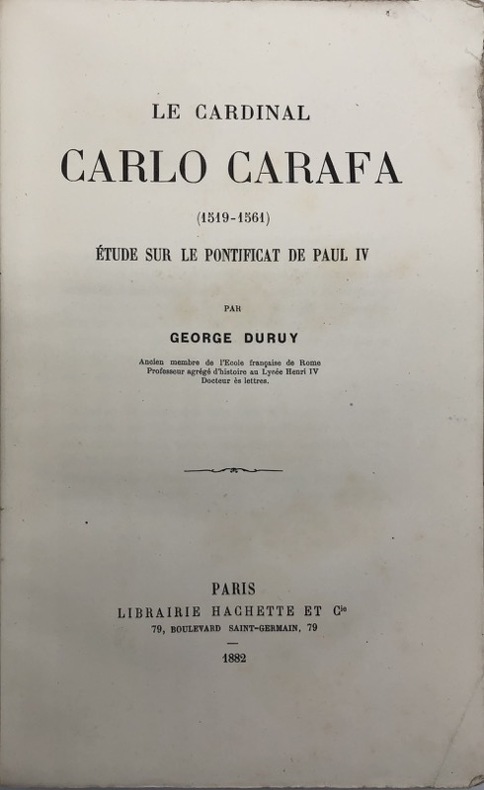
|
|
|
DURUY Victor (Didier Denis)
Les Romains. Collection : Les classiques de l'histoire.
Genève, Editions Minerva, 1972. 20 x 20, 160 pp., nombreuses illustrations en N/B et en couleurs, reliure d'édition pleine toile + jaquette, très bon état.
Référence libraire : 74310
|
|
|
Duruy Victor
Les Romains
Bordas, Minerva Classiques de l'Histoire Cartonné avec jaquette 1972 In-8 (20,5 x 24,2 cm), cartonné avec jaquette illustrée, 159 pages, nombreuses illustrations en noir et couleur ; bord supérieur de la jaquette légèrement usé, par ailleurs très bon état. Livraison a domicile (La Poste) ou en Mondial Relay sur simple demande.
Référence libraire : gr658

|
|
|
DUROISIN P., GEHU A.
Lucerna, latin : Quatrième année.
Liège, Editions Dessain, 1993. 17 x 24, 260 pp., broché, très bon état.
Référence libraire : 88335
|
|
|
DURANT Will
Rome. Les origines. La République. César et le Christ- 1.
Couverture rigide. Reliure club. 391 pages.
Référence libraire : 11698
|
|
|
DURANT Will
Rome. Le principat. César et le Christ - 2.
Couverture rigide. Reliure club. 391 pages.
Référence libraire : 11700
|
|
|
DURUY V. (Mme) 195 gravures.
Récits d'histoire romaine.
Couverture rigide. Reliure toile rouge défraîchie. 352 pages. 16 x24 cm. Tranjhes dorées.
Référence libraire : 130031

|
|
|
DURET (L.) et J.-P. NÉRAUDAU.
Urbanisme et métamorphoses de la Rome antique.
Les Belles Lettres, 1983, in-8°, 412 pp, préface de Pierre Grimal, 46 pl. de documents h.t., 10 pl. h.t. en couleurs, qqs plans et croquis, biblio, + un cahier de 26 pp contenant une chronologie et un index (Coll. Réalia)
Référence libraire : 10029
|
|
|
Duran fils
Rome/Ancienne Ecole des Beaux arts

|
|
|

 Recevoir par e-mail
 Télécharger en PDF
 Flux RSS
 Lien permanent


