|
Jacques LAURENT
Paul et Jean-Paul
Paris: Grasset 1951. Fine. Grasset Paris 1951 17.50 x 22.50 cm broché First edition one of 1100 numbered copies on Alfa paper the only deluxe copies. Minor tears of no consequence at the head of the spine and front cover. Handsome copy. Grasset unknown
Referenz des Buchhändlers : 56267

|
|
|
Jacques LAURENT
Paul et Jean-Paul
Paris: Grasset 1951. Fine. Grasset Paris 1951 17 x 22.50 cm broché First edition one of 18 numbered copies on Rives vellum deluxe copies after 12 on Montval. Rare and handsome copy. Grasset hardcover
Referenz des Buchhändlers : 62769

|
|
|
Jacques LAURENT
Paul et Jean-Paul
Paris: Grasset 1951. Fine. Grasset Paris 1951 17.50 x 22.50 cm broché First edition one of 200 numbered copies on alfa paper an advance service de presse copy. A good copy. Grasset unknown
Referenz des Buchhändlers : 51326

|
|
|
Jacques LAURENT
Paul et Jean-Paul
Paris: Grasset 1951. Fine. Grasset Paris 1951 17 x 22.50 cm broché First edition one of 12 numbered copies on Montval tirage de tête. A small tear not serious and repaired on foot of a joint. A rare and good copy. Grasset unknown
Referenz des Buchhändlers : 52316

|
|
|
Jacques LAURENT
Paul et Jean-Paul
Paris: Grasset 1951. Fine. Grasset Paris 1951 17.50 x 22.50 cm broché First edition one of 200 numbered copies on alfa paper reserved for the Service de Presse. Handsome copy. Grasset unknown
Referenz des Buchhändlers : 36889

|
|
|
Jacques LELONG
Bibliotheque historique de la France ; contenant le catalogue de tous les ouvrages tant imprimez que manuscrits qui traitent de l'histoire de ce Roïaume ou qui y ont rapport avec des notes critiques et historiques
à Paris: Chez Gabriel Martin 1719. Fine. Chez Gabriel Martin à Paris 1719 25 x 40 cm In-folio relié First edition. From 1768 onwards this bibliography was continued by Fevier de Fondette extending to all fields ecclesiastical history natural history etc. and no longer confined to the single area studied by Lelong. Contemporary full brown sheepskin binding. Spine with raised bands decorated. Extensive restorations in light brown sheepskin to the spine with tooling reapplied. Repairs in brown sheepskin to the boards. Renewed endpapers. The three fleurs-de-lys of the French royal arms on the title vignette have been erased. A good copy overall fresh. ""Malgré de nombreuses omissions et de graves inexactitudes cet ouvrage est un des travaux les plus essentiels qu""ait produits la science bibliographique et il doit se trouver dans toutes les grandes bibliothèques"" Brunet III 958. This bibliography is above all learnedly constructed and arranged making it particularly easy to consult thanks in particular to several indexes. History is to be understood in its broadest sense as evidenced by the various chapters: Civil history of the provinces and universities Ecclesiastical history of France Political and general history. with Historical memoirs on some modern historians of France in the Supplement p.895. Chez Gabriel Martin hardcover
Referenz des Buchhändlers : 68818

|
|
|
Jacques LEMARCHAND
Geneviève
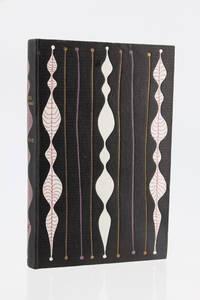
Paris: Gallimard 1946. Fine. Gallimard Paris 1946 10.50 x 16.50 cm reliure de l'éditeur First edition one of 1000 numbered copies on alfa Navarre paper the only deluxe copies after 13 on pure thread paper. Publisher's binding following Mario Prassinos' original design. Handsome copy. Gallimard unknown
Referenz des Buchhändlers : 78404
|
|
|
Jacques LE GOFF
L'Europe racontée aux jeunes
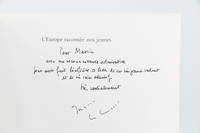
Paris: Seuil 1996. Fine. Seuil Paris 1996 20 x 27.50 cm broché The first edition of which there were no deluxe copies. Work illustrated with images by Charley Case. Handsome copy. Autograph inscription signed by Jacques Le Goff to the graphic designer typographer illustrator layout artist writer Robert Massin known as Massin who designed this work graphically: ""Pour Massin avec ma reconnaissance admirative pour avoir fait bénéficier ce livre de son grand talent et de ses soins attentifs. Jacques Le Goff."" For Massin with my admiring gratitude for having given this book the benefit of his great talent and attentive care. Jacques Le Goff. Seuil unknown
Referenz des Buchhändlers : 86307
|
|
|
Jacques LE LORRAIN - Gaston DUBREUILH
La Barbe bleue
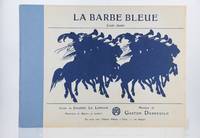
Paris: Mathot 1910. Fine. Mathot Paris 1910 19.50 x 29 cm reliure de l'éditeur First edition of this sung tale by Jacques Le Lorrain set to music by Gaston Dubreuilh. Publisher's binding in half steel-blue percaline smooth spine unlettered grey paper boards illustrated front board blue paper endpapers and pastedowns. Handsome copy. Work illustrated by Maurice de Lambert. Rare copy of this sung tale created by Gabriel de Montoya at the shadow theatre of the Quat-z-Arts. Mathot hardcover
Referenz des Buchhändlers : 77935
|
|
|
Jacques LE GOFF
La vieille Europe et la nôtre
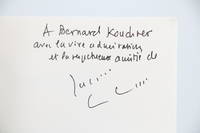
Paris: Seuil 1994. Fine. Seuil Paris 1994 13 x 18.50 cm broché First French edition of which there were no deluxe copies. Handsome copy. Autograph inscription signed by Jacques Le Goff to Bernard Kouchner. Seuil unknown
Referenz des Buchhändlers : 87409
|
|
|
Jacques LOEPER
Les sécretions internes du cancer du sein
Paris: Jouve & Cie 1943. Fine. Jouve & Cie Paris 1943 16 x 24 cm broché First edition. Autograph inscription from Jacques Loeper to a colleague. Work illustrated with 6 photographic plates. Spine faded otherwise handsome copy. Jouve & Cie unknown
Referenz des Buchhändlers : 24292

|
|
|
Jacques MASSOULIER
Dans la peau d'Annette
Paris: Nrf 1926. Fine. Nrf Paris 1926 17 x 23 cm broché First edition one of 109 numbered copies on Lafuma Navarre paper reimposed in Tellière quarto format deluxe copy. Handsome copy despite very light shadowing to the front cover. Nrf unknown
Referenz des Buchhändlers : 4105

|
|
|
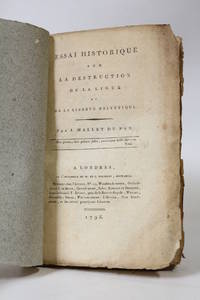
Jacques MALLET DU PAN
Essai historique sur la destruction de la ligue et de la liberté helvétique
à Londres London: de l'imprimerie de Spilsburyet se trouve chez l'auteur 1798. Fine. de l'imprimerie de Spilsbury et se trouve chez l'auteur à Londres London 1798 13.50 x 21 cm broché First edition of a series of five issues of the Mercure anglais published by Du Pan himself with a preface and additions. There were in fact 3 editions dated 1798. The work presents a tableau of the oppression exercised by the young French republic born from the Revolution over the Helvetic Confederation which it sought to annex to French territory. Copy presented in its original wrappers with grey and unlettered covers. de l'imprimerie de Spilsburyet se trouve chez l'auteur unknown
Referenz des Buchhändlers : 70010
|
|
|
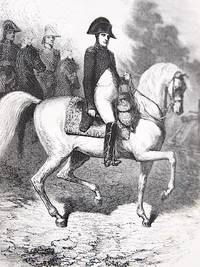
Jacques Marquet de Montbreton NORVINS
Histoire de Napoléon
Paris: Furne 1840. Fine. Furne Paris 1840 15.70 x 24.20 cm relié Edition abundantly illustrated with original vignettes and plates by Raffet. Handsome and famous Romantic illustrated work. Half black shagreen binding smooth spines decorated with Romantic rocaille ornaments frame of two gilt fillets on the aubergine paper boards endpapers and pastedowns of crosshatched dark blue paper corners rubbed. Rubbing to headcaps contemporary Romantic binding. Occasional light spotting on clean white paper. Of note the presence of three childish drawings made as tracings on the verso of three plates. Each plate is protected by a pink tissue guard. Work illustrated with 80 wood-engraved plates and a steel-engraved frontispiece as well as numerous in-text wood vignettes. Furne hardcover
Referenz des Buchhändlers : 48455
|
|
|
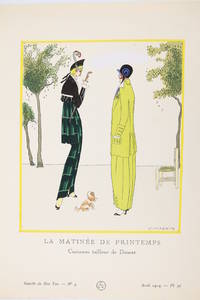
Jacques MAGNIN - (Georges DOEUILLET)
La Matinée de printemps. Costumes tailleur de Doucet pl.36 La Gazette du Bon ton 1914 n°4
Paris: Lucien Vogel éditeur 1914. Fine. Lucien Vogel éditeur Paris Avril 1914 19 x 24.50 cm une feuille Original color print printed on laid paper signed in the bottom right of the plate. Original engraving created for the illustration of La Gazette du bon ton one of the most beautiful and influential fashion magazines of the 20th century celebrating the talent of French creators and artists in the height of the Art Deco boom. Famous fashion magazine founded in 1912 by Lucien Vogel La Gazette du bon ton was published until 1925 with an interruption during the War from 1915 to 1920 due to the mobilization of its editor-in-chief. It consists of 69 issues printed in only 2000 copies and is illustrated notably with 573 color plates and 148 sketches representing models from great couturiers. Upon their publication these luxurious publications ""were addressed to bibliophiles and worldly aesthetes"" Françoise Tétart-Vittu ""La Gazette du bon ton"" in Dictionnaire de la mode 2016. Printed on fine laid paper they used a typeface specially created for the magazine by Georges Peignot the Cochin character adopted in 1946 by Christian Dior. The prints were created using the metallic stencil technique heightened in colors and some highlighted in gold or palladium. The adventure began in 1912 when Lucien Vogel a man of the world and of fashion - he had already participated in the magazine Femina - decided to found with his wife Cosette de Brunhoff sister of Jean the father of Babar the Gazette du bon ton whose subtitle was then ""Art modes et frivolités"". Georges Charensol reports the words of the editor-in-chief: ""En 1910 observe-t-il il n'existait aucun journal de mode véritablement artistique et représentatif de l'esprit de son époque. Je songeais donc à faire un magazine de luxe avec des artistes véritablement modernes . J'étais certain du succès car pour la mode aucun pays ne peut rivaliser avec la France."" ""In 1910 he observed there existed no fashion journal that was truly artistic and representative of the spirit of its time. I therefore thought of making a luxury magazine with truly modern artists . I was certain of success because for fashion no country can rival France."" ""Un grand éditeur d'art. Lucien Vogel"" in Les Nouvelles littéraires n°133 May 1925. The success of the magazine was immediate not only in France but also in the United States and South America. Originally Vogel thus brought together a group of seven artists: André-Édouard Marty and Pierre Brissaud followed by Georges Lepape and Dammicourt; and finally his friends from the École des beaux-arts who were George Barbier Bernard Boutet de Monvel or Charles Martin. Other talents quickly came to join the team: Guy Arnoux Léon Bakst Benito Umberto Brunelleschi Chas Laborde Jean-Gabriel Domergue Raoul Dufy Édouard Halouze Alexandre Iacovleff Jean Émile Laboureur Charles Loupot Maggie Salcedo. These artists unknown for the most part when Lucien Vogel called upon them would later become emblematic and sought-after artistic figures. These same illustrators created the drawings for the Gazette's advertisements. The plates highlighted and sublimated the dresses of seven creators of the time: Lanvin Doeuillet Paquin Poiret Worth Vionnet and Doucet. The couturiers provided exclusive models for each issue. Nevertheless some of the illustrations featured no real model but only the idea that the illustrator had of the fashion of the day. La Gazette du bon ton was a decisive step in the history of fashion. Combining aesthetic demand and plastic unity it brought together for the first time the great talents of the worlds of arts letters and fashion and imposed through this alchemy a completely new image of woman slender independent and audacious also carried by the new generation of couturiers Coco Chanel Jean Patou Marcel Rochas. Taken over in 1920 by Condé Montrose Nast the Gazette du bon ton would largely inspire the new composition and aesthe Lucien Vogel éditeur unknown
Referenz des Buchhändlers : 84699
|
|
|
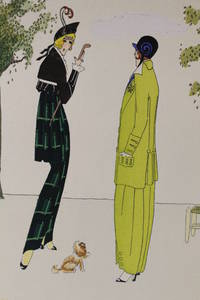
Jacques MAGNIN - (Georges DOEUILLET)
La Matinée de printemps. Costumes tailleur de Doucet pl.36 La Gazette du Bon ton 1914 n°4
Paris: Lucien Vogel éditeur 1914. Fine. Lucien Vogel éditeur Paris Avril 1914 19 x 24.50 cm une feuille Original color print printed on vergé paper signed in the plate. An original print used to illustrate the Gazette du bon ton one of the most attractive and influential 20th century fashion magazines featuring the talents of French artists and other contributors from the burgeoning Art Deco movement. A celebrated fashion magazine established in 1912 by Lucien Vogel La Gazette du bon ton appeared until 1925 with a hiatus from 1915 to 1920 due to the war the editor-in-chief having been called up for service. It consisted of 69 issues printed in only 2000 copies each and notably illustrated with 573 color plates and 148 sketches of the models of the great designers. Right from the start this sumptuous publication was aimed at bibliophiles and fashionable society Françoise Tétart-Vittu La Gazette du bon ton in Dictionnaire de la mode 2016 and was printed on fine vergé paper using a type cut specially for the magazine by Georges Peignot known as Cochin later used in 1946 by Christian Dior. The prints were made using stencils heightened in colors some highlighted in gold or palladium. The story began in 1912 when Lucien Vogel a man of the world involved in fashion he had already been part of the fashion magazine Femina decided with his wife Cosette de Brunhoff the sister of Jean creator of Babar to set up the Gazette du bon ton subtitled at the time: Art fashion frivolities. Georges Charensol noted the reasoning of the editor-in-chief: In 1910 he observed there was no really artistic fashion magazine nothing representative of the spirit of the time. My dream was therefore to make a luxury magazine with truly modern artists
I was assured of success because when it comes to fashion no country on earth can compete with France. Un grand éditeur dart. Lucien Vogel in Les Nouvelles littéraires no. 133 May 1925. The magazine was immediately successful not only in France but also in the United States and Latin America. At first Vogel put together a team of seven artists: André-Édouard Marty and Pierre Brissaud followed by Georges Lepape and Dammicourt as well as eventually his friends from school and the School of Fine Arts like George Barbier Bernard Boutet de Monvel and Charles Martin. Other talented people soon came flocking to join the team: Guy Arnoux Léon Bakst Benito Boutet de Monvel Umberto Brunelleschi Chas Laborde Jean-Gabriel Domergue Raoul Dufy Édouard Halouze Alexandre Iacovleff Jean Émile Laboureur Charles Loupot Chalres Martin Maggie Salcedo. These artist mostly unknown when Lucien Vogel sought them out later became emblematic and sought-after artistic figures. It was also they who worked on the advertising drawings for the Gazette. The plates put the spotlight on and celebrate dresses by seven designers of the age: Lanvin Doeuillet Paquin Poiret Worth Vionnet and Doucet. The designers provided exclusive models for each issue. Nonetheless some of the illustrations are not based on real models but simply on the illustrators conception of the fashion of the day. The Gazette du bon ton was an important step in the history of fashion. Combining aesthetic demands with the physical whole it brought together for the first time the great talents of the artistic literary and fashion worlds; and imposed through this alchemy a completely new image of women: slender independent and daring which was shared by the new generation of designers including Coco Chanel Jean Patou Marcel Rochas and so on
Taken over in 1920 by Condé Montrose Nast the Gazette du bon ton was an important influence on the new layout and aesthetics of that little dying paper that Nast had bought a few years earlier: Vogue. Lucien Vogel éditeur unknown
Referenz des Buchhändlers : 54650
|
|
|
Jacques MARTIN
Moïse homme de Dieu
Paris: Decroix & Johanet 1952. Fine. Decroix & Johanet Paris 1952 15 x 24.50 cm broché First edition one of 250 numbered copies on Marais paper the only issue. Illustrations by Pierre Bollaert. Very fine full-page autograph inscription from the author slight dampstain at foot of front board. Decroix & Johanet unknown
Referenz des Buchhändlers : 2999

|
|
|
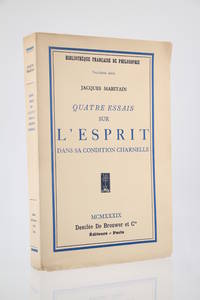
Jacques MARITAIN
Quatre Essais sur l'Esprit dans sa condition charnelle
Paris: Desclée Debrouwer & Cie 1939. Fine. Desclée Debrouwer & Cie Paris 1939 14 x 20.50 cm broché First edition one of 10 numbered copies on Holland paper deluxe copy. Adhesive paper stains at head and foot of endpapers otherwise a handsome full-margined copy. Desclée Debrouwer & Cie unknown
Referenz des Buchhändlers : 76736
|
|
|
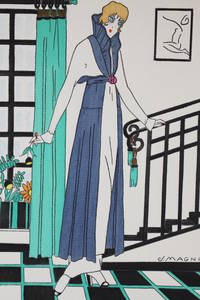
Jacques MAGNIN - (Georges DOEUILLET)
Quel chapeau faut-il mettre Robe d'après-midi de Doeuillet pl.71 La Gazette du Bon ton 1914 n°7
Paris: Lucien Vogel éditeur 1914. Fine. Lucien Vogel éditeur Paris Juillet 1914 18 x 24 cm une feuille Original color print printed on vergé paper signed in the plate. An original print used to illustrate the Gazette du bon ton one of the most attractive and influential 20th century fashion magazines featuring the talents of French artists and other contributors from the burgeoning Art Deco movement. A celebrated fashion magazine established in 1912 by Lucien Vogel La Gazette du bon ton appeared until 1925 with a hiatus from 1915 to 1920 due to the war the editor-in-chief having been called up for service. It consisted of 69 issues printed in only 2000 copies each and notably illustrated with 573 color plates and 148 sketches of the models of the great designers. Right from the start this sumptuous publication was aimed at bibliophiles and fashionable society Françoise Tétart-Vittu La Gazette du bon ton in Dictionnaire de la mode 2016 and was printed on fine vergé paper using a type cut specially for the magazine by Georges Peignot known as Cochin later used in 1946 by Christian Dior. The prints were made using stencils heightened in colors some highlighted in gold or palladium. The story began in 1912 when Lucien Vogel a man of the world involved in fashion he had already been part of the fashion magazine Femina decided with his wife Cosette de Brunhoff the sister of Jean creator of Babar to set up the Gazette du bon ton subtitled at the time: Art fashion frivolities. Georges Charensol noted the reasoning of the editor-in-chief: In 1910 he observed there was no really artistic fashion magazine nothing representative of the spirit of the time. My dream was therefore to make a luxury magazine with truly modern artists
I was assured of success because when it comes to fashion no country on earth can compete with France. Un grand éditeur dart. Lucien Vogel in Les Nouvelles littéraires no. 133 May 1925. The magazine was immediately successful not only in France but also in the United States and Latin America. At first Vogel put together a team of seven artists: André-Édouard Marty and Pierre Brissaud followed by Georges Lepape and Dammicourt as well as eventually his friends from school and the School of Fine Arts like George Barbier Bernard Boutet de Monvel and Charles Martin. Other talented people soon came flocking to join the team: Guy Arnoux Léon Bakst Benito Boutet de Monvel Umberto Brunelleschi Chas Laborde Jean-Gabriel Domergue Raoul Dufy Édouard Halouze Alexandre Iacovleff Jean Émile Laboureur Charles Loupot Chalres Martin Maggie Salcedo. These artist mostly unknown when Lucien Vogel sought them out later became emblematic and sought-after artistic figures. It was also they who worked on the advertising drawings for the Gazette. The plates put the spotlight on and celebrate dresses by seven designers of the age: Lanvin Doeuillet Paquin Poiret Worth Vionnet and Doucet. The designers provided exclusive models for each issue. Nonetheless some of the illustrations are not based on real models but simply on the illustrators conception of the fashion of the day. The Gazette du bon ton was an important step in the history of fashion. Combining aesthetic demands with the physical whole it brought together for the first time the great talents of the artistic literary and fashion worlds; and imposed through this alchemy a completely new image of women: slender independent and daring which was shared by the new generation of designers including Coco Chanel Jean Patou Marcel Rochas and so on
Taken over in 1920 by Condé Montrose Nast the Gazette du bon ton was an important influence on the new layout and aesthetics of that little dying paper that Nast had bought a few years earlier: Vogue. Lucien Vogel éditeur unknown
Referenz des Buchhändlers : 54701
|
|
|
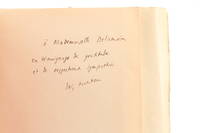
Jacques MARITAIN
Réponse à Jean Cocteau
Paris: Stock 1926. Fine. Stock Paris 1926 13.50 x 19 cm 2 volumes brochés First edition one of 30 numbered copies on Japan paper deluxe copy. One repaired tear at the foot of a joint spine slightly browned. A full-margined copy. Signed and inscribed copy by Jacques Maritain to Mademoiselle Delamain his publisher's daughter. Stock unknown
Referenz des Buchhändlers : 77764
|
|
|
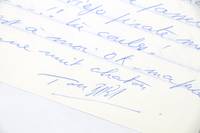
Jacques MESRINE
".Enfin cela est un gros poids d'enlevé pour toi. Tu te retrouveras chez toi dans un décor que tu as aimé"" Autograph love letter dated and signed by Jacques Mesrine written from the prison of Fleury-Mérogis and addressed to his companion Jeanne Schneider for whom he has just found accommodation after his next release
Fleury-Mérogis 1976. Fine. Fleury-Mérogis 21 Septembre 1976 21 x 29.50 cm une page recto verso Autograph letter dated and signed by Jacques Mesrine dated Tuesday September 21 1976 68 lines in blue ink on one recto-verso page addressed to his lover at the time Jeanne Schneider thanks to whom the manuscript ofInstinct de mort was discreetly smuggled out of prison. A horizontal fold inherent to the envelope placement a small tear in the right margin of the letter at the fold level. Jacques Mesrine then incarcerated at Fleury-Mérogis prison arranged with his mother for her to cede upon her departure from the Paris region her Clichy apartment to Jeanne Schneider after his possible provisional release: ""J'ai eu un très agréable parloir avec maman. J'ai au moins une bonne nouvelle à t'annoncer. Pour Clichy c'est d'accord. Comme elle va vivre presque tout le temps à la montagne tu auras l'appartement pour toi. Je paierai le loyer. Elle a tout de suite dit d'accord après mon explication. . Je me doute de ta joie de savoir que tu pourras vivre à Clichy - si près de notre papy. toujours présent de par l'amour que nous avons pour lui. Je suis certain que cette petite nouvelle te remonte le moral."" I had a very pleasant visit with mama. I have at least one good piece of news to tell you. For Clichy it's agreed. Since she's going to live almost all the time in the mountains you'll have the apartment to yourself. I'll pay the rent. She immediately said yes after my explanation. . I can imagine your joy knowing that you'll be able to live in Clichy - so close to our grandpa. always present through the love we have for him. I'm certain this little news will lift your spirits. His daughter Sabrina worries him and he senses that he will have to be severe regarding her behavioral lapses: ""De Sabrina rien ! Il y a une chance pour qu'actuellement elle me prépare un ""douze"" je ne peux t'en parler sur lettre. mais j'ai l'impression que la puce me ment sur certaines choses. elle prend peut-être une route où il va me falloir la plus grande fermeté. J'ai demandé à maman de vérifier si elle va bien à l'école."" Nothing from Sabrina! There's a chance that currently she's preparing a ""twelve"" for me I can't talk about it in a letter. but I have the impression that the kid is lying to me about certain things. she's perhaps taking a path where I'll need the greatest firmness. I asked mama to check if she's doing well in school. News of his ""godson"" the famous robber Jean-Charles Willoquet with whom he organized his escape from La Santé prison where they had met makes him prouder: ""J'ai reçu la photo du plus jeune détenu de France à savoir mon filleul ""Willy Willoquet"" dans sa cour de promenade. c'est émouvant et triste à la fois !"" I received the photo of the youngest prisoner in France namely my godson ""Willy Willoquet"" in his exercise yard. It's moving and sad at the same time! The situation of his young protégé cut off from all contact with his loved ones and the people who love him reminds him of his own personal situation and the indignities of a prisoner's isolated existence: ""Je me demande comment va réagir Martine quand on va lui enlever Enfin c'est le destin qu'elle a choisi et accepté. Elle paie cher le prix de l'amour. Vous le payez toutes ""très cher""."" I wonder how Martine will react when they take him away from her Well it's the destiny she chose and accepted. She pays dearly the price of love. You all pay it ""very dearly"". In order to quickly erase this morose and implacable truth Jacques Mesrine plunges into schoolboy humor and affectionately mocks his lover's physical flaws: ""J'espère que la bonne nouvelle va te rendre ton sourire. eh ! la mémé. boutons sur la gueule. ou pas ! Je t'adore. il ne fallait pas flirter avec ""voyou"" ! C'est lui qui t'as passé cela sic nanou d'amour ton viejo pirate monte à l'abordage de tes lèvres. et. !! tu coules ! "" I hope the good news will bring back yo unknown
Referenz des Buchhändlers : 87298
|
|
|
Jacques MESRINE
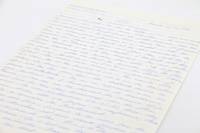
"Il n'y a pas de cause perdue d'avance. Dans la vie il faut se battre jusqu'au bout. tu sais pourtant ce que cela représente. Tu vois moi je vais au maximum ! et pourtant je vais me défendre toutes dents dehors. Car ma liberté il faudra me la prendre. Je ne la donnerai pas faute de combat ! "" Autograph letter written from the Santé prison dated and signed by Jacques Mesrine addressed to his companion Jeanne Schneider whom he nicknamed Nanou d'amour
Paris 1976. Fine. Paris 12 Octobre 1976 21 x 29.50 cm une page recto verso Autograph letter dated and signed by Jacques Mesrine dated Tuesday October 12 1976 70 lines in blue ink on one recto-verso page addressed to his love of the time Jeanne Schneider thanks to whom the manuscript of Instinct de mort was discreetly smuggled out of prison. Jacques Mesrine then incarcerated at La Santé shows great tenderness and reveals himself in another light that of the affectionate and attentive lover: ""Bonsoir petite fille. tu aimes bien jouer ""au St Bernard"" tu ne changeras jamais à ce sujet. C'est toi qui a 7 ans 1/2 de taule et tu dois remonter le moral des ""gamines"" qui ont joué du calibre !"" ""Good evening little girl. you like to play 'the St Bernard' you'll never change about that. You're the one who has 7 and a half years of jail and you have to cheer up the 'girls' who played with guns!"" He praises and is somewhat amazed by his companion's devotion to a couple of young criminals: ""Tu me parles d'une sentence de 20 ans pour elle ! tu rigoles ou quoi. elle ne peut pas prendre plus de 8 ans je la vois plutôt avec 5 ou 6 si les choses s'arrangent. Son mari avec 20 ans au maximum."" ""You talk to me about a 20-year sentence for her! are you kidding or what. she can't get more than 8 years I see her more with 5 or 6 if things work out. Her husband with 20 years maximum."" and tries to transmit all his optimism his pugnacity and to cheer her up: ""Tu sais ma puce; quand tu m'écris que la cause de Michou est une cause perdue d'avance je ne te comprends plus. Il n'y a pas de cause perdue d'avance. Dans la vie il faut se battre jusqu'au bout. tu sais pourtant ce que cela représente. Tu vois moi je vais au maximum ! et pourtant je vais me défendre toutes dents dehors. Car ma liberté il faudra me la prendre. Je ne la donnerai pas faute de combat !"" ""You know my darling; when you write to me that Michou's cause is a lost cause from the start I don't understand you anymore. There is no lost cause from the start. In life you have to fight to the end. you know what that represents though. You see I'm going for the maximum! and yet I'm going to defend myself tooth and nail. Because my freedom will have to be taken from me. I won't give it up for lack of fighting!"" Jacques Mesrine also evokes his love of horse racing while boasting of being a betting specialist: ""Oui j'avais joué ""Dernier tango"" mais seulement à la place. J'avais 2000frs dessus je gagne donc 6000frs. Ce n'est pas de la chance mais un savant calcul. Il m'arrive de perdre mais avec ma méthode je suis obligé d'être gagnant. Forécement pour la suivre il faut un certain capital. J'ai mis plus d'un an à faire tous les calculs de probabilité. Cela doit me rapporter à peu près 7000frs par mois. Net d'impots sic."" ""Yes I had bet on 'Dernier tango' but only for place. I had 2000frs on it so I win 6000frs. It's not luck but a scientific calculation. I sometimes lose but with my method I have to be a winner. Obviously to follow it you need a certain capital. I spent more than a year doing all the probability calculations. It should bring me about 7000frs per month. Net of taxes sic."" He ironizes about his situation as a prisoner having plenty of time to devise his financial gain strategies: ""J'ai aussi mis au point une méthode pour le jeu de baccara. Que veux-tu. j'ai le temps de calculer un tac de choses sic ! Tu me comprends . L'administration aussi ! resic. "" ""I also developed a method for baccarat. What do you want. I have time to calculate a bunch of things sic! You understand me . The administration too! resic."" but deplores his impossibility to continue writing Instinct de mort: "". je suis actuellement incapable d'écrire une page de mon bouquin. je ne sais pas comment tourner ce passage-là. enfin je vais bien trouver la solution."" "". I am currently unable to write a page of my book. I don't know how to phrase this passag unknown
Referenz des Buchhändlers : 84669
|
|
|
Jacques MESRINE
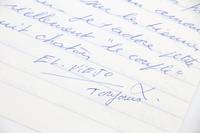
"j'ai eu la visite du juge Madre. Tu aurais rigolé car il a eu droit à tout mon vocabulaire."" Beautiful autograph letter dated and signed of revolt from Jacques Mesrine written from the prison of Fleury-Mérogis addressed to his companion Jeanne Schneider
Fleury-Mérogis 1976. Fine. ""Le pire que l'on puisse faire à un juge c'est lui enlever toute autorité devant les autres et crois moi il l'a bien compris"" ""The worst thing you can do to a judge is to remove all his authority in front of others and believe me he understood it well"" Fleury-Mérogis 2 Décembre1976 21 x 29.50 cm une page recto verso Autograph letter dated and signed by Jacques Mesrine dated Thursday December 2 1976 65 lines in blue ink on one recto-verso page addressed to his love at the time Jeanne Schneider thanks to whom the manuscript of Instinct de mort was discreetly smuggled out of prison. Jacques Mesrine then incarcerated at Fleury-Mérogis prison feels unwell and helpless far from his companion and from all human warmth: ""Ce soir je suis très mal foutu. il est 19 heures et je me couche juste après la fin de ta lettre. de rien de grave. juste une grande fatigue à rien faire"" ""Tonight I feel really awful. it's 7 PM and I'm going to bed just after finishing your letter. nothing serious. just very tired from doing nothing"" As a good father Jacques Mesrine rejoices in his daughter's happiness: ""Je suis heureux que sa veste lui plaise. de plus c'est la mode. son Loïc chéri ne va plus la reconnaître."" ""I'm happy that she likes her jacket. plus it's fashionable. her dear Loïc won't recognize her anymore."" and shows himself neither surprised nor more than amused that his daughter wants to embrace the Jewish religion: ""Comme cela la puce veut prendre la religion juive. encore une idée à elle. oui je sais elle a fait croire à ses copains qu'elle était juive. car eux l'étaient.si cela l'amuse je la laisse libre. mais ça démontre aussi un dédoublement de personnalité."" ""So the little one wants to take up the Jewish religion. another one of her ideas. yes I know she made her friends believe she was Jewish. because they were. if it amuses her I leave her free. but it also shows a split personality."" Public enemy No. 1 evokes with a certain pride his latest confrontation with his judge a fierce revenge of the insubordinate against the penitentiary universe that crushes men: ""Aujourd'hui j'ai eu la visite du juge Madre. Tu aurais rigolé car il a eu droit à tout mon vocabulaire. il en perdait la parole j'ai pris mon pied sic A un moment il me dit ""mais c'est quand même moi qui commande. Réponse de ton bibi : ""Ici pédé"" c'est moi ton patron"". Il était vert et les flics se marraient comme des perdus."" ""Today I had a visit from Judge Madre. You would have laughed because he got my full vocabulary. he was speechless I had a ball At one point he tells me 'but I'm still the one in charge. Your boy's response: 'Here faggot I'm your boss.' He was green and the cops were laughing like crazy."" and against all submission to any form of power or violence: ""Le pire que l'on puisse faire à un juge c'est lui enlever toute autorité devant les autres et crois moi il l'a bien compris. Il était venu avec 5 anti-commandos. L'un avait la bombe de gaz à la main. au cas où Loin d'être impressionné. cela me rend con."" ""The worst thing you can do to a judge is to remove all his authority in front of others and believe me he understood it well. He had come with 5 anti-commandos. One had the gas canister in his hand. just in case Far from being impressed. it makes me crazy."" The eternal rebel ends his letter with a beautiful testimony of tenderness for his beloved: ""Là ma puce je vais prendre mon lit en marche.Ton vieux voyou pose ses lèvres sur le tiennes en une douce caresse d'amour. je t'adore petite fille. car nous sommes réellement le ""couple"" et plus encore. Bonne nuit chaton."" ""There my little one I'm going to take to my bed. Your old rogue places his lips on yours in a sweet caress of love. I adore you little girl. because we are truly the 'couple' and even more. Good night kitten."" Rare and very fine letter by Jacques Mesrin unknown
Referenz des Buchhändlers : 84900
|
|
|
Jacques MESRINE
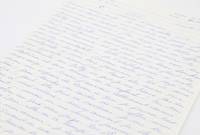
"J'ai reçu une lettre de Betty qui me remercie car je lui ai offerte une mobylette. Pourquoi me diras-tu Tout simplement parce que j'aime voir les enfants heureux et je crois que leur bonheur m'est nécessaire. Cette môme me plaît de par sa mentalité."""" Autograph letter written from the Santé prison dated and signed by Jacques Mesrine addressed to his companion Jeanne Schneider whom he nicknamed Nanou d'amour
Paris 1976. Fine. Paris 11 Octobre 1976 21 x 29.50 cm une page recto verso Autograph letter dated and signed by Jacques Mesrine dated Monday October 11 1976 70 lines in blue ink on one recto-verso page addressed to his love of the time Jeanne Schneider thanks to whom the manuscript of Instinct de mort was discreetly smuggled out of prison. Jacques Mesrine then incarcerated at La Santé showers with gifts the people he loves because he wants their happiness: ""Comme cela j'ai payé une mobylette à mes trois gamines. Toi ce sera une quatre roues sic."" ""Like this I paid for a moped for my three girls. For you it will be four wheels sic."" He shows all his affection for a young girl named Betty whom he seems to cherish more than his own daughter Sabrina: ""Peut-être que je recherche en Betty ce que je ne trouve pas en Sabrina et que Mury m'a refusé ! Tu sais mon ange ; à 15 ans j'aurais tellement aimé avoir un copain de 40 ans à qui je puisse tout dire qui sache m'aider ou m'offrir mon rêve. Peut-être que ce cadeau je me le fais à moi-même."" ""Maybe I'm looking for in Betty what I don't find in Sabrina and what Mury refused me! You know my angel; at 15 I would have loved so much to have a 40-year-old friend to whom I could tell everything who would know how to help me or offer me my dream. Maybe this gift I'm giving it to myself."" for whom he has no more confidence feeling betrayed: ""Mais on ne devient jamais l'ami de quelqu'un qui vous juge. Pas plus que pour Sabrina ! qui elle m'a trompé dans ma confiance donc dans mon amour. Quand on use les sentiments ils ne redeviennent jamais les mêmes."" ""But one never becomes the friend of someone who judges you. No more than with Sabrina! who deceived my trust and therefore my love. When feelings are worn out they never become the same again."" Public enemy No. 1 takes great pride in his relationship with Jeanne Schneider based on honesty: ""C'est peut-être pour cela que je me suis toujours refusé à te mentir - quitte à te faire souffir. Je n'ai aucun passé.mais un seul présent ""Toi"". C'est peut-être cela qui fait que notre amour dure depuis 10 ans "" ""Maybe that's why I've always refused to lie to you - even if it means making you suffer. I have no past.but only one present 'You'. Maybe that's what makes our love last for 10 years "" Jacques Mesrine then turns to material considerations so important for a prisoner: ""J'ai reçu ton linge. Je ne risque pas d'avoir froid cet hiver. Le polo est très bien."" ""I received your clothes. I won't risk being cold this winter. The polo shirt is very good."" before castigating the inhumanity of the prison system and its indifference to suffering: ""Mais nous n'avons rien à attendre des juges et si ma lettre au président a été ferme c'est le genre de lettre qu'il comprendra mieux que le style ventre à terre."" ""But we have nothing to expect from judges and if my letter to the president was firm it's the kind of letter he will understand better than the groveling style."" As an eternally untamed man Jacques Mesrine never ceases to advocate fighting against the prison administration: ""On ne se défend pas en mettant sa tête dans le sable comme l'autruche ! Dès l'instant où l'on prend une arme dans la main. il faut s'attendre à payer ! que Michou le comprenne ce n'est pas le moment d'être ""bébé"" mais celui d'être femme."" ""You don't defend yourself by putting your head in the sand like an ostrich! From the moment you take a weapon in your hand. you must expect to pay! let Michou understand this is not the time to be a 'baby' but to be a woman."" Jacques Mesrine ends this beautiful letter with a moving declaration of love full of optimistic humor: ""Ton vieux tigre pose de doux bécots sur tout ce qui est toi. Bonne nuit chaton et un moral d'acier est de rigueur ok. Je t'adore chanceuse & Ton mystère Jacques !! ""Te adoro A toi seule."" ""Your old tiger puts gentle kisses on everything that is you. Good night kitten and a steel hardcover
Referenz des Buchhändlers : 84675
|
|
|
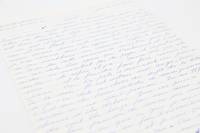
Jacques MESRINE
"Je ne veux plus te voir en prison car toi dehors c'est un peu de moi même qui sera libre. Tu donnes une parole pour cette liberté. prouve que nous autres la tenons toujours en bien comme en mal. C'est ce qui nous unit le plus ; voyous dangereux . mais droits"" Autograph letter dated and signed by Jacques Mesrine written from the prison of Fleury-Mérogis addressed to his companion Jeanne Schneider who was then incarcerated and who could soon be released
Fleury-Mérogis 1976. Fine. Fleury-Mérogis 21 Octobre 1976 21 x 29.50 cm une page recto verso Autograph letter signed and dated by Jacques Mesrine dated Thursday October 21 1976 70 lines in blue ink on one recto-verso page addressed to his lover at the time Jeanne Schneider thanks to whom the manuscript of Instinct de mort was discreetly smuggled out of prison. Jacques Mesrine then incarcerated at Fleury-Mérogis prison rejoices at having been able to speak with his beloved in the visiting room who was also imprisoned: ""What a very pleasant visit you were moreover very feminine in that outfit which is very much in your style as a woman. even worth double the price because I like it"" and attempts to reassure her so that she does not lose all fight against the prison system that crushes inmates: ""But if by misfortune a new refusal should affect you do not have that bad reaction you told me about because those who surround you and have helped you do not deserve to pay for the injustice of others. You will have to face it as always. Because the doors will open one day and you know it."" As a protective patriarch Jacques Mesrine worries about the despair that could strike her and her daughter Murielle placed with social services: ""But I worry enormously about you because you have a limit. and I believe you have reached it! or almost. Regarding Mury and that bogus judge. we will see about removing her from social services. I prefer to pay for her studies and Mrs. Chevallier and all her upkeep if necessary. If you get out! Tell me. so many women to support. I'd better work overtime sic"" Public enemy No. 1 evokes Jeanne Schneider's upcoming freedom while ordering her not to fall back into criminality: "".If you get out formal prohibition from getting involved with me on a level that we both understand very well. I don't want to see you in prison anymore because you outside is a little bit of myself that will be free. You give your word for this freedom. prove that we others always keep it in good times as in bad"" Jacques Mesrine praises his companion's integrity the keystone of their strong union through the deprivation of freedom: ""This is what unites us most; criminals dangerous. but honest. This is what makes me love you with you no unpleasant surprises; you are 'white-blue' and for me you have the value of a diamond. It is the only stone that is harder than steel sic. but less hard than me resic"" He ends this missive with this humorous note reflecting the terrible intrusive reality of the penitentiary system: ""And if my Christmas package is prepared by you. the administration will X-ray it"" but also with these tender words: ""Sweet kisses rest on your lips. gesture of love that has united us always and for a long time. EL VIEJO Bandido!"" Rare and very beautiful letter from Jacques Mesrine in which we discover him protective and eager for freedom for his companion and for whom honesty must be erected as a rule of life. unknown
Referenz des Buchhändlers : 84739
|
|
|
Jacques MESRINE
"Je t'aime ma puce. mais cette détention me rend dingue tellement je me sens impuissant devant la connerie ! "" Autograph love letter dated and signed by Jacques Mesrine written from the prison of Fleury-Merogis and addressed to his companion Jeanne Schneider enriched with an original drawing representing a bouquet of flowers
Fleury-Mérogis 1976. Fine. Fleury-Mérogis 29 Décembre 1976 21 x 29.50 cm une page recto verso Autograph letter signed by Jacques Mesrine dated Wednesday 29 December 1976 addressed to Jeanne Schneider his love interest of the time. She smuggled out of prison the manuscript of his famous autobiography L'Instinct de mort. 66 lines in blue ink on two pages of a leaf. In the top left-hand corner of the letter Jacques Mesrine has drawn a bouquet of flowers in multicoloured felt-tip pens. Usual horizontal fold small tear to the fold in the right-hand margin. Jacques Mesrine who was in Fleury-Mérogis prison at the time was delighted to receive so much proof of love and friendship in the many letters he received from his friends and family. He in turn replied to all his correspondents and in particular to Madame Panco who had shown great kindness towards Jeanne Schneider: ""I'm going to send my best wishes to Madame Panco as I do every year. because I haven't forgotten what this woman has done for you. she is a woman of respect and a very human person. There are some in the administration it's rare'. The indomitable Mesrine is full of tenderness and delicacy for Jeanne Schneider: I've made you a little bouquet of flowers. to make up for being so unpleasant with you at the moment' but he has no wish in the world to change and submit to anyone's wishes: ""What do you want I'm becoming an old fart with a bloody temper. but I am as I am and have no intention of changing. or else I wouldn't be me any more. I'll tell you one thing my angel. whether my book works or not. I don't give a damn. there's no way I'm going to start from scratch to make it sweeter."" Public Enemy No. 1 was outraged by the way he was treated by the prison administration after the publication of his polemical book L'instinct de mort' The Death Instinct : ""In France the truth is frightening. At the moment I don't go out for a walk. . I'm in my cell 24 hours a day. The reform! What do you expect me to do in this stupid courtyard in such cold weather But I'm in great shape! "" He doesn't despair of being released or regaining his freedom soon much to the dismay of all those who prefer to see him locked up: ""I'm going to have to apply for a leave of. 10 years. but if that day comes. how many people are going to shit their pants. a lot of loudmouths who take advantage of the fact that I'm caged up to play the pimp' but I'm free. there are no more pimps'. it's nice to dream.'. But he also talks about how happy he'll be to see his sweetheart again very soon even if his condition as a prisoner is weighing on him and enraging him all the more: ""I hope we'll finally be able to smile again I'm going to be the real adorable little guy. well almost! I love you sweetheart. but this imprisonment is driving me crazy I feel so powerless in the face of bullshit! "" A rare and beautiful letter from Jacques Mesrine in which he shows his intense affection for his girlfriend and his strong resentment of the prison system. unknown
Referenz des Buchhändlers : 87299

|
|
|
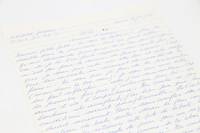
Jacques MESRINE
"Mais le plus important est que tu retrouves cette pute de liberté. Après ce sera aux avocates de jouer pour un régime plus souple. Je te parle comme si tu étais déjà libre.Que ""veux-tu"" j'y crois. . Je lutte et je lutterai toujours pour toi car je t'aime."" Autograph love letter dated and signed by Jacques Mesrine written from the prison of Fleury-Mérogis and addressed to his companion Jeanne Schneider about the fight for his provisional release
Fleury-Mérogis 1976. Fine. Fleury-Mérogis 18 Octobre 1976 21 x 29.50 cm une page recto verso Autograph letter dated and signed by Jacques Mesrine dated Monday October 18 1976 68 lines in blue ink on one recto-verso page addressed to his love of the time Jeanne Schneider thanks to whom the manuscript of theInstinct de mort was discreetly smuggled out of prison. Jacques Mesrine then incarcerated at Fleury-Mérogis prison seeks to reassure his love whom he is helping through his lawyers so that she might obtain provisional freedom: ""C'est que je sens que cela va être bon et cela malgré que les avocates m'avaient déconseillé de le faire. tu sais que je fais de la prémonition mais dans le bon sens. Je sais que ma lettre les fait réfléchir. cela j'en suis certain. C'est la première fois que j'interviens pour toi. Ca aussi a de l'importance."" ""It's that I feel this is going to be good despite my lawyers having advised me against doing it. you know I have premonitions but in a good way. I know my letter makes them think. of this I am certain. This is the first time I'm intervening for you. That too is important."" and thanks to whom she should regain freedom: ""Mais le plus important est que tu retrouves cette pute de liberté. Après ce sera aux avocates de jouer pour un régime plus souple. Je te parle comme si tu étais déjà libre.Que ""veux-tu"" j'y crois."" ""But the most important thing is that you regain this damn freedom. After that it will be up to the lawyers to work for a more lenient regime. I'm talking to you as if you were already free. What can I say I believe in it."" Overflowing with enthusiasm and certainty for the success of these proceedings regarding Jeanne's provisional freedom and sure of the weight of his intervention the indomitable Mesrine fumes at the idea of a hypothetical refusal by the prison authorities: ""Quel affreux pirate qui te donne de l'espoir. Non mon ange je ne sais absolument rien. Sauf que le Président a dit que je le menaçais sur ma lettre. J'ai été très dur et à juste raison car la plaisanterie a assez durée. Toi tu supporteras ton refus. moi je ne l'accepterai plus. C'est pas plus compliqué que cela. Car tu as assez payé. même trop."" ""What a terrible pirate giving you hope. No my angel I know absolutely nothing. Except that the President said I was threatening him in my letter. I was very harsh and rightly so because the joke has gone on long enough. You will endure your refusal. I will no longer accept it. It's no more complicated than that. Because you have paid enough. even too much."" Public enemy No. 1 takes the opportunity again to shatter this reputation as a bloodthirsty beast that sticks to his skin: ""Si les journalistes savaient que toutes les infirmières entraient seules dans ma cellule et en toute confiance on serait loin du ""fauve"" et de la prise d'otages à la Buffet. Les infirmières ont toujours été sacrées pour moi. Elles sont intouchables comme pas mal d'autres personnes mais cela les pédés de journalistes l'ignorent ; car ils ne sont pas dans mes pensées et c'est regrettable parfois."" ""If journalists knew that all the nurses entered my cell alone and in complete confidence we would be far from the 'beast' and the hostage-taking like Buffet. Nurses have always been sacred to me. They are untouchable like many other people but those journalist faggots don't know this; because they are not in my thoughts and that's sometimes regrettable."" Jacques Mesrine speaks of the creation of his work L'instinct de mort and his health in a fatalistic manner: ""Autrement tout est ok sauf mes douleurs au coeur qui me reprennent. mais je laisse faire car je n'aime pas prendre de médicaments. Et puis le mécanisme s'arrêtera le jour ""J"" du destin. Peut-être dans tes bras. qui sait ""Otherwise everything is ok except my heart pains that are returning. but I let it be because I don't like taking medication. And then the mechanism will stop on the 'D' day of d unknown
Referenz des Buchhändlers : 85089
|
|
|
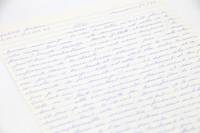
Jacques MESRINE
"Sais-tu que je commence à me plaire ici. Quel calme tu sais manou"" Beautiful autograph love letter dated and signed by Jacques Mesrine full of revolt against journalists and full of admiration for the intimates written from the prison of Fleury-Mérogis and addressed to his companion Jeanne Schneider
Fleury-Mérogis 1976. Fine. ""She's an exceptional woman . I considered her like a mother . Woe to anyone who would touch a single hair on her head."" Fleury-Mérogis 22 Septembre1976 21 x 29.50 cm une page recto verso Autograph letter dated and signed by Jacques Mesrine dated Saturday September 22 1976 67 lines in blue ink on one page recto verso addressed to his love of the time Jeanne Schneider thanks to whom the manuscript of Instinct de mort was discreetly smuggled out of prison. Jacques Mesrine then incarcerated at Fleury-Mérogis prison and deprived of human warmth is enthusiastic about all the visits he receives in the visiting room thus dispelling the myth of the antisocial bandit devoid of human feelings: ""And after that they'll say I'm a savage! No quite the contrary and people who have had contact with me want to see me again. This gave me immense pleasure and do you know what happened next. she's also going to ask to see you. Apparently I'm missed by the nurses 'mister smile' that's the secret."" He particularly appreciated the visit from the nurse at La Santé prison who would also be their wedding witness with Jeanne Schneider and whom he praises: "". an enormous surprise! You'll never guess who came to see me! My nurse from La Santé. yes my darling. that charming lady with white hair whom you had seen in the visiting room at La Santé and who is to be our witness at our wedding . She's an exceptional woman a former military nurse and quite well-placed in the ministry. During my 2 and a half years at La Santé I considered her like a mother this woman is so devoted it's unthinkable. Woe to anyone who would touch a single hair on her head."" Public enemy No. 1 takes the opportunity again to break this reputation as a bloodthirsty beast that sticks to him: ""If journalists knew that all the nurses entered my cell alone and with complete confidence we'd be far from the 'beast' and hostage-taking à la Buffet. Nurses have always been sacred to me. They are untouchable like quite a few other people but those journalist faggots don't know that; because they're not in my thoughts and that's regrettable sometimes."" Jacques Mesrine the rebel is surprised to find himself appreciating his prison solitude: ""Do you know that I'm beginning to like it here. What calm you know manou my isolation I bear it insofar as I have peace. In detention it's not proven that I would have it. It's my reactions I'm afraid of. and the mentality of so-called crooks is increasingly disgusting! . in my isolation there's good and bad. but personally I don't want to complain. because there's no reason to do so."" and ends his letter with paternal considerations for his daughter who is not very assiduous at school and for whom he worries: ""I'm going to find out if Sabrina has been regularly attending her classes. I hope so because if the opposite were the case. no mercy this time. But what worry this kid can represent and what powerlessness I have to control her being here!"" Rare and very fine letter from Jacques Mesrine overflowing with reverence for the nursing profession and regrettable detestation for that of journalists. unknown
Referenz des Buchhändlers : 85081
|
|
|
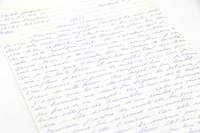
Jacques MESRINE
"Tu sais j'ai bien réfléchi pour le bouquin. il doit y avoir veto quelque part. car s'il était publié cela retarderait mes procès ou un truc dans ce genre."" Autograph letter signed by Jacques Mesrine written from the prison of Fleury-Mérogis on the evening of New Year's Eve on December 31 1976 addressed to his companion Jeanne Schneider whom he nicknamed Nanou d'amour in connection with the publication of his book L'Instinct de mort
Fleury-Mérogis 1976. Fine. Fleury-Mérogis 31 Décembre 1976 21 x 29.50 cm une page recto verso Autograph letter dated and signed by Jacques Mesrine dated Friday December 31st 1976 approximately 70 lines in blue ink on one recto verso page addressed to his love of the time Jeanne Schneider thanks to whom the manuscript of Instinct de mort was discreetly smuggled out of prison. Jacques Mesrine then incarcerated at Fleury-Mérogis prison wondered about the difficulties he might encounter if his Instinct de mort were to appear soon and with which sufficiently courageous publisher it could be edited: ""Je vais voir avec mon avocate pour les ""presses de la cité"" car je crois que l'on peut tirer un trait sur Simone. De toute façon il sera publié par celui acceptera d'en courir le risque"" ""I'm going to see with my lawyer about the ""presses de la cité"" because I think we can draw a line under Simone. In any case it will be published by whoever will accept to run the risk"" He also advised his beloved on her working conditions: ""Au sujet de ton boulot. j'espère que tu as discuté avec ta patronne car les horaires ne sont pas légaux. ne te laisse pas faire à ce sujet. Vis à vis du procureur tu es obligé de travailler. cela ne veut pas dire être esclave au boulot."" ""About your job. I hope you discussed with your boss because the hours are not legal. don't let yourself be taken advantage of on this subject. With regard to the prosecutor you are obliged to work. that doesn't mean being a slave at work."" and worried about the future of his daughter Sabrina: ""Demain j'espère la visite de la puce. je vais avoir une très sérieuse conversation avec elle au sujet de l'avenir. Car elle ne fait rien en classe. donc le mieux pour elle est de travailler pour obtenir un CAP en quelque chose. Elle veut jouer les adultes. alors il va falloir qu'elle se conduise en adulte."" ""Tomorrow I hope for a visit from the little one. I'm going to have a very serious conversation with her about the future. Because she does nothing in class. so the best thing for her is to work to get a vocational certificate in something. She wants to play at being an adult. so she'll have to behave like an adult."" Public enemy No. 1 evoked the coming new year: "".l'année nouvelle qui s'annonce. que nous réservera-t-elle. je l'ignore mais rien de bon si la logique se fait loi. cela ne m'empêchera pas de garder mon moral."" "".the new year that is coming. what will it hold for us. I don't know but nothing good if logic becomes law. that won't stop me from keeping my morale up."" Jacques Mesrine alone in his cell on the evening of December 31st New Year's Eve ended this beautiful letter with affectionate thoughts for Jeanne Schneider: ""Ce soir j'ai la tête un peu vide. tu comprends mais j'ai le coeur plein de toi et c'est cela qui compte. je vais me mettre dans les draps et penser à toi. Ton vieux voyou pose de tendres bécots sur tout ce qui est toi. Bonne nuit chaton. Te quiero."" ""Tonight my head is a bit empty. you understand but my heart is full of you and that's what counts. I'm going to get into the sheets and think of you. Your old rogue places tender kisses on everything that is you. Good night kitten. Te quiero."" and with this humorous note: "".tu connais cette blague : c'est une femme condamnée à mort. arrivée devant la guillotine elle embrasse le verre que l'on vient de lui servir. Le procureur demande : ""elle est folle que fait-elle"". L'avocat lui répond ""elle embrasse son dernier rhum"" Pas mal hein. un petit sourire ma puce."" "".do you know this joke: it's a woman condemned to death. arrived in front of the guillotine she kisses the glass that has just been served to her. The prosecutor asks: ""is she crazy what is she doing"". The lawyer replies ""she's kissing her last rum"" Not bad eh. a little smile my darling."" Rare and very beautiful letter from Jacques Mesrine in which we see him preoccupied with his daughter's future where he sho unknown
Referenz des Buchhändlers : 84696
|
|
|
Jacques MEURGEY
Etude archéologique sur Saint-André de Bagé prieuré tournusien
Mâcon: Protat frères 1929. Fine. Protat frères Mâcon 1929 16.50 x 25.50 cm broché First edition one of the 50 copies on laid Montgolfier not put on the market deluxe edition. Signed autograph of Jacques Meurgey Dr. L. Bouland. Our copy is enriched by an autograph letter a page and a half dated and signed by Jacques Meurgey the same. illustrated pamphlet of 14 boards inset. slightly shaded boards nice copy. Protat frères hardcover
Referenz des Buchhändlers : 55478

|
|
|
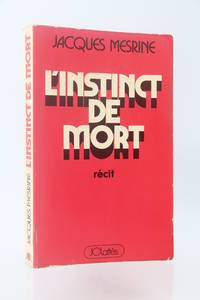
Jacques MESRINE
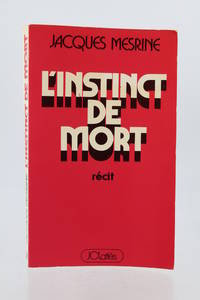
L'instinct de mort
Paris: Jean-Claude Lattès 1977. Fine. Jean-Claude Lattès Paris 1977 14 x 22.50 cm broché The first edition of which there were no deluxe copies. Spine wrinkled as usual minor marginal rubbing to boards. A rare and handsome copy. Jean-Claude Lattès hardcover
Referenz des Buchhändlers : 88300
|
|
|
Jacques MESRINE
L'instinct de mort
Paris: Jean-Claude Lattès 1977. Fine. Jean-Claude Lattès Paris 1977 14 x 22.50 cm broché The first edition of which there were no deluxe copies. Gift inscription in blue pen from a previous owner at head of an endpaper. Rare and handsome copy. Jean-Claude Lattès unknown
Referenz des Buchhändlers : 83014
|
|
|
Jacques MONORY - Gerard TITUS-CARMEL - Christian BOLTANSKI
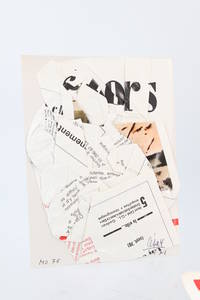
Chorus 8/9
Paris: Chorus 1972. Fine. Chorus Paris 1972 18 x 24 cm broché First edition one of 90 numbered copies the only ones to be enriched with a piece of crumpled paper signed by César an etching signed by Titus-Carmel and an original lithograph by Jean-Pierre Le Boul'ch the tirage de tête. Numerous text and graphic contributions including those by Jacques Monory Boltansky Pierre Tilman Le Gac Peter Klasen Daniel Biga Hamilton Gérard Titus-Carmel Rémi EsnaultFrançoise Thieck Pierre Della Faille Claude Held César etc. A rare and beautiful copy of the tirage de tête of this issue of the Chorus magazine published from 1968 to 1973. Chorus unknown
Referenz des Buchhändlers : 77871
|
|
|
Jacques MONORY
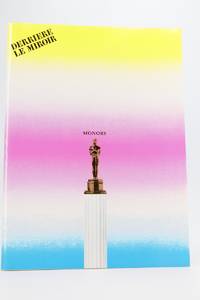
Derrière le miroir numéro spécial Jacques Monory
Paris: Maeght éditeur 1978. Fine. Maeght éditeur Paris 1978 28.50 x 37.50 cm en feuilles sous chemise et étui First edition one of 150 numbered copies on Arches Vellum only large papers. Spine of the chemise slightly faded a beautiful copy. Issue illustrated with 4 original lithographs by Jacques Monory. Text by Alain Jouffroy. A beautiful copy. Handwritten signature by Jacques Monory in pencil on the colophon. Maeght éditeur hardcover
Referenz des Buchhändlers : 78756
|
|
|
Jacques MONORY - Alain JOUFFROY - Pierre GAUDIBERT
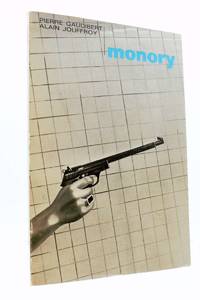
Monory
Paris: Editions Georges Fall 1972. Fine. Editions Georges Fall Paris 1972 18 x 27 cm broché First edition with the French text and its English translation on facing pages. Work illustrated with reproductions of works by Jacques Monory. Handsome copy. Editions Georges Fall unknown
Referenz des Buchhändlers : 75008
|
|
|
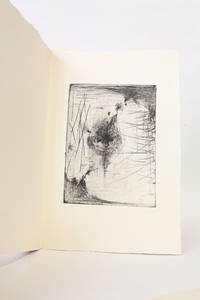
Jacques MONNIER - Jacques PAJAK
Pavot plein rouge
Lausanne: Maurice Bridel 1959. Fine. Maurice Bridel Lausanne 1959 17 x 25 cm en feuilles sous chemise et étui first edition printed in 60 numbered copies on Arches paper vellum. Illustrated book of 8 original drypoints by Jacques Pajak. Signatures of Jacques Monnier and Jacques Pajak at the justification of the draw. Shirt flat slightly and marginally insolated without gravity a small trace of ballpoint pen on the case. Pleasant copy. Maurice Bridel hardcover
Referenz des Buchhändlers : 69368
|
|
|
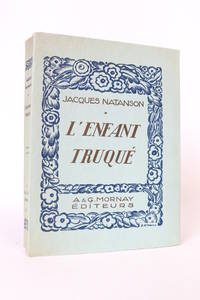
Jacques NATANSON
L'enfant truqué
Paris: A. & G. Mornay 1922. Fine. A. & G. Mornay Paris 1922 14.50 x 25 cm broché First edition one of 8 numbered copies on Lafuma paper subscribed by Champion bookshop for the Society of Bibliophile Physicians the most restricted deluxe paper issue. A handsome copy with full margins. A. & G. Mornay unknown
Referenz des Buchhändlers : 70197
|
|
|
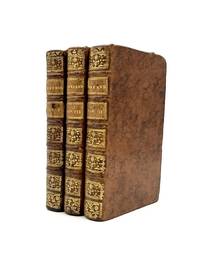
Jacques NECKER
De l'Administration des finances de la France
s. l.: S. n. 1784. Fine. S. n. s. l. 1784 10.50 x 17.70 cm 3 volumes reliés First edition. Carpenter who compiled a bibliography of Necker's principal works Economic Bestsellers before 1850 specifies that there were 7 issues of the first edition. The first contain errata and the following ones have the errors corrected. This edition contains errata in each volume a folding table at the end of volume I with populations and contributions a 3-page supplement at the end of volume II citing the 1784 edict on finances. This issue with different collation and smaller format is very rarely encountered. Contemporary full blonde marbled sheep binding. Raised band spine decorated. Title and volume labels in beige calf. Small fragment of leather missing from the upper joint at the head of volume I. On the upper board of volume I nibbling marks. A black stain on the volume label of volume I. A fragment of leather missing at the tail of volume III. Rubbing particularly to corners. Paper generally relatively fresh with beige matter on page 37 in volume I which nevertheless leaves the characters visible. In the margin of each title page manuscript name in ink Victoire Corneillan. Handsome copy. A major and unparalleled work of political economy undoubtedly the only one presenting a state of the kingdom's finances before the Revolution. Originally a banker but appointed minister of finances during three periods 1777-1781 1788-1789 1789-1790 Necker remained famous for his opposition to physiocratic theses and his adherence to neo-mercantilism. He changed economic methods to restore France's finances not by raising taxes but by increasing interest rates and taxes on imported goods. S. n. hardcover
Referenz des Buchhändlers : 84447
|
|
|
Jacques NECKER
De l'importance des opinions religieuses par M. Necker
A Londres London & à Lyon: Chez G. Regnault 1788. Fine. Chez G. Regnault A Londres London & à Lyon 1788 14 x 21 cm broché Two editions appeared simultaneously with the same collation one with the address of the hôtel de Thou and this one presumably the privilege was given to both publishers for this first edition; it is illustrated with a portrait of the author as frontispiece by Louis-Joseph Duplessi engraved by Nicolas de Launay; some head- and tailpieces on wood. Copy in original wrappers under pale pink temporary covers spine with manuscript title. Half-title page torn at top as well as some dampstains; lacks at head otherwise good copy. Important work which revives the divergences and deep antagonism between Necker Minister of Finance and his successor Calonne and seems to continue their correspondence published in 1787; this text of eighteen chapters marks a turning point in Necker's economic writings hitherto focused exclusively on ""the political advantage of the State""; indeed the author is more specifically interested in the links between religion and sovereignty philosophy and morality. Joined by a manuscript letter in which the author - Abbé de Boismont - seems to vigorously condemn the role of the pastor a veritable God in the eyes of his faithful. Chez G. Regnault unknown
Referenz des Buchhändlers : 37920

|
|
|
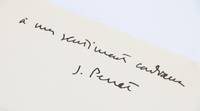
Jacques PERRET
"Non je n'ai pas de roman pour Femina ni pour personne. Le prochain problématique est promis à la Revue de Paris."" Autograph letter addressed to Roger Nimier
s. l. 1955. Fine. s. l. s. d. circa 1955 13 x 21 cm une page Autograph letter signed by Jacques Perret 17 lines in black ink addressed to Roger Nimier. Fold marks inherent to mailing envelope included. Jacques Perret has nothing to provide for now to publishers notably to Gallimard's Roger Nimier: ""Pas de bonne nouvelle sentimentale non plus mais il reste entendu qu'un texte de ce genre n'était pas ailleurs que chez vous."" ""No good sentimental news either but it remains understood that a text of this kind belongs nowhere else but with you."" to whom he claims his arrears for his latest work: ""Soyez gentil de rappeler à la caisse qu'il reste un petit fric à toucher sur ce trapèze."" ""Be kind enough to remind the cashier that there's still a little money to collect on this trapeze."" unknown
Referenz des Buchhändlers : 84467
|
|
|
Jacques PERRET
"Quand vous verrez Blondin dites lui que ma pensée le suit dans sa gloire et qu'il veuille réserver un 1/2 setier de son pactole à boire."" Autograph letter addressed to Roger Nimier evoking his friendship and admiration for Antoine Blondin
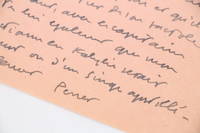
s. l. 1960. Fine. s. l. s. d. ca 1960 21 x 27 cm une page Autograph letter signed by Jacques Perret 22 lines in black ink addressed to a colleague probably Roger Nimier. Fold mark inherent to postal dispatch. Jacques Perret awaits a letter from Roger Nimier that is running late: ""Your note arrived late given that I no longer live on rue de la clé but at 5 rue de l'Ancienne Comédie. Gordon Pym has not yet arrived but that doesn't surprise me coming from him."" and inquires about his correspondent's health: "". I learned that you had heart troubles; before long I will go see if everything has returned to order."" He enthuses about the success his friend Antoine Blondin is enjoying: ""When you see Blondin tell him that my thoughts follow him in his glory and that he should reserve half a setier of his treasure to drink when the day comes. Also tell him that my boy who is operating in Kabylia would be quite pleased with a word or an apostilled sign."" Jacques Perret a royalist writer fierce partisan of French Algeria and virulently anti-Gaullist was stripped of his civil rights and then in 1963 struck from the military medal roll despite protests from some of his fellow writers suspects that his political positions do not favor honorary decorations: ""I find that we were made to sign a manifesto manifestly designed to torpedo my ribbon."" unknown
Referenz des Buchhändlers : 85174
|
|
|
Jacques PERRET
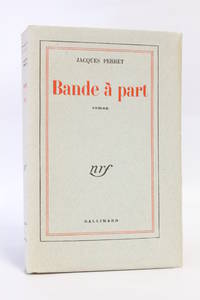
Bande à part
Paris: Gallimard 1951. Fine. Gallimard Paris 1951 12.50 x 19 cm broché First edition one of 35 numbered copies on Hollande paper the tirage de tête. Spine very slightly discolored not serious first free endpaper partially and slightly shaded. A nice copy. Gallimard unknown
Referenz des Buchhändlers : 62829
|
|
|
Jacques PERRET
Belle lurette
Paris: Julliard 1983. Fine. Julliard Paris 1983 14.50 x 21.50 cm broché First edition one of 40 numbered copies on Hollande the only large paper copies. A fine copy ex libris pasted onto one the first endpaper. Julliard unknown
Referenz des Buchhändlers : 19044

|
|
|
Jacques PERRET
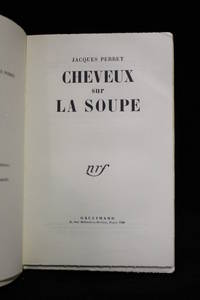
Cheveux sur la soupe
Paris: Gallimard 1954. Fine. Gallimard Paris 1954 12 x 19 cm broché First edition one of 65 numbered copies on pur fil the only large paper copies. A very good copy. Gallimard unknown
Referenz des Buchhändlers : 50202
|
|
|
Jacques PERRET
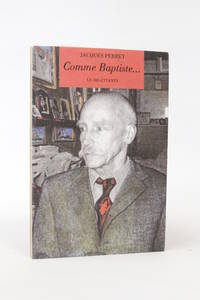
Comme Baptiste. ou les tranquilisants à travers les âges suivi de Bonjour Monsieur Perret ! par Pierre Assouline
Paris: Le dilettante 1992. Fine. Le dilettante Paris 1992 12 x 18 cm broché First edition one of the few copies on laid paper the only deluxe copies along with 33 numbered copies on laid paper. Handsome copy. Le dilettante unknown
Referenz des Buchhändlers : 64205
|
|
|
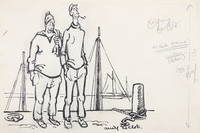
Jacques PERRET - Edgar Allan POE - Andre COLLOT
Dessin original au crayon de papîer rehaussé au feutre noir représentant deux marins debout sur un quai duquel dépassent des mâts de bateaux - Le dessin est accompagné d'une remarque manuscrite de Jacques Perret sur papier calque
s. l. 1930. Fine. s. l. s. d. ca 1930 22 x 16 cm une feuille Original signed drawing executed in pencil and heightened with black felt-tip pen by André Collot depicting two sailors standing on a quay with boats in the background. Measurements and scale indications in the right margin of the drawing. We include an autograph note signed by Jacques Perret regarding a reissue of ""The Adventures of Gordon Pym"" illustrated by André Collot: ""Agreed for Poe's Pym - Collot is delighted. Best regards. J. Perret."" unknown
Referenz des Buchhändlers : 85212
|
|
|
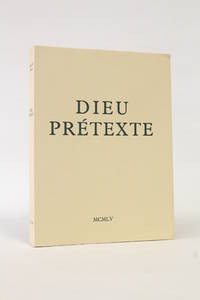
Jacques PERRY
Dieu prétexte
Paris: Julliard 1955. Fine. Julliard Paris 1955 14.50 x 19.50 cm broché First edition one of 50 numbered copies on Corvol l'orgueilleux paper deluxe copy. Handsome copy. Julliard unknown
Referenz des Buchhändlers : 66091
|
|
|
Jacques PERRET
L'oiseau rare
Paris: Editions Arc-en-ciel 1947. Fine. Editions Arc-en-ciel Paris 1947 12 x 19 cm broché First edition one of 300 numbered copies on alfa paper ours unnumbered but bearing at the foot of the back cover the mention ""exemplaire sur papier alfa"". Spine and covers slightly and marginally sunned without gravity gift inscription in ballpoint pen at head of title page. Editions Arc-en-ciel unknown
Referenz des Buchhändlers : 40555

|
|
|
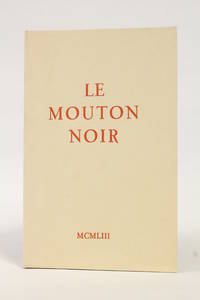
Jacques PERRY
Le mouton noir
Paris: Julliard 1953. Fine. Julliard Paris 1953 12 x 19 cm broché First edition one of 50 numbered copies on alfa paper the only deluxe copies with a few hors commerce. Handsome copy. Julliard unknown
Referenz des Buchhändlers : 66086
|
|
|
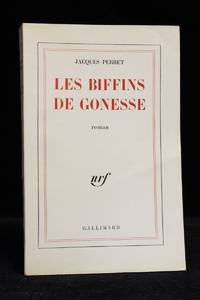
Jacques PERRET
Les biffins de Gonesse
Paris: Gallimard 1961. Fine. Gallimard Paris 1961 12 x 19 cm broché First edition one of 130 numbered copies on pur fil the only large paper copies after 25 Hollande. A very good copy. Gallimard unknown
Referenz des Buchhändlers : 52577
|
|

 Per e-mail erhalten
 Als pdf-Dokument herunterladen
 RSS feed
 Permanenter link


