|
Prosper Jolyot de CREBILLON
Oeuvres
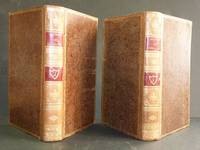
Paris: Didot jeune 1797. Fine. Didot jeune Paris 1797 13 x 21 cm 2 volumes reliés Edition illustrated with 10 figures drawn and engraved by Peyron. Full speckled blonde sheep bindings smooth spines ornately decorated with gilt compartments one tiny wormhole to the head of the spine of the second volume red Russian morocco title and volume labels with slight rubbing gilt roulettes on the headcaps frames of gilt dentelles and tools light scratches to the boards gilt friezes and tools on the leading edges two corners slightly bumped marbled endpapers and pastedowns marbled edges contemporary bindings. Handsome copy free from foxing attractively housed in decorative contemporary bindings. Didot jeune hardcover
Referencia librero : 31840
|
|
|
Prosper Jolyot de CREBILLON
Oeuvres complètes
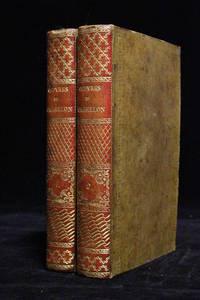
à Paris: Chez Lheureux 1824. Fine. Chez Lheureux à Paris 1824 13 x 20 cm 2 volumes reliés New edition. Contemporary full blonde calf binding smooth spine lined with slightly faded red morocco decorated with gilt arabesques and crosshatch patterns gilt dentelle border on covers gilt striping on edges and headcaps all edges yellow speckled with red. Corners slightly bumped. Foxing mainly on endpapers and first and last leaves of each volume. Chez Lheureux unknown
Referencia librero : 49901
|
|
|
Prosper Jolyot de CREBILLON
Pyrrhus
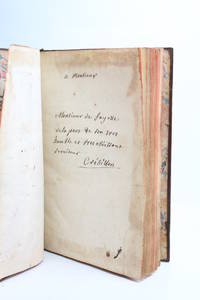
à Paris: Imprimerie de la veuve d'Antoine-Urbain Coustelier 1727. Fine. Imprimerie de la veuve d'Antoine-Urbain Coustelier à Paris 1727 12.50 x 19 cm relié First edition of this tragedy first performed at the Comédie française on April 29 1726. It had been nine years since the playwright had produced a play and Pyrrhus was a great success. Contemporary binding in full speckled calf spine with five raised bands decorated with gilt compartments and fleurons double blind fillet frame on boards gilt roulette on cuts and headcaps marbled endpapers and pastedowns all edges red. Last endpaper restored with a paper strip. Very rare autograph inscription signed by the author ""à Monsieur / Monsieur de Fayolle de la part de son humble et très obéissant serviteur Crébillon"" ""to Monsieur / Monsieur de Fayolle from his humble and very obedient servant Crébillon"". Autograph inscriptions signed prior to the 19th century are very rare and sought after. Imprimerie de la veuve d'Antoine-Urbain Coustelier hardcover
Referencia librero : 73642
|
|
|
Prosper MARCHAND
Dictionnaire historique ou memoires critique et litteraires concernant la vie et les ouvrages de divers personnages distingués particulierement dans la république des lettres
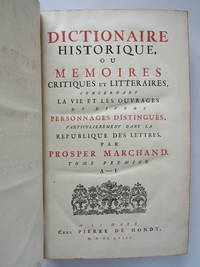
à La Haye The Hague: Chez Pierre De Hondt 1758. Fine. Chez Pierre De Hondt à La Haye The Hague 1758 - 1759 25.50 x 41 cm 2 tomes en un volume relié First edition which would never be reprinted. It is illustrated with one plate a genealogical table of the Estienne family and 7 in-text figures medals. Title page in red and black. Printed in two columns the half-title and titles on heavy paper. 6 pages of catalogue at the end of volume I. Contemporary full marbled and glazed brown calf binding. Decorated spine with raised bands. Red morocco title label. Split headcaps; upper joint cracked lower joint largely split and even open at head and foot. Lack of leather on one band; corners worn and bumped; rubbing and surface wear. Fresh paper overall. Bookseller-publisher man of letters and biographer Prosper Marchand conceived this dictionary as a sequel or supplement to Bayle's dictionary. The author left it in manuscript and it was his friend and testamentary executor Lallemand who took 4 years to organize the notes and complete the edition. For each person in the dictionary one finds a biography a critique of his works a bibliography and anecdotes. The work is filled with rare and interesting information on forgotten writers or scholars of all periods notably the Middle Ages. Chez Pierre De Hondt hardcover
Referencia librero : 68160
|
|
|
Prosper MARCHAND
Dictionnaire historique ou memoires critique et litteraires concernant la vie et les ouvrages de divers personnages distingués particulierement dans la république des lettres
à La Haye The Hague: Chez Pierre De Hondt 1758. Fine. Chez Pierre De Hondt à La Haye The Hague 1758 - 1759 25.50 x 41 cm 2 tomes en un volume relié First edition which would never be reprinted. It is illustrated with one plate a genealogical table of the Estienne family and 7 in-text figures medals. Title page in red and black. Printed in two columns the half-title and titles on heavy paper. 6 pages of catalogue at the end of volume I. Contemporary full marbled and glazed brown calf binding. Decorated spine with raised bands. Red morocco title label. Lower joint narrowly split at head and foot with small loss to foot of spine but handsome condition for this first volume despite rubbing and some light surface wear. A dark stain at foot. Fresh paper overall slightly browned at end of work. Bookseller-publisher man of letters and biographer Prosper Marchand conceived this dictionary as a sequel or supplement to Bayle's dictionary. The author left it in manuscript and it was his friend and testamentary executor Lallemand who took 4 years to organize the notes and complete the edition. For each person in the dictionary one finds a biography a critique of his works a bibliography and anecdotes. The work is filled with rare and interesting information on forgotten writers or scholars of all periods notably the Middle Ages. Chez Pierre De Hondt hardcover
Referencia librero : 68159
|
|
|
Prosper MERIMEE - Albert LENOIR - Auguste LEPREVOST
Architecture gallo-romaine et architecture du Moyen-Age
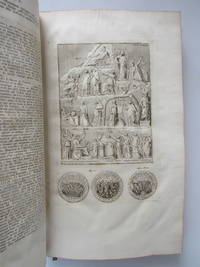
Paris: Imprimerie Impériale 1857. Fine. Imprimerie Impériale Paris 1857 22.50 x 28 cm broché First edition. Work illustrated with figures and 7 engraved plates some light foxing one joint reattached marginal lack to front board. It should be noted that at the end of the volume are the 'Instructions sur la musique' by Bottée de Toulmon. From the collection 'Instructions du comité historique des arts et des monuments'. Imprimerie Impériale unknown
Referencia librero : 9910

|
|
|
Prosper MERIMEE
Carmen
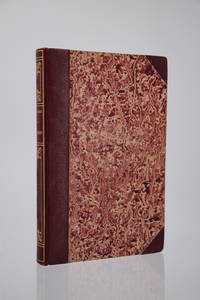
Paris: Michel Lévy frères 1846. Fine. Michel Lévy frères Paris 1846 13 x 20 cm relié First edition of this work which is one of the rarest and most sought-after Romantics cf Clouzot. Binding in half burgundy Russian morocco spine decorated with a gilt cartouche adorned with gilt and black typographic motifs marbled paper boards caillouté marbled endpapers top edge gilt romantic pastiche binding. Printed stamp of the bookbinder-seller on the title page. Half-title page mounted on guards and minor marginal tears restored on some pages. Rare. Michel Lévy frères hardcover
Referencia librero : 76421
|
|
|
Prosper MERIMEE
Carmen - Arsène Guillot - L'abbé Aubain - La dame de pique - Les Bohémiens - Le hussard - Nicolas Gogol
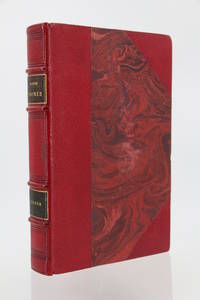
Paris: Calmann Lévy 1910. Fine. Calmann Lévy Paris s.d. ca 1910 12 x 19 cm relié New edition. Half morocco binding with corners in red spine with four raised bands set with black fillets and decorated with triple black compartments anthracite grey morocco title-label and author's name marbled paper boards combed paper endpapers and pastedowns top edge gilt original wrappers preserved contemporary binding. Handsome copy beautifully executed of one of the most famous and sought-after titles by Prosper Mérimée which was immortalized in opera by Georges Bizet. Calmann Lévy hardcover
Referencia librero : 87540
|
|
|
Prosper MERIMEE - Edouard TOUDOUZE
Chronique du règne de Charles IX
Paris: Emile Testard & Cie 1889. Fine. Emile Testard & Cie Paris 1889 20 x 29.50 cm relié Illustrated edition with 110 original compositions by Edouard Toudouze one of 75 numbered copies on Japan paper containing an additional state of the illustrations the only deluxe copies after 25 on China paper. Half turquoise cloth binding with corners smooth spine decorated with gilt floral motif gilt date and double fillet at foot chocolate brown morocco title label marbled paper boards covers and spine preserved contemporary binding. Some minor foxing of no consequence. Handsome copy. Emile Testard & Cie hardcover
Referencia librero : 64901

|
|
|
Prosper MERIMEE
Chronique du règne de Charles IX suivie de La double méprise et de La Guzla
Paris: Charpentier 1842. Fine. Charpentier Paris 1842 - relié New edition with some parts in first edition as revised and corrected. Half green shagreen binding smooth spine decorated with double gilt compartments embellished at angles with gilt typographical motifs green watered silk boards with some rubbing marbled endpapers and pastedowns speckled edges. Charpentier hardcover
Referencia librero : 50703

|
|
|
Prosper MERIMEE
Collection des documents inédits sur l'histoire de France publiés par ordre du roi et par les soins du ministre de l'instruction publique : instructions du comité historique des arts et des monuments
Paris: Imp. royal 1839. Fine. Imp. royal Paris 1839 20.50 x 27 cm relié First edition. Half caramel sheep binding smooth spine decorated with gilt and blind fillets showing some rubbing. Work written in collaboration with Albert Lenoir and Charles Lenormant. Rare work dealing with Gallic Roman Greek and Christian monuments and illustrated with in-text engraved figures. Imp. royal unknown
Referencia librero : 20759

|
|
|
Prosper MERIMEE - Gaston VUILLIER
Colomba
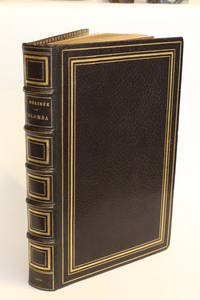
Paris: A. Ferroud 1913. Fine. A. Ferroud Paris 1913 16 x 25.50 cm relié Edition illustrated with 31 original compositions by Gaston Vuillier etched by Omer Bouchery one of 100 numbered copies on Japan paper containing the etchings in two states. Full brown morocco binding spine with five raised bands decorated with triple compartments as well as gilt fillets gilt date at foot gilt roulettes on headcaps frame of quadruple gilt fillets on covers marbled endpapers and pastedowns frame of gilt dentelle on pastedowns double gilt fillets on leading edges covers preserved top edge gilt superb full morocco binding signed by Blanchetière. Superb copy. Copy established in a very handsome full morocco binding by Blanchetière. A. Ferroud hardcover
Referencia librero : 71727
|
|
|
Prosper MERIMEE
Colomba
Paris: Magen et Comon 1841. Fine. Magen et Comon Paris 1841 13.50 x 22.50 cm broché First edition very sought-after according to Clouzot. A little light spotting two ink stains on title and half-title page. Rare copy in its original wrappers. Magen et Comon unknown
Referencia librero : 60113

|
|
|
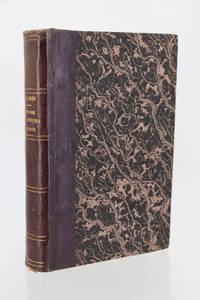
Prosper MERIMEE
Episode de l'histoire de Russie - Les faux Démétrius
Paris: Michel Lévy frères 1853. Fine. Michel Lévy frères Paris 1853 11.50 x 18.50 cm relié First edition. Half aubergine sheep binding smooth spine decorated with double gilt fillets spine faded marbled paper boards speckled edges copy slightly trimmed. Some foxing. Michel Lévy frères hardcover
Referencia librero : 85670
|
|
|
Prosper MERIMEE
Etudes sur les arts au Moyen-Age
Paris: Michel Lévy frères 1875. Fine. Michel Lévy frères Paris 1875 12 x 19.50 cm relié First edition. Bradel binding in full cherry red cloth with flaps smooth spine date and place gilt at foot brown shagreen title-label marbled endpapers and pastedowns contemporary binding. Handsome copy almost entirely free of foxing. Michel Lévy frères hardcover
Referencia librero : 48955

|
|
|
Prosper MERIMEE - Albert LENOIR
Instructions du comité historique des arts et des monuments : architecture militaire
Paris: Imprimerie Impériale 1857. Fine. Imprimerie Impériale Paris 1857 22.50 x 28.50 cm broché First edition. Three tiny marginal lacks to covers occasional light foxing. Work illustrated with 98 figures in the text. Rare. Imprimerie Impériale unknown
Referencia librero : 21612

|
|
|
Prosper MERIMEE
La chambre bleue nouvelle dédiée à madame de la Rhune
Bruxelles Brussels: Lib. de la Place de la Monnaie 1872. Fine. Lib. de la Place de la Monnaie Bruxelles Brussels 1872 14.50 x 23.50 cm relié Second edition the first having been printed in only 3 copies this one of 100 copies on vergé paper the only printing with 9 on China and 20 on Hollande. Contemporary Bradel binding in half indigo paper over marbled paper boards spine with double gilt fillets head of spine slightly rubbed. Small wormholes to endpapers otherwise internally good. Rare. Lib. de la Place de la Monnaie hardcover
Referencia librero : 22732

|
|
|
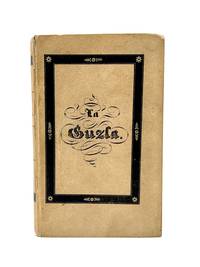
Prosper MERIMEE
La Guzla ou Choix de Poésies illyriques recueillies dans la Dalmatie la Bosnie la Croatie et l'Herzégovine
Paris: F.G. Levrault 1827. Fine. F.G. Levrault Paris 1827 11.50 x 17.50 cm reliure de l'éditeur First edition presented in its rare publisher's binding. Full cream cardboard binding smooth spine black frieze border on covers bookplate pasted on one pastedown. Smooth spine decorated with 2 black fleurons and fillets. Spine slightly yellowed. Upper joint narrowly cracked at head. Spine and covers lightly browned without consequence some minor foxing as usual slight black ink trace on one endpaper. Some light browning on otherwise white paper. Good copy. The work is illustrated with an engraved portrait on China paper of Hyacinthe Maglanovitch guzla player. Literary mystification of these Slavic ballads of which only one is authentic: the sad ballad of the noble wife. Nevertheless a very personal creation by Mérimée the collection experiments with a new form of violence in literature through an exotic language. F.G. Levrault unknown
Referencia librero : 86130
|
|
|
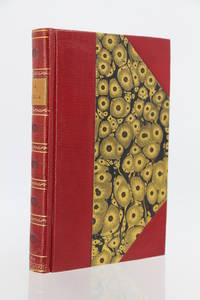
Prosper MERIMEE
La Guzla ou choix de Poésies illyriques recueillies dans la Dalmatie la Bosnie la Croatie et l'Herzégovine
Paris: F.G. Levrault 1827. Fine. F.G. Levrault Paris 1827 11.30 x 17.50 cm relié sous étui First edition. Bradel binding red half Russian morocco smooth spine elaborately decorated in gilt and black date stamped in gilt at foot title label in brown morocco tiger eye patterned boards yellow endpapers and pastedowns original wrappers preserved marbled paper slipcase. Frontispiece portrait on chine paper of Hyacinthe Maglanovich a guzla musician. A very intimate creation by Prosper Mérimée the Guzla is a literary interpretation of slavic ballads. Only one of them is authentic titled ""the sad ballad of the noble bride"". Handsome copy elegantly bound. F.G. Levrault hardcover
Referencia librero : 87958
|
|
|
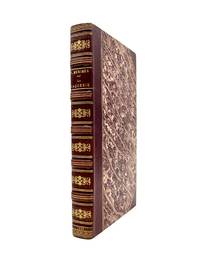
Prosper MERIMEE
La jacquerie scènes féodales suivies de La famille de carjaval drame par l'auteur du théâtre de Clara Gazul
Paris: Brissot-Thivars 1828. Fine. Brissot-Thivars Paris 1828 21.20 x 12.70 cm relié First edition from Balzac's printing house. Between 1826 and 1828 Balzac purchased a printing house and partnered with a typographer but the enterprise went bankrupt in 1828. Books printed for Balzac show a concern for typography and fine book production. Bound in half burgundy long-grain morocco with corners ca. 1840. Spine with raised bands decorated with 5 tools blind and gilt fillets head and tail rolls. Double fillet border on boards and corners. Some scattered browning. Louis Gillet bookplate. Very fine copy. La jacquerie and La famille de Carjaval are two dramatic and historical pieces that evoke Schiller's theatre. These dramatic scenes were intended to be read rather than performed. In La Jacquerie Mérimée reverses the vision of this peasant revolt through the prism of new romantic historiography and the peasants are no longer perceived as bloodthirsty barbarians but as victims of absolutism. With economy of means and a clear concise style Mérimée brings this feudal epic to life before our eyes. Brissot-Thivars hardcover
Referencia librero : 86036
|
|
|
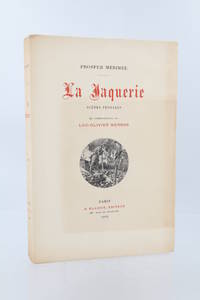
Prosper MERIMEE - Luc Olivier MERSON
La jaquerie scènes féodales
Paris: A. Blaizot 1909. Fine. A. Blaizot Paris 1909 18 x 24.50 cm broché Illustrated edition with 41 original compositions by Luc-Olivier Merson one of 200 numbered copies on vellum. First cover slightly and partially shadowed endpapers marginally shadowed handsome interior condition. A. Blaizot hardcover
Referencia librero : 85450
|
|
|
Prosper MERIMEE
La jaquerie scènes féodales suivies de La famille de Carvajal
Paris: Brissot-Thivars 1828. Fine. Brissot-Thivars Paris 1828 12.50 x 20 cm relié First edition of the author's third work printed by Honoré de Balzac. Black paper boards smooth spine tan sheep title-label with two small angular lacks one joint slightly cracked then reglued at head red edges modest contemporary binding. Handsome interior condition. Brissot-Thivars hardcover
Referencia librero : 42970

|
|
|
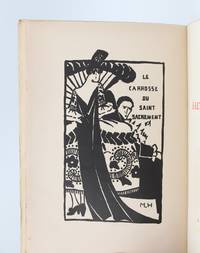
Prosper MERIMEE
Le carrosse du saint-sacrement
Neuilly Neuilly-sur-Seine: A l'enseigne du soleil 1921. Fine. A l'enseigne du soleil Neuilly Neuilly-sur-Seine 1921 14.50 x 22.50 cm broché Edition illustrated with wood engravings by M. Haumont one of 730 numbered copies on Arches laid paper. Handsome copy despite slightly and marginally sunned boards. A l'enseigne du soleil hardcover
Referencia librero : 85877
|
|
|
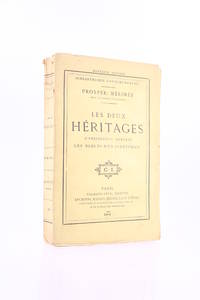
Prosper MERIMEE
Les deux héritages suivi de L'inspecteur général et de Les débuts d'un aventurier
Paris: Calmann-Lévy 1881. Fine. Calmann-Lévy Paris 1881 12 x 19 cm broché New edition. A repaired tear at head of spine some foxing. Calmann-Lévy unknown
Referencia librero : 9615
|
|
|
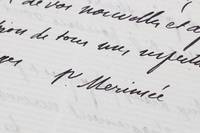
Prosper MERIMEE
Lettre autographe signée adressée à une amie à propos de sa santé défaillante et la santé encore plus défaillante de la France ""L'alliance des légitimistes avec les républicains est de que j'ai vu de plus triste et de plus honteux dans l'histoire de nos révolutions où il y a tant de pages tristes et honteuses.""
Cannes: S. n. 1870. Fine. S. n. Cannes s. d. circa 1870 13.50 x 20.50 cm une page Autograph letter signed by Prosper Mérimée addressed to a friend named Pierre 26 lines in black ink from Cannes during one of his numerous cures as he suffered from asthma. Prosper Mérimée ill is bedridden: "". mes amis m'apportent quelques fois de jolies fleurs. Je serais bien heureux si je pouvais vous en faire part"" "". my friends sometimes bring me lovely flowers. I would be very happy if I could share them with you"" and feels exasperated by the political situation in France: ""Aux maux physiques se joint chez moi l'agacement nerveux que me donnent nos affaires."" ""L'alliance des légitimistes avec les républicains est de que j'ai vu de plus triste et de plus honteux dans l'histoire de nos révolutions où il y a tant de pages tristes et honteuses."" ""To physical ailments is added in my case the nervous irritation that our affairs give me."" ""The alliance of legitimists with republicans is the saddest and most shameful thing I have seen in the history of our revolutions where there are so many sad and shameful pages."" S. n. unknown
Referencia librero : 84473
|
|
|
Prosper MERIMEE
Lettres à une inconnue
Paris: Michel Lévy frères 1874. Fine. Michel Lévy frères Paris 1874 14.50 x 21.80 cm relié First edition. The first edition was so rapidly exhausted that a new one had to be printed a few months later. Contemporary half red shagreen binding. Spine with raised bands decorated with 3 fleurons and blind fillets gilt title and volume number. Some traces of rubbing. Handsome copy almost free from foxing with fresh paper. These famous letters were addressed to Jenny Jeanne Françoise Dacquin from 1841 to 1870 the last of which was written two hours before the author's death. Hippolyte Taine's preface constitutes one of the first and best testimonials about the writer. While Mérimée complained of being unable to devote time to a true work he unknowingly conceived his ultimate masterpiece with this collection of letters. Library stamps on title page: Ecole Cardinal Pie Montmorillon. Bibliothèque diocésaine Poitiers. Michel Lévy frères hardcover
Referencia librero : 70984

|
|
|
Prosper MERIMEE
Lettres à M. Panizzi 1850-1870
Paris: Calmann Lévy 1881. Fine. Calmann Lévy Paris 1881 14 x 22.50 cm 2 volumes reliés First edition. Bound in half straw yellow shagreen spines with five raised bands set with black fillets decorated with double black compartments at whose centers the gilt cipher of the great bibliophile Roger de Cormenin is repeated four times navy blue morocco title and volume labels light scratches of no consequence at head of joints marbled paper boards marbled endpapers and pastedowns top edges gilt near-contemporary bindings. Work illustrated with two portraits of Prosper Mérimée by A. Leveille as frontispieces to the volumes. Provenance: from the library of Roger de Cormenin son of Louis de Cormenin who was the confidant and secretary of Théophile Gautier and also the intimate friend of Gustave Flaubert. A handsome copy. Calmann Lévy hardcover
Referencia librero : 49147

|
|
|
Prosper MERIMEE
Lettres à une inconnue
Paris: Michel Lévy frères 1874. Fine. Michel Lévy frères Paris 1874 13.50 x 22 cm 2 volumes reliés Sixth edition with some parts in first edition as entirely revised. Half brown calf bindings smooth spines ornamented with gilt dots brown morocco title-labels and author's name gilt friezes at head and foot marbled paper boards marbled endpapers and pastedowns speckled edges elegant contemporary bindings. The text is preceded by a study on Mérimée by Hippolyte Taine. Handsome copy free from any foxing and perfectly established. Michel Lévy frères hardcover
Referencia librero : 50720

|
|
|
Prosper MERIMEE
Lettres à Requien. - Lettres inédites à Sutton Sharpe - In La revue de Paris N°10 de la 5ème année & In Le Mercure de France N°318 de la 21ème année
Paris: La Revue de Paris 1898. Fine. La Revue de Paris Paris 1898 &1910 16.50 x 25 cm 2 volumes reliés First edition for each volume. Full brown morocco bindings smooth spines double framed in gilt headpieces lined in gilt boards elaborately framed in gilt beige morocco pastedowns framed in gilt brown moiré silk free endpapers following free endpapers in mould made paper all edges gilt original soft covers preserved superb contemporary bindings signed by M. Lortic. The first volume contains two original ink drawings by Prosper Mérimée: the first captioned and signed in the lower right corner depicting the Duke of Brunswick the second a tree and a wooded landscape with a handwritten inscription in Russian ""Grâce à Dieu"" and ""Gloire à Dieu gloire à vous"". A very fine set magnificently bound by M. Lortic. La Revue de Paris paperback
Referencia librero : 41633

|
|
|
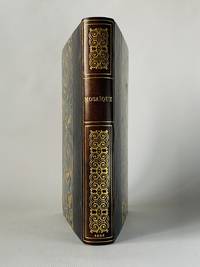
Prosper MERIMEE
mosaïque par l'auteur du théatre de Clara Gazul
Paris: H. Fournier jeune 1833. Fine. H. Fournier jeune Paris 1833 13 x 20 cm relié First edition. Half-shagreen binding of the late 19th century. Smooth spine decorated with repeated romantic tooling title and date in gilt. Top edge gilt. Spine uniformly sunned. Light scattered foxing. Bookplate with crowned cipher Alfred and Blanche de Curzon. Alfred de Curzon was a French painter deceased in 1895. This collection contains important short stories by the author including Mateo Falcone L'enlèvement de la Redoute Vision de Charles XI Le vase étrusque. H. Fournier jeune unknown
Referencia librero : 70286
|
|
|
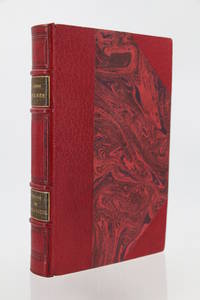
Prosper MERIMEE
Théâtre de Clara Gazul suivi de La jaquerie et de La famille Carnaval
Paris: Calmann Lévy 1910. Fine. Calmann Lévy Paris s.d. ca 1910 12 x 19 cm relié New edition. Half red morocco with corners spine with four raised bands set with black fillets and decorated with triple black compartments title-label and author's name in olive green morocco marbled paper boards combed paper endpapers and pastedowns top edge gilt original wrappers preserved contemporary binding. Handsome copy beautifully bound. Calmann Lévy hardcover
Referencia librero : 87543
|
|
|
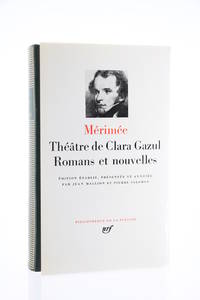
Prosper MERIMEE
Théâtre de Clara Gazul. - Romans. - Nouvelles
Paris: Gallimard Bibliothèque de La Pléiade 1978. Fine. Gallimard Bibliothèque de La Pléiade Paris 1978 10.50 x 18 cm reliure de l'éditeur sous étui souple et cartonné La Pléiade library edition printed on Bible paper. Publisher's binding in full green grained sheep blue top edge smooth spine decorated with gilt fillets. Handsome copy complete with its acetate cover dust jacket and slipcase. Gallimard, Bibliothèque de La Pléiade unknown
Referencia librero : 76854
|
|
|
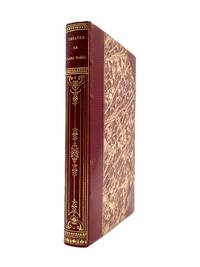
Prosper MERIMEE
Théâtre de Clara Gazul
Paris: H. Fournier jeune 1830. Fine. H. Fournier jeune Paris 1830 13.50 x 21.50 cm relié Second edition with some parts in first edition as expanded with two new pieces: ""L'occasion"" and ""Le carrosse du Saint Sacrement"". Half red straight-grained morocco binding with corners signed Blanchetière at the top of the first endpaper. Smooth spine decorated with a large mirror tool and roulettes. Separating fillets on the boards. Very fresh copy uncut however some brown spots on Le carrosse du saint sacrement. Very handsome copy. Provenance: from the library of Jacques Crépineau famous collector of Romantic books with his bookplate. Theater historian and director of the Michodière theater. This is Prosper Mérimée's first work composed of 6 theatrical pieces. ""First dramatic manifestation in France of Romantic creation the Théâtre de Clara Gazul is an original pastiche that shows a moralist's irony but also a parodic exaggeration of Spanish culture cries tears revenge killings."" ""More intended for reading than for performance the work achieved considerable success from its publication."" Larousse Encyclopédie H. Fournier jeune hardcover
Referencia librero : 82618
|
|
|
Prosper POITEVIN
Une nuit chez Putiphar étude biblique
Paris: Tresse 1841. Fine. Tresse Paris 1841 8.50 x 14.50 cm broché First edition. One engraving as frontispiece. Dampstains to covers spine reglued. Rare. Tresse unknown
Referencia librero : 9862

|
|
|
Prospero LAMBERTINI
Raccolta di alcune notificazioni e editti ed istruzioni pubblicate dall'Eminentissimo e Reverendissimo Signor Cardinale Prospero Lambertini Arcivescovo di Bologna
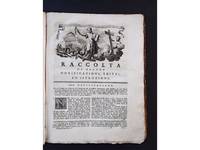
in Venezia Venice: Presso Antonio Zatta 1771. Fine. Presso Antonio Zatta in Venezia Venice 1771 19.50 x 26 cm 2 volumes brochés New edition the first edition appears to have been published in 1733. Illustrated with two large engraved title head-pieces by Zatta. Miniature printing in double columns. Contemporary grey temporary boards. Tear at foot of volume II. Prospero Lambertini was elected Pope in 1740 under the name Benedict XIV. He died in 1758. He was a learned Pope nourished by science and open to the Enlightenment and attempted to soften the rigour of the church and dogma. Presso Antonio Zatta hardcover
Referencia librero : 35615
|
|
|
PROTAIN - Louis-Alexandre DE BUIGNE
DESCRIPTION DE L'EGYPTE. Le Kaire Le Caire. Plan coupe et vues perspectives d'un bain public. ETAT MODERNE volume I planche 49
Paris: Imprimerie Impériale 1809. Fine. Imprimerie Impériale Paris 1809-1829 53.50 x 70 cm une feuille Original unshaved full-page etching from the Imperial edition of the Description de l'Égypte or Recueil des observations et recherches faites en Égypte pendant l'expédition française publié par les ordres de Sa Majesté l'Empereur Napoléon le Grand A Collection of the observations and research carried out in Egypt during the French expedition published on the orders of his Majesty the Emperor Napoleon the Great'.Produced between February 1802 and 1830 on the orders of Naopleon Bonaparte and published between 1809 and 1828 1000 copies were printed and distributed to institutions on vergé paper with an 'Égypte ancienne et moderne' watermark visible when held up to the light. Light marginal spotting not touching image otherwise in very fresh fine condition. An engraving from the Description de l'Egypte one of the masterpieces of French printing and the birth of a new field: Egyptology. A gigantic survey of Egypt at the time of Bonaparte's conquests in 1798 and 1799 the work is divided into 13 volumes of engravings making up 892 plates of which 72 colored as well as presenting the splendors of the Egypt of the Pharaohs in 9 volumes. The other volumes discuss natural history and present a fascinating portrait of Coptic and Islamic Egypt as it was seen by Bonaparte's Eastern Armies. The Egyptian campaign' militarily a disaster demonstrates through the engravings of the Description d'Egypte the scientific success it nonetheless became thanks to the 167 expert members of the Commission of the Sciences and Arts of the Institut d'Egypte Egyptian Institute who followed Napoleon's army. The Institut gathered together in Egypt the mathematician Monge the chemist Berthollet the naturalist Geoffroy Saint-Hilaire as well as numerous artists engineers architects and doctors. They were tasked with re-discovering modern and ancient Egypt and displaying its natural treasures as well as the know-how of its inhabitants.This edition the so-called Imperial edition of the plates for the Description de l'Egypte was printed in four large formats two of which were specially created for it and christened Moyen-Egypte and Grand-Egypte. A special press was built to print it the process extending over 20 years from 1809 to 1829. The Imperial edition proved so popular that a second edition this time in black and white and without the Egypte ancienne et moderne watermark known as the Royal Edition was published during the Restoration by the printing house of C.-L.-F. Panckoucke Paris.The engravings of the Description d'Egypte owe a great deal to Baron Dominique-Vivant Denon illustrator diplomat collector and later Director of the Musée Napoléon the Louvre. His exploration of the South of Egypt gave Bonaparte the idea of sending the experts of the Institut there thus creating a faithful and complete portrait of the area. This was the research gathered together from 1802 in the mammoth Description de L'Egypte.Denon embarked on this story of archeological exploration at the age of 51 reaching first Alexandria and then Cairo before exploring Upper Egypt. Along with the members of the Institut d'Egypte the Natural History Museum's painter H.J. Redouté brother of Pierre-Joseph Redouté author of Roses the mineralogist Dolomiue and the draughtsman Joly Denon then explored the Nile Delta and Lower Egypt. When however he joined the 21st Light Infantry Regiment as it marched across Upper Egypt in pursuit of the retreating Mameluks in November 1798 he found himself the only civilian. In the very midst of the battle itself he reeled off sketches of the works of art that peppered his path right up to the threshold of the Sudan. He said that he had crossed a country that is apart from its name entirely unknown to Europeans and therefore everything was worth describing Voyages dans la Basse et la Haute Egypte pendant les campagnes Imprimerie Impériale unknown
Referencia librero : 25359

|
|
|
PROTAIN - BOUILLARD (sculpsit)
DESCRIPTION DE L'EGYPTE. Le Kaire Le Caire. Vue perspective intérieure de la Mosquée de Touloun. ETAT MODERNE volume I planche 31
Paris: Imprimerie Impériale 1809. Fine. Imprimerie Impériale Paris 1809-1829 53.50 x 70.50 cm une feuille Original unshaved full-page etching from the Imperial edition of the Description de l'Égypte or Recueil des observations et recherches faites en Égypte pendant l'expédition française publié par les ordres de Sa Majesté l'Empereur Napoléon le Grand A Collection of the observations and research carried out in Egypt during the French expedition published on the orders of his Majesty the Emperor Napoleon the Great'.Produced between February 1802 and 1830 on the orders of Naopleon Bonaparte and published between 1809 and 1828 1000 copies were printed and distributed to institutions on vergé paper with an 'Égypte ancienne et moderne' watermark visible when held up to the light. Light marginal spotting not touching image otherwise in very fresh fine condition. An engraving from the Description de l'Egypte one of the masterpieces of French printing and the birth of a new field: Egyptology. A gigantic survey of Egypt at the time of Bonaparte's conquests in 1798 and 1799 the work is divided into 13 volumes of engravings making up 892 plates of which 72 colored as well as presenting the splendors of the Egypt of the Pharaohs in 9 volumes. The other volumes discuss natural history and present a fascinating portrait of Coptic and Islamic Egypt as it was seen by Bonaparte's Eastern Armies. The Egyptian campaign' militarily a disaster demonstrates through the engravings of the Description d'Egypte the scientific success it nonetheless became thanks to the 167 expert members of the Commission of the Sciences and Arts of the Institut d'Egypte Egyptian Institute who followed Napoleon's army. The Institut gathered together in Egypt the mathematician Monge the chemist Berthollet the naturalist Geoffroy Saint-Hilaire as well as numerous artists engineers architects and doctors. They were tasked with re-discovering modern and ancient Egypt and displaying its natural treasures as well as the know-how of its inhabitants.This edition the so-called Imperial edition of the plates for the Description de l'Egypte was printed in four large formats two of which were specially created for it and christened Moyen-Egypte and Grand-Egypte. A special press was built to print it the process extending over 20 years from 1809 to 1829. The Imperial edition proved so popular that a second edition this time in black and white and without the Egypte ancienne et moderne watermark known as the Royal Edition was published during the Restoration by the printing house of C.-L.-F. Panckoucke Paris.The engravings of the Description d'Egypte owe a great deal to Baron Dominique-Vivant Denon illustrator diplomat collector and later Director of the Musée Napoléon the Louvre. His exploration of the South of Egypt gave Bonaparte the idea of sending the experts of the Institut there thus creating a faithful and complete portrait of the area. This was the research gathered together from 1802 in the mammoth Description de L'Egypte.Denon embarked on this story of archeological exploration at the age of 51 reaching first Alexandria and then Cairo before exploring Upper Egypt. Along with the members of the Institut d'Egypte the Natural History Museum's painter H.J. Redouté brother of Pierre-Joseph Redouté author of Roses the mineralogist Dolomiue and the draughtsman Joly Denon then explored the Nile Delta and Lower Egypt. When however he joined the 21st Light Infantry Regiment as it marched across Upper Egypt in pursuit of the retreating Mameluks in November 1798 he found himself the only civilian. In the very midst of the battle itself he reeled off sketches of the works of art that peppered his path right up to the threshold of the Sudan. He said that he had crossed a country that is apart from its name entirely unknown to Europeans and therefore everything was worth describing Voyages dans la Basse et la Haute Egypte pendant les campag Imprimerie Impériale unknown
Referencia librero : 25319

|
|
|
PROTAIN - LEISNIER (sculpsit)
DESCRIPTION DE L'EGYPTE. Le Kaire Le Caire. Élévation et coupe transversale de la mosquée de Soultân Hasan & Détail de la porte d'entrée. ETAT MODERNE volume I planche 34
Paris: Imprimerie Impériale 1809. Fine. Imprimerie Impériale Paris 1809-1829 70 x 53.50 cm une feuille Original unshaved full-page etching from the Imperial edition of the Description de l'Égypte or Recueil des observations et recherches faites en Égypte pendant l'expédition française publié par les ordres de Sa Majesté l'Empereur Napoléon le Grand A Collection of the observations and research carried out in Egypt during the French expedition published on the orders of his Majesty the Emperor Napoleon the Great. Produced between February 1802 and 1830 on the orders of Naopleon Bonaparte and published between 1809 and 1828 1000 copies were printed and distributed to institutions on vergé paper with an 'Égypte ancienne et moderne' watermark visible when held up to the light. Light marginal spotting not touching image otherwise in very fresh fine condition. An engraving from the Description de lEgypte one of the masterpieces of French printing and the birth of a new field: Egyptology. A gigantic survey of Egypt at the time of Bonapartes conquests in 1798 and 1799 the work is divided into 13 volumes of engravings making up 892 plates of which 72 colored as well as presenting the splendors of the Egypt of the Pharaohs in 9 volumes. The other volumes discuss natural history and present a fascinating portrait of Coptic and Islamic Egypt as it was seen by Bonapartes Eastern Armies. The Egyptian campaign militarily a disaster demonstrates through the engravings of the Description dEgypte the scientific success it nonetheless became thanks to the 167 expert members of the Commission of the Sciences and Arts of the Institut dEgypte Egyptian Institute who followed Napoleons army. The Institut gathered together in Egypt the mathematician Monge the chemist Berthollet the naturalist Geoffroy Saint-Hilaire as well as numerous artists engineers architects and doctors. They were tasked with re-discovering modern and ancient Egypt and displaying its natural treasures as well as the know-how of its inhabitants. This edition the so-called Imperial edition of the plates for the Description de lEgypte was printed in four large formats two of which were specially created for it and christened Moyen-Egypte and Grand-Egypte. A special press was built to print it the process extending over 20 years from 1809 to 1829. The Imperial edition proved so popular that a second edition this time in black and white and without the Egypte ancienne et moderne watermark known as the Royal Edition was published during the Restoration by the printing house of C.-L.-F. Panckoucke Paris. The engravings of the Description dEgypte owe a great deal to Baron Dominique-Vivant Denon illustrator diplomat collector and later Director of the Musée Napoléon the Louvre. His exploration of the South of Egypt gave Bonaparte the idea of sending the experts of the Institut there thus creating a faithful and complete portrait of the area. This was the research gathered together from 1802 in the mammoth Description de LEgypte. Denon embarked on this story of archeological exploration at the age of 51 reaching first Alexandria and then Cairo before exploring Upper Egypt. Along with the members of the Institut dEgypte the Natural History Museums painter H.J. Redouté brother of Pierre-Joseph Redouté author of Roses the mineralogist Dolomiue and the draughtsman Joly Denon then explored the Nile Delta and Lower Egypt. When however he joined the 21st Light Infantry Regiment as it marched across Upper Egypt in pursuit of the retreating Mameluks in November 1798 he found himself the only civilian. In the very midst of the battle itself he reeled off sketches of the works of art that peppered his path right up to the threshold of the Sudan. He said that he had crossed a country that is apart from its name entirely unknown to Europeans and therefore everything was worth describing Voyages dans la Basse et la Haute Egypte pendant les c Imprimerie Impériale unknown
Referencia librero : 25434

|
|
|
PROTAIN - REVILLE (sculpsit)
DESCRIPTION DE L'EGYPTE. Le Kaire Le Caire. Vue perspective d'une partie de la ville des tombeaux. ETAT MODERNE volume I planche 66
Paris: Imprimerie Impériale 1809. Fine. Imprimerie Impériale Paris 1809-1829 53.50 x 70.50 cm une feuille Original unshaved full-page etching from the Imperial edition of the Description de l'Égypte or Recueil des observations et recherches faites en Égypte pendant l'expédition française publié par les ordres de Sa Majesté l'Empereur Napoléon le Grand A Collection of the observations and research carried out in Egypt during the French expedition published on the orders of his Majesty the Emperor Napoleon the Great'.Produced between February 1802 and 1830 on the orders of Naopleon Bonaparte and published between 1809 and 1828 1000 copies were printed and distributed to institutions on vergé paper with an 'Égypte ancienne et moderne' watermark visible when held up to the light. Light marginal spotting not touching image otherwise in very fresh fine condition. An engraving from the Description de l'Egypte one of the masterpieces of French printing and the birth of a new field: Egyptology. A gigantic survey of Egypt at the time of Bonaparte's conquests in 1798 and 1799 the work is divided into 13 volumes of engravings making up 892 plates of which 72 colored as well as presenting the splendors of the Egypt of the Pharaohs in 9 volumes. The other volumes discuss natural history and present a fascinating portrait of Coptic and Islamic Egypt as it was seen by Bonaparte's Eastern Armies. The Egyptian campaign' militarily a disaster demonstrates through the engravings of the Description d'Egypte the scientific success it nonetheless became thanks to the 167 expert members of the Commission of the Sciences and Arts of the Institut d'Egypte Egyptian Institute who followed Napoleon's army. The Institut gathered together in Egypt the mathematician Monge the chemist Berthollet the naturalist Geoffroy Saint-Hilaire as well as numerous artists engineers architects and doctors. They were tasked with re-discovering modern and ancient Egypt and displaying its natural treasures as well as the know-how of its inhabitants.This edition the so-called Imperial edition of the plates for the Description de l'Egypte was printed in four large formats two of which were specially created for it and christened Moyen-Egypte and Grand-Egypte. A special press was built to print it the process extending over 20 years from 1809 to 1829. The Imperial edition proved so popular that a second edition this time in black and white and without the Egypte ancienne et moderne watermark known as the Royal Edition was published during the Restoration by the printing house of C.-L.-F. Panckoucke Paris.The engravings of the Description d'Egypte owe a great deal to Baron Dominique-Vivant Denon illustrator diplomat collector and later Director of the Musée Napoléon the Louvre. His exploration of the South of Egypt gave Bonaparte the idea of sending the experts of the Institut there thus creating a faithful and complete portrait of the area. This was the research gathered together from 1802 in the mammoth Description de L'Egypte.Denon embarked on this story of archeological exploration at the age of 51 reaching first Alexandria and then Cairo before exploring Upper Egypt. Along with the members of the Institut d'Egypte the Natural History Museum's painter H.J. Redouté brother of Pierre-Joseph Redouté author of Roses the mineralogist Dolomiue and the draughtsman Joly Denon then explored the Nile Delta and Lower Egypt. When however he joined the 21st Light Infantry Regiment as it marched across Upper Egypt in pursuit of the retreating Mameluks in November 1798 he found himself the only civilian. In the very midst of the battle itself he reeled off sketches of the works of art that peppered his path right up to the threshold of the Sudan. He said that he had crossed a country that is apart from its name entirely unknown to Europeans and therefore everything was worth describing Voyages dans la Basse et la Haute Egypte pendant les campag Imprimerie Impériale unknown
Referencia librero : 25339

|
|
|
PROTAIN - REVILLE (sculpsit)
DESCRIPTION DE L'EGYPTE. Le Kaire Le Caire. Vue perspective extérieure de la mosquée de Soultân Hasan. ETAT MODERNE volume I planche 38
Paris: Imprimerie Impériale 1809. Fine. Imprimerie Impériale Paris 1809-1829 53.50 x 70 cm une feuille Original unshaved full-page etching from the Imperial edition of the Description de l'Égypte or Recueil des observations et recherches faites en Égypte pendant l'expédition française publié par les ordres de Sa Majesté l'Empereur Napoléon le Grand A Collection of the observations and research carried out in Egypt during the French expedition published on the orders of his Majesty the Emperor Napoleon the Great'.Produced between February 1802 and 1830 on the orders of Naopleon Bonaparte and published between 1809 and 1828 1000 copies were printed and distributed to institutions on vergé paper with an 'Égypte ancienne et moderne' watermark visible when held up to the light. Light marginal spotting not touching image otherwise in very fresh fine condition. An engraving from the Description de l'Egypte one of the masterpieces of French printing and the birth of a new field: Egyptology. A gigantic survey of Egypt at the time of Bonaparte's conquests in 1798 and 1799 the work is divided into 13 volumes of engravings making up 892 plates of which 72 colored as well as presenting the splendors of the Egypt of the Pharaohs in 9 volumes. The other volumes discuss natural history and present a fascinating portrait of Coptic and Islamic Egypt as it was seen by Bonaparte's Eastern Armies. The Egyptian campaign' militarily a disaster demonstrates through the engravings of the Description d'Egypte the scientific success it nonetheless became thanks to the 167 expert members of the Commission of the Sciences and Arts of the Institut d'Egypte Egyptian Institute who followed Napoleon's army. The Institut gathered together in Egypt the mathematician Monge the chemist Berthollet the naturalist Geoffroy Saint-Hilaire as well as numerous artists engineers architects and doctors. They were tasked with re-discovering modern and ancient Egypt and displaying its natural treasures as well as the know-how of its inhabitants.This edition the so-called Imperial edition of the plates for the Description de l'Egypte was printed in four large formats two of which were specially created for it and christened Moyen-Egypte and Grand-Egypte. A special press was built to print it the process extending over 20 years from 1809 to 1829. The Imperial edition proved so popular that a second edition this time in black and white and without the Egypte ancienne et moderne watermark known as the Royal Edition was published during the Restoration by the printing house of C.-L.-F. Panckoucke Paris.The engravings of the Description d'Egypte owe a great deal to Baron Dominique-Vivant Denon illustrator diplomat collector and later Director of the Musée Napoléon the Louvre. His exploration of the South of Egypt gave Bonaparte the idea of sending the experts of the Institut there thus creating a faithful and complete portrait of the area. This was the research gathered together from 1802 in the mammoth Description de L'Egypte.Denon embarked on this story of archeological exploration at the age of 51 reaching first Alexandria and then Cairo before exploring Upper Egypt. Along with the members of the Institut d'Egypte the Natural History Museum's painter H.J. Redouté brother of Pierre-Joseph Redouté author of Roses the mineralogist Dolomiue and the draughtsman Joly Denon then explored the Nile Delta and Lower Egypt. When however he joined the 21st Light Infantry Regiment as it marched across Upper Egypt in pursuit of the retreating Mameluks in November 1798 he found himself the only civilian. In the very midst of the battle itself he reeled off sketches of the works of art that peppered his path right up to the threshold of the Sudan. He said that he had crossed a country that is apart from its name entirely unknown to Europeans and therefore everything was worth describing Voyages dans la Basse et la Haute Egypte pendant les campagnes Imprimerie Impériale unknown
Referencia librero : 25408

|
|
|
PROTAIN - LEISNIER (sculpsit) - REVILLE (sculpsit)
DESCRIPTION DE L'EGYPTE. Le Kaire Le Caire. Porte d'entrée de la maison de Hasân Kâchef & Vue et détails de la treille du jardin. ETAT MODERNE volume I planche 56
Paris: Imprimerie Impériale 1809. Fine. Imprimerie Impériale Paris 1809-1829 53.50 x 70 cm une feuille Original unshaved full-page etching from the Imperial edition of the Description de l'Égypte or Recueil des observations et recherches faites en Égypte pendant l'expédition française publié par les ordres de Sa Majesté l'Empereur Napoléon le Grand A Collection of the observations and research carried out in Egypt during the French expedition published on the orders of his Majesty the Emperor Napoleon the Great'.Produced between February 1802 and 1830 on the orders of Naopleon Bonaparte and published between 1809 and 1828 1000 copies were printed and distributed to institutions on vergé paper with an 'Égypte ancienne et moderne' watermark visible when held up to the light. Light marginal spotting not touching image otherwise in very fresh fine condition. An engraving from the Description de l'Egypte one of the masterpieces of French printing and the birth of a new field: Egyptology. A gigantic survey of Egypt at the time of Bonaparte's conquests in 1798 and 1799 the work is divided into 13 volumes of engravings making up 892 plates of which 72 colored as well as presenting the splendors of the Egypt of the Pharaohs in 9 volumes. The other volumes discuss natural history and present a fascinating portrait of Coptic and Islamic Egypt as it was seen by Bonaparte's Eastern Armies. The Egyptian campaign' militarily a disaster demonstrates through the engravings of the Description d'Egypte the scientific success it nonetheless became thanks to the 167 expert members of the Commission of the Sciences and Arts of the Institut d'Egypte Egyptian Institute who followed Napoleon's army. The Institut gathered together in Egypt the mathematician Monge the chemist Berthollet the naturalist Geoffroy Saint-Hilaire as well as numerous artists engineers architects and doctors. They were tasked with re-discovering modern and ancient Egypt and displaying its natural treasures as well as the know-how of its inhabitants.This edition the so-called Imperial edition of the plates for the Description de l'Egypte was printed in four large formats two of which were specially created for it and christened Moyen-Egypte and Grand-Egypte. A special press was built to print it the process extending over 20 years from 1809 to 1829. The Imperial edition proved so popular that a second edition this time in black and white and without the Egypte ancienne et moderne watermark known as the Royal Edition was published during the Restoration by the printing house of C.-L.-F. Panckoucke Paris.The engravings of the Description d'Egypte owe a great deal to Baron Dominique-Vivant Denon illustrator diplomat collector and later Director of the Musée Napoléon the Louvre. His exploration of the South of Egypt gave Bonaparte the idea of sending the experts of the Institut there thus creating a faithful and complete portrait of the area. This was the research gathered together from 1802 in the mammoth Description de L'Egypte.Denon embarked on this story of archeological exploration at the age of 51 reaching first Alexandria and then Cairo before exploring Upper Egypt. Along with the members of the Institut d'Egypte the Natural History Museum's painter H.J. Redouté brother of Pierre-Joseph Redouté author of Roses the mineralogist Dolomiue and the draughtsman Joly Denon then explored the Nile Delta and Lower Egypt. When however he joined the 21st Light Infantry Regiment as it marched across Upper Egypt in pursuit of the retreating Mameluks in November 1798 he found himself the only civilian. In the very midst of the battle itself he reeled off sketches of the works of art that peppered his path right up to the threshold of the Sudan. He said that he had crossed a country that is apart from its name entirely unknown to Europeans and therefore everything was worth describing Voyages dans la Basse et la Haute Egypte pendant les campagnes Imprimerie Impériale unknown
Referencia librero : 25390

|
|
|
PROTAIN - LEBE-GIGUN (sculpsit) - REVILLE (sculpsit)
DESCRIPTION DE L'EGYPTE. Le Kaire Le Caire. Plan élévation et coupe longitudinale de la mosquée de Soultân Hasan. ETAT MODERNE volume I planche 33
Paris: Imprimerie Impériale 1809. Fine. Imprimerie Impériale Paris 1809-1829 53.50 x 70 cm une feuille Original unshaved full-page etching from the Imperial edition of the Description de l'Égypte or Recueil des observations et recherches faites en Égypte pendant l'expédition française publié par les ordres de Sa Majesté l'Empereur Napoléon le Grand A Collection of the observations and research carried out in Egypt during the French expedition published on the orders of his Majesty the Emperor Napoleon the Great. Produced between February 1802 and 1830 on the orders of Naopleon Bonaparte and published between 1809 and 1828 1000 copies were printed and distributed to institutions on vergé paper with an 'Égypte ancienne et moderne' watermark visible when held up to the light. Light marginal spotting not touching image otherwise in very fresh fine condition. An engraving from the Description de lEgypte one of the masterpieces of French printing and the birth of a new field: Egyptology. A gigantic survey of Egypt at the time of Bonapartes conquests in 1798 and 1799 the work is divided into 13 volumes of engravings making up 892 plates of which 72 colored as well as presenting the splendors of the Egypt of the Pharaohs in 9 volumes. The other volumes discuss natural history and present a fascinating portrait of Coptic and Islamic Egypt as it was seen by Bonapartes Eastern Armies. The Egyptian campaign militarily a disaster demonstrates through the engravings of the Description dEgypte the scientific success it nonetheless became thanks to the 167 expert members of the Commission of the Sciences and Arts of the Institut dEgypte Egyptian Institute who followed Napoleons army. The Institut gathered together in Egypt the mathematician Monge the chemist Berthollet the naturalist Geoffroy Saint-Hilaire as well as numerous artists engineers architects and doctors. They were tasked with re-discovering modern and ancient Egypt and displaying its natural treasures as well as the know-how of its inhabitants. This edition the so-called Imperial edition of the plates for the Description de lEgypte was printed in four large formats two of which were specially created for it and christened Moyen-Egypte and Grand-Egypte. A special press was built to print it the process extending over 20 years from 1809 to 1829. The Imperial edition proved so popular that a second edition this time in black and white and without the Egypte ancienne et moderne watermark known as the Royal Edition was published during the Restoration by the printing house of C.-L.-F. Panckoucke Paris. The engravings of the Description dEgypte owe a great deal to Baron Dominique-Vivant Denon illustrator diplomat collector and later Director of the Musée Napoléon the Louvre. His exploration of the South of Egypt gave Bonaparte the idea of sending the experts of the Institut there thus creating a faithful and complete portrait of the area. This was the research gathered together from 1802 in the mammoth Description de LEgypte. Denon embarked on this story of archeological exploration at the age of 51 reaching first Alexandria and then Cairo before exploring Upper Egypt. Along with the members of the Institut dEgypte the Natural History Museums painter H.J. Redouté brother of Pierre-Joseph Redouté author of Roses the mineralogist Dolomiue and the draughtsman Joly Denon then explored the Nile Delta and Lower Egypt. When however he joined the 21st Light Infantry Regiment as it marched across Upper Egypt in pursuit of the retreating Mameluks in November 1798 he found himself the only civilian. In the very midst of the battle itself he reeled off sketches of the works of art that peppered his path right up to the threshold of the Sudan. He said that he had crossed a country that is apart from its name entirely unknown to Europeans and therefore everything was worth describing Voyages dans la Basse et la Haute Egypte pendant les c Imprimerie Impériale unknown
Referencia librero : 25435

|
|
|
PROTAIN - BOUILLARD (sculpsit)
DESCRIPTION DE L'EGYPTE. Le Kaire Le Caire. Vue extérieure de la Mosquée de Touloun. ETAT MODERNE volume I planche 29
Paris: Imprimerie Impériale 1809. Fine. Imprimerie Impériale Paris 1809-1829 70.50 x 53.50 cm une feuille Original etching in plano uncut from the so-called ""Imperial"" edition of the Description of Egypt or Collection of observations and research made in Egypt during the French expedition published by order of His Majesty Emperor Napoleon the Great. Created between February 1802 and 1829 by order of Napoleon Bonaparte and published from 1809 actually 1810 it was printed in 1000 copies on watermarked laid paper ""Ancient and Modern Egypt"" and offered to institutions. This engraving presents a superb view of the Mosque of Tulun and its minaret in Cairo. The Ibn Tulun mosque named after Ahmad Ibn Tulun is the oldest mosque in this city that remains in its original state and the oldest Islamic monument in the country. It is also the largest in terms of ground surface. It is located not far from the Citadel of Saladin and the mosque of Sultan Hassan. Its spiral-shaped minaret recalls Samarra. Its construction was ordered by Ahmad Ibn Tulun Abbasid governor of Egypt who ruled the country practically autonomously from 868 to 884. According to historian Al Maqrizi construction of the building began in 876; an inscription dates its completion to the year 265 of the Hegira that is the year 879 of our era. Minimal marginal worming not affecting the plate at all and a tear without loss in the upper left margin otherwise excellent state of freshness and preservation. ISLAMIC ARCHITECTURE OF CAIRO: The set of engravings to which this plate belongs forms one of the first reasoned studies of Islamic monuments of Egypt in Cairo gathering plans sections and elevations of mosques mausoleums and fortifications from the 9th century Tulunid period to the Mamluk constructions contemporary with the arrival of Bonaparte's troops. Furthermore the architects and engineers of the Institute of Egypt created a large series of plates devoted to dwellings and civil constructions whether grand or more modest in execution providing precious testimony about the life of Cairenes at the end of the 19th century. The few ancient vestiges remaining in the city were also immortalized by the scholars of the Institute who had established their quarters in the capital. Volume MODERN STATE I: The genius of the Institute's scholars is particularly revealed through the plates of the section called Modern Egypt. Architecture industry social structures sanitary conditions water systems music crafts are presented with exceptional precision and graphic quality. The spirit of Diderot and d'Alembert's Encyclopedia remains underlying in the approach of the draftsmen of the Description of Egypt who accompany the text volumes with numerous detailed plates endeavoring to create a portrait of the populations imbued with beauty and respect. Rich pashas or simple potter craftsmen are represented with sensitivity going about their occupations in the midst of aesthetic compositions without falling into idealism or caricature. THE DESCRIPTION OF EGYPT IMPERIAL edition 1809-1829: The Description of Egypt is one of the masterpieces of French publishing and the starting point of a new science: Egyptology. A titanic exposition of Egypt at the time of Bonaparte's conquests between 1798 and 1799 it is divided into 23 volumes including 13 volumes of engravings gathering nearly 1000 black plates and 72 in color. The 6 volumes of plates entitled Antiquities are devoted to the splendors of Pharaonic Egypt. Natural History is divided into 3 volumes of engravings. One volume is devoted to Geographical and topographical maps while the 3 volumes : Modern State present a striking portrait of Coptic and Islamic Egypt as it was seen by Bonaparte's armies of the Orient. The ""Egyptian campaign"" a military disaster reveals through the engravings of the Description of Egypt the scientific success it became thanks to the some 167 scholars members of the Commission of Sciences and Arts of the Institu Imprimerie Impériale unknown
Referencia librero : 25320

|
|
|
PROTAIN - DAVID - REVILLE (sculpsit)
DESCRIPTION DE L'EGYPTE. Le Kaire Le Caire. Plan d'une partie de la ville des tombeaux & Plans et élévations de plusieurs tombeaux de Mamlouks. ETAT MODERNE volume I planche 64
Paris: Imprimerie Impériale 1809. Fine. Imprimerie Impériale Paris 1809-1829 53.50 x 70 cm une feuille Original unshaved full-page etching from the Imperial edition of the Description de l'Égypte or Recueil des observations et recherches faites en Égypte pendant l'expédition française publié par les ordres de Sa Majesté l'Empereur Napoléon le Grand A Collection of the observations and research carried out in Egypt during the French expedition published on the orders of his Majesty the Emperor Napoleon the Great'.Produced between February 1802 and 1830 on the orders of Naopleon Bonaparte and published between 1809 and 1828 1000 copies were printed and distributed to institutions on vergé paper with an 'Égypte ancienne et moderne' watermark visible when held up to the light. Light marginal spotting not touching image otherwise in very fresh fine condition. An engraving from the Description de l'Egypte one of the masterpieces of French printing and the birth of a new field: Egyptology. A gigantic survey of Egypt at the time of Bonaparte's conquests in 1798 and 1799 the work is divided into 13 volumes of engravings making up 892 plates of which 72 colored as well as presenting the splendors of the Egypt of the Pharaohs in 9 volumes. The other volumes discuss natural history and present a fascinating portrait of Coptic and Islamic Egypt as it was seen by Bonaparte's Eastern Armies. The Egyptian campaign' militarily a disaster demonstrates through the engravings of the Description d'Egypte the scientific success it nonetheless became thanks to the 167 expert members of the Commission of the Sciences and Arts of the Institut d'Egypte Egyptian Institute who followed Napoleon's army. The Institut gathered together in Egypt the mathematician Monge the chemist Berthollet the naturalist Geoffroy Saint-Hilaire as well as numerous artists engineers architects and doctors. They were tasked with re-discovering modern and ancient Egypt and displaying its natural treasures as well as the know-how of its inhabitants.This edition the so-called Imperial edition of the plates for the Description de l'Egypte was printed in four large formats two of which were specially created for it and christened Moyen-Egypte and Grand-Egypte. A special press was built to print it the process extending over 20 years from 1809 to 1829. The Imperial edition proved so popular that a second edition this time in black and white and without the Egypte ancienne et moderne watermark known as the Royal Edition was published during the Restoration by the printing house of C.-L.-F. Panckoucke Paris.The engravings of the Description d'Egypte owe a great deal to Baron Dominique-Vivant Denon illustrator diplomat collector and later Director of the Musée Napoléon the Louvre. His exploration of the South of Egypt gave Bonaparte the idea of sending the experts of the Institut there thus creating a faithful and complete portrait of the area. This was the research gathered together from 1802 in the mammoth Description de L'Egypte.Denon embarked on this story of archeological exploration at the age of 51 reaching first Alexandria and then Cairo before exploring Upper Egypt. Along with the members of the Institut d'Egypte the Natural History Museum's painter H.J. Redouté brother of Pierre-Joseph Redouté author of Roses the mineralogist Dolomiue and the draughtsman Joly Denon then explored the Nile Delta and Lower Egypt. When however he joined the 21st Light Infantry Regiment as it marched across Upper Egypt in pursuit of the retreating Mameluks in November 1798 he found himself the only civilian. In the very midst of the battle itself he reeled off sketches of the works of art that peppered his path right up to the threshold of the Sudan. He said that he had crossed a country that is apart from its name entirely unknown to Europeans and therefore everything was worth describing Voyages dans la Basse et la Haute Egypte pendant les campagnes Imprimerie Impériale unknown
Referencia librero : 25388

|
|
|
PROTAIN - CECILE (delineavit) - REVILLE (sculpsit)
DESCRIPTION DE L'EGYPTE. Alexandrie. Vue d'une rue conduisant au port vieux Vue du grand bazar ou marché principal. ETAT MODERNE volume II planche 96
Paris: Imprimerie Impériale 1809. Fine. Imprimerie Impériale Paris 1809-1829 71 x 53.50 cm une feuille Original unshaved full-page etching from the Imperial edition of the Description de l'Égypte or Recueil des observations et recherches faites en Égypte pendant l'expédition française publié par les ordres de Sa Majesté l'Empereur Napoléon le Grand A Collection of the observations and research carried out in Egypt during the French expedition published on the orders of his Majesty the Emperor Napoleon the Great'.Produced between February 1802 and 1830 on the orders of Naopleon Bonaparte and published between 1809 and 1828 1000 copies were printed and distributed to institutions on vergé paper with an 'Égypte ancienne et moderne' watermark visible when held up to the light. Light marginal spotting not touching image otherwise in very fresh fine condition. An engraving from the Description de l'Egypte one of the masterpieces of French printing and the birth of a new field: Egyptology. A gigantic survey of Egypt at the time of Bonaparte's conquests in 1798 and 1799 the work is divided into 13 volumes of engravings making up 892 plates of which 72 colored as well as presenting the splendors of the Egypt of the Pharaohs in 9 volumes. The other volumes discuss natural history and present a fascinating portrait of Coptic and Islamic Egypt as it was seen by Bonaparte's Eastern Armies. The Egyptian campaign' militarily a disaster demonstrates through the engravings of the Description d'Egypte the scientific success it nonetheless became thanks to the 167 expert members of the Commission of the Sciences and Arts of the Institut d'Egypte Egyptian Institute who followed Napoleon's army. The Institut gathered together in Egypt the mathematician Monge the chemist Berthollet the naturalist Geoffroy Saint-Hilaire as well as numerous artists engineers architects and doctors. They were tasked with re-discovering modern and ancient Egypt and displaying its natural treasures as well as the know-how of its inhabitants.This edition the so-called Imperial edition of the plates for the Description de l'Egypte was printed in four large formats two of which were specially created for it and christened Moyen-Egypte and Grand-Egypte. A special press was built to print it the process extending over 20 years from 1809 to 1829. The Imperial edition proved so popular that a second edition this time in black and white and without the Egypte ancienne et moderne watermark known as the Royal Edition was published during the Restoration by the printing house of C.-L.-F. Panckoucke Paris.The engravings of the Description d'Egypte owe a great deal to Baron Dominique-Vivant Denon illustrator diplomat collector and later Director of the Musée Napoléon the Louvre. His exploration of the South of Egypt gave Bonaparte the idea of sending the experts of the Institut there thus creating a faithful and complete portrait of the area. This was the research gathered together from 1802 in the mammoth Description de L'Egypte.Denon embarked on this story of archeological exploration at the age of 51 reaching first Alexandria and then Cairo before exploring Upper Egypt. Along with the members of the Institut d'Egypte the Natural History Museum's painter H.J. Redouté brother of Pierre-Joseph Redouté author of Roses the mineralogist Dolomiue and the draughtsman Joly Denon then explored the Nile Delta and Lower Egypt. When however he joined the 21st Light Infantry Regiment as it marched across Upper Egypt in pursuit of the retreating Mameluks in November 1798 he found himself the only civilian. In the very midst of the battle itself he reeled off sketches of the works of art that peppered his path right up to the threshold of the Sudan. He said that he had crossed a country that is apart from its name entirely unknown to Europeans and therefore everything was worth describing Voyages dans la Basse et la Haute Egypte pendant les campagnes Imprimerie Impériale unknown
Referencia librero : 26307

|
|
|
PROTAIN - REVILLE (sculpsit)
DESCRIPTION DE L'EGYPTE. Alexandrie. Vues perspectives intérieures d'une maison particulière. ETAT MODERNE volume II planche 92
Paris: Imprimerie Impériale 1809. Fine. Imprimerie Impériale Paris 1809-1829 53.50 x 71 cm une feuille Original unshaved full-page etching from the Imperial edition of the Description de l'Égypte or Recueil des observations et recherches faites en Égypte pendant l'expédition française publié par les ordres de Sa Majesté l'Empereur Napoléon le Grand A Collection of the observations and research carried out in Egypt during the French expedition published on the orders of his Majesty the Emperor Napoleon the Great'.Produced between February 1802 and 1830 on the orders of Naopleon Bonaparte and published between 1809 and 1828 1000 copies were printed and distributed to institutions on vergé paper with an 'Égypte ancienne et moderne' watermark visible when held up to the light. Light marginal spotting not touching image otherwise in very fresh fine condition. An engraving from the Description de l'Egypte one of the masterpieces of French printing and the birth of a new field: Egyptology. A gigantic survey of Egypt at the time of Bonaparte's conquests in 1798 and 1799 the work is divided into 13 volumes of engravings making up 892 plates of which 72 colored as well as presenting the splendors of the Egypt of the Pharaohs in 9 volumes. The other volumes discuss natural history and present a fascinating portrait of Coptic and Islamic Egypt as it was seen by Bonaparte's Eastern Armies. The Egyptian campaign' militarily a disaster demonstrates through the engravings of the Description d'Egypte the scientific success it nonetheless became thanks to the 167 expert members of the Commission of the Sciences and Arts of the Institut d'Egypte Egyptian Institute who followed Napoleon's army. The Institut gathered together in Egypt the mathematician Monge the chemist Berthollet the naturalist Geoffroy Saint-Hilaire as well as numerous artists engineers architects and doctors. They were tasked with re-discovering modern and ancient Egypt and displaying its natural treasures as well as the know-how of its inhabitants.This edition the so-called Imperial edition of the plates for the Description de l'Egypte was printed in four large formats two of which were specially created for it and christened Moyen-Egypte and Grand-Egypte. A special press was built to print it the process extending over 20 years from 1809 to 1829. The Imperial edition proved so popular that a second edition this time in black and white and without the Egypte ancienne et moderne watermark known as the Royal Edition was published during the Restoration by the printing house of C.-L.-F. Panckoucke Paris.The engravings of the Description d'Egypte owe a great deal to Baron Dominique-Vivant Denon illustrator diplomat collector and later Director of the Musée Napoléon the Louvre. His exploration of the South of Egypt gave Bonaparte the idea of sending the experts of the Institut there thus creating a faithful and complete portrait of the area. This was the research gathered together from 1802 in the mammoth Description de L'Egypte.Denon embarked on this story of archeological exploration at the age of 51 reaching first Alexandria and then Cairo before exploring Upper Egypt. Along with the members of the Institut d'Egypte the Natural History Museum's painter H.J. Redouté brother of Pierre-Joseph Redouté author of Roses the mineralogist Dolomiue and the draughtsman Joly Denon then explored the Nile Delta and Lower Egypt. When however he joined the 21st Light Infantry Regiment as it marched across Upper Egypt in pursuit of the retreating Mameluks in November 1798 he found himself the only civilian. In the very midst of the battle itself he reeled off sketches of the works of art that peppered his path right up to the threshold of the Sudan. He said that he had crossed a country that is apart from its name entirely unknown to Europeans and therefore everything was worth describing Voyages dans la Basse et la Haute Egypte pendant les campagnes Imprimerie Impériale unknown
Referencia librero : 26299

|
|
|
Proulx , Annie
THE SHIPPING NEWS
New York: Scribner 1993. Book. Near Fine. Soft cover. 1st Edition. 1st. Edition Uncorrected Proof Copy 1993 light blue stiff paper covers with black letters 364 page book . Condition : Near Fine with a light sunning to the spine light edge rubs. Size: 8vo - over 7¾ - 9¾" tall. Scribner Paperback
Referencia librero : 111516-M ISBN : 068419337X 9780684193373

|
|
|
Providence Typographical Union
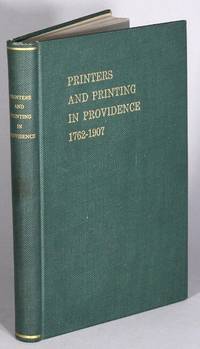
Printers and printing in Providence 1762-1907. Prepared by a committee of Providence Typographical Union Number thirty-three as a souvenir of the fiftieth anniversary of its institution
Providence: Providence Printing Co 1907. First edition 8vo pp. 212 xcviii; illustrated throughout with 25 plates 9 of them composite and illustrations in the text; original green cloth stamped in gilt on upper cover and spine; a very good sound and clean copy. This copy inscribed to "James B. Gay /Jan. 31 1908 / from his friend / H. R. Davis." An excellent reference with much biographical information even of the journeymen printers. Providence Printing Co unknown
Referencia librero : 70796
|
|
|
Providence Athenaeum
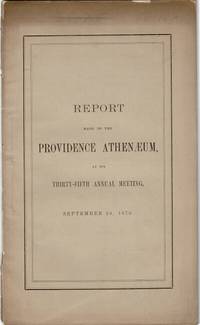
Report made to the Providence Athenaeum. Five annual reports for 1870-73 1884 and 1888
Providence: Hammond Angell & Co. printers and E. L Freeman & Co. and Snow & Farnum 1870. 5 volumes pp. 129 1; 143 1; 157 1; 173 1; 24 1 371-418 9 1; 24 507-545 5; original printed tan or gray wrappers; near fine. "The Providence Athenæum as we know it was founded and incorporated in 1836 after a previous Providence Athenæum est. 1831 and the Providence Library Company est. 1753 could not agree on terms for a merger. Both organizations dissolved and formed a new library which included the collections of both earlier institutions. This new organization known initially as simply The Athenæum would later change its name to the Providence Athenæum in 1850" from the Athenaeum website. Each of these reports includes a catalogue of the books acquired over the previous year. Hammond, Angell & Co., printers [and E. L Freeman & Co. [and] Snow & Farnum unknown
Referencia librero : 56648
|
|
|
Providence Athenaeum
Report made to the Providence Athenaeum. Five annual reports for 1870-73 1884 and 1888
Providence: Hammond Angell & Co. printers and E. L Freeman & Co. and Snow & Farnum 1870. 5 volumes pp. 129 1; 143 1; 157 1; 173 1; 24 1 371-418 9 1; 24 507-545 5; original printed tan or gray wrappers; near fine. "The Providence Athenæum as we know it was founded and incorporated in 1836 after a previous Providence Athenæum est. 1831 and the Providence Library Company est. 1753 could not agree on terms for a merger. Both organizations dissolved and formed a new library which included the collections of both earlier institutions. This new organization known initially as simply The Athenæum would later change its name to the Providence Athenæum in 1850" from the Athenaeum website. Each of these reports includes a catalogue of the books acquired over the previous year. <br/><br/> Hammond, Angell & Co., printers [and E. L Freeman & Co. [and] Snow & Farnum unknown books
Referencia librero : 56648
|
|

 Recibir por correo electrónico
 Descargar en documento PDF
 Flujo RSS
 Link permanente


