|
Four Meditations from Traherne's "Centuries
Pawlet VT: Claude Fredericks 1953. Limited. Paper Covers. Near Fine /No Dustjacket. decorated paper covers a bit tattered at edges a couple of small pieces missing laid in is a hand-written greeting from Fredericks who refers to himself as "an old Majorcan friend Claude Fredericks unknown books
Referenz des Buchhändlers : 006267
|
|
|
Four titles as below
Chicago: A.C. McClurg 1906. Edition ltd. to 275 copies this 1/250 on regular paper; thin 16mo series title after a design of D.B. Updike spines a little soiled yet all in all a very good set in orig. cream cloth spines over paper-covered boards red morocco labels on spine 2 a little rubbed; ex-MHS. The titles are 1 Two tracts on the founding and maintaining of parochial libraries in Scotland by James Kirkwood; 2 The reformed librarie-keeper or two copies of letters concerning the place and office of a librarie-keeper by John Dury; 3 The life of Sir Thomas Bodley written by himself together with the first draft of the statutes of the public library at Oxon; 4 The duties and qualifications of a librarian: a discourse pronounced in the general assembly of the Sorbonne December 23 1780 by Jean-Baptiste Cotton des Houssayes. In the publisher's series of Literature of Libraries under the general editorship of John Cotton Dana and Henry W. Kent. <br/><br/> A.C. McClurg hardcover books
Referenz des Buchhändlers : 15976
|
|
|
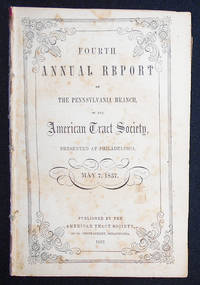
Fourth Annual Report of the Pennsylvania Branch of the American Tract Society Presented at Philadelphia May 7 1857
Philadelphia: American Tract Society 1857. Paperback. Good. 56 32 p.: tables; 22 cm. Disbound from boards; retains original white wrapper printed in black. Publisher's catalog on 32 pages following text. The report includes a two-page list of new publications issued in various languages in 1857. In Good Condition: disbound from boards; wrapper is foxed; back wrapper is detached but present; scattered foxing; otherwise clean and solid. Very scarce. American Tract Society paperback
Referenz des Buchhändlers : 008943
|
|
|
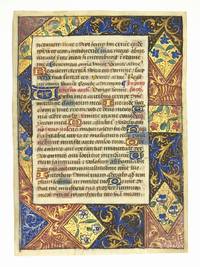
Fragment recto verso de l'office des morts
1500. Fine. fin XVe- début XVIe s. 12.20 x 16.70 cm feuillet sur parchemin Recto verso fragments of a manuscript book of hours on parchment with sumptuously illuminated full-page borders. This compartmentalized division of ornaments is representative of the production from Rouen and Parisian workshops at the turn of the 16th century. Two illuminated pages on a recto verso leaf: border divided into bands and lozenges decorated with floral motifs and leafy designs gilt initials painted in alternating red and blue and rubrics. The richness of the illumination characterizes these liturgical books intended for laypeople. Books of hours were at the time jewels of piety both an instrument of religious practice and a social statement affirmed by the richness of the artists' work. A true small painting this leaf is probably extracted from a luxurious volume where each page was carefully painted. We find here a fragment of the Office of the Dead at the moment of the first nocturn of matins. On the recto of the leaf: antiphon ""Dirige me"" followed by psalm five ""Verba mea auribus percipe Domine."". The office of the dead is a set of prayers dedicated to the salvation of the souls of the deceased. More than commiseration this devotion reflects the constant fear of medieval men for death. Script called cursiva libraria on long lines. Witness to the formalization of cursive script at the dawn of the French Renaissance this script is emblematic of the production of French scribes for laypeople during the period. unknown
Referenz des Buchhändlers : 73103
|
|
|
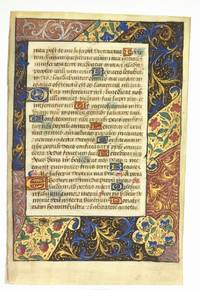
Fragment recto verso de l'office des morts
1500. Fine. fin XVe- début XVIe s. 12.20 x 16.70 cm feuillet sur parchemin Recto-verso fragment of a manuscript book of hours on parchment with sumptuously illuminated full-page borders. This compartmentalized division of the ornaments is representative of the production of Rouen and Parisian workshops at the turn of the 16th century. Two illuminated pages on a recto-verso leaf: border divided into bands and flowers decorated with floral motifs and leafy designs gilt initials painted in alternating red and blue and rubrics. The richness of the illumination characterizes these liturgical books intended for laypeople. Books of hours were at the time jewels of piety both an instrument of religious practice and a social claim affirmed by the richness of the artists' work. A veritable small painting this leaf is probably extracted from a luxurious volume where each page was carefully painted. We find here a fragment of the Office of the Dead at the moment of lauds. On the recto of the leaf: antiphon ""A porta"" followed by the canticle ""Ego dixi in dimidio dierum meorum."". The office of the dead is a collection of prayers dedicated to the salvation of the souls of the deceased. More than commiseration this devotion reflects the constant fear of medieval men for death. Script called cursiva libraria on long lines. Witness to the formalization of cursive writing at the dawn of the French Renaissance this script is emblematic of the production of French copyists for laypeople during the period. unknown
Referenz des Buchhändlers : 73158
|
|
|
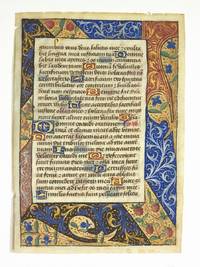
Fragments recto verso des psaumes pénitentiels
1500. Fine. fin XVe- début XVIe s. 12.20 x 16.70 cm feuillet sur parchemin Recto verso fragments of a manuscript book of hours on parchment with sumptuously illuminated full-page borders. This division into compartments of the ornaments is representative of the production of Rouen and Parisian workshops at the turn of the 16th century. Two illuminated pages on a recto verso leaf: border divided into bands and fleur-de-lis decorated with floral motifs and scrollwork gilt initials painted in alternating red and blue and rubrications. The richness of the illumination characterizes these liturgical books intended for laypeople. Books of hours were at the time jewels of piety both an instrument of religious practice and a social claim affirmed by the richness of the artists' work. A veritable small painting this leaf is probably extracted from a luxurious volume where each page was carefully painted. We find here a fragment of the penitential psalms the end of the fourth psalm ""Miserere mei Deus secundum magnam misericordiam tuam."" and the beginning of the following one ""Domine exaudi orationem meamet clamor."". This part of books of hours ordinarily serves to ask forgiveness for one's sins and to express repentance. Writing called cursiva libraria on long lines. Witness to the formalization of cursive writing at the dawn of the French Renaissance this script is emblematic of the production of French copyists for laypeople during the period. unknown
Referenz des Buchhändlers : 73161
|
|
|
Frank Gibbs 1928-1995
Maine: Privately Printed 1996 Blue pictorial cover of Frank. Inscribed by his wife Paula. Essays of his broadcasts up til 1991. Very Rare. Gift Inscirption. First Edition First Printing. Spiral Softcover. Very Good. Privately Printed paperback
Referenz des Buchhändlers : 00285992
|
|
|
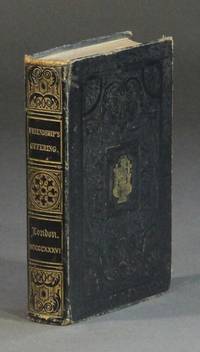
Friendship's offering; and winter's wreath: a Christmas and New Year's present for mdcccxxxvi
London: Smith Elder and Co. Cornhill 1836. 12mo pp. xii 384; engraved presentation plate and frontispiece and 9 engraved plates; publisher's elaborately embossed full black morocco gilt lyre central on both covers gilt decorated spine a.e.g.; minor rubbing; very good. Includes several contributions by William Henry Harrison. Faxon 1341. Smith, Elder and Co., Cornhill unknown
Referenz des Buchhändlers : 58645
|
|
|
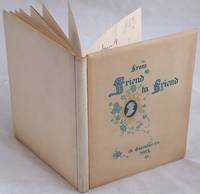
From Friend to Friend a Calendar for the Year 1913
London: Ernest Nister 1913. Beautifully illustrated calendar for 1913 illustrated with full colour chromo lithographs 26 pages in very bright clean condition just some light foxing to endpapers and last pge not to illustrations many colour illustrationsall present as published plus calendar with a short poem for each by various well known poets. NO dustwrapper.outer illustrated boards are a little dusty from age but still quite bright. A very nice example of this book SEE IMAGE. DETAILED IMAGES AVAILABLE ON REQUEST. First Edition. Illustrated Boards Cloth Spine. Good Plus/No Jacket. 6 ¼ x 4½ Inches. Hardcover. Ernest Nister Hardcover
Referenz des Buchhändlers : 007190
|
|
|
Gamble William ed. Penrose's annual 1916: the process year book. Vol. 21
London: Percy Lund Humphries & Co. 1916. First edition 4to pp. i-iii 112 69 1-43 1; frontis.; heavily illustrated; original brown cloth gilt stamped cover and spine joints cracked and spine beginning to separate corners bumped some soiling rubbed and worn; else good. Contains "India Paper Prints" by Harry Gow "National Advertising in Posters" by Walter Avery and many reproductions of war-time advertisements for bonds and men. <br/><br/> Percy Lund, Humphries, & Co. hardcover books
Referenz des Buchhändlers : 17268
|
|
|
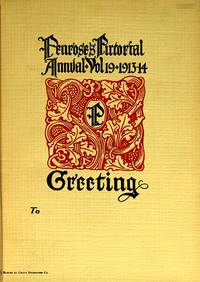
Gamble William ed. Penrose's Pictorial Annual 1913-1914. Vol. 19
London: Percy Lund Humphries & Co. 1913. First edition large 8vo pp. iii 6 i-xiv 224 4 1-48 6 1-79 1 iv-vi; frontis.; many types of illus.; original brown cloth hinges very slightly cracked; else near fine. This edition contains articles by A. E. Astington and Major-General J. Waterhouse discussing the advertisement of the automobile and the early photographic work with Bitumen of J. Nicephore Niepce respectively. <br/><br/> Percy Lund, Humphries & Co. hardcover books
Referenz des Buchhändlers : 17256
|
|
|
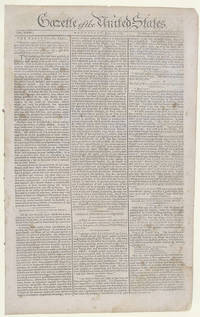
Gazette of the United States. No. XXXI. Wednesday July 29 1789.
New York: John Fenno July 29 1789. Rare original printing of the Gazette of the United States issued during the presidency of George Washington on July 29 1789. Folio one page folded this issue includes a the following articles many continued from previous issues: Sketch of the Political State of America Original Specimens of Eloquence Foreign and Domestic Miscellaneous Articles and Sketches of Proceedings of Congress approved by G. Washington President of the United States. In near fine condition. First issued on April 15 1789 the Gazette of the United States was an early American partisan biweekly publication friendly to the administration of George Washington and to the policies and members of the emerging Federalist Party. The Gazette played a notable role in the development of political parties and early partisanship. It also played a leading role in inspiring the creation of its rival paper the National Gazette which was founded at the urging of anti-Federalist leaders Thomas Jefferson and James Madison as a vehicle for their party's own political self-promotion and polemics. John Fenno unknown
Referenz des Buchhändlers : 116728
|
|
|
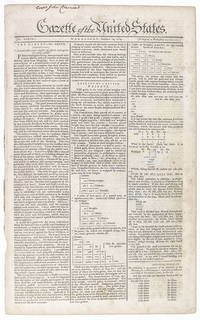
Gazette of the United States. No.XXXVII. Wednesday August 19 1789.
New York: John Fenno Wednesday August 19 1789. Rare original printing of the Gazette of the United States issued during the presidency of George Washington on August 19 1789. Folio one page folded this issue includes a the following articles many continued from previous issues: Extract of a Letter on Weights The Bow By Express From Paris and Sketches of the Proceedings of Congress in the House of the Representatives of the United States an Act for the Establishment of Lighthouses Beacons Buoys and Public Piers approved by George Washington as President of the United States and the obituary of George Washington Knox. In very good condition with a closed tear to the rear panel and ownership signature. First issued on April 15 1789 the Gazette of the United States was an early American partisan biweekly publication friendly to the administration of George Washington and to the policies and members of the emerging Federalist Party. The Gazette played a notable role in the development of political parties and early partisanship. It also played a leading role in inspiring the creation of its rival paper the National Gazette which was founded at the urging of anti-Federalist leaders Thomas Jefferson and James Madison as a vehicle for their party's own political self-promotion and polemics John Fenno unknown
Referenz des Buchhändlers : 116518
|
|
|
Gazette of the United States. No. XXXI. Wednesday July 29 1789.
New York: John Fenno July 29 1789. Rare original printing of the Gazette of the United States issued during the presidency of George Washington on July 29 1789. Folio one page folded this issue includes a the following articles many continued from previous issues: Sketch of the Political State of America Original Specimens of Eloquence Foreign and Domestic Miscellaneous Articles and Sketches of Proceedings of Congress approved by G. Washington President of the United States. In near fine condition. First issued on April 15 1789 the Gazette of the United States was an early American partisan biweekly publication friendly to the administration of George Washington and to the policies and members of the emerging Federalist Party. The Gazette played a notable role in the development of political parties and early partisanship. It also played a leading role in inspiring the creation of its rival paper the National Gazette which was founded at the urging of anti-Federalist leaders Thomas Jefferson and James Madison as a vehicle for their party's own political self-promotion and polemics. John Fenno unknown books
Referenz des Buchhändlers : 116728
|
|
|
Gazette of the United States. No.XXXVII. Wednesday August 19 1789.
New York: John Fenno Wednesday August 19 1789. Rare original printing of the Gazette of the United States issued during the presidency of George Washington on August 19 1789. Folio one page folded this issue includes a the following articles many continued from previous issues: Extract of a Letter on Weights The Bow By Express From Paris and Sketches of the Proceedings of Congress in the House of the Representatives of the United States an Act for the Establishment of Lighthouses Beacons Buoys and Public Piers approved by George Washington as President of the United States and the obituary of George Washington Knox. In very good condition with a closed tear to the rear panel and ownership signature. First issued on April 15 1789 the Gazette of the United States was an early American partisan biweekly publication friendly to the administration of George Washington and to the policies and members of the emerging Federalist Party. The Gazette played a notable role in the development of political parties and early partisanship. It also played a leading role in inspiring the creation of its rival paper the National Gazette which was founded at the urging of anti-Federalist leaders Thomas Jefferson and James Madison as a vehicle for their party's own political self-promotion and polemics John Fenno unknown books
Referenz des Buchhändlers : 116518
|
|
|
Gems of Fable
Buffalo NY: Breed Butler and Co. 1861. Book. VG. Original Cloth. First Thus. 48mo - over 3" - 4" tall. Miniature book 3 1/16" tall x 2 1/4" wide brown cloth illus. and decorated in gilt text block edged in gilt. Light shelf/handling wear lettering and decoration somewhat faded. Light period presentation inscription in pencil on front flyleaf otherwise unmarked. Firm binding clean interior. 96 pp. Very nicely preserved copy strong VG. Breed, Butler and Co. Hardcover
Referenz des Buchhändlers : 039600
|
|
|
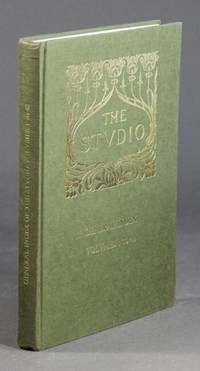
General index to the first forty-two volumes of "The Studio" 1893-1908
London: Simms & Reed Ltd 1979. Reprint edition after the original editions of 1902 and 1909; 2 volumes in 1 small folio pp. 135; 128; fine in original green cloth lettered in gilt on upper cover and spine. Simms & Reed Ltd unknown
Referenz des Buchhändlers : 31519
|
|
|
General index to the first forty-two volumes of "The Studio" 1893-1908
London: Simms & Reed Ltd 1979. Reprint edition after the original editions of 1902 and 1909; 2 volumes in 1 small folio pp. 135; 128; fine in original green cloth lettered in gilt on upper cover and spine. <br/><br/> Simms & Reed Ltd hardcover books
Referenz des Buchhändlers : 31519
|
|
|
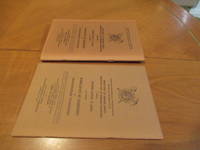
Geological Investigations Of Chromite In California 2 Volumes 1946 1953. Bulletin 134. Part Ii: Coast Ranges. Chapter 1 . Northern Coast Ranges. Chapter 2 . Southern Coast Ranges.
Division Of Mines Department Of Natural Resources State Of California 1946. 1st Edition 2nd Printing. Hardcover. Fine. Complete With All Maps Charts Tables Photographs. 2 Volumes 1946 1953. Softcover First Printings With All Folding Maps In Pocket Of Chapter 2 At Rear As Issued. Light Usage. From The Library Of A Former State Geologist. <br/> <br/> Division Of Mines, Department Of Natural Resources, State Of California hardcover
Referenz des Buchhändlers : 057437
|
|
|
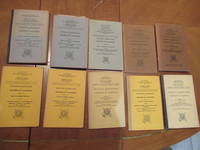
Geological Investigations Of Chromite In California Complete Set Of 10 Volumes 1946-1965. Bulletin 134. Part I Klamath Mountains: Chapter 1 Chromite Deposits Of Del Norte County California. Chapter 2 . Siskiyou County. Chapter 3. . Shasta Tehama Trinity And Humboldt Counties.Part Ii: Coast Ranges. Chapter 1 . Northern Coast Ranges. Chapter 2 . Southern Coast Ranges. Part Iii: Sierra Nevada. Chapter 1. Toulumne And Mariposa Counties.Chapter 2. Calaveras And Amador Counties. Chapter 3 . Tulare And Eastern Fresno Counties. Chapter 4. El Dorado County. Chapter 5. . Northern Sierra Nevada California Placer Nevada Sierra Yuba Butte And Plumas Counties
Division Of Mines Department Of Natural Resources State Of California 1946 1948 1950 1951 1953 1965 1946. 1st Edition 2nd Printing. Hardcover. Near Fine. Complete With All Maps Charts Tables Photographs. 10 Volumes 1946-1965. All Softcover First Printings With All Folding Maps In Pockets At Rear As Issued. Light Usage. From The Library Of A Former State Geologist. Part I Chapter 2 Part Ii Chapter 2 And Part Iii Chapters 2 Through 5 Also Available Individually Upon Inquiry. <br/> <br/> Division Of Mines, Department Of Natural Resources, State Of California 1946 1948 1950 1951 1953 1965 hardcover
Referenz des Buchhändlers : 057436
|
|
|
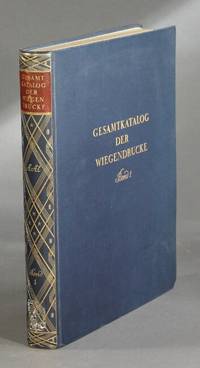
Gesamtkatalog der Wiegendrucke. Herausgegeben von der kommission für den gesamtkatalog der Wiegendrucke. Band I. Abano-Alexius
Leipzig: Verlag von Karl W. Hiersemann 1925. Folio pp. lxiii 682; original blue cloth red and gilt decorated spine minor shelf wear; ex-Aquinas Institute of Theology Library with usual markings else fine. "Beilage zu Band I" laid in. The first volume of ten published over the course of 75 years 1925-2000. Winchell AA169: "As far as published the most comprehensive record of incunabula yet made based on information collected during more than twenty years' work by the Kommission. The sections issued record nearly half again as many editions as Hain and the information given for each is much fuller including: 1 author entry title date etc.; 2 collation types capitals and illustrations; 3 transcripts of title colophon and other extracts; 4 references to descriptions in Hain and other bibliographies; and 5 location of copies which includes a complete record of all copies if not more than 10 are known and for commoner books a selection of copies in representative libraries in different countries both European and American. Indispensable in both cataloguing and references work in the scholarly library. Verlag von Karl W. Hiersemann unknown
Referenz des Buchhändlers : 37874
|
|
|
Gesamtkatalog der Wiegendrucke. Herausgegeben von der kommission für den gesamtkatalog der Wiegendrucke. Band I. Abano-Alexius
Leipzig: Verlag von Karl W. Hiersemann 1925. Folio pp. lxiii 682; original blue cloth red and gilt decorated spine minor shelf wear; ex-Aquinas Institute of Theology Library with usual markings else fine. "Beilage zu Band I" laid in. The first volume of ten published over the course of 75 years 1925-2000. Winchell AA169: "As far as published the most comprehensive record of incunabula yet made based on information collected during more than twenty years' work by the Kommission. The sections issued record nearly half again as many editions as Hain and the information given for each is much fuller including: 1 author entry title date etc.; 2 collation types capitals and illustrations; 3 transcripts of title colophon and other extracts; 4 references to descriptions in Hain and other bibliographies; and 5 location of copies which includes a complete record of all copies if not more than 10 are known and for commoner books a selection of copies in representative libraries in different countries both European and American. Indispensable in both cataloguing and references work in the scholarly library." <br/><br/> Verlag von Karl W. Hiersemann hardcover books
Referenz des Buchhändlers : 37874
|
|
|
Giant Sikorsky Amphibian Inaugrating Boston-Maritime Service -St; John Airport August 1 st 1931
St John N.B.: photographer unknown 1931. Photographic Image. Near Fine. No Binding. original 5x 7 inch glossy photograph of Sikorsky plane taken at ST John airport August 1 st 1931. Pan Am began daily service between Halifax and Boston with stops in St. JohnCalais and Bangor. They had 12 Sikorsky Amphibians on the run which operated only August to Sept 1 1931. A casualty of the Depression.small piece missing from upper left corner. photographer unknown unknown
Referenz des Buchhändlers : 1125557731
|
|
|
Gift suggestions. Oxford University Press American branch
New York: 35 W. 32nd St 1925. 4to pp. 24; self wrappers. With a form letter from OED educational department on company stationery laid in. Offers deluxe bindings on Shakespeare Milton the OEV Keats Browning Wordsworth etc. the three-volume Oxford Library and the Oxford Teachers' Bible. <br/><br/> 35 W. 32nd St unknown books
Referenz des Buchhändlers : 16619
|
|
|
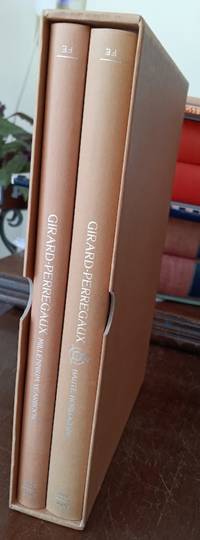
Girard-Perregaux: Haute Horlogerie and Millennium Yearbook
<p>La Chaux-de-fonds Switzerland: Girard-Perregaux. Very Good with no dust jacket; Slipcase sunned at spine. 2000. Hardcover. Two volumes describing the centuries-long history and luxury watches of the Swiss artisanal manufacturer. Many photos. Text in French and English. 213pp; 187pp. Housed in cardboard slipcase. ; 8vo 8" - 9" tall .</p> Girard-Perregaux hardcover
Referenz des Buchhändlers : 63815
|
|
|
Girl Pilots of the Ferry Command #4852 dolls uniforms clothes WAFS Woman's Auxiliary Ferrying Squadron Ferrying Division of the Air Transport Command
Fine. N.D. First Edition. Stiff card covers. Pretty much perfect condition. I am unsure if some copies might have more pages but there is no indication anything was removed from this copy. The staples are tight and undamaged. Not a reprint this is the original edition. ; Small 4to 9" - 11" tall; 6 pages . unknown
Referenz des Buchhändlers : 23105
|
|
|
Girolamo Savonarola: piety prophecy and politics in Renaissance Florence. The Elizabeth Perkins Prothro Galleries 20 March-30 July 1994
Dallas: Bridwell Library 1994. Edition limited to 750 copies 4to pp. iii 105; illustrations and facsimiles throughout; original printed pictorial wrappers fine. An exhibition catalogue at the Perkins School of Theology Southern Methodist University on the life of the religious and political reformer whom Pope Alexander VI would denounce as a heretic and have executed in 1498. Near pristine condition. Bridwell Library unknown
Referenz des Buchhändlers : 36920

|
|
|
Girolamo Savonarola: piety prophecy and politics in Renaissance Florence. The Elizabeth Perkins Prothro Galleries 20 March-30 July 1994
Dallas: Bridwell Library 1994. Edition limited to 750 copies 4to pp. iii 105; illustrations and facsimiles throughout; original printed pictorial wrappers fine. An exhibition catalogue at the Perkins School of Theology Southern Methodist University on the life of the religious and political reformer whom Pope Alexander VI would denounce as a heretic and have executed in 1498. Near pristine condition. <br/><br/> Bridwell Library unknown books
Referenz des Buchhändlers : 36920
|
|
|
Glimpses of New Zealand : Being a Collection of High-class and Perfectly-finished Views of the "Beautiful Britain of the South"
Christchurch New Zealand: Glimpses of New Zealand Publishing Co. Ltd 1896. Leather boards with light age related wear gilt title to front and embossing to front and rear. Rebound. 192 b/w plates plus 22 page Literary Supplement including index. . Full Leather. Good/No Jacket. 8vo - over 7¾" - 9¾" tall. Glimpses of New Zealand Publishing Co. Ltd
Referenz des Buchhändlers : 023090
|
|
|
Gloucestershire collections per T.P.
Middle Hill: Middle Hill Press 1868 Book. Very Good. Disbound. 12 pages 1 page additional Nomina dominorum religiosarum quarum mentionem faciunt registra episcoporum Vigorn printed with 3 blank pages. Measures 22 x 14.5 cm. Pages 1 - 8 unopened. Slight rust mark from old paper clip in upper inner corner. Small hole to edge of one page. Holzenberg 179. Lists dates of the Bishop's Register to 1552 and Patrons of churches. [Middle Hill Press] unknown
Referenz des Buchhändlers : MH3a

|
|
|
Golden Cockerel Private Press. Autumn 1954. British hand-made books
London 1954. 12mo pp. 39 1; pictorial yellow wrappers printed in red; with an order form with 25 illustrations throughout of books coming to press in 1954 about half of which are reproductions of illustrations in the books themselves. <br/><br/> unknown books
Referenz des Buchhändlers : 48458
|
|
|
Gone with the Wind Paint Book: Pictures of the Old South from the Screen Play
Chicago: The Merrill Publishing Co. Fine. 1940. First Edition. Softcover. Pages are browning from age. Uncolored and undamaged. A wonderful copy of a scarce book. ; Folio 13" - 23" tall . The Merrill Publishing Co. paperback
Referenz des Buchhändlers : 22530
|
|
|
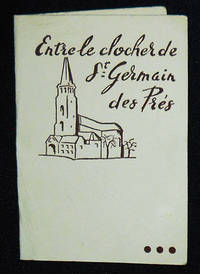
Gordon Heath Autograph on Cafe de L'Abbaye card
Paris: L'Abbaye 1960. Very Good. 1 card 10.4 x 13.8 cm. folded 10.4 x 7 cm. Printed in dark brown: "Entre le clocher de St. Germain des Prés et la place de Furstemberg l'Abbaye bar Anglais." Drawings on the front of St. Germain des Prés and inside of place de Furstemberg with the cafe's address and phone number. Gordon Heath's signature is in blue ink on the left inside page. American actor Gordon Heath 1918-1991 came to prominence in 1945 in Elia Kazan's play Deep are the Roots about the return of a black GI after WWII to the Jim Crow South. In 1948 he decided to make Paris his home; he continued on the stage in Paris and London. With his life-partner Leroy Payant he also operated the Cafe de L'Abbaye in Paris from 1949 until Payant's death in 1976. Undated. The phone number uses 3 letters and 4 numbers; this system was replaced by an all-number system in 1963. In Very Good Condition: not folded exactly square; slightly creased and very lightly soiled. L'Abbaye unknown
Referenz des Buchhändlers : 009434
|
|
|
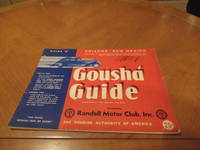
Gousha Guide "D" Arizona New Mexico. July 1935
Chicago Il: Randall Motor Club Inc. 1935. 1st Edition . Soft cover. Good. 36 Pp. Inside Covers; Large Fold Out Map At Center. Detailed Motoring Guide With Maps Distance Charts Information On Localities Etc. 12" X 9 1/8". 3" Split At Lower Spine Edge 1/2" Closed Tear At Bottom Of Front Cover "#1" N Crayon On Front Cover. <br/> <br/> Randall Motor Club Inc. paperback
Referenz des Buchhändlers : 051732
|
|
|
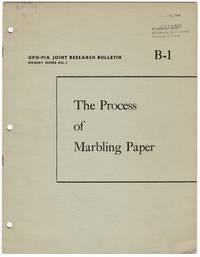
GPO - PIA Joint Research Bulletins as below
Washington DC: Government Printing Office 1954. 9 volumes 4to each 16 pages or less each in original printed wrappers or self-wrappers each ex-Minnesota Historical Society with a small rubberstamp on the front covers; overall in very good condition. Includes Bindery Series nos. 1-9: The Process of Marbling Paper; Bookbinding Pastes; Bindery Glues; Miscellaneous Bookbinding Adhesives; Bookbinding Leather; Bronze Stamping Leaf; Pyroxylin-Treated Book Cloths; Control of Warp in Book Covers; and Paper Boards for Bookbinding. Also included are two others from the Composing Room Series: Type Metals; and Transparent Proofs from Type Forms. One from the Ink Series: Ruling Inks and Dyes. One from the Materials Series: Detergents for the Printer. And one from the Plate Series: Electrotyping in the Government Printing Office. All contained in a black cloth-covered clamshell box gilt lettering on spine. Government Printing Office unknown
Referenz des Buchhändlers : 51247
|
|
|
GPO - PIA Joint Research Bulletins as below
Washington DC: Government Printing Office 1954. 9 volumes 4to each 16 pages or less each in original printed wrappers or self-wrappers each ex-Minnesota Historical Society with a small rubberstamp on the front covers; overall in very good condition. Includes Bindery Series nos. 1-9: The Process of Marbling Paper; Bookbinding Pastes; Bindery Glues; Miscellaneous Bookbinding Adhesives; Bookbinding Leather; Bronze Stamping Leaf; Pyroxylin-Treated Book Cloths; Control of Warp in Book Covers; and Paper Boards for Bookbinding. Also included are two others from the Composing Room Series: Type Metals; and Transparent Proofs from Type Forms. One from the Ink Series: Ruling Inks and Dyes. One from the Materials Series: Detergents for the Printer. And one from the Plate Series: Electrotyping in the Government Printing Office. All contained in a black cloth-covered clamshell box gilt lettering on spine. <br/><br/> Government Printing Office hardcover books
Referenz des Buchhändlers : 51247
|
|
|
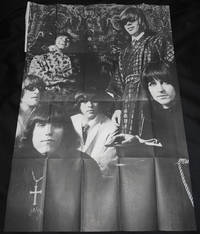
Grace Slick with Jefferson Airplane poster
1966. Poster. Very Good. 1 black-and-white poster 32 x 22 inches folded. Apparently removed from a magazine. No text except "please cut along dotted line" on tab at upper left-hand corner. No publication information. Appears to be from late 1966 or 1967. Scarce. In Very Good Condition: folded as issued; minor rubbing at a few folds; closed 7 cm. tear from left side below tab into background image; small scrape in upper right; clean and bright. unknown
Referenz des Buchhändlers : 008763
|
|
|
Grand Canyon Outings
Santa Fe 1939 Beautiful photographs Map of Santa Fe The Atchison Topeka and Santa Fe Railway Co. Connections list of Santa Fe Railway Agencies travel informations stunning shots of canyon stapled perfect copy. 4to - over 9¾" - 12" tall. 4to - over 9¾" - 12" tall. Early Edition. Pictorial Cover/soft. Very Good. Santa Fe paperback
Referenz des Buchhändlers : 00283437
|
|
|
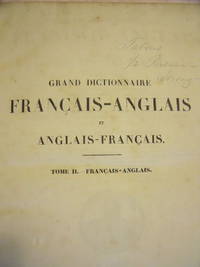
Grand Dictionnaire Francais-Anglais et Anglais-Francais Tome II - Francais-Anglais
Paris: Librairie De Firmin Didot Freres Fils et Cie Editeurs 1857. Extra shipping applies to this thick oversized volume. Cover is quarter leather at corners inside edge and spine and a lovely jaquard buckram embossed with flowers and vines. Leather areas are quite worn and leather spine is missing. Paper backing over spine is firmly intact. The bookseller who donated this item to us has taped a label to the spine - we'll leave it for the buyer to remove. As with many books this age - 1857 - there is tanning and spotting. Salem Mass. booksellers sticker on inside cover. Pencilled notations on fep and title page. Black and white decorations of letters i.e. "Z" throughout dictionary. Regrettably we have only volume one of this two volume set. 1104 pages in this volume. 100% of your purchase benefits charity. . Buckram. Good/No Jacket. 4to - over 9¾" - 12" tall. Librairie De Firmin Didot Freres, Fils et Cie Editeurs Hardcover
Referenz des Buchhändlers : 000653
|
|
|
Grand View: Special Exhibition of Ju Ware from the Northern Sung Dynasty
National Palace Museum 2007-01-01. Hardcover. Very Good /Very Good . 11x9x1. Clean solid copy with unmarked text. Top back cover corner has a light bump; rest of corners are square. Light bump to top of spine. Binding is tight and square. Jacket has mild surface and edge wear; small wrinkle at top back edge but no tears. 216 pages with over 48 color photographs. Text is in both Chinese and English. Books that sell for $9 or more ship in a box; under $9 in a bubble mailer. Expedited and international orders may ship in a flat rate envelope rather than a box due to cost constraints. All US-addressed items ship with complimentary delivery confirmation. National Palace Museum hardcover
Referenz des Buchhändlers : BF22105180003 ISBN : 9575625064 9789575625061

|
|
|
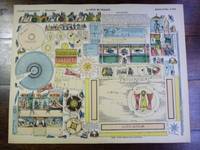
Grandes constructions - Mécanisme : La Fête du village. Imagerie d'Épinal Pellerin n°503
Épinal: Pellerin & Cie 1890. Fine. Pellerin & Cie Épinal s. d. circa 1890 39 x 49 cm une feuille Image d'Épinal color lithograph large format printed on strong paper. Very fine condition colors very well preserved. These plates are cardboard constructions or models on which a pattern was printed. This pattern must be cut out and assembled to construct various objects or life scenes. The Épinal imagery published several series of cut-out models including the ""Grandes Constructions"" in 39 x 49 cm format the ""Moyennes Constructions"" and the ""Petites Constructions"". From 1880 to 1908 constructions were published featuring architecture costumes ships and various vehicles. During this same period paper theaters or ""théâtre chez soi"" also enjoyed great success. This toy model developed and endured until the Second World War. Once sold by peddlers the images d'Épinal owe their name to Jean-Charles Pellerin who was the first printer to publish this type of image in series and who lived in the town of Épinal Vosges. The subjects are very varied but generally revolve around religion history French Revolution battles military uniforms or drawn from successful novels. The Épinal imagery has its origins in popular imagery a folk art born in the 15th century mainly intended for the illiterate rural public. Originally the image is engraved on a wooden block and printing is done using a hand press. It is then colored using stencils. In the 19th century lead castings were made from the engraved wood blocks: stereotypes which made it possible to increase production. In 1820 lithography was adopted which brought about a radical change in style with finer drawings. In 1900 coloring was still done with stencils thanks to a machine that could color 300 images per hour the Aquatype. Pellerin & Cie unknown
Referenz des Buchhändlers : 35309
|
|
|
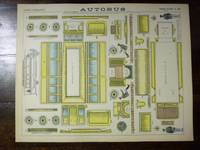
Grandes constructions : Autobus. Imagerie d'Épinal Pellerin n°391
Épinal: Pellerin & Cie 1890. Fine. Pellerin & Cie Épinal s. d. circa 1890 39 x 49 cm une feuille Image d'Épinal color lithograph large format printed on heavy paper. Light fold marks in the lower corners otherwise very fine condition colors very well preserved. These sheets are constructions or cardboard models on which a pattern was printed. This pattern must be cut out then assembled to construct various objects or life scenes. The Épinal imagery published several series of cut-out models including the ""Large Constructions"" in 39 x 49 cm format the ""Medium Constructions"" and the ""Small Constructions"". From 1880 to 1908 constructions were published featuring architecture costumes boats and various vehicles. During this same period paper theaters or ""home theater"" also enjoyed great success. This toy model developed and lasted until the Second World War. Once sold by peddlers the images d'Épinal owe their name to Jean-Charles Pellerin who was the first printer to publish this type of image in series and who lived in the town of Épinal Vosges. The subjects are very varied but generally revolve around religion history French Revolution battles military uniforms or drawn from successful novels. The Épinal imagery has its origins in imagery popular art born in the 15th century intended mainly for the illiterate public of the countryside. Originally the image is engraved on a wooden board and printing is done using a hand press. It is then colored using stencils. In the 19th century lead castings were made from the engraved wood blocks: stereotypes which made it possible to increase production. In 1820 lithography was adopted which induced a radical change in style with finer drawings. In 1900 coloring was still done with stencils thanks to a machine that could color 300 images per hour the Aquatype. Pellerin & Cie unknown
Referenz des Buchhändlers : 35367
|
|
|
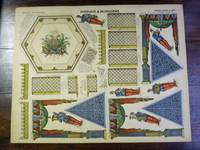
Grandes constructions : Kiosque et musiciens. Imagerie d'Épinal Pellerin n°427bis.
Épinal: Pellerin & Cie 1890. Fine. Pellerin & Cie Épinal s. d. circa 1880-1900 39 x 49 cm une feuille Image d'Épinal color lithograph large format printed on heavy paper. Very fine condition colors very well preserved. These plates are cardboard constructions or models on which a pattern was printed. This pattern must be cut out and then assembled to construct various objects or life scenes. The Épinal imagery published several series of cut-out models including the ""Grandes Constructions"" in 39 x 49 cm format the ""Moyennes Constructions"" and the ""Petites Constructions"". From 1880 to 1908 constructions were published featuring architecture costumes boats and various vehicles. During this same period paper theaters or ""théâtre chez soi"" also enjoyed great success. This toy model developed and persisted until the Second World War. Once sold by peddlers the images d'Épinal owe their name to Jean-Charles Pellerin who was the first printer to publish this type of image in series and who lived in the town of Épinal Vosges. The subjects are very varied but generally revolve around religion history French Revolution battles military uniforms or drawn from successful novels. The Épinal imagery has its origins in imagery a popular art born in the 15th century intended primarily for the illiterate rural public. Originally the image is engraved on a wooden plate and printing is carried out using a hand press. It is then colored by means of stencils. In the 19th century lead moldings are made from the engraved wood: the stereotypes which allow production to be increased. In 1820 lithography was adopted which induced a radical change in style with finer drawings. In 1900 coloring was still done by stencil thanks to a machine that could color 300 images per hour the Aquatype. Pellerin & Cie unknown
Referenz des Buchhändlers : 35287
|
|
|
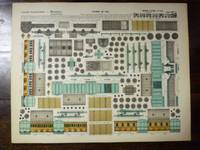
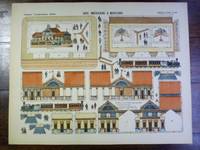
Grandes constructions : Chemin de fer. Imagerie d'Épinal Pellerin n°510
Épinal: Pellerin & Cie 1890. Fine. Pellerin & Cie Épinal s. d. circa 1890 39 x 49 cm une feuille Épinal image color lithograph large format printed on heavy paper. Fold marks in the upper corners otherwise very fine condition colors very well preserved. These sheets are cardboard constructions or models on which a pattern was printed. This pattern should be cut out then assembled to construct various objects or life scenes. The Épinal imagery published several series of cut-out models including the ""Grandes Constructions"" in 39 x 49 cm format the ""Moyennes Constructions"" and the ""Petites Constructions"". From 1880 to 1908 constructions were published featuring architecture costumes boats and various vehicles. During this same period paper theaters or ""théâtre chez soi"" also enjoyed great success. This toy model developed and lasted until the Second World War. Once sold by peddlers Épinal images owe their name to Jean-Charles Pellerin who was the first printer to publish this type of image in series and who lived in the town of Épinal Vosges. The subjects are very varied but generally revolve around religion history French Revolution battles military uniforms or drawn from successful novels. Épinal imagery has its origins in imagery a popular art born in the 15th century intended primarily for the illiterate rural public. Originally the image is engraved on a wooden block and printing is done using a hand press. It is then colored using stencils. In the 19th century lead casts are made from the engraved woods: stereotypes which allow production to be increased. In 1820 lithography was adopted which induced a radical change in style with finer drawings. In 1900 coloring was still done with stencils thanks to a machine that could color 300 images per hour the Aquatype. Pellerin & Cie unknown
Referenz des Buchhändlers : 35370
|
|
|
Grandes constructions faciles : Gare américaine à Maryland. Imagerie d'Épinal Pellerin n°56.
Épinal: Pellerin & Cie 1890. Fine. Pellerin & Cie Épinal s. d. circa 1890 39 x 49 cm une feuille Image d'Épinal color lithograph large format printed on heavy paper. Very fine condition colors very well preserved. These sheets are cardboard constructions or models on which a pattern was printed. This pattern must be cut out then assembled to construct various objects or life scenes. The Épinal imagery published several series of cut-out models including the ""Grandes Constructions"" in 39 x 49 cm format the ""Moyennes Constructions"" and the ""Petites Constructions"". From 1880 to 1908 constructions were published featuring architecture costumes ships and various vehicles. During this same period paper theaters or ""home theater"" also enjoyed great success. This toy model developed and endured until the Second World War. Once sold by peddlers the images d'Épinal owe their name to Jean-Charles Pellerin who was the first printer to publish this type of image in series and who lived in the town of Épinal Vosges. The subjects are very varied but generally revolve around religion history French Revolution battles military uniforms or drawn from successful novels. The Épinal imagery has its origins in imagery a popular art born in the 15th century intended primarily for the illiterate rural public. Originally the image is engraved on a wooden board and printing is carried out using a hand press. It is then colored by means of stencils. In the 19th century lead castings are made from the engraved wood blocks: stereotypes which allow production to be increased. In 1820 lithography was adopted which induced a radical change in style with finer drawings. In 1900 coloring was still done with stencils thanks to a machine that could color 300 images per hour the Aquatype. Pellerin & Cie unknown
Referenz des Buchhändlers : 35294
|
|
|
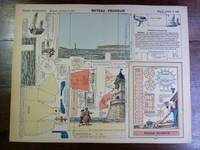
Grandes constructions : Bateau pêcheur. Imagerie d'Épinal Pellerin n°555
Épinal: Pellerin & Cie 1890. Fine. Pellerin & Cie Épinal s. d. circa 1890 39 x 49 cm une feuille Épinal Image color lithograph large format printed on heavy paper. Very slight fold marks at corners otherwise in very fine condition with very well-preserved colors. These sheets are cardboard constructions or models on which a pattern was printed. This pattern is meant to be cut out and then assembled to build various objects or life scenes. The Épinal imagery published several series of cut-out models including the ""Grandes Constructions"" in 39 x 49 cm format the ""Moyennes Constructions"" and the ""Petites Constructions"". From 1880 to 1908 constructions were published featuring architecture costumes boats and various vehicles as subjects. During this same period paper theaters or ""théâtre chez soi"" also enjoyed great success. This toy model developed and lasted until the Second World War. Once sold by peddlers the Épinal images owe their name to Jean-Charles Pellerin who was the first printer to publish this type of image in series and who lived in the town of Épinal Vosges. The subjects are very varied but generally revolve around religion history French Revolution battles military uniforms or drawn from popular novels. Épinal imagery has its origins in imagery a popular art form born in the 15th century intended primarily for the illiterate rural public. Originally the image is engraved on a wooden board and printing is carried out using a hand press. It is then colored using stencils. In the 19th century lead castings called stereotypes were made from the engraved wood blocks which allowed production to be increased. In 1820 lithography was adopted which brought about a radical change in style with finer drawings. In 1900 coloring was still done by stencil using a machine that could color 300 images per hour the Aquatype. Pellerin & Cie unknown
Referenz des Buchhändlers : 35393
|
|
|
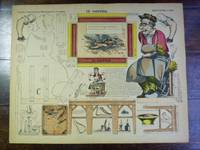
Grandes constructions Mouvement par le Caoutchouc : Le Savetier. Imagerie d'Épinal Pellerin n°563.
Épinal: Pellerin & Cie 1890. Fine. Pellerin & Cie Épinal s. d. circa 1890 39 x 49 cm une feuille Épinal image color lithograph large format printed on heavy paper. Upper right corner slightly folded colors very well preserved. These sheets are cardboard constructions or models on which a pattern was printed. This pattern must be cut out and then assembled to construct various objects or life scenes. The Épinal imagery published several series of cut-out models including the ""Large Constructions"" in 39 x 49 cm format the ""Medium Constructions"" and the ""Small Constructions"". From 1880 to 1908 constructions were published featuring architecture costumes boats and various vehicles. During this same period paper theaters or ""home theater"" also enjoyed great success. This toy model developed and persisted until the Second World War. Once sold by peddlers Épinal images owe their name to Jean-Charles Pellerin who was the first printer to publish this type of image in series and who lived in the town of Épinal Vosges. The subjects are very varied but generally revolve around religion history French Revolution battles military uniforms or drawn from successful novels. Épinal imagery has its origins in imagery a popular art born in the 15th century intended mainly for the illiterate rural public. Originally the image is engraved on a wooden board and printing is done using a hand press. It is then colored using stencils. In the 19th century lead castings are made from the engraved woods: stereotypes which allow production to be increased. In 1820 lithography was adopted which induced a radical change in style with finer drawings. In 1900 coloring was still done by stencil thanks to a machine that could color 300 images per hour the Aquatype. Pellerin & Cie unknown
Referenz des Buchhändlers : 35288
|
|
|
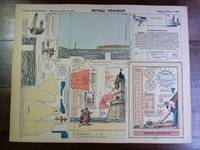
Grandes constructions : Bateau pêcheur. Imagerie d'Épinal Pellerin n°555
Épinal: Pellerin & Cie 1890. Fine. Pellerin & Cie Épinal s. d. circa 1890 39 x 49 cm une feuille Image d'Épinal color lithograph large format printed on heavy paper. Very slight fold marks at corners otherwise very fine condition colors very well preserved. These plates are cardboard constructions or models on which a pattern was printed. This pattern must be cut out and then assembled to construct various objects or scenes of life. The Épinal imagery published several series of cut-out models including the ""Grandes Constructions"" in 39 x 49 cm format the ""Moyennes Constructions"" and the ""Petites Constructions"". From 1880 to 1908 constructions were published featuring architecture costumes boats and various vehicles. During this same period paper theaters or ""théâtre chez soi"" also enjoyed great success. This toy model developed and endured until the Second World War. Once sold by peddlers the images d'Épinal owe their name to Jean-Charles Pellerin who was the first printer to publish this type of image in series and who lived in the town of Épinal Vosges. The subjects are very varied but generally revolve around religion history French Revolution battles military uniforms or drawn from successful novels. The Épinal imagery has its origins in imagery a popular art form born in the 15th century intended mainly for the illiterate public of the countryside. Originally the image is engraved on a wooden plate and printing is carried out using a hand press. It is then colored by means of stencils. In the 19th century lead castings were made from the engraved wood: the stereotypes which allowed production to be increased. In 1820 lithography was adopted which induced a radical change in style with finer drawings. In 1900 coloring was still done by stencil thanks to a machine that could color 300 images per hour the Aquatype. Pellerin & Cie unknown
Referenz des Buchhändlers : 35378
|
|
|
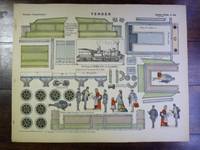
Grandes constructions : Tender et Wagon. Imagerie d'Épinal Pellerin n°160 & n°161.
Épinal: Pellerin & Cie 1890. Fine. Pellerin & Cie Épinal s. d. circa 1890 39 x 49 cm agrafé Images d'Épinal color lithographs large formats printed on heavy paper. The two prints are stapled together. Slight folds in the upper right corner of the first plate otherwise very fine condition colors very well preserved. These plates are cardboard constructions or models on which a pattern was printed. This pattern must be cut out then assembled to construct various objects or life scenes. The Épinal imagery published several series of cut-out models including the ""Grandes Constructions"" in 39 x 49 cm format the ""Moyennes Constructions"" and the ""Petites Constructions"". From 1880 to 1908 constructions were published featuring architecture costumes boats and various vehicles. During this same period paper theaters or ""théâtre chez soi"" also enjoyed great success. This type of toy developed and persisted until the Second World War. Once sold by peddlers the images d'Épinal owe their name to Jean-Charles Pellerin who was the first printer to publish this type of image in series and who lived in the town of Épinal Vosges. The subjects are very varied but generally revolve around religion history French Revolution battles military uniforms or drawn from successful novels. The Épinal imagery has its origins in imagery a popular art born in the 15th century intended primarily for the illiterate rural public. Originally the image is engraved on a wooden plate and printing is carried out using a hand press. It is then colored using stencils. In the 19th century lead castings were made from the engraved wood blocks: stereotypes which allowed production to be increased. In 1820 lithography was adopted which induced a radical change in style with finer drawings. In 1900 coloring was still done using stencils thanks to a machine that could color 300 images per hour the Aquatype. Pellerin & Cie unknown
Referenz des Buchhändlers : 35310
|
|
|
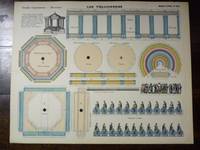
Grandes constructions : Les Vélocipèdes. Imagerie d'Épinal Pellerin n°518
Épinal: Pellerin & Cie 1890. Fine. Pellerin & Cie Épinal s. d. circa 1890 39 x 49 cm une feuille Épinal image color lithograph large format printed on heavy paper. Very light fold marks in the corners otherwise very fine condition colors very well preserved. These sheets are cardboard constructions or models on which a pattern was printed. This pattern should be cut out then assembled to construct various objects or life scenes. The Épinal imagery published several series of cut-out models including the ""Grandes Constructions"" in 39 x 49 cm format the ""Moyennes Constructions"" and the ""Petites Constructions"". From 1880 to 1908 constructions were published featuring architecture costumes boats and various vehicles. During this same period paper theaters or ""théâtre chez soi"" also enjoyed great success. This toy model developed and lasted until the Second World War. Once sold by peddlers Épinal images owe their name to Jean-Charles Pellerin who was the first printer to publish this type of image in series and who lived in the town of Épinal Vosges. The subjects are very varied but generally revolve around religion history French Revolution battles military uniforms or drawn from successful novels. Épinal imagery has its origins in imagery a popular art born in the 15th century intended primarily for the illiterate rural public. Originally the image is engraved on a wooden block and printing is done using a hand press. It is then colored using stencils. In the 19th century lead casts are made from the engraved woods: stereotypes which allow production to be increased. In 1820 lithography was adopted which induced a radical change in style with finer drawings. In 1900 coloring was still done with stencils thanks to a machine that could color 300 images per hour the Aquatype. Pellerin & Cie unknown
Referenz des Buchhändlers : 35372
|
|

 Per e-mail erhalten
 Als pdf-Dokument herunterladen
 RSS feed
 Permanenter link


