|
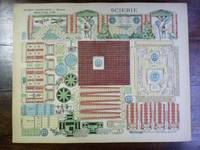
Grandes constructions - Mécanisme : Scierie. Imagerie d'Épinal Pellerin n°545
Épinal: Pellerin & Cie 1890. Fine. Pellerin & Cie Épinal s. d. circa 1890 39 x 49 cm une feuille Image d'Épinal color lithograph large format printed on heavy paper. Light creases at the corners colors very well preserved. These sheets are cardboard constructions or models on which a pattern was printed. This pattern must be cut out and then assembled to construct various objects or life scenes. The imagerie d'Épinal published several series of cut-out models including the ""Grandes Constructions"" in 39 x 49 cm format the ""Moyennes Constructions"" and the ""Petites Constructions"". From 1880 to 1908 constructions were published featuring architecture costumes boats and various vehicles. During this same period paper theaters or ""théâtre chez soi"" also enjoyed great success. This toy model developed and lasted until the Second World War. Once sold by peddlers the images d'Épinal owe their name to Jean-Charles Pellerin who was the first printer to publish this type of image in series and who lived in the town of Épinal Vosges. The subjects are very varied but generally revolve around religion history French Revolution battles military uniforms or drawn from successful novels. The imagerie d'Épinal takes its origins in imagery a popular art born in the 15th century intended mainly for the illiterate public of the countryside. Originally the image is engraved on a wooden block and printing is done using a hand press. It is then colored using stencils. In the 19th century lead castings were made from the engraved woods: the stereotypes which allowed production to be increased. In 1820 lithography was adopted which induced a radical change in style with finer drawings. In 1900 coloring was still done by stencil thanks to a machine that could color 300 images per hour the Aquatype. Pellerin & Cie unknown
Riferimento per il libraio : 35307
|
|
|
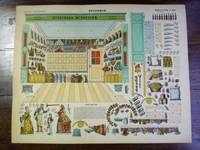
Grandes constructions : Epicerie. Imagerie d'Épinal Pellerin n°355.
Épinal: Pellerin & Cie 1890. Fine. Pellerin & Cie Épinal s. d. circa 1890 39 x 49 cm une feuille Image d'Épinal color lithograph large format printed on heavy paper. Slight marginal tear on the left side colors very well preserved. These plates are cardboard constructions or models on which a pattern was printed. This pattern must be cut out and then assembled to construct various objects or life scenes. The Épinal imagery published several series of cut-out models including the ""Grandes Constructions"" in 39 x 49 cm format the ""Moyennes Constructions"" and the ""Petites Constructions"". From 1880 to 1908 constructions were published featuring architecture costumes boats and various vehicles. During this same period paper theaters or ""théâtre chez soi"" also enjoyed great success. This toy model developed and persisted until the Second World War. Once sold by peddlers the images d'Épinal owe their name to Jean-Charles Pellerin who was the first printer to publish this type of image in series and who lived in the town of Épinal Vosges. The subjects are very varied but generally revolve around religion history French Revolution battles military uniforms or drawn from successful novels. The Épinal imagery has its origins in imagery a popular art born in the 15th century intended primarily for the illiterate rural public. Originally the image is engraved on a wooden plate and printing is carried out using a hand press. It is then colored by means of stencils. In the 19th century lead moldings are made from the engraved wood: the stereotypes which allow production to be increased. In 1820 lithography was adopted which induced a radical change in style with finer drawings. In 1900 coloring was still done by stencil thanks to a machine that could color 300 images per hour the Aquatype. Pellerin & Cie unknown
Riferimento per il libraio : 35286
|
|
|
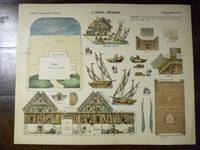
Grandes constructions faciles : La Cabane du pêcheur. Imagerie d'Épinal Pellerin n°16
Épinal: Pellerin & Cie 1890. Fine. Pellerin & Cie Épinal s. d. circa 1890 39 x 49 cm une feuille Image d'Épinal color lithograph large format printed on heavy paper. Significant tear in upper left section restored folds in lower right corner with tears slight folds to upper right and lower left corners colors very well preserved. These plates are cardboard constructions or models on which a pattern was printed. This pattern must be cut out then assembled to construct various objects or life scenes. The Épinal imagery published several series of cut-out models including the ""Large Constructions"" in 39 x 49 cm format the ""Medium Constructions"" and the ""Small Constructions"". From 1880 to 1908 constructions were published featuring architecture costumes boats and various vehicles. During this same period paper theaters or ""theater at home"" also enjoyed great success. This toy model developed and lasted until the Second World War. Once sold by peddlers the images d'Épinal owe their name to Jean-Charles Pellerin who was the first printer to publish this type of image in series and who lived in the town of Épinal Vosges. The subjects are very varied but generally revolve around religion history French Revolution battles military uniforms or drawn from successful novels. Épinal imagery takes its origins in imagery popular art born in the 15th century intended mainly for the illiterate rural public. Originally the image is engraved on a wooden plate and printing is done using a hand press. It is then colored by means of stencils. In the 19th century lead castings are made from the engraved wood: stereotypes which allow production to be increased. In 1820 lithography was adopted which induced a radical change in style with finer drawings. In 1900 coloring was still done by stencil thanks to a machine that could color 300 images per hour the Aquatype. Pellerin & Cie unknown
Riferimento per il libraio : 35360
|
|
|
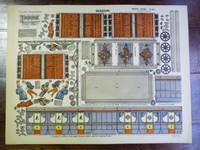
Grandes constructions : Wagon. Imagerie d'Épinal Pellerin n°161
Épinal: Pellerin & Cie 1890. Fine. Pellerin & Cie Épinal s. d. circa 1890 39 x 49 cm une feuille Image d'Épinal color lithograph large format printed on heavy paper. Light tear in upper margin colors very well preserved. These sheets are cardboard constructions or models on which a pattern was printed. This pattern must be cut out then assembled to construct various objects or life scenes. The Épinal imagery published several series of cut-out models including the ""Grandes Constructions"" in 39 x 49 cm format the ""Moyennes Constructions"" and the ""Petites Constructions"". From 1880 to 1908 constructions were published featuring architecture costumes boats and various vehicles. During this same period paper theaters or ""théâtre chez soi"" also enjoyed great success. This toy model developed and lasted until the Second World War. Once sold by peddlers the images d'Épinal owe their name to Jean-Charles Pellerin who was the first printer to publish this type of image in series and who lived in the town of Épinal Vosges. The subjects are very varied but generally revolve around religion history French Revolution battles military uniforms or drawn from successful novels. The Épinal imagery has its origins in imagery a popular art born in the 15th century intended mainly for the illiterate rural public. Originally the image is engraved on a wooden board and printing is done using a hand press. It is then colored using stencils. In the 19th century lead castings are made from the engraved wood: the stereotypes which allow production to be increased. In 1820 lithography was adopted which induced a radical change in style with finer drawings. In 1900 coloring was still done by stencil thanks to a machine that could color 300 images per hour the Aquatype. Pellerin & Cie unknown
Riferimento per il libraio : 35304
|
|
|
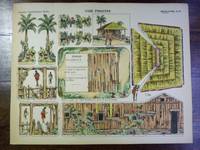
Grandes constructions faciles : Case indienne. Imagerie d'Épinal Pellerin n°43.
Épinal: Pellerin & Cie 1890. Fine. Pellerin & Cie Épinal s. d. circa 1890 39 x 49 cm une feuille Épinal print color lithograph large format printed on heavy paper. Left corners very slightly bumped otherwise very fine condition colors very well preserved. These sheets are constructions or cardboard models on which a pattern was printed. This pattern must be cut out and then assembled to construct various objects or life scenes. The Épinal imagery published several series of cut-out models including the ""Grandes Constructions"" in 39 x 49 cm format the ""Moyennes Constructions"" and the ""Petites Constructions"". From 1880 to 1908 constructions were published featuring architecture costumes boats and various vehicles. During this same period paper theaters or ""théâtre chez soi"" also enjoyed great success. This toy model developed and lasted until the Second World War. Once sold by peddlers Épinal prints owe their name to Jean-Charles Pellerin who was the first printer to publish this type of image in series and who lived in the town of Épinal Vosges. The subjects are very varied but generally revolve around religion history French Revolution battles military uniforms or drawn from successful novels. Épinal imagery has its origins in popular art imagery born in the 15th century mainly intended for the illiterate rural public. Originally the image is engraved on a wooden plate and printing is done using a hand press. It is then colored using stencils. In the 19th century lead castings were made from the engraved wood blocks: stereotypes which allowed production to be increased. In 1820 lithography was adopted which induced a radical change in style with finer drawings. In 1900 coloring was still done with stencils thanks to a machine that could color 300 images per hour the Aquatype. Pellerin & Cie unknown
Riferimento per il libraio : 35296
|
|
|
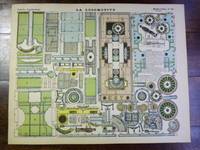
Grandes constructions : La Locomotive. Imagerie d'Épinal Pellerin n°159.
Épinal: Pellerin & Cie 1890. Fine. Pellerin & Cie Épinal s. d. circa 1890 39 x 49 cm une feuille Image d'Épinal color lithograph large format printed on heavy paper. Upper left corner very slightly bumped otherwise very fine condition colors very well preserved. These sheets are cardboard constructions or models on which a pattern was printed. This pattern must be cut out then assembled to construct various objects or life scenes. The Épinal imagery published several series of cut-out models including the ""Grandes Constructions"" in 39 x 49 cm format the ""Moyennes Constructions"" and the ""Petites Constructions"". From 1880 to 1908 constructions were published featuring architecture costumes ships and various vehicles. During this same period paper theaters or ""home theater"" also enjoyed great success. This toy model developed and endured until the Second World War. Once sold by peddlers the images d'Épinal owe their name to Jean-Charles Pellerin who was the first printer to publish this type of image in series and who lived in the town of Épinal Vosges. The subjects are very varied but generally revolve around religion history French Revolution battles military uniforms or drawn from successful novels. The Épinal imagery has its origins in imagery a popular art born in the 15th century intended primarily for the illiterate rural public. Originally the image is engraved on a wooden board and printing is carried out using a hand press. It is then colored by means of stencils. In the 19th century lead castings are made from the engraved wood blocks: stereotypes which allow production to be increased. In 1820 lithography was adopted which induced a radical change in style with finer drawings. In 1900 coloring was still done with stencils thanks to a machine that could color 300 images per hour the Aquatype. Pellerin & Cie unknown
Riferimento per il libraio : 35292
|
|
|
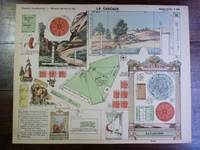
Grandes constructions : La Cascade. Imagerie d'Épinal Pellerin n°539
Épinal: Pellerin & Cie 1890. Fine. Pellerin & Cie Épinal s. d. circa 1890 39 x 49 cm une feuille Image d'Épinal color lithograph large format printed on heavy paper. Very slight fold marks in the corners otherwise very fine condition colors very well preserved. These plates are cardboard constructions or models on which a pattern was printed. This pattern must be cut out and then assembled to construct various objects or scenes of life. The Épinal imagery published several series of cut-out models including the ""Grandes Constructions"" in 39 x 49 cm format the ""Moyennes Constructions"" and the ""Petites Constructions"". From 1880 to 1908 constructions were published featuring architecture costumes boats and various vehicles. During this same period paper theaters or ""théâtre chez soi"" also enjoyed great success. This toy model developed and endured until the Second World War. Once sold by peddlers the images d'Épinal owe their name to Jean-Charles Pellerin who was the first printer to publish this type of image in series and who lived in the town of Épinal Vosges. The subjects are very varied but generally revolve around religion history French Revolution battles military uniforms or drawn from successful novels. The Épinal imagery has its origins in imagery a popular art form born in the 15th century intended mainly for the illiterate public of the countryside. Originally the image is engraved on a wooden plate and printing is carried out using a hand press. It is then colored by means of stencils. In the 19th century lead castings were made from the engraved wood: the stereotypes which allowed production to be increased. In 1820 lithography was adopted which induced a radical change in style with finer drawings. In 1900 coloring was still done by stencil thanks to a machine that could color 300 images per hour the Aquatype. Pellerin & Cie unknown
Riferimento per il libraio : 35377
|
|
|
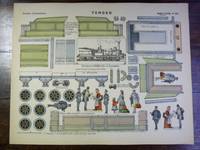
Grandes constructions : Tender. Imagerie d'Épinal Pellerin n°160.
Épinal: Pellerin & Cie 1890. Fine. Pellerin & Cie Épinal s. d. circa 1890 39 x 49 cm une feuille Épinal image color lithograph large format printed on heavy paper. Very fine condition colors very well preserved. These sheets are cardboard constructions or models on which a pattern was printed. This pattern must be cut out and then assembled to construct various objects or life scenes. The Épinal imagery published several series of cut-out models including the ""Large Constructions"" in 39 x 49 cm format the ""Medium Constructions"" and the ""Small Constructions"". From 1880 to 1908 constructions were published featuring architecture costumes boats and various vehicles. During this same period paper theaters or ""home theater"" also enjoyed great success. This toy model developed and persisted until the Second World War. Once sold by peddlers Épinal images owe their name to Jean-Charles Pellerin who was the first printer to publish this type of image in series and who lived in the town of Épinal Vosges. The subjects are very varied but generally revolve around religion history French Revolution battles military uniforms or drawn from successful novels. Épinal imagery has its origins in imagery a popular art born in the 15th century intended mainly for the illiterate rural public. Originally the image is engraved on a wooden board and printing is done using a hand press. It is then colored using stencils. In the 19th century lead castings are made from the engraved woods: stereotypes which allow production to be increased. In 1820 lithography was adopted which induced a radical change in style with finer drawings. In 1900 coloring was still done by stencil thanks to a machine that could color 300 images per hour the Aquatype. Pellerin & Cie unknown
Riferimento per il libraio : 35289
|
|
|
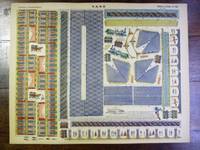
Grandes constructions : Gare. Imagerie d'Épinal Pellerin n°158
Épinal: Pellerin & Cie 1890. Fine. Pellerin & Cie Épinal s. d. circa 1890 39 x 49 cm une feuille Image d'Épinal color lithograph large format printed on heavy paper. Light crease to lower left corner colors very well preserved. These sheets are cardboard constructions or models on which a pattern was printed. This pattern must be cut out and then assembled to construct various objects or life scenes. The imagerie d'Épinal published several series of cut-out models including the ""Grandes Constructions"" in 39 x 49 cm format the ""Moyennes Constructions"" and the ""Petites Constructions"". From 1880 to 1908 constructions were published featuring architecture costumes boats and various vehicles. During this same period paper theaters or ""théâtre chez soi"" also enjoyed great success. This toy model developed and lasted until the Second World War. Once sold by peddlers the images d'Épinal owe their name to Jean-Charles Pellerin who was the first printer to publish this type of image in series and who lived in the town of Épinal Vosges. The subjects are very varied but generally revolve around religion history French Revolution battles military uniforms or drawn from successful novels. The imagerie d'Épinal takes its origins in imagery a popular art born in the 15th century intended mainly for the illiterate public of the countryside. Originally the image is engraved on a wooden block and printing is done using a hand press. It is then colored using stencils. In the 19th century lead castings were made from the engraved woods: the stereotypes which allowed production to be increased. In 1820 lithography was adopted which induced a radical change in style with finer drawings. In 1900 coloring was still done by stencil thanks to a machine that could color 300 images per hour the Aquatype. Pellerin & Cie unknown
Riferimento per il libraio : 35306
|
|
|
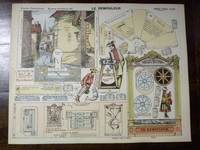
Grandes constructions : Le Rémouleur. Imagerie d'Épinal Pellerin n°537
Épinal: Pellerin & Cie 1890. Fine. Pellerin & Cie Épinal s. d. circa 1890 39 x 49 cm une feuille Image d'Épinal colour lithograph large format printed on heavy paper. Tear to left margin with very slight damage to the print light tear to lower margin colours very well preserved. These plates are cardboard constructions or models onto which a pattern was printed. This pattern must be cut out and then assembled to construct various objects or life scenes. The Épinal imagery published several series of cut-out models including the ""Grandes Constructions"" in 39 x 49 cm format the ""Moyennes Constructions"" and the ""Petites Constructions"". From 1880 to 1908 constructions were published featuring architecture costumes boats and various vehicles. During this same period paper theatres or ""théâtre chez soi"" also enjoyed great success. This toy model developed and endured until the Second World War. Once sold by peddlers the images d'Épinal owe their name to Jean-Charles Pellerin who was the first printer to publish this type of image in series and who lived in the town of Épinal Vosges. The subjects are very varied but generally revolve around religion history French Revolution battles military uniforms or drawn from successful novels. Épinal imagery has its origins in imagery a popular art form born in the 15th century intended mainly for the illiterate rural public. Originally the image is engraved on a wooden plate and printing is carried out using a hand press. It is then coloured using stencils. In the 19th century lead castings are made from the engraved wood blocks: stereotypes which allow production to be increased. In 1820 lithography was adopted which induced a radical change in style with finer drawings. In 1900 colouring was still done by stencil using a machine that could colour 300 images per hour the Aquatype. Pellerin & Cie unknown
Riferimento per il libraio : 35376
|
|
|
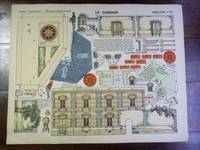
Grandes constructions - Mécanisme marchant au sable : Le Cordier. Imagerie d'Épinal Pellerin n°541
Épinal: Pellerin & Cie 1890. Fine. Pellerin & Cie Épinal s. d. circa 1890 39 x 49 cm une feuille Image d'Épinal color lithograph large format printed on heavy paper. Light creases in lower right corner tiny marginal tear on left side colors slightly faded. These sheets are cardboard constructions or models on which a pattern was printed. This pattern must be cut out then assembled to construct various objects or life scenes. The Épinal imagery published several series of cut-out models including the ""Grandes Constructions"" in 39 x 49 cm format the ""Moyennes Constructions"" and the ""Petites Constructions"". From 1880 to 1908 constructions were published featuring architecture costumes boats and various vehicles. During this same period paper theaters or ""théâtre chez soi"" also enjoyed great success. This toy model developed and lasted until the Second World War. Once sold by peddlers the images d'Épinal owe their name to Jean-Charles Pellerin who was the first printer to publish this type of image in series and who lived in the town of Épinal Vosges. The subjects are very varied but generally revolve around religion history French Revolution battles military uniforms or drawn from successful novels. The Épinal imagery has its origins in imagery a popular art born in the 15th century intended mainly for the illiterate rural public. Originally the image is engraved on a wooden board and printing is done using a hand press. It is then colored using stencils. In the 19th century lead castings are made from the engraved wood: the stereotypes which allow production to be increased. In 1820 lithography was adopted which induced a radical change in style with finer drawings. In 1900 coloring was still done by stencil thanks to a machine that could color 300 images per hour the Aquatype. Pellerin & Cie unknown
Riferimento per il libraio : 35303
|
|
|
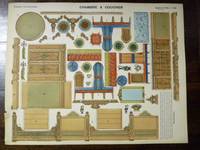
Grandes constructions :Chambre à coucher. Imagerie d'Épinal Pellerin n°192
Épinal: Pellerin & Cie 1890. Fine. Pellerin & Cie Épinal s. d. circa 1890 39 x 49 cm une feuille Épinal print color lithograph large format printed on heavy paper. Tear with lack to left margin not touching the print light creases in lower corners colors very well preserved. These sheets are cardboard constructions or models on which a pattern was printed. This pattern must be cut out then assembled to build various objects or life scenes. The Épinal imagery published several series of cut-out models including the ""Grandes Constructions"" in 39 x 49 cm format the ""Moyennes Constructions"" and the ""Petites Constructions"". From 1880 to 1908 constructions were published featuring architecture costumes boats and various vehicles. During this same period paper theaters or ""théâtre chez soi"" also enjoyed great success. This toy model developed and lasted until the Second World War. Once sold by peddlers the Épinal prints owe their name to Jean-Charles Pellerin who was the first printer to publish this type of image in series and who lived in the town of Épinal Vosges. The subjects are very varied but generally revolve around religion history French Revolution battles military uniforms or drawn from successful novels. Épinal imagery has its origins in imagery a popular art form born in the 15th century intended mainly for the illiterate rural public. Originally the image is engraved on a wooden plank and printing is carried out using a hand press. It is then colored using stencils. In the 19th century lead castings were made from the engraved wood blocks: stereotypes which made it possible to increase production. In 1820 lithography was adopted which induced a radical change in style with finer drawings. In 1900 coloring was still done by stencil thanks to a machine that could color 300 images per hour the Aquatype. Pellerin & Cie unknown
Riferimento per il libraio : 35364
|
|
|
Grandes constructions : Kiosque et musiciens. Imagerie d'Épinal Pellerin n°427 & n°427 bis.
Épinal: Pellerin & Cie 1890. Fine. Pellerin & Cie Épinal s. d. circa 1880-1900 39 x 49 cm Images d'Épinal color lithographs large format printed on heavy paper. The two engravings are stapled together. Very fine condition colors very well preserved. These plates are cardboard constructions or models on which a pattern was printed. This pattern must be cut out then assembled to construct various objects or life scenes. The Épinal imagery published several series of cut-out models including the ""Grandes Constructions"" in 39 x 49 cm format the ""Moyennes Constructions"" and the ""Petites Constructions"". From 1880 to 1908 constructions were published featuring architecture costumes boats and various vehicles. During this same period paper theaters or ""théâtre chez soi"" also enjoyed great success. This type of toy developed and lasted until the Second World War. Once sold by peddlers the images d'Épinal owe their name to Jean-Charles Pellerin who was the first printer to publish this type of image in series and who lived in the town of Épinal Vosges. The subjects are very varied but generally revolve around religion history French Revolution battles military uniforms or drawn from successful novels. The Épinal imagery has its origins in popular art born in the 15th century intended mainly for the illiterate rural public. Originally the image is engraved on a wooden plate and printing is done using a hand press. It is then colored using stencils. In the 19th century lead molds were made from the engraved woods: stereotypes which allowed production to be increased. In 1820 lithography was adopted which induced a radical change in style with finer drawings. In 1900 coloring was still done by stencil using a machine that could color 300 images per hour the Aquatype. Pellerin & Cie unknown
Riferimento per il libraio : 25469

|
|
|
Grandes constructions : Marteau-pilon mécanisme marchant au sable. Imagerie d'Épinal n°553
Épinal: Pellerin & Cie 1890. Fine. Pellerin & Cie Épinal s. d. circa 1880-1900 39 x 49 cm Image d'Épinal color lithograph large format printed on heavy paper. Foxing at the edge of the lower margin without any damage to the engraving otherwise very fine condition colors very well preserved. These plates are cardboard constructions or models on which a pattern was printed. This pattern must be cut out and then assembled to construct various objects or life scenes. The Épinal imagery published several series of cut-out models including the ""Large Constructions"" in 39 x 49 cm format the ""Medium Constructions"" and the ""Small Constructions"". From 1880 to 1908 constructions were published featuring architecture costumes boats and various vehicles. During this same period paper theaters or ""theater at home"" also enjoyed great success. This toy model developed and lasted until the Second World War. Once sold by peddlers the images d'Épinal owe their name to Jean-Charles Pellerin who was the first printer to publish this type of image in series and who lived in the town of Épinal Vosges. The subjects are very varied but generally revolve around religion history French Revolution battles military uniforms or drawn from successful novels. The Épinal imagery has its origins in popular imagery a folk art born in the 15th century intended mainly for the illiterate rural public. Originally the image is engraved on a wooden plate and printing is done using a hand press. It is then colored using stencils. In the 19th century lead castings were made from engraved wood blocks: stereotypes which allowed production to be increased. In 1820 lithography was adopted which induced a radical change in style with finer drawings. In 1900 coloring was still done by stencil using a machine that could color 300 images per hour the Aquatype. Pellerin & Cie unknown
Riferimento per il libraio : 25461

|
|
|
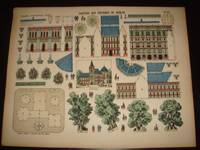
Grandes constructions faciles n°43 : Château aux environs de Dublin
Épinal: Pellerin 1890. Fine. Pellerin Épinal s. d. circa 1880-1900 49 x 39 cm Épinal print color lithograph large format printed on heavy paper. Fine condition colors very well preserved. These plates are cardboard constructions or models on which a pattern was printed. These plates are cardboard constructions or models on which a pattern was printed. This pattern must be cut out then assembled to construct various objects or life scenes. The Épinal printing house published several series of cut-out models including the ""Grandes Constructions"" in 39 x 49 cm format the ""Moyennes Constructions"" and the ""Petites Constructions"". From 1880 to 1908 constructions were published featuring architecture costumes boats and various vehicles. During this same period paper theaters or ""théâtre chez soi"" also enjoyed great success. This toy model developed and endured until the Second World War. Once sold by peddlers Épinal prints owe their name to Jean-Charles Pellerin who was the first printer to publish this type of image in series and who lived in the town of Épinal Vosges. The subjects are very varied but generally revolve around religion history French Revolution battles military uniforms or drawn from successful novels. Épinal imagery has its origins in popular imagery a folk art born in the 15th century intended primarily for the illiterate rural public. Originally the image was engraved on a wooden plate and printing was carried out using a hand press. It was then colored using stencils. In the 19th century lead castings were made from the engraved wood: stereotypes which allowed production to be increased. In 1820 lithography was adopted which induced a radical change in style with finer drawings. In 1900 coloring was still done with stencils thanks to a machine that could color 300 images per hour the Aquatype. Pellerin unknown
Riferimento per il libraio : 26627
|
|
|
Grandes constructions faciles n°44 : Gare américaine à Maryland
Épinal: Pellerin 1890. Fine. Pellerin Épinal s. d. circa 1880-1900 49 x 39 cm Image d'Épinal color lithograph large format printed on heavy paper. Fine condition colors very well preserved. These plates are cardboard constructions or models on which a pattern was printed. These plates are cardboard constructions or models on which a pattern was printed. This pattern must be cut out then assembled to construct various objects or life scenes. The Épinal imagery published several series of cut-out models including the ""Grandes Constructions"" in 39 x 49 cm format the ""Moyennes Constructions"" and the ""Petites Constructions"". From 1880 to 1908 constructions were published featuring architecture costumes boats and various vehicles. During this same period paper theaters or ""théâtre chez soi"" also enjoyed great success. This toy model developed and lasted until the Second World War. Formerly sold by peddlers the images d'Épinal owe their name to Jean-Charles Pellerin who was the first printer to publish this type of image in series and who lived in the town of Épinal Vosges. The subjects are very varied but generally revolve around religion history French Revolution battles military uniforms or drawn from successful novels. The Épinal imagery takes its origins in imagery popular art born in the 15th century intended primarily for the illiterate rural public. Originally the image is engraved on a wooden plate and printing is carried out using a hand press. It is then colored using stencils. In the 19th century lead castings were made from the engraved wood: the stereotypes which allowed production to be increased. In 1820 they switched to lithography which induced a radical change in style with finer drawings. In 1900 coloring was still done with stencils using a machine that could color 300 images per hour the Aquatype. Pellerin unknown
Riferimento per il libraio : 26628

|
|
|
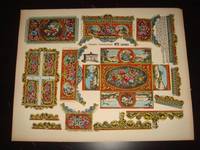
Grandes constructions n°19 : Coffret
Épinal: Pellerin 1890. Fine. Pellerin Épinal s. d. circa 1880-1900 49 x 39 cm Épinal print color lithograph large format printed on heavy paper. A tiny corner chip otherwise handsome condition colors very well preserved. These sheets are cardboard constructions or models on which a pattern was printed. This pattern must be cut out then assembled to construct various objects or life scenes. The Épinal imagery published several series of cut-out models including the ""Grandes Constructions"" in 39 x 49 cm format the ""Moyennes Constructions"" and the ""Petites Constructions"". From 1880 to 1908 constructions were published featuring architecture costumes boats and various vehicles. During this same period paper theaters or ""théâtre chez soi"" also enjoyed great success. This toy model developed and lasted until the Second World War. Once sold by peddlers the Épinal prints owe their name to Jean-Charles Pellerin who was the first printer to publish this type of image in series and who lived in the town of Épinal Vosges. The subjects are very varied but generally revolve around religion history French Revolution battles military uniforms or drawn from successful novels. Épinal imagery takes its origins in popular art imagery born in the 15th century intended mainly for the illiterate rural public. Originally the image is engraved on a wooden board and printing is done using a hand press. It is then colored using stencils. In the 19th century lead castings were made from the engraved wood: the stereotypes which allowed production to be increased. In 1820 lithography was adopted which induced a radical style change with finer drawings. In 1900 coloring was still done with stencils thanks to a machine that could color 300 images per hour the Aquatype. Pellerin unknown
Riferimento per il libraio : 26644
|
|
|
Grandes lettres mobiles n°80 : Jeu de l'alphabet
Épinal: Olivier-Pinot 1890. Fine. Olivier-Pinot Épinal s. d. circa 1880-1900 39 x 49 cm Image d'Épinal color lithograph large format printed on heavy paper. Very fine condition colors very well preserved. These plates are cardboard constructions or models on which a pattern was printed. This pattern must be cut out then assembled to construct various objects or scenes from life. The Imagerie d'Épinal published several series of cut-out models including the ""Grandes Constructions"" in 39 x 49 cm format the ""Moyennes Constructions"" and the ""Petites Constructions"". From 1880 to 1908 constructions were published featuring architecture costumes boats and various vehicles. During this same period paper theaters or ""théâtre chez soi"" also enjoyed great success. This type of toy developed and lasted until the Second World War. Once sold by peddlers the images d'Épinal owe their name to Jean-Charles Pellerin who was the first printer to publish this type of image in series and who lived in the town of Épinal Vosges. The subjects are very varied but generally revolve around religion history French Revolution battles military uniforms or drawn from successful novels. The Imagerie d'Épinal has its origins in imagery a popular art form born in the 15th century intended mainly for the illiterate public of the countryside. Originally the image is engraved on a wooden plate and printing is carried out using a hand press. It is then colored using stencils. In the 19th century lead castings were made from the engraved wood blocks: stereotypes which allowed production to be increased. In 1820 lithography was adopted which induced a radical change in style with finer drawings. In 1900 coloring was still done by stencil thanks to a machine that could color 300 images per hour the Aquatype. Olivier-Pinot unknown
Riferimento per il libraio : 26115

|
|
|
Grant's Pass and Josephine County: Rogue River County Oregon
Grants Pass Oregon: Grants Pass Commercial Club. Very Good. 1911. First Edition. Softcover. Light shelf wear. A color cover and a b/w photograph on every page inside. ; Small 4to 9" - 11" tall; 47 pages . Grants Pass Commercial Club paperback
Riferimento per il libraio : 14741
|
|
|
Grants of the forfeited lands of Edward Duke of Somerset &c &c. Temp Philippi et Mariae. Ex Ms contemporaneo in Bibl Collegii Universitatis Oxon. Edente D. T. Phillipps Barto
Middle Hill : Typis Medio Montanis &c Middle Hill Press 1866 Book. Good. Disbound. title page 3 blanks 9-42 2 blanks 4 pages al numbered 4 53-55 1 blank 6 pages all numbered 4 2 blanks. Pagination is erratic. Does not quite match the Holzenberg description as there he has 8 42 4 53-55 8p. So sold as described and I cannot guarantee it is complete. Holzenberg 87. Printed on several different types of white paper. Some browning. Small tears to some page edges. Typis Medio Montanis &c [ Middle Hill Press ] unknown
Riferimento per il libraio : MH326a
|
|
|
Graphic Arts: a Study in Prints and Printing 1450 - 1950
Middletown CT: Wesleyan University Arts Laboratory 1950. First edition. Hardcover. Small 4to clothbacked boards rear joint separated at the staples. RARE. <br/><br/>It has been claimed by an expert that no more than 25 copies of this work were produced: the colophon says there were to be thirty copies. Wesleyan University Arts Laboratory hardcover
Riferimento per il libraio : 5641
|
|
|
Graphic forms. The arts as related to the book
Cambridge MA: Harvard University Press 1949. First edition 8vo pp. 6 128 40 plates; bottom corners bumped without dust jacket else fine in two-toned black & gray cloth gilt-lettered spine. A collection of illustrated essays on Function Form Style and Prospect by Dwiggins Rollins Paul Rand Lynd Ward and Merle Armitage among others. <br/><br/> Harvard University Press hardcover books
Riferimento per il libraio : 47822
|
|
|
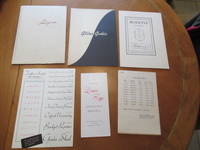
Group Of Bauer Alphabets Inc. Typographical Brochures And Price Lists: "Bodoni Types" "Gilles Gothic" "Legend" "Grafton Script" "Bauer Type" Comprehensive Price Lists
New York City : Bauer Alphabets Inc.1935 1937 Etc. 1935. 1st Edition . Soft cover. Near Fine. Bodoni 16 Pp Including Covers; Gilles Gothic 16 Pp Covers In Color; Legend 32 Leaves Printed On One Side Only In Color Covers; Grafton Script Single Sheet In Black And White; "Original Bauer Type Single Sheet Folded Into Six Pages Red And Black; Price Lists 27 Single Sheets Stapled In Alphabetical Order One Sheet For Each Typeface. Legend Has Two Tiny Stabs Through All Pages And Covers At Bottom Edge Else All Fine Or Near Fine. <br/> <br/> Bauer Alphabets Inc.1935 1937 Etc. paperback
Riferimento per il libraio : 041357
|
|
|
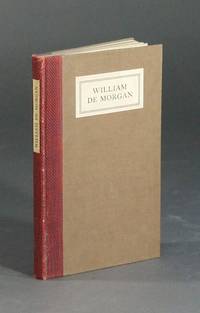
Group of ten titles as below
Chicago & Cedar Rapids 1920. All slim 8vo orig. cloth-backed paper-covered boards paper labels occasionally illustrated etc. Includes 3 titles printed for the Chicago Bookfellows and 7 privately printed for the friends of the Torch Press and 1 duplicate many by J. Christian Bay of the John Crerar Library. Very good sound copies or better. unknown
Riferimento per il libraio : 8016
|
|
|
Group of ten titles as below
Chicago & Cedar Rapids 1920. All slim 8vo orig. cloth-backed paper-covered boards paper labels occasionally illustrated etc. Includes 3 titles printed for the Chicago Bookfellows and 7 privately printed for the friends of the Torch Press and 1 duplicate many by J. Christian Bay of the John Crerar Library. Very good sound copies or better. <br/><br/> hardcover books
Riferimento per il libraio : 8016
|
|
|
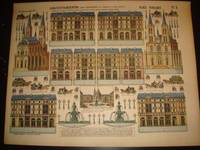
Groupements genre constructions n°2 : Place publique
Épinal: Pellerin 1890. Fine. Pellerin Épinal s. d. circa 1880-1900 49 x 39 cm Épinal print color lithography large format printed on heavy paper. Fine condition colors very well preserved. These sheets are cardboard constructions or models on which a pattern was printed. This pattern must be cut out and then assembled to construct various objects or life scenes. The Épinal imagery published several series of cut-out models including the ""Grandes Constructions"" in 39 x 49 cm format the ""Moyennes Constructions"" and the ""Petites Constructions"". From 1880 to 1908 constructions were published featuring architecture costumes boats and various vehicles. During this same period paper theaters or ""théâtre chez soi"" also enjoyed great success. This type of toy developed and persisted until the Second World War. Once sold by peddlers the Épinal prints owe their name to Jean-Charles Pellerin who was the first printer to publish this type of image in series and who lived in the town of Épinal Vosges. The subjects are very varied but generally revolve around religion history French Revolution battles military uniforms or drawn from successful novels. Épinal imagery has its origins in popular imagery a folk art born in the 15th century intended mainly for the illiterate rural public. Originally the image is engraved on a wooden block and printing is carried out using a hand press. It is then colored using stencils. In the 19th century lead castings called stereotypes were made from the engraved woodblocks allowing increased production. In 1820 lithography was adopted which induced a radical change in style with finer drawings. In 1900 coloring was still done by stencil using a machine that could color 300 images per hour the Aquatype. Pellerin unknown
Riferimento per il libraio : 26143
|
|
|
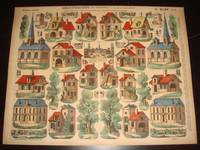
Groupements genre Constructions n°1 : Le Village
Épinal: Pellerin 1890. Fine. Pellerin Épinal s. d. circa 1880-1900 49 x 39 cm Épinal print color lithograph large format printed on heavy paper. Light foxing otherwise fine condition colors very well preserved. These sheets are cardboard constructions or models on which a pattern was printed. This pattern must be cut out and then assembled to construct various objects or life scenes. The Épinal imagery published several series of cut-out models including the ""Large Constructions"" in 39 x 49 cm format the ""Medium Constructions"" and the ""Small Constructions"". From 1880 to 1908 constructions were published featuring architecture costumes boats and various vehicles. During this same period paper theaters or ""theater at home"" also enjoyed great success. This toy model developed and persisted until the Second World War. Once sold by peddlers Épinal prints owe their name to Jean-Charles Pellerin who was the first printer to publish this type of image in series and who lived in the town of Épinal Vosges. The subjects are very varied but generally revolve around religion history French Revolution battles military uniforms or drawn from successful novels. Épinal imagery has its origins in imagery a popular art born in the 15th century intended primarily for the illiterate rural public. Originally the image is engraved on a wooden plate and printing is done using a hand press. It is then colored using stencils. In the 19th century lead castings are made from the engraved wood blocks: stereotypes which allow production to be increased. In 1820 lithography was adopted which induced a radical change in style with finer drawings. In 1900 coloring was still done with stencils thanks to a machine that could color 300 images per hour the Aquatype. Pellerin unknown
Riferimento per il libraio : 26550
|
|
|
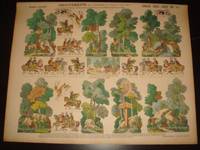
Groupements genre Constructions n°3 : Chasse sous Louis XIV
Épinal: Pellerin 1890. Fine. Pellerin Épinal s. d. circa 1880-1900 49 x 39 cm Épinal print color lithograph large format printed on heavy paper. Fine condition colors very well preserved. These sheets are cardboard constructions or models on which a pattern was printed. This pattern must be cut out and then assembled to construct various objects or life scenes. The Épinal imagery published several series of cut-out models including the ""Large Constructions"" in 39 x 49 cm format the ""Medium Constructions"" and the ""Small Constructions"". From 1880 to 1908 constructions were published featuring architecture costumes boats and various vehicles. During this same period paper theaters or ""theater at home"" also enjoyed great success. This toy model developed and persisted until the Second World War. Once sold by peddlers Épinal prints owe their name to Jean-Charles Pellerin who was the first printer to publish this type of image in series and who lived in the town of Épinal Vosges. The subjects are very varied but generally revolve around religion history French Revolution battles military uniforms or drawn from successful novels. Épinal imagery has its origins in imagery a popular art born in the 15th century intended primarily for the illiterate rural public. Originally the image is engraved on a wooden plate and printing is done using a hand press. It is then colored using stencils. In the 19th century lead castings are made from the engraved wood blocks: stereotypes which allow production to be increased. In 1820 lithography was adopted which induced a radical change in style with finer drawings. In 1900 coloring was still done with stencils thanks to a machine that could color 300 images per hour the Aquatype. Pellerin unknown
Riferimento per il libraio : 26553
|
|
|
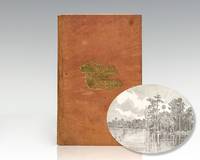
Guide to Florida “The Land of Flowers.”
New York: Cushing Bardua & Co 1872. Scarce first edition of the earliest travel guide to the state of Florida. Small octavo original cloth with gilt titular emblem to the front panel with the rare original folding map of Florida engraved expressly for The Florida Guide by the publisher which is in fine condition advertisements at rear. In very good condition. Scarce with no examples appearing at auction over the past 90 years. The Guide to Florida contains a historic sketch of the history of the state from Spanish cavalier Juan Ponce de Leone's romantic search for the fountain of perpetual youth to the most agreeable regions for the pleasure seeker. Other areas covered include geographical agricultural and climatic statistics routes of travel by land and sea and other general information for the invalid tourist and emigrant. Cushing, Bardua & Co hardcover
Riferimento per il libraio : 98489
|
|
|
Guide to Florida “The Land of Flowers.”
New York: Cushing Bardua & Co 1872. Scarce first edition of the earliest travel guide to the state of Florida. Small octavo original cloth with gilt titular emblem to the front panel with the rare original folding map of Florida engraved expressly for The Florida Guide by the publisher which is in fine condition advertisements at rear. In very good condition. Scarce with no examples appearing at auction over the past 90 years. The Guide to Florida contains a historic sketch of the history of the state from Spanish cavalier Juan Ponce de Leone's romantic search for the fountain of perpetual youth to the most agreeable regions for the pleasure seeker. Other areas covered include geographical agricultural and climatic statistics routes of travel by land and sea and other general information for the invalid tourist and emigrant. Cushing, Bardua & Co hardcover books
Riferimento per il libraio : 98489
|
|
|
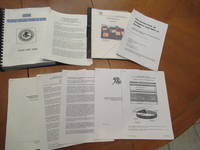
Guidelines For Refugee Processing In Croatia And Romania Refugees From Bosnia Croatia And Serbia
Washington D. C. : U. S. Immigration And Naturalization Service / U. S. Department Of State 2002. Soft cover. Very Good. Briefing Material For U. S. Ins Processing Of Refugees In Croatia And Romania 2002. 1. Plastic Comb Binding "Rome District / Refugee Processing Guidelines / October 1999" 283 Pp; Approximately 50 Pp. Of Office Of International Affairs MemorandaAnd Background Material; 2. Guidelines For Screening On Residence Issues For Bosnian." 4 Pp.; Bosnia Herzegovina / Background" Ins Resource Information Center December 5 1999 Abt. 75 Pp; 3. "The Protection Of Refugees And Idps In Serbia" British Refugee Council 2000 18 Pp; 4. "Preventing Minority Return In Bosnia And Herzegovina: The Anatomy Of Hate And Fear" Icg Report No. 73 1999 24 Pp.; 5. Repatriation Fro The Fr Yugoslavia To Bosnia And Herzegovina And The Republic Of Croatia" Unhcr 7 Pp.6. Unhcr Resettlement In The Federal Republic Of Yugoslavia 2002 Ins 3 Pp; 7. Unhcr's Position On Categories Of Persons From Bosnia An Herzegovina." Sept. 2001 Unhcr 14 Pp.; 8. Repatriation Statistics Unhcr 2002 6 Pp. What Happens When It Is Considered Diplomatically Unwise To Criticize Human Rights Violators In Real Time By Name Individually Or To Evaluate Critically Their Apologists And Enablers: Full Employment For Ambitious Sociable Young "Good Person" Attorneys Who Are All "Outstanding". . <br/> <br/> U. S. Immigration And Naturalization Service / U. S. Department Of State paperback
Riferimento per il libraio : 057654
|
|
|
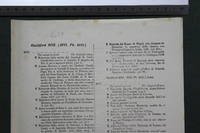
Guildford MSS MSS Ph 4912
Middle Hill : Middle Hill Press 1830 Book. Good. Disbound. 2 pages. Disbound. Pages measure approximately 34 x 21.5cm. 0.5cm at the left is folded over where it was once bound into a volume now disbound. Spotting and light browning. Lists the contents of Phillipps manuscripts 4912 4913 4925 5222 bought from Frederick North 5th Earl of Guilford in 1830. Kraus 256 where it states that 100 copies were printed. [ Middle Hill Press ] unknown
Riferimento per il libraio : MH249
|
|
|
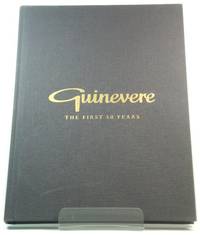
Guinevere: The First 50 Years
London: Guinevere Antiques Ltd 2013. Hardcover no jacket in very good condition. Signed and dedicated to Valentino by Marc Weaver on page 3. A few faint marks on the boards; small mark on page block head. Binding is sound; all text and images are clear. Publication date presumed. CM. Signed. Hardcover. Very Good. Used. Guinevere Antiques Ltd Hardcover
Riferimento per il libraio : 481745
|
|
|
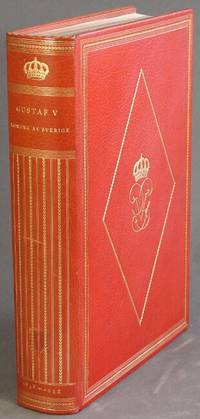
Gustaf V: Konung av Sverige
Minnesskrift med Anledning av Konung Gustaf V.: s 25-Ariga regering och hans 75-arsdag. Stockholm; 1933. Edition limited to 250 numbered copies for distribution in the U.S.A. thick folio pp. 12 & 396 1; frontispiece portrait & 191 photographic illustrations on plates; perforated stamp on title-page and p. 51 slight trace of small label removed from spine else a very fine example in original full orange morocco gilt-stamped at spine covers and edges a.e.g. signed P.A. Norstedt & Soners Bokbinderi Stockholm" in a fleece-lined marbled slipcase. This copy with printed presentation to the St. Paul Public Library "with the hope that it will help to strengthen the bonds between Sweden and The United States of America.and that it will remind the Swedish American people their descendants and the member of this institution of the great development that Sweden has made in the last twenty five years during which Gustaf V has been King of Sweden." <br/><br/> s 25-Ariga regering och hans 75-arsdag. [Stockholm; unknown books
Riferimento per il libraio : 8818
|
|
|
Hagenbeck & Wallace Circus / Trained Wild Animal Circus / Rudy Rudynoff and His Prize Waltzing Horses / Tinymite the World's Smallest Hippopotamus 78" x 40" Original Antique Three Sheet Stone Lithograph Circus Poster
Circa 1895/ 1910: Hagenbeck-Wallace Circus 1900. 1st Edition . No Binding. Fair/No Jacket. 78" x 40. Unusual very large three sheet color lithographic poster title above made as was the practice with early posters by piecing together three original sheets. The complete poster contains large stone lithograph illustrative panels containing hundreds of figures of performers and audience together with separately printed title at top. Top of poster with title is largely in pieces about 80% complete; about 90% of poster panels are intact each in one piece but with minor chipping at edges. A very unusual early fully detailed lithographic poster now archively mounted on board by PosterMountain. Works of this nature are seldom available. <br/> <br/> Hagenbeck-Wallace Circus unknown
Riferimento per il libraio : 018557
|
|
|
Hand bookbinding today an international art. An exhibition organized by the San Francisco Museum of Modern Art in cooperation with the Hand Bookbinders of California
San Francisco: Museum of Modern Art 1978. Edition limited to 2500 copies oblong 8vo pp. 91 5; illustrated throughout some in color; original gray cloth black letteringon spine; fine. <br/><br/> Museum of Modern Art hardcover books
Riferimento per il libraio : 51199
|
|
|
Hand bookbinding today an international art. An exhibition organized by the San Francisco Museum of Modern Art in cooperation with the Hand Bookbinders of California
San Francisco: San Francisco Museum of Modern Art 1978. Edition limited to 2500 copies oblong 8vo pp. 91 5; illustrated throughout some in color; original pictorial wrappers; small stain at the lower outer corner cause some very mild wringling of the pages; all else fine and contained in a black cloth clamshell box gilt lettering on spine. <br/><br/> San Francisco Museum of Modern Art hardcover books
Riferimento per il libraio : 51134
|
|
|
HAND-BOOK to the public records
London: printed by George E. Eyre and WIlliam Spottiswoode 1853. First edition royal 8vo pp. lxii 482; folding chromolithograph plate; ex-library copy with usual markings pages slightly browned hinges cracked spine faded with small cracks in ends covers scuffed else good or better in original purple cloth gilt lettering on spine. Thomas describes the purpose of the Hand-Book: "It is intended to exhibit the various classes of records and documents and much information contained therein analytically and alphabetically arranged under the courts and departments to which they respectively belong" Preface. Includes a history of public records and how they have been stored. printed by George E. Eyre and WIlliam Spottiswoode unknown
Riferimento per il libraio : 13730
|
|
|
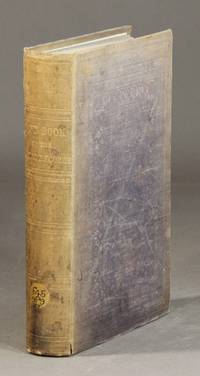
Handbook of Practical Information About Cedar Poles and Butt-Treating
Minneapolis Mn.: Page & Hill Co. 1931 Green/black stapled covers 40 pgs. Revised August 1 1931. Many b/w photographs charts Specifications for Western Red Cedar Poles No. 05cl. Very Rare OCLC lists 1 copy. Third Edition. Original Wraps. Very Good. Page & Hill Co. paperback
Riferimento per il libraio : 00283864
|
|
|
Handwritten vellum indenture for sale of property in Hawkhurst Kent County sold by Susanna Springett the elder of Hawkhurst widow and Susanna Springett the younger of Hawkhurst spinster to William Richards
1719. Near Fine. 1 handwritten vellum indenture 20.5 x 26 inches folded to 9 x 6 inches. Ornate armorial initial letter with motto "Honi soit qui mal y pense" in the garter. On Oct. 16 1719 Susanna Springett the elder of Hawkhurst Kent County England widow and Susanna Springett the younger of Hawkurst spinster and only daughter and heiress of Richard Springett late of Hawkhurst yeoman deceased sell to William Richards in London ironmonger several tracts of land including 20 acres in Hawkhurst with a house barn oasthouse gardens and orchards and 3 acres of brook land. Signed by Susanna Springett the elder Susanna Springett the younger and William Richards with their seals. Blue 6 penny stamp in margin. One engraved revenue stamp on exterior with "23" in the upper right-hand corner. In Near Fine Condition: several folds; exterior sections when folded are lightly soiled; otherwise clean and crisp. unknown
Riferimento per il libraio : 011460
|
|
|
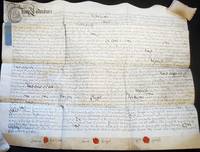
Handwritten Parchment Document involving Stephen Freeland and Nicolas Scriven of New Alresford Southampton County England
1665. Fine. 1 handwritten parchment document 33 x 48 cm. On 14 April 1665 Stephen Freeland of New Alresford of Southampton Co. butcher gave in trust to Nicolas Scriven of the same place butcher the house where Freeland lived for the love for Jane now wife of Freeland. In Fine Condition: clean and crisp. unknown
Riferimento per il libraio : 008778
|
|
|
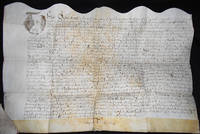
Handwritten Parchment Land Transfer Involving the Flaxman Family of Hanworth Norfolk County England in 1653
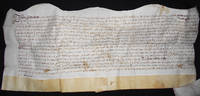
1653. Fine. One handwritten parchment document 24 x 55 cm. On Jan. 11 1665 a 17-acre tract was transferred to John Flaxman the elder of Hanworth of Norfolk County husbandman by John Flaxman Thomas Flaxman and Jerome Flaxman 3 of the sons of John Flaxman the elder. The year is referred to as the fifth year of the reign of Charles of England Scotland France and Ireland. This was Charles II 1630-1685. In Fine Condition: clean and crisp. unknown
Riferimento per il libraio : 008776
|
|
|
Handwritten mortgage: John Bydes the Elder of Little Munden and his son John Bydes the Younger of Elsworth mortgage a property in Herford Co. to Robert Hadsley of Great Munden
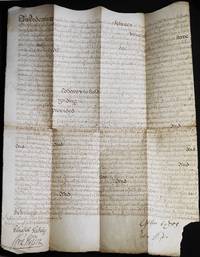
1708. Very Good. One handwritten deed in beautiful calligraphy dated 17 March 1708. 38 x 31 cm. folded. John Bydes the Elder of Little Munden Hertford Co. yeoman and his son John Bydes the Younger of Elsworth Huntington Co. polterer mortgage to Robert Hadsley of Great Munden Hertford Co. a property known as Thurley Close or Tinsley Close in Herford Co. Signed by John Bydes the Elder and John Bydes the Younger and signed by the witnesses Elizabeth Hadsley and Francis Wilson. Statement on back signed by Robert Hadsley and witnessed by Abraham Clarke who make his mark and Francis Wilson who signed. In Very Good Condition: lacking lower right corner without loss of writing; lightly soiled at corners; just starting to separate at along one fold; exterior when folded lightly soiled. unknown
Riferimento per il libraio : 006819
|
|
|
Handwritten List of Students taking Dancing Classes in Philadelphia in the Fall of 1896
1896. Very Good . 8 p.; 33 cm. A largely illegible inscription on the outside of the wrapper. Four lined sheets hand-numbered attached to a light grey wrapper and headed "season 1896-97." The unidentified proprietor of the dancing school listed the students by class: Ladies Evening Class 56 students; Gentleman's Evening Class 56 students; Ladies Afternoon 44 students; Private Waltzing Lessons 17 students; and Children's Class 23 students. The 196 students are listed presumably by the date they joined the class with street addresses for each. In Very Good Condition: one section of the wrapper is sunned; 3 horisontal folds throughout; clean and solid. unknown
Riferimento per il libraio : 005872

|
|
|
Harper's Bazar Bazaar Magazine A Repository Of Fashion Pleasure And Instruction Volume Vii. January 3 Through December 26 1874 - Bound Annual Volume Complete
New York: Harper & Brothers 1874. 1st Edition . Hardcover. Very Good . No Pattern Supplements. 876 Pp. Quarter Morocco Over Marbled Boards Morocco Tips Marbled Boards And Matching Marbled Endpapers. 16" X 12". Light Wear To Binding On Al Edges Hinges Tight No Marks Pages Clean And Square But With Some Even Aging. Price Includes Media Mail Within U.S.; International Shipment At Usps Priority Mail Box Rate For 11 Pound Package. <br/> <br/> Harper & Brothers hardcover
Riferimento per il libraio : 037589
|
|
|
Harper's Bazar Bazaar Magazine A Repository Of Fashion Pleasure And Instruction Volume Xi. January 5 Through December 28 1878 - Bound Annual Volume Complete
New York: Harper & Brothers 1878. 1st Edition . Hardcover. Good. No Pattern Supplements. 840 Pp. Quarter Morocco Over Marbled Boards Morocco Tips Marbled Boards And Matching Marbled Endpapers. 16" X 12". Light Wear To Binding On All Edges Spine Panel Dried And Lightly Chipped Hinges Broken And Both Boards Detached But Present Lacking Pages 37-40. A Few Pages With Small Light Stains Clean And Square But With Some Even Aging And A Few Pages Short Edge Tears. Price Includes Media Mail Within U.S.; International Shipment At Usps Priority Mail Box Rate For 11 Pound Package. <br/> <br/> Harper & Brothers hardcover
Riferimento per il libraio : 037592
|
|
|
Harper's Weekly a Journal of Civilization Vol. III - No. 138. Sat. August 20 1859
New York: Harper & Brothers 1859 Engravings articles news serials; A Tale of Two Cities Book II The Golden Thread Scene at Saratoga engraving rear pg. 544 some edge wear foxing decent copy od scarce edition. Elephant Folio - over 15" - 23" tall. Elephant Folio - over 15" - 23" tall. First Edition. Original Wraps. Very Good. Harper & Brothers paperback
Riferimento per il libraio : 00283601
|
|
|
Harper’s Weekly A Journal of Civilization. Harper’s Weekly’s Complete Coverage of the American Civil War: January 1 1861-December 30 1865.
New York: Harper & Brothers January 1 1861-December 30 1865. Rare continuous run of 260 issues of Harper's Weekly covering the entirety of the American Civil War. Folio five volumes bound in full buckram with morocco spine labels lettered in gilt illustrated with hundreds of wood-engraved illustrations many from noted American illustrators including portraits of Union and Confederate Army Generals and Officers battlefield scenes maps city views and dozens of satirical caricatures and cartoons many from noted American illustrators. Of note are dozens of illustrations by American painter Winslow Homer early in his career including the "Great Sumter Meeting in Union Square" "The Sharpshooter" and "The Inauguration of Abraham Lincoln." Also of note are hundreds of illustrations by Thomas Nast considered the "Father of the American Cartoon" including several Christmas scenes including the first modern depictions of Santa Claus beginning in the January 1863 issues. In very good condition. Bookplates. A very rare and fascinating literary and political chronicle covering all of the war's major events and battles. Published by Harper & Brothers from 1857 until 1916 Harper's Weekly was the most widely read journal in the United States throughout the period of the Civil War. The Weekly had supported the Stephen A. Douglas presidential campaign against Abraham Lincoln but as the American Civil War broke out it fully supported Lincoln and the Union. A July 1863 article on the escaped slave Gordon included a photograph of his back severely scarred from whippings; this provided many readers in the North their first visual evidence of the brutality of slavery. The photograph inspired many free blacks in the North to enlist in the Union army. Harper & Brothers hardcover
Riferimento per il libraio : 142619
|
|
|
Harvard College Class of 1931 First Report 1932
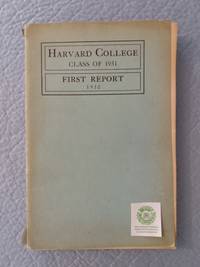
1932. 8vo size trade paperback with sewn binding; 183 pages Contents include: Class Day Exercises Class Poem Ivy Oration Class Ode List of Graduates Marriages and Births has detailed info for family historians Addresses and Occupations has detailed info for family historians Prizes and Honors Organizations Very thin cardstock cover is partly disbound but pages are tightly bound; tanned pages light fox or spot in inner margins of pages 64/65; we noted one creased page corner. . Trade Paperback. Good/No Jacket. 8vo - over 7¾" - 9¾" tall. Private Press. Paperback
Riferimento per il libraio : 006876
|
|
|
Harvard Journal of Asiatic Studies Volume 25 . In honor of a great librarian this volume is dedicated to Alfred K'Aiming Ch'iu . in gratitude for four decades of devoted service to libraries scholars and students
Cambridge: Harvard Yenching Institute 1965. 8vo pp. 307 1; frontispiece portrait the occasional illustration; near fine copy in original gray printed wrappers. This copy inscribed at the top of the front wrapper: "To Ptrofessor Romeyn Taylor with the compliments of A. K'Aiming Ch'iu 1 December 1965." With contributions by Max Loehr David Farquhar Helen McCullough a bibliography of the works of Alfred K'Aiming Ch'iu and his own reminescences as a librarian at Harvard-Yenching. Harvard Yenching Institute unknown
Riferimento per il libraio : 63881

|
|

 Ricevere i risultati per e-mail
 Scaricare i risultati in PDF
 RSS feed
 Link
Link


