|
PLEE
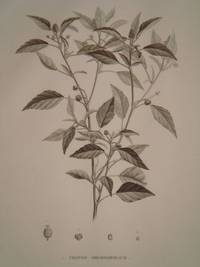
DESCRIPTION DE L'EGYPTE. Botanique. Croton oblongifolium Menispermum leaeba femina Menispermum leaeba masc. Histoire Naturelle planche 51
Paris: Imprimerie Impériale 1809. Fine. Imprimerie Impériale Paris 1809-1829 71 x 54 cm une feuille Original unshaved full-page etching from the Imperial edition of the Description de l'Égypte or Recueil des observations et recherches faites en Égypte pendant l'expédition française publié par les ordres de Sa Majesté l'Empereur Napoléon le Grand A Collection of the observations and research carried out in Egypt during the French expedition published on the orders of his Majesty the Emperor Napoleon the Great'.Produced between February 1802 and 1830 on the orders of Naopleon Bonaparte and published between 1809 and 1828 1000 copies were printed and distributed to institutions on vergé paper with an 'Égypte ancienne et moderne' watermark visible when held up to the light. Light marginal spotting not touching image otherwise in very fresh fine condition. An engraving from the Description de l'Egypte one of the masterpieces of French printing and the birth of a new field: Egyptology. A gigantic survey of Egypt at the time of Bonaparte's conquests in 1798 and 1799 the work is divided into 13 volumes of engravings making up 892 plates of which 72 colored as well as presenting the splendors of the Egypt of the Pharaohs in 9 volumes. The other volumes discuss natural history and present a fascinating portrait of Coptic and Islamic Egypt as it was seen by Bonaparte's Eastern Armies. The Egyptian campaign' militarily a disaster demonstrates through the engravings of the Description d'Egypte the scientific success it nonetheless became thanks to the 167 expert members of the Commission of the Sciences and Arts of the Institut d'Egypte Egyptian Institute who followed Napoleon's army. The Institut gathered together in Egypt the mathematician Monge the chemist Berthollet the naturalist Geoffroy Saint-Hilaire as well as numerous artists engineers architects and doctors. They were tasked with re-discovering modern and ancient Egypt and displaying its natural treasures as well as the know-how of its inhabitants.This edition the so-called Imperial edition of the plates for the Description de l'Egypte was printed in four large formats two of which were specially created for it and christened Moyen-Egypte and Grand-Egypte. A special press was built to print it the process extending over 20 years from 1809 to 1829. The Imperial edition proved so popular that a second edition this time in black and white and without the Egypte ancienne et moderne watermark known as the Royal Edition was published during the Restoration by the printing house of C.-L.-F. Panckoucke Paris.The engravings of the Description d'Egypte owe a great deal to Baron Dominique-Vivant Denon illustrator diplomat collector and later Director of the Musée Napoléon the Louvre. His exploration of the South of Egypt gave Bonaparte the idea of sending the experts of the Institut there thus creating a faithful and complete portrait of the area. This was the research gathered together from 1802 in the mammoth Description de L'Egypte.Denon embarked on this story of archeological exploration at the age of 51 reaching first Alexandria and then Cairo before exploring Upper Egypt. Along with the members of the Institut d'Egypte the Natural History Museum's painter H.J. Redouté brother of Pierre-Joseph Redouté author of Roses the mineralogist Dolomiue and the draughtsman Joly Denon then explored the Nile Delta and Lower Egypt. When however he joined the 21st Light Infantry Regiment as it marched across Upper Egypt in pursuit of the retreating Mameluks in November 1798 he found himself the only civilian. In the very midst of the battle itself he reeled off sketches of the works of art that peppered his path right up to the threshold of the Sudan. He said that he had crossed a country that is apart from its name entirely unknown to Europeans and therefore everything was worth describing Voyages dans la Basse et la Haute Egypte pendant les campagnes de Imprimerie Impériale unknown
Ссылка продавца : 26460
|
|
|
COLLECTIF
Mercure de France n°353 à n°356 tome XCVI année 1912
Paris: Mercure de France 1912. Fine. Mercure de France Paris mars-avril 1912 15 x 23 cm First edition. Full soft mouse-grey cardboard binding original wrappers preserved contemporary binding. Contributions by A.-Ferdinand Hérold ""Pierre Quillard"" O. Uzanne ""Madame de Pompadour intellectuelle comédienne et organisatrice de théâtre intime"" R. Martineau ""Les Débuts de Léon Bloy"" E. Corot ""Madame de Sauge"" F. Viélé-Griffin ""La Délimitation du 'Barrérisme' "" J. Mesnil ""La Crise italienne"" P. Lavedan ""Balzac et Moléri ou le curieux dilemme"" L. Tolstoï ""La Sonate à Kreutzer"" P. Louis ""La Crise de l'état moderne"" E. Herpin ""Chateaubriand et sa cousine Mère des séraphins"" L. Séché ""David d'Angers au cénacle de Joseph Delorme"" G.-C. Cros F. Toussaint ""Gina Laura"". Copy illustrated with drawings by A. Rouveyre. Handsome interior condition. The 'Mercure de France' originated as a French periodical founded in the 17th century under the name 'Mercure Galant' which evolved to become a publishing house in the 20th century. Under the impetus of Rémy de Gourmont and Alfred Jarry a literary review revived the name 'Mercure de France' in 1890 and featured symbolist texts notably by Jean Moréas Ernest Raynaud Jules Renard Louis Dumur. Gradually gaining recognition this review published both the greatest Parnassian poets Baudelaire Rimbaud Verlaine Mallarmé Heredia etc. and witnessed the emergence of Jarry's Pataphysics. The publishing house emerged in its wake. It notably published the first works of Gide and Claudel Colette Apollinaire Georges Duhamel Mercure de France unknown
Ссылка продавца : 26796

|
|
|
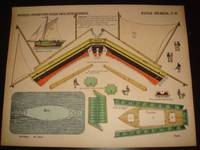
Nouvelles constructions faciles pour jeunes enfants n°17 : Bateau pêcheur
Épinal: Pellerin 1890. Fine. Pellerin Épinal s. d. circa 1880-1900 49 x 39 cm Image d'Épinal color lithograph large format printed on heavy paper. Fine condition colors very well preserved. These plates are cardboard constructions or models on which a pattern was printed. This pattern must be cut out and then assembled to construct various objects or life scenes. The Épinal imagery published several series of cut-out models including the ""Grandes Constructions"" in 39 x 49 cm format the ""Moyennes Constructions"" and the ""Petites Constructions"". From 1880 to 1908 constructions were published featuring architecture costumes ships and various vehicles. During this same period paper theaters or ""théâtre chez soi"" also enjoyed great success. This toy model developed and endured until the Second World War. Once sold by peddlers the images d'Épinal owe their name to Jean-Charles Pellerin who was the first printer to publish this type of image in series and who lived in the town of Épinal Vosges. The subjects are very varied but generally revolve around religion history French Revolution battles military uniforms or drawn from successful novels. The imagery of Épinal has its origins in imagery a popular art born in the 15th century intended mainly for the illiterate rural public. Originally the image is engraved on a wooden plate and printing is carried out using a hand press. It is then colored by means of stencils. In the 19th century lead castings called stereotypes were made from the engraved wood blocks which allowed production to be increased. In 1820 lithography was adopted which brought about a radical change in style with finer drawings. In 1900 coloring was still done by stencil thanks to a machine that could color 300 images per hour the Aquatype. Pellerin unknown
Ссылка продавца : 26595
|
|
|
OLIVIER-PINOT
Constructions n°82 : Prussiens attaquant une place forte
Épinal: Olivier-Pinot 1890. Fine. Olivier-Pinot Épinal s. d. circa 1880-1900 49 x 39 cm Image d'Épinal color lithograph large format printed on heavy paper. Light marginal foxing otherwise fine condition colors very well preserved. These plates are cardboard constructions or models on which a pattern was printed. This pattern must be cut out and then assembled to construct various objects or life scenes. The Épinal imagery published several series of cut-out models including the ""Grandes Constructions"" in 39 x 49 cm format the ""Moyennes Constructions"" and the ""Petites Constructions"". From 1880 to 1908 constructions were published featuring architecture costumes boats and various vehicles. During this same period paper theaters or ""théâtre chez soi"" also enjoyed great success. This toy model developed and endured until World War II. Once sold by peddlers the images d'Épinal owe their name to Jean-Charles Pellerin who was the first printer to publish this type of image in series and who lived in the town of Épinal Vosges. The subjects are very varied but generally revolve around religion history French Revolution battles military uniforms or drawn from successful novels. Épinal imagery has its origins in popular art born in the 15th century intended primarily for the illiterate rural public. Originally the image is engraved on a wooden plate and printing is done using a hand press. It is then colored using stencils. In the 19th century lead castings called stereotypes were made from the engraved wood blocks which increased production. In 1820 lithography was adopted which induced a radical style change with finer drawings. In 1900 coloring was still done by stencil thanks to a machine that could color 300 images per hour the Aquatype. Olivier-Pinot unknown
Ссылка продавца : 26690

|
|
|
CONTE - BERTHAULT (sculpsit)
DESCRIPTION DE L'EGYPTE. Arts et métiers. Plan coupe et détails de la roue à pots ou machine à arroser. ETAT MODERNE volume II planche IV
Paris: Imprimerie Impériale 1809. Fine. Imprimerie Impériale Paris 1809-1829 71 x 53.50 cm une feuille Original etching in plano uncut extracted from the so-called ""Imperial"" edition of the Description de l'Égypte ou Recueil des observations et recherches faites en Égypte pendant l'expédition française publié par les ordres de Sa Majesté l'Empereur Napoléon le Grand. Executed between February 1802 and 1829 by order of Napoleon Bonaparte and published from 1809 actually 1810 it was printed in 1000 copies on watermarked laid paper ""Égypte ancienne et moderne"" and offered to institutions. Light and marginal foxing not affecting the engraving otherwise in very fine state of freshness and preservation. Volume ETAT MODERNE II: The genius of the Institute's scholars is particularly revealed through the plates of the section called Egypte Moderne. Architecture industry social structures sanitary conditions water management music craftsmanship are presented with exceptional precision and graphic quality. The spirit of Diderot and d'Alembert's L'Encyclopédie remains underlying in the approach of the draftsmen of the Description de L'Egypte who accompany the text volumes with numerous detailed plates endeavoring to create a portrait of the populations imbued with beauty and respect. Wealthy pashas or simple potter artisans are represented with sensitivity going about their occupations amid aesthetic compositions without falling into idealism or caricature. LA DESCRIPTION DE L'EGYPTE IMPERIAL edition 1809-1829: La Description de l'Egypte is one of the masterpieces of French publishing and the starting point of a new science: Egyptology. A titanic exposition of Egypt at the time of Bonaparte's conquests between 1798 and 1799 it is divided into 23 volumes including 13 volumes of engravings gathering nearly 1000 plates in black and 72 in color. The 6 volumes of plates titled Antiquités are devoted to the splendors of pharaonic Egypt. L'Histoire naturelle is distributed across 3 volumes of engravings. One volume is devoted to Cartes géographiques et topographiques while the 3 volumes : Etat Moderne present a striking portrait of Coptic and Islamic Egypt as it was seen by Bonaparte's armies of the Orient. The ""Egyptian campaign"" a military disaster reveals through the engravings of the Description de l'Egypte the scientific success it became thanks to the some 167 scholars members of the Commission of Sciences and Arts of the Institute of Egypt who followed Napoleon's army. The Institute brought together in Egypt the mathematician Monge the chemist Berthollet the naturalist Geoffroy Saint-Hilaire as well as numerous artists engineers architects physicians. They were charged with rediscovering modern and ancient Egypt showing its natural riches and the expertise of its inhabitants. The first edition called ""Imperial"" of the Description de l'Egypte was produced in four large formats two of them specially created for it and named ""Moyen-Egypte"" and ""Grand-Egypte"" formats. A specific press was built for its printing which extended over twenty years between 1809 and 1829. The Imperial edition proved so popular that a second edition in 37 volumes entirely in black and without the ""Egypte ancienne et moderne"" watermark called the ""Panckoucke"" edition was published from 1821 by the C.-L.-F. Panckoucke printing house Paris. The realization of this monument of erudition owes much to Baron Dominique Vivant Denon illustrator diplomat collector and later director of the Napoleon Museum of the Louvre who accompanied Napoleon to Egypt with numerous other scholars but decided alone to venture into the South of the country while the other invited scientists remained confined to the Cairo region. The fabulous sketches brought back by Denon during his romantic ride gave Bonaparte the idea to send the other members of the Institute there and thus create a faithful and complete portrait of the territory. Following Denon it was therefore t Imprimerie Impériale unknown
Ссылка продавца : 26319

|
|
|
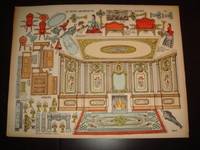
Le Petit architecte n°106 : le Salon
Épinal: Olivier-Pinot 1890. Fine. Olivier-Pinot Épinal s. d. circa 1880-1900 49 x 39 cm Image d'Épinal color lithograph large format printed on heavy paper. Fine condition colors very well preserved. These sheets are cardboard constructions or models on which a pattern was printed. This pattern must be cut out then assembled to construct various objects or life scenes. The Épinal imagery published several series of cut-out models including the ""Grandes Constructions"" in 39 x 49 cm format the ""Moyennes Constructions"" and the ""Petites Constructions"". From 1880 to 1908 constructions were published featuring architecture costumes boats and various vehicles. During this same period paper theaters or ""théâtre chez soi"" also enjoyed great success. This toy model developed and endured until the Second World War. Once sold by peddlers the images d'Épinal owe their name to Jean-Charles Pellerin who was the first printer to publish this type of image in series and who lived in the town of Épinal Vosges. The subjects are very varied but generally revolve around religion history French Revolution battles military uniforms or drawn from successful novels. Épinal imagery takes its origins in imagery a popular art born in the 15th century intended mainly for the illiterate public of the countryside. Originally the image is engraved on a wooden plate and printing is done using a hand press. It is then colored using stencils. In the 19th century lead castings were made from the engraved wood blocks: stereotypes which allowed production to be increased. In 1820 lithography was adopted which induced a radical change in style with finer drawings. In 1900 coloring was still done by stencil thanks to a machine that could color 300 images per hour the Aquatype. Olivier-Pinot unknown
Ссылка продавца : 26411
|
|
|
DUTERTRE - MONSALDI
DESCRIPTION DE L'EGYPTE. Pyramides de Memphis. Bas-reliefs et fragment de hiéroglyphes sculptés dans les tombeaux situés à l'est de la seconde pyramide. ANTIQUITES volume V planche 17
Paris: Imprimerie Impériale 1809. Fine. Imprimerie Impériale Paris 1809-1829 53.50 x 71 cm une feuille Original unshaved full-page etching from the Imperial edition of the Description de l'Égypte or Recueil des observations et recherches faites en Égypte pendant l'expédition française publié par les ordres de Sa Majesté l'Empereur Napoléon le Grand A Collection of the observations and research carried out in Egypt during the French expedition published on the orders of his Majesty the Emperor Napoleon the Great'.Produced between February 1802 and 1830 on the orders of Naopleon Bonaparte and published between 1809 and 1828 1000 copies were printed and distributed to institutions on vergé paper with an 'Égypte ancienne et moderne' watermark visible when held up to the light. Light marginal spotting not touching image otherwise in very fresh fine condition. An engraving from the Description de l'Egypte one of the masterpieces of French printing and the birth of a new field: Egyptology. A gigantic survey of Egypt at the time of Bonaparte's conquests in 1798 and 1799 the work is divided into 13 volumes of engravings making up 892 plates of which 72 colored as well as presenting the splendors of the Egypt of the Pharaohs in 9 volumes. The other volumes discuss natural history and present a fascinating portrait of Coptic and Islamic Egypt as it was seen by Bonaparte's Eastern Armies. The Egyptian campaign' militarily a disaster demonstrates through the engravings of the Description d'Egypte the scientific success it nonetheless became thanks to the 167 expert members of the Commission of the Sciences and Arts of the Institut d'Egypte Egyptian Institute who followed Napoleon's army. The Institut gathered together in Egypt the mathematician Monge the chemist Berthollet the naturalist Geoffroy Saint-Hilaire as well as numerous artists engineers architects and doctors. They were tasked with re-discovering modern and ancient Egypt and displaying its natural treasures as well as the know-how of its inhabitants.This edition the so-called Imperial edition of the plates for the Description de l'Egypte was printed in four large formats two of which were specially created for it and christened Moyen-Egypte and Grand-Egypte. A special press was built to print it the process extending over 20 years from 1809 to 1829. The Imperial edition proved so popular that a second edition this time in black and white and without the Egypte ancienne et moderne watermark known as the Royal Edition was published during the Restoration by the printing house of C.-L.-F. Panckoucke Paris.The engravings of the Description d'Egypte owe a great deal to Baron Dominique-Vivant Denon illustrator diplomat collector and later Director of the Musée Napoléon the Louvre. His exploration of the South of Egypt gave Bonaparte the idea of sending the experts of the Institut there thus creating a faithful and complete portrait of the area. This was the research gathered together from 1802 in the mammoth Description de L'Egypte.Denon embarked on this story of archeological exploration at the age of 51 reaching first Alexandria and then Cairo before exploring Upper Egypt. Along with the members of the Institut d'Egypte the Natural History Museum's painter H.J. Redouté brother of Pierre-Joseph Redouté author of Roses the mineralogist Dolomiue and the draughtsman Joly Denon then explored the Nile Delta and Lower Egypt. When however he joined the 21st Light Infantry Regiment as it marched across Upper Egypt in pursuit of the retreating Mameluks in November 1798 he found himself the only civilian. In the very midst of the battle itself he reeled off sketches of the works of art that peppered his path right up to the threshold of the Sudan. He said that he had crossed a country that is apart from its name entirely unknown to Europeans and therefore everything was worth describing Voyages dans la Basse et la Haute Egypte pendant les campagnes Imprimerie Impériale unknown
Ссылка продавца : 26195

|
|
|
Charles LANCELIN
L'occultisme et la science
Paris: Jean Meyer 1926. Fine. Jean Meyer Paris 1926 14 x 23 cm broché New edition. A trace of angular creasing at the head of the back board slight marginal foxing on the boards. Jean Meyer hardcover
Ссылка продавца : 26280

|
|
|
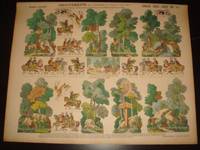
Groupements genre Constructions n°3 : Chasse sous Louis XIV
Épinal: Pellerin 1890. Fine. Pellerin Épinal s. d. circa 1880-1900 49 x 39 cm Épinal print color lithograph large format printed on heavy paper. Fine condition colors very well preserved. These sheets are cardboard constructions or models on which a pattern was printed. This pattern must be cut out and then assembled to construct various objects or life scenes. The Épinal imagery published several series of cut-out models including the ""Large Constructions"" in 39 x 49 cm format the ""Medium Constructions"" and the ""Small Constructions"". From 1880 to 1908 constructions were published featuring architecture costumes boats and various vehicles. During this same period paper theaters or ""theater at home"" also enjoyed great success. This toy model developed and persisted until the Second World War. Once sold by peddlers Épinal prints owe their name to Jean-Charles Pellerin who was the first printer to publish this type of image in series and who lived in the town of Épinal Vosges. The subjects are very varied but generally revolve around religion history French Revolution battles military uniforms or drawn from successful novels. Épinal imagery has its origins in imagery a popular art born in the 15th century intended primarily for the illiterate rural public. Originally the image is engraved on a wooden plate and printing is done using a hand press. It is then colored using stencils. In the 19th century lead castings are made from the engraved wood blocks: stereotypes which allow production to be increased. In 1820 lithography was adopted which induced a radical change in style with finer drawings. In 1900 coloring was still done with stencils thanks to a machine that could color 300 images per hour the Aquatype. Pellerin unknown
Ссылка продавца : 26553
|
|
|
Jean-Baptiste MOLINIER
Les orateurs chrétiens ou choix des meilleurs discours prononcés dans les églises de France depuis Louis XIV jusqu'à nos jours tome XXII : Sermon de J.B. Molinier
Paris: A la providence chez Blaise jeune 1822. Fine. A la providence chez Blaise jeune Paris 1822 13.50 x 21 cm relié First edition. Half brown calf with corners smooth spine decorated with cold-stamped romantic motifs and double gilt fillets navy calf title and volume labels minor rubbing traces on joints cold-stamped frieze frame on marbled paper boards scratches with paper losses on front board corners and edges worn in places marbled edges contemporary romantic binding. Small angular lack at head of first endpaper handsome interior condition almost free of any foxing. A la providence chez Blaise jeune hardcover
Ссылка продавца : 27055

|
|
|
MACRET
DESCRIPTION DE L'EGYPTE. Botanique. Fucus antennulatus Fucus denticulatus. Histoire Naturelle planche 55
Paris: Imprimerie Impériale 1809. Fine. Imprimerie Impériale Paris 1809-1829 71 x 54 cm une feuille Original unshaved full-page etching from the Imperial edition of the Description de l'Égypte or Recueil des observations et recherches faites en Égypte pendant l'expédition française publié par les ordres de Sa Majesté l'Empereur Napoléon le Grand A Collection of the observations and research carried out in Egypt during the French expedition published on the orders of his Majesty the Emperor Napoleon the Great'.Produced between February 1802 and 1830 on the orders of Naopleon Bonaparte and published between 1809 and 1828 1000 copies were printed and distributed to institutions on vergé paper with an 'Égypte ancienne et moderne' watermark visible when held up to the light. Light marginal spotting not touching image otherwise in very fresh fine condition. An engraving from the Description de l'Egypte one of the masterpieces of French printing and the birth of a new field: Egyptology. A gigantic survey of Egypt at the time of Bonaparte's conquests in 1798 and 1799 the work is divided into 13 volumes of engravings making up 892 plates of which 72 colored as well as presenting the splendors of the Egypt of the Pharaohs in 9 volumes. The other volumes discuss natural history and present a fascinating portrait of Coptic and Islamic Egypt as it was seen by Bonaparte's Eastern Armies. The Egyptian campaign' militarily a disaster demonstrates through the engravings of the Description d'Egypte the scientific success it nonetheless became thanks to the 167 expert members of the Commission of the Sciences and Arts of the Institut d'Egypte Egyptian Institute who followed Napoleon's army. The Institut gathered together in Egypt the mathematician Monge the chemist Berthollet the naturalist Geoffroy Saint-Hilaire as well as numerous artists engineers architects and doctors. They were tasked with re-discovering modern and ancient Egypt and displaying its natural treasures as well as the know-how of its inhabitants.This edition the so-called Imperial edition of the plates for the Description de l'Egypte was printed in four large formats two of which were specially created for it and christened Moyen-Egypte and Grand-Egypte. A special press was built to print it the process extending over 20 years from 1809 to 1829. The Imperial edition proved so popular that a second edition this time in black and white and without the Egypte ancienne et moderne watermark known as the Royal Edition was published during the Restoration by the printing house of C.-L.-F. Panckoucke Paris.The engravings of the Description d'Egypte owe a great deal to Baron Dominique-Vivant Denon illustrator diplomat collector and later Director of the Musée Napoléon the Louvre. His exploration of the South of Egypt gave Bonaparte the idea of sending the experts of the Institut there thus creating a faithful and complete portrait of the area. This was the research gathered together from 1802 in the mammoth Description de L'Egypte.Denon embarked on this story of archeological exploration at the age of 51 reaching first Alexandria and then Cairo before exploring Upper Egypt. Along with the members of the Institut d'Egypte the Natural History Museum's painter H.J. Redouté brother of Pierre-Joseph Redouté author of Roses the mineralogist Dolomiue and the draughtsman Joly Denon then explored the Nile Delta and Lower Egypt. When however he joined the 21st Light Infantry Regiment as it marched across Upper Egypt in pursuit of the retreating Mameluks in November 1798 he found himself the only civilian. In the very midst of the battle itself he reeled off sketches of the works of art that peppered his path right up to the threshold of the Sudan. He said that he had crossed a country that is apart from its name entirely unknown to Europeans and therefore everything was worth describing Voyages dans la Basse et la Haute Egypte pendant les campagnes de Imprimerie Impériale unknown
Ссылка продавца : 26423

|
|
|
M PINARD
Histoire archéologie biographie du canton de Longjumeau
Paris: Auguste Durand 1864. Fine. Auguste Durand Paris 1864 14 x 23 cm relié First edition. Contemporary half sheep binding in dark green spine with four raised bands showing slight rubbing light scratches on marbled paper boards marbled endpapers and pastedowns edge rubbing contemporary binding. Some light foxing. Auguste Durand hardcover
Ссылка продавца : 26314

|
|
|
JEAN JEAN
DESCRIPTION DE L'EGYPTE. Collection d'antiques. Toiles peintes Masque en bois Objets en terre cuite Diverses figures et amulettes en forme de scarabées Fragment en bas-relief Tête de boeuf en pièces. ANTIQUITES volume V planche 89
Paris: Imprimerie Impériale 1809. Fine. Imprimerie Impériale Paris 1809-1829 - une feuille Original unshaved full-page etching from the Imperial edition of the Description de l'Égypte or Recueil des observations et recherches faites en Égypte pendant l'expédition française publié par les ordres de Sa Majesté l'Empereur Napoléon le Grand A Collection of the observations and research carried out in Egypt during the French expedition published on the orders of his Majesty the Emperor Napoleon the Great'.Produced between February 1802 and 1830 on the orders of Naopleon Bonaparte and published between 1809 and 1828 1000 copies were printed and distributed to institutions on vergé paper with an 'Égypte ancienne et moderne' watermark visible when held up to the light. Light marginal spotting not touching image otherwise in very fresh fine condition. An engraving from the Description de l'Egypte one of the masterpieces of French printing and the birth of a new field: Egyptology. A gigantic survey of Egypt at the time of Bonaparte's conquests in 1798 and 1799 the work is divided into 13 volumes of engravings making up 892 plates of which 72 colored as well as presenting the splendors of the Egypt of the Pharaohs in 9 volumes. The other volumes discuss natural history and present a fascinating portrait of Coptic and Islamic Egypt as it was seen by Bonaparte's Eastern Armies. The Egyptian campaign' militarily a disaster demonstrates through the engravings of the Description d'Egypte the scientific success it nonetheless became thanks to the 167 expert members of the Commission of the Sciences and Arts of the Institut d'Egypte Egyptian Institute who followed Napoleon's army. The Institut gathered together in Egypt the mathematician Monge the chemist Berthollet the naturalist Geoffroy Saint-Hilaire as well as numerous artists engineers architects and doctors. They were tasked with re-discovering modern and ancient Egypt and displaying its natural treasures as well as the know-how of its inhabitants.This edition the so-called Imperial edition of the plates for the Description de l'Egypte was printed in four large formats two of which were specially created for it and christened Moyen-Egypte and Grand-Egypte. A special press was built to print it the process extending over 20 years from 1809 to 1829. The Imperial edition proved so popular that a second edition this time in black and white and without the Egypte ancienne et moderne watermark known as the Royal Edition was published during the Restoration by the printing house of C.-L.-F. Panckoucke Paris.The engravings of the Description d'Egypte owe a great deal to Baron Dominique-Vivant Denon illustrator diplomat collector and later Director of the Musée Napoléon the Louvre. His exploration of the South of Egypt gave Bonaparte the idea of sending the experts of the Institut there thus creating a faithful and complete portrait of the area. This was the research gathered together from 1802 in the mammoth Description de L'Egypte.Denon embarked on this story of archeological exploration at the age of 51 reaching first Alexandria and then Cairo before exploring Upper Egypt. Along with the members of the Institut d'Egypte the Natural History Museum's painter H.J. Redouté brother of Pierre-Joseph Redouté author of Roses the mineralogist Dolomiue and the draughtsman Joly Denon then explored the Nile Delta and Lower Egypt. When however he joined the 21st Light Infantry Regiment as it marched across Upper Egypt in pursuit of the retreating Mameluks in November 1798 he found himself the only civilian. In the very midst of the battle itself he reeled off sketches of the works of art that peppered his path right up to the threshold of the Sudan. He said that he had crossed a country that is apart from its name entirely unknown to Europeans and therefore everything was worth describing Voyages dans la Basse et la Haute Egypte pendant les campagnes de Bonapart Imprimerie Impériale unknown
Ссылка продавца : 26242

|
|
|
CONTE - Louis-Alexandre DE BUIGNE
DESCRIPTION DE L'EGYPTE. Arts et métiers. Four à poulets du Kaire Four à chaux Four à plâtre Four à poteries Tour du potier Four à verrerie Four à verrerie pour le sel ammoniaque Four à sel ammoniaque. ETAT MODERNE volume II planche II
Paris: Imprimerie Impériale 1809. Fine. Imprimerie Impériale Paris 1809-1829 71 x 53.50 cm une feuille Original etching in plano uncut extracted from the so-called ""Imperial"" edition of the Description de l'Égypte ou Recueil des observations et recherches faites en Égypte pendant l'expédition française publié par les ordres de Sa Majesté l'Empereur Napoléon le Grand. Executed between February 1802 and 1829 on Napoleon Bonaparte's orders and published from 1809 actually 1810 it was printed in 1000 copies on watermarked laid paper ""Égypte ancienne et moderne"" and presented to institutions. Light marginal foxing not affecting the engraving otherwise very fine condition and preservation. ISLAMIC ARCHITECTURE OF CAIRO : The set of engravings to which this plate belongs constitutes one of the first reasoned studies of the monuments of Islamic Egypt in Cairo gathering plans sections and elevations of mosques mausoleums and fortifications from the 9th century Tulunid period to the Mamluk constructions contemporary with the arrival of Bonaparte's troops. Furthermore the architects and engineers of the Institute of Egypt realized a large series of plates devoted to dwellings and civil constructions whether of grand or more modest execution providing precious testimony on the life of Cairenes at the end of the 19th century. The few ancient vestiges remaining in the city were also immortalized by the scholars of the Institute who had established their quarters in the capital. Volume ETAT MODERNE II : The genius of the Institute's scholars is particularly revealed through the plates of the section called Egypte Moderne. Architecture industry social structures sanitary conditions water systems music craftsmanship are presented with exceptional precision and graphic quality. The spirit of Diderot and d'Alembert's Encyclopédie remains underlying in the approach of the draughtsmen of the Description de L'Egypte who accompany the text volumes with numerous detailed plates endeavoring to create a portrait of the populations imbued with beauty and respect. Wealthy pashas or simple potter craftsmen are represented with sensitivity going about their occupations in the midst of aesthetic compositions without falling into idealism or caricature. LA DESCRIPTION DE L'EGYPTE IMPERIAL edition 1809-1829 : La Description de l'Egypte is one of the masterpieces of French publishing and the starting point of a new science: Egyptology. A titanic exposition of Egypt at the time of Bonaparte's conquests between 1798 and 1799 it is divided into 23 volumes including 13 volumes of engravings gathering nearly 1000 plates in black and 72 in color. The 6 volumes of plates entitled Antiquités are devoted to the splendors of Pharaonic Egypt. L'Histoire naturelle is divided into 3 volumes of engravings. One volume is devoted to Cartes géographiques et topographiques while the 3 volumes : Etat Moderne present a striking portrait of Coptic and Islamic Egypt as it was seen by Bonaparte's Army of the Orient. The ""Egyptian campaign"" a military disaster reveals through the engravings of the Description de l'Egypte the scientific success it became thanks to the some 167 scholars members of the Commission of Sciences and Arts of the Institute of Egypt who followed Napoleon's army. The Institute brought together in Egypt the mathematician Monge the chemist Berthollet the naturalist Geoffroy Saint-Hilaire as well as numerous artists engineers architects doctors. They were charged with rediscovering modern and ancient Egypt showing its natural riches and the know-how of its inhabitants. The first edition called ""Imperial"" of the Description de l'Egypte was executed in four large formats two of them specially created for it and named ""Moyen-Egypte"" and ""Grand-Egypte"" formats. A specific press was built for its printing which extended over twenty years between 1809 and 1829. The Imperial edition proved so popular that a second edition in 37 volumes entirely in Imprimerie Impériale unknown
Ссылка продавца : 26321

|
|
|
COLLECTIF
Mercure de France n°345 à n°348 tome XCIV année 1911
Paris: Mercure de France 1911. Fine. Mercure de France Paris novembre-décembre 1911 15 x 23 cm First edition. Full soft grey cardboard binding original wrappers preserved contemporary binding. Contributions by H. Mazel ""Le Cromwell de Carlyle"" A. Rouveyre E. Pilon ""Autour de Buffon : madame Daubenton et sa fille"" J. Galzy ""L'Ensevelie"" R. de Gourmont Rachilde R. Lauret ""La France immoraliste"" R. Dumesnil ""Madame Bovary et son temps"" M. Beaubourg ""Albert Fleury"" P. Quillard G. Batault ""Le Positivisme scientifique et son critique Émile Meyerson"" C. Siger ""La Valeur de l'Accord franco-allemand"" G. de Lautrec ""Robert-Louis Stevenson"" P. Maurel ""La Maison où est mort Watteau à Nogent-sur-Marne"". Handsome interior condition. The 'Mercure de France' was originally a French periodical founded in the 17th century under the name 'Mercure Galant' which evolved to become a publishing house in the 20th century. Under the influence of Rémy de Gourmont and Alfred Jarry a literary review revived the name 'Mercure de France' in 1890 and featured symbolist texts notably by Jean Moréas Ernest Raynaud Jules Renard Louis Dumur. Gradually gaining recognition this review published both the greatest Parnassians Baudelaire Rimbaud Verlaine Mallarmé Heredia etc. and witnessed the emergence of Jarry's Pataphysics. The publishing house was born in its wake. It notably published the first works of Gide and Claudel Colette Apollinaire Georges Duhamel Mercure de France unknown
Ссылка продавца : 26758

|
|
|
FAYE
DESCRIPTION DE L'EGYPTE. Alexandrie. Plans et vues intérieures de plusieurs tours de l'enceinte des Arabes. ETAT MODERNE volume II planche 90
Paris: Imprimerie Impériale 1809. Fine. Imprimerie Impériale Paris 1809-1829 53.50 x 71 cm une feuille Original unshaved full-page etching from the Imperial edition of the Description de l'Égypte or Recueil des observations et recherches faites en Égypte pendant l'expédition française publié par les ordres de Sa Majesté l'Empereur Napoléon le Grand A Collection of the observations and research carried out in Egypt during the French expedition published on the orders of his Majesty the Emperor Napoleon the Great'.Produced between February 1802 and 1830 on the orders of Naopleon Bonaparte and published between 1809 and 1828 1000 copies were printed and distributed to institutions on vergé paper with an 'Égypte ancienne et moderne' watermark visible when held up to the light. Light marginal spotting not touching image otherwise in very fresh fine condition. An engraving from the Description de l'Egypte one of the masterpieces of French printing and the birth of a new field: Egyptology. A gigantic survey of Egypt at the time of Bonaparte's conquests in 1798 and 1799 the work is divided into 13 volumes of engravings making up 892 plates of which 72 colored as well as presenting the splendors of the Egypt of the Pharaohs in 9 volumes. The other volumes discuss natural history and present a fascinating portrait of Coptic and Islamic Egypt as it was seen by Bonaparte's Eastern Armies. The Egyptian campaign' militarily a disaster demonstrates through the engravings of the Description d'Egypte the scientific success it nonetheless became thanks to the 167 expert members of the Commission of the Sciences and Arts of the Institut d'Egypte Egyptian Institute who followed Napoleon's army. The Institut gathered together in Egypt the mathematician Monge the chemist Berthollet the naturalist Geoffroy Saint-Hilaire as well as numerous artists engineers architects and doctors. They were tasked with re-discovering modern and ancient Egypt and displaying its natural treasures as well as the know-how of its inhabitants.This edition the so-called Imperial edition of the plates for the Description de l'Egypte was printed in four large formats two of which were specially created for it and christened Moyen-Egypte and Grand-Egypte. A special press was built to print it the process extending over 20 years from 1809 to 1829. The Imperial edition proved so popular that a second edition this time in black and white and without the Egypte ancienne et moderne watermark known as the Royal Edition was published during the Restoration by the printing house of C.-L.-F. Panckoucke Paris.The engravings of the Description d'Egypte owe a great deal to Baron Dominique-Vivant Denon illustrator diplomat collector and later Director of the Musée Napoléon the Louvre. His exploration of the South of Egypt gave Bonaparte the idea of sending the experts of the Institut there thus creating a faithful and complete portrait of the area. This was the research gathered together from 1802 in the mammoth Description de L'Egypte.Denon embarked on this story of archeological exploration at the age of 51 reaching first Alexandria and then Cairo before exploring Upper Egypt. Along with the members of the Institut d'Egypte the Natural History Museum's painter H.J. Redouté brother of Pierre-Joseph Redouté author of Roses the mineralogist Dolomiue and the draughtsman Joly Denon then explored the Nile Delta and Lower Egypt. When however he joined the 21st Light Infantry Regiment as it marched across Upper Egypt in pursuit of the retreating Mameluks in November 1798 he found himself the only civilian. In the very midst of the battle itself he reeled off sketches of the works of art that peppered his path right up to the threshold of the Sudan. He said that he had crossed a country that is apart from its name entirely unknown to Europeans and therefore everything was worth describing Voyages dans la Basse et la Haute Egypte pendant les campagnes Imprimerie Impériale unknown
Ссылка продавца : 26297

|
|
|
Paul-Bernard GRENET
Pierre Teilhard de Chardin ou le philosophe malgré lui
Paris: Beauchesne 1960. Fine. Beauchesne Paris 1960 14 x 19.50 cm broché First edition with no mention of deluxe copies. A very handsome copy. Beauchesne unknown
Ссылка продавца : 3036

|
|
|
COLLECTIF
Pétition adressée au Sénat sur l'affaire Libri avec une note à l'appui signée par MM. Guizot le marquis d'Audiffret Prosper Mérimée Edouard Laboulaye Victor Leclerc Paulin Paris Jules Pelletier Alfred de Wailly Romain Merlin et Henry Celliez
Paris: Charles Lahure & Cie 1861. Fine. Charles Lahure & Cie Paris 1861 13 x 21.50 cm broché First edition. A rare and good copy. Charles Lahure & Cie unknown
Ссылка продавца : 26324

|
|
|
RAFFENEAU DELILE - TESTARD (sculpsit)
DESCRIPTION DE L'EGYPTE. Vallée du Nil et lac Maréotis. Profils et nivellement du lac Maréotis à la mer Profil de la vallée du Nil à la hauteur des pyramides Plan et profils de la vallée du Nil à Syout ou Lycopolis. ANTIQUITES volume V planche 19
Paris: Imprimerie Impériale 1809. Fine. Imprimerie Impériale Paris 1809-1829 71 x 53.50 cm une feuille Original unshaved full-page etching from the Imperial edition of the Description de l'Égypte or Recueil des observations et recherches faites en Égypte pendant l'expédition française publié par les ordres de Sa Majesté l'Empereur Napoléon le Grand A Collection of the observations and research carried out in Egypt during the French expedition published on the orders of his Majesty the Emperor Napoleon the Great'.Produced between February 1802 and 1830 on the orders of Naopleon Bonaparte and published between 1809 and 1828 1000 copies were printed and distributed to institutions on vergé paper with an 'Égypte ancienne et moderne' watermark visible when held up to the light. Light marginal spotting not touching image otherwise in very fresh fine condition. An engraving from the Description de l'Egypte one of the masterpieces of French printing and the birth of a new field: Egyptology. A gigantic survey of Egypt at the time of Bonaparte's conquests in 1798 and 1799 the work is divided into 13 volumes of engravings making up 892 plates of which 72 colored as well as presenting the splendors of the Egypt of the Pharaohs in 9 volumes. The other volumes discuss natural history and present a fascinating portrait of Coptic and Islamic Egypt as it was seen by Bonaparte's Eastern Armies. The Egyptian campaign' militarily a disaster demonstrates through the engravings of the Description d'Egypte the scientific success it nonetheless became thanks to the 167 expert members of the Commission of the Sciences and Arts of the Institut d'Egypte Egyptian Institute who followed Napoleon's army. The Institut gathered together in Egypt the mathematician Monge the chemist Berthollet the naturalist Geoffroy Saint-Hilaire as well as numerous artists engineers architects and doctors. They were tasked with re-discovering modern and ancient Egypt and displaying its natural treasures as well as the know-how of its inhabitants.This edition the so-called Imperial edition of the plates for the Description de l'Egypte was printed in four large formats two of which were specially created for it and christened Moyen-Egypte and Grand-Egypte. A special press was built to print it the process extending over 20 years from 1809 to 1829. The Imperial edition proved so popular that a second edition this time in black and white and without the Egypte ancienne et moderne watermark known as the Royal Edition was published during the Restoration by the printing house of C.-L.-F. Panckoucke Paris.The engravings of the Description d'Egypte owe a great deal to Baron Dominique-Vivant Denon illustrator diplomat collector and later Director of the Musée Napoléon the Louvre. His exploration of the South of Egypt gave Bonaparte the idea of sending the experts of the Institut there thus creating a faithful and complete portrait of the area. This was the research gathered together from 1802 in the mammoth Description de L'Egypte.Denon embarked on this story of archeological exploration at the age of 51 reaching first Alexandria and then Cairo before exploring Upper Egypt. Along with the members of the Institut d'Egypte the Natural History Museum's painter H.J. Redouté brother of Pierre-Joseph Redouté author of Roses the mineralogist Dolomiue and the draughtsman Joly Denon then explored the Nile Delta and Lower Egypt. When however he joined the 21st Light Infantry Regiment as it marched across Upper Egypt in pursuit of the retreating Mameluks in November 1798 he found himself the only civilian. In the very midst of the battle itself he reeled off sketches of the works of art that peppered his path right up to the threshold of the Sudan. He said that he had crossed a country that is apart from its name entirely unknown to Europeans and therefore everything was worth describing Voyages dans la Basse et la Haute Egypte pendant les campagnes Imprimerie Impériale unknown
Ссылка продавца : 26192

|
|
|
Pierre FLOURENS
De la vie et de l'intelligence
Paris: Garnier frères 1858. Fine. Garnier frères Paris 1858 12 x 19 cm relié First edition. Half sheep binding in navy blue smooth spine decorated with triple gilt fillets showing minor rubbing vellum-style title label marbled paper boards marbled endpapers and pastedowns original wrappers preserved. Light scattered foxing. Garnier frères hardcover
Ссылка продавца : 27006

|
|
|
COLLECTIF
Mercure de France n°389 à n°392 tome CV année 1913
Paris: Mercure de France 1913. Fine. Mercure de France Paris septembre-octobre 1913 15 x 23 cm First edition. Contemporary binding in soft mouse-gray paper boards original wrappers preserved. Contributions by G. Brandès ""Hernik Ibsen intime"" J. Bouchon ""LAéroplane sur la mer"" P. Champion ""Clercs et écoliers du temps de François Villon"" L. Pergaud ""Les Rustiques"" R. de Gourmont G.Duhamel H. Loyson L. Séché ""Les Amitiés littéraires d'Alfred de Vigny"" H. Thuile O. Wilde ""La Renaissance anglaise de l'art"" L. Tailhade ""Le Vrai mystère de la passion"" L. Péru de Lacroix ""Bolivar jugé par un officier de Napoléon"" M. Pays ""La Dernière chevauchée P. Escoube ""Verlaine et l'amour"" R. D'Humières ""Renaissance catholique"" P. Castiaux ""Loin quelqu'un chante sur la route"" G. Duhamel ""Le Théâtre du Vieux Colombier"" E. Reclus ""Lettres inédites"" P. Berrichon ""A Propos de la nouvelle édition des 'Oeuvres' de Rimbaud"" H. Bachelin H.-D. Davray ""Le Secret de Charlotte Brontë"" A. Spire A. Ransome ""L'Art pour la vie"" M. Beaubourg ""Le Houdan"". Pleasant interior condition. The 'Mercure de France' originated as a French review founded in the 17th century under the name 'Mercure Galant' which evolved to become in the 20th century a publishing house. Under the impetus of Rémy de Gourmont and Alfred Jarry a literary review resumed the name 'Mercure de France' in 1890 and presented symbolist texts notably by Jean Moréas Ernest Raynaud Jules Renard Louis Dumur. Gradually gaining recognition this review published both the greatest Parnassians Baudelaire Rimbaud Verlaine Mallarmé Heredia etc. and witnessed the emergence of Jarry's Pataphysics. The publishing house was born in its wake. It notably published the first works of Gide and Claudel of Colette of Apollinaire of Georges Duhamel Mercure de France hardcover
Ссылка продавца : 26860

|
|
|
GUYARD FILS
DESCRIPTION DE L'EGYPTE. Botanique. Elymus geniculatus Aristida obtusa Aristida ciliata. Histoire Naturelle planche 13
Paris: Imprimerie Impériale 1809. Fine. Imprimerie Impériale Paris 1809-1829 71 x 54 cm une feuille Original unshaved full-page etching from the Imperial edition of the Description de l'Égypte or Recueil des observations et recherches faites en Égypte pendant l'expédition française publié par les ordres de Sa Majesté l'Empereur Napoléon le Grand A Collection of the observations and research carried out in Egypt during the French expedition published on the orders of his Majesty the Emperor Napoleon the Great'.Produced between February 1802 and 1830 on the orders of Naopleon Bonaparte and published between 1809 and 1828 1000 copies were printed and distributed to institutions on vergé paper with an 'Égypte ancienne et moderne' watermark visible when held up to the light. Light marginal spotting not touching image otherwise in very fresh fine condition. An engraving from the Description de l'Egypte one of the masterpieces of French printing and the birth of a new field: Egyptology. A gigantic survey of Egypt at the time of Bonaparte's conquests in 1798 and 1799 the work is divided into 13 volumes of engravings making up 892 plates of which 72 colored as well as presenting the splendors of the Egypt of the Pharaohs in 9 volumes. The other volumes discuss natural history and present a fascinating portrait of Coptic and Islamic Egypt as it was seen by Bonaparte's Eastern Armies. The Egyptian campaign' militarily a disaster demonstrates through the engravings of the Description d'Egypte the scientific success it nonetheless became thanks to the 167 expert members of the Commission of the Sciences and Arts of the Institut d'Egypte Egyptian Institute who followed Napoleon's army. The Institut gathered together in Egypt the mathematician Monge the chemist Berthollet the naturalist Geoffroy Saint-Hilaire as well as numerous artists engineers architects and doctors. They were tasked with re-discovering modern and ancient Egypt and displaying its natural treasures as well as the know-how of its inhabitants.This edition the so-called Imperial edition of the plates for the Description de l'Egypte was printed in four large formats two of which were specially created for it and christened Moyen-Egypte and Grand-Egypte. A special press was built to print it the process extending over 20 years from 1809 to 1829. The Imperial edition proved so popular that a second edition this time in black and white and without the Egypte ancienne et moderne watermark known as the Royal Edition was published during the Restoration by the printing house of C.-L.-F. Panckoucke Paris.The engravings of the Description d'Egypte owe a great deal to Baron Dominique-Vivant Denon illustrator diplomat collector and later Director of the Musée Napoléon the Louvre. His exploration of the South of Egypt gave Bonaparte the idea of sending the experts of the Institut there thus creating a faithful and complete portrait of the area. This was the research gathered together from 1802 in the mammoth Description de L'Egypte.Denon embarked on this story of archeological exploration at the age of 51 reaching first Alexandria and then Cairo before exploring Upper Egypt. Along with the members of the Institut d'Egypte the Natural History Museum's painter H.J. Redouté brother of Pierre-Joseph Redouté author of Roses the mineralogist Dolomiue and the draughtsman Joly Denon then explored the Nile Delta and Lower Egypt. When however he joined the 21st Light Infantry Regiment as it marched across Upper Egypt in pursuit of the retreating Mameluks in November 1798 he found himself the only civilian. In the very midst of the battle itself he reeled off sketches of the works of art that peppered his path right up to the threshold of the Sudan. He said that he had crossed a country that is apart from its name entirely unknown to Europeans and therefore everything was worth describing Voyages dans la Basse et la Haute Egypte pendant les campagnes de Imprimerie Impériale unknown
Ссылка продавца : 26465

|
|
|
Tristan DEREME
Sous les troènes du Béarn autour de La Fontaine et de ses élégies
Saint-Félicien-en-Vivarais Saint-Félicien: Au Pigeonnier 1928. Fine. Au Pigeonnier Saint-Félicien-en-Vivarais Saint-Félicien 1928 14.50 x 19.50 cm broché First edition one of 775 numbered copies on Montgolfier laid paper from Annonay. Work illustrated with original woodcuts by Jean Chièze. A few minor spots without gravity. Au Pigeonnier unknown
Ссылка продавца : 27093

|
|
|
Constructions pour enfants n°23 : Petits meubles
Épinal: Olivier-Pinot 1890. Fine. Olivier-Pinot Épinal s. d. circa 1880-1900 49 x 39 cm Épinal Image color lithograph large format printed on heavy paper. Light marginal foxing otherwise fine condition colors very well preserved. These plates are cardboard constructions or models on which a pattern was printed. This pattern must be cut out then assembled to construct various objects or life scenes. The Épinal imagery published several series of cut-out models including the ""Large Constructions"" in 39 x 49 cm format the ""Medium Constructions"" and the ""Small Constructions"". From 1880 to 1908 constructions were published with subjects including architecture costumes boats and various vehicles. During this same period paper theaters or ""theater at home"" also enjoyed great success. This type of toy developed and endured until the Second World War. Formerly sold by peddlers Épinal images owe their name to Jean-Charles Pellerin who was the first printer to publish this type of image in series and who lived in the town of Épinal Vosges. The subjects are very varied but generally revolve around religion history French Revolution battles military uniforms or drawn from successful novels. Épinal imagery has its origins in imagery a popular art born in the 15th century intended primarily for the illiterate rural public. Originally the image is engraved on a wooden plate and printing is done using a hand press. It is then colored using stencils. In the 19th century lead castings were made from the engraved wood: stereotypes which allowed production to be increased. In 1820 lithography was adopted which induced a radical change in style with finer drawings. In 1900 coloring was still done by stencil using a machine that could color 300 images per hour the Aquatype. Olivier-Pinot unknown
Ссылка продавца : 26655

|
|
|
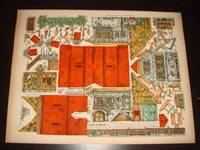
Le Petit architecte n°12 : Habitation champêtre
Épinal: Pellerin 1890. Fine. Pellerin Épinal s. d. circa 1880-1900 49 x 39 cm Épinal print color lithograph large format printed on heavy paper. Light marginal foxing a small repaired tear in right margin not touching the engraving otherwise fine condition colors very well preserved. These plates are cardboard constructions or models on which a pattern was printed. This pattern must be cut out then assembled to construct various objects or life scenes. The Épinal print works published several series of cut-out models including the ""Grandes Constructions"" in 39 x 49 cm format the ""Moyennes Constructions"" and the ""Petites Constructions"". From 1880 to 1908 constructions were published featuring architecture costumes ships and various vehicles. During this same period paper theaters or ""théâtre chez soi"" also enjoyed great success. This type of toy developed and endured until the Second World War. Formerly sold by peddlers Épinal prints owe their name to Jean-Charles Pellerin who was the first printer to publish this type of image in series and who lived in the town of Épinal Vosges. The subjects are very varied but generally revolve around religion history French Revolution battles military uniforms or drawn from successful novels. Épinal imagery takes its origins in imagery a popular art born in the 15th century intended primarily for the illiterate rural public. Originally the image is engraved on a wooden plate and printing is carried out using a hand press. It is then colored using stencils. In the 19th century lead castings were made from the engraved wood blocks: stereotypes which allowed production to be increased. In 1820 lithography was adopted which induced a radical change in style with finer drawings. In 1900 coloring was still done by stencil thanks to a machine that could color 300 images per hour the Aquatype. Pellerin unknown
Ссылка продавца : 26640
|
|
|
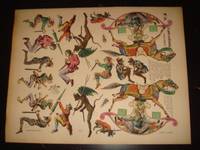
Le Petit architecte n°34 : Cheval à bascule
Épinal: Pellerin 1890. Fine. Pellerin Épinal s. d. circa 1880-1900 49 x 39 cm Épinal print color lithograph large format printed on heavy paper. Light marginal foxing otherwise handsome condition two tears restored in margin not touching the engraving otherwise handsome condition colors very well preserved. These sheets are cardboard constructions or models on which a pattern was printed. This pattern must be cut out then assembled to construct various objects or life scenes. The Épinal imagery published several series of cut-out models including the ""Grandes Constructions"" in 39 x 49 cm format the ""Moyennes Constructions"" and the ""Petites Constructions"". From 1880 to 1908 constructions were published featuring architecture costumes boats and various vehicles. During this same period paper theaters or ""théâtre chez soi"" also enjoyed great success. This toy model developed and lasted until the Second World War. Once sold by peddlers the Épinal prints owe their name to Jean-Charles Pellerin who was the first printer to publish this type of image in series and who lived in the town of Épinal Vosges. The subjects are very varied but generally revolve around religion history French Revolution battles military uniforms or drawn from successful novels. Épinal imagery takes its origins in popular art imagery born in the 15th century intended mainly for the illiterate rural public. Originally the image is engraved on a wooden board and printing is done using a hand press. It is then colored using stencils. In the 19th century lead castings were made from the engraved wood: the stereotypes which allowed production to be increased. In 1820 lithography was adopted which induced a radical style change with finer drawings. In 1900 coloring was still done with stencils thanks to a machine that could color 300 images per hour the Aquatype. Pellerin unknown
Ссылка продавца : 26649
|
|
|
CONTE - VOYEZ (sculpsit)
DESCRIPTION DE L'EGYPTE. Costumes et portraits. Sâys ou palefrenier Femme du peuple. ETAT MODERNE volume II planche A
Paris: Imprimerie Impériale 1809. Fine. Imprimerie Impériale Paris 1809-1829 71 x 53.50 cm une feuille Original unshaved full-page etching from the Imperial edition of the Description de l'Égypte or Recueil des observations et recherches faites en Égypte pendant l'expédition française publié par les ordres de Sa Majesté l'Empereur Napoléon le Grand A Collection of the observations and research carried out in Egypt during the French expedition published on the orders of his Majesty the Emperor Napoleon the Great'.Produced between February 1802 and 1830 on the orders of Naopleon Bonaparte and published between 1809 and 1828 1000 copies were printed and distributed to institutions on vergé paper with an 'Égypte ancienne et moderne' watermark visible when held up to the light. Light marginal spotting not touching image otherwise in very fresh fine condition. An engraving from the Description de l'Egypte one of the masterpieces of French printing and the birth of a new field: Egyptology. A gigantic survey of Egypt at the time of Bonaparte's conquests in 1798 and 1799 the work is divided into 13 volumes of engravings making up 892 plates of which 72 colored as well as presenting the splendors of the Egypt of the Pharaohs in 9 volumes. The other volumes discuss natural history and present a fascinating portrait of Coptic and Islamic Egypt as it was seen by Bonaparte's Eastern Armies. The Egyptian campaign' militarily a disaster demonstrates through the engravings of the Description d'Egypte the scientific success it nonetheless became thanks to the 167 expert members of the Commission of the Sciences and Arts of the Institut d'Egypte Egyptian Institute who followed Napoleon's army. The Institut gathered together in Egypt the mathematician Monge the chemist Berthollet the naturalist Geoffroy Saint-Hilaire as well as numerous artists engineers architects and doctors. They were tasked with re-discovering modern and ancient Egypt and displaying its natural treasures as well as the know-how of its inhabitants.This edition the so-called Imperial edition of the plates for the Description de l'Egypte was printed in four large formats two of which were specially created for it and christened Moyen-Egypte and Grand-Egypte. A special press was built to print it the process extending over 20 years from 1809 to 1829. The Imperial edition proved so popular that a second edition this time in black and white and without the Egypte ancienne et moderne watermark known as the Royal Edition was published during the Restoration by the printing house of C.-L.-F. Panckoucke Paris.The engravings of the Description d'Egypte owe a great deal to Baron Dominique-Vivant Denon illustrator diplomat collector and later Director of the Musée Napoléon the Louvre. His exploration of the South of Egypt gave Bonaparte the idea of sending the experts of the Institut there thus creating a faithful and complete portrait of the area. This was the research gathered together from 1802 in the mammoth Description de L'Egypte.Denon embarked on this story of archeological exploration at the age of 51 reaching first Alexandria and then Cairo before exploring Upper Egypt. Along with the members of the Institut d'Egypte the Natural History Museum's painter H.J. Redouté brother of Pierre-Joseph Redouté author of Roses the mineralogist Dolomiue and the draughtsman Joly Denon then explored the Nile Delta and Lower Egypt. When however he joined the 21st Light Infantry Regiment as it marched across Upper Egypt in pursuit of the retreating Mameluks in November 1798 he found himself the only civilian. In the very midst of the battle itself he reeled off sketches of the works of art that peppered his path right up to the threshold of the Sudan. He said that he had crossed a country that is apart from its name entirely unknown to Europeans and therefore everything was worth describing Voyages dans la Basse et la Haute Egypte pendant les campagnes Imprimerie Impériale unknown
Ссылка продавца : 26393

|
|
|
E LE MERCIER
Le prévôt dit de Beaumont
Bernay: Miaulle-Duval 1883. Fine. Miaulle-Duval Bernay 1883 14 x 22.50 cm broché First edition. The man was a state prisoner detained for more than 22 years in the Bastille and other prisons for having denounced the famine pact. A frontispiece vignette publisher's inscription. Split spine Miaulle-Duval unknown
Ссылка продавца : 3324

|
|
|
Paul LOUIS
Le parti socialiste en France
Paris: Aristide Quillet 1912. Fine. Aristide Quillet Paris 1912 13.50 x 19.50 cm reliure de l'éditeur First edition published under the technical direction of Compère-Morel. Publisher's burgundy soft cardboard binding smooth spine with light rubbing handsome interior despite occasional light foxing. Iconography. From the collection: Encyclopédie socialiste syndicale coopérative de l'internationale ouvrière. Aristide Quillet unknown
Ссылка продавца : 26260

|
|
|
Paul BLANCHART
Le théâtre de H.R. Lenormand apocalypse d'une société
Paris: Revue internationale d'art dramatique 1947. Fine. Revue internationale d'art dramatique Paris 1947 16 x 23.50 cm broché First edition. Spine sunned with trace of label boards slightly and marginally faded handsome interior condition. Revue internationale d'art dramatique hardcover
Ссылка продавца : 26265

|
|
|
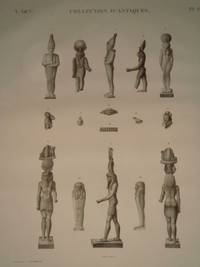
CASTEX - REDOUTE (delineavit) - LECLERC
DESCRIPTION DE L'EGYPTE. Collection d'antiques. Figures en bronze Figures et fragments en terre cuite émaillée. ANTIQUITES volume V planche 62
Paris: Imprimerie Impériale 1809. Fine. Imprimerie Impériale Paris 1809-1829 53.50 x 71 cm une feuille Original etching in plano format uncut extracted from the so-called ""Imperial"" edition of the Description de l'Égypte ou Recueil des observations et recherches faites en Égypte pendant l'expédition française publié par les ordres de Sa Majesté l'Empereur Napoléon le Grand. Executed between February 1802 and 1829 by order of Napoleon Bonaparte and published from 1809 actually 1810 it was printed in 1000 copies on laid paper watermarked ""Égypte ancienne et moderne"" and offered to institutions. Minor marginal worming with no damage to the engraving a small wormhole in the left margin otherwise in very fine fresh condition. Volume ANTIQUITES V: These engravings provided Jean-François Champollion with fundamental epigraphic documentation for deciphering hieroglyphs and inspired a lineage of archaeologists such as Mariette Maspero and Carter who gave a new face to ancient Egypt. They aroused such enthusiasm that they gave birth to the phenomenon of Egyptomania and the orientalism of Delacroix Fromentin Marilhat Decamps but also Théophile Gautier. Financiers politicians merchants and excavators of all kinds flocked to the banks of the Nile in search of good opportunities following this rediscovery of Egypt. At the origin of Egyptology these plates would have an immense posterity. THE DESCRIPTION DE L'EGYPTE IMPERIAL edition 1809-1829: The Description de l'Egypte is one of the masterpieces of French publishing and the starting point of a new science: Egyptology. A titanic exposition of Egypt at the time of Bonaparte's conquests between 1798 and 1799 it is divided into 23 volumes including 13 volumes of engravings gathering nearly 1000 plates in black and 72 in color. The 6 volumes of plates entitled Antiquités are devoted to the splendors of pharaonic Egypt. Natural History is divided into 3 volumes of engravings. One volume is devoted to Geographical and topographical maps while the 3 volumes : Modern State present a striking portrait of Coptic and Islamic Egypt as it was seen by Bonaparte's armies of the Orient. The ""Egyptian campaign"" a military disaster reveals through the engravings of the Description de l'Egypte the scientific success it became thanks to the approximately 167 scholars members of the Commission of Sciences and Arts of the Institute of Egypt who followed Napoleon's army. The Institute brought together in Egypt the mathematician Monge the chemist Berthollet the naturalist Geoffroy Saint-Hilaire as well as numerous artists engineers architects doctors. They were charged with rediscovering modern and ancient Egypt showing its natural riches and the know-how of its inhabitants. The first edition called ""Imperial"" of the Description de l'Egypte was executed in four large formats two of them specially created for it and named ""Moyen-Egypte"" and ""Grand-Egypte"" formats. A specific press was built for its printing which extended over twenty years between 1809 and 1829. The Imperial edition proved so popular that a second edition in 37 volumes entirely in black and without the watermark ""Égypte ancienne et moderne"" called the ""Panckoucke"" edition was published from 1821 by the C.-L.-F. Panckoucke printing house Paris. The realization of this monument of erudition owes much to Baron Dominique Vivant Denon illustrator diplomat collector and subsequently director of Napoleon's Louvre museum who accompanied Napoleon to Egypt with many other scholars but alone decided to venture into the South of the country while the other invited scientists remained confined to the Cairo region. The fabulous sketches brought back by Denon from his romantic ride gave Bonaparte the idea to send the other members of the Institute there and thus draw a faithful and complete portrait of the territory. Following Denon it was therefore the greatest French scientists and artists who ventured along the Nile as far as Nubia. Amo Imprimerie Impériale unknown
Ссылка продавца : 26223
|
|
|
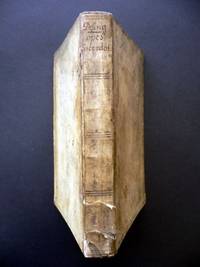
Anselmo DESING
Opes Sacerdotii num Republicae Noxiae. Ex rerum natura sana politica et communi sensu generis humani examinatum
Pedepontanum Regensburg: Impensis Joannis Gastl 1753. Fine. Impensis Joannis Gastl Pedepontanum Regensburg 1753 16 x 21.50 cm relié First edition. Rare. Title page in red and black with a title ornament. Contemporary full vellum binding. Smooth spine with fillets and pen-written title. Stains tears to the vellum at foot. Interesting work forming a study of the economic cost of churches congregations and religious communities as well as the activity of religious persons. A second part describes foreign cults and their relationship to money and studies this same cost among different churches Jews Turks Arabs Hindus Persians Chinese Egyptians etc. The final chapters concern America Mexico and Peru. Anselmo Desing was a scholar and a Benedictine father of the monastery of Ensdorf he occupied various teaching positions at the faculty of Salzburg. He is one of the first to employ the word Socialism born in the anti-Enlightenment movement. NB: This work is available at the bookstore on request within 48 hours. Impensis Joannis Gastl hardcover
Ссылка продавца : 26833
|
|
|
Jean-Baptiste Prosper JOLLOIS - DEVILLIERS - LOUVET (sculpsit)
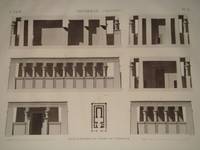
DESCRIPTION DE L'EGYPTE. Denderah Tentyris. Plan élévation et coupes du Typhonium. ANTIQUITES volume IV planche 32
Paris: Imprimerie Impériale 1809. Fine. Imprimerie Impériale Paris 1809-1829 71 x 54 cm une feuille Original in plano etching untrimmed extracted from the so-called ""Imperial"" edition of the Description de l'Égypte ou Recueil des observations et recherches faites en Égypte pendant l'expédition française publié par les ordres de Sa Majesté l'Empereur Napoléon le Grand. Executed between February 1802 and 1829 by order of Napoleon Bonaparte and published from 1809 actually 1810 it was printed in 1000 copies on watermarked laid paper ""Égypte ancienne et moderne"" and offered to institutions. Light and marginal foxing not affecting the engraving otherwise very fine condition and preservation. DENDERAH: The scholars executed views and surveys of the temples of Denderah or Tentyris a city in Upper Egypt situated 60 km north of Luxor. They rendered with exceptional graphic quality the thick and round aspect of the sculpted reliefs of the great temple of Hathor built under the Ptolemies during the first half of the 1st century BCE. They also provided interesting views of the neighboring temples as well as a selection of reliefs from ""l'appartement du zodiaque"" a chapel dedicated to Osiris and situated above the temple of Hathor. Its famous astronomical relief was discovered by General Desaix dispatched by Napoleon in 1798 but was only brought back to France by Claude Lelorrain in 1821. It is now displayed at the Louvre Museum. Another astronomical and cosmological relief covering the ceiling of the hypostyle hall of the temple of Hathor is the subject of a magnificent plate executed by Jollois and Devilliers. They documented the seven soffits coffers of the ceiling an immense allegorical representation that describes several levels of knowledge: that of cosmogony of constellations and their reflection on Earth of the creation of Man and of the nomes of Egypt symbolized by 21 pairs of wings crowned with the red crown of Lower Egypt or the white tiara of Upper Egypt. Volume ANTIQUITES IV: These engravings provided Jean-François Champollion with fundamental epigraphic documentation for the decipherment of hieroglyphs and inspired a lineage of archaeologists such as Mariette Maspero and Carter who gave a new face to ancient Egypt. They aroused such enthusiasm that they gave birth to the phenomenon of Egyptomania and the orientalism of Delacroix Fromentin Marilhat Decamps but also Théophile Gautier. Financiers politicians merchants and diggers of all kinds would rush to the banks of the Nile in search of good deals following this rediscovery of Egypt. At the origin of Egyptology these plates would have an immense posterity. LA DESCRIPTION DE L'EGYPTE IMPERIAL edition 1809-1829: La Description de l'Egypte is one of the masterpieces of French publishing and the starting point of a new science: Egyptology. Titanic exposition of Egypt at the time of Bonaparte's conquests between 1798 and 1799 it is divided into 23 volumes including 13 volumes of engravings gathering nearly 1000 plates in black and 72 in color. The 6 volumes of plates entitled Antiquités are devoted to the splendors of pharaonic Egypt. L'Histoire naturelle is divided into 3 volumes of engravings. One volume is devoted to Cartes géographiques et topographiques while the 3 volumes : Etat Moderne present a striking portrait of Coptic and Islamic Egypt as it was seen by Bonaparte's armies of the Orient. The ""Egyptian campaign"" military disaster revealed through the engravings of the Description de l'Egypte the scientific success it had become thanks to the some 167 scholars members of the Commission des sciences et des arts de l'Institut d'Egypte who followed Napoleon's army. The Institute brought together in Egypt the mathematician Monge the chemist Berthollet the naturalist Geoffroy Saint-Hilaire as well as numerous artists engineers architects doctors. They were charged with rediscovering modern and ancient Egypt showing its natural riches and the know-how of Imprimerie Impériale unknown
Ссылка продавца : 26538
|
|
|
Oscar Venceslas de Lubicz MILOSZ
Daïnos vieux chants populaires de Lithuanie
Paris: La revue de France 1928. Fine. La revue de France Paris 1er septembre 1928 15.50 x 23.50 cm agrafé First edition of this offprint printed in a small number of copies. Rare. La revue de France unknown
Ссылка продавца : 27239

|
|
|
Edme-Francois JOMARD - RAFFENEAU (delineavit) - PHELIPPEAUX (sculpsit)
DESCRIPTION DE L'EGYPTE. Environs de Babylone. Le Kaire Le Caire. Sarcophage en forme de momie trouvé sur le bord du Nil à Boulâq. ANTIQUITES volume V planche 23
Paris: Imprimerie Impériale 1809. Fine. Imprimerie Impériale Paris 1809-1829 71 x 53.50 cm une feuille Original unshaved full-page etching from the Imperial edition of the Description de l'Égypte or Recueil des observations et recherches faites en Égypte pendant l'expédition française publié par les ordres de Sa Majesté l'Empereur Napoléon le Grand A Collection of the observations and research carried out in Egypt during the French expedition published on the orders of his Majesty the Emperor Napoleon the Great'.Produced between February 1802 and 1830 on the orders of Naopleon Bonaparte and published between 1809 and 1828 1000 copies were printed and distributed to institutions on vergé paper with an 'Égypte ancienne et moderne' watermark visible when held up to the light. Light marginal spotting not touching image otherwise in very fresh fine condition. An engraving from the Description de l'Egypte one of the masterpieces of French printing and the birth of a new field: Egyptology. A gigantic survey of Egypt at the time of Bonaparte's conquests in 1798 and 1799 the work is divided into 13 volumes of engravings making up 892 plates of which 72 colored as well as presenting the splendors of the Egypt of the Pharaohs in 9 volumes. The other volumes discuss natural history and present a fascinating portrait of Coptic and Islamic Egypt as it was seen by Bonaparte's Eastern Armies. The Egyptian campaign' militarily a disaster demonstrates through the engravings of the Description d'Egypte the scientific success it nonetheless became thanks to the 167 expert members of the Commission of the Sciences and Arts of the Institut d'Egypte Egyptian Institute who followed Napoleon's army. The Institut gathered together in Egypt the mathematician Monge the chemist Berthollet the naturalist Geoffroy Saint-Hilaire as well as numerous artists engineers architects and doctors. They were tasked with re-discovering modern and ancient Egypt and displaying its natural treasures as well as the know-how of its inhabitants.This edition the so-called Imperial edition of the plates for the Description de l'Egypte was printed in four large formats two of which were specially created for it and christened Moyen-Egypte and Grand-Egypte. A special press was built to print it the process extending over 20 years from 1809 to 1829. The Imperial edition proved so popular that a second edition this time in black and white and without the Egypte ancienne et moderne watermark known as the Royal Edition was published during the Restoration by the printing house of C.-L.-F. Panckoucke Paris.The engravings of the Description d'Egypte owe a great deal to Baron Dominique-Vivant Denon illustrator diplomat collector and later Director of the Musée Napoléon the Louvre. His exploration of the South of Egypt gave Bonaparte the idea of sending the experts of the Institut there thus creating a faithful and complete portrait of the area. This was the research gathered together from 1802 in the mammoth Description de L'Egypte.Denon embarked on this story of archeological exploration at the age of 51 reaching first Alexandria and then Cairo before exploring Upper Egypt. Along with the members of the Institut d'Egypte the Natural History Museum's painter H.J. Redouté brother of Pierre-Joseph Redouté author of Roses the mineralogist Dolomiue and the draughtsman Joly Denon then explored the Nile Delta and Lower Egypt. When however he joined the 21st Light Infantry Regiment as it marched across Upper Egypt in pursuit of the retreating Mameluks in November 1798 he found himself the only civilian. In the very midst of the battle itself he reeled off sketches of the works of art that peppered his path right up to the threshold of the Sudan. He said that he had crossed a country that is apart from its name entirely unknown to Europeans and therefore everything was worth describing Voyages dans la Basse et la Haute Egypte pendant les campagnes Imprimerie Impériale unknown
Ссылка продавца : 26201

|
|
|
DIEN
DESCRIPTION DE L'EGYPTE. Botanique. Crepis hispidula Crepis senecioides Santolina fragrantissima. Histoire Naturelle planche 42
Paris: Imprimerie Impériale 1809. Fine. Imprimerie Impériale Paris 1809-1829 71 x 54 cm une feuille Original unshaved full-page etching from the Imperial edition of the Description de l'Égypte or Recueil des observations et recherches faites en Égypte pendant l'expédition française publié par les ordres de Sa Majesté l'Empereur Napoléon le Grand A Collection of the observations and research carried out in Egypt during the French expedition published on the orders of his Majesty the Emperor Napoleon the Great'.Produced between February 1802 and 1830 on the orders of Naopleon Bonaparte and published between 1809 and 1828 1000 copies were printed and distributed to institutions on vergé paper with an 'Égypte ancienne et moderne' watermark visible when held up to the light. Light marginal spotting not touching image otherwise in very fresh fine condition. An engraving from the Description de l'Egypte one of the masterpieces of French printing and the birth of a new field: Egyptology. A gigantic survey of Egypt at the time of Bonaparte's conquests in 1798 and 1799 the work is divided into 13 volumes of engravings making up 892 plates of which 72 colored as well as presenting the splendors of the Egypt of the Pharaohs in 9 volumes. The other volumes discuss natural history and present a fascinating portrait of Coptic and Islamic Egypt as it was seen by Bonaparte's Eastern Armies. The Egyptian campaign' militarily a disaster demonstrates through the engravings of the Description d'Egypte the scientific success it nonetheless became thanks to the 167 expert members of the Commission of the Sciences and Arts of the Institut d'Egypte Egyptian Institute who followed Napoleon's army. The Institut gathered together in Egypt the mathematician Monge the chemist Berthollet the naturalist Geoffroy Saint-Hilaire as well as numerous artists engineers architects and doctors. They were tasked with re-discovering modern and ancient Egypt and displaying its natural treasures as well as the know-how of its inhabitants.This edition the so-called Imperial edition of the plates for the Description de l'Egypte was printed in four large formats two of which were specially created for it and christened Moyen-Egypte and Grand-Egypte. A special press was built to print it the process extending over 20 years from 1809 to 1829. The Imperial edition proved so popular that a second edition this time in black and white and without the Egypte ancienne et moderne watermark known as the Royal Edition was published during the Restoration by the printing house of C.-L.-F. Panckoucke Paris.The engravings of the Description d'Egypte owe a great deal to Baron Dominique-Vivant Denon illustrator diplomat collector and later Director of the Musée Napoléon the Louvre. His exploration of the South of Egypt gave Bonaparte the idea of sending the experts of the Institut there thus creating a faithful and complete portrait of the area. This was the research gathered together from 1802 in the mammoth Description de L'Egypte.Denon embarked on this story of archeological exploration at the age of 51 reaching first Alexandria and then Cairo before exploring Upper Egypt. Along with the members of the Institut d'Egypte the Natural History Museum's painter H.J. Redouté brother of Pierre-Joseph Redouté author of Roses the mineralogist Dolomiue and the draughtsman Joly Denon then explored the Nile Delta and Lower Egypt. When however he joined the 21st Light Infantry Regiment as it marched across Upper Egypt in pursuit of the retreating Mameluks in November 1798 he found himself the only civilian. In the very midst of the battle itself he reeled off sketches of the works of art that peppered his path right up to the threshold of the Sudan. He said that he had crossed a country that is apart from its name entirely unknown to Europeans and therefore everything was worth describing Voyages dans la Basse et la Haute Egypte pendant les campagnes de Imprimerie Impériale unknown
Ссылка продавца : 26433

|
|
|
REDOUTE - CHAILLY (sculpsit)
DESCRIPTION DE L'EGYPTE. Vases meubles et instruments. Qoulleh Doraq Ebryq Autres vases destinés à rafraichir l'eau. ETAT MODERNE volume II planche FF
Paris: Imprimerie Impériale 1809. Fine. Imprimerie Impériale Paris 1809-1829 71 x 53.50 cm une feuille Original unshaved full-page etching from the Imperial edition of the Description de l'Égypte or Recueil des observations et recherches faites en Égypte pendant l'expédition française publié par les ordres de Sa Majesté l'Empereur Napoléon le Grand A Collection of the observations and research carried out in Egypt during the French expedition published on the orders of his Majesty the Emperor Napoleon the Great'.Produced between February 1802 and 1830 on the orders of Naopleon Bonaparte and published between 1809 and 1828 1000 copies were printed and distributed to institutions on vergé paper with an 'Égypte ancienne et moderne' watermark visible when held up to the light. Light marginal spotting not touching image otherwise in very fresh fine condition. An engraving from the Description de l'Egypte one of the masterpieces of French printing and the birth of a new field: Egyptology. A gigantic survey of Egypt at the time of Bonaparte's conquests in 1798 and 1799 the work is divided into 13 volumes of engravings making up 892 plates of which 72 colored as well as presenting the splendors of the Egypt of the Pharaohs in 9 volumes. The other volumes discuss natural history and present a fascinating portrait of Coptic and Islamic Egypt as it was seen by Bonaparte's Eastern Armies. The Egyptian campaign' militarily a disaster demonstrates through the engravings of the Description d'Egypte the scientific success it nonetheless became thanks to the 167 expert members of the Commission of the Sciences and Arts of the Institut d'Egypte Egyptian Institute who followed Napoleon's army. The Institut gathered together in Egypt the mathematician Monge the chemist Berthollet the naturalist Geoffroy Saint-Hilaire as well as numerous artists engineers architects and doctors. They were tasked with re-discovering modern and ancient Egypt and displaying its natural treasures as well as the know-how of its inhabitants.This edition the so-called Imperial edition of the plates for the Description de l'Egypte was printed in four large formats two of which were specially created for it and christened Moyen-Egypte and Grand-Egypte. A special press was built to print it the process extending over 20 years from 1809 to 1829. The Imperial edition proved so popular that a second edition this time in black and white and without the Egypte ancienne et moderne watermark known as the Royal Edition was published during the Restoration by the printing house of C.-L.-F. Panckoucke Paris.The engravings of the Description d'Egypte owe a great deal to Baron Dominique-Vivant Denon illustrator diplomat collector and later Director of the Musée Napoléon the Louvre. His exploration of the South of Egypt gave Bonaparte the idea of sending the experts of the Institut there thus creating a faithful and complete portrait of the area. This was the research gathered together from 1802 in the mammoth Description de L'Egypte.Denon embarked on this story of archeological exploration at the age of 51 reaching first Alexandria and then Cairo before exploring Upper Egypt. Along with the members of the Institut d'Egypte the Natural History Museum's painter H.J. Redouté brother of Pierre-Joseph Redouté author of Roses the mineralogist Dolomiue and the draughtsman Joly Denon then explored the Nile Delta and Lower Egypt. When however he joined the 21st Light Infantry Regiment as it marched across Upper Egypt in pursuit of the retreating Mameluks in November 1798 he found himself the only civilian. In the very midst of the battle itself he reeled off sketches of the works of art that peppered his path right up to the threshold of the Sudan. He said that he had crossed a country that is apart from its name entirely unknown to Europeans and therefore everything was worth describing Voyages dans la Basse et la Haute Egypte pendant les campagnes Imprimerie Impériale unknown
Ссылка продавца : 26383

|
|
|
Maurice SACHS
Le voile de Véronique
Paris: Denoël 1959. Fine. Denoël Paris 1959 21.50 x 26.50 cm broché First edition one of 20 numbered copies on pur fil the only large paper copies. A very attractive copy with good margins. Denoël unknown
Ссылка продавца : 27068

|
|
|
CECILE - DELAUNAY
DESCRIPTION DE L'EGYPTE. Arts et métiers. Le Passementier Le Faiseur de cordonnets Le Fabricant d'étoffes de laine Le Ceinturonnier. ETAT MODERNE volume II planche XIV
Paris: Imprimerie Impériale 1809. Fine. Imprimerie Impériale Paris 1809-1829 71 x 53.50 cm une feuille Original etching in plano untrimmed extracted from the so-called ""Imperial"" edition of the Description de l'Égypte ou Recueil des observations et recherches faites en Égypte pendant l'expédition française publié par les ordres de Sa Majesté l'Empereur Napoléon le Grand. Produced between February 1802 and 1829 on Napoleon Bonaparte's orders and published from 1809 actually 1810 it was printed in 1000 copies on laid paper watermarked ""Égypte ancienne et moderne"" and presented to institutions. Light and marginal foxing not affecting the engraving otherwise in very fine fresh condition and well-preserved. VOLUME ETAT MODERNE II: The genius of the scholars from the Institute is particularly revealed through the plates of the section called Egypte Moderne. Architecture industry social structures health conditions water management music craftsmanship are presented with exceptional precision and graphic quality. The spirit of Diderot and d'Alembert's Encyclopédie remains underlying in the approach of the draftsmen of the Description de L'Egypte who accompany the text volumes with numerous detailed plates endeavoring to create a portrait of the populations imbued with beauty and respect. Wealthy pashas or simple potter craftsmen are represented with sensitivity going about their occupations in the midst of aesthetic compositions without falling into idealism or caricature. LA DESCRIPTION DE L'EGYPTE IMPERIAL edition 1809-1829: La Description de l'Egypte is one of the masterpieces of French publishing and the starting point of a new science: Egyptology. A titanic exposition of Egypt at the time of Bonaparte's conquests between 1798 and 1799 it is divided into 23 volumes including 13 volumes of engravings gathering nearly 1000 plates in black and 72 in color. The 6 volumes of plates titled Antiquités are devoted to the splendors of pharaonic Egypt. L'Histoire naturelle is divided into 3 volumes of engravings. One volume is devoted to Cartes géographiques et topographiques while the 3 volumes : Etat Moderne present a striking portrait of Coptic and Islamic Egypt as it was seen by Bonaparte's Army of the Orient. The ""Egyptian campaign"" a military disaster reveals through the engravings of the Description de l'Egypte the scientific success it became thanks to the approximately 167 scholars who were members of the Commission of Sciences and Arts of the Institute of Egypt who followed Napoleon's army. The Institute gathered in Egypt the mathematician Monge the chemist Berthollet the naturalist Geoffroy Saint-Hilaire as well as numerous artists engineers architects doctors. They were tasked with rediscovering modern and ancient Egypt showing its natural riches and the expertise of its inhabitants. The first edition called ""Imperial"" of the Description de l'Egypte was produced in four large formats two of them specially created for it and named ""Moyen-Egypte"" and ""Grand-Egypte"" formats. A specific press was built for its printing which extended over twenty years between 1809 and 1829. The Imperial edition proved so popular that a second edition in 37 volumes entirely in black and without the watermark ""Egypte ancienne et moderne"" called the ""Panckoucke"" edition was published from 1821 by the C.-L.-F. Panckoucke printing house Paris. The realization of this monument of erudition owes much to Baron Dominique Vivant Denon illustrator diplomat collector and later director of the Napoleon Museum at the Louvre who accompanied Napoleon to Egypt with numerous other scholars but alone decided to venture into the South of the country while the other invited scientists remained confined to the Cairo region. The fabulous sketches brought back by Denon from his romantic cavalcade gave Bonaparte the idea to send the other members of the Institute there and thus create a faithful and complete portrait of the territory. Following Denon Imprimerie Impériale unknown
Ссылка продавца : 26341

|
|
|
COLLECTIF
Catalogue d'une belle collection de lettres autographes manuscrits documents historiques comprenant : correspondance inédite de Beaumarchais correspondance inédite de 90 lettres de Jean-Jacques Rousseau correspondance de Voltaire avec Mlle Quinault de Charlet Natoire manuscrits de Barnave.
Paris: Laverdet 1859. Fine. Laverdet Paris 1859 14 x 22.50 cm broché First edition of this autograph catalogue the sale of which took place on February 16 1859. Small marginal tears without loss to the front cover which also bears a manuscript gift inscription at head otherwise a handsome copy. Laverdet unknown
Ссылка продавца : 27048

|
|
|
Jean DUPLESSIS-BERTAUX - AUDOIN (sculpsit)
DESCRIPTION DE L'EGYPTE. Costumes et portraits. Costumes militaires Janissaire Beys Mamelouks Arabes A'lmés Cheykhs Femmes dans le harem Mariée Écrivain copte Divers costumes. ETAT MODERNE volume II planche K
Paris: Imprimerie Impériale 1809. Fine. Imprimerie Impériale Paris 1809-1829 71 x 53.50 cm une feuille Original unshaved full-page etching from the Imperial edition of the Description de l'Égypte or Recueil des observations et recherches faites en Égypte pendant l'expédition française publié par les ordres de Sa Majesté l'Empereur Napoléon le Grand A Collection of the observations and research carried out in Egypt during the French expedition published on the orders of his Majesty the Emperor Napoleon the Great'.Produced between February 1802 and 1830 on the orders of Naopleon Bonaparte and published between 1809 and 1828 1000 copies were printed and distributed to institutions on vergé paper with an 'Égypte ancienne et moderne' watermark visible when held up to the light. Light marginal spotting not touching image otherwise in very fresh fine condition. An engraving from the Description de l'Egypte one of the masterpieces of French printing and the birth of a new field: Egyptology. A gigantic survey of Egypt at the time of Bonaparte's conquests in 1798 and 1799 the work is divided into 13 volumes of engravings making up 892 plates of which 72 colored as well as presenting the splendors of the Egypt of the Pharaohs in 9 volumes. The other volumes discuss natural history and present a fascinating portrait of Coptic and Islamic Egypt as it was seen by Bonaparte's Eastern Armies. The Egyptian campaign' militarily a disaster demonstrates through the engravings of the Description d'Egypte the scientific success it nonetheless became thanks to the 167 expert members of the Commission of the Sciences and Arts of the Institut d'Egypte Egyptian Institute who followed Napoleon's army. The Institut gathered together in Egypt the mathematician Monge the chemist Berthollet the naturalist Geoffroy Saint-Hilaire as well as numerous artists engineers architects and doctors. They were tasked with re-discovering modern and ancient Egypt and displaying its natural treasures as well as the know-how of its inhabitants.This edition the so-called Imperial edition of the plates for the Description de l'Egypte was printed in four large formats two of which were specially created for it and christened Moyen-Egypte and Grand-Egypte. A special press was built to print it the process extending over 20 years from 1809 to 1829. The Imperial edition proved so popular that a second edition this time in black and white and without the Egypte ancienne et moderne watermark known as the Royal Edition was published during the Restoration by the printing house of C.-L.-F. Panckoucke Paris.The engravings of the Description d'Egypte owe a great deal to Baron Dominique-Vivant Denon illustrator diplomat collector and later Director of the Musée Napoléon the Louvre. His exploration of the South of Egypt gave Bonaparte the idea of sending the experts of the Institut there thus creating a faithful and complete portrait of the area. This was the research gathered together from 1802 in the mammoth Description de L'Egypte.Denon embarked on this story of archeological exploration at the age of 51 reaching first Alexandria and then Cairo before exploring Upper Egypt. Along with the members of the Institut d'Egypte the Natural History Museum's painter H.J. Redouté brother of Pierre-Joseph Redouté author of Roses the mineralogist Dolomiue and the draughtsman Joly Denon then explored the Nile Delta and Lower Egypt. When however he joined the 21st Light Infantry Regiment as it marched across Upper Egypt in pursuit of the retreating Mameluks in November 1798 he found himself the only civilian. In the very midst of the battle itself he reeled off sketches of the works of art that peppered his path right up to the threshold of the Sudan. He said that he had crossed a country that is apart from its name entirely unknown to Europeans and therefore everything was worth describing Voyages dans la Basse et la Haute Egypte pendant les campagnes Imprimerie Impériale unknown
Ссылка продавца : 26306

|
|
|
[VERBOQUET] - ANONYME
Les subtiles et facecieuses rencontres de I. B. disciple du genereux Verboquet par luy pratiquées pendant son voyage tant par mer que par terre. Le tout au contentement des plus Melancoliques
à Paris: De l'imprimerie de Jean Martinet de Jean de Bordeaux 1630. Fine. De l'imprimerie de Jean Martin et de Jean de Bordeaux à Paris 1630 7.50 x 15 cm relié First edition rare of this collection of witticisms and funny stories published as a ""supplement"" to a reprint of the famous Les Délices ou Discours joyeux et récréatifs by Verboquet and since reprinted in its wake ""although it is probably not by the same author"" according to Paul Lacroix PL. Jacob Enigmes et découvertes bibliographiques. Full cream parchment-covered cardboard Bradel binding modern. Black sheep title-label. Foxing. A pale dampstain in the upper margin. A black stain in the lower margin of leaf 2. Very rare and amusing testimony to popular humor and the art of facetious anecdote. De l'imprimerie de Jean Martinet de Jean de Bordeaux unknown
Ссылка продавца : 27072
|
|
|
Grandes constructions n°19 : Coffret
Épinal: Pellerin 1890. Fine. Pellerin Épinal s. d. circa 1880-1900 49 x 39 cm Épinal print color lithograph large format printed on heavy paper. A tiny corner chip otherwise handsome condition colors very well preserved. These sheets are cardboard constructions or models on which a pattern was printed. This pattern must be cut out then assembled to construct various objects or life scenes. The Épinal imagery published several series of cut-out models including the ""Grandes Constructions"" in 39 x 49 cm format the ""Moyennes Constructions"" and the ""Petites Constructions"". From 1880 to 1908 constructions were published featuring architecture costumes boats and various vehicles. During this same period paper theaters or ""théâtre chez soi"" also enjoyed great success. This toy model developed and lasted until the Second World War. Once sold by peddlers the Épinal prints owe their name to Jean-Charles Pellerin who was the first printer to publish this type of image in series and who lived in the town of Épinal Vosges. The subjects are very varied but generally revolve around religion history French Revolution battles military uniforms or drawn from successful novels. Épinal imagery takes its origins in popular art imagery born in the 15th century intended mainly for the illiterate rural public. Originally the image is engraved on a wooden board and printing is done using a hand press. It is then colored using stencils. In the 19th century lead castings were made from the engraved wood: the stereotypes which allowed production to be increased. In 1820 lithography was adopted which induced a radical style change with finer drawings. In 1900 coloring was still done with stencils thanks to a machine that could color 300 images per hour the Aquatype. Pellerin unknown
Ссылка продавца : 26644
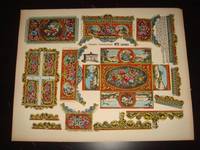
|
|
|
Le Petit architecte n°80 : Petit berceau de poupées
Épinal: Pellerin 1890. Fine. Pellerin Épinal s. d. circa 1880-1900 49 x 39 cm Image d'Épinal color lithograph large format printed on heavy paper. Light marginal foxing otherwise handsome condition colors very well preserved. These sheets are cardboard constructions or models on which a pattern was printed. This pattern must be cut out then assembled to construct various objects or life scenes. The Épinal imagery published several series of cut-out models including the ""Grandes Constructions"" in 39 x 49 cm format the ""Moyennes Constructions"" and the ""Petites Constructions"". From 1880 to 1908 constructions were published featuring architecture costumes ships and various vehicles. During this same period paper theaters or ""théâtre chez soi"" also enjoyed great success. This toy model developed and endured until the Second World War. Once sold by peddlers the images d'Épinal owe their name to Jean-Charles Pellerin who was the first printer to publish this type of image in series and who lived in the town of Épinal Vosges. The subjects are very varied but generally revolve around religion history French Revolution battles military uniforms or drawn from successful novels. Épinal imagery takes its origins from imagery a popular art born in the 15th century intended primarily for the illiterate public of the countryside. Originally the image is engraved on a wooden block and printing is done using a hand press. It is then colored using stencils. In the 19th century lead castings were made from the engraved wood blocks: stereotypes which allowed production to be increased. In 1820 lithography was adopted which induced a radical change in style with finer drawings. In 1900 coloring was still done by stencil thanks to a machine that could color 300 images per hour the Aquatype. Pellerin unknown
Ссылка продавца : 26658
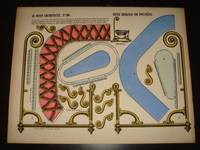
|
|
|
Louis de GRANDMAISON
Un frère de Rabelais
Paris: Honoré Champion 1906. Fine. Honoré Champion Paris 1906 15.50 x 24.50 cm broché The first edition printed in a small number of copies on laid paper of this offprint from Rabelaisian studies. Spine and boards marginally faded minor foxing and slight corner losses to boards. Rare. Honoré Champion hardcover
Ссылка продавца : 26950

|
|
|
Edouard FOURNIER
Histoire de la butte des moulins suivie d'une étude historique sur les demeures de Corneille à Paris Hôtel de Guise - Rue de Cléry - Rue d'Argenteuil
Paris: Frédéric Henry & J. Lepin 1877. Fine. Frédéric Henry & J. Lepin Paris 1877 11 x 17 cm broché First edition. Illustrated with 2 plans as frontispiece. Spine split with two small lacks at head and foot minimal marginal lacks to boards. Frédéric Henry & J. Lepin hardcover
Ссылка продавца : 26753

|
|
|
COLLECTIF
Catalogue de livres rares et précieux composant la bibliothèque de M. G. K.
Paris: C. Porquet 1882. Fine. C. Porquet Paris 1882 16.50 x 25.50 cm broché First edition of this catalogue whose sale took place on April 24 25 and 26 1882. Theology belles lettres sciences & arts history. Spine faded front board detached back board absent light foxing without consequence. Rare. C. Porquet unknown
Ссылка продавца : 26329

|
|
|
Edme-Francois JOMARD - BIGANT (sculpsit)
DESCRIPTION DE L'EGYPTE. Environs de Babylone. Le Kaire Le Caire. Intérieur d'un sarcophage en granit trouvé à Qala't el Kabch sous la mosquée de Touloun. ANTIQUITES volume V planche 25
Paris: Imprimerie Impériale 1809. Fine. Imprimerie Impériale Paris 1809-1829 53.50 x 71 cm une feuille Original unshaved full-page etching from the Imperial edition of the Description de l'Égypte or Recueil des observations et recherches faites en Égypte pendant l'expédition française publié par les ordres de Sa Majesté l'Empereur Napoléon le Grand A Collection of the observations and research carried out in Egypt during the French expedition published on the orders of his Majesty the Emperor Napoleon the Great'.Produced between February 1802 and 1830 on the orders of Naopleon Bonaparte and published between 1809 and 1828 1000 copies were printed and distributed to institutions on vergé paper with an 'Égypte ancienne et moderne' watermark visible when held up to the light. Light marginal spotting not touching image otherwise in very fresh fine condition. An engraving from the Description de l'Egypte one of the masterpieces of French printing and the birth of a new field: Egyptology. A gigantic survey of Egypt at the time of Bonaparte's conquests in 1798 and 1799 the work is divided into 13 volumes of engravings making up 892 plates of which 72 colored as well as presenting the splendors of the Egypt of the Pharaohs in 9 volumes. The other volumes discuss natural history and present a fascinating portrait of Coptic and Islamic Egypt as it was seen by Bonaparte's Eastern Armies. The Egyptian campaign' militarily a disaster demonstrates through the engravings of the Description d'Egypte the scientific success it nonetheless became thanks to the 167 expert members of the Commission of the Sciences and Arts of the Institut d'Egypte Egyptian Institute who followed Napoleon's army. The Institut gathered together in Egypt the mathematician Monge the chemist Berthollet the naturalist Geoffroy Saint-Hilaire as well as numerous artists engineers architects and doctors. They were tasked with re-discovering modern and ancient Egypt and displaying its natural treasures as well as the know-how of its inhabitants.This edition the so-called Imperial edition of the plates for the Description de l'Egypte was printed in four large formats two of which were specially created for it and christened Moyen-Egypte and Grand-Egypte. A special press was built to print it the process extending over 20 years from 1809 to 1829. The Imperial edition proved so popular that a second edition this time in black and white and without the Egypte ancienne et moderne watermark known as the Royal Edition was published during the Restoration by the printing house of C.-L.-F. Panckoucke Paris.The engravings of the Description d'Egypte owe a great deal to Baron Dominique-Vivant Denon illustrator diplomat collector and later Director of the Musée Napoléon the Louvre. His exploration of the South of Egypt gave Bonaparte the idea of sending the experts of the Institut there thus creating a faithful and complete portrait of the area. This was the research gathered together from 1802 in the mammoth Description de L'Egypte.Denon embarked on this story of archeological exploration at the age of 51 reaching first Alexandria and then Cairo before exploring Upper Egypt. Along with the members of the Institut d'Egypte the Natural History Museum's painter H.J. Redouté brother of Pierre-Joseph Redouté author of Roses the mineralogist Dolomiue and the draughtsman Joly Denon then explored the Nile Delta and Lower Egypt. When however he joined the 21st Light Infantry Regiment as it marched across Upper Egypt in pursuit of the retreating Mameluks in November 1798 he found himself the only civilian. In the very midst of the battle itself he reeled off sketches of the works of art that peppered his path right up to the threshold of the Sudan. He said that he had crossed a country that is apart from its name entirely unknown to Europeans and therefore everything was worth describing Voyages dans la Basse et la Haute Egypte pendant les campagnes Imprimerie Impériale unknown
Ссылка продавца : 26200
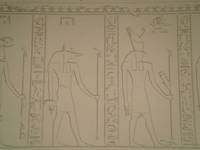
|
|
|
COLLECTIF
Biographie portative universelle suivie d'une table chronologique et alphabétique où se trouvent répartis en 54 classes les noms mentionnés dans l'ouvrage
Paris: Garnier frères 1852. Fine. Garnier frères Paris 1852 11.50 x 19 cm relié First edition. Contributions by L. Lalanne L. Renier T. Bernard C. Laumier S. Choler J. Mongin E. Janin A. Deloye C. Friess. Half cherry-red morocco shagreen binding spine with traces of rubbing with four raised bands decorated with double blind compartments marbled paper boards one upper corner missing small traces of rubbing on edges. Some light foxing. Garnier frères hardcover
Ссылка продавца : 26984

|
|
|
DUTERTRE - CARREE (sculpsit)
DESCRIPTION DE L'EGYPTE. Collection d'antiques. Figures amulettes en scarabée et autres en terre cuite Fragments de sculpture Vase en terre cuite en basalte en verre en albâtre Pierre gravée en cornaline en bronze Médaille en or en pierre de touche. ANTIQUITES volume V planche 84
Paris: Imprimerie Impériale 1809. Fine. Imprimerie Impériale Paris 1809-1829 53.50 x 71 cm une feuille Original unshaved full-page etching from the Imperial edition of the Description de l'Égypte or Recueil des observations et recherches faites en Égypte pendant l'expédition française publié par les ordres de Sa Majesté l'Empereur Napoléon le Grand A Collection of the observations and research carried out in Egypt during the French expedition published on the orders of his Majesty the Emperor Napoleon the Great'.Produced between February 1802 and 1830 on the orders of Naopleon Bonaparte and published between 1809 and 1828 1000 copies were printed and distributed to institutions on vergé paper with an 'Égypte ancienne et moderne' watermark visible when held up to the light. Light marginal spotting not touching image otherwise in very fresh fine condition. An engraving from the Description de l'Egypte one of the masterpieces of French printing and the birth of a new field: Egyptology. A gigantic survey of Egypt at the time of Bonaparte's conquests in 1798 and 1799 the work is divided into 13 volumes of engravings making up 892 plates of which 72 colored as well as presenting the splendors of the Egypt of the Pharaohs in 9 volumes. The other volumes discuss natural history and present a fascinating portrait of Coptic and Islamic Egypt as it was seen by Bonaparte's Eastern Armies. The Egyptian campaign' militarily a disaster demonstrates through the engravings of the Description d'Egypte the scientific success it nonetheless became thanks to the 167 expert members of the Commission of the Sciences and Arts of the Institut d'Egypte Egyptian Institute who followed Napoleon's army. The Institut gathered together in Egypt the mathematician Monge the chemist Berthollet the naturalist Geoffroy Saint-Hilaire as well as numerous artists engineers architects and doctors. They were tasked with re-discovering modern and ancient Egypt and displaying its natural treasures as well as the know-how of its inhabitants.This edition the so-called Imperial edition of the plates for the Description de l'Egypte was printed in four large formats two of which were specially created for it and christened Moyen-Egypte and Grand-Egypte. A special press was built to print it the process extending over 20 years from 1809 to 1829. The Imperial edition proved so popular that a second edition this time in black and white and without the Egypte ancienne et moderne watermark known as the Royal Edition was published during the Restoration by the printing house of C.-L.-F. Panckoucke Paris.The engravings of the Description d'Egypte owe a great deal to Baron Dominique-Vivant Denon illustrator diplomat collector and later Director of the Musée Napoléon the Louvre. His exploration of the South of Egypt gave Bonaparte the idea of sending the experts of the Institut there thus creating a faithful and complete portrait of the area. This was the research gathered together from 1802 in the mammoth Description de L'Egypte.Denon embarked on this story of archeological exploration at the age of 51 reaching first Alexandria and then Cairo before exploring Upper Egypt. Along with the members of the Institut d'Egypte the Natural History Museum's painter H.J. Redouté brother of Pierre-Joseph Redouté author of Roses the mineralogist Dolomiue and the draughtsman Joly Denon then explored the Nile Delta and Lower Egypt. When however he joined the 21st Light Infantry Regiment as it marched across Upper Egypt in pursuit of the retreating Mameluks in November 1798 he found himself the only civilian. In the very midst of the battle itself he reeled off sketches of the works of art that peppered his path right up to the threshold of the Sudan. He said that he had crossed a country that is apart from its name entirely unknown to Europeans and therefore everything was worth describing Voyages dans la Basse et la Haute Egypte pendant les campagnes Imprimerie Impériale unknown
Ссылка продавца : 26245

|
|

 Получить результаты поиска по электронной почте
 Загрузить результаты в формате PDF
  RSS-канал
 Постоянная ссылка


