|
PERSIUS & JUVENALIS
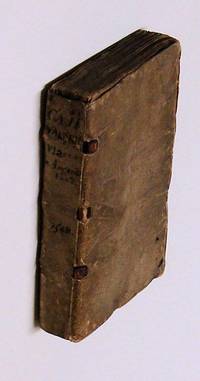
Traduction des Satyres de Perse et de Juvénal par le Révérend Pere Tarteron de la Compagnie de Jésus. Nouvelle édition.
Paris Par la Compagnie des Libraires 1714. 12mo in eights & fours. XLVIII5911 blank p. Calf 17 cm Two poets exploring the limits of satiric free speech Ref: Schweiger 2517; cf. Graesse 3522; Ebert 11273 Details: Back gilt and with 5 raised bands shield in the second compartment. The frontispiece depicts a poet/thinker in a robe and seated on a stone bench; on the bench the inscription Facit indignation versum. Printer's mark a beehive on the title. The Latin text & French translation are printed side by side in different typefaces Condition: Wear to extremities of the binding: head & tail of the back slightly chafed. Back rubbed. Shield on the back vanishing. Wormhole near the gutter of the left lower corner of the first 64 p. Note: The stoic poet Aulus Persius Flaccus 34-62 A.D. is a representative of the imperial Latin satire. His stoic satires form one 'libellus' of 6 satires together 650 hexameters. 'They are well described as Horatian diatribes transformed by Stoic rhetoric'. 'He wrote in a bizarre mixture of cryptic allusions brash colloquialisms and forced imagery'. OCD 2nd ed. p. 805 The Stoic philosopher is in the work of Persius not a figure of fun but a wise man. § The Roman poet Juvenalis ca. 55-140 AD was the last and most influential of the Roman satirists. He 'uses names and examples from the past as protective covers for his exposés of contemporary vice and folly'. The Classical Tradition Cambr. Mass. 2010 p. 501 His main theme is the dissolution of the social fabric. He had a lasting influence on neolatin and vernacular writers of the Renaissance and later centuries. § A striking feature of this book is when one runs it through for the first time is the discrepancy between the space occupied by the Latin text and the French translation. Take for instance the pages 2 and 3: on p. 2 we count 56 Latin words on the opposing page 152 French words. Concise verses are transformed into long phrases in prose. The translator of these verses the French Jesuit Jérôme or Hieronymus Tarteron 1644-1720 was professor of rhetoric. He translated also the Satires Letters and the Ars Poetica of Horace. As usual with Jesuit editions here also 'le pere Tarteron a eu soin de retrancher ce qui dans ces poëts pourroit nuire aux bonnes moers' so we read in the second volume of the Nouveau Supplement au Grand Dictionnaire Historique de L. Moreri Paris 1749. The edition was first published in 1689 and met with some success: it was reissued in 1695 1706 1714 1729 1737 and 1752 Collation: pi1 frontispiece â8 ê4 î8 ô4; A8-3B4 :gatherings A - 3B alternating 3C8 Photographs on request hardcover
Ссылка продавца : 120400
|
|
|
VALERIUS FLACCUS
Caii Valerii Flacci Argonautica. Ioan. Baptistae Pii carmen ex quarto Argonauticon Apollonii. Orphei Argonautica innominato interprete.
Lyon Lugduni Apud Seb. Gryphium 1548. 16mo. 3081 colophon1 blank p. Limp vellum 11.5 cm Ref: USTC 149936; Schweiger 21099 incorrect See note: 'Nachdruck der Strassb. Ausg. Die Vorrede der Aldine u. die des Engentinus sind mit abgedr.'; Graesse 6/2 241; Ebert 23289; cf. Brunet 51045 Details: Printed completely in italics. On the title the printer's mark of Sebastianus Gryphius depicting a griffin which mythological animal symbolizes courage diligence watchfulness and rapidity of execution used as a pun of his family name Gryph or Greif. From the claws of this creature hangs a big rectangular stone symbolizing Constancy beneath which hangs a winged globe symbolizing Fortune. The motto is 'Virtute duce / comite fortuna' 'Virtue thy leader fortune thy comrade' a quote from a letter of Cicero to Plancus Epistulae ad Familiares liber X3 Condition: Vellum soiled and wrinkled. All four textile fastening ties gone. Both pastedowns damaged and detached. Front hinge partly loosening but holding. Front flyleaf removed. Faint dampstain in the first 5 quires. Some small old ink annotations. Right upper corner of leaf d3 p. 53/4 torn off without loss of text. Corners slightly bruised Note: The bibliographies of Schweiger Ebert and Graesse state that this 'Argonautica' edition of 1548 published by Sebastianus Gryphius is a reissue of the Valerius Flaccus edition of 1525 edited in Strassburg by Philippus Engentinus. This is not correct. In the first place this Gryphius has exactly the same title as the Aldus edition of 1523 which was produced by the Italian humanist scholar Giovan Battista Pio latinized as Ioannes Baptista Pius. It contains also the same text that is the preliminary pages the 'Argonautica' of Valerius Flaccus book I-VIII verse 467 and also a continuation of book VIII taken from Apollonius Rhodius' earlier Greek version of the 'Argonautica' translated into Latin by Ioannes Pius. At the end we find a Latin translation of an unknown hand of the 'Orphei Argonautica'. Pius' continuation of Book VIII to X starts where a premature death overtook Valerius Flaccus and prevented him to finish the epic. The poem breaks off abruptly with the pursuit of the Argo by Absyrtus brother of Medea. This continuation is repeated in our Gryphius edition of 1548 but is absent in the Strassburg edition of Engentius as are the preliminary pages. Furthermore the Strassburg edition ends at verse 466 of book VIII: 'Temptat & ipse gemens & tempora currere dictis. FINIS'. This line is the last but one in The Gryphius and Aldus edition in both the last verse is 467: 'mene aliquid metuisse putas me talia velle' The bibliographers were probably mislead by the adoption at the end by Gryphius of the dedication of Philippus Engentinus dated 1525 from his Strassburg edition. § Not much is known about the Roman poet Valerius Flaccus who wrote an epic 'Argonautica' and who died in 92 or 93 A.D. It is agreed by 'practically all modern authorities that the 'Argonautica' was never completed and that its imperfect conclusion must not be put down to mutilation of a manuscript or omission to complete a copy. There is plenty of internal evidence of unrevised work both in the language and the details of the plot and incidents. As to the former there are many passages where it is necessary to mark a lacuna or to supply a line to complete the sense'. Valerius Flaccus with an English translation by J.H. Mozley Cambr. Mass. 1972 p. VIII As all the poets of his time Valerius Flaccus was strongly influenced by Vergil but he 'is a better poet than they in so far he is less excessively rhetorical than Lucan and a more original genius than Statius'. OCD 2nd ed. p. 1105 His 'Argonautica' is indebted to the 'Argonautica' of the Greek poet Apollonius Rhodius who flourished ca. 200 B.C. but it is certainly not a close imitation. The differences are in the portrayal of the characters and the incidents in the story. 'The 'Orphei Argonautica' Orphic Argonautica was once believed to be among the oldest Greek poems but today it is known that the poem is the work of a late Antique author working in the fourth century CE or later and writing in a form of Greek that consciously imitated often wrongly the diction and vocabulary of Homer. The poem of 1376 hexameter verses takes the form of a first-person account of the Argonauts' voyage from the mouth of Orpheus who views himself as the hero addressing the poem to his disciple Musaeus. The poem . found fame in the early modern period along with other Orphic poetry as a prefiguration or distortion of Biblical truths'. The Orphic Argonautica translated by Jason Colavito Collation: a-t8 u4 minus blank leaf u4; u3 verso blank Photographs on request hardcover
Ссылка продавца : 120178
|
|
|
Pam Palmer
Tatting Shuttles Related Tools & Accessories
Rugby England: Neil Terry Printing 2003. Soft cover. Very Good/No Jacket as published. 8.5" x 11.5. 90pp. A well illustrated guide to the historic tools used in the process of tatting a type of lace. Signed by the author on the title page. In clean and sound condition. Please email with any queries. Non-UK customers please order with the fast / air mail service only. 8.5"x11.5". <br/> <br/> Neil Terry Printing paperback
Ссылка продавца : 022015 ISBN : 0953507629 9780953507627

|
|
|
HESIODUS
Hesiodi Ascraei Quae exstant ex recensione Joannis Georgii Graevii. Cum ejusdem animadversionibus & notis auctioribus. Accedit commentarius nunc primum editus Joannis Clerici et Notae Variorum scilicet Josephi Scaligeri Danielis Heinsii Francisci Guieti & Stephani Clerici ac Danielis Heinsii introductio in doctrinam Operum et Dierum. Nec non index Georgii Pasoris.
Amsterdam Amstelodami Apud G. Gallet praefectum Typographiae Huguetanorum 1701. 8vo. 2 volumes in 1: XXVI3511;VIII326 p. frontispiece 2 folding plates. Vellum. 21 cm Ref: STCN ppn 23618525X; Hoffmann 2250; Brunet 3141; Graesse 3263; Ebert 9604: 'it is scarce and belongs to the series 'cum notis Variorum'; Dibdin 235; Moss 1470/71 Details: Greek text and parallel Latin translation. Boards with blind stamped decoration. Title printed in red & black. The frontispiece depicts a bucolic scene with group of nymphs one of them giving a branch of a palm to a shepherd. The plates have as subject the plough and other farmer's tools. Volume 2 contains also 120 pages with extensive notes to Hesiod by Graevius and the Introduction of 64 pages to the 'Works and Days' by Daniel Heinsius. At the end a 140 page index Condition: Vellum soiled. Head & tail of spine somewhat chafed. Upper hinge cracking but strong. Both pastedowns discoloured and detached. Name erased from the front pastedown resulting into a small hole. Front flyleaf removed. All 4 decorative fastening ribbons gone. First title slightly finger soiled Note: Hesiodus from Askra a small town in Boiotia born ca. 775 BC is one of Greek's oldest poets. His poems are in Homeric hexameters and show his interest in ethics and systematization. His work was known throughout antiquity to rhapsodes scholars and schoolboys. The Byzantines compiled scholia from ancient commentaries for elucidation. The Renaissance did not quite appreciate him. Until 1667 circa 18 editions of his 'opera omnia' were published not much. Hesiod's reception chiefly concerns myths and the motifs that he provides and these motifs certainly appealed to mythographers historians of religion poets and painters. 'Hesiodic details of myth saturate European epic and mythopoeic writings perhaps most spectacular in Dante Milton Blake . who make much of Hesiod's infernal regions his Titans and primordial monsters his giant battles'. The Classical Tradition N.Y 2010 p. 435 Of Hesiod survives his 'Theogonia' or 'Theogony' which 'deals with the origin and genealogy of the gods . and the events that led to the kingship of Zeus: the castration of Uranos by Kronos and the overthrow of Kronos and the Titans by the Olympians' OCD 2nd ed. p. 510 The 'Works and Days' or 'Erga kai Hêmerai' of Hesiod which was always most read has been called a 'gospel of labour'. The poet recommends the hard and honest life of a farmer. He 'inveighs against dishonesty and idleness by turns using myth . parable allegory and threats of divine anger. . The poem as a whole is a unique source for social conditions in early archaic Greece.' Idem p. 511 The third poem that has survived is the 'Shield' or 'Aspis' a short narrative poem on Heracles' fight with Cycnus a bloodthirsty son of the god Ares. It derives its name from the long description of Heracles' shield. § 'Artists have never abandoned a fascination with Hesiod on the Muses. In the 19th century the artist Gustave Moreau created many visual representations of their initiation of the poet. Both Rubens and Goya painted famous and harrowing pictures of Kronos Saturn devouring one of his children a motif from the Theogony; William Blake engraved a series after drawings by his friend John Flaxman . Georges Braque chose the 'Theogony' as the subject of 20 etchings'. The Classical Tradition N.Y. 2010 p. 436 § This edition of 1701 is except for a short 'dedicatio' and 'ad lectorem' at the beginning of volume 1 the work of the Dutch/Swiss scholar Johannes Clericus or Jean Le Clerc 1657-1736 mainly a reissue of the Hesiod edition of 1667 that was produced by the Dutch classical scholar of German descent Johann Georg Greffe better known as Graevius 1632-1703 professor of Latin at the University of Utrecht during the last forty years of his life. The Hesiod was his only edition of a Greek classic. Graevius limited his attention mainly to writers of Latin prose and primarily to Cicero. Graevius corrected the text of the 'Works and Days' with the help of two manuscripts owned by Isaac Vossius. One them contained commentary of Tzetzes. From the French scholar Emericus Bigotius he received annotations of J.J. Scaliger and Franciscus Guietus. The first volume contains the Greek text revised by Graevius and a corrected Latin translation. The second Graevius' own annotations and the observations of Scaliger and Guietus and the 'Introductio' to the 'Works and Days' of the Dutch scholar Daniel Heinsius Provenance: On the verso of the front flyleaf 'Ex libris H.J. Borgers'. And on the flyleaf in the rear: 'Wilhelmus Henricus Wicherlink 1741 verus hujus libri possessor'. One H.J. Borgers published in 1826 in Leiden a dissertation: 'Specimen Academicum Inaugurale exhibens Recensionem et Interpretationem M. Tullii Ciceronis Paradoxorum ad M. Brutum'. One H.J. Borgers the same or his father retired in 1854 as prorector of the Gymnasium of Nijmegen where he started his teaching career in 1819. § Dr. Willem Hendrik Wicherlinck 1728-1808 belonged to the elite of the Dutch city of Zwolle. He was a member of the 'Raad van Zwolle' between 1770 and 1795 and a member of 'Gedeputeerde Staten van Overijssel' for Zwolle between 1784 and 1795 Collation: pi1 frontispiece 8 minus blank leaf 8 26; A-Y8 24 2A-V8 2X4 leaf 2X4 blank The catchword on leaf 7 verso regularly connects to the following page 1 recto Photographs on request hardcover
Ссылка продавца : 130356
|
|
|
OPUSCULA MYTHOLOGICA, PHYSICA ET ETHICA
Graece et latine. Edita per Thomas Gale.
Amsterdam Amstelaedami Apud Henricum Wetstenium 1688. 8vo. XXIV including frontispiece7528 index p. Calf 21 cm. 'Prize copy' Ref: STCN 842221603; Willems p. XCIII Rahir 2861; Hoffmann 3367 & 32 & 336 & 395 & 3331 & 3345 et alibi; Brunet 4198: 'bonne édition'; Graesse 531; Ebert 8053; this kind of prize not in Spoelder Haarlem Details: Prize copy including the printed prize. Texts printed in 2 columns Greek text with opposing Latin translation. Back ruled gilt red shield in 'second compartment'. Boards with gilt floral borders. The frontispiece by G. de Lairesse depicts a seated woman who is writing in a book; she might be Erato the Muse of epic poetry but also of philosophy. Behind her stands a half naked woman holding a palm leaf; a small radiant new moon rises just above her head; she is probably Iuno; she stands before a statue of Artemis of Ephese; in her left hand Iuno holds an oval shield with a kind of Botticelli scene of the birth of Venus; in the background at the right Helios is performing a sunrise with his chariot four in hand and at the left his sister Selene/Luna who rides in her chariot through the sky passing the crescent moon. Title printed in red and black. The publisher Wetstenius adorned the title with the Elzevier woodcut device of Minerva motto: 'Ne extra oleas'. He acquired this device after the death of Daniel Elzevier and used it in only 3 editions. Condition: Back rubbed. Red label slightly damaged. One of the four green silk fastening ties is still complete the other 3 are almost gone Note: This book contains: Palaephatus 'De incredibilibus historiis'; Heraclitus 'De incredibilibus'; 'Anonymi longe Heraclito recentioris De incredibilibus'; Eratosthenes 'Catasterismi'; Phurnutus 'De natura Deorum commentarius'; Sallustius Philosophus 'De Diis et Mundo'; 'Homeri poetae vita'; Heraclides Ponticus 'Allegoriae Homeri'; Ocellus Lucanus Philosophus 'De Universi Natura'; Timaeus Locrus 'De anima mundi en natura'; Theophrastus 'Notationes morum' Characters; Demophilus 'Similitudines seu Vitae curatio ex Pythagoreis'; Democrates Philosophus 'Aurea Sententiae'; Secundus Atheniensis 'Sophistae Sententiae'; Sextus Pythagoreus 'Sententiae'; 'Ex quorundam Pythagoreorum libris fragmenta in quibus de Philosophia Morali agitur'. § The dedication and preface are by the English classical scholar antiquarian and cleric Thomas Gale ca. 1635-1702 Regius professor of Greek in Cambrige from 1666 till 1672. This anthology of mythographical texts of 1688 is the revised en augmented edition of the edition that was first published in Cambridge in 1671. The collection reveals according to Gale the truth of religion by means of stories fables and parables and consists of reprints of earlier editions with an occasional preface and improvement by Gale. Gale was not a great scholar or a textual critic with fresh ideas. 'In his Opuscula Mythologica Ethica et Physica' 1671 he puts on record a revealing description of what might be called 'vulgate editing' at the end of his preface which for its naïveté is worth citing. ''In printing all these texts we have closely followed editions published earlier; textual errors with some minor exceptions we have allowed to remain and we have not concealed the absurdities found in the manuscripts which you kind reader may be better able to remove" '. C.O. Brink 'English Classical Scholarship' Cambridge New York 1985 p. 18 Gale produced also editions of Herodotus and Cicero and the 'editio princeps' of 'De Mysteriis' of Iamblichus Provenance: The printed prize was awarded to 'A. de Pecker' for his industry by the 'Schola Harlemo-Batava' on the occasion of his promotion to the second class. The date of the prize is 21 Dec. 1847 and it is signed by the 4 members of the prize committee among whom the 'Gymn. Rector' Jacobus Venhuizen Peerlkamp. At the head of the prize the coat of arms of Haarlem. The name of this diligent boy Abraham de Pecker occurs on the list of 'Predikanten van de Hervormde Gemeente Gorinchem opgericht in 1566'. He was a minister of this protestant church from 1860 till his death on 20-02-1916. He was born in 1831 in Bloemendaal near Haarlem and studied theology in Leiden. He was a protestant 'modernist' which was not easy in that time. An article on Pecker's difficult time in Gorichem can be found on the website of the 'Historische Vereninging Oud-Gorcum'. A picture of him can be found on the website 'Geheugen van Nederland' 'Memory of the Netherlands' Collation: 8 24; A-3A8 3B4 Photographs on request hardcover
Ссылка продавца : 130304
|
|
|
EURIPIDES
EURIPIDOU PHOINISSAI. Euripidis tragoedia Phoenissae. Interpretationem addidit H. Grotii; Graeca castigavit e Mstis atque adnotationibus instruxit scholia partim nunc primum evulgata subiecit Ludovicus Casp. Valckenaer.
Franeker Franequerae Typis et sumptibus Iacobi Brouwer 1755. 4to. XXIV83119 index p. Half calf 22.5 cm Ref: STCN ppn 151473129; Hoffmann 276/77; Schweiger I119; Brunet 21106; Dibdin I545; Moss 1424; Graesse 2523: 'édition excellente'; Ebert 7102 Details: Back with 5 raised bands and a brown morocco lettershield; margins uncut. § Greek text with facing Latin translation commentary in two columns on the lower half of the page; p. 561-815 contain the scholia to the 'Phoenissae' accompanied by Latin commentary; at the end 14 p. 'Prolegomena' to the 'Phoenissae' by Hugo Grotius Condition: Back rubbed; head of spine slightly chafed; paper on covers somewhat scuffed Note: 'With Sophokles Greek tragedy reaches its culmination. Euripides great poet though he was represents the first symptom of the inevitable decline for in him we can recognize a certain impatience with the form he found ready to his hand'. This is how H.J. Rose started his chapter on the Greek tragedian Euripides ca. 480-406 B.C. some 80 years ago. H.J. Rose 'A history of Greek literature' 4th ed. London 1965 p. 177 first published in 1934 That opinion has now been superseded. Euripides' play 'The Bacchae' which drew little attention before 1900 'has come to seem one of the defining models of Greek tragedy and even of tragedy itself rivalling Aeschylus' Oresteia and Sophocles' Oedipus Tyrannus and Antigone'. The Classical Tradition Cambridge Mass. 2010 p. 347 For this Euripides has to thank the German philosopher Friedrich Nietzsche. The upsurge was caused by his 'Die Geburt der Tragödie aus dem Geiste der Musik' 1872 in which he drew attention to the idea of 'the Dionysiac' a key element in the Bacchae. This idea 'has had a massive influence not only on understandings of tragedy but on theories of theatrical performances itself'. Idem ibidem § Euripides' play Phoenissae 'is a complex but well-organized dramatic structure. It does not concentrate solely on the strife and death of the sons of Oedipus as the play's severest critics expected and demanded that it should. Rather it engages a whole ensemble of figures from the families of Oedipus and Creon in exploring themes of selfishness and blindness familial disaster familial loyalty political duties and loyalties divine-human interaction and the lability of human wisdom'. D.J. Mastronarde 'Phoenissae' Cambridge 1994 p. 3/4 § 'Of all the editions of the Phoenissae in reference to critical apparatus the present of 1755 is the most copious and valuable. The version is that of Grotius. MSS. have been consulted; annotations are subjoined. The scholia of which part appears for the first time added; and the whole volume is enriched by every thing which can render it most acceptable to a critical student. . a volume on all accounts deserving of strong recommendation'. Dibdin § The Frisian scholar Lodewijk Caspar Valckenaer latinized Ludovicus Casparus Valckenarius 1715-1785 was a pupil of his Tiberius Hemsterhuis a Frisian too and after him the greatest Dutch classical scholar of the 18th century. Hemsterhuis was professor of Greek at the University of Franeker from 1717 till 1740 and from 1740 till 1765 at the University of Leiden. Hemsterhuis was the founder of a Dutch school of criticism the so-called 'Schola Hemsterhusiana' which had in Valckenaer its best known disciple. Valckenaer studied Greek in Franeker under Hemsterhuis and succeeded to his chair in 1741. In 1765 he left for Leiden once again as successor of his beloved teacher. Both created a golden age of Greek studies in the Netherlands. Still a student he edited a Greek lexicon of the grammarian Ammonius 'De adfinium vocabulorum Differentia' Leiden 1739. In Franeker he produced a revised and augmented edition of Fulvio Orsini's 'Virgilius illustratus' Leeuwarden 1747. This title is important for the history of scholarship for its inclusion of the text of the 22nd book of the Iliad of Homer accompanied by an introduction 'variae lectiones' and the 'editio princeps' of scholia of Porphyrius and other hellenistic and byzantine scholars. In 1755 Valckenaer published this Phoenissae edition with his rich commentary and a Latin translation by Hugo Grotius. Among his best works are two other Euripides editions 'Diatribe in Euripidis perditorum dramatum reliquias' Leiden 1767 and 'Euripidis tragoedia Hippolytus' Leiden 1768. Valckenaer also produced editions of the Idylls of Theocritus Leiden 1773 and of the complete works of bucolic poets Theocritus Bion and Moschus Leiden & Kampen 1779. His Callimachus was published posthumously by J. Luzac in Leiden in 1799 Provenance: On the front flyleaf: 'J.P. Ott 1825'. Collation: pi2 -24; 32 A-4D4 4E2 4F-5P4 minus blank leaf 5P4 Photographs on request hardcover
Ссылка продавца : 130240
|
|
|
CAESAR
C. Julii Caesaris De Bellis Gallico et Civili Pompejano necnon A. Hirtii aliorumque de Bellis Alexandrino Africano et Hispaniensi Commentarii ad MSStorum fidem expressi cum integris notis Dionysii Vossii Joannis Davisii et Samuelis Clarkii. Cura et studio Francisci Oudendorpii qui suas animadversiones ac varias lectiones adjecit.
Leiden Lugd. Bat. Apud Samuelem Luchtmans Rotterdam Rotterodami Apud Johannem Danielem Beman 1737. 4to. 2 volumes in 1: XXVIII including a frontispiece103533 index p. portrait of Caesar 3 folding maps and 10 folding plates. Calf 25 cm. <Fundamental> Ref: STCN ppn 189161027; Neue Pauly Suppl. 2 p. 129; Schweiger 246/47; Dibdin 1363: 'An admirable and truly critical edition'; Brunet 11456/57; Moss 1236; Fabricius/Ernesti 1264; Graesse 28; Ebert 3282; Spoelder p. 642/43 Middelburg 4 Details: Prize copy without the prize. Backstrip adorned by gilt rolls. Red morocco shield in the 'second compartment'. Boards with gilt palmette borders and the gilt coat of arms of Middelburg in the center. The allegoric frontispiece is designed and executed by F. van Bleyswyck in the middle a kind of monument with the portrait of Caesar; in front of this monument sit 2 women one of them is winged; they hold between them broken shackles; right of the portrait a winged male with a flame on his head holding a roll with a floor plan and also 2 women one of them is holding a pyramide in her right arm and a crown in her right hand; this crown hovers above the head of Caesar; another woman who holds a 'cornu copiae' flings coins; above this scene Fama who blows her trumpet. Title printed in red and black. Woodcut Luchtmans's printer's mark on the title motto 'Tuta sub Aegide Pallas'. A map of the Roman empire Gallia and Hispania Condition: Binding worn at the extremities. Back scuffed boards scratched corners bumped. Wear to the front joint which is splitting near the head and tail. New endpapers. Bookplate on the front flyleaf. Right lower corner of ca. 12 p. slightly waterstained. Paper of the same corner partly slightly warped Note: Throughout the 17th and 18th century in Europe the Roman historian Julius Caesar 100-44 B.C. remained central to the education of the sons of the elite who trained for public life. He figured as an exemplary military leader. The politician and then tyrant Caesar enjoyed popularity but was however also controversial in Europe that was torn apart by bloody religious and civil wars. His dictatorship remained problematic though some justified his usurpation of power as the only way out of turmoils of the Roman republic. § This solid and valuable edition of 1737 comprehending the commentaries of Vossius Davis and Clarke is a great step forward for the text of Caesar. It was produced by the Dutch classical scholar Franciscus Oudendorp 1696-1761 and immediately eclipsed all preceding editions. Oudendorp was according to Sandys the last of the great latinists of his age. For the last 20 years of his life he was professor of Eloquence Latin and History at the University of Leiden. He published also indispensable editions of Apuleius and Lucan. 'His 1737 edition of Caesar reveals a concern hitherto almost unknown with the collecting and sifting of large numbers of variants. He drew up a list of some forty codices that had been consulted either by him or by others at his request. . Oudendorp made a valiant attempt to cope with many manuscripts his being the first serious attempt at 'recensio'. Oudendorp's edition was so authoritative and had such an impact that for over a hundred years few scholars dared to tread in the same path'. V. Brown 'The Textual Transmission of Caesar's Civil War' Leiden 1972 p. 5 This period came to an end in 1847 with the first modern critical edition of Karl Nipperdey Provenance: Armorial bookplate of 'Van der Veen Hondius' on the front flyleaf. Janna Carla van der Veen- Hondius who died in 2010 in Oostkapelle Zeeland at the age of 81 was an honorary member of the Koninklijk Zeeuws Genootschap der Wetenschappen. She and her husband Pieter were the owners of the mansion Duinbeek at Ooskapelle Collation: pi1 frontispiece 4 minus leaf 4; 2-34 42; A-3S4 3T4 3T2 chi1 = title page volume 2 3V-4C4 4D4 plusminus 4D4 4E-4P4 4Q4 plusminus 4Q2 4R-6S4 6T2 Our copy has 2 cancels and a title to the second volume that the STCN copy does not mention Photographs on request Heavy book may require extra shipping costs hardcover
Ссылка продавца : 140155
|
|
|
BROUKHUSIUS,J
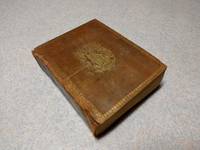
Jani Broukhusii Carmina.
Utrecht Trajecti ad Rhenum Apud Franciscum Halma Academ. Typogr. Ordinarium 1684. 12mo. VIII951 blank p. Vellum 16 cm Ref: STCN ppn 84001225X; Oberlé no. 325 Details: 3 thongs laced through the joints. Woodcut flowery ornament on the title Condition: Vellum age-toned and slightly scratched. Small dent in the spine. Front pastedown detached. Small inscription on the front flyleaf and on the title where someone wrote below 'Carmina' the word 'Quaerendo'. Paper slightly yellowing some spots in the first leaves Note: This is the first edition of the neolatin poetry of the Dutch scholar/soldier Joan van Broekhuizen Janus Broukhusius 1649-1707 who during an adventurous life pursued his classical studies and poetry at leisure. His editions of Propertius 1702 and Tibullus 1707 laid the foundation for his reputation as a classical scholar. He was admired as a latinist for his taste and for his erudition. NNBW 4309/12 As a neolatin poet he is known as the 'Propertius of Holland'. Sandys 2329 His poetry is learned and eccentric combining polish and refinement. § The collection contains a number of poems Broukhusius wrote in 1674 as a marine officer under admiral Michiel de Ruyter during a campaign of the Dutch navy in American waters. Lying anchored at the island of Dominica he translated into Latin Psalm XLIV p. 11/13 and wrote a sea song 'Celadon' about homesickness for the motherland p. 13/15. He returned home with the fleet and continued his soldiering in the Netherlands and in Germany where he fought in several battles and sieges till the Treaties of Peace of Nijmegen of 1678. During the following stay of his regiment at Utrecht he continued his studies of Propertius. He there befriended Johann Georg Graevius professor of rhetoric at the local University to whom he dedicates 2 poems in this collection. At the recommandation of the Burgomaster of Amsterdam Johannes Hudde he was appointed captain of an infantery company at Amsterdam. There he contracted friendship with Petrus Francius professor of rhetoric at the local 'Athenaeum Illustre' and a famous neolatin poet and orator. To him Broukhusius dedicates 6 poems in his book of poetry. To Hudde 2. He also wrote 2 poems the first and the last in this collection for Ferdinand von Fürstenberg Prince Bishop of Paderborn from 1661 to 1683. Broukhusius adopted in this collection also a number of erotic poems he wrote for some ladies a Julia Corinna and especially Delia a Dutch woman of great beauty. He dedicates 6 poems to this mistress. From the Renaissance onward there existed a fashion for imitating the erotic poetry of Propertius. Many humanist elegiac poets produced neolatin poems addressed to some alluring girl as Propertius had done for his Cynthia. Propertius influenced before Broukhusius among others the Dutch erotic poet Janus Secundus and the English poet John Donne and later the German author Goethe and the American poet Ezra Pound Collation: 4 A-D12 leaf D12 verso blank Photographs on request hardcover
Ссылка продавца : 155574
|
|
|
LYDUS, JOHANNES LAURENTIUS
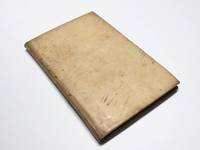
Joannis Laurentii Lydi Philadelpheni De Magistratibus reipublicae romanae libri tres nunc primum in lucem editi et versione notis indicibusque aucti a Joanne Dominico Fuss. Praefatus est Carolus Benedictus HASE codd. graec. et lat. in Bibliotheca Imperiali Parisiensi sub conservatore custos.
Paris Parisiis Ex officina J.-M. Eberharti Collegii Imperialis Franciae Typographi 1812. 4to. VIIILXXXVII1 blank 316 p. Contemporary boards. 28 cm Ref: Hoffmann 2510 Laurentius; Brunet 3880; Graesse 4122; Ebert 12557 Details: 1 of the 100 quarto copies on wove paper and with broad margins. Gilt black shield on the back. Greek text with parallel Latin translation Condition: Binding scuffed. Back chafed and discoloured and slightly damaged at the head. 2 library bookplates on the front pastedown. Some slight foxing Note: Johannes Laurentius Lydus was born in 490 AD at Philadelphia in Lydia hence the cognomen Lydus. He came to Constantinople during the reign of the Emperor Anastasius ca. 510 to make a career in the central administration. For 40 year he was 'Praefectus Praetorio' for the greater part under the Emperor Justinian. The language of the administration of the Eastern part of the Roman Empire was still Latin at this time and Lydus repeatedly emphasizes his bilingualism in his surviving works which are written in ancient Greek. Ca. 543 he was appointed to the chair of Latin-rhetoric at the 'University' of Constantinople. In 552 Lydos retired. He died between 565 and 578. Among his lost literary works is a history of Justinian's campaign against the Persian Sassanids. His 3 surviving Greek works are not great literature but they throw light on Roman history and religion. 'De Ostentis' 'On Prodigies' is a treatise on all sorts of signs and and portents e.g. thunder and lightning and earthquakes compiled from ancient astrologic works. 'De Mensibus' is a compilation of material on the Roman calender and pagan festivals. His most important work is 'De Magistratibus reipublicae Romanae' on the civil service of the Roman empire. It offers valuable information concerning Roman burocracy up to Justinian. § These works were regarded as lost until we are told in the 'Prologus' the French scholar J.B.C. d'Ansse de Villoison discovered in 1784 on a visit to Constantinople a manuscript of it. The manuscript was thereupon presented by the Greek prince Constantine Morusi to Auguste de Choiseul-Gouffier the French ambassador to the Ottoman Empire. Choiseul then lent the manuscript to the discoverer in order to publish it. Nothing came however of an edition because of turmoils of the French revolution regni Gallici eversione et subito casu quo Europa omnis contremit nullus Lydo locus superat and because of the premature and sudden death of Villoison in 1805. p. LXIII/IV Choiseul then directed the young scholar Carl Benedikt Hase in French Charles Benoît Hase 1780-1864 to produce an edition. In 1801 Hase had travelled on foot to Paris where he began his studies Greek under Villoison who introduced him also into his literary circle. domum ejus frenquentavi . per aliquot annos continuos sermonum auditor. p. LXVI After the request of Choiseul Hase asked his friend the young scholar Dominicus Fuss 1782-1860 also of German origin who was fluent in Latin to make a transcription and a Latin translation cura describendi vertendique of 'De magistratibus'. Fuss also amended emendavit the Greek text. Hase himself wrote the 'Prologus' a learned dissertation on the times life and writings of Lydus. The edition was welcomed by the famous German ancient historian Barthold Georg Niebuhr as a new and rich source of Roman history. Hase who was appointed professor of Palaeography at the 'École Royale' in 1816 devoted himself to Byzantine literature and history. In 1823 he produced an edition of Lydus' 'De ostentis' which is considered a masterpiece of textual criticism Provenance: Pictorial bookplate 'Ex libris Collegii Sanctae Mariae de Oscott' pasted on the front pastedown. Saint Mary's College at New Oscott Sutton Coldfield Birmingham often called Oscott College is the Roman Catholic seminary of the Archdiocese of Birmingham in England and one of the three seminaries of the Catholic Church in England and Wales. See for this huge college which was founded in 1794 Wikipedia's 'St Mary's College Oscott' Collation: pi4 a-k4 chi4 leaf chi4 verso blank 1-39/4 40/2 Photographs on request hardcover
Ссылка продавца : 95486
|
|
|
EURIPIDES
EURIPIDOU PHOINISSAI. Euripidis tragoedia Phoenissae. Interpretationem addidit H. Grotii; graeca castigavit e Mstis atque adnotationibus instruxit scholia subiecit Ludovicus Casp. Valckenaer.
Leiden Lugduni Batavorum Apud Samuelem et Joannem Luchtmans 1802. 4to. 2 parts in 1 volume: IV231 blank452;196 p. Vellum. 26 cm. Prize copy Ref: Hoffmann 277; Schweiger I119; Brunet 21106; Dibdin I545; Moss 1424; Ebert 7102 Details: Prize copy Utrecht but without the prize. Back gilt and with 5 raised bands. Boards with gilt borders and the gilt coat of arms of Utrecht within a gilt rectangle adorned with corner pieces. § The first part contains the introduction the Greek text of Euripides' Phoenissae with critical notes and the parallel Latin translation of Grotius followed by the commentary of Valckenaer. The second part contains the Scholia to 'veterum grammaticorum in Euripidis Phoenissas. Ex codd. MStis praesertim Augustano supplevit emendavit . editis locupletavit plus quam ducentis notisque instruxit L.C. Valckenaer' accompanied by Valckenaer's commentary. At the end before the index the 'Scholia peri metrôn' on the Phoenissae with notes in Latin. p.166-182 Condition: Prize removed. Vellum age-tanned and slightly soiled. All four decorative fastening ribbons gone. Occasionally some pencil marginalia. The last 7 gatherings of the 2nd volume p. 125/196 browning and foxing Note: 'With Sophokles Greek tragedy reaches its culmination. Euripides great poet though he was represents the first symptom of the inevitable decline for in him we can recognize a certain impatience with the form he found ready to his hand'. This is how H.J. Rose started his chapter on Greek tragedian Euripides ca. 480-406 B.C. some 80 years ago. H.J. Rose 'A history of Greek literature' 4th ed. London 1965 p. 177 first published in 1934 That opinion has now been superseded. Euripides' play 'The Bacchae' which drew little attention before 1900 'has come to seem one of the defining models of Greek tragedy and even of tragedy itself rivalling Aeschylus' Oresteia and Sophocles' Oedipus Tyrannus and Antigone'. The Classical Tradition Cambridge Mass. 2010 p. 347 For this Euripides has to thank the German philosopher Friedrich Nietzsche. The upsurge was caused by his 'Die Geburt der Tragödie aus dem Geiste der Musik' 1872 in which he drew attention to the idea of 'the Dionysiac' a key element in the Bacchae. This idea 'has had a massive influence not only on understandings of tragedy but on theories of theatrical performances itself'. Idem ibidem § Euripides' play 'Phoenissae' 'is a complex but well-organized dramatic structure. It does not concentrate solely on the strife and death of the sons of Oedipus as the play's severest critics expected and demanded that it should. Rather it engages a whole ensemble of figures from the families of Oedipus and Creon in exploring themes of selfishness and blindness familial disaster familial loyalty political duties and loyalties divine-human interaction and the lability of human wisdom'. D.J. Mastronarde 'Phoenissae' Cambridge 1994 p. 3/4 § This edition of 1802 is a reissue of the Phoenissae edition which was published in Franeker in 1755. The only difference seems to be that the commentary of Valckenaer is not printed below the text but comes after the text. The publisher also decided to omit the 14 p. 'Prolegomena' to the Phoenissae by Hugo Grotius that accompanied the edition of 1755. § Dibdin observes that of all the editions of the Phoenissae in reference to critical apparatus the edition of 1755 was the most copious and valuable. Added are scholia part of which appeared in 1755 for the first time. The whole volume is enriched by every thing which can render it most acceptable to a critical student. The preface is full of learned information Dibdin adds. § The Frisian scholar Lodewijk Caspar Valckenaer latinized Ludovicus Casparus Valckenarius 1715-1785 was a pupil of Tiberius Hemsterhuis a Frisian too and after him the greatest Dutch classical scholar of the 18th century. Hemsterhuis was professor of Greek at the University of Franeker from 1717 till 1740 and from 1740 till 1765 at the University of Leiden. Hemsterhuis was the founder of a Dutch school of criticism the so-called 'Schola Hemsterhusiana' which had in Valckenaer its best known disciple. Valckenaer studied Greek in Franeker under Hemsterhuis and succeeded to his chair in 1741. In 1765 he left for Leiden once again as successor of his beloved teacher. Both created a golden age of Greek studies in the Netherlands. Still a student he edited a Greek lexicon of the grammarian Ammonius 'De adfinium vocabulorum Differentia' Leiden 1739. In Franeker he produced a revised and augmented edition of Fulvio Orsini's 'Virgilius illustratus' Leeuwarden 1747. This title is important for the history of scholarship for its inclusion of the text of the 22nd book of the Iliad of Homer accompanied by an introduction 'variae lectiones' and the 'editio princeps' of scholia of Porphyrius and other hellenistic and byzantine scholars. In 1755 Valckenaer published this Phoenissae edition with his rich commentary and a Latin translation by Hugo Grotius. Among his best works are two other Euripides editions 'Diatribe in Euripidis perditorum dramatum reliquias' Leiden 1767 and 'Euripidis tragoedia Hippolytus' Leiden 1768. Valckenaer also produced editions of the Idylls of Theocritus Leiden 1773 and of the complete works of bucolic poets Theocritus Bion and Moschus Leiden & Kampen 1779. His Callimachus edition was published posthumously by J. Luzac Leiden 1799 Collation: pi2 -34 leaf 34 verso blank; A-Kkk4 Lll2; A2 B-Bb4 Photographs on request hardcover
Ссылка продавца : 156862
|
|
|
ARISTOTELES
ARISTOTELOUS PHUSIKÊS AKROASEÔS BIBLIA TH'. Aristotelis Stagiritae Peripateticorum Principis Naturalis auscultationis libri VIII. Jul. Pacius a Beriga cum Graecis excusis quam scriptis codicibus accurate contulit Latina interpretatione auxit & commentariis analyticis illustravit. Adiectus est geminus index: alter librorum tractatuum & capitum: alter rerum & verborum in toto opere memorabilium.
Frankfurt Francofurti Apud heredes Andreae Wecheli Claudium Marnium & Iohannem Aubrium 1596. 8vo. XXIV992 recte 984 p. Vellum. 17 cm. <Important edition of the Physics one of Aristotle's principal works> Ref: VD16 A 3554; Hoffmann 1286: 'Durch d. Vergleich v. Heidelb. Mss. hat d. Ausg. krit. Werth'; Cranz 'A bibliography of Aristotle editions 1501-1600' no. 108.745'; cf. Neue Pauly Supplementband 2 p. 73 where Pacius' edition of the complete Aristotle Geneva 1597 is mentioned Details: The Greek text and the opposing Latin translation are printed in 2 columns on the first 336 pages. Woodcut printer's mark on the title depicting the winged horse Pegasus gracefully arched over a caduceus and 2 intertwined cornucopiae. Edges dyed gray/blue Condition: Vellum scuffed spotted and worn to the extremes. Upper joint split for the greater part. Back somewhat damaged. Occasional contemporary ink underlinings & annotations.Note: 'The influence of Aristotle 384-322 BC on Western intellectual life is immense so much so that once one begins to track it no field of inquiry can be identified that it would be safe to overlook. Aristotle laid the foundations for not one but two sciences logic and biology an achievement unmatched by any thinker before or since'. The Classical Tradition Cambr. Mass. 2010 p. 70 For centuries his authority was so great that it prevented the further development of some of the sciences e.g. astronomy. A.E. Taylor who thought that the qualifications of Aristotle as a man of science have been much overrated argues that Aristotle's ascendancy over thought in certain areas biology astronomy is to be regretted on account of his physical doctrines. The early 17th century English philosopher Francis Bacon found the veneration for Aristotle one of the chief hindrances to the free development of natural science. A.E. Taylor 'Aristotle' N.Y. 1955 p. 61/62 Nevertheless the Phusikês akroaseôs or Naturalis auscultatio nowadays known as the Physics or Physica is one of the most important works of Aristotle. The title Physics is misleading to a modern reader 'as a matter of fact the ancient name for it is phusikês akrôasis' i.e. Lectures literally 'hearing' on Nature. It discusses not such laws as are generally studied by a modern physicist but rather the fundamental ideas of matter motion and so forth leading up to the famous conception of God as the ummoved mover of the whole'. H.J. Rose 'A History of Greek Literature London 1965 p. 274/75 § This 1596 edition of Aristotle's Physics was produced by the Italian Aristotelian scholar Julius Pacius a Berige or in Italian Giulio Pace de Beriga 1550-1635. He had protestant sympathies and had to flee to Geneva. He was an itinerant scholar he was professor in Geneva from 1575 to 1585. He taught law at the University of Heidelberg from 1585 to 1595. Later we find him teaching Greek and law at the Academy of Sedan the Universities of Nimes Leiden Grenoble Montpelliere Valence and finally at Padua. Pacius showed a humanist's concern for the accurate establishment of the Greek texts and their accurate translation into Latin. He was the editor translator and commentator of Aristotle's Organon 1584 1585 1591 1597 Wechel at Frankfurt 1598 1605 1617 1682 one of the most widely used editions of his time. His edition of the Phusikês akroaseôs of 1596 was repeated in 1608 and in 1629. Pacius who was a jurist too edited also the Corpus Juris which was reissued several times. J. Berriat-Saint-Prix 'Notice sur Julius Pacius a Beriga jurisconsulte et philosophe des XVIe et XVIIe siècles' Paris 1840; easier but much shorter Pacius' lemma in Wikipedia Provenance: Two bookplates and a small inscription on the front pastedown which belong together. The first is an armorial bookplate: 'Ex libris Hans Schless'. The second bookplate: 'Ex libris D.F.' It depicts some pharmacist's paraphanalia. The inscription on the pastedown below these two bookplates explains it all: 'Skaenket Dansk Farmaceutforening Bibliotek af Hans Schlesch 8 III 1955'. This book was donated to the Library of the Danish Union of Pharmacists D.F. by Hans Schlesch in March 1955. Dr. Hans Schlesch 1891-1962 was a Danish malacologist and shell-collector of worldfame. He wrote numerous articles. § On the front flyleaf the name: 'G.L. Buhrke 1828'. § On the title the ownership inscription: 'Joannes Stille comparavi Brunsvigae anno 1644'. Not much is known about this Johannes Stille. The most substantial is perhaps the mentioning of him if it is him in a history of the University of Rindeln. Here it is told that he died in 1660 and that he was a member of 'philosophische Fakultät welche als eine Vorschule der Theologie mit Recht betrachtet wurde'. F.K.Th. Piderit 'Geschichte der Hessisch-Schaumburgischen Universität Rinteln' Marburg 1842 Perhaps the same Stille produced in 1646 in Helmstedt this dissertation: 'Disputatio philosophica continens quaestiones miscellaneas quam dirigente divino numine sub prae-sidio viri clarissimi & excellentissimi Dn. M. Johannis à Felden math. P. P. examinandam proponit Johannes Stille Hannoveranus'. One Johannes Stille studied some time in Leiden; in the Album Studiosorum of that University it is recorded that he was born in 1622 Collation: 4 8 A-2P8 2Q4 Photographs on request hardcover
Ссылка продавца : 120140

|
|
|
SCALIGER,JJ- HEINSIUS,D J J
Satirae duae Hercules tuam fidem sive Munsterus Hypobolimaeus et Virgula divina. Cum brevioribus annotatiunculis quibus nonnulla in rudiorum gratiam illustrantur. Accessit his accurata Burdonum Fabulae confutatio quibus alia nonnula hac editione accedunt.
Leiden Lugduni Batavorum Apud Ludovicum Elzevirium 1617. Colophon at the end: 'Lugduni Batavorum Typis Isaaci Elsevirii anno 1617' 12mo. XXIV619 recte 529203 blank p. Overlapping vellum 13 cm Ref: STCN ppn 832983446; USTC 1028202; Willems 123; Rahir 99; Berghman 1329 Graesse 6/1 273/274; Not in Smitskamp's 'The Scaliger Collection' but it does figure in its list of Scaliger editions p. 120 Details: 5 thongs laced through the joints. Manuscript title on the back. The first Elzevier edition in small format Condition: Vellum age-toned and soiled. Front hinge cracking. Front flyleaf worn and inscribed. Title dustsoiled and with 2 small ownership entries. Some old marginal notes occasional ink underlinings Note: The French protestant classical scholar J.J. Scaliger 1540-1609 was a genius but was also vain and sharp tongued. Consequently he had many enemies. His greatest enemies were among members of the catholic Jesuit order. Scaliger had turned his back on France and had come in 1592 to Leiden at the request of the authorities of that city and the local University who desired nothing more than his inspiring presence. There he gathered around him a group of brilliant young man among whom H. Grotius. In 1599 young Daniel Heinsius 1580-1655 entered the group and became 'because of his reputedly attractive personality and remarkable gifts' Scaliger's favorite student. P.R. Sellin Daniel Heinsius and Stuart England' Leiden etc. 1968 p. 14 Heinsius rapidly made a name as classical scholar and neolatin poet. In 1609 Scaliger died in his arms. One of Scaliger's foulest adversaries was a former friend Gaspar Schoppe or in Latin Scioppius 1576-1649 who converted to catholicism. He distinguished himself by the virulence of his writings against the Protestants and he even wanted to incite a war against these heretics. In 1607 this man published a vicious attack upon Scaliger with his 'Scaliger hypololymaeus' in English 'Suppositious Scaliger' or rather 'Basterd Scaliger'. 'Dem tobensten Schimpfen wird hier freier Lauf gelassen; Gifte jeder Art von Verunglimpfung und Verdächtigung werden zusammen gebraut'. J. Bernays 'Joseph Justus Scaliger' Berlin 1855 p. 85 Scioppius wanted to throw discredit on Scaliger and weaken his authority so he attacked him at his weakest spot his supposed noble birth. Scaliger had been raised in the belief that he was a descendent of the royal family Della Scala of Verona and he let no opportunity pass to mention the splendour of his ancestry. The validity of his pretentions were however dubious. The challenge of Scioppius was accepted by the favourite pupil of Scaliger Daniel Heinsius who published one year later in 1608 anonymously in defence of his master the 'Satirae duae Hercules tuam fidem sive Munsterus Hypobolimaeus et Virgula divina' two mordant Menippean satires that covered Scioppius who occasionally signed his letters off as 'G.S. a Munster' hence Munsterus with much abuse. As Scioppius himself had done with Scaliger Heinsius smears with the mud of satire his scholarship his name the respectability of his parents and his conversion to catholicism. In the following mockery 'Virgula Divina sive Lucretii Vespillonis apotheosis' inspired by Seneca's Apocolocyntosis Heinsius focusses on the humble origins of Scioppius himself he tells a supposititious child. His 'father' called by Heinsius Vespillo or corpse-bearer/gravedigger See Martial I471 is sentenced to become assistant of Charon. Scaliger has often admitted in his letters that Heinsius was the author of the satires and the editor of the book which opens with a preface dedicated to Scaliger and a section of Scioppius praise of Scaliger from the time when he was still a friend and a protestant then a support letter of the French scholar and friend of Scaliger Isaac Casaubon. Next follow both satires of Heinsius followed by an attack on Scioppius and his ancestry in a mock-biography: 'Vita et parentes Gasp. Schoppii a Germano quodam contubernali eius conscripta' composed by Scaliger himself or by Ianus Rutgerus a friend of Heinsius and a student of Scaliger. The great man himself contributed using the initials of his student Rutgerus auctore I.R. Batavo Iuris studioso also to this own defence a 'accurata Burdonum Fabulae confutatio' 'a precise refutation of the Burdonese story' with the help of charters and documents which should prove his noble origin. Nevertheless the defence of Heinsius and Scaliger made 'einen sehr kühlen Eindruck auch auf die nähreren Freunde Scaligers'. Bernays p. 85. Few wanted to side with him on this matter; the answer of Scaliger was deemed not satisfactory. Scioppius' reputation was damaged too. Heinsius had portrayed him as a parasite and as 'Monster of Münster' labels which he never got rid of. A revised second edition of the 'Satirae duae' was published in the same year in Leiden by Johannes Patius who had also published the first edition. 1609 he already produced his 4th edition. An eludicating survey of the hard to fathom content of both satires can be found in chapter 5 of 'Menippean Satire and the Republic of Letters 1581-1655' of A. R. de Smet Geneva 1996. 'Hercules tuam fidem' is the title of Varro's 39th Menippean satire Provenance: On the title: 'Bern. à Mallinckroth' and also 'Sum J. Niefert'. On the front pastedown a Swedish name 'Henrik Kröijer' and probably one 'R. Berghes' Collation: 12 A-Z12 leaf Z11 verso and Z12 blank. Page numbers 513-529 misnumbered 603-619 Photographs on request hardcover
Ссылка продавца : 120076
|
|
|
EURIPIDES
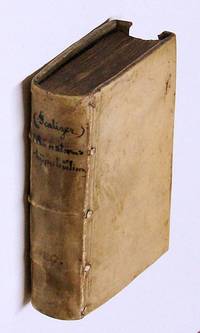
De Fenicische vrouwen. Treurspel naar Euripides door P. Camper Ph. Th. M. & L.H. Doctor.
Zutphen Bij H.C.A. Thieme 1823. I4 XLVIII1404 p. Red morocco. 21 cm Ref: Geerebaert XXXVII11; not in OiN Details: Back ruled gilt and with a beige shield in the 'second compartment'. Boards with borders consisting of a row of gilt floral motives. Edges of the boards and of the bookblock also gilt. Oval engraving on the title page designed bij P. Camper and engraved by D. Veelwaard. Marbled endpapers Condition: Binding somewhat soiled and worn at the extremes. An extra flyleaf once bound before the title has been removed. On this disappeared flyleaf Camper probably wrote a dedication. Faint ink traces of this dedication are still visible on the verso of the flyleaf. The Royal Library in The Hague has a copy of this title bound in exact the same binding but still having Camper's dedication to the Minister of Education Note: Verse translation into Dutch of Euripides' Phoenissae' made by the conrector of the 'schola latina' at Zutphen Petrus Camper 1797-1852. 'Zij is getrouw vloeijend schoon. Ook de achter aan geplaatste aanteekeningen doen den Dichter eere aan. Deze lettervrucht is derhalve eene gunstige onderscheiding waardig'. 'Boekzaal der geleerde wereld: en tijdschrift voor de Protestantsche kerken' Amsterdam 1829 p. 193 Photographs on request hardcover
Ссылка продавца : 157772
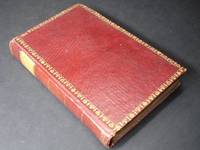
|
|
|
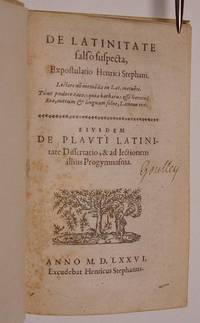
STEPHANUS, HENRICUS
De latinitate falso suspecta expostulatio Henrici Stephani. Lectori non metuenda in lat. metuenti./ Tu´ne pudore taces quia barbarus esse vereris/ Eia metum & linguam solue Latinus eris./ Eiusdem De Plauti Latinitate Dissertatio & ad lectionem illius Progymnasma.
N.pl. Geneva Excudebat Henricus Stephanus 1576. Small 8vo. XVI400 p. Modern vellum 15 cm An attack on Ciceronianism the cult of the usage of Cicero as the only correct Latin Ref: GLN-2585; Schreiber Estiennes n° 198; Brunet 21079; Graesse 2507; Ebert 6974; Renouard p. 144: 15763 Details: Printer's Olive tree device of the Stephanus family on the title motto: 'Noli altum sapere' short for 'Noli altum sapere sed time' in English 'Donot be high-minded but fear'. Epistola Beati Pauli ad Romanos 1120 Edges dyed red Condition: Title slightly foxed; Old name on the title Note: De latinitate falso suspecta a work of the French printer/scholar Henri Estienne latinized as Henri Stephanus 1528/31 - 1598 is a treatise on the Latin language written four years after the Thesaurus Graecae linguae. 'This was an attack on Ciceronianism the cult of the usage of Cicero as the only correct Latin and as such it contributed to an argument that had been going on since the second half of the 15th century. Ciceronianism had its own dictionary that of Mario Nizzoli Nizolius which had first apeared as Observationes in Ciceronem in 1535 documenting approximately 20000 words; 50 or more further editions appeared under various titles in the next hundred years. . The Ciceronians Henri argued condemn certain Latin usages which they suppose to be modern Gallicisms. So for instance they censure the use of pausa supposing it to be a modern formation from French pause - but it is to be found in the ancient fragmentary poets Ennius and Lucilius; a number of examples of its use by Plautus are given in the Latinae linguae thesaurus; Robert Estienne's edition of Plautus contains others; and so on. The cumulative effect was not only to show the weaknesses of a Ciceronianism untempered with the knowledge of other Latin texts and particularly those written before the age of Cicero but also to show the numerous parallels between Latin and French usage. 'This work' as Feugère pointed out 'might on account of the striking analogies between the two languages which it present also be called a Traité de la conformité du français avec le latin'. So it might; and that suggests a reorientation of Henri's thought. No longer was he observing only the analogies between Greek and French. Now he was seeing those beween Latin and French and more specifically between non-Ciceronian Latin and French. And these analogies he realized did indicate genealogical filiation. This struck him particularly as he wrote the treatise on Plautus' Latin usage which is appended to the De latinitate falso suspecta: after commenting on his own affection for Plautus he added: 'For sure it is fitting that the French love the Latinity of Plautus more than any other people do for in many respects his speech has greater affinity with theirs than with anyone else's'. Henri was developing the theory that French may be descended from archaic Latin and may preserve archaic features that had been rejected from formal written Latin by the time of Cicero'; a similar argument was being developed at the same time by the Italian grammarian Lodovico Castelvetro. Henri's argument was like Castelvetro's a development of that of the grammarian Jacques Dubois Jacobus Sylvius that French had along with some Greek and Hebrew loan elements a Latin basis that differed to some degree from classical written Latin - though Dubois did not go so far as to indentify this explicitly as vulgar Latin. Students of French antiquity such as François Hotman proposed in the 1570s and 1580s that French was 'a mixed language resulting from the 'corruption' of Latin mixed with the language of the Gauls and then of the Franks. Henri's argument was more dramatic than theirs: he was not thinking in terms of corruption so much as of the continuation of a variety of Latin that had been spoken and written in the age of Plautus and had lived on as a spoken variety through the Golden Age and the fall of the Roman Empire. Had he ever written De latinitate prisca in which he announced his intention of treating Plautine Latin more fully he might have been able to pursue this point to good effect'. J. Considine 'Dictionaries in Early Modern Europe: Lexicography and the Making of Heritage' Cambridge 2008 p. 63/65 Henri Estienne was indeed way ahead of his time with his suggestion of the existence of a 'sermo cotidianus' in colloquiis familiaribus' Praefatio p. 5 verso. Most Latin scholars of his time did not have an idea of what we understand today by Vulgar Latin. Scholars were imbibed by the artificial language of Latin literature the Latin of the Vulgate and the Church Fathers which one-sidedness prevented them to relate French words to Latin words and to see in Latin the starting-point for French. Classical scholarship had to wait about 150 years before a clear recognition of Vulgar Latin emerged Provenance: Name on the title: 'Goulley' Collation: 8 a-2B8 Photographs on request hardcover
Ссылка продавца : 120165
|
|
|
HALL,MC VAN M C
C.C. Plinius Secundus.
Amsterdam Johannes Allart 1809. IIVIII2033 errata p. Half calf 22 cm 'Historical novel' Details: Back ruled gilt gilt letterpiece in the 'second compartment'. Boards marbled. Title page engraved by R. Vinkeles on it we see a bearded Greek sitting on a kind of anachronistic Vienna-Thonet chair; he points at an almost completed statue; a sculptor hammer in hand stands beside him. The goddesses Athena and Artemis are looking on; this scene probably refers to a discussion in this novel about the art of sculpture and the use and abuse of statues. p. 42/53; 7 text illustrations also by Vinkeles Condition: Binding slightly worn at the extremes Note: Mr. Maurits Cornelis van Hall 1768-1858 was a Dutch jurist and member of the anti-royalist patriotic society 'Concordia et Libertate'. He was a friend of the authors Wolff and Deken Helmers Bilderdijk and Feith. Later in life this republican turned into a conservative. In 1842 he became a member of the First Chamber Senate of the Dutch parliament. His poetry is forgotten but he is remembered for his historical novels on Plinius Secundus 1809 and Valerius Messala Corvinus 1813. The attentive reading of the letters of Plinius Minor inspired him to write about a meeting of some friends of this noble Roman in the house of Calpurnia his widow where they discuss the merits of the deceased. In a lively and entertaining way Van Hall offers a sketch of the cultural elite of the Roman Empire at the beginning of the second century A.D. § The novel was translated into French. The sale of the book was apparantly not a great success for unsold remainders came into the hands of 'Johannes van der Hey' who renewed only the title and brought the book in 1819 once more on the market as a new edition nieuwe uitgave. We compared both editions and must conclude that the only difference is the imprint on the title page of the 1819 edition the rest is exactly the same. § See for a review and a summary of this novel: 'Vaderlandsche letteroefeningen' Jaargang 1809 p. 553/557 Provenance: Bookplate on the front pastedown: 'Bibliotheca Seminarii Warmondani. Dono dedit Rev. Pl. Dom. Professor J.W.L. Smit'. Johannes Wilhelmus Leonardus Smit 1826-1887 began his theological studies at the Seminary of Warmond in 1844 where he was appointed to the post of teacher in 1847 before he had ended his studies. He published on catholic martyrs who were persecuted in the Netherlands in the 16th century. He became professor of Church History at Warmond in 1861. NNBW 21330-1332 Collation: pi1 4 A-N8 minus leaf N8 Photographs on request hardcover
Ссылка продавца : 153359
|
|
|
FRONTINUS
S. Julii Frontini libri quatuor Strategematicon cum notis integris Francisci Modii Godescalci Stewechii Petri Scriverii & Samuelis Tennulii. His accedunt cum P. Scriverii tum aliorum doctorum ineditae observationes curante Francisco Oudendorpio qui & suas adnotationes variasque MStorum lectiones adjecit. Editio altera multo auctior & emendatior.
Leiden Lugduni Batavorum Apud Sam. et Joann. Luchtmans 1779. 8vo. LXXVIII5701322 blank p. frontispiece. Vellum. 22 cm Ref: STCN ppn 189887621; Schweiger 2369: 'Mit Bereicherungen in den Noten'; Brunet 21409; Graesse 2639; Ebert 7963; Spoelder p. 628 Leiden 5 Details: Prize copy but without the prize. Boards with the gilt coat of arms of the city of Leyden. Frontispiece depicting both sides of a coin from the time of Domitianus 81-96 AD showing a portrait of a bearded man with the name of proconsul Frontinus in Greek; on the tail-side a river goddess holding a reed; below her a text in Greek revealing the names of the issuing magistrates Reginus and Myrton and the place of issue Smyrna. In his 'Ad Lectorem' Van Oudendorp convincingly proves that the portrayed figure on the coin is not Frontinus but Hercules an assumption that is accepted by later numismatics. § The upper quarter of the pages contains the Latin text underneath that the commentary Condition: Without the prize. All four decorative fastening ribbons gone. Vellum soiled back browned. Gilt on the boards a bit worn away. Small bookplate on the verso of the flyleaf small withdrawal stamp on the verso of the title leaf Note: Now that the intensive study of the ancient languages and cultures is in decline it seems hard to imagine that the ancient models once exerted a profound influence on every domain of post-classical life and thought in Europe. One such domain was the art of warfare. Between the end of the 15th and the middle of the 17th century a period in which numerous wars were fought the ancient works on Roman and Greek strategies and tactics were eagerly studied by humanist scholars and the military elite. One such surviving work was written by the Roman civil servant and politician Sextus Julius Frontinus 30-104 A.D. His works 'are essentially practical dealing with professional subjects in a straightforward style admirably suited to his purpose'. During the reign of the emperor Domitian he produced his 'Strategemata' a general manual of 'historical examples illustrating Greek and Roman strategy for the use of officers' which survives in four books OCD 2nd ed. p. 448. In the year 86 Frontinus was created Proconsul of the province Asia Minor. Under Nerva 97 A.D. he was appointed 'curator aquarum' and wrote 'De aquaductu Urbis Romae' an account of the water-supply of Rome. Many inscriptions bear witness of his activities. § The Eighty Years' War or the Dutch War of Independence which lasted from 1568 till 1648 was a revolt of the Provinces of the Netherlands against the political and religious hegemony of Philip II of Spain. In its struggle for political religious and economic freedom the young Dutch republic was confronted with a Spanish imperial army of enormous size. 'Dutch Humanism of the period and its study of classical philology aided the technical and tactical evolution of the Dutch army'. The Classical Tradition Cambr. Mass. 2010 p. 978 Works of the Flemish classicist Justus Lipsius 1547-1606 his 'De militia Romana' and 'Poliorcetica' 'inspired and guided Dutch military reform and organization after the pattern of the ancients and on the principles of Roman stoicism the ancient philosophy of discipline and self-control .'. Idem ibidem The great general Prince Maurice of Nassau was in fact a student of Lipsius in Leiden. He understood that whoever knew how to rule the troops with the help of the Roman art of war would be able to dominate the battlefield. 'The princes of Orange studied everything available concerning the military skills practiced by the ancient Greeks and Romans and they spared no trouble work or expense in transferring the tennets found there into practice. They commissioned learned philologists to carry out projects of military science'. Idem p. 979 § Frans van Oudendorp 1696-1761 was the last great Dutch latinist of the 18th century. He was professor of History and Eloquence at the University of Leiden. He produced a valuable and still useful edition of Lucanus 1728 and edited Caesar and Suetonius. His first edition of Frontinus was published in 1731. His son Cornelis published in 1779 at the request of the firm of Luchtmans this second revised and augmented edition Provenance: Bookplate of A. Pitlo showing a radiant sun with the motto 'Plus est en vous'. Designed by Pam Georg Rueter signed with the letter 'R' in the left corner. The Dutch jurist Adriaan Pitlo 1901-1987 was for 30 years professor of private and notarial law. The 'Festschrift' that was made in 1970 on the occasion of the 25th anniversary of his professorate also bears the title 'Plus est en vous' Collation: 6 minus leaf 6 -48 52; A-2X8 leaf 2X8 blank Photographs on request hardcover
Ссылка продавца : 130064
|
|
|
POLYBIUS
EK TÔN POLUBIOU TOU MEGALOPOLITOU EKLOGAI PERI PRESBEIÔN. Ex libris Polybii Megalopolitani Selecta de legationibus; et alia quae sequenti pagina indicantur: Fragmenta Ex Historiis Quae Non Extant: Dionysii Halicarnassei: Diodori Siculi: Appiani Alexandrini. Dionys. Cassii Nicaei De Legationibus. Dionys. Lib. LXXIX. Et LXXX. imperfectus. Emendationes In Polybium impressum Basileae per Ioannem Hervagium Anno M.D.XXIX Nunc primum in lucem edita. Ex bibliotheca Fulvii Ursini.
Antwerpen Antverpiae Ex officina Christophori Plantini 1582. 4to. 2 parts in 1: VIII4471 blank;182 p. Calf 23 cm. 'Editio princeps' Ref: Not in STCV; Hoffmann 3270; Schweiger 1272; Speeckaert/Sorgeloos no. 386; Voet Plantin Press 2081; Graesse 5395: 'un jugement très honorable est porté sur cette éd. et sur le man. dont Ursin s'est servi par Schweighaeuser'; Dibdin 2351 note; Sandys 'A history of classical scholarship' 1405 Details: Back with 5 raised bands its compartments gilt with double fillet and a starry ornament. Double fillet gilt borders on the boards. Edges marbled. Woodcut printer's device on title motto 'Constantia et Labore'. The first part p. 1-294 contains the Greek text of Polybius' 'Selecta de legationibus'; p. 295-447 contain the 'Selecta de legationibus' of Dionysius Halicarnassensis Diodorus Siculus Appianus and Dio Cassius. The first 148 pages of the second part contain the 'Fulvi Ursini notae in Polybium'; followed by 34 pages with Ursinus' 'emendationes in Polybium' taken from the Basle edition of Johannes Hervagius of 1529 Condition: Binding worn. Back rubbed. Head & tail of the spine chafed. Boards scratched. Small surface damage on the lower board. Hinges cracking but strong. Corners bumped. Small tear in the front flyleaf Note: The Greek author Polybius ca. 200 - 118 B.C. born at Megalopolis is the historian of the rise of Rome to world power. After the lost battle at Pydna in 168 where Greece lost its independence young Polybius was among 1000 other eminent Achaeans deported to Rome and held hostage there. In Rome he became a member of the circle of the Roman magistrate Scipio Aemilianus whom he accompanied on his campaigns through Spain and Africa. There he developed a warm admiration for the Romans. Of Polybius' 'Histories' consisting of 42 books only the first 5 books are extant the rest is lost except excerpts the so-called Constantinean Excerpts or Selecta which survived. 'His original purpose was to narrate the history of the 53 years 220-168 from the Hannibalic War to Pydna which left Rome mistress of the world' OCD 2nd ed. p. 853. He did so from a Roman point of view. Later in life he extented his work to the year 120. Polybius aim was didactic he wanted to inform the statesman and to teach 'the general reader how to face disaster' OCD. He narrated and analysed political and military events to bring out their causes. The rise of Rome to her deserved and destined supremacy over the civilized world was according to him the work of Destiny. He was the last Greek historian who may claim high rank. Polybius was widely read in Byzantine times and after his 'rediscovery' in the West the Florentine statesman Macchiavelli used him as a political thinker. He was edited and analysed by great philologists like Poliziano and Casaubon. § The Constantinean Excerpts of which the 'Selecta de Legationibus' or 'Excerpta de Legationibus' On diplomacy form part were compiled when the Byzantine emperor Constantine VII Porphyrogenitus 913-959 ordered the creation of a kind of encyclopaedias of History Agriculture and Medicine. They were to contain excerpts from the most important ancient texts most of which are now lost. This trend of excerpting and anthologizing was ulitmately responsible for the fragmentary form in which the text of Polybius has come down us or to put it more mildly thanks to the excerptors much of Polybius has been preserved. The encyclopaedia of History consisted of numerous extracts from the works of the leading Greek historians then extant in Constantinople beginning with Herodotus and ending with Theophylactus. It was organized under 53 headings of which only 6 survive: 'De virtutibus et vitiis' On virtues and vices 'De sententiis' On Aphorisms 'De insidiis' On ambushes 'De stratagematis' On stratagems 'De legationibus gentium ad Romanos' On foreign embassies to Rome and 'De legationibus Romanorum ad Gentes' On Roman embassies abroad. The most important of the Constantinean excerpts are those of Polybius. They preserved virtually all the surviving text that we have of the books 20-39 of Polybius. § The 'editio princeps' of the excerpts of Polybius was published in Antwerp in 1582 by the Italian humanist scholar Fulvius Ursinus 1529-1600. At the beginning of the preface to the edition Fulvius Ursinus tells us that he received some years before from his friend Antonius Augustinus archbishop of Tarragona a manuscript with 'Polybii quaedam fragmenta' collected by 'Iohanne quodam Constantinopolitano' in order to correct and publish it. Leaf pi2 recto § Ursinus became the librarian of 3 cardinals and was a great collector of manuscripts and books. Sandys says of him that he 'was the centre of classical and antiquarian interest in Rome and there was hardly any edition of a Latin author published in his time to which he did not contribute readings from his store of MSS'. Sandys 2153 The great German scholar Schweighaeuser who published in 1795 his epoch-making edition of Polybius had a high opinion of this work of Ursinus. It is of the highest importance and usefulness. Ursinus restored many corrupt places and gave us the true Polybius he said. Schweighaeuser's Polybius 1789-1795 volume I p. XIII. According to Voet the edition of these exerpts notwithstanding its importance was not really a success: in 1642 as yet 407 copies remained unsold Collation: pi4 A-Z4 a-z4 Aa-Kk4 leaf Kk4 verso blank; A-Z4 leaf Z4 blank Photographs on request hardcover
Ссылка продавца : 140008
|
|
|
EMMIUS,U
Graecorum Respublicae ab Ubbone Emmio descriptae.
Leiden Lugd. Batavorum Ex officina Elzeviriana 1632. 24mo. 2 parts in 1: 4266 index;3237 index & privilegium p. Calf 11.5 cm Ref: Willems 364; Berghman 1573; Rahir 345; Ebert 6690 Details: Back and boards with blind tripple fillet borders. Title engraved by C.C.Duysend it depicts around the text of the title a floral cartouche on top of which rests an eagle aquila with spread wings holding in its talons the deadly thunderbolts fulmina of Jupiter. The eagle was called by Aristotle for the lordly manner with which it looked over the earth 'divine among birds'. HA 619b.6 The eagle is flanked by an owl wisdom and two 'kissing' pigeons. The second part has its own title on it a woodcut printer's mark featuring an old man who stands in the shade of a vine-entwined elmtree symbolising the symbiotic relationship between scholar and publisher. The motto is enigmatic: 'Non solus' probably indicating the interdependency of publisher and scholar. They cannot do it alone and need each other Condition: Binding scuffed corners bumped. Endpapers detached Note: Ubbo Emmius 1547-1625 born in Eastern Friesland was appointed professor of History and Greek literature at the newly established University of Groningen in 1614 where he became also the first Rector Magnificus. In his publications and correspondence with eminent scholars of his time he defended the right of a people to revolt an idea that would eventually lead to the French revolution. In the Netherlands he is best known for his Rerum Frisicarum Historia 1592-1616 the first modern study of Friesland and the Frisians in which he refuted many idle tales related by earlier historians of Friesland. Among classicists and ancient historians he is known for his 'Vetus Graecia illustrata' a three volume work which he composed during the last years of his life and which was published posthumously in Leiden in 1626 by the Elzevier brothers. The third volume which describes the particular form of government of every state or commonwealth of Greece was published in 1632 separately by Elsevier as 'Graecorum Respublicae' Provenance: In the center of the upper board have been punched in small type the capitals H A I. The letter A was punched upside down. § On the front flyleaf in pencil the Dutch Jewish name: V. Goldsmid probably 20th century Collation: A-2D8; A-X8 leaves X6 X7 & X8 blank Photographs on request hardcover
Ссылка продавца : 120234
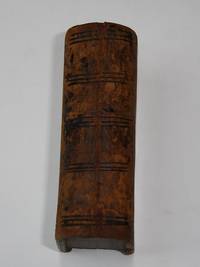
|
|
|
LIVIUS
Romainsche Historien van Titus Livius sedert de bouwing van Romen tot aan d'ondergang van 't Macedonische Rijk. Ten meestendeel van nieus vertaalt en met een tweede decade voor de gene die verloren is verrijkt en op ontellijke plaatsen vermeerdert. Met een vervolg der Romainsche historien strekkende van 't einde van T. Livius tot aan de doot van C. Iulius Caesar; beneffens een kort doch bondig Vertoog van de Staat der oude Romainen. Nieuwelijks uit de Romainsche Historie van M. Scipio Dupleix vertaalt en met nieuwe Bladwyzers verrijkt.
Amsterdam t' Amsterdam Gedrukt by Jacob Lescaille voor Ian Iacobsz. Schipper 1646. Folio. 2 parts in 1: LII including frontispiece622 recte 620 38 index 2 blank; 198 recte 194 26 p. Vellum. 31.5 cm Ref: STCN ppn 840918704; Geerebaert 1153; OiN 242; Schweiger 2548; Ebert 12138 Details: Back with 7 raised bands. Brown morocco shield in second compartment. Both boards blind tooled. Blind stamped oval ornament in the center of both boards. The frontispiece depicts Jupiter sitting on a flying eagle and brandishing his thunderbolt; Jupiter is accompanied by Hera Iris and 2 warriors; Iris holds a caduceus in her hand; in the foreground rests near a well Tiburinus the personification and genius of the river Tiber; at his feet are playing Romulus and Remus who he is told to have found on the border of his river and the she-wolf Lupa. Woodcut ornament on the title. Woodcut initials. Numerous charming woodcuts in the text. Printed in 2 columns and in Gothic type Condition: Vellum age tanned and slightly spotted. Some soiling of the frontispiece. Some small spots on the title Note: The Roman historian Titus Livius 59 B.C. - 17 A.D wrote a huge and immensely influential history of Rome 'From the foundation of the City' Ab Urbe Condita libri in 142 books. Of this work only 35 books are still extant. Of the rest remain only fragments and summaries. He 'set himself to give Rome a history that in conception and style should be worthy of her imperial rise and greatness' OCD 2nd ed. p. 615. The later Roman historian Tacitus declared that Livy was 'brilliant for eloquence and credibility'. Annales 4.43 Livy was the source and model of many classical medieval and later historians and writers like Lucan for his 'Civil War' for Einhard's biography of Charlemagne for Petrarch's 'Africa' for Shakespeare's 'Rape of Lucretia' etc. Other humanist historians wrote the history of their state to equal what Livy had done for Rome. The English philosopher 'Francis Bacon declared Livy the best historian who provided models for behavior Advancement of Learning 1605' The Classical Tradition Cambr. Mass. 2010 p. 537 § The Dutch translator of this Livius of 1646 is Jan Hendriksz. Glazemaker 1619/20-1682 who was a professional translator ánd glazier. Glazemaker means glazier If there were no texts to translate Glazemaker worked as a glazier in the firm of his stepfather. He started his career translating popular literature later he specialized in philosophy. He translated e.g. Descartes and Spinoza for the Dutch market. He mainly translated from Latin and French. His knowledge of Greek seems to have been insufficient to translate properly. So he must have used also Latin and French examples for his Greek authors. Choosing words to translate he was a purist and always chose pure Dutch terms so enriching the Dutch vocabulary. He was not a scholar nor a humanist virtuoso. To make some money he had to translate a lot and fast. His hastiness was the cause of some sloppiness. 'In vertalingen uit het Latijn valt op dat Glazemaker nogal eens mistast bij pronominale verwijzingen. Ook moet men niet veel precisie verwachten bij zijn vertaling van tempus modus en genus van werkwoordsvormen. Kleine woordjes als adverbia partikels coniuncties worden op de gis vertaald of weggelaten. . Meestal is zijn globale tekstbegrip zo groot dat geen verduistering van de strekking het gevolg is'. Glazemaker's style seems unvarying. He aims at keeping the structure of the sentences as clear and simple as possible which is said to be benificial to the reading pleasure and to be good for global and rational clarity. Glazemaker 1682-1982 Catalogus bij een tentoonstelling over de vertaler Jan Hendriksz. Glazemaker Amst. 1982 p. IX-XIII § The translation is preceded by a 44 p. richly illustrated survey of the buildings of Rome and of Roman customs and traditions. After the translation of the first ten books of Livy's 'Ab Urbe Condita' Glazemaker has added as replacement of the lost second decade which cover 293-218 B.C. a translation of the relevant part of the historical work of the French historian Scipion Dupleix 1569-1661. S. Dupleix 'Histoire Romaine depuis la fondation de Rome' 3 volumes Paris 1638-1643 At the end of Livy's work after p. 622 Glazemaker has added as continuation again a considerable part of Dupleix' work. This part runs from from 167 B.C. when Livy ends till the death of Julius Caesar in 44 B.C. The continuation starts on page 170 chapitre 9 livre 20 in volume two of Dupleix' 'Histoire Romaine'. As a replacement of the the lost second decade Glazemaker offers his translation of the p. 643-717 chapitre 5 livre 12 - livre XIII of Dupleix' historical work. § Glazemaker is not mentioned on the title-page. His name however occurs on the half title preceding the continuation of Dupleix. As the writer of the preface Aan de lezer tells the reader that he supplements lost parts of Livy with Dupleix he cannot be any other than Glazemaker. 'Doch wy hebben echter om dit werk tot enige volmaaktheit te brengen 't geen dat ons dienstigh was uit de Romainsche Historie van M. Scipio Dupleix getrokken te weten dat 't welk wy hier in plaats van T. Livius tweede Decade die door de ramp des tijts verloren is ingevoegt hebben en voorts het vervolg op onze schrijver dat is van d'ondergang van 't Macedonische rijk tot aan de doot van C. Julius Cesar door de voorgenoemde Dupleix'. p. 4 recto Collation: 4 - 44 56; A-Z6 Aa-Zz6 Aaa-Eee6 Fff-Lll4 leaf Lll4 blank; A-H6; Aa-Ii6 Kk - Ll4. Irregular pagination in the first part between p. 404 & 407; irregular pagination in the second part between p. 96 and 101 Photographs on request Heavy book may require extra shipping costs hardcover
Ссылка продавца : 151901 ISBN : 1619201682 9781619201682
|
|
|
LYCOPHRON
Lycophronis Chalcidensis Alexandra. Poëma obscurum. Ioannes Meursius recensuit & libro commentario illustravit. Altera editio aucta & innovata. Accessit Iosephi Scaligeri Iulii Caes. F. versio centum locis emendatior.
Leiden Lugduni Batavorum Ex officina Ludovici Elzevirii. 1599. 8vo. XVI35018 index p. Calf 19th century 16 cm Ref: STCN ppn 15153098; Willems 39; Rahir 25; Berghman 835; Hoffmann 2569; cf. Smitskamp The Scaliger collection no.93 for the first edition of 1597; Brunet 31247-1248; Ebert 12543; Graesse 4309 Details: Greek text and Latin translation. Back elaborately gilt with four ornamental lozenges. Brown letter label. Boards with a triple gilt fillet border and gilt edges. Edges of the book block sprinkled. Marbled endpapers. The colophon on the last page reads: 'Lugduni Batavorum. Excudebat Ioannes Balduini. VIII. Kal. Maias. anno 1599' Condition: Nice copy some slight wear to the extremities just a bit of rubbing to the joints. Some small old ink marginalia. Last gathering slightly browning otherwise a clean and fresh copy Note: Lycophron 3rd cent. BC was called to Alexandria in Egypt by King Ptolemaeus Philadelphos. There this tragedian wrote his 'Alexandra' or Kassandra ca. 1474 iambic trimeters in which Kassandra tells about the fall of Troy and the fates of the Greek and Trojan Heroes. It is his only surviving work which is full of the extreme and designed obscurity that the Alexandrians who were fond of a style full of learned allusions and playful riddles loved. Rose calls the 'Alexandra' a monstruous riddle. 'In form it is the speech of a messenger a servant of Priam . coming to tell his master that Kassandra = Alexandra has just delivered a mysterious oracle. . The prophecy concerns the whole history of Troy the Trojans and their descendants together with the fates of the Greeks for many generations to come and from beginning to end it calls nothing and no one by any wellknown name personal or geographical'. H.J. Rose A handbook of Greek literature' London 1964 p. 336. For instance Lycophron calls the mythical hero Heracles the 'Lion of the triple evening' expecting the reader to know that Heracles when he was begotten the night was thrice its normal length. § This edition of 1599 is a revised and improved second edition. The first edition was produced two years earlier in 1597 by the then 18 years old Dutchman Joannes Meursius or in Dutch 'Jan van Meurs' 1579-1639. He was a student of the genius Joseph Justus Scaliger born in 1540 who lectured since 1593 in Leiden till his death in 1609. Scaliger helped and encouraged his pupil in the production of this edition. In the preface Meursius tells us that he wouldnot have dared to edit such a dark and difficult text without the help of Scaliger. Scaliger helped him with the commentary and gave him permission to reprint his verse translation with corrections. This metrical and smooth Latin translation had been published previously in Basel in 1566. The last 251 pages of the book contain the commentary of Meursius 'quod sine interprete vix est ut quisquam intellegat'. preface leaf A8 recto Meursius was later appointed professor of History and of Greek 1610/13 at his own university. He is best known for his editions of byzantine authors and for the books he wrote on the history of ancient Greece for example on festivals Eleusis and the antiquities of Athens and Attica. His work was widely used as source by later ancient historians. Sandys 2310/11 Collation: A-Z8 a8 Photographs on request hardcover
Ссылка продавца : 152319
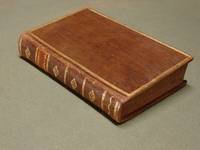
|
|
|
PLINIUS MINOR
C. Plinii Caecilii Secundi Epistolarum libri X. Notis integris Is. Casauboni Jani Gruteri H. Stephani Augusti Buchneri Casp. Barthii Joh. Fred. Gronovii Selectissimisque Joh. Mariae Catanaei Ritterhusii & aliorum insertis suo loco integris commentariis Francisci Balduini J.C. Cunradi Ritterhusii J.C. & Gerh. Joh. Vossii in 'Relationem' seu consultationem 'Plinii' & ad hanc 'Rescriptum Trajani' Imper. de 'Christianis' illustrati & accurate recensiti a Johanne Veenhusio Brem.
Leiden Rotterdam Lugd. Batav. Roterodami Ex Officina Hackiana 1669. 8vo. LII81823 index1 blank p. frontispiece. 19th century half calf. 19.5 cm 'We shall have reason to congratulate ourselves on the acquisition of so elegant and desirable an edition' Ref: STCN ppn 840239440; Schweiger 2809; Brunet 4722: 'bonne édition'; Fabricius/Ernesti 2415 among the 'meliores editiones'; Dibdin 2331: 'is one of the scarcest and most valuable of the octavo Variorum classics'; Moss 2494/95: 'the text of Pliny is correct and the select notes of Veenhyseen sic do great credit to his learning and judgment'; Ebert 17351: 'eine der bessern Augaben cum notis varior.' Graesse 5347/48 Details: Back ruled gilt and with 4 raised bands. The frontispiece engraved by G. Wingendorp depicts Plinius at his desk in front of him 2 quills and an inkpot. Woodcut printer's mark on the title depicting a soaring eagle motto 'Movendo'. Dibdin adds: 'and whether we consider the elegance of its typography the accuracy of the text or perspicuity of the notes we shall have equal reason to congratulate ourselves on the acquisition of so elegant and desirable an edition'. Winckelmann used this 1669 edition of Pliny when he visited the Laurentine Villa Ep. II17 of Pliny Condition: Binding slightly scuffed. Seven small wormholes at the foot of the spine. New endpapers. Ownership entry on the title. Some foxing Note: The Roman civilian administrator Gaius Plinius Caecilius Secundus 61-112 A.D published 10 books of literary letters consisting of short essays character sketches and sensible observations. The letters paint the high society of the young Roman empire. The ninth book contains Pliny's correspondence with the emperor Trajan. Pliny is famous for his description of the eruption of the Vesuvius on the 24th of August in 79 A.D. He was a nephew of the encyclopedist Pliny the Elder who died observing the eruption from afar overcome by poisonous fumes. Pliny the Younger held under Trajanus a number of magistracies. In 111 or 112 he became governor of Bithynia. From here he was in constant correspondence with the Emperor. His letters which were conceived of as artistic productions are more or less epistolary essays. In the late antiquity and later in the Renaissance the literary letter had a widespread influence. § The German classical scholar Johannes Veenhusius of Bremen 1643-1675 published the 'Epistulae' with the complete commentaries of Casaubon Gruterus Henri Estienne Buchnerus Barthius Johannes Fredericus Gronovius and with select notes of Cattaneo Ritterhusius and himself. The emendations of Gronovius are published here for the first time. Added are Henri Estienne's 'Praefatio' and Conrad Lycosthenes' 'Vita Plinii' Boxhornius' essay on Pliny's alleged Christianity and the notes of Balduinus Ritterhusius and the Vossii. For his text of the 'Epistulae' Veenhusius generally follows Estienne/Cattaneo even when he reports in the footnotes the notes and the comments of other scholars who disagree with or correct the text he is printing. To confirm Pliny's authorship of book 10 he reprints at the beginning of that book the dedicatory letter of Giovanni Maria Cattaneo who published an edition of Pliny's letters in 1506 to Ambrogio del Maino. In his own dedication to the officials of the city of Bremen Veenhusius speaks of the difficult task of an editor. But he affirms that Pliny is an author worthy of their sponsorship; many of his letters deal with Roman law which would be useful to compare with common law and many contain learned observations about antiquity and politics which are not only useful but also necessary to know. 'Catalogus Translationum Et Commentariorum: Mediaeval and Renaissance Latin translations and commentaries annotated lists and guides'. Volume IX editors V. BrownJ. HankinsR. A. Kasterp Washington 2011 p. 94 § Not much is known about Veenhusius he is not to be found in ADB and NNBW. At the beginning of the 'dedicatio' to this edition he calls himself Johannes Veenhusen and Bremen his 'Patria'. In 1671 he produced for the Leiden publisher Hackius another 'Variorum' edition now of Statius. Provenance: On the title 'Bibliotheca vallis Sti Lamberti 1749'. We found on the internet one book with exactly this same provenance: crlvorg/bibliographie-des-voyages/1203. The Cistercian abbey Val St. Lambert was situated in Seraing Southwest of the Belgian city of Liège. It was founded in 1202 and closed down in 1796. Nowadays it is a crystal glass factory. See Wikipedia 'Val-Saint-Lambert'. On the front flyleaf the name of the Dutch specialist of Roman law 'J.W. Tellegen'. On the front pastedown a small label of 'Libreria dello Studente Add.: Paolo Franchini Firenze' Collation: -38 42; A-3G8 leaf 3G5 verso blank; minus leaf 3G6 7 & 8 Photographs on request hardcover
Ссылка продавца : 153325
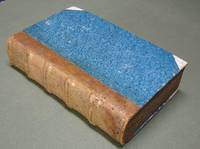
|
|
|
NICETAS CHONIATES
Della Historia di Niceta Coniate delle cose dell'Imperio di Costantinopoli libri VII. Ne' quali si contengono i fatti degl'Imperatori Greci cominciando da Alessio Comneno doue lascia il Zonara fin 'all'anno 1457 nel qual su presa quella Città da Mahomet Secondo. Con le postille a suoi luoghi dinotanti le cose di maggiore importanza. Et con molte altre cose utili & necessarie a Lettori.
Venice In Venetia Colophon at the end: Appresso Francesco Sansovino 1562 4to. 4 unnumbered leaves 111 leaves. Vellum. 20.5 cm Ref: Edit16 CNCE 31070; Hoffmann 2634 Details: The text is printed in italics. Two vellum thongs laced through the joints at the head & tail of the spine. Short title in ink on the back. Woodcut printer's mark on the title depicting a man who lies on his back and looks at the washing moon high in the sky. Woodcut headpiece at the beginning of the dedication preface and translation. Woodcut initials Condition: Vellum soiled. Binding slightly damaged at the extremities. Old name on the title. A few pinpoint wormholes in the back. Small piece of vellum gone at the right outer edge of the upper board. Lacking the last blank leaf. Both pastedowns worn. Right upper corner of the last flyleaf torn off Note: The Byzantine historian Niketas Choniates Nikêtas Chôniates ca. 1155-1216 was born in Chonai Phrygia Asia Minor and present day Khonas hence his name Choniates 'from Chonai'. He joined his older brother Michael in Constantinople where he embarked upon a political career and became an important civil servant. As governor of Thrace he was personally involved in the events relating to Frederick Barbarossa's passage through Thrace during the Third Cusade in 1189 when he lost his province to the Germans. After the capture of Constantinople and 3 of days of terrible and bloody looting by the Crusaders who were helped by the Venetians 13-15 April 1204 Niketas sought refuge in the home of a friend the Venetian wine merchant Dominicus who came to his rescue. Although a desperate refugee he was a brave man. 'As Niketas' party approached the Church of St. Mokios one of the Crusaders snatched the fair-headed daughter of a certain judge. Stumbling into a mudhole in despair the venerable judge pleaded with Niketas to save his daughter. To Niketas' credit in the face of great personal danger he persued the abductor and forced him to release the girl by appealing to his fellow Crusaders'. 'O City of Byzantium Annals of Nicetas Choniates' translated by H.J. Magoulias Detroit 1984 p. XIV-XV Niketas fled and went into voluntary exile in Nicaea where he settled at the court of the Nicaean emperor Theodore I Lascaris. There he completed a theological treatise the 'Dogmatikê Panoplia' which deals with the theological controversies of his time in some of which he himself had been involved and wrote this valuable account of the events of his lifetime. His account which is said to be impartial begins with the death of Emperor Alexius I Comnenus in 1118 who left his empire in bankruptcy and ends with events of autumn 1207 after the death of Baldwin I the first Latin emperor of Byzantium. 'The final draft of his history was left undone and its abrupt ending may have been due to his approaching death which also may explain his haste to complete it'. Idem p. XVI He considered the Comnenus dynasty a major cause of the empire's destruction and the sack of its capital in 1204. Another chief cause was the deterioration of the Byzantine navy. The Byzantines lost control of the seas to the Venetians. 'One of the historian's Niketas most telling criticisms is that the Muslims treated the conquered Latins in Jerusalem in 1187 with magnanimity while the Christians of the West behaved shamelessly toward their fellow Christians in the East'. Idem p. XXVII The history of the thallasocracy of Venice is closely connected with the Byzantine Empire. Constantinople twice granted her special trade privileges and with the Fourth Crusade and the sack of Constantinople this city state became an imperial power backed by its huge fleet. A considerable part of the loot was shipped to Venice including the famous bronze horses stolen from the Hippodrome which came to adorn the entrance of the San Marco Cathedral. With the Fall of Constantinople in 1453 numerous merchants Jews and Byzantine scholars fled to Venice. It is not strange that 16th century Venice was eager to read about their city's greatness and the collaps of the Byzantine Empire. The 'editio princeps' of the 'Historia' of Nicetas was published in Basel by Wolf in 1557. A few years later in 1562 3 Venetian translations were published. The first one this edition of 1562 was obviously a success for Francesco Sansovino brought in the same year a second augmented edition on the market. His fellow townsman Vincenzo Valgrisi published in 1562 also a translation this time made by Joseppe Horologgi. See Hoffmann 2634 Sansovino who apparantly considered Choniates' 'Historia' to be not elegant enough published in 1562 for his own press his own revision of the not yet published translation of Fausto da Longiano. Preface 4 recto At the beginning of each of the 7 books he proudly claims his part in the historiography of Constantinople for he adds to 'DELLE COSE DELL'IMPERIO DI COSTANTINOPOLI . SCRITTE PARTE DA NICETA CONIATE' printed in capitals in lowercase: '& parte da Francesco Sansovino'. This translation fell on fertile ground in Venice. Interest did not dwindle for in 1568 and 1571 two other editions appeared both translations of L. Dolce. The interest of Sansovino in Niketas may have been aroused by his experiences during his own childhood. He was born in Rome in 1521 and witnessed as a child the sack of his city in 1527 by mutinous troops of Charles the 5th. He and his father fled to Venice. Sansovino studied law in Padua and Bologna and after attempting a career at the court of Pope Julius III he returned to Venice. He was a many-sided author of poetry prose writings on literature history and rhetoric as well as a translator and editor. He opened his own printing house publishing around 30 editions many of good quality between 1560 and 1568. He was widely read during the Renaissance especially his historical works. His best known work is 'Venetia città nobilissima et singolare descritta in XII libri' of 1581 a kind of encyclopedia of the city Provenance: On the title: 'Ex libris Jacobi Alberti .ndini'. The first 2 letters of the last element are illegible Collation: 4 A-Z4 AA-EE4 minus leaf EE4 a blank Photographs on request hardcover
Ссылка продавца : 151902
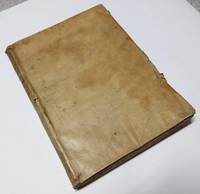
|
|
|
PLINIUS MINOR
C. Pliniii Secundi Novocomensis Liber de viris in re militari & administranda republica illustribus a multis mendis repurgatus & novis commentariis nunc primum nunc primum per Conradum Lycosthenem ita illustratus ut ad omnes Romanorum historias plurimum lucis & utilitatis adferat. Una cum eiusdem Plinii vita rerumque & verborum omnium indice copiosissimo.
Basel Basileae no publisher n.d. Colophon on the last page: 'Basileae Ex officina Ioannis Oporini Anno salutis humanae 1547 mense Septembri 8vo. XXXII59575 index2 blank p. 19th century half vellum 17 cm Ref: VD16 P 3521; Schweiger 21139 under Sextus Aurelius Victor; Graesse 5350 Details: Back ruled gilt and with a green morocco shield. 2 woodcut initials Condition: On the title page the words 'per Conradum Lycosthenem' are carefully erased. This erasing has been repeated on the verso of the title where in the heading of the short biography of Pliny Minor the words 'a Conrado Lycosthene' have been erased. This erasure signals the attempt to eradicate the memory of the editor of this title the Alsatian protestant humanist and encyclopedist Konrad Wolffhart latinized as Conradus Lycosthenes 1518-1561. In 1557 he published at Basel a work 'Prodigiorum ac ostentorum chronicon' or ' Chronicle of omens and portents' with woodcuts of freaks human monsters of all types curious animals comets earthquakes etc. Two years later this title and at the same time the entire oeuvre of Lycosthenes was placed on the first catholic 'Index librorum prohibitorum' by Pope Paul IV. The 'Index' of forbidden books contained publications that were banned by the Catholic Church because they were deemed heretical anti-clerical or immoral. Often these books were censored or even destroyed. The censoring sometimes came down to the erasing or cutting out of names or passages or the removal of leaves even complete chapters by catholic librarians. This explains the erasing of his name on the title page of this Plinius. The censor also cut out the name of the famous protestant publisher Oporinus leaving a neat rectangular hole of 7.5x1 cm. The censor overlooked however the name 'Conradus Vuolfhardus' in the heading of the 'praefatio' Note: 'The full maturation of ancient biography did not occur before the Roman late republican and imperial periods. The purposes of Graeco-Roman biography were varied ranging from instructive praise of a subject's virtues to panegyric to providing insurance against the jaws of oblivion by immortalizing the 'fama' good or ill of notable individuals'. The Classical Tradition Cambr. Mass. 2010 p. 127 In the early imperial period the Greek author Plutarch composed a series of vitae which are discursive and generally show a strong moral bias. The Romans were in the writing of biography not wholly dependent on the Greeks. 'The attitudes and customs of their own political and family life led them to put a special value on recording the achievements of their great men'. OCD 2nd ed. p. 168 Tacitus Agricola Nepos Liber De Excellentibus Ducibus Gentium Suetonius Vitae XII imperatorum or Caesares are the principle Roman biographers. In late antiquity they found a number of imitators and continuators e.g. the 'Scriptores Historiae Augustae' or 'Sextus Aurelius Victor'. § This 'Liber de viris in re militari & administranda republica illustribus' nowadays called in the edition of Pilchmayr 'Incerti Auctoris liber de Viris Illustribus Urbis Romae' is one of those imiations. It contains more than 75 biographies of famous Romans from Romulus to Pompeius and Sulla. When it was written no one knows some say first or second century AD others the fourth. This collection of Lives of famous Romans including Hannibal his brother Hasdrubal and king Mithridates was long time primarily ascribed to Plinius Minor 62-ca. 113 AD. The editio princeps was printed ca. 1470 and enjoyed a great popularity among humanists and on schools. Since the edition of Aldus in 1508 the collection is often called the 'Liber de viris in re militari & administranda republica illustribus'. Schweiger records before this 1547 edition ca. 40 editions and there must be more. It was printed in the 16th century also under the name of Suetonius and of Nepos. Hyginus and Aemilius Probus are also mentioned as the authors. The Flemish scholar Andreas Schottus attibuted the text in 1577 to Sextus Aurelius Victor. From then on till the second half of the 19th century he was thought to be the author of this collection. Schweiger 2 1140/41 But nowadays the author is an anonymous because the style genus dicendi does not suit Sextus Aurelius Victor. It is doubtful whether the author was a christian. He belonged probably to the Optimates. Though many historical errors hurt the eye of the reader still this collection of biographies offers much that is of great help for our understanding of Roman history of the republican period. The collection figures anonymously in the 'Bibliotheca Teubneriana' edition of that writer of 1966 edited by Pilchmayr. Especially the praefatio of Pichlmayer offers much useful information p. X & XI § Conradus Lycosthenes lectured grammar and dialectics in Basel from 1542. In 1545 he was appointed deacon and preacher of the local 'St. Leonhardskirche'. He married Christine Herbster a sister of Johannes Oporinus the printer of this book. The biographer of Lycosthenes's short biography in ADB calls his commentary in this 1547 collection his most excellent work. ADB 19 727/28 Provenance: On the front pastedown in pencil: '24 dec. 1963' written by the Flemish linguist Walter Couvreur 1914-1996 Orientalist and professor of Indoeuropean linguistics at the University of Gent. It indicates the date of aquisition. The place of acquisition is written on the flyleaf at the end: 'Bologna Galliera' Collation: alpha-beta8 a-2T8 leaf 2T8 blank Photographs on request hardcover
Ссылка продавца : 120121
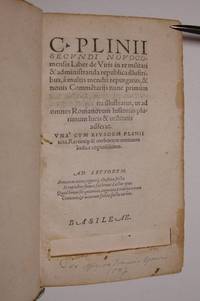
|
|
|
PHAEDRUS
Ezopische Fabelen van Fedrus gevryden slaef des Keizers Augustus. In Nederduitsch Dicht vertaelt en met Aanmerkingen verrykt door D. van Hoogstraten.
The Hague 's Gravenhage By Gerard Block 1739. 8vo XLVIII2591 blank371 blank p. Vellum. 15.5 cm Ref: STCN ppn 303260319; Geerebaert 1252a; cf. OiN p. 290 Details: 5 thongs laced through the joints. Title in red & black. Woodcut floral ornament on the title. Woodcut initials Condition: Binding age-tanned and slightly spotted. Small name label on the front pastedown. 1 name and 1 small stamp on the front flyleaf. Paper slightly yellowing. Endpapers foxed Note: David van Hoogstraten 1658-1724 was conrector of the 'Schola Latina' at Amsterdam from 1694 till 1722. He wrote Dutch and neolatin poetry and is well known for his lexicon 'Nieuw woordenboek der Nederlantsche en Latynsche tale' 1704 1719 1736. He published editions and translations of Nepos Terentius and Phaedrus. NNBW 831-833 This is the second edition of Van Hoogstraten's translation of the fables of Phaedrus. The first edition which was published in 1703 in Amsterdam by François Halma was a more ambitious project than this modest and cheaper version. It was in quarto and had engraved plates. One year earlier in 1701 Halma had already produced Van Hoogstraten's scholarly Latin edition of Phaedrus with ample commentary which was specially made for prince Johan Willem Friso 1687-1711 Prince of Orange 1702-1711 and 'stadhouder' of Friesland and Groningen. In the preface to the second edition of this translation the publisher Block tells the reader that this cheaper edition is primarily intended for young readers. He advises all family men to have their children read and reread this book. Van Hoogstraten dedicates his translation to the younger sister of Johan Willem Friso princess Maria Amalia 1689-1771 who was only 13 years old when it was first published. Van Hoogstraten was influential in the field of Dutch language studies in the 18th century with his work: 'Aenmerkingen over de geslachten der zelfstandige naemwoorden' 1700. It was his opinion that the Dutch language equalled the Greek and that it surpassed the Latin having no articles Provenance: The name label is of one 'Herman Spaan'. § On the flyleaf a small stamp: 'Ex libris A. Kerckhoffs'. This might be the Dutch linguist and cryptographer Auguste Kerckhoffs 1835-1903 who was professor of languages at the 'École des Hautes Études Commerciales' in Paris in the late 19th century. See for this interesting man Wikpedia 'Auguste Kerckhoffs' and also 'Kerckhoffs's principle'. § On the flyleaf also the name of 'H.J.' or 'H.I. van Reenen' Collation: -38 A-S8 leaf R2 verso and S8 verso blank Photographs on request hardcover
Ссылка продавца : 152273
|
|
|
PLINIUS MINOR
Lettere di Plinio il Giovane tradotte in lingua Italiana e dedicate all'Illustriss. ed Eccellentiss. Signore D. Alessandro Albani nipote di nostro Signore Clemente XI Pontefice Ottimo Massimo dal Canonico Gio. Antonio Tedeschi e tra gli Arcadi Orticolo Eleo.
Roma Della Stamperia di Gio. Maria Salvioni nella Sapienza 1717. 4to. XXXV1 blank; 4411 errori2 blank p. Calf 24 cm Ref: Schweiger 2816; Moss 2502 quotes Nicola Francesco Haym 'Biblioteca Italiana o sia notizia de libri rari nella lingua italiana' Venice/Milan 1741 p. 157: 'La traduzione e l'impressione sono ambi bellissime'; Ebert 17379; Graesse 3351 Details: Back with 5 raised bands and a gilt red morocco shield in the second compartment. Title printed in red and black. Woodcut initials. Excellent quality paper Condition: Binding scuffed. Boards scratches and spotted. Corners bumped. Foot of the spine slightly damaged. Front joint partly split. Bookplate and small label on the front pastedown. Front hinge cracking but strong. First two leaves foxed. Faint name on the title Note: The Roman civilian administrator Gaius Plinius Caecilius Secundus 61-112 A.D published 10 books of literary letters consisting of short essays character sketches and sensible observations. The letters paint the high society of the young Roman empire. The ninth book contains Pliny's correspondence with the emperor Trajan. Pliny is famous for his description of the eruption of the Vesuvius on the 24th of August in 79 A.D. He was a nephew of the encyclopedist Pliny the Elder who died observing the eruption from afar overcome by poisonous fumes. Pliny the Younger held under Trajanus a number of magistracies. In 111 /112 he became governor of Bithynia. From here he was in constant correspondence with the Emperor. His letters which were conceived of as artistic productions are more or less epistolary essays. In the late antiquity and later in the Renaissance the literary letter had a widespread influence. § Not much is known about the Canon Giovanni Antonio Tedeschi or Johannes Antonius Tedeschi who produced this first complete Italian translation of the correspondence of Pliny Minor. He also published a translation of the letters of Symmachus 1724. He died in 1727. We found one Giovanni Antonio Tedeschi who was dean archiprete of the family Borghese in whose palace he died in 1727 and who was buried in S. Lucia della Tinta. Claudio De Dominicis 'Carlo De Dominicis architetto del settecento romano' Roma 2006 p. 73 This must be our Tedeschi for he dedicated his Symmachus translation to Marcantonio Borghese. Tedeschi was a member of the Italian literary academy/society 'Accademia degli Arcadi' or 'Accademia dell'Arcadia'. In 'Prose degli Arcadi tomo terzo' Roma 1718 p. CV he is described as 'Orticolo Eleo. Il Canonico Gio. Antonio Tedeschi da Pesaro'. 'Orticolo Eleo' being his 'nome arcadico' i.e. his pen name or pseudonym. So the phrase 'e tra gli Arcadi Orticolo Eleo' probably means 'and among the Arcadi his name is 'Orticolo Eleo''. Might this pen name refer to a 'olive grove' A problem is that there is in this same period a namesake who was a sculptor/stonemason Provenance: On the title the name of 'Harriet Taylor'. This is Harriet Taylor Upton 1853 - 1945 who was an American political activist and author. Taylor 'Upton is best remembered as a leading Ohio state and national figure in the struggle for women's right to vote and as the first woman to become a vice chairman of the Republican National Committee'. Harriet Taylor married in 1884 the attorney George W. Upton. She 'was a key organizer and the first president of the Suffrage Association of Warren. She was also a member of the National Woman Suffrage Association NWSA from 1890. In 1891 Upton hosted a conclave of women seeking equal rights with men Ohio Women in Convention in her home. . Harriet Upton was inducted into the Ohio Women's Hall of Fame in 1981 in the category of Government and Military Service. In early 2010 Upton was proposed by the Ohio Historical Society as a finalist in a statewide vote for inclusion in Statuary Hall at the United States Capitol'. She probably wrote her name before 1884. See Harriet's lemma in Wikipedia § On the French title in pencil: 'J.W. Tellegen' § On the front pastedown the bookplate of 'Thomas Conolly' depicting a round garter with the motto: 'En Dieu Est Tout'; in the center a cubit arm the hand is grasping an annulet. Someone wrote once in pencil beneath the plate: 'One time Speaker in the Irish House of Commons'. This is not correct. This Speaker was William Conolly of humble descent who was the first of his line and in his time the wealthiest and the most powerful politician in Ireland. He died childless in 1729. Thomas Conolly 1738-1803 was a son of his nephew William James Conolly. Thomas inherited the estate of his father William James when he was still a minor. 'Thomas Conolly was the quintessential Irish gentleman a keen huntsman and a fine horseman as well as a politician and landowner. Regarded as the wealthiest commoner in the kingdom: he actually spent much of his career in debt because of large debts he inherited from his father. Conolly sat in the Irish parliament for forty years where he prided himself on his often imagined independence'. See for this interesting family: wwwcastletown.ie Collation: pi4 b-c4 d6 leaf d6 verso blank; A-3H4 3I6 leaf 3I6 blank Photographs on request hardcover
Ссылка продавца : 153326
|
|
|
PLINIUS MINOR
Caii Plinii Caecilii Secundi Epistolarum libros decem cum notis selectis Jo. Mariae Catanaei Jac. Schegkii Jac. Sirmondi Is. Casauboni Henrici Stephani Conradi Rittershusii Cl. Minois Casparis Barthii Aug. Buchneri Jo. Schefferi Jo. Frid. Gronovii Christophori Cellarii aliorumque recensuerunt suisque animadversionibus illustrarunt Gottlieb Cortius et Paullus Daniel Longolius qui etiam universum opus indicibus locupletissimis instruxit.
Amsterdam Amstelaedami Apud Janssonio-Waesbergios 1734. 4to. Frontispiece LII924;8461191 blank p. Contemporary mottled calf 26 cm Ref: STCN ppn 186700156; Schweiger 2809/10; Brunet 4722: 'bonne édition'; Dibdin 2332; Graesse 5343; Ebert 17356; Fabricius/Ernesti 2416 Details: Back with 5 raised bands and panelled in gilt with floral motives. Frontispiece it depicts Pliny writing a letter. Title in red & black. Engraved printer's mark on title; a mole with the motto: 'Vulgo caeca vocor. Video sed acutius ipso' Condition: Binding rather worn and scratched. Head & tail of the spine damaged. Back rubbed shield in the second compartment gone. Corners bumped. Endpapers chipping and loosening. Right margin of the frontispiece chipped. Title soiled and with a small hole and a small tear in the outer margin. Small tear in the outer margin of the first 5 leaves. Outer margin of last 6 leaves chipping. Some foxing Note: The Roman civilian administrator Gaius Plinius Caecilius Secundus 61-112 A.D published 9 books of literary letters consisting of short essays character sketches and sensible observations. The letters paint the high society of the young Roman empire. The tenth book contains Pliny's correspondence with the emperor Trajan. Pliny is famous for his description of the eruption of the Vesuvius in 79 A.D. § The German classical scholar Gotlieb Cortius or Kortte 1698-1731 made his name producing editions of Latin authors whose works were provided with very extensive commentaries in the manner of the Dutch scholar Petrus Burmannus to whom this edition is actually dedicated. Dibdin admires the work of Cortius: 'this' he says 'is a very critical and elaborate edition calculated for those who wish to enter minutely into all the niceties of grammatical construction and historical illustration'. Ernesti says that this is a work 'quae est sane luculenta et ut nunc est optima editio'. Cortius died before he could finish the job. Most remaining work was done by a pupil of Cortius the young German philologist Paul Daniel Longolius 1704-1779 from 1735 Rector of the Gymnasium in Hof Saale. He published 3 ancient authors in an exemplary manner the Letters of Pliny the Younger and the works of Diogenes Laertius 1739 and Gellius 1741. ADB 19156/7 The edition of the letters and the commentary is preceded by a 70 pages long biography of Pliny by J. Masson which was first published in Amsterdam in 1709 Collation: pi1 4 minus 4 2-74 minus 74; a-m4; A-5O4 a-p4 leaf p4 verso blank Photographs on request Heavy book may require extra shipping costs hardcover
Ссылка продавца : 140108
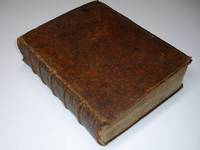
|
|
|
PORPHYRIUS
PORPHURIOU PERI TOU EN TÊi ODUSSEIAi TÔN NUMPHÔN ANTROU. Porphyrius De antro Nympharum. Graece cum Latina L. Holstenii versione. Graeca ad fidem editionum restituit versionem C. Gesneri & animadversiones suas adjecit R.M. van Goens Trajectinus. Praemissa est Dissertatio Homerica ad Porphyrium. Bound with: PORPHURIOU PHILOSOPHOU PERI APOCHÊS EMPSUCHÔN BIBLIA TESSARA. Porphyrii Philosophi De abstinentia ab esu animalium libri quatuor. Cum notis integris Petri Victorii et Ioannis Valentini et interpretatione Latina Ioannis Bernardi Feliciani. Editionem curavit & suas itemque Ioannis Iacobi Reiskii notas adiecit Iacobus De Rhoer. Accedunt IV. Epistolae de Apostasia Porphyrii.
Ad 1: Utrecht Traiecti ad Rhenum Sumptibus Abrahami v. Paddenburg 1765. Ad 2: Utrecht Traiecti ad Rhenum Apud Abrahamum a Paddenburg 1767. colophon: Daventriae e typ. J. de Lange 2 volumes in 1: 4to. XXXIVXXXVI21228 index; XXXIV39814 index p. Contemporary half calf. 26 cm Ref: Ad 1: STCN ppn 203268296; Hoffmann 3284; Schweiger 1274; Brunet 4823/24; Ebert 17795; Graesse 5415. Ad 2: STCN ppn 203266617; Hoffmann 3284; Schweiger 1274; Brunet 4823/24; Ebert 17791; Graesse 5415 Details: Back gilt and with 5 raised bands. Red morocco shield in the second compartment. Title and the first leaf of the preliminaries leaf chi1 and also L2 printed in red and black. A small text engraving on page 117. The second title is also printed in red and black Condition: Binding slightly worn. Corners bumped Note: Ad 1: The author of this treatise on the Odyssean Cave of the Nymphs is the Greek scholar and philosopher Porphyrius Porphyry 232/3 - ca. 305 A.D. who was more a polymath than an original thinker. In his numerous treatises and commentaries he had the good habit of quoting his sources by name. He thus preserved many fragments of older learning. OCD 2nd ed. p. 864/65 Porphyrius was a student of Plotinus whose Enneads he edited somewhere after 300. Most of his work is written from a Plotinian point of view. He produced also numerous philosophical commentaries on Plato Aristotle Theophrastus and Plotinus. His commentary on the Categories of Aristotle became a standard medieval textbook of logic. His philologic work include 'De antro Nympharum' a specimen of allegorizing interpretation in which Porphyrius symbolically explains the passages in the 13th book of Homer's Odyssey on the Cave of the Nymphs. In this cave situated on the island of Ithaca Odysseus hid the treasures of the Phaeacians on his return home. Od. XIII 102-112 361-365 § The edition of 1765 opens after a dedication to young prince William V with a 'Dissertatio Homerica ad Porphyrium' by the Dutch classical scholar Rijklof Michaël van Goens 1748-1810. The Greek text which follows is accompanied by 2 Latin translations. The first one by the German philologist Lucas Holstein or Holstenius 1596-1642 is printed parallel to the Greek text. It was first published in 1630 in Rome where he was librarian of the Vatican. At the end of the Greek text comes the second translation made by the Swiss classical scholar Conrad Gesner 1516-1565 which was first published in Zürich in 1542. After that translation follow the 'Collectanea ad Porphyrium De antro Nympharum' in which the editor Van Goens offers the Homeric text with the relevant scholia and commentaries and observations of Eustathius Johannes Spondanus Joshua Barnes Madame Dacier Alexander Pope and among others Willem Canter who declared that the complete Odyssey was an allegory of man searching for wisdom and happiness which he only could reach through death for Odysseus' sleep on board of the Phaeacian ship that brought him home must be understood as a stay in death. p. 81 At the end we find 38 pages filled with observations and commentary by Van Goens himself. § Van Goens was a precocious polymath. He matriculated at the age of 12 and only 18 years old he succeeded his professor at the University of Utrecht Peter Wesseling. He had to quit his chair in 1776 because he had made himself impossible. He went into Utrecht politics made more enemies and left his country disappointed in 1786. One of his principle philological works is this edition of Porphyrius. He does not agree with the allegorical explanations of Porphyrius which he calls 'nugae'. Such trifles only made the Odyssean passage incomprehensible instead of clear. Van Goens wants instead to shed light on the beauty of Homer's description of the cave. Praefatio p. XXII His aim is not textcritical but more philosophical Epistola p. IV. § Porphyrius explains the cave of the Nymphes and her double entrance as a profound allegory of the journey of the soul on it ways to and from its origin. p. 23 The cave symbolises the material world into which the human soul has descended. The darkness in it stands for the unseen powers of the material world. Porphyrius discusses the famous cavern of Plato refers to Pythagoras Heraclitus Mozes Zoroaster Stoics and the Egyptians and construes with bold imagination and wondrous combinations an allegoric explanation. In his 'Animadversiones ad Porphyrium de Antro Nympharum' p. 85-122 Van Goens investigates in order to explain the interesting passages in the work of Porphyrius thoroughly and with a marvelous erudition old and new authors. He seems to plunder a whole library from Plato to Spinoza from the New Testament to Leibniz to prove his point. Ad 2: The second work 'On the abstention of eating flesh' is the most important work on ancient vegetarianism that has survived. In it Porphyrius tries to convince his friend Firmus Castricius to abstain from the eating of flesh of slaughtered animals at the official offerings to the Gods. It is a kind encyclopaedia of ancient vegetarian and anti vegetarian thought. As for Plotinus the aim of philosophy was for Porphyrius the communion with God and an ascetic life was the way to achieve this. An important element of ascetism was the abstinence of eating flesh and killing animals for that purpose. The Greek philosopher Pythagoras 6th century B.C. is considered to be the founder of vegetarianism. Membership to his order entailed inter alia a strict discipline of purity and the abstention from flesh. Many ancient vegetarians believed in the transmission of the human soul to other human beings including animals. Others believed that eating flesh was injurious to the health of body and soul. For others a vegetarian lifestyle was preferable out of concern for animals themselves. Animals can suffer like humans and therefore the use of violent and unnecessary killing of them ought to be avoided. 'Perhaps the most sophisticated grounds for ancient vegetarianism however are found in Porphyry. His argument . involves the claim that rationality is not a defensible criterion for receiving moral respect because on this basis many members of our own species the marginal cases of humanity including the mentally defective would not be protected. If we lowered the criterion for receiving moral respect to sentiency so as to protect the marginal cases of humanity we must in order to be consistent also protect sentient animals'. The Classical Tradition Cambr. Mass. 2010 p. 960/61 s.v. Vegetarianism Sentiency the ability to feel and to suffer still is the cornerstone of modern vegitarianism and the 'animal rights's movement'. § This edition of De abstinentia was produced by the Dutch classical scholar Jacobus de Rhoer born in 1723. He was a student of Peter Wesseling professor of Greek of the University at Utrecht. In 1745 he became professor 'Historiae Eloquentiae et Linguae Graecae' of the Athenaeum at Deventer. In his last years in Deventer De Rhoer produced this edition. It was dedicated to the 20 members of the City Council for which dedication De Rhoer received 100 Ducates. In 1767 De Rhoer succeeded Van Lennnep as professor of Eloquence and Greek of the University at Groningen. J.G. Gerretzen Schola Hemsterhusiana Nijmegen 1940 p. 329-336 De Rhoer died in 1813. The basis for his edition was a manuscript from the collection of the Dutch book collector G. Meerman. Praefatio p. II He thanks in the preface also the German philologist Johann Jakob Reiske who lived in Leipzig for having sent him his readings of a 'Codex Lipsiensis'. p. III In constituting the Greek text he follows the edition which was published in Cambridge in 1655 Collation: Ad 1: -44 51; -44 52 chi1 A-Q4 R1 leaf chi1 is originally 52. This leaf has been replaced according to the instructions for the binder. Ad 2: pi2 minus leaf p1 see explanation at the end of the collation - 44; A-Z4 Aa-Zz4 Aaa- Eee4 Fff2 Leaf pi1 which the STCN copy calls for is a leaf showing only a stocklist of 22 other titles published by Van Paddenburg Photographs on request hardcover
Ссылка продавца : 153680
|
|
|
VELLEIUS PATERCULUS
C. Velleii Paterculi quae supersunt. Nicolaus Heinsius Dan. F. recensuit et castigationum libellum addidit.
Amsterdam Amstelodami Ex officina Elzeviriana 1678. 12mo. XXIV11529 index;10812 addenda & index p. engraved title. Vellum 14 cm Prize copy Gouda Ref: Willems 1550: 'Des 5 éditions de Paterculus données par les Elzevier celle-ci est la plus estimée. Elle présente un texte nouveau revu par N. Heinsius'; Berghman 2110; Rahir 1686; Schweiger 21128; Brunet 4430: 'édition préférable'; Fabricius/Ernesti 220; Graesse 5162; Ebert 23478; Prize copy: Spoelder Gouda 2 p. 568 Details: 6 thongs laced through the joints. Back ruled gilt. Boards with double fillet gilt borders. Gilt coat of arms in the centre of the boards. Engraved title it depicts Aeneas with his father Anchises on his shoulders and holding the hand of his son Ascanius; Anchises shows the way he points at the motto: Fata viam invenient a quote from Vergil's Aeneid Book X verse 113; in the background burns Troy. The first part 115 pages contains the text the second part 108 pages the notes of Heinsius Condition: Without the prize. Vellum age-tanned. Gilt fading. Ownership entry on the front pastedown. Inscription on the front flyleaf. Right margin of the title slightly soiled. Occasional pencil stripes in the Latin text Note: The work of the Roman historian Velleius Paterculus ca. 19 BC - after 30 AD commonly called Historia Romana is a valuable source for the reigns of the Roman emperors Augustus and Tiberius. It is the only history written by a witness of their time. Paterculus who served 'under Tiberius in many of his most important campaigns seems to have conceived an unbounded admiration for him and the whole imperial family in whose men he could see nothing but sublime virtues while the enemies were compact of every possible vice'. H.J. Rose 'A handbook of Latin literature London 1967 p. 355 Velleius' adulatory type of history was however condemned by the later historian Tacitus who ignores him. § The Historia Romana consists of 2 books. The beginning of the first is lost from the founding of Rome to the battle of Pydna in 168 BC in which the Romans defeated the Macedonian kingdom. What remains of book one ends with the fall of Carthago in 146 B.C. Book 2 is of greater importance. 'Book 2 covering the period 146 BC to AD 30 becomes more detailed as it approaches the author's own day doubtless because as he tells us he projected a fuller history from the Civil War onwards.' OCD 2nd edition p. 1111/12. Velleius' style is less polished but we are to remember that he was more a soldier than a rhetorician or scholar. Still long time the work of Velleius was considered to be a kind of rhetorical patchwork produced by an opportunistic court historian. However 'erst seit kurzem arbeitet man intensiv an einer Neubewertung des Velleius und seines Oeuvre als eines 'interpretationsfähigen und interpretationsbedürftigen Textes sui generis'. Neue Pauly 12/1 1170/71 § The Dutch neolatin poet and classical scholar Nicolaas Heinsius 1620-1681 is to be ranked in the opinion of the Dutch Latinist Petrus Burman among the best interpreters of this historian. David Ruhnkenius however who allowed Heinsius 'every praise as an editor of the Latin poets thinks him greatly deficient' in his edition of Velleius. Dibdin The suggestions notes and emendations of Heinsius are frequently discussed in the normative Cambridge edition of Velleius Paterculus of A.J. Woodman who observes that Velleius was certainly not a panegyrist but that modern historians sided with Tacitus and have 'invariably tended to accept the criteria which Tacitus laid down for judging the early empire and its rulers. There is no reason why these should be the only valid criteria. The writing of history is an interpretation of various items of evidence: Velleius' own lifetime coincided with the period which he covers in the Tiberian narrative and it is almost always possible to corroborate from other ancient sources the statements which he makes concerning contemporary events. What objection can there be to an historian who recognised the benefits inherent in the imperial system and who devoted his rhetorical skill to the production of a corresponding interpretation of events'. A.J. Woodman 'Velleius Paterculus the Tiberian narrative' Cambridge 1983. p. 53 Cambridge Classical Texts and Commentaries 25 Provenance: On the front pastedown in a modern hand: 'G. Henderson Essex Court Temple'. Essex Court lies in the Temple an area of central London in the vicinity of Temple Church. Henderson probably a jurist also made the inscription on the front flyleaf. On the front pastedown also an older name: 'Vad: Platii Pigotiani e dono S. fratris 1877'. A mysteryCollation: 12 A-L12 Photographs on request hardcover
Ссылка продавца : 120414
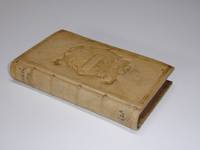
|
|
|
VALERIUS MAXIMUS
Valerii Maximi Dictorum factorum memorabilium lib. IX cum I. Lipsii notis et indice uberrimo.
Amsterdam Amstelodami Apud Ioannem Ianssonium 1647. 12mo. XII48626 index p. Modern calf 14 cm Ref: Schweiger 21110; Graesse 6/2245 Details: 20th century new binding antique style. Back with three raised bands. Gilt short title in second compartment. Marbled endpapers. Engraved title: a woman holding in her hands a balance scale and reins. Woodcut initials. Edges of the book-block dyed blue Condition: Back spotted. Title page thumbed. Lower margin of the blank front flyleaf damaged. A few small wormholes in the lower margin of the title page outside the engraving. Two small wormholes near the gutter of the first 3 leaves nibling at a few letters Note: The Roman historian Valerius Maximus who lived during the reign of the emperor Tiberius composed a manual of illustrative examples for rhetoricians the Factorum ac dictorum memorabilium libri IX. 'The subject-matter of the nine books has no clearly defined plan but is divided under headings mostly moral or philosophical in character e.g. Omens Moderation Gratitude Chastity Cruelty which are usually illustrated by Roman domestica and foreign externa examples. . The work is shallow sententious and bombastic full of the boldest metaphor and rhetorical artifices of the Silver Age. . Yet the variety and convenience of the compilation ensured some measure of success in antiquity and considerably more in the Middle Ages'. OCD 2nd ed. 1106 Medieval education drew heavily from classical authors for pagan learning was necessary for understanding the Scripture. The focus often was on memorizing sententiae and offering exempla and anecdotes that exemplified virtues. The critical and historical approach of the Renaissance to the school curriculum eliminated most post-classical authors in favor of 'Cicero for rhetoric Virgil for poetry and Caesar Valerius Maximus or Sallust for history on the argument that antiquity provided the best models for understanding people and their place in society'. The Classical Tradition Cambr. Mass. 2010 p. 294 § This edition of 1647 by Johannes Janssonius is a reissue of the Valerius Maximus edition of Leiden publisher Hegerus of 1640. The notes are by the humanist scholar Justus Lipsius 1547-1606 which were first published by Plantin in 1585. Lipsius consulted for his notes two new manuscripts. Lipsius was probably interested in Valerius Maximus as source for his own Monita et exempla politica 1605 Provenance: On the front flyleaf the owner's inscription: J. Piper Gryphiae 1778. This probably is Johannes Gottfried Piper a German Schulmann and paedagogue who studied in Greifswald. Till 1792 he was Rector at Ribnitz a small city in Mecklenburg-Vorpommern. He died in 1814. Jöcher Allgemeines Gelehrten-Lexicon Bremen 1819 Volume 6 p. 248 § On the front flyleaf in ink the name Groskurd. This is probably the German classical scholar Christoph Gottlieb Groskurd born 1770 who died in 1834 in Stralsund. 'Ab 1790 studierte er in Göttingen bei den Professoren Gottlieb Jakob Planck Johann Friedrich Schleusner und Johann Gottfried Eichhorn protestantische Theologie sowie bei den Professoren Christian Gottlob Heyne Arnold Hermann Ludwig Heeren Johann Georg Heinrich Feder Christoph Meiners Anton August Heinrich Lichtenstein und Splitter klassische Philologie. Von 1793 bis 1797 war er Kollaborator am Pädagogium in Ilfeld. Von 1797 bis 1823 unterrichtete er die Tertia am Stralsunder Gymnasium. Er trat 1823 wegen einer schweren Erkrankung in den Ruhestand und widmete sich darauf den Studien der Werke des Strabon'. Source Wikipedia § On the frontflyleaf also the inscription: Cunow in Potsdam. § A former owner probably the one who had this binding restored outlined his name in the blue paint at the right edge of the book-block: F. Gutheil Collation: 6 A-X12 Y4 Photographs on request hardcover
Ссылка продавца : 120434
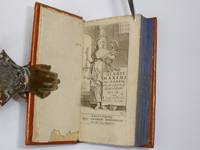
|
|
|
SYMMACHUS
Q. Aurelii Symmachi V.C.P.V et Cos. Ord. Epistolarum ad diversos libri X. Ex nova recensione Joh. Philippi Parei. Accesserunt etiam Electa Symmachiana cum indice. Bound with 2: Calligraphia Symmachiana: in qua omnes phrases & formulae elegantiores quotquot exstant in gravissimo authore Q. Aurelio Symmacho Praef. Urb. In gratiam & usum Philologiae studiosorum inprimis eorum qui Principibus ab Epistolis esse cupiunt per certos titulos locorum communium colliguntur ac disponuntur studio & opera Joh. Philippi Parei. Bound with 3: Electa Symmachiana: in quibus quicquid rerum memorabilium antiquitatisque Romanae in gravissimo authore Q. Aurelio Symmacho Praef. Urb. continentur sub certos titulos reales locorum communium refertur. Studio & opera Joh. Philippi Parei. Bound with 4: Lexicon Symmachianum. . Ad editionem quae prodiit ex nova recensione Joh. Philippi Parei.
Neustadt Neapoli Nemetum Impensis Joh. Caroli Unckelii librarii Francofurtensis excudebat Heinricus Starckius 1617. 8vo. 4 volumes in 1: 486; 32511 index; 1017 index4 blank; 272 recte 270 p. Contemporary calf. 17.5 cm Ref: VD17 23:242009B: vol. 1 & 3; VD17 3:314636G vol. 2; VD17 3:314634S vol. 3; VD17 23:242011X vol. 4; Schweiger 2991: Vollständige Exx. dieser Ausgabe finden sich sehr selten; Brunet 5612; Graesse 6/1539; Ebert 22078 Details: Back with 4 raised bands. Boards with blind ruled borders. First title in red and black. Woodcut printer's mark on that title depicting Samson between two pillars; Samson died according to Judges 16:30 when he grasped two pillars of the Temple of Dagon and 'bowed himself with all his might'. Judges 16:30 The motto reads: Nostra Fortitudo Nomen Domini. This convolute lacks according to VD17 the 7 page Q. Aurelii Symmachi Vita of Jacques Godefroy. Ebert remarks that this short vita is usually lacking. The titlepage of the last volume bears erroneously the year 1517 Condition: Binding scuffed and worn at the extremities. Corners bumped. Both pastdowns are detached: the binder used a manuscript music sheet for the endpapers. The music and the accompanying text in English seem liturgic Note: The Roman nobleman Quintus Aurelius Symmachus ca. 340 - ca. 402 AD was a prominent civil servant and became the most famous and admired orator of his day. Fragments of his speeches survive. H.J. Rose may call his oratory empty but an eulogy that Symmachus composed for the emperor Theodosius after he had sided with the usurpator Maximus once saved his life. And with his oratory this pagan politician was considered to be the most prominent opponent of Christianity. When Gratianus ordered by imperial edict the removal of the altar of Victoria from the Senate building of Rome he pleaded for the repeal of the edict. Of historic importance is the third letter in the tenth book of this collection of letters in which Symmachus asked for the restoration of this altar. It made a great impression it is said but he was defeated largely through the efforts of the bishop of Milan Ambrosius ca. 339-397 AD. The bishop persuaded the emperor to neglect the plea of this leader of the Roman aristocracy for the restoration of the altar. This was the last battle between Christianity and the other pagan religions of antiquity. The two episcopal letters about this 'cause célèbre' which Ambrosius addressed to the Emperor have been added here at the end of the letters of Symmachus. The collection of letters is arranged in ten books and contains some 900 letters addressed to the leading persons of the period. § The Latin text of this correspondence was edited by the classicist Johann Philipp Pareus 1576-1648 one of the most laborious grammarians Germany ever produced. His best work was done at Neustadt where he was Rector of the local school from 1610 till 1623. Pareus did much for Plautine scholarship. He was also a Symmachus specialist. Pareus published in 1628 a second and in 1642 in Frankfurt a third edition Provenance: The provenance of this book is probably English. The endpapers are the remnants of an English music sheet Collation: A-2G8 2H4; A-X8; A-G8 leaves G7 & G8 blank; A-R8 Photographs on request hardcover
Ссылка продавца : 120318
|
|
|
TACITUS
C. Cornelii Taciti Opera quae exstant. Ad exemplar quod I. Lipsius quintum recensuit. Seorsum excusi commentarii eiusdem Lipsii meliores plenioresque cum curis secundis & auctariolo non ante adiecto. Guil. Barclayus praemetia quaedam ex vita Agricolae libavit. Adiecti sunt indices aliquanto ditiores.
Paris Parisiis Apud Ioannem Gesselin 1599. 8vo. XVI7902 blank24 index p. Overlapping vellum 18.5 cm Ref: Schweiger 21000; Dibdin 2450/2; Ebert 22148; Graesse 6/28 Details: This is the first part of a two volume edition of Tacitus; it contains the Latin text of Tacitus only and lacks the commentary part. Vellum thong laced through joints at the head and tail of the spine; 4 thongs partly gone. Short title in ink on the back. Woodcut printer's mark on the title: depicting the winged mythological horse Pegasus though cloven-hoofed the motto in an oval reads: 'Sic aetas non retinenda fugit' Condition: Vellum age-tanned. Outer edges of the overlapping vellum partly damaged. Book-block almost loose in the binding. Front flyleaf with folds. Title slightly soiled and thumbed. Small and faint waterstain at the right lower corner of the first 5 leaves Note: The Flemish latinist Justus Lipsius 1547-1606 was invited in 1579 to come to Leiden to the recently founded university as a Honorary Professor of History. At that date he already had produced his great Tacitus-edition published by Plantin a work that placed and still places him in the front rank of classical scholarship Antwerp 1574. His main strength lay in textual criticsm and in exegesis. His emendations are considered to be very clever and his commentary rich. Plantin published a second edition in 1581 with new emendations and 'variae lectiones'. Lipsius's third edition Antwerp 1585 offered a new recension. The fourth edition was published by the son in law of Plantin Franciscus Raphelengius in Leiden in 1588. Lipsius remained there for 11 years a period of his greatest productivity. Plantin in Antwerp published again in 1588 Lipsius' 5th recension of the text with commentary. The Leiden branch of Raphelengius brought in 1595 after the departure of Lipsius a reissue 'secundis curis' of this 5th recension on the market. Of this 1595 edition 'our' edition which is the text volume is a reissue Collation: 8 A-Z8 Aa-Zz8 Aaa-Ccc8 Ddd4 leaf Ddd4 blank Eee8 Fff4 Photographs on request hardcover
Ссылка продавца : 151905
|
|
|
QUINTILIANUS
M. Fabii Quintiliani Institutionum oratoriarum libri duodecim summa diligentia ad fidem vetustissimorum codicum recogniti ac restituti. Novae huic editioni adiecit Fabianarum notarum spicilegium subcisivum Daniel Pareus Phil. Fil. Accesserunt etiam Quintilianorum declamationes.
London Londini Typis E.G. Impensis R. Whitakeri 1641. 8vo. 2 parts in 1: 5696 index1 blank; 7222 blank; 58 index2 blank p. Modern half vellum 18 cm 'Practical humane fascinating still of signifance'. Ref: ESTC Citation No. R16191; Schweiger 2839; Fabricius/Ernesti 2273; cf. Graesse 5527 for the edition Franktfurt 1629 with exact the same title Details: Back with 3 raised bands Condition: Endpapers renewed. Old ownership entries and some small notes on the title. Paper yellowing. Right lower corner of 3/4 hardly visibly waterstained. Small hole in the blank margin of p. 13/14 Note: The Roman orator Marcus Fabius Quintilianus ca. 35 - ca. 100 A.D. was under emperor Vespasian probably the first holder of the chair of Latin rhetoric in Rome paid by the fiscus. salarium e fisco accepit Suetonius Vesp. 17-19 His most celebrated work is the 'Institutio Oratoriae' in 12 books. It 'covers the complete training of the orator from the earliest preparation by the grammarian to his most mature aspirations for oratorical preeminence'. The Classical Tradition Cambr. Mass. 2010 p. 827 The ideal was a public speaker who was skilled not only in eloquence but who was also a good man. This is summarized in the famous maxim that an orator is a 'vir bonus dicendi peritus'. Quintilian still makes all that has been written on education from Rousseau to the latest pseudo-psychologist rather worthless. H.J. Rose A handbook of Latin literature London 1967 p. 399 'Book 1 discusses childhood education. . In book 2 the boy enters the school of rhetoric'. In book 3 follows an account of the art of rhetoric 'its origin its parts and its functions. Book 4-6 deal with the detailed structure of a speech . Book 7 is concerned with arrangement dispositio and status-lore. Book 8 discusses style . while in book 9 figures of thought and speech are illustrated'. Book 10 contains a critique of Greek and Latin writers. 'Book 11 discusses memory delivery gesture and dress . The concluding book shows the complete Orator in action a man of highest character and ideals . Roman gravitas at its noblest'. OCD 2nd ed. p. 907 The 19 'Declamationes maiores' which have come down to us under the name of Quintilian are certainly not his work. The 'Declamationes minores' a corpus of 145 smaller rhetorical exercises are probably the work of a contemporary rhetorician. § The 'Institutio Oratoria' of Quintilian was known throughout the Middle Ages especially in the summarizing works of the encyclopedists like Cassiodorus and Isidorus of Sevilla. In 1416 the Italian humanist Poggio Bracciolini discovered in Sankt Gallen a complete text after which Quintilian came 'to exert a deep and lasting influence on rhetorical theory and practice'. The Classical Tradition p. 829 The treatise influenced authors like Erasmus and Vives. The humanist Poliziano lectured on him and Lorenzo Valla preferred him to Cicero. His ideas were absorbed by Piccolomini Agricola Erasmus De pueris instituendis and Melanchthon. He was also used by Ben Jonson Discoveries Alexander Pope Essay on criticism Du Bos and Goethe. 'Seine Wirkung geht mit der Verfehmung der Rhetorik im 19. Jh. zurück doch bleibt Quintilian eine respektierte Grösse bis heute'. Neue Pauly 10719 § Daniel Pareus German philologist historian and schoolmaster son of the classical scholar Johann Philipp Pareus was born in 1605. He must have been a young scholar of some promise for the Dutch professor Gerard Vossius who endeavoured to find publishers for his works failed to gain him a professorship in the Netherlands. He then went to Kaiserslautern and founded there a Latin School but not yet 30 years old he was in 1635 murdered at the occupation of that city by soldiers or stabbed by a gang of brigands. In his short career he produced an edition of Musaeus 1627 Herodian 1627 'Mellificium Atticum' a collection of sentences of Greek authors reduced into commonplaces 1629 notes on Quintilian first published in 1629 Heliodorus's Aethiopica notes on Lucretius. He added his 'Animadversiones' to his father's edition of Sallust. His historical works are: 'Universalis historiae profanae medulla' 1631 'Universalis historiae ecclesiasticae medulla' 1633 and his excellent 'Historia Palatina' on the history of the 'Pfalz' 1633. ADB 25167 Provenance: On the title in faint ink: 'Sum conventus Angiae' and 'Bibliothecae Augustianae Angiae' and 'Fr. Jodocus Anthonii Ord. Eremit. S. Augustini' who wrote also beneath the imprint 'Requisitus Lovanii 1643' and 'Fr. Leverd prior'. The city of Enchien Flemish Edingen in the province Hainaut Belgium once housed a convent of the 'Ord. FF. Eremitarum S.P.N. Augustini'. This Augustine convent rue des Augustins no. 2 still is a monument. Frater Jodocus perhaps was the librarian of the convent he records that it was acquired in Louvain in 1643. § On front flyleaf the name of 'Lennart Hakanson' 1939-1987 professor of Latin at the university of Uppsala. He published in Lund in 1974 'Textkritische Studien zu den grösseren Pseudoquintilianischen Deklamationen' Collation: A8 -A1 B-2N8 leaf 2N8 verso blank. A-2Y8 between 2O and 2P has been inserted a gathering of two leaves signed pp; leaf 2Y8 blank; 3A-3C8 3D6 leaf 3D6 blank § There are two issues of this edition of 1641: ESTC R233485 and ESTC R16191. The first one starts with the 'Institutio Oratoriae' followed by the 'Declamationes' the other is the other way round first the Declamationes and then the 'Institutio Oratoriae'. R16191 calls for a title page with a heart-shaped ornament and with the printer's error 'accesserum' instead of 'accesserunt'. Our copy has the construction of R16191 but has the title page of R233485 which shows a flower-shaped ornament and has the corrected 'accesserunt'. This title page is a cancel this means that the faulty title was removed and replaced by another corrected title Photographs on request hardcover
Ссылка продавца : 120120
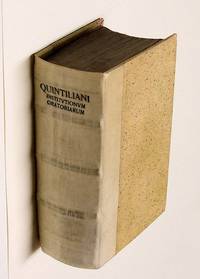
|
|
|
ROUS,F
Archaeologiae Atticae libri septem dat is: Seve boeken van de oudheden van Attika zijnde een beschrijving van des Stadts heerlijkheyt stijl van regeering verdeeling van volk en van steden vlekken en plaatsen die op den Atheenschen bodem lagen. Ook van hunnen godtsdienst bygeloovigheyt offerhanden en jaar-rekeningen; mitsgaders een volstrekt verhaal hunner vierscharen en een by-voegsel van de gewoontens die in gebruyk waren by hun trouwen begraven van dooden gastmaalen wichelaryen en van diergelijke dingen meer. In 't Engels beschreven door Francis Rous van Mortons sic Collegie tot Oxfort en in 't Nederduyts gebragt door Henrikus van Rhenen predik. tot Jutfaas.
Amsterdam By Hendrik en de weduwe van Dirk Boom 1688. 8vo. XII including the frontispiece759241 blank p. Vellum 16 cm Details: 5 thongs laced through both joints. Frontispiece it depicts four men with a turban on their head discussing before a map of Attica. Woodcut initials throughout Condition: Vellum soiled. Name on frontispiece; 2 round stamps on title One oval stamp on the verso of the title Note: Francis Rous the Younger 'born at Saltash in 1615 and educated at Eton and Oxford where he matriculated on 17 October 1634 and was elected to a postmastership at Merton College the same year. He afterwards migrated to Gloucester Hall. About 1640 he settled in London where he practised medicine until his death in or about 1643. He contributed to Flos Britannicus veris novissimi filiola Carolo et Maryse nata xvii. Martii 1636 and compiled Archaeologiae Atticae Libri Tres 1637 & 1645; third edition with four additional books by Zachary Bogan under the title Archaeologiae Atticae Libri Septem Oxford 1649 and frequent reprints the last 9th edition at London in 1688'. Dictionary of National Biography volume 49 p. 317 Provenance: On the frontispiece: 'H. Hofsnider'. Hofsnyder or Hofsnider 1671-1744 was a Dutch historian and book collector who published on the history of Groningen. DBNL Repertorium van geschiedschrijvers in Nederland 1500-1800. § On the title 2 round stamps of 'Practizyns Societeit'. This Society still exists in Amsterdam. It's members are lawyers and jurists. § Also the name of 'L. Gaillard' on the title. We found one 'L. Gaillard' in the 'Staatsalmanak voor den jare 1826' Den Haag 1826 p. 386 who was a lieutenant-colonel in the Dutch army and military commander of the city of Leuven. § On the verso of the title: 'Bibliotheek E. de Markas'. There was a lawyer of that name in the beginning of the 19th century in Amsterdam. He was a member of Arti et Amicitiae Collation: 6 A-3C8 leaf 3C8 verso blank Photographs on request hardcover
Ссылка продавца : 120402
|
|
|
THEODORETUS CYRRHENSIS
Theodoreti Opera Omnia graece et latine ex recensione Iac. Sirmondi denuo edidit Graeca e codd. locupletavit editiones antiquiores adhibuit versionem latinam recognovit et varias lectiones adiecit Io. Ludou. Schulze. Tomos II. Title completely in Greek
Halle En Chalêi têi Magdebourgikêi En tôi Tupographeiôi tou Orphanotropheiou Halae Sax. 1770. 8vo. 2 volumes: XXIV16942 blank p. Half calf. 22 cm 'Biblical exegesis' Ref: Hofmann 3494; Graesse 6/2118; Ebert 22796; Brunet 5786; not yet in VD18 Details: Backs with 5 raised bands. Marbled boards. Greek text and Latin translation in 2 columns. Volume two of five Condition: Bindings scuffed backs skilfully repaired and rubbed. One of the shields on the back of the first volume has gone. Corners bumped boards chafed. Paper foxed and yellowing. Lacking the volume 1 and 3/5 Note: Theodoretus 393-466 A.D. is one of the most successful writers of the Eastern Church. He was 'from 423 bishop of Cyrrhus Syria. From 428 he was involved in the Christological controversy between his friend Nestorius and Cyrill of Alexandria. He became Cyrill's leading critic. Deposed by the monophysite Council of Ephesus 449 he was rehabilitated at Chalcedon in spite of strenuous protests 451 but his attacks on Cyrill received posthumous condemnation under Justinian at the Council of Constantinople 553. His well-composed letters written in elegant prose are informative about both secular and ecclesiastical matters. His 'Graecarum Affectionum Curatio' is painstaking and thorough in contrasting Christianity and paganism. His 'Church History' from Constantine to 428 contains many invaluable documents. The 'Religious History' contains biographies of ascetics. The rest of his work is biblical exegesis and theological controversy both of which he conducted well'. OCD 2nd edition p. 1055 § Theodoretus' exegetical commentaries are according to Quasten among the finest specimens of the Antiochene School and remarkable for their combination of terseness and lucidity. In his interpretation of Holy Scripture Theodoretus adopts a middle course avoiding the radicalism of Theodore of Mopsuestia and his excessive literalness and allowing an allegorical and typological explanation whenever this appears preferable. Quasten 3539 § Theodoretus' 'Opera Omnia' was produced by the German scholars J.L. Schulze and J.A. Noesselt and reprinted in J.P. Migne 'Patrologia Graeca' volumes 80-84. The contents of this second volume was reprinted in volume 81 1864 of the 'Patrologia Graeca'. § This second volume contains: 'Explanatio in Canticum Canticorum; Succincta in Esaiam Prophetam interpretatio; In divini Jeremiae prophetiam interpretatio; Liber XI Baruch; Liber II Lamentationes Jeremiae; In divini Ezechielis prophetiam interpretatio; Commentarius in visiones Danielis Prophetae; Commentarius in Duodecim Prophetas; Enarratio in Hoseam Prophetam; Interpretatio Ioelis Prophetae; Commentarius in Amosum Prophetam; Interpretatio Abdiae Prophetae; Interpretatio Ionae Prophetae; Interpretatio Michaeae Prophetae; Interpretatio Nahumi Prophetae; Interpretatio Prophetae Habacuc; Interpretatio Sophoniae Prophetae; Interpretatio Aggaei Prophetae; Interpretatio Zachariae Prophetae; Interpretatio Malachiae Prophetae' Provenance: Small label on the front pastedown: 'Sold by William Brown130 Old Street London. Libraries purchased'. Brown specialized in Theology. In 'The Ecclesiastical gazette or Monthly register of the affairs of the Church of England' vol. VII June 1845 p. 280 we found an advertisement of him for a catalogue of books relating to 'Ecclesiastical History the Roman Catholic controversy' and a catalogue 'Foreign theological ecclesiastical and biblical literature' Collation: 8 b4; A-5O8 chi 1 after 2T6 = half title of volume 2; leaf 5O8 the last leaf is blank Photographs on request hardcover
Ссылка продавца : 153707
|
|
|
SOPHOCLES
Tragédies grecques de Sophocle traduites en françois avec des notes critiques & un examen de chaque piece selon les règles du Théatre. Par Monsieur D'Acier.
Paris Chez Claude Barbin 1693. Small 8vo. Frontispiece X324 p. Vellum 16.5 cm Ref: Hoffmann 3428; Schweiger 1298; Moss 2609; Ebert 21521; Graesse 6/1447; cf. Neue Pauly Suppl. 2 p. 554 for the edition of 1692 Details: 5 thongs laced through the joints.The frontispiece depicts the tragic poet in the background a scene on a stage. Title in red and black. Prose translation of the Oedipus Rex and the Electra. At the end of each play ca. 60 pages filled with 'remarques' Condition: Small inkstain on the frontcover Note: The French scholar André Dacier 1651-1722 was the first Frenchman to translate a Greek tragedy in 120 years! The latest translated tragedy dates from 1573 an 'Antigone' translation of J.-A. de Baif. During this period the Roman author Seneca was the only tragedian in the spotlight. At the end of the 17th century arose a new demand among men of letters for new translations of almost forgotten classical playwrights. The Parisian publisher Barbin brought in 1692 a French translation of the Poetics of Aristotle by André Dacier on the market an obscure and difficult treatise on the Art of Poetry the first philosophical treatise that focuses on literary theory especially of tragedy and that has exerted a tremendous and lasting influence on western literature. In the same year Barbin and Dacier published a French translation of two plays of Sophocles the Oedipus Rex and the Electra as a kind of companion volume to this Poetics translation. This Dacier makes clear right at the beginning of the preface: 'Aprés avoir expliqué la Poëtique d'Aristote j'ai cru qu'il 'etoit necessaire de donner une traduction de quelques Tragedies des Grecs afin qu'on pût voir en même tems la régle & l'exemple'. leaf 2 recto' The Oedipus Rex and the Electra are perfect works of art rien de plus parfait for the understanding of Aristotle's treatise. The translation of Sophocles's plays was published anonymously as: 'L'Oedipe et l'Electre de Sophocle. Tragédies Grecques. Traduites en Franc¸ois avec des remarques'. Our edition of 1693 is a reissue of this edition with a slightly different title now with the name of the translator but remarkably enough omitting the names of the two plays presented. Most reference works only mention the 1692 edition Collation: pi1 frontispiece 6 minus leaf 6; A-N12 O6 Photographs on request hardcover
Ссылка продавца : 120022
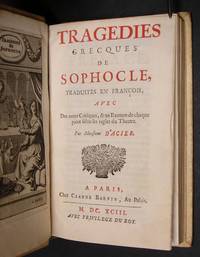
|
|
|
SULPICIUS SEVERUS
Sulpitii Severi Opera omnia quae extant.
Amsterdam Amstelodami Ex officina Elzeviriana 1656. 12mo. 3333 p. 19th century calf. 13 cm Ref: STCN ppn 852876300; Willems 1207; 1526; Rahir 1233; Brunet 5322; cf. Graesse 6/1376; Ebert 21999; Schoenemann 2391 Details: Nice binding. Back with 4 raised bands. Engraved title depicting Martinus of Tours on horseback ready to cut his cloak in two for a beggar Condition: Binding slightly worn. Bookplate on the front pastedown. Paper slightly yellowing Note: The Latin historian Sulpicius or Sulpitius Severus was born in Aquitania ca. 360 A.D. He organized under the influence of Bishop Martinus of Tours a sort of monastic life on his own estate for himself and his friends. His extant works are a vita S. Martini Turonensis 'which is an apology for ascetism'; and this Sacrae Historiae a kind of universal chronicle to A.D. 402 'which is an important source for the history of 4th-century events . The whole book is an interesting attempt to present a 'breviarium' of history from the Christian point of view: it uses Christian chronographers especially St. Jerome but also Pagan writers. J. Bernays suggested that for the destruction of Jerusalem in A.D 70 Sulpicius followed the lost account of Tacitus. Sallust and Tacitus are his models in the matter of style'. OCD 2nd 3d. p. 983 After the text of the Sacrae Historiae follows the Continuation written by the humanist Johannes Sleidanus 1507-1556 taken from his De quattuor summis imperiis. This treatise of 90 pages deals with the history of the chruch in the Middle Ages until Charles V. After the Continuatio follow three letters on Saint Martin's miracles and death and three dialogues of Sulpicius Severus which compare Saint Martin's feats and virtues with those of the Egyptian hermits. § This Sulpicius edition is a line by line reissue of the Elzevier edition of 1643. Texts of Sulpicius were apparantly in demand for the Elzeviers of Leiden and Amsterdam produced three editions of the Sacrae Historiae 1626 1635 & 1643 and four editions of Sulpicius' Opera 1635 1643 1656 & 1665 Provenance: Armorial bookplate on the front pastedown. Underneath this bookplate a label: 'Ex libris Gulielmi Gaskell Rouse A.M. Ex Aede Christi; Oxon. Anno 1861'. 'William Gaskell Rouse was born c. 1827 in Old Windsor Berkshire. He appears in the 1871 Census aged 44 a Church of England Clergyman living with his wife Gertrude aged 34 in Offley Hertfordshire with three servants. Gertrude was born in St Kitts West Indies and her maiden name was Gertrude Maria Grace Payne daughter of Charles Gillies Payne and Mary Elizabeth Salusbury. William died in 1871'. Rouse studied in Eton and Christ Church Oxford. See the site gaskellfamilycom § The armorial bookplate bears the motto: 'Omne bonum Dei donum' 'Every good is the gift of God'. On the shield are placed in horizontal bars two birds and a rosette. Upon the shield rests a bust of what looks like a bearded Greek philosopher Collation: A-O12 Photographs on request hardcover
Ссылка продавца : 120317
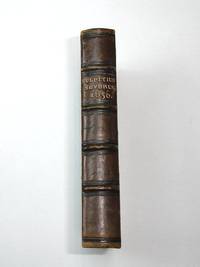
|
|
|
RUTILIUS LUPUS
P. Rutilii Lupi De figuris sententiarum et elocutionis libri duo. Recensuit et annotationes adjecit David Ruhnkenius. Accedunt Aquilae Romani et Julii Rufiniani de eodem argumento liber.
Leiden Lugdini Batavorum Apud Samuelem et Joannem Luchtmans 1768. 8vo. C27615 index1 blank p. Calf 20 cm Ref: STCN ppn 238551075; Schweiger 2859: 'Neue Recension. . Vorauf geht eine gehaltreiche historia critica oratorum graecorum'; Ebert 19633; Graesse 6/1196; Spoelder p. 590 Haarlem 3 Details: Prize copy without the prize. Back divided with gilt fillets. Red shield on the 'second compartment'. Boards with gilt borders and gilt coat of arms of Haarlem. This title book contains after the preface in which Ruhnken has collected everything known with regard to Rutilius Lupus an informative 'Historia critica oratorum graecorum' of 65 p. The commentary of Ruhnken to the text is extensive Condition: Prize gone. Binding slightly scuffed. Right edge of red shield damaged. Surface of the upper board somewhat chafed; all 4 green textile fastening ties gone. Faint and small stamp on the title Note: 'De figuris sententiarum et elocutionis' On the figures of speech a rhetorical treatise of the Roman rhetor Publius Rutilius Lupus first century A.D. is originally an abridgment of 'peri schêmatôn' a work of the Greek orator Gorgias of Athens who must not be confused with the famous Gorgias of Leontini the contemporary of Socrates. This Gorgias of Athens is also known as the rhetor who taught Cicero's son Marcus at Athens in 44 B.C. Cic. Fam. 16216 The chief value of the treatise lies in the numerous renderings of abstracts and translations of striking passages from the Greek orators thus preserving much what is otherwise lost. Already in the 'editio princeps' of 1519 it was printed together with 'De figuris' of Aquila Romanus. The first half of this 1768 edition of Ruhnken contains the text of Rutilius Lupus the second half the 'De figuris sententiarum et elocutionis liber' of the Latin grammarian Aquila Romanus who flourished in the second half of the 3rd century A.D. He recommends Demosthenes and Cicero as models but he takes his examples almost exclusively from Cicero. The dates of the Latin rhetorician Julius Rufinianus are uncertain. He produced a kind of supplementary treatise augmented with material from other sources. Both took their material from a lost work of the Greek rhetorican Alexander Numenius 2nd cent. B.C. These 3 works were edited with commentary by the Dutch scholar of German origin David Ruhnkenius or David Ruhnken 1723-1798. In 1757 he was appointed at the University of Leyden to assist professor Tiberius Hemsterhuis as Reader in Greek and in 1761 he succeeded to the Latin chair vacated by Oudendorp. The great classical scholar U. von Wilamowitz-Moellendorff 1848-1931 calls him the 'Princeps criticorum'. The German scholar F.A. Wolf 1758-1824 dedicated his famous 'Prolegomena' of 1795 to him. 'Alles was Ruhnken veröffentlicht hat ist in seinen Grenzen tadellos. So der homerische Demeterhymnus . das Lexicon des Timaeus Rutilius Lupus mit einer Historia critica oratorum Graecorum die für die hellenistische Zeit nützliche Notizen zusammenträgt'. U. von Wilamowitz-Moellendorff 'Geschichte der Philologie' Leipzig/Berlin 1921 p.39/40 Provenance: The stamp on the title: 'J.S. van Veen'. This is the Dutch historian Jacobus Simon van Veen 1858-1934. See for a biographic sketch and a portrait: C.C. van der Woude 'Dr. Jacobus Simon van Veen 12 januari 1858 - 11 oktober 1934' in 'Honderd jaar Gelre' Hilversum 1997 p. 101/107 Collation: -68 72; A-S8 T2 leaf T2 verso blank Photographs on request hardcover
Ссылка продавца : 151897
|
|
|
SLEIDANUS,I
I. Sleidani De quatuor summis imperiis libri tres; Postrema editione hac accurate recogniti.
Amsterdam Amsterodami Apud Ioannem Ianssonium n.d. between 1631 and 1664 8vo. 309241 blank p. 12mo. Vellum 12 cm Details: Back with 4 raised bands. Two thongs laced through the joints. Engraved title depicting some mythological figures and a small portrait of Alexander the Great Condition: Vellum age-toned. Front flyleaf gone. Three pinpoint holes on the rear joint. A small tear in lower margin of title which is thumbed. Paper foxed and with some brown stains. One old ink annotation Note: The German humanist diplomat and historian Johannes Sleidanus Sledanus Sleidan was born between 1506 and 1508 in Schleiden hence his name a city South of Cologne. He is best known for his 'De statu religionis et reipublicae Carolo Quinto Caesare Commentarii' published in 1555 which made him the historian of the Reformation. It was so impartial that it pleased no one. The book was placed by the pope on the Index and the Lutherans were not pleased either. Still it remains the most valuable contemporary history of the times of the Reformation and it contains the largest collection of important documents. Less controversial is Sleidanus world history 'De quatuor summis imperiis babylonico persico graeco et romano' published in the year of his death 1556. NDB 24 499/500 The idea of four empires is an old one. In the Old Testament an angel tells Daniel who was in slavery in Babylon how to interpret a dream he had. Daniel had dreamed of a winged lion a ferocious bear a panther with four wings and four heads and an unnamed alien monster with iron teeth that devoured everything. The angel: 'These four great beasts are four kings who shall arise out of the earth'. On the day of judgement the last of the four kings will lose his power and will vanish and the kingdom will be given to the saints. Late medieval exegesis explained the fours beasts as follows the lion was the Babylonian kingdom the bear was identified as the dominion of Persia and the winged panther was the reign of Alexander and his diadochi. The beast with the iron teeth was the Roman empire. All these kingdoms stood on feet of clay. As the divine vision of Daniel provided only for four kingdoms the Holy Roman Empire of Sleidanus' days had to be a continuation of the Roman Empire of the past. The German emperors with the divine legitimation of the Bible continuated merely the Roman empire. Sleidanus' historical chronicle is based on the order as revealed in Daniel's vision. 'His concern is the historical legitimation of the German imperial reign through its continuity with the Roman empire'. He thus gave biblical dignity to the German imperial constitution and thus legitimated the protestant Reformation. W. Schmidt-Biggemann 'Philosophia perennis: Historical Outlines of Western Spirituality in Ancient Medieval and Early Modern Thought' Dordrecht 2004 p. 399-400 This world history of Sleidanus was immensely influential. In the next 150 years more than 60 editions were published. Sleidanus succeeded in creating with both his historical works a common historic identity for the protestants in a hitherto Catholic world. History had at the beginning of the Reformation to be repossessed and rewritten to underline the Protestant claim for legitimacy and authority. His History of the four Empires contained enough condemnations of the popes to suit the taste of his public. This undated Janssonius edition is probably a pirate edition of an Elzevier production published between 1631 and 1664 the year Janssonius died. Willems no. 358 dated 1631 no. 763 dated 1655 & no. 1179 dated 1654. All three Elzeviers editions have the same number of pages as this one of Janssonius Collation: A-X8 leaf X8 verso blank Photographs on request hardcover
Ссылка продавца : 120029
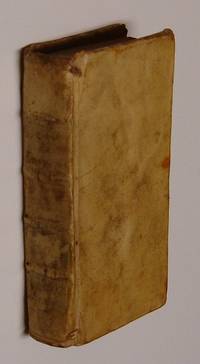
|
|
|
SALMASIUS,C
Funus Linguae Hellenisticae sive Confutatio exercitationis de Hellenistis et Lingua Hellenistica. Cui libet exequias ire Hellenisticae i licet. Ecce illa iam effertur. And from page 281: 'Ossilegium Hellenisticae sive Appendix ad confutationem Exercitationis De Hellenistica'
Leiden Lugduni Batavorum Ex officina Ioannis Maire 1643. 8vo. 3901 corrigenda1 blank p. Vellum. 8vo. 16.5 cm. Ref: Breugelmans 1643:10; Graesse 6249; Berghman 704; Rahir 1920; Ebert 20118; Brunet 6 no. 10665; cf. Willems 558 Details: 5 thongs laced through the joints. Woodcut printer's mark of Maire on the title depicting a farmer who stamps a shovel into the ground; above his head the motto 'fac et spera'. Page 1-280: Funus Linguae Hellenisticae page 281-390: Ossilegium Hellenisticae Condition: Vellum age-toned. One gathering foxed Note: The French scholar Claude de Saumaise latinized Claudius Salmasius 1588-1653 was a prolific author and he distinguished himself in his editions as a textual critic and erudite commentator. He was easy to get along with but haughty and murderous on paper. In 1623 he was appointed as the successor of Scaliger at the University of Leiden a city he was going to hate. This Funus linguae Hellenisticae of 1643 is a stage in the ongoing quarrel between the Leyden professors Daniel Heinsius once the favourite of Scaliger and Salmasius. When Heinsius published his Sacrae Exercitationes ad Novum Testamentum in 1639 Salmasius saw an opportunity to take 'revenge on the man he viewed as the leader of the coterie opposing him at Leiden'. P.R. Sellin 'Daniel Heinsius and Stuart England' Leiden/Oxford 1968 p. 43 In the preface of his De Modo Usurarum of 1639 he ridiculed Heinsius' description of the koinê as 'lingua Hellenistica'. A flurry of polemics followed. In this quarrel the printer Maire sided with Salmasius in his attempts to destroy Heinsius' integrity. Sellin p. 47 With his De lingua Hellenistica et origine ac dialectis graecae linguae of 1643 Salmasius mounted a full-scale assault on Heinsius position on the koinê followed in the same year by a still fiercer attack De Hellenistica commentarius controversiam de linguae hellenistica decidens and this anonymously published attack on his colleague the Funus Linguae Hellenisticae. In it Salmasius contended that the language of the Greek Scriptures was not a separate dialect but the ordinary Greek of his time. Sandys A History of Classical Scholarhip N.Y. 1964 volume 2 284/86 Concerning the De Hellenistica commentarius which was published by Elzevier and the Funus Linguae Latinae both written by Salmasius we quote part of an excellent note of Willems p. 138 no. 558: 'On appelait Hellénistes les Juifs dispersés parmi les Grecs surtout ceux qui habitaient Alexandrie et parlaient habituellement le grec. Partant de là certains savants à l'exemple de Daniel Heinsius dans son Aristarchus sacer s'étaient crus autorisés désigner sous le nom d'hellénistique le langage mêlé d'expressions et de tours de phrases hébraïques qui était usité parmi ces mêmes Juifs et dans lequel sont écrits la version des Septante et le Nouveau Testament. Saumaise qui trouvait l'expression impropre composa ce gros volume De Hellenistica commentarius contre ceux qu'il appelle les Hellénisticaires et notamment contre Daniel Heinsius quoique celui-ci ne soit pas nominativement désigné. Il n'en resta pas là; car dès la même année il donna encore le Funus linguae hellenisticae suivi de l'Ossilegium hellenisticae Lugd. Bat. J. Maire 1643. L'auteur a beau jeu pour démontrer que le terme d'hellénistique est inconnu à toute l'antiquité que cette langue ne constitue pas à proprement parler un dialecte spécial qu'il n'y a en grec que quatre dialectes ou cinq si l'on y comprend la langue commune &c. A cet égard son livre est plein de vues nouvelles et ingénieuses dont les grammairiens ont fait leur profit. Mais le fait que les livres saints sont écrits en un idiome dont les mots sont grecs et la phrase hébraïque n'en subsiste pas moins et Saumaise en convient. . Quoi qu'il en soit le mot qui échauffait si fort la bile de Saumaise a fait fortune car les récents linguistes Matthiae Kühner &c n'ont pas fait difficulté de l'admettre' Provenance: On the front pastedown in pencil: 'J. v. Dijck' Collation: A-2A8 2B4 leaf 2B4 verso blank Photographs on request hardcover
Ссылка продавца : 120157
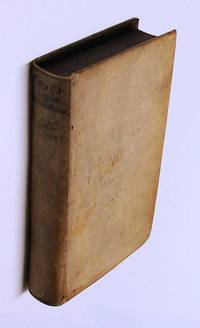
|
|
|
STATIUS
P. Papinii Statii Opera ex recensione et cum notis I. Frederici Gronovii.
Amsterdam Amsterodami. Typis Ludovici Elzevirii Sumptibus Societatis 1653. 16mo. VIII424 p. Overlapping vellum 12 cm Ref: This edition is 'the most significant stage in the evolution of the printed text of the Thebaid before the late nineteenth century.' Berlincourt Classical quarterly 2016 66 1 p. 376-383; Willems 1166; Bergman 2139; Rahir 1189; Copinger 4491; Schweiger 2965; Dibdin 2424; Fabricius/Ernesti 2335; Moss 2612; Ebert 21682: 'mit grossem Scharfblick und nach guten Hülfsmitteln verbessert' Details: Engraved title: a battle scene from the Thebaid the city of Thebes is in the background the poet in front Condition: Vellum slightly soiled. Small owner's inscription on the title Note: His fluent and highly polished verse brought the Roman poet Publius Papinius Statius ca. A.D. 45-96 to the court of the Roman emperor Domitianus. He is best known for his epic the 'Thebaid' which tells the story of the civil war between the sons of Oedipus Eteocles and Polynices contesting power over the city of Thebes. The 'Achilleid' tells the story of the education of Achilles. Statius' 'Silvae' is a collection of 32 occasional poems addressed to his friends celebrating their marriages etc. In his epic work there are frequent imitations of Vergil in word and thought. OCD 2nd e. p. 1011/12 § The Thebaid was extraordinary popular during the Middle Ages and the Renaissance. In Dante Statius even ascends to heaven. The 'Thebaid' was used by Boccaccio and Chaucer and there appeared adaptations in Irish French and Italian. Also Statius' 'Silvae' enjoyed a vigorous afterlife and set a standard for the Neolatin poets of the 16th and 17th century. Composing occasional poetry in imitation of Statius was a common pastime among humanist classicists e.g. Heinsius Scriverius Meursius and in England Milton and Ben Jonson. The works of Statius were ably edited by the Dutch classicist of German origin Johann Friedrich Gronov or Gronovius 1611-1671 He was the successor of Heinsius at the University of Leiden and was influenced by Vossius Grotius Heinsius & Scriverius. His editions mark an epoch in the study of Livy of Seneca Tacitus & Gellius. His interest to the textual criticism of Latin poetry was due to the discovery of the Florentine MS of the tragedies of Seneca. In his riper years 'the acumen exhibited in his handling of prose is also exemplified in his treatment of the text of poets such as Phaedrus and Martial Seneca and Statius'. Sandys History of Classical Scholarship 2321 As an editor and commentator Gronovius played a pivotal role in the history of the works of Statius. This small and light book of 1653 weighs only 120 grams it is indeed 'pondus non magnum' but especially the notes are 'satis ponderosae' that is really important. They fill merely 68 pages at the end of this volume and of these pages the notes to the Thebaid fill only 41 and are concerned with little more than 200 passages. 'Their scope is almost entirely limited to the emendation of the text of Statius'. For the Thebaid Gronovius consulted at least 11 manuscripts. 'The place given to conjecture though clearly subordinate is by no means negligible. These notes often involve other aspects as well: Gronovius broad conception of emendation leads him to tackle various questions whenever they lend support to his views. . In his eyes the dignity of critical studies does not lie in emendation itself but in the comprehensive knowledge of ancient languages and cultures in which emendation should always be grounded; such knowledge enables the scholar to get the author's genius and thus restore the text from inside'. V. Berlincourt 'In pondere non magno satis ponderosae.' Gronovius and the printed tradition of the Thebaid' in: 'The poetry of Statius' Leiden Boston Brill 2008 p. 1-2. Mnem. Suppl. 306. The Gronovius edition became during the 2 following centuries 'the undisputed foundation of almost every later edition until scholars at last began to base their work on a comprehensive study of the manuscript tradition that is until the second Teubner of Otto Müller in 1870'. Berlincourt p. 7. Gronovius' work exercised a great influence over later editors and commentators. 'There is little to find fault with in Gronovius' critical method as illustrated by his notes though it is of course still conceived of as being mere emendation of the textus receptus; usually his discussions are well informed his arguments sound and his judgement balanced'. Berlincourt p. 10 Provenance: On the lower margin of the title we read the name of one 'I.N. Arntzenius' 'J.N. Arnstzenius' or F.N. Arntzenius' Collation: 4 A-2C8 2D4 Photographs on request hardcover
Ссылка продавца : 120167
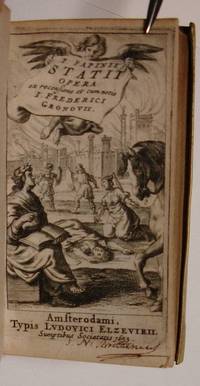
|
|
|
ARISTAENETUS
ARISTAINETOU EPISTOLAI. Aristaeneti Epistolae graecae. Cum latina interpretatione & notis. Altera editio emendatior & auctior.
Paris Parisiis Apud Marcum Orry via Iacobaea sub signo leonis salientis 1600. 8vo. VIII2822 animadvertenda4 blank p. Limp vellum 18 cm Ref: Hoffmann 1239; Graesse 1204; Ebert 1065 Details: Among bibliographers and librarians there is confusion about the date of this book. The date on the title of this second edition of the letters of Aristaenetus is indicated as MVIC. We found in KVK Karlsruher Virtueller Katalog records of this title dated 1594 1596 and 1600. 1594 is definitely wrong for the Parisian printer Orry published the first edition of this title in 1595 indicated by him as MDLXXXXV and he repeated it the next year now with MDXXXXVI. The third edition was published in 1610 with the date MCX. As the second edition cannot preceed the first edition of 1595 and its repetition of 1596 this second edition comes between 1596 and 1610 so these very unusual Roman numerals MVID 1000 6 500 might well mean 1600. § 2 thongs laced through the joints. The boards and the back have blind-tooled double fillet borders. All 3 edges gilt. On the title the printer's mark of Orry depicting a jumping lion on his way to the top of a steep mountain where a crown of stars awaits him; the motto is: 'Virtus ad astra per aspera'. Greek text with facing Latin translation Condition: Vellum age-tanned and slightly spotted. All 4 ties gone. 1 very tiny hole in the upper board. Small bookplate on the front pastedown. Inscription on the front flyleaf. Small strip of the upper margin of the title with an owner's inscription torn off and repaired. Two other old owner's inscriptions on the title and an owner once added in ink the name of the editor of Aristaenetus 'Josiae Mercerii Des Bordes'. Lower margin stained in places. Some old annotations & underlinings. A small wormhole in the blank lower margin of the last gathering Note: Aristaenetus is the established name of the author of a collection of love letters in two books probably from the beginning of the 6th century AD. It survives only in one Codex of which the first folio with the name of the real author is lacking. Aristaenetus Bestpraiseworthy is only applied to the sender of the first letter. This is clearly a case of an imaginary letter-writer. The sources used are Plato Menander Lucianus Alciphron Philostratus the ancient novels and love elegies of Callimachus. Aristaenetus draws however in a conventional way a veil over too explicit love-making. The collection is a kind of survey of erotic motives in the literature of Greece and Rome. Everyting erotic however is covered with a veil of prudery. Aristaenetus ends after some cuddling before the bedroom is entered. Neue Pauly 11087 The collection was allready attributed to Aristaenetus in the 'editio princeps' of Antwerp 1566 edited by J. Sambucus. An first edition with a Latin translation was published in 1595 in Paris by Josias Mercier des Bordes. Sometimes this edition and the second edition of 1600 is erroneously attributed to the French scholar Jacques Bongars 1554-1612. This cannot be correct for the editor dedicates his Aristaenetus in the 'dedicatio' dated 1595 to Jacobus Bongarsius whom he thanks for his great support. 'Aristaenetum mitto te tandem ut liberem fidem dudum obligatam tibi qui mihi edendi auctor praecipuus.' p. â2 recto Mercier was the first to observe that the first letter of the collection was imagined to have been written by one Aristaenetus and that the collection belonged to the genre of imaginative epistolography. See p. 198/99 of this edition of 1600 This book on offer is the second revised and augmented edition. Besides the text and translation it offers ca. 90 pages commentary. Much more on this French calvinist nobleman and scholar who died in 1626 in 'L'Histoire de La Norville' by l'abbé A.E. Genty 1885 online available at the 'Cercle Généalogique Norvillois'Provenance: On the front pastedown the bookplate of the Dutch Jewish physican and famous bookcollector Bob Luza 1893-1980 who survived Bergen-Belsen and whose library was auctioned in 1981 by Van Gendt. Depicted is a book with the initials 'B.L.' on the upper board together with the wellknown symbol of the rod of Asclepius in the background a burning sun. See for Luza P.J. Buijnsters 'Geschiedenis van de Nederlandse bibliofilie' Nijmegen 2010 p. 274-76 § On the title the traces of a name at the upper edge. Below the imprint: 'Radulphi Fornerii J.U.D. Aurelii'. Raoul Fornier or latinized Radulphus Fornerius 1562-1627 sieur de Rondau and 'Juris Utriusque Doctor' at Orléans was like his father Guillielmus Fornerius professor of law at the University of Orléans at the end of the 16th century. His best known work is 'Rerum quotidianarum libri sex. Quorum tres posteriores nunc primum in lucem prodeunt. In quibus plerique tum juris utriusque tum variorum auctorum loci vel illustrantur vel emendantur multa etiam ad antiquitatis studium pertinentia tractantur. Auctore Radulpho Fornerio Gul. F. antecessore Aurelio'. It was first published in Paris in 1600. The 4th edition dates from 1644. This work is a proof of his excellent knowledge of Latin. He suggested a number of sound emendations and elucidated obscure passages Collation: a4; A-R8 S4 T4 last 2 leaves blank Photographs on request hardcover
Ссылка продавца : 120141
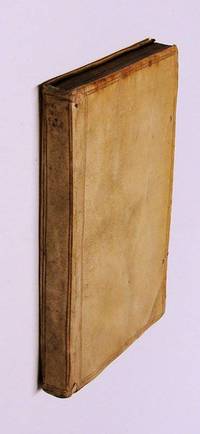
|
|
|
PRUDENTIUS
Aurelii Prudentii Clementis Viri Consularis rerum divinarum religionis Christianae iuris item civilis & militaris peritia excellentis opera.
Lyon Lugduni Apud Ioan. Tornaesium et Guil. Gazeium 1553. 8vo. 5191 blank p. Contemporary pigskin over wooden boards. 13.5 cm Prudentius hat sich in der lyrischen in der epischen und in der didaktischen Poesie versucht und allenthalben Grosses geleistet Bardenhewer Ref: Cartier 'Bibliographie des éditions des De Tournes' no. 258; Graesse 5467; Ebert 18063 Details: Contemporary pigskin over wooden boards. Back with 3 raised bands. Boards decorated with a row of blind-tooled rolls comprising floral motives and 10 portraits in medallions; there are 2 kind of portraits of 'Iusticia' and of 'Lucrecia'; Iusticia holds what looks like a disk before her face and Lucrecia stabs herself in the breast with a dagger. If this disk which is as big as her face is a mirror the cutter of the stamp made a mistake for the usual attributes of Justitia are the sword scales or blindfold. If this disk represents however a kind of blindfold to cover her face he chose an attribute we could not find in any work on iconography. A mirror is rather an attribute of Prudentia. The central panel is adorned with floral motives. On the title the round printer's mark of 'De Tournes': a double ring formed by two vipers a male and female; the female crushes the head of the male; in the middle a shield with the motto: 'Quod tibi fieri non vis alteri ne feceris'. Cartier p. 138/39 type Vip. o. Woodcut initials Condition: Binding scuffed and soiled corners bumped. Front hinge cracking but strong. 3 owner's inscriptions on the title one of them erased with ink. The vipers of the printer's mark are coloured pale green Note: The Roman poet Aurelius Clemens Prudentius born 348/49 died after 405 A.D. and of Spanish origin was besides a man of letters also an industrious public servant. He was a fervent Christian who had not cut himself off from the culture of the ancient world. 'He regarded the pagan literature and art not as things to be rejected but as part of the inheritance into which Christian Rome enters'. 'Prudentius' ed. H.J. Thomson Cambr. Mass. 2000 vol. 1 p. IX Loeb Classical Library 'It is as a poet in whom is embodied a reconciliation between the new faith and the old culture and in whom Christian thought claims rank in the world of letters that Prudentius is historically important'. Op. cit. p. X He 'was a pioneer in the creation of a Christian literature and has the credit of originating new types of Christian poetry the literary hymn the moral allegory and what has been called the Christian ballad'. Op. cit. XII His hymns are odes in which pagan mythology is replaced by stories from the Bible. By the great English scholar Richard Bentley he was described as 'Christianorum Maro et Flaccus'. All we know about him comes from Prudentius himself. For an edition of his work published in 404 or 405 he wrote a preface of 45 lines of poetry in which he informs the reader about his carreer and motives to write poetry. Prudentius was much read in the Middle Ages. His influence is also visible in medieval art. More than 300 manuscripts with his work survive. § The 'editio princeps' of Prudentius dates from 1495. This Lyonese edition of 1553 is based on the edition of Basel 1527 edited by the German humanist and classical scholar Johannes Sichardus 1499-1552. In Basel he lectured from 1525 till 1527 on Cicero Livius and other Roman classics. In the preface to the Prudentius edition dated 1527 and which is repeated in the edition of 1553 Sichardus complains about earlier editions of Prudentius which had suffered from mutilated manuscripts and amateur 'sciolo nescio quo' scholars. He has however managed to restore Prudentius in his original splendour Pristinio autem nitori restituimus. He did so not relying solely on his genius which is a tricky sometimes even unsound way to emendate genus emendandi satis lubricum ne dicam interim pestilens but with the help of an old manuscript ex codicibus vetustioribus which was lend to him by one Vuerinherus Vuoflinus Wernerus Woflinus. This manuscript is now held in Bern 'Bern Burgerbibliothek Cod. 264' place of origin: Bodensee Reichenau/St. Gallen/Konstanz and written ca. 900. Near the end of this edition of 1553 we find: 'In Aurelii Prudentii Clementis V.C. Psychomachiam scholia per Ioannem Sichardum' 10 p. De Tournes added from another source after this section of scholia: 'Erasmus Roterodamus castissimae puellae Margaretae Roperae s.d.' dated 1523 and the 'Commentarius in hymnum Prudentii de natalis puero Iesu per Erasmum Roterodamum' together 57 p. Provenance: Weissensee provenance On the title: 'Erdmann Wilhelm Ferber Gosecka. Thur.' We found a New Year's message of him dated 1757 'Licht in Finsterniss beym Wechsel des Jahres'. He is described on the title as Diakonus 'und ausserord. Colleg. der Landschule zu Pforta'. In the 'Personal-Codex des Weissensee'r Kreises' Weissensee 1868 p. 1 it is recorded that Magister Erdmann Wilhelm Ferber was 'Pfarrer' and 'Superintendent' in Weissensee from 1771 till 1799. Goseck lies in Thüringen between Leipzig and Jena. § Below the printer's mark the name of probably the next owner: 'Ern. Andr. Christp. Callenberg'. Ernst Andreas Christoph Callenberg was Rector of the 'Stadtschule' at Weissensee from 1784 till 1822. 'Personal-Codex des Weissensee'r Kreises' Weissensee 1868 p. 6 In the 'Wittenbergsches Wochenblatt zum Aufnehmen der Naturkunde und des ökonomische Gewerbes auf das Jahr 1778 6 Stück Freytags den 13 Februar 1778' on page 48 under the heading 'Gelehrte Nachrichten Von der Wittenbergschen Universität und Stadt' he is mentioned a member of 'Predigercollegium' of the 'Schloss- und Universitätskirche with the addition 'aus Thüringen'. In 1775 he signed a 'Album Amicorum' with 'Kallenberg'. There he reveals the place of his birth 'Gebeser' nowadays Gebesee a small city north of Erfurt. § On the front pastedown in pencil: '15 sept. 1965' written by the Flemish linguist Walter Couvreur 1914-1996 who was an Orientalist and professor of Indoeuropean linguistics at the University of Gent. It indicates the date of aquisition. The place of acquisition he wrote on the flyleaf at the end: 'Leipzig Zentralantiquariat' Collation: A - 2I-8 2K-4 Photographs on request hardcover
Ссылка продавца : 120152
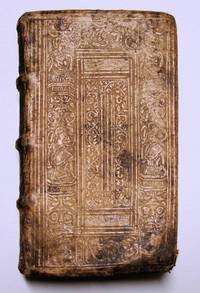
|
|
|
HEINSIUS,D
Danielis Heinsii Orationum editio nova. Tertia parte auctior caeteris sic recensitis ut alia videri possit.
Leiden Lugduni Batavorum Ex officina Bonaventurae & Abrahami Elzevir Acad. Typogr.1627. 8vo. XVI6613 p. Overlapping vellum 15.5 cm § Oratorical fireworks Ref: Willems 277; Berghman 770; Rahir 239 or 240 Details: 5 thongs laced through the joints. Boards with blind double fillet borders. Elsevier's woodcut printer's mark on the title of both volumes depicting an old man standing in the shade of a vine-entwined elmtree symbolising the symbiotic relationship between scholar and publisher. The motto is: 'Non solus' probably indicating the interdependency of publisher and scholar. They cannot do it alone and need each other Condition: Vellum age-tanned. Waterstained in the lower margin at the beginning and at the end of the book. All 4 ties gone. Paper yellowing some faint browning. Old ownership entry on the front pastedown Note: The Dutch classical scholar of Flemish origin Daniel Heinsius 1580-1655 who enjoyed an international reputation as an editor of classical texts theorist of literary criticism historian and neolatin poet was professor of Poetics at the University of Leiden since 1603 extraordinarius Greek since 1605. After the death of J.J. Scaliger to whose inner circle he belonged he held the chair of Greek from 1609 till 1647. His activities have been obscured to later generations by the very bulk and variety of his activities. He is still remembered for his neolatin poetry and for his edition of Aristotle's treatise on poetry 1611 which he studied in connexion with the 'Ars Poetica' of Horace. This edition is 'the only considerable contribution to the criticism and eludication of the work that was ever produced in the Netherlands. . In his pamphlet 'De tragoediae Constitutione' published in the same year 1611 he deals with all the essential points in Aristotle's treatise giving proof that he has thoroughly imbibed the author's spirit'. J.E. Sandys 'A history of classical scholarship N.Y. 1964 vol. 2 p. 314 Heinsius was an inspiring teacher and a talented speaker. 'His courses in the University were so impressive that his colleagues attended his lectures . As an ornament in which the University took especial pride his eloquence graced many public functions. Heinsius composed not only the funeral orations for Philip Cluverius and for Reinerus Bontius Professor of Medicin in 1623 but delivered on 19 September 1625 a 'stupenda oratio' on the death of Prince Maurice for which he received an award of 200 guilders'. Sellin P.R. 'Daniel Heinsius and Stuart England' Leiden etc. 1968 p. 36 The first edition of collected orations 12 of them was published in 1612. The second augmented edition came in 1615. Demand for more orations arose and 1620 saw another augmented edition augmented further in 1627 this edition. This edition naturally opens with this stupendous oration on the death of Prince Maurice followed of course by that other oratorical firework his funeral speech for his beloved master the French scholar Joseph Justus Scaliger a still glowing jewel of the University who died in Leiden in 1609. At the end have been added 27 pages with letters and prefaces that Heinsius wrote for editions of others. Still more augmented editions of the 'Orationes' were published in 1642 1652 and 1657 Provenance: Winterthur provenance On the front pastedown in faint ink: 'And. Bidermanni'. Googling for 'Andr Bidermann' we found a Gymnasium teacher in Winterthur born in 1776 appointed in 1819. There were several hits placing a Andr. Bidermann in the Canton Zürich Winterthur. More indications in that direction when we searched for 'Andreas Bidermann' Collation: 8 A-2S8 2T4; we couldnot find out whether our copy has the cancels of p. 277/8 and 419/20 which Willems mentions or not Photographs on request hardcover
Ссылка продавца : 120074
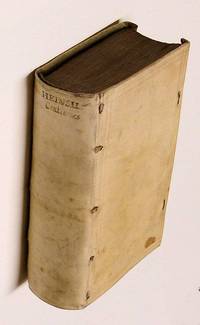
|
|
|
EUNAPIUS
EUNAPIOU TOU SARDIANOU BIOI philosophôn kai sophistôn. Eunapius Sardianus De vitis philosophorum et sophistarum Hadriano Iunio Hornano interprete. Graeca cum mss. Palatinis comparata aucta & emendata Hieronymi Commelini opera. Nunc recens accedunt eiusdem auctoris Legationes e bibliotheca Andreae Schotti Antverpiani.
N.pl. Geneva Oliva Pauli Stephani 1616. 8vo. 16915 index1 blank p. 18th century boards. 17 cm Ref: Hoffmann 265; Renouard Stephani 497 erronously dating 1612; Schweiger 1114; Graesse 2518; Ebert 7069; Brunet 21094 Details: Woodcut printer's mark on the title depicting a man on his knees under an olive tree he is praying; some branches are broken off and are falling down; from the mouth of the man comes on a banner the motto: 'rami ut ego insererer defracti sunt' 'the branches were broken off that I might be graffed in'. Romans 1119 The text is printed in 2 colums Greek text with opposing Latin translation Condition: Binding soiled and worn. Back chafed. Title page foxed. Paper yellowing Note: The Greek neo-Platonist Eunapius was born in Sardes ca. 345 A.D. He was an admirer of the last pagan emperor Julian and a convinced opponent of christianity. His historical work survives owing to its anti-christian tenor only in excerpts. Still extant are the 'Lives of the Sophists' written about A.D. 396. 'They follow Philostratus' model Life of Apollnius and on the basis of first-hand information deal mainly with 4th century Neoplatonists. Eunapius gives an idealized picture in order to compete with the biographies of Christian saints'. OCD 2nd ed. 416 The 'editio princeps' was published in 1568 in Antwerp. This edition already had the Latin translation of the humanist Hadrianus Junius or in Dutch Adriaen de Jonghe who was born in 1511 in Hoorn. From the presses of the Flemish scholar/printer Hieronymus Commelinus 1550-1597 came the next Eunapius edition Heidelberg 1596. It was reissued with exact the same title by Paulus Stephanus in 1616. Commelinus a native of Douai and a protestant had to flee because of the persecutions. In 1569 he is a student in Heidelberg and in 1572 he surfaces as bookseller in Geneve where he cooperates with Pierre de St. André Officina Sanctandreana. He immatriculates for the second time in Heidelberg in 1585 and is invited in 1587 by the Prince-Elector Elector Palatinus to establish a printshop as typographus principis'. Commelinus' special interest were the publishing of classical texts edited by great scholars like Casaubon Scaliger and Gruter. He often did so with the help of manuscripts from the local 'Bibliotheca Palatina'. Commelinus himself was also active as an editor. In the short preface to this Eunapius edition Commelinus tells how he found 2 Greek manuscripts in the Library of the Prince-Elector now known as Bibliotheca Palatina compared them with the text of the 'editio princeps' which was edited quite insufficiently Eunapiio ita misere affecto and how he in doing so could correct and supplement Eunapius. Collatis itaque Palatinis duobus cum editione Iunii quae tuto potuere correxi supplevi Leaf a2 recto. Commelinus printshop produced in 10 years nearly 140 editions. This 1616 edition was produced by Paul Estienne who had taken over the Estienne-firm in Geneva after the death of his father Henri Estienne Henricus Stepanus II. With him ends the Geneva branch of the printer's dynasty of the Estiennes. Renouard lists between 1603 and 1627 only 27 editions Provenance: On the front pastedown in pencil: '13 maart 1963' written by the Flemish linguist Walter Couvreur 1914-1996 who was an Orientalist and professor of Indoeuropean linguistics at the University of Gent. It indicates the date of aquisition. The place of acquisition he wrote on the flyleaf at the end: 'Groningen Bouma'. The price was 8 guilders Collation: A - L-8 Photographs on request hardcover
Ссылка продавца : 120135
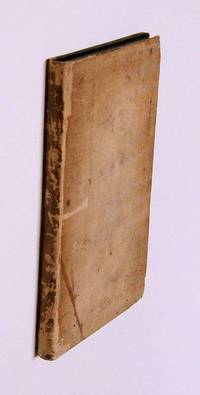
|
|
|
PERSIUS
Auli Persii Flacci Satirarum liber. Isaacus Casaubonus recensuit & commentario libro illustravit. Ad virum amplisissmum D. Achillem Harlaeum senatus principem. Volume 2: Isaaci Casauboni in Persii Satiras Liber commentarius. Eiusdem Persiana Horatii imitatio
Paris Parisiis Apud Hieronymum Drouart 1615. 8vo. 2 volumes in 1: XV1 blank4341 blank; XXXII55826 index p. Vellum 17.5 cm Ref: Schweiger 2711; Graesse 5212; Ebert 16282; Smitskamp 'The Scaliger collection' no. 116 Details: 5 thongs laced through the joints. The first title shows an engraving of a 'thiasos': a drunken Bacchus is carried off by a bunch of satyrs accompanied by some revellers. The second title has an oval woodcut printer's mark; it depicts a thisle flank by the initials A and D. of Ambrosius Ambroise Drouart the brother of Hieronymus Jerôme. Hieronymus kept using his brother's printer's after his death in 1608; the motto in fact 2 mottoes reads: 'Nul ne s'y frote' 'patere aut abstine' 'let no one meddle' and 'bear of forebear'. The first volume contains a preface the Latin text of the Satires and 18 pages with 'Glossae veteres in Persium'. The second volume contains the commentary of Casaubon Condition: Vellum age-tanned and somewhat soiled. All four ties gone. Endpapers worn and somewhat soiled. First title dustsoiled and its right margin is very thumbed Note: The well-born and well-to-do Roman poet Aulus Persius Flaccus 34-62 A.D. produced during his short life one book libellus with 6 satires together 650 hexameters. 'They are well described as Horatian diatribes transformed by Stoic rhetoric'. OCD 2nd ed. p. 805 The first is 'on the decay of literary taste in his own time and the neglect of the manly Republican authors the second on vanity of wealth and luxury the third on idleness the fourth on self-knowledge the fifth on true liberty the sixth on the proper use of riches'. H.J. Rose 'A History of Latin Literature' London 1967 p. 377 The style is obscure contorted and crammed with allusions to Horace and Lucilius. He was much read in antiquity and admired as a moralist in the Middle Ages but now he is found dull too difficult cryptic too far fetched and too complicated. 'So fühlte sich zumal das 19. Jh. von seinem vielschichtigen Stil abgestossen während sich erst neuerdings eine gerechtere Würdigung durchsetzen beginnt'. Neu Pauly 9 619 A specimen of this new appraisal is the following quote: 'The elements of composition in Persius' satires - words and ideas images steps in the argument registers of speech and literary style speeches in dramatic dialogue- are abruptly or peculiarly even bizarrely combined. One is faced by an unpredictable surprising series of conceptions; continuous attention is necessary if one is to understand. However the surprises and incongruities are often observably intelligent apt and curiously artistic. From a literary point of view the quality of continual surprise in Persius' style makes the Satires amusing to read'. J.R. Bond 'Persius the Satires' Warminster 1980 p. 5 § This 1615 Persius edition is a reissue of the edition previously published in 1605 also from the presses of the Drouart brothers. The Latin text was based on that which was edited by the French scholar Pithou in Paris in 1585. The edition of 1605 and its extensive commentary were produced by the French protestant scholar Isaac Casaubon 1559-1614 the first critical commentator of Persius. His preface is a vigorous defense of Persius' Stoic earnestness end philosophic constancy. 'The ethical interest is strong in his Persius 1605 on which he had lectured at Geneva and Montpellier and his commentary on the Stoic satirist of which Scaliger said that the sauce was better than the meat was reprinted in Germany as late as 1833 and has been ultimately merged in Conington's edition' of 1872 Provenance: On the front pastedown the name: 'E.A. Groenman 1839'. We found an Albertus Groenman 1814-1861 member of the 'Provinciale Staten van Groningen' from 1851 till 1859 elected for Zuidhorn profession manufacturer and merchant. He might have been the owner once Collation: a8 A8 b-c8 â8 ê8 A-Z8 2A-2NO8 2O4 Photographs on request hardcover
Ссылка продавца : 120143
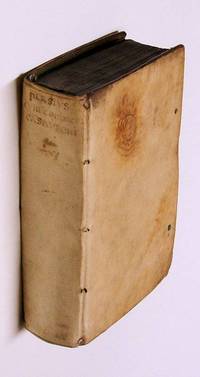
|
|
|
VENERES BLYENBURGICAE,
sive amorum hortus: in quinque areolas divisus & fragantissimis CXLVIII celeberrimorum poetarum flosculis refertus opera Damasi Blyenburgy Batavi H.F. Part 1: Venerum Blyenburgicarum sive Horti Amoris areola prima: Ad amicam; 2: Areoloa secunda: Laudes; 3: Areola tertia: Ad se ipsum; 4: Areola quarta Ad Venerem & Cupidinem; 5: Areoloa quinta: Ad animum mentem mortem et similia.
Dordrecht Dordraci Ex typographia Isaaci Canini impensis Davidis Episcopii 1600. 8vo. 5 parts in 1: XVI865 recte 8711 blank84 appendix p. Contemporary limp overlapping vellum 16 cm Ref: Brunet 1982: 'Ce recueil de pièces érotiques est un des plus agréables que nous ayons en ce genre mais il y manque nombre de morceaux qui auraient dû y figurer'; Graesse 1444; Gay-Lemonnyer 31308 Details: 2 thongs laced through the joints. Manuscript title on the back. Each part has its own title followed by a dedication preface and list of contents Condition: Binding age-tanned worn spotted and somewhat wrinkled. All four ties gone. Front flyleaf removed. First title thumbed and showing a small hole at the imprint. Paper foxed and yellowing some gatherings browning Note: This is the first edition of one of the most important 17th century anthologies of erotic Neolatin poetry from 148 poets. The collection was compiled by the Dutch man of action and letters and neolatin poet Damas Heymansz. Blyenburg born Dordrecht 1558 deceased while traveling to Bohemia in or after 1616. Damas was in 1586 enrolled as a law student at Leiden and followed an intellectual career. In his youth he published a poem in praise of the neostoic treatise De Constantia of Justus Lipsius 1584 who was a professor at Leiden. He corresponded with many scholars. From a letter to Bonaventura Vulcanus professor of Greek at Leiden it seems that he participated in one of the first trips to the East Indies as a captain. In 1594 we find him in America where he entered into the service of the first British governor of Virginia. Damas published the works of Fulgentius of Ruspe Amsterdam 1610 & 1612 published an anthology of 200 Latin poets Cento ethicus ex variis Poetis hinc inde contextus Leiden 1599 and compiled another anthologyVeneres Blyenburgicae Dordrecht 1600 2nd edition 1613 Amsterdam. NNBW 4175/76; and www.regionaalarchiefdordrecht.nl/achtergronden/familie-van-blijenburg-15e-17e-eeuw/ The Veneres Blyenburgicae divided into 5 areolae flower-beds contains on more than 900 pages 1137 erotic poems of 148 poets of Alciatus Bonefonius Dousa Erasmus Gruterus Hessus Lotichius Muretus Marullus Politianus Robortellus Sannazarius Janus Secundus and many others Collation: 1 8 A-O8; 2 P-Z8; 3 2A-2P8; 4 2Q-2X8; 5 2Y-3N8 3O8 minus blank leaf 3O8 Photographs on request hardcover
Ссылка продавца : 120181
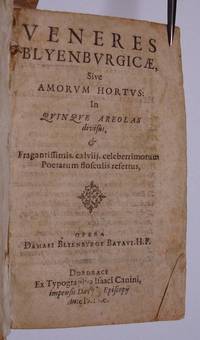
|
|
|
HERMOGENES
Hermogenis Tarsensis Philosophi ac Rhetoris acutissimi De arte rhetorica praecepta Aphtonii item Sophistae praeexercitamenta nuper in Latinum sermonem versa. A Natale de Comitibus Veneto.
Basel Basileae Apud Petrum Pernam n.d. 1560 according to VD16 8vo. XVIII4142 blank29 index3 blank p. 17th century limp vellum 18 cm Ref: VD16 H 2470; Hoffmann 2216; Ebert 9507 Details: For the binding has been used a plain piece of parchment with faint traces ruling never used for writing. Woodcut printer's mark on the title it depicts a woman leaning on a staff and holding in her right hand a burning oil lamp. The meaning of this scene is explained on another version of Perna's printer's mark which bears the motto: 'Lucerna pedibus meis verbum tuum' which refers to Psalm 119 verse 105: 'Lucerna pedibus meis verbum tuum et lumen semitis meis'. Thy word is a lamp unto my feet and a light unto my paths These verses were later put to music by Henry Purcel in 'Thy Word is a lantern unto my feet' Z61 5 woodcut initials. Latin translation only Condition: Vellum slightly soiled. Endpapers renewed in the 19th century. 2 ownership entries on the title. Uppermargin of the first gatherings slightly waterstained. Last 24 leaves faintly waterstained. Paper yellowing Note: This collection of the works of the Greek rhetor Hermogenes of Tarsus 2nd cent. A.D. contains 3 works of which the 'De statibus' Peri staseôn and 'De formis orationis' Peri ideôn are certainly authentic. The third work 'De inventione' Peri heureseôs is considered to be of doubtful authenticity. They deal with exercises in rhetoric and different kinds of arguments to be used especially for the defence. Hermogenes' most important work 'De statibus' deals with 7 qualities of style 'all to be seen as ingredients in the perfection of Demosthenes: saphêneia megethos kallos gorgotês êthos alêtheia and deinotês' OCD 2nd ed. p. 505 Added to the 3 works of Hermogenes are the 'Progymnasmata' of the Greek rhetor Aphtonius 4/5 cent. A.D. which is an introduction to rhetoric offering definitions of basic principles. Because the Progymnasmata were easier to read and understand than Hermogenes this slim but important manual remained basic for rhetoric education during the Middle Ages and the Renaissance. Hermogenes was translated into Latin by the Italian humanist poet and historian Natale Conti in Latin Natalis Comes or Natalis de Comitibus 1520-1582. He translated also into Latin the rhetorical treatises of Alexander Sophista 'De figuris sententiarum ac elocutionum' and of Demetrius Phalereus 'De oratione sive De modo dicendi' both published in Venice in 1557 and the 'Dipnosophistarum sive Coenae sapientium libri XV' of Athenaeus. He is however best known for his 'Mythologiae' first published in 1567 which became a standard source for classical mythology in later Renaissance Europe. See Wikipedia 'Natalis Comes' Provenance: Below the imprint an old ownership inscription of 'Leopoldi Andreae Guadagni JCt Flor.'. The Guadagni were a family of Florentine goldsmiths active in the 18th century. One of its members Leopoldo Andreas Guadagni 1705-1785 a jurist was professor of Roman law at the University of Pisa. He published several books on Roman law. Above the printer's mark the old ownership inscription of 'Petri Francisci Minotii Savinatis'. On the site of Flickr we found an inscription of one 'Pier Francesco Minozzi'. This is definitely the same hand. In 1670 Minozzi published 'L'Alleluia di Pindo per la clemenza risorta o regnante nel Vaticano'. On the title he is called 'Professor di Legge Monsavinese'. The 'patria' of Minozzi was of the community of Monte San Salvino in the province of Siena hence the addition 'Savinatis' in the inscription of his name. Minozzi is now forgotten but in his own age he was considered to be a great author and poet. He wrote prose and panegyric poetry in Latin and in Toscane and was professor of Law. His first collection of Latin epigrams was published in Siena in 1629 at the age of 18. He was a passionate representative of Italian 'asianism'. On the site 'cultura-barocca.com' a portrait of Minozzi and more data can befound. This book was once the property of two Italian Law professors. This seems to suggest that the rhetoric of the ancients was still relevant for lawyers and jurists in 17th and 18th century Italy Collation: a-2D8 8 w8 leaf w7 verso and leaf w8 blank Photographs on request hardcover
Ссылка продавца : 120128
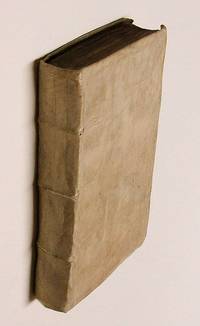
|
|
|
GRAEVIUS,JG J G
Jo. Georgii Graevii Praefationes et Epistolae CXX. In usum latinae eloquentiae studiosorum collectae & editae a Jo. Alberto Fabricio D. & Eloqu. Prof. Adjuncta est Petri Burmanni V.Cl. oratio dicta in Graevii funere.
Hamburg Hamburgi Sumtu Christiani Liebezeit Typis Spiringianis 1707. Small 8vo. XVI6373 blank p. Vellum 17 cm Ref: Not yet in VD18; Sandys 2327ff. Details: 5 thongs laced through the joints. Engraved portrait of Graevius before the title made after an engraving of G. Valck of ca. 1705 engraved in its turn after an oil painting by Gerard Hoet painted between 1675 and 1699. Title in red & black Condition: Vellum somewhat spotted. Renewed endpapers; some old ink underlinings; small wormhole in the right margin of the last two blank leaves Note: Johann Georg Graeve or in Latin Johannes Georgius Graevius 1632-1703 was born in Germany and educated at Schulpforta. He was professor of Eloquence at Duisburg from 1657 at Deventer and at from 1662 at Utrecht 'where he lived and worked for the last 40 years of his life'. He limited his attention mainly to writers of Latin prose Cicero Suetonius Caesar Justinus Florus. He is remembered for his 'Inscriptiones antiquae' and famous for his three 'Thesauri' in which important works of previous scholars were collected and reprinted the 'Thesaurus eruditionis scholasticae' 1710 the 12 folio volumes of the 'Thesaurus antiquitatum Romanarum' 1694-99 and the 9 volume 'Thesaurus antiquitatum et historiarum Italiae' 1704. 'The latin style of his prefaces his speeches and his letters is elegant'. The letters contain a treasure of information on classical authors. The German editor of this collection the bibliographer Johannes Albertus Fabricius 1668-1736 was a friend and a great admirer of Graevius. 'Quanta in illo Viro quamque accurata & dilucida cognitio Antiquitatis quanta utriusque linguae peritia'. He is particularly lyrical about Graevius' eloquence and Latin style. 'Eloquentia vero tam singularis tamque exquisita ut sermo ejus a Musis videatur ipsis & Gratiis elaboratus esse'. Dedicatio p. :5 recto Provenance: On the pastedown of the lower board a small label: 'Sammlung Otto Fritz Böhme'. Elke von Radziewsky made of this Collection of the antiquarian bookseller Otto Fritz Böhme a interesting bibliography: 'Sammlung Otto Fritz Böhme Drucke aus Offizinen im Raum der ehemaligen Ost-Hanse' Hamburg Otto Fritz Böhme 1986. It presents more than 1700 entries of publications from the 15th to the 19th century arranged according to printing places from Altona to Zerbst Collation: pi1 portrait 8 minus leaf 8; A-2R8 2R7 verso blank & 2R8 blank Photographs on request hardcover
Ссылка продавца : 12029
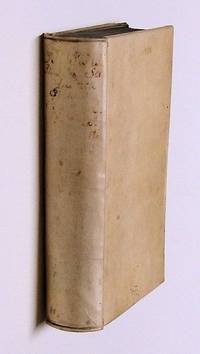
|
|
|
ERASMUS
Magni Des. Erasmi Roterodami vita; partim ab ipsomet Erasmo partim ab amicis aequalibus fideliter descripta. Accedunt Epistolae illustres plus quam septuaginta quas aetate provectiore scripsit nec inter vulgatas in magno volumine comparent P. Scriverii & fautorum auspiciis.
Leiden Lugduni Batavorum Ex officina Ioannis Maire 1642. 12mo. XXXIV3942 blank p. Overlapping vellum 13 cm Ref: Breugelmans p. 494 1642:7 Details: Boards with blind double fillet borders. Woodcut printer's mark on the title depicting a farmer stamping a shovel into the ground above the head of the farmer the motto 'fac et spera'. Woodcut portrait of Erasmus in the introduction. Pages 1-160 contain the biography of Erasmus p. 161-394 the more than 70 letters of him Condition: Lacking the frontispiece. Vellum age-toned stained and soiled. Manuscript title on the back. Front hinge cracking. Title slightly thumbed and soiled. Old ownership entry on the title. Almost invisible wormhole in the blank lower margin of 50 pages at the beginning. Occasionally small and old ink notes in the margins of 19 pages. Some pencil stripes. See the provenance for the maker of these notes Note: Joannes Maire publisher printer and bookseller in Leiden 1603-1657 produced during his career a number Erasmus of editions. The project 'that can be seen as a series and which ensured Maire's reputation through the ages is undoubtedly his edition of Erasmus's 'opera omnia' in 12mo. 23 different volumes appeared between 1641 and 1652. The first half of this book contains the introduction and the biographic sketches the rest is filled with the letters of Erasmus Provenance: Inscription in small type on the title: 'Liber Guilhelmi Griffithii Anglo-Brittani Artium Magistri Cantebrigensis; emtus 1.6. 1664'. Ink annotations of William Griffith in the margins of 19 p. We couldnot find this William Griffith in J. Venn & J.A. Venn's 'Alumni Cantabrigienses: A Biographical List of All Known Students Graduates and Holders of Office at the University of Cambridge from the earliest times to 1900' Cambridge 1947 Collation: 12 minus leaf 1 the frontispiece; 26 A-Q12 R6 Without the 2 conjugate leaves with the portrait and coat of arms of Thomas Neale which according to Breugelmans only some copies have Photographs on request hardcover
Ссылка продавца : 120069
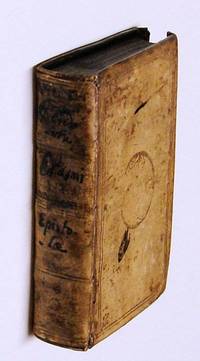
|
|
|
GAUTRUCHE,P
Historia poetica ad faciliorem poetarum et veterum auctorum intelligentiam; a R. Patre P. Gautruche soc. Jesu Gallice conscripta. Post septimam editionem latine reddita ab Uno eiusdem Societatis. In gratiam Poetices Candidatorum.
Tyrnau Tyrnaviae Typis Academicis 1728. 12mo. VIII180 recte 179;20 index1 blank p. Vellum 13 cm Details: Woodcut printer's mark of the Jesuit Order on the title Condition: Vellum slightly soiled and spotted. Back very slightly damaged. Old shelf number with ink on the front board. Front flyleaf removed. Wormholes in the inner margin of the endpapers at the end and of the last 3 leaves with some loss of letters in the index. Modern stamp & old name on the front pastedown Note: The contribution of the Jesuit order to the cultural history of Central and Eastern Europe was more significant than it was to the West. The small town of Trnava in Slovakia or Tyrnau or in Hungarian Nagyszombat and especially its Jesuit University founded there in 1635 was one of the catholic strongholds in Central Europe in the time of the Counter-Reformation. Its main purpose was the stemming of Protestantism or Lutheranism in what was then called the kingdom of Upper Hungary which was a part of the Habsburg empire. Here the order of the Jesuits trained its teachers and missionaries who spread catholicism and Habsburg culture succesfully eastward. Their most important weapons in spreading the autocratic ideology of that era were diplomacy and education. 884 members of the Jesuit order were active in Upper Hungary ca. 1750. They were leading 30 gymnasia 6 academies and 2 universities that of Trnava and of Kosice. For more than 150 years the Jesuit University of Trnava carried on its activity throughout Royal Hungary. Its University Press published more than 5000 titles. After the Order had been dissolved in 1777 the University was transfered to Buda. § This collection of prose narrations of mythological stories necessary for a perfect understanding of the Greek and Latin poets and other ancient authors was compiled to facilitate the study of young students. The collection was originally published in French as 'LHistoire poétique pour lintelligence des poètes et des auteurs anciens' by the French Jesuit Pierre Gautruche 1602-1681. It was translated into Latin after the 8th French edition and consists of 3 books the first treats the Gods the second the semi-gods the third is on religious ceremonies. p. A4 recto The French and the Latin version saw at the end of the 17th century and the first half of the 18th century many reissues. It was also translated into English Provenance: On the front pastedown a green stamp of 'Univ. Doz. Dr. Mag. F.F. Schwarz Professor. A 8810 Graz Panoramagasse 2A' with a handwritten date of acquisition '1973'. Franz Ferdinand Schwarz was from 1982 till 1996 professor of classical philology at the University of Graz where he was born in 1934. He died in his hometown in 2001 after a long illness. See his wikipedia lemma 'Franz Ferdinand Schwarz' In old ink on the front pastedown: 'Ex libris Francisci Caroli Wernerth anno .' Year illegible Collation: A-H12 I6 K2In the pagination has been omitted no. 113 Photographs on request hardcover
Ссылка продавца : 120086
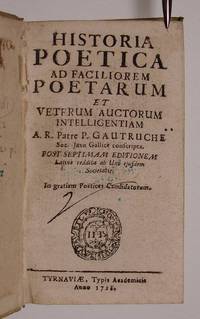
|
|

 Получить результаты поиска по электронной почте
 Загрузить результаты в формате PDF
  RSS-канал
 Постоянная ссылка


