|
|
|
List, Fritz.
Sammelband von Typoskripten. Graz, 1937.
773 num. und einseitig beschriebene Bll. Zeitgenössischer Ganzleinenband. 4to. Laut Eintrag am Titelblatt verso im November 1937 aus Typoskripten zusammengebundener Sammelband, der das literarische Schaffen der Jahre 1907 bis 1937 enthält. - Mit schmucklosem Stolz stellt der Autor ein Urteil des in Graz lehrenden Pädagogen Eduard Martinek seiner Auswahl voran: "Der Inhalt hat mich ergriffen, vielfach geradezu erschüttert. So viel Geist und Sprachgewalt ringt mit quälerischer Selbstironie und lähmendem Relativismus und Pessimismus. Bald Jean Paul, bald Nietzsche und so manch andere, und doch immer Ihre grübelnde Eigenart. Es ist ein Jammer, daß das alles in Ihrem Buchumschlage sollte begraben bleiben. Vielleicht können Sie Ihren Reichtum in kleinen Dosen an den Mann bringen. Das Ganze überwältigt, verwirrt, erdrückt den Leser [...]". - Martineks Wunsch sollte nicht Wirklichkeit werden: Von dem in Graz lebenden Dr. phil. Fritz List ist zu Lebzeiten nichts veröffentlicht worden; einzig in der ÖNB findet sich ein Typoskript seiner "Drei kleinen Epen" (1940) sowie eines mit dem Titel "Miniaturen", mehr ist über Bibliothekskataloge nicht nachweisbar. Daß List jedoch ein sehr produktiver Schriftsteller war, ist durch den vorliegenden Band, der lyrische, epische und dramatische Dichtungen sowie Aufsätze und Aphorismen enthält, dokumentiert.
|
|
|
List, Guido, Schriftsteller und Esoteriker (1848-1919).
"Die Gründung des Klosters Cotwich". Eigenh. Manuskript (Fragment) mit Namenszug im Titel. Wien, o. D.
2 SS. auf 2 Bll. Folio. Mit farbig kalligraphiertem Titelblatt sowie der Imitation einer gotischen Buchhandschrift, jeweils mit quadrat. Initialfeld und farbigen Initialen. Ein Blatt teilweise in lateinischer Sprache, ein Blatt mit einem Auszug aus der "Edda" als Vorwort. Lists gleichnamige Novelle erschien in der Wiener "Ostdeutschen Rundschau" in mehreren Teilen von September bis Oktober 1895. Überlegungen zur Namensherkunft des Klosters Göttweig (Cotwich) finden sich auch in Lists Schrift "Die Ursprache der Ario-Germanen und ihre Mysteriensprache" (Guido-von-List-Ges., 1902, S. 147). - Mit zwei Stempeln "Präsident der 'Literarischen Donaugesellschaft", Spuren alter Montage, etwas lädiert an den Rändern und mit zahlreichen kleinen Randeinrissen. Teilweise etwas staubfleckig.
|
|
|
List, Guido, Schriftsteller und Esoteriker (1848-1919).
"Ein modernes Weihnachtsmärlein". Eigenh. Manuskript mit Namenszug im Titel und U. Wien, 1895.
(Titel + 4 =) 5 SS. auf 2 Doppelbll. Folio. Mit mehrfarbig kalligraphiertem Titelblatt, Imitation einer gotischen Buchhandschrift mit quadratischem Initialfeld auf S. 1 und Fließtext in Kurrente mit kalligraph. Rubrizierungen. Klebegeheftet. Unveröffentlicht. Guido List gründete 1893 die "Literarische Donaugesellschaft" zur Förderung neoromantisch-nationalistischer Literatur. - Gestempelt "Präsident der 'Literarischen Donaugesellschaft"; teilweise mit Leimdurchsatz, einem kleinen Ausriss durch Klebestelle und leichtem Tintenabklatsch.
|
|
|
List, Inge, Schauspielerin (1917-2003)
2 Porträtpostkarten ("Ross") mit eigenh. Widmung und U. auf der Bildseite.
o.J. , Ohne Ort und Jahr, .
Riferimento per il libraio : 49531
|
|
|
List, Joseph Heinrich, Zoologe (geb. 1862).
Eigenh. Brief mit U. Leoben, 11. I. 1888.
3 SS. auf Doppelblatt. 8vo. An den Zoologen Ludwig Graff von Pancsova mit der Bitte um Urlaubsverlängerung aufgrund einer Verletzung: "Was die Wunde betrifft, so ist dieselbe jetzt im Vernarbungsstadium, was allerdings noch einige Zeit dauern wird. Ich hoffe, eine Woche wird dazu genügen, und ich möchte Sie [...] recht sehr bitten, mir noch eine Woche zur Erholung zu gewähren. Ich werde mich nach Herstellung meiner Gesundheit recht bemühen, das Versäumte nachzuholen. Der starke Blutverlust hat mich allerdings sehr anaemisch gemacht, meine fahle Blässe und meine Schwäche sind leider nur zu deutliche Zeugen des Geschehenen [...]". - Mit einer größeren Knickfalte. Aus der Autographensammlung von Eduard Fischer von Röslerstamm mit dessen eh. beschriebenem Archivzettel.
|
|
|
List, Rudolf, Schriftsteller (1901-1979).
Ausschnitt mit eigenh. U. O. O. u. D.
1 S. 70 x 230 mm.

|
|
|
List, Rudolf, österr. Schriftsteller (1901-1979).
Ein eigenh. Brief mit U. sowie zwei ms. Gedichte und eine Broschüre mit eigenh. U. O. O., 1948
Gedichte: 2 SS. 4to. Postkarte 1 S. Qu.-8vo. Broschüre: 4 SS. 8vo. List dichtet unter dem Titel "Trostlied im Regen" melancholisch: "Nun sprüht den ganzen lieben Tag / der Regen von den Bäumen. / Kaum weiß man mehr, was drüber lag, / der Morgenwind, die Wolkenklag, / des graue Tagversäumen. [...]". Die Broschüre enthält kurze Rezensionen zu Rudolf Lists Werken "Michael", "Traumheller Tag" und "Beschwörung". Die Titelseite ziert ein Portrait Rudolf Lists von Albert Ferencs. - Bekannt war der gebürtige steirische Dichter für seine sechs Lyrikbände. Eben jenen entnahmen Komponisten wie August Stelzer, Rudolf Weishappel und Leopold Suchsland Gedichte zur Vertonung.
|
|
|
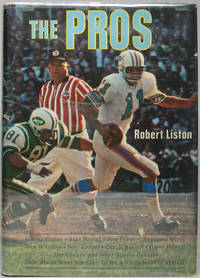
LISTON, Robert
The Pros
New York: Platt & Munk 1968. Hardcover. Illustrations by Jo Polseno. 8vo. Full teal blue leatherette with gilt spine lettering pictorial price-clipped dust jacket. xi 275pp. Line drawings. Near fine/very good. Tight quite attractive copy of these profiles of thirteen baseball basketball football golf and hockey greats. This unique copy bears choice and bold autograph additions from four of these -- all Hall of Famers in their field -- each on a fine heavy stock 5" X 3" card two tipped to front flyleaf recto and two to verso: RAYMOND BERRY born 1933 Baltimore Colts split end 1955-67 who coached a half dozen teams over 25 years signs in blue ballpoint adding "To Richard -- Best regards" and dating it January 1973 at upper right; BOB FELLER 1918-2010 beloved Cleveland Indians pitcher 1936-41 1945-56 boldly in red fineline dating it 6 June 1972 at upper right; HARRY HOWELL 1932-2019 Canadian hockey star who played 17 seasons with the New York Rangers signs in blue ballpoint dating it 14 December 1974 at upper right; and DICK WILLIAMS 1929-2011 third baseman/left fielder played for five teams from 1951 to 1964 and celebrated manager for a half dozen teams for twenty years signs in black fineline dating it 29 July 1980 at upper right. Laid in are all four original signature transmittal envelopes. This publisher does NOT designate editions in a consist nt verifiable manner. Platt & Munk hardcover
Riferimento per il libraio : 4173
|
|
|
Liszewsky, Tillmann, Opernsänger (1872-1946).
Eigenh. Albumblatt mit U. Wohl an Bord der "Oceana", Juli 1906.
1 S. 8vo. "Zur freundlichen Erinnerung an die Nordlandsfahrt im Juli 1906". - Auf einer Bildpostkarte der Hamburg-Amerika Linie mit einer Abbildung des Dampfers "Oceana".
|
|
|
Liszewsky, Tillmann, Opernsänger (1872-1946).
Eigenh. Bildpostkarte mit U. Köln, August 1906.
1 S. 8vo. Mit eh. Adresse. Eine Grußkarte an die Autographensammlerin Emilie Schaup. - Die Bildseite mit einem Motiv aus Köln.
|
|
|
Liszt, Anna, geb. Lager, Mutter von Franz Liszt (1788-1866).
Eigenh. Brief mit U. ("A. Liszt"). Paris, 22. VIII. 1864.
3 SS. auf Doppelblatt. 8vo. An Frau Chardin, eine Vertraute der Familie Liszt: "[...] Bulow, qui devait diriger la féte musicale le 25 à Carlsruhe, est tomber malade par un refroidisement il vat mieux, mais il est trop faible le medecin defend de travailler. Cosima est bien contraiée. de mon fils jattende de nou-velle je crois, qu'il sera en ce moment à St. Tropez auprés d'Ollivier [...] Je suis chere Madame seul, bien seul, personne de mes connaisance est ici, tous à la campagne ou aux eaux [...]". - Vgl. hierzu Serge Gut, "Franz Liszt", dt. Ausg. 2009, S. 763: "1864 [...] 21. bis 26. August. Als ihr Präsident nimmt Liszt an der dritten Tonkünstler-Versammlung des ‹Allgemeinen Deutschen Musikvereins› in Karlsruhe teil [...] Hans von Bülow wird wegen eines Nervenleidens von Kapellmeister Max Seiffert aus Löwenberg vertreten [...] Auch Cosima ist gekommen und fährt mit ihrem Vater anschließend nach München, um dem kranken Bülow beizustehen [...] 4. bis 12. Oktober. Liszt wohnt in Paris bei seinem Schwiegersohn Émile Ollivier. Er sieht seine alte Mutter zum letzten Mal [...] 14. Oktober. Am 12. von Paris abgereist, fahren Liszt und Cosima nach ‹La Moutte› in Saint-Tropez, zu der Villa Émile Olliviers [...]". - Bl. 2 mit kleinem Papierdurchbruch (geringf. Textberührung).
|
|
|
Liszt, Anna, geb. Lager, Mutter von Franz Liszt (1788-1866).
Eigenh. Brief mit U. ("A. Liszt"). Paris, 22. VIII. 1865.
2½ SS. auf Doppelblatt. 8vo. An Frau Chardin, eine Vertraute der Familie Liszt. Anna Liszt habe noch keine Neuigkeiten von ihrem Sohn erhalten, dem sie nach Rom geschrieben hatte. Sie vermute ihren Sohn in Pest, da dieser im August dort seine religiöse Musik aufführen wollte; auch Cosima und ihr Gemahl seien schon seit einigen Tagen in Pest: "De mon fils je ne pas de nouvelle en ce moment. [I]l y a 18 jours que je lui ai écrit à Rome, mais je ne pas de reponse. je crois qu'il est à Pest. hongrie. comme il m'a dit au primtemps d'y aller la au mois d'aout ou il veut faire éxecuter de sa musique religieuse. Cosima et son mari s'y trouve deja dans cette ville depuis plusieurs jours. elle m'écrivez [!] il y a 10 jours quel [!] à entendue [!] que son pére y est [...]". - Vgl. hierzu Serge Gut, "Franz Liszt", dt. Ausg. 2009, S. 764: "1865 [...] 8. August bis 12. September. Aufenthalt in Pest [...] Am 12. August treffen auch Eduard Liszt sowie Cosima und Hans von Bülow in Pest ein. 15. August. Liszt dirigiert, bekleidet mit einer Soutane, im neuen Redoutensaal die Uraufführung seiner Legende von der Heiligen Elisabeth (in ungarischer Sprache) [...]".
|
|
|
Liszt, Anna, geb. Lager, Mutter von Franz Liszt (1788-1866).
Eigenh. Brief mit U. ("A. Liszt"). Paris, 28. VII. 1865.
2¾ SS. auf Doppelblatt. 8vo. An Frau Chardin, eine Vertraute der Familie Liszt: "[...] j'attendais mon fils qui â été dans plusieurs journeaux annoncé, pour écrire l'adresse sur la lettre à vous. mais il ne pas encor venne et je doute qu'il vient de sitot. il m'a souhaité ma féte de St. Anne par le télégraphe. j'attende une lettre de lui. des journeaux ici dise qu'il est à la campagne auprés de St. Pére, mais je ne le crois pas, ça sera trop de faveur [...]". - Zwei Tage darauf, am 30. Juli 1865, sollte Liszt die vier niederen Weihen empfangen" (vgl. Serge Gut, "Franz Liszt", dt. Ausg. 2009, S. 764).
|
|
|
Liszt, Anna, geb. Lager, Mutter von Franz Liszt (1788-1866).
Eigenh. Brief mit U. ("A. Liszt"). Paris, 29. IX. 1865.
3 SS. auf Doppelblatt. 8vo. Mit einer Beilage (s. u.). An Frau Chardin, eine Vertraute der Familie Liszt: "[...] cette anné me rapelle beaucoup l'anné 11 ou m on fils est né [...] de fétes musicale de Pest je eu d'éxéllente nouvelle pa Cosima quel à été présens, et quel à passée des jours bien heureuse auprés de son pére, qui à eu un succes extraordinaire. il à dirigies ses Compositions lui méme [...] de mon fils je ne pas encor de nouvelle [...] je lui ai écrit il y a 15 jours, pas de reponse. c'est inquiétant [...]". - Kleine unbedeutende Schadstelle außerhalb des Textes. - Beiliegend ein eh. Zettel von Anna Liszt (qu.-8vo; Ecken mit zwei kleinen Ausrissen ohne Textverlust): "voila chére Madame Chardin ce petit lettre à Monsieur votre fils, pour présenter au mienne."- Vgl. zum Brief: "1865 [...] 29. August", Budapest: "Liszt spielt im Redoutensaal seine beiden Légendes (Uraufführung), den Cantique d'amour und sein Ave Maria [...] 1866 [...] 6. Februar. Liszts Mutter Anna Lager stirbt in Paris, was ihn sehr betrübt [...] 4. März bis 22. Mai. Aufenthalt in Paris, wo sich Liszt in der Wohnung seiner Mutter bei Émile Ollivier einrichtet. Von dort aus begibt er sich sofort zum Grab der Mutter. Im übrigen aber läßt er sich schnell wieder in den Sog des mondänen Pariser Lebens hineinziehen [...]" (Serge Gut, "Franz Liszt", dt. Ausg. 2009, S. 765).
|
|
|
Liszt, Anna, geb. Lager, Mutter von Franz Liszt (1788-1866).
Eigenh. Brief mit U. ("A. Liszt"). Paris, 4. IX. 1864.
3¾ SS. auf Doppelblatt. 8vo. An Frau Chardin, eine Vertraute der Familie Liszt, mit der Mitteilung, dass sie ihren Sohn, der nach dem Ende der Karlsruher Musikfeier nach Weimar gefahren sei, gegen den 20sten d. Mts. erwarte. Cosima habe auch an der Feier mitgewirkt, ihr Gemahl hingegen nicht, da er infolge einer Erkrankung in Bayern bleiben musste: "[...] Mon fils que j'attend vers le 20 de ce mois, est aprés la fête musicale de Carlsruhe aller à Weimar. Cosima a assistée [!] aussi a cette féte. mais son pauvre Marie n'a pas pu diriger et à rester encor [!] maladif en Baviere. elle viendra ici avec son pére, mais sans enfant [...] p. S. je vous prie d'avoir de la patience pour lire cette griffonage [...]." - Vgl. hierzu Serge Gut, "Franz Liszt", dt. Ausg. 2009, S. 763: "1864 [...] September. Liszt verläßt München am 3. September, fährt über Stuttgart und erreicht in der Nacht vom 4. zum 5. September Weimar". - Mit kleinen Montagespuren.
|
|
|
Liszt, Franz von, German jurist (1851-1919).
Autograph letter signed ("Prof. v. Liszt"). Marburg, 14 July 1886.
8vo. 3 pp. on bifolium. To an unidentified prosecutor, writing that he is quite willing to accept the recipient's paper for his journal: "Die Frage der Ausbild[un]g der Referendare bei der Staatsanwaltschaft erschien mir bereits früher als wichtig genug, um einen Ihrer tüchtigsten Amtsgenossen um eine kleine Abhandlung zu ersuchen, die mir auch zugesagt worden ist. Es wäre ganz hübsch, wenn sich an Ihre Bearbeit[un]g eine kleine Debatte anknüpfen ließe [...]". - The jurist Franz von Liszt (cousin of the composer and pianist Franz Liszt, his godfather) was one of Germany's most influential criminologists and international law reformers. As a legal scholar he was a proponent of the modern sociological and historical school of law. From 1898 until 1917 he was Professor of Criminal Law and International Law at the University of Berlin; he was also a member of the Progressive People's Party in the Prussian Chamber of Deputies and the Reichstag.

|
|
|
Liszt, Franz von, Jurist (1851-1919).
Brief mit eigenh. U. Marburg, 31. XII. 1886.
2 SS. Gr.-8vo. An einen Kollegen über strafrechtliche Debatten in Italien und ein Publikationsvorhaben des Empfängers: "Verzeihen Sie mir, dass ich Ihnen erst heute für Ihr MS u für die anderen mir nicht unbekannten Sendungen danke, welche aus der Hand des Verfassers mir von doppeltem Werte sind. Sehr interessant war mir was Sie aus Italien mitzuteilen die Freundlichkeit hatten. Colajanni [d. i. der Kriminalsoziologe Napoleone Colajanni] korrespondiert ab u zu auch mit mir und sendet mir seine Arbeiten. Ausser dem Alcoolismo in letzter Zeit auch einen Artikel aus Garrauds (u. Lacassagnes) Archives [d. s. René Garraud und Alexandre Lacassagne, die Herausgeber der "Archives de l'anthropologie criminelle"], in welchem er Ferri's [d. i. der Kriminologe und Politiker Enrico Ferri] Untersuchungen über den Einfluß der Temperatur auf das Verbrechen einer vernichtenden Kritik unterzieht. Ich hoffe von ihm noch in diesem Jahr eine Arbeit kriegen zu können u freue mich auf den II Bd seines 'Socialismo e Criminalità'. Criminalità' [...]".
|
|
|
Liszt, Franz von, Jurist (1851-1919).
Eigenh. Brief mit U. Wangerooge, 31. VIII. 1901.
4 SS. auf Doppelblatt. 8vo. An den nicht namentlich genannten Wiener Rechtsanwalt Heinrich Freiherr von Haerdtl, dem er eine schon ältere Photographie übersendet (“seither bin ich weder schöner noch jünger geworden und daher ist mir diese Aufnahme immer noch die liebste”) und bei dem er sich für Haerdtls Beteiligung “an der intimern Feier vom Vorjahr, die ich mit recht gemischten Gefühlen über mich habe ergehen lassen” bedankt. - Liszt, der um vierzig Jahre jüngere Cousin des Komponisten Franz Liszt, begründete seinen Rang als Strafrechtsdogmatiker mit dem erstmals 1881 erschienenen "Lehrbuch des deutschen Reichsstrafrechts", das später zum Standardwerk des Strafrechts wurde. Über die Vielzahl seiner Veröffentlichungen hinaus wirkte er vor allem durch die gemeinsam mit Adolf Dochow begründete ‘Zeitschrift für die gesamte Strafrechtswissenschaft’, durch die von ihm gepflogene Gesprächsrunde des "Kriminalistische Seminars", dem eine Generation deutscher Strafrechtslehrer entstammte, und durch die gemeinsam mit Adolphe Prins und Gerard Anton van Hamel gegründete "Internationale Kriminalistische Vereinigung". - Auf Briefpapier mit gedr. Briefkopf.
|
|
|
Liszt, Franz von, legal scholar (1851-1919).
Autograph letter signed. Halle (Saale), 22 June 1890.
8vo. 2 pp. on a bifolium. A fine letter of condolence to an unidentified colleague who had lost his wife: "Ein tief schmerzlicher Verlust hat Sie neuerdings betroffen und wird die alten Wunden wieder bluten machen. In herzlicher Teilnahme gedenke ich Ihrer und in Verehrung werde ich auch stets der Heimgegangenen gedenken, die Ihnen und Ihren Kindern so treu zur Seite gestanden hat. Möge das Gedeihen der Kinder, besonders der heranwachsenden Ältesten Ihnen fortan das Leben im Hause ungetrübt freundlich gestalten; Arbeit und freundschaftlicher Verkehr Ihnen reiche Anregung und Befriedigung bringen. Lücken, die der Tod ins engste Dasein gerissen, können nicht ausgefüllt, aber sie können minder fühlbar gemacht werden". - Liszt was a pioneer of German criminal law. The composer and virtuoso pianist Franz Liszt was his elder cousin. - Well preserved.
|
|
|
Liszt, Franz, Austro-Hungarian composer (1811-1886).
14 autograph letter fragments, written in French and German, partly signed "FL". No place, c.1870s.
8vo. 9 ff. Draft letters that for the greater part do not have an identifiable correpondent and that show a lot of cancellations. Amongst other things Liszt speaks about attacs on his person: "Before reading. (to Mme P.) I have not yet read the recollections in question; but from what has come back to me from it, the author enjoys to make me just as ridiculous as detestable. [...] to some scandals I would not know what to oppose but tacit decency that does not entrap me at all and leaves others the burden of their debasement. [...] one or the other [has] previously written to me numerous letters of excitement about the nobility of my character and the straightness of my feelings. Concerning this, I will not deny at all and I will continue to ascribe to them their remarkbale and brilliant talents of Artists, writers and inventors, fully regretting that they so strongly turn them against my poor person (page no. 1). The sesond page can be identified as a draft letter to the Hungarian Nobleman Albert Apponyi (1846-1933), to whom Liszt writes about the Academy of Music in Budapest, his interest in Hungarian art and his desire to be useful for his country: "at the chamber of deputies the said academy would be useful to emphasize art in Hungary; [...] Can one not take into account similar precendents now and set back when one is concerned with going forward? I cannot and I position myself in your view as wisely as favourably. Despite of the difficulties of a situation confused by different obsessions and despite of the smallness of our financial means we definitely have to return to our plan and not become unmanagable. Regarding my 'personal conveniences' that you are so kind as to worry about, let me assure you once more that I do not aspire anything else than this: the peace to work in my room. Orare et laborare. The point of honour that noone but you will understand better attaches me to Hungary, our home country. Could I fill it with all my duty of recognition!" At the end of this side a fragement of a letter written in German can be found: "Honoured friend, Strongly attached to you with my heart and my spirit, I am rarely and insufficiently sad to be able to show you my sincere friendship. Many thanks for your kind letter and its joyful notification." - In another draft Liszt mentions the Villa d'Este, Cosima and Wagner as well as his mother (Marie d'Agoult, alias Daniel Stern): "After your departure from the Villa d'Este I wrote to Cosima and also spoke to her about your last incriminated articles. She answers to me [...] 'the Italien hou [...] seemed superbe to me'! But what did not at all seem superbe to me but on the contrary repellent, shameful and disgusting was the cunning and frivolous behaviour of Cosima's mother against her daughter. I mention it to you confidentially. [...] (page no. 3). - Enclosed one photography of Liszt mounted on cardboard by Nadar, shortly before his death in 1886. - Provenance: Robert Bory, musicologist.

|
|
|
Liszt, Franz, Austro-Hungarian composer (1811-1886).
2 autograph letters signed ("FL"). [Rome, c. 1863-1865].
16mo. 6 pp. To an unknown recipient, apparently a wealthy music lover and possibly a patron of the composer. In one of the letters Liszt invites himself with a friend at the recipient's place for a moment of musical relaxation and returns 20 francs to him that he has paid too much for concert tickets. In the other letter the pianist transmits him programmes and tickets for a concert and proposes to "honour the sight of Madonna des Rosario" and to let his correspondent know. The composer's time seems to be filled with musical social commitments: "All of my week is planned until Friday". - Provenance: Robert Bory, musicologist.

|
|
|
Liszt, Franz, Austro-Hungarian composer (1811-1886).
Autograph letter draft, unsigned. N. p., [c. 1870].
8vo. 4 pp. Letter to an unnamed correspondent, in which Liszt expresses his ideas for a concert which will be held at the Salle Erard in Paris and which will comprise several of his compositions. The name of Madame Marchesi is mentioned twice, once for her "benevolence" that seems to make the concert possible, and a second time for the provision of a "brilliant" student to sing the part of "Joan of Arc at the Stake" which is included in the programme. The name of the pianist Madame Montigny is also mentioned twice, above all to take part in the programme and to carry out the "Hungarian Rhapsody" or a "Concerto". Liszt honours the literary personalities of his time by reminding that his "Preludes" are "after Lamartine", "Mazeppa after Victor Hugo" and "Joan of Arc at the Stake" after "Dumas". He also mentions the editors of the programmes of his compositions (Breitkopf, Schott, Taborsky). Liszt adds an NB: "I would not like to take the risk of a danse macabre because of the great orchestral noise that will do injustice to that of Mazeppa". - Provenance: Family Nikita Magaloff and Joseph Szigeti.
|
|
|
Liszt, Franz, Austro-Hungarian composer (1811-1886).
Autograph letter signed ("F. Liszt"). N. p., 14 July [18]61.
8vo. 2 pp. on blue wove paper bifolium. To Peter Cornelius ("Liebster Cornelius"), in German, telling him that he has just been informed that the full score of his opera, "Der Barbier von Bagdad", was not in the local theatre library as Cornelius had kept it, and asking that the score be sent to him by return, the trio being an essential part of the programme entitled "Performance of Manuscript Works of the Present Time". - Franz Liszt, Peter Cornelius's mentor and friend, was due to conduct a piece from Cornelius's controversial comic opera "Der Barbier von Bagdad" at the third concert of the Artists' Congress in Weimar on 7th August 1861. The opera was first performed at the Hoftheater in Weimar on 15th December 1858, amidst a hostile demonstration organised by the theatre director, Franz Dingelstedt, who was in conflict with Liszt and the so-called neo-German school of composition. Liszt resigned his post after the fracas and both he and Cornelius left Weimar as a result. The opera was not played again in its entirety in the composer's lifetime but, as is clear from this letter, Liszt remained loyal to his friend and secretary, and continued to champion his work. According to Grove, Cornelius was a "gifted independent composer" who "may have been the composer from the Liszt circle who, after Liszt and Wagner themselves, most successfully realised the musical ideals of the New German school, albeit in a highly personal idiom" (New Grove Dictionary of Music and Musicians VI, 477).

|
|
|
Liszt, Franz, Austro-Hungarian composer (1811-1886).
Autograph letter signed ("F. Liszt"). No place, 21. X. 1851.
8vo. 3¾ pages on bifolium. In French. According to an early collector's note, the present letter was written to his friend Ernst Weyden, a scholar and member of the Faculty at the University of Cologne. Liszt discusses his planned marriage to Carolyne Sayn-Wittgenstein, Richard Wagner, and a planned collaboration with Weyden: "Je suis très sensible à vos bons souhaits pour mon quarantième anniversaire, lesquels se résument pour moi tous dans un seul : c'est que la femme qui s'est absolument dévouée à moi qu'elle est devenue à la fois et la racine et la fleur de ma vie, me soit conservé. Grâces au Ciel j'ai tout lieu d'espérer que ce voeu suprême de mon coeur sera exaucé, - et d'après les nouvelles que j'ai trouvé ici il est très probable que dans peu de mois mon mariage aura lieu [...]" ("I am very sensitive to your good wishes for my 40th birthday, which can be summarized for me in one thing: that the woman who has been absolutely devoted to me and who has become both the root and the flower of my life, be kept for me. Thanks be to Heaven that I have every reason to hope that this supreme wish of my heart will be granted - and from the news I have found here it is very likely that in a few months my marriage will take place [...]" (transl.). - Liszt is grateful to Weyden for having reported on his brochure on Lohengrin and Tannhäuser in the Kölnische Zeitung. "It is to be presumed that my brochure will contribute to spreading the understanding of Wagner's works, which, in order to be greatly admired, only need to be understood from a higher point of view than one is accustomed to judge ordinary operas. You have thus done art a service, as well as me, by contributing your share to the propagation of these two eminent works of which Germany will be able one day to be proud [...]". Liszt treasures his memories of their architectural trip and hopes that they will one day resume their peregrinations: "In the meantime, please do not forget our collaboration project in honour of the Duomo; I hope that you will be able to send me the stanzas I have requested before the end of the year [...]. - On blue paper. Slightly wrinkled, otherwise in good condition.
|
|
|
Liszt, Franz, Austro-Hungarian composer (1811-1886).
Autograph letter signed ("F. Liszt"). No place, 4 February (no year).
8vo. 1 p. on bifolium. Asking a cashier to send him two tickets: "Ich ersuche den Herrn Cassir mir gefälligst zwey Parterre Billets für das heutige Conzert zu übersenden".

|
|
|
Liszt, Franz, Austro-Hungarian composer (1811-1886).
Autograph letter signed ("FL"). [Rome, c. 1863-1865].
8vo. 2½ pp. To an unknown recipient, asking for calligraphic help regarding a manuscript: "More than others I am able to repent the charm of silence on the things that we take to heart [...] Let me ask you again for your calligraphic collaboration. Here is the manuscipt in question that you have to complete [...]". - Provenance: Robert Bory, musicologist.

|
|
|
Liszt, Franz, Austro-Hungarian composer (1811-1886).
Autograph letter signed ("FL"). [Rome, c. 1863-1865].
Small 8vo. ½ p. In French. To an unknown recipient, giving him the address of the French composer Louis Delâtre: "Voici l'adresse de M. Louis Delâtre: 73, Via della Scala, Firenze: et une infinité de remercimens […]". - Provenance: Robert Bory, musicologist.

|
|
|
Liszt, Franz, Austro-Hungarian composer (1811-1886).
Autograph letter signed ("FL"). [Rome, c. 1865].
4 pp. In-16. To an unknown recipient. Liszt is sick in Madonna del Rosario, he felt "very unwell walking up Monte Mario after having had dinner at the Vatican". He writes to confirm his presence at an important concert by Lippi despite his state of health. "After that [he will] endorse himself to eight days of imprisonment". His sicckness does not keep him from maintaining his social commitments with his correspondent, "Haxthausen and Mme Colban". - Enclosed a framed reproduction of the famous photography by Hanfstaengl that shows the pianist playing. - Provenance: Robert Bory, musicologist.

|
|
|
Liszt, Franz, Austro-Hungarian composer (1811-1886).
Autograph letter signed ("FL"). [Rome, circa 1863-1865].
16mo. 1 p. To an unknown recipient. Liszt thanks his correspondent for his "gift", possibly an icon or an object showing Saint Cosmas and Damian and telling him that he will visit him to thank him personally "but in a way that is not interested in material things". He mentions the fact that Switzerland is far away for him at the moment. - Provenance: Robert Bory, musicologist.

|
|
|
Liszt, Franz, Austro-Hungarian composer (1811-1886).
Autograph letter signed. No place or date, ["Jeudi matin"].
8vo. 1½ pp. on bifolium. To Charles de Beauregard, editor of "La Gazette de France", concerning a request to be granted by Liszt's secretary Gaetano Belloni, who is responsible for organizing his concerts: "Mon secrétaire M. Belloni étant chargé de tout ce qui est relatif à l'arrangement de mes Concerts, je lui ai donné ordre de faire droit à la demande que vous voulez bien me faire […]". - Traces of folding.
|
|
|
Liszt, Franz, Austro-Hungarian composer (1811-1886).
Autograph letter signed. Weimar, 1856.
4to. 3 pp. To the music publisher Carl Haslinger, asking him to have a look at "the arrangement for 2 pianofortes on which [he] has spent 3 days annotating and editing" in order to propose a new version, with many annotations for the piano and fewer parts for instruments. He also sends his Hungarian Rhapsody "properly instrumented" and asks Haslinger "to prepare a similar edition." Liszt leaves for Zurich to stay with his friend Wagner. - Inserted in Robert Bory's book "The Life of Franz Liszt in Pictures" (Editions du journal de Genève, 1936, 1st numbered copy on Holland Van Gelder paper, bound in bordeaux leather). - Provenance: Robert Bory, musicologist. Together with several autograph letters signed by Alfred Cortot (2), Daniela Thode, Winifred Wagner, Bladine Gravina, and Daniel Ollivier.

|
|
|
Liszt, Franz, Austro-Hungarian composer (1811-1886).
Autograph musical manuscript for orchestra and voice. No place, [1860s].
Oblong-4to. 1 page. System of 11 staves and 10 bars. Autograph mention in the upper margin: "Correctur Blatt D zur Seite 47" ["Correction sheet D on page 47"]. Fragment in which the Latin text "-ne Beati Be-" and the German text "-len Selig Se-" can be read. The manuscript relates to his Cantico del Sol di San Francesco d'Assisi, a setting of the famous Cantico del frate sole - literally "Hymn to Brother Sun" (also known as the "Hymn to the Sun" and, in certain adaptations, as "All Creatures Great and Small"). - Slightly stained and wrinkled, otherwise in good condition.
|
|
|
Liszt, Franz, Austro-Hungarian composer (1811-1886).
Dedication copy of "Six Etudes pour la main gauche seule". N. p. o. d.
Folio. 41 pp. Contemp. boards. In cloth slipcase. "A Mlle Vera Timanoff de la part de l'auteur | F. Liszt". - The Russian pianist had been a former pupil of Liszt in Budapest and became a prominent performer in Russia, France, Austria, Britain, Germany and Turkey. - Edges strongly frayed and somewhat dusty.

|
|
|
Liszt, Franz, composer (1811-1886).
Autograph letter signed ("F. Liszt"). London, 20 June 1840.
8vo. 4 pages on bifolium. Apparently to the economist Friedrich List about a recommendation for his cousin to Felix Mendelssohn, his plans for the near future and a concert in Paris to commemorate"du monument de Beethoven": "I wrote to Mendelssohn as soon as I arrived in London. He will welcome my charming cousin as befits. If it were in my very small power to do better and more (and I hope that opportunities will arise) please dispose entirely and without reluctance of any of my person who will always be entirely devoted to you. A thousand thanks for your offer of the Allgemeine Zeitung, whose editorial staff has almost constantly been full of consideration for me. I will gratefully take advantage of it in due course. Most likely I will spend the month of July in Baden Baden. Perhaps your path will lead you there. I would be very happy to see you and my lovely cousin there. By the way, I would like to find a way to launch (pardon the professional term) as advantageously as possible this kind person into the world of the artist. We could cause any abandonment, either in Baden, or in Paris, where the concert of the monument of Beethoven will necessarily remind me for a fortnight at the entrance of winter [...]" (transl. from the French original). - Small tear to centerfold and on right edge of fol. 2.
|
|
|
Liszt, Franz, composer (1811-1886).
Autograph letter signed ("F. Liszt"). No place, 6 June 1861.
8vo. 2½ page on bifolium. Pretty letter to Baron James de Rothschild about wine. "Your magnificent spirits - especially the incomparable Segestano - cannot fail to comfort my foolish mind. Allow me to thank you for this gift with all the obliging and affectionate feelings you know me with and for which it will always be a pleasure to give you all the musical and personal proofs". Obliged to leave the next day, he regrets being unable to "come and pay my sincere respects and tributes to Madame la Baronne de Rothschild, in her Versailles in Boulogne. In spite of this setback, I will not keep less vivid memories of her gracious hospitality" (translated from the French original). - Counter-leaf slightly spotty.
|
|
|
Liszt, Franz, composer (1811-1886).
Autograph letter signed ("F. Liszt"). Weimar, 12 Aug. 1854.
8vo. ¾ page. In French, a letter of recommendation for the pianist Alfred Jaëll to his music publisher Hermann or Raimund Härtel: "Allow me, my dear Mr. Härtel, to introduce you to a pianist who has acquired a great reputation in recent years in America, - Mr. Alfred Jael. He intends to be heard in Leipzig at the Gewandhaus Concerts and I presume that he will be successful there in particular by performing Chopin's pieces which he plays excellently [...]" (transl.). - In perfect condition.
|
|
|
Liszt, Franz, composer (1811-1886).
Autograph letter signed. No place or date.
8vo. 2 pp. on bifolium. With autograph address on verso. In French, to the director of the Weimar Hoftheater, Ferdinand Baron von Ziegesar (1812-57), about his conviction that the best way to serve the Weimar theatre in his retirement would be no longer to interfere in its affairs, and asking the recipient to permit him to retire: "Ayant a[c]quis durant ces 3 dernières années l'entière conviction que le meilleur service que je sois en etat de rente au théâtre de Weymar présentement, c'est de ne point m'en méler, permettez-moi de me renfermer desormais dans la paisible approbation de tout ce qui se fera sans moi [...]". Liszt also assures the recipient that there is no need of his presence at the performance of his concert paraphrase of Verdi's "Ernani", as the music director Goetz is experienced and perfectly prepared to conduct the work to everyone's satisfaction: "Pour l'Ernani il n'y a d'ailleurs aucun besoin de moi. Goetze qui est un excellent Maitre de Chapelle en a dirigé plusieurs repetitions et s'est annoté au crayon rouge toute la Partition, de manière qu'il n'y a aucun doute qu'il ne conduise cet ouvrage à la très grande satisfaction de notre Public - sans repetition quelconque". - On grey and blue stationery; small tear in the fold; mounted on backing paper. From the estate of Wolfgang Sawallisch.
|
|
|
Liszt, Franz, composer (1811-1886).
Autograph signature on printed concert announcement. (Paris, Sunday, 9 April [1840?]).
8vo (110 x 160 mm). 1 p. Signature ("Liszt") written across the Salon Érard concert announcement ("Concert dans lequel on entendra Mr. Liszt pour la dernière fois avant son départ"). - Small edge tears to horizontal fold. Dated (?) "1840" in pencil on the reverse; numbered "VIII" in blue ballpoint on recto.

|
|
|
Liszt, Franz, composer and pianist (1811-1886).
Portrait photograph signed ("F. Liszt"). [Vienna, c. 1870s].
92:58 mm. Vintage albumen print from the studio of Fritz Luckhardt, Vienna.
|
|
|
Liszt, Franz, Klaviervirtuose und Komponist (1811-1886).
Eigenh. Brief mit U. ("F. Liszt"). [Rom], "Mardi" (wohl um 1865).
1 S. Doppelblatt. 8vo. An einen Kardinal, den er am Donnerstag bei der gesungenen Messe anzutreffen hofft: "Encore une lettre de Muller! Le changement qu'il Vous indigne me parait favorable et j'espère que Votre Eminence ne sera pas empechée d'assister à la Messe chantée Jeudi 11 heures à l'eglise de L'Anima [...]". - Die Kirche Santa Maria dell'Anima ist die alt-ehrwürdige deutsche katholische Nationalkirche an der Piazza Navona in Rom. - Gering fleckig und knittrig, sonst sehr gut erhalten.
|
|
|
Liszt, Franz, Klaviervirtuose und Komponist (1811-1886).
Eigenh. Brief mit U. (Paraphe). [Weimar], 7. IX. 1872.
1 S. 4to. An den Dramatiker und Librettisten Salomon Hermann von Mosenthal, der ihn bedrängt hatte, bei der Errichtung des Beethoven-Denkmals in Wien mitzuwirken: "Ihre Beredsamkeit ist gewaltig. Die Beethoven Sturmpetition gleicht dem Sturm der Pastoral Symphonie. Dabei vergessen Sie mein Alter, Schwächen und andere Gebrechen. Was Sie mir jetzt zutrauen habe ich bescheidenst im Jahre 1845 gelegentlich des Beethoven-Monuments in Bonn geleistet. Ob dasselbe zu wiederholen mir zusteht, bezweifle ich sehr. Jedenfalls bitte ich Sie mich in dem Reserve Corps zu belassen, und den jüngeren, trefflichen Künstlern welche sich dem neuen Beethoven Monument zueignen, den Vorrang zu gewähren [...]". - Das Beethoven-Denkmal von Caspar von Zumbusch in Wien wurde 1880 eingeweiht; das Komitee war 1871 durch die Gesellschaft der Musikfreunde in Wien gegründet worden. Bei dem vorliegenden Brief handelt es sich um den Entwurf oder eine Abschrift des Briefes von Liszt an Mosenthal, dessen Name am Kopf des Briefes erwähnt ist; der ins Reine geschriebene Brief exakt gleichen Inhalts befindet sich im Beethoven-Haus Bonn (HCB Br 339; Sammlung H.C. Bodmer). - Stark knittrig und mit einigen Einrissen in den Faltungen.
|
|
|
Liszt, Franz, Komponist (1811-1886)
Eigenh. Brief mit U. "F. Liszt".
o.J. Berlin, 24. IV. 1881, 8°. 1 Seite. Doppelblatt.
Riferimento per il libraio : 61317
|
|
|
Liszt, Franz, Komponist (1811-1886)
Eigenh. Brief mit U. "F. Liszt".
o.J. [Paris] Jeudi matin, ohne Jahr, Kl.-8° (12,5 x 9,5 cm). 1 Seite. Doppelblatt.
Riferimento per il libraio : 58966
|
|
|
Liszt, Franz, Komponist (1811-1886)
Franz Liszt in seinem Arbeitszimmer. Große Originalfotografie (Louis Held, Weimar). Silbergelatineabzug.
o.J. Weimar, ohne Jahr (Ende Juni 1884), 22,5 x 27 cm. Auf grauem Untersatzkarton.
Riferimento per il libraio : 59079
|
|
|
Liszt, Franz, Komponist (1811-1886)
Franz Liszt. Halbfigur nach rechts. Originalfotografie (Louis Held, Weimar). Albuminabzug.
o.J. Weimar, ohne Jahr (Aufnahme: Januar 1884, Abzug um 1900), 19,5 x 13 cm. Auf großem Original-Untersatzkarton mit Atelier-Blindprägung (32,5 x 23,5 cm).
Riferimento per il libraio : 59078
|
|
|
Liszt, Franz, Komponist (1811-1886).
Eigenh. Brief mit U. ("F. Liszt"). Budapest, 3. III. 188[4?].
2 SS. auf Doppelblatt. 8vo. Laut der Transkription eines hier nicht mehr beiliegenden Kuverts an einen René de Jekelfalussy in Theodosía (heute Feodossija, Krim) über eine nicht erhaltene Zusendung: "Es ist mir ganz unbekannt, von Ihnen Compositionen erhalten zu haben. Dieselben sind mir gewiß, entweder gar nicht zugekommen, oder aber, bei meinen vielen Aufenthaltwechseln abhanden gekommen. Sie sind mir noch immer in freundlicher Erinnerung u. hoffe ich, daß es Ihnen wohlergeht [...]". - Längs- und Querfaltung mit tieferen Einrissen, die untere Ecke von Bl. 2 abgeschnitten (keine Textberührung); etwas fleckig.
|
|
|
Liszt, Franz, Komponist (1811-1886).
Eigenh. Brief mit U. ("F. Liszt"). Nürnberg, 15. XI. 1882.
2 SS. auf Doppelblatt. 8vo. Wohl an den Musikwissenschaftler und Musikschriftsteller Ludwig Nohl, der bei Reclam mehrere Musikerbiographien veröffentlicht hatte: "Von Neuem beweisen Sie ihre stätige, freundschaftliche Wirksamkeit durch die populäre Liszt-Biographie. Herzlichen Dank dafür; gerne möchte ich Ihnen öfters meine Erkenntlichkeit bezeigen. Frau Baronin Therese von Helldorf (aus Weimar) bringt mehrere Monate in Heidelberg zu, und ist seit Jahren mit dem hochberühmten Kuno Fischer befreundet. Wenn Sie die sehr liebenswürdige Frau noch nicht kennen überbringen Sie Ihr die einliegenden Zeilen, nebst einem gebundenen Exemplar Nohl, Wagner und Liszt's populäre Biographie [...] Nächsten Sonntag bin ich bei Wagners in Venedig, und verbleibe dort bis Neujahr; dann kehre ich wieder für drei Monate nach Budapest zurück". - Stellenweise gering knittrig und fleckig, sonst ausgezeichnet erhalten.
|
|
|
Liszt, Franz, Komponist (1811-1886).
Eigenh. Brief mit U. ("F. Liszt"). O. O., 12. VI. 1844.
4 SS. auf Doppelblatt. 8vo. An den Komponisten, Dirigenten und Arrangeur Wilhelm Wieprecht über seine "4 neuen Männerquartette", "welche Sie mir erlauben Ihnen nicht blos zu dediziren sondern als Eigenthum zu verehren. Ich habe Schlesinger geschrieben daß Sie darüber zu bestimmen haben, ob die Quartetten als Publication der Academie für Männergesang oder auf irgend eine andere Weise welche Ihnen angenehm seyn könnte herausgegeben werden sollen. Mit einem Worte, handeln Sie und mißhandeln Sie damit ganz nach Belieben. Eine einzige Bitte bloß: nähmlich daß das Format ganz dasselbe bleibt wie die Auflage von Schott meiner früheren Quartetten. Vor allen andern aber besorgen Sie gütigst die Copie, und bemühen Sie sich mit der Unterlegung des Textes von No 4 (Maurerlied). Ich gestehe aufrichtig daß ich ihn gänzlich vergessen habe, und nachdem ich in Paris kein Deutsches Maurerisches Liederbuch besitze ist es mir unmöglich den Text der verschiedenen Vers etc. beyzufügen und gehörig unterzulegen. Sehr erfreut hat mich die Nachricht daß Sie den Ungarischen heroischen Marsch mit Zinn und Blech illustri[r]t haben [...]". - Wilhelm Wieprecht war Generalmusikdirektor sämtlicher Musikchöre des preußischen Gardecorps und gilt als großer Reformer der deutschen Militärmusik, der "nicht nur der Militärbehörde dienen, sondern zugleich die Musikcapellen auch der Kunst dienstbar machen. Zum behufe dessen arrangirte er die Sinfonien und Ouvertüren unserer classischen Meister: Haydn, Mozart und Beethoven für Militärinstrumente, traf unter den Musikern eine Auswahl, übte sie ihnen ein und gab nun in allen größeren Städten Preußens in öffentlichen Gärten Sinfonieconcerte, die nicht allein durch ihre Neuheit, sondern auch durch die meisterhafte Ausführung allgemeine Bewunderung erregten und einen bis dahin unerhörten Zulauf hatten" (ADB XLII, S. 425). Liszt war seit Oktober 1842 Ehrendirektor der von Wieprecht und Flodoard Geyer geleiteten Akademie für Männergesang zu Berlin. - Etwas knittrig und in den Faltungen quer und längs etwas eingerissen.
|
|
|
Liszt, Franz, Komponist (1811-1886).
Eigenh. Brief mit U. ("F. Liszt"). O. O., 19. V. 1851.
1¾ SS. auf Doppelblatt. 8vo. Wohl an den Musikschriftsteller und -verleger Bartholf Senff über Korrekturen und einen Artikel für die Zeitschrift "Signale für die musikalische Welt": "In ein paar Stunden gehe ich abermals nach Eilsen! - Sollten Sie mir Correcturen oder andres mitzutheilen haben, so bitte ich Sie bis zum 5ten Juny nach Eilsen zu adressiren. Für die Vorstellungen der Pfingstfeiertage gedenke ich wieder hier einzutreffen. Beifolgend der Göthe Stiftungs Artikel ein[es] Hamburger Correspondenten; vielleicht convenirt es Ihnen denselben in den Signalen aufzunehmen, wofür ich Ihnen nur dankbar sein würde - Zerdahely hat Ihnen schon diesen Wunsch ausgesprochen - jedenfalls muß ich Sie aber bitten sich keineswegs damit zu incommodiren [...] Die beiden Polonaisen erhalten Sie sogleich nach meiner Rückkehr; sie sind gänzlich fertig und bedürfen blos der Abschrift". - Liszt hatte den Sommer 1849 zusammen mit seiner Lebensgefährtin, der Fürstin zu Sayn-Wittgenstein, und deren Tochter Marie auf Helgoland verbracht. Auf der Rückreise im September war Marie an Typhus erkrankt. Gemeinsam blieb man in Bad Eilsen und ließ sich vom damaligen Kurarzt, dem Geheimen Hofrat Dr. Karl von Möller aus Minden, behandeln. Von da ab sollte Liszt bis 1851 insgesamt zwölf Monate in Bad Eilsen verbringen. - Während seiner Zeit als Hofkapellmeister in Weimar (1848-58) hatte Liszt das detaillierte Programm einer Goethe-Stiftung entworfen, mit deren Hilfe die Künste in Deutschland an den europäischen Rang der Goethezeit anknüpfen sollten, und dazu 1851 bei Brockhaus seine Schrift "De la Fondation-Goethe à Weimar" veröffentlicht. - Ede Szerdahelyi (1820-80) war ein ungarischer Pianist und Komponist, der wegen seiner Beteiligung am Ungarnaufstand von 1848 in Olmütz inhaftiert gewesen war. Von Jänner bis Juli 1851 war er in Weimar zu Gast bei Liszt, dem er die Verbindung zu prominenten Exilungarn herstellte. Nach mehrjährigem Aufenthalt in London und in den USA kehrte er 1877 nach Pest zurück und traf auch wieder mit Liszt zusammen, der ihm seine Ungarische Rhapsodie Nr. 1 in E-Dur widmete. - In den Faltungen etwas gebräunt.
|
|
|
Liszt, Franz, Komponist (1811-1886).
Eigenh. Brief mit U. ("F. Liszt"). Rom, 21. VI. 1867.
2 SS. auf Doppelblatt. Kl.-8vo. An seinen Verleger Carl Friedrich Wilhelm Siegel (1819-69) zur Rücksendung des "unterzeichneten Verlagsscheins" für seine "Rhapsodie espagnole": "Sobald sich dafür Zeit findet will ich gerne Ihrem Wunsche betreffs eines gangbaren Clavierstücks nachzukommen versuchen [...] PS Ein paar Exemplare der Rhapsodie espagnole bitte ich Sie an den Herrn Verleger Kahnt (in Leipzig) zu übergeben, der mir dieselben nach Weimar spediren wird, wo ich Anfangs August einzutreffen beabsichtige". - Papierbedingt etwas gebräunt, sonst tadellos erhalten.
|
|
|

 Ricevere i risultati per e-mail
 Scaricare i risultati in PDF
 RSS feed
 Link
Link


