|
MERLE Robert.
Flamineo. Suivi d'autres pièces : Sisyphe et la Mort - Les Sonderling.
Paris, Gallimard, 1950. Un volume in-12, broché, 280 pp.
Référence libraire : 7785
|
|
|
MERCEREAU, Alexandre
Gens de là et d'ailleurs. Gens de la Terre, Gens de la Ville, Gens de Paris [ Livre dédicacé par l'auteur ]
1 vol. in-12 br., L'Abbaye, Groupe Fraternel d'Artistes, Paris, 1907, 298 pp. et 1 f.
Référence libraire : 60883

|
|
|
Mermoud Bruno, Thurre Pascal, Bornet Jean-Marc:
Gens de chez nous. Photos de Bruno Mermoud soulignées par la plume de Pascal Thurre; av'o oun ègreme de patouè de Jean-Marc Bornet.
Sans nom, 1986. In-4, cartonnage photographique. Petit choc au coin supérieur.
Référence libraire : 10182

|
|
|
MERCIER , Louis.
Hélène Sorbiers.
Paris,Calmann-Lévy,1911 ; grand in-18°, demi-chagrin brun, dos à nerfs, titre et auteur doré cernés de filets dorés, couverture conservée ; 2 ff., 281 pp.; très rares piqûres, dos légèrement éclairci, bon exemplaire.
Référence libraire : c2389
|
|
|
MERMOZ Jean
Jean MERMOZ: Carte bristol 10,5 x 5,7 cm, signée.
Référence libraire : ATG3
|
|
|
MERRIEN Jean
L'HOMME DE LA MER
1947 broché in-octavo, dos gris, long papier, envoi autographe manuscrit de l'Auteur sur la couverture page de faux-titre, illustrations photographiques hors-texte, 405 pages, 1947 à Nantes Aux Portes du Large,
Référence libraire : 7679
|
|
|
MERRIEN Jean [MARINE]
L'HOMME DE LA MER
1947 un volume, cartonnage d'editeur in-octavo avec jaquette couleur(cloth-bound in-8 with dustjacket color), envoi autographe manuscrit de l'Auteur sur la page de faux-titre au Baron Armel de Wismes Historien et Ecrivain Nantais chevalier de Malte : "...Pour mon vieil Armel, ce livre qui marque mon séjour à Nantes : déjà quinze ans - entre la 1ère Edition Nantaise et celle-ci - donc 15 ans de notre Amitié....", 299 pages, 1962 Paris Hachette Editeur,
Référence libraire : 16158
|
|
|
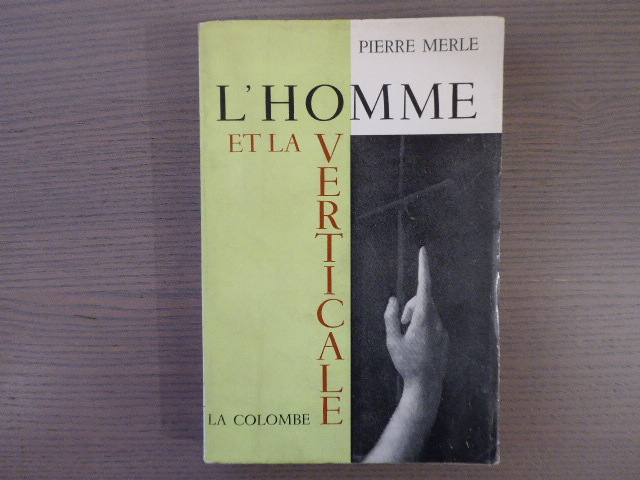
MERLE Pierre
L'HOMME ET LA VERTICALE.
La Colombe - Editions Du Vieux Colombier Paris 1960 In-8 ( 215 X 140 mm ) de 214 pages, broché sous couverture illustrée. EDITION ORIGINALE, bel exemplaire du Service de Presse enrichi d'un envoi autographe signé de l'auteur.
Référence libraire : 908030
|
|
|
MERRILL Stuart (1863-1915), poète symboliste américain d'expression française.
L.A.S., 17 mai 1900, à un confrère.
1900 4 pages in-12, adresse.
Référence libraire : 227

|
|
|
MERCIER (Alain).
La ligne de coeur.
Paris Seghers, coll. "Poésie 53" 1953 1 vol. broché plaquette in-12, agrafée, couverture à rabats en couleurs sur fond crème, 39 pp. Edition originale. Envoi de l'auteur à G.-E. Clancier. Dos et couverture légèrement jaunis, sinon bon état.
Référence libraire : 102261
|
|
|
MERCIER (Alain).
La ligne de coeur.
Paris Seghers, coll. "Poésie 53" 1953 1 vol. broché plaquette in-12, agrafée, couverture à rabats en couleurs sur fond crème, 39 pp. Edition originale. Envoi de l'auteur à G.-E. Clancier. Dos et couverture légèrement jaunis, sinon bon état.
Référence libraire : 102261
|
|
|
MERLIN (Hélène).
Le Caméraman.
Paris Editions de Minuit 1983 1 vol. broché in-8, broché, 203 pp. Edition originale. Envoi de l'auteur à un critique. Prière d'insérer joint. Bon état.
Référence libraire : 12396
|
|
|
MERLIN (Hélène).
Le Caméraman.
Paris Editions de Minuit 1983 1 vol. broché in-8, broché, 203 pp. Edition originale. Envoi de l'auteur à un critique. Prière d'insérer joint. Bon état.
Référence libraire : 12396
|
|
|
MERCIER, Louis
Le Poème de la Maison [ Livre dédicacé par l'auteur ]
Huitième édition, 1 vol. in-12 br., Calmann-Lévy, Paris, s.d. (circa 1912-1920 ?), 200 pp.
Référence libraire : 54556

|
|
|
MERAT (Albert).
Les villes de marbre : poëmes, 1869.
Paris Alphonse Lemerre 1873 1 vol. broché in-12, broché, (4) + 93 + (3) pp. et 20 pp. de catalogue de l'éditeur. Edition originale du tirage courant (après 5 Hollande et 5 Chine). Exemplaire enrichi d'un envoi autographe signé de l'auteur à Alexis-Jules Verteuil (1809-1882), secrétaire général de la Comédie-Française. Verteuil, estimé secrétaire et "teneur de livres" à qui Georges d'Heylli consacre une petite monographie en 1882, commence sa carrière chez le libraire Gosselin avant de rejoindre la Comédie-Française en 1841. Il assurera sa charge de secrétaire général jusqu'à sa mort, en véritable éminence grise de l'institution, accompagnant les transformations orchestrées par les administrateurs Edouard Thierry et Emile Perrin. Dos cassé avec manques de papier. Couverture un peu défraîchie. Intérieur frais, non coupé ni rogné. Rare. Vicaire, V, 693.
Référence libraire : 126440

|
|
|
MERAT (Albert).
Les villes de marbre : poëmes, 1869.
Paris Alphonse Lemerre 1873 1 vol. broché in-12, broché, (4) + 93 + (3) pp. et 20 pp. de catalogue de l'éditeur. Edition originale du tirage courant (après 5 Hollande et 5 Chine). Exemplaire enrichi d'un envoi autographe signé de l'auteur à Alexis-Jules Verteuil (1809-1882), secrétaire général de la Comédie-Française. Verteuil, estimé secrétaire et "teneur de livres" à qui Georges d'Heylli consacre une petite monographie en 1882, commence sa carrière chez le libraire Gosselin avant de rejoindre la Comédie-Française en 1841. Il assurera sa charge de secrétaire général jusqu'à sa mort, en véritable éminence grise de l'institution, accompagnant les transformations orchestrées par les administrateurs Edouard Thierry et Emile Perrin. Dos cassé avec manques de papier. Couverture un peu défraîchie. Intérieur frais, non coupé ni rogné. Rare. Vicaire, V, 693.
Référence libraire : 126440
|
|
|
MERIOT (Henry).
Les poésies de Henry Mériot : Le jardin de Flore - Les lys de minuit - Les flûtes de jade - Les Scabieuses.
Paris Alphonse Lemerre 1925 1 vol. relié in-8, demi-chagrin bordeaux à coins bordés d'un filet doré, dos à nerfs, tête dorée, couvertures et dos conservés (rel. Henry Mériot), 525 pp., portrait-frontispice gravé. Préfaces de Laurent Tailhade, Joséphin Péladan et Victor Billaud, et déclarations de l'auteur. Edition originale collective. Tirage limité à 1050 exemplaires, celui-ci l'un des 450 numérotés sur Japon avec un envoi autographe signé de l'auteur à Jeanne Duportal (1866-1954), spécialiste de l'estampe et des livres à gravures, première femme à obtenir le titre de docteur ès-lettres en 1914. Bel exemplaire relié par le poète lui-même. Henry Mériot (1856-1938), artisan relieur établi en 1875 à Rochefort, était aussi un poète d'inspiration parnassienne qui se plaisait à exalter la beauté du travail quotidien. Son atelier fut fréquenté par nombre d'écrivains dont Théodore de Banville, Laurent Tailhade, Léon Bloy et bien sûr Pierre Loti (Fléty, 127).
Référence libraire : 126448

|
|
|
MERIOT (Henry).
Les poésies de Henry Mériot : Le jardin de Flore - Les lys de minuit - Les flûtes de jade - Les Scabieuses.
Paris Alphonse Lemerre 1925 1 vol. relié in-8, demi-chagrin bordeaux à coins bordés d'un filet doré, dos à nerfs, tête dorée, couvertures et dos conservés (rel. Henry Mériot), 525 pp., portrait-frontispice gravé. Préfaces de Laurent Tailhade, Joséphin Péladan et Victor Billaud, et déclarations de l'auteur. Edition originale collective. Tirage limité à 1050 exemplaires, celui-ci l'un des 450 numérotés sur Japon avec un envoi autographe signé de l'auteur à Jeanne Duportal (1866-1954), spécialiste de l'estampe et des livres à gravures, première femme à obtenir le titre de docteur ès-lettres en 1914. Bel exemplaire relié par le poète lui-même. Henry Mériot (1856-1938), artisan relieur établi en 1875 à Rochefort, était aussi un poète d'inspiration parnassienne qui se plaisait à exalter la beauté du travail quotidien. Son atelier fut fréquenté par nombre d'écrivains dont Théodore de Banville, Laurent Tailhade, Léon Bloy et bien sûr Pierre Loti (Fléty, 127).
Référence libraire : 126448
|
|
|
MERLIN (Comtesse).
Lettre autographe signée à Monsieur le chevalier Koutsky.
Dimanche 17. 1 p. in 8°, adresse au dos.
Référence libraire : AMA-411
|
|
|
MERRIEN Jean (ecrivain de Marine)
LETTRE AUTOGRAPHE MANUSCRITE SIGNEE
1954 une Lettre sur papier blanc (filigrané : PARCHEMINE GUERIMAND VOIRON), format : 21 x 27 cm, en tête imprimée en noir en haut à gauche : Jean Merrien, 11, rue Henri IV Nantes Tel. 340. 64, datée du 16 mars 1954, lettre autographe manuscrite à l'encre bleue avec signature autographe manuscrite de Jean Merrien,
Référence libraire : 16269
|
|
|
MERCIE Antonin - (Toulouse 1845 - Paris 1916) - Sculpteur et peintre français
Lettre autographe signée -
1 page in8 - réponse à un questionnaire sur son souhait pour Noèl -
Référence libraire : GF16165
|
|
|
MERIMEE Prosper - (Paris 1803 - Cannes 1870) - Ecrivain français
Lettre autographe signée à un éditeur - Paris le 5 décembre 1859 -
1 page in8 - bon état -
Référence libraire : GF16166
|
|
|
MERRILL Stuart Fitzrandolph - (Hempstead 1863 - Versailles 1915) - Ecrivain américain
Lettre autographe signée à Vallin - Milan le 2 janvier 1907 -
1 page in8 - papier taché - traces de pliures -
Référence libraire : GF16167
|
|
|
MERSON Luc-Olivier - [Paris 1846 - 1920] - Peintre et graveur français
Lettre Autographe Signée à Ferroud (éditeur) -
1 page in8 -
Référence libraire : GF28158
|
|
|
MERSON Luc-Olivier - [Paris 1846 - 1920] - Peintre et graveur français
Lettre Autographe Signée à Ferroud (éditeur) -
1 page in8 - bon état -
Référence libraire : GF28159
|
|
|
MERSON Luc-Olivier - [Paris 1846 - 1920] - Peintre et graveur français
Lettre Autographe Signée à Ferroud (éditeur) -
1 page in8 -
Référence libraire : GF28160
|
|
|
MEREDITH (George)
Lettre autographe signée
Kingston Lodge, Thursday. In-8, 3 pp. (un peu empoussiérée, quelques infimes taches).
Référence libraire : 23237

|
|
|
MERIMÉE Prosper.
Lettres de Prosper Mérimée à Madame de Beaulaincourt (1866-1870), publiées avec une introduction et des notes par Maurice Parturier.
1936 Paris, Calmann-Lévy éditeurs, 1936; in-8° broché, couverture blanche, titre en noir et rouge au 1er plat , en noir au dos; (4), xxxii, 178, (1)pp. Portrait en fronstispice.
Référence libraire : 9861
|
|
|
MERSON Olivier
LISBONNE histoire, monuments, moeurs
1857 percale grise in-octavo, dos long (spine without raised bands) avec une vignette de titre (with label of title) sur fond orange, tranches jaspées (marbled edges), envoi autographe manuscrit de l'Auteur sur la page de faux-titre (author's autograph on the half title page), sans illustration (no illustration), très rares et légères rousseurs (rare and light redness marks), 264 pages, 1857 à Paris Librairie de Louis Hachette et Compagnie - Lisboa Ferin e Robin Livreiros,
Référence libraire : 3279
|
|
|
MERRIEN Jean
MERVEILLE DES PETITS PORTS
Paris Denoël 1957 -in-8 broché un volume, broché in-octavo Editeur avec jaquette illustrée en couleur sur le recto, non rogné (20,8 x 14,5 cm), envoi autographe manuscrit de l'auteur sur la page de faux-titre à l'Ecrivain Nantais ARMEL DE WISMES : ".....pour Armel, avec mes excuses de ne pas prendre la côte dans l'autre sens ... bien amicalement..(signé) J. M. (jean Merrien) ...", avec 11 cartes illustrées hors-texte en noir de Bernard DUVAL, 278 pages, 1957 Paris Editions Denoël Editeurs,
Référence libraire : 26574
|
|
|
MERIMEE (Prosper).
Mosaïque.
Paris Honoré Champion 1933 1 vol. broché fort vol. in-8, broché, couverture rempliée, non coupé, (6) + LII + 530 pp., 8 fac-similés hors-texte (petite tache claire et déchirure sans manque au dos). Texte établi et annoté avec une introduction par Maurice Levaillant. Exemplaire sur pur fil avec un bel envoi de ce dernier "à Monsieur François Mauriac, de l'Académie française, à l'heure même où il prononce son discours sous la coupole, j'ai le plaisir de dédier ce trop gros livre, en souvenir d'années déjà lointaines, et en hommage cordialement dévoué. Maurice Levaillant. 16 novembre 1933, 9 heures après-midi". On joint : TRAHARD (Pierre), La jeunesse de Prosper Mérimée (1803-1834). Paris, Champion, 1925, 2 vol. in-8, brochés, XVIII + 358 et 424 pp. Ex. sur pur fil avec ex-dono autographe de l'éditeur à François Mauriac.
Référence libraire : 98465
|
|
|
MERIMEE (Prosper).
Mosaïque.
Paris Honoré Champion 1933 1 vol. broché fort vol. in-8, broché, couverture rempliée, non coupé, (6) + LII + 530 pp., 8 fac-similés hors-texte (petite tache claire et déchirure sans manque au dos). Texte établi et annoté avec une introduction par Maurice Levaillant. Exemplaire sur pur fil avec un bel envoi de ce dernier "à Monsieur François Mauriac, de l'Académie française, à l'heure même où il prononce son discours sous la coupole, j'ai le plaisir de dédier ce trop gros livre, en souvenir d'années déjà lointaines, et en hommage cordialement dévoué. Maurice Levaillant. 16 novembre 1933, 9 heures après-midi". On joint : TRAHARD (Pierre), La jeunesse de Prosper Mérimée (1803-1834). Paris, Champion, 1925, 2 vol. in-8, brochés, XVIII + 358 et 424 pp. Ex. sur pur fil avec ex-dono autographe de l'éditeur à François Mauriac.
Référence libraire : 98465
|
|
|
Merle, Louis( médecin
Notice historique sur la commune de Soubran par le docteur L. Merle
IN8 broché,[s.n.], [1896]([Saintes : Impr. A. Hus]) - 57 p. ; portr.h. t., 25 cm,ENVOI autographe AUTEUR ;
Référence libraire : 27951

|
|
|
MERLET, Gustave
Portraits d'hier et d'aujourd'hui. Attiques et humoristes [ Edition originale - Livre dédicacé par l'auteur ] Un ministre sans portefeuille. Mécène - Un pur esprit. Joubert - Un mélancolique ingénu. Maurice de Guérin - Simple histoire d'un coeur fraternel. Eugénie de Guérin - Un classique libéral. Gérusez - Un sage. S. de Sacy - La vérité dans l'art. Mérimée - Une royauté mondaine et littéraire. Mme Emile de Girardin - Un guêpier. Alphonse Karr - un journaliste gentleman. John Lemoinne
1 vol. in-12 reliure de l'époque demi-chagrin brun, dos à 4 nerfs, Didier et Cie, Paris, 1865, 2 ff., 404 pp.
Référence libraire : 67804

|
|
|
MERLET Jean-François-Louis
POURRITURE DOREE
1927 broché in-seize (paperback sextodecimo), dos marron (brown spine), illustrations originales de la première de couverture et illustrations intérieures en noir par (original illustrations of the front cover and inside in black by) Léon Bellot, quatrième de couverture muette (back cover without text), tranches non rognées (edges no smooth), pages de garde grises (grey endpapers), page de faux-titre avec des références bibliographiques sur son verso (bibliographical references on the back of half title page), envoi autographe manuscrit de l'Auteur sur la page de faux-titre adressé à (author's autograph on the half title page sent in) Henri Peigné, 210 pages, 1927 à Paris Editions du Monde Moderne,
Référence libraire : 14270
|
|
|
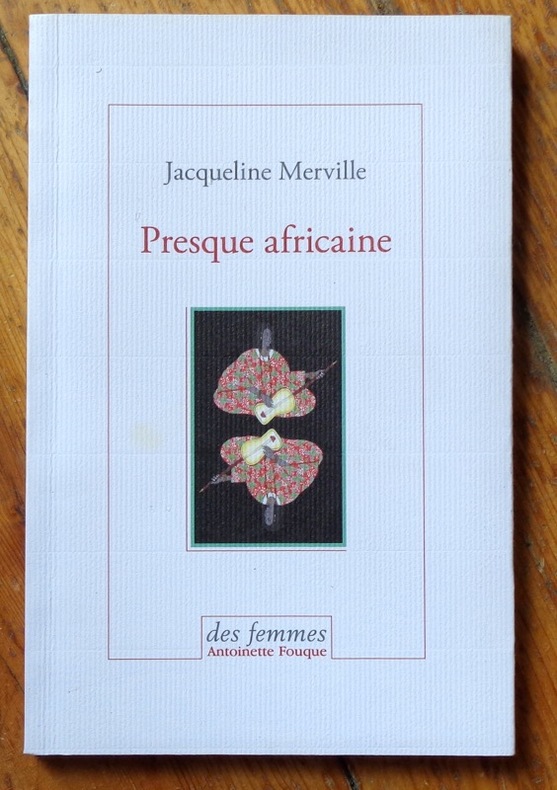
Merville Jacqueline:
Presque africaine.
Edition des femmes, 2010. In-8 broché, couverture illustrée à rabats. En belle condition.
Référence libraire : 9595
|
|
|
MERVEILLE, Père Etienne
Pékin Perle de l'Asie. Symbole et Foyer d'une Civilisation quatre fois millénaire.
1953 Sur les Presses de l'Imprimerie Robaudy, Cannes, s.d. (circa 1953), 1 vol. in-folio broché, couverture illustrée en couleurs, .,6 ff. , reliés par une cordelette jaune, envoi autographe en chinois par le père merveille ,t rès bon état
Référence libraire : 8827
|
|
|
MERVEILLE, Père Etienne
Pékin Perle de l'Asie. Symbole et Foyer d'une Civilisation quatre fois millénaire. [ Livre dédicacé par l'auteur ]
1 vol. in-folio br., Sur les Presses de l'Imprimerie Robaudy, Cannes, s.d. (circa 1953), 6 ff.
Référence libraire : 42680

|
|
|
MERLIN (Hélène).
Rachel. Roman.
Paris Editions de Minuit 1981 1 vol. broché in-8, broché, 105 pp. Edition originale. Envoi de l'auteur à un critique. Prière d'insérer joint. Très bon état.
Référence libraire : 12397
|
|
|
MERLIN (Hélène).
Rachel. Roman.
Paris Editions de Minuit 1981 1 vol. broché in-8, broché, 105 pp. Edition originale. Envoi de l'auteur à un critique. Prière d'insérer joint. Très bon état.
Référence libraire : 12397
|
|
|
MERRIEN Jean
RIEN QUE LA MER
1946 broché in-octavo, dos blanc, couverture illustrée, légère trace de pli sur le 1er plat, non rogné en partie non coupé, envoi autographe manuscrit de l'auteur, 285 pages, 1946 Paris Editions Self Editeur,
Référence libraire : 7344
|
|
|
MERRILL (Stuart).
Une Voix dans la Foule. Poèmes.
Mercure de France 1909 1 vol. broché in-12, broché, 212 pp. Edition originale en service de presse avec un envoi de l'auteur au poète Emile Despax sur un feuillet joint. Dos très insolé et taché avec manque de papier. Couverture et intérieur propres.
Référence libraire : 36144
|
|
|
MERRILL (Stuart).
Une Voix dans la Foule. Poèmes.
Mercure de France 1909 1 vol. broché in-12, broché, 212 pp. Edition originale en service de presse avec un envoi de l'auteur au poète Emile Despax sur un feuillet joint. Dos très insolé et taché avec manque de papier. Couverture et intérieur propres.
Référence libraire : 36144
|
|
|
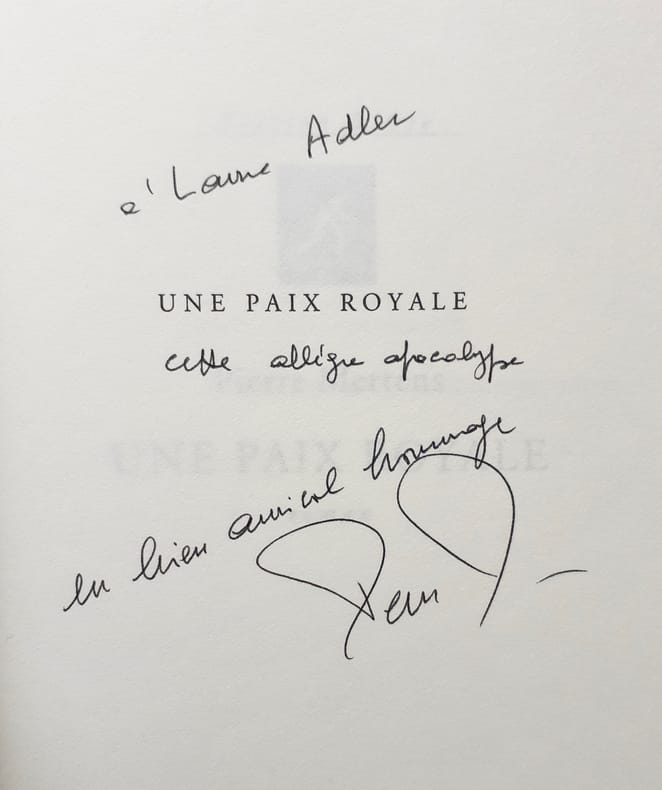
MERTENS (Pierre) -
Une paix royale.
Paris : Editions du Seuil, 1995. Un volume broché (14x20,5 cm), 489 pages. Edition originale sans grand papier annoncé avec un envoi autographe signé de Pierre Mertens à Laure Adler. Très bon état.
Référence libraire : 43956
|
|
|
MERAT, Albert
Vers le Soir [ Edition originale - Livre dédicacé par l'auteur ] Impressions et Souvenirs. Intermède. Petit Poème. Hommes et Choses
1 vol. in-12 br., Alphonse Lemerre, Paris, 1900
Référence libraire : 58074

|
|
|
MERCIER Louis-Emile, dit Louis. - 1870-1952.
Voix de La terre et du Temps.
Lyon, Librairie Lardanchet, "Bibliothèque du Bibliophile (Poètes)", 1920. In-8, broché, couverture imprimée, vignette illustrée au centre, rempliée, 163 pp.
Référence libraire : 9008
|
|
|
MERCY Marie Charles Isidore de
Évêque de Luçon.
Acte en latin, signé en date du 23 octobre 1777 (nomination d’un chanoine en l’église de Saint-Étienne de Brillonet).
Référence libraire : 4926

|
|
|
Meran, Franz Gf., Militär und Politiker (1839-1891).
Eigenh. Brief mit U. ("Franz Gf. Meran"). Graz, 17. XII. 1874.
2 SS. auf gefalt. Doppelblatt. 8vo. An "Euer Wohlgeboren": "Gemäß einer Besprechung mit Gf. H. Wilczek erlaube ich mir heute mittelst Post 32 Aquarelle Ew. Wohlgeboren zu übersenden. Man mag über deren künstlerischen Wert urtheilen wie man will, - als theures Andenken meines unvergeßlichen Vaters, als Wiedergabe von Ereignissen aus jener herrlichen Zeit wo das steirische Gebirge von dem Zuge der Städter noch beinahe gänzlich unberührt in seiner reinen Urwüchsigkeit von Erzherzog Johann durchzogen wurde, als in seiner Art einzige Reproduktion dermalen gänzlich verschwundener Trachten, - haben diese Aquarelle für mich einen unbeschreiblichen Wert. Ich empfehle sie daher Ihren sorgsamen Händen auf das Allerwärmste an [...]". - Auf monogrammiertem Briefpapier. Falt- und Knitterspuren, doch im ganzen von schöner Erhaltung.

|
|
|
Meran, Franz Gf., Militär und Politiker (1839-1891).
Eigenh. Brief mit U. Grundlsee, 11. VIII. 1881.
1½ SS. auf Doppelblatt. 8vo. Mit eh. adr. Kuvert. An den "k. k. Hofrath u. Corvettencapitain" Graf Victor Wimpffen auf Schloss Kainberg bei Graz: "Von der Beisetzung der Leiche meiner theuren Mutter zurückgekehrt, spreche ich von ganzem Herzen dir meinen innigsten Dank für den warmen Beileids-Brief aus. Wiewohl seit Monaten der Tod meiner armen Mutter zu erwarten stand, so ist deren Verlust doch ein furchtbarer harter Schlag für mich u. die Meinen. Meinen Dank wiederholend [...]". - Auf Briefpapier mit Trauerrand. Aus dem Kuvert die Marke ausgeschnitten.
|
|
|
Meran, Franz Gf., Militär und Politiker (1839-1891).
Eigenh. Brief mit U. und eh. Mitteilung mit U. Möglicherweise Graz bzw. o. O., 1887.
Zusammen (3+1=) 4 SS. auf 4 (= 2 Doppel-)Blatt. 8vo. An den namentlich nicht genannten Landesverteidigungsminister Generalmajor Julius Joachim Ludwig Frhr. von Horst: "Leider habe ich bis jetzt das so bestimmt und sehnlichst erwartete Telegramm aus Wien nicht erhalten. Mir ist diese Verzögerung im höchsten Grade unangenehm und peinlich und kann mir das Ausbleiben des Telegramms nur dadurch erklären, daß der recommandirte Brief Fst. H. erst zugestellt wurde als er seinen täglichen Vortrag schon erstattet hatte und daher erst morgen die Gelegenheit zur Sprache bringen wird. Vielleicht aber erhalte ich aber auch morgen früh eine briefliche Antwort, was ich aber kaum glaube. Wie ich irgend welche Mittheilungen aus Wien erhalte, werde ich mir erlauben sie sogleich mitzutheilen [...]" (a. d. Br. v. 5. II. 1887). - Die Mitteilung v. 6. IV. 1887 des Inhalts: "Eben erhalten! Bin desperat!"

|
|

 Recevoir par e-mail
 Télécharger en PDF
 Flux RSS
 Lien permanent


