|
Emerson, Edward Waldo, Son Of Ralph Waldo Emerson; Ownership Signature Of Moorfield Storey, National President Of The Naacp 190
The Early Years Of The Saturday Club 1855-1870 Ownership Signature Of Moorfield Storey National President Of The Naacp 1909-1929
Boston: Houghton Mifflin 1918. 1st Edition 1st Printing. Hardcover. Very Good. Plates With Tissue Guards. Xii 515 Pp. Blue Cloth Gilt. First Edition With 1918 Date On Title Page. Volume I Of What Became A 3 Volume History. The Saturday Club Established In 1855 Was An Informal Monthly Gathering In Boston Massachusetts Of Writers Scientists Philosophers Historians And Other Notable Thinkers Of The Mid-Nineteenth Century. Out Of Its Meetings Evolved What Became The Atlantic Monthly. This Copy With Ownership Signature Of Moorfield Storey A Member Of The Club Since Circa 1894/5- President In 1925 With His Address At 175 Walnut St. Brookline. Moorfield Storey 1845 - 1929 Was An American Lawyer Anti-Imperial Activist And Civil Rights Leader Based In Boston Massachusetts. Also With A Handwritten Note On Half Title "Moorfield Story Became A Member In 1894 Or 5 I Think And President In 1935"; From The Family Of Rowena Woodham-Jelliffe. According To Storey's Biographer William B. Hixson Jr. He Had A Worldview That Embodied "Pacifism Anti-Imperialism And Racial Egalitarianism Fully As Much As It Did Laissez-Faire And Moral Tone In Government." Storey Served As The Founding President Of The National Association For The Advancement Of Colored People Naacp Serving From 1909 To His Death In 1929. He Opposed United States Expansionism Beginning With The Spanish-American War. An Opponent Of Military Intervention In General Storey Spoke At The First Anti-Imperialist Mass Meeting In Boston In June 1898 Called Because Of The Spanish-American War. He Was A Vice President Of The New England Anti-Imperialist League. In Addition He Wrote A Book Brief For The Lodge Committee Summarizing The War Crimes Of The Philippine-American War. From 1905 Until Its Dissolution In 1921 Storey Was President Of The National Anti-Imperialist League. He Perceived That "National Subjugation Overseas And Racial Persecution At Home Were Related" Which Drove His Efforts At Reform In The United States. Damon W. Root Touted Storey As An Historical Role Model For Libertarian Democrats In A December 2007 Article For Reason Magazine. Wikipedia. <br/> <br/> Houghton Mifflin hardcover
Referentie van de boekhandelaar : 042210
|
|
|
Edited From the Autographs of the Authors
Chronica Monasterii De Melsa a Fundatione Usque Ad Annum 1396 Auctore Thoma De Burton Abbate Accedit Continuatio Ad Annum 1406 a Monacho Quodam Ipsius Domus Vol. 3
paperback. Good. Access codes and supplements are not guaranteed with used items. May be an ex-library book. paperback
Referentie van de boekhandelaar : 0331749653.G ISBN : 0331749653 9780331749656

|
|
|
LILIENTHAL, David E (1899-1981)
Signature / Unsigned Photograph
American government official and public administrator appointed Tennessee Valley Authority co-director by FDR in 1933 and chairman from 1941 to 1946 earning the nickname "Mr. TVA"; he served as first chairman the U.S. Atomic Energy Commission from 1947 to 1950. Large full signature in black ballpoint heavy stock 5" X 3" card n.p. 1967 March 31. Near fine. With original envelope. Accompanied by a superb original 1947 black-and-white glossy news agency photograph International News Photo 8½" X 6½". Original mimeographed newsprint text sheet present and tipped to verso as issued. Titled "Discuss Atomic Liaison Question" this text reads in part: "The Joint Congressional Committee sought today to devise some method for keeping the doors of the newly-confirmed Atomic Commission open to military and legislative liaison. Atomic Commission chairman David E. Lilienthal left is shown as he called on Senator Bourke B. Hickenlooper. chairman of the Joint Congressional Atomic Committee." A choice vintage image itself scarce and desirable and a fine signature example -- the perfect pair. unknown
Referentie van de boekhandelaar : 27413

|
|
|
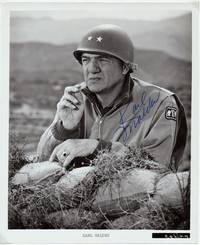
MALDEN, Karl (1912-2009)
Photograph Signed
This versatile and longevous American actor of stage screen and television won an Oscar as Best Supporting Actor for his role in "A Streetcar Named Desire" 1951 and is also remembered for "Baby Doll" "On the Waterfront" "How the West Was Won" and "Patton"; he played Lt. Mike Stone on t.v.s "The Streets of San Francisco" in the 1970s. PS 8" X 10" n.p. n.d. Fine. Handsome half-length glossy still closeup from "Patton" 1970 showing Malden in uniform as General Omar Bradley signed large and bold across his chest in blue fineline. To paraphrase Malden's popular catchphrase as spokesperson for American Express Traveler's Checks: "Don't leave home without it! unknown
Referentie van de boekhandelaar : 31168
|
|
|
Avec Portrait Et Fac-Simile de Lettres Autographes
Les Projets de Restauration Monarchique Et le Général Ducrot Député Et Commandant du 8e Corps d'Armée d'Après Ses Mémoires Et Sa Correspondance
paperback. Good. Access codes and supplements are not guaranteed with used items. May be an ex-library book. paperback
Referentie van de boekhandelaar : 0243065183.G ISBN : 0243065183 9780243065189
|
|
|
MUZIO, Claudia (1889-1936)
Inscribed Photograph Signed
Renowned Italian soprano often remembered as "la dinvina Claudia" and "The Duse of Opera." IPS Van Riel 8½" X 11" n.p. 1924. Near fine. A dramatic head shot of a very flapper-looking Muzio in beaded head scarf inscribed big and bold to a Chicago pianist and music school founder: "To John Leiser / Sincerely / Claudio Muzio / 1924." Scarce and choice. This item has been archivally framed in a single cream matte UV-filtering glass and 3/4" antiqued silver frame overall dimensions 11½" X 14". Bit of damage to top frame edge. The finest Muzio imaginable. unknown
Referentie van de boekhandelaar : 15459

|
|
|
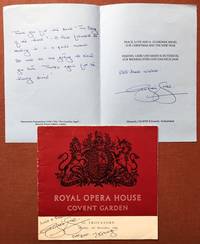
(Musical Autographs) Gwyneth Jones
Program for Il Trovatore Royal Opera House Covent Garden 12/7/1964 signed by Gwyneth Jones in 2001 in Pittsburgh plus a thank you note from her thanking her hosts for a lovely dinner and the book 'The Song of the Lark.'
London: Royal Opera House 1964. Paperback. Very Good. Program from 1964 in wraps ca. 25 pp illustrated light wear signed on the cover Jones played Leonora thank you note from her is 6 lines long signed in full. This was a very significant performance in Jones's career as she stood in for Leontyne Price for the role of Leonora and her career took off after that. Royal Opera House paperback
Referentie van de boekhandelaar : H4056
|
|
|
[Napoleon Bonaparte, Emperor of the French; Francis Edwards, London bookseller, printseller and dealer in autographs]:
Napoleon; Catalogue by the London bookseller Francis Edwards titled How England saved Europe. Catalogue of Books Engravings and Autographs relating to Napoleon the First and the wars in which he was engaged 1793-1815.
'Offered for sale by Francis Edwards Bookseller Printseller and Dealer in Autographs 83 High Street Marylebone London W.' March1917. 46pp. 12mo. In original printed wraps with the last two pages of the catalogue on the back cover. 704 priced items with descriptions. Reproduction of no. 612 mezzotint of Napoleon by Charles Turner from J. J. Masquerier on front cover. In fair condition on aged paper in aged and worn wraps with occasional pencil markings in margins. An important catalogue issued in part to make a point during the Great War. The most valuable item by far covering nearly half a page is 223 a copy of Wheeler and Broadley's 'Napoleon and the Invasion of England' 'extra-illustrated and extended to 4 volumes' at £130. The final four sections are 'The map of Europe in the time of Napoleon' pp.35-37; 'Engravings' pp.37-42; 'Napoleonic Caricatures' pp.42-44 and 'Autograph Letters and Manuscripts' pp.44-46. No. 749 priced at £50 is Gen. Gaspard Gourgaud's 'Manuscripts respecting Napoleon I. in his autograph'; its twenty-line description begins with 'The Original Manuscript of a Portion of Napoleon's Own Memoirs dictated to Gen. Gourgaud at St. Helena 11pp. folio.' Also present is a letter by Napoleon's mother priced at £14 and transcribed in full. Scarce: no copy in the British Library and the only copy on COPAC at the National Library of Wales. SEE IMAGE. 'Offered for sale by Francis Edwards, Bookseller, Printseller and Dealer in Autographs, 83, High Street, Marylebone, London, W.' paperback
Referentie van de boekhandelaar : 12586
|
|
|
JAMES, GPR (1799-1860) G P R
Autograph Letter Signed
This popular extraordinarily prolific British writer penned nearly one hundred novels such as "Richelieu" 1829 "The Gypsy" 1835 as well as plays poetry and historical writings such as "The Life and Times of Louis XIV" 1838 exceeding the voluminous output of his mentor Sir Walter Scott; later he turned to diplomacy serving as a British consul in America and vice-consul at Venice. ALS 2pp inlaid 4¼" X 6 3/4" Norfolk VA 1853 May 5. Addressed to M.M. Ballou at Gleason Pictorial in Boston 1820-95 Boston publisher novelist travel writer first editor of Boston Daily Globe. Near fine. "Please excuse my seeming negligence in not having sooner answered your note. When it arrived I was absent from home wandering about for a few days and the letter was mislaid It is thus only today that I have seen it and I hasten to apologize for acknowledging it at an earlier period thinking that in the mean time you have not thought very hardly of Your faithful Servant." Boldly attractively penned in brown ink. So profuse is James's apology though that he fails to mention the object of Ballou's note! Amusingly the very next year Ballou's illustrated pictorial founded 1851 passed along this unflattering tidbit from a London magazine: "The American papers report the particulars of a fire in the house of Mr. G.P.R. James whereby one storey was consumed. What a pity it didn't burn many more! unknown
Referentie van de boekhandelaar : 40522

|
|
|
HABSBURG, Felix von (1916-2011) and Otto von (1912-2011)
Signatures
Two of the eight children of Emperor Charles I of the Austro-Hungarian empire the last Austrian Kaiser and his wife Princess Zita of Bourbon-Parma who went into self-exile in 1919; Otto lived throughout Europe and the U.S. in exile and became an outspoken pan-European advocate; Felix did likewise and spent much of his life in Mexico. Pair of choice signatures each on a heavy stock 5" X 3" card Mexico City for Felix 1979 March 23 and 1979 March 16 respectively. Both fine and with original envelopes. Unusual. unknown
Referentie van de boekhandelaar : 15023

|
|
|
HAMMOND, C Herrick (1882-1969)
Typed Letter Signed
This American supervised numerous memorable structures as Illinois state architect; he designed many Art Deco and Arts & Crafts style buildings in Chicago and in 1933 joined forces with the Burnham Brothers to create Burnham and Hammond. TLS 1p 7¼" X 9½" Washington DC 1929 August 1. Addressed to Waldemer Kaempffert at the Rosenwald Industrial Museum of Chicago 1877-1956 long-time "New York Times" science editor and director of Chicago's Rosenwald Museum which became the renowned Museum of Science and Industry. Very good. Small staple hole at upper left; large grease-pencilled recipient's docket at upper right. On "The American Institute of Architects" letterhead which lists Hammond as president Hammond notes "I wish to assure you that the members of the Institute will be glad to cooperate in any way possible to make the Industrial Museum a success. No doubt the local architects here can be of assistance and I shall be glad to arrange a meeting with you and some of the leaders of the profession if that is your desire." Interesting: Some sources state that the name of Kaempffert's museum was changed to what it's known as today the Museum of Science and Industry in 1928 but here in 1929 apparently Kaempffert is still using the original name. At this time he was also casting about for a museum building so perhaps was approaching Hammond for assistance. It wasn't until the 1933 Century of Progress Exposition that it opened in the 1893 Columbian Exposition "Palace of Fine Arts" building. Bold handsome full signature. Accompanied by a second letter a TLS from Hammond's executive secretary EDWARD C. KEMPER executive director 1914-48 1p 8½" X 11" Washington DC 1929 July 29. Addressed to Waldemar Kaempffert. Very good. Staple hole at upper left. On "The American Institute of Architects" letterhead Kemper thanks Kaempffert for literature on his museum and notes he will forward same to Hammond. "Mr. Hammond has given liberally of his time for many years to public service and to Chicago civic affairs. we felt that the subject of your letter should receive his personal attention." Quite interesting pair. unknown
Referentie van de boekhandelaar : 28610

|
|
|
COMSTOCK, James "Jim" (1911-96)
Typed Letter Signed
West Virginia's greatest unofficial representative and cheerleader ever a revered newspaperman famed for founding "The West Virginia Hillbilly" in 1957 legendary for preserving and publishing the history and folklore of this state; he published authored and edited numerous regional history volumes such as "The West Virginia Heritage Encyclopedia" "Ma and Pa and Mister Kennedy" 1965 "West Virginia Songbook" 1974 "West Virginia Picture Book" 1978 and others. TLS 1p 8½" X 11" Richwood WV 1971 July 8. Addressed to noted Lincoln and Civil War scholar ARNOLD F. GATES 1914-93. Very good. On "West Virginia Hillbilly" letterhead Comstock replies graciously to a request for information about renowned John Brown scholar and West Virginian Boyd Stutler and his well-known Brown collection: "I wish I could tell you more about Boyd Stutler. Only recently we had such an inquiry and my staff spent hours going over my unindexed paper to find my Comstock Load Comments on his passing. Nobody even found it. Now as to the collection: It is shrouded in mystery. There was a drive here. to see that it stayed in the state. But rumor has it that the son sold it to parties unknown. I wish I could tell you more. I wish I knew more. Enclosed not present is a book of my own a bit of a sleeper which surprisingly to me sold 200000 copies last year. Note too if you will my ambitious plans regarding a 50-volume encyclopedia for my state of West Virginia." Boldly signed in red ballpoint. Great and varied contents! unknown
Referentie van de boekhandelaar : 28272

|
|
|
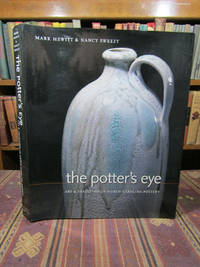
Hewitt, Mark; Sweezy, Nancy
The Potter's Eye: Art and Tradition in North Carolina Pottery SIGNED
Chapel Hill: The University of North Carolina Press 2006. First Edition First Printing . Hardcover. Near Fine/Very Good. 4to - over 9¾ - 12" tall. Jason Dowdle. Quarto. 274 pages indexed. Hardcover bound in a black and grey dust jacket. Light wear to the jacket. Text is clean INSCRIBED on the title page by both authors and the photographer Jason Dowdle. All three have inscribed to T. and Lindley. Lindley Butler is a noted North Carolina historian and author. <br/> <br/> The University of North Carolina Press hardcover
Referentie van de boekhandelaar : 045245 ISBN : 0807829927 9780807829929
|
|
|
Bradshaw, George S
The History of the First North Carolina Reunion at Greensboro NC SIGNED
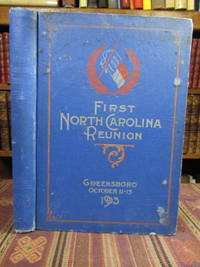
Greensboro NC: Jos. J. Stone 1905. 1st Edition . Hardcover. Good/No Jacket. 4to - over 9¾ - 12" tall. Quarto. 176 pages. Hardcover bound in blue and red cloth. Binding is worn rubbed with corners bumped. Soiling and spotting on the front cover. Author has signed front flyleaf. Text is has occasional foxing some smudging. Photographs throughout. SIGNED on the front flyleaf "Compliments of G. S. Bradshaw". George S. Bradshaw Esq. was the compiler and editor of this work. The photos in the book are mostly portraits and include many North Carolina notables of the day. <br/> <br/> Jos. J. Stone hardcover
Referentie van de boekhandelaar : 034451
|
|
|
LODGE, Henry Cabot, Jr (1902-85)
Signature / Unsigned Photograph
This U.S. senator from Massachusetts 1937-44 1947-53 was the grandson of Henry Cabot Lodge also a Massachusetts senator; defeated in 1952 for reelection by a young John F. Kennedy he then served as U.S. delegate to the United Nations 1953-60 was an unsuccessful Republican vice-presidential candidate in 1960 then went to serve as ambassador to Vietnam 1963-67 ambassador at large 1967-68 and ambassador to Germany 1968-69. Bold full signature in black fountain pen heavy stock 5" X 3" card n.p. Beverly MA n.y. 1970 August 7. Fine. Original envelope present. Accompanied by a superb vintage 7" X 9" glossy news agency photograph International News Photos from 1953. Near fine. Captioned "A Good Will Offering" on the mimeographed text slip it's a charming closeup of Lodge newly-named U.S. ambassador to the U.N. sniffing a flower held up by a young boy while visiting a New York nursery. A choice signature and a desirable vintage photograph. unknown
Referentie van de boekhandelaar : 21768

|
|
|
Charles E Shepherd of J Pearson & Co [John Pearson], Rare Books and Autographs, 5 Pall Mall Place, London] [Reed; Riviere]:
J. Pearson & Co. Pall Mall booksellers. Autograph Letter Signed to 'Mr. Reed' regarding autograph letters by Sir Philip Sidney and 'his very famous sister' asbestos cases by the binders Riviere and a 'Breeches' bible.
On letterhead of J. Pearson & Co. Rare Books and Autographs 5 Pall Mall Place London. 'Telegraph & Cable Address Parabola London.' 20 May 1903. 4pp. 12mo. Bifolium. Good on lightly-aged paper. In something of a hard sell he begins by stating that 'the "Sir Philip Sidney" letter of which I showed you a facsimile the other day . seems to me peculiarly suitable for your collection'. In support of the letter's 'exceptional rarity' he cites 'a letter of Thorpe's the expert of autographs of his day dated 1839 accompanying the autograph & giving its pedigree in which he says "I never saw a letter of Sidney's for sale except the present"' adding that 'no other autograph of his has occurred since'. With the letter is one of 'his very famous sister' Mary 'and also a very fine document signed by his father Sir Henry Sidney whose autograph I have not before seen'. He considers it 'most desirable' to keep the three items together 'and bind them with their portraits into a volume which I venture to say would be not only unique but of almost unequalled interest'. Our catalogue price of the collection is £350 and compared with the Ben Jonson letter sold at Sotheby's the other day for £320 it must be cheap'. He harps on about scarcity and prices adding 'The price I mention is what they are marked for catalogue The best I could do for you is £300'. He offers to post the items 'or could you come in either tomorrow or Friday before 1 oclock'. In a postscript signed 'CES' he states that the binders Riviere's consider 'the cases on the Bunyans . fireproof being lined with asbestos. An American Agent who tells us he has seen them tested is having all his valuable books put into cases.' If Reed does visit the firm's premises Shepherd can show him 'a beautiful perfect copy of the first "Breeces" Bible printed in England in 1876. There was no copy in the "Caxton" Bible Exhibition 1877 and Lowndes could never have seen a perfect copy as his collation is wrong.' On letterhead of J. Pearson & Co., Rare Books and Autographs, 5 Pall Mall Place, London. ('Telegraph & Cable Address, Parabola, unknown
Referentie van de boekhandelaar : 14918
|
|
|
Bell, Landon C
The Old Free State a Contribution to the History of Lunenburg County and Southside Virginia. Two Volume Set; SIGNED & INSCRIBED TO SAMUEL A'COURT ASHE
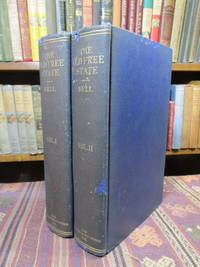
Richmond Virginia: The William Byrd Press Inc. Printers 1927. First Edition First Printing . Hardcover. Good/No Jacket. Octavos. 623; 644 pages. Indexed at the rear of Volume II. Two volumes bound in original blue cloth with spine titles in gilt. Moderate wear to the bindings. The bindings have some chips or abrasions in the cloth which seem to have been touched up with blue paint or coloring. This is more evident at the top edge of front cover on Volume II as well as on the side of its spine. Endpapers foxed. Text is toned but generally clean. INSCRIBED by the author on the front flyleaf of Volume I "To S. A. Ashe / with the author's esteem / Landon C. Bell / May 20 1929." Samuel A'Court Ashe 1840-1938 was a lawyer and a Confederate Captain in the Civil War. After the War he served in the North Carolina legislature and was a noted historian author and defender of the Confederacy. There is also a signed typed letter laid in loosely from Drewry McKee Smith to Captain Sam Ashe dated 1929. This is actually a copy of a letter to someone else that the sender signed and sent to Captain Ashe. Includes the original stamped envelope which is on browned paper. Unfortunately someone has stuck this in a folded and taped mylar sleeve and the envelop is stuck to the tape inside the sleeve. The books are NOT signed by Samuel A. Ashe. <br/> <br/> The William Byrd Press, Inc., Printers hardcover
Referentie van de boekhandelaar : 044798
|
|
|
Greene, Stephen
Stephen Greene : Recent Paintings Signed
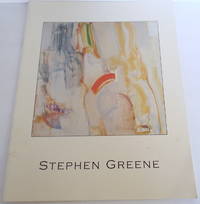
Lowell MA: University Gallery at UMASS Lowell. Signed exhibition catalog. First edition. Softcover. Published: University Gallery at UMASS Lowell 1999. 4to. wrappers 8 1/2" x 11" 12pp. illustrated with color and b/w reproductions. Inscribed by Greene on title page "For Dorothy love Steve". A few mild cover stains. Near fine. . Near Fine. Soft cover. 1st. 1999. University Gallery at UMASS Lowell paperback
Referentie van de boekhandelaar : 009876
|
|
|
Buhle, Paul; Sullivan, Edmund B
Images of American Radicalism Signed
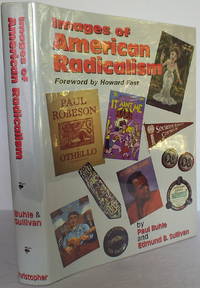
Hanover MA: Christopher Pub House. Signed First edition. Hard cover in dust jacket. Published Hanover MA: Christopher Pub House 1998. 4to. 9" x 11 1/4" xviii462pp. illustrated with over 800 images 100 color plates. Cream linen cloth with gilt spine and cover titles. Inscribed by co-author Sullivan on half title: "For Fred.Ed Sullivan." Fine in mylar protected fine dust jacket. . Fine. Hard. 1st. 1998. Christopher Pub House unknown
Referentie van de boekhandelaar : 009899 ISBN : 0815805098 9780815805090
|
|
|
Miller, Franklin S
Petrology of the San Marcos Mountain Gabbro San Luis Rey Quadrangle California
Cambridge: Self / Harvard University. Original typewritten doctoral dissertation submitted to division of Geological Sciences Harvard University 1934. 4to. hard cover 9" x 11 1/8" 215pp. illustrated with 26 multi-part plates with captioned tissue guards 6 figures and 3 folding maps in rear pocket. Black cloth with gilt spine titles. "Personal copy" signed by author with annotations to the text in pencil. Very good. . Very Good. Hard. 1st. 1934. Self / Harvard University unknown
Referentie van de boekhandelaar : 010045

|
|
|
Walker, Brian
The Comics Since 1945 Signed
NY: Harry N. Abrams. Signed First edition. Hard cover in dust jacket. Published NY: Harry N. Abrams 2002 first printing. Folio 9 3/4" x 13" 336pp. 776 illustrations 100 plates in full color. Boldly inscirbed by author to cartoonist Mary Anne Case: "To Mary Anne A true cartoonist and comics fan - Brian Walker." Pictorial laminated boards color pictorial endpapers. Fine in near fine dust jacket with slight wear at the spine ends. . Fine. Hard. 1st. 2002. Harry N. Abrams unknown
Referentie van de boekhandelaar : 010126 ISBN : 0810934817 9780810934818

|
|
|
Janocha, Bill (ed)
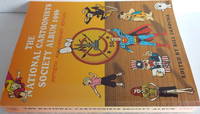
The National Cartoonists Society Album 1996 - Fiftieth Anniversary Edition Signed
NY: National Cartoonists Society. Signed first edition. Softcover. Published NY: National Cartoonists Society 1996. 4to. wrappers 8 1/2" x 11" 395pp. illustrated throughout with b/w photographs and reproductions. Inscribed by editor Bill Janocha to cartoonist Mary Anne Case: "Welcome to the NCS Mary Anne! heart drawing Bill Janocha-199" A virtual encyclopedia of American cartoonist each with a photographic or drawn portrait capsule bio/statement and typical cartoons. Includes articles Our Photo Album - historical photographs of the society lists of award winners. Crease along spine. Very good plus. Business cards and post notes of other cartoonists names/phone numbers/signatures laid in. . Very Good Plus. Soft cover. 1st. 1996. National Cartoonists Society, paperback
Referentie van de boekhandelaar : 010125
|
|
|
Spitz, Ellen Handler
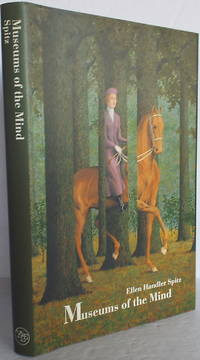
Museums of the Mind: Magritte`s Labyrinth and Other Essays in the Arts Signed
New Haven: Yale Univ Pr. Signed first edition. Hard cover in dust jacket. Published New Haven: Yale Univ Pr. 1994 first printing. 8vo. xvi190pp. illustrated with b/w plates. Inscribed by author on fly leaf with inscribed holiday card to same recipient in which she mentions Magritte. Fine in fine dust jacket. . Fine. Hard. 1994. Yale Univ Pr unknown
Referentie van de boekhandelaar : 010148 ISBN : 0300060297 9780300060294
|
|
|
Rocco, Keith (Art) ; Chartrand, Rene and DeLaMater, Matthew (Text)
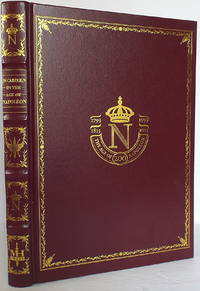
On Campaign in the Age of Napoleon SIGNED
Military History Press. Signed First North American Edition. Deluxe edition limited to 1200 numbered copies. Number 642. Full leather. Published Military History Press 2006. Signed by artist on filled in publisher's bookplate attached to pastedown. Folio 9 3/4" x 14" 288pp. illustrated with full color plates - some double page. Burgundy full leather with raised bands gilt spine and cover titles and decorations green marbled endpapers all edge gilting burgundy ribbon marker bound in. Fine. . Fine. Full-Leather. 1st. 2006. Military History Press hardcover
Referentie van de boekhandelaar : 010261
|
|
|
Andolenko, General
Recueil D'Historiques de L'Infanerie Francaise 2nd Edition
Paris: EURIMPRIM IMPRIMEURS EUROPEENS REUNIS. 2nd Edition. Hard cover in red letherette boards. Published Paris: EURIMPRIM IMPRIMEURS EUROPEENS REUNIS 1969. Folio 9 3/4" x 13" 413pp. illustrated with full page plates of insignia in color and b/w. Text in French. Pebbled red letherette with gilt titles. Russian born Serge Andolenko served admirably as French military officer rising to the rank of brigade général of the French Army. "A passionate historian he was renowned for several publications on the French Army and the Imperial Russian Army." Work covers all infantry regiments including infantry of the foot hunters the Zouaves the foreign legion the Moroccan riflemen the African light infantry and the Moroccan Goums. Mild dust foxing on top edge of page block gilt bit dull else fine clean bright unmarked. A beautiful copy. . Near Fine. Hard. 1st. 1969. EURIMPRIM (IMPRIMEURS EUROPEENS REUNIS) unknown
Referentie van de boekhandelaar : 010291
|
|
|
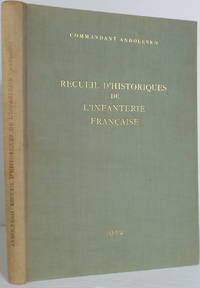
Andolenko, Commandant
Recueil d'Historiques de l'Infanterie Française Signed
Paris: Imprimerie Nationale. Signed numbered first edition. Number 30. Hard cover in cloth and limp boards. Published Paris: Imprimerie nationale 1949. 4to. 8 3/4" x 12" 317pp. Text in French. Pale green cloth with gilt titles. Signed by Andolenko on fly leaf. Russian born Serge Andolenko served admirably as French military officer rising to the rank of brigade général of the French Army. "A passionate historian he was renowned for several publications on the French Army and the Imperial Russian Army." Work covers all infantry regiments including infantry of the foot hunters the Zouaves the foreign legion the Moroccan riflemen the African light infantry and the Moroccan Goums. Some uniform sun fade to the spine dust foxing on top edge of page block else near fine clean bright unmarked. A beautiful copy. . Very Good Plus. Hard. 1st. 1949. Imprimerie Nationale unknown
Referentie van de boekhandelaar : 010290
|
|
|
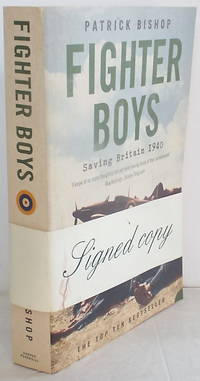
Bishop, Patrick
Fighter Boys : Saving Britain 1940 Signed
London: Harper Perennial. Signed. First edition thus. Softcover. Published London: Harper Perennial 2004. small 8vo. wrappers xiii434pp. plus 14pp. supplement illus b/w photos. Signed by author on titles page. Original "Signed copy" wraparound band in place. Book is near fine wraparound band has a few stains. . Near Fine. Soft cover. 1st. 2004. Harper Perennial paperback
Referentie van de boekhandelaar : 010887 ISBN : 0006532047 9780006532040
|
|
|
Morrow, Elizabeth; William Spratling (illus)
Casa Manana SIGNED
Croton Falls NY: Spiral Press. SIGNED first edition. Limitied to 300 copies. Hard cover in original cloth. Published Croton Falls NY: Spiral Press 1932. 4to. 8 1/4" x 11 1/4" unpaginated drawings by William Spratling illustrated with b/w plates and architectural plans and renderings. Bound in dark blue publisher's cloth with gilt embossed titles to cover and spine gilt cover design beveled edges pictorial map endpapers. Inscribed by Morrow to Mr. and Mrs. Reeve Schley: "For Mr. and Mrs. Reeve Schley who knew Casa Manana. with a Merry Christmas from Elizabeth Morrow. December 1932." A rare work and important resource on Mexican architecture and pottery by Elizabeth Cutter Morrow on Cuernavaca Mexico where she and her husband U.S. Senator Dwight Morrow who was Ambassador to Mexico from 1927 to 1930 bought adjoining plots to build a house inspired by the local historic architecture. The book is divided into three sections. Section one describes the town of Cuernavaca. Section two contains architectural plans and details for the home and gardens. Section three contains photo reproductions of the Mexican furnishings in the house including water jars jewelry boxes and woven garments. American-born expatriate artist and designer William Spratling created drawings for the new house and illustrated the text. Elizabeth Morrow was an American poet in the early 20th century who became the first female head of Smith College. Morrow was the mother of Anne Morrow Lindbergh distinguished American author and wife of aviation pioneer Charles Lindbergh. Near fine. Rare. . Near Fine. Hard. 1st. 1932. Spiral Press unknown
Referentie van de boekhandelaar : 008529

|
|
|
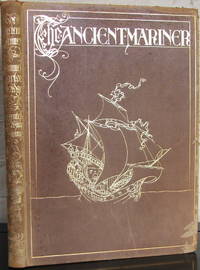
Coleridge, Samuel Taylor and Willy Pogany (illus)
The Rime of the Ancient Mariner Pogany - SIGNED Limited Edition of 525
NY: Thomas Y. Crowell & Co. Signed first edition limited to 525 numbered copies in England and America #137 signed by Pogany on limitation page. Full brown morocco with gilt cover design gilt spine titles top edge gilting pictorial end papers sewn in silk bookmark. Published NY: Thomas Y. Crowell & Co. 1910. Folio 9 1/2" x 13" printed on Japan vellum unpaginated Illustrated by Pogany with 20 tipped-in color plates calligraphic text decorative borders plus illustrations in color and line throughout the text. A stunning work. Some scuffing wear along the edges of boards small previous owner bookplate on front pastedown internally near fine pages clean no foxing or markings page block crisp all plates present binding tight. Rare. . Very Good. Hard. 1st. 1910. Thomas Y. Crowell & Co unknown
Referentie van de boekhandelaar : 008531
|
|
|
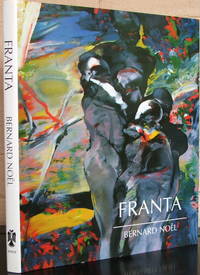
Bernard Noel
Franta: Paintings and Works on Paper English and French Edition SIGNED
Washington D. C.: Mage Pub. First edition with an original color marker drawing signed by Franta bound in. Hard cover in dust jacket. Published Washington D. C. Mage 1986. 4to 9 3/4" x 11 1/4" 143pp. 109 illustrations 50 in color plus original color drawing. Text in English and French. Fine in fine dust jacket. . Fine. Hard. 1st. 1986. Mage Pub unknown
Referentie van de boekhandelaar : 008530 ISBN : 0934211035 9780934211031
|
|
|
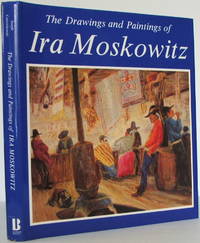
Singer, Isaac Bashevis (foreword) Essay By Joseph S Czestochowski
The Drawings and Paintings of Ira Moskowitz Signed
NY: Landmark Book Co. Signed first edition. Hard cover in dust jacket. Published NY: Landmark Book Co. 1990 first printing. Folio 10 3/4" x 12" 228pp. over 80 full-color plates plus 200 b/w plates. Signed by artist on half title. Laid in are two 1946 autograph letters signed from the artist in Shiprock New Mexico where he created a series of 60 lithographs on the ceremonial dances of the Navaho while residing on a Navaho reservation. Each letter is two pages - February 24 1946 -Dear Gus; and November 19 in which he mentions a forthcoming book of his art with the text being written by John Collier commissioner of Indian Affairs later published as Patterns And Ceremonials Of The Indians Of The Southwest. Additionally two half flyers for the artist's exhibition of Indian subjects - October 20 to November 7 1947 or 1948 at Arthur H. Harlow Galleries NYC are laid in. Book is fine in a fine dust jacket. The letters are very good with folds and slight loss along the edges. Flyers are good. . Fine. Hard. 1st. 1990. Landmark Book Co. unknown
Referentie van de boekhandelaar : 008948 ISBN : 0929194004 9780929194004
|
|
|
Kotur, Alexandra
Carolina Herrera: Portrait of a Fashion Icon
NY: Assouline Publishing. Signed first edition. Hard cover in dust jacket. Published NY: Assouline Publishing 2004 first printing. Folio 10 1/2" x 13 3/4" 197pp. lavishly illustrated with color and b/w photos. Inscribed by Herrera on half title: "To Annette Carolina Herrera." "Through the celebrated photography of Annie Leibovitz Francesco Scavullo Horst Robert Mapplethorpe and Mario Testino as well as the words of friends colleagues and admirers sucg as Calvin Klein Ian Schrager and Bianca Jagger among others Carolina Herrera is a portrait of one of today s most timeless designers. With an introduction by Hamish Bowles this book tells the story of one of fashion s most remarkable women." Fine in fine dust jacket. . Fine. Hard. 1st. 2004. Assouline Publishing unknown
Referentie van de boekhandelaar : 009093 ISBN : 2843236231 9782843236235

|
|
|
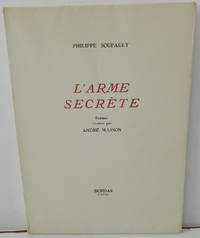
Soupault, Philippe; Masson, Andre, illus
L'Arme Secrete: Poemes. Illustres par Andre Masson SIGNED
Paris: Bordas. Signed first edition - signed by author and artist. Limited to 300 numbered copies on publisher watermarked Rives B.F.K. pure rag vellum. Number 187. Published Paris: Bordas 1946 first printing. 4to. wrappers with folded card covers 8" x 11" 70pp. partially uncut. Illustrated with one signed original lithograph and 6 full page drawings by Masson. Title page cover and text printed in black and red. Text in French. Light rub / small sun darkening at spine ends gentle rub to one tip else fine well preserved example pages and covers clean and bright. . Near Fine. Soft cover. 1st. 1946. Bordas paperback
Referentie van de boekhandelaar : 009119
|
|
|
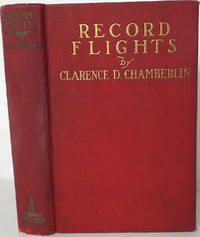
Chamberlin, Clarence D
Record Flights
Philadelphia: Dorrance and Company. Signed. Hard cover in original cloth. Published Philadelphia: Dorrance and Company 1928 second printing in the same month as the first - March 1928. 8vo. 286pp. illustrated with b/w plates. Red linen cloth with gilt spine and cover titles. Inscribed on two occasions by the author; first on frontis photo: "To Charles Ernstberger Jr. Clarence D. Chamberlin." Second on front pastedown: "To Mary L. Zagoreos with best wishes Clarence D. Chamberlin Aug 12th 1961." Two weeks after Lindbergh's solo transatlantic flight aviator Clarence Chamberlin flew non-stop from New York to Germany carry the first transatlantic passenger exceeding Lindbergh's record by 300 miles. Light wear at the heel and tips mild fade area on spine. Very good bright attractive copy. New York Times obituary of Chamberlin laid in. . Very Good. Hard. 1928. Dorrance and Company unknown
Referentie van de boekhandelaar : 009126
|
|
|
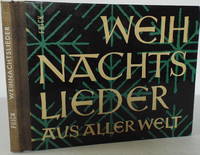
Wasner, Franz (Singstimme Und Klavier)
Weih Nachts Lieder Aus Aller Welt SIGNED
Wien: Wilhelm Frick. Signed by Maria von Trapp. Hard cover. Text in german. Published Wien: Wilhelm Frick 1968. Oblong 8vo. cloth and laminated boards xiii132pp. plus 9pp. recto printed foldout of song lyrics in English illustrations by Agathe Trapp. Signed by Maria von Trapp on flyleaf. Very good. . Very Good. Hard. 1968. Wilhelm Frick unknown
Referentie van de boekhandelaar : 009199
|
|
|
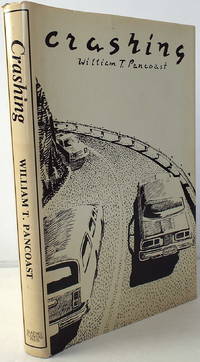
Pancoast, William
Crashing Signed
Mansfield OH: Blazing Flowers Press. Signed first edition. Hard cover in dust jacket. Published Mansfield OH: Blazing Flowers Press 1983 first printing. 8vo. black cloth with gilt titles. Signed by author on title page. Author's second novel. slight waviness to page block else fine in fine dust jacket with a short closed tear. . Fine. Hard. 1st. 1983. Blazing Flowers Press unknown
Referentie van de boekhandelaar : 009216 ISBN : 0961056207 9780961056209
|
|
|
Loti, Pierre
An Iceland Fisherman; Translated from the French by Guy Endore Illustrated with lithographs by Yngve Berg
Stockholm: Limited Editions Club. Signed limited edition. Limited to 1500 copies signed by the artist. Copy number 900. Published Stockholm: Limited Editions Club 1931. 4to. 7 1/2" x 10 3/4" 207pp. illustations by Yngve Berg. Printed on handmade linen rag paper from Van Gelder Zonen by the Royal Printing Office Norstedt & Soner of Sweden. Cream cloth with gilt titles in green block and pictorial paper over boards top edge gilting. Fine in very good plus slipcase that has age toning. . Fine. Hard. 1st. 1931. Limited Editions Club unknown
Referentie van de boekhandelaar : 009443
|
|
|
Morcombe, M K
Australia`s Western Wildflowers Signed Charles Court
Perth: Landfall Press. First edition. Hard cover in dust jacket. Published Perth: Landfall Press 1968 first printing. 4to. 8 3/4" x 11 1/4" 112pp. illustrated with color and b/w plates. Signature of Charles Court who was then Minister for Industrial Development - and later Premier of Western Australia from 1974 to 1982 laid in. "Best wishes Chas Court - 28 March 69". Signed across the text of a 3 1/2" x 5" printed card attached to flyleaf. Printed text reads: "With the compliments of The Hon. C.W.M. Court O.B.E. M.L.A. Minister for Industrial Development and the North-west Perth Western Australia." Some foxing to preliminaries and along edge of page block. Very good in very good dust jacket with a few short closed tears. . Very Good. Hard. 1st. 1968. Landfall Press unknown
Referentie van de boekhandelaar : 009521

|
|
|
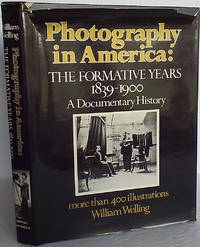
Welling, William
PHOTOGRAPHY IN AMERICA: The Formative Years 1839-1900 - A Documentary History
NY: Thomas Y. Crowell Company. Signed first edition. Hard cover in dust jacket. Published NY: Thomas Y. Crowell Company 1978. 4to. 8 3/4" x 11 1/4" xi431pp. more than 400 b/w illustrations. Inscribed by author on flyleaf. Near fine in very good dust jacket with a chip on top edge and several closed tears. . Near Fine. Hard. 1st. 1978. Thomas Y. Crowell Company unknown
Referentie van de boekhandelaar : 009759
|
|
|
Sholin, Bill
The "Kamikaze Nightmare" Terror of the Lambs SIGNED
Bonney Lake Washington: Mountain View Books. Signed first edition. Hard cover. Published Bonney Lake Washington: Mountain View Books 2000 first printing. Signed by author on tipped in dedication page. 4to. 8 3/4" x 11 1/4" xiv479pp. illustrated throughout with b/w photo reproductions. Textured blue letherette with gilt tiltles. A fine copy. . Fine. Hard. 1st. 2000. Mountain View Books unknown
Referentie van de boekhandelaar : 009784

|
|
|
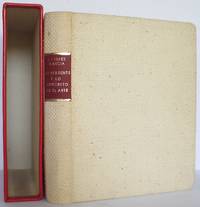
TORRES-GARCIA, Joaquin
Lo Aparente y lo Concreto en el Arte. Fasciculo 1 - Fasciculo 5 Author's SIGNED Presentation Copy with Original Drawing
Montevideo: Asociación de Arte Constructivo / Taller Torres-Garcia. First edition. Author's signed presentation with an original drawing by Torres-Garcia to María Cantú 1914 - 1959 a Mexican painter of the Taller Torres Garcia in Montevideo. 5 volumes finely bound in cloth sewn binding with custom leather slipcase. Published Montevideo: Asociación de Arte Constructivo / Taller Torres-Garcia 1947-1948. 8vo. 7" x 8 1/2" 47; 47; 43; 43 65pp. 'Leccion 1a' to 'Leccion 16a' - 16 lectures on Universal Constructivism illustrated with reproductions on glossy plates. Text in Spanish. Each volume contains leaf of publication information with list of publications by A.A.C. and Taller Torres-Garcia on verso leaf of title page recto printed leaf of explanatory text verso printed followed by text of lecture with final leaf of with 'terminó de imprimir'. Bound in cream buckram with heavy boards with rounded corners burgundy and gilt spine label with titles in gilt. Enclosed in a custom red leather slipcase. Inscribed by Torres-Garcia on first leaf "A Maria Contu con el musajos afecto J. Torres-Garcia" with drawing of a stick figure of a man standing with an oversize heart in his chest the sun forward of his right leg the sea and a fish on his left and a triangle behind his right shoulder. Paper of text block has uniformly age toned else fine in fine slipcase. . Fine. Hard. 1st. 1947. Asociación de Arte Constructivo / Taller Torres-Garcia unknown
Referentie van de boekhandelaar : 009823
|
|
|
Calvin Hennig
James Fitzgerald
Rockland Maine: William A. Farnsworth Library and Art Museum. Signed first edition limited to 500 numbered copies copy # 128. Hard cvoer. Published Rockland Maine: William A. Farnsworth Library and Art Museum 1984 first printing. Oblong 4to. 9 1/2" 11 5/8" 134pp. illustrated with color and b/w plates. Black cloth with gilt titles and gray paper over boards art endpapers. Some dust foxing along top edge of page block else very good. Lacking the dust jacket. . Very Good. Hard. 1984. William A. Farnsworth Library and Art Museum unknown
Referentie van de boekhandelaar : 007680 ISBN : 091874900x 9780918749000

|
|
|
L S Asekoff
Dreams of a Work: Poems Signed
Washington: Orchises Pr. Signed first edition. Hard cover in dust jacket. Published Washington: Orchises Pr. 1994. 8vo. 80pp. Signed by author on title page. Minor stain bleed on verso of dust jacket panel else fine in fine dust jacket. . Fine. Hard. 1st. 1994. Orchises Pr unknown
Referentie van de boekhandelaar : 008314 ISBN : 091406147x 9780914061472

|
|
|
Anderson, Paul Lewis
Pictorial Photography Its Principles and Practice SIGNED
Philadelphia: J B Lippincott Co. Second Edition Revised. Hard cover in original cloth. Published Philadelphia: J B Lippincott Co. 1923 sixth printing. 8vo. 312pp. with 25 illustrations and 35 diagrams frontis. Gold cloth with blue titles and cover design. Inscribed by author on flyleaf: "Best wishes for success on 'the downward path!' Paul L. Anderson January 21 1933." Gentle foxing along edges of page block light soil to cloth sweating line along top edge of frontis and its tissue guard. Else very good plus pages clean unmarked binding tight. . Very Good Plus. Hard. 1923. J B Lippincott Co unknown
Referentie van de boekhandelaar : 008436

|
|
|
Davies, Kristian
Orientalists: Western Artists in Arabia the Sahara Persia & India SIGNED
U.S.A.: Laynfaroh. SIGNED first edition. Hard cover in dust jacket. Published NY: Laynfaroh 2005 first printing. 4to. 9 3/4" x 12 1/2" 304pp. profusely illustrated throughout with over 300 full color reproductions. Author's acclaimed book on late 19th century Western artists in the Orient. Signed by author on title page: "BEST WISHES - Kristian Davies - JAN 2005." Small area of sunfade to cloth at heel else fine in near fine dust jacket with mild fray at the crown. . Near Fine. Hard. 1st. 2005. Laynfaroh unknown
Referentie van de boekhandelaar : 007136 ISBN : 0975978306 9780975978306

|
|
|
Irving, John
A Widow for One Year SIGNED Association Copy with ALS
Amsterdam: Anthos. Signed first edition of rare English language Dutch edition of Irving's novel. The true first edition of Irving's novel preceding the release of the US and UK editions. Author's SIGNED presentation to motorcycle legend Cook Neilson who took the photo of Irving that was used for the dust jacket of the book: "For Stepp and Cook - with my appreciation and affection - John Irving April 1 1998." Together with AUTOGRAPH LETTER SIGNED by Irving on his stationery to Neilson laid in in which Irving says that Neilson's photos will also be used on the UK edition and jokes that another photo to be used for the American and Canadian editions is more flattering because it doesn't show Irving's face. Closes with mention of a nearby school in Vermont. Neilson was a preeminent motorcycle journalist and editor of Cycle Magazine. As a motrocyclist Neilson won the Daytona Superbike race in 1977 on a Ducati. He was inducted into the AMA Motorcycle Hall of Fame and the Ducati North America Hall of Fame in 2006. Published Amsterdam: Anthos 1998. 8vo. Some foxing spots along front edge of page block and verso of dust jacket else near fine in near fine dust jacket. One page typewritten letter on laid paper signed by Irving near fine. . Near Fine. Hard. 1st. 1998. Anthos unknown
Referentie van de boekhandelaar : 007208 ISBN : 9041402845 9789041402844

|
|
|
Irving, John
A Son of the Circus SIGNED Cook Neilson Assoc.
NY: Random House. Signed first edition. Inscribed presentation copy to Stepp and Cook Neilson. Motorcycle legend Cook Neilson was a preeminent motorcycle journalist and editor of Cycle Magazine. He won the Daytona Superbike race in 1977 on a Ducati. He was inducted into the AMA Motorcycle Hall of Fame and the Ducati North America Hall of Fame in 2006. Published NY: Random House 1994. 8vo. Slight creasing to spine else near fine in near fine dust jacket. . Very Good. Hard. 1st. 1994. Random House unknown
Referentie van de boekhandelaar : 007209 ISBN : 0679434968 9780679434962

|
|
|
Niebuhr, Reinhold
Beyond Tragedy: Essays on the Christian Interpretation of History SIGNED
NY: Charles Scribners Sons. Signed hard cover in dust jacket. Published NY: Charles Scribners Sons 1955. 8vo. xi306pp. Gray cloth with gilt titles and designs. Inscribed by Niebuhr on the half title: "to Susan & Bob on their wedding day Best wishes Reinhold Niebuhr". Some rubbing to the gilt titles offsetting from NY Times Book Review clipping on Niebuhr laid in else very good clean bright in very good dust jacket with a small chip off the rear panel and wear at the extremities. . Very Good. Hard. 1955. Charles Scribners Sons unknown
Referentie van de boekhandelaar : 007361

|
|
|
Malcolm Knopp; Robert Cormier
Mayflies: An Angler's Study of Trout Water Ephemeroptera Signed
Helena MT: Greycliff Pub Co. Signed first edition. Hard cover in dust jacket. Published Helena MT: Greycliff Pub Co. 1997 first printing. 4to. 8 3/4" x 11 1/4" xvi366pp. illustrations by Robert Cormier. Signed by Knopp and Cormier on half title with Cormier's signature embellished with the drawing of a mayfly. Small spot on front edge of page block else fine in fine dust jacket. . Fine. Hard. 1st. 1997. Greycliff Pub Co unknown
Referentie van de boekhandelaar : 007418 ISBN : 0962666386 9780962666384

|
|
|
Hollerbach, Serge
The Street Drawings By Serge Hollerbach 1987-1997
Roselle NJ: Art Press. SIGNED first edition. Oblong softcover. Published Roselle NJ: Art Press 1997. Oblong 4to. wrappers 10 7/8" x 8 1/4" unpaginated. Full page line drawings preface and bio in English and russian. Inscribed by Hollerbach on title page to artist Diana Kan: "To Diana Kan with congratulations and my very best wishes -- Fondly Serge Hollerbach 4/18/97 New York". Fine. . Fine. Soft cover. 1st. 1997. Art Press paperback
Referentie van de boekhandelaar : 006561

|
|

 De zoekresultaten per email ontvangen
 Zoekresultaten downloaden als PDF
 RSS feed
 Permanente link


