|
|
|
[Manuscript - Calligraphy - French].
[Illustrated French calligraphic manuscript]. [Probably France, ca. 1640-1645 / after 1643?].
Oblong 8vo (ca. 215 x 175 mm). (11), (8 blank) ff. Calligraphic exercises in French, written in a French civilité with some first lines in a French cursive or gothic hand. With 9 larger decorated initials, containing extensive ink-drawn illustrations in contemporary hand colour, showing an armoured knight on horseback, birds, dragons and other fabulous beasts, a pierced heart, etc. Some letters with extensive flourishes in the margins, many of them showing ink-drawn human faces. Contemporary limp vellum, loosely stored in a modern marbled paperboard folder within a matching marbled slipcase. French calligraphic manuscript, containing 11 unnumbered leaves of calligraphic exercises. Most of them are small verses (often six lines), but the collection also contains a letter to a friend and complete alphabets. The manuscript is visually very appealing, and calligraphic manuscripts with decoration like the present one are rare: it comprises vividly decorated initials and numerous flourishes in the margins, which also contain small drawings of faces. - The manuscript was very likely manufactured in the 1640s, a period in which France took over the lead from the Dutch in the publication of writing books. Calligraphy flourished in the 17th century, as it continued to evolve. Flourishing became more important, including calligraphic drawings of human and mythical figures, animals, birds, monsters etc. The present manuscript, with its elaborate decorative alphabets, embellishing and initials, is a beautiful example of this development in calligraphy. - Some dates appear in the manuscript, one on the first page reading "1634", another one "1636", while the letter itself is dated 5 June 1643. Therefore we can assume that the manuscript as a whole was made ca. 1640-1645, with at least the last leaves written after 1643. It is possible that the other leaves were also written after 1643, but it could also be around this year, as the ink and style of the hand appears to be slightly thinner there. - Altogether a beautiful example of a calligraphic exercise book, here in manuscript, which is not only visually appealing, but which also beautifully reflects the popularity of calligraphy manuals and copybooks in the 17th century and the strong focus on flourishing and decoration which were more frequently added to letters or words. - Slipcase only slightly worn around the edges, marbled paper on the spine of the folder cracked. Limp vellum detached from the leaves and worn, first three leaves and 11th leaf loose, paper edges frayed, some foxing throughout (especially to the blanks), a few stains barely affecting the text, first blank at the end almost gone and last blank half gone, but overall in fine condition.
|
|
|
[Manuscript prayerbook].
Form zu betten unser liebe[n] frawen mantel, Gebet. [Incipit:] Cegrüest seiestu o süesse aller heiligste junckfraw maria [...]. [Ravensburg?, ca. 1670].
Small 16mo in 8s (85 x 100 mm; leaf size 75 x 90 mm). [423], [3 blank] pp. plus 3 endleaves at the front and 5 at the back. German manuscript in red and black ink on paper, written in an upright, semi-cursive gothic hand, with Lombardic initials in red (a few 2-line and hundreds of 1-line initials), rubricated throughout. 11 lines per page, written space 55 x 70 mm. Contemporary blind-tooled pigskin over bevelled wooden (beechwood?) boards, sewn on 3 double supports, each board bearing a double rectangular border of multiple rules, inner frame with an oval centrepiece stamp (22 x 32 mm, the front with a female figure [the Virgin Mary or a saint?] within decorative borders; back divided by 2 diagonal double rules and 4 diagonal double arcs into 4 inner and 8 outer compartments, each filled with arabesque decoration; outer compartments coloured, inner compartments thus forming a lighter lozenge with concave sides). An arabesque stamp inside each corner of the inner border and a decorative border between the inner and outer frame composed of at least 2 straight branches with leaves and at least 4 rosettes (5, 6 and 7 petalled); spine and turn-ins rules. In total more than 100 impressions of about 9 stamps. Further with 2 strap fastenings with brass clasps (each with an owner’s [?] stamp: 1.5 mm Roman capital initials "LH" above a 3 mm head in profile, facing right), catchplates and anchor plates, plain headbands, blue edges. With 27 mm Roman capital initials "BR" in brown ink on the lower edge. A charming, pocket-sized Catholic manuscript prayerbook in German, written in red and black, bound in contemporary blind-tooled pigskin, both manuscript and binding probably the work of a monastery in Ravensburg or the surrounding region. - The manuscript begins with prayers to the Virgin Mary on 19 leaves (a1-c3) and continues with three series of rosary prayers on 47 leaves (c3-i1), further prayers to the Virgin Mary on 28 leaves (i1-m4), prayers for various days from Palm Sunday to Easter on 18 leaves (m4-o5), prayers for the 24 hours on 56 leaves (o5-x4), further rosary prayers in five parts on 21 leaves (x4-z8), the litany of all saints on 20 leaves (z8-2c3), and the litany of specific saints, including St Augustine, on 10 leaves (2c3-2d4). - The manuscript is very regular in its structure, only a few blank leaves have been removed: the final quire used for the prayerbook text itself ends with a blank leaf, followed by stubs of 3 leaves that have been torn out. The quires that contain the text of the prayerbook collate: [a]-[2c]8 [2d]8 (- 2d6, 7, 8) = [212], [1 blank] ff. The 17th century binder trimmed most of the quire signatures (quire a probably had none), but on the first leaf of a few quires one can see the top of the letter that was shaved (confirming the collation): i, k, r, s. The top of some letter or mark, also shaved, can be seen in the same position on c3, f2 and 2d1-4, but it is not clear what they are. The endpapers appear to have been a quire of four leaves at the front and a quire of six leaves at the back, probably each with its first leaf removed and the outermost remaining leaf pasted down. - The paper is almost certainly of foolscap size, nearly all watermarked with the Ravensburg coat of arms (a castle represented as a gate between two towers, standing upon a corbel). The gate in the present watermarks probably has a door under a peaked roof, rather than a portcullis, but this and the initial(s) or other sign in the corbel are difficult to make out because each watermark is divided between four leaves with the central parts lost in trimming. The crenellated battlement of each tower is rounded, has three merlons, and sits directly on a rounded slab, the battlement having no narrower neck leading to the slab. Each tower has one window, connected to the wall on the gate side by (in most cases) two diagonal wires that form a triangle with the wall as its base and the point touching the window. We have not found an example in the literature with this triangular link, but otherwise the present watermarks resemble many from the period 1655 to 1675 (Piccard III, group IX, 171-186 & 253-259, plus many scattered throughout group VIII). Those in quires a, f and probably b and g have two initials (probably "HL") flanking the corbel; the literature shows no initials in that position before 1666. This suggests that the manuscript was probably produced in the period ca. 1665 to ca. 1675. One Ravensburg castle mark in WZIS has an HL monogram in the corbel, but not the initials flanking it, and the style of the castle is completely different: it is not clear whether it dates from 1666 or between 1686 and 1700. Not surprisingly, Ravensburg castle watermarks appear most frequently in Ravensburg (in Upper Swabia, just north of Lake Constance), but also in the vicinity (Konstanz, Weingarten, Salem, Überlingen); they are rare elsewhere. - The endpapers were probably made from one of the paper stocks used for the manuscript itself (one leaf shows one side of the foot of the Ravensburg castle watermark, with no initials flanking the corbel), suggesting that the production of the manuscript and its binding were closely tied, perhaps at a monastery in the region. Three bifolia show parts of a different watermark: two bifolia in quire c show a crown, perhaps from a coat of arms or an Imperial double-headed eagle, while one in quire l shows what may be the foot of a coat of arms or possibly the tip of the tail of an eagle, with scroll decorations. - In a 16mo in 8s, one expects each quire to represent a half-sheet, and each sheet would provide one half sheet with a watermark and one without. Here, eight quires show parts of a watermark in four of the eight leaves, and six show no watermark. But even these quires were not consistently made from regularly folded half sheets: some were assembled from separate bifolia, so that some of the watermarks appear at the foot of the fore-edge rather than its head. Most of the quires a-l and a few others show parts of watermarks in 1, 2 or 3 leaves, demonstrating that they contain bifolia from different half-sheets. In quire e, three leaves show one of the two towers from a Ravensburg castle watermark, proving that they come from parts of two different sheets (c and l, which include parts of a different kind of watermark, also mix bifolia from different sheets). - One or more early owners of the present manuscript have written six pages of further prayers on the endpapers (2 at the front and 4 at the back), mostly in a single contemporary hand, including "ein gebeid der Reponsori deß H. Bonaventura"; "So du nun mirackel suchst der Godt"; "Wo man alle nacht mit Jesu schlaffe soll"; "Fünff vögelen singen, daß es in den Rainen" (five songs, numbered 1 to 5). There is also a two-line inscription on the back pastedown. Parts of the front pastedown, which probably contained an owner's inscription, have been removed or obliterated, but bits of an early inscription remain visible. - Some minor and mostly marginal foxing, a hole in l6 and 7, a small marginal tear in l8 and insignificant ones in a few other leaves, but still in good condition. The binding has a hole in the pigskin covering the spine, along one of the supports, is slightly soiled and most of the blue colouring of the edges of the leaves is lost. The centrepiece on the front board does not appear to be worn, but its image (probably the Virgin Mary or a female saint) is nevertheless difficult to make out: perhaps the binder did not impress it strongly. The binding also remains in good condition.
|
|
|
[Manuscrit].
Important manuscrit titrÂŽ : Vie de NapolÂŽon Empereur des FranÂais et Roi d'Italie depuis sa naissance jusqu'au jour de son dÂŽcÂs.
1836. Manuscrit datÂŽ in fine de 1836. Un vol. au format in-folio 450 x 302 mm de 99 ff. Reliure de l'ÂŽpoque de demi-vÂŽlin ivoire ˆ coins piÂce de titre manuscrite contrecollÂŽe au premier plat dos lisse. Important manuscrit ; comportant in fine la date de 1836. La rÂŽdaction en est pourtant lÂŽgÂrement antÂŽrieure. Une deuxiÂme partie est intitulÂŽe Batailles combats et victoires des armÂŽes franÂaises ˆ laquelle un certain nombre de feuillets font dÂŽfaut. Une derniÂre partie est relative ˆ la mort de l'Empereur ; renfermant poÂmes et Eloges. Cet important travail est dÂŽdiÂŽ au Ministre de la Guerre du temps. Il se compose de 98 ff. narrant la vie de NapolÂŽon rÂŽdigÂŽs ˆ l'encre brune ; le dernier renseigne sur les fonctions et qualitÂŽs du scripteur et est revÂtu de la signature autographe de BarthÂŽlÂŽmy Germain ; auprÂs duquel il servit. Angles et coupes ÂŽlimÂŽs. Manques ÂŽpars affectant le papier marbrÂŽ des plats ainsi que la piÂce de titre. Quelques t‰ches dans le texte. Coulure sans entrave pour la lecture affectant deux feuillets. LÂŽgÂre cerne en marge infÂŽrieure des feuillets pouvant rendre parfois la lecture plus dÂŽlicate. Encre un peu passÂŽe sur quelques feuillets. b42961 unknown
Referenz des Buchhändlers : 26477
|
|
|
[Manuscrit - Conseil d’État], PORTALIS (Jean Étienne Marie)
CIRCULAIRE DU CONSEILLER D’ÉTAT CHARGÉ DE TOUTES LES AFFAIRES CONCERNANT LES CULTES ACCORDANT UNE GRATIFICATION AU CITOYEN BURGNER
circulaire manuscrite de Portalis avec signature sur papier azuré à en-tête du Conseil d’État, (lég. trace de pliure)
|
|
|
[Manuscrit - Institutes de Justinien]
INSTITUTES LIBER 20, TOMUS TERTIUS, [INSTITUTES DE JUSTINIEN, Livre II : Titulus 10 De testamentis ordinandis [De la manière de faire des testamens] à Titulus 22 De lege falcidia [De la Loi Falcidia]]
demi-veau noisette, dos à 4 nerfs soulignés par fers à froid, caissons ornés de fleurons dorés centraux, soulignés par filets et plaques dorées, tit. doré sur pc. de cuir fauve encadrée par filets et plaques dorées, plats ornés de papier moucheté, tr. mouchetées en rouge, ex-libris sous forme d’étiquette sous le premier plat, entièrement manuscrit, en latin, (épidermures sur dos, mq. en coiffe sup., coupes et plats frottés, coins émoussés avec lég. mq., qq. rares rousseurs)
|
|
|
[Manuscrit]
SCIENCE DE JEAN SAUTEREAU SUR LA PRATIQUE FRANÇOISE DROITS CIVILS CRIMINELS & BÉNÉFICIALES SUIVANT LES ORDONNANCES ROYAUX, avec un Traité du droit d’indult et de la Juridiction Ecclésiastique
rel. plein vélin à lacets, texte manuscrit, (rel. abîmée avec des mq. de cuir et des lacets, mouillures claires sur l’ensemble des pages) Nous disposons d’assez peu d’éléments sur ce manuscrit sauf à savoir qu’il aurait été écrit en 1743 par un prénommé « Jean Sautereau » pour lequel nous savons qu’il a publié entre 1700 et 1770 un certain nombre de mémoires ou d’observations principalement pour des affaires commerciales (cf. cat. de la BNF). En revanche ce manuscrit, très lisible au demeurant, constitue un véritable traité complet sur toutes les matières du droit. Comme assez fréquemment à l’époque, il repose sur une présentation sous la forme de questions / réponses. L’ensemble des matières est reprise dans la table reproduite en photos. Captivant.
|
|
|
[Manuskripte]. - Sotheby?s
Sotheby's. Catalogue of Western Illuminated Manuscripts the Property of The John Carter Brown Library, Providence, Rhode Island and comprising the bequests of John Nicholas Brown and Louisa Dexter Sharpe Metcalf including The Ottobeuren Gradual and Sacramentary, circa 1164 and The so-called Psalter of the Prince d'Anyou, not later than 1537 fromthe collection of Horace Walpole.
London, Sotheby Parke Bernet & Co., 1981. 4°. Mit zahlr. tlw. ganzs. bzw. farb. Abbildungen. 119 S., 2 Bll., OPpbd.
Referenz des Buchhändlers : 46711
|
|
|
[MARAN René] DAVID Robert
Portrait photographique dédicacé de René Maran à son bureau
- s.l. (Paris) s.d. (ca 1940), 16,8x12,1cm, une photographie contrecollée dans une carte pochette à deux volets. - Photographic portrait of René Maran in his office s.l(Paris) s.d(ca 1940), 16.8 x 12.1 cm, one photograph pasted in a two-sided card wallet. Black and white photographic portrait of René Maran, contemporary silver print on gloss paper. Signature of the photographer Robert Davis (Paris) printed on the bottom right of the photograph. The photograph is fixed with two dots of glue in a two-sided card wallet and recovered in glassine protection paper. It is enriched with a signed handwritten presentation: "A M. Henri Devaux. Bien cordialement. René Maran." "To Mr Henri Devaux. Best regards. René Maran." Photographs of the very discreet Goncourt Prize are rare and sought after. [FRENCH VERSION FOLLOWS] Portrait photographique en noir et blanc de René Maran, tirage argentique d'époque sur papier glacé. Signature imprimée du photographe Robert Davis (Paris) en bas à droite du cliché. La photographie est fixée à l'aide de deux points de colle dans une carte pochette à deux volets et recouverte d'un papier cristal de protection. Elle est enrichie d'un envoi autographe signé : "A M. Henri Devaux. Bien cordialement. René Maran." Les photographies du très discret prix Goncourt sont rares et recherchées.

|
|
|
[Maria Beatrice d'Este, Herzogin von Massa und Carrara (1750-1829)].
Sentimenti In occasion della Festa onomastica di dua Altezza Reale l'Archiduchessa Maria Beatrice Duchessa di Massa e Carrara Principessa d'Este. Empfindungen bey dem höchsten Namensfest Ihrer Königlichen Hoheit der Frau Erzherzogin Maria Beatrix regierenden Herzogin von Massa und Carrara gebohrnen Prinzessin von Este. O. O., um 1780.
Deutsche und italienische Handschrift (Tinte auf Papier). (5) SS. auf 4 Bll. 2 Spalten, 16 Zeilen (links italienischer, rechts deutscher Text); das Titelbatt ansprechend kalligraphiert. Wasserzeichen "JWhatman". Grüner Seidenband über Pappe; die goldgepr. Deckelbordüre oxydiert. Dreiseitiger Goldschnitt. Gr.-4to (209:252 mm) Kalligraphisch ansprechend gestaltetes, zweisprachig italienisch-deutsches Festgedicht zum Namenstag der Maria Beatrice d'Este, seit 1771 Ehefrau des Erzherzogs Ferdinand Karl von Österreich (1754-1806) und Begründerin der Linie Österreich-Este. - Etwas gebräunt; die Vorsatzblätter leicht stockfleckig. Insgesamt von schöner Erhaltung; der grüne Seideneinband kaum fleckig. Vgl. das Exemplar der ÖNB (aus der ehem. Modena-Bibliothek), beschrieben in: Alfred Noe, Verzeichnis der italienischsprachigen Handschriften in der Österreichischen Nationalbibliothek, II.1B, Cod. Ser. n. 2091 (series nova II, 168).

|
|
|
[Maria Langegg, Lower Austria].
Fidelis Boyaria ob acceptam a Santo Ruperto Christi fidem eidem magno Apostolo suo honorifice gratias agit. Maria Langegg im Dunkelsteinerwald, Lower Austria, 27. III. 1746.
4to (180 x 230 mm). Latin manuscript on paper. (2), 12, (2) pp. The text on each page is written inside a carefully embroidered rainbow composed of concentric circles in multicoloured thread. Sewn binding. Golden decorated paper wrappers with a floral design on Augsburg brocade paper. This beautifully decorated Latin manuscript presents a short play, which dramatises the gratitude of Bavaria towards St. Rupert of Salzburg (ca. 660-710 CE) for his work as an apostolic missionary to the area. The titles translates as "Faithful Bavaria gives honoured thanks to the great Apostle St. Rupert for the faith in Christ she received from him". The play was composed in honour of Father Rupert, Prior of the Servite Monastery and Church Mariae Geburt at Maria Langegg between Melk and Krems, Lower Austria, as he celebrated his name's day (27th March) in 1746. - The play's four characters ("Genius Boyariae" - the Spirit of Bavaria; "Pietas" - Piety; "Virtus" - Virtue; "Genius Conventus Langeggensis" - the Spirit of the Langegg Monastery) are accompanied by a chorus. In rhythmic lines of uneven length, organised as rhyming couplets, the characters recreate Bavaria's internal dialogue with the personified Christian values of piety and virtue. In form and poetic conceit, the piece can thus be placed in the genre of baroque meditation literature ("sacrae meditationes"), which were particularly popular across the Catholic world in the mid-18th century. Accordingly, praise of St. Rupert (and thus also of his namesake Father Rupert of Maria Langegg) is never far from the audience's mind: "Tuam miror virtutem, Ruperte / Cui similem haud vidi certe. / Ast! Quid dabo viro isti, / qui dedit mihi fidem Christi?" ("I admire your virtue, Rupert; / I have hardly ever seen anything like it, for sure. / Oh! What shall I give this man, / who has given me my faith in Christ?"). - The front cover has two small but noticeable stains with small holes which have leaked through to all but the final page. These marks do not affect the text or embroidery. The back cover has a series of light green marks causing no further damage. The pages show light foxing and browning throughout, with very occasional defects on the lower right-hand side of folios, as the result of page-turning. Altogether a unique and well-preserved object with dainty decoration, of interest for the history of 18th c. monastic life and the figure of St. Rupert of Salzburg in the baroque period.
|
|
|
[Mei Chen Chalais] GUTH Paul - (Ossun 1910 - Ville d'Avray 1997) - Ecrivain français
Manuscrit autographe intitulé: "La Licorne des rizières par Mei Chen Chalais (Carrère)" -
1 page 1/2 in8 - râtures et corrections - bon état -
Referenz des Buchhändlers : GF27059
|
|
|
[Medical manual and recipe book].
Examen: Vor ein Neuer angehender Chirurgus, der sich will examiniren lassen, daß er in seinem examen bestehet, und wohl erfunden wird, so muß er dieses alles auswendig lernen, daß er antworten kann, über dasjenige was ihm gefragt wird. Anno 1806. Franconia and Alsace (Augsburg, Nuremberg, Strasbourg), 1800-1826.
4to (170 x 230 mm). German (and Latin) manuscript by various hands. (47), 285 (misnumbered: 286), (47) pp. Contemporary boards with vellum corners and modern cloth spine. Interesting medical manual beginning with an "examen" on the unnumbered 45 preliminary pages, arranged as questions and answers in the manner of a catechism. The body of the work consists in a copious collection of medical recipes: the first 193 pages contain a "description of my approved recipes, some by myself, as well as by other medical men well versed in practical matters". The next section (up to p. 223), in a different hand, contains additional "recipes by Mr. Clausing surgeon in Strasbourg" (i.e. the Baden-born surgeon and obstetrician Johann Peter Clausing, 1762-1835); the following section (to p. 242) contains "recipes by Dr. Hessert" (another Strasbourg physician of the early 19th century). Pages 243-286 offer "formularies" (such as Hippocrates, de Arte &c.), but also recipies for ointments, preserves, pills, pastes, rotulae, dicocta, clismata, pulpae, cataplasmata, etc. - The final part, again without page numbers contains extensive private notes on domestic economy concerning expenditures and earnings for the years from 1817 to 1826. - Written in dark brown ink by several hands in mostly well-legible German script. A few quires slightly loosened; occasional slight dust-soiling and fingerstaining (title-page and final leaves more so). A well-preserved manuscript on uncommonly strong paper.
|
|
|
[Medical manuscript].
Pharmacopoeia Pauperum or the Hospital Dispensatory. N. p., mid-18th century.
8vo (170 x 220 mm). English manuscript on paper. 21 pp. on 12 ff. Title on first and repeated on final leaf. Original half calf with marbled covers. Title label to spine. A collection of ca. 55 formulas for various ointments, balms, cataplasms, electuaries, boluses, tinctures, and other kinds of medicines, with remarks on their usage and administration. Though written in the vernacular, the usage of Latin names for the components of the drugs and their complexity point to a professional audience of doctors and pharmacists. The manuscript is compiled from the 2nd edition of Henry Banyer's "Pharmacopoeia Pauperum" from 1721. Banyer (1690-1749) had studied at St Thomas' Hospital in London and practised as a physician at Wisbech, Cambridgeshire. On 30 July 1746 he was admitted extraordinary licentiate of the College of Surgeons. His "Pharmacopoeia Pauperum" was first published in London in 1718 and saw three re-editions until 1739. - Very slight foxing and some browning to the margins. Binding markedly worn. Removed from the Newport Reference Library with their bookplate to the front pastedown.
|
|
|
[Medical manuscript]. (Anna) Maria Magdalena Winkler, née Seeauer, burgher of Ischl, Austria (1668-1745).
Ein sehr nützlicheß unnd approbiertes Artzenney-Puech, inn welchem sehr guette Stuckh zu unndterschiedlichen Khranckheiten und Zuestanndten zu fündten seinn. Anno 1688. Maria Magdallenna Winckhlerin gebohrne v. Seeau gehörig. [Ischl], 1688.
German manuscript on paper (watermark: crowned double-headed eagle, counter-sign CH), probably by two or three different hands. 196 unnumbered ff. with 197 written pages. Contemporary half vellum with remains of ties, 4to (158 × 200 mm). Loosely inserted between the leaves are 9 slips of paper in various sizes, some folded and written on several sides, containing additional recipes (including the remainder of a letter, addressed to the book's owner in Ischl), as well as a strip of cotton cloth from the 17th or early 18th century. An extensive, privately compiled medical manuscript, owned and in all likelihood largely written by a patrician lady from Ischl in the Austrian Salzkammergut region. The recipes contained appear to some extent based on popular tradition, but more frequently on Paracelsian sources and generally on the Paracelsian-inflected pharmacology and chemical medicine of the Renaissance. A relevant example is provided by the very first recipe, "daß gerechte Froschlaichpflaster" - a frogspawn bandage on a white lead basis, as it was frequently applied by surgeons as early as the 16th century to advance wound healing: "Froschlaich 2 lb., Baumöll 1½ Virting, Wein Essig 3 loth. Lass es mit ein andter sieden bis die Feichtigkeith verraucht und nur daß Öll verbleibe, dan du mues es hernach durch ein [Sieb] durchseihen, daß die schwartzen Eier in und ander Unflath darvon weg khumbt, hernach due darein Bleyweis 8 loth, Bleyzucker 2 loth, lass es wider ein wenig sieden und du must alleweil riechen, damit du es nicht verbrenest, so dan duehe darein Weißwax 1½ Vierting, lass es wider ein wenig sieden, und hernach von Feurer gethan thue darin Weisses Vitriol 1 loth, Rohen Alaun ½ loth, Ca[mp]her 2 Quintl, riche so lang bis es kalt wirdt, hernach mach Zapfen darauß, due es reecht mit Öll wo gaffer darein ist und zächs recht endereinander, so dan ist es bereith." This is followed by "daß gerechte Fontonell Pflaster" (a bandage for the fontanelles) and "Jungfrau Milch" (virgin's milk), then - after several blank leaves - a series of recipes concerning the head, including "das edle Khopff Bulffer" ("the noble cephalic powder"), "fier die Pluet Schuß im Khopf" ("for when blood rushes to one's head"), "fyer das Haubt Wehe der Khinter" ("for children's headaches"), "Wann ein Personn verwüret ist in Haubt" ("when a person is confused in his head"), "fuer den Wuremb im Khopf" ("for the worm in the head"), "füer den großen Khopf Wehe" ("for the severe headache"), etc. Among the further recipes are "ein khöstliches Wuntt Trankh" ("a delicious wound potion"), "Khrafft Wasser vor den Schlag" ("strong water for a stroke"), "Etles Trisanet Pulver, vor den Schlag, vor Schwacheit des Herzen, Bletigkeit des Mang, der Löber" ("noble trisanet powder for strokes, weakness of the heart, and ailments of the stomach and the liver"), "Inwendig grosse Hizen" ("great inner heat"), etc. Other recipes concern the internal organs and respiratory tract ("Räynigung des Mangs", "Geschwollen Mangen", "Wer hart umb Prust", "Vor Huesten", "Vör Lung- und Lebersucht, Huesten, auch Stäckhen auf der Prust"), gynecology and obstetrics ("Wann ein Frau nit gebehren khan", "Wann das Khünntt nit kan ledig werten", "Von Mangel der monatlichen Zeit"), as well as dentistry ("Vor Zahn Wehe", "Zahn ohne Schmerzen herauszunemben", "Vor Munntfeille"); also, recipes for emetics ("Vor Erbrechen daß der Mangen nichts behalte") and for various ointments ("zu den Prysten", "vor Reissen und Grimmen"), tapeworms ("vor Wuremb im Leib"), enemas ("Von Clystier- und Purgiern"), and "how to push the intestines back into the body when the bowels have fallen out" ("so einen der Leib Tarmb ausgeht, den Layb Darmb hinein zu bringen"). Some recipes reveal the scientific limits of their age (one captioned "vor Anwax ter Khüntter", intended to make children grow faster, is essentially a rose ointment to be soaked in a cloth which is bound on the child's head); others fall into the province of the quasi-magical ("Krumpe und lammbe Gliter zu haillen, es wirt die selbe verzaubert, und also gemacht worten, mit der Hilffe Gotes abzuhelfen", "Wahrer Gebrauch und Nuzung des Pulvers des Lebens"). Although several hands appear to have contributed to this manuscript, a large part is unquestionably by the writer of the title page, whom we may identify with its owner. Maria Magdalena Seeauer, born on 7 June 1668, was descended from the well-known dynasty of Ischl salt loaders who can be traced to the 14th century. She was a daughter of the local salt loader, alderman and judge Simon Seeauer (1615-1704) and sister of Johann Ignaz Seeauer (1661-1709), who succeeded his father in all his offices. Ten days after her 19th birthday Maria Magdalena married, in Ischl, the 36-year-old Johann Richard Winkler from Grieskirchen; she began compiling the present recipe book the following year. She died in her native city on 9 March 1745, having survived her husband by 27 years. - Binding somewhat rubbed; paper insignificantly browned. Nine leaves in the book's interior show slight worming, occasionally barely touching letters, but altogether clean and unstained, uncommonly well preserved for a manuscript apparently kept in constant use. The piece of cotton cloth inserted between two leaves likely represents the authentic type of a cloth bandage used for applying ointments in the early 18th century.
|
|
|
[Medici].
Albero cronologico della famiglia de' Medici comprovante il ramo di essa trasferito in Napoli nell' anno 1559. No place, c. 1745/1750.
Ink on paper, 15 segments mounted on cloth (ca. 138 x 72 cm). Folded. Large-scale genealogy of the House of Medici beginning in the early 13th century and ending with Gian Gastone de' Medici, the seventh and last Medicean Grand Duke of Tuscany. With his death in 1737, nearly 300 years of Medici rule over Florence came to an end. He was survived by his sister Anna Maria Luisa, Electress Palatine, for less than six years, and was succeeded as Grand Duke of Tuscany by Francis Stephen of Lorraine, soon to be Emperor Francis I. The present chart, apparently drawn up shortly after the extinction of the family in 1743, is decorated with several designs of the Medici arms dangling from the family tree's branches, and the names of the last three scions - Ferdinando, Gian Gastone, and Anna Maria - are drawn with their appropriate crowns, as are those of Popes Leo X, Clemens VII, and Leo XI. As the title announces, the genealogy includes the secondary branch of the Medici Family known as the Princes of Ottaiano (near Naples), here ending with Alessandro de' Medici (1560-1606), General of the Papal States. Descendants of this last remaining line, which still flourishes, unsuccessfully claimed the title of Grand Duke of Tuscany in 1737, and the Ottaiani's pretensions to the title would seem to have played a role in the preparation of this chart. - Some brownstaining and ink corrosion; slight edge defects professionally repaired. Residue of the collection of Sir Thomas Phillipps (1792-1872).

|
|
|
[MEDIEVAL MANUSCRIPTS -- FACSIMILE].
Codex Vysehradensis 1085. Editio Cimelia Bohemica. Vol. XIII. Bibliotheca Rei publicae socialisticae Bohemicae Pregaensis. Consilio virorum litteris eruditorum moderante Dr. Joseph Vinarek. . . .
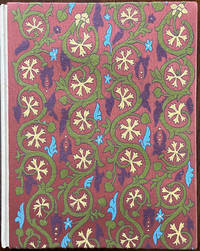
Prague Czechoslovakia: Sumptibus Pragopress 1970. Two vols. Folio. 1st - 12.75 x 16.75 in. 63 1 pp. text in Czech English French German & Russian. Title in purple & black. Faux vellum paper boards gilt lettering on spine; 2nd - 13.5 x 17 in. 222 pp of colour photo facsimile reproducing the entire manuscript. Quarter-vellum over embroidered Bohemian folk pattern cloth covers w/ original mylar protective cover ever-so-slight fraying in a couple fore-edges still NF/NF set preserved in original clamshell slipcase gilt lettering on spine hinges starting at foot of spine. Striking facsimile edition of the sumptuous Romanesque Codex of Vysehrad commissioned as one of four manuscripts produced by the same artists between 1080 and 1085 around the time of the coronation of Vratislav II 1061-1092 first king of Bohemia and includes the lection for the king’s coronation. They all probably originated in the scriptorium at the Monastery of St. Emmeram and this manuscript was declared a National Cultural Monument of the Czech Republic. The extensive cycle of images carefully rendered and detailed draw from the Regensburg School and Ottonian influences with a Christ’s genealogy on four divided pages. Within the 108 folios there are 26 pages depicting the gospels four of the Old Testament and 29 scenes from the life of Christ with large decorated illuminated initials. Originally the property of the Church of Vysehrad many scholars believe it was originally prepared for St. Vitus Cathedral in Prague Castle and Vratislav II had secured his title after negotiations with Holy Roman Emperor Henry IV at the time in conflict with Pope Gregory VII as he continued insisting on the retaining the Slavonic liturgy and wanted to appoint his own bishops. Sumptibus Pragopress, hardcover
Referenz des Buchhändlers : 60625
|
|
|
[Medieval medical manuscript].
Fragments from four leaves from a medical treatise. [France, early 13th century].
Decorated manuscript in Latin, ink on parchment. Four cuttings once re-used to form pastedowns and endleaves for a landscape format volume (measuring 140 by 200 mm). Remains of single column up to 32 lines in a tiny early gothic bookhand. Rubrics in pale red, initials in red or blue with contrasting penwork. Fragments from four leaves from a medical treatise discussing diseases and disorders of the stomach. There are entries here on pleurisy, pain in the stomach, vomiting, and on childbirth, as in the medieval tradition this was often grouped with other stomach disorders. - 17th-century ownership of Michel Bonniel inscribed to one cutting. Some scuffs, small holes and discolouration, otherwise in good condition.
|
|
|
[Medizinische Handschrift].
Manuskript über die Therapie der Gonorrhoe. O. O., ca. 1845.
3 SS. auf Doppelblatt. 8vo. Anleitung zur Therapie der Gonorrhoe durch Injektion einer Lösung aus Silbernitrat und destilliertem Wasser nach der erstmals 1845 publizierten Methode des französischen Mediziners A. Debeney: "Behandlung des Trippers mit Einspritzen von Arg. nitr. nach Debeney [...] Die Injection besteht nach Debeny 16 gr. Aug. n. auf 1 Unze Wasser, das nur einige gr. vermindert oder vermehrt werden kann [...] Diese Injection ist so lange fortzusetzen, bis jedes Entzündungszeichen gewichen, bis der Ausfluß sich vermindert und seine Natur verändert, d. h. seine weiße u. gelbe u. grüne Farbe u. dicke eitrige Beschaffenheit verloren hat [...] Vor wie nach der Einspritzung enthalte man sich so viel als möglich des Genusses von Speisen u. Getränken [...], um das Uriniren möglichst selten zu machen [...] Die Einspritzung verrichte der Arzt dem Kranken selbst. Dieselbe geschieht mit einer Glasspritze nach gewohnlicher Weise, u. wiederhohlt sie zum 2ten male, weil mit der 1ten Einspritzung die in der Harnroehre befindlichen Materien ausgespült werden, und belasse die 2te Einspritzung 1 Minute in der Harnröhre. Nach 1-2 St[un]den hört gewohnlich der Schmerz auf [...] 24 Stunden nach der Einspritzung ist an der Regel nichts mehr zu merken, u. gleichzeitig sämtliche Erscheinungen des Trippers geschwunden [...]".
|
|
|
[Medizinische Handschriften].
Aufzeichnungen der Alfhausener Ärztefamilie Eymann. Göttingen und Alfhausen, 1833-1883.
11 Bände. Deutsche und lateinische Manuskripte auf Papier. Zusammen ca. 2800 SS. Papp- und Halblederbände der Zeit. Teilweise mit Rückenschildchen; Rot- und Gelbschnitt. Die vorliegende Manuskriptsammlung reicht zurück in die Studienzeit des Joseph Eymann (1812 - nach 1872), wahrscheinlich in Göttingen. Das älteste Objekt ist die auf 1833 datierte Abschrift der "Ars obstetricia" eines Dr. Heine. Ungefähr zu dieser Zeit dürfte auch die Abschrift von Friedrich Benjamin Osianders "Lehrbuch der Hebammenkunst" (Göttingen, 1796) entstanden sein: In eigenen Anmerkungen zur Thematik am Ende des Bandes zitiert Joseph Eymann wissenschaftliche Artikel der Jahre 1832-38. Es ist anzunehmen, dass auch die Abschrift des dritten Bandes von August Gottlieb Richters berühmter siebenbändiger "Wundarzneykunst" zu den "Krankheiten der Augen" (Wien, 1790) aus Eymanns Studienzeit stammt. - Spätestens ab 1838 praktizierte Joseph Eymann als Landarzt in Alfhausen bei Osnabrück. In diesem Jahr begann er ein "Liber Testimoniorum medicinalum" mit Fallbeschreibungen seiner Patienten. Die Notizen auf 42 teilweise paginierten Seiten reichen bis in das Jahr 1854. Schon am 1. Januar 1843 legte Eymann ein neues "Diarium medicinale" mit 391 paginierten Seiten an, gefolgt von einem Personen- und Krankheitsregister. Im folgenden Jahr begann Eymann ein weiteres medizinisches Tagebuch. Die Eintragungen enden auf S. 169 am 18. September 1844. Auf SS. 280-282 folgt die Abschrift eines Artikels aus Johann Ludwig Caspers "Wochenschrift für die gesammte Heilkunde" 14 (1845), der die "Neue Behandlung des übermäßigen Monatsflusses" aus Johann Heinrich Kopps "Denkwürdigkeiten" kommentiert. Ein 1841 angelegtes Notizheft mit Einträgen bis 1872 kann in einen wirtschaftlichen und einen poetischen Teil mit Gedicht- und Textabschriften unterteilt werden. - Der zweite Teil der Manuskriptsammlung ist auf den Arzt Ludwig Eymann (1841-91), sehr wahrscheinlich Joseph Eymanns Sohn, zurückzuführen. In seiner Göttinger Studienzeit kopierte Eymann zwei chirurgische Lehrbücher von Wilhelm Baum (1799-1883); eine der Abschriften ist auf den 14. November 1867 datiert. Ludwig Eymann hat die Praxis seines Vaters wohl im Laufe der 1870er Jahre übernommen; ein Patientenregister von Alfhausen, das ihm zugeschrieben werden kann, ist auf 1882 datiert. Am inneren Vorderdeckel dieses Bandes findet sich auch eine Notiz Eymanns zum Tod seiner Frau Auguste Schulte am 7. November 1882 im Alter von 33 Jahren. Auguste Schulte ist auch die undatierte Abschrift einer Ästhetik in 19 Paragraphen gewidmet, die wohl ebenfalls von Ludwig Eymann angefertigt wurde. - Einbände beschabt und bestoßen; ein Band mit gebrochenem Rücken, einer mit teilweise abgelöstem Rückenbezug. Die Manuskripte teilweise minimal angeschmutzt, doch durchgehend in gutem Zustand.
|
|
|
[MEHMET] EMIN [HALID] ONAT, (1908-1961).
[MODERN TURKISH ARCHITECTURE] [Autograph letter signed Emin Onat].
Very Good Turkish, Ottoman (1500-1928) Original autograph handwritten letter by Mehmet Emin Onat. (30x21 cm). In Ottoman script. 2 p. Full. Letterhead of 'Teknik Üniversite Istanbul; Ev: Kadiköy'. It starts as 'Sevgili Lemancigim'. Emin Onat was a Turkish architect and former rector of Istanbul Technical University. Onat was born in Istanbul in 1908. He entered Istanbul Technical University in 1926. Then, he was sent to Zurich Technical University. Onat was one of the architects of Anitkabir, the mausoleum of Mustafa Kemal Atatürk. His architectural style was formed at ETH. Emin Onat learned to experiment, interpret and search for modernism from his teacher Otto R. Salvisberg, a well-known, experienced practicing architect. Despite getting under the Anitkabir's shadow, he has a unique architectural style. Onat's architectural talent blossomed at Zurich Technical University, where one of his fellow students was Otto Rudolf Salvisberg, who later went to become one of the best architects of his time. Onat completed his studies in Zurich and returned to Turkey in 1934. Within a year, he had become an assistant professor in the Department of Architecture at the School of Engineering. He held the post for a couple of years that were marked by strenuous relations with the other members of the faculty, owing to the novel methods of teaching Onat introduced. In 1944 Onat became the first dean of the newly established Faculty of Architecture at the Istanbul Technical University. Onat rose further into the echelons of the architectural world in 1946, when he was given an honorary membership of the Royal Institute of British Architects (RIBA). In 1951 he became the Rector of the Istanbul Technical University, a post he held for two years. The Hannover Technical University awarded him an honorary doctorate in 1956. In 1957 he returned to the university. His return lasted only three years as on 21 October 1960 he and 147 faculty members were ousted from the university. Onat designed several impressive buildings during his career. These include the Istanbul Theatre and Conservatory, Istanbul Palace of Justice (1949), Kavaklidere Cenap, Presidential Secretariat in Cankaya and the General Directorate of Security. Onat had a predilection for local architectural elements. He fused traditional designs into his own designs, striving to attain organic unity. Onat's other designs are the Istanbul Lounges, Uludag Sanatorium, Bursa Governor's Mansion and IBM Headquarters in Istanbul. (Source: Wikipedia). Rare.
|
|
|
[MESSRS I. CAMONDO ET CIE ON BEHALF OF [PROBABLY] MOISE DE CAMONDO, (Ottoman Empire-born French banker, art collector and philanthropist), (1860-1935)].
Autograph letter signed.
Very Good French Original autograph letter signed (ALS) by P.pon "[We hereby declare that Ms. L. Cassinelli occupied our house located in Pera Rue, Hodja Ali No 19. On December 1, 1887, and left him on September 30, 1899. That during all time, he did not pay me the tax... P. pon de la succession de feu le Comte A. de Camondo. [i.e. On behalf of the succession of Count A[braham Salomon] Camondo, (1781-1873)]. Probably it's signed by his advocate of Moise de Camondo. Recipient is not defined. Letter indicates one of Camondo family's houses in Pera, Constantinople. 26,5x21 cm. Completely in French. 14 lines. On a paper watermarked "William Brown & Co., London". William Brown and Co. were located in London in this 'St. Mary Axe, and 40 to 41, Old Broad Street, London, E.C.' address according to Grace's guide to British industrial industry; they worked on 'Lithographic and Letterpress Printers'. 1887 Registered as a Limited Company. Count Moïse de Camondo, (1860-1935), was an Ottoman Empire-born French banker and art collector. He was a member of the prominent Camondo family. As a child, Camondo moved with his family from their home in Constantinople, Ottoman Empire, to Paris around 1869, where he grew up and continued the career of his father, Nissim de Camondo (1830-1889), as a banker. He was born into a Sephardic Jewish family that owned one of the largest banks in the Ottoman Empire, established in France since 1869. Starting in 1911, he completely rebuilt the family's Parisian mansion on the Parc Monceau in order to house his collection of 18th-century French furniture and artwork. Working closely with the architect René Sergent, he created a palatial home conforming to certain 18th-century traditions, even planning the room dimensions to match exactly the objects in his collection. The entryway is inspired by the Petit Trianon of Versailles. The home includes a kosher kitchen with separate sections for meat and dairy. The dining room includes a beautifully-carved green marble fountain in the shape of a shell, with a dolphin spigot for the ritual washing of hands before eating a meal. Some highlights of his collection include a French silver service that had been ordered by Russian Empress Catherine the Great, a set of Buffon porcelain (with exact reproductions of ornithological drawings) from the Sèvres manufacturer, and perhaps the only existing complete set of Gobelin royal tapestry sketches. He married Irène Cahen d'Anvers, daughter of Louis Cahen d'Anvers, in 1891. They separated in August 1897 after her affair with de Camondo's stable master, Count Charles Sampieri, whom she would later marry and divorce. The children, Nissim and Beatrice, remained with de Camondo. The mansion was completed in 1914, but his son did not reside there very long, as he rejoined the French Army to fight in The Great War. It had been de Camondo's great hope that his son, whom he adored, would take over the family empire. Following Nissim's death in 1917, de Camondo closed all banking activities. He largely withdrew from society and devoted himself primarily to his collection and to hosting dinners for a club of gourmets at regular intervals. Camondo died in 1935, and the museum opened the following year. He donated the home to Paris's Decorative Arts society as a museum (Musée Nissim de Camondo) in honor of the loss of his son Nissim in World War I. In addition to the collection, the meticulously-restored service areas, elevator, and woodwork of the mansion are noteworthy. During the German occupation of France during World War II, his daughter Béatrice, his son-of-law Léon Reinach, and their children (Fanny and Bertrand) were deported from France and died in the Auschwitz concentration camp. As a result, the de Camondo family died out.
|
|
|
[Meurer, Noe].
Wie weidmennisch vonn allem Weydwerkh zu reden. Probably Southern Germany, ca. 1590 / later 16th century.
Oblong 4to (222 x 172 mm). 1 blank leaf, 50 unnumbered written pages, 2 blank leaves. German manuscript (dark brown ink) on paper, fine calligraphy by a single scribal hand (titles and headlines in blackletter, text in cursive script). Later limp vellum wrappers, spine reinforced with a fragment of a 15th century vellum manuscript with red and blue rubrication. Stored in a modern custom-made half morocco case. Calligraphically appealing 16th century manuscript on the art and terminology of hunting and falconry, written by a professional scribe for an unidentified sponsor, though likely for a highly placed personage or member of the nobility in South-Western Germany. The manuscript contains contemporary extracts from the end of the third part of Noe Meurer's "Von Forstlicher Oberherrlichkeit und Gerechtigkeit", an important study of hunting first published in Pforzheim by Georg Rab in 1560, and then, in expanded form, in Frankfurt, by Georg Rab & Weigand Han, in 1561. Meurer (born ca. 1525 in Memmingen in Southern Swabia, died in Heidelberg in 1583) was one the first German legal scholars to write in his native tongue rather than in Latin; among his works are treatises on the law of inheritance and of water. In particular, he was the first German author to publish monographs on the subjects of forestry and hunting, not as mere chapters within the larger framework of agriculture, for which reason he was of great importance for the study of forestry in the 16th century. The present extracts comprise the only parts of Meurer's book concerned with the practical, technical aspects of hunting, rather than with its legal foundations. They include sections on hounds, canned and net hunting, the hunting of stags, roes, boars, foxes, rabbits, bears, wolves, ibexes and chamois, as well as a section on how to tell a deer from a roe when viewing the animal from the rear. The final part is dedicated to hunting with falcons and hawks. The entire section on deer ("Die Hürsch zu suchen, wie auch der Hürsch für der Hinndin zue erkennen etc.") is not part of the first edition of Meurer's book, suggesting that the scribe based his work on the second edition of 1561 (leaves LXXXIIII verso to XCVII verso). Yet the order of the individual sections does not follow the published book in all particulars, and the present arrangement would seem to reflect the scribal editor's or the sponsor's private considerations. - The paper stock for this manuscript is from a paper mill in Meurer's native Memmingen (watermark: Gothic letter "P" - or more likely "Q" - with the arms of Memmingen: Briquet III, no. 8750 and p. 468; cf. Briquet I, p. 72; specimens dating from the late 1580s to 1590s). - Very well preserved and legible, untrimmed manuscript from the collection of the Swiss-born German merchant and entrepreneur Hans Dedi (1918-2016), chairman of the "Quelle" mail order concern and the Schickedanz business group, with his bookplate in the marbled solander case and his gilt signet on the spine. Cf. VD 16, M 5017.
|
|
|
[Militaria - Manuscrit]
Ensemble de dix documents manuscrits in-folio qui constitue le dossier de projet du budget pour le service de l’Extraordinaire des guerres pendant l’année 1772 :
-Projet des fonds nécessaires pour le service de l’extraordinaire des guerres pendant l’année 1772 (2 ff).-Mémoire sur la réduction intérieure que l’on peut faire dans les troupes, sur leur état actuel, relativement aux fonds de leur entretien (4 ff.).-Comparaison du nombre de troupes de 1754 à 1771 (2 ff.).-Etat des troupes en 1754 (2 ff.).-Les dépenses à l’Extraordinaire des guerres de l’exercice 1754 (2 ff.).-Officiers généraux employés dans les Provinces en 1754 (2 ff.).-Tableau de l’Etat des bataillons nécessaires à la garde des places du Royaume et des côtes (2 ff.).-Etat des troupes sur le pied, porté dans le projet de fonds de 1772 (2 ff.).-Diverses notes sur des économies possibles (2 ff.).-Etat estimatif des dépenses de l’Extraordinaire des guerres pendant l’année 1772 (du 8 mai 1772, solde et masses pendant les cinq premiers mois de 1772 avec extrapolation à l’année) (2 ff.).
Referenz des Buchhändlers : 5221

|
|
|
[MISTRAL Frédéric - [Maillane 1830 - 1914 ] - Ecrivain provençal] L'AIOLI
L'Aioli - que vai cremant tres fes pèr mes (7, 17, 27) - no 179 du 17 de desembre 1895 - auquel on joint un manuscrit autographe de Frédéric Mistral (quelques lignes sur une page in8) -
Belle réunion d'un exemplaire du journal "L'Aioli" - 4 pages in folio dont la première est illustrée d'une vignette sur bois (8x16 cm) d'Eugène Burnand - et d'un article de quelques lignes autographes rédigé pour paraitre dans les "brêves" de ce journal - pliures centrales sans gravité -
Referenz des Buchhändlers : GF22120
|
|
|
[MISTRAL Frédéric - [Maillane 1830 - 1914 ] - Ecrivain provençal] L'AIOLI
L'Aioli - que vai cremant tres fes pèr mes (7, 17, 27) - no 182 du 17 de janvié 1896 - auquel on joint un manuscrit autographe de Frédéric Mistral (quelques lignes sur une page in8) -
Belle réunion d'un exemplaire du journal "L'Aioli" - 4 pages in folio dont la première est illustrée d'une vignette sur bois (8x16 cm) d'Eugène Burnand - et d'un article de quelques lignes autographes rédigé pour paraitre dans les "brêves" de ce journal - pliures centrales sans gravité -
Referenz des Buchhändlers : GF24661
|
|
|
[MISTRAL Frédéric - [Maillane 1830 - 1914 ] - Ecrivain provençal] L'AIOLI
L'Aioli - que vai cremant tres fes pèr mes (7, 17, 27) - no 184 du 17 de febrié 1896 - auquel on joint un manuscrit autographe de Frédéric Mistral (quelques lignes sur une page in8) -
Belle réunion d'un exemplaire du journal "L'Aioli" - 4 pages in folio dont la première est illustrée d'une vignette sur bois (8x16 cm) d'Eugène Burnand - et d'un article de quelques lignes autographes rédigé pour paraitre dans les "brêves" de ce journal - pliures centrales sans gravité -
Referenz des Buchhändlers : GF24662
|
|
|
[MISTRAL Frédéric - [Maillane 1830 - 1914 ] - Ecrivain provençal] L'AIOLI
L'Aioli - que vai cremant tres fes pèr mes (7, 17, 27) - no 189 du 27 de mars 1896 - auquel on joint un manuscrit autographe de Frédéric Mistral (quelques lignes sur une page in8) -
Belle réunion d'un exemplaire du journal "L'Aioli" - 4 pages in folio dont la première est illustrée d'une vignette sur bois (8x16 cm) d'Eugène Burnand - et d'un article de quelques lignes autographes rédigé pour paraitre dans les "brêves" de ce journal - pliures centrales sans gravité -
Referenz des Buchhändlers : GF24663
|
|
|
[MISTRAL Frédéric - [Maillane 1830 - 1914 ] - Ecrivain provençal] L'AIOLI
L'Aioli - que vai cremant tres fes pèr mes (7, 17, 27) - no 191 du 17 d'abrieu 1896 - auquel on joint un manuscrit autographe de Frédéric Mistral (quelques lignes sur une page in8) -
Belle réunion d'un exemplaire du journal "L'Aioli" - 4 pages in folio dont la première est illustrée d'une vignette sur bois (8x16 cm) d'Eugène Burnand - et d'un article de quelques lignes autographes rédigé pour paraitre dans les "brêves" de ce journal - pliures centrales sans gravité -
Referenz des Buchhändlers : GF24664
|
|
|
[MISTRAL Frédéric - [Maillane 1830 - 1914 ] - Ecrivain provençal] L'AIOLI
L'Aioli - que vai cremant tres fes pèr mes (7, 17, 27) - no 192 du 27 d'abrieu 1896 - auquel on joint un manuscrit autographe de Frédéric Mistral (quelques lignes sur une page in8) -
Belle réunion d'un exemplaire du journal "L'Aioli" - 4 pages in folio dont la première est illustrée d'une vignette sur bois (8x16 cm) d'Eugène Burnand - et d'un article de quelques lignes autographes rédigé pour paraitre dans les "brêves" de ce journal - pliures centrales sans gravité -
Referenz des Buchhändlers : GF24665
|
|
|
[MISTRAL Frédéric - [Maillane 1830 - 1914 ] - Ecrivain provençal] L'AIOLI
L'Aioli - que vai cremant tres fes pèr mes (7, 17, 27) - no 193 du 7 de mai 1896 - auquel on joint un manuscrit autographe de Frédéric Mistral (quelques lignes sur une page in8) -
Belle réunion d'un exemplaire du journal "L'Aioli" - 4 pages in folio dont la première est illustrée d'une vignette sur bois (8x16 cm) d'Eugène Burnand - et d'un article de quelques lignes autographes rédigé pour paraitre dans les "brêves" de ce journal - pliures centrales sans gravité -
Referenz des Buchhändlers : GF24666
|
|
|
[MISTRAL Frédéric - [Maillane 1830 - 1914 ] - Ecrivain provençal] L'AIOLI
L'Aioli - que vai cremant tres fes pèr mes (7, 17, 27) - no 194 du 17 de mai 1896 - auquel on joint un manuscrit autographe de Frédéric Mistral (quelques lignes sur une page in8) -
Belle réunion d'un exemplaire du journal "L'Aioli" - 4 pages in folio dont la première est illustrée d'une vignette sur bois (8x16 cm) d'Eugène Burnand - et d'un article de quelques lignes autographes rédigé pour paraitre dans les "brêves" de ce journal - pliures centrales sans gravité -
Referenz des Buchhändlers : GF24667
|
|
|
[MISTRAL Frédéric - [Maillane 1830 - 1914 ] - Ecrivain provençal] L'AIOLI
L'Aioli - que vai cremant tres fes pèr mes (7, 17, 27) - no 196 du 7 de jun 1896 - auquel on joint un manuscrit autographe de Frédéric Mistral (quelques lignes sur une page in8) -
Belle réunion d'un exemplaire du journal "L'Aioli" - 4 pages in folio dont la première est illustrée d'une vignette sur bois (8x16 cm) d'Eugène Burnand - et d'un article de quelques lignes autographes rédigé pour paraitre dans les "brêves" de ce journal - pliures centrales sans gravité -
Referenz des Buchhändlers : GF24668
|
|
|
[MISTRAL Frédéric - [Maillane 1830 - 1914 ] - Ecrivain provençal] L'AIOLI
L'Aioli - que vai cremant tres fes pèr mes (7, 17, 27) - no 197 du 17 de jun 1896 - auquel on joint un manuscrit autographe de Frédéric Mistral (quelques lignes sur une page in8) -
Belle réunion d'un exemplaire du journal "L'Aioli" - 4 pages in folio dont la première est illustrée d'une vignette sur bois (8x16 cm) d'Eugène Burnand - et d'un article de quelques lignes autographes rédigé pour paraitre dans les "brêves" de ce journal - pliures centrales sans gravité -
Referenz des Buchhändlers : GF24669
|
|
|
[MISTRAL Frédéric - [Maillane 1830 - 1914 ] - Ecrivain provençal] L'AIOLI
L'Aioli - que vai cremant tres fes pèr mes (7, 17, 27) - no 198 du 27 de jun 1896 - auquel on joint un manuscrit autographe de Frédéric Mistral (quelques lignes sur une page in8) -
Belle réunion d'un exemplaire du journal "L'Aioli" - 4 pages in folio dont la première est illustrée d'une vignette sur bois (8x16 cm) d'Eugène Burnand - et d'un article de quelques lignes autographes rédigé pour paraitre dans les "brêves" de ce journal - pliures centrales sans gravité -
Referenz des Buchhändlers : GF24670
|
|
|
[MISTRAL Frédéric - [Maillane 1830 - 1914 ] - Ecrivain provençal] L'AIOLI
L'Aioli - que vai cremant tres fes pèr mes (7, 17, 27) - no 201 du 27 de juliet 1896 - auquel on joint un manuscrit autographe de Frédéric Mistral (quelques lignes sur une page in8) -
Belle réunion d'un exemplaire du journal "L'Aioli" - 4 pages in folio dont la première est illustrée d'une vignette sur bois (8x16 cm) d'Eugène Burnand - et d'un article de quelques lignes autographes rédigé pour paraitre dans les "brêves" de ce journal - pliures centrales sans gravité -
Referenz des Buchhändlers : GF24672
|
|
|
[MISTRAL Frédéric - [Maillane 1830 - 1914 ] - Ecrivain provençal] L'AIOLI
L'Aioli - que vai cremant tres fes pèr mes (7, 17, 27) - no 202 du 7 d'avoust 1896 - auquel on joint un manuscrit autographe de Frédéric Mistral (quelques lignes sur une page in8) -
Belle réunion d'un exemplaire du journal "L'Aioli" - 4 pages in folio dont la première est illustrée d'une vignette sur bois (8x16 cm) d'Eugène Burnand - et d'un article de quelques lignes autographes rédigé pour paraitre dans les "brêves" de ce journal - pliures centrales sans gravité -
Referenz des Buchhändlers : GF24673
|
|
|
[MISTRAL Frédéric - [Maillane 1830 - 1914 ] - Ecrivain provençal] L'AIOLI
L'Aioli - que vai cremant tres fes pèr mes (7, 17, 27) - no 204 du 27 d'avoust 1896 - auquel on joint un manuscrit autographe de Frédéric Mistral (quelques lignes sur une page in8) -
Belle réunion d'un exemplaire du journal "L'Aioli" - 4 pages in folio dont la première est illustrée d'une vignette sur bois (8x16 cm) d'Eugène Burnand - et d'un article de quelques lignes autographes rédigé pour paraitre dans les "brêves" de ce journal - pliures centrales sans gravité -
Referenz des Buchhändlers : GF24675
|
|
|
[MISTRAL Frédéric - [Maillane 1830 - 1914 ] - Ecrivain provençal] L'AIOLI
L'Aioli - que vai cremant tres fes pèr mes (7, 17, 27) - no 205 du 7 de setembre 1896 - auquel on joint un manuscrit autographe de Frédéric Mistral (quelques lignes sur une page in8) -
Belle réunion d'un exemplaire du journal "L'Aioli" - 4 pages in folio dont la première est illustrée d'une vignette sur bois (8x16 cm) d'Eugène Burnand - et d'un article de quelques lignes autographes rédigé pour paraitre dans les "brêves" de ce journal - pliures centrales sans gravité -
Referenz des Buchhändlers : GF24676
|
|
|
[MISTRAL Frédéric - [Maillane 1830 - 1914 ] - Ecrivain provençal] L'AIOLI
L'Aioli - que vai cremant tres fes pèr mes (7, 17, 27) - no 206 du 17 de setembre 1896 - auquel on joint un manuscrit autographe de Frédéric Mistral (quelques lignes sur une page in8) -
Belle réunion d'un exemplaire du journal "L'Aioli" - 4 pages in folio dont la première est illustrée d'une vignette sur bois (8x16 cm) d'Eugène Burnand - et d'un article de quelques lignes autographes rédigé pour paraitre dans les "brêves" de ce journal - pliures centrales sans gravité -
Referenz des Buchhändlers : GF24677
|
|
|
[MISTRAL Frédéric - [Maillane 1830 - 1914 ] - Ecrivain provençal] L'AIOLI
L'Aioli - que vai cremant tres fes pèr mes (7, 17, 27) - no 207 du 27 de setembre 1896 - auquel on joint un manuscrit autographe de Frédéric Mistral (quelques lignes sur une page in8) -
Belle réunion d'un exemplaire du journal "L'Aioli" - 4 pages in folio dont la première est illustrée d'une vignette sur bois (8x16 cm) d'Eugène Burnand - et d'un article de quelques lignes autographes rédigé pour paraitre dans les "brêves" de ce journal - pliures centrales sans gravité -
Referenz des Buchhändlers : GF24678
|
|
|
[MISTRAL Frédéric - [Maillane 1830 - 1914 ] - Ecrivain provençal] L'AIOLI
L'Aioli - que vai cremant tres fes pèr mes (7, 17, 27) - no 208 du 7 d'outobre 1896 - auquel on joint un manuscrit autographe de Frédéric Mistral (quelques lignes sur une page in8) -
Belle réunion d'un exemplaire du journal "L'Aioli" - 4 pages in folio dont la première est illustrée d'une vignette sur bois (8x16 cm) d'Eugène Burnand - et d'un article de quelques lignes autographes rédigé pour paraitre dans les "brêves" de ce journal - pliures centrales sans gravité -
Referenz des Buchhändlers : GF24679
|
|
|
[MISTRAL Frédéric - [Maillane 1830 - 1914 ] - Ecrivain provençal] L'AIOLI
L'Aioli - que vai cremant tres fes pèr mes (7, 17, 27) - no 209 du 17 d'outobre 1896 - auquel on joint un manuscrit autographe de Frédéric Mistral (quelques lignes sur une page in8) -
Belle réunion d'un exemplaire du journal "L'Aioli" - 4 pages in folio dont la première est illustrée d'une vignette sur bois (8x16 cm) d'Eugène Burnand - et d'un article de quelques lignes autographes rédigé pour paraitre dans les "brêves" de ce journal - pliures centrales sans gravité -
Referenz des Buchhändlers : GF24680
|
|
|
[MISTRAL Frédéric - [Maillane 1830 - 1914 ] - Ecrivain provençal] L'AIOLI
L'Aioli - que vai cremant tres fes pèr mes (7, 17, 27) - no 210 du 27 d'outobre 1896 - auquel on joint un manuscrit autographe de Frédéric Mistral (quelques lignes sur une page in8) -
Belle réunion d'un exemplaire du journal "L'Aioli" - 4 pages in folio dont la première est illustrée d'une vignette sur bois (8x16 cm) d'Eugène Burnand - et d'un article de quelques lignes autographes rédigé pour paraitre dans les "brêves" de ce journal - pliures centrales sans gravité -
Referenz des Buchhändlers : GF24681
|
|
|
[MISTRAL Frédéric - [Maillane 1830 - 1914 ] - Ecrivain provençal] L'AIOLI
L'Aioli - que vai cremant tres fes pèr mes (7, 17, 27) - no 212 du 17 de nouvembre 1896 - auquel on joint un manuscrit autographe de Frédéric Mistral (quelques lignes sur une page in8) -
Belle réunion d'un exemplaire du journal "L'Aioli" - 4 pages in folio dont la première est illustrée d'une vignette sur bois (8x16 cm) d'Eugène Burnand - et d'un article de quelques lignes autographes rédigé pour paraitre dans les "brêves" de ce journal - pliures centrales sans gravité -
Referenz des Buchhändlers : GF24682
|
|
|
[MISTRAL Frédéric - [Maillane 1830 - 1914 ] - Ecrivain provençal] L'AIOLI
L'Aioli - que vai cremant tres fes pèr mes (7, 17, 27) - no 215 du 17 de desembre 1896 - auquel on joint un manuscrit autographe de Frédéric Mistral (quelques lignes sur une page in8) -
Belle réunion d'un exemplaire du journal "L'Aioli" - 4 pages in folio dont la première est illustrée d'une vignette sur bois (8x16 cm) d'Eugène Burnand - et d'un article de quelques lignes autographes rédigé pour paraitre dans les "brêves" de ce journal - pliures centrales sans gravité -
Referenz des Buchhändlers : GF24685
|
|
|
[MISTRAL Frédéric - [Maillane 1830 - 1914 ] - Ecrivain provençal] L'AIOLI
L'Aioli - que vai cremant tres fes pèr mes (7, 17, 27) - no 216 du 27 de desembre 1896 - auquel on joint un manuscrit autographe de Frédéric Mistral (quelques lignes sur une page in8) -
Belle réunion d'un exemplaire du journal "L'Aioli" - 4 pages in folio dont la première est illustrée d'une vignette sur bois (8x16 cm) d'Eugène Burnand - et d'un article de quelques lignes autographes rédigé pour paraitre dans les "brêves" de ce journal - pliures centrales sans gravité -
Referenz des Buchhändlers : GF24686
|
|
|
[MISTRAL Frédéric - [Maillane 1830 - 1914 ] - Ecrivain provençal] L'AIOLI
L'Aioli - que vai cremant tres fes pèr mes (7, 17, 27) - Taulo di matèri countengudo dins l'Aioli (1891 - 1892 - 1893 - 1894 - 1895 - 1896 - 1897 ) - avec un manuscrit autographe de 23 lignes sur une page in-8 de Frédéric Mistral intitulé: "Lou cadarau de Marsiho" -
Belle réunion de la très rare table des matières du journal "L'Aioli" - 6 pages in folio dont la première est illustrée d'une vignette sur bois (8x16 cm) d'Eugène Burnand - et d'un article de quelques lignes autographes rédigé pour paraitre dans les "brêves" de ce journal - pliures centrales sans gravité -
Referenz des Buchhändlers : GF24687
|
|
|
[MISTRAL Frédéric - [Maillane 1830 - 1914 ] - Ecrivain provençal] L'AIOLI
L'Aioli - que vai cremant tres fes pèr mes (7, 17, 27) - no 217 du 7 de janvié 1897 - auquel on joint un manuscrit autographe de Frédéric Mistral (quelques lignes sur une page in8) -
Belle réunion d'un exemplaire du journal "L'Aioli" - 4 pages in folio dont la première est illustrée d'une vignette sur bois (8x16 cm) d'Eugène Burnand - et d'un article de quelques lignes autographes rédigé pour paraitre dans les "brêves" de ce journal - pliures centrales sans gravité -
Referenz des Buchhändlers : GF24688
|
|
|
[MISTRAL Frédéric - [Maillane 1830 - 1914 ] - Ecrivain provençal] L'AIOLI
L'Aioli - que vai cremant tres fes pèr mes (7, 17, 27) - no 220 du 7 de febrié 1897 - auquel on joint un manuscrit autographe de Frédéric Mistral (quelques lignes sur une page in8) -
Belle réunion d'un exemplaire du journal "L'Aioli" - 4 pages in folio dont la première est illustrée d'une vignette sur bois (8x16 cm) d'Eugène Burnand - et d'un article de quelques lignes autographes rédigé pour paraitre dans les "brêves" de ce journal - pliures centrales sans gravité -
Referenz des Buchhändlers : GF24689
|
|
|
[MISTRAL Frédéric - [Maillane 1830 - 1914 ] - Ecrivain provençal] L'AIOLI
L'Aioli - que vai cremant tres fes pèr mes (7, 17, 27) - no 221 du 17 de febrié 1897 - auquel on joint un manuscrit autographe de Frédéric Mistral (quelques lignes sur une page in8) -
Belle réunion d'un exemplaire du journal "L'Aioli" - 4 pages in folio dont la première est illustrée d'une vignette sur bois (8x16 cm) d'Eugène Burnand - et d'un article de quelques lignes autographes rédigé pour paraitre dans les "brêves" de ce journal - pliures centrales sans gravité -
Referenz des Buchhändlers : GF24690
|
|
|

 Per e-mail erhalten
 Als pdf-Dokument herunterladen
 RSS feed
 Permanenter link


