|
|
|
[MANUSCRIT]. JENNEPIN (Alfred).
Archives de A. Jennepin à Cousolre (Nord). Faits historiques importants, accomplis dans le Nord et surtout dans l'arrondissement d'Avesnes
Cousolre, s.d. (vers 1900) 82 pièces en un dossier in-folio, en feuilles, dans 13 registres cartonnés aux titres imprimés, le tout dans chemise demi-toile noire modeste à rubans, étiquette de titre au dos.
Riferimento per il libraio : 228956

|
|
|
[MANUSCRIT]. JENNEPIN (Alfred).
Une erreur historique à rectifier. Fausse identification du général Charbonnier, commandant en chef de l'Armée des Ardennes en 1794, avec le général Deverchin dit Gayette ou Gaillette
S.l., s.d. (vers 1900) in-8, [12] ff. n. ch. sur papier réglé, écriture moyenne et très lisible, nombreuses ratures et biffures, en feuilles sous chemise de carton souple de remploi (une couverture imprimée du tome II de l'Histoire de la ville de Maubeuge, du même Jennepin).
Riferimento per il libraio : 228936
|
|
|
[MANUSCRIT]. JUNCA.
Agence générale des armes, poudres et exploitation des mines. Le préposé de l'agence-générale des armes et poudres,. au citoyen [Nicolas-Marie] Songis, général d'artillerie à Lille.
Bruxelles, 3 Germinal an III (23 mars 1795), in-4, écrit sur deux pages, avec belle vignette en-tête, en feuille.
Riferimento per il libraio : 240924

|
|
|
[MANUSCRIT]. LIEBERT (Jean-Jacques).
État-major général. Liberté. - Égalité. [Ordre de mission].
Réunion-sur-Oise [= Guise], 21 Germinal an II (10 avril 1794) in-4, écrit au recto, avec vignette en-tête, en feuille, avec cachet de cire rouge.
Riferimento per il libraio : 240925

|
|
|
[MANUSCRIT]. LINGUET (Simon-Nicolas-Henri).
Lettre de M. Linguet, avocat au Parlement. à M. le comte de Vergennes, ministre des affaires étrangères, du 11 février 1777
S.l., s.d. petit in-4, [44] ff. n. ch., couverts d'une écriture moyenne, régulière et très lisible (environ 30 lignes par page), avec une importante marge gauche sur chaque page, en feuilles, cousu. Des mouillures claires "in fine".
Riferimento per il libraio : 240599
|
|
|
[MANUSCRIT]. MOCQUARD (Jean-François)
2 L.A.S. à Mademoiselle Colombier.
(Paris), 1864 in-16, sur double feuillet.
Riferimento per il libraio : 157101
|
|
|
[MANUSCRIT]. OSTEN (Pierre-Jacques).
Armée [du Nord]. Le général Osten au citoyen Manville,. commandant la 164me 1/2 brigade.
Bréda, 20 Messidor an III (8 juillet 1795), in-folio, avec belle vignette en-tête, en feuille, cachet de cire rouge.
Riferimento per il libraio : 240912

|
|
|
[MANUSCRIT]. PILLE (Louis-Antoine).
16me division militaire. - Départements de la Lys, du Nord, du Pas-de-Calais. L. A. Pille, général divisionnaire commandant en chef la 16e division militaire. au ministre de la guerre
Lille, 5 Messidor an IX (24 juin 1801) in-folio, écrit au recto, en feuille.
Riferimento per il libraio : 240205

|
|
|
[MANUSCRIT]. PÉRIÈS (Jacques).
Liberté. - La probité et la justice sont à l'ordre du jour. - Égalité. Le citoyen Périès, représentant du peuple. à ses collègues composant le comité des travaux publics
Lille, 13 Floréal an III (2 mai 1795) in-4, [4] pp. n. ch., couvertes d'une écriture moyennement lisible, avec une belle vignette en-tête gravée, en feuille.
Riferimento per il libraio : 240193

|
|
|
[MANUSCRIT]. RICHARD (Joseph-Etienne).
Armée du Nord. - Liberté. - Égalité. Le Représentant du peuple Richard envoyé près l'Armée du Nord à son collègue Talot.
La Haye, 20 vendémiaire an III [= IV] (12 octobre 1795), in-folio, [2] pp. n. ch., en feuille.
Riferimento per il libraio : 240188

|
|
|
[MANUSCRIT]. ROGIER.
Le Commissaire du Directoire exécutif près l'administration du département de la Meuse inférieure. au citoyen [Jean-Nicolas] Bassenge, commissaire du directoire exécutif près le département de l'Ourthe
Maastricht, 2 Messidor an IV (20 juin 1796) in-4, écrit sur deux pages, avec belle vignette en-tête, en feuille.
Riferimento per il libraio : 240915

|
|
|
[MANUSCRIT]. ROOT (John William).
Les Indes occidentales britanniques (Antilles) et l'industrie sucrière.
S.l., s.d. (vers 1900) in-folio, titre, 8 ff. anopisthographes, puis pp. 9-20, puis ff. anopisthographes 21-58, puis pp. 59-71, puis ff. anopisthographes 72-77, puis pp. 78-84, puis ff. anopisthographes 85-111, un f. n. ch. entre le f. 106 et le 107, le tout couvert d'une écriture fine et lisible, avec ratures, biffures et corrections (environ 25 lignes par page), sur papier réglé, en feuilles.
Riferimento per il libraio : 240032
|
|
|
[MANUSCRIT]. SONGIS DES COURBONS (Nicolas-François).
Armée du Nord. Le Général de division Songis, commandant le département de l'Escaut.
Gand, 18 Frimaire an IV (9 décembre 1795) in-folio, écrit au recto. en feuille.
Riferimento per il libraio : 240231

|
|
|
[MANUSCRIT]. SPIETZ (Jean-Charles).
[Correspondance active].
Strasbourg ou Montbéliard, 1811 - 1813 39 pièces in-4 ou in-folio, en feuilles.
Riferimento per il libraio : 244701
|
|
|
[MANUSCRIT]:
Mémoires secrets.
1742-1752. 9 volumes in-4, plein veau brun moucheté, dos à nerfs ornés de filets et fleurons dorés, pièces de titre en maroquin bordeaux et de tomaison en maroquin beige, tranches rouges.
Riferimento per il libraio : 20418
|
|
|
[MANUSCRITS - BELGIQUE].
Miniatures médiévales de la Librairie de Bourgogne au Cabinet des Manuscrits de la Bibliothèque de Belgique.
Genève, Ed. Des Deux Mondes, 1959. In-folio de 215 pages, très nombreuses illustrations en couleurs. Provenance: Bibliothèque de l'abbé Bernard Merlette. Toile rouge d'éditeur, sans la jaquette, parfait état.
Riferimento per il libraio : 20749
|
|
|
[MANUSCRITS - CHARTRES] DELAPORTE (Y.).
Les Manuscrits enluminés de la Bibliothèque de Chartres.
Chartres, Sté Archéologique, 1929. In-8, xii + 190pp., 24 planches hors-texte en héliotype, illustrations en noir, annotations manuscrites. Provenance: Bibliothèque de l'abbé Bernard Merlette. Broché. Bon état.
Riferimento per il libraio : 20775
|
|
|
[MANUSCRITS - HONGRIE].
Bibliotheca Corviniana. La bibliothèque du roi Mathias Corvin de Hongrie.
Budapest, Helikon, 1967. In-folio de 341 pages, nombreuses illustrations en couleurs. Provenance: Bibliothèque de l'abbé Bernard Merlette. Toile beige d'éditeur, sans la jaquette, parfait état.
Riferimento per il libraio : 20756
|
|
|
[MANUSCRITS - LIMOUSIN] GABORIT - CHOPIN (D.).
La Décoration des manuscrits à Saint-Martial de Limoges et en Limousin.
Paris et Genève, Droz, 1969. In-8, 229 pp., 127 planches hors-texte en noir, annotations manuscrites. Provenance: Bibliothèque de l'abbé Bernard Merlette. Broché. Bon état.
Riferimento per il libraio : 20776
|
|
|
[MANUSCRITS ] PORCHER (Jean)..
L'Enluminure française.
Arts et Métiers Graphiques, 1959. In-folio de 271 pages, 180 illustrations dont 90 planches contrecollées en couleurs. Provenance: Bibliothèque de l'abbé Bernard Merlette. Toile beige imprimée d'éditeur, sans la jaquette, étui, parfait état.
Riferimento per il libraio : 20751
|
|
|
[MANUSCRITS A PEINTURE] MUSÉE CONDÉ
Les plus beaux manuscrits à Peinture du Musée Condé,
Paris, Musée Condé, 1956, 16 pp. 15,5 X 21,1 cm, couv. ill. la peinture (tiré à part) reproduite sur la couv. se trouve dans les Très Riches Heures du duc de Berry.
Riferimento per il libraio : 3689
|
|
|
[MANUSCRITS DE LA MER MORTE] DUPONT-SOMMER (A.).
Les écrits Esséniens découverts près de la Mer Morte.
Ed. Payot, 1960. In-8 br. Coll. " Bibliothèque historique ". Deuxième édition revue et augmentée. Édition en partie originale, n.c.
Riferimento per il libraio : 14154
|
|
|
[MANUSCRITS DE LA MER MORTE] SCHWARTZ-NARDI (S.)
Les manuscrits de la mer Morte.
Jérusalem. " Jérusalem Post Press ". In-12 br. à l'italienne. Textes, photos. E.O.
Riferimento per il libraio : L14602
|
|
|
[Manuscrits à Peintures].-
Bibliothèque Nationale. Les MANUSCRITS à PEINTURE en France du XIIIe au XVIe siècle. Préface d'André Malraux.
P., 1955, in 8° broché, XIX-190 pages suivies de 40 planches hors-texte ; quelques piqûres ; couvetruer illustrée en couleurs.
Riferimento per il libraio : 48863
|
|
|
[MANUSCRITS]
"Chansons et pièces de vers de toutes sortes"
Fin XVIIe - XVIIIe s. Liasse d'environ 50 pièces, certaines de plusieurs pp.
Riferimento per il libraio : 15982
|
|
|
[MANUSCRITS]
Catalogue des manuscrits de la bibliothèque de la ville de Chartres.
Chartres, Imprimerie de Garnier, 1840 in-8, XII-212 pp., 653 numéros décrits, cartonnage Bradel de papier peigne, pièce de titre noire, tranches mouchetées (reliure de l'époque). Coins et charnières frottés, coiffes rognées.
Riferimento per il libraio : 202819
|
|
|
[MANUSCRITS] - DEMBOUR -
Exercices de LECTURE pour familiariser les enfants avec LES MANUSCRITS.
A Nancy, Chez Thomas, libraire, vers 1900 ; grand in-12, 48 pp., broché. Qlq taches en marges.
Riferimento per il libraio : 200919686
|
|
|
[MANUSCRITS] DELISLE (Léopold).
Fac-simile de Livres copiés et enluminés pour le Roi Charles V. Souvenir de la journée du 8 mars 1903 offert à ses amis par Léopold Delisle.
Sans nom ni lieu, 1903. In-folio, 20 pages, 14 planches. Bon état intérieur. Provenance: Bibliothèque de l'abbé Bernard Merlette. En feuilles dans une couverture imprimée crème (salie).
Riferimento per il libraio : 20784
|
|
|
[MANUSCRITS] HAMEL (Christopher de).
Une Histoire des Manuscrits enluminés.
Londres, Phaidon, 1995. In-folio de 272 pages, nombreuses illustrations en couleurs. Provenance: Bibliothèque de l'abbé Bernard Merlette. Toile noire d'éditeur, sans la jaquette, bon état.
Riferimento per il libraio : 20762
|
|
|
[MANUSCRITS].
Catalogue de Livres rares et de manuscrits précieux... De feu le Marquis de M...
Paris, Schlesinger, 1871. In-8 de 736 pages. Provenance: Bibliothèque de l'abbé Bernard Merlette (annoté de sa main). Broché, bon état.
Riferimento per il libraio : 20718
|
|
|
[MANUSCRITS].
Catalogue général des Manuscrits des Bibliothèques Publiques des départements;
Paris, Imprimerie Nationale puis Impériale, 1849, 1855, 1861, 1872. Quatre fort volumes in-4. Certaines pages roussies, nombreuses annotations de l'abbé Merlette. Parfait état. Provenance: Bibliothèque de l'abbé Bernard Merlette. Cartonnage crème d'éditeur (accidents au papier de couverture mais corps d'ouvrage en bon état).
Riferimento per il libraio : 20773

|
|
|
[MANUSCRITS].
Catalogue général des Manuscrits des Bibliothèques Publiques des départements.
Paris, Imprimerie Nationale, 1849. Un volume in-4, 904 pages, 4 gravures en bistre hors-texte, annotations manuscrites de labbé Merlette. Provenance: Bibliothèque de l'abbé Bernard Merlette. Demi-veau fauve, dos à nerfs, coiffes absentes, mors fendus mais corps d'ouvrage en bon état.
Riferimento per il libraio : 20798
|
|
|
[MANUSCRITS].
Chefs-d'Oeuvre de l'enluminure. Les plus beaux manuscrits enluminés du monde 400 à 1600.
Taschen, 2001. In-folio de 504 pages, très nombreuses illustrations en couleurs. Provenance: Bibliothèque de l'abbé Bernard Merlette. Cartonnage vert d'éditeur, sans la jacquette, parfait état.
Riferimento per il libraio : 20742
|
|
|
[MANUSCRITS].
Richesses du Patrimoine écrit.
Périgueux, Archives de la Dordogne, 1992 petit in-4, 59 pp., broché
Riferimento per il libraio : 1646
|
|
|
[Manuscrits]. SEGUR (Vicomte de) Colonel des Chasseurs du Hainaut (et) SEGUR (Comte de) Chef d’escadron du même régiment.
6 pièces signées (demandes de congés) entre le 24 mai 1789 et le 8 juin 1790.
Riferimento per il libraio : 100602
|
|
|
[Manuskripte]. - Sotheby?s
Sotheby's. Catalogue of Western Illuminated Manuscripts the Property of The John Carter Brown Library, Providence, Rhode Island and comprising the bequests of John Nicholas Brown and Louisa Dexter Sharpe Metcalf including The Ottobeuren Gradual and Sacramentary, circa 1164 and The so-called Psalter of the Prince d'Anyou, not later than 1537 fromthe collection of Horace Walpole.
London, Sotheby Parke Bernet & Co., 1981. 4°. Mit zahlr. tlw. ganzs. bzw. farb. Abbildungen. 119 S., 2 Bll., OPpbd.
Riferimento per il libraio : 46711
|
|
|
[MARAN René] DAVID Robert
Portrait photographique dédicacé de René Maran à son bureau
- s.l. (Paris) s.d. (ca 1940), 16,8x12,1cm, une photographie contrecollée dans une carte pochette à deux volets. - Photographic portrait of René Maran in his office s.l(Paris) s.d(ca 1940), 16.8 x 12.1 cm, one photograph pasted in a two-sided card wallet. Black and white photographic portrait of René Maran, contemporary silver print on gloss paper. Signature of the photographer Robert Davis (Paris) printed on the bottom right of the photograph. The photograph is fixed with two dots of glue in a two-sided card wallet and recovered in glassine protection paper. It is enriched with a signed handwritten presentation: "A M. Henri Devaux. Bien cordialement. René Maran." "To Mr Henri Devaux. Best regards. René Maran." Photographs of the very discreet Goncourt Prize are rare and sought after. [FRENCH VERSION FOLLOWS] Portrait photographique en noir et blanc de René Maran, tirage argentique d'époque sur papier glacé. Signature imprimée du photographe Robert Davis (Paris) en bas à droite du cliché. La photographie est fixée à l'aide de deux points de colle dans une carte pochette à deux volets et recouverte d'un papier cristal de protection. Elle est enrichie d'un envoi autographe signé : "A M. Henri Devaux. Bien cordialement. René Maran." Les photographies du très discret prix Goncourt sont rares et recherchées.

|
|
|
[Maria Beatrice d'Este, Herzogin von Massa und Carrara (1750-1829)].
Sentimenti In occasion della Festa onomastica di dua Altezza Reale l'Archiduchessa Maria Beatrice Duchessa di Massa e Carrara Principessa d'Este. Empfindungen bey dem höchsten Namensfest Ihrer Königlichen Hoheit der Frau Erzherzogin Maria Beatrix regierenden Herzogin von Massa und Carrara gebohrnen Prinzessin von Este. O. O., um 1780.
Deutsche und italienische Handschrift (Tinte auf Papier). (5) SS. auf 4 Bll. 2 Spalten, 16 Zeilen (links italienischer, rechts deutscher Text); das Titelbatt ansprechend kalligraphiert. Wasserzeichen "JWhatman". Grüner Seidenband über Pappe; die goldgepr. Deckelbordüre oxydiert. Dreiseitiger Goldschnitt. Gr.-4to (209:252 mm) Kalligraphisch ansprechend gestaltetes, zweisprachig italienisch-deutsches Festgedicht zum Namenstag der Maria Beatrice d'Este, seit 1771 Ehefrau des Erzherzogs Ferdinand Karl von Österreich (1754-1806) und Begründerin der Linie Österreich-Este. - Etwas gebräunt; die Vorsatzblätter leicht stockfleckig. Insgesamt von schöner Erhaltung; der grüne Seideneinband kaum fleckig. Vgl. das Exemplar der ÖNB (aus der ehem. Modena-Bibliothek), beschrieben in: Alfred Noe, Verzeichnis der italienischsprachigen Handschriften in der Österreichischen Nationalbibliothek, II.1B, Cod. Ser. n. 2091 (series nova II, 168).

|
|
|
[Maria Langegg, Lower Austria].
Fidelis Boyaria ob acceptam a Santo Ruperto Christi fidem eidem magno Apostolo suo honorifice gratias agit. Maria Langegg im Dunkelsteinerwald, Lower Austria, 27. III. 1746.
4to (180 x 230 mm). Latin manuscript on paper. (2), 12, (2) pp. The text on each page is written inside a carefully embroidered rainbow composed of concentric circles in multicoloured thread. Sewn binding. Golden decorated paper wrappers with a floral design on Augsburg brocade paper. This beautifully decorated Latin manuscript presents a short play, which dramatises the gratitude of Bavaria towards St. Rupert of Salzburg (ca. 660-710 CE) for his work as an apostolic missionary to the area. The titles translates as "Faithful Bavaria gives honoured thanks to the great Apostle St. Rupert for the faith in Christ she received from him". The play was composed in honour of Father Rupert, Prior of the Servite Monastery and Church Mariae Geburt at Maria Langegg between Melk and Krems, Lower Austria, as he celebrated his name's day (27th March) in 1746. - The play's four characters ("Genius Boyariae" - the Spirit of Bavaria; "Pietas" - Piety; "Virtus" - Virtue; "Genius Conventus Langeggensis" - the Spirit of the Langegg Monastery) are accompanied by a chorus. In rhythmic lines of uneven length, organised as rhyming couplets, the characters recreate Bavaria's internal dialogue with the personified Christian values of piety and virtue. In form and poetic conceit, the piece can thus be placed in the genre of baroque meditation literature ("sacrae meditationes"), which were particularly popular across the Catholic world in the mid-18th century. Accordingly, praise of St. Rupert (and thus also of his namesake Father Rupert of Maria Langegg) is never far from the audience's mind: "Tuam miror virtutem, Ruperte / Cui similem haud vidi certe. / Ast! Quid dabo viro isti, / qui dedit mihi fidem Christi?" ("I admire your virtue, Rupert; / I have hardly ever seen anything like it, for sure. / Oh! What shall I give this man, / who has given me my faith in Christ?"). - The front cover has two small but noticeable stains with small holes which have leaked through to all but the final page. These marks do not affect the text or embroidery. The back cover has a series of light green marks causing no further damage. The pages show light foxing and browning throughout, with very occasional defects on the lower right-hand side of folios, as the result of page-turning. Altogether a unique and well-preserved object with dainty decoration, of interest for the history of 18th c. monastic life and the figure of St. Rupert of Salzburg in the baroque period.
|
|
|
[Marie Claire Pauwels] GUTH Paul - (Ossun 1910 - Ville d'Avray 1997) - Ecrivain français
Manuscrit autographe intitulé: "Mon Chéri, par Marie Claire Pauwels (Flammarion)" -
2 pages in4 - scotch et traces de scotch en marge - râtures et corrections - bon état -
Riferimento per il libraio : GF27057
|
|
|
[MARINE] COLLECTIF
UNE CARTE A EN-TÊTE ILLUSTRÉE DE L'AVISO ALDÉBARAN
1931 une Carte, avec en-tête imprimé en lettres dorées gauffrées "AVISO ALDÉBARAN" et le drapeau français bleu, blanc, rouge en partie gauche, carte datée du 1er Octobre 1931, format : 9,2 x 16,7 cm, carte manuscrite à l'encre bleue avec la signature du Commandant MAISTRE [MAISTRE Vincent Jean Joseph Marie, capitaine de frégate, du port de Toulon. Nommé à ce commandement par un décret du 10 octobre 1930 (J.O. 11 oct. 1930, p. 11.596). Commandement pris à Fort-de-France (Martinique). Station de lAtlantique (Annuaire de la Marine 1931, p. 674)] + la signature de l'officier en second : JAUBERT [Capitaine de Frégate François JAUBERT : entré à l'Ecole Navale en octobre 1922. Enseigne de vaisseau de 2ème classe du 1er octobre 1924, il est affecté le 21 octobre 1925 sur le croiseur cuirassé Jules Michelet de la Division Navale d'Extrème Orient, puis sur la connonière fluviale Doudart de Lagrée, le 14 septembre 1926. Il passe son brevet d'officier fusilier le 15 décembre 1928 puis est affecté successivement comme chef du corps de débarquement à bord du croiseur Mulhouse le 21 janvier 1929, officier en second de l'aviso Aldébaran le 13 janvier 1931 (Pacifique et Indochine)] + 2 SIGNATURES PORTUGUAISES INCONNUES,
Riferimento per il libraio : 25628
|
|
|
[Marine] De CAMILLY chevalier - Lieutenant général des Armées navales et commandant la Marine en ce port (Brest)
Ordre - : "...il est ordonné au Sieur Chevalier DESROCHES, enseigne de vaisseau, de se rendre à Nantes pour y prendre le Commandement de la Corvette La Marianne de Québec, et d'appareiller le plus tôt qu'il sera possible pour la conduire jusqu'à Brest..."
Manuscrit sur papier (22 x 16,5 cm) avec cachet de cire rouge signé, situé et daté : "à Brest le 25 aout 1745" -
Riferimento per il libraio : GF15377
|
|
|
[MARTENS, Martin].
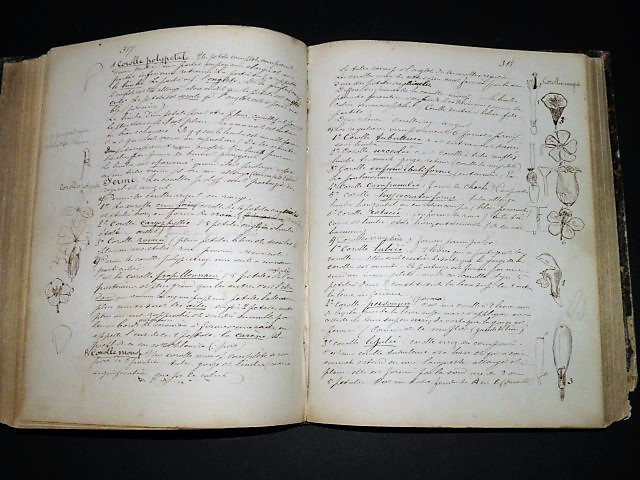
Cours de botanique. Important Manuscrit original illustré.
Louvain (Belgique), Manuscrit, pièce unique, 1866. 19x23cm. Reliure de l’époque en demi-veau havane, dos à 4 nerfs guillochés, pièce de titre en basane fauve, plats de papier marbré. 507 pages paginées. Manuscrit totalement inédit, qui ne semble pas avoir fait l’objet d’une publication. In fine, sont inscrits un lieu et une date : Louvain, le 3 juillet 1866 (le dernier chiffre est cependant raturé). Le cahier compte 507 pages paginées, abondamment illustrées de schémas et croquis marginaux. Quelques ajouts et annotations (sans doute postérieurs) au crayon, également en marge. Le nom de l’auteur, « Martens », figure sur la pièce de titre. Natif de Maastricht en 1797, étudiant brillant de l’université de Liège, Martin Martens excelle à la fois en médecine et en sciences (physique et mathématiques) : il obtient un doctorat dans chaque discipline en 1821 et remporte les concours organisés par les deux facultés, qui publient ses travaux. C’est à Paris qu’il complète ensuite sa formation, aux côtés des savants les plus prestigieux du temps, tels que Dupuytren, Lamarck, Laennec, Broussais, Gay-Lussac… Puis sa carrière se partage entre la pratique de la médecine et les recherches scientifiques, domaines dans lesquels il glane de nombreuses récompenses. Professeur de pharmacologie et de chimie pharmaceutique dans sa ville natale en 1825, il occupe la chaire de chimie et de botanique à l’Université catholique de Louvain dix ans plus tard. Membre de l’Académie royale des Sciences et Belles-Lettres de Bruxelles en 1835, il siège également à l’Académie de Médecine dès la création de celle-ci, en 1841, et participe à la rédaction de la pharmacopée belge. Cette intense activité scientifique, jalonnée de succès, ne l’empêche nullement d’entretenir une véritable passion pour la botanique : de la confection d’un herbier reconnu comme l’un des plus remarquables de Belgique à la direction du Jardin botanique de Louvain (de 1837 à 1848), en passant par le cours gratuit qu’il ouvrit à Maastricht et plusieurs mémoires distingués, Martin Mertens n’eut de cesse d’enseigner et de faire progresser ce domaine. Affaibli par la maladie, il meurt littéralement à la tâche le 8 février 1863. En l’absence de toute trace d’édition de ce cours, malgré nos recherches, l’on se bornera à formuler deux hypothèses à partir de la date indiquée à la fin du manuscrit, posthume : il peut s’agir des notes par un élève du cours publics ou un étudiant de l’Université, retranscrites de manière détaillée après le décès du professeur. Le caractère soigné et méticuleux de l’écriture ainsi que l’abondance des illustrations incitent par ailleurs à penser que ce travail a pu être copié, puis mis en forme dans la perspective d’une édition. Copieux et précieux témoignage de la qualité de l’enseignement prodigué par l’un des principaux scientifiques belges du XIXe siècle.
Riferimento per il libraio : 1970
|
|
|
[MATTA (Roberto)]
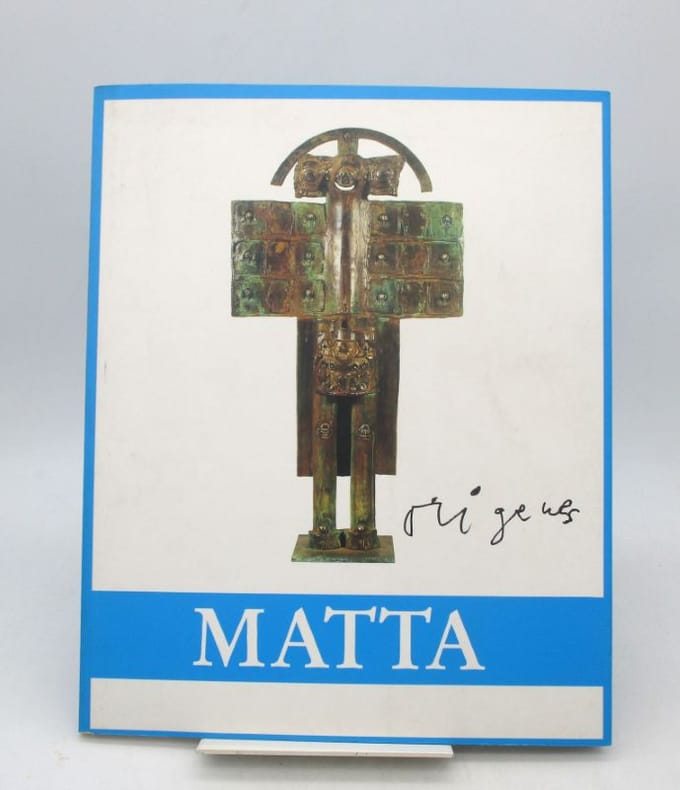
Matta
Oviedo, Caja de ahorros de Asturias, 1992. In-folio, 70 pp., broché, couverture originale illustrée (infimes frottements et taches).
Riferimento per il libraio : 23388
|
|
|
[Medical manual and recipe book].
Examen: Vor ein Neuer angehender Chirurgus, der sich will examiniren lassen, daß er in seinem examen bestehet, und wohl erfunden wird, so muß er dieses alles auswendig lernen, daß er antworten kann, über dasjenige was ihm gefragt wird. Anno 1806. Franconia and Alsace (Augsburg, Nuremberg, Strasbourg), 1800-1826.
4to (170 x 230 mm). German (and Latin) manuscript by various hands. (47), 285 (misnumbered: 286), (47) pp. Contemporary boards with vellum corners and modern cloth spine. Interesting medical manual beginning with an "examen" on the unnumbered 45 preliminary pages, arranged as questions and answers in the manner of a catechism. The body of the work consists in a copious collection of medical recipes: the first 193 pages contain a "description of my approved recipes, some by myself, as well as by other medical men well versed in practical matters". The next section (up to p. 223), in a different hand, contains additional "recipes by Mr. Clausing surgeon in Strasbourg" (i.e. the Baden-born surgeon and obstetrician Johann Peter Clausing, 1762-1835); the following section (to p. 242) contains "recipes by Dr. Hessert" (another Strasbourg physician of the early 19th century). Pages 243-286 offer "formularies" (such as Hippocrates, de Arte &c.), but also recipies for ointments, preserves, pills, pastes, rotulae, dicocta, clismata, pulpae, cataplasmata, etc. - The final part, again without page numbers contains extensive private notes on domestic economy concerning expenditures and earnings for the years from 1817 to 1826. - Written in dark brown ink by several hands in mostly well-legible German script. A few quires slightly loosened; occasional slight dust-soiling and fingerstaining (title-page and final leaves more so). A well-preserved manuscript on uncommonly strong paper.
|
|
|
[Medical manuscript].
Pharmacopoeia Pauperum or the Hospital Dispensatory. N. p., mid-18th century.
8vo (170 x 220 mm). English manuscript on paper. 21 pp. on 12 ff. Title on first and repeated on final leaf. Original half calf with marbled covers. Title label to spine. A collection of ca. 55 formulas for various ointments, balms, cataplasms, electuaries, boluses, tinctures, and other kinds of medicines, with remarks on their usage and administration. Though written in the vernacular, the usage of Latin names for the components of the drugs and their complexity point to a professional audience of doctors and pharmacists. The manuscript is compiled from the 2nd edition of Henry Banyer's "Pharmacopoeia Pauperum" from 1721. Banyer (1690-1749) had studied at St Thomas' Hospital in London and practised as a physician at Wisbech, Cambridgeshire. On 30 July 1746 he was admitted extraordinary licentiate of the College of Surgeons. His "Pharmacopoeia Pauperum" was first published in London in 1718 and saw three re-editions until 1739. - Very slight foxing and some browning to the margins. Binding markedly worn. Removed from the Newport Reference Library with their bookplate to the front pastedown.
|
|
|
[Medical manuscript]. (Anna) Maria Magdalena Winkler, née Seeauer, burgher of Ischl, Austria (1668-1745).
Ein sehr nützlicheß unnd approbiertes Artzenney-Puech, inn welchem sehr guette Stuckh zu unndterschiedlichen Khranckheiten und Zuestanndten zu fündten seinn. Anno 1688. Maria Magdallenna Winckhlerin gebohrne v. Seeau gehörig. [Ischl], 1688.
German manuscript on paper (watermark: crowned double-headed eagle, counter-sign CH), probably by two or three different hands. 196 unnumbered ff. with 197 written pages. Contemporary half vellum with remains of ties, 4to (158 × 200 mm). Loosely inserted between the leaves are 9 slips of paper in various sizes, some folded and written on several sides, containing additional recipes (including the remainder of a letter, addressed to the book's owner in Ischl), as well as a strip of cotton cloth from the 17th or early 18th century. An extensive, privately compiled medical manuscript, owned and in all likelihood largely written by a patrician lady from Ischl in the Austrian Salzkammergut region. The recipes contained appear to some extent based on popular tradition, but more frequently on Paracelsian sources and generally on the Paracelsian-inflected pharmacology and chemical medicine of the Renaissance. A relevant example is provided by the very first recipe, "daß gerechte Froschlaichpflaster" - a frogspawn bandage on a white lead basis, as it was frequently applied by surgeons as early as the 16th century to advance wound healing: "Froschlaich 2 lb., Baumöll 1½ Virting, Wein Essig 3 loth. Lass es mit ein andter sieden bis die Feichtigkeith verraucht und nur daß Öll verbleibe, dan du mues es hernach durch ein [Sieb] durchseihen, daß die schwartzen Eier in und ander Unflath darvon weg khumbt, hernach due darein Bleyweis 8 loth, Bleyzucker 2 loth, lass es wider ein wenig sieden und du must alleweil riechen, damit du es nicht verbrenest, so dan duehe darein Weißwax 1½ Vierting, lass es wider ein wenig sieden, und hernach von Feurer gethan thue darin Weisses Vitriol 1 loth, Rohen Alaun ½ loth, Ca[mp]her 2 Quintl, riche so lang bis es kalt wirdt, hernach mach Zapfen darauß, due es reecht mit Öll wo gaffer darein ist und zächs recht endereinander, so dan ist es bereith." This is followed by "daß gerechte Fontonell Pflaster" (a bandage for the fontanelles) and "Jungfrau Milch" (virgin's milk), then - after several blank leaves - a series of recipes concerning the head, including "das edle Khopff Bulffer" ("the noble cephalic powder"), "fier die Pluet Schuß im Khopf" ("for when blood rushes to one's head"), "fyer das Haubt Wehe der Khinter" ("for children's headaches"), "Wann ein Personn verwüret ist in Haubt" ("when a person is confused in his head"), "fuer den Wuremb im Khopf" ("for the worm in the head"), "füer den großen Khopf Wehe" ("for the severe headache"), etc. Among the further recipes are "ein khöstliches Wuntt Trankh" ("a delicious wound potion"), "Khrafft Wasser vor den Schlag" ("strong water for a stroke"), "Etles Trisanet Pulver, vor den Schlag, vor Schwacheit des Herzen, Bletigkeit des Mang, der Löber" ("noble trisanet powder for strokes, weakness of the heart, and ailments of the stomach and the liver"), "Inwendig grosse Hizen" ("great inner heat"), etc. Other recipes concern the internal organs and respiratory tract ("Räynigung des Mangs", "Geschwollen Mangen", "Wer hart umb Prust", "Vor Huesten", "Vör Lung- und Lebersucht, Huesten, auch Stäckhen auf der Prust"), gynecology and obstetrics ("Wann ein Frau nit gebehren khan", "Wann das Khünntt nit kan ledig werten", "Von Mangel der monatlichen Zeit"), as well as dentistry ("Vor Zahn Wehe", "Zahn ohne Schmerzen herauszunemben", "Vor Munntfeille"); also, recipes for emetics ("Vor Erbrechen daß der Mangen nichts behalte") and for various ointments ("zu den Prysten", "vor Reissen und Grimmen"), tapeworms ("vor Wuremb im Leib"), enemas ("Von Clystier- und Purgiern"), and "how to push the intestines back into the body when the bowels have fallen out" ("so einen der Leib Tarmb ausgeht, den Layb Darmb hinein zu bringen"). Some recipes reveal the scientific limits of their age (one captioned "vor Anwax ter Khüntter", intended to make children grow faster, is essentially a rose ointment to be soaked in a cloth which is bound on the child's head); others fall into the province of the quasi-magical ("Krumpe und lammbe Gliter zu haillen, es wirt die selbe verzaubert, und also gemacht worten, mit der Hilffe Gotes abzuhelfen", "Wahrer Gebrauch und Nuzung des Pulvers des Lebens"). Although several hands appear to have contributed to this manuscript, a large part is unquestionably by the writer of the title page, whom we may identify with its owner. Maria Magdalena Seeauer, born on 7 June 1668, was descended from the well-known dynasty of Ischl salt loaders who can be traced to the 14th century. She was a daughter of the local salt loader, alderman and judge Simon Seeauer (1615-1704) and sister of Johann Ignaz Seeauer (1661-1709), who succeeded his father in all his offices. Ten days after her 19th birthday Maria Magdalena married, in Ischl, the 36-year-old Johann Richard Winkler from Grieskirchen; she began compiling the present recipe book the following year. She died in her native city on 9 March 1745, having survived her husband by 27 years. - Binding somewhat rubbed; paper insignificantly browned. Nine leaves in the book's interior show slight worming, occasionally barely touching letters, but altogether clean and unstained, uncommonly well preserved for a manuscript apparently kept in constant use. The piece of cotton cloth inserted between two leaves likely represents the authentic type of a cloth bandage used for applying ointments in the early 18th century.
|
|
|
[Medici].
Albero cronologico della famiglia de' Medici comprovante il ramo di essa trasferito in Napoli nell' anno 1559. No place, c. 1745/1750.
Ink on paper, 15 segments mounted on cloth (ca. 138 x 72 cm). Folded. Large-scale genealogy of the House of Medici beginning in the early 13th century and ending with Gian Gastone de' Medici, the seventh and last Medicean Grand Duke of Tuscany. With his death in 1737, nearly 300 years of Medici rule over Florence came to an end. He was survived by his sister Anna Maria Luisa, Electress Palatine, for less than six years, and was succeeded as Grand Duke of Tuscany by Francis Stephen of Lorraine, soon to be Emperor Francis I. The present chart, apparently drawn up shortly after the extinction of the family in 1743, is decorated with several designs of the Medici arms dangling from the family tree's branches, and the names of the last three scions - Ferdinando, Gian Gastone, and Anna Maria - are drawn with their appropriate crowns, as are those of Popes Leo X, Clemens VII, and Leo XI. As the title announces, the genealogy includes the secondary branch of the Medici Family known as the Princes of Ottaiano (near Naples), here ending with Alessandro de' Medici (1560-1606), General of the Papal States. Descendants of this last remaining line, which still flourishes, unsuccessfully claimed the title of Grand Duke of Tuscany in 1737, and the Ottaiani's pretensions to the title would seem to have played a role in the preparation of this chart. - Some brownstaining and ink corrosion; slight edge defects professionally repaired. Residue of the collection of Sir Thomas Phillipps (1792-1872).

|
|
|
[MEDIEVAL MANUSCRIPTS -- FACSIMILE].
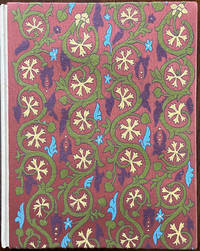
Codex Vysehradensis 1085. Editio Cimelia Bohemica. Vol. XIII. Bibliotheca Rei publicae socialisticae Bohemicae Pregaensis. Consilio virorum litteris eruditorum moderante Dr. Joseph Vinarek. . . .
Prague Czechoslovakia: Sumptibus Pragopress 1970. Two vols. Folio. 1st - 12.75 x 16.75 in. 63 1 pp. text in Czech English French German & Russian. Title in purple & black. Faux vellum paper boards gilt lettering on spine; 2nd - 13.5 x 17 in. 222 pp of colour photo facsimile reproducing the entire manuscript. Quarter-vellum over embroidered Bohemian folk pattern cloth covers w/ original mylar protective cover ever-so-slight fraying in a couple fore-edges still NF/NF set preserved in original clamshell slipcase gilt lettering on spine hinges starting at foot of spine. Striking facsimile edition of the sumptuous Romanesque Codex of Vysehrad commissioned as one of four manuscripts produced by the same artists between 1080 and 1085 around the time of the coronation of Vratislav II 1061-1092 first king of Bohemia and includes the lection for the king’s coronation. They all probably originated in the scriptorium at the Monastery of St. Emmeram and this manuscript was declared a National Cultural Monument of the Czech Republic. The extensive cycle of images carefully rendered and detailed draw from the Regensburg School and Ottonian influences with a Christ’s genealogy on four divided pages. Within the 108 folios there are 26 pages depicting the gospels four of the Old Testament and 29 scenes from the life of Christ with large decorated illuminated initials. Originally the property of the Church of Vysehrad many scholars believe it was originally prepared for St. Vitus Cathedral in Prague Castle and Vratislav II had secured his title after negotiations with Holy Roman Emperor Henry IV at the time in conflict with Pope Gregory VII as he continued insisting on the retaining the Slavonic liturgy and wanted to appoint his own bishops. Sumptibus Pragopress, hardcover
Riferimento per il libraio : 60625
|
|
|
[Medieval medical manuscript].
Fragments from four leaves from a medical treatise. [France, early 13th century].
Decorated manuscript in Latin, ink on parchment. Four cuttings once re-used to form pastedowns and endleaves for a landscape format volume (measuring 140 by 200 mm). Remains of single column up to 32 lines in a tiny early gothic bookhand. Rubrics in pale red, initials in red or blue with contrasting penwork. Fragments from four leaves from a medical treatise discussing diseases and disorders of the stomach. There are entries here on pleurisy, pain in the stomach, vomiting, and on childbirth, as in the medieval tradition this was often grouped with other stomach disorders. - 17th-century ownership of Michel Bonniel inscribed to one cutting. Some scuffs, small holes and discolouration, otherwise in good condition.
|
|
|

 Ricevere i risultati per e-mail
 Scaricare i risultati in PDF
 RSS feed
 Link
Link


