|
|
|
CAILLOIS Roger
Lettre autographe signée adressée à Dominique Aury
- Paris Mardi 27 [février 1968], 13,5x20,9cm, une page sur un feuillet. - Lettre autographe signée de Roger Caillois adressée à Dominique Aury ; une page sur un feuillet rédigée au stylo bille bleu. Intéressante lettre concernant l'article "Mémoire interlope" qui paraîtra dans le n°185 de la seizième année (mai 1968) de la Nouvelle Revue Française. A cette époque, Marcel Arland et Jean Paulhan sont tous deux directeurs de la revue qu'ils ont fait renaître de ses cendres en 1953. La correspondante de Roger Caillois, Dominique Aury (aussi connue sous le pseudonyme de Pauline Réage) siège au Comité de lecture de la célèbre Revue. Il est question dans cette lettre d'une "note" que Roger Caillois demande à Dominique Aury de ne pas publier : "Pour la note, comme je l'avais dit à Arland je renonce à la publier. Notre ami la prendrait surement comme une sorte de coup de poignard dans le dos, une trahison d'autant plus délibérée que je n'écris pour ainsi dire jamais de note. Elle n'en vaut pas la peine." Nous n'avons pu trouver trace de cette énigmatique note, que Roger Caillois s'impatiente de récupérer : "Retournez-la moi, voulez-vous. J'en ferai peut-être le noyau d'une étude plus étendue où j'essaierai qu'apparaissent moins irritants que dans ce condensé les rapprochements litigieux." [ENGLISH DESCRIPTION ON DEMAND]

|
|
|
CAILLOIS Roger
Obliques précédé de Images, images...
- Stock, Paris 1975, 13,5x21,5cm, broché. - Edition originale collective. Agréable exemplaire. Envoi autographe daté et signé de Roger Caillois à Alice Raillard. [ENGLISH DESCRIPTION ON DEMAND]

|
|
|
CAILLOIS Roger
Obliques précédé de Images, images...
- Stock, Paris 1975, 13,5x21,5cm, broché. - Edition originale collective. Agréable exemplaire. Envoi autographe daté et signé de Roger Caillois à Alain Bosquet : "... ces obliques que je voudrais plus près de l'aigu que de l'obtus..." [ENGLISH DESCRIPTION ON DEMAND]

|
|
|
Caillé Dominique-François (Ecrivain et Poète Nantais)
PEN-BRON
Vannes Eugène Lafolye 1889 in-12 broché un poème, broché (paperback) in-12 Editeur (17,6 x 11 cm), dos muet (spine - no title), première de couverture imprimée en noir (front coverprinted in colours), toutes tranches lisses, envoi autographe manuscrit à l'encre brune en haut de la page de titre : "...A l'Aimable ChansonnierM. P(ierre) COINQUET membre du Caveau, Hommage Cordial de l'Auteur..... (signature manuscrite)...D. Caillé...14 Juin 1889...", sans illustration, 3 pages, 1889 Vannes Imprimerie Eugène Lafolye Editeur,
Référence libraire : 22531
|
|
|
CALAFERTE Louis
Lettre autographe signée "c'est l'immobilisme chez ces gens qui ne prennent plus aucun risque d'édition..."
- Lyon 5 Mars 1978, 21x27cm, 2 pages sur un feuillet. - Lettre autographe datée du 5 mars 1978 signée de Louis Calaferte, de deux pages, à une amie libraire non identifiée, de 33 lignes à l'encre noire, rédigée depuis Lyon. Habituelles traces de pliures sans gravité d'une lettre glissée dans une enveloppe. Dans sa missive, pleine de sollicitude, d'estime et de respect pour le travail d'écriture de sa malheureuse correspondante qui désire faire publier son manuscrit, Louis Calaferte s'excuse tout d'abord du retard, indépendant de sa volonté, pris pour lui répondre : « J'ai attendu, attendu, attendu - espérant toujours pouvoir vous apporter une heureuse nouvelle concernant l'éventuelle édition de votre travail de librairie », pour ensuite lui avouer et fustiger « un certain immobilisme chez ces gens qui ne prennent plus aucun risque d'édition, et sont plus friands d'imbécillité du genre « best-seller » que d'ouvrages ayant trait à une certaine érudition ». Louis Calaferte, infructueux intermédiaire entre cet écrivain et le monde des éditeurs parisiens, se montre « désolé car, à mes yeux, il me semble qu'une édition de ce type eût été nécessaire. » Il se propose, lors de son tout prochain passage à Paris, de lui remettre le manuscrit, qu'il a proposé sans succès aux maisons d'édition, et qu'il appelle « votre cahier » ou de le lui apporter dans sa librairie plus tard. Enfin, Louis Calaferte conclut symboliquement sa lettre par un « désolé de cet échec, je vous prie de croire à mon estime ». [ENGLISH DESCRIPTION ON DEMAND]

|
|
|
CALCOEN, ROGER [ed.].
Inventaire des manuscrits scientifiques de la Bibliothèque Royale de Belgique. T. I-II-III.
3 volumes in-4, 119-XXIV + 95-XXIV + 129-XVI pp., plates (black & white). Très bel ensemble - VG+++ [P-53]
|
|
|
CALDER Sandra
Carte postale autographe signée adressée à Juan Luis Buñuel
- s.d. (ca 1967) , 15,7x10,8cm, une carte postale. - Handwritten signed postcard addressed to Juan Luis Buñuel s.d(ca 1967), 15.7 x 10.8 cm, a postcard Handwritten postcard signed by Alexander Calder addressed to Juan Luis Buñuel on the back of a reproduction of his work On the High Wire. Two small perforations in the upper margin of the card, as is usual in Juan Luis Buñuel's collection. "What an incredible face Luis had, I was glad to see "Belle de Jour" for the first time." In 1939, Luis Buñuel, who had just received an offer to work in Hollywood, decided, with his wife and child, to leave the chaotic situation in Europe to go and live the American Dream. The penniless Buñuels initially spent a few precarious months living in New York. Luis Buñuel found himself forced to ask Dalihis longstanding friend in exile, along with Gala, during these yearsto lend him some money. His request was refused in no uncertain terms, putting an end to the two men's friendship. Thus it was Calder, whom Luis had perhaps already met in Paris in the 1920s, who put the whole family up in his Upper Side apartment. Juan Luis Buñuel, the artist's godson, sensed that his interest in sculpture began in this same period: "When Dali told my father he would not lend him any money, he contacted him [Calder]. He offered his house to us and we lived with his family for a time. I can only vaguely remember it, but it was then that I started to become interested in sculpture and he encouraged me" (Anton Casto, Juan Luis una entrevista). Despite the geographical distance that would come to separate them, Alexander Calder would remain a friend of the Buñuel family. The relationship between the artist and the film-maker is, however, almost entirely absent from the biographies, and this correspondence is a rare testimony to the profound connection between the sculptor and the Buñuel family. [FRENCH VERSION FOLLOWS] Carte postale autographe signée de Sandra Calder, fille du sculpteur, adressée à Juan Luis Buñuel au verso d'une reproduction de l'oeuvre de son père On the High Wire. Deux petites perforations en marge haute de la carte, comme habituellement dans la collection de Juan Luis Buñuel. "What an incredible face Luis had, I was glad to see "Belle de Jour" for the first time." En 1939, Luis Buñuel, qui venait de recevoir une proposition de travail à Hollywood, décide, avec femme et enfant, de quitter la situation chaotique de l'Europe pour vivre l'American Dream. Les Buñuel, désargentés, transitent d'abord quelques mois par New York où ils vivent dans des conditions précaires. Luis Buñuel se voit contraint de demander à Dali - son ami de longue date en exil avec Gala dans ces mêmes années - de lui prêter de l'argent. Il essuie un violent refus qui met fin à l'amitié des deux hommes. C'est alors Calder, que Luis a peut-être déjà rencontré à Paris dans les années 1920, qui accueille toute la famille dans son appartement de l'Upper Side. Juan Luis Buñuel, filleul de l'artiste, suppose que son intérêt pour la sculpture a commencé à la même période : « Quand Dali dit à mon père qu'il ne lui prêterait pas d'argent, il l'a contacté [Calder]. Il nous a offert sa maison et nous avons vécu au côté de sa famille pendant quelque temps. Je ne m'en rappelle que vaguement, mais c'est alors que j'ai commencé à m'intéresser à la sculpture et il m'a encouragé. » (Anton Castro, Juan Luis una entrevista). En dépit de la distance géographique qui les séparera, Alexander Calder demeurera un ami de la famille Buñuel. La relation entre l'artiste et le cinéaste est cependant presque totalement absente des biographies et cette correspondance est un rare témoignage du lien profond entre le sculpteur et la famille Buñuel.

|
|
|
CALDER Sandra
Carte postale autographe signée adressée à Juan Luis Buñuel ; "La paix ! la paix ! la paix !"
- s.d. (ca 1967) , 15,7x10,8cm, une carte postale. - Handwritten signed postcard addressed to Juan Luis Buñuel s.d(ca 1967), 15.7 x 10.8 cm, a postcard Handwritten postcard signed by Alexander Calder addressed to Juan Luis Buñuel on the back of a reproduction of a painting by Georges de La Tour. Two small perforations in the left margin of the card, as is usual in Juan Luis Buñuel's collection. "La paix ! la paix ! la paix ! pour 1968 Vanvis - I don't understand why I'm always leaving messages and never getting an answer. I was sorry not to see you in Barcelone. It is a beautiful snow. Love to you and Carmen and children. Sandro" In 1939, Luis Buñuel, who had just received an offer to work in Hollywood, decided, with his wife and child, to leave the chaotic situation in Europe to go and live the American Dream. The penniless Buñuels initially spent a few precarious months living in New York. Luis Buñuel found himself forced to ask Dalihis longstanding friend in exile, along with Gala, during these yearsto lend him some money. His request was refused in no uncertain terms, putting an end to the two men's friendship. Thus it was Calder, whom Luis had perhaps already met in Paris in the 1920s, who put the whole family up in his Upper Side apartment. Juan Luis Buñuel, the artist's godson, sensed that his interest in sculpture began in this same period: "When Dali told my father he would not lend him any money, he contacted him [Calder]. He offered his house to us and we lived with his family for a time. I can only vaguely remember it, but it was then that I started to become interested in sculpture and he encouraged me" (Anton Casto, Juan Luis una entrevista). Despite the geographical distance that would come to separate them, Alexander Calder would remain a friend of the Buñuel family. The relationship between the artist and the film-maker is, however, almost entirely absent from the biographies, and this correspondence is a rare testimony to the profound connection between the sculptor and the Buñuel family. [FRENCH VERSION FOLLOWS] Carte postale autographe signée Sandra Calder adressée à Juan Luis Buñuel au verso d'une reproduction d'un tableau de Georges de La Tour. Deux petites perforations en marge gauche de la carte, comme habituellement dans la collection de Juan Luis Buñuel. "La paix ! la paix ! la paix ! pour 1998 Vanvis - I don't understand why I'm always leaving messages and never getting an answer. I was sorry not to see you in Barcelone. It is a beautiful snow. Love to you and Carmen and children. Sandra" En 1939, Luis Buñuel, qui venait de recevoir une proposition de travail à Hollywood, décide, avec femme et enfant, de quitter la situation chaotique de l'Europe pour vivre l'American Dream. Les Buñuel, désargentés, transitent d'abord quelques mois par New York où ils vivent dans des conditions précaires. Luis Buñuel se voit contraint de demander à Dali - son ami de longue date en exil avec Gala dans ces mêmes années - de lui prêter de l'argent. Il essuie un violent refus qui met fin à l'amitié des deux hommes. C'est alors Calder, que Luis a peut-être déjà rencontré à Paris dans les années 1920, qui accueille toute la famille dans son appartement de l'Upper Side. Juan Luis Buñuel, filleul de l'artiste, suppose que son intérêt pour la sculpture a commencé à la même période : « Quand Dali dit à mon père qu'il ne lui prêterait pas d'argent, il l'a contacté [Calder]. Il nous a offert sa maison et nous avons vécu au côté de sa famille pendant quelque temps. Je ne m'en rappelle que vaguement, mais c'est alors que j'ai commencé à m'intéresser à la sculpture et il m'a encouragé. » (Anton Castro, Juan Luis una entrevista). En dépit de la distance géographique qui les séparera, Alexander Calder demeurera un ami de la famille Buñuel. La relation entre l'artiste et le cinéaste est cependant presque totalement absente des biographies et cette correspondance est un rare témoignage du lien profond entre le sculpteur et

|
|
|
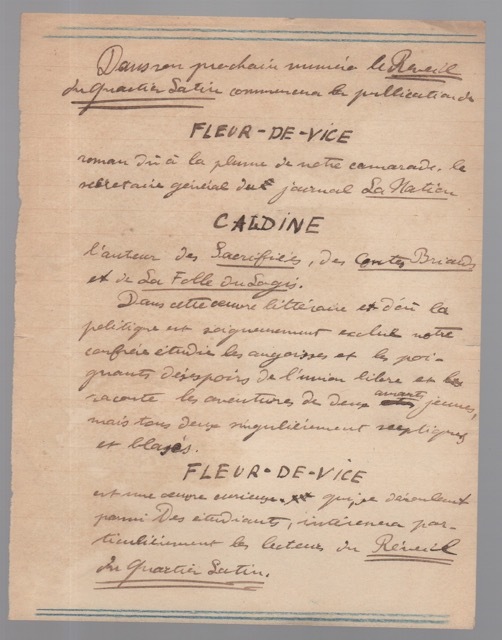
CALDINE Daniel
Fleur de vice
Important manuscrit de 108 pages in-8°, écrites au recto. Curieux texte de cet auteur qui fut journaliste au journal La Nation. En feuilles Très bon
Référence libraire : 10206
|
|
|
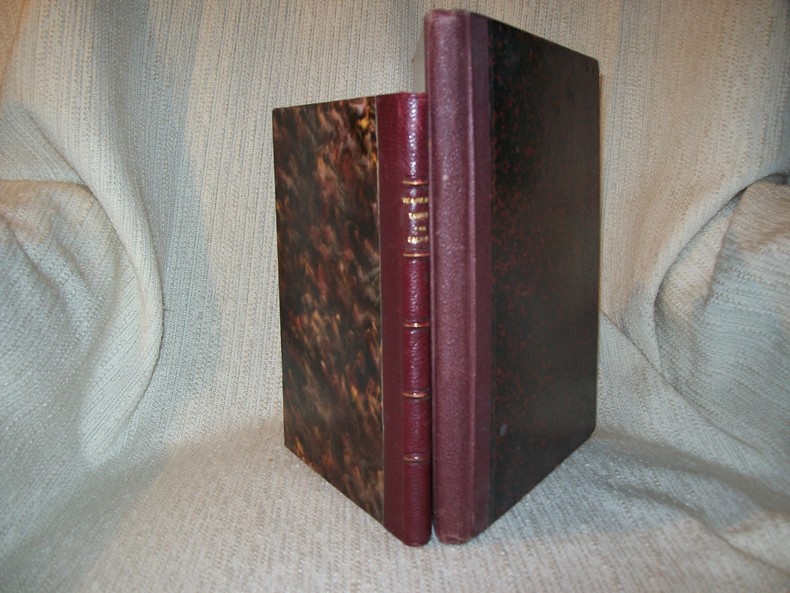
CALDINE Daniel
VOCABULAIRE TAURIN. Manuscrit.
Sans lieu ni date v 1900. In-16 65 feuillets numérotés contenant en moyenne 19 lignes sur le recto uniquement, d'une fine écriture élégante bien lisible. Demi chagrin grenat, dos à nerfs rehaussés d'une filet perlé doré, reliure de l'époque. Cachet de l'un des anciens propriétaires sur 1 feuillet blanc. Bel exemplaire bien relié de ce vocabulaire taurin d'environ 500 termes clairement expliqués, composé par Daniel Charpentier dit Caldine, auteur de nombreux articles sur la tauromachie (voir Pertus Dictionnaire des auteurs taurins p43).
Référence libraire : GITaz8
|
|
|
CALLIGRAPHIE - Collège du Sacré Coeur.
Grand cahier manuscrit et orné de dessins, portant sur la reliure “Souvenir du Sacré-Coeur par C. de B“ et en titre “Extraits de mes études“.
1860 Sans date (vers 1860); volume in-4° oblong, demi-chagrin brun de l'époque, dos à nerfs orné de filets et fleurons dorés, titre doré, et titre doré poussé au 1er plat “ Souvenir du Sacré-Coeur“. 49 feuillets de papier fort dont 47 utilisés (au recto seulement), chacun protégé par une serpente, calligraphiés et ornés de dessins à l'encre et aquarelle ou à la mine de plomb et aquarelle (pour les dessins scientifiques). Chaque feuille mesure 30, 5 x 41 cm. Très petite décoloration au 1er plat sinon très bon état.
Référence libraire : 10687

|
|
|
CALLIGRAPHIE. EVREUX.-
Contrat de Mariage entre Mr Pellé et Mademoiselle Lemrez passé pardevant Me Chefdeville, Notaire à Evreux.-
Evreux. 8 décembre 1856.- Gd in-8 (213 x 308mm) broché (attaché par un ruban blanc et un ruban bleu), entièrement manuscrit, intitulé de la couverture à l'encre bleue, certaines lettres rehaussées or, 6 pages calligraphiées à l'encre noire, avec des rehauts d'or, cachets répétés 3 fois et sceau aux armes du notaire, plaqué sur papier, collé à la fin de l'acte. On joint 1 certificat de mariage ainsi que celui du décès de M. Pellé en 1883, actes de la municipalité d'Evreux. Couverture du contrat et certificat de mariage très piqués, intérieur très frais, papier très blanc, exempt de rousseurs.
Référence libraire : ORD-1769
|
|
|
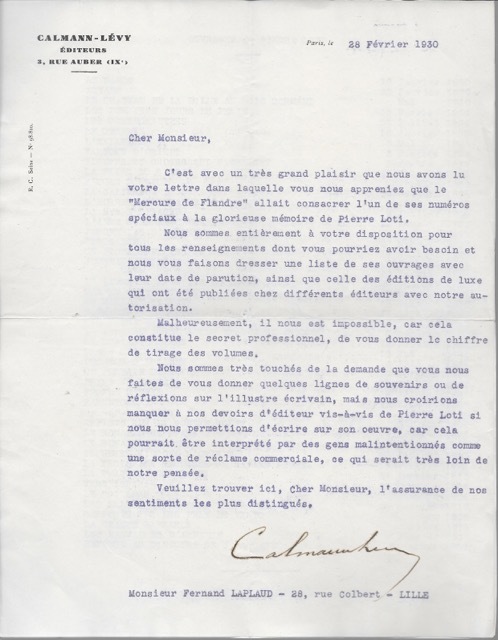
CALMANN-LÉVY
Lettre tapuscrite signée
Très belle lettre de l'éditeur à propos de Pierre Loti. Joint la liste des publications de Loti. En feuille Très bon Paris 1930
Référence libraire : 11287
|
|
|
Calogero, Antonio (Pseudonym: Nino Calos), Künstler (1926-1990)
2 masch. Briefe mit eigenh. U.
o.J. Paris, 29. VIII. und 23. IX. 1966, Fol. 2 Seiten.
Référence libraire : 52731
|
|
|
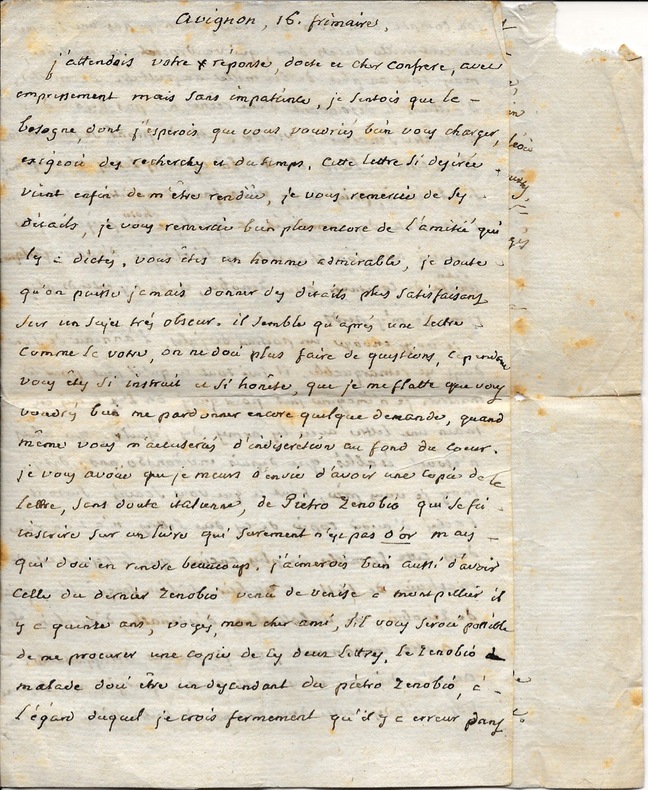
CALVET Esprit
Le célèbre médecin d'Avignon
Ensemble de 5 lettres autographes d'Esprit Calvet adressées à un ami médecin également. Les lettres sont datées de 1799 à 1803. Elles tournent toutes autour de la médecine dont deux, très intéressantes sur sa position vis-à-vis de la vaccine … En feuilles Très bon 1799
Référence libraire : 10579
|
|
|
Calvin, Melvin, Chemiker, Biochemiker und Nobelpreisträger (1911-1997)
Originalfotografie mit eigenh. U.
o.J. (Berkeley), 1. II. 1977, 20 x 27 cm. 1 Seite.
Référence libraire : 50617
|
|
|
Calzolari Valentina Stone Michael E
Armenian Philology in the Modern Era: From Manuscript to Digital Text (History of Armenian Studies)
BRILL ACADEMIC PUB 2014 595 pages 16 6x3 6x24 2cm. 2014. Cartonné. 595 pages.
Référence libraire : 100144013

|
|
|
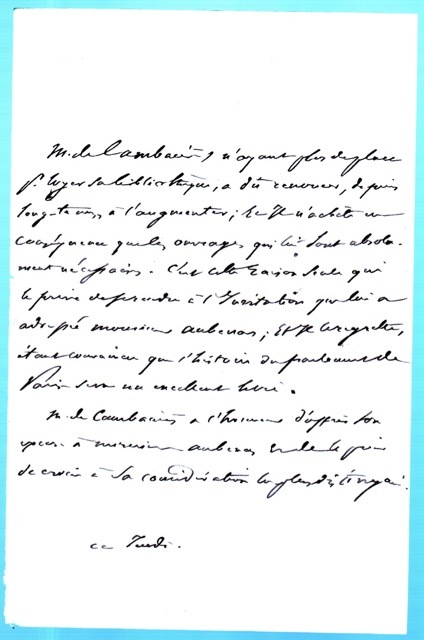
CAMBACERES Duc de
Homme politique, sénateur, Pair de France
L.A. non datée, ni signée, à propos de livres ..; Très bon
Référence libraire : 9616
|
|
|
Cambiasi, Pompeo
Teatro alla Scala 1778-1881. Commissioni Teatrali - Cenni storici e descrittivi - Pianta del Fabbricato - Serie delle Opere in Musica [...] Serie dei Balli [...] Maestri Concertatori - Orchestra - Maestri dei Cori - Scenografi - Impresari [... ] Terza edizione notevolmente aumentata e corretta.
o.J. Milano etc., Ricordi, 1881, Gr.-8°. With folded plate. XIII pages, 1 leaf, 137 pages 1 leaf. Contemporary blue half calf (spine a little bit worn).
Référence libraire : 54148
|
|
|
CAMBIS d’ORSAN Marquis de
Lettre A. S. adressée au félibre Bruneau, lui demandant d’envoyer “Les Isles d’Or” et le dernier “armana prouvencau”. En-tête gravé “21è Dragon”. Très bon Évreux, 16 septembre 1883.
Référence libraire : 7215

|
|
|
CAMBON, Paul:
Lettre manuscrite de Paul Cambon de l'Ambassade de France à Londres à M. René de Cérenville.
Londres, 21. janv. 1902, 22,5 cm x 17,5 cm, 9 lignes, écriture mal lisible, bon état, avec enveloppe.
Référence libraire : 79320aaf
|
|
|
Camerarius, Joachim d. Ä.,, Universalgelehrter und Dichter (1500-1574)
Porträt. Radierung von Balthasar Jenichen, monogr. "B-I".
o.J. Ohne Ort, um 1570, Blattgr. 11,5 x 8,7 cm. Plattengr.: 8,7 x 7,1 cm.
Référence libraire : 39830
|
|
|
Camerarius, Ludwig, Autographensammler und Staatsmann (1573-1651)
Eigenh. Albumblatt mit U.
o.J. (Heidelberg), 11. VIII. 1611, 8° (15,5 x 10 cm). 1 Seite.
Référence libraire : 59769
|
|
|
Cameron, Averil & Conrad, Lawrence I. [Eds.] / Whitby, M.; Haldon, John; Reinink, G.J.; Drijwers, Han J.W.; al-Qadi, Wadad; Leder, Stefan
The Byzantine and Early Islamic Near East - I: Problems in the Literary Source Material [Materials] (Papers of the First Workshop on Late Antiquity and Early Islam). [SERIES]: Studies in Late Antiquity and Early Islam, 1.
RARE collection of eight cross-disciplinary papers on "Problems in the Literary Source Material", from the First Workshop of the Late Antiquity and Early Islam, convened in London on 20-21 October 1989. [CONTENTS]: 1. Michael Whitby - Greek Historical Writing after Procopius: Variety and Vitality; 2. Averil Cameron - New Themes and Styles in Greek Literature: 7th-8th Centuries; 3. John Haldon - The Works of Anastasius of Sinai: A Key Source for the History of 7th-Century East Mediterranean Society and Belief; 4. G.J. Reinink - Ps.-Methodius: A Concept of History in Response to the Rise of Islam; 5. Han J.W. Drijvers - The Gospel of the Twelve Apostles: A Syriac Apocalypse from the Early Islamic Period; 6. Wadad al-Qadi - Early Islamic State Letters: The Question of Authenticity; 7. Stefan Leder - The Literary Use of the Khabar: A Basic Form of Historical Writing; 8. Lawrence I. Conrad - The Conquest of Arwad: A Source-Critical Study in the Historiography of the Early Medieval Near East. Includes an index. 240x160mm. XIV+428 pages. Dark-blue cloth Hardcover with transparent plastic dust-jacket. Gilt lettering on spine. Embossed front cover. Dedication written in pen on title-page upper corner - the dedicatee is an eminent Israeli archaeologist Yoram Tsafrir (1938-2015). Spine edges bumped. [SUMMARY]: This extremely rare book, of immense interest to students of early Islam, Byzantium and Near East in Late Antiquity, is otherwise in very good condition.
|
|
|
Camille CHAUTEMPS - [Paris 1885 - Washington 1963] - Homme politique français -
Carte de visite Autographe Signée à Georges Bégue - Paris le 16 Février 1925 -
Carte de visite format : 6 x 10 cm [on joint une lettre de Madame R. Chautemps du 29 janvier 1936] -
Référence libraire : GF29684
|
|
|
Camille CHAUTEMPS - [Paris 1885 - Washington 1963] - Homme politique français -
Lettre Autographe Signée à Georges Bégue - Paris le 13 septembre 1929 -
2 pages in8 - En tête de la Chambre des Députés -
Référence libraire : GF29685
|
|
|
Camille CHAUTEMPS - [Paris 1885 - Washington 1963] - Homme politique français -
Lettre Autographe Signée à Georges Bégue - Paris le 20 septembre 1929 -
2 pages in8 - En tête de la Chambre des Députés -
Référence libraire : GF29686
|
|
|
Camille CHAUTEMPS - [Paris 1885 - Washington 1963] - Homme politique français -
Lettre Autographe Signée à Georges Bégue - Paris le 27 septembre 1929 -
2 pages in8 - En tête de la Chambre des Députés -
Référence libraire : GF29687
|
|
|
Camille CHAUTEMPS - [Paris 1885 - Washington 1963] - Homme politique français -
Lettre Dactylographiée Signée à Georges Bégue - Paris le 16 Février 1925 -
1 page in8 - En tête du Ministère de l'Intérieur -
Référence libraire : GF29683
|
|
|
Camille Chevillard
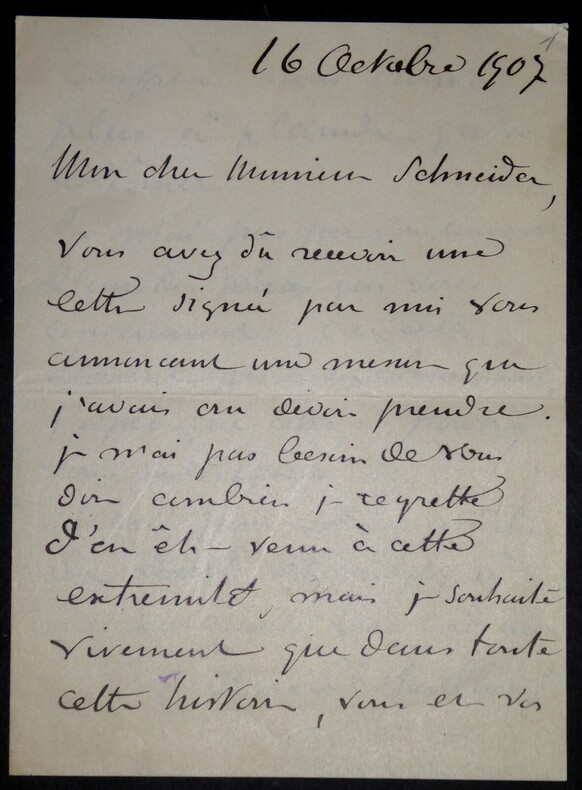
CHEVILLARD Camille - LETTRE AUTOGRAPHE SIGNÉE, PARIS, 1907
Camille CHEVILLARD. Lettre autographe signée et datée du 16 octobre 1907, Paris. Lettre en deux pages adressée à "Mon cher Schneider" afin de s'excuser "concernant un menu que j'avais cru devoir prendre. Je n'ai plus besoin de vous dire combien je regrette d'en être venu à cette extrémité mais je souhaite vivement que dans toute cette histoire, vous et vos confrères nous trouviez plus à plaindre qu'à blâmer". Afin de se faire pardonner, il avait joint à sa lettre une place pour une représentation, bien qu'elle ne soit surement pas celle qu'il espérait car déjà prise. Dimensions : 12.5 x 17 cm. 2 pages. Etat : Bon état de conservation malgré la présence d'onglets. Alexandre Camille Chevillard, né à Montmartre le 14 octobre 1859 et mort à Chatou le 30 mai 1923, est un compositeur et chef d'orchestre français. Wikipédia Envoi soigné dans un emballage rigide et étanche. Satisfait ou remboursé. Si vous n'êtes pas entièrement satisfait, je reprends la marchandise avec retour à ma charge pour l'Europe et à la charge de l'acheteur pour le reste du monde. N’hésitez pas à visiter ma boutique et affiner vos recherches en fonction des catégories qui vous intéressent. Ma boutique L'Art Délivré. Lettres autographes, vieux papiers, livres anciens, photographies, gravures, timbres… Nous expertisons et/ou rachetons dans toute la France vos lettres, collections de lettres et livres anciens. Merci de votre visite. Jérôme KAYSER.
Référence libraire : boz_005141
|
|
|
CAMILLE CLERC.
"Programme de Géométrie 1845-1846" : Cahier manuscrit rédigé par Camille Clerc (futur Polytechnicien et Ingénieur des Ponts et Chaussées).
Sans lieu Sans éditeur. 1845 - 1846 15,5x19,5cm. Cahier cousu. 42 feuillets (84 pages).
Référence libraire : 353

|
|
|
Camille Daux
Tropaire-Prosier de l'Abbaye Saint-Martin de Montauriol / Bibliothèque liturgique tome 9e
Alphonse Picard et fils 1901 in8. 1901. Broché. Édition critique du tropaire-prosier (recueil de chants liturgiques) de l'abbaye Saint-Martin de Montauriol publiée d'après un manuscrit original datant des XIe-XIIIe siècles. L'ouvrage contient des hymnes répons et antiennes utilisés dans les offices religieux et appartient à la collection Bibliothèque liturgique
Référence libraire : 100146625

|
|
|
Camille du GAST - [1868 - 1942] - Pilote automobile française ...etc...
Lettre Autographe Signée de Camille du Gast à Jacques Deval - Paris - le 14 juillet 1937 -
1 page in4 - bon état -
Référence libraire : GF30781
|
|
|
Camille Gaspar
Br vaire du Mus e Mayer van den Bergh Anvers
, Oeuvre Nationale pour la Reproduction de Manuscrits Miniatures de Belgique, 1932 Book + loose plates in cardboard box, 82 pages + 73 plates with reproductions of the pages of the manuscript, 30 x 23 cm, FR. *fine example, cardboard box is held together with tape. .
Référence libraire : 68800
|
|
|
Camille Huysmans
Originele brief van Camille Huysmans Burgemeester van Antwerpen
2 vellen, getypt, met briefhoofd en gesigneerd, gedateerd; 27 juli 1967. Brief i.v.m. benoeming tot grootofficier in de kroonorde ( De Heer Leo Maiersdorf. )

|
|
|
Camille Huysmans
Originele brief van Camille Huysmans Burgemeester van Antwerpen
, , 2 vellen, getypt, met briefhoofd en gesigneerd, gedateerd; 27 juli 1967.
Référence libraire : 51676
|
|
|
Camille JULLIAN - [Marseille 1859 - Paris 1933] - Philologue et historien français
Lettre Autographe Signée au professeur Vergely -
1 page in12 - adresse au dos -
Référence libraire : GF27289
|
|
|
Camille MAUCLAIR
"M. Paul Adam nous montre l'éternel symbole de Prométhée, de l'intelligence créatrice, enchaîné entre la Force et la Violence." Manuscrit autographe signé intitulé "La force et la destruction" à propos du roman "La force" de Paul Adam qui vient de paraître
S. n. | s. l. s. d. [1899] | 15 x 19.50 cm | 8 feuillets
Référence libraire : 83424
|
|
|
Camille MAUCLAIR - [Paris 1872 - 1945] - Homme de lettres français
Lettre Autographe Signée à "Mon cher confrère" [Fernand Demeure] - Saint Leu la Forêt - sans date -
2 pages in12 - bon état - carte [format 9 x 11 cm] -
Référence libraire : 33484
|
|
|
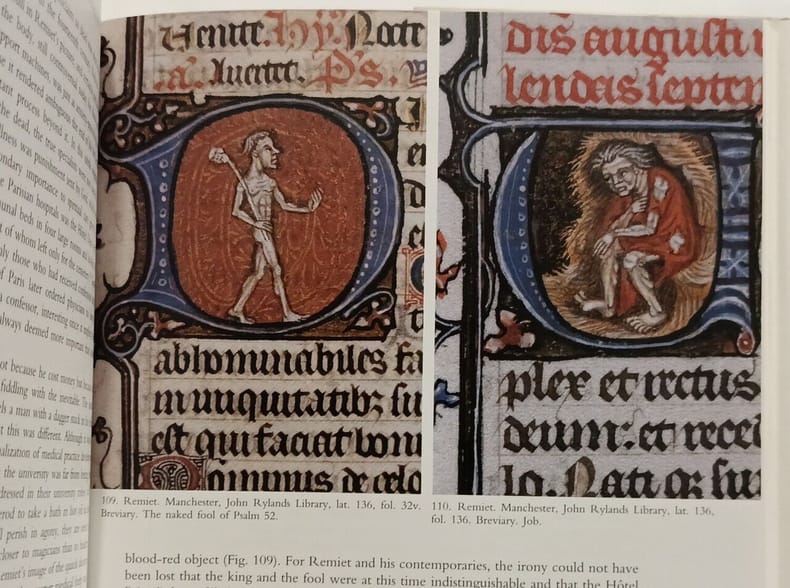
Camille Michael
Master of Death: The Lifeless Art of Pierre Remiet Illuminator
YALE UNIV PR 1996 296 pages in4. 1996. Cartonné jaquette. 296 pages.
Référence libraire : 100148318
|
|
|
Camille SAINT-SAENS - [Paris 1835 - Alger 1921] - Pianiste, organiste, et compositeur français
Lettre autographe signée au poète Georges Docquois - Paris le 12 novembre 1916 -
2 pages in8 - enveloppe - trés bon état -
Référence libraire : 33336
|
|
|
Camille SAINT-SAENS - [Paris 1835 - Alger 1921] - Pianiste, organiste, et compositeur français
Lettre autographe signée à "Mon cher ami" - [le poète Georges Docquois à Boulogne-sur-Mer] - Paris le 12 juillet 1914 -
3 pages in4 - enveloppe - trés bon état -
Référence libraire : 33331
|
|
|
Camille SAINT-SAENS - [Paris 1835 - Alger 1921] - Pianiste, organiste, et compositeur français
Lettre autographe signée à "Mon cher Docquois" - [le poète Georges Docquois à Boulogne-sur-Mer] - Paris le 6 octobre 1914 -
3 pages in8 - enveloppe - trés bon état -
Référence libraire : 33333
|
|
|
Camille VERGNIOL - [1863 - 1932] - Homme de lettres français
Lettre Autographe Signée au poète Auguste Gaud (1857 - 1924) - Paris le jeudi 29 mai 1913 -
1 page in8 - adresse au dos -
Référence libraire : GF29696
|
|
|
Camille VERGNIOL - [1863 - 1932] - Homme de lettres français
Lettre Autographe Signée au poète Auguste Gaud (1857 - 1924) - Paris le jeudi 30 octobre 1905 -
1 page in8 - adresse au dos -
Référence libraire : GF29746
|
|
|
CAMPANNA - Armée d'Italie
Rapport sur l'etat du Piemont pour l'etat- major français; 17 juillet 1794, manuscrit
1794 in4 broché,manuscrit; 28 pages manuscrites,fortes mouillures, sous chemise kraft avec inscriptions posterieures,à destination de Massena ?-
Référence libraire : 27635

|
|
|
CAMPBELL, MARTIN & BOSWELL
Manuscript - Solicitors' Letter Book - 170 Draft Documents Pertaining to Dalquharran Castle and Kennedy Estate, Foreign Investments in Australia and a Fascinating Link to Poet Robert Burns
Edinburgh, 1893. Letter Book Archive of draft documents made by the law firm Campbell, Martin & Boswell, for private estates and business agreements, neatly preserved in a custom binding, featuring little known details relating to the Dalquharran Castle and Kennedy estate, Scottish investments and links to Australia, and a fascinating connection to the renowned poet Robert Burns by way of a lease made with his descendent for a mansion estate which he, too, had personally visited. 8vo. Approximately 170 documents, most in manuscript and some in typescript, 1166 pages combined, with a scant few integral blanks, plus unpaginated manuscript index listed alphabetically by document type. Very large volume measuring 23 x 35 x 9 cm (WxHxD) and weighing 10 pounds. Quarter calf over brown cloth boards labelled in gilt to spine, original marbled endpapers. Bookbinder's label to front pastedown (Caldwell Brothers of Edinburgh). Very good condition, an excellent depository volume of legal and historical interest. The firm Campbell, Martin & Boswell, consisted of three solicitors, each with the title and privileges of "Writers to the Signet", John Douglas Boswell, W.S.; Patrick William Campbell, W.S.; and Francis John Martin, W.S., the latter of whom became a Fellow of the Royal Society of Edinburgh in 1892. Their office was at 1 North Charlotte Street in Edinburgh, which was the same address as the Royal Bank of Scotland, and situated very near to Charlotte Square. Scots law and legal proceedings of the late nineteenth century, much of which differ today, are well illustrated in this archive of original working documents executed by accomplished patrician lawyers representing some discriminating and aristocratic clients. Many of the documents deal with property conveyance and estate matters, and represent traditions no longer observed, including the obsolete " Trust Disposition and Settlement" procedure for claiming an inheritance. Other documents include assignations, land conveyances, bond and disposition in security, deeds of assumption and discharges, estate inventories, a search for deeds with the Register of Sasines, leases, loan proposals for purchasing commercial space in Edinburgh, records of monetary investments in Highland Railway (HR), Jamaican plantations, property to let in Scotland, Australian banks, and so forth. So exclusive and intertwined were the upper class and wealthy, perhaps not large in number, but surely powerful in society, some interesting genealogical and business connections can be made from examining these papers. Many clients are also relations to the solicitors who often acted as trustees. In one case, we find a multi-generational connection between the Campbell and Burns families, beginning with the Jamaica sugar plantation owner Patrick Douglas and Scotland's celebrated national poet Robert Burns (1759-1796). In addition, these documents shed light on the leasing history of the Dalquharran Castle in South Ayrshire, which included hunting rights for at least one resident, as well as the Kennedy family's monetary investments in Australia. Interesting to note, one of the lawyers from this firm, Mr. Campbell, is related through marriage to the castle's then most recent owner, Mr. Francis Thomas Romilly Kennedy (died in 1892). Some items of special interest: • A twenty page lease agreement was issued to a Glasgow coalmaster named Robert Burns (1844-1896), who was the great-great-grandson and namesake of the famous poet and lyricist Robert Burns (1759-1796) - who had visited the very same Mansion House of Garrallan in his day, being a friend of its proprietor at the time, Dr. Patrick Douglas. A fascinating and detailed document, the lessors were concerned with mining royalties, minerals specifically deemed as belonging to the Marquis of Bute, and minerals raised at the mansion house. [Garrallan was owned by the Campbell family until 1676. The Douglas family followed but it became extinct in the male line. Dr. Patrick Douglas, who died 1819, also owned property in Jamaica and in 1786 he offered Robert Burns a position as a bookkeeper in Port Antonio, but the poet declined. Burns was a visitor at Garrallan. Jane Douglas married Hamilton Boswell and this family retained it until 1914 when it was sold to the Stevenson family of Changue, who still own the property.] • Another fascinating document is headed "Notes on Titles of Charlotte Square," now a World Heritage Site situated in Edinburgh. In this we find reference to feudal tenancy and particulars of construction. Excerpts from the document: "Charter by the Magistrates & Town Council of Edinburgh in favour of Alexander Stevens dated 1st June 1803... no buildings are to be erected... on the foresaid back ground... that the area of the square within the line of the street ways was to become a common property for the accommodation pleasure health or other convenience of the several feuars round said square... For the lot of ground in Charlotte Square X the sum of £6. 18/4 3/12 and further paying the sum of £14. 18/4 3/12 upon the entry of each heir and singular successor or disponee to said Lot Houses or Tenements built thereon... For the foresaid piece of ground on Young Street the sum... Disposition of Sir George Hope to Margaret Kyle of Binghill dated 2nd April 1818. Disposition & assignation of the said Rev'd Dr. James Kyle in favour of Alexander Russell dated 8th January 1868. Disposition Settlement by the said George Bruce [Factor and Law Agent, W.S.] dated 10th July 1891 & recorded in the Books of Council Session 27th July 1892." • At least 8-10 documents pertain to Francis Thomas Romilly Kennedy (1842-1892) and the Dalquharran Castle which he inherited in 1879 and immediately expanded. The castle, which was built for his grandfather and featured a round bastion tower with a drawing room, piano nobile, and a library above, and an exquisite top-lit spiral central staircase, was extended from 1880-81 by Francis Thomas Romilly Kennedy, to accommodate his wife and bedrooms for their nine children. The work was completed at great expense, leaving the Kennedy family almost bankrupt. The family is known to have left Dalquharran for alternative lodgings, and by 1890 they had leased the castle and its lands as a hunting and fishing estate, as seen in this volume. Examples of the papers found herein include: An Agreement of Lease of the Dalquharran Castle as a furnished residence, "excepting the Strong Room retained by the proprietor", to James Paterson of Milton Lockhart, and includes surrounding lands with permission for shooting small game in accordance with the Ground Game Act of 1880. On 24 July 1893, the Scottish Union & National Insurance Company confirming notice of an "assignation" which transfers the estate of Francis Thomas Romilly Kennedy, to his second son "John Campbell Kennedy of the Royal Navy." A two page document which itemizes and places monetary value on the "Additional Inventory of the Personal Estate... of the late Mr. Kennedy", including the surrender value of a life insurance of sorts, from which are deducted debts and funeral expenses. A list of debentures, borrowed from institutions in Australia, Canada, and Oregon, also documents relating to his investments with the British and Australasian Trust and Loan Company. Matters concerning his executrix and widow Eliza Barbara Colina (née Campbell) Kennedy. • An agreement permitting a John Ernest Orr to manufacture and sell a certain steam trap which was patented in 1892 by a millwright named John Mackie. As members of the elite society of Scottish solicitors, the Writers to the Signet, and thus holding special signing authorities and privileges, the firm of three attracted some notable clients, some of which were long-standing clients from generations past. A cursory gander through the volume finds these examples: • William Jardine Herries Maxwell (1852-1933), a Liberal Unionist politician in Scotland. Maxwell was elected at the 1892 general election as the Member of Parliament (MP) for Dumfriesshire in 1895, but lost it very narrowly when his Liberal Party opponent had a majority of only 13 votes. He regained his seat in 1900, but stood down at the 1906 general election. • William Caven Lockhart-Mure of Livingston in the Stewartry of Kirkcudbright, Lieutenant in the 4th Bombay Cavalry (Poona Horse), Indian Army, who later rose to the rank of Major, and died in died in 1913. [With a lease herein the lieutenant agreed to a term of five years, letting and maintaining the Livingstone House, gamekeeper's house, garden and orchard in Kirkcudbright. It was owned by Colonel John Stewart (died 1726), a Scottish professional soldier who served in the Scottish Army and, after the Union with England, in the British Army, who also held a seat in the House of Commons of Great Britain from 1708 to 1715, and who had inherited the property from his father. • James Oswald (1779-1853), an influential merchant and Member of Parliament (MP) for Glasgow from 1832 to 1837 , who inherited the estate of his cousin Richard Alexander Oswald (1771-1841), a Scottish Liberal Party politician who sat in the House of Commons from 1832 to 1835. [Again a family connection, his son, also named Richard, married Lady Mary Kennedy.] • Alexander Oswald (1811-1868), a Conservative Party politician and Member of Parliament (MP) for Ayrshire from 1843 to 1852, as well as his father Richard Alexander Oswald, a Glasgow merchant. • Robert Haldane Scott, a Scottish attorney in Jamaica who filed returns for slaves by plantation owners in Trelawny, and his daughter Eliza Scott who married Reverend Edward Holland of New South Wales and died intestate June 1890. [A detailed document assigns a woman named Margaret Jane Wakeford, resident of Falmouth, Jamaica, as Power of Attorney for the estate of the late Eliza Scott.] • William Hume, technical chemist and innovative instrument maker, who was very active in the 1880s and 1890s designing and manufacturing magic lanterns, glass lantern slides, oxy-hydrogen lime-light apparatuses, a cantilever enlarging apparatus, a half-plate camera, rapid rectilinear lenses, and other photographic equipment, from his shop at 1 Lothian Street in Edinburgh. [A loan proposal herein indicates that he also purchased the property of 31 Lothian Street.] • Annabella Alexandrina Campbell Boswell (1826-1914), gentlewoman, born at Yarrows, Bathurst Plains, New South Wales, having a maternal lineage linked to the Campbells. She was a prolific diarist, horsewoman, skilled watercolourist and pianist. In 1849 Annabella met Patrick Charles Douglas Boswell, a free settler from Ayrshire, Scotland, accountant for the Bank of New South Wales (later becoming manager), who was related to James Boswell the biographer, and presumably also Mr. Boswell of this firm. Together Annabella and Patrick returned to Scotland in 1865, where Patrick had inherited the family estate in Ayrshire. • The only actual "will" recorded here is that of Bengal Army Major General Robert Farquhar Webster's widow, Janetta Annan Webster (née Dewar), which bequeaths the estate to her son, and permits the trustee to invest funds and heritable securities into in stocks of Great Britain, any British Colony or Dependency, until such time as he reaches the age of maturity. [Her husband was educated at the Edinburgh Academy before joining the British Army in India in 1843. He retired in 1878 as a Major General in the Bengal Staff Corps.] • Major Archibald Hume of Auchendolly and Spitalside, born 27 Dec 1843, and recognized by the Society of Antiquaries of Scotland for having presented the museum with a bronze enamelled harness ornament of British Celtic origin. • William Fullarton of Fullarton (1754-1808), a Scottish soldier in the Bengal Staff Corps who participated in the Second Anglo-Mysore War, a statesman, agriculturalist, author, and son of a wealthy Ayrshire gentleman for whom he was named - William Fullarton of Fullarton. • Reverend Samuel Smith, attached to the church and parish of Borgue in the Stewartry of Kirkcudbright. • Lieutenant General Sir Thomas Maitland (176-1824), a British soldier who served in St. Domingue, and colonial Governor of British Ceylon. Historical Scottish minutiae through and through, with over 170 documents to explore, the opportunity of finding little-known information or unravelling early questions of lineage and heritable rights is indeed great! Dalquharran Castle: In the spring of 1819 Thomas Francis Kennedy (1788-1879) of Dalquharran Castle and Dunure, Ayr, (Whig aristocrat and commissioner of woods, forests, land revenues, works and buildings), succeeded his estranged father to the encumbered Ayrshire estates. The principal properties were the Dalquharran Castle near Dailly, and the coastal estate of Dunure, situated between Dalquharran and Ayr. He died at Dalquharran in 1879 and was succeeded by his only child, Francis Thomas Romilly Kennedy (1842-1892). At great expense Francis Thomas Romilly Kennedy made expansions to the mansion, leaving the Kennedy family almost bankrupt. Recent studies suggest that external construction work was finally finished in the summer of 1890, relating this to a note made by Kennedy on documents bearing this date, and existing records regarding the exterior paving and roofing work being completed. The family is known to have left Dalquharran for alternative lodgings, and by 1890 they had leased the castle and its lands as a hunting and fishing estate. The castle had several tenants over the next 45 years, whilst staying in the hands of the Kennedy family. Eventually, the castle and the estate were put up for auction. It was bought by a Timber Merchant from Troon, who set about stripping the timber from the estate and who leased the castle to the Scottish Youth Hostel Association. Dalquharran remained a youth hostel until the Second World War, when the Langside School for the Deaf, evacuated from Glasgow, moved in. During the war, the Castle and lands were sold to one John Stewart, a produce merchant from Girvan, who later moved into Dalquharran with his family, and farmed the estate. The Stewart family co-habited the house with friends, but still the house proved too large and expensive to maintain, and was abandoned. The castle was inhabited as recently as 1967, but was unroofed to allow the then owners to avoid payment of high tax rates. It is now a ruin, with only the masonry shell remaining intact. The Society of Writers to Her Majesty’s Signet is a private society of Scottish solicitors, dating back to 1594 and part of the College of Justice. Writers to the Signet originally had special privileges in relation to the drawing up of documents which required to be signeted, but these have since disappeared and the Society is now an independent, non-regulatory association of solicitors. The Society maintains the Category A listed Signet Library, part of the Parliament House complex in Edinburgh, and members of the Society are entitled to the postnominal letters, WS. Wills/Testaments and Inheritance (Scotland): Heritable property, also known as immoveable or 'heritage' property and real estate, included land and buildings. Up to 1868 real estate was automatically inherited by the eldest son (the law of primogeniture) or daughter if there was no son unless there had been a specific disposition or bequest. The law of primogeniture applied to heritage until 1964. This meant that an eldest son might not appear named in the will. Likewise, a wife, who would automatically get the widow's part, may not be mentioned. The right to inherit was established by Retours of Services of Heirs or by a Trust Disposition and Settlement ('deed of settlement'). The actual register of the transfer or other change in ownership was recorded in Sasines. Manuscript
|
|
|
Campbell, Thomas E.
Typed Letter signed to John L. MacVicar, thanking him for the copy of Arthur Nash's "The Golden Rule in Business"
1 p. Very good condition
|
|
|
Camphausen, Wilhelm, Maler und Zeichner (1818-1885)
Eigenh. Albumblatt mit U.
o.J. Düsseldorf, 14. VII. 1875, Kl.-8°. 2 1/2 Seiten.
Référence libraire : 39891
|
|
|
CAMPISTRON, Jean-Galbert de.
Le Jaloux désabusé. Comédie.
Paris : Pierre Ribou, 1710. In-12, 152 x 93 : frontispice, (1 f.), 75 pp., (2 ff.). — Parchemin souple, dos lisse (reliure de l’époque).
Référence libraire : 1761

|
|
|

 Recevoir par e-mail
 Télécharger en PDF
 Flux RSS
 Lien permanent


