|
War Relocation Authority
Asian American History Japanese American Incarceration 1946 War Relocation Authority Report on Camp Closure and Resettlement
1946. United States Department of the Interior War Relocation Authority. The Relocation Program 1946 documents the federal administration of Japanese American incarceration during World War II and provides direct evidence of the government's policies governing camp closure dispersal and postwar resettlement. Issued immediately after the end of the war the report outlines the institutional framework that shaped the forced removal and subsequent reintegration of Japanese American communities including Issei and Nisei populations. It records the structural barriers faced by formerly incarcerated individuals including discrimination in housing and employment and situates these experiences within broader federal policy. The text supports research into wartime civil liberties Asian American history and the long term social and economic consequences of incarceration under Executive Order 9066.<br /> <br /> The Relocation Program. Washington D.C.: United States Government Printing Office 1946. Government-issued softcover report produced by the War Relocation Authority. The volume includes a detailed "Statement of Facts" section describing the effects of incarceration noting that "mental suffering has been caused by the forced mass evacuation" and documenting "an almost complete destruction of financial foundations built during over a half-century." Additional passages describe forced property loss "at a mere trifle of their cost" and emphasize instability within the camps stating that "residents feel insecure and apprehensive towards the many changes and modifications of WRA policies." The report also records the exclusion of Buddhist clergy and the disruption of community institutions. Interior front cover bears institutional marking from the United States Army Language School at the Presidio of Monterey linking the document to military language training and intelligence contexts during and immediately after the war. Quarto format measuring approximately 8.5 x 11 inches complete in 123 pages.<br /> <br /> Published at the conclusion of the War Relocation Authority's operations this report captures the transition from wartime incarceration to postwar dispersal and reveals how federal agencies framed both the causes and consequences of Japanese American displacement. Its language provides contemporaneous acknowledgment of economic loss and psychological harm while remaining embedded within administrative reporting structures making it a critical source for analyzing how the federal government documented its own policies. The association with the United States Army Language School further situates the document within military and intelligence networks that relied on Japanese language expertise during the war underscoring the paradox of incarceration alongside strategic utilization of Japanese American labor and knowledge. Moderate edge wear to covers with scattered staining and minor corner loss spine reinforced with cloth tape and light age toning to pages; overall condition good. unknown
Riferimento per il libraio : 21308
|
|
|
Anti-Vietnam War
Large Anti-Vietnam War Activism Poster 1970
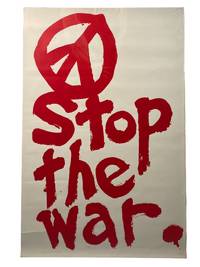
1970. Anti-WarVietnam War Counterculture Stop the War poster c. 1970. Lithographic print. Measures approx. 23" x 34". Dated in pen in upper right corner "5/9/70". Powerful anti-war protest poster from the Vietnam War era featuring bold red brushstroke-style text reading "Stop the War." above a large peace symbol integrated into the word "Stop." The raw hand-painted aesthetic reflects the urgency and grassroots nature of the anti-war movement which saw mass protests student activism and resistance to U.S. military intervention in Southeast Asia. Posters like this were a crucial tool for mobilizing public sentiment against the Vietnam War often appearing in demonstrations college campuses and underground press publications. The Vietnam War 1955-1975 was a deeply divisive conflict sparking widespread opposition due to its immense human cost the draft system and revelations of U.S. military actions abroad. By the late 1960s and early 1970s the anti-war movement had grown into a major political force pressuring policymakers and contributing to the eventual withdrawal of U.S. troops. This poster embodies the visual language of resistance linking it to the broader tradition of protest art that shaped 20th-century political movements. Very good condition. A moving testament to the anti-war movement of the 1960s and 70s. unknown
Riferimento per il libraio : 21359
|
|
|
World War II Pacific Theater
World War II Pacific Theater Combat Photography with Iwo Jima and Pearl Harbor Coverage
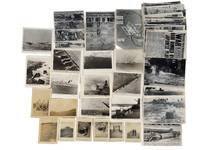
1945. U.S. military operations in the Pacific Theater during World War II photograph and newspaper archive 1941-1945 documenting the Battle of Iwo Jima and the attack on Pearl Harbor. The archive pairs soldier-taken snapshots with official U.S. Navy and press photographs showing how combat equipment and battlefield conditions. The featured original snapshots contain handwritten notations en verso identifying dates specific locations soldiers and equipment.<br /> <br /> The archive comprises 39 silver gelatin photographs ranging from roughly 3.5 x 5 to 6 x 8 inches together with original wartime front pages of the Honolulu Star-Bulletin covering the attack on Pearl Harbor the fall of Italy and the Allied invasion of Europe. Images include amphibious landings on the black sand beaches of Iwo Jima with landing craft advancing under naval bombardment; U.S. Navy battleships destroyers and landing craft firing on shore defenses; and aerial scenes of dogfights and bombing runs. Close-up battlefield images depict the wreckage left in the wake of combat including destroyed landing craft craters from naval artillery and Japanese fortifications. Several photographs focus on the role of air power with images of Japanese aircraft under attack U.S. planes engaging in dogfights and B-29 Superfortresses bombing enemy positions. A particularly striking image captures a Japanese bomber scoring a direct hit on the USS Yorktown with billowing smoke rising from the carrier. Handwritten notations on some images identify U.S. servicemen locations such as Mount Suribachi and captured Japanese positions. The series of larger military-produced photographs and newspaper clippings have inscriptions on verso identifying locations and vessels depicted as well as the name tag "K .Benden." Among these are portraits of American soldiers posing at key strategic points inspecting captured bunkers and standing beside wrecked aircraft. <br /> <br /> Reconnaissance images show terrain and fortified positions; ground-level views show cratered landscapes wrecked landing craft and captured Japanese fortifications. One image shows the USS West Virginia during the Pearl Harbor attack with fire damage and crew visible; another shows a Japanese aircraft striking the USS Yorktown. Other photographs show servicemen near Mount Suribachi inspecting bunkers and beside wrecked aircraft. Many images carry printed captions within the negatives; others have handwritten verso annotations identifying locations dates vessels and personnel including one marked "K. Benden." Light wear minor edge creasing and occasional surface marks; overall in very good with strong image clarity. unknown
Riferimento per il libraio : 21392
|
|
|
World War II Pacific War
American Analysis of Japanese Expansion and U.S. Military Response in the Pacific Theater
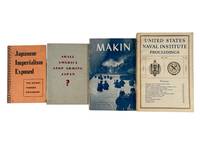
1939. Various authors and issuers group of wartime pamphlets and periodicals 1939-1945 documenting American interpretations of Japanese expansionism prewar economic policy debates and U.S. military operations in the Pacific Theater. The material operates in Cultural/Representational Mode illustrating how military governmental and institutional publications framed Japanese imperial strategy and justified American military response while also presenting technical and battlefield analysis intended for both military and informed civilian audiences. These works collectively offer insight into wartime messaging strategic interpretation and the evolving American understanding of Pacific conflict from prewar trade tensions through active combat operations.<br /> Four printed works issued between 1939 and 1945 including Shall America Stop Arming Japan 1939; Japanese Imperialism Exposed: The Secret Tanaka Document 1942; United States Naval Institute Proceedings Vol. 69 No. 485 May 1943; and Makin U.S. War Department 1944. Staple-bound and softcover formats illustrated with photographs maps charts and technical diagrams. Shall America Stop Arming Japan presents statistical charts detailing American exports of strategic materials noting that Japan sourced significant percentages of copper scrap iron and petroleum from the United States accompanied by arguments advocating embargo. Japanese Imperialism Exposed reproduces the controversial Tanaka Memorial describing a proposed sequence of territorial conquest beginning with China and extending across Asia and the Pacific. Makin issued by the War Department's Historical Division provides a detailed narrative of the U.S. Marine assault on Makin Atoll with photographs of tanks infantry movement and captured terrain alongside fold-out maps showing defensive positions and invasion routes. United States Naval Institute Proceedings includes articles analyzing naval aviation logistics and strategic doctrine with photographic illustrations of aircraft such as the XLRQ-1 seaplane glider and PV-1 Ventura patrol plane as well as discussions of wartime and postwar naval policy.<br /> Together these publications trace the progression of American engagement with Japan from economic and diplomatic tension to full-scale military conflict combining advocacy intelligence interpretation and operational reporting. The juxtaposition of prewar policy argument with wartime combat analysis and technical discussion demonstrates the range of printed materials used to inform persuade and document during the Pacific War. These works support research into wartime propaganda military strategy and the informational frameworks through which the United States understood and prosecuted the war against Japan. Light wear to spines and edges with minor toning to pages; overall very good condition. A cohesive grouping illustrating the intersection of policy debate ideological framing and battlefield documentation in World War II print culture. unknown
Riferimento per il libraio : 21402
|
|
|
World War II Migration
Wartime Migration and Industrialization in the National Defense Migration Hearings Examining the Social and Economic Impacts of US Migration 1941
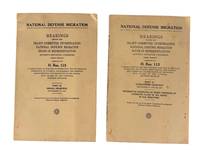
1941. United States House of Representatives. National Defense Migration Hearings before the Select Committee Investigating National Defense Migration. Washington D.C.: U.S. Government Printing Office 1941. First edition. Two volumes: Part 22 Omaha Hearings November 25 1941 and Part 24 Washington Hearings December 22 and 23 1941. Printed for the use of the Select Committee Investigating National Defense Migration. Original tan paper wraps. 8vo.<br /> <br /> A scarce pair of congressional hearing transcripts examining the social and economic impacts of domestic migration caused by World War II defense mobilization. Conducted by the Select Committee Investigating National Defense Migration known as the "Tolan Committee" these hearings document testimonies regarding population shifts housing shortages and labor force changes as the U.S. ramped up war production. Part 22 held in Omaha Nebraska explores the regional consequences of wartime migration including the influx of workers into industrial centers and its strain on local infrastructure. Part 24 held in Washington D.C. focuses on the feasibility of converting the nation's automotive industry to military production highlighting testimony from industry leaders and government officials. The Tolan Committee played a pivotal role in shaping wartime domestic policy addressing concerns over workforce displacement racial tensions and the preparedness of U.S. cities to absorb migrating populations. These volumes provide an invaluable primary source on the economic and demographic transformations of the early war years. Both volumes exhibit minor wear to covers light foxing and some creasing but remain intact and highly readable. Very good condition overall. A vital record of the congressional response to one of the most significant internal migrations in U.S. history. unknown
Riferimento per il libraio : 21581
|
|
|
War Dept
Bilbliography of State Participation in the Civil War 1861-1866
War Dept. 1913. Rebound in deep blue cloth with title label on spine. Marbleized page edges. Hinges starting verso ffep and between pages 1124/1125. Owner's name written on second ffep with amusing penciled note beneath by a later owner. Extensive marginalia throughout. A large heavy book which will require extra shipping charges - cannot ship outside U.S.A. Hardcover. Good/No Jacket. Thick Large Octavo. Book. War Dept. Hardcover
Riferimento per il libraio : 1159169
|
|
|
Civil War Black Troops
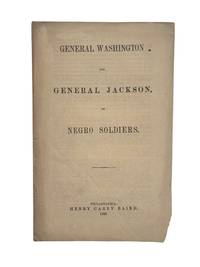
African American Military Enlistment Advocacy in Civil War Pamphlet 1863
1863. General Washington and General Jackson on Negro Soldiers 1863 a Civil War pamphlet advocating for the enlistment of African American soldiers in the Union Army. The pamphlet addresses Union military recruitment wartime policy and political arguments for Black enlistment. Drawing on historical precedent and wartime necessity the text argues for the integration of African American troops into Union forces.<br /> <br /> Unknown author. General Washington and General Jackson on Negro Soldiers. Philadelphia: Henry Carey Baird 1863. First edition. 8 pages. The pamphlet presents a structured argument combining moral appeal and military strategy asserting the necessity of Black enlistment for Union victory. It cites "authentic documents" including letters attributed to George Washington and Andrew Jackson Congressional records and state proceedings to demonstrate historical precedent for African American military service. A passage from Jackson's 1814 address to Black troops in New Orleans praises their endurance and discipline while references to Revolutionary War service describe free Black soldiers serving alongside white troops in Massachusetts. The text argues that millions of enslaved and free African Americans could contribute to the Union war effort emphasizing both their willingness to fight and the strategic advantage their enlistment would provide.<br /> <br /> Issued during a pivotal moment in 1863 following the Emancipation Proclamation and the formal authorization of Black troops the pamphlet reflects ongoing debates over military policy and racial inclusion within the Union Army. Its combination of historical documentation and forward-looking argument places it within broader efforts to legitimize African American service and reshape public opinion in the North. The text supports Civil War propaganda recruitment strategy and federal policy regarding Black soldiers. Light toning small separation along the spine of the final leaf; overall very good condition. A concise example of wartime advocacy for African American military participation. unknown
Riferimento per il libraio : 21794
|
|
|
Rohwer War Relocation Center
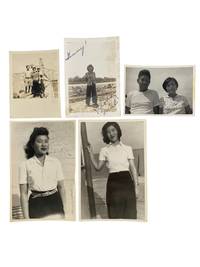
Japanese-American Life in WWII Photo Archive Including The Rohwer War Relocation Center in Arkansas
1944. Japanese American WWII Internment Japanese American photograph archive circa 1930s to 1940s records civilian identity and interpersonal life across the World War II era including one photograph with a note on verso tied directly to incarceration at the Rohwer Relocation Center in Arkansas. Named individuals preserved through handwritten inscriptions establish the archive as a record of the mid 19th century Nisei experience. This evocative photographic archive captures fragments of Japanese American civilian life both prior to and during World War II incarceration. <br /> <br /> Archive consists of 17 silver gelatin photographs measuring approximately 2.5 x 3 inches to 4 x 6 inches. Subjects include individual portraits paired figures and small group scenes photographed outdoors. One image dated July 1 1944 bears the verso inscription "Jaden: Rohwer Relocation" and front inscription "Ginny! - Aloha Mich" identifying a woman confined at Rohwer a War Relocation Authority camp that held over 8000 Japanese Americans during the war. Additional photographs include two separately identified women The remaining images include two separate portraits of young women confidently posed outdoors. The women are dressed in fashionable WWII-era separates - fitted short-sleeved blouses tucked into dark skirts both with their names penned en verso; "Mae West Sasano" and "Yasuko." Another is a snapshot of a male grouping on what appears to be a construction site and en verso is written "31" possibly indicating a year. Japanese Americans played a significant role in helping build infrastructure such as canals bridges and roads particularly in the West. Lastly a snapshot of a casual intimate outdoor portrait of a man and woman seated side-by-side. Together these images provide a poignant humanizing counterpoint to official narratives of incarceration emphasizing style resilience and familial bonds. The inclusion of both prewar and internment-era materials adds depth and rarity to the grouping situating it as a valuable resource for researchers of Japanese American history internment documentation and the broader landscape of W.W.II homefront experiences.<br /> <br /> This archive photographs foreground continuity in social interaction dress and personal identity across prewar and wartime conditions while retaining a direct link to the history of forced removal through the Rohwer inscription. Light wear to edges minor surface handling and occasional corner softening; inscriptions clear. Overall in very good condition. The grouping provides a concise body of primary material for examining Japanese American identity spanning wartime incarceration and postwar reintegration into American society. unknown
Riferimento per il libraio : 21845
|
|
|
Sino-Japanese War
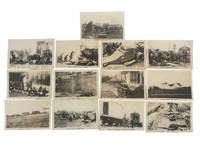
Chapei Incident Photograph Archive Documenting the 1932 Battle Between Japanese Imperial Forces and the Chinese 19th Route Army in Shanghai
1932. Archive of original photographs documenting the Chapei Incident also known as the January 28 Incident fought in Shanghai between Japanese Imperial forces and the Chinese 19th Route Army in 1932 showing combat operations urban destruction military infrastructure and battlefield aftermath during one of the earliest major armed confrontations of Japanese expansion into China prior to the full-scale Sino-Japanese War. The photographs provide visual evidence of trench warfare mechanized assault aerial bombardment and street fighting within Shanghai's Zhabei district known historically in Western transliteration as Chapei. Particularly significant is the archive's emphasis on both Chinese defensive positions and Japanese offensive capabilities preserving direct visual testimony of a conflict that foreshadowed the broader militarization of East Asia during the 1930s.<br /> Collection consists of 13 silver gelatin photographs measuring approximately 4.25 x 2.5 inches several captioned in English and annotated en verso "CHAPEI INCIDENT 1932." The images depict multiple phases and aspects of the conflict between Japanese and Chinese forces during the fighting in Shanghai from January 28 to March 3 1932. One photograph captioned "Japanese Artillery in action" shows helmeted Japanese artillery crews operating a wheeled field gun while another titled "Japanese Bluejackets in action" portrays entrenched naval infantry aiming rifles from behind sandbag fortifications. In contrast "Trenches of 19th Route Army" depicts Chinese soldiers positioned within earthen defensive works rifles raised toward advancing forces. Several images document Japanese mechanized and aerial operations including "Japanese Block-house with Armoured Car at S.N.R. Crossing" showing a Type 92 armored vehicle accompanied by infantry near a fortified crossing point and "Japanese aerodrome" depicting a military biplane stationed near hangars. Other photographs record the destruction inflicted on Shanghai's urban infrastructure. "Result of Japanese Aeroplane's bombing" portrays a heavily damaged train car twisted off its undercarriage following an aerial attack. "Japanese Gun in action. Chapei" captures soldiers maneuvering amid smoke and ruined storefronts during active street combat. Additional images include "Burning of Odeon Theater in Shanghai" and "Ruins being guarded by Japanese Bluejackets against Snipers in Chapei District" documenting the devastation of civilian and cultural structures within the contested urban zone.<br /> <br /> The archive documents a pivotal episode in the escalation of Japanese military aggression in China during the interwar period. The January 28 Incident emerged amid rising tensions following Japan's occupation of Manchuria and demonstrated the increasing willingness of the Japanese military to deploy mechanized warfare naval infantry and aerial bombardment against densely populated Chinese urban centers. The resistance mounted by the Chinese 19th Route Army became widely noted for its resilience despite severe disparities in equipment and military resources. Particularly notable are the photographs balancing battlefield action with scenes of civilian destruction illustrating the transformation of Shanghai into a modern urban war zone years before the outbreak of the Second Sino-Japanese War in 1937. Minor edge wear and faint creasing with strong contrast and image clarity throughout; captions remain fully legible. Overall very good condition. A rare and visually compelling photographic record of early Sino-Japanese conflict and interwar urban warfare in Shanghai. unknown
Riferimento per il libraio : 21906
|
|
|
Anti Vietnam War Poster
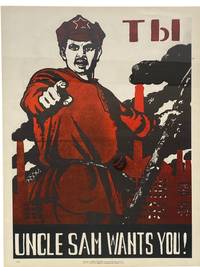
Anti-Militarism Poster 1968
1968. PropagandaCounterculture Ты / Uncle Sam Wants You! New York: International Poster Corp. 1968. Offset lithographic poster in red black and cream tones measuring 21 x 29 inches. A striking Cold War-era visual pastiche that fuses Soviet revolutionary imagery with American military propaganda this poster was issued during a peak moment of political unrest in the U.S. amid the Vietnam War and domestic resistance movements.<br /> <br /> This design is a bold recontextualization of the iconic 1920 Soviet recruitment poster "Ты запиÑалÑÑ Ð´Ð¾Ð±Ñ€Ð¾Ð²Ð¾Ð»ÑŒÑ†ÐµÐ¼" "Did you volunteer" by Dmitry Moor repurposed here with the English slogan "Uncle Sam Wants You!" emblazoned below in tall confrontational type. The juxtaposition of Soviet iconography-complete with red army uniform factory smokestacks and Cyrillic lettering-with a phrase universally associated with U.S. enlistment efforts delivers a searing critique of militarism nationalism and ideological doublespeak on both sides of the Cold War divide. Produced by the International Poster Corp. a commercial publisher in the late 1960s known for distributing countercultural and revolutionary imagery this poster was marketed to radical bookstores and student groups across North America. It exemplifies the era's politically charged appropriation of state propaganda styles as a vehicle for anti-war New Left and student movement critiques. The figure's accusatory point lifted directly from Moor's original underscores a shared visual vocabulary of coercion that transcended ideological boundaries. Very good condition with strong color retention and no visible tears small surface abrasion on recto not affecting images. Printed copyright and publishing line along bottom margin. An evocative artifact of 1960s countercultural print culture merging international iconographies of enlistment and resistance. unknown
Riferimento per il libraio : 22090
|
|
|
Anti Vietnam War
Pair of Mimeographed Documents Contrasting Johnson's 1964 and Nixon's 1969 Vietnam War Policies with Viet Cong Peace Terms
1964. Counterculture Vietnam War This pair of mimeographed documents issued in 1964 and 1969 respectively capture the shifting rhetorical and political frameworks of U.S. justification and policy aims in Vietnam offering rare comparative insight into both the Lyndon B. Johnson and Richard Nixon administrations' public positions. 1 Some Questions on Vietnam. Washington: Friends Committee on National Legislation June 3 1964. 2 Mr. Nixon's Points. N.p October 14 1969. Two double-sided mimeographed typescripts measuring 8.5" x 11" each. Together they trace the continuity and contradictions in American official thinking from the earliest stages of direct military intervention to the early attempts at managed withdrawal. The 1969 document is particularly notable for its side-by-side presentation of Nixon's proposed peace terms with those of the National Liberation Front NLF the political wing of the Viet Cong.<br /> 1 The first document dated June 3 1964 and issued by the Friends Committee on National Legislation in Washington D.C. is titled Some Questions on Vietnam. Framed as a briefing tool for concerned citizens it outlines the U.S. position in the early escalation phase of the war and provides extensive excerpts from contemporary sources including President Johnson's June 2 press conference and articles from The Washington Post and New York Times. Johnson is quoted stating that the U.S. is "bound by solemn commitments to help defend this area against Communist encroachment" reaffirming the domino theory logic underpinning American involvement. <br /> <br /> The handout catalogs U.S. military strategies then being deployed including the "Strategic Hamlet Program" in which "thousands of peasants were uprooted at gunpoint and moved into defensive village-clusters far removed from ancestral lands." Other methods included the use of lie detectors on suspected Viet Cong and defoliation tactics that the Washington Post acknowledged raised "questions of the wisdom of using such agents at all in this kind of war. where the consequences are visited upon a civilian population we are trying to defend." The leaflet also raises doubt about South Vietnamese support for the war: "the Saigon government has the allegiance of probably no more than 30 per cent of the people." Statistics from the Pentagon note that by May 25 1964 1130 American servicemen had been killed wounded or listed as missing since 1961. Senator Wayne Morse is quoted: "We have already poured into that sink-hole over $5½ billion." The final sections argue that economic aid cannot be separated from military goals and propose alternatives such as United Nations mediation. Notably the sheet warns that mail to the White House on Vietnam had been averaging fewer than 150 letters per week urging citizens to "make their views known to the President and your Congressmen."<br /> <br /> 2 The second document dated October 14 1969 presents President Nixon's public negotiating stance during the early phase of his "Vietnamization" strategy. Titled Mr. Nixon's 8 Points the yellow sheet begins with a justification of U.S. sacrifices: "The United States has suffered over a million casualties in four wars in this century. We are proud of this record and we bring the same attitude in our search for a settlement in Vietnam." Nixon outlines eight specific principles most notably: "We seek no bases in Vietnam. We insist on no military ties. We are willing to agree to neutrality for South Vietnam if that is what the South Vietnamese people freely choose." He continues "We have no intention of imposing any form of government upon the people of South Vietnam nor will we be a party to such coercion." The points include phased withdrawal over twelve months the establishment of an international supervisory body elections under international supervision release of prisoners of war and mutual agreement to observe the 1954 Geneva Accords. Nixon concludes with a reaffirmation that U.S. presence would end entirely once these measures were fulfilled.<br /> <br /> The reverse of the Nixon flyer contains The NLF's 10 Points the Viet Cong's counter-position which sharply contradicts Nixon's framing. Point 2 is categorical: "The U.S. Government must withdraw from South Vietnam all U.S. troops military personnel arms and war materiel. and liquidate all U.S. military bases in South Vietnam." Point 4 emphasizes sovereignty: "The people of South Vietnam shall settle themselves their own affairs without foreign interference." Throughout the NLF stresses full political participation neutral diplomatic relations and reunification of Vietnam as "a peaceful process. without foreign interference." Notably Point 9 demands that the U.S. government "must bear full responsibility for the losses and devastations it has caused to the Vietnamese people in both zones."<br /> <br /> Juxtaposing these two documents reveals a significant divergence between U.S. public rhetoric and Vietnamese revolutionary demands. While Nixon framed U.S. intentions as altruistic and limited the NLF viewed the war as colonial in nature and demanded unconditional withdrawal. This side-by-side format would have been a powerful tool for peace activists and educators in 1969 especially as public trust in government narratives about Vietnam eroded in the wake of the Tet Offensive and ongoing domestic protest. Very good condition overall. unknown
Riferimento per il libraio : 22217

|
|
|
Ohio Anti-Vietnam War Protest
Antiwar Movement Ephemera from SDS Allied Coalitions and Peace Action Organizers in Cleveland and Columbus
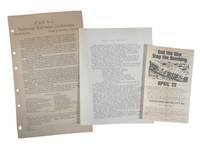
1969. Archive of anti-Vietnam War organizing literature documenting systems of grassroots protest coordination student mobilization and peace coalition activism in Ohio between 1969 and 1971. The material documents how antiwar organizations student groups clergy labor activists and peace coalitions coordinated demonstrations conferences transportation logistics and public outreach campaigns opposing United States military involvement in Vietnam. Produced during the peak years of mass antiwar protest the archive reveals the operational mechanisms through which decentralized coalitions organized national moratoriums strategy meetings marches and political education efforts linking opposition to the war with broader concerns regarding racial inequality militarism labor activism and civil liberties. The material provides primary-source evidence for the study of antiwar movement infrastructure protest communication networks and coalition-building within the late 1960s and early 1970s American peace movement.<br /> Archive consists of three pieces of antiwar protest literature produced in Cleveland and Columbus Ohio including one broadside one flyer and one newspaper-format circular. 1 Vietnam Moratorium Committee / Ohio Peace Action Committee. "What Can You Do" Columbus: 1969. Mimeographed flyer promoting participation in the October 15 National Moratorium against the Vietnam War. The text encourages Americans to "devote the day to working for peace" and includes instructions for organizing demonstrations educational events and local participation. Directed in part toward students the flyer urges readers not to be deterred by "dictatorial threats of low grades by a professor." Endorsers include Mayor John Lindsay Senator Eugene McCarthy and the United Auto Workers illustrating the broad coalition supporting the moratorium movement. 2 Cleveland Area Peace Action Council. "Call to a National Anti-War Conference." Cleveland: 1970. Printed circular announcing a July 4-5 strategy conference at Case Western Reserve University intended to "unify the anti-war movement." The text criticizes the Nixon administration's continuation and escalation of the war while emphasizing the disproportionate burden borne by Black communities and working-class Americans. The document is endorsed by more than twenty organizers including clergy labor activists GI counselors and community organizers. 3 Cleveland Area Peace Action Coalition. "End the War Stop the Bombing - April 22." Cleveland: 1970. Illustrated protest flyer featuring a dramatic woodcut-style image of American bombers and advancing infantry. Produced in response to intensified U.S. bombing campaigns in Indochina the text declares "There is no moratorium on the daily killing of 300 Indochinese" and includes transportation details for Cleveland participants traveling to demonstrations in New York City.<br /> Together these materials document the logistical and organizational dimensions of the antiwar movement beyond highly publicized national demonstrations preserving evidence of the local coalition work required to sustain mass protest activity during the Vietnam War era. Particularly notable is the archive's emphasis on interconnected activism linking opposition to the war with labor organizing racial justice concerns student activism and critiques of state violence. The documents additionally illustrate the broad ideological range of antiwar coalitions during the Nixon years encompassing students trade unionists religious leaders veterans' advocates and civil rights organizers. Minor handling wear folds and age toning consistent with use in activist distribution; overall very good condition. A concise but historically significant archive of grassroots antiwar organizing and protest infrastructure during the Vietnam War period. unknown
Riferimento per il libraio : 22219
|
|
|
Anti-Vietnam War
The Americans Are Coming: End the War in Vietnam.
1970. Griffith Maxwell and Charles Goodsell. "The Americans Are Coming: End the War in Vietnam." Vineyard Haven MA: P.T.P. 1970. Illustrated broadside with Black-ink woodcut of a Vietnamese woman on horseback reaching toward a child inside a hut. Includes a handwritten call to action from Griffith: "The only draft system we use is one of rough draft. So pick up your pen. Send it to Washington D.C." 8.5 x 11 in. printed one side with ink annotations. unknown
Riferimento per il libraio : 22260
|
|
|
Cold War Photography
Cold War Intelligence History U.S. Army Counterintelligence Photographic Training Manuals from Fort Holabird 1960 to 1963
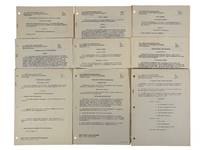
1960. U.S. Army Intelligence School instructional materials issued between 1960 and 1963 document the formal training of counterintelligence personnel in clandestine photography at Fort Holabird during the Cold War. Produced by the Department of Counterintelligence these documents establish photographic surveillance as a core technical discipline within military intelligence emphasizing the use of compact cameras covert image capture and field processing under restricted conditions. The archive supports research into Cold War espionage military training systems and the adaptation of commercial photographic technology for intelligence purposes.<br /> <br /> Archive consists of nine mimeographed typescript documents totaling 111 pages each three hole punched and measuring approximately 8.5 x 11 inches with designations including "SupR" Supplemental Reading "SO" Student Outline "SIS" Student Information Sheet and "PE" Practical Exercise. Titles are as follows: 1 Description and Operation of the Leica Camera SO Jun 63; 2 Minox Camera SupR May 60; 3 Minox Camera PE Mar 62; 4 35mm Camera SO Oct 61; 5 Subminiature Film Development Supl Nov 62; 6 Subminiature Cameras SO Mar 62; 7 Photographic Strip Printing PE Mar 61; 8 Film Development by Inspection PE Jan 62; 9 Cameras Films and Developers SIS Jan 62. The documents include technical diagrams of camera models such as the Leica IIIF exposure tables film speed comparisons and procedural instructions for photographic capture and processing. Instruction emphasizes the operational value of compact cameras noting that the "Minox miniature camera is one of the most valuable items presently available in the field of intelligence photography" particularly for tasks where "larger cameras are not adaptable or available." Practical exercises required trainees to complete full exposure rolls conduct strip printing tests and photograph designated areas within training grounds.<br /> <br /> These materials were produced during a period when photographic intelligence became central to military and intelligence operations requiring personnel to operate in environments described as "restricted or otherwise forbidden areas" where detection could result in "danger imprisonment or confiscation of camera and exposed film." The curriculum reflects a standardized and technical approach to surveillance combining theoretical instruction with applied field exercises to ensure operational readiness. The emphasis on subminiature formats concealment and independent exposure estimation demonstrates the constraints under which intelligence photography was conducted prior to digital and automated systems. Minor edge wear and light toning; documents remain clean and legible; overall very good condition. This archive provides concentrated primary documentation of U.S. Army counterintelligence training and the technical foundations of Cold War photographic surveillance. unknown
Riferimento per il libraio : 22308
|
|
|
Anti-Vietnam War
Anti-Vietnam War "Hiroshima/Nagasaki Week" List of Actions -1969
1969. Counterculture Radical Movement Anti-Vietnam War Hiroshima/Nagasaki Week List of Actions August 1969 leaflet Fifth Avenue Peace Parade Committee. "Hiroshima/Nagasaki Week - List of Actions." New York: Measyures 11" x 8.5". Detailed typed event schedule for August 2-9 including pickets at the UN the Times Square "Festival of Life" and a Nagasaki Day rally featuring speakers like James Johnson Pt. Hood 3 and Sharon Williams Black Panther Communications Secretary. Notably includes events organized by and spotlighting Puerto Rican Japanese and African American activists. Minor rust staining at some corners of mimeographed sheets; scattered fold lines edge toning and light to moderate soiling on a few pieces. Overall very good condition. unknown
Riferimento per il libraio : 22518
|
|
|
Martin, Michael; Mcdonald Valentine [Vietnam War]
Black Tigers: Elite Vietnamese Rangers and Their American Advisors
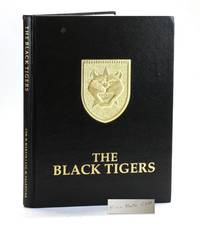
Harmony House Publishers 1993. First Edition. Hardcover. GOOD. SIGNED by the co-author Mike Martin on the RFEP recto with a lengthy inscription which reads like a promotional blurb.This copy annotated in English and Vietnames with notes and glosses in a distinctively Vietnamese hand with red and black ink. With annotated vietnamese newspaper clipping pasted in to the rear encpaper. 136pp. 4to sewn binding in black leatherette over boards with gilt stamped lettering and gilt embossed tiger medallion to front cover. B/W photo illustrated throughout. FFEP torn out sound and square otherwise. Harmony House Publishers hardcover
Riferimento per il libraio : 509640 ISBN : 1564690164 9781564690166
|
|
|
[Mexican War; Indiana; Barbecue] Calvin Frary [ed]
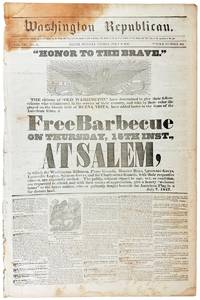
Washington Republican - Friday July 9 1847 "Honor to the Brave." Free Barbecue
Salem Indiana: Washington Republican / Calvin Frary 1847. Very Good -. Salem IN: Washington Republican 1847. Folio 55cm; removed; 4pp. Stain to upper corner; general wear staining and smudging; Good to Very Good. <br /> <br /> Uncommon Indiana newspaper here celebrating the return of veterans of the Mexican War including the Washington Rifles Posey Guards Hoosier Boys Lawrence Greys Lanesville Legion Spencer Grays and the Charlestown Guards. The public "without regard to age sex or condition" are invited to a "Free Barbecue" to celebrate their return. Includes regular ads and news with particular attention paid to the War. Advertisement for "Mrs. D. Curry's Tavern" to final page. OCLC shows five holdings of various issues and mentions the newspaper began in 1845 and shuttered in late 1847. . Washington Republican / Calvin Frary unknown
Riferimento per il libraio : 45585
|
|
|
Spanish-American War Photography
Spanish-American and Philippine-American War Visual Culture in 1898-1899 Stereoscopic Photographs
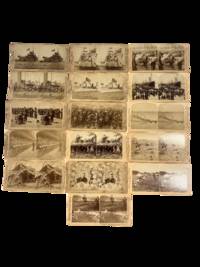
1898. Spanish-American War and Philippine-American War photo archive group of 16 stereoscopic prints produced 1898-1899 documenting United States military campaigns and imperial expansion in Cuba and the Philippines. The material captures battlefield actions troop mobilization and the transition from war with Spain to conflict with Filipino forces providing visual evidence of how military operations and their participants were represented to contemporary audiences. These images record both organized combat and its aftermath including American volunteer units Cuban insurgents and Filipino resistance fighters offering insight into the multinational and transitional nature of the ÕºÕ¡Õ¿Õ¥Ö€Õ¡Õ¦Õ´ at the turn of the twentieth century.<br /> <br /> Sixteen albumen stereoscopic prints mounted on beige card stock each approximately 3.5 x 7 inches issued by publishers Strohmeyer and Wyman and Underwood and Underwood. The archive includes views of the 1st U.S. Volunteer Cavalry "Rough Riders" with scenes such as "Hill charged and taken by the 'Rough Riders' San Juan Cuba" depicting soldiers advancing uphill in formation and "Troop H Captain Curry 'Rough Riders'" showing mounted troops assembled with visible uniforms and equipment. Additional images document mobilization and infrastructure including "U.S. Infantry on the March near Camp Tampa Florida" and "Dock at Tampa on the Day of Sailing for Santiago de Cuba" with soldiers transport areas and staging activity. Cuban participation appears in "Cubans in their Trenches Awaiting the Spaniards Pinar del RÃo" showing armed insurgents positioned defensively. The destruction of the USS Maine is represented in "Near View of the 'Maine' Wreck. Havana Harbor" with visible structural damage. Philippine conflict is depicted in images such as "Washington Volunteers advancing. Filipino trenches in front" and "Behind the Filipino Trenches after the Battle of Malabon" including views of fallen soldiers and battlefield terrain. Additional views include U.S. Marines at Mare Island Navy Yard illustrating domestic military preparation.<br /> <br /> Produced at a moment when stereoscopic imagery served as a primary medium for visualizing distant যà§à¦¦à§à¦§ these prints demonstrate how conflict was presented to the American public through immersive three-dimensional formats. The archive shows the construction of military narratives that emphasized organization movement and engagement while also preserving details of landscape equipment and human presence across multiple theaters. The inclusion of Cuban and Filipino subjects situates the material within broader histories of colonial transition and resistance following Spanish rule. The collection supports research into military history visual media and the representation of U.S. imperial expansion at the end of the nineteenth century. Light toning to mounts minor edge wear and scattered surface wear; images remain sharp with strong contrast; overall very good condition. A cohesive visual record of two interconnected conflicts marking the emergence of the United States as an overseas power. unknown
Riferimento per il libraio : 22690
|
|
|
Rough Riders Spanish-American War
Spanish-American War Stereoviews of the Rough Riders Camps Burial and Veterans 1898 to 1902
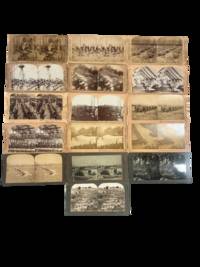
1898. Underwood & Underwood Keystone View Company and other publishers Spanish-American War stereoview archive 1898 to 1902 documents the visual public memory of the War of 1898 through mass-market stereography with particular attention to Theodore Roosevelt's Rough Riders military encampments Spanish fortifications burial rites and veterans' commemoration. The 1st U.S. Volunteer Cavalry known as the Rough Riders became the most celebrated American unit associated with the Cuban campaign and Library of Congress materials identify July 1 1898 as the day U.S. forces including Roosevelt and the Rough Riders defeated Spanish forces at San Juan Hill and Kettle Hill near Santiago de Cuba. These stereoviews support research into Spanish-American War memory the popular construction of Roosevelt's martial image volunteer masculinity mass visual culture and the emergence of the United States as an imperial power at the end of the nineteenth century.<br /> <br /> Sixteen stereoviews by Underwood & Underwood Keystone View Company and others published 1898 to 1902 each approximately 3½ x 7 inches. The Rough Riders views include "Col. Roosevelt's Rough Riders in line for roll call" and "Rough Riders at Camp Tampa U.S.A." showing the regiment in camp formation and informal preparation before or around deployment. Library of Congress holdings include stereographic images of Roosevelt's Rough Riders including New York millionaires of Roosevelt's Rough Riders demonstrating how publishers circulated the unit's social variety and celebrity appeal through stereoview format. The remaining views broaden the war's geography and afterlife through subjects such as "Spanish Fortifications at Santiago" "Burial of Maine Heroes Arlington VA" "Dinner at Camp Cuba Libre Jacksonville Florida" "Veterans at dinner Soldiers' Home Dayton Ohio" "Our Army of Volunteers Camp Alger Virginia" and "The Army of Bread Makers Great Centennial." Together the images show soldiers at roll call camps meals fortifications volunteer mobilization military provisioning burial and veterans' care moving from mobilization and combat geography to mourning and national remembrance.<br /> <br /> The archive's documentary value lies in its treatment of war as both event and visual commodity. Stereoview publishers gave home audiences three-dimensional access to soldiers camps Cuban battle sites burial ceremonies and postwar veterans' institutions helping transform the Spanish-American War into a shared popular spectacle. Roosevelt's image was especially important to that process; Library of Congress collections preserve both photographs of Roosevelt with the Rough Riders at San Juan and popular prints showing him leading the unit evidence of how photography and illustration built his reputation as a man of action. Light wear and toning to mounts one with corner loss; photographs crisp and clean very good overall. Cohesive stereoview archive preserving the Rough Riders' place in American war memory alongside camps fortifications burial provisioning and veterans' commemoration from the United States' first modern overseas war. unknown
Riferimento per il libraio : 22729
|
|
|
Rough Riders; Spanish-American War
Spanish-American War American Soldiers and Rough Riders in Cuba Photo Archive 1898
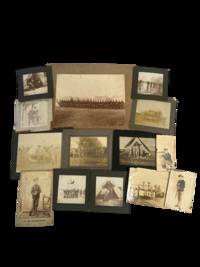
1898. Spanish-American War Military Cuba United States volunteer cavalry photo archive of soldiers in the 1st United States Volunteer Cavalry widely known as Theodore Roosevelt's Rough Riders during and immediately after the Spanish American War ca. 1898-1900. The photographs record the daily life training routines and informal social culture of American volunteer soldiers operating in Cuba following the United States military campaign against Spain. During the operation volunteer regiments composed largely of civilian recruits were deployed overseas in what became the nation's first sustained imperial war. Images of uniformed cavalrymen wearing broad-brimmed campaign hats and field leggings capture the lives of Roosevelt's Rough Riders and the broader volunteer forces who fought in Cuba during the campaign that included the Battle of San Juan Hill.<br /> <br /> Archive of 14 original photographs including albumen and silver gelatin prints ranging in size from approximately 3 x 4 inches to 6 x 8 inches several mounted on original cardstock with one cabinet card produced by photographer J. J. Castro of Plaza de Armas Sagua la Grande Cuba. The photographs depict groups of United States volunteer soldiers in field and camp environments including scenes of tent encampments arranged in rows soldiers standing in formation before their tents and troops moving through rugged terrain. Several images portray informal moments of camp life such as soldiers reading letters outside their tents or playfully tossing a fellow soldier into the air. One photograph shows a group of soldiers wading across a shallow river while carrying their equipment suggesting the difficult marches undertaken by American cavalry units moving through the Cuban countryside. A Spanish inscription on the verso of one mount reads "A favor de Jesus cuartelado numero 106" indicating local Cuban context during the American occupation. Another photograph depicts dockworkers unloading supplies near a harbor installation suggesting logistical activity connected to the military presence on the island.<br /> <br /> The Spanish American War of 1898 marked the emergence of the United States as an overseas imperial power leading to American control or influence in Cuba Puerto Rico Guam and the Philippines. Volunteer regiments including the Rough Riders became widely celebrated in the American press in part due to the leadership of Theodore Roosevelt and the regiment's participation in the assault on San Juan Hill. After Spain's defeat United States forces remained in Cuba during an occupation that lasted until 1902 while new political institutions were established on the island. Photographs produced in this period document both the operational routines of American troops and the broader transformation of Cuba into a site of U.S. military administration. Light surface wear visible to several prints with minor edge rubbing and faint foxing to some mounts; a few photographs show slight fading though images remain clearly legible; overall very good condition. The archive preserves a cohesive visual record of American volunteer cavalry culture and military occupation during the opening phase of United States overseas expansion. unknown
Riferimento per il libraio : 22659
|
|
|
G Guerra,
THEORY OF ELECTRONS
Ed-Tech Press 2025. 1st. Hardcover. New/New. Ed-Tech Press hardcover
Riferimento per il libraio : AME_9781835351123 ISBN : 1835351123 9781835351123
|
|
|
Boer War
Second Boer War Stereoviews of British Field Operations in South Africa 1899 to 1900
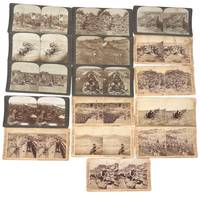
1899. Imperial war stereoview cards from the Second Boer War documenting British military transport entrenchment artillery deployment refugee evacuation and camp provisioning in South Africa circa 1899 to 1900. Published for commercial circulation the cards include infantry crossing rivers under observation Royal Engineers rebuilding destroyed transport routes naval guns hauled inland for Lord Roberts' advance on Pretoria refugees leaving Kimberley after the siege and soldiers occupying trenches kopjes and gun positions across contested ground. Named sites including Colesberg Modder River the Orange River Naauwpoort Norval's Pont the Vet River Dordrecht Gras Pan Kimberley and the Zand River identify locations across the northern and central campaigns.<br /> <br /> Photo archive of 16 albumen stereoview photographs each 7 x 3.5 inches South Africa circa 1899 to 1900. Mounted stereographs include "Baking bread in the field ovens British camp at Naauwpoort South Africa" with uniformed men working beside rough camp ovens and stacked fuel; "The Last Drop a scene on the battlefield at Dordrecht South Africa Dec. 30th" centered on a fallen soldier being given water among boulders; trench views captioned "Behind the Orange River intrenchments holding back the bravely advancing Boers" and "Royal Munster Fusiliers firing from behind redoubt at Honey Nest Kloof"; "When the cannon's roar is still" with soldiers sleeping fully armed before Colesberg; and "Cape Garrison Artillery cannonading the dauntless Boers across Modder River" with British guns emplaced among rocks above the river line. Other cards include "First train of refugees out of Kimberley after the siege" crowded with civilians riding atop rail cars; "Royal Engineers building temporary railway bridge beside that destroyed by the retreating Boers Rhenoster River"; "Lord Roberts' infantry crossing the Zand River balloon watching ahead for the Boers"; "The Worcesters leading the attack on a kopje held by the Boers Norval's Pont"; "British Scouts firing on a Boer Patrol near Colesberg"; "Gallant storming of a Boer kopje by the Suffolks at Colesberg"; and "The dying bugler's last call a battlefield incident Gras Pan." Versos carry printed captions in English with parallel translations in French German Spanish Russian and Italian.<br /> <br /> Stereoview cards issued by Underwood & Underwood present the Boer War conflict between the British Empire and the Boer republics over control of South Africa including political power territory and the gold-rich Transvaal with Britain fighting to consolidate imperial rule and the Boers fighting to preserve their independence. The cards include trench fighting kopje assaults siege relief rail repair artillery transport and refugee movement as recorded across the named campaign sites. Multilingual captions in English French German Spanish Russian and Italian accompany scenes of battlefield action engineering work and military transport circulated for an international market. Light general wear and minor age toning; one card penciled "1949" on verso; overall good condition. Including multilingual versos named campaign scenes and subjects including refugees battlefield casualties trench action rail repair artillery and balloon reconnaissance across Colesberg Modder River the Orange River Naauwpoort Norval's Pont the Vet River Dordrecht Gras Pan Kimberley and the Zand River. unknown
Riferimento per il libraio : 23190
|
|
|
Operation Big Switch; Korean War
Operation Big Switch Photo Archive of Korean War POW Exchange Medical Transport and Homecoming 1953
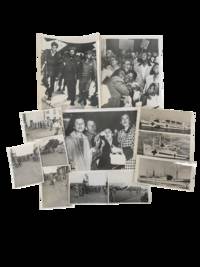
1953. Operation Big Switch photo archive documenting the return of prisoners of war after the Korean Armistice Agreement of July 27 1953 when Allied and Communist forces began the large-scale exchange of captured personnel through Panmunjom and nearby Freedom Village. The operation followed Little Switch the earlier exchange of sick and wounded prisoners in April 1953 and became one of the most visible human consequences of the Korean War's end: gaunt soldiers emerging from captivity medical ships receiving weakened men transport aircraft and troopships carrying them home and families meeting them in scenes of public grief and relief. The archive follows that process from Korea to San Francisco including the Danish hospital ship Jutlandia the U.S. Navy transport General W. F. Hase crowds awaiting returnees and press-issued captions naming repatriated servicemen and their families.<br /> <br /> Photo archive of 11 black and white press and candid photographs photos range from 3" x 4" to 7" x 9" Korea and San Francisco California August 1953. Original editor's captions en verso to press photos. A bearded Cpl. Constantine is supported by two Allied personnel after returning to United Nations control at Freedom Village. Other scenes show soldiers lined up near transport aircraft personnel moving along docks and airfield aprons and hospital ships marked with large Red Cross emblems including the Jutlandia and St. Olaf. Several larger press images record homecoming crowds in San Francisco: African American relatives embracing and laughing as a returning G.I. arrives white family members crying at the sight of a returning corporal aboard the General W. F. Hase and spectators holding signs including "Roger McCabe Newark N.J."<br /> <br /> Operation Big Switch placed the unresolved pain of the Korean War before the American public even as the fighting stopped without a peace treaty. Press coverage emphasized reunion and rescue but the returning soldiers' physical condition also exposed the brutality of captivity forced marches inadequate medical treatment and the long delay between armistice and return. This archive preserves the full arc of repatriation rather than a single homecoming scene moving from ships and airfields to families medical transport and named press narratives issued in August 1953. Light handling wear some curling creasing and minor edge wear; caption slips and agency stamps remain present on several prints. Overall in very good condition. unknown
Riferimento per il libraio : 23396
|
|
|
War on Drugs; Miami Florida
Florida's War on Drugs: Enforcement Rehab Intake and Seizure Display 18 Press Photos 1970 to 1990s
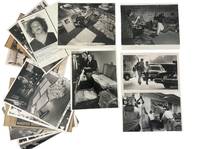
1970. Narcotics raids arrests rehabilitation scenes and evidence displays across Florida in press photographs and magazine pages. Photograph archive spanning Miami Fort Lauderdale Pasco County and related Florida sites from 1970 to the early 1990s establishing how drug control operated through police action newspaper circulation and treatment institutions during the War on Drugs. Produced for press use by newspaper staff photographers wire services and law enforcement publicity channels the group shows the public face of narcotics enforcement at the point when South Florida had become a major corridor in the national drug economy and anti drug policy was being made newly visible through staged photographs official briefings and widely circulated arrest imagery. Named figures included such as Bob Gladden Larry Csonka Jim Kiick Admiral Rickover Carl Mingo and several rehab subjects identified by hand on the versos. The photographs depict suspects detained searched paraded identified displayed beside seized contraband and in other cases shown within rehabilitation settings revealing how law enforcement courts newsrooms and treatment programs handled the same crisis through different institutional forms.<br /> <br /> Photo archive of 18 press photographs including 16 silver gelatin press photographs and 2 wire photos approximately 8 x 10 inches Florida 1970 to early 1990s. The core images show narcotics policing in action: a helmeted officer beside a paddy wagon crowded with detainees; a bench filled with young men under detention in an interior holding space; two handcuffed men led from a courthouse or station entrance; a police-released mugshot with typed caption identifying former New England Patriots running back Bob Gladden after arrest in Fort Lauderdale on a marijuana charge; and a street arrest with an armed officer escorting a suspect between parked cars. Several photographs center on the staged display of evidence including tables covered with packets of drugs stacked currency pistols taped "cookie sheets" and open suitcases packed with bricks or cutting materials. One image shows a narcotics dog inspecting rows of luggage; another shows officials at microphones before a sign for the Vice President's National Narcotics Border Interdiction System; another records cocaine seized from a concealed boat compartment. The group also includes rehabilitation scenes with young adults identified en verso in cursive extending the archive beyond arrest photography into treatment culture. Versos carry a dense record of press handling and editorial use including Miami Herald staff photo stamps dated Dec. 15 1970 and Jan. 5 1971 a St. Petersburg Times credit and clipping backing for a Pasco County drug ring case dated May 29 1974 typed bureau captions circled editorial notations such as "cocaine" "marijuana" "drug raid" and "Operation Crackdown" plus handwritten shot descriptions and date-used stamps.<br /> <br /> The earliest prints fall at the threshold of the modern War on Drugs while later additions carry the record forward into the crack era and the more theatrical seizure photography of the 1980s and early 1990s. Florida is central to that story not only as a site of smuggling and interdiction but as a place where narcotics enforcement became highly visual with press conferences celebrity linked arrests tactical raids canine inspections and rehabilitation coverage all translated into newspaper images for public consumption. The present grouping combines an earlier core of related press photographs with later additions and it preserves a strong visual record of how narcotics control was communicated to the public through local papers wire distribution and agency captioning. Light surface wear minor edge and corner handling editorial markings and stamps to versos scattered adhesive residue and toning; overall very good condition. A concentrated Florida press record of the machinery publicity and human management of drug enforcement across two decades. unknown
Riferimento per il libraio : 23166
|
|
|
Slavery; Civil War; Confederate
Civil War Forced Confederate Impressment of Slave Labor Richmond Virginia 1865
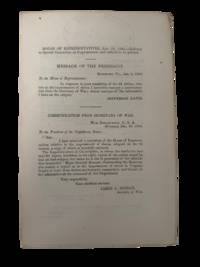
1865. Civil War Black Military Slavery Virginia Confederate government imprint documenting one of the clearest bureaucratic efforts to formalize the use of enslaved labor in direct support of the Confederate war effort at the very moment of institutional collapse. Issued in Richmond Virginia in January 1865 and printed by the Confederate House of Representatives. The document responds to a congressional inquiry into the impressment of enslaved people explicitly acknowledging state-directed seizure of enslaved men for military labor. Within the text the Confederate state attempts to regulate this extraction noting limits such as "no more than one out of five male slaves between the ages specified. from any one owner" while simultaneously confirming large-scale requisitions including "5000 slaves from the State of Virginia for service with the army of Northern Virginia." The language reveals both the administrative reach of the Confederate state and its dependence on enslaved labor as a logistical backbone in the war's final phase.<br /> <br /> Octavo pamphlet measuring 9.5" x 6" 5 pages printed in Richmond Virginia January 1865. The text includes titled sections "Message of the President" "Communication from Secretary of War" "Resolution of House of Representatives" and "Response of Superintendent of Conscription" along with dated correspondence from December 1864 through January 1865. The imprint corresponds to Parrish and Willingham 2298. As a primary source the pamphlet holds substantial institutional value for collections in African American history Civil War studies and the history of slavery particularly for research into the transition from plantation labor systems to militarized coercion and the administrative mechanisms of late Confederate governance.<br /> The pamphlet is especially significant for how it exposes internal contradictions within Confederate ideology. While the Confederacy had long resisted arming or formally incorporating enslaved people in ways that might destabilize slavery this document demonstrates a late-war shift toward coercive mobilization framed as "employment" to "increase the efficiency of the army." Additional correspondence from Brig. Gen. Jno. S. Preston and Major Gen. J. L. Kemper details the mechanics of requisition emphasizing proportional seizure across slaveholders and acknowledging prior errors in impressment including the improper inclusion of enslaved people outside prescribed categories. Condition shows light toning minor spotting and edge wear consistent with age; paper remains stable with clear legible text throughout; faint institutional stamp present on front. Overall very good condition. This document underscores how the Confederate war effort relied on systems of exploitation applied to enslaved African American men. unknown
Riferimento per il libraio : 23117
|
|
|
Spanish American War; Rough Riders; Philippines; Cuba
Spanish-American War Stereoviews Archive Documenting Rough RidersCuba Manila and the Emergence of U.S. Overseas Empire 1898
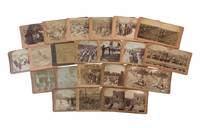
1898. Spanish-American War stereoview archive circa 1898-1899 documenting how the war was pictured through mass-produced photographic views that followed U.S. mobilization battlefield action occupation and military life across both Cuba and the Philippines. These stereoviews preserves the visual system by which the war was circulated to American audiences showcasing camp organization troop movement burial hospital care naval power and overseas deployment. Particularly notable is the archive's coverage of the Rough Riders the Santiago campaign in Cuba and U.S. presence in Manila and Malate showing how stereoview photography helped normalize the war's expansion from anti-Spanish conflict into a broader American imperial presence.<br /> <br /> Archive of 21 stereoviews Various publishers. Spanish-American War stereoview archive. Cuba the Philippines and the United States circa 1898-1899. each measuring 3" x 7". The views are drawn from multiple phases and theaters of the war including camp and drill scenes in the United States embarkation and troop arrivals at Tampa battlefield and occupation imagery from Cuba and extensive and some grisly scenes from Manila and surrounding areas in the Philippines. Captions and images show soldiers in formation cavalry drill military reviews naval artillery hospital interiors encampments burial grounds and troops in active position. Cuban views include Morro Castle after bombardment dead and wounded on the battlefield of Santiago U.S. soldiers preparing to invade Cuba and troops dining near Cabañas Fortress. Philippine views include a departure for Manila American pickets routing a Filipino reconnoitering party the 18th Infantry engaged by Filipino outposts volunteers awaiting orders under the tropical sun Army Hospital Manila and "Our Boys in Camp at Malate P.I." One stereoview identifies Roosevelt's Rough Riders in the mobilization phase linking the archive to one of the war's most publicly mythologized units.<br /> <br /> As a group the stereoviews demonstrate the process by which the Spanish-American War was framed not simply as a short military victory over Spain but as a sustained structure of U.S. troop deployment and occupation extending from Cuba into the Philippines. The Manila and Malate scenes are especially important in this regard since they place American soldiers within the opening phase of the Philippine conflict where U.S. military presence quickly moved beyond liberation rhetoric into imperial control. The archive's mixture of battlefield casualties camp routine naval spectacle and celebratory review scenes shows how stereoscopic publishing converted war into a domestic viewing experience while reinforcing the legitimacy of American expansion abroad. Wear to mounts some toning; overall very good condition. A strong cross-theater visual archive of the Spanish-American War and the emergence of U.S. imperial power in Cuba and the Philippines. unknown
Riferimento per il libraio : 23130
|
|
|
Cold War Anti-Submarine Warfare
Cold War American Anti-Submarine Warfare: P-3 Orion Crash Archive from the U.S. Naval Base at Rota Spain
1985. An American submarine-hunting aircraft wreck off the runway at the U.S. naval base in Rota Spain documented in the hours after a crash landing during the height of the Cold War. The United States built this base under a 1953 deal with Spanish dictator Francisco Franco who traded the use of Spanish soil for American military aid and an end to the diplomatic isolation Spain had endured after World War II. For the next four decades Rota was the main American naval foothold in southern Europe and the planes flying out of it spent their days hunting Soviet submarines slipping in and out of the Mediterranean through the Strait of Gibraltar. <br /> Photo archive of six Large silver gelatin photographs 8 x 10 inches with one duplicate. The downed aircraft is a P-3 Orion the four-engine turboprop that served as the Navy's primary submarine hunter throughout the Cold War. An overhead aerial view shows the plane sitting in a foam-soaked earthen apron beside the runway skid trails cut through the soil fire trucks and crash vehicles staged nearby. Ground-level images capture the nose section marked "81" squadron insignia including a tiger emblem and a five-star command crest and stenciled instructions reading "rescue" and "attach jack pad mooring fitting here." Crash crew in silver fire-proximity suits run hoses along the fuselage. The hand-drawn diagrams trace the aircraft's path across the Rio Salado a wheat field and farm roads outside the base perimeter marking where the "plane hits field and bounces off" and where it "digs in and breaks up" with debris scattered across an 850 by 310 yard field roughly 3150 yards past the end of the runway.<br /> The P-3 Orion entered service in 1962 and flew Cold War patrols out of Rota tracking Soviet submarines that posed a nuclear threat to American carrier groups and European coastlines. Photographs and site diagrams like these were produced for Navy mishap investigations to determine what went wrong and prevent future accidents. Overall in very good condition printed on Kodak photographic paper with the manufacturer watermark on verso. A direct visual record of a Cold War naval aviation accident at the American base that anchored U.S. submarine warfare in southern Europe. unknown
Riferimento per il libraio : 23437
|
|
|
APOSTOLICO, A; GUERRA, C; ISTRAIL, S; PEVZNER, P; WATERMAN, M ,
RESEARCH IN COMPUTATIONAL MOLECULAR BIOLOGY
Springer 2006. 1 Edition. Paperback. New/New. Springer paperback
Riferimento per il libraio : AME_9783540332954 ISBN : 3540332952 9783540332954

|
|
|
WARREN GUERRA,
MINIMALLY INVASIVE SURGICAL OPERATIONS
Hayle Medical 2019. 1st. Hardcover. New/New. Hayle Medical hardcover
Riferimento per il libraio : AME_9781632417664 ISBN : 1632417669 9781632417664

|
|
|
ARMITSTEAD,CHUJO,CORRADINI,FISCHER,GOLDBECK-WOOD,GUERRA,HALPERIN,KAUSCH,KELLER,KENNEDY,
MACROMOLECULES: SYNTHESIS ORDER AND ADVANCED PROPERTIES ADVANCES IN POLYMER SCIENCE
Springer 1992. 1st. Hardcover. New/New. Springer hardcover
Riferimento per il libraio : AME_9780387544908 ISBN : 0387544909 9780387544908
|
|
|
Martinez del Hoyo Guri, Patricia/ Sans Guerra, Raquel
Quarts de nou : Tot el que et cal saber del món casteller
Ara Llibres 2013. Hardcover. New. 1ª ed. 1ª imp. edition. 8.82x5.43x0.63 inches. Ara Llibres hardcover
Riferimento per il libraio : 2-8415224702 ISBN : 8415224702 9788415224709

|
|
|
Revolutionary War Soldier's Wages
Revolutionary War Receipt for Soldier's Wages 1789
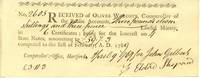
1789. Revolutionary War Receipt from Comptroller's office of Oliver Walcott dated April 9 1789 Hartford Connecticut. The receipt is signed by Eldad Shepard a soldier in the American Revolution. This receipt was for the States Notes that were issued during the Revolutionary War and were then redeemed by the soldier. Shepard received three pounds eleven shillings and three pence. Signed "Eldad Shepard" in the lower right corner. Excellent conditionwith dark clear signatures and writing. unknown
Riferimento per il libraio : 3809
|
|
|
Civil War Letter
1864 Civil War Dated Letter " The union folks will give the rebels such a thraching that they never will need an other.
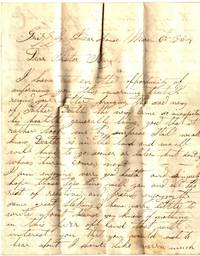
1864. Civil War dated letter from Grizzly Bear HouseCA from Northern sympathizer who writes to his sister in Michigan in July of 1864. He writes on the civil war but also learns of his father's death. He writes in part : "The news from the war is verry good but some what to slow to suit me but I don't know as I ought to complain for the hart I take in it is not very hard just pay taxes and stay at home well taxes is one necessary part of the war and some one has to fight while others pay but I do hope our folks that is the union folks will give the rebels such a thrashing that they never will need an other and then there will be peace at home and abroad" The Letter is signed: "From your Brother John." The letter has a few splits at folds also minor creases otherwise in very good condition. Original Envelope with stampis included. unknown
Riferimento per il libraio : 12729
|
|
|
Civil War Secretary of War
Archive of 8 Congressional Civil War Date Resolutions from the Secretary of War offering granular insight into the logistical fiscal and human dimensions of the Union war apparatus 1961-1965
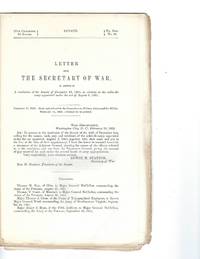
1861. Archive of eight Civil War-date Congressional documents relating to the administration financing and logistical management of the Union war effort. Octavo pamphlets 9.75" x 5.75" 1861-1864. The group comprises eight separately issued documents totaling 22 pages each printed for Congressional distribution and addressing discrete military or legislative concerns arising from the conflict.<br /> <br /> The documents collectively illuminate the bureaucratic machinery sustaining the Union Army at the height of the war. Subjects include the transportation of troops the recruitment of new enlistees to replenish depleted regiments and the armament of fortifications-issues central to the rapid expansion of federal military infrastructure. Several items address the human cost of the war including provisions for pensions to the widows of deceased chaplains and soldiers underscoring the government's evolving responsibility toward military families. One document contains a detailed table listing the names ranks and compensation of aides-de-camp including captains lieutenant colonels and majors offering a rare printed accounting of mid-level command structure and remuneration during wartime mobilization. Other reports reveal the intersection of military necessity and civil administration: a resolution of the legislature of Maine critiques the inadequacies of the railroad route between New York and Washington-an infrastructural weakness with direct implications for troop movement and national security-while a transcription from the Paymaster General petitions Congress for increased salaries for the clerical staff of his bureau reflecting the administrative strain placed upon federal departments by the scale of the conflict. A seven-page pamphlet transmitting a Senate resolution concerning gun contracts further documents the contentious procurement processes that defined wartime industrial expansion and federal contracting. Very good overall with minor edge wear and light handling consistent with issued Congressional pamphlets. A cohesive and research-rich grouping of Civil War-era government documents offering granular insight into the logistical fiscal and human dimensions of the Union war apparatus at a moment of unprecedented national crisis. unknown
Riferimento per il libraio : 11070
|
|
|
Civil War Military Documents
Two Signed Civil War Documents Pay Order & Descriptive List of Deserters
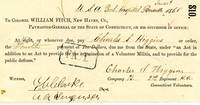
1865. 2 Civil War Documents. General Orders No. 2 signed by Leander Blanden "L. Blanden" as Col. 95th Ill. Infty "Head Qrs. 2nd Brig. 3rd Div.Camp 'Battle field' Near New Orleans" Feb. 24 1865. regarding reports to be sent to headquarters including "Descriptive List of Deserters." Show-through from mounting strip on verso. Second document is a pay order from U.S. A. Genl. Hospital Readville Jan. 28 1865 to Col. William Fitch Paymaster-General of Connecticut to pay $10 to Charles S. Higgins of Co. B. 2nd Reg. Ct. Vols. In excellent condition. unknown
Riferimento per il libraio : 10556
|
|
|
Civil War Cavalry Forces
Civil War Congressional Document Regarding Cavalry Forces from the Secretary of War 1862
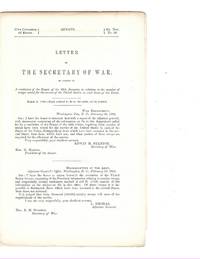
1862. Eight page Civil War date congressional document titled "Report of The Secretary of War" regarding the cavalry forces of the United States. 9.75" x 5.75. 1862. The subject writes: "A resolution of the Senate of the 29th of January in relation to the number of troops raised for the service of the United States in each State of the Union." 7 of the pages show a table of the number of cavalry forces and their ranks from each state it reads "Report of the cavalry forces of the United States furnished in compliance with letter of Captain George D. Ruggles assistant adjutant general of Febrary 14 1862." Overall very good condition with minor wear to edges. unknown
Riferimento per il libraio : 12666
|
|
|
American League Against War and Fascism
Women War and Fascism" 1935 Argument Against the Exploitation of Women's Labor "A protest against the use of women as cheap labor in factories and offices in the U.S.
1935. Women War and Fascism. New York: The American League Against War and Fascism 1935. Original paper wrappers. 18 pages. "A protest against the use of women as cheap labor in factories and offices in the U.S. as well as in the fascist states. Munitions plants employ women at dangerous tasks with long hours and low wages. Discriminatory laws against women should be defeated and women's wages made equal with men's for equal work. Published in 1935 this pamphlet was issued by the American League Against War and Fascism a Popular Front organization formed in 1933 at the height of the Depression and global political instability. The League whose membership included communists socialists liberals labor leaders and clergy sought to organize broad resistance to the rise of fascism in Europe and to U.S. military expansion. In the preface to its founding conference at Madison Square Garden the League declared: "We call upon all who would defend peace democracy and the rights of the working people to unite in struggle against the forces of war and fascism." This 1935 publication situates the group within the international anti-fascist movement linking Mussolini's invasion of Ethiopia Hitler's consolidation of power in Germany and Japan's militarism in Asia to domestic threats posed by American reactionary forces.<br /> <br /> Pamphlets of the American League Against War and Fascism are historically significant both for their content and for their role in shaping early U.S. anti-fascist discourse. They illustrate how broad coalitions attempted to mobilize ordinary Americans against authoritarianism years before the United States entered World War II. Such ephemera are now scarce with surviving examples primarily held in institutional collections documenting the American Left peace activism and interwar political culture. For historians it offers a primary source on the rhetoric of Popular Front organizing and the early intersections of anti-war and anti-fascist politics in the United States. Light edgewear and faint toning to wrappers small closed tear at spine fold otherwise well-preserved. Overall Very Good. Buhle 372 Seidman M182. unknown
Riferimento per il libraio : 15359
|
|
|
World War II Japan School
Elementary School in Tokyo Teaches Girls and Boys during World War 2
1941. Photo Album Education Co-educational Primary School in Tokyo. Three-Wood Common Elementary School1941 during World War 2 right before Pearl Harbor. Photo Album of Gelatin silver print photos. Original textured paper wrapper. Album opens right to left. 6.9 x 9.75 in. Album cover is dated "March of the 15th year of the Showa Dynasty" in Japanese. 7 photographs measuring 4.5 x 6 in. Each class photo includes names of sitters printed on rice paper in Japanese. Of note in the 6 class photographs of school children and faculty are the mix of men and women as teachers and the mix of girls and boys as students. In the first image of the entire school boys and girls are lined up next to each other although they stand in rows of their own single-gender classes. Two class photos have additional small portraits of students who were absent for picture day. In Japan at this time education was not compulsory beyond primary school but childhood was regarded as an important time to foster learning growth and intellectual curiosity for both boys and girls. Very good condition. unknown
Riferimento per il libraio : 16646

|
|
|
Civil War Confederate Note
1864 Confederate States 20 Dollar Note
1864. 1864 Confederate States of America $20 Note T67; Feb. 17th 1864 Criswell T67; When the Civil War broke out the newly-formed Confederate States of America needed to create a monetary system to finance the government and the war effort. The Confederate Treasury printed bank notes The Confederate States dollar was first issued just before the outbreak of the American Civil War by the newly formed Confederacy. It was not backed by hard assets but simply by a promise to pay the bearer after the war on the prospect of Southern victory and independence. As the Civil War progressed and victory of the South seemed less and less likely its value declined. After the Confederacy's defeat its money had no value. Very good condition. unknown
Riferimento per il libraio : 16792
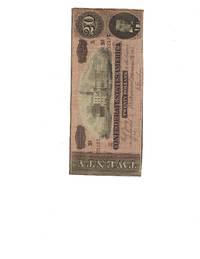
|
|
|
Civil War Confederate Loan
Confederate States of America $1000 Loan Certificate Richmond 1862
1862. Confederate States of America $ 1000 loan Bond with Coupons Richmond 1862. Original Loan with 23 coupons first 8/1865 With elaborate engraving and ornate boders Richmond October 1862. When the Civil War broke out the newly-formed Confederate States of America needed to create a monetary system to finance the government and the war effort. To raise money to finance its government the Confederate States of America issued bonds. This bond dates from late in the Civil War when printing too much paper money had created rampant inflation. The Confederacy began issuing bonds. After the Confederacy's defeat the U.S. government refused to cover Confederate debts making the bonds worthless as debt instruments or market securities. its bonds had no value and this bankrupted many confederate families. Over the following decades most of the worthless bonds were destroyed. Very good example complete with fully attached redemption coupons in very good condition. unknown
Riferimento per il libraio : 16794
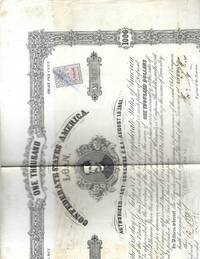
|
|
|
Black Troops Injured in the Civil War
African American Civil War Veterans Pension Petitions Congressional Reports 1873 to 1904
1873. United States Congress pension reports concerning Private Daniel Wooden Abram Colley and Sarah E. Wheeler 1873 to 1904 documenting federal pension advocacy for African American Civil War veterans and their families. The material documents federal pension administration and legislative intervention through committee reports submitted to Congress revealing how disability claims for formerly enslaved soldiers and their dependents were reviewed contested and advanced and providing primary-source evidence for the study of postwar veteran welfare racialized access to federal benefits and the long-term consequences of military service in the American Civil War.<br /> <br /> Three printed congressional reports submitted by the Committee on Pensions and the Committee on Invalid Pensions concerning Private Daniel Wooden of the 64th United States Colored Troops 1873 Abram Colley of the Sixth United States Colored Troops 1882 and Sarah E. Wheeler widow of Elijah Wheeler 1904. The reports detail service-related injuries and subsequent disability claims including Colley's documented wound described as "gunshot comminuting tibia and fibula of right leg and implicating knee-joint received in battle at Dutch Gap VA. August 17 1864" resulting in his discharge on a surgeon's certificate in 1865. The documents outline the petitions for increased pension support based on worsening physical conditions that rendered sustained labor difficult or impossible and they reflect the evidentiary standards and narrative frameworks used to justify federal compensation. The 1873 report is printed single-sided while the 1882 and 1904 reports are printed double-sided all in pamphlet-style formats measuring approximately 8.75 x 5.5 inches.<br /> <br /> These reports emerge from the broader postwar pension system one of the largest federal expenditures of the late nineteenth century through which Union veterans and their families sought financial support for service-related disabilities. African American soldiers many of whom served in the United States Colored Troops frequently faced additional scrutiny and bureaucratic barriers in securing equitable compensation. The inclusion of both veteran and widow claims illustrates the extension of pension advocacy across generations particularly in cases where injuries produced long-term incapacity or death. Minor edge wear along the left margins paper stable and legible; overall very good condition. A focused group of congressional documents illuminating the intersection of race military service and federal welfare policy in the post-Civil War United States. unknown
Riferimento per il libraio : 17524
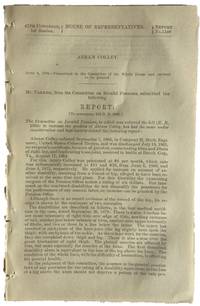
|
|
|
World War II Scrapbook
Wartime Illustrated Scrapbook of U.S. Military Technology and News Coverage 1945 to 1947
1944. World War II scrapbook of newspaper and magazine clippings 1945 to 1947 a compiled visual and textual record of wartime reporting and immediate postwar interpretation that preserves how mass media presented military technology global conflict and the transition into the atomic age. The scrapbook centers on the final phase of World War II and its aftermath with particular emphasis on aviation industrial production and symbolic moments of Allied victory. By assembling illustrated articles cover imagery and advertisements tied to wartime industries the volume documents the intersection of journalism propaganda and public understanding of modern warfare at the moment of Allied triumph and geopolitical realignment.<br /> <br /> Scrapbook containing more than one hundred pages of clippings from periodicals including Time Life and major newspapers with eighteen Time magazine covers dating from 1945 to 1947. Disbound but retaining original covers with printed design. The contents are organized thematically including a substantial section on military aviation with illustrated features on transport aircraft such as the DC 3 and DC 4 and combat aircraft including the Martin Mariner Boeing Flying Fortress Northrop Black Widow Grumman Hellcat Curtiss Warhawk and Lockheed Lightning. Articles include large format photographic spreads and interior views of aircraft emphasizing design capacity and combat function. Additional sections address wartime events and domestic security including coverage of the "Eight Nazi Saboteurs" captured after landing from submarines on the Atlantic coast and illustrated guides to Army insignia and officer dress. A widely circulated image of President Franklin D. Roosevelt standing aboard the cruiser Tuscaloosa appears within a feature on military presentation reflecting controlled wartime imagery of presidential leadership. Coverage of the atomic bomb includes a 1945 article describing the Los Alamos test as the beginning of a new historical epoch accompanied by imagery of the explosion cloud alongside combat photography such as "Fighting Lady" depicting aerial engagements in the Pacific and a newspaper image of the flag raising on Iwo Jima.<br /> <br /> The scrapbook preserves the visual language through which Americans encountered World War II combining battlefield imagery technological display and corporate advertising from firms such as Lockheed General Motors and Texaco that linked industrial production to military success. The inclusion of atomic bomb reporting marks a shift from conventional warfare to nuclear modernity while aviation features underscore the centrality of air power in both combat and public imagination. As a curated compilation rather than a single publication the volume demonstrates how wartime narratives were assembled circulated and retained at the individual level offering insight into the formation of historical memory in the immediate postwar years. Pages show some edgewear and the scrapbook is disbound; contents remain clean and legible with strong visual quality. Overall very good condition. unknown
Riferimento per il libraio : 17534
|
|
|
World War I Military Aviation
World War I Military Aviation Photographic Documentation of Early U.S. Army Air Service Pilot Training and Aircraft Operations at Fort Sill Oklahoma 1918
1918. World War I military aviation. Primary-source photographs documenting early United States military aviation training at Henry Post Airfield Fort Sill Oklahoma during the formative period of the U.S. Army Air Service following its establishment in May 1918. The images record the first generation of American military pilots operating within a rapidly developing aviation program built in response to World War I supporting research into the expansion of U.S. airpower pilot training infrastructure and the integration of aircraft into military operations. The presence of DH-4 two-seat biplane bombers the principal American-built combat aircraft of the war situates the archive within the transition from experimental aviation units to operational military squadrons. A dated caption identifying "October 29 1918 Sergeant Schauble" flying at 3700 feet further anchors the material within the final phase of the war.<br /> <br /> Archive of 26 silver gelatin photographs Fort Sill Oklahoma circa 1917-1918 each measuring approximately 7.25 x 5.25 inches. The archive includes many photos of the biplanes in the air one photo shows several DH-4 bombers soaring in the clouds in a Flying-V formation. A handwritten caption on one image "October 29 1918 Sergeant Schauble " is depicted flying in a DH-4 at 3700 feet as well as going on a "parachute trip". One photo shows a serious plane crash with two DH-4s biplanes nose down in the ground. The pilots are also depicted in hot air balloons. Fort Sill was home to several US Army Balloon Companies during this period which were still primarily used for reconnaissance and directing aerial bombardment during World War I. The photo archive includes many shots of biplanes in the clouds or on runways with pilots in goggles including 4 images of pilots or troops in group shots. Most photos show the planes or balloons in mid air. . Army balloon companies stationed at Fort Sill for reconnaissance and artillery observation. Several images capture aircraft at altitude among cloud formations while others document runway activity and pre-flight staging. Versos of many prints retain remnants of black album paper indicating removal from a compiled photographic album.<br /> <br /> The archive documents the early operational environment of American military aviation at a moment when the United States was rapidly expanding its aerial capabilities following limited prewar development including the Army's first acquisition of aircraft from the Wright brothers in 1909. Henry Post Airfield functioned as a central training site for pilots entering service during World War I and the inclusion of both airplane and balloon units reflects the continued reliance on multiple aerial technologies for reconnaissance and combat support. The photographs provide visual evidence of training practices aircraft deployment and the material conditions of early air service operations during a period of institutional formation. Minor edge wear and surface wear are present with album residue on versos; overall very good condition. A cohesive photographic record of early U.S. military aviation training and aircraft use during World War I. unknown
Riferimento per il libraio : 17717
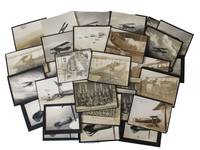
|
|
|
Civil War Black Union Army Troops
Profile on Black Union Army Troops in Harper's Weekly 1863
1863. Harper's Weekly: A Journal of Civilization. New York: March 14 1963. Vol. VII - No. 324. 15 pages. 16" x 11" inches. This edition of the Harper's Weekly portrays on its cover a black Union Army recruit who is being trained to use the Minie rifle a weapon widely used in the Civil War. Former slaves and freedmen alike flocked the Union Army after Lincoln issued the Emancipation Proclamation in 1862 which had a provision allowing for the first Black units to be formed. Has a two page spread illustration of a Black unit charging into a Confederate line amidst a chaotic battle scene. A brief article gives several examples of bravery and cunning displayed by Black units thus far and predicts "that with proper drill and training the negroes will be the steadiest rank and file in the world." Harper's Weekly was published from 1857 to 1916 and was one of the most extensive sources of coverage on the American Civil War. Pages delicate; nearly separated from fold line. Browning and light soiling throughout but text and illustrations are clear. In good condition overall. unknown
Riferimento per il libraio : 18195
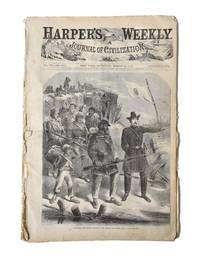
|
|
|
US War Dept U S
Organization and Status of Missouri Troops Union and Confederate in Service During the Civil War
Washington: Record and Pension Office War Dept. 1902. Professionally rebound in half-leather. A bright sharp book. Hardcover. Fine/No Jacket. Large Octavo. Book. Record and Pension Office, War Dept. Hardcover
Riferimento per il libraio : 1142728
|
|
|
Military Korean War
Korean War Military Life Engineering Battalion Photography of Equipment and Soldier Experience 1950s
1950. Photo archive of a United States Army soldier serving in an engineering battalion during the Korean War documenting military labor equipment operation and daily life on base. The photographs record the technical and logistical role of engineering units alongside informal scenes of camaraderie barracks life and leisure providing direct visual evidence of how enlisted men experienced service during an early Cold War conflict. Detailed handwritten captions on many versos link specific individuals machines and assignments to the images preserving firsthand accounts of military duties and personal relationships within the unit.<br /> <br /> Archive consists of 95 black and white silver gelatin photographs each approximately 3.5 x 4.75 inches. These photos were taken by a soldier serving in an engineering battalion during the Korean War. Images include equipment PX life in the barracks and surrounding landscape. Many of the images include detailed captions on verso. Images depict heavy machinery base infrastructure PX facilities barracks interiors and surrounding landscapes. One photograph shows two soldiers observing the unloading of an armored vehicle launched bridge with a detailed caption describing its specifications: "An AULB in our platoon. it weighs 62 tons. the bridge unfolds and extends 63 ft" along with references to rank assignment and promotion prospects. Other photographs focus on the men themselves including a posed image of two soldiers standing atop a structure silhouetted against the sky captioned "My two best friends." Additional scenes show off duty moments including rest play and informal interactions among soldiers.<br /> <br /> Produced during a conflict defined by rapid mobilization and mechanized warfare the archive situates engineering units within the broader operational framework of the Korean War while emphasizing the lived experience of enlisted personnel. The combination of technical documentation and personal imagery supports research into military infrastructure soldier identity and the social dimensions of service during the early Cold War period. Light toning to borders of some prints not affecting images; overall very good condition. unknown
Riferimento per il libraio : 18439
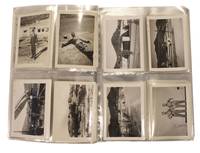
|
|
|
The first plains Indian War
Letter to Secretary of War Requesting Artillery for Military Action in American West in the first plains Indian War 1823
1823. Western Americana Letter of Colonel Bomford on Ordnance Duty to The Secretary of War Relative to the Number of Arms Required Annually to Supply the Militia of the West. House of Representatives: Washington 1823. Printed Pamphlet totals 6 pages. Measures 5.75 x 8.75 inches. When the United States Army was reorganized in 1821 the Ordnance and Artillery Departments were merged with Colonel Comford promoted to full colonel and attached to the artillery. In 1823 the United States was fighting the Arikara Indians in the first plains Indian War and asserting control of the Western Hemisphere against further colonization by European powers. This text breaks down cost and quantity of artillery required by Bomford to support military efforts in the American west. The Arikara War of 1823 is widely recognized as the first military conflict between the United States and a Native American nation on the Great Plains. This conflict specifically occurred in the Upper Missouri River region in what is present-day South Dakota. Toning around edges does not affect text. Front page detached. Text is clean. Overall very good condition. unknown
Riferimento per il libraio : 18379
|
|
|
US War Department U S
Memorandum Relative to the General Officers in the Armies of the United States During the Civil War - 1861-1865
U.S. War Department 1906. Document 245. Staple-bound. Published 1908. Soft cover. Very Good. Large Octavo. Book. U.S. War Department Paperback
Riferimento per il libraio : 1145665
|
|
|
Civil War US Colored Troops
African American Military History Civil War United States Colored Troops Petersburg Siege Stereoview 1864
1864. War Photograph & Exposition Company. On the Lines Before Petersburg Va. 1864 documents the presence and daily conditions of United States Colored Troops during the prolonged siege of Petersburg one of the final campaigns of the Civil War. The image captures four African American soldiers seated at the entrance of an earthen bombproof shelter while another prepares coffee over an open fire situating the scene within the entrenched warfare that defined operations outside Petersburg from 1864 to 1865. The photograph places Black soldiers within the logistical and survival routines of siege warfare providing visual evidence of their role in sustaining Union military operations during a campaign that culminated in the collapse of Confederate defenses and the end of the war.<br /> <br /> On the Lines Before Petersburg Va. 1864. Hartford CT: War Photograph & Exposition Co. circa 1864. Stereoview photograph measuring approximately 6 1/4 x 3 1/8 inches on a cardstock mount with series imprint image number and caption on recto. The image depicts four African American soldiers seated at the mouth of a dugout shelter with a fifth soldier below tending a large kettle over a fire. Visible objects include tin cups attached to long wooden handles likely used for heating over flames along with a pickaxe wooden barrel and a washbucket fashioned from a halved barrel. The verso includes a printed description noting that the view "gives a glimpse of the bomb-proofs in which our soldiers tried to live during the long siege at Petersburg 1864-1865; the campfire and the coffee-kettle look as familiar as in those days of yore" along with promotional text from the publisher concerning the difficulty of producing such wartime images.<br /> <br /> By late 1864 African American troops were consolidated into large formations including the XXV Corps of the Army of the James representing the largest organized body of Black soldiers in the war. Images such as this one provide direct documentation of their presence in front-line siege environments where extended encampment engineering labor and constant exposure to enemy fire defined daily life. The photograph contributes to the visual record of Black military service by focusing on routine activity within fortified positions rather than formal portraiture offering material for the study of labor survival and military organization among United States Colored Troops. Light toning and minor paper loss to mount edges and corners not affecting image or text; overall very good condition. unknown
Riferimento per il libraio : 18603
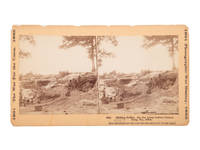
|
|
|
Civil War Military
Civil War Signed Document Regarding Assignment of Officer 1864
1864. CIvil War Signed document regarding temporary assignment of an officer. Department of the South: 1864. Measures 5 x 8 inches. Order reads in part "During the temporary absence Lieut-Col James F. Hall 1st Regt N.Y Vol. Engineers Provost Marshal General Department of the South.All orders and instructions heretofore given to Lieut-Col Jas F. Hall will be carried into execution by Lieut-Col Bennett." The 1st New York Engineer Regiment was an engineer regiment that served in the Union Army during the American Civil War. It was also known as Serrell's Engineers1 New York Volunteer Corps of Engineers2 or Engineer's and Artisans.2 The regiment served initially in the Lower Seaboard Theater and later in the Richmond-Petersburg Campaign. Very light toning along edges. Overall very good condition. unknown
Riferimento per il libraio : 18338
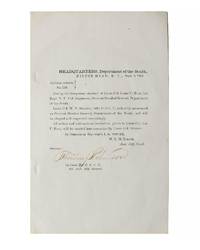
|
|

 Ricevere i risultati per e-mail
 Scaricare i risultati in PDF
 RSS feed
 Link
Link


