|
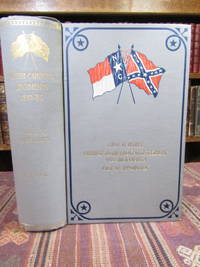
Clark, Walter [Editor]
Histories of the Several Regiments and Battalions from North Carolina in the Great War 1861-'65. Vol V. 5
<p>Goldsboro NC: Nash Brothers Book and Job Printers 1901. 1st Edition . Hardcover. Very Good/No Jacket. 8vo - over 7¾ - 9¾" tall. Octavo. 859 pages. indexed. Hardcover in grey cloth with cover designs of the Confederate and North Carolina flags on the front cover. Light wear to the binding. Inner hinges secure. Text is clean. A very nice copy of the First Edition. Volume V only. <br /><br /></p> Nash Brothers, Book and Job Printers hardcover
书商的参考编号 : 055827
|
|
|
Guerra, Dave
Superperformance
hardcover. Good. Access codes and supplements are not guaranteed with used items. May be an ex-library book. hardcover
书商的参考编号 : 158961397X.G ???????? : 158961397X 9781589613973
|
|
|
Naval War College
The Battle of Jutland: 31 May 1 June 1916 Classic Reprint
hardcover. Good. Access codes and supplements are not guaranteed with used items. May be an ex-library book. hardcover
书商的参考编号 : 0267458258.G ???????? : 0267458258 9780267458257
|
|
|
A Civil War Romance; Letters of My Father and My M
The Unknown Friends
paperback. Good. Access codes and supplements are not guaranteed with used items. May be an ex-library book. paperback
书商的参考编号 : 0243439156.G ???????? : 0243439156 9780243439157
|
|
|
States War Dept, United
United States Mustering Regulations Providing for the Muster of the Organized Militia
hardcover. Good. Access codes and supplements are not guaranteed with used items. May be an ex-library book. hardcover
书商的参考编号 : 0526589663.G ???????? : 0526589663 9780526589661
|
|
|
States War Dept Division of Militia Af
Signal Corps Equipment Manual: Organized Militia 1915
hardcover. Good. Access codes and supplements are not guaranteed with used items. May be an ex-library book. hardcover
书商的参考编号 : 0526573732.G ???????? : 0526573732 9780526573738
|
|
|
[World War II]. [Anti-Conscription Committee]
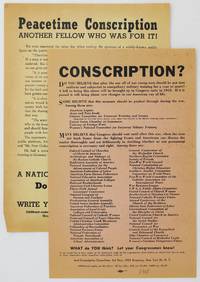
Peacetime Conscription -- Another Fellow Who Was for It! with: Conscription
New York 1945. Still very good. Two small broadsides each measuring approximately 11 x 7 inches. Some toning at edges. Two broadside flyers issued by a little known pacifist group the Anti-Conscription Committee during the last year of World War II. The first titled "Peacetime Conscription." invokes Hitler's introduction of compulsory military training in Germany in 1935 and quotes an enthusiastic editorial from the Des Moines Tribune calling for the same in America. The broadside intones at its foot "A nation followed these ideas! Do you want America to do the same" The second flyer "Conscription" warns its reader of the imminence of a Congressional bill that would mandate a year of military training that would "Bring about vast changes in our American way of life." Following this warning is a laundry list of diverse associations arrayed against the potential law including the Rabbinical Association of America the N.A.A.C.P. the American Federation of Labor the Society of Friends and the W.T.C.U. to name but a few. A pair of scarce survivors. unknown
书商的参考编号 : 4262
|
|
|
[World War I Photographica]. Tolman, William H
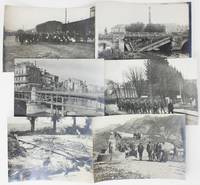
Large Group of Over 200 Images Taken and Collected by an American Aid Worker During World War I
Various locations in Europe mostly France 1918. Very good. 206 original black-and-white photographs between 3.5 x 2.5 inches and 5 x 7 inches. Occasional minor wear light chipping or short tears to images but most are in very good or better condition. An informative collection of contemporary photographs detailing the impact of the First World War in France. The images include numerous images showing the destruction of the war across France some casualties of the war group portraits of military officers and politicians street scenes and parade shots picturing dignitaries and military figures often in motorized vehicles but sometimes on horseback or on foot scenes along railroad lines scenes in factories both functional and bombed out numerous shots featuring the architecture and statuary in France street scenes in numerous French towns and villages and much more. A handful of small groups of images are held within a single sheet of paper identifying a common location or shared subject matter such as a pair of images from Saint-Quentin including a photo of a group of German prisoners at a rail station there seven images of flowers in Toulouse several images in Amiens including street scenes and a few with military content numerous images in Reims and Verdun three images documenting the destruction in Noyon and so forth. In addition to the war content the collection provides a broad view of the urban architecture and variety of landscape in World War I-era France among other research-worthy topics. <br /> <br /> Particularly interesting images feature a group of women busily writing dispatches a larger group of women working in a textile factory the statue of Joan of Arc in Reims soldiers cutting vegetables outside the citadel at Verdun the ruins of Sainte-Genevieve a town scene in the village of St. Martin a large group of men repairing the railroad an elderly woman standing below a bombed-out elevated railroad in Charleville and a crowded street scene and parade in Reichshoffen. Two images feature soldiers and resident of Reims rescuing large framed paintings from the Hôtel de Ville; both images feature men carrying a single large painting down the cobblestoned streets of the city.<br /> <br /> In addition to the images featuring human subjects and scenery four photographs memorialize signage the photographer came across in his time in Europe. One concerns the evacuation of a town in France in April 1916 another informs the French public that German soldiers are only allowed to pay for goods with certain vouchers the third sign lists the officials responsible for railway security in Noyon dated October 8 1916 and the last pictures a British Red Cross poster. The collection is rounded out by a handful of images in Sweden England and Egypt. The photographs are occasionally annotated on the verso in pencil identifying the subject location and/or the setting of the images. Several of the images include a personal stamp on the verso belonging to William H. Tolman Ph.D. of Pawtucket Rhode Island and New York City. According to newspaper records Dr. William H. Tolman 1861-1958 was a "social economist" and "social service expert lecturer and writer" who graduated from Brown University was an active citizen of Pawtucket was decorated by the regent of Hungary for creating a chapter of the YMCA in that country and while in New York City founded and served as the director of the American Museum of Safety and Sanitation from which he resigned in 1916. From about that year to 1920 Tolman engaged in welfare work in Europe and served as director of the YMCA in Bordeaux France spurring his personal interest in France and the First World War. A fascinating group of photographs documenting numerous scenes during the First World War. unknown
书商的参考编号 : 4184
|
|
|
[War Resisters League]
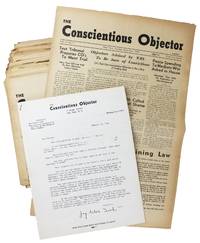
The Conscientious Objector
New York: War Resisters League 1945. Very good. Fifty-two issues plus editor's circular letter. Each regular issue 8pp. on newsprint folded as issued. Minor even toning overall occasional minor edge wear or chipping. Significant collection of The Conscientious Objector a monthly newspaper issued throughout the period of the Second World War by the War Resisters League the oldest secular pacifist organization in the United States. A legion of issues are covered in the pages of these newspapers including the military draft reports on the treatment of conscientious objectors around the country legal cases involving pacifists reports on Japanese conscientious objectors articles on women draft resisters and much much more. Many of the articles concern conscientious objectors living at a variety of Civilian Public Service CPS camps established during World War II camps that interned citizens who claimed the right to refuse to perform military service on the grounds of freedom of thought conscience or religion. During these years the League was heavily involved in attempts to achieve the release of all conscientious objectors from works camps and imprisonment and to obtain amnesty for those found guilty of violating the Selective Service Act. One of the more interesting articles in the present collection published in the September 1942 issue is headlined "Indian Movement an Inspiration for Negro Aims in America." The editor's circular which accompanies the issues here details some of the work of the WRL and asks for subscriptions. The following issues are offered here:<br /> <br /> Vol. II Nos. 4 and 5.<br /> Vol. III Nos. 1 2 3 4 and 7.<br /> Vol. IV Nos. 1 3 4 6 7 8 9 10 11 12.<br /> Vol. V Nos. 1 2 5 6 8 9 10 11 and 12 plus a single broadside extra dated August 6 1943.<br /> Vol. VI Nos. 1-12 complete year.<br /> Vol. VII Nos. 1 2 3 7 8 9 10 and 11. <br /> Vol. VIII Nos. 1-5. War Resisters League unknown
书商的参考编号 : 4497
|
|
|
[World War II]. Joyce, Fred N
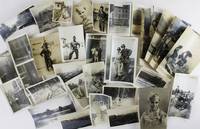
Collection of Photographs and a Few Documents Relating to the Military Service of Fred N. Joyce During World War II
Camp Lee Va. and various locations in and around Fukuoka Japan 1947. Very good. Sixty-four vernacular photographs and five professional photographic postcards between 2.25 x 2 inches and 8.75 x 11 inches plus two documents and a canceled check. Minor occasional wear to images. A small but informative archive of photographs and documents pertaining to Private Fred N. Joyce's service in Occupied Japan at the conclusion of the Second World War. Joyce served in the Third Platoon of the 93rd Quartermaster Training Company stationed at Camp Hakata in Kyushu Japan. The two documents present here include a "Letter of Merit" given to Joyce while in training at Camp Lee Virginia in August 1946 and his "Honorable Discharge" granted in November 1947. Between those dates Joyce spent his short career in Japan documented with over sixty candid shots some of which are captioned in manuscript on the verso. The vernacular shots show a variety of subjects and settings including American serviceman on base at work and play in both Virginia and Japan portraits of Joyce's fellow soldiers numerous street scenes in Japan one manuscript caption reads "One of the modern Jap theatres on Main Street in Fukuoka" elevated views of the city of Fukuoka one taken from the Red Cross Building a shot of three Japanese "Janitors that work here in Battalion Headquarters" and other locals an image of Joyce with several Japanese children captioned on the verso "'Me' and some other little 'Japs'" and more. Three of the largest images present here are aerial photographs of Camp Hakata one with numerous buildings captioned in manuscript in the image area and keyed to a printed list on the verso. The other larger photograph is a professional group photograph of Joyce's Third Platoon with all members identified. Six commercial photographic postcards round out the collection which depict scenes in Japan with English printed captions beneath the images. unknown
书商的参考编号 : 2580
|
|
|
US Army War College U S
National Security and Detente
paperback. Good. Access codes and supplements are not guaranteed with used items. May be an ex-library book. paperback
书商的参考编号 : 0815203993.G ???????? : 0815203993 9780815203995
|
|
|
War, Peninsular
Poems Founded On the Events of the War in the Peninsula by the Wife of an Officer
hardcover. Good. Access codes and supplements are not guaranteed with used items. May be an ex-library book. hardcover
书商的参考编号 : 1020064978.G ???????? : 1020064978 9781020064975
|
|
|
[National Council for the Prevention of War]
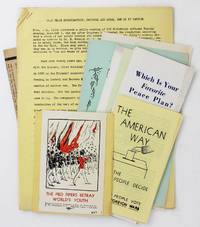
Small Group of Circulars and Ephemera Published and Circulated by the National Council for the Prevention of War
Washington DC 1945. Very good. Thirteen items plus three duplicates. Light toning; minor wear and dust soiling. Interesting group of just over a dozen leaflets pamphlets and circulars created and disseminated by the National Council for the Prevention of War NCPW before and during World War II. The organization was founded in 1921 by Congregational and Quaker minister Frederick J. Libby after he worked for the American Red Cross in France following World War I. The NCPW pushed for disarmament and neutrality during the interwar years and for peace after America's entrance into World War II. The present group contains several items from each period as well as some fascinating transitional material such as a mimeograph circular titled "What Peace Organization National and Local Can Do in Wartime" dated eleven days after the attack on Pearl Harbor. A good encapsulation of the council's work during this period. unknown
书商的参考编号 : 4926
|
|
|
[Mexico]. [Reform War]
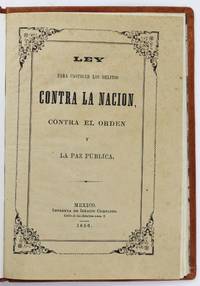
Ley para Castigar los Delitos Contra la Nacion Contra el Orden y la Paz Publica
Mexico City: Imprenta de Ignacio Cumplido 1856. Still very good. 17pp. Original printed wrappers bound into full calf front board gilt lettered. Some toning and scattered light foxing. This law was promulgated at the end of 1856 by the new liberal government of Mexico following its ascendancy in the mid-1850s and preceded the reform Constitution of 1857 by two months. Its statutes defined "crimes against the independence and security of the nation" including various forms of treason rebellion and foreign military service or assistance and made them punishable by death. The law anticipated conservative resistance and revolt against the new policies of the liberal faction that aimed to strip power and influence from the church and traditional aristocracy of the country. Their efforts indeed led to full-scale civil war in 1858 and the second French intervention in the early 1860s. OCLC locates a small handful of institutional copies and we locate just one in available sales records. Scarce and in attractive original wrappers. Imprenta de Ignacio Cumplido unknown
书商的参考编号 : 4036
|
|
|
[Civil War]
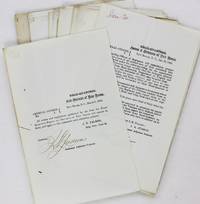
Group of General Orders Issued from Various Offices Stationed at Union Headquarters at New Berne North Carolina During the Civil War
New Berne N.C. 1864. Very good. Twenty printed general orders totaling 24pp. Original plain or lined paper single or folded sheets. Minor overall wear some dust-soiling especially to final order. A collection of twenty Union general orders issued in North Carolina during the penultimate year of the Civil War. The orders run from January 25 to May 3 1864 and were issued by the Sub-District of New Berne the Forces and Defences and the District of North Carolina. The orders were all issued by or by the command of Brigadier General Innis N. Palmer whose leadership was instrumental for the Union forces' defense of New Berne in 1864 or Colonel T.I.C. Amory. Palmer's orders here naturally pertain to a wide range of issues namely internal procedures and organization military discipline and pay various military appointments modifications made to the General Regulations the maintenance of ordnance stores and more. All but four of the orders are signed by the relevant adjutant general. One of the more notable orders prints the charges circumstances verdicts and sentences for various courts martial conducted in New Berne in early May 1864. The third soldier charged in the order Private Charles Alberts of the 12th New York Volunteer Cavalry was accused of assaulting "Jacob Tucker a colored man" and also of assault and battery as well as the rape of "Emeline Tucker a colored woman." Alberts was acquitted of all charges. The final order here is a long diatribe by Brigadier General Palmer lambasting his troops for razing the town of Washington North Carolina; Palmer refers to this incident as "an outrage against humanity which brings the blush of shame to the cheek of every true man and soldier." The seige and burning of Washington North Carolina occurred during the last few days of April as Confederate troops took over the town. Before they left several Union troops set fire to the settlement and practically destroyed the entire town. Such a collection of field-printed general orders from North Carolina are scarce in the market. unknown
书商的参考编号 : 3409
|
|
|
[Civil War]. [United States Colored Troops]
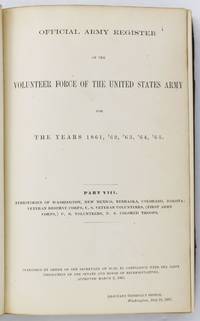
Official Army Register of the Volunteer Force of the United States Army for the Years 1861 '62 '63 '64 '65. Part VIII
Washington DC 1867. Good. 841111pp. Contemporary three-quarter calf and brown pebbled cloth leather label on front cover stamped in gilt. Spine mostly perished with three portions of original spine which include the gilt-stamped spine titles re-attached with cello tape. Corners worn mild rubbing. Both boards also holding by cello tape. Internally clean. The highly-desirable eighth volume of the records of volunteers in the United States Army during the years of the Civil War. Volume eight of the Official Army Register contains individual regimental histories lists of officers and casualty records for the officers of volunteer regiments emanating from the territories of Washington New Mexico Nebraska Colorado and Dakota plus the Veteran Reserve Corps the U.S. Veteran Volunteers the First Army Corps and the United States Colored Troops. About half of the overall work is devoted to the latter totaling almost 180 pages detailing the regimental histories officer lists casualty lists and more for the officers of the U.S. Colored Cavalry U.S. Colored Heavy Artillery U.S. Colored Light Artillery and U.S. Colored Infantry.<br /> <br /> In addition to the regimental listings the work contains an Appendix printing a "Supplemental list of casualties occurring subsequent to the printing of the text of this Register" a regimental Index an "Index of Battles" an Index of troop names an Errata leaf and a publication breakdown of the complete eight-volume work. The only illustration in the entire work is a "Fac Simile of the Medal of Honor" following the title page. The Official Army Register was printed in eight volumes between 1865 and 1867. The first seven volumes printed details on the regiments and officer rosters of the U.S. volunteer troops organized by the states where they served including Union regiments who served throughout the Confederate states. This last volume was devoted to the various territorial regiments and volunteers veteran units and officers of Black regiments. Commensurate with the way African Americans were treated generally the officers of the Black troops were published last.<br /> Sabin 56761. unknown
书商的参考编号 : 5259
|
|
|
[Spanish-American War]. [McCook Family]
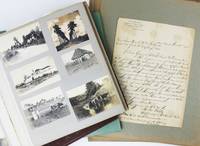
Archive Containing Original Photographs Letters and Documents Pertaining to the Military and Post-Military Careers of Major General Alexander McDowell McCook and His Son-in-Law Brigadier General Chauncey Brooke Baker
Various locations in Cuba 1902. Very good. Seventeen loose folio scrapbook leaves each with mounted correspondence or other documents; one vernacular photograph album; two scrapbooks; and a small number of loose documents and newspaper clippings as detailed below. An informative archive comprised of material from two generations of the McCook family of Ohio specifically two different military officers -- Major General Alexander McDowell McCook and his son-in-law Brigadier General Chauncey Brooke Baker 1860-1936. Baker was married to McCook's eldest daughter Lucianna "Lucy" McCook Baker who seems to have compiled the various components of the present archive which mostly documents the career of her husband Chauncey Baker. The collection includes seventeen loose folio scrapbook leaves each with mounted correspondence or other documents one photograph album two scrapbooks and a small number of loose documents and newspaper clippings.<br /> <br /> Union Army General Alexander McDowell McCook one of the "Fighting McCooks" continued his army career after the war in the regular Army. He commanded Fort Leavenworth Kansas from 1886-1890 the Department of Arizona from 1890-1893 and the Department of Colorado from 1893-1895. He was joined in each location by his daughter and son-in-law. Chauncey Brooke Baker married Lucy McCook while at Leavenworth and later served as McCook's aide-de-camp and acting engineering officer at Los Angeles and Denver Headquarters Department of Arizona and Colorado. Later promotions and the start of the Spanish-American War led Baker to Cuba in a quartermaster role. It seems his wife accompanied him there and began acquiring the images now housed in the photograph album offered here. Lucy Baker died in 1923 placing the scrapbooks completion date before that time. The material is detailed as follows:<br /> <br /> 1 Seventeen loose scrapbook leaves containing twenty-five pieces of correspondence typed documents and printed documents primarily associated with the later business dealings of Alexander M. McCook while he was stationed in Utah Colorado Kansas. This material dates mostly between 1882 and 1898. Letters are from a variety of correspondents and reflect McCook's post-war military career at frontier installations his involvement in the railroads investments and other personal matters. One of the more informative documents details the history of McCook's military service from his entry to West Point in 1847 through his appointment to the Department of Arizona in 1894. The collection also includes a handful of loose documents and letters as well as an envelope of newspaper clippings documenting McCook's later affairs. One notable item is a four-page offprint of a memorial of McCook written by Col. Horace N. Fisher and first published in the Boston Transcript on Sunday June 13 1903. General McCook had just passed away the previous day at Lucy's house in Dayton Ohio.<br /> <br /> 2 Vernacular Photograph Album Documenting Cuba Under Spanish Occupation and the United States Military Government's Occupation. Various locations in Cuba: ca. 1898-1902. 24 leaves illustrated with 303 silver gelatin photographs from 3.25 x 2.25 to 7.5 x 9 inches. Quarto. Contemporary three-quarter calf and black cloth boards. Spine perished most leaves separated from spine but held to each other by cloth gutter in a few groupings. Leaves worn silvering to some images. Inscribed on front free endpaper "Lucy McCook. Fort Leavenworth Kansas Nov 21st 1888." Lucy likely dated the album in 1888 then never used it as all of the images in the album emanate from Cuba. The photographs depict a mixture of rural and urban scenes featuring native Cubans as well as Americans Cuban and American military personnel landmarks military installations ships recreation building interiors with some images depicting the remnants of war. Notable are three large format photographs at the end of the album: a photograph of armed soldiers and a religious figure exiting a fortress-like structure with handwritten caption below "On the way to the Garote Castillo del Principe - during the Spanish occupation;" a photograph showing a large group of men assembled at tables and chairs in a gallery-style room with a handwritten caption reading "Opening of the Cuban Constitutional Convention - Havana - Nov. 5th 1900 General Leonard Wood Military Governor reading address in full uniform Temporary President on his left;" and a photograph of Havana's large cathedral with a crowd gathered captioned "Governor General Weyler entering Cathedral Havana Spanish Occupation." Captions were likely added by Lucy McCook whose husband was serving at the time as quartermaster chief quartermaster and depot quartermaster in the U.S. Army's Division and Department of Cuba. This album is the most historically-important and useful item in the present archive.<br /> <br /> 3 Scrapbook of Newspaper Clippings and an Original Drawing of an American Military Officer in Indian Territory. N.p.: early 1900s. 11 leaves illustrated with newspaper clippings and one drawing. Quarto. Contemporary brown cloth elaborately tooled in black title in gilt on front cover and spine. Moderate wear rubbing and dust-soiling. Inscribed on front free endpaper "Lucy McCook Baker / Los Angeles - California / April 1892." An interesting collection of mostly newspaper clippings associated with Native American rituals related to the Moqui Indians the Army and articles on General McCook or Lieutenant Chauncey Baker. The album also includes an original pen drawing titled in manuscript "Tent of The Macauley in Camp at Guthrie I.T. 20th June 1889." The drawing features a military figure standing in a road holding a small shovel in the air in front of a sign pointing one way to Oklahoma and the other way to Ft. Leavenworth. The drawing is signed at bottom "Glück."<br /> <br /> 4 Scrapbook of Ephemeral Items Relating to the Military Careers of Alexander McDowell McCook and Chauncey Baker Plus Later Items Related to Another Member of the McCook Family. N.p.: early 1900s. 9 leaves illustrated with telegrams pamphlets invitations and other ephemeral items. Quarto. Contemporary aqua cloth with gilt titles on front cover string tied. The items primarily concern McCook's and Baker's military service including an "In Memoriam" for Alexander McDowell McCook as well as some items relating to the later military career of Alexander McCook Craigshead.<br /> <br /> A diverse collection of materials relating to the careers of two notable military men serving in the American West and in Cuba during the Spanish-American War with a wonderful vernacular photograph album documenting the latter and the whole likely retained and organized by the daughter and wife respectively of the men involved. unknown
书商的参考编号 : 5176
|
|
|
[Mexican-American War]
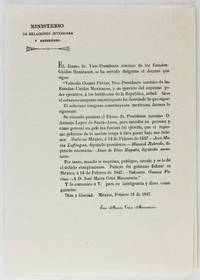
Ministerio de Relaciones Interiores y Esteriores. El Exmo. Sr. Vice-Presidente Interino de los Estados-Unidos Mexicanos Se Ha Servido Dirigirme el Decreto Que Sigue: "Valentin Gomez Farias Vice-Presidente Interino de los Estados-Unidos Mexicanos." caption title and first line of text
Mexico City: February 15 1847. Near fine. 1pp. Quarto on a folded folio sheet. A rare Mexican decree in which the acting Vice President of Mexico Valentin Gomez Farías gives President Antonio Lopez de Santa Anna permission to leave office and fight the Mexican-American War in person. Shortly following the date that this announcement was made Santa Anna gathered roughly 14000 troops to fight General Zachary Taylor’s army of 5000 men at the Battle of Buena Vista. The proclamation is largely ceremonial since Santa Anna had already been in the field with his army for several weeks but it is nevertheless an interesting artifact of the northern campaign of the Mexican-American War. Signed in print by the Minister of Internal and Foreign Affairs José María Ortiz Monasterio; OCLC reports just one copy at Yale. February 15 unknown
书商的参考编号 : 3327
|
|
|
[Mexican-American War]
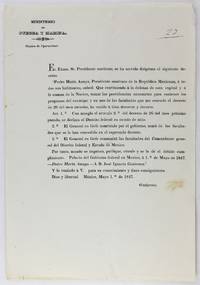
Ministerio de Guerra y Marina. El Exmo. Sr. Presidente Sustituto Se Ha Servido Dirigirme el Siguiente Decreto. "Pedro Maria Anaya Presidente Sustituto de la Republica Mexicana a Todos Sus Habitantes Sabed." caption title and first line of text
Mexico City: May 1 1847. Near fine. 1pp. plus integral blank. Minor wear. An exceedingly rare decree from acting President of Mexico Pedro MarÃa de Anaya ordering that Mexico City be closed and declared besieged. “That it is in the interest of the defense of this capital and of the Nation as a whole to take the necessary measures to contain the enemy's advances.†Que conviniendo á la defensa de esta capital y á la comun de la Nacion tomar las providencias necesarias para contener los pregresos del enemigo. This decree was issued on the same day that Puebla Mexico’s second-largest city fell to the the American forces under Winfield Scott advancing from Veracruz. Secretary of State and Officer of War and Navy of Mexico José Ignacio Gutierrez issued this decree for circulation. General Winfield Scott paused in Puebla in order to gather supplies and reinforcements and then attacked Mexico City in August of 1847. He eventually broke through the city’s defenses and was declared governor of Mexico City in September of that year. Signed in print by José Ignacio Gutierrez. One copy in OCLC at Yale. May 1 unknown
书商的参考编号 : 3331
|
|
|
[Cuba]. [Spanish-American War]. McMahon, John E
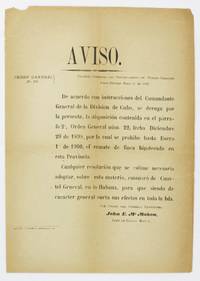
Aviso. Orden General No. 25. Cuartel General del Departamento de Puerto-Principe.Enero 11 de 1899 caption title
Puerto-Principe Cuba: Imp. el Progreso-Soledad January 11 1899. Good. Broadside 11.75 x 8.25 inches. Old folds minor chip at top left corner uniformly tanned and somewhat tender. An unrecorded general order issued in Spanish by the American "Jefe de Estado Mayor" Chief of Staff John E. McMahon during the military occupation of Cuba in the Spanish-American War. The order stipulates that a paragraph in a previous order prohibiting the auction of mortgaged property in the province of Puerto-Principe until January 1 1900 is hereby repealed and any further instructions on this matter will come from the Army's General Headquarters in Havana. McMahon issued several general orders during the American Army's occupation of Cuba and all appear to be rare. An interesting artifact from America's expansionist period with no other copies in OCLC auction history or the trade. Imp. el Progreso-Soledad, January 11 unknown
书商的参考编号 : 5378
|
|
|
[Philippine-American War]. Swartzlander, Louis C
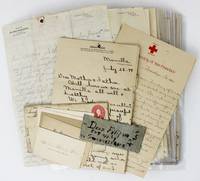
Manuscript Archive of Over 100 Letters Written by and to Louis C. Swartzlander While Serving as a Private in the 4th U.S. Cavalry in the Philippines During the Aguinaldo Insurrection
San Francisco and various locations in the Philippine Islands 1901. Very good. 101 manuscript letters totaling approximately 360 pages and around 38000 words plus an assortment of related correspondence and documents. All letters and documents sleeved in chronological order in two modern three-ring binders. Original mailing folds general overall wear with a few letters closely trimmed and four of the letters incomplete. An important archive documenting the experiences of a young soldier from Omaha Nebraska named Louis C. Swartzlander during his time in training in California and at war in the Philippines at the turn of the 20th century. After graduation from Omaha High School seventeen-year-old Louis Carver Swartzlander 1882-1922 lied about his age to enlist for three years in an Omaha cavalry troop recruited to suppress the Aguinaldo Insurrection also known as the Philippine-American War following U.S. colonial occupation of the Philippines in 1898. Sixty-five of the present letters were written by Private Swartzlander to his family including over twenty from the Presidio in San Francisco while awaiting transport to the Philippines and over forty from military posts during his time in Manila Balinag Bayambang Dagupan and other locations on Luzon before during and after combat against the Aguinaldo insurgents. All of the letters were written during the heart of the conflict between May 17 1899 and September 15 1901. Swartzlander’s letters ultimately shed light on this controversial though obscure episode of the United States's imperialist activities in the Philippines as well as Louis’s other military and battle experiences his impressions of Philippine life culture and internal politics his racial attitudes and much more. In one letter on June 15 1900 Louis mentions the burning of the insurgent town of Dasal Luzon by the 25th Colored Infantry a notable but still-obscure moment in African-American military history. In another letter Louis mentions to his brother that he plans to send him a patch of cloth from a dead insurgent soldier; the collection includes a small rectangular swatch of cloth with the following inscription: "Dead Filipino cut off by Swartzlander 4th Cav."<br /> <br /> The archive also includes over thirty letters written to Louis from his father Dr. Frederick Swartzlander his mother and brother; many of these letters concern their efforts to have Louis discharged from service before his enlistment had ended so that he might join his brother a medical student at Stanford University which the family ultimately accomplished. Following Louis's final letter here on September 15 1901 is a printed special order granting his discharge. Louis then traveled to Palo Alto where he enrolled at Stanford though he apparently did not graduate from there; his obituary in 1922 states that he obtained a medical degree from Creighton University before dying unexpectedly from a short illness.<br /> <br /> The following excerpts from just five of Louis's letters provide an overall picture of his writing style and the content of his letters. We also have a forty-three-page printed document of excerpts from the letters prepared by a previous owner of the archive that we can share upon request providing much more information on the composition of both Louis's and his family's correspondence during this time.<br /> <br /> 1 Louis Swartzlander to his parents San Francisco Ca. May 30 1899: “Today another one of the boys…and I took in Chinatown and it is the dirtiest hole I have ever been in. The streets are of ordinary width although some are about like alleys. All along the sidewalks are chinamen fixing and making opium pipes. You can see Chinese men women and children all the way from 1 to 60 or 70 yrs of age. One street or alley is devoted to the fish market and you can smell it for two blocks and fish! Why I never saw so many fish in a pile in my life all kinds from a devil fish which looks exactly like an octopus only smaller to a shark. Also live turtles by the bushel and all kinds of stuff that nobody but a chinaman could eat. I was vaccinated again today as the other two vaccinations did not take. I hope I will get to go aboard the Sheridan for the Philippines next June 7<br /> <br /> 2 Louis Swartzlander to his parents Manila P.I. July 28 1899: "Well here we are at Manilla all well and healthy. We had an excellent voyage with a peaceful ocean. I saw lots of small flying fish sea gulls sharks etc. We left San Francisco June 24 at 6 oclock and arrived at Honolulu July 2nd. Most of the boys succeeded in going ashore but I could not. We arrived at Manilla July 25th. When about 10 days out after leaving Honolulu we saw an active volcano in the Ladrone Islands. We are stationed about 2 miles from the heart of Manilla. We are stationed in large bamboo barracks each of which will hold about 25. I was in the old walled city and it is a queer place. It is composed mostly of immense cathedrals. The city walls are about 10 feet thick and 15 high but are beginning to crumble as they were built before this century. All stone used in this country is made of cement. There seems to be lots of good fishing here. Yesterday I went out to the famous bone pile that you read about in Omaha. It is a terrible sight with bones piled up and skulls lining the walls but these people don’t seem to care for their dead at all. If the deceased has money he can have a vault if not he goes to the bone pile. It is not so very hot here. At a guess I would say it is about 100 in the sun and 90 in the shade. Tobacco is very cheap here. I can buy a box of good 10 ct cigars for 50 cts American money. I have seen the Pasig river. It separates old Manilla from new Manilla. It is a muddy stream about 200 feet wide with almost no current. This country is covered with palms banana trees etc. All the banana trees are covered with green bananas but none are good to eat as they are too green. The native horses here are about like Shetland ponies and it looks queer to see a troop of the 4th Cavalry mounted on such small horses. We are having the best of eating the best I have had since I enlisted."<br /> <br /> 3 Louis Swartzlander to his brother Manila P.I. December 22 1899: “You seem to think that I am a great fellow just because I came out here. Of course it was hard very hard at first but it is easy now. I am more than pleased to hear that you are doing so fine with your studies and now just keep at them and you will turn out a finely educated man. I am also pleased to hear that you think you will be a doctor as I long ago decided I should. If I can get back to the states and get my discharge we can both study medicine together. Well I have been.in the hospital with the itch but it is now O.K. I will soon again join my troop Fighting K. I am feeling good though not so strong as when I was in the states. Our troop is I believe east of the railroad about 20 miles from here. Say Joe the first chance I get I am going to kill a goo goo niggar for you and if I can I will get a piece of his uniform such as it is and send it to you. I’d get a piece of his doggoned hide if it didn’t stink. Remember this goo goo is to be plugged for you. On the firing line we have a pretty good time. You see when things are quiet we get up at 6 oclock care for our horses eat breakfast lay around until 8 oclock then if we neither go out scouting or drill we have nothing to do until 4 oclock when we again look after our horses eat at 5 answer retreat at 6 oclock and nothing until taps at 9 when we must all be in quarters and lights out. Sometimes we are divided up so that about 3 men are in a shack and then if we can get a candle we play cards tell stories play a mouth organ or whatever there is to pass away the time. Every once in a while the niggars will fire a volley into the town and then we turn out and give them what they need. In the morning we generally find from 5 to 15 dead goo goos laying around. They very seldom hit any of us because they cant shoot and so soon as we yell we charge and they don’t know any thing but to get. Our troop commander will let us get all the chickens we want the pigs are no good but the caribou are O.K. just like beef and so you bet we don’t go hungry so very long at a stretch."<br /> <br /> 4 Louis Swartzlander to his parents Bayambang P.I. June 15 1900: "We are still at Bayamban. We are doing just the same duty as when we first arrived here last November that is two posts to walk one serving as an out post and the other the stables guard. From the present outlook of things we will stay here for the rainy season as our shacks are being repaired and a bamboo stable is being built for our horses. The stable is about 300 feet long by 40 wide and will shelter 11 horses and 15 mules besides 12 native ponies. To give you a description of one of our trips through the country.I don't claim to be a writer or reporter so you must excuse my poor attempt. As our last trip was a fairly good one.I will attempt to tell you about it. We first received orders on the morning of April 15th to be ready for a trip within the next 24 hours and by a little hustling and packing we were soon ready. On the morning of the 16th we saddled up and within a half hour were off.we rode about seven miles to a small town called Urbiztando. At that place we unsaddled our horses first the saddles and other equipments except our guns on three small rafts which were pulled across the river. The command was then given to mount and having done so we started in and in five minutes time every man and horse was safe on the west side of the Agno river. We again saddled up and by riding two miles further arrived at a pretty little town called Mangaterem. The town covers about four square blocks and contains a large church besides several fair sized houses. In front of the church is a large plaza which is about a block square. In one corner of this plaza and beneath a large stone monument are or were buried two American soldiers who were killed while taking the town. We stayed in Mangaterem overnight sleeping out on the plaza. The next morning at 530 we were aroused by first call. We then fell in line for roll call and after this fed and brushed off our horses then ate a breakfast of two slices of bacon four hardtack and a half a cup of coffee. At 615 we saddled up and started for another fair sized town 12 miles distant called Salasa. This town is as well as Mangaterem garrisoned by the 36th U.S.V. There at Salasa you get a fine ocean breeze as we were then getting close to the coast. Upon arriving at Salasa we unsaddled and turned our horses loose in herd and made preparations for the night. At four oclock we caught up our hoses fed and groomed them after which we got our own supper. After this the most of us went down to a river close by and had a fine swim after which we all turned in for a good rest. In the morning after being joined by 50 men of M troop of the Fourth Cavalry we started for Sual a town about 11 miles distance and on the Gulf of Lingayen. We arrived at Sual at about 1 oclock. We were then quartered in the church which was made of bamboo and mud. That evening after having a good dip in the Gulf we rolled in for another good nights rest. In the morning we started for the town of Alaminos which is about the same size as Maregaterem. Here we had to water our horses out of a well as there is no river within two miles distance. We here slept in what appeared to be an old school house or cottage of some sort. Here I bought a package of smoking tobacco and a pipe also a can of jam which came in handy with the hardtack. Well the next morning left for Dasol a town about 17 miles. We arrived at a small town called Balincagin at about 11oclock where we rested a half hour and then started on to Dasal here we arrived at about 3 oclock. Dasal never was a town of much importance but now it is no town at all or at least it was not when we arrived there. The 25th Infantry Colored had a fight there and after driving every insurgent not dead or wounded over the hills and far away they set the town on fire and it has always been an insurgents place of meeting and once before when we were there they shot into us doing no harm however. Well we here slept out on the old plaza and in the morning started to Santa Cruz arriving there at about noon after crossing about forty small rivers. Santa Cruz is a pretty little town situated on the bay. The town itself covers about eight square blocks and contains a large stone church and convent also a school house and several large houses. That is large for this country about the size of a barn in the states. It also contains like all other towns hundreds of little nipa shacks."<br /> <br /> 5 Louis Swartzlander to his parents Bayambang P.I. October 31 1900: "Well the 17th Infantry had another scrap last night at a small town beyond Camaling. I do not as yet know just where it took place but I am told about 20 miles from here. It seems that there were just sixteen American soldiers in the town and when the goo-goos opened up they grabbed their guns and rushed outside their quarters. They then returned the fire hot and heavy for about 5 minutes when they saw that the goo-goos were advancing. At once the command 'fill magazines' was given and then charge. With a yell they were after the goo-goos firing as they charged. Well now no goo-goo can face a hot fire and worse of all the Americans yell and they broke and ran every goo-goo for himself. Our boys could not get close to them as they can run like a deer but when the thing was over 5 dead goo-goos lay dead with holes in them while on our side only one man had been hurt and he only slightly - a Mauser ball had passed through his arm including between the elbow and wrist. He was sent to the Dongupan hospital today. It is estimated that there were 200 bolo men and 25 rifle men and so you can see how easy it is for us to put largely superior numbers to flight. It has been rumored here that after the presidential election is over that the U.S. soldiers are going to make a grand cleaning up of this island and its goo-goos. That will mean that we will show them no mercy and every time we see a goo-goo we will 'soak it to him' you know that that means but I have great doubts as to whether or not they will do any such thing as that would end their trouble too quickly and some of those muck a mucks in Manila would lose a good job. If they wanted to end this trouble all they would have to do is turn the soldiers loose and we wouldn't do a thing to them. As it is we are not allowed to lay a hand on them or to touch a hair of their heads. We will capture 50 or so of them then our officers turn around and put them on confinement for 3 or 4 days and then turn them loose. How are we ever going to end this war when they do that way. I would like to know. But such is the case and I have seen it done several. In all probability if we should capture Aggie they would take him to Manila and give him some good government position. They finally captured Genl. Del Pilar and what did they do turned around and told him if he would take the oath of allegiance to the U.S. that they would turn him loose. Of course he did so for what do these people care for the oath of allegiance and today he is again with the insurgents. I tell you that the people in the U.S. have the wool pulled over their eyes in regards to this matter on Luzon and they will learn after a few thousand more of our boys are killed or die of sickness. This whole thing could have been ended in less than six months at the start but the officers had too good a thing of it and the longer it lasts the better it suits them. When I started to write this I did not intend to criticize the authorities and so will quit writing on this subject. Be sure and do not print in a newspaper what I have here written as I might get into serious trouble."<br /> <br /> 6 Louis Swartzlander to his parents Dagupan P.I. April 18 1901: "I have just returned from an open air concert which was given by the 17th Infantry band on the plaza which is located in the center of Dagupan. The band is composed of nearly thirty pieces and all its members are good musicians. Several of Sousa's pieces were played.as well as.the Star Spangled Banner. The concert lasted nearly two hours.very enjoyable. I am still at 3rd District Headquarters Dagupan as orderly for General Smith. The General himself is at present in the town of Iba to which place he went three days ago for the purpose of inspecting the military prison. The two of Iba is situated in the Zambales province and is about 65 miles from here.we used to pass through Iba on your hikes to Subig.in the early part of 1900. K troop is.on a hike in the mountains in the vicinity of the town of Camaling which is about 12 miles south of Bayambang. I am glad that I am not with them as I have had about all the goose chases that I care to take part in…all the rest of the men in K troop are tired of hiking but that makes no difference for if Captain Benson wishes to go out in the mountains he details about 60 men and they have to go whether they want to or not. Should any man having been detailed to on any such hike fail to do so when hot prevented by sickness or other necessary cause he would be thrown into the guard house and be tried by a general court martial. There was a public hanging in the town of Bennmollie which is three miles west of here.the accused murdered some friendly natives some time ago and when caught was tried by the military authorities found guilty of murder in the 1st degree and was sentenced to hang. The victim dropped at 1023am and was pronounced dead in just 7 minutes. I wished very much to go myself but it being as I was on duty that day I could not; however I will yet have plenty of chances as natives who have been convicted of murders are being hung in different parts of these islands nearly every Friday. I never as yet have witnessed a hanging and I wish to do so before returning to the U.S. Never since last August when you first made application for my discharge did I have the least expectation that it would be granted as I know too too well how hard it is for a soldier in the regular army to obtain a discharge by favor purchase ora ny other way before his time of enlistment has expired. I also know that unless the soldier has a very strong pull in Washington it is almost impossible. I think it best to drop all hopes of my discharge before May 11 '02 at which date they are compelled to let me go and then I will lose no time between here and San Francisco. Heaven help the poor lads who were enlisted in Omaha for the 10th Cavalry and sent to the Philippines. In all probability they will have to serve their entire enlistment over here/ Where the sun is as hot as fire/ Mosquitoes as large as bumble bees/ Where all is mud and mire/ Where nothing grows but mango trees/. And I fear that before they are over here very long they will be singing Army turn backward turn backwards tonight. Out of these islands out of these fights with mosquitoes. Out of these mud holes with mud that will stick to your old army rags until it bakes into brick."<br /> <br /> Louis's letters as well as his family's are generally long and detailed with all but five of them totaling at least two pages and almost half of the letters clocking in at four pages or more. As such this correspondence constitutes a deep and intensely researchable collection documenting Louis's military activities and experiences in the Philippines during an important time in the history of U.S.-Filipino relations as well as how his family dealt with his service on the home front. A wonderful archive with outstanding research potential. unknown
书商的参考编号 : 5206
|
|
|
[Cuba]. [Spanish-American War]
Small Collection of Photographs from Cuba During the Spanish-American War
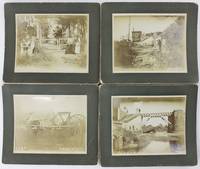
Puerto Principe 1898. Good plus. Thirteen photographs each approximately 4 x 5 inches on original card mounts. A few images rather faded. Light edge wear to mounts. Some photo credits in negatives; each with manuscript caption on mount verso. An interesting group of thirteen photographs taken by an amateur military photographer while deployed to Cuba during the Spanish-American War. The photos are centered around Puerto Principe now Camaguey in Central Cuba an unusual location for photos of this genre and focus on natives local architecture and natural views. Crude credits in the negatives of several images attribute the photographs to "Woodward" or "W.D.W" of the "15th U.S.I.B" i.e. 15th U.S. Infantry Battalion . Each image is also captioned in manuscript on the rear of its mount as follows:<br /> <br /> 1 Rail Road Bridge Near Puerto Principe Cuba<br /> 2 Same Bridge Different View<br /> 3 Natives in Cuba<br /> 4 Military Headquarters<br /> 5 Soldier Camp in Cuba<br /> 6 Cuban Prison<br /> 7 Cemetery in Puerto Principe Cuba<br /> 8 Water Wagon in Cuba<br /> 9 Plaza in Puerto Principe Cuba<br /> 10 Residence in Cuba<br /> 11 Cuban Carriage<br /> 12 Summer Resort in Cuba<br /> 13 Military Headquarters Inside. unknown
书商的参考编号 : 4079
|
|
|
[Latin America]. [World War II]. [Propaganda]
Libertad de Palabra. Una de las Cuatro Libertades por las Que Luchan los Aliados caption title
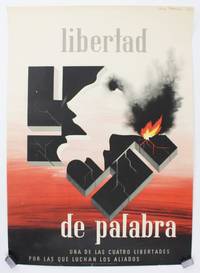
Washington DC: El Coordinador de Asuntos Interamericanos 1942. Very good. Pictorial lithograph 20 x 14.25 inches printed in red gray yellow and black. Minor surface wear mild creasing light dust-soiling a few pinholes. A rare poster issued by the Office of the Coordinator of Inter-American Affairs CIAA during World War II attempting to sway public opinion in Latin America to the Allied side. The CIAA was established by executive order in July 1941 in order to distribute news advertising film reels and more to and from Latin America to counter Italian and German propaganda campaigns in the region. The text of the present poster translates from the Spanish as "Freedom of Speech. One of the four freedoms for which the Allies are fighting." The central image features an open-mouthed face breaking open a large swastika which is itself on fire. A mildly subtle message that free speech destroys fascism. The poster was designed by noted Russian-American graphic designer and photographer Alexey Brodovitch whose printed credit appears at top right; Brodovitch is most well-known for his art direction of Harper's Bazaar from 1934 to 1958. A powerful visual display with only one copy reported in OCLC at MOMA though we also find two other institutional holdings at the United States Holocaust Museum and the Hoover Institute. El Coordinador de Asuntos Interamericanos unknown
书商的参考编号 : 4754
|
|
|
[Mexican-American War]. [Champion, Aristarchus]
Three Manuscript Letters Sent to Aristarchus Champion from New York Correspondents Just Following the Mexican-American War Concerning Mexican Claims New York Real Estate Prices a Proposed "Road to Lake Erie" and Art Purchases
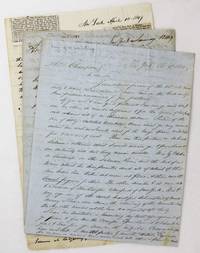
New York 1850. Very good. Three manuscript letters totaling nine pages and approximately X words. All on single folded sheets all addressed on the verso of the second leaf. Old mailing folds minor foxing and wear small hole in second leaf of two letters from removed wax seals. An informative trio of manuscript letters sent by Thomas Spencer and William W. Bliss from New York City to Aristarchus Champion in Rochester. Aristarchus Champion 1784-1871 was a Yale graduate in 1807 and spent a long career as a lawyer real estate speculator and philanthropist. He was involved in business dealings with both of his correspondents here and the letters detail some of those activities. The letter by Thomas Spencer is dated April 10 1849 and concerns business dealings relating to both Mexican claims and New York real estate. Spencer writes in detail about a farm he attempted to sell "for the Mexican claims but could not make it go." He also discusses further speculation in Mexican claims in a long paragraph on the second page throwing out numbers like $50000 and $90000 as proposed totals for various deals before returning to further detailed discussion on the prospects of selling his farm. The remaining two letters are written to Champion by William M. Bliss a business associate of Champion's. In his first letter here written in January 1849 Bliss writes about the state of bonds potential liens and other financial matters relating to his company's business interests with regard to a new "road to Lake Erie" and Binghamton. Bliss's second letter is entirely concerned with the potential purchase of several paintings including a "landscape on the Delaware River" by Walter Mason Oddie and a "scene in Gray's elegy" by an English emigrant artist who has become "an adopted citizen" of the United States. Bliss notes several prices in the process of discussing these various paintings. These letters concern a wide range of business dealings in New York in the mid-19th century including Mexican claims and current art prices providing a solid opportunity for studying contemporary real estate and art markets. unknown
书商的参考编号 : 4842
|
|
|
[Alaska]. [World War II]
Information for Military Personnel and Map of Post wrapper title
Fort Richardson Ak: March 1 1945. Very good plus. 8pp. of text folded accordion style folded out to a full-page map on verso. Light soiling and toning. A seemingly unrecorded guide and map to Fort Richardson located near Anchorage Alaska. The fort opened in 1941 as the headquarters for the United States Army in Alaska. For a brief time Fort Richardson served as a holding center for fifteen Japanese American internee families. The present guide "was prepared primarily for the information and guidance of military personnel new to Fort Richardson. It presents the rules regulations and facilities of the Post for easy reference." The facilities included officers' clubs theatres a library skating rink ski bowl and much more. A total of thirty-eight of these facilities are keyed to the map of the fort printed on the verso. When folded the pamphlet measures 6 x 4 inches and folds out to a total of 12 x 15.75 inches. We could locate no other copies of this early guide to an important American military base in Alaska during the Second World War. March 1 unknown
书商的参考编号 : 5579

|
|
|
Parrodi, Anastacio [Mexican-American War]
Vindicacion del General Parrodi wrapper title
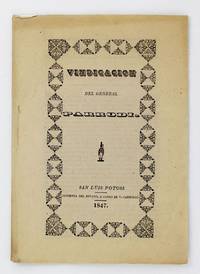
San Luis Potosi: Imprenta del Estado a Cargo de V. Carillo 1847. Near fine. 17pp. Original decorative wrappers stitched as issued. Light toning to wraps. Internally clean. A vigorous self defense by General Anastasio Parrodi against attacks on his conduct in his withdrawal from Tampico during the Mexican-American War. Parrodi a Cuban by birth joined the Mexican army in the early years of independence and rose through the ranks due in no small part to his personal friendship with Santa Anna. When the Mexican leader called on Parrodi's garrison to join the forces heading north to confront Taylor at Saltillo his swift exit from Tampico left unguarded the city and a large stockpile of munitions both of which were swiftly captured by the Americans. In this pamphlet Parrodi reprints official orders and documentation in the hopes of demonstrating that he acted correctly rather than treasonously in his abandonment of the city as was being charged in newspaper attacks against his character. OCLC records four copies at Yale SMU Berkeley and UT Arlington. Imprenta del Estado, a Cargo de V. Carillo unknown
书商的参考编号 : 5218
|
|
|
[Mexico]. [War of Independence]
Amor Lealtad y Union del Esquadron Urbano de México en la Jura de la Constitucion
Mexico City: Por Don Manuel Antonio Valdes Impresor de Cámara de S.M. 1812. About very good. 20pp. plus engraved plate. Small quarto. Disbound. Minor dampstaining light toning. A brief but grandiose celebration of and pledge of loyalty to the new Spanish Constitution of 1812 offered by the garrison of Mexico City. The new form of government was in great part an attempt to assuage colonial discontent and among other things promised colonies representation in the Spanish Cortes. The author riffs on the garrison's motto of "Amor Lealtad y Union" and offers several verses in praise of each as well as one for the nation. An engraving of the coat of arms also bearing the motto is tipped in between the title page and first leaf of text. An interesting representation of reaction to the promulgation of the new constitution in Mexico. OCLC lists three copies in U.S. institutions at Yale Berkeley and the University of Texas. Por Don Manuel Antonio Valdes Impresor de Cámara de S.M. unknown
书商的参考编号 : 5223

|
|
|
[Mexican-American War]
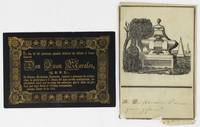
Death Notice of Don Juan Morales Commander of Mexican Forces at the Alamo and Mexican-American War Veteran
Jalapa: January 10 1848. Near fine. Mourning card printed in gilt on black cardstock with an elaborate ornamental border 3.25 x 5 inches. Minor wear. An elaborate death notice honoring a decorated Mexican military commander in 1848. As a colonel under Santa Anna Don Juan Morales 1802-1847 served as field commander for Mexican forces at the Alamo and Coleto in 1836 and as a Major General in the Mexican-American War. He served as commandant of Veracruz abandoning the city when surrender seemed inevitable; he died shortly thereafter. The text of the card reads: "El dia 23 del procsimo pasado fallecio en Atlisco el Senor General Don Juan Morales Q. E. P. D. Su Esposa Hermanos Parientes Amigos y personas de estimacion lo participan a V. llenos del mas acerbo sentimiento suplicandole haga por su alma los sufragios que le dicte su piedad; por euyo favor le viviran reconocidos." This translates roughly as follows: "On the 23rd of last month General Don Juan Morales Rest in Peace passed away in Atlisco. His wife brothers relatives friends and loved ones share their deepest sympathy with you begging you to do the prayers for his soul that your piety dictates; for which favor they will live on in his honor. Jalapa January 10 1848. January 10 unknown
书商的参考编号 : 5842
|
|
|
[World War II]
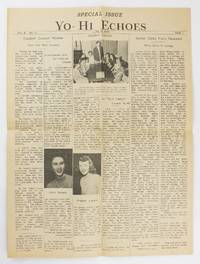
Yo-Hi Echoes Vol. II No. 13 caption title
Yokohama Japan: June 10 1949. Very good. 4pp. on a single folded sheet of newsprint. Folded and toned. Contains news and notes on student and school activities at the Yokohama American School during the occupation period in Japan following World War II. "Yokohama American School got underway in 1946 when the Eighth Army took over a girls’ commercial college. The school started with eighteen students and two teachers. The original building consisted of a three-story structure with twelve classrooms a gym auditorium lab room sewing room and an art studio. By September 1947 the school had grown to 150 students and ten teachers. In 1948 it produced its first graduating class of 24 students" - American Overseas Schools Historical Society. Surprisingly no issues of Yo-Hi Echoes are listed in OCLC. June 10 unknown
书商的参考编号 : 3175
|
|
|
[World War II]
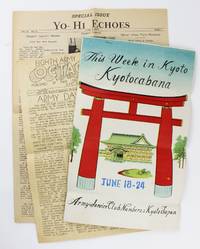
Trio of Items Relating to American Occupation of Japan
1949. Very good. Three items as detailed below. Old folds general overall wear. A collection of three items printed for American military personnel serving in occupied Japan following World War II. These items are as follows:<br /> <br /> 1 Eighth Army Octagram. Vol. 13 No. 31. Published by TI&E Sec. HQ. Eighth Army. Yokohama: April 7 1949. 4pp. on two loose folio sheets. Single issue of this scarce U.S. Army regimental newspaper that touts itself as "The Only English Language Newspaper Published Daily in Yokohama." This issue contains stories on the Army Day Parade and house number changes for military personnel along with Classified ads news on "Cinemas & Clubs"a notice on Jewish Services and more.<br /> <br /> 2 Yo-Hi Echoes. Special Issue. Vol. II No. 13. Yokohama: June 10 1949. 4pp. on a single folded sheet of newsprint. Contains news and notes on student and school activities at the Yokohama American School. "Yokohama American School got underway in 1946 when the Eighth Army took over a girls’ commercial college. The school started with eighteen students and two teachers. The original building consisted of a three-story structure with twelve classrooms a gym auditorium lab room sewing room and an art studio. By September 1947 the school had grown to 150 students and ten teachers. In 1948 it produced its first graduating class of 24 students" - American Overseas Schools Historical Society.<br /> <br /> 3 This Week in Kyoto. Kyotocabana. Army Service Club Number 23. Kyoto: June 1949. 6pp. Original pictorial self wrappers stapled. Contains event programs news descriptions of services information on shopping the area and more for the Army Service Club in Kyoto Japan. unknown
书商的参考编号 : 3174
|
|
|
[Peru]. [War of Independence]
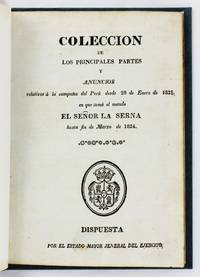
Coleccion de los Principales Partes y Anuncios Relativos a la Campaña del Peru Desde 29 de Enero de 1821 en Que Tomó el Mando el Señor La Serna Hasta Fin de Marzo de 1824
Lima 1824. Good plus. 271pp. Modern paper boards printed spine label. Moderate tanning. Light worming to final leaves repaired slightly affecting text. Scarce printing of correspondence relating to the royalist military campaigns in Peru under Viceroy José de la Serna from the beginning of 1821 to early 1824. La Serna was installed as Viceroy in January 1821 following a petition of top royalist officers. He evacuated Lima and moved the colonial capital inland to Cuzco where he set about rebuilding his army and campaigning to recapture the territory lost by his predecessors. In this he was quite successful and by the beginning of 1824 he had recaptured almost all of Peru and penned in Bolivar at Trujillo. The correspondence included here follows this successful portion of his generalship and provides an important first hand accounting of events. Following this period however La Serna suffered his own military rebellion and was sufficiently weakened until he lost the Battle of Ayacucho and thereby all of Peru in December 1824. OCLC locates only two copies at U.S. institutions Harvard and the JCB.<br /> Medina Lima 3779. Vargas Ugarte 5174. unknown
书商的参考编号 : 5668
|
|
|
[World War II]. Gamon, John A
Archive of Manuscript Letters by U.S. Navy Commander Capt. John A. Gamon Jr. Writing Home to His Wife During the Interwar Period World War II and the Korean War
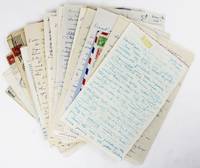
Various locations 1952. Very good. Approximately 230 manuscript or typed letters signed totaling about 550 pages almost all with original transmittal envelopes. Minor overall wear. A voluminous collection of original correspondence sent home by United States Navy Commander John Arthur Gamon Jr. 1910-2001 covering almost twenty years of his military service encompassing the interwar period World War II and the Korean War. John A. Gamon was raised in Berkeley California then trained and served as a pilot in the Navy. The overwhelming percentage of the present collection includes letters written from him to Helen Mae Hall who shortly became Helen Mae Gamon. His first few letters here are written to "Miss" Helen Hall while his June 9 1937 letter addressed to "Mrs. John A. Gamon Jr." The couple had at least two children who are mentioned in the letters named Goodie and Jona. Gamon served in the Navy until 1960. He passed away in San Diego on September 2 2001.<br /> <br /> Gamon's letters are chock full of information about his activities both professional and personal his leisure activities in various port cities and at naval bases throughout the country and more over a seventeen year period. The collection includes around 200 letters by Gamon to his wife twenty-five letters from Helen back to him and a handful of family letters. The great majority of Gamon's letters around 150 total were written during World War II or the Korean War. His prewar letters were sent from the U.S.S. Oklahoma at home in Berkeley at port in Tacoma Honolulu Panama San Diego Pensacola Norfolk various inland locations and others. Gamon frequently reports on his flying adventures his activities and the specifics of life aboard ship as well as those of fellow sailors mentions the books he's reading movies he's seen describes his various social activities and more. He also asks Helen to report on home front activities and regularly requests various family news.<br /> <br /> The great majority of the letters were sent home by Gamon while serving with the U.S. Navy during World War II in 1943 and 1944. When the war began Gamon was a lieutenant commander stationed in Virginia then he moved around to Florida New York Rhode Island Virginia and California. Because he served largely on the home front during the war Gamon's letters do not include much content on the war itself; the letters are in a sense the record of a marriage lived out at a distance and in letters. As with his earlier letters Gamon reports on his professional and personal life in the Navy then touches on issues at home and continually expresses a profound sense of love for Helen and his family across the miles. Gamon's later letters dated between 1948 and 1952 are largely of the same nature while he was stationed in Washington D.C. and then again in San Francisco. However much of Gamon's 1952 letters which emanate from the last half of the year are written from various locations in Japan where Gamon was apparently providing naval support during the Korean War. As in the earlier letters Gamon mentions his piloting activities but without a great deal of detail. As with most letters written during the Second World War and in Korea military letters were subject to censors; several of the letters here exhibit approval stamps from the censors. Helen's twenty-five letters to Gamon report much from the home front including family news and the activities of their children; in one early letter Helen has drawn herself as a pregnant stick figure. The collection contains much to mine for researchers looking into marital relationships in the mid-20th century. unknown
书商的参考编号 : 2530
|
|
|
[World War II]
Newscast Vol. II Number 218 caption title
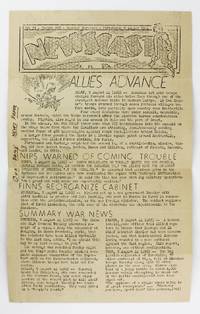
Whitehorse Yukon Canada: August 9 1944. Very good. Broadsheet 13 x 8 inches. Old folds minor toning and light thumb-soiling ink notation in left margin reading "Our Daily News Paper." The August 9 1944 issue of a very rare American military newsletter issued through the CFWH radio station in Whitehorse Yukon Canada. The radio station was started by the United States Army Service Forces responsible for the maintenance of the Alaskan Highway in February 1944 with programming furnished by the Army's Special Services. The present issue contains stories on the advancement of the Canadian First Army troops and Allied Forces in Caen reports in Tokyo of Japanese expectations of a direct American assault a new government in Finland a summary of war news as well as National News Sports and more. Also includes a schedule of radio programs for August 9 1944 which included shows by Bob Hope Dinah Shore and others. We could locate no other examples of this apparently very rare World War II American military periodical. August 9 unknown
书商的参考编号 : 3173
|
|
|
[Civil War]. [Confederate Texas]
Partially Printed Form Completed in Manuscript Attesting to the Loyalty of a Texas Cavalryman and Giving Him Permission to Return Home
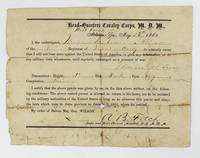
West Point Ga: May 13 1865. About very good. Partially-printed document completed in manuscript docketed on verso. Old folds minor loss at one crossfold some archival reinforcements along fold lines minor creasing and edge wear. A late Oath of Allegiance sworn by Private William M. Lewis Company F of the 8th Confederate Texas Cavalry. William M. Lewis enlisted with the 8th Texas Cavalry better known as Terry's Texas Rangers after its organizer Benjamin Franklin Terry. Although originally intended to serve in Virginia the Rangers were assigned under General Albert Sydney Johnston for service in the West. Colonel Terry was killed early in a skirmish on December 17 1861. Terry's Texas Rangers were reassigned to the Army of Tennessee led by General Braxton Bragg where they were used as shock troops given their high skill level at mounted shooting. The regiment would ultimately fight in nearly 275 engagements distinguishing themselves at the battles of Shiloh Murfreesboro Chattanooga and Chickamauga. During the Atlanta Campaign the regiment continually harassed Sherman's army on its March to the Sea. Although 248 survivors of the 8th Texas Cavalry declined to surrender with the rest of the Army of Tennessee at the end of the war it appears that Lewis was captured. The rest of his regiment fled south to reunite with Confederates who had yet to bend the knee. In the present document Lewis does "solemnly swear that I will not bear arms against the United States of America or give any information or do any military duty whatsoever until regularly exchanged as a prisoner of war." The oath is followed by information on Lewis's physical description describing him as a five-feet-tall with "dark" hair "grey" eyes and a "fair" complexion. The document is signed by Lewis after the oath and at the bottom by Captain and Assistant Provost Marshall Asa B. Fitch of Company H of the 4th Iowa Cavalry which also fought at the Battle of Bentonville. The printed text above Fitch's signature states that he is allowing Lewis "to return to his home not to be molested by the military authorities of the United States as long as he observes this parole and obeys the laws which were in force previous to January 1 1861 where he resided." Loyalty oaths for Confederate Texas soldiers are rare but rarer still from prisoners of war held by Union forces at the end of the conflict and especially rare from members of Terry's Texas Rangers. This document is all three rolled into one. May 13 unknown
书商的参考编号 : 5990
|
|
|
[Texas]. [World War I]
Bird's Eye View. Camp Bowie Fort Worth Tex. October 1917
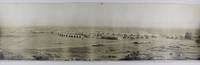
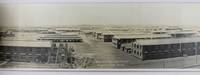
Chicago: Mayhart Studio 1917. Very good. Large panoramic photograph 8 x 90.5 inches. Rolled. Light wear at edges with a couple of small chips and very short closed tears along top edge. minor dust soiling and toning. A fabulous and extremely long panoramic photograph measuring approximately 7.5 feet in length that depicts Camp Bowie in Fort Worth during October 1917. At this time the camp was still under construction but also housed an entire infantry division in training for World War I. Ongoing construction efforts are clearly evident as piles of lumber in various states of organization occupy the field in the center foreground. Already completed barracks and other out buildings occupy the right of the image and thousands of army tents sweep into the background of the center and left portions of the image. A group of standard houses likely for officers and their families is located at the lower left of the image. The photographers Mayhart Studio of Chicago were responsible for a number of military and patriotic views during the United States' involvement in the Great War including the well-known "Living Flag" image of thousands of servicemen composing an American flag.<br /> <br /> "Construction of Camp Bowie began on July 18 1917. The camp in the Arlington Heights neighborhood about three miles west of downtown Fort Worth was established by the United States War Department to give training to the Thirty-sixth Infantry Division. Local officials expected financial gain and urged that the camp be located at Fort Worth. Including the adjacent rifle range and trench system the site encompassed 2186 acres. Camp Bowie's greatest average monthly strength was recorded in October 1917 as 30901. For about five months after the departure of the Thirty-sixth for France in July 1918 the camp functioned as an infantry replacement and training facility with monthly population ranging from 4164 to 10527. Shortly after the Armistice on November 11 1918 Camp Bowie was designated a demobilization center. By May 31 1919 it had discharged 31584 men. The heaviest traffic occurred in June when it processed thousands of combat veterans of the Thirty-sixth and Ninetieth Texas-Oklahoma divisions. The demobilization having been concluded Camp Bowie was closed on August 15 1919" -- Handbook of Texas Online.<br /> <br /> A quite remarkable photographic document of this short-lived World War I-era army camp in Fort Worth whose grounds and surrounding neighborhood are now touted by the municipal tourism office as "the city's premier commerce corridor." We locate no other examples of this excellent and large panorama. Mayhart Studio unknown
书商的参考编号 : 1993
|
|
|
[Texas]. [World War I]
Birds Eye View of Camp Travis. San Antonio Texas. Oct. 1917
San Antonio 1917. Very good. Large panoramic photograph 8 x 92 inches. Rolled. Minor wear at edges with one very short closed tear at top edge. Light blemish in negative at center of image. Light dust soiling and toning. An outstanding and extremely long panoramic photograph measuring well over 7.5 feet in length that depicts Camp Travis in San Antonio following its recent opening. Although the camp was open and housing an entire division-in-training at the time of this image the camp was still under construction as evidenced by the organized piles of lumber at the far right of the image and the incomplete barracks building in the center foreground. The panorama nevertheless gives a sense of the scope and size of the training camp with barracks and outbuildings stretching almost as far as the eye can see in the center and left sections of the photograph. Structures are sparser in the right-hand side of the image both because they as yet unbuilt and because some of the training fields were located in this part of the camp. The photographers Mayhart Studio of Chicago were responsible for a number of military and patriotic views during the United States' involvement in the Great War including the well-known "Living Flag" image of thousands of servicemen composing an American flag. <br /> <br /> "On July 15 1917 after its selection as the training site for the Ninetieth Texas-Oklahoma Division of the army Camp Wilson was renamed Camp Travis in honor of Alamo hero William B. Travis. The camp was ready for occupancy on August 25 1917. Additional land was subsequently acquired for vital training facilities and numerous structures were erected by the soldier welfare agencies. Camp Travis comprised 18290 acres of which 5730 were on the main campsite adjoining Fort Sam Houston. The Ninetieth Division was organized at Camp Travis in September and October of 1917. During the summer of 1918 Camp Travis served as an induction and replacement center with an average strength in July of about 34000 White and Black troops. On December 3 Camp Travis was named as a demobilization center. The facility was also designated a local recruiting station and a regional recruit depot in March 1919. Some 62500 troops were discharged at Camp Travis in about eight months. The camp then became the home station of the Second Division. Its service as a separate entity was terminated however upon its absorption by Fort Sam Houston in 1922" -- Handbook of Texas Online.<br /> <br /> A quite fascinating view of this enormous World War I-era training camp in San Antonio now a part of the even larger Fort Sam Houston military base on the east side of the city. We locate no other copies of this large and remarkable panorama. unknown
书商的参考编号 : 1992
|
|
|
Guerra, Norma S
Clinical Problem Solving: Case Management
hardcover. Good. Access codes and supplements are not guaranteed with used items. May be an ex-library book. hardcover
书商的参考编号 : 1442246359.G ???????? : 1442246359 9781442246355

|
|
|
[Mexican-American War]
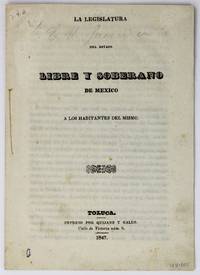
La Legislatura del Estado Libre y Soberano de Mexico a los Habitantes del Mismo
Toluca: Impreso por Quijano y Gallo 1847. Very good plus. 11pp. Gathered signatures stitched. Small ink notation to title page minor scattered foxing. A rare monograph from the Mexican Congress to its people in the midst of the Mexican-American War. Here the Mexican government implores the populace for an end internal bickering and instead to concentrate on defeating the American forces who intend to subjugate not only Mexico but all of the Americas. The Mexican legislature also argues clearly for guerrilla warfare. The work was issued just after the Battle of Cerro Gordo and also printed as a broadside with priority of the two editions unknown.<br /> <br /> "Dated April 26 1847 this rare and virtually unknown pamphlet criticizes the way the central government is handling the war. The writers are especially upset over taxation and the fiscal policy. Not in Haferkorn" - Garrett & Goodwin. OCLC lists just a single copy of this title at the British Library.<br /> Eberstadt 160:339. Garrett & Goodwin p.86. Dorothy Sloan 24b:291. Impreso por Quijano y Gallo unknown
书商的参考编号 : 2376
|
|
|
[Mexican-American War]. [Miles, Dixon Stansbury]
Headquarters of the Army Mexico February 4 1848. General Orders - No. 45. Proceedings of a Court of Inquiry Convened at Tacubaya Mexico by Virtue of the Following Order. To Examine into the Facts and Circumstances Connected with the Loss of Certain Pack Mules on the 4th Inst. While Under the Escort of a Column of Troops Commanded by Lieut. Colonel Miles. caption title
Mexico City 1848. Very good. 3pp. Printed on a single folded sheet. Dbd. Old vertical fold minor foxing. A rare United States Army field printing pertaining to a notable incident that occurred during the Mexican-American War. In early January 1848 Lt. Col. Miles was ordered by Brig. Gen. Twiggs to take command of a wagon train and a small cadre of troops and then conduct them from northern Mexico to Mexico City. Mexican merchants availed themselves of the escort for safe conduct of their merchandise to the capital city and other destinations in the interior of the country. The wagon train consisted of 316 government wagons which stretched to three miles in length with 1700 pack mules adding another nine miles to the procession. Col. Miles had 1300 troops under his command but only 150 of them were cavalry. Mexican guerillas under the command of Zenobia attacked the train between Santa Fe and Rio San Juan resulting in the loss of 300 pack mules along with the goods belonging to the Mexican merchants. Col. Miles was then brought up on charges in a military Court of Inquiry at Tacubaya Mexico the details and results of which are recorded in the present work. In short Col. Miles was exonerated of any misconduct especially considering that he only had "a small number of troops" at his command. The heart of the judgement states that "Lieut. Col. Miles exercised unusual prudence and foresight in his precautionary measures and that his entire arrangements upon the march were most judicious and officer-like and that instead of meriting censure or even animadversion the conduct of Lieut. Col. Miles entitles him to high commendation."<br /> <br /> The incident was described in a contemporary account recorded by American soldier Orlando B. Wilcox: "July 19. New acquaintance named Clark a sutler who was at Buena Vista.saw Zenobia's attack on Col. Miles' train. The Mexican merchants &c. whose pack mules the escort was protecting stood on a hill & saw Walker whipt & gave no assistance though they were numerous together & well armed. Zenobia made a dash at the pack mules. Clark was driven along with the crowd. Saw a volunteer try to cut the girth to save his pack; a lancer cut his head off at a clip. Zenobia left Clark as a prisoner charge of two men to 'whip the yankees.' Charge in deep files cavalry toward Walker's whose forty men dismounted. Walker was at their head; they gave way. Mex's dashed forward & on coming up wheeled to right & left" - Willcox.<br /> <br /> Dixon Stansbury Miles 1804-1862 served a wide-ranging career in the American Army. He fought in the Indian Wars the Seminole Wars and with particular distinction during the Mexican-American War before losing his life early in the Civil War. While commander of the Union garrison at Harper's Ferry in 1862 a time in his career when he had been censured by the Army for drunkenness he was mortally wounded while surrendering to Stonewall Jackson's forces during the Confederate invasion of Maryland.<br /> Willcox Orlando B. Forgotten Valor: The Memoirs Journals & Civil War Letters of Orlando B. Willcox Kent Ohio & London: Kent State University 1999 p.117. unknown
书商的参考编号 : 2272
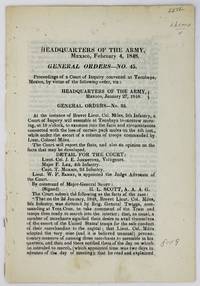
|
|
|
[Mexican-American War]
El C.L. Francisco M. de Olaguibel Gobernador Constitucional del Estado Libre y Soberano de Mexico a Todos Sus Habitantes Sabed: Que el Congreso del Estado Ha Decretado Lo Que Sigue. caption title
Toluca: February 11 1847. Very good. Broadside 16.75 x 12 inches. Previously folded. Faint dampstaining at left corners. Two small wormholes affecting one letter of text. Otherwise minor edge wear and light dust soiling. Unrecorded printings of two decrees by the legislature of the State of Mexico at Toluca that sought to raise emergency funds to defend the country against American invasion during the Mexican-American War. Passed on February 8 & February 11 1847 these acts authorized the state legislature to borrow 300000 pesos with one third of this money allocated to the army and the remainder to equip the national guard. This expenditure would be covered by a salary tax on government employees and additional taxes on alcohol including pulque and aguardiente sugar and lumber. The second decree provides guidance and stipulations for the collection of these taxes. At this point in time Santa Anna's army was rushing north to meet Zachary Taylor's forces at Buena Vista. Not in OCLC. February 11 unknown
书商的参考编号 : 2633
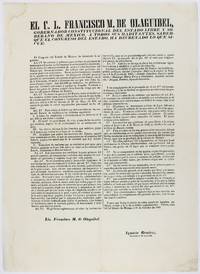
|
|
|
[Mexican-American War]
Juan Soto Gobernador Constitucional del Estado Libre y Soberano de Veracruz Considerando: Que la Justicia el Honor Nacional y la Conveniencia Publica Demandan Imperiosamente Que Sostengamos con Teson y a Todo Trance la Guerra Que Ha Provocado la Desleal Republica Vecina. caption title and first lines of text
Huatusco: May 31 1847. Very good. Broadside decree 17.5 x 11 inches. Printed on lined paper. Previously folded with a couple of very small losses at central fold. Minor wear at edges. Light dust soiling and toning. A rare broadside decree that establishes guidelines for the collection of funds and donations for guerillas and their families continuing the fight against the American invasion around Veracruz in 1847. The important port city had fallen two months prior and Santa Anna was routed at Cerro Gerro by Winfield Scott a month earlier. All that was left for Mexican forces in the region was sustained guerilla harassment of the American army. In this decree a separate account from regular government monies is established for funds raised and various government departments of the state of Veracruz are ordered to encourage donations and to publicize contributions and children are even encouraged to contribute food to the soldiers. A desperate plea for a desperate situation; dated May 31 1847 and signed in type by Veracruz state president Juan Soto in Huatusco the temporary location of the displaced government. OCLC locates no other copies. May 31 unknown
书商的参考编号 : 2634
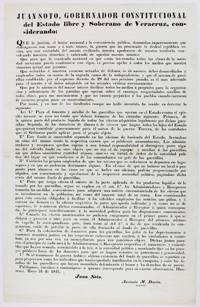
|
|
|
[Mexican-American War]. [Catholicism]
Gobierno Eclesiastico del Arzobispo de Mexico. A Nuestros Respetables Coadjutores los Parrocos de Esta Ciudad y Distrito caption title
Mexico City: November 17 1847. About very good. Broadside approximately 12 x 8.5 inches. Previously folded two small tape repairs on blank verso. Small chip at upper left corner. Contemporary manuscript rubrics. Light toning and dust soiling. This scarce order was issued by the Archbishop of Mexico two months after the capture of Mexico City by the United States Army. It contains six articles that detail instructions for administering the last rites and orders for several other difficult matters in the occupied city. The extreme unction is to be performed secretly only in the mornings and at night unless the physician believes it is not possible to wait and further instructions are given on how to proceed secretly but properly with the ritual. The fifth article states that that if the American troops insult the residents the clergy should try to restore calm to obtain assistance from the local guards and to inform the American garrison commanders. The final article states that parish priests should "Proceder con la mayor prudencia y usar de los medios y vias mas suaves á fin de evitar toda clase de disturbios." An interesting reflection of the official fear of American distaste for Catholicism; we locate only one example at Yale. November 17 unknown
书商的参考编号 : 2345
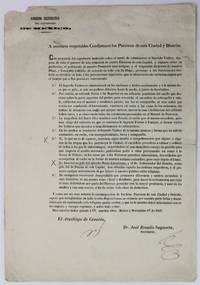
|
|
|
[World War II]. [Oklahoma]. Black, Kenneth
Annotated Vernacular Photograph Album and Scrapbook Documenting the World War II Experiences of Kenneth Black a United States Army Corporal from Oklahoma Serving in the 527th Fighter Squadron in Europe
Various locations in Europe mainly Italy but also France and Germany 1945. Very good. Forty-seven album leaves and plastic sleeves illustrated with approximately 350 photographs many with manuscript annotations a handful of personnel documents and numerous ephemeral items. Later black three-ring binder used to re-house original album leaves and sleeves. Moderate soiling to album. Contents largely in nice shape. A unique view of the European region of World War II through the eyes of Kenneth Black a U.S. Army private then later corporal hailing from Lamont Oklahoma where he worked as a farmer. This densely-packed collection of photographs and ephemera documents Black's service as a truck driver for the 527th Fighter Squadron in France Italy and Germany during the conflict. While there Black participated in several battles in Italy southern France and Central Europe earning six commendations including a Good Conduct Medal. Black enlisted in the Army on April 14 1942 and served throughout the war mustering out on October 24 1945.<br /> <br /> The photographs include dozens of portraits of Black posing by himself or with fellow named soldiers and capturing them posed with their vehicles on airfields and in camp walking the streets in various European cities along the Italian coastline at Mount Vesuvius visiting bombed out fields south of Rome and various ruins posed at the Pisa Airfield traveling along the Rhine River and the autobahn in Germany and more. There are also dozens of images of fighter planes a handful showing their nose art taken from the airfield and sometimes from inside the airplanes themselves. A handful of images record crashed aircraft on various airfields or bombed out cities. Identified locations include the French island of Corsica; the Italian cities of Caserta Pisa where he had a particular fascination with the Leaning Tower snapping about ten pictures Salerno Naples Rome where he is obviously enamored of the architecture of the city Grossetto and Pomig; and the German towns of Darmstadt "before the bombs went to work on it" and Mannheim. He also includes images of the 86th Fighter Group Orchestra playing at a hospital in Rome and floods near Pisa and Grossetto.<br /> <br /> The ephemeral items include two different versions of Black's honorable discharge his "Separate Qualification Record" a letter he wrote home while in Europe a mimeographed illustrated roster of the 527th Fighter Squadron various mimeographed newsletters menus and similar publications collected during the war newspaper clippings and later extracts from magazines showing locations Black visited during his service. A large collection of images featuring a humble Oklahoma farmer lumbering through three different European countries during the Second World War. unknown
书商的参考编号 : 3142
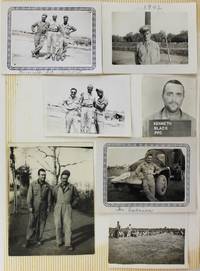
|
|
|
[World War I]. [American Expeditionary Force, Siberia]
Vernacular Photograph Album Documenting the Allied North Russian Intervention in Vladivostok Just After World War I
Mainly Vladivostok 1922. Very good. 261 images about half real photo postcards and half vernacular photographs between 2.5 x 1.5 inches and 3.5 x 5.5 inches. Oblong folio. Contemporary brown leather photograph album string-tied. Lacking fore-edge flap spine chipped moderate rubbing and scuffing to boards. Minor occasional wear to photographs. A unique collection of photographs documenting the joint military expedition by Allied Forces into Vladivostok in southeastern Russia after the conclusion of World War I the October Revolution and the Russian Civil War most likely assembled by an American soldier serving there at the time. The American contingent of the incursion was called the American Expeditionary Force Siberia which partnered with nine other countries to attempt to bring stability to the region rescue 40000 members of the Czechoslovakian Legion being held up by Bolsheviks outside Vladivostok protect and retrieve American supplies in eastern Russia and stem the early spread of Communism. A similar expedition to northern Russia now known as the Polar Bear Expedition was attempted in Archangel. By practically every standard the joint missions failed and in fact damaged relations between the Allied Forces and Russia especially for the United States for decades to come. <br /> <br /> The present collection of photographs and real-photo postcards opens with several photo postcards with printed captions showing parades of the military forces of the various Allied countries who participated in the expedition to Vladivostok as they arrived in the city. These include the British Army landing in Vladivostok the Imperial Japanese Expedition marching in front of the Czech Headquarters the Japanese Vanguard relieving the Imperial Japanese Naval Party the French Army landing in the city the Allied Naval Fleet in the Vladivostok harbor and two views of the landing of the American Army. Two additional captioned postcards show the Czech forces joining the French Army and a rather shocking image of about ten dead Czech soldiers with the image captioned "Czech victims in vicinity of Nicholoske former Bolshevik Head-quarters at Vladivostok." <br /> <br /> The remainder of the photo postcards and photographs capture additional parades numerous street scenes but also scores of images showing the outskirts and countryside around Vladivostok ships from various countries anchored in the harbor or trying to navigate the icy conditions military patrols often carrying weapons American and other soldiers interacting with the locals scenes along the railway views of refugees fleeing the region and much more. Upon arriving in Vladivostok American soldiers were tasked with guarding segments of the rail lines of the Trans-Siberian Railroad running into and out of Vladivostok. American forces are seen here performing those duties but also overseeing a temporary dormitory of beds in an evacuation hospital patrolling the area around the city as well as the refugees along the railway hanging out in their makeshift barracks and more with one image even showing a group of American soldiers posing in baseball uniforms.<br /> <br /> Particularly striking are the images of the indigenous refugees posed near the railroad and in other locations. Some of the subjects appear to be Siberian nomads but others traveling along the rail line are almost certainly Czech refugees fleeing Russia after their role in fighting for their own freedom against the new Russian regime. Several photos here capture groups of people obviously en route to somewhere else along the railroad at train depots and resting in makeshift encampments or tent cities overseen by military personnel.<br /> <br /> Historical material from the Vladivostok expedition is exceedingly rare especially images of soldiers with boots on the ground. The present collection provides a fascinating glimpse of life in Vladivostok during this volatile moment in Russian history as well as a notable instance when American and Allied gunboat diplomacy utterly failed. unknown
书商的参考编号 : 3735
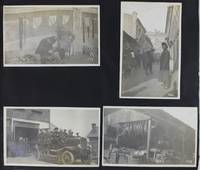
|
|
|
War Department, United States
Chemical Warfare Service Field Manual: Tactics Of Chemical Warfare FM 3-5
hardcover. Good. Access codes and supplements are not guaranteed with used items. May be an ex-library book. hardcover
书商的参考编号 : 1164474766.G ???????? : 1164474766 9781164474760
|
|
|
War Office
Regulations For The Medical Department Of Her Majesty's Army: Army Regulations V6
paperback. Good. Access codes and supplements are not guaranteed with used items. May be an ex-library book. paperback
书商的参考编号 : 1163125547.G ???????? : 1163125547 9781163125540
|
|
|
United States Secretary of War
Report of the Secretary of War 1878 Vol. 1 of 4: Being Part of the Message and Documents Communicated to the Two Houses of Congress at the Beginning of the Third Session of the Forty-Fifth Congress
hardcover. Good. Access codes and supplements are not guaranteed with used items. May be an ex-library book. hardcover
书商的参考编号 : 0260035386.G ???????? : 0260035386 9780260035387
|
|
|
United States War Department
The War of the Rebellion Vol. 10 Classic Reprint: A Compilation of the Official Records of the Union and Confederate Armies; In Two Parts; Part II Correspondence Etc
paperback. Good. Access codes and supplements are not guaranteed with used items. May be an ex-library book. paperback
书商的参考编号 : 1333030460.G ???????? : 1333030460 9781333030469
|
|
|
United States War Dept
Report of the Secretary of War 1880 Vol. 1 of 4: Being Part of the Message and Documents Communicated to the Two Houses of Congress at the Beginning of the Third Session of the Forty-Sixth Congress
hardcover. Good. Access codes and supplements are not guaranteed with used items. May be an ex-library book. hardcover
书商的参考编号 : 0266437435.G ???????? : 0266437435 9780266437437
|
|
|
A Romance; War, Religion and Love
Sins Absolved
paperback. Good. Access codes and supplements are not guaranteed with used items. May be an ex-library book. paperback
书商的参考编号 : 1334090211.G ???????? : 1334090211 9781334090219

|
|

 ?????????
 ?????PDF???
 RSS feed
 ??
??


