New Persian Paperback. Cr. 8vo. (20 x 14 cm). In Persian. 230 p. Siyasat-e khariji-e Iran dar dawrân-e Safawiyah. Foreign relations of Iran in the period of Safawid dynasty, (1501-1736).
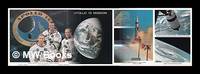
National Aeronautics and Space Administration. 1970 10 11" by 14" Apollo XII pictures Conrad-Gordon-Bean VG picture 1&2 with very slight tip bump National Aeronautics and Space Administration unknown
Washington D.C.: National Aeronautics and Space Administration NASA 1974. Book. Near Fine. Photograph. First Edition. 8" x 10". "For Release No Date. Photo No. 62-MAS-168". Near Fine faint 1" surface crease. 8" x 10" black and white NASA publication information printed in blue ink verso. "Astronaut John Glenn was photographed in space by an automatic sequence action picture camera as he became the first American to orbit the earth on Feb. 20 1962. His Mercury spacecraft - Friendship 7- made three orbits in its 4 hours 55 minute flight. Glenn was in a state of weightlessness traveling at 17500 mph as this picture was taken.". National Aeronautics and Space Administration (NASA) unknown
Washington D.C.: National Aeronautics and Space Administration NASA 1974. Book. Near Fine. Photograph. First Edition. 8" x 10". "For Release No Date. Photo No. 69-H-2349 ". Near Fine faint 1" surface crease. 8" x 10" black and white NASA publication information printed in blue ink verso. "On December 16 1965 Gemini 6 maneuvered to within a few feet of Gemini 7 for the world's first rendezvous in space.". National Aeronautics and Space Administration (NASA) unknown
Washington D.C.: National Aeronautics and Space Administration NASA 1974. Book. Near Fine. Photograph. First Edition. 8" x 10". "For Release No Date. Photo No. 73-H-578". Near Fine faint 1" surface crease. 8" x 10" black and white NASA publication information printed in blue ink verso. "This excellent view of the Skylab space station was taken from the Command Module during a final "fly around" inspection. The three-man crew spent 28 days in Skylab after their May 25 1973 launch from Kennedy Space Center.". National Aeronautics and Space Administration (NASA) unknown
Washington D.C.: National Aeronautics and Space Administration NASA 1974. Book. Near Fine. Photograph. First Edition. 8" x 10". "For Release June 30 1974. Photo No. 69-H-1253". Near Fine faint 1" surface crease. 8" x 10" black and white NASA publication information printed in blue ink verso "The flag of the United States was planted on the surface of the moon for the first time five years ago in July 1969 by Apollo 11 crewmen on the first manned lunar landing mission.". National Aeronautics and Space Administration (NASA) unknown
Washington D.C.: National Aeronautics and Space Administration NASA 1974. Book. Near Fine. Photograph. First Edition. 8" x 10". "For Release June 30 1974. Photo No. 69-H-1269". Near Fine faint 1" surface crease. 8" x 10" black and white NASA publication information printed in blue ink verso "Astronaut Edwin E. Aldrin Jr. is shown as he deployed an experiment on the surface of the Moon during Apollo 11 the first manned lunar landing mission five years ago in July 1969.". National Aeronautics and Space Administration (NASA) unknown
National Aeronautics and Space Administration NASA 1970. First Edition. Softcover. Fine black and white photograph. Remains well preserved overall; bright and clean. Provenance; from the collection of the noted Boston Belmont autograph collector Ray Crosby. Fine inall aspects and housed in the original header-printed envelope. Physical description; 15 photographs. Contents; SIGNED photograph of Prime Crew of the Eight Manned Apollo Mission: Stuart A. Rosa Alan B. Shepard Jr. Edgar D. Mitchell ; Apollo 13 Mission with four photos on 1 page: Apollo 13 view of Earth Apollo 13 view of Moon Apollo 13 view of Moon Apollo 13 recovery ; Apollo 12 on the Moon - November 19 1969 ; Apollo 13 Liftoff ; The Moon as seen from the Gemini VII Spacecraft December 8 1965 ; three photos on 1 card: Appolo 7 launch 11:30 a.m. EDT Octber 11 1968 Apollo 7 rendezvous with second stage S-IVB over Florida Apollo 7 views hurricane Gladys ; Apollo 11 Astronaut prepares to step onto the moon ; card showing five images: solar system earth and moon sun milky way orbits of the planets ; Apollo 8 Spacecraft in Orbit around the moon views the earth ; the earth from Apollo 8 December 21 1968 ; Apollo 11 Moon Rocks ; Apollo 11 Astronaut stands beside U.S. flag on the boon ; Apollo 11 astronaut Edwin E. Aldrin Jr. walks on the moon ; Apollo 11 on the Moon - July 20 1969 ; Apollo 12 on the moon - November 19 1969. Subjects; NASA. Apollo Missions. Lunar Missions. Space exploration. Photographs. National Aeronautics and Space Administration (NASA) paperback
John F Kennedy Space Center: National Aeronautics and Space Administration 2000. Presumed First Edition First printing. Staplebound. Very good. The format is approximately 8.5 inches by 11 inches. 63 5 pages includes covers. Illustrated front cover. The format is approximately 8.25 inches by 11 inches. Illustrations. This includes information on STS-1 through STS 103 from 1981 to 1999. Not all numbers were reported on. The write-ups include mission highlights EVAs Launch and Landing. This includes information on John Glenn's return to space and the first flight to the International Space Station. The International Space Station ISS is the largest modular space station in low Earth orbit. The project involves five space agencies: the United States' NASA Russia's Roscosmos Japan's JAXA Europe's ESA and Canada's CSA. The ownership and use of the space station is established by intergovernmental treaties and agreements. The station serves as a microgravity and space environment research laboratory in which scientific research is conducted in astrobiology astronomy meteorology physics and other fields. The ISS is suited for testing the spacecraft systems and equipment required for possible future long-duration missions to the Moon and Mars. The Space Shuttle was a partially reusable low Earth orbital spacecraft system operated from 1981 to 2011 by the U.S. National Aeronautics and Space Administration NASA as part of the Space Shuttle program. Its official program name was Space Transportation System STS taken from a 1969 plan for a system of reusable spacecraft where it was the only item funded for development. The first of four orbital test flights occurred in 1981 leading to operational flights beginning in 1982. Five complete Space Shuttle orbiter vehicles were built and flown on a total of 135 missions from 1981 to 2011 launched from the Kennedy Space Center KSC in Florida. Operational missions launched numerous satellites interplanetary probes and the Hubble Space Telescope HST conducted science experiments in orbit participated in the Shuttle-Mir program with Russia and participated in construction and servicing of the International Space Station ISS. The Space Shuttle fleet's total mission time was 1322 days 19 hours 21 minutes and 23 seconds. Space Shuttle components include the Orbiter Vehicle OV with three clustered Rocketdyne RS-25 main engines a pair of recoverable solid rocket boosters SRBs and the expendable external tank ET containing liquid hydrogen and liquid oxygen. The Space Shuttle was launched vertically like a conventional rocket with the two SRBs operating in parallel with the orbiter's three main engines which were fueled from the ET. The SRBs were jettisoned before the vehicle reached orbit while the main engines continued to operate and the ET was jettisoned after main engine cutoff and just before orbit insertion which used the orbiter's two Orbital Maneuvering System OMS engines. At the conclusion of the mission the orbiter fired its OMS to deorbit and reenter the atmosphere. The orbiter was protected during reentry by its thermal protection system tiles and it glided as a spaceplane to a runway landing usually to the Shuttle Landing Facility at KSC Florida or to Rogers Dry Lake in Edwards Air Force Base California. If the landing occurred at Edwards the orbiter was flown back to the KSC atop the Shuttle Carrier Aircraft a specially modified Boeing 747. The first orbiter Enterprise was built in 1976 and used in Approach and Landing Tests but had no orbital capability. Four fully operational orbiters were initially built: Columbia Challenger Discovery and Atlantis. Of these two were lost in mission accidents: Challenger in 1986 and Columbia in 2003 with a total of 14 astronauts killed. A fifth operational and sixth in total orbiter Endeavour was built in 1991 to replace Challenger. The Space Shuttle was retired from service following Atlantis's final flight on July 21 2011. National Aeronautics and Space Administration unknown
Washington DC: National Aeronautics and Space Administration 2007. Final Report--Presumed first edition first printing. Wraps. Very good. Format is approximately 8.5 inches by 11 inches. 272 pages. Illustrated front and back cover. Illustrations mostly in color. Definition of Terms. References. Appendices. Minor cover wear noted. NASA letter of appreciation to a senior National Nuclear Security Administration technical expert for support to this report. In the 2005 Budget Authorization Act the U.S. Congress directed the NASA Administrator to provide an analysis of alternatives to detect track catalogue and characterize potentially hazardous near-Earth objects NEO. Congress required that the Administrator submit a program by December 28 2006 to survey 90% of the potentially hazardous objects measuring at least 140 meters in diameter by the end of 2020. In addition the legislation required the Administrator to submit an analysis of alternatives that NASA could employ to divert an object on a likely collision course with Earth. A study team led by the Office of Program Analysis and Evaluation PA&E derived requirements and figures of merit from the Act and used these factors to evaluate the alternatives. The team developed a range of options from public and private sources and then analyzed their capabilities levels of performance life-cycle costs schedules and development and operations risks. This document presents the detailed results of these analyses. A summary report was submitted to Congress in December of 2006. During related Congressional testimony on this report it was stated that The report's basic conclusion is that ``NASA recommends that the program continue as currently planned and we will also take advantage of opportunities using potential dual-use telescopes and spacecraft--and partner with other agencies as feasible--to attempt to achieve the legislated goal within 15 years. However due to current budget constraints NASA cannot initiate a new program at this time.'' In addition the report contained a number of additional findings <br /> including: ``The goal of the Survey Program should be modified to detect track catalogue and characterize by the end of 2020 90 percent of all Potentially Hazardous Objects PHOs greater than 140m whose orbits pass within 0.05 AU of the Earth's orbit as opposed to surveying for all NEOs; The Agency could achieve the specified goal of surveying for 90 percent of the potentially hazardous NEOs by the end of 2020 by partnering with other government agencies on potential future optical ground-based observatories and building a dedicated NEO survey asset assuming the partners' potential ground assets come online by 2010 and 2014 and a dedicated asset by 2015; Together the two observatories potentially to be developed by other government agencies could complete 83 percent of the survey by 2020 if observing time at these observatories is shared with NASA's NEO Survey Program; New space-based infrared systems combined with ground-based assets could reduce the overall time to reach the 90 percent goal by at least three years. Space systems have additional benefits as well as costs and risks compared to ground-based alternatives; Radar systems cannot contribute to the search for potentially hazardous objects but may be used to rapidly refine tracking and to determine object sizes for a few NEOs of potentially high interest. Existing radar systems are currently oversubscribed by other missions. Determining a NEO's mass and orbit is required to determine whether it represents a potential threat and to provide required information for most alternatives to mitigate such a threat. Beyond these parameters characterization requirements and capabilities are tied directly to the mitigation strategy selected.''. National Aeronautics and Space Administration paperback
Washington DC: GPO 1976. fair to good. Quarto approx. 300 wraps figures tables references small stains to fore-edge & in lower margin covers somewhat soiled small tears at spine. GPO paperback
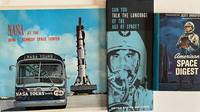
NASA; Schick Corp 1963. Softcover. Near Fine. NASA at the John F. Kennedy Space Center: From NASA Tours; Explains the different programs Mercury Gemini and Apollo; "Can You Talk the Language of the Age of Space' and American Space Digest; sizes range from 3 inches x 6 inches to 4 inches x 8 inches. Color and b&w illustrations and photos. NASA; Schick Corp unknown
Washington DC: NASA 1981. First Edition. First Printing. good. 121 wraps fold-out chart. This booklet provides an overview of the main activities to date and identifies the cooperating countries and institutions which have been involved in NASA's international activities. NASA paperback
Washington DC: Nat Academy of Public Admin 2000. First Edition. First Printing. very good. 86 wraps illus. diagrams. Subtitled: A report by a panel of the National Academy of Public Administration for the U.S. Department of Energy. Nat Academy of Public Admin paperback
Bookseller reference : 42158 ISBN : 1577440455 9781577440451
Washington DC: Nat Academy of Public Admin 2000. First Edition. First Printing. good. 86 wraps illus. list of documents reviewed. This is a Report by a Panel of the National Academy of Public Administration for the U.S. Department of Energy. Nat Academy of Public Admin paperback
Washington DC U.S.A.: National Aeronautics and Space Administration 1965. Ex-Library. Good. Paperback. 1st. wear/soil. W/full markings bookplate and/or pocket. Size: 4to. National Aeronautics and Space Administration Paperback
Greenbelt MD: NASA 1993. Preprint Edition. Wraps. good. Quarto approx. 1 000 2 vols. wraps figures tables references slight soiling to covers slight creasing to covers v.2 a few pages bent. Ink name on table of contents v.2. These two volumes contain 100 scientific papers to be presented at the symposium jointly sponsored by theAmerican Astronautical Society and the NASA Goddard Space Flight Center. NASA paperback
Greenbelt MD: NASA 1989. Preprint Edition. good. Quarto approx. 500 wraps figures tables references some soiling to covers some wrinkling at spine. This volume contains 65 scientific papers to be presented at the symposium jointly sponsored by the American Astronautical Society and the NASA Goddard Space Flight Center. NASA paperback
Washington DC: GPO 1990. Second Edition. very good. Quarto 285 wraps illus. figures appendix index slight wear to cover edges. An orientation to commercial space activities and a current inventory of equipment apparatus carriers vehicles resources and services available from NASA other government agencies and U.S. industry. GPO paperback
National Aeronautics and Space Administration. Used - Very Good. Very Good condition. NASA Space Shuttles Challenger A copy that may have a few cosmetic defects. May also contain a few markings such as an owner’s name short gifter’s inscription or light stamp. National Aeronautics and Space Administration unknown
Washington DC: GPO 1969. fair to good. Quarto 54 wraps illus. covers somewhat foxed and soiled. Science experiments including effects of a meteor strike star color and composition the composition of air and satellite orbits. GPO paperback
Cleveland OH: Lewis Research Center 1995. First Edition. First Printing. good. 20 wraps illus. diagrams mailing information stamped on rear cover. The Advanced Communications Technology Satellite ACTS was launched in September 1993 and was the main foucs of NASA's communications research and development program. Lewis Research Center paperback

 Receive by email
 Download as PDF document
 RSS feed
 Permanent link