|
|
|
BRANDOLINI D'ADDA, Yasmin (Cape Town 1929 - Cison di Valmarino 2012)
Moon sequence
Opera appartente alla serie di 6 incisione a puntasecca originale, numerata, firmata e datata a matita dall'Artista (cm 22x16,5, foglio 50x35) Incisione stampata su carta delle Cartiere Sant'Ilario di Pescia sui torchi di Giorgio Upiglio a Milano. Esemplare 8/25. . . . Ottimo (Fine). . Edizione originale di 25 esemplari numerati. . Yasmin Brandolini D'Adda, di famiglia sudafricana di lingua inglese, ha vissuto a Londra e Firenze, dove ha studiato all'Accademi di Belle Arti.. Nel 1951 sposò il poeta e scrittore veneziano Brandolino Brandolini D'Adda. Ha esposto regolarmente sia in Italia che all'estero sin dal 1971.

|
|
|
BRANDOLINI D'ADDA, Yasmin (Cape Town 1929 - Cison di Valmarino 2012)
Moon sequence
Opera appartente alla serie di 6 incisione a puntasecca originale, numerata, firmata e datata a matita dall'Artista (cm 22x16,5, foglio 50x35) Incisione stampata su carta delle Cartiere Sant'Ilario di Pescia sui torchi di Giorgio Upiglio a Milano. Esemplare 8/25. . . . Ottimo (Fine). . Edizione originale di 25 esemplari numerati. . Yasmin Brandolini D'Adda, di famiglia sudafricana di lingua inglese, ha vissuto a Londra e Firenze, dove ha studiato all'Accademi di Belle Arti.. Nel 1951 sposò il poeta e scrittore veneziano Brandolino Brandolini D'Adda. Ha esposto regolarmente sia in Italia che all'estero sin dal 1971.

|
|
|
BRANDOLINI D'ADDA, Yasmin (Cape Town 1929 - Cison di Valmarino 2012)
Moon sequence
Opera appartente alla serie di 6 incisione a puntasecca originale, numerata, firmata e datata a matita dall'Artista (cm 22x16,5, foglio 50x35) Incisione stampata su carta delle Cartiere Sant'Ilario di Pescia sui torchi di Giorgio Upiglio a Milano. Esemplare 8/25. . . . Ottimo (Fine). . Edizione originale di 25 esemplari numerati. . Yasmin Brandolini D'Adda, di famiglia sudafricana di lingua inglese, ha vissuto a Londra e Firenze, dove ha studiato all'Accademi di Belle Arti.. Nel 1951 sposò il poeta e scrittore veneziano Brandolino Brandolini D'Adda. Ha esposto regolarmente sia in Italia che all'estero sin dal 1971.

|
|
|
BRANDOLINI D'ADDA, Yasmin (Cape Town 1929 - Cison di Valmarino 2012)
Moon sequence
Opera appartente alla serie di 6 incisione a puntasecca originale, numerata, firmata e datata a matita dall'Artista (cm 22x16,5, foglio 50x35) Incisione stampata su carta delle Cartiere Sant'Ilario di Pescia sui torchi di Giorgio Upiglio a Milano. Esemplare 8/25. . . . Ottimo (Fine). . Edizione originale di 25 esemplari numerati. . Yasmin Brandolini D'Adda, di famiglia sudafricana di lingua inglese, ha vissuto a Londra e Firenze, dove ha studiato all'Accademi di Belle Arti.. Nel 1951 sposò il poeta e scrittore veneziano Brandolino Brandolini D'Adda. Ha esposto regolarmente sia in Italia che all'estero sin dal 1971.

|
|
|
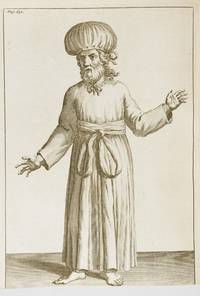
Braunio, Johanne (Johannes Braun) (Text); Bastiaan Stoopendaal-Schulz (Engravings)
From the Library of Philippe Wilhelm Grimm: Bigdê kohanîm Id Est Vestitus Sacerdotum Hebraeorum. Sive Commentarius Amplissimus In Exodi Cap. XXVIII. ac XXIX. & Levit. Cap. XVI. Aliaque loca S. Scripturae quam plurima. Liber Primus Vol. I; Liber Secundus Vol. II. 2-vol. Bound in one volume Complete Sacramental Garments of the Hebrew Priests
Amstelodami Amsterdam: Apud Abrahamum a Someren 1698. Altero Editio priori auctior & emendatior. Hardcover. good to vg. Large octavo 8 x 6 3/4". 72 344 1 40pp. Indices Errata of Vol. I 6 plates one folding; 4 345-752 60pp Indices Errata of Vol. II 14 plates one folding. Bound in full vellum. Red edges. Volume one with engraved half-title. Both title pages with publisher's device. Engraved Ex-Libris of Philipp Wilhelm Grimm father to the Brothers Grimm on verso of title page volume one. Decorative initials and headpiece. Originally published in 1680 Johannes Braun's "Vestitus sacerdotum Hebraeorum" was the standard work on Hebrew priestly vestiments; how they were produced and their ritual use. The text is accompanied with 20 striking full page one in-text engraving and numerous in-text tablets plus frontispiece by Bastiaan Stoopendaal-Schulz a celebrated Dutch engraver and mapmaker. Penciled note on "The Dress of the Hebrew Priests" on verso of engraved half-title in English. Text in Latin. Binding with light wear along edges rubbed with light line indentations. Red edges faded. First folding plate with two inch closed tear at fold near gutter light creasing at lower edge. Inked note in margin of page 384 of volume two. Some parts age-toned mostly indices. Front endpaper missing back endpaper with small chips. Binding and interior in overall good to very good condition plates very good. Apud Abrahamum a Someren hardcover
Riferimento per il libraio : 47512
|
|
|
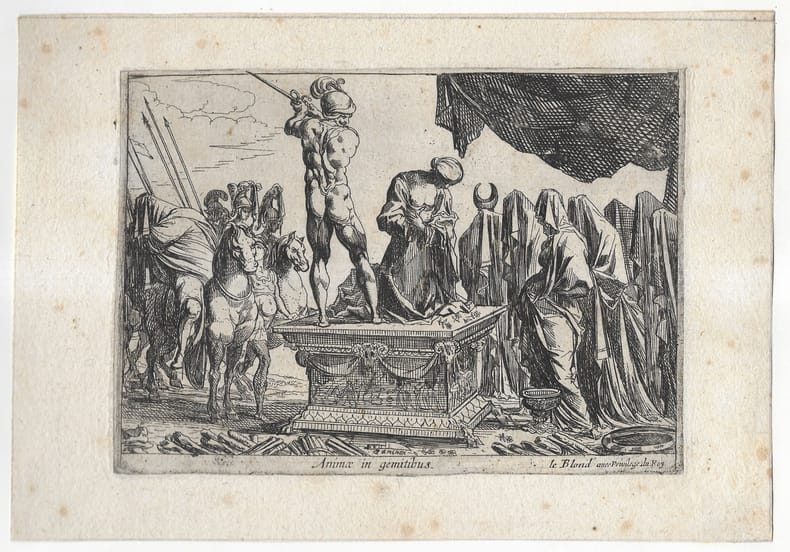
BREBIETTE Pierre
(La décapitation de Sainte Catherine ?)
IFF 27-45. Le Blond avec privilège du Roy XVIIè 11,5 x 16
Riferimento per il libraio : 6623
|
|
|
BRETTELL, Richard (contributions de). - GILLIS, Eric (contributions de).
Degas & Pissarro. Alchimie d’une rencontre.
Vevey, Cabinet Cantonal des Estampes - Musée Jenisch 1998, 315x230mm, 176pages, broché. Couverture à rabats. Cachet de possesseur sur le haut de la page de faux-titre, autrement bel exemplaire.
Riferimento per il libraio : 106691
|
|
|
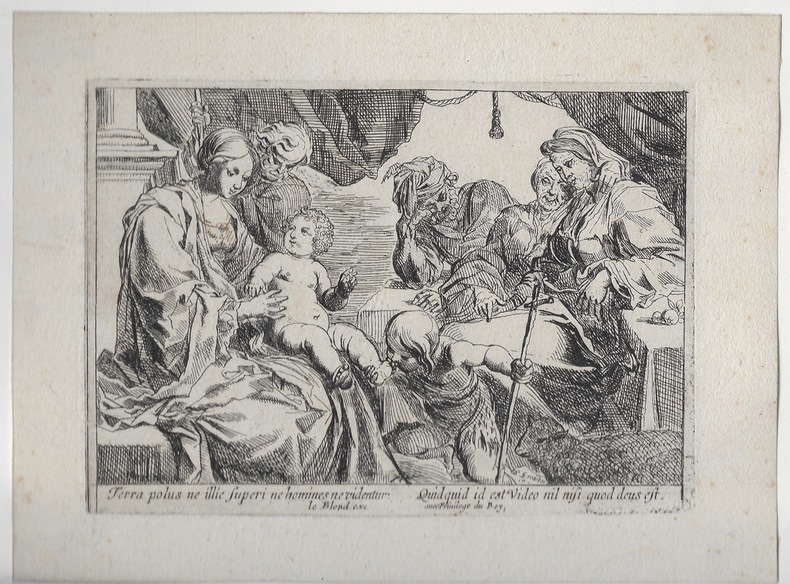
BREBIETTE Pierre
Sainte Famille
IFF 11, Le Blond excudit avec privilège du Roy. Habituellement on trouve le privilège d’Auguste Quesnel. (état postérieur) À gauche Saint Joseph et la Vierge tenant l’Enfant, dont Saint Jean Baptiste baise le pied. À droite Sainte Anne, une femme et S. Joachim. XVIIè 11,5 x 16
Riferimento per il libraio : 6625
|
|
|
Breitinger, Johann Jakob (1575–1645);
Verstendtliche Anleitung, wie man in Statt unnd Landtschafft Zürich außrechnen solle die Freundschafft. Sampt einer Figur, in welcher begriffen unnd fürgebildet wirt der gantze Jnnhalt der Statt Zürich loblicher Ehesatzungen : und letstlich ein summarischer Bericht, warumb in der Blütfreundschafft der dritte Grad bey uns verbotten seye.
Zürich, Joh. Jacob Bodmer, 1626. Kl.-4°. 2 leere Bl., (37) Bl., 1 leeres Bl. Mit 1 Kupfertafel. Pergamentband der Zeit.
Riferimento per il libraio : 5261DB
|
|
|
BREWSTER Jerry
ZUNIGA. The complete Graphics 1972-1984. Interview and essay by Burt Chernow
New York - London Alpine Fine Arts Collection 1984 in 4 (29,5x26,5) 1 volume reliure toilée beige de l'éditeur sous jaquette rempliée illustrée en couleurs, 245 pages, avec de nombreuses reproductions en couleurs. Catalogue of prints. 101 oeuvres reproduites et décrites en regard. Zuñiga. Texte en langue anglaise. First edition. Bel exemplaire ( Photographies sur demande / We can send pictures of this book on simple request )
Riferimento per il libraio : 36840 ISBN : 881680079
|
|
|
BREDDO, Gastone (Padova 1915 - Calenzano 1991),
Senza titolo
Acquaforte facente parte delle pubblicazioni edite in occasione del 50° anniversario della fondazione del PCI. Ha partecipato alla biennale di Venezia nel 1958 con una sala personale, ottenendo uno dei premi ufficiali nazionali. Ha esposto a tutte le precedenti edizioni della Biennale di Venezia dal 1940 al 1958. Ha esposto varie volte alla Quadriennale Romana, anche con una sala personale all'ottava edizione. Ha quindi esposto nelle gallerie e nei musei di Roma, Firenze, Venezia, Bologna, Trieste, Torino, Milano, Padova, Taranto, Bari, Cortina D'Ampezzo, La Spezia, ecc. Ha collaborato alle riviste Gioventù Italica, Il Bo, L'architrave, La strada, Michelangelo, Gazzetta Veneta, Lettere e Arti Firma a matita in basso a destra. Esemplare 2/100. Cm 32x25 (Foglio 70x50). . . Ottimo (Fine). Piccola macchia di inchiostro e fioriture nella parte bianca del foglio, non interessanti la parte incisa. Tiratura 100. .

|
|
|
Brenner, Adam.
"Te Deum Laudamus". Lithographiertes Huldigungsblatt auf die Vermählung von Kaiser Franz Joseph I. und Kaiserin Elisabeth. Wien, B. Greiffenstein für J. Sedlaczek, 1854.
Kolorierte Lithographie auf Papier. 605 x 800 mm. Sehr seltene Monumentallithographie von Joseph Lanzedelli dem Jüngeren nach einem Entwurf von Adam Brenner, gedruckt bei B. Greiffenstein für J. Sedlaczek in Wien. Das Plakat zeigt eine Anbetung Jesu Christi als Himmelskönig auf textlicher Basis des "Te Deum Laudamus". Die irdische Sphäre ist zentral durch den schreibenden Heiligen Ambrosius von Mailand repräsentiert, dem der berühmte Hymnus zugeschrieben wird. Mehrere Textzitate mit Strophenangabe der deutschen Nachdichtung des Te Deums von Ignaz Franz sind illustriert, darunter die Anbetung der Cherubim. Erst durch die Bildunterschrift wird der Zusammenhang mit der Hochzeit des Kaiserpaares hergestellt: "Zur Erinnerung an die Oesterreichs Völker beglückende Vermählung und glorreiche Regierung Sr. kais. königl. Apostolischen Majestät unsers allgeliebten und allergnädigsten Kaisers Franz Joseph I., mit Ihrer königl. Hoheit der durchlauchtigsten Prinzessin Elisabeth Amalie Eugenie, Herzogin in Bayern". Die Betonung des Heiligen Ambrosius von Mailand als Schutzpatron des österreichischen Kaisertums hatte in der angespannten Lage vor dem zweiten italienischen Unabhängigkeitskrieg (1859) auch eine politische Dimension. - Der Wiener Kaufmannssohn Adam Brenner (1800-91) studierte unter Leopold Kupelwieser und Ferdinand Georg Waldmüller an der Akademie der bildenden Künste. Er trat sowohl in der Historienmalerei als auch in den niedrigeren Gattungen als begabter akademischer Maler hervor. - Mehrere geklebte Einrisse sowie fachgerechte Ergänzungen im Randbereich. Leicht fleckig und gebräunt.
|
|
|
Brett Simon introduction. Lawrence Stanley. Simon Brett Joan Hassell Edwina Ellis et al wood engravings of
A CROSS SECTION - THE SOCIETY OF WOOD ENGRAVERS IN 1988
Wakefield: Fleece Press 1988. 1st Edition Limited. Hardcover. Fine. 225 copies with 160 for sale quarter cloth. Fine apparently unused copy in light blue cloth slipcase that has a modestly faded edge. Dedicated to wood engraver Stanley Lawrence 1900-1987. Fleece Press hardcover books
Riferimento per il libraio : 012539

|
|
|
BREWINGTON (M. V. & Dorothy)
Kendall Whaling Museum Prints.
First edition, 4to, 209pp., coloured frontis., numerous illustrs., throughout, orig. cloth.
|
|
|
Brillat-Savarin (Anthelme) :
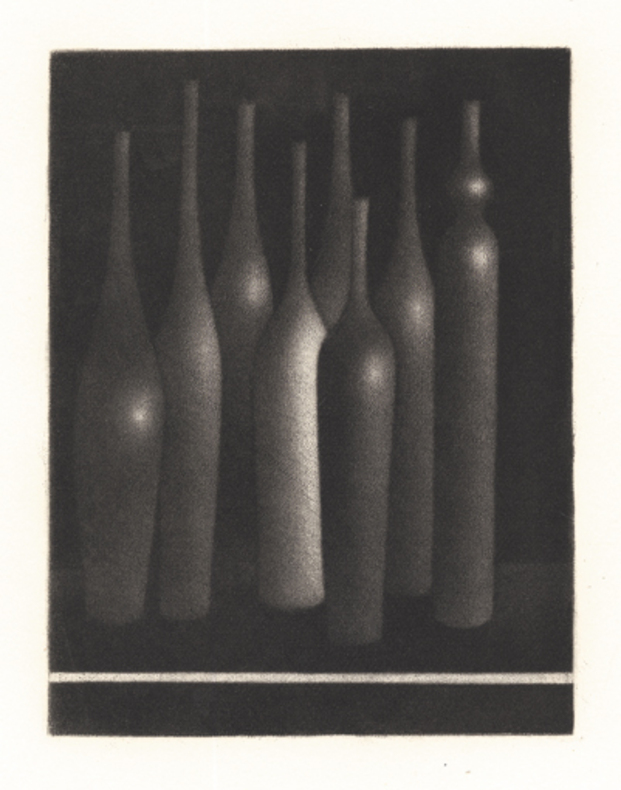
Aphorismes. Menus et Variétés. Gravures originales à la manière noire de Mario Avati.
Paris, Les Francs Bibliophiles, 1961 ; in-8 en feuilles ; couverture crème imprimée en bleu marine rempliée, étui de suédine noire (emboitage de l'éditeur) ; (3) ff. blancs, 108, (8) pp., (3) ff. blancs, 25 gravures dont 1 en frontispice, protégées par des serpentes de papier de soie.
Riferimento per il libraio : 6087
|
|
|
Brian J Page, Prints and Maps
Print List - Decorative Prints and Various.
Essex England 1980. 4to. 2 pages stapled printed on pink paper. Very Good. Inventory of Prints & Maps including prices including engraved portrait of Walter Raleigh. Essex, England, [1980?] unknown
Riferimento per il libraio : 77-0509

|
|
|
BRIDGE Joé & WILLETTE Adolphe POULBOT Francisque
République de Montmartre - souscription pour l'arbre de Noël des petits poulbots au cirque Médrano
- L'Emancipatrice, 5, rue de Pondichéry, Paris 1929, 10,5x13,7cm, une feuille. - Rarissime bulletin dépliant de souscription pour l'arbre de Noël des enfants de la République de Montmartre, surnommés les "petits poulbots", datant de l'année 1929. Sur le premier plat, figure une belle estampe originale signée Francisque Poulbot représentant deux petits enfants devant la cheminée, et légendée "-Pleure pas, y a notre arbre de Noël au mois de Janvier". Sur le second plat, une seconde estampe donne le lieu du rendez-vous : un enfant chuchote à un autre "ça sera à Médrano". Dans l'esprit de la Commune de Paris, la République de Montmartre fut créée en 1921 par les artistes parisiens Joé Bridge, Adolphe Willette, Jean-Louis Forain, Francisque Poulbot, Maurice Neumont, Louis Morin, Maurice Millière, Raoul Guérin et Jules Depaquit. Ses fêtes et banquets, souvent organisés dans les lieux mythiques de Montmartre (Moulin de la Galette, cirque Médrano, Moulin Rouge) eurent pour but de souder la communauté montmartroise par l'entraide et la sociabilité. Rare et esthétique témoignage du traditionnel "Arbre de Noël" des enfants défavorisés de la République de Montmartre, qui se déroulait non pas en décembre mais en janvier. [ENGLISH DESCRIPTION ON DEMAND]

|
|
|
BRIEGER, L
Das goldene Zeitalter der französischen Illustration.
Berlin, Harz, (1924). 4to. 47, (3) S. m. 34 Textabb., 64 Taf. OLwd (kl. Sammlerstempel auf Titel).
Riferimento per il libraio : 1228382
|
|
|
BRINDISI, Remo (Roma, 1918 - Lido di Spina, 1996)
Sei incisioni a colori per la Storia della colonna infame di Alessandro Manzoni
Sei acqueforti acquetinte a colori originali, numerate e firmate a matita, di Remo Brindisi per la Storia della colonna infame. Introduzione critica di Roberto Sanesi Tiratura delle incisioni realizzata con torchi a mano su cartoncino Magnani per incisioni. Testo composto e impresso dalla Tipografia Annesio Nobili di Pesaro. Opera ideata e curata da Piergiorgio Spallacci. Es. VII/XXV. Cm 55x37,5. pp. 32. . Ottimo (Fine). . Edizione originale di 125 + XXV es. numerati. .

|
|
|
BRINDISI, Remo (Roma, 1918 - Lido di Spina, 1996),
Senza titolo
Litografia a colori Firma a matita. Esemplare 76/99. cm 65x45 (Foglio 71x50). . . . . Tiratura 99. .

|
|
|
BRINDISI, Remo (Roma, 1918 - Lido di Spina, 1996),
Senza titolo
Acquaforte Firma a matita. Il foglio reca il timbro a secco del Museo di Castelvecchio di Verona e quello della Stamperia del Cappello. Esemplare 96/100. Cm 24,5X30 (Foglio 50x70). pp.. Dedica e firma autografa dell'Artista ad un noto scrittore italiano (Inscribed and signed by the Author to an important Italian literary man). Ottimo (Fine). . Tiratura 100 + XI f.c.. .

|
|
|
Brion de La Tour, Louis
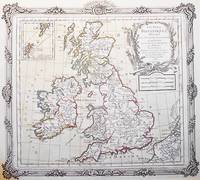
Les Isles Britanniques map
Paris: Desnos 1766. Map. Fine. Matted hand-colored copper engraving. Image size: 12 x 11 inches. Mat size: 17.5 x 18.5 inches. From de La Tour's Atlas Géneral Civil et Ecclésiastique. This map can be found in several formats: with or without the separately printed decorative border and with or without the text. This copy has the border; it does not include the text sometimes found adjacent to the map. In Fine Condition: clean and bright. Desnos unknown
Riferimento per il libraio : 004430
|
|
|
BRISSAUD Pierre
As-tu été sage ? Robe du soir et robe d'enfant de Jeanne Lanvin. (La Gazette du Bon ton, n°1. Février 1920 - Planche 6: )
- Lucien Vogel éditeur, Paris 1920, 19x24,5cm, une feuille. - Original color print, printed on vergé paper, signed in the plate. An original print used to illustrate the Gazette du bon ton, one of the most attractive and influential 20th century fashion magazines, featuring the talents of French artists and other contributors from the burgeoning Art Deco movement. A celebrated fashion magazine established in 1912 by Lucien Vogel, La Gazette du bon ton appeared until 1925, with a hiatus from 1915 to 1920 due to the war (the editor-in-chief having been called up for service). It consisted of 69 issues printed in only 2,000 copies each and notably illustrated with 573 color plates and 148 sketches of the models of the great designers. Right from the start, this sumptuous publication "was aimed at bibliophiles and fashionable society," (Françoise Tétart-Vittu, "La Gazette du bon ton", in Dictionnaire de la mode, 2016) and was printed on fine vergé paper using a type cut specially for the magazine by Georges Peignot, known as Cochin, later used (in 1946) by Christian Dior. The prints were made using stencils, heightened in colors, some highlighted in gold or palladium. The story began in 1912, when Lucien Vogel, a man of the world involved in fashion (he had already been part of the fashion magazine Femina) decided, with his wife Cosette de Brunhoff - the sister of Jean, creator of Babar - to set up the Gazette du bon ton, subtitled at the time: "Art, fashion, frivolities." Georges Charensol noted the reasoning of the editor-in-chief: "'In 1910,' he observed, 'there was no really artistic fashion magazine, nothing representative of the spirit of the time. My dream was therefore to make a luxury magazine with truly modern artists...I was assured of success, because when it comes to fashion, no country on earth can compete with France.'" ("Un grand éditeur d'art. Lucien Vogel" in Les Nouvelles littéraires, no. 133, May 1925). The magazine was immediately successful, not only in France but also in the United States and Latin America. At first, Vogel put together a team of seven artists: André-Édouard Marty and Pierre Brissaud, followed by Georges Lepape and Dammicourt, as well as eventually his friends from school and the School of Fine Arts, like George Barbier, Bernard Boutet de Monvel and Charles Martin. Other talented people soon came flocking to join the team: Guy Arnoux, Léon Bakst, Benito, Boutet de Monvel, Umberto Brunelleschi, Chas Laborde, Jean-Gabriel Domergue, Raoul Dufy, Édouard Halouze, Alexandre Iacovleff, Jean Émile Laboureur, Charles Loupot, Chalres Martin, Maggie Salcedo. These artist, mostly unknown when Lucien Vogel sought them out, later became emblematic and sought-after artistic figures. It was also they who worked on the advertising drawings for the Gazette. The plates put the spotlight on, and celebrate, dresses by seven designers of the age: Lanvin, Doeuillet, Paquin, Poiret, Worth, Vionnet and Doucet. The designers provided exclusive models for each issue. Nonetheless, some of the illustrations are not based on real models, but simply on the illustrator's conception of the fashion of the day. The Gazette du bon ton was an important step in the history of fashion. Combining aesthetic demands with the physical whole, it brought together - for the first time - the great talents of the artistic, literary, and fashion worlds; and imposed, through this alchemy, a completely new image of women: slender, independent and daring, which was shared by the new generation of designers, including Coco Chanel, Jean Patou, Marcel Rochas, and so on... Taken over in 1920 by Condé Montrose Nast, the Gazette du bon ton was an important influence on the new layout and aesthetics of that "little dying paper" that Nast had bought a few years earlier: Vogue. [FRENCH VERSION FOLLOWS] Estampe originale en couleur tirée sur papier vergé, signée en bas à droite dans la planche. Gravure originale réalisée pour l'illustration de

|
|
|
BRISSAUD Pierre
Belle journée. Robe d'après-midi, de Jeanne Lanvin. (La Gazette du Bon ton, n°3. Année 1921 - Planche 24 )
- Lucien Vogel éditeur, Paris 1921, 19,5x25cm, une feuille. - Original color print, printed on vergé paper, non signed. An original print used to illustrate the Gazette du bon ton, one of the most attractive and influential 20th century fashion magazines, featuring the talents of French artists and other contributors from the burgeoning Art Deco movement. A celebrated fashion magazine established in 1912 by Lucien Vogel, La Gazette du bon ton appeared until 1925, with a hiatus from 1915 to 1920 due to the war (the editor-in-chief having been called up for service). It consisted of 69 issues printed in only 2,000 copies each and notably illustrated with 573 color plates and 148 sketches of the models of the great designers. Right from the start, this sumptuous publication "was aimed at bibliophiles and fashionable society," (Françoise Tétart-Vittu, "La Gazette du bon ton", in Dictionnaire de la mode, 2016) and was printed on fine vergé paper using a type cut specially for the magazine by Georges Peignot, known as Cochin, later used (in 1946) by Christian Dior. The prints were made using stencils, heightened in colors, some highlighted in gold or palladium. The story began in 1912, when Lucien Vogel, a man of the world involved in fashion (he had already been part of the fashion magazine Femina) decided, with his wife Cosette de Brunhoff - the sister of Jean, creator of Babar - to set up the Gazette du bon ton, subtitled at the time: "Art, fashion, frivolities." Georges Charensol noted the reasoning of the editor-in-chief: "'In 1910,' he observed, 'there was no really artistic fashion magazine, nothing representative of the spirit of the time. My dream was therefore to make a luxury magazine with truly modern artists...I was assured of success, because when it comes to fashion, no country on earth can compete with France.'" ("Un grand éditeur d'art. Lucien Vogel" in Les Nouvelles littéraires, no. 133, May 1925). The magazine was immediately successful, not only in France but also in the United States and Latin America. At first, Vogel put together a team of seven artists: André-Édouard Marty and Pierre Brissaud, followed by Georges Lepape and Dammicourt, as well as eventually his friends from school and the School of Fine Arts, like George Barbier, Bernard Boutet de Monvel and Charles Martin. Other talented people soon came flocking to join the team: Guy Arnoux, Léon Bakst, Benito, Boutet de Monvel, Umberto Brunelleschi, Chas Laborde, Jean-Gabriel Domergue, Raoul Dufy, Édouard Halouze, Alexandre Iacovleff, Jean Émile Laboureur, Charles Loupot, Chalres Martin, Maggie Salcedo. These artist, mostly unknown when Lucien Vogel sought them out, later became emblematic and sought-after artistic figures. It was also they who worked on the advertising drawings for the Gazette. The plates put the spotlight on, and celebrate, dresses by seven designers of the age: Lanvin, Doeuillet, Paquin, Poiret, Worth, Vionnet and Doucet. The designers provided exclusive models for each issue. Nonetheless, some of the illustrations are not based on real models, but simply on the illustrator's conception of the fashion of the day. The Gazette du bon ton was an important step in the history of fashion. Combining aesthetic demands with the physical whole, it brought together - for the first time - the great talents of the artistic, literary, and fashion worlds; and imposed, through this alchemy, a completely new image of women: slender, independent and daring, which was shared by the new generation of designers, including Coco Chanel, Jean Patou, Marcel Rochas, and so on... Taken over in 1920 by Condé Montrose Nast, the Gazette du bon ton was an important influence on the new layout and aesthetics of that "little dying paper" that Nast had bought a few years earlier: Vogue. [FRENCH VERSION FOLLOWS] Estampe originale en couleur tirée sur papier vergé, non-signée. Gravure originale réalisée pour l'illustration de La Gazette du bon ton, l'u

|
|
|
BRISSAUD Pierre
En tenue de parade. Robe d'hiver pour la promenade (pl.13, La Gazette du Bon ton, 1914 n°2)
- Lucien Vogel éditeur, Paris Février 1914, 19x24,5cm, une feuille. - Original color print, printed on vergé paper, signed in the plate. An original print used to illustrate the Gazette du bon ton, one of the most attractive and influential 20th century fashion magazines, featuring the talents of French artists and other contributors from the burgeoning Art Deco movement. A celebrated fashion magazine established in 1912 by Lucien Vogel, La Gazette du bon ton appeared until 1925, with a hiatus from 1915 to 1920 due to the war (the editor-in-chief having been called up for service). It consisted of 69 issues printed in only 2,000 copies each and notably illustrated with 573 color plates and 148 sketches of the models of the great designers. Right from the start, this sumptuous publication "was aimed at bibliophiles and fashionable society," (Françoise Tétart-Vittu, "La Gazette du bon ton", in Dictionnaire de la mode, 2016) and was printed on fine vergé paper using a type cut specially for the magazine by Georges Peignot, known as Cochin, later used (in 1946) by Christian Dior. The prints were made using stencils, heightened in colors, some highlighted in gold or palladium. The story began in 1912, when Lucien Vogel, a man of the world involved in fashion (he had already been part of the fashion magazine Femina) decided, with his wife Cosette de Brunhoff - the sister of Jean, creator of Babar - to set up the Gazette du bon ton, subtitled at the time: "Art, fashion, frivolities." Georges Charensol noted the reasoning of the editor-in-chief: "'In 1910,' he observed, 'there was no really artistic fashion magazine, nothing representative of the spirit of the time. My dream was therefore to make a luxury magazine with truly modern artists...I was assured of success, because when it comes to fashion, no country on earth can compete with France.'" ("Un grand éditeur d'art. Lucien Vogel" in Les Nouvelles littéraires, no. 133, May 1925). The magazine was immediately successful, not only in France but also in the United States and Latin America. At first, Vogel put together a team of seven artists: André-Édouard Marty and Pierre Brissaud, followed by Georges Lepape and Dammicourt, as well as eventually his friends from school and the School of Fine Arts, like George Barbier, Bernard Boutet de Monvel and Charles Martin. Other talented people soon came flocking to join the team: Guy Arnoux, Léon Bakst, Benito, Boutet de Monvel, Umberto Brunelleschi, Chas Laborde, Jean-Gabriel Domergue, Raoul Dufy, Édouard Halouze, Alexandre Iacovleff, Jean Émile Laboureur, Charles Loupot, Chalres Martin, Maggie Salcedo. These artist, mostly unknown when Lucien Vogel sought them out, later became emblematic and sought-after artistic figures. It was also they who worked on the advertising drawings for the Gazette. The plates put the spotlight on, and celebrate, dresses by seven designers of the age: Lanvin, Doeuillet, Paquin, Poiret, Worth, Vionnet and Doucet. The designers provided exclusive models for each issue. Nonetheless, some of the illustrations are not based on real models, but simply on the illustrator's conception of the fashion of the day. The Gazette du bon ton was an important step in the history of fashion. Combining aesthetic demands with the physical whole, it brought together - for the first time - the great talents of the artistic, literary, and fashion worlds; and imposed, through this alchemy, a completely new image of women: slender, independent and daring, which was shared by the new generation of designers, including Coco Chanel, Jean Patou, Marcel Rochas, and so on... Taken over in 1920 by Condé Montrose Nast, the Gazette du bon ton was an important influence on the new layout and aesthetics of that "little dying paper" that Nast had bought a few years earlier: Vogue. [FRENCH VERSION FOLLOWS] Estampe originale en couleur, tirée sur papier vergé, signée en bas à droite de la planche. Gravure originale réalisée pour l

|
|
|
BRISSAUD Pierre
L'indiscrète. Robes de garden-party de Chéruit. (La Gazette du Bon ton, n°6. Juin 1914 - Planche 59: )
- Lucien Vogel éditeur, Paris 1914, 38,1x24,5cm, une feuille. - Original color print, printed on vergé paper, signed in the plate. An original print used to illustrate the Gazette du bon ton, one of the most attractive and influential 20th century fashion magazines, featuring the talents of French artists and other contributors from the burgeoning Art Deco movement. A celebrated fashion magazine established in 1912 by Lucien Vogel, La Gazette du bon ton appeared until 1925, with a hiatus from 1915 to 1920 due to the war (the editor-in-chief having been called up for service). It consisted of 69 issues printed in only 2,000 copies each and notably illustrated with 573 color plates and 148 sketches of the models of the great designers. Right from the start, this sumptuous publication "was aimed at bibliophiles and fashionable society," (Françoise Tétart-Vittu, "La Gazette du bon ton", in Dictionnaire de la mode, 2016) and was printed on fine vergé paper using a type cut specially for the magazine by Georges Peignot, known as Cochin, later used (in 1946) by Christian Dior. The prints were made using stencils, heightened in colors, some highlighted in gold or palladium. The story began in 1912, when Lucien Vogel, a man of the world involved in fashion (he had already been part of the fashion magazine Femina) decided, with his wife Cosette de Brunhoff - the sister of Jean, creator of Babar - to set up the Gazette du bon ton, subtitled at the time: "Art, fashion, frivolities." Georges Charensol noted the reasoning of the editor-in-chief: "'In 1910,' he observed, 'there was no really artistic fashion magazine, nothing representative of the spirit of the time. My dream was therefore to make a luxury magazine with truly modern artists...I was assured of success, because when it comes to fashion, no country on earth can compete with France.'" ("Un grand éditeur d'art. Lucien Vogel" in Les Nouvelles littéraires, no. 133, May 1925). The magazine was immediately successful, not only in France but also in the United States and Latin America. At first, Vogel put together a team of seven artists: André-Édouard Marty and Pierre Brissaud, followed by Georges Lepape and Dammicourt, as well as eventually his friends from school and the School of Fine Arts, like George Barbier, Bernard Boutet de Monvel and Charles Martin. Other talented people soon came flocking to join the team: Guy Arnoux, Léon Bakst, Benito, Boutet de Monvel, Umberto Brunelleschi, Chas Laborde, Jean-Gabriel Domergue, Raoul Dufy, Édouard Halouze, Alexandre Iacovleff, Jean Émile Laboureur, Charles Loupot, Chalres Martin, Maggie Salcedo. These artist, mostly unknown when Lucien Vogel sought them out, later became emblematic and sought-after artistic figures. It was also they who worked on the advertising drawings for the Gazette. The plates put the spotlight on, and celebrate, dresses by seven designers of the age: Lanvin, Doeuillet, Paquin, Poiret, Worth, Vionnet and Doucet. The designers provided exclusive models for each issue. Nonetheless, some of the illustrations are not based on real models, but simply on the illustrator's conception of the fashion of the day. The Gazette du bon ton was an important step in the history of fashion. Combining aesthetic demands with the physical whole, it brought together - for the first time - the great talents of the artistic, literary, and fashion worlds; and imposed, through this alchemy, a completely new image of women: slender, independent and daring, which was shared by the new generation of designers, including Coco Chanel, Jean Patou, Marcel Rochas, and so on... Taken over in 1920 by Condé Montrose Nast, the Gazette du bon ton was an important influence on the new layout and aesthetics of that "little dying paper" that Nast had bought a few years earlier: Vogue. [FRENCH VERSION FOLLOWS] Estampe originale en couleur tirée sur papier vergé, signée en bas à droite dans la planche. Gravure originale réalisée pour l'ill

|
|
|
BRISSAUD Pierre
Le Prologue ou La Comédie au Château (pl.40, La Gazette du Bon ton, 1920 n°6)
- Lucien Vogel éditeur, Paris Juillet 1920, 18x24cm, une feuille. - Estampe originale en couleur, tirée sur papier vergé, signée en bas à gauche de la planche. Gravure originale réalisée pour l'illustration de La Gazette du bon ton, l'une des plus belles et des plus influentes revues de mode du XXème siècle, célébrant le talent des créateurs et des artistes français en plein essor de l'art déco. Célèbre revue de mode fondée en 1912 par Lucien Vogel, La Gazette du bon ton a paru jusqu'en 1925 avec une interruption durant la Guerre de 1915 à 1920, pour cause de mobilisation de son rédacteur en chef. Elle se constitue de 69 livraisons tirées à seulement 2000 exemplaires et est illustrée notamment de 573 planches en couleurs et de 148 croquis représentant des modèles de grands couturiers. Dès leur parution, ces luxueuses publications « s'adressent aux bibliophiles et aux mondains esthètes » (Françoise Tétart-Vittu « La Gazette du bon ton » in Dictionnaire de la mode, 2016). Imprimées sur beau papier vergé, elles utilisent une police typographique spécialement créée pour la revue par Georges Peignot, le caractère Cochin, repris en 1946 par Christian Dior. Les estampes sont réalisées grâce à la technique du pochoir métallique, rehaussées en couleurs et pour certaines soulignées à l'or ou au palladium. L'aventure commence en 1912 lorsque Lucien Vogel, homme du monde et de la mode - il a déjà participé à la revue Femina - décide de fonder avec sa femme Cosette de Brunhoff (sur de Jean, le père de Babar) la Gazette du bon ton dont le sous-titre est alors « Art, modes et frivolités ». Georges Charensol rapporte les propos du rédacteur en chef : « En 1910, observe-t-il, il n'existait aucun journal de mode véritablement artistique et représentatif de l'esprit de son époque. Je songeais donc à faire un magazine de luxe avec des artistes véritablement modernes [...] J'étais certain du succès car pour la mode aucun pays ne peut rivaliser avec la France. » (« Un grand éditeur d'art. Lucien Vogel » in Les Nouvelles littéraires, n°133, mai 1925). Le succès de la revue est immédiat, non seulement en France, mais aussi aux Etats-Unis et en Amérique du Sud. À l'origine, Vogel réunit donc un groupe de sept artistes : André-Édouard Marty et Pierre Brissaud, suivis de Georges Lepape et Dammicourt ; et enfin ses amis de l'École des beaux-arts que sont George Barbier, Bernard Boutet de Monvel, ou Charles Martin. D'autres talents viennent rapidement rejoindre l'équipée : Guy Arnoux, Léon Bakst, Benito, Boutet de Monvel, Umberto Brunelleschi, Chas Laborde, Jean-Gabriel Domergue, Raoul Dufy, Édouard Halouze, Alexandre Iacovleff, Jean Émile Laboureur, Charles Loupot, Charles Martin, Maggie Salcedo. Ces artistes, inconnus pour la plupart lorsque Lucien Vogel fait appel à eux, deviendront par la suite des figures artistiques emblématiques et recherchées. Ce sont ces mêmes illustrateurs qui réalisent les dessins des publicités de la Gazette. Les planches mettent en lumière et subliment les robes de sept créateurs de l'époque : Lanvin, Doeuillet, Paquin, Poiret, Worth, Vionnet et Doucet. Les couturiers fournissent pour chaque numéro des modèles exclusifs. Néanmoins, certaines des illustrations ne figurent aucun modèle réel, mais seulement l'idée que l'illustrateur se fait de la mode du jour. La Gazette du bon ton est une étape décisive dans l'histoire de la mode. Alliant l'exigence esthétique et l'unité plastique, elle réunit pour la première fois les grands talents du monde des arts, des lettres et de la mode et impose, par cette alchimie, une toute nouvelle image de la femme, élancée, indépendante et audacieuse, également portée par la nouvelle génération de couturiers Coco Chanel, Jean Patou, Marcel Rochas... Reprise en 1920 par Condé Montrose Nast, la Gazette du bon ton inspirera largement la nouvelle composition et les choix esthétiques du « petit journal mourant » que Nast avait racheté quelques années auparavant : le magazine Vogue. [ENGLISH DESC

|
|
|
BRISSAUD Pierre
Les Travestis dans le parc (pl.1, La Gazette du Bon ton, 1913 n°11)
- Lucien Vogel éditeur, Paris Septembre 1913, 36,5x24cm, une feuille. - Pierre BRISSAUD Les Travestis dans le parc, Original color print from La Gazette du Bon ton Lucien Vogel éditeur | Paris September 1913| 36.5 x 24 cm | one leaf Double original color print, printed on vergé paper, signed in the plate. An original print used to illustrate the Gazette du bon ton, one of the most attractive and influential 20th century fashion magazines, featuring the talents of French artists and other contributors from the burgeoning Art Deco movement. [FRENCH VERSION FOLLOWS] Estampe originale double en couleur, tirée sur papier vergé, signée en bas à droite dans la planche. L'une des plus belles et des plus influentes revues de mode du XXème siècle, célébrant le talent des créateurs et des artistes français en plein essor de l'art déco. Célèbre revue de mode fondée en 1912 par Lucien Vogel, La Gazette du bon ton a paru jusqu'en 1925 avec une interruption durant la Guerre de 1915 à 1920, pour cause de mobilisation de son rédacteur en chef. Elle se constitue de 69 livraisons tirées à seulement 2000 exemplaires et est illustrée notamment de 573 planches en couleurs et de 148 croquis représentant des modèles de grands couturiers. Dès leur parution, ces luxueuses publications « s'adressent aux bibliophiles et aux mondains esthètes » (Françoise Tétart-Vittu « La Gazette du bon ton » in Dictionnaire de la mode, 2016). Imprimées sur beau papier vergé, elles utilisent une police typographique spécialement créée pour la revue par Georges Peignot, le caractère Cochin, repris en 1946 par Christian Dior. Les estampes sont réalisées grâce à la technique du pochoir métallique, rehaussées en couleurs et pour certaines soulignées à l'or ou au palladium. L'aventure commence en 1912 lorsque Lucien Vogel, homme du monde et de la mode - il a déjà participé à la revue Femina - décide de fonder avec sa femme Cosette de Brunhoff (sur de Jean, le père de Babar) la Gazette du bon ton dont le sous-titre est alors « Art, modes et frivolités ». Georges Charensol rapporte les propos du rédacteur en chef : « En 1910, observe-t-il, il n'existait aucun journal de mode véritablement artistique et représentatif de l'esprit de son époque. Je songeais donc à faire un magazine de luxe avec des artistes véritablement modernes [...] J'étais certain du succès car pour la mode aucun pays ne peut rivaliser avec la France. » (« Un grand éditeur d'art. Lucien Vogel » in Les Nouvelles littéraires, n°133, mai 1925). Le succès de la revue est immédiat, non seulement en France, mais aussi aux Etats-Unis et en Amérique du Sud. À l'origine, Vogel réunit donc un groupe de sept artistes : André-Édouard Marty et Pierre Brissaud, suivis de Georges Lepape et Dammicourt ; et enfin ses amis de l'École des beaux-arts que sont George Barbier, Bernard Boutet de Monvel, ou Charles Martin. D'autres talents viennent rapidement rejoindre l'équipée : Guy Arnoux, Léon Bakst, Benito, Boutet de Monvel, Umberto Brunelleschi, Chas Laborde, Jean-Gabriel Domergue, Raoul Dufy, Édouard Halouze, Alexandre Iacovleff, Jean Émile Laboureur, Charles Loupot, Charles Martin, Maggie Salcedo. Ces artistes, inconnus pour la plupart lorsque Lucien Vogel fait appel à eux, deviendront par la suite des figures artistiques emblématiques et recherchées. Ce sont ces mêmes illustrateurs qui réalisent les dessins des publicités de la Gazette. Les planches mettent en lumière et subliment les robes de sept créateurs de l'époque : Lanvin, Doeuillet, Paquin, Poiret, Worth, Vionnet et Doucet. Les couturiers fournissent pour chaque numéro des modèles exclusifs. Néanmoins, certaines des illustrations ne figurent aucun modèle réel, mais seulement l'idée que l'illustrateur se fait de la mode du jour. La Gazette du bon ton est une étape décisive dans l'histoire de la mode. Alliant l'exigence esthétique et l'unité plastique, elle réunit pour la première fois les grands talents du monde des arts, des lettres et de la mode et impose, par c

|
|
|
BRISSAUD Pierre
Mon pauvre gazon ! Robe de garden party de Chéruit. (La Gazette du Bon ton, n°11, Année 1913 - Planche VIII )
- Lucien Vogel éditeur, Paris 1913, 19,5x25cm, une feuille. - Original color print, printed on vergé paper, signed in the plate. An original print used to illustrate the Gazette du bon ton, one of the most attractive and influential 20th century fashion magazines, featuring the talents of French artists and other contributors from the burgeoning Art Deco movement. A celebrated fashion magazine established in 1912 by Lucien Vogel, La Gazette du bon ton appeared until 1925, with a hiatus from 1915 to 1920 due to the war (the editor-in-chief having been called up for service). It consisted of 69 issues printed in only 2,000 copies each and notably illustrated with 573 color plates and 148 sketches of the models of the great designers. Right from the start, this sumptuous publication "was aimed at bibliophiles and fashionable society," (Françoise Tétart-Vittu, "La Gazette du bon ton", in Dictionnaire de la mode, 2016) and was printed on fine vergé paper using a type cut specially for the magazine by Georges Peignot, known as Cochin, later used (in 1946) by Christian Dior. The prints were made using stencils, heightened in colors, some highlighted in gold or palladium. The story began in 1912, when Lucien Vogel, a man of the world involved in fashion (he had already been part of the fashion magazine Femina) decided, with his wife Cosette de Brunhoff - the sister of Jean, creator of Babar - to set up the Gazette du bon ton, subtitled at the time: "Art, fashion, frivolities." Georges Charensol noted the reasoning of the editor-in-chief: "'In 1910,' he observed, 'there was no really artistic fashion magazine, nothing representative of the spirit of the time. My dream was therefore to make a luxury magazine with truly modern artists...I was assured of success, because when it comes to fashion, no country on earth can compete with France.'" ("Un grand éditeur d'art. Lucien Vogel" in Les Nouvelles littéraires, no. 133, May 1925). The magazine was immediately successful, not only in France but also in the United States and Latin America. At first, Vogel put together a team of seven artists: André-Édouard Marty and Pierre Brissaud, followed by Georges Lepape and Dammicourt, as well as eventually his friends from school and the School of Fine Arts, like George Barbier, Bernard Boutet de Monvel and Charles Martin. Other talented people soon came flocking to join the team: Guy Arnoux, Léon Bakst, Benito, Boutet de Monvel, Umberto Brunelleschi, Chas Laborde, Jean-Gabriel Domergue, Raoul Dufy, Édouard Halouze, Alexandre Iacovleff, Jean Émile Laboureur, Charles Loupot, Chalres Martin, Maggie Salcedo. These artist, mostly unknown when Lucien Vogel sought them out, later became emblematic and sought-after artistic figures. It was also they who worked on the advertising drawings for the Gazette. The plates put the spotlight on, and celebrate, dresses by seven designers of the age: Lanvin, Doeuillet, Paquin, Poiret, Worth, Vionnet and Doucet. The designers provided exclusive models for each issue. Nonetheless, some of the illustrations are not based on real models, but simply on the illustrator's conception of the fashion of the day. The Gazette du bon ton was an important step in the history of fashion. Combining aesthetic demands with the physical whole, it brought together - for the first time - the great talents of the artistic, literary, and fashion worlds; and imposed, through this alchemy, a completely new image of women: slender, independent and daring, which was shared by the new generation of designers, including Coco Chanel, Jean Patou, Marcel Rochas, and so on... Taken over in 1920 by Condé Montrose Nast, the Gazette du bon ton was an important influence on the new layout and aesthetics of that "little dying paper" that Nast had bought a few years earlier: Vogue. [FRENCH VERSION FOLLOWS] Estampe originale en couleur tirée sur papier vergé, signée en bas à gauche dans la planche. Gravure originale réalisée pour l'illus

|
|
|
BRISSAUD Pierre
On aurait pu nous inviter aussi...Robes d'après-midi et robe du soir de Doucet. (La Gazette du Bon ton, n°6. Juin 1914 - Planche 61 )
- Lucien Vogel éditeur, Paris 1914, 38,2x24,5cm, une feuille. - Original color print, printed on vergé paper, signed in the plate. An original print used to illustrate the Gazette du bon ton, one of the most attractive and influential 20th century fashion magazines, featuring the talents of French artists and other contributors from the burgeoning Art Deco movement. A celebrated fashion magazine established in 1912 by Lucien Vogel, La Gazette du bon ton appeared until 1925, with a hiatus from 1915 to 1920 due to the war (the editor-in-chief having been called up for service). It consisted of 69 issues printed in only 2,000 copies each and notably illustrated with 573 color plates and 148 sketches of the models of the great designers. Right from the start, this sumptuous publication "was aimed at bibliophiles and fashionable society," (Françoise Tétart-Vittu, "La Gazette du bon ton", in Dictionnaire de la mode, 2016) and was printed on fine vergé paper using a type cut specially for the magazine by Georges Peignot, known as Cochin, later used (in 1946) by Christian Dior. The prints were made using stencils, heightened in colors, some highlighted in gold or palladium. The story began in 1912, when Lucien Vogel, a man of the world involved in fashion (he had already been part of the fashion magazine Femina) decided, with his wife Cosette de Brunhoff - the sister of Jean, creator of Babar - to set up the Gazette du bon ton, subtitled at the time: "Art, fashion, frivolities." Georges Charensol noted the reasoning of the editor-in-chief: "'In 1910,' he observed, 'there was no really artistic fashion magazine, nothing representative of the spirit of the time. My dream was therefore to make a luxury magazine with truly modern artists...I was assured of success, because when it comes to fashion, no country on earth can compete with France.'" ("Un grand éditeur d'art. Lucien Vogel" in Les Nouvelles littéraires, no. 133, May 1925). The magazine was immediately successful, not only in France but also in the United States and Latin America. At first, Vogel put together a team of seven artists: André-Édouard Marty and Pierre Brissaud, followed by Georges Lepape and Dammicourt, as well as eventually his friends from school and the School of Fine Arts, like George Barbier, Bernard Boutet de Monvel and Charles Martin. Other talented people soon came flocking to join the team: Guy Arnoux, Léon Bakst, Benito, Boutet de Monvel, Umberto Brunelleschi, Chas Laborde, Jean-Gabriel Domergue, Raoul Dufy, Édouard Halouze, Alexandre Iacovleff, Jean Émile Laboureur, Charles Loupot, Chalres Martin, Maggie Salcedo. These artist, mostly unknown when Lucien Vogel sought them out, later became emblematic and sought-after artistic figures. It was also they who worked on the advertising drawings for the Gazette. The plates put the spotlight on, and celebrate, dresses by seven designers of the age: Lanvin, Doeuillet, Paquin, Poiret, Worth, Vionnet and Doucet. The designers provided exclusive models for each issue. Nonetheless, some of the illustrations are not based on real models, but simply on the illustrator's conception of the fashion of the day. The Gazette du bon ton was an important step in the history of fashion. Combining aesthetic demands with the physical whole, it brought together - for the first time - the great talents of the artistic, literary, and fashion worlds; and imposed, through this alchemy, a completely new image of women: slender, independent and daring, which was shared by the new generation of designers, including Coco Chanel, Jean Patou, Marcel Rochas, and so on... Taken over in 1920 by Condé Montrose Nast, the Gazette du bon ton was an important influence on the new layout and aesthetics of that "little dying paper" that Nast had bought a few years earlier: Vogue. [FRENCH VERSION FOLLOWS] Estampe originale en couleur tirée sur papier vergé, signée en bas à droite dans la planche. Gravure originale réalisée pour l'ill

|
|
|
BRISSAUD Pierre
Pour les pauvres. Robe d'après-midi et robe de petite fille, de Jeanne Lanvin. (La Gazette du Bon ton, n°3. Avril 1920 - Planche 23: )
- Lucien Vogel éditeur, Paris 1920, 19x24,5cm, une feuille. - Original color print, printed on vergé paper, signed in the plate. An original print used to illustrate the Gazette du bon ton, one of the most attractive and influential 20th century fashion magazines, featuring the talents of French artists and other contributors from the burgeoning Art Deco movement. A celebrated fashion magazine established in 1912 by Lucien Vogel, La Gazette du bon ton appeared until 1925, with a hiatus from 1915 to 1920 due to the war (the editor-in-chief having been called up for service). It consisted of 69 issues printed in only 2,000 copies each and notably illustrated with 573 color plates and 148 sketches of the models of the great designers. Right from the start, this sumptuous publication "was aimed at bibliophiles and fashionable society," (Françoise Tétart-Vittu, "La Gazette du bon ton", in Dictionnaire de la mode, 2016) and was printed on fine vergé paper using a type cut specially for the magazine by Georges Peignot, known as Cochin, later used (in 1946) by Christian Dior. The prints were made using stencils, heightened in colors, some highlighted in gold or palladium. The story began in 1912, when Lucien Vogel, a man of the world involved in fashion (he had already been part of the fashion magazine Femina) decided, with his wife Cosette de Brunhoff - the sister of Jean, creator of Babar - to set up the Gazette du bon ton, subtitled at the time: "Art, fashion, frivolities." Georges Charensol noted the reasoning of the editor-in-chief: "'In 1910,' he observed, 'there was no really artistic fashion magazine, nothing representative of the spirit of the time. My dream was therefore to make a luxury magazine with truly modern artists...I was assured of success, because when it comes to fashion, no country on earth can compete with France.'" ("Un grand éditeur d'art. Lucien Vogel" in Les Nouvelles littéraires, no. 133, May 1925). The magazine was immediately successful, not only in France but also in the United States and Latin America. At first, Vogel put together a team of seven artists: André-Édouard Marty and Pierre Brissaud, followed by Georges Lepape and Dammicourt, as well as eventually his friends from school and the School of Fine Arts, like George Barbier, Bernard Boutet de Monvel and Charles Martin. Other talented people soon came flocking to join the team: Guy Arnoux, Léon Bakst, Benito, Boutet de Monvel, Umberto Brunelleschi, Chas Laborde, Jean-Gabriel Domergue, Raoul Dufy, Édouard Halouze, Alexandre Iacovleff, Jean Émile Laboureur, Charles Loupot, Chalres Martin, Maggie Salcedo. These artist, mostly unknown when Lucien Vogel sought them out, later became emblematic and sought-after artistic figures. It was also they who worked on the advertising drawings for the Gazette. The plates put the spotlight on, and celebrate, dresses by seven designers of the age: Lanvin, Doeuillet, Paquin, Poiret, Worth, Vionnet and Doucet. The designers provided exclusive models for each issue. Nonetheless, some of the illustrations are not based on real models, but simply on the illustrator's conception of the fashion of the day. The Gazette du bon ton was an important step in the history of fashion. Combining aesthetic demands with the physical whole, it brought together - for the first time - the great talents of the artistic, literary, and fashion worlds; and imposed, through this alchemy, a completely new image of women: slender, independent and daring, which was shared by the new generation of designers, including Coco Chanel, Jean Patou, Marcel Rochas, and so on... Taken over in 1920 by Condé Montrose Nast, the Gazette du bon ton was an important influence on the new layout and aesthetics of that "little dying paper" that Nast had bought a few years earlier: Vogue. [FRENCH VERSION FOLLOWS] Estampe originale en couleur tirée sur papier vergé, signée en bas à droite dans la planche. Gravure originale réalisée pour l'illus

|
|
|
BRISSAUD Pierre
Rentrez vos blancs moutons. Une bergère par Chéruit. (La Gazette du Bon ton, n°4, Année 1913 - Planche VIII )
- Lucien Vogel éditeur, Paris 1913, 19,5x25cm, une feuille. - Original color print, printed on vergé paper, signed in the plate. An original print used to illustrate the Gazette du bon ton, one of the most attractive and influential 20th century fashion magazines, featuring the talents of French artists and other contributors from the burgeoning Art Deco movement. A celebrated fashion magazine established in 1912 by Lucien Vogel, La Gazette du bon ton appeared until 1925, with a hiatus from 1915 to 1920 due to the war (the editor-in-chief having been called up for service). It consisted of 69 issues printed in only 2,000 copies each and notably illustrated with 573 color plates and 148 sketches of the models of the great designers. Right from the start, this sumptuous publication "was aimed at bibliophiles and fashionable society," (Françoise Tétart-Vittu, "La Gazette du bon ton", in Dictionnaire de la mode, 2016) and was printed on fine vergé paper using a type cut specially for the magazine by Georges Peignot, known as Cochin, later used (in 1946) by Christian Dior. The prints were made using stencils, heightened in colors, some highlighted in gold or palladium. The story began in 1912, when Lucien Vogel, a man of the world involved in fashion (he had already been part of the fashion magazine Femina) decided, with his wife Cosette de Brunhoff - the sister of Jean, creator of Babar - to set up the Gazette du bon ton, subtitled at the time: "Art, fashion, frivolities." Georges Charensol noted the reasoning of the editor-in-chief: "'In 1910,' he observed, 'there was no really artistic fashion magazine, nothing representative of the spirit of the time. My dream was therefore to make a luxury magazine with truly modern artists...I was assured of success, because when it comes to fashion, no country on earth can compete with France.'" ("Un grand éditeur d'art. Lucien Vogel" in Les Nouvelles littéraires, no. 133, May 1925). The magazine was immediately successful, not only in France but also in the United States and Latin America. At first, Vogel put together a team of seven artists: André-Édouard Marty and Pierre Brissaud, followed by Georges Lepape and Dammicourt, as well as eventually his friends from school and the School of Fine Arts, like George Barbier, Bernard Boutet de Monvel and Charles Martin. Other talented people soon came flocking to join the team: Guy Arnoux, Léon Bakst, Benito, Boutet de Monvel, Umberto Brunelleschi, Chas Laborde, Jean-Gabriel Domergue, Raoul Dufy, Édouard Halouze, Alexandre Iacovleff, Jean Émile Laboureur, Charles Loupot, Chalres Martin, Maggie Salcedo. These artist, mostly unknown when Lucien Vogel sought them out, later became emblematic and sought-after artistic figures. It was also they who worked on the advertising drawings for the Gazette. The plates put the spotlight on, and celebrate, dresses by seven designers of the age: Lanvin, Doeuillet, Paquin, Poiret, Worth, Vionnet and Doucet. The designers provided exclusive models for each issue. Nonetheless, some of the illustrations are not based on real models, but simply on the illustrator's conception of the fashion of the day. The Gazette du bon ton was an important step in the history of fashion. Combining aesthetic demands with the physical whole, it brought together - for the first time - the great talents of the artistic, literary, and fashion worlds; and imposed, through this alchemy, a completely new image of women: slender, independent and daring, which was shared by the new generation of designers, including Coco Chanel, Jean Patou, Marcel Rochas, and so on... Taken over in 1920 by Condé Montrose Nast, the Gazette du bon ton was an important influence on the new layout and aesthetics of that "little dying paper" that Nast had bought a few years earlier: Vogue. [FRENCH VERSION FOLLOWS] Estampe originale en couleur tirée sur papier vergé, signée en bas à droite dans la planche. Gravure originale réalisée pour l'illus

|
|
|
BRISSAUD Pierre
Respirons un peu. Robes du soir, de Beer. (La Gazette du Bon ton, n°3. Avril 1920 - Planche 21)
- Lucien Vogel éditeur, Paris 1920, 19x24,7cm, une feuille. - Original color print, printed on vergé paper, signed in the plate. An original print used to illustrate the Gazette du bon ton, one of the most attractive and influential 20th century fashion magazines, featuring the talents of French artists and other contributors from the burgeoning Art Deco movement. A celebrated fashion magazine established in 1912 by Lucien Vogel, La Gazette du bon ton appeared until 1925, with a hiatus from 1915 to 1920 due to the war (the editor-in-chief having been called up for service). It consisted of 69 issues printed in only 2,000 copies each and notably illustrated with 573 color plates and 148 sketches of the models of the great designers. Right from the start, this sumptuous publication "was aimed at bibliophiles and fashionable society," (Françoise Tétart-Vittu, "La Gazette du bon ton", in Dictionnaire de la mode, 2016) and was printed on fine vergé paper using a type cut specially for the magazine by Georges Peignot, known as Cochin, later used (in 1946) by Christian Dior. The prints were made using stencils, heightened in colors, some highlighted in gold or palladium. The story began in 1912, when Lucien Vogel, a man of the world involved in fashion (he had already been part of the fashion magazine Femina) decided, with his wife Cosette de Brunhoff - the sister of Jean, creator of Babar - to set up the Gazette du bon ton, subtitled at the time: "Art, fashion, frivolities." Georges Charensol noted the reasoning of the editor-in-chief: "'In 1910,' he observed, 'there was no really artistic fashion magazine, nothing representative of the spirit of the time. My dream was therefore to make a luxury magazine with truly modern artists...I was assured of success, because when it comes to fashion, no country on earth can compete with France.'" ("Un grand éditeur d'art. Lucien Vogel" in Les Nouvelles littéraires, no. 133, May 1925). The magazine was immediately successful, not only in France but also in the United States and Latin America. At first, Vogel put together a team of seven artists: André-Édouard Marty and Pierre Brissaud, followed by Georges Lepape and Dammicourt, as well as eventually his friends from school and the School of Fine Arts, like George Barbier, Bernard Boutet de Monvel and Charles Martin. Other talented people soon came flocking to join the team: Guy Arnoux, Léon Bakst, Benito, Boutet de Monvel, Umberto Brunelleschi, Chas Laborde, Jean-Gabriel Domergue, Raoul Dufy, Édouard Halouze, Alexandre Iacovleff, Jean Émile Laboureur, Charles Loupot, Chalres Martin, Maggie Salcedo. These artist, mostly unknown when Lucien Vogel sought them out, later became emblematic and sought-after artistic figures. It was also they who worked on the advertising drawings for the Gazette. The plates put the spotlight on, and celebrate, dresses by seven designers of the age: Lanvin, Doeuillet, Paquin, Poiret, Worth, Vionnet and Doucet. The designers provided exclusive models for each issue. Nonetheless, some of the illustrations are not based on real models, but simply on the illustrator's conception of the fashion of the day. The Gazette du bon ton was an important step in the history of fashion. Combining aesthetic demands with the physical whole, it brought together - for the first time - the great talents of the artistic, literary, and fashion worlds; and imposed, through this alchemy, a completely new image of women: slender, independent and daring, which was shared by the new generation of designers, including Coco Chanel, Jean Patou, Marcel Rochas, and so on... Taken over in 1920 by Condé Montrose Nast, the Gazette du bon ton was an important influence on the new layout and aesthetics of that "little dying paper" that Nast had bought a few years earlier: Vogue. [FRENCH VERSION FOLLOWS] Estampe originale en couleur tirée sur papier vergé, signée en bas à droite dans la planche. Gravure originale réalisée pour l'illustration de

|
|
|
BRISSON, Barnabé
De formulis et solennibus populi Romani verbis libri VIII. Ex recensione Francisci Caroli Conradi, in Academia Julia professor. Accedunt praefatio nova vita et elogia.
Halle, Krug, 1731. 1 Bl., 18 S., 19 Bl., 728 S., 27 Bl. Mit gestochenem Porträt von Wolffgang. Ldr der Zeit. Folio.
Riferimento per il libraio : 600292
|
|
|
British Museum; Dept; Of Prints and Drawings
Catalogue of Prints and Drawings in the British Museum Classic Reprint: Division I Political and Personal Satires
paperback. Good. Access codes and supplements are not guaranteed with used items. May be an ex-library book. paperback
Riferimento per il libraio : 1331589126.G ISBN : 1331589126 9781331589129

|
|
|
British Museum Dept of Prints and D
Catalogue Of Prints And Drawings In The British Museum Volume 3 Part 2
Hardback. New. hardcover
Riferimento per il libraio : B9781020980596 ISBN : 1020980591 9781020980596

|
|
|
British Museum Dept of Prints and D
Catalogue of Prints and Drawings in the British Museum: Division I. Political and Personal Satires; Volume 5
Hardback. New. hardcover
Riferimento per il libraio : A9781018562117 ISBN : 1018562117 9781018562117

|
|
|
British Museum Dept of Prints and Draw
Catalogue of Engraved British Portraits Preserved in the Department of Prints and Drawings in the British Museum Volume 1
Hardback. New. hardcover
Riferimento per il libraio : A9781346155289 ISBN : 1346155283 9781346155289

|
|
|
British Museum Dept of Prints and Draw
Catalogue of Engraved British Portraits Preserved in the Department of Prints and Drawings in the British Museum Volume 4
Hardback. New. hardcover
Riferimento per il libraio : A9781345900873 ISBN : 1345900872 9781345900873
|
|
|
British Museum Dept of Prints and D
Catalogue of Early German and Flemish Woodcuts Preserved in the Department of Prints and Drawings in the British Museum; Volume 2
Hardback. New. hardcover
Riferimento per il libraio : B9781017432336 ISBN : 1017432333 9781017432336

|
|
|
British Museum Dept of Prints and D
Catalogue of Prints and Drawings in the British Museum: Division I. Political and Personal Satires; Volume 5
Hardback. New. hardcover
Riferimento per il libraio : B9781018562117 ISBN : 1018562117 9781018562117
|
|
|
British Museum Dept of Prints and D
Catalogue of Prints and Drawings in the British Museum: Division I. Political and Personal Satires; Volume 4
Hardback. New. hardcover
Riferimento per il libraio : A9781018562162 ISBN : 1018562168 9781018562162

|
|
|
British Museum Dept of Prints and D
Catalogue of Prints and Drawings in the British Museum: Division I. Political and Personal Satires; Volume 5
Paperback / softback. New. paperback
Riferimento per il libraio : B9781018566726 ISBN : 1018566724 9781018566726

|
|
|
British Museum Dept of Prints and D
Catalogue of Prints and Drawings in the British Museum: Division I. Political and Personal Satires; Volume 4
Hardback. New. hardcover
Riferimento per il libraio : B9781018562162 ISBN : 1018562168 9781018562162
|
|
|
British Museum Dept of Prints and D
Catalogue of Prints and Drawings in the British Museum: Division I. Political and Personal Satires; Volume 4
Paperback / softback. New. paperback
Riferimento per il libraio : B9781018566818 ISBN : 1018566813 9781018566818

|
|
|
British Museum Department of Prints and Drawings
Catalogue of prints and drawings in the British Museum Division One Satires Volume One Two and Three Part One
London: By order of the Trustees 1870. First Edition. Hardcover. 3 Volumes. Good to very good copies in gilt-blocked cloth. Spine band worn on volume three. Panel edges bumped and rubbed as with age. Internally bright and clean. Remains quite well-preserved overall. Physical description: 3 Volumes. Contents: Volume 1- 1320 to April 11 1689. Volume 2- June 1689 to 1733. Volume 3 Part One March 28 1734 to c. 1750. Subjects: Engraving England London; Catalogs.Drawing England London; Catalogs. Caricatures and cartoons; Catalogs. London: By order of the Trustees hardcover
Riferimento per il libraio : 375224
|
|
|
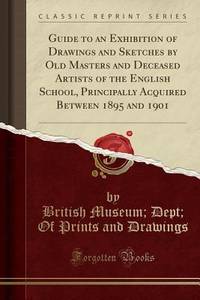
British Museum; Dept; Of Prints and Drawings
Guide to an Exhibition of Drawings and Sketches by Old Masters and Deceased Artists of the English School Principally Acquired Between 1895 and 1901 Classic Reprint
paperback. Good. Access codes and supplements are not guaranteed with used items. May be an ex-library book. paperback
Riferimento per il libraio : 1330123727.G ISBN : 1330123727 9781330123720
|
|
|
British Museum; Dept; Of Prints and Drawings
Guide to an Exhibition of Drawings and Sketches by Old Masters and Deceased Artists of the English School Principally Acquired Between 1895 and 1901 Classic Reprint
hardcover. Good. Access codes and supplements are not guaranteed with used items. May be an ex-library book. hardcover
Riferimento per il libraio : 0428994296.G ISBN : 0428994296 9780428994297
|
|
|
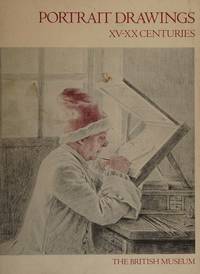
British Museum Department of Prints and Drawings
Portrait drawings XV-XX centuries: catalogue of an exhibition held in the Department of Prints and Drawings in the British Museum 2nd August to 31st December 1974
paperback. Good. Access codes and supplements are not guaranteed with used items. May be an ex-library book. paperback
Riferimento per il libraio : 0714107409.G ISBN : 0714107409 9780714107400
|
|
|
British Museum Dept of Prints and Drawings ; Colvin, S and others
Reproductions of Prints in the British Museum : New Series. 15 fascicules complete set
Trustees of the British Museum London first edition 1886 - 1906. 15 fascicules each in its own portfolio 52 cm parts I-IV and 66 cm parts V-XV. introductions of a few pages each and a total of 233 plates on stiff card. . Uncommon. A complete set of this series which comprises 15 portfolios each with a short introduction list of plates and between 11 and 22 finely-printed plates as follows: Part I. Early Italian. 20 plates; Part II. Early German and Flemish 22 plates; Part III. German Dutch and Italian. 18 plates; Part IV. Italian 16th century. 18 plates; Part V. Specimens of early mezzotint engraving. 16 plates; Part VI. Specimens of line-engraving by Masters of Germany and the Low Countries 1530-1620. 15 plates; Part VII. Specimens of line-engraving by Masters of the Netherlands Schools under the influence of Rubens and Vandyck about 1620-1660. 12 plates; Part VIII. Specimens of line-engraving by Masters of the French School about 1580-1680. 14 plates; Part IX. Specimens of line-engraving by the earliest Masters practising in England about 1545-1695. 18 plates; New Series Part X. Additional specimens of line-engraving by the earliest Masters working in England about 1580-1670. 21 plates; Part XI. Specimens of line-engraving by French Masters of the Eighteenth Century. 14 plates; Part XII. Specimens of line-engraving by French Masters of the Eighteenth Century continued. 12 plates; Part XIII. Specimens of line-engraving by English Masters of the Eighteenth Century. 11 plates; Part XIV. Specimens of line-engraving by Italian Masters of the Eighteenth Century. 11 plates. Part XV. Specimens of line-engraving by German Masters of the Eighteenth Century. 11 plates. The plates are generally Very Good clean copies: the versos of the final plate in each potrtfolio and the title-page rectos are in most cases tanned from contact with the portfolios. Some plates have small 'British Museum facsimile' stamps on the versos and there is sometimes a small library blindstamp in the lower margin well away from the image. The portfolio boards are generally rather duststained and a little rubbed the portfolio for Part VI has bumping and tearing to its top edges and that for Part XV is torn at the head of spine with trifling edgewear to a few plates a few other portfolio corners have minor edgewear. The porfolio flaps are generally in very good condition and seem to have been renewed in most cases; a few others are broken. A few portfoilios have library bookplates on their front inner boards. Overall a well-preserved set of a series rarely found complete. Trustees of the British Museum, London, first edition, 1886 - 1906 hardcover
Riferimento per il libraio : BIBLIO-31166
|
|
|

 Ricevere i risultati per e-mail
 Scaricare i risultati in PDF
 RSS feed
 Link
Link


