|
PIACESI, Walter (Ascoli Piceno, 1929),
''Prova di stampa''
Acquaforte Firma e titolo a matita. Cm 29,5x233 (Foglio 52x38). pp.. . Molto buono (Very Good). . . .

|
|
|
PIACESI, Walter (Ascoli Piceno, 1929),
Farfalle
Acquaforte, vernice molle, puntasecca Firma e data a matita. Esemplare p.d.a.. Cm 17,5x26,5 (Foglio 35x50). pp.. . Ottimo (Fine). . Tiratura non nota. .

|
|
|
PIACESI, Walter (Ascoli Piceno, 1929),
Libertà
Vernice molle Carta Pescia. Esemplare 4/90. - Stampatore: Zivko Djak. mm 290 x 200. . . Ottimo (Fine). . Tiratura 90 + X. .

|
|
|
PIACESI, Walter (Ascoli Piceno, 1929),
Omaggio a Ungaretti
Acquaforte appartenente al volume ''Madre'', Ancona, Bucciarelli 1968 Firma a matita. Incisione applicata su foglio di carta bianca. Esemplare p.d.a.. Cm 27x30 (Foglio 49x34,5). pp.. . Ottimo (Fine). . . .

|
|
|
PIACESI, Walter (Ascoli Piceno, 1929),
Periferia a Cornigliano
Acquaforte su zinco. Secondo stato con aggiunta di ritocchi all'acquaforte e puntasecca Firma, data e titolo su lastra, firma a matita sul foglio. Certificato di autenticità rilasciato dall'Editore. Esemplare 56/100. Cm 24,5x29 (Foglio 50x70). pp.. . Ottimo (Fine). . Tiratura 100 + XX + 10 p.d.a.. .

|
|
|
PIACESI, Walter (Ascoli Piceno, 1929),
Senza titolo
Acquaforte appartenente alla cartella ''Venezia 73'' , pubblicata dall'Unesco e contenente 31 opere grafiche di maestri italiani ed un saggio di Piero Chiara Firma a matita. Il foglio reca il timbro a secco del Museo di Castelvecchio di Verona e quello della Stamperia del Cappello. Esemplare 96/100. Cm 28,3x23,8 (Foglio 70x50). pp.. . Ottimo (Fine). . Tiratura 100 + XI f.c.. .

|
|
|
PIACESI, Walter (Ascoli Piceno, 1929),
Senza titolo
Acquaforte Firma e numerazione a matita. Esemplare p.d.a.. cm 25,8x15,3 (Foglio 35,5x25). pp.. . Ottimo (Fine). . . .

|
|
|
PIACESI, Walter (Ascoli Piceno, 1929),
Senza titolo
Acquaforte appartenente al volume ''Omaggio a Garcia Lorca'', con uno scritto di Carlo Bo, Ancona, Bucciarelli, 1973 Firma e numerazione a matita e su lastra. Incisione stampata al torchio su carta a mano Fabriano. Esemplare p.d.a.. cm 19,6x19,5 (Foglio 35,5x25,5). pp.. . Molto buono (Very Good). . . .

|
|
|
PIACESI, Walter (Ascoli Piceno, 1929),
Senza titolo
Acquaforte Firma a matita. Esemplare unico. Cm 10x11,2 (Foglio 12x13,5). pp.. . Molto buono (Very Good). . . .

|
|
|
PIACESI, Walter (Ascoli Piceno, 1929),
Senza titolo
Acquaforte appartenente al volume ''Omaggio a Garcia Lorca'', con uno scritto di Carlo Bo, Ancona, Bucciarelli Firma e numerazione a matita e su lastra. Incisione stampata al torchio su carta a mano Fabriano. Esemplare p.d.a.. cm 19,2x18,4 (Foglio 35,5x25,5). pp.. . Ottimo (Fine). . . .

|
|
|
PICHON/MARTIN Amédée
Carte des environs de Paris
comprenant,les départemens de la Seine,de Seine et Oise et partie de ceux limitrophes.Par PICHON ingénieur géographe, revue et corrigée par Amédée MARTIN 1818.A Paris chez Esnault marchand d’estampes et de géographie.Dans une reliure cartonnée de formaT 9x15cm et 77x55 dépliée. Contours colorié,une tache sur un verso,sinon bon tirage sur papier fort,bon état.
Bookseller reference : 5601

|
|
|
PICARD TAJAN Ader
Catalogue d'estampes, vendues aux enchères publiques le 7 octobre 1987
PAGUI. 1987. In-8. Broché. Très bon état, Couv. fraîche, Dos satisfaisant, Intérieur frais. Sans pagination. Qq illust n&b dans le texte. . . . Classification Dewey : 769-Estampes
Bookseller reference : RO20030726
|
|
|
PICARD Jean-Louis
Catalogue d'estampes modernes d'Henri Petiet, vendues aux enchères le 13 juin 1996
PEROLLE. 1996. In-4. Broché. Très bon état, Couv. convenable, Dos satisfaisant, Intérieur frais. 69pp. Nbreuses illust n&b et couleur dans le texte. Couverture rempliée. Accompagnée d'une liste des estimations.. . . . Classification Dewey : 769-Estampes
Bookseller reference : RO20030747
|
|
|
PICRON Claudine
Estampes japonaises des XVIIIe et XIXe siècles, dans les collections de la Bibliothèque Royale Albert Ier. (catalogue).
Bruxelles, Bibliothèque Royale Albert Ier, 1979. 19 x 26, 111 pp., 48 planches, broché, très bon état.
Bookseller reference : 26151
|
|
|
PICHETTE Henri
Fragments du Sélénite
Paris La Rubeline 1973 In-4 carré En feuilles, couverture, emboitage toilé illustré
Bookseller reference : 015726
|
|
|
PICASSO Pablo
Hélène chez Archimède
Rarissime estampe sur bois gravée par Georges Aubert (1886-1961) d'après un dessin de Picasso. Épreuve de l'édition projetée par Vollard puis abandonnée. Notre épreuve porte au dos le tampon de l'imprimerie A. Jourde, daté du 9/8/28. Il s'agit donc d'une toute première épreuve. Très bon Paris Jourde 1928 1928 27,5 x 20,5 cm
Bookseller reference : 8742

|
|
|
PICOU Robert
Jésus livré à ses ennemis
D'après Bassano. De la collection Jules Renouvier, avec son tampon. Épreuve contrecollée, pliure centrale, coupée à la marque du cuivre. Rare. En feuille Moyen 1624 14,5 x 28 cm
Bookseller reference : 14362

|
|
|
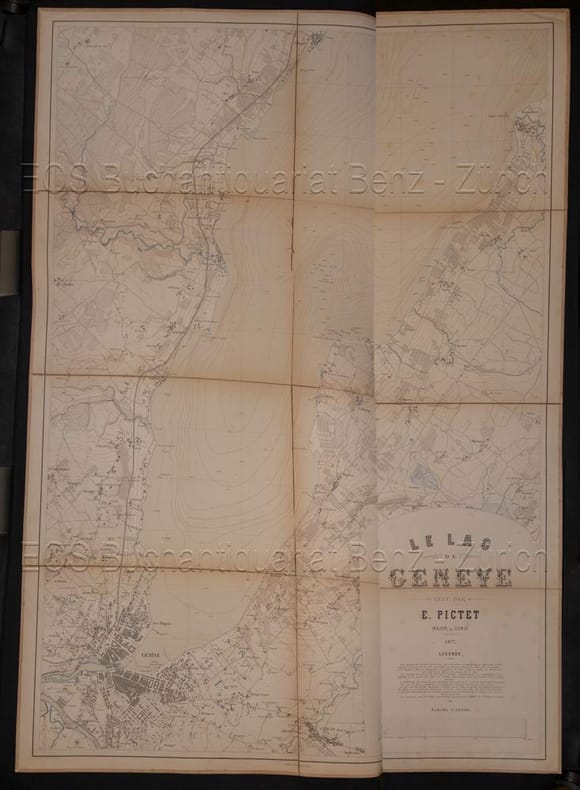
Pictet, E.:
Le lac de Genève.
Genf, H. Georg, 1877. 117 x 81 cm. Karte auf Leinen aufgezogen. Orig.-Leinenmappe.
Bookseller reference : 5449CB
|
|
|
PICHON (J.) Baron
Vente du 17 au 21 mai 1897, catalogue de la collection de dessins et estampes de l'étude française du 17e et du 18e s
Paris, chez A. Danlos, 1897 - gd in-8, 126 pp. - br. couv. pap. beige (dos abîmé, qqs piqûres)
Bookseller reference : 3012
|
|
|
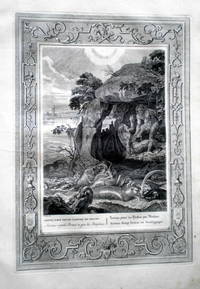
Picart, Bernard
Aristee force Ptotée a rendre ses oracles
Amsterdam: Chatelain 1733. <p>Gravure sur cuivre La feuille = 310 X 460 mm la cuvette = 255 x 352 mm quelques rousseurs en marge image propre</p> Chatelain unknown
Bookseller reference : biblio312
|
|
|
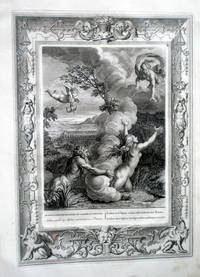
Picart, Bernard
Aréthuse poursuivie par Alphée est changée en fontaine
Amsterdam: Chatelain 1733. <p>Gravure sur cuivre La feuille = 310 X 460 mm la cuvette = 255 x 352 mm quelques rousseurs en marge image propre</p> Chatelain unknown
Bookseller reference : biblio318
|
|
|
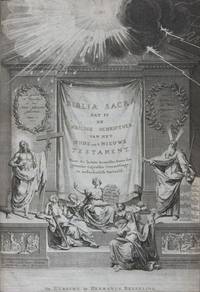
Picart, Bernard; Johannes Luyken (Engravings by)
Biblia sacra dat is de Heilige Schriftuer van het Oude en het Nieuwe Testament Naer de laetste Roomsche Keure der gemeine Latijnsche Overzettinge in Nederduitsch Vertaeld met korte verklaringen op de duistere plaetzen. First volume only Old Testament
Utrecht: Hermanus Besseling 1743. Second edition. Hardcover. g- to vg. Folio 15 6/8 x 10 1/2". XVIII 652 pp; folding engraved map. Text in Dutch. Contemporary full calf with gold lettering and tooling to spine front joint tender. Raised bands. Additional engraved title by Bernard Picart. Title in red and black lettering. Publisher's vignette on title page. Decorative head- tailpieces and initials. This handsome second edition of "Biblia Sacra" is splendidly illustrated throughout with 35 double-page engraved plates of 36 lacking plate #1 depicting the Creation from Johannes Luyken's "Icones Biblicae Veteris et N.Testamenti 1729" as well as 2 folded maps and one folded plan of Jerusalem. This is the first volume containing the entire Old Testament. Binding rubbed along edges and on covers. Head and tail of spine partly chipped. Minor age-toning along paper margin. Text in Dutch with plate captions in Dutch and French. A good copy with clean fresh plates throughout. Hermanus Besseling hardcover
Bookseller reference : 18928
|
|
|
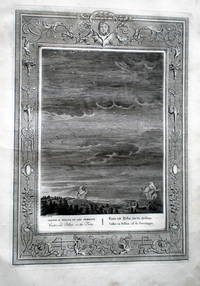
Picart, Bernard
Castor et Pollux ou les Gemaux
Amsterdam: Chatelain 1733. <p>Gravure sur cuivre La feuille = 310 X 460 mm la cuvette = 255 x 352 mm quelques rousseurs en marge image propre</p> Chatelain unknown
Bookseller reference : biblio311
|
|
|
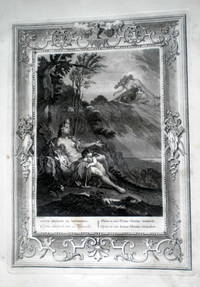
Picart, Bernard
Clythie changee en tournesol
Amsterdam: Chatelain 1733. <p>Gravure sur cuivre La feuille = 310 X 460 mm la cuvette = 255 x 352 mm quelques rousseurs en marge image propre</p> Chatelain unknown
Bookseller reference : biblio316
|
|
|
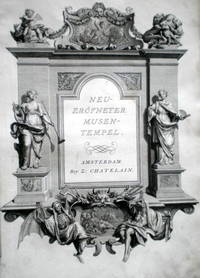
Picart, Bernard
Frontispice : Neu-Eröfneter Musen-Tempel
Amsterdam: Chatelain 1733. <p>Gravure sur cuivre La feuille = 310 X 460 mm la cuvette = 255 x 352 mm quelques rousseurs en marge image propre</p> Chatelain unknown
Bookseller reference : biblio314
|
|
|
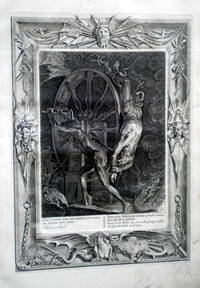
Picart, Bernard
Ixion attache dans les enfers a une roue qui tourne sans cesse
Amsterdam: Chatelain 1733. <p>Gravure sur cuivre La feuille = 310 X 460 mm la cuvette = 255 x 352 mm quelques rousseurs en marge image propre</p> Chatelain unknown
Bookseller reference : biblio317
|
|
|
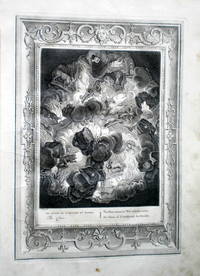
Picart, Bernard
Le chaos ou l'origine du monde
Amsterdam: Chatelain 1733. <p>Gravure sur cuivreLa feuille = 310 X 460 mm la cuvette = 255 x 352 mm quelques rousseurs en marge image propre</p> Chatelain unknown
Bookseller reference : biblio303
|
|
|
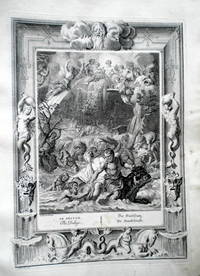
Picart, Bernard
Le deluge
Amsterdam: Chatelain 1733. <p>Gravure sur cuivre La feuille = 310 X 460 mm la cuvette = 255 x 352 mm quelques rousseurs en marge image propre Dechirure en marge inferieure droit avec perte sans affecter la cuvette</p> Chatelain unknown
Bookseller reference : biblio310
|
|
|
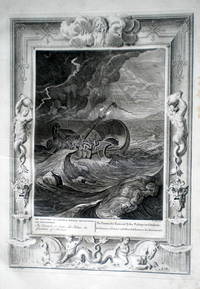
Picart, Bernard
les Dioscures ou Castor et Pollux protecteurs des nautonniers
Amsterdam: Chatelain 1733. <p>Gravure sur cuivreLa feuille = 310 X 460 mm la cuvette = 255 x 352 mm quelques rousseurs en marge image propre</p> Chatelain unknown
Bookseller reference : biblio304
|
|
|
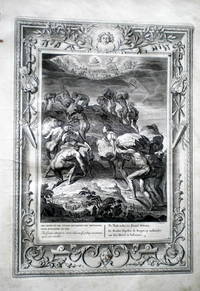
Picart, Bernard
Les Geans ou les Titans entassent les montagnes pour escalader le ciel
Amsterdam: Chatelain 1733. <p>Gravure sur cuivreLa feuille = 310 X 460 mm la cuvette = 255 x 352 mm quelques rousseurs en marge image propre</p> Chatelain unknown
Bookseller reference : biblio309
|
|
|
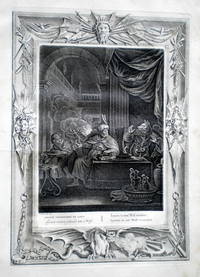
Picart, Bernard
Lycaon transformé en loup
Amsterdam: Chatelain 1733. <p>Gravure sur cuivreLa feuille = 310 X 460 mm la cuvette = 255 x 352 mm quelques rousseurs en marge image propre</p> Chatelain unknown
Bookseller reference : biblio306
|
|
|
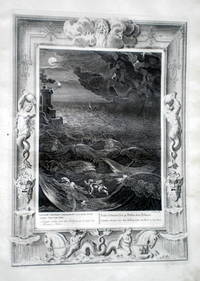
Picart, Bernard
Léandre traverse l'Hellespont à la nage pour aller trouver Hero
Amsterdam: Chatelain 1733. <p>Gravure sur cuivreLa feuille = 310 X 460 mm la cuvette = 255 x 352 mm quelques rousseurs en marge image propre</p> Chatelain unknown
Bookseller reference : biblio307
|
|
|
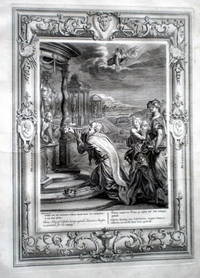
Picart, Bernard
Oenee roi de Calydon oublie Diane dans un sacrifice et en est puni
Amsterdam: Chatelain. <p>Gravure sur cuivre La feuille = 310 X 460 mm la cuvette = 255 x 352 mm quelques rousseurs en marge image propre</p> Chatelain unknown
Bookseller reference : biblio313
|
|
|
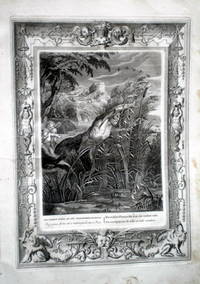
Picart, Bernard
Pan poursuit Syrinx qui est transformée en roseau
Amsterdam: Chatelain 1733. <p>Gravure sur cuivreLa feuille = 310 X 460 mm la cuvette = 255 x 352 mm quelques rousseurs en marge image propre</p> Chatelain unknown
Bookseller reference : biblio301
|
|
|
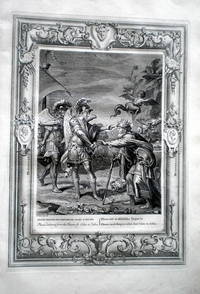
Picart, Bernard
Phinée délivré des Harpyes par Calais et Zethes
Amsterdam: Chatelain 1733. <p>Gravure sur cuivreLa feuille = 310 X 460 mm la cuvette = 255 x 352 mm quelques rousseurs en marge image propre</p> Chatelain unknown
Bookseller reference : biblio308
|
|
|
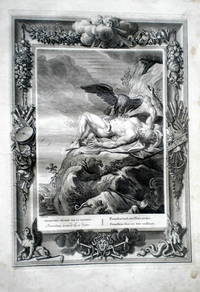
Picart, Bernard
Promethee dechire par un vautour
Amsterdam: Chatelain 1733. <p>Gravure sur cuivre La feuille = 310 X 460 mm la cuvette = 255 x 352 mm quelques rousseurs en marge image propre</p> Chatelain unknown
Bookseller reference : biblio315
|
|
|
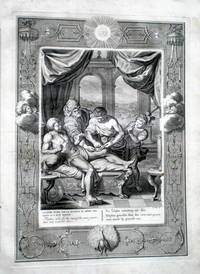
Picart, Bernard
Telephe guéri par la rouille du même fer dont il a été blessé
Amsterdam: Chatelain 1731. <p>Gravure sur cuivreLa feuille = 310 X 460 mm la cuvette = 255 x 352 mm quelques rousseurs en marge image propre</p> Chatelain unknown
Bookseller reference : biblio305
|
|
|
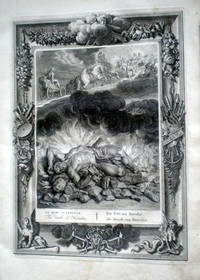
Picart, Brenard
La mort d'Hercule
Amsterdam: Chatelain 1733. <p>Gravure sur cuivre La feuille = 310 X 460 mm la cuvette = 255 x 352 mm quelques rousseurs en marge image propre</p> Chatelain unknown
Bookseller reference : biblio302
|
|
|
Picasso, Pablo
7 Original Picasso Lithographs
RARE! 7 ORIGINAL LITHOGRAPHS by Pablo Picasso, in folder format, from an unknown publication (no details within), probably circa 1954. All seven lithographs are based on the same templates used for the 1954 Verve no. 29-30 publication. Presented in folder format. The folder itself is an additional (8th) lithograph, very similar to the one used for the cover of "The Human Comedy", printed on harder, criss-crossed cloth paper. Also included: a small photograph of another Picasso print, in b&w. 330x250mm. Soft folder format, with larger red and white lithograph serving as cover for the other lithographs. Folder split halfway along the spine. Front cover stained in several places. Edges worn around cover and all lithographs. One small tear affects cover and all lithograph frames near the corner. Only one lithograph very slightly damaged by this tear. No bending, creasing or staining inside. [SUMMARY]: Overall, this extremely rare collection of original Picasso lithographs is in good condition.

|
|
|
Picasso, Pablo - Boeck, Wilhelm
Pablo Picasso. Linolschnitte. Einleitung: Wilhelm Boeck.
Stuttgart, Verlag Gerd Hatje, 1988. Quer-Groß-4°. 33 x 38,5 cm. XIII Seiten, 45 Blatt. Original-Leinenband mit Original-Schutzumschlag im einfachen Pappschuber.
Bookseller reference : 62345BB ISBN : 377570258

|
|
|
Picasso, Pablo - Gauss, Ulrike [Hrsg.]
Die Lithographie. Graphikmuseum Pablo Picasso, Münster. Die Sammlung Huizinga. Katalog bearbeitet von Felix Reuße. Mit Beiträgen von Henri Deschamps, Erich Franz, Ulrike Gauss, Felix Reuße. Herausgegeben von Ulrike Gauss.
Ostfildern-Ruit, Hatje Cantz Verlag, 2000. 4°. 32,5 x 24,5 cm. 303 Seiten. Original-Leinenband mit Original-Schutzumschlag.
Bookseller reference : 66341CB

|
|
|
Picasso, Pablo - Güse, Ernst-Gerhard; Rau, Bernd
Die Lithographien. Einleitung von Ernst-Gerhard Güse. Werkverzeichnis von Bernd Rau. [Werkverzeichnis / catalogue rainsonné. ]
Stuttgart, Verlag Gerd Hatje, 1988. 4°. 32 x 25,5 cm. 319 (1) Seiten. Original-Leinenband mit Original-Schutzumschlag.
Bookseller reference : 66340CB ISBN : 377570261

|
|
|
Picasso, Pablo / Mordechai, Omer [Ed.]
Picasso and Literature: Prints
270x210mm. 197 pages. Softcover. In good condition.
|
|
|
Picasso, Pablo [ARTIST] / di San Lazzaro, Gualtieri [Ed.] / Alberti, Rafael; Brassaï; Man Ray; Eluard, Paul; Apollinaire, Guillaume; et al.
Hommage a Pablo Picasso - Numéro spécial de XXe siécle [WITH ORIGINAL LITHOGRAPH AND SEVEN LINOCUTS]. Avec une lithographie exécutée par l'artiste pour le no. 10 de XXe siècle (1958). 28 planches en couleurs. 150 reproductions en noir et blanc.
CONTAINS AN ORIGINAL LITHOGRAPH AND SEVEN LINOCUTS BY PABLO PICASSOÁ. RARE issue of the prestigious art publication "XXe siècle". This issue is dedicated to the work of Pablo Picasso, and features numerous articles written by his friends, both artists and art critics. The texts are accompanied by numerous color and b&w reproductions of his works. 320x250mm. 138 pages [+2]. Red cloth Hardcover with illustrated dust-jacket. Jacket slightly rubbed, dirty and yellowing. Jacket upper corners and edge wrinkled. Cover edges dirty. Cover corners and spine edges slightly bumped. [SUMMARY]: This extremely rare issue of an influential art periodical, which features an original lithograph and seven linocuts by one of 20th-century most illustrious artists, is in good condition.
|
|
|
Picasso, Pablo, painter and sculptor (1881-1973).
2 full-page pen and brush drawings in Indian ink. In: Eaux-fortes originales pour des textes de Buffon. Paris, Martin Fabiani, 1942.
Small folio (287 x 377 mm). (6), 134, (24) pp. With 31 leaves plates (sugar aquatints, etchings and drypoints). In unbound sheets as issued, stored in publisher's original cardboard covers, portfolio and slipcase (some slight wear to the latter). Two unique and wholly original brush drawings, adorning a signed and inscribed first edition of this famous suite by Picasso, in perfect condition. - Limited edition of 226 copies: this is number 155, one of 135 on Vidalon vélin. This copy was presented by Picasso to his friend, the painter André Marchand (1907-98), with an autograph inscription and two original drawings, each one full page. The two drawings are executed in Indian ink, pen and brush, heightened with black ink wash. They occupy the verso of the half-title bifolium and the first section title ("Le Cheval"). The first drawing shows a tomato plant in a pot, probably a reference to the still lifes for which Marchand was known. The second presents two different figures of a horse: in the upper half of the sheet, a white horse, seen in profile; in the lower half, a powerful horse's head, also in profile, against a stark dark background. Both are dated by the artist "7 August 44"; the first drawing also bears in the lower right-hand corner the signed dedication: "Pour André Marchand / Picasso". - In 1936 Ambroise Vollard commissioned illustrations by Picasso for the comte de Buffon’s 18th century encyclopedia, "Histoire naturelle". The book was published in 1942 with Picasso’s 31 prints. The delightful images of the animal kingdom, rendered with exquisite technique, must have surely brought joy to those who viewed it during the dark days of the war. Printed in a relatively small edition of 226, several copies went to friends with unique drawings such as these. - Includes an additional print of the "Mère poule" plate. Provenance: André Marchand; Jean A. Bonna (his bookplate to the portfolio's pastedown). With a certificate from Picasso's daughter Maya, dated 10 October 2002. S. Goeppert, Picasso (1983), p. 104-107. The Artist and the Book, 231. OCLC 78845813.
|
|
|
Picasso, Pablo, Spanish painter and sculptor (1881-1973).
Original drawing with autograph dedication signed ("Picasso"). Golfe-Juan, 16. IX. 1953.
271 x 208 mm. Blue ballpoint on laid paper. Portrait of the Swiss publisher Albert Skira (1904-76), dated and inscribed with the dedication: "Pour ces 25 ans d'éditions et 30 Ans d'Amitié. Picasso". The expressive profile of Skira, including parts of his shoulders and one arm, is representative of Picasso's sketchy and graphic art oriented late style. It is the last of seven numbered portraits of the publisher that Picasso drew on the evening of 16 September 1953 in the booth of a restaurant in Golfe-Juan. - Skira "played an important role in Picasso's life in that in the fall of 1930 he commissioned him to illustrate Ovid's Metamorphoses. Picasso achieved surrealist transformations in an admirably classical graphic style [...]. This was one of the reasons that led Vollard to commission him to produce what was to become the Vollard Suite. Skira subsequently offered him another opportunity by creating, in 1933, the splendid magazine 'Minotaure': for the cover of the first issue, Picasso created a virtuoso collage" (cf. Pierre Daix, Dictionnaire Picasso). - With original fold mark and insignificant tears in the fold. An unrelated note in ink on the verso reads: "Vauthier baryton".
|
|
|
PICCOTTI, Cesare
Piccotti
Cartella-oggetto del gruppo de ''La Cappella'' contenente 3 serigrafie su acciaio e 3 gruppi di piccoli magneti colorati . 8vo. . . Ottimo (Fine). . Edizione originale di 16 es. numerati. .

|
|
|
Pichler, Gerd (Bearb.).
Bertold Löffler. Zeichnungen - Skizzen - Entwürfe. Kommentiertes Verzeichnis eines Teilnachlasses des Jugendstilkünstlers und Mitglieds der Wiener Werkstätte. Wien, Inlibris, 2001.
148 SS., 200 Abbildungen. Illustrierte Originalbroschur. 8vo. Beschreibt den umfangreichen Teilnachlaß, größtenteils aus der Zeit vor 1930 stammend, der das bisher bekannte Werk des großen Wiener Jugendstilkünstlers, der zu den bedeutendsten Mitarbeitern der Wiener Werkstätte, "innerhalb welcher er an nahezu allen wesentlichen Projekten beteiligt war" (Cabuk, s. u., 93), zu zählen ist, um mehr als die Hälfte erweitert. Entwürfe für Löfflers berühmte Buchillustrationen für den Wiener Verlag (1903-06) sind ebenso vertreten wie Plakatenwürfe aus den zwanziger Jahren und Skizzen für sein Erstlingswerk bei der Wiener Werkstätte, eine Kassette für eine Ehrenurkunde (abgebildet in Dekorative Kunst 19 (1911), S. 28). Auch ein Entwurf für den 1912 von Josef Hoffmann und Bertold Löffler im Auftrag der Wiener Werkstätte geschaffenen Salzburger Volkskeller, für den die beiden ebenso verantwortlich zeichneten wie für die geniale Konzeption des berühmten 'Caberet Fledermaus', findet sich im hier dokumentierten Bestand. Mit einem Aufsatz zu Leben und Werk. [ISBN 3-9500813-7-2]
|
|
|
Pickering, Charles; Hall, John Charles.
THE RACES OF MAN AND THEIR GEOGRAPHICAL DISTRIBUTION. By Charles Pickering; To Which is Prefixed, AN ANALYTICAL SYNOPSIS OF THE NATURAL HISTORY OF MAN, by John Charles Hall. New Edition.
pp. lxxii, 445 + Folding Colored Map + Twelve Engraved Plates showing the different major Human Races. Text browned, but not brittle. Blue printed endpapers with fourteen pages of publisher's advertisements. Original full cloth binding, decorated in blind, and lettered in gilt. Joints cracked. Hardbound. Very good. It is interesting to see this famous illustrated racial analysis being published during the American Civil War. **PRICE JUST REDUCED! W145
|
|
|
Pictet, E
Le lac de Genève.
Genf, H. Georg, 1877. 117 x 81 cm. Karte auf Leinen aufgezogen. Orig.-Leinenmappe. + Wichtig: Für unsere Kunden in der EU erfolgt der Versand alle 14 Tage verzollt ab Deutschland / Postbank-Konto in Deutschland vorhanden +, A|B [2 Warenabbildungen]
Bookseller reference : 5449CB

|
|

 Receive by email
 Download as PDF document
 RSS feed
 Permanent link


