3,374 results
ref. SONG1550131303Used: Good unknown
ref. SONG1584500867Used: Good unknown
ref. SONG034529808XUsed: Good unknown
ref. SONG1555972179Used: Good unknown
ref. SONG4871870367Used: Good unknown
ref. SONG0521872820Used: Good unknown
ref. SONG0345340442Used: Good unknown
ref. SONG0444894276Used: Good unknown
ref. SONG0948253614Used: Good unknown
ref. SONG1574101196Used: Good unknown
ref. SONG1589760069Used: Good unknown
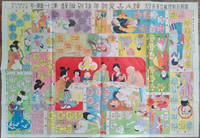
1419ref. 223794東京. Tokyo.: 実業之日本社. Jitsugyo no Nihonsha. Taisho 14 1925. Colour folding sugoroku game sheet 55 x 75.5 cm occasional browning visible on the reverse and a little on the margins but otherwise a very clean and good copy. The game follows a woman's life stages from her wedding to child birth as players progress each month from January to December. In addition daily and seasonal menus are included for each month. The breakfast and lunch menus given are in the main for Japanese dishes but occasionally western dishes such as croquettes and beef steaks appear for dinner. The beginning of the game is the woman's wedding in January. In March she is learning to cook. In April her husband helps cooking as she is suffering from morning sickness. The pregnancy progresses well and in December a baby boy arrives. The goal is a family tea party held in western style to welcome the baby. Both the husband and the wife are featured in illustrations and the companionship of marriage is emphasised as a source of family happiness. This colourful sugoroku game sheet was issued as a supplement to the January 1924 issue of Fujin Sekai Women's World. The magazine was founded in 1906 and was a very popular monthly magazine for women. . 実業之日本社. [Jitsugyo no Nihonsha]. unknown
2025ref. SKU1728560Catalyst Game Labs 2025-09-17. paperback. New. 0x11x8. New Book Ships with Tracking Catalyst Game Labs paperback
2024ref. SKU1728559Catalyst Game Labs 2024-08-21. hardcover. New. 10x8x0. New Book Ships with Tracking Catalyst Game Labs hardcover
2024ref. SKU1735026Catalyst Game Labs 2024-08-21. hardcover. New. 10x8x0. New Textbook Ships with Tracking Catalyst Game Labs hardcover
2025ref. SKU1733819Catalyst Game Labs 2025-09-17. paperback. New. 0x11x8. New Textbook Ships with Tracking Catalyst Game Labs paperback
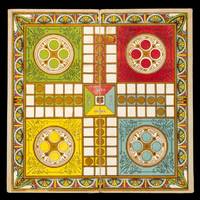
ref. 46866Ballarat and Melbourne The National Game Company c.1935. Folding game board printed directly onto thin card 250 x 250 mm; verso plain; in fine condition. A very good example of one of the later editions of this game. Â unknown
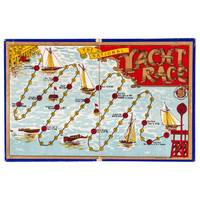
ref. 46859Ballarat and Melbourne : National Game Co. between 1912 and 1915. ""Copyright no. 2607"". Thin board with original cloth backstrip 310 x 480 mm folding; chromolithographed game board in red blue yellow and black; pictorial onlaid title label to outer board; an extremely god example. This appears to be an early version of the Yacht Race game. Not only are the graphics entirely different to those in later versions but the small life ring featured in the National Game Company trademark device actually bears the date 1912. hardcover
ref. 46863Ballarat and Melbourne : National Game Co. c.1910. Thick board 365 x 370 mm folding with cloth backed spine; fold-out colour-printed game board front board with pictorial colour onlaid title label with an early gift inscription; game board in very good condition outer boards lightly foxed and with one bruised corner; a good example. Scarce and attractive. 'National Games of Ballarat and Melbourne produced a wide range of games mainly during the early half of the 20th century in Australia. The company had its beginnings in Ballarat by W. Owen in 1877 growing to prominence towards the end of the century and has been credited to have been the first large-scale Australian manufacturer of locally-designed board games. Application for the actual trademark name National was recorded in 1899 by Christopher George King. Games were often related to Australia's love for recreation and sport; such as cycling golf football tennis and cricket as well as various forms of racing such as motorcars aeroplanes horse or yachting. Contemporary themes of the period produced games such as the exploration of Antarctica World War I the Boer War and the boy scouts. Games that reinforced the moralilty of the times included courtship and marriage snakes and ladders and Fairytales and fables. The design of the boards was colourful and attractive. Many of the games were obviously re-vamped over time with more suitable modern graphics for the changing eras. Christopher George King has been acknowledged as the designer and manufacturer of the games made by the National Games Company. He designed the board games from around the early 1900's till the late 1920's and copyrights can be found in the National Archives of Australia. He is listed in the Victorian electoral rolls as a manufacturer living in Melbourne during the early part of the 20th Century. He was born in England and died at the age of 63 in 1928. The National Game Co. continued to issue board games as late as the 1940s.' - Board Game Geek blog https://boardgamegeek.com/boardgamepublisher/5874/national-game-company hardcover
ref. DADAX073538634XNew unknown
ref. DADAX1633438015New unknown
1957ref. 186938Japan: Koide Nobuhirosha c. 1957. A charming set of playing cards based on the film Nankyoku Tairiku "The South Pole" recounting the story of the 1956-57 Japanese Antarctic Research Expedition. The cards show scenes of penguins the research ship Soya and the expedition members. In 1955 the Japanese government announced plans to send a research group to Antarctica in the following year. A team of 53 scientists led by Professor Nagata Takeshi set off on 8 November 1956 the first time Japan had explored the south pole since the early 1900s. They set up the Syowa Station on East Ongul Island before being emergency airlifted out of a storm. A documentary film focusing on the expedition was released in June 1957 directed by Hayashida Shigeo and titled Nihon nankyoku chiiki kansokutai no kiroku: Nankyoku Tairiku. This game was released to complement the film. Karuta is a traditional Japanese matching game where each pictorial card is assigned a letter of the Japanese alphabet and must be paired with an associated poem sentence or proverb. The player who can make the most matches wins. 90 playing cards 61 x 81 mm landscape or portrait 45 with colour photographic illustrations on one side 45 lettered in black on one side. Housed in original pictorial box 170 x 132 x 35 mm lettered in red and black. Lacking instructional booklet. Cards a little toned and bowed; box scuffed with minor loss in places bottom with some damp-staining remains of plastic wrap on lid verso old repairs in places: a very good example. Galbraith p. 133. unknown
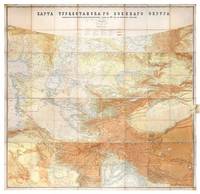
1881ref. 149774St Petersburg: Cartographic Institute of the Military-Topographic Department of the General Staff 1881. The cartographic climax of the "great game" Second edition significantly improved from the first edition 1877 to incorporate the latest military intelligence from field surveys. This magisterial work of "great game" cartography was presented at Russia's Tashkent military headquarters to the daring French explorer Stanislas Benoist-Méchin during his epic 1881-3 overland journey from Beijing to Europe. We have traced no other copies. A presentation inscription on the verso of the map reads in French "To Mr Baron Benoist-Méchin from Generals Kouropatkine and Levaschew October 1882 Tashkent." Benoist-Méchin 1854-1923 began travelling the world as a young man and then served as the French cultural attaché in Tokyo 1880-1. In 1881 he decided to return to Europe via the daring route through Central Asia. Leaving Beijing on 15 September with his regular travelling companion Comte Humbert Adrien de Mailly-Chalon 1853-1921 he journeyed through Manchuria and across Russian Siberia. In 1882 having reached Kashgar they received permission to cross Russian Turkestan spending six weeks in Tashkent as the honoured guests of General Mikhail Tchernayev the architect of Russian's expansion across Central Asia General Aleksey Nikolayevich Kuropatkin 1848-1925 and the aforementioned General Levaschov likely the artillery officer Vladimir Levaschov 1834-1898. After reaching Samarkand they travelled in extreme cold through Bukhara and via Khiva to Tehran reaching Moscow in October 1883 where they were accorded a hero's welcome. Their descriptions of this feat of exploration were published in 1885 in the Bulletin de la Société de géographie. This map was made for the use of the Russian military high command in St Petersburg and in the Turkestan Military District which had been established in the 1860s amid the occupation of Tashkent and Bokhara and dates from a period following the Second Anglo-Afghan War and the Battle of Geok Tepe when tensions were at their height. It encompasses almost the entire playing surface of the "great game" extending east-west from Xinjiang and Tibet to the Caspian Sea and Afghanistan and north-south from Siberia to northern India. Unparalleled in terms of accuracy and detail it names every city town and village and the legend has entries for such features as fortifications railways mail and caravan roads and mines. Spot heights are given in feet and deserts are marked with a light red pattern. It is much improved on the first edition which had only 48 panels and did not extend as far south. Chromolithograph map 195 x 200 cm dissected onto 64 sections and mounted on linen as issued laid-down printed slip stating "corrected up to 1881" small folding tab at right edge. Folding away to 28.5 x 28 cm. Housed in green quarter morocco solander box with chemise by the Chelsea Bindery. Map surface generally clean and brighta few stains toning and soiling at edges small repair at top-left edge verso foxed and with couple of areas of linen reinforcement: very good. unknown
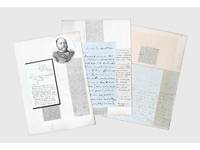
1837ref. 156409Kabul and elsewhere: 1837-41 & 1859. Correspondence chess A carefully assembled collection of material connected to players in the "great game" including Colonel Stoddart and Captain Arthur Conolly both famously beheaded at Bukhara Major Henry Rawlinson the political agent at Kandahar and Captain Sir Alexander "Bukhara" Burns. The material mounted on album leaves with accompanying newspaper clippings and other ephemera is tied together by Connolly and Stoddart's dramatic death. Sent on a mission to secure an agreement of friendship between Britain and the Emir of Bukhara in 1838 Stoddart was arrested by the emir on charges of spying and imprisoned. Conolly the intelligence agent credited with coining the term "great game" in an 1840 letter to Rawlinson arrived in Bukhara in late 1841 to negotiate his compatriot's release. Both men were killed in June 1842 and became household names back home. In the first two letters Burns writing about a year before he was killed by a mob in Kabul shares his views with Rawlinson on the latest moves in the "great game". He writes of Stoddart's short-lived release from prison and of the importance of Conolly's current intelligence-gathering in Central Asia. Shah Shuja "is surrounded by a parcel of harpies" and Burns advises caution about the use of British troops to prop up the Shah's rule: "Nothing contributes so much to lower the King's power as the employment of our troops against Afghans & I would avoid it if possible." As for Lord Auckland the governor-general "does not have great faith in the sincerity of Russia in abandoning her Khiva designs but it gives us time." The third letter from Conolly to Rawlinson discusses local news and offers a lighter-hearted window onto the life of a political agent far from home. He has swapped the diplomatic chessboard for the card table: "We miss you very much - especially at whist" the previous night's rubber being "stale and flat but not unprofitable for I won 9 rupees." This letter is mounted with a page of Stoddart's notes on taking navigational bearings which Stoddart gave to Rawlinson before departing for Central Asia in 1837. The final piece touches on the wider appeal of the Stoddart-Conolly story. Writing to the Cornish baronet Sir Hugh Molesworth almost two decades later Dr Joseph Wolff mentions his second expedition to Bokhara mounted to ascertain the fate of the two men and how the profits from the two editions of his best-selling Narrative of a mission to Bokhara 1845 were sufficient to finance a parsonage and schoolhouse in his living. a Sir Alexander Burns to Major Henry Rawlinson 21 December 1840 Kabul. ALS bifolium written across all sides. b Sir Alexander Burns to Major Henry Rawlinson 20 January 1841 Kabul. ALS bifolium written across all sides. c Captain Arthur Conolly to Major Henry Rawlinson 1840 Kabul. ALS bifolium and single sheet written across 5 sides addressed on final side remains of wax seal. d Colonel Stoddart's autograph notes on taking navigational bearings single sheet written one side. Endorsed on verso by Rawlinson "Given to me by Col. Stoddart on his departure for Bokhara in 1837. H. Rawlinson"; later note to the same effect but in a different hand below. e Revd Dr Joseph Wolff to Revd Sir Hugh H. Molesworth 31 August 1859 Taunton Somerset. ALS bifolium written across 3 sides. 4 autograph letters and single sheet of notes totalling 17 sides of manuscript tipped to or mounted on stubs to card album leaves 370 x 265 mm with laid-down material 11 newspaper clippings 2 printed illustrations sheet of manuscript later brief captions in manuscript. Letters and sheet of notes generally well preserved staining and creasing as expected stubs occasionally just touching text but no loss to sense: a very good collection. unknown
1954ref. 145721London: The Trustees of the British Museum 1954. First Edition. Paperback. Very Good. London The Trustees of the British Museum 1954. Octavo xiii-xviii 165-255 pages. Wrappers a little creased sunned and rubbed; price inked out at the foot of the front cover; an excellent copy. The Trustees of the British Museum paperback