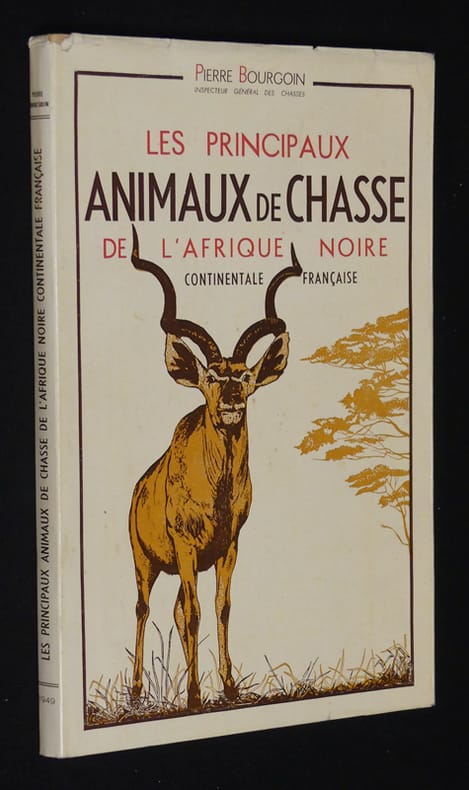
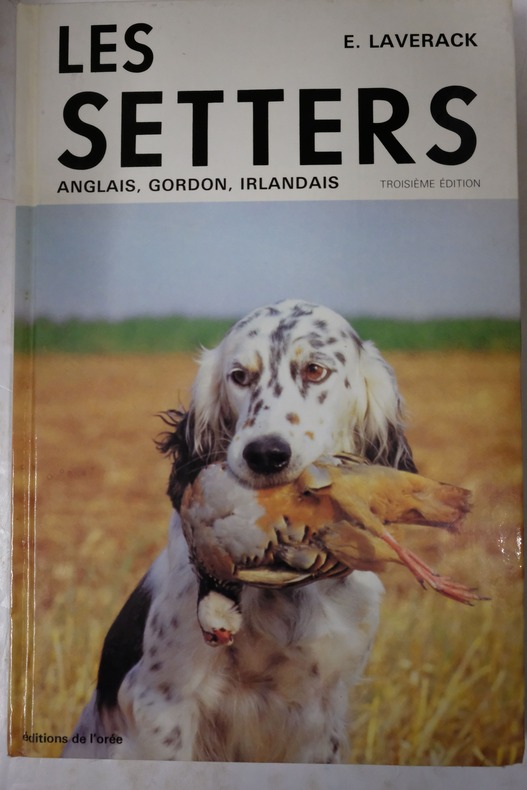
GIBIER (Mgr)Livre Rare Book

3,668 results
1928ref. 19658Couverture souple. Broché. 500 pages. Rousseurs à la couverture.
ref. RO80017286LETHIELLEUX P.. non daté. In-12. Broché. Etat d'usage, 1er plat abîmé, Dos satisfaisant, Intérieur frais. 500 pages. Manque le 1er plat de couverture. Pages non coupées. Dos consolidé avec du papier de soie.. . . . Classification Dewey : 270-Histoire et géographie de l'Eglise
1876ref. 0041461876 Paris, J. Rothschild, 1876. Petit in-folio (288 X 362) demi-chagrin vert lierre, dos cinq nerfs, fleuron doré dans les compartiments, auteur et titre dorés, nom de l'éditeur en queue, tranches dorées (reliure de l'époque); (1) f. blanc, (2) ff. de faux-titre et titre imprimé en rouge et noir, frontispice, 140 pages, 45 planches couleurs hors-texte sous serpente, (1) f. blanc. Quelques rares rousseurs, principalement aux serpentes, trois taches sur le cuir du plat supérieur, sans gravité.
1991ref. SPN-191Erslev : Vilsund Verlag, 1991, édition originale. Tirage 1000 exemplaires : exemplaire N°583. Broché 20x21cm, 95 pages illustrées de documents en noir, "La parenté des noms danois et normands", bibliographie. [BE]
ref. 201393Emile Nourry, Librairie Cynégétique Paris 1930 Grand in-8 ( 290 X 200 mm ) de 186 pages, broché sous couverture illustrée imprimée comme la page de titre en rouge et noir. Bel ouvrage illustré de quelques illustrations in-texte. Edition originale. Thiebaud col. 369. «Lintroduction est suivie dune bibliographie très détaillée des recueils de fanfares.» ( Thiebaud ). Un des 1000 exemplaires numérotés à la presse sur Alfa Satiné. Quelques rousseurs, bel exemplaire.
ref. 52567P., Fayard, 1960, petit in 8° broché, 317 pages ; couverture illustrée (très légèrement fanée).
1949ref. 132581949 Lorient : Ed. & impr. de Bretagne,1949,in8 broché,245 p : ill ; 24 cm ,jacquette illustrée un peu effrangée,
1949ref. vh3964Editions et Imprimerie de Bretagne Broché 1949 In-8 (15,8 x 24 cm), broché, 245 pages ; quelques défauts à la jaquette (bord supérieur fendillé, quelques rousseurs/traces sur les plats), par ailleurs bon état. Livraison a domicile (La Poste) ou en Mondial Relay sur simple demande.
1936ref. 1066881936 Librairie des Champs-Elysées - 1936 - In-8, broché, couverture de suédine verte - 254 p. - Envoi de l'auteur en page de titre - Ouvrage non coupé, jamais lu
2014ref. SPN-569La Roche-Guyon : Éditions de l'Amandier, « La Bibliothèque fantôme », 2014. Broché, 141 pages illustrées de dessins en noir de Christian Broutin.
ref. 40792Paris, Pierre Tequi, 1921. "12 x 18, 353 pp., broché, non coupé, bon état (papier jauni; cachets du Collège jésuite Saint Stanislas à Mons)."
1913ref. R320127073Desclée de Brouwer et Cie / Librairie P.Lethielleux / Librairie de l'évêché. 1913. In-8. Broché. Etat passable, Plats abîmés, Dos abîmé, Intérieur acceptable. 81 pages - plats désolidarisés - dos absent - fortes rousseurs sur les plats - étiquette collée + tampons sur le 1er plat - tampons + annotation sur la page de titre.. . . . Classification Dewey : 200-RELIGION
1920ref. 17556Lyon, Cumin et Masson, Collection Amis du Vieux Lyon, 1920 ; in-12 carré, demi maroquin rouge à petits coins, dos à nerfs surlignés à froid, fleurons et titre dorés, filets dorés sur les plats, tête dorée, premier plat de couverture conservé (reliure moderne) ; (12), 98 pp. , (1) f. d'imprimeur (Audin).
ref. 75093Tours, éd. La Nouvelle République, 1993, EDITION ORIGINALE, in-8, cartonnage souple, couv. photo coul. éd., 96 pp., papier glacé, très nb. photos en coul., bibliographie, L'histoire du sanglier basé sur le filme de Laurent Charbonnier. Pas courant Très bon état, comme neuf
1984ref. FAU5337MRelié, 157 pages, paru le 10 mai 1984 aux éditions de l'Orée, très bon état général.
1920ref. R320133078Pierre Téqui. 1920. In-12. Broché. Etat d'usage, Couv. légèrement passée, Coiffe en pied abîmée, Quelques rousseurs. 381 pages - papier jauni - tampon sur le 1er plat - annotation sur la page de faux titre - rousseurs sur les plats.. . . . Classification Dewey : 200-RELIGION
1919ref. ROD0038167Pierre TEQUI. 1919. In-12. Broché. Bon état, Tâchée, Dos satisfaisant, Rousseurs. 370 pp.. . . . Classification Dewey : 306.8-Mariage et famille
ref. ADC3793
1919ref. RO40240762Pierre Téqui. 1919. In-12. Broché. Bon état, Couv. légèrement passée, Dos satisfaisant, Intérieur acceptable. 336 pages. Etiquette de code sur le dos. Tampons de bibliothèque sur le 1er plat et en page de titre.. . . . Classification Dewey : 940.3-Première Guerre mondiale 1914-1918
1920ref. R260147929PIERRE TEQUI. 1920. In-12. Broché. Etat d'usage, Couv. légèrement passée, Dos fané, Intérieur frais. 386 pages. Fentes au dos.. . . . Classification Dewey : 840-Littératures des langues romanes. Littérature française
ref. 05401France: 1900. Les Trois Chats" A Delightfully Grotesque French Belle Époque Passé-Boules Carnival Game PASSÉ-BOULES GAME. Les Trois Chats. French hand-painted polychrome papier-mâché ball-toss carnival game. France ca. 1900. A remarkable surviving French passé-boules fairground game modeled as three wonderfully expressive cats arranged side by side each with a wide-open mouth forming the target through which the player was required to throw a ball. Hand-modelled and painted in polychrome papier-mâché over a wooden-supported structure measuring approximately 24 1/2 inches high × 23 5/8 inches wide × 5 7/8 inches deep 630 × 600 × 150 mm. The three feline heads are individually characterized with wonderfully exaggerated green eyes whiskers and large open mouths each approximately 2 1/2 inches 63 mm. across. The particularly splendid central gray cat wears a jaunty orange-and-blue striped hat prominently lettered "TOTO." The cats rest above three projecting differently colored receptacles - blue orange and yellow - with the respective scores "30" "50" and "20" painted beneath them. The higher-scoring central target is therefore appropriately occupied by the magnificently hatted Toto. The whole is reinforced by a simple wooden structure including boards at the base and upper portion while the projecting lower section forms the ball-catching receptacle. The reverse revealing the utilitarian construction of what was intended as a working fairground amusement survives substantially intact. The photographs also reveal the wonderfully irregular hand-modeled surfaces and surviving original polychrome decoration that give the three cats their extraordinary personalities. A remarkable survival of a French passé-boules carnival game from the Belle Époque. Passé-boules - literally games in which a ball was passed or thrown through an opening - were a familiar feature of French fêtes foraines and popular entertainments during the nineteenth and early twentieth centuries. Targets frequently took the form of grotesque or comic human and animal heads their exaggerated open mouths providing the aperture through which the player attempted to propel a small ball. Points were awarded according to the successful target as demonstrated here by the painted scores beneath the three cats. The present example is particularly appealing for its three anthropomorphic feline characters. Their exaggerated expressions brilliant green eyes and distinctly individual personalities inevitably recall the celebrated comic cats of Louis Wain 1860-1939. No attribution to Wain is intended but the comparison places the game delightfully within the wider late-Victorian and Edwardian fascination with humorous humanized cats. Unlike printed or manufactured toys intended for domestic use fairground games were working objects subjected to repeated handling impact transportation and exposure. Consequently early papier-mâché examples surviving substantially complete are inherently scarce. The survival here of the three original sculptural targets their painted decoration numbered scoring system and integral ball receptacle makes Les Trois Chats an unusually evocative piece of French popular entertainment. Its appeal lies equally as a folk-art sculpture fairground artifact and piece of feline whimsy: three gloriously eccentric cats who have apparently spent more than a century waiting for someone to throw a ball into their mouths. Provenance: Acquired in Paris directly from the family of the former owner by whom it was said to have descended from a grandparent who acquired the game around the turn of the twentieth century. France: , 1900 unknown
ref. 05401France: 1900. Les Trois Chats" A Delightfully Grotesque French Belle Époque Passé-Boules Carnival Game PASSÉ-BOULES GAME. Les Trois Chats. French hand-painted polychrome papier-mâché ball-toss carnival game. France ca. 1900. A remarkable surviving French passé-boules fairground game modeled as three wonderfully expressive cats arranged side by side each with a wide-open mouth forming the target through which the player was required to throw a ball. Hand-modelled and painted in polychrome papier-mâché over a wooden-supported structure measuring approximately 24 1/2 inches high × 23 5/8 inches wide × 5 7/8 inches deep 630 × 600 × 150 mm. The three feline heads are individually characterized with wonderfully exaggerated green eyes whiskers and large open mouths each approximately 2 1/2 inches 63 mm. across. The particularly splendid central gray cat wears a jaunty orange-and-blue striped hat prominently lettered "TOTO." The cats rest above three projecting differently colored receptacles - blue orange and yellow - with the respective scores "30" "50" and "20" painted beneath them. The higher-scoring central target is therefore appropriately occupied by the magnificently hatted Toto. The whole is reinforced by a simple wooden structure including boards at the base and upper portion while the projecting lower section forms the ball-catching receptacle. The reverse revealing the utilitarian construction of what was intended as a working fairground amusement survives substantially intact. The photographs also reveal the wonderfully irregular hand-modeled surfaces and surviving original polychrome decoration that give the three cats their extraordinary personalities. A remarkable survival of a French passé-boules carnival game from the Belle Époque. Passé-boules - literally games in which a ball was passed or thrown through an opening - were a familiar feature of French fêtes foraines and popular entertainments during the nineteenth and early twentieth centuries. Targets frequently took the form of grotesque or comic human and animal heads their exaggerated open mouths providing the aperture through which the player attempted to propel a small ball. Points were awarded according to the successful target as demonstrated here by the painted scores beneath the three cats. The present example is particularly appealing for its three anthropomorphic feline characters. Their exaggerated expressions brilliant green eyes and distinctly individual personalities inevitably recall the celebrated comic cats of Louis Wain 1860-1939. No attribution to Wain is intended but the comparison places the game delightfully within the wider late-Victorian and Edwardian fascination with humorous humanized cats. Unlike printed or manufactured toys intended for domestic use fairground games were working objects subjected to repeated handling impact transportation and exposure. Consequently early papier-mâché examples surviving substantially complete are inherently scarce. The survival here of the three original sculptural targets their painted decoration numbered scoring system and integral ball receptacle makes Les Trois Chats an unusually evocative piece of French popular entertainment. Its appeal lies equally as a folk-art sculpture fairground artifact and piece of feline whimsy: three gloriously eccentric cats who have apparently spent more than a century waiting for someone to throw a ball into their mouths. Provenance: Acquired in Paris directly from the family of the former owner by whom it was said to have descended from a grandparent who acquired the game around the turn of the twentieth century. France: , 1900 unknown books
ref. 2130459986.Gpaperback. Good. Access codes and supplements are not guaranteed with used items. May be an ex-library book. paperback
ref. 6228postface de Louis TERNIER in 12 broché,couverture illustrée faux-titre,titre avec vignette,frontispice,249 pages,1 page de table des matières,1 pages de table des illustrations. Illustrations hors-texte et culs de lampe d’après Bellecroix,G Gélibert,Mahler,Moisand,Rötig,Comte,Staub,E saint Elmer,E Forcade Bibliothèque de la chasse illustrée Très bon état sans date Thiébaud 795.
1972ref. 332831972 in-8 reliure toile éditeur avec son rhodoid- 1972 - 380p - Ed. Opta - coll. Aventures Fantastiques N° 8 - Exemplaire numéroté 767 / 5500