4 409 résultats
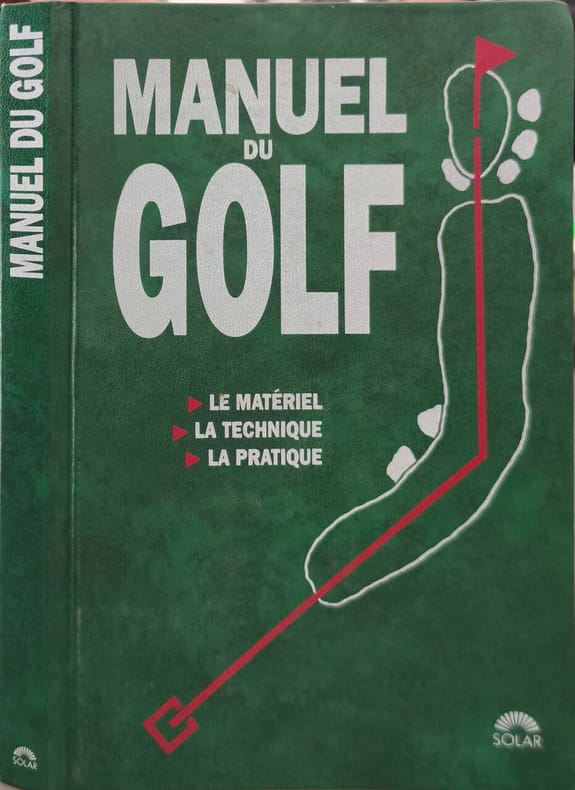
1999réf. LFA-126743730Un ouvrage de 224 pages, format 140 x 210 mm, illustré, broché couverture couleurs, publié en 1999, Editions Solar, bon état
1992réf. 8165Solar 1992 223 pages in8. 1992. Reliure editeur cartonnée. 223 pages. Ce manuel pratique de Vivien Saunders est un guide complet pour apprendre et progresser au golf. Il couvre tous les aspects du jeu : le choix et l'utilisation du matériel (des drivers aux putters) la maîtrise des techniques de base (stance grip swing) l'entraînement la stratégie en compétition et l'interprétation des règles. L'approche est adaptée au niveau du joueur plutôt qu'à la performance des champions
2000Il libro all’interno è illustrato con delle fotografie e dei disegni a colori. La copertina in cartone di colore celeste e giallo è illustrata con delle fotografie a colori, si presenta leggermente scurita dal tempo ed ha il bordo stanco. Le pagine all’interno sono in ottime condizioni. Numero pagine 224. USATO
2008A clean, unmarked book with a tight binding. Many full-page photographs of rock weathering; glossary. Full gray cloth boards in weathered rock textured pattern.
Engraved map (51 x 84 cm), hand-coloured in outline. Large map of the Turkish Empire in original colour stretching from the Gulf of Oman to Morocco. Al-Qasimi 78; Tibbetts 154.
Royal 4to (31 x 27 cm). 2 vols. 439; 46, (2 blank) pp. (vol. II, pp. 1-2 blank). With 2 title-pages printed in red and black, each with the author's wood-engraved decorated GAV monogram and motto; vol. 1 with 2 folding lithographed maps (1 printed in black, brown and blue, with the route coloured by hand in red, of the Sinai Peninsula; the other in black and white, of the city of Petra); 40 mounted albumen prints after paintings by Emile Pierre Metzmacher (mainly 11.5 x 16 cm), individually mounted with letterpress captions on the mount; and 2 engraved plates; vol. 2 with 6 numbered engraved plates of molluscs and insects. Set in roman and italic types, with incidental Arabic, and sans-serif Greek and Latin capitals to render ancient inscriptions. The Diario in the original publisher's maroon cloth with the author's crowned monogram gold-blocked on the front board and spine, and blind-blocked on the back board, with the title in gold on the spine. The Atlante in the original publisher's blue cloth, with the author's crowned monogram and the title gold-blocked on the front board, and the monogram in a larger size blind-blocked on back board. Both volumes with gilt edges, orange endpapers and with tissue guard leaves tipped in, protecting the albumen prints and engraved plates. Rare first and only edition of an Italian account of an 1865 expedition through "Arabia Petrea", meaning the Sinai Peninsula and adjoining parts of what are now Israel and Jordan, including the ancient city of Petra, now in Jordan, where parts of "Raiders of the Lost Arc" were filmed (the spectacular ancient buildings are carved into the solid rock walls of the cliffs and probably date from the 5th century BC to the 2nd century AD). - The photographically reproduced paintings show the author on camelback, numerous Bedouins, Arabs, Egyptians and Ethiopians as well as archaeological sites, monuments and topographic views. The plates in the second volume depict molluscs and insects, reflecting the author’s own research interests in the field of natural history, in addition to archaeology. The typography has been designed to suit the antiquarian subject, with Louis Perrin's Augustaux roman capitals on the title-pages, the main text set in what would then have been considered an "antique" style (types influenced by pre-1800 models) and sans-serif capitals used to represent the ancient Greek and Latin inscriptions. The author quite literally put his stamp on the work, with his crowned monogram not only on the title-page and binding, but also embossed in the paper, where it serves as a sort of watermark. - The book does not indicate the size of the edition, but since most of the illustrations are original albumen prints, there cannot have been many copies produced. The present copy may be a more deluxe binding than the Blackmer copy, also inscribed by the author to a woman, for it was in green cloth with only Visconti's single initial "V" on the front board. The volume with the Diario is a presentation copy with the author’s presentation inscription to a woman named Josephine. - Bindings slightly worn, the blue cloth a little stained. First and last leaves of both volumes browned, some foxing, some fly-leaves with a tear (not affecting the plates), the map of Petra stained due to oxidation, with some browning caused by the albumen prints on the facing leaves, but overall in good condition. Blackmer 1742. Gay 3650 bis. Macro 2254 (not noting plates): Not in Howgego, Ibrahim-Hilmy, or Weber.
4to. (24), 516, (20) pp. With woodcut printer's device on title page and several woodcut head- and tailpieces and initials. Contemporary limp vellum. Second edition of one of the most important 17th-century Italian travel reports of the Middle East and India. Vincenzo Maria (Murchio) was a Carmelite missionary with a keen eye and much interest to record manners, customs, and natural history. Travelling through Turkey, Lebanon, Syria, Persia, Arabia before arriving in India, he returned to his homeland via Muscat. His book is far more then an intinerary of the Carmelite mission to India: book I recounts the journey to Malabar, also mentioning the Middle East, Mecca, Arabia, religion and other subjects. Book two is about the Christians of St. Thomas; book three is on political, religious and social life of Malabar. Book IV, probably prepared with the aid of Father Matthew, describes the plants of Malabar and the return trip to Europe. With a description of Goa. "Perhaps the most important of the 17th century Italian travellers" (Atabey). - A good copy with slight staining and soiling. Atabey 1297 (3rd edition). Streit V, 538. Cat. NHSM I, p. 240. Graesse VI, 327. Not in Blackmer or Weber.
Large 4to. 2 vols. XII, 227, (1), 87, (3) pp. XII, (229)-559, (1), 83, (1). With engraved frontispiece in vol. 1, 8 engr. maps (6 folding), and 1 folding table. - (Bound with): The Voyage of Nearchus, and the Periplus of the Erythrean Sea. Oxford, Cadell & Davies, 1809. XV, (1), 119, (1) pp. With 1 plate. Contemporary giltstamped English full calf; spines rebacked with original gilt labels. First edition of this rare Middle Eastern geography, published in two parts: 1. From the Sea of Suez to the Coast of Zanguebar; 2. From the Gulph of Elana, in the Red Sea, to the Island of Ceylon. Includes an extensive discussion of the Arabian Peninsula, including sections on Myos Hormus, the Wealth of Arabia, the Coast of Yemen, Aden, Mokha and Oman, Oriental Commerce by the Gulph, etc. Among the plates are a map of the western Arabian coastline, a chart of the Red Sea, and al-Idrisi's famous world map, "a pinnacle of mediaeval cartography as well as of the history of geographical research" (cf. Lex. z. Gesch. d. Kartographie, p. 325; Tooley II, 405). William Vincent (1739-1815) served as headmaster and later Dean of Westminster, and "ancient geography was the subject which Vincent made his chief study" (DNB). Also includes Vincent's edition of the Greek text of the voyage of Nearchus. - Covers rubbed; corners bumped. Traces of old stamps, removed from title pages and half titles. Somewhat browned and brownstained. From the library of the antiquary and bookseller Francis Drake (1828-85), a descendant of the like-named English navigator and privateer, with his engr. bookplate to pastedowns. A good, wide-margined copy. Ibrahim-Hilmy II, 311. DNB LVIII, 364. Graesse VI/2, 325. OCLC 6388867. Not in Atabey, Blackmer, Aboussouan, Weber, Henze, etc.
1959réf. M177081959 Chez l ' auteur , 1959 , in4° broché , jaquette illustrée . Illustrations noir et sépia de l'auteur . Couverture légèrement défraichie restaurée . Edition à tirage limité numérotée . Envoi de l' auteur . Un dessin original en dernière page .
8vo. 64 pp. Original printed wrappers. Caesar Vimercati describes his experiences on board of "La Guerriera" during the year 1840 and provides descriptions of Constantinople, Alexandria, Beirut, Saida, Acre, etc. Austrian warships had their first military encounters during the Oriental Crisis of 1840 as a part of a British-led fleet which ousted the Viceroy of Egypt, Muhammad Ali, from Ottoman Syria. Archduke Friedrich took part in the campaign personally and was awarded the Military Order of Maria Theresa for his exceptional leadership: "Es ist allgemein bekannt, daß um diese Zeit, und zwar genau am 15. Juli zu London eine Uebereinkunft zwischen den Repräsentanten der vier Großmächte England, Rußland, Preußen und Oesterreich geschlossen worden war, welche die Bezwingung der maßlosen Eroberungssucht Mehemed Ali's zum Zwecke hatte […] ". - Wrappers slightly dust-soiled, brownstaining to paper throughout, otherwise a good copy. OCLC 797734900. Not in Kalemkiar or in Kat. der k. k. Kriegsbibliothek.
8vo. 160 pp. Illustrated. Original pale blue wrappers titled in navy. First edition of "The Campaign for the Liberation of Israel": a rare publication on the First Arab-Israeli war by Israeli geographer Zev Vilnay (1900-88). Better known for his lectures on outdoor hiking and touring in Israel, Vilnay also served as a military topographer in Haganah and later the Israel Defense forces. His work, written in Hebrew, is profusely illustrated with maps showing transportation corridors, troop movements, and military and civilian installations. Vilnay's maps depict battles in and around Jerusalem, Haifa, Tel Aviv, the Upper and Eastern Galilee, and many more, discussing strategy and the use of infrastructure and landscape in waging war. An interesting geographer's view of Israeli military action during the 1948 Arab-Israeli War. - Light wear to spine. OCLC 19195703.
8vo. (6), 647 pp. Modern half calf with giltstamped spine. First edition. - The Jesuit Jacques Villotte (1656-1743) was sent to China. Leaving Marseilles in 1688, he arrived in Isfahan in October 1689. His various attempts to penetrate China were unsuccessful, and he settled in Isfahan, where he remained for twelve years. He was not recalled to France until 1712. At Isfahan, he taught plainchant to the Persians and translated several works in Armenian. - Some staining. OCLC locates no copy in the U.S.; however, one copy in Princeton (the Atabey copy). Atabey 1294. De Backer/Sommervogel VIII, 789 (quoting a slightly different title, possibly in error).
4to. XIV, 346 pp. With end-paper maps. Blue cloth with gilt embossed titles to spine. First edition. An account of sailing with the Arabs in their dhows, in the Red Sea, around the coasts of Arabia and to Zanzibar and Tanganyika; pearling in the Arabian Gulf; and the life of the shipmasters, the mariners and merchants of Kuwait. With particular attention to Basra, Kuwait, Bahrain, and Muscat. Numerous black and white photographs by the author, the master mariner and adventurer Allan Villiers (1903-82). - A fine copy. Macro, Bibliography of the Arabian Peninsula, 2250.
19868°, CARTONATO EDITORIALE CON LOGO OVALE APPLICATO AL PIATTO ANTERIORE E TITOLO AL DORSO, SOVR. COLOR ARGENTO CON FOTO A COLORI, RISGUARDI CON FOTO B.N., PG. 128 (4), 78 FOTO B.N. N.T. E DIVERSE A COLORI N.T. NON NUMERATE, EDITO DAL CIRCOLO GOLF IN OCCASIONE DEL 60° ANNO DI FONDAZIONE, BUONO\OTTIMO STATO. (C)
4to (199 x 243 mm). XXXII, 462, (2) pp. Contemporary auburn calf (covers sympathetically restored). Marbled endpapers. First (and only) edition of this early grammar of Ottoman Turkish, the fourth book known to have been printed at the French embassy press at Constantinople established by Choiseul-Gouffier in 1787. The Arabic types were supplied from Basel. The oriental scholar Viguier (1745-1821), who was apostolic prefect and resident at Constantinople from 1783 to 1802, was the first to distinguish in Turkish the exclusive use of either guttural or palatal vowels within a single word. His grammar is printed with the Turkish transliterated, although some sentences are printed in Ottoman script together with their transliteration. - The books printed at the embassy press were "mostly military or scientific and included Turkish translations of Fitte-Clave's 'Elémens de castramentation' and Truguet's 'Tactique navale'. Choiseul-Gouffier was keen to see printing re-established in Turkey, and there may well have been some degree of co-operation between his press and the refounding under Abdul Hamid I of the Turkish press (first established by Ibrahim Müteferrika), which led to the printing of Vauban's work on mines, the 'Fenn-i Lagim'. The press was mostly used for the production of materials used by the embassy" (Atabey). The subscribers included mostly merchants resident in Turkey, although some names from Smyrna and Saloniki are also to be found, as are various missionaries, the English ambassador Ainslie, Count Ludolf, ambassador of the King of the Two Sicilies, and Pierre Guys, author of "Voyage littéraire de la Grèce". - Light browning as common; upper corner of the final errata leaf torn away without loss and professionally remargined. Rebound to style retaining the original, beautifully gilt-stamped spine with sympathetic full calf covers and marbled endpapers. Atabey 1290. Blackmer 1732. Brill, Turcica, 13. Chahine 5025. Aboussouan 936. Vater/Jülg 416. Cf. H. Omont, "Documents sur l'imprimerie à Constantinople", in Revue des Bibliothèques, Paris, July-September 1895.
1996No marks or inscriptions. A lovely clean very tight copy with bright unmarked boards and no bumping to corners. Dust jacket not price clipped or marked or torn or creased. 224pp.
Folio (368 x 255 mm). Etched and engraved title and 31 etched plates (numbered 1-30 and one unnumbered). Contemporary French red morocco gilt, arms of Louis-François-Armand de Vignerot du Plessis, duc de Richelieu et de Fronsac on covers (Olivier 407, fer 15), within gilt border of Richelieu’s repeated motif of two crossed batons intertwined with an ornamental “R”, repeated with coronet within arabesques at the corners, spine gilt in compartments with same motif. First edition; a large-paper copy with Richelieu's arms. Vien's charming series of etchings depicts the costumes worn by members of the French Academy in Rome for a "Turkish masquerade" held during the Carnival celebrations of 1748. This masque is an outstanding example of the influence the orient exerted on western style during the late-Baroque era, showcasing the degree to which cultural transfer was possible and even a matter of enthusiastic adoption by the west but little more than half a century after the siege of Vienna. The elaborate masquerades at the French Academy constituted an important fixture in the Roman calendar. As director of the Academy, Vien organised the masque of 1748, the fabulous costumes of which are presented here, designed, drawn and etched by Vien himself. The costumes in the present suite are "a curious mixture of authentic Turkish habits and European invention" (Blackmer), showing the stock figures of the Turkish court liberally enhanced with elements of Vien's own concoction. The fantastical nature of the creations is a far cry from the sober neo-classical style with which Vien is commonly associated (his pupils included some of the foremost artists of the period, notably Jacques-Louis David). Vien's original drawings and oil paintings for the Mascarade are held by the Musée du Petit Palais; they were exhibited in Berlin in 1989. - Some marginal dampstaining and foxing, binding rebacked retaining most of original spine, corners repaired. This copy commanded $26,000 at Christie's New York in 1997. - Provenance: from the library of Louis-François-Armand de Vignerot du Plessis, duc de Richelieu et de Fronsac (1696-1788), a close friend of Louis XV of France, though critical of Madame de Pompadour. He is supposedly the model for the character of Valmont in Choderlos de Laclos' "Les Liaisons dangereuses". Atabey 1288. Lipperheide Sm 10. Colas 3005 (suggesting the plates are un-numbered). Hiler 879. Le Blanc II, 122, 8-39. Cohen/R. 1014f. Brunet V, 1211. Cf. Blackmer 1730. Cf. Gay 3644. Graesse VI/2, 311 (Paris, Bassan et Poignan).
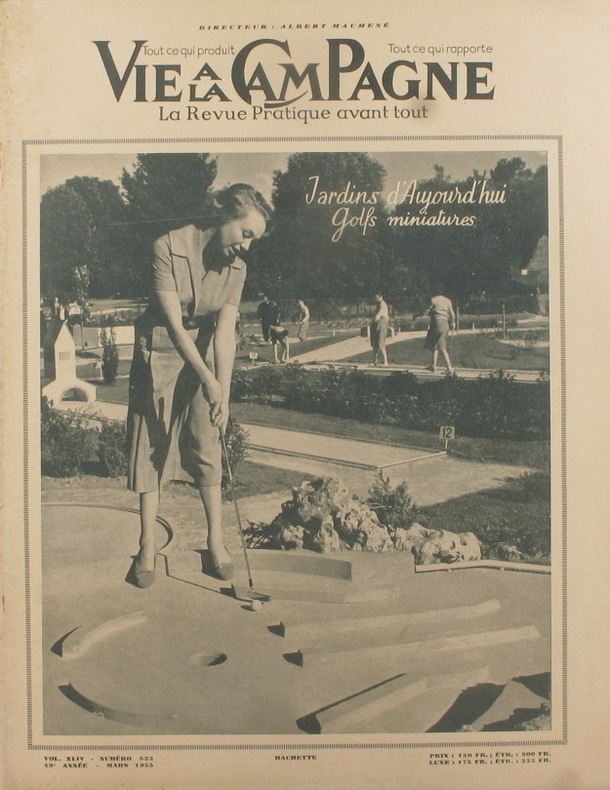
1955réf. 118668Couverture souple. Revue brochée.
8vo. (16), 216 pp. With a folding map in the lower cover. Original printed cloth. First edition of this study of the traditional historical region of Al-Hasa near Dammam in eastern Saudi Arabia, created a World Heritage site in 2018. The anthropologist and surveyor Federico S. Vidal, an Aramco employee, would develop his work into a 3-volume Harvard Ph.D. thesis in 1964. - Handwritten ownership of Hazel D. Blair to front free endpaper. An excellent copy of this scarce work.
17408vo. (16), 344 pp. Modern marbled calf with gilt title to spine. First German edition. "Il La Croze era bibliotecario del re di Prussia. Il primo libro di quest' istoria narra le origini e il progresso del monofisismo, il secondo contiene la relazione di Etiopia del patriarca Bermudez, il terzo racconta il progresso e la decadenza della influenza portoghese in Etiopia" (Fumagalli). - Some brownstaining throughout. Fromm 26499. Mulsow, Drei Ringe, p. 150. Cf. Cioranescu 35510. Fumagalli 2268. Gay 2691 (1739 first French ed.). Not in Kainbacher or Paulitschke.
Large 8vo. 228 pp. (misnumbered "328"). With lithogr. frontispiece and 15 lithogr. plates, all in beautiful contemporary colour, raised in gum Arabic, with tissue guards. Contemporary half calf with gilt spine. First edition; republished in Brussels in 1844. The artist Goupil-Fesquet (1817-78) accompanied Vernet to Egypt and Syria, where is is known to have taken the first dagerreotypes in the area - only two months after the discovery of photography was announced in 1839. This work is an account of that famous journey which became a landmark in the history of photography in the Near East. In addition to his description of the famous tour, Goupil discusses the oriental decorative arts. - Strong foxing throughout. Blackmer 718. Weber I, 309. Not in Ibrahim-Hilmy.
Matted, framed and glazed (frame dimensions 570 x 505 mm). Pretty lithograph by the famous horse painter Carle Vernet (1758-1836), showing an Arabian horse getting prepared for the ride. - In very good condition.
Aquatint print (image size: 485 x 390 mm, not including title and imprint; paper size: 55 x 45 cm), engraved by Jean Pierre Jazet after Vernet. Striking aquatint of a Mamluk leader by the acclaimed French artist Carle Vernet (1758-1836), best known for his depiction of horses and war scenes. The Mamluk leader is depicted in traditional garb with a scimitar dangling from a robe in his hand, on a horse, with a fighting scene in the background in front of a Middle Eastern town. The engraver, Jean Pierre Jazet (1788-1871), must have been a skilled artist himself. - A lithographed copy, retaining some of the original splendour, was published in Vienna by Joseph Trentsensky a few years later. - A fine copy in a crisp impression. Dayot, Carle Vernet (1925), no. 102. Nagler XXII, p. 440. Cf. Mennessier de la Lance II, p. 617.
With a lithographed portrait of the author, 5 lithographed facsimiles of the author's autograph manuscripts and 4 of the letterpress pages printed in gold. Extra-illustrated with 3 lithographed and 4 engraved Royal Folio illustration plates (including 2 portraits of the Ottoman Sultan Abdulmejid I). With: (2) Vernay, Charles. Poésies Turques et Persanes (cent quarante et une pièces) ... Paris, Albert Franck (below frame: lithographed by [Mathieu] Masson), "1858-1859" [= AH 1275]. With a letterpress wrapper-title in French, printed in gold, a lithographed Turkish and Persian wrapper-title (dated "1275" and "1858") and text in Turkish and Persian, lithographed from the autograph manuscript in Arabic script, all printed in gold, and a lithographed portrait of the author (the same as in ad 1). (3) Vernay, Charles. Nouvelles poésies Persanes et Turques ... Paris, Albert Frank, July 1860 (colophon: lithographed by [Mathieu] Masson, r. de Valois 48, Paris). A large 4to bifolium, with a lithographic facsimile of a 4-page autograph manuscript in Arabic script, printed on blue paper. (4-18) Vernay, Charles. [Miscellaneous publications in various formats, some letterpress, others lithographed facsimiles of the author's autograph manuscripts in French, Turkish and Persian, and including a 1-leaf autograph manuscript in Persian]. Paris, Firmin Didot frères and others, 1851-1858. 18 publications in 1 volume. Royal Folio (49.5 × 34.5 cm) with a few items in smaller formats. Contemporary diced, richly gold-tooled calf, each board with a double frame of rolls and stamps, a crescent moon and star inside each corner of the inner frame, blind-tooled turn-ins, green silk brocade endleaves. Unrecorded royal folio issues of two major editions of oriental poetry, bound together and with extensive supplementary material added, probably for presentation to the Ottoman Sultan Abdulmejid I: the first and only edition of the collected oriental poetry (195 pieces) of the French child prodigy orientalist, linguist and poet Charles Vernay; and the earlier lithographic edition of his 141 Turkish and Persian poems. In the former work, the Turkish and Persian poems are rendered both in the Arabic script and in French translation. It also includes a few poems in Italian and German. Even the 8vo issues of these two editions are very rare. The present Royal folio issues of the two main works were clearly never offered for sale. - Charles Vernay (1842-1866?) began publishing his writing at age nine and most of the present publications note the age at which he wrote them, ranging from 9 to 16. When Vernay was in Istanbul in 1861, he wrote a new dedication for the 1860 Poésies nationales et religieuses, addressed to the Ottoman Sultan Abdulmejid I, though Vernay had it printed in Paris. It explicitly notes that he is presenting a copy of "mon volume de Poésies Françaises, Italiennes, Turques et Persanes" to the Sultan. This suggests that the present copy of the two works together, with that dedication and many other additions, is the copy he planned to present. Since the dedication is dated 14 March 1861 and the supplementary Dixième chant mystique (also printed by Lainé and Havard) 20 April 1861 (only 2 months before Sultan's death), it is possible the Sultan died before Vernay had an opportunity to present the book to him. In addition to the extensive additional material inserted in the Poésies nationales et religieuses, and the supplement to the Poésies Turques et Persanes, the present copy has about 15 miscellaneous publications by Vernay bound between the two main works, some letterpress, some lithographic facsimiles of his autograph manuscripts in French, Turkish and Persian, and including a 1-page autograph manuscript in Persian. Some occasional foxing and an occasional marginal tear. The ink in the 5 lithographic facsimiles of very large Arabic script has eaten a few holes in the paper, and it and a few other lithographed leaves have offset onto the facing pages. But the book remains in good condition. The binding is worn at the hinges, shows some superficial damage on the front board near the fore-edge, and the first free endleaves at front and back have been creased and at the front its silk has been torn and repaired, but the binding also remains good and with the tooling clear. Ad 1: cf. Hage Chahine 4995 (8vo issue); WorldCat (7 copies of the 8vo issue); ad 2: cf. Browne, Hand-list ... Turkish (Gibb coll., Cambridge UL), (1906), 169; Hage Chahine 4994 (8vo issue); WorldCat (4 or 5 copies of the 8vo issue); ad 3: not found recorded; none of the 3 in Aboussouan coll.; Atabey; Blackmer; Diba, Persian bibliography; Lambrecht; Coll. Lazard; for Charles Vernay and his poetry, see also: Syed Tanvir Wasti, "On Charles Vernay and his 'Divan'", Middle Eastern studies LI (2015), pp. 789-803.