1 116 résultats
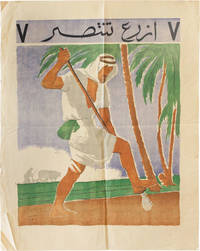
1943réf. 44248Baghdad: S.i. ca.1943-44. Original illustrated poster offset printed in five colors on beige stock measuring 56.75cm x 72.75cm 22.25" x 28.5". Signed "FAIK H" in plate at lower left corner. Two old folds smoothed out trivial wear to intersection of folds at center with a handful of short marginal tears and attendant creases; unbacked; Very Good. Superb example of this agricultural-themed wartime propaganda poster designed by Iraqi painter Faeq Hassan 1914-1992 widely heralded as "the father of Iraqi modern art." Born poor in Baghdad Hassan showed an early aptitude for art. When he was 12 he visited his uncle a gardener in the royal palace for King Faisal I; when the King saw his drawing of a horse drinking from a river he recognized his talent instantly and offered him a scholarship. Faisal died in 1933 while Hassan was still in high school though his successor King Ghazi carried out his father's will and send him to the École des Beaux-Arts Paris in 1935. After returning from Paris Hassan founded Al-Ruwad The Pioneers Group a group of Iraqi artists who eschewed the traditional studio atmosphere; while engaging with nature and choosing the chronicle the daily realities of Iraqi life through their art the group played a critical role in bridging the gap between heritage and modernity. Little scholarship exists regarding Hassan's activities or artistic output during World War II though the present example suggests he put his talents to some use creating home front propaganda after the Anglo-Iraqi War. The poster depicts a male laborer in traditional garb digging in a field with a bag of seeds tied at his waist beneath the slogan "If You Plant You Will Win" flanked by twin V's. Despite the traditional Iraqi setting the message is similar in tone to the American propaganda campaign encouraging the populace to plant victory gardens to help the war effort. A notably early work by Hassan and a rare survival with no examples found in the auction record and none found in the holdings of any OCLC member institution. cf."Profile: Faik Hassan." Al Jazeera 30 October 2005. S.i. unknown books
réf. 14478BERREBY J.J. Le golfe persique. Mer de légende - Réservoir de Pétrole: Iran Irak Arabie Saoudite Koweit Bahrein Qatar Côte des Pirates Mascate et Oman. Paris Payot 1959; First Edition. Bibliotheque Historique. 8 vo. 8 vo 228 pp; French text; Illustrated cover with paperback binding including 4 maps 11 b/w photographs Preface de Jacques Vernant. Some yellowing to the spine and covers with remnants of a price sticker on back cover. In good condition. unknown books
1943réf. 84106Baghdad: Printed at the Government Press 1943. Paperback. Very Good. photo and 3 plans all grainy 9p. Original stapled wrapper. 17cm. Cover fading around edges. Printed at the Government Press paperback books
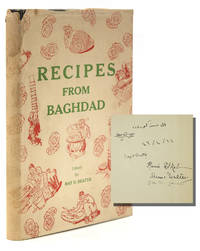
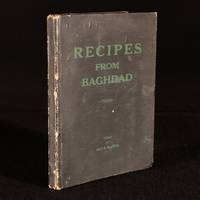
1946réf. 313857Baghdad 1946. Six pages in ink on three leaves. 1 vols. 8vo. Letter: small loss from old staple at top of first leaf affecting two letters. Near fine. Book: Black cloth title in green illustration of measuring utensils on pastedowns. Pictorial dust jacket. Binding a bit rubbed spine faded with small loss at head Very good minus. Six pages in ink on three leaves. 1 vols. 8vo. Letter from Baghdad 1946. Fascinating letter from editor May H. Beattie 1908-1997 editor of Recipes from Baghad published for the benefit of the Red Cross and later a widely published author on Persian and oriental carpets. Beattie describes its contemporary reception in cosmopolitan Baghdadi circles noting specific criticisms of contents and illustrations how the barbs affected some of the editors with report of discussions with an editor in the U.K and mention of a possible Arabic edition for local "middle class people". Beattie writes "At the moment rather between ourselves I have a most consuming passion to make a record of Baghdad women - I am finding out all sorts of things about their cosmetics tatooing hair dying & customs in general. I should think it will be almost impossible to extract any information from Baghdad "Society" but I am finding other sources in plenty and a card index is filling rapidly." Beattie who trained as a microbiologist had come to Baghdad with her husband in 1937; in 1946 they returned to England and so the book on Baghdad women was never completed. Beattie's career as a scholar of carpets began in the 1950s when she saw the shortcomings of earlier research. "Dr. Beattie transferred her scholarly training in one discipline to another" Mackie and assembled facts and "recorded manufacturing methods equipment patterns and functions of carpets." With: Recipes from Baghdad with an Introduction by Her Majesty the Queen Mother of Iraq. Edited by May H. Beattie B.A. Ph.D. with the assistance of Bedia Afnan Renée Elkab Helen Gaudin and Ann Walter. Caricatures by Suad Salim. Folding table; illustrations in text. 163 2 blank xi pp. 8vo Baghdad: Published by the Indian Red Cross Printed at the Government Press 1946. OCLC: 29816802 7 copies. Inscribed by the Queen Mother of Iraq on flyleaf in Arabic: ila Miz Gaudin 'Aliya 16/4/46; and signed below by May H. Beattie Renée Elkab Ann Walter and Helen Gaudin. 'Aliya bint 'Ali 1911-1950 Queen Mother of Iraq was granddaughter of King Faisal of the Hejaz and widow of King Ghazi. Her son Faisal II was the last king of Iraq and was killed in the 1958 revolution. For May Beattie see biographical notice by Louise W. Mackie in Oriental Carpet and Textile Studies 3:1 1987 pp. 6-10 unknown books
1943réf. 84105Baghdad: Printed at the Government Press 1943. Paperback. Very Good. 4 grainy photos amd plans 11p. Original stapled wrapper. 17cm. Printed at the Government Press paperback books
1967réf. 90149Baghdad: Dar Al-Jumhuriya Press 1967. Paperback. Good. photos 16p. Softcover in original wrapper. 22cm. Heavy horizontal crease. Minor cover soil. Photos and claims concerning the use of Napalm Bombs by Israel during The Six-Day War. Dar Al-Jumhuriya Press paperback books
1975réf. 142826Madrid: Ministerio de Información Republica del Irak 1975. 47p. wraps. OCLC lists only one holding in Spain. Official Iraqi condemnation of Israeli human rights record. Entirely in Spanish. Ministerio de Información, Republica del Irak unknown books
1929réf. 867091929. Goverment of Iraq. MAPS OF IRAQ WITH NOTES FOR VISITORS. Baghdad London: Goverment of Iraq 1929. REvised and Enlarded Edition 1929. Folio. 34pp. Bound in original maroon cloth with gilt lettering to front cover. 8 large folding maps all required. All printed in 3 colors and produced by the Public Words Department of Iraq. 6th map has one fold with small tears and creases at edges. Head and tail are slightly worn. Includes photo-illustrated frontispiece. unknown books
1934réf. 194745London: Iraq Petroleum Company Limited 1934. Supplying Europe with Middle East oil First edition celebrating the construction of this critical oil artery. It discusses the history of the project its engineering and logistics challenges and the local diplomacy required to receive the necessary permissions. The many photographic illustrations show the pipeline at various stages of completion and profile the company employees that planned and organised this feat. In 1927 the Iraq Petroleum Company discovered a rich oilfield at Kirkuk and began to extract and transport crude at a never-before-seen scale. First the British proposed to connect Kirkuk with Haifa in Mandatory Palestine. However the French government demanded that the oil instead be sent to Tripoli so a twin pipeline was conceived that could service both ports. The pipes were 30.5 centimetres in diameter could carry a million tons of oil a year each and were supported periodically by 12 pumping stations. The two lines were constructed in parallel from Kirkuk to the city of Haditha the location of Pumping Station K-3 where they split into the northern "T Line" and the southern "H Line". Construction began in 1932 and was completed by 1934 on a budget of approximately £10000000. "Materials from overseas exceeded 200000 tons and building materials obtained locally at least equalled that" p. 2 The oil flowed until 1948 when the formation of the state of Israel led the Iraqi government to cut off the Haifa branch. This work details not just the construction of the pipeline but the communications infrastructure water supply transport routes and medical services that supported the workers. Chapter 13 discusses the company's land purchases employment of local labourers and artisans coverage in the press and work in the desert where they both employed and often had to guard against members of local tribes. Quarto. Folding map folding plan half-tone photographic illustrations maps and tables in text. With publisher's compliments card loosely inserted. Original blue half leatherette spine gilt-lettered direct blue paper boards front board gilt-stamped with title and company logo blue endpapers. Spine sunned and a little soiled boards rubbed especially at extremities of front board small chip on front board top edge contents bright: a very good copy. hardcover
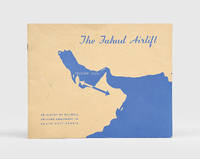
1955réf. 195609Hull: Newcom Press for Blackburn and General Aircraft Ltd after 1955. First edition recording the transport of over 129 tons of equipment from Umm Said in Qatar to Fahud in Oman the operational centre of Petroleum Development Oman. We have traced only two other copies: one at the Solway Aviation Museum and another we sold last year. The 365-mile journey "unique in the history of aviation" p. 3 was undertaken by a Blackburn "Universal" XB260 freighter the civilian equivalent of the RAF's "Beverley" model and was a collaboration between Blackburn and General Aircraft and Hunting-Clan Air Transport. The photographs illustrate the various phases of the operation as well as the drilling machinery and aircraft. Oblong octavo pp. 20. Illustrations throughout. Original pictorial wrappers wire-stitched as issued wrappers lettered in blue. Light creasing and marking: very good. unknown
1961réf. 192662Baghdad: Ministry of Foreign Affairs 1961. The consequences of Kuwait's independence First and only editions of these pamphlets on Iraq-Kuwait foreign relations produced in the wake of Kuwait's independence of 1961 and foreshadowing the 1990-91 Gulf War events. On 19 June two memoranda were exchanged between Sheikh Abdullah Al Salem Al Sabah and William Luce British Political Resident in the Gulf which included the cancellation of the Anglo-Kuwaiti Agreement of 1899 and of Britain's direct management of Kuwait's policies. The first pamphlet suggests that Kuwait's independence infringed Iraq's historic control and influence over Kuwait as Kuwait had been part of the Basrah district since the eighth century. It also discusses Al Sheikh Sabah's right of self-governance in relation to the 1899 agreement and the Anglo-Ottoman agreement 1913 as well as the dangers of Kuwait's new status for Iraq. The second comprises the minutes of a meeting of the Arab League in Cairo 1960 concerning Kuwait's request to join as an independent state. The main speakers were representatives of the Republic of Iraq the United Arab Republic and Saudi Arabia with Iraq questioning the plan of stationing Arab troops in Kuwait for defence purposes fearing they might threaten the Iraqi army. The appendix reproduces the text of the League's final decision. The third opens with a section on the attempts of colonial powers to bring Kuwait into the United Nations referring to a UN assembly where this issue was discussed in 1961. The pamphlet reports speeches by numerous UN representatives of world countries including China and the US giving their own opinion on the appropriateness of Kuwait's membership. Three works bound in one octavo 220 x 160 mm. With 1 colour map of the Arabian Peninsula. Contemporary red cloth title in white ink along spine original wrappers bound in. Original wrappers a little soiled on margins small light stain along fore-edge of initial leaves of first work contents toned: very good copies. hardcover
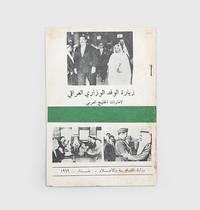
1969réf. 191001Baghdad: Wiz rat al-thaq fah wa-l-'eal m 1969. Ba'athism and Gulf politics First edition of this extensively illustrated pamphlet on the Iraqi ministerial delegation's tour of Qatar Bahrain Kuwait Abu Dhabi and Ajman. This diplomatic mission took place in the aftermath of the Six-Day War with Israel a year after Ahmad Hassan al-Bakr and the Ba'ath Party had taken control in Iraq and only a couple of months after the notorious "Baghdad hangings". We have traced no other copies. It details the delegation's itinerary and the politicians present at each event including the sheikhs Issa bin Salman Al Khalifa Ahmad bin Ali Al Thani Khalifa bin Hamad Al Thani Zayed bin Sultan Al Nahyan and Rashid bin Humaid Al Nuaimi III. It also quotes from newspaper reports on these events. The principal concern was the forthcoming withdrawal of Britain from the Gulf by 1971 and plans for renewed cooperation among the Arab states of the region building a unified economic and defence front. Octavo. Half-tone photographic illustrations. Original pictorial wrappers wire-stitched as issued. Ink stamp "Salama Establishment" on title page. Wrappers a bit soiled clean tear on upper margin of second leaf contents toned: a very good copy. unknown
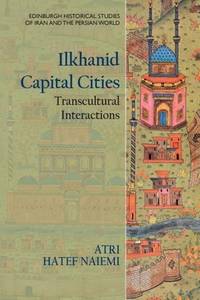
2026réf. x-1399510398Edinburgh University Press 2026. Paperback. New. 312 pages. 6.14x2.00x9.21 inches. Edinburgh University Press paperback
2026réf. x-1350567086Bloomsbury Publishing Plc 2026. Hardcover. New. 396 pages. 6.38x1.09x9.45 inches. Bloomsbury Publishing Plc hardcover
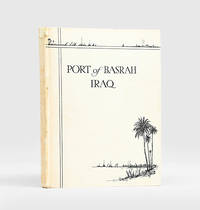
1935réf. 190813London: Printed by Waterlow & Sons Limited c. 1935. First edition of this history and description of the port's operations with two maps showing the main wharves and estates as well as the proposed site for a new dock. Quarto. With 2 colour folding maps illustrations in text. Original boards front cover lettered and illustrated in black printer's label on front pastedown. Christmas 1947 gift inscription on first blank. Very good indeed. hardcover
réf. DADAX0367249715Routledge 2019-05-02. 1. hardcover. New. 6.25x0.75x9.25. Buy with confidence. Excellent Customer Service & Return policy. Routledge hardcover
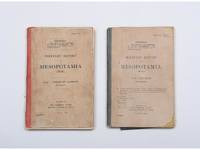
1922réf. 173026London: HMSO Press Harrow & Harrison & Sons Ltd 1922 1923 & 1923 1924. Background intelligence on Faisal's Iraq First editions of two regional sitreps issued after the 1920 Iraqi Revolt and Faisal's installation in 1921 prepared for British officials administering the new monarchy. Both are rare - print runs of 1375 likely with fewer distributed - with only five and four institutional copies traced. Each is marked Provisional and Confidential; Area 1 is additionally stamped "secret" in a contemporary hand. The projected 10-volume series was never completed and surviving instalments sometimes titled Military Report on Iraq are scarce. Compiled at short notice on the model of Naval Intelligence Division geographical handbooks the reports provide concise local intelligence: historical and geographical survey then climate resources ethnography tribal structure leading figures communications transport and routes with technical appendices. Area 1 Northern Jazirah covers northern Iraq and adjacent Turkey and Syria stressing weak British influence and the prestige lost through unchecked tribal raiding after 1919. Its core is a detailed tribal analysis supplemented by contemporary intelligence annotations on succession disputes and political loyalties. Area 7 Tigris surveys the settled agricultural belt from Kut to Qurnah and the Shatt al-Arab reflecting greater stability and asserting that firm but protective rule could secure order. Detailed appendices describe estates shaikhs armed retainers and agricultural practice. Together the volumes offer granular evidence of British intelligence gathering during the improvised creation of the Iraqi state in the early 1920s. 2 vols octavo. Area 1 pp. viii 240 with a folding table and numerous tables to the text; Area 7 pp. ii 184 3 folding many to the text. Both in original greyish yellow printed boards cloth backstrips first with reddish orange spine the second greyish green. Both volumes in field service condition and lacking the maps called for spines sunned and chipped some repairs "Mespots" added in white ink boards rubbed and lightly stained hinges occasionally cracked with some repairs and a little play but the internal binding sound; contents toned but generally clean; for such fragile productions both remain surprisingly well preserved very good. hardcover
2025réf. x-103252538XTaylor & Francis Ltd 2025. Paperback. New. 238 pages. 9.18x6.12x9.21 inches. Taylor & Francis Ltd paperback
1946réf. 966F11Baghdad: The Indian Red Cross 1946 . First edition. Cloth. Good. 9" by 7". Suad Salim. The first edition of this very scarce mid 20th century cookery work presenting recipes hailing from Baghdad and Iraq. A vanishingly scarce first edition.With a folding table of weights and measures and a small number of vignette illustrations by Suad Salim.A very scarce cookery work presenting recipes popular in Iraq in the 1940s adapted for English tastes. With instructions for making various liqueurs Kubba Lebania Yuen Tsi Khankar Bakmadi and various other dishes.With an introduction from Her Majesty the Queen Mother of Iraq this work is edited by May H. Beattie with the assistance of Bedia Afnan Renée Al Kabir Helen Gaudin and Ann Walter.With bookplate of Martin and Pamela Finch to front free endpaper. They were antiquarian booksellers with an interest in antiquarian gastronomy.With a former owner's inscription to front free endpaper. In the publisher's original paper covered boards. Handling marks to boards. Rubbing to back strip head and tail and joints. Tail of front joint starting with board firmly held. Inscription and bookplate to front pastedown. Internally firmly bound. Pages lightly age toned due to paper type but generally clean with only the odd spot. Good The Indian Red Cross hardcover
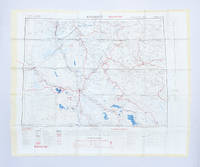
1951réf. 182329London: Ordnance Survey 1951. Later editions marked "restricted" revised from those produced by the War Office in 1941-42 and with isogonals correct to 1953. They show the international borders between Iran and Iraq but warn that they are still under negotiation. These maps are in a variety of later editions all printed in 1951 Baghdad fifth; Basra eighth; Tehran third; Bushehr fourth. This was a critical year in Iranian politics as the country underwent the Abadan Crisis saw the assassination of Razmara and the election of Mosaddeq. In the same period Iraq saw a number of anti-government protests including the 1952 Iraqi Intifada against the Anglo-Iraqi Treaty. Over these years British and American forces kept close watch on the region's development and likely printed these maps printed on rayon as escape items to issue to forces in case fighting broke out. Escape maps were first introduced by MI9 during the Second World War designed to be easily smuggled into POW camps. They were printed on silk and for "good reasons: silk is flexible and durable in a way that paper is not and it is noiseless when hidden about one's person" Bond. They continued to be issued throughout the 20th century and into the modern day especially during the 1960s and the Vietnam War. 2 sheets of rayon 596 x 715 mm; 610 x 676 mm colour map on each side key on map of Tehran; text in English and French. Sometime folded edges fraying more so to sheet of Baghdad and Basra: a very good copy. Barbara A. Bond "Escape and evasion maps of World War II" The British Library 2016. unknown
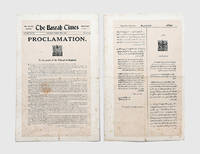
1917réf. 178262Basrah: The Basrah Times 1917. Empire and Pan-Arabism Two leaves from the first and only issue of the Basrah Times 20 March 1917 printing Sir Frederick Stanley Maude's appeal to the people of Baghdad province issued nine days after the British capture of the city. The proclamation marks a turning point in the First World War exemplifies imperial rhetoric and foreshadows the tensions between colonial authority and national aspiration that shaped the following decade in Iraq. Although Basrah fell in November 1914 Baghdad was secured only after a further two and a half years of campaigning. Maude drove the advance restoring supply lines and winning successive engagements at Hayy Dahra and Kut before the final assault. The proclamation presents the British not as conquerors but as liberators promising renewal after centuries of foreign rule and invoking the recent success of the Arab Revolt under Sharif Hussein as a model of independence and unity. Yet this balance between nationalist promise and imperial control proved unstable: the post-war Mandate endured only until the revolt of 1920 forced political transition culminating in Faisal's election as king in 1921. Two sheets each approximately 440 x 285 mm laid down on thick card framed and glazed. Text in English and Arabic. Sheets toned and with creases from old folds minor foxing a few short tears one small hole to centre of one sheet affecting one letter: a very good set. unknown
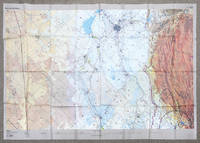
2002réf. 162482London: DGIA Ministry of Defence 2002. First edition stretching from Baghdad to Basrah and showing all of Kuwait. The sheet was likely issued to RAF pilots in the run up to the Iraq War and is printed on rayon for ease of use and durability. These charts produced by the Defence Geographic and Imagery Intelligence Agency feature many warnings about flying within controlled airspace in Iraq and Saudi Arabia. The RAF flew many missions over this region in the lead-up to the Second Gulf War and in Operation Telic. "The first documented intimations of UK involvement in the operation that became Telic can be traced to March 2002. In May the Chief of the Defence Staff CDS was advised of a potential RAF contribution to a future operation in Iraq comprising 88 fast jets and 38 support platforms - more aircraft than the RAF had deployed on a single operation since the First Gulf War and more in all probability than it will ever deploy again" Ritchie p. 5. A formal plan was drafted in August to overwhelm Hussein's government through multiple co-ordinated fronts of which the RAF's role was to eradicate the enemy air force destroy equipment support ground forces and strike important targets to shock the Iraqi people. According to the key there was another sheet issued charting northern Iraq. Single sheet of rayon 912 x 1300 mm colour map with key on recto and verso. Sometime folded and thinning along lines: a near-fine copy. Sebastian Ritchie "The Royal Air Force in Operation Telic: Offensive Air Power March-April 2003" 2021. unknown
réf. 2h8810Railway Press Baghdad 1930. 317 pages with some glued corrections from the 30s and 40s hardcover spotted/some pencil markings. hardcover
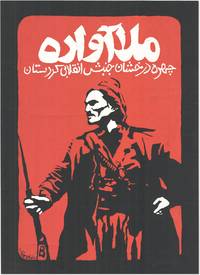
1990réf. 83129Kurdistan: New Organization 1990's. Original silkscreened poster 63.5cm x 46cm printed in red and white on heavy black paper. Slight wear to edges almost neglible and some minor surface cracking to the very heavily applied paint are the only things that could be considered defects. A very good example. An exceptionally striking image printed in dramatic red and white onto black card depicting a heavily armed figure in traditional Kurdish dress beneath the legend in Kurdish: "The Displaced Mullah; The Shining Face of Revolutionary Kurdistan" The figure depicted is in all likelihood a stylized portrait of Mahmoud Barzanji a national Kurdish hero from the unrest of the early 20th century who became the first King of Kurdistan and was appointed Governor of the region by the British after the formation of the Kurdistan Protectorate after WW1. Barzanji not universally popular in Southern Kurdistan was a leader of considerable energy and ambition which far outstripped British plans for his 'control' of the region. The British and Barzanji came into direct conflict when he began arresting and imprisoning British officials who put up any opposition to his plans and embarking upon a localised uprising. The British predictably enough put a stop to his ambitions by ambushing him on the Sulamaniah road wounding him and then graciously commuting his death sentence to one of imprisonment in the British stronghold of Lahore in India where Barzanji was kept prisoner until 1922. The other possibility and with a stronger resemblance is that the poster depicts Simko Shakik early 20th century warlord and revolutionary who aside from massacring Armenians and Assyrians for the greater good of Kurdistan also led a rebellion against Iran. Although not conspicuously working from a Kurdish nationalist perspective modern critical thought suggests that Shikak should be placed "within the confines of Kurdish ethno-nationalism" Kamal Soleimani; "The Kurdish image in statist historiography: the case of Simko" 2017. Shikak himself was mainly interested in plunder and what he no doubt considered 'punitive justice against' basically anyone who sought to extert power over him or as a secondary consideration other Kurds; the results of his aggressive energy and willingness to fight anybody however are historically considered evidence of his benefit to Kurdish freedoms. No other examples of this poster can currently be traced in trade or institutional database. New Organization unknown
2007réf. DADAX0739119648Lexington Books 2007-11-13. paperback. New. 6.03x0.67x9.15. Buy with confidence. Excellent Customer Service & Return policy. Lexington Books paperback