4 361 résultats
Oblong 4to. 48, 32, (2) pp. Original printed wrappers. A wide-ranging and painstakingly reproduced ensemble of Arabic handwriting specimens, lithographed throughout and entirely in Arabic save for the title and preface, which are in French. Comprises letters (part 1) as well as legal documents (part 2). Published as a manual and workbook for self-instruction in reading Arabic, this includes a section with the author's transcriptions in normalised Arabic script, headed by brief captions and synopses in French. Daniel Roux was "directeur de l'école arabe-française de la rue des Pyramides". - Preserved in the original printed wrappers. Very scarce. OCLC 458780296.
190 x 260 mm. Ruscelli's modern map of Arabia from his 'La Geographi di Claudio Tolomeo'. A feature of this first state is that no map has a platemark at top: two maps were engraved on the same plate and the resulting sheet halved. Tibbetts 27.
12mo. (22), 372 pp. With engr. t.p. and 12 engr. plates. Contemp. calf with giltstamped red spine label. Third and final impression of this edition, comprising the Latin part of the first complete translation of Saadi's "Rose Garden" into any western language. Text taken from the Persian-Latin edition of 1651; the annotations are in Latin translation only. The engraved title page still bears the first impression's 1680 date, the charming illustrations were first issued in 1655. - Some browning, otherwise a very good copy. Cf. Brunet V, 24. Schwab 1010.
Folio (270 x 360 mm). 167 pp., final blank page. With 4 illustrations in the text, and 36 numbered plates with mounted full-color reproductions of Islamic book bindings, included in pagination. Text and plates with gilt borders. Contemporary cardboard with 6 gilt ornaments, 3 each to upper and lower cover. Edition "B" of this sumptuous work on Islamic bookbinding. Exhibits some of the finest and most valuable tomes from Berlin's Bode Museum as well as examples from a private collection. Bound in the original adorned binding, the giltstamped ornaments featuring floral motifs as well as a hunting scene of a lion attacking a bull. - A total of 36 bindings are here reproduced in excellent colour facsimiles, impressively demonstrating the high quality of Egyptian, Persian, and Turkish book production from the 14th to 19th centuries. Each specimen is accompanied by a page of descriptive text. - Edited by the German orientalist and art historian Sarre (1865-1945), who amassed a great collection of Islamic art during his lifetime. - Extremities somewhat rubbed. Interior in excellent condition. Mejer 554. OCLC 905430423.
8vo. 52, (4) pp. Contemporary red bronze-varnish wrappers. Rare work report issued by the "Institutum Judaicum et Muhammedicum" in Halle (Saale), a Pietist institution founded in 1727 by the orientalist Johann Heinrich Callenberg for the mission of the Jewish population of Europe and the Orient. Stephan Schultz (1714-76) was Callenberg's successor as director. His pamphlet gives an account of the institution's history and achievements as well as methods, also recounting his extensive mission journey to Turkey, Palestine, Syria, and Mesopotamia undertaken between 1752 and 1756 with the young Prussian theologian August Friedrich Woltersdorf, who perished in Ptolemais in 1755: "Here I had much opportunity to do good among the various peoples, especially the Arabs, whose Sheikhs, or noblemen, entertained me warmly in their houses and listened to me intently when I read to them something from the Holy Scripture in Arabic, and provided comments for their edification" (transl., p. 34). - Slightly browned but well preserved in the pretty contemporary wrappers. VD 18, 11240911. Cf. Kayser IV, 195.
8vo. 99, (1) pp. Red half morocco with blindstamped cloth boards and giltstamped spine title in Ottoman Turkish. First and only edition in the Ottoman world. Sidi Ali Reis was an Ottoman admiral sent by Suleiman the Magnificent to counter Portuguese piracy and attacks on Muslim pilgrim ships in the Indian Ocean, Arabian Sea, Red Sea and Arabian Gulf. He was shipwrecked in India and travelled to the Muslim states of South Asia, Afghanistan, central Asia, Iran, and the Middle East before returning to the Ottoman Empire. His travels are recounted in his present "Mirat ül-Memalik" ("The Mirror of Countries"), first published in 1557, one of the earliest travel books of Turkish literature and written in the now extinct Chagatai language. Rare: OCLC lists 3 copies only internationally (Leiden, Bamberg, Munich). OCLC 632504491, 65818716.
Large 8vo. XXVIII, 436, CXXVIII pp. With lithogr. frontispiece and 18 lithogr. plates. Half calf with red morocco label to spine. Marbled endpapers. First edition of this very rare study of Indian Muslim customs, manners, social habits and religious rites. At the request of the British-Indian surgeon Gerhard Andreas Herklots (1790-1834), the work was composed in his native Dakhini by the "liberal-minded" Ja'far Sharif and then translated by the editor. Subsequently published under title "Islam in India, or, The Qanun-i-Islam; the customs of the Musalmans of India". - Extremities very slightly rubbed and bumped. Occasional brownstaining, otherwise in good condition. Provenance: engr. bookplate of George R. Elliot on front pastedown; later in the library of the Indian-born surgeon Charles Marsh Beadnell (1872-1947; his ownership on flyleaf). OCLC 5152176.
Folio. 1 page. On uncut wove paper, bearing the Schoellers-Parole blind embossed seal, margins uncut. The original autograph contribution of Sidi Ahmed Pasha to the Committee of the World League for Peace (Ligue Mondiale pour la Paix), a remarkable organization formed in 1925 with close ties to the League of Nations. The Committee itself was composed of such notaries as Queen Elizabeth of Belgium, King Carol II of Romania, John D Rockefeller, Marie Curie, and Albert Einstein, who personally gathered the present manuscripts over the course of seven years (1925-32). Among the public figures who contributed to the project were dignitaries from the newly-created League of Nations' member states. "Praise be to God! Be friends and love one another, for you are all brothers who worship God. Peace is the best policy and God leads the righteous to that which is in the best interest of nations and peoples [Signed] Sidi Ahmed Pasha". Sidi Ahmed Pasha, better know as Ahmed II Bey, ruled Tunisia from 1929 until his death in 1942 as a member of the Husseinite dynasty. Pax Mundi. Livre d'or de la paix. Enquete universelle de la Ligue mondiale pour la paix sous le haut patronage de son comite d'honneur avec l'approbation de la Societe des nations, du Bureau international du travail et de la Cour permanente de justice internationale. Geneve, Societe paxunis, 1932.
8vo. 2 vols. XI, (1), 324 pp. XI, (1), 291, (1) pp. With 2 engr. frontispieces (portrait and view of the Lake of Tiberias). Contemporary calf with triple giltstamped cover fillets and blindstamped ornamental borders, leading edges gilt, inner dentelle gilt, spines rebacked to style with giltstamped label. Marbled endpapers; all edges marbled. First edition. - An account of a journey made in 1833 through Egypt, the Holy Land, Syria, Mesopotamia (Baghdad, Babylon and Basrah), Persia, down the Arabian Gulf (stopping at Muscat, "the hottest place on earth") and thence to India. - Corners bumped; frontispieces foxed. Attractively bound copy; armorial bookplates ("Gadsden", motto "decrevi") to pastedowns; contemporary ownership "C. J. Wilton" to flyleaf. Blackmer 1547. Ibrahim-Hilmy II, 237. Röhricht 1808. OCLC 4255403. Cf. Atabey 1142 (1837 second ed.).
8vo. 2 vols. XXIV, 453, (3) pp. XXXVIII, 534, (2) pp. With 13 folding engr. plates and 2 folding tables. Contemp. marbled boards with giltstamped spine labels. First German edition of this account of travels in Upper and Lower Egypt, translated from the French original of the naturalist Charles Sonnini de Manoncourt (1751-1812), who had visited Egypt, Turkey, and Greece in 1777-78. The plates show landscapes, plants, fish, and antiquities. - Binding slightly bumped at extremeties; slight browning throughout. Titles stamped ("Institut für Grenz- und Auslandstudien"). Fromm 24495. Ibrahim-Hilmy II, 245. Kainbacher 398. Cox I, 395. Graesse VI/1, 439. Cf. Gay 2250 (1799 French ed.).
4to. (6), 74 pp. With woodcut title vignette. modern boards. Extensively annotated catalogue of 115 Arabic, Persian and Turkish works, mostly manuscripts which Sparvenveldt had acquired in Egypt, Syria, and Tunisia in 1691. Edited with the help of Erik Benzelius and Olof Celsius. The titles are rendered in the original languages in Kirsten's fine Arabic types, brought with him to Sweden from Breslau in 1636. - Insignificant edge staining to title page; reverse shows old library stamp of Upsala College, East Orange, NJ, dissolved in 1995. Untrimmed copy. Smitskamp, PO 113d. Schnurrer 17 & 25. Besterman 152. Warmholtz 9270.
8vo. 40 pp. Modern marbled wrappers. Third edition, following two editions published in Edinburgh in 1781 and 1782. The pamphlet purports to give "a minute account of his parentage, rise and progress, his miraculous journey to Jerusalem, and from thence, through the seven Heavens. Their distance one from another. His access to the Divine Presence; and what marvellous things he saw and heard. His robberies and wars. His wives and concubines; with a particular account of his death and burial. Also, an account of the principal tenets of religions taught by that impostor and his followers, etc." - Browned throughout; final leaf remargined. Rare in all editions. OCLC 316386491. ESTC T167642. Not in Chauvin or Gay.
8vo. VIII, 263, (1), 40 pp. Contemporary marbled boards with giltstamped red spine label. All edges red. Only edition. - The principal work of the Göttingen oriental scholar T. C. Tychsen (1758-1834), a grammar of Arabic that replaced that of Michaelis, including a 40-page "Anthologia Coranica" in Arabic which contains suras 1, 68, 91-96 and long excerpts from suras 2, 23, 47, and 5. The instructional text (though not the Qur'anic appendix) of the present copy has been closely studied, corrected and extensively annotated in German, Arabic, and Latin on more than 70 pages by an unidentified contemporary scholar or student of oriental languages, in a manner often consistent with preparatory notes for a revised edition. Sources cited include Scheidius, Reiske's Abulfeda, De Sacy, Rosenmüller, and Gesenius; the latest is the third volume of Freytag's Lexicon Arabico-Latinum, published in 1835. - Binding rubbed, extremeties bumped. Evenly browned throughout due to paper. Formerly in the library of the Gießen-based Arabist Wilfried B. C. Schaum (b. 1943) with his 1970s stamp to the title-page. Kayser V, 484. OCLC 614537916.
1987Ballpoint, heightened with white. 378 x 278 mm. A sheet of annotated preliminary sketches for Upton's watercolour portrait of the three Arab mares Gold Roseifa, Russallka, and Roxiralot. - Matted.
1562230:325 mm. Engraved map. An early Ptolemaic map, showing "the mountains as lightly shaded slopes. The map includes details on towns and watercourses. The Arabian Gulf is distorted and the size of the watercourses is exaggerated" (Al Ankary). Al Ankary 147.Tibbetts 30. Not in the Al-Quasimi collection.
17408vo. (16), 344 pp. Modern marbled calf with gilt title to spine. First German edition. "Il La Croze era bibliotecario del re di Prussia. Il primo libro di quest' istoria narra le origini e il progresso del monofisismo, il secondo contiene la relazione di Etiopia del patriarca Bermudez, il terzo racconta il progresso e la decadenza della influenza portoghese in Etiopia" (Fumagalli). - Some brownstaining throughout. Fromm 26499. Mulsow, Drei Ringe, p. 150. Cf. Cioranescu 35510. Fumagalli 2268. Gay 2691 (1739 first French ed.). Not in Kainbacher or Paulitschke.
8vo. 64 pp. Original printed wrappers. Caesar Vimercati describes his experiences on board of "La Guerriera" during the year 1840 and provides descriptions of Constantinople, Alexandria, Beirut, Saida, Acre, etc. Austrian warships had their first military encounters during the Oriental Crisis of 1840 as a part of a British-led fleet which ousted the Viceroy of Egypt, Muhammad Ali, from Ottoman Syria. Archduke Friedrich took part in the campaign personally and was awarded the Military Order of Maria Theresa for his exceptional leadership: "Es ist allgemein bekannt, daß um diese Zeit, und zwar genau am 15. Juli zu London eine Uebereinkunft zwischen den Repräsentanten der vier Großmächte England, Rußland, Preußen und Oesterreich geschlossen worden war, welche die Bezwingung der maßlosen Eroberungssucht Mehemed Ali's zum Zwecke hatte […] ". - Wrappers slightly dust-soiled, brownstaining to paper throughout, otherwise a good copy. OCLC 797734900. Not in Kalemkiar or in Kat. der k. k. Kriegsbibliothek.
8vo. 264 pp. With 3 folding engr. plates. Contemp. calf with giltstamped red label to gilt spine. Marbled endpapers. All edges red. Second, enlarged edition, published a year after the first and now including "diverses observations sur les grandes actions qui se sont passées dans la dernière guerre d’Hongrie, et dans la présente en Moldavie". This is the first work of the Swiss-born De Warnery (1720-86), published in a German translation as early as 1766 (purportedly against his own wishes): according to the author, never one to eschew self-aggrandizement, he was the first to "unmask the Turks" and show that they did not warrant the fear with which they were usually viewed (cf. ADB XLI, 176). The plates show suggestions for battle arrays. - Unobtrusive repairs to lower cover of the appealing binding. Variously browned and brownstained due to paper. Rare. Formerly in the Ottoman collection of the Swiss industrialist Herry W. Schaefer. Barbier IV, 257. Cf. Atabey 1321 (first ed. 1770). Not in Blackmer.
Six engraved maps, all in four segments on orange cloth with title labels. All ca. 68 x 54 cm. Stored in a contemporary marbled slipcase. A fine set of six maps, comprising all the Near East and Middle East maps from Weiland's great "Allgemeiner Hand-Atlas" (general hand atlas) published by the Geographical Institute in Weimar. - Includes: Turkey and Levant ("Das osmanische Asien", 1829); the Arabian Peninsula ("Arabien", 1834); Persia ("Iran, Afghanistan und Beludschistan", 1828); Africa (1831); Northern Africa ("Das nordwestliche Africa oder die Staaten Fez und Marokko, Algier, Tunis und Tripoli, nebst der Wüste Sahara", 1827); and the Nile Valley with the south-western coast of Arabia ("Das nordöstliche Africa oder Aegypten, Nubien, Habesch, Kordofan und Darfur", 1829). - All with engraved labels of the Paris map dealer and publisher Charles Simonneau with titles inscribed in French. Some mild foxing throughout, but altogether fine. Slipcase worn but professionally repaired. Cf. Espenhorst p. 24; Le Gear 6107 (1848 ed.); Al-Qasimi (2nd ed.), p. 281 (Weiland's map of Arabia, 1839 edition).
8vo. 27, (1) pp. Contemporary blue printed wrappers. A speech by Weizmann, director of the British ammunition laboratory until 1919, who became president of the World Zionist Organization in 1921, given at a Zionist conference in London. Weizmann was elected the first president of the newly founded state of Israel in 1949. - Wrappers a little brownstained, paper slightly foxed in places. OCLC 12959743.
4to. 24 pp., including two black-and-white plates. Text in English and Polish. Bound in printed card covers as issued. Sole edition of this extremely rare publication, printed for private circulation, describing with great excitement the Polish programme of Arabian horse-breeding in the 1930s. On the eve of WWII, Dr George White visited the Polish State Stud and provides an invaluable record of the horses kept there, listing the stallions and mares he saw by name, as well as the names of those recently deceased. In 1939-40, many of Poland's prized Arabians were confiscated by the Russian and German armies, virtually demolishing the breeding programme in that country. - White had travelled the world comparing Arabian horses, having visited Egypt already in 1929 for that purpose, but was awestruck by what he discovered in Poland: "I had seen Arabian horses on four of the five continents of the world, but never before had such an Arabian horse display been exhibited before me ... The Polish Arab is superior in all material respects to the Egyptian". The plate at the end depicts "the author's conception of the world's two greatest living Arabian stallions - Kaszimir and Ofir", belonging to Prince Witold Czartoryski and to the Polish State Stud respectively, and White offers the prediction that "the day is not far distant when the countries of the world will be looking toward Poland for suitable foundation stock in the form of mares and stallions to either start or improve their Arabian horse breeding projects". - George Ransom White (b. 1874) was a friend and advisor to General Jacob M. Dickinson (1890-1963), the owner of Travellers Rest Stud in Nashville, TN. Dickinson began to import Polish Arabians in 1938 following Dr White's advice. - Rare: OCLC shows two copies worldwide, at the National Library of Poland and the British Library.
Folio. 272 pp. With 136 text illustrations. Modern half cloth with gilststamped spine title. Study of mediaeval Arabic clock-making techniques, based on published works and unpublished Arabic manuscripts. - Perfectly preserved in a modern private library binding. OCLC 4703118. Nova Acta: Abh. der Kaiserl. Leop.-Carol. Deutschen Akademie der Naturforscher, Bd. C Nr. 5.
Engraved map (19 x 25 cm), contemporary hand-coloured. Seventeenth century map of Arabia, engraved by de Winter after Sanson.
4to. (10), XVIII, 294 pp. Contemporary unsophisticated wrappers. Uncommon dictionary of Syriac compiled by Antonio Zanolini, professor of oriental languages at the seminary of Padua seminary. - Spine browned; slight waterstain to upper cover, not affecting interior. A wide-margined, untrimmed copy with several Greek, Hebrew and Syriac notes in a contemporary scholar's hand laid in. Vater/Jülg 387. Zaunmüller 372. OCLC 3667168.
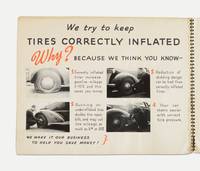
1930réf. ALB-1091930. Photo album; Silver prints 25. A boldly designed promotional album for John Schmook's Gulf Service Station in Lancaster Pennsylvania. The album produced by Gulf and distributed to franchised gas stations displays printed slogans and handwritten captions consistent with the album's roadside aesthetic as well as prescribed placeholders for predetermined photographs to accompany the customer-service driven catchphrases and service descriptions. The images primarily depict station attendants performing basic services such as oil changes radiator checks and tire replacements all while adhering to the "Gulf Guide of Gulflex Service" alongside interior and exterior shots of Schmook's station. Come and get "That Good Gulf Gasoline." Images 2 1/4 x 3 1/4 to 8 x 10 inches mounted to 10 x 13 inch pages with graphically printed captions and slogans. unknown