Alvarez, Francisco.MareMagnum

Folio. 3 parts in one volume. (4), 144 (last blank) ff. with 32 woodcut illustrations; 94, (2), 45 (3) (last blank) ff. First title-page printed in red and black; 3 (repeated) printer's devices. Contemporary blindstamped leather over wooden boards with one metal clasp (out of 2). A collection of three works published by Feyerabend, issued jointly with separate title-pages each. The first work contains a translation of the famous travel account of Francisco Alvarez (ca. 1470-1540), who accompanied as a chaplain the 1520-26 Portuguese expedition to Ethiopia under Rodrigo de Lima. The embassy was occasioned by a letter by Helen, Empress of Ethiopia, the grandmother of Lebna Dengel (David II). The journey began in Massaua in 1520, leading the party to Shewa and Dabra Libanos before they reached Lebna Dengel's camp near Taguelat. Alvarez made at least four journeys to Shewa before leaving Ethiopia in 1526, bound for India. According to Ramusio, this was the earliest account of Etiopia, and for at least a century it would remain the principal published source on the country. The first edition appeared in Portuguese in 1540, comprising merely a part of Alvarez's lost five books. Alvarez describes the country's churches, including the rock-hewn churches, and also the towns and the agriculture. Historical geography owes to him the story of the invasion of the Somal and Galla. Alvarez also gives accounts of the countries surrounding the rule of Prester John, such as Danakil and Godjam. It is unfortunate that Alvarez was unable to perform cartographical and topographical localisations, and yet his influence on cartography remained evident until the days of d'Anville and J. Bruce (cf. Henze I, 62ff.). The account is prefixed by two letters by Andrea Corsal, previously published in 1516. The Florentine traveller Corsal describes, on 24 ff., mainly the area of the Red Sea, Southern Arabia (with descriptions of Aden, Hormuz, Bahrein, Socotra, Muscat, and Oman), India, Ethiopia, Persia (the city of Balsera and King Sophi), as well as Malacca. - Binding somewhat rubbed; wants one clasp. Title-page clipped and remargined; old ownerships to title and flyleaf; a small worm-hole to 35 ff. (touching a single line); evenly browned throughout. A very good copy. Kainbacher 15f; Lockot 711, 732; Gay 186; Sabin 974. Cox I, 3 & 22. Gay 3321 (French ed.). The second work is a translation of Orosius's world history; the third work is a translation of the text from Ortelius's 1580 world atlas. - Schweiger 622 (Orosius). Not in Adams.
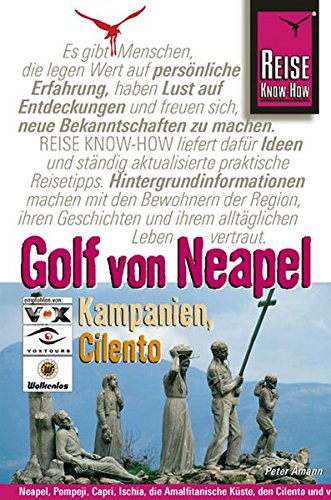
2006réf. 1187729Bielefeld : Reise-Know-How-Verl. Rump, 2006. 576, XXIII S. : Ill., Kt. ; 18 cm, 544 gr. kart.
Folio (ca 350 x 225 mm). Portuguese manuscript on paper. 1 p. Very rare document of colonial history and the history of Portuguese and British abolitionism: a certificate of appointment of Carlos Eugenio Correa da Silva as Commissioner for the Prevention of the Slave Trade on the African West Coast. - In accordance with the Anglo-Portuguese Treaty on the Abolition of Slave Trade of 3 March 1842, Correa da Silva, commander of the brig "Pedro Nunes", was appointed by order of the Portuguese King as commissioner for the suppression of the slave trade on the African west coast ("encarregado de evitar o tráfico da escravatura na costa occidental de África") and was authorized to stop and search suspicious Portuguese and English ships ("para visitar e dar busca às embarcações mercantes portuguezas e inglezas que sejam suspeitas com fundamentos razoaveis de se empregarem em transportar negros para o fim de os reduzir a escravidão, ou de terem sido equipadas com esse intento, ou de terem assim sido empregadas durante a viagem [...] tudo na conformidade do tratado de 3 de Julho de 1842 concluido entre as coroas de Portugal e da Grã Bretanha, para a kompleta abolição do tráfico da escravatura, o qual tratado o mesmo Primeiro Tenente, Commandante do dito Brigue, deverá exactamente observar [...]"). - Includes: Instructions of the Naval Headquarters (ca. 385 x 240 mm, 3 pp.; spotty, small holes in margins) for Correa da Silva, issued by the General Commander of the Portuguese Navy, Francisco Visconde Soares Franco (1810-85), with instructions for the passage to Luanda, where Correa da Silva had to take over the "Estação Naval d'Angola" from the former Commander Caetano Alexandre de Almeida e Albuquerque (1824-1916, Governor of Cape Verde, Governor General of Angola and Portuguese India) in accordance with the guidelines for the prevention of the slave trade ("instruções ... relativos à supressão do tráfico da escravatura"). - Carlos Eugénio Correia da Silva, Count of Paço d'Arcos (1834-1905), a friend of King Luis I of Portugal, whom he succeeded as commander of the brig "Pedro Nunes", later became commander of the Portuguese Navy, governor general of Portuguese India, Macao and Mozambique, as well as civil governor of Lisbon and was the first Portuguese ambassador to Brazil. He had already recommended himself for this position in 1864 by the capture of the Spanish slave trader "Virgen del Refugio". The Anglo-Portuguese treaty to abolish the slave trade was signed on 3 July 1842 by the Portuguese foreign minister, the Duke of Palmela, and the British ambassador Baron Howard de Walden, and Portugal subsequently made great efforts to implement this treaty.
Small 8vo. III, 53 pp., printed on rectos only. With 3 plans of Kuwait in the text and one folding plan of Kuwait and its suburbs. Original printed wrappers. Exceedingly rare yellow pages for Kuwait, compiled for English speakers by the American Women's League in Kuwait, founded in 1963, presumably in its first edition. - Includes references for air conditioning repair, art galleries, car rental and sales, barbers and hairdressers, embassies and consulates, exterminators, oil companies, tennis schools, and "oriental handicrafts". The plans show the commercial center of Kuwait, Fahd Al-Salem Street, and the Salmiyah quarter. The folding plan indicates the location of hospitals, English, American and French schools, Kuwait University, the National Evangelical Church and the Holy Family Cathedral, as well as important hotels and hunting, sporting and sea clubs. - Binding a little brownstained; lower cover showing some waterstaining. A small spot to the folding plan. In all a very well preserved copy of an otherwise unobtainable publication.
199256 pages. Features: One-page colour-photo ad for the Fairwinds Golf Course development north of Nanaimo, B.C.; The heat is on Joe Clark as national unity talks enter critical phase; The agony of Martesnville, Saskatchewan - multiple charges of physical and sexual abuse against children; Two-page VW ad features embroidered images of their vehicles; Serbia becomes pariah - U.N. responds with sanctions; Danish voters reject Maastricht Treaty; Feature Article - Diana's Story - and the embattled British Crown; Australian weigh republicanism; Paul Reichmann of collapsed developer Olympia & York (O&Y) - a patriarch at bay; Westray tragedy raises troubling issues; Peter C. Newman writes on the volatile real estate scene in New York; Rio Earth Summit; Christine Lamont and David Spencer held in Sao Paulo prison; Interesting one-page B.C. Tel ad promotes their calling card; Northern Telecom ad on back cover for their Meridian 1 PBX.; Great cover photo of Lady Diana. Danish vote article on page 24 extensively marked in light pencil. Moderate wear. A sound copy of this interesting issue. Book
4to. XL, 657, (1) pp. 3 blank ff. With several illustrations and maps in the text. Publisher's cloth. Dustjacket. A compilation of translated sources covering the period from 1700 to the present. Sources include official and private archives, the periodical press, memoirs, Western journalists and travellers' accounts, literature, and official reports (including statistical data). Each document has been prefaced, translated and annotated by a specialist in the history and culture from which it was drawn. Enough information is provided so that every student can appreciate the value of a document and begin further exploration either of its historical context or its relationship to broader themes in modern Middle Eastern history. Themes include expansion of state power, changing gender roles, religious revival, nationalist mobilization, increasing participation in a wider global culture and economy, and the redefinition of traditions and identities. - With publisher's dustjacket. In excellent condition.
4to. (44), 480 pp. Contemporary limp vellum with ms. spine title. First - and likely only - edition. The first large-scale Syriac grammar, the third ever written (following those of Caninius, 1554, and Widmanstetter, 1555). Composed by the Maronite priest Jiris Ibn Mikha'il ibn 'Amira, it was printed by the Maronite scholar Ya'qub ibn Hilal (Giacomo Luna), who worked at the Medicean Press under Raimondi and was responsible for the Arabic and Syriac publications issued between 1590 and 1594. In 1595 he started printing on his own, and possibly took over some of the types of the Vatican Press. The work is listed as a Propaganda Press imprint ("olim typis nostris impressi") in Amadatius's 1773 "Catalogus", which shows the continuity that was felt to exist between the Medicean Press, the intermediate stage of Luna and Stephanus Paulinus, and the Propaganda Press. In the preface Raimondi is mentioned as the instigator of the work. - The 24 pt Syriac "serto" types were cut in 1590 by Jean Cavaillon for the Medicean Press. In the beginning a Syriac alphabet is presented, in three different scripts: "estrangelo" (this word possibly here used for the first time), "serto", and a Nestorian script possibly in type. This Nestorian script, a cursive form of estrangelo, is introduced here for the first time. In 1633 a slightly different type-face was used for Bellarmino's Catechism. - Some browning and brownstaining throughout, as common; the first few quires loosened. 18th century library stamps to title page; bookplate of Flavio Camillo Borghese, Prince of Sulmona (1902-80), on pastedown. Quite rare; a second edition, supposedly produced in 1645 (cf. Nasrallah, p. 10), is not attested in libraries. Edit 16, CNCE 1541. Adams A 965. BM-STC Italian 356 (s. v. "Jiris"). Brunet I, 231. Zenker, p. 132, no. 1534. Smitskamp, PO 184. Vater/Jülg 388. Nestle 13. Duverdier, Impressions, 198. OCLC 7238840.
4to. (30 [instead of 44]), 480 pp. Contemporary limp vellum with handwritten spine title (wants ties). First - and likely only - edition. The first large-scale Syriac grammar, the third ever written (following those of Caninius, 1554, and Widmanstetter, 1555). Composed by the Maronite priest Jiris Ibn Mikha'il ibn 'Amira, it was printed by the Maronite scholar Ya'qub ibn Hilal (Giacomo Luna), who worked at the Medicean Press under Raimondi and was responsible for the Arabic and Syriac publications issued between 1590 and 1594. In 1595 he started printing on his own, and possibly took over some of the types of the Vatican Press. The work is listed as a Propaganda Press imprint ("olim typis nostris impressi") in Amadatius's 1773 "Catalogus", which shows the continuity that was felt to exist between the Medicean Press, the intermediate stage of Luna and Stephanus Paulinus, and the Propaganda Press. In the preface Raimondi is mentioned as the instigator of the work. - The 24 pt Syriac "serto" types were cut in 1590 by Jean Cavaillon for the Medicean Press. In the beginning a Syriac alphabet is presented, in three different scripts: "estrangelo" (this word possibly here used for the first time), "serto", and a Nestorian script possibly in type. This Nestorian script, a cursive form of estrangelo, is introduced here for the first time. In 1633 a slightly different typeface was used for Bellarmino's Catechism. - Preliminaries wanting 7 leaves but containing 4 additional interleaved blanks, two of which bearing Syriac annotations in a large, contemporary hand. Occasional light browning, a few leaves misbound. - Provenance: Handwritten ownership of the Discalced Carmelites of St. Joseph in Paris on the title-page and lower pastedown. - Quite rare. A second edition, supposedly produced in 1645 (cf. Nasrallah, p. 10), is not attested in libraries. Edit 16, CNCE 1541. Adams A 965. BM-STC Italian 356 (s. v. "Jiris"). IA 104.783. Zenker, p. 132, no. 1534. Smitskamp, PO 184. Vater/Jülg 388. Nestle 13. Duverdier, Impressions, 198. OCLC 7238840. Ebert 513 ("Selten"). Brunet I, 231 ("Ouvrage estimé").
640 x 490 mm. Toned lithograph (the stallion "Barhut" before a oriental caravan background), blindstamped by the publisher. Fine lithographed portrait of the Arabian stallion "Barhut", a gift by Muhammad Ali Pasha, Viceroy of Egypt, to the Prussian Consul General v. Wagner, who in turn presented the horse to his King, Fredrick William IV. The Thuringian artist Wilhelm Ammon (1812-95, of no relation to the famous like-named Bavarian Court Studmaster), trained at Berlin, Munich, and Paris, was particularly famous for his horse paintings, many of which were in the collections of the Altenstein castle and stud. Cf. Thieme/B. I, 416.
1992223 p. Hardcover Very good condition good
1905réf. 001215London: Horace Cox 1905. Book. Very Good. Cloth. First Edition. 1905 First edition. Horace Cox London. Very Good gray cloth. Mild bumping to extremities. Scarce early instructional. Donovan and Murdoch 28260. Horace Cox Hardcover
1905Tela ed. ill., cm12.5x19, pp VIII 168 (6) [tagliata una delle pagine pubblicitarie in fine]; alcune ill. in nero nt e ft. Manualetto non comune.
4to. 32 pp. Modern green morocco. Second edition of this dissertation about the grave of the Prophet Muhammad, first published in 1677, including a description of the location of Mecca (where the grave was believed to be situated) and an account of the Prophet's body being preserved in a box of iron, levitated in mid-air by magnetic forces. - The Danzig-born theologian Samuel Andreae (1640-99) had taught Greek, Philosophy, Rhetorics, and History before settling at the Hessian university of Marburg, where he served as professor of Theology and head of the university library. Several of his academic works offer a historical slant on Biblical topics. The physician Johann Philipp Jordis (1658-1721/25) studied in Utrecht and practised in Frankfurt from 1685 onwards. - Browned throughout due to paper. No copy in America, according to OCLC. VD 17, 12:142174N. OCLC 67857720.
8vo. (4), XLIV, 525, (1) pp. Contemporary half calf with giltstamped spine title. With the folio atlas: 6 engr. maps and plans and 4 lithogr. views. Contemporary half calf over marbled boards, with original printed wrapper cover on upper cover. First edition, text and atlas together. Descended from a family of canal builders, Antoine François Conte Andreossi (1761-1828) served at the French embassy in Constantinople from 1811 to 1814, when he was recalled to France by Louis XVIII, much to the dismay of the local French community. Some of the plates show his beloved waterways and fountains; they also include a view of the Hippodrome and Mosque of Sultan Ahmed. - Slight worming to hinges of atlas; old stamp to first engraved plates. Bookplate of Dr. Th. Weber (no. 518). Atabey 22. Blackmer 33. Weber I, 154f. Brunet I, 276. Graesse I, 122. Not in Aboussouan.
1997réf. 10257München, Heyne, 1997. PP, 136S, gutes Exemplar
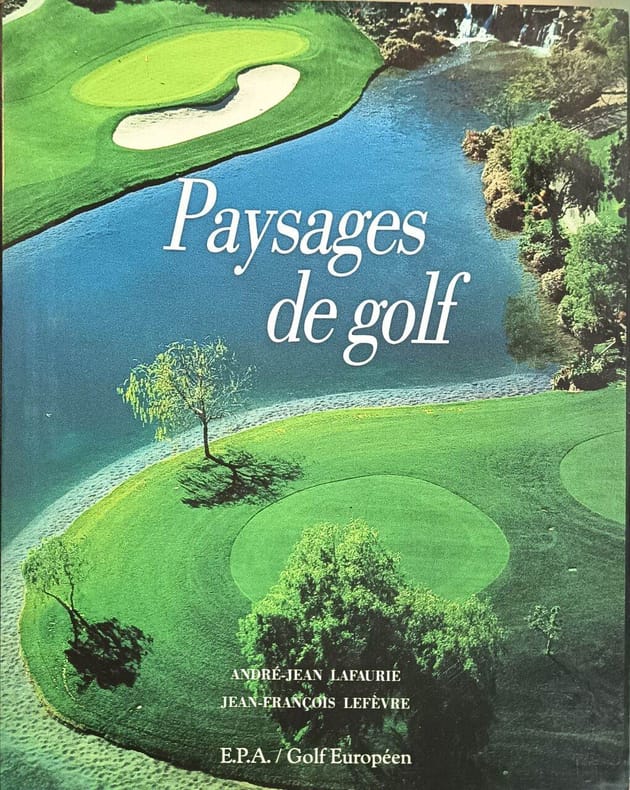
1995réf. 8299Editions Pratiques Automobiles (EPA) 1995 1989 pages IN4. 1995. cartonné jaquette. 1989 pages. Ce livre présente une trentaine de terrains de golf à travers le monde incluant des golfs de montagne de bord de mer de plaine nordiques et historiques. Il propose une exploration des plus beaux parcours mettant en avant la beauté des paysages et l'architecture des terrains à travers des photographies somptueuses et des textes descriptifs
8vo. 71 ff. (lacking final blank). All edges sprinkled in red. Contemporary limp blue boards. Last Italian edition of the 16th century: a famous account of Islam (with a life of the Prophet Muhammad) given by a Muslim convert to Christianity, first published in Spanish in 1515 and frequently reprinted and translated. The author gives his former name only as Alfaqui ibn Abdallah from Játiva near Valencia in Spain; he flourished 1487-1515. - Some browning and brownstaining throughout due to paper; a few pages waterstained; old ink notes to title page (some ink corrosion). Rare; only two copies in WorldCat (Paris-BnF and Mazarine); four in Italy (Venice, Prato, Modena, Messina); none in the U.S. Edit 16, CNCE 1728. Chauvin XII, p. 21, no. 83. Göllner 2280. I.A. 105.567. Palau 12175 (note). OCLC 800261833.
4to. (26), 496, (2) pp. With woodcut printer's device to t. p. and several historiated initials. Contemporary limp vellum with ms. spine title "Carmina Barge". Epic poem on the events of the first crusade (1486-99), led by Godfrey of Bouillon. The work was written at almost the same time as Tasso's like-themed "Gerusalemme Liberata": while this is the first edition under the title "Hierosolyma", it was actually already published in Paris in 1582 (bks. 1-2) and 1584 (bks. 3-4), then in Rome in 1585 (bks. 1-6), and finally, in all 12 books, separately in 1591 under the title "Syrias" (cf. Brunet I, 288). Petrus Angelus Bargaeus (1517-92) was a scholar and professor at the universities of Pisa and Rome. - Rather strong brownstaining, occasional waterstaining. Some contemporary underlining and ms. line-numbers supplied throughout. OCLC locates single copy in America (Houghton Library, Harvard). BMC 5:448. NUC 16.619. Bruni/Evans 232. OCLC 82107113. Cf. Brunet I, 288.
1925The French news weekly. 14 February 1925. With four page in colour. Sections of advertisements at beginning and end. Paginated 134-156. Foxing down edge of spine.. Corners creased and slightly dog-eared.
26 designs of dreadful knitted woolen items for men, 'each chosen for its particular manly merit'. 39 pages. 1950s? Very creased covers and creased corners, small tears to edges of front cover.
Folio. 1 page. On uncut wove paper, bearing the Schoellers-Parole blind embossed seal, margins uncut. The original autograph contribution of Anouchirevan Khan Sepahbodi to the Committee of the World League for Peace (Ligue Mondiale pour la Paix), a remarkable organization formed in 1925 with close ties to the League of Nations. The Committee itself was composed of such notaries as Queen Elizabeth of Belgium, King Carol II of Romania, John D Rockefeller, Marie Curie, and Albert Einstein, who personally gathered the present manuscripts over the course of seven years (1925-32). Among the public figures who contributed to the project were dignitaries from the newly-created League of Nations' member states. "Peace is the foundation for the prosperity of the world. [Signed] Anouchirevan Khan Sepahbodi". Sepahbodi was Envoy Extraordinary and Minister Plenipotentiary of Persia at Berne. Pax Mundi. Livre d'or de la paix. Enquete universelle de la Ligue mondiale pour la paix sous le haut patronage de son comite d'honneur avec l'approbation de la Societe des nations, du Bureau international du travail et de la Cour permanente de justice internationale. Geneve, Societe paxunis, 1932.
Tall 8vo (158 x 288 mm). Persian manuscript on paper. 278 ff. Nastaliq text in black and occasional red ink, handsomely ruled in red and blue, with occasional marginal notes and further ownership notes on exterior leaves. Modern blank endpapers. Bound in full 20th century red ochre leather, stamped in blind. One of the most important books on pharmacology written in Persian in the Islamic era. Ansari Shirazi (1329-1403) was a famous physician of the Mughal period, serving at the court of Sultan Jalal ud-Din Shah Shuja (1333-84). During Ansari Shirazi's years at court the Sultan was a patron of the poet Hafez (1325-90), icon of Persian poetry, whom Ansari Shirazi would have known personally. Another esteemed acquaintance appears in the title of this particular book, "Selections for Badi". The work is dedicated to a woman, allegedly a Persian princess named Badi al-Jamal about whom little is known. - The work itself is a gem of Persian medical literature: scholars have claimed that "in the history of Persian medicine, the book 'Ikhtiyarat Badiei' is considered the most important book written in Persian", citing the large number of sources and remedies it provided the mediaeval reader, though some irrational fallacies are noted as well: "In three entries in Ikhtiyarat Badiei, the author has illustrated some superstitious ideas, namely that 'If the food is poisonous, and the weasel finds out, it will shout and its hair will stand on its end' and says: 'looking at zebra is good for the eyesight'" (Ghazi Sha'rbaf, 99). - The scribe responsible for copying the text was Muhammad Qasim Quraishi Siddiqui, who is known to have been active in India in the 17th century. A few minor stains and soiling; altogether a well-preserved and vital piece of Persian scientific history. Cf. Javad Ghazi Sha’rbaf et al., "Introducing the Book Ikhti-yarat Badiei: An Investigation Over its Importance in the Pharmacology of the Islamic Period", in: Journal of Research on History of Medicine 9.2 (2020), pp. 95-102.
4to. 139, (5) pp. With folding engr. map. Later cloth. First edition. - Includes observations "on the Plague in Egypt", "on the Overflowing of the RIver Nile, and the Qualities of its Water", "on the Climate and Seasons of the Year in Egypt", and "on the Situation of Egypt relative toi commercial Advantages", as well as "A Specimen of Turkish Justice, or, rather, of that of the Mamelucks in Egypt". John Antes was a missionary of the Moravian Church resident in Egypt from 1770 to 1781. He "produced this work in answer to those of Savary and Volney" (Blackmer). - Some foxing to title page. This copy is from the collection of the author's descendants, with several inscriptions on the flyleaf. Later in the Ottoman collection of the Swiss industrialist Herry W. Schaefer. Atabey 25. Blackmer 36. Ibrahim-Hilmy I, 38. Blake 16. OCLC 4415058.
8vo. X, 273, (1 blank) pp. With two black and white maps on the endpapers. Brown cloth with publisher's illustrated dust jacket. First and only edition of a thorough description of the history of the nine Arab states of the Lower Gulf, that gained independence in 1971, just four years before the publication of this book. The author has managed to discuss the individual politics of each state and that of the bigger picture, making this a handbook for all who wish to learn more about Bahrain, Qatar and the United Arab Emirates (Ajman, Dubai, Fujairah, Ras Al Khaimah, Sharjah and Umm Al Quwain). The several infographics that are used to explain the political structures are very helpful in this respect. Oil plays a key role in the relationship between the individual states and this is intricately laid out by the American author. Because this book was written in such a key moment in the history of the region, it has gained much importance. The author Dr. John Duke Anthony is a leading figure in United States-Arab relations and has held many influential government positions in this field. Amongst others, he is the founder and president of the National Council on U.S.-Arab Relations and he is part of the United States Department of State Advisory Committee on International Economic Policy's Subcommittee on Sanctions. He holds a Ph.D. in International Relations and Middle East Studies at the School of Advanced International Studies. In the years leading up to this publication the author has conducted first-hand research on the Lower Gulf region's political and socio-economic structures, obviously with oil playing a major role. The fruits of this research are presented in this book, offering the reader a comprehensive overview of a complex subject. This book was published in The James Terry Duce Memorial Series, which started in 1966. The first and second volumes were on North Africa and Jerusalem respectively, this is the final volume of the series. - Ink annotations in the margins throughout. A good copy with the original dustjacket well preserved. OCLC 1700964.
2019ill., br. Attraverso un sistema di esercizi e tecniche che mirano a sviluppare la capacità di concentrazione e di "messa a fuoco" degli obiettivi, questo volume insegna come programmare al meglio il proprio gioco "mentale" per renderlo più determinato e affidabile (e per rendere tale, quindi, anche il gioco effettivamente disputato sui campi). Quello presentato in queste pagine è un metodo che permette ai giocatori di qualsiasi esperienza e livello di essere sempre nel loro giorno migliore, aumentando il rendimento, il divertimento, la fiducia nelle proprie doti e l'abilità nel mantenere uno "stato di eccellenza" anche durante i momenti di maggiore pressione.