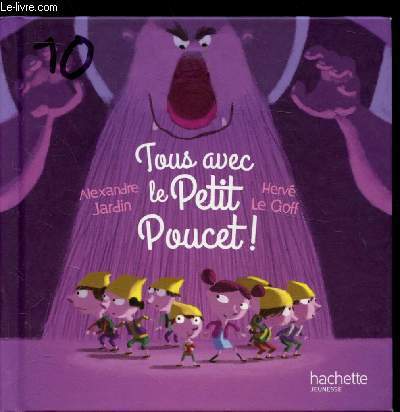
Alexandre Jardin - Hervé Le GolfLivre Rare Book
4589 risultati
2015rif. R160209336Hachette. 2015. In-12. Relié. Bon état, Couv. convenable, Dos satisfaisant, Intérieur frais. Environs 20 pages illustrées en couleurs. note au marqueur sur le 1er plat.. . . . Classification Dewey : 843.0692-Livres d'enfants
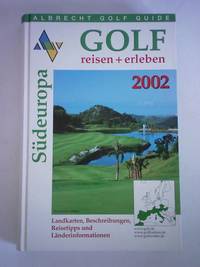
rif. BN610971Albrecht Golf Verlag. Albrecht Golf Guide Südeuropa 2007 Albrecht Golf Guide Südeuropa 2007 Albrecht Golf Guide Südeuropa 2007 Albrecht Golf Verlag unknown
rif. 5d5818Albrecht Golf Verlag München 2001. 783 S. in getrennter Zählung mit zahlreichen Abbildungen Pappband quart. - gutes Exemplar / Landkarten Beschreibungen Reisetipps und Länderinformationen - unknown
4to. 213 (instead of 215) ff. (lacking ff. 212-213 and final blank). Title printed in red and black. With woodcut title border and two nearly full-page woodcuts in the text. 19th century half calf (restored) with giltstamped spine. First edition. "The earliest Syrian and Armenian grammar printed" (IA). Extremely rare and early work of oriental studies, also important for the history of music due to the first illustrated description of the bassoon, which the author's uncle, Afranio degli Albonesi, had invented early in the century and had first demonstrated in 1532. - The canon regular Teseo Ambrogio degli Albonesi (often simply referred to as Ambrogio or Ambrosius; 1469-1540) taught the Syriac language. This introduction to the oriental languages - his only publication - is a mixture of lingustic treatise and a collection of exotic alphabets. If Albonesi's results are not in every case correct, they remain of great importance to the history of linguistic scholarship: the "Introductio" constitutes one of those works which inspired the budding discipline of comparative philology to undertake further research. "His work offers a detailed survey of the Syriac and Armenian languages from various points of view, and a short notice about the other exotic languages (Samaritan, Arabic, Coptic, Cyrillic, Ethiopic) - these languages are all discussed with examples written by hand in the earlier chapters, and throughout the work we find blank spaces where such words had still to be filled in" (Smitskamp). Some of the blank spaces mentioned have been filled in in ink by a contemporary hand. Lacks the final two pages of text (including the colophon). Slight worming to upper margin near end. Edit 16, CNCE 816. Adams A 957. Mortimer 20. BM-STC Italian 16. Eitner I, 91. MGG III, 1721. Smitskamp 240. IA 104.625. Brunet I, 229. Graesse I, 59.
4to. 212 (instead of 215) ff. (lacking ff. 209, 212-213 and final blank). Title printed in red and black. With woodcut title border and two nearly full-page woodcuts in the text. Contemporary limp vellum with ms. spine title. Traces of ties. First edition. "The earliest Syrian and Armenian grammar printed" (IA). Extremely rare and early work of oriental studies, also important for the history of music due to the first illustrated description of the bassoon, which the author's uncle, Afranio degli Albonesi, had invented early in the century and had first demonstrated in 1532. - The canon regular Teseo Ambrogio degli Albonesi (often simply referred to as Ambrogio or Ambrosius; 1469-1540) taught the Syriac language. This introduction to the oriental languages - his only publication - is a mixture of lingustic treatise and a collection of exotic alphabets. If Albonesi's results are not in every case correct, they remain of great importance to the history of linguistic scholarship: the "Introductio" constitutes one of those works which inspired the budding discipline of comparative philology to undertake further research. "His work offers a detailed survey of the Syriac and Armenian languages from various points of view, and a short notice about the other exotic languages (Samaritan, Arabic, Coptic, Cyrillic, Ethiopic) - these languages are all discussed with examples written by hand in the earlier chapters, and throughout the work we find blank spaces where such words had still to be filled in" (Smitskamp). In this copy, these blank spaces have been filled in in ink by a contemporary hand. - Near-contemporary ownership, in Hebrew cursive, to title page. Minor edge tear to fol. 191. Binding loosened; lacks four pages in the final quire (including the colophon). Edit 16, CNCE 816. Adams A 957. Mortimer 20. BM-STC Italian 16. Eitner I, 91. MGG III, 1721. Smitskamp 240. IA 104.625. Brunet I, 229. Graesse I, 59.
1975144 pages. Index. Discography. "The Greatest Singer and Entertainer of the Century - Bessie Smith comes alive again in this unique collection of 30 of her most famous songs. Not just copies of sheet music, here are actual transcriptions of her most famous songs, with piano reproductions and guitar chords... Gunther Schuller contributes notes on her singing style - perhaps the only good critical description of her art. This is the ideal companion to the record set of Bessies's complete recordings." - from back cover. Songs include: It Makes My Love Come Down, Long Road, Jailhouse Blues, Dirty No-Gooder's Blues, Down in the Dumps, In the House Blues, Shipwreck Blues, Safety Mama, Take Me For a Buggy Ride, Blue Blues, Wasted Life Blues, Standin' In the Rain Blues, Squeeze Me, Baby Won't You Please Come Home, Pickpocket Blues, Backwater Blues, Young Woman's Blues, See if I'll Care, New Orleans Hop Scop Blues, Nobody Knows You When You're Down and Out, Baby Doll, Please Help Get Him Off My Mind, Reckless Blues, My Man Blues, Poor Man's Blues, Hard Time Blues, Tain't Nobody's Biz-ness If I Do, Cake Walking Babies from Home, Gimme a Pigfoot, Gulf Coast Blues. Unmarked with average wear. Binding intact. Sound copy. Book
1991rif. LFA-126742730Un ouvrage de 307 pages, format 135 x 220 mm, illustré de cartes, broché, publié en 1991, Le Monde Editions, collection "La Mémoire du Monde", bon état
1991rif. ABE-164868137791425 CM X 29,5 CM-EN COUVERTURE ILLUSTRATION CONTRECOLLEE SUR VELOURS VERT-2 MOTS ANGLE GAUCHE EN PAGE DE FAUX TITRE SINON ETAT PROCHE DU NEUF-(200G)
8vo. 12, 483, (1) pp. Contemporary half calf on four raised bands with sparsely gilt spine; pink cloth covers and marbled endpapers. First printing of this prose and verse anthology on the subject of Islamic ethics, containing eight chapters on virtues and another eight on vices. - Al-Watwat al-Kutubi (1234-1318), celebrated as an entertaining compiler, lived in Mamluk Egypt all his life. Unlike many writers of his era was not a member of the Mamluk administration, but rather a wealthy bookseller (hence his byname "Al-Kutubi", "the Bookseller"). - Binding slightly rubbed; paper evenly browned as common. Blank first page has contemporary ink ownership of Fernand Patorni (b. 1837), chief interpreter in Algiers and author of "Les Tirailleurs algériens dans le Sahara" (1884). GAL II, 55. OCLC 253615769.
Large 4to (187 x 274 mm). Arabic manuscript on paper. (18) pp., 31 lines per extensum. Written in clear, neat black naskh, emphases picked out or underlined in red; catchwords. Modern brown leather binding with blind rules and stamped central medallions to both covers. A late 14th or early 15th century mathematical manuscript, probably written in Iran or possibly the Eastern Mediterranean. The Persian scholar Nasir al-Din Muhamad ibn Muhamad ibn al-Hasan at-Tusi (1201-74) was known for his extensive work on science, physics, mathematics and theology. He is often credited with the invention and identification of trigonometry as an independent division of mathematics (cf. GAL I, 509), and the lunar crater "Nasireddin" is named after him. As well as compiling many important works in these fields, he is also known for translating the definitive Arabic editions of Euclid, Ptolemy and Archimedes' works, among others. The only other copy of his present work, treating multiplication and division in algebra and arithmetic, survives in the Topkapi Seray in Istanbul (MS 3327: a more extensive version in 3 books and 11 sections, 51 ff.). - Light dampstaining throughout, mostly confined to lower borders; edges frayed. GAL S I, p. 930, no. 36a. B. A. Rosenfeld & E. Thsanoglu, Mathematicians, Astronomers and other Scholars of Islamic Civilisation and their Works (Istanbul 2003), pp. 211-219, M18. Krause, Stambuler Handschriften Islamischer Mathematiker, p. 497, no. 12.
8vo. XVI, 336 pp. Original blind-stamped cloth. Highly uncommon: the first English edition, translated and abridged by St. John Bayle from Perron's French translation of the author's "Tashhidh al-adhhan bi-sirat al-`Arab wa-al-Sudan". The book is divided into two sections - Dafur and the Wadai - and is an informative anecdotal account of the regions, including detailed accounts of the lineage and customs of the respective royal families and inhabitants. Also mentions the pilgrimage to Mekka undertaken by the author's grandfather and his subsequent life in Jeddah. - Slightly rubbed. Only two copies in institutional possession: OCLC lists records for Oxford and Cambridge only. OCLC 265431715.
8vo. 2 parts in 1 vol. (22), 233, (89) pp. (4), 170, (2) pp. With full-page engraving. Modern vellum. The first Arabic-Latin edition of the great poem "Lamiyat al-´Agam" by Hassan ibn ´Ali al-Tugra'i (c. 1061-1121), and one of the first Arabic books ever printed in England: "a complaint over the unfortunate circumstances of his times and over his own lot" (cf. GAL). Contains not only the text with an extensive commentary, but also a complete index of the words appearing in the poem and the apparatus, as well as a second part, an Arabic prosody by Samuel Clarke entitled "Scientia metrica & rhythmica, seu Tractatus de prosodia Arabica" (also issued separately, but here forming part of the Tugrai edition). Edward Pococke (1604-91) was the first scholar of Arabic at Oxford; the Oxford oriental scholar Samuel Clarke (1624-69) also served his University as printer. - Variously browned due to paper. An untrimmed copy. GAL I, p. 247. Lowndes 2692. Schnurrer 197. Brunet V, 875. Ebert 23019.
Small 4to. (20), 46 pp. With engr. title vignette. Contemp. vellum. "Édition estimée, et dont les exemplaires sont peu communs, parce que (selon Vogt) ils ont presque tous été perdus en mer" (Brunet). The accounts regarding the precise number of copies salvaged from the wreck vary: Schnurrer mentions 5 or 6, Ehrencron-Müller states 50. In any case, the number of copies extant is very small and thus the book is extremely rare. It contains the poem "Lamiyat al-Agam" by al-Hasan Ibn-Ali at-Tugrai (c. 1061-1121) in the Arabic original with a Latin translation and copious commentary by the Danish theologian Matthias Anchersen (1682-1741). "A complaint over the unfortunate circumstances of his times and over his own lot" (cf. GAL). - Some browning and foxing due to paper. The author's personal copy, inscribed to his brother Ansgar on the front flyleaf. Smitskamp 318. Schnurrer 199. Ehrencron-Müller I, 113. Brunet V, 875. Ebert 23020. Cf. GAL I, p. 247 (the 1717 ed.).
4to. 17, (1), 174 pp. Modern calf. Upper edge red. The poem "Lamiyat al-Agam" by al-Hasan Ibn-Ali at-Tugrai (c. 1061-1121) in the Arabic original with a Latin translation and extensive commentary. "A complaint over the unfortunate circumstances of his times and over his own lot" (cf. GAL). "The 'Lamiyat al-'Agam', a famous poem by At-Tograi [...] It was first edited by Golius together with the Sentences of Ali in 1629. This is the first [edition] accompanied by Arabic scholia, and also the first readily available edition containing Golius’ translation: Anchersen's edition of 1707, which published this translation for the first time, was lost at sea except for six copies" (Smitskamp). - Some creasing; a very clean copy. Lower edge untrimmed. GAL I, p. 247. Smitskamp 318. Schnurrer 200. Brunet V, 875. Ebert 23021.
8vo. 2 parts in 1 vol. (22), 233, (89) pp. (4), 170, (2) pp. With full-page engraving. Contemporary full calf with handwritten spine label. The first Arabic-Latin edition of the great poem "Lamiyat al-´Agam" by Hassan ibn ´Ali al-Tugra'i (c. 1061-1121), and one of the first Arabic books ever printed in England: "a complaint over the unfortunate circumstances of his times and over his own lot" (cf. GAL). Contains not only the text with an extensive commentary, but also a complete index of the words appearing in the poem and the apparatus, as well as a second part, an Arabic prosody by Samuel Clarke entitled "Scientia metrica & rhythmica, seu Tractatus de prosodia Arabica" (also issued separately, but here forming part of the Tugrai edition). Edward Pococke (1604-91) was the first scholar of Arabic at Oxford; the Oxford oriental scholar Samuel Clarke (1624-69) also served his University as printer. - Light rubbing to binding. Front inner hinge split; wants front flyleaf. Slight paper browning; stamps of the École Sainte Genevieve and of the Jesuit college of St. Aloysius, Jersey, on title-page; pretty engraved bookplate and contemporary bibliographical note to pastedown. A good copy. GAL I, p. 247. Lowndes 2692. Schnurrer 197. Brunet V, 875. Ebert 23019.
17, (1), 174 pp. Contemporary full calf binding. All edges red. 4to. Early scholarly edition, with Latin translation and notes. "The 'Lamiyat al-`Agam', a famous poem by at-Tograi'i [...]. It was first edited by Golius together with the Sentences of Ali in 1629. This is the first one accompanied by Arabic scholia, and also the first readily available edition containing Golius's translation: Anchersen's edition of 1707, which published this translation for the first time, was lost at sea except for six copies" (Smitskamp). - Some foxing and browning; glue-shading to endpapers. Old bookplate (alpha and omega with fish) on front pastedown; stamp of the Paris Jesuit Congregation on title page. Binding rubbed and bumped at extremities; spine rather chipped. No copies recorded at auction within the last decades. GAL I, S. 286. Smitskamp (PO) 318. Schnurrer 200. Graesse VI, 167. OCLC 16080863.
12mo. 52 pp. Wrapper title printed within decorated borders. Extremely rare autobiography of As'ad al-Shidyaq (1798-1830, brother of the writer Faris), who came under the influence of the American Congregationalist missionaries in Beirut when he was employed by them as a teacher and translator, and embraced Protestantism in defiance of the Maronite Patriarch. In retaliation, the Patriarch imprisoned and tortured al-Shidyaq in a convent in the Lebanese mountains, starving him to death in 1830. Al-Shidyaq's autobiography, the story of his conversion and persecution, was published three years later by the CMS press of Malta. "This of course is also anti-Catholic, or rather anti-Maronite. It has been quite erroneously attributed to his brother Faris al-Shidyaq by a number of eminent authorities, who have cited it as the latter's earliest work. In fact it is clearly by As'ad himself, being written in the first person, and his mentor Isaac Bird has recorded that it was written in 1826 at his (Bird's) request, 'that we might make use of it to his advantage in future time'; English translations were published in Boston (USA) in 1827 and 1839 and it was later incorporated into Bird's biography of As'ad, published in 1864" (Roper, p. 239). - A clean copy in very good condition. Copies known only at the British Library and Glasgow University. Zenker I, 1658. Sarkis 1105. Brockelmann S II, 868. Ellis I, 323. Alwan 18. Agius 43f. Roper (Arabic printing in Malta 1825-1845) no. 49.
Small 4to. Lithographed title page and index; 34 photo-lithogr. plates, hightlighted in gilt and red. Original red and gilt cloth. Only edition of this lavishly produced series of portraits showing the Ottoman Sultans from the 14th to the 19th century. Captioned in French and Arabic. The editor, Ahmad Faris al-Shidyaq (1804-87), was born in Lebanon to an Arab Maronite family. He converted to Islam in 1860 and spent much of his later life in Istanbul as the editor of an Arab language newspaper, "El-Jawa’ib". In recent years, scholars seem to have taken a renewed interest in Ahmad Faris al-Shidyaq and his role in the "nahda", or Arab renaissance of the 19th century. Several biographies have been published recognizing his struggle to modernize the Arabic language and educational system, as well as his defence of Arabic culture and language against the Turkization movement across the 19th century Ottoman Empire. As such he is considered one of the founders of modern Arabic literature and journalism. - Minor foxing to reverse of plates, otherwise in perfect condition. OCLC 15623629.
1966V, (1), 51, (1), l. bl. f. With portrait frontispiece (HRH King Faisal) and 13 folding maps in pocket. Original printed green cloth binding. Rare Saudi government publication on iron ore deposits (mainly Goethite and Hematite) in Western Arabia. As stated in the foreword, "Bulletin 2 is the first geological report on an occurrence of a single metallic mineral to be published by the Ministry of Petroleum and Mineral Resources". Wadi Fatima, east of Jiddah on the Arabian Red Sea coast, is a microcosm of the geology of the Jiddah area. Rocks ranging in age from 800-million-year-old metamorphic rocks to Tertiary lava flows are exposed, and illustrate the geological richness of western Saudi Arabia. "The Wadi Fatima ore deposits promise to become one of the main sources of iron for the developing steel industry of the Kingdom". Binding rubbed with some discoloration to spine, otherwise fine. OCLC 4053546.
8vo. VII, (1), 212, (40) pp. Contemporary blindstamped green cloth with gilt arms to covers and gilt title to spine. Top edge gilt. Early English translation of this treatise differentiating measles from small pox. "The first medical description of small pox was written by Rhazes about the year 910" (Garrison/M. 5404). He is considered the greatest mediaeval physician next to Avicenna. Published by the Sydenham Society, during its short existence between 1843 and 1857 a "powerhouse in disseminating medical literature in the age of the empire" (K. Gotman). - Binding a little rubbed and bumped at extremeties; spine professionally restored. Ownership (dated 1848) of George Edward Wilmot Wood, MD (1806-64) of Winchester, member of the Society, on the flyleaf. Garrison/Morton 5441.
8vo. (48), 662, (2) pp. With woodcut printer's device on title-page, repeated on verso of final leaf. 18th century half calf with marbled boards and title giltstamped to spine. First Latin edition of this collection, published in Greek by Stephanus in Paris the previous year (itself a translation from Syriac): the twelve books on medicine by Alexander of Tralles, the first parasitologist in medical history (and the younger brother of Anthemius, architect of the Hagia Sophia), issued with al-Razi's classic treatise on smallpox and measles ("Kitab fi al-Jadari wa al-Hasaba"), also known as "Peri loimikes" or "De pestilentia": the first book ever published on smallpox. Indeed, al-Razi was the first physician in the history of medicine to differentiate between smallpox and measles, and consider them as two different diseases. The influence of his diagnostic concepts on Muslim medicine was very clear, especially on Ibn Sina. This work gained great popularity in Europe and was also translated into French, English and German; Brockelmann states it saw some 40 Latin editions between 1498 and 1866. - Al-Razi (also known as Rhazes; 850-923 or 932) is considered the greatest mediaeval physician next to Avicenna; he also conducted alchemical experiments. According to his biographer al-Gildaki, he was blinded for refusing to share his secrets of chemistry. - Binding lightly rubbed. Light brownstaining throughout, with a waterstain to the upper edge. A misprint has been overpasted with replacement text on pp. 40f. ("imo interdum mors talium potionem comitatur"). Rare; only two copies in auction records internationally since 1950. VD 16, A 1786. Muller III, 448, 7. Ritter 36. BM-STC German 20. Wellcome I, 209. Durling 148. GAL S I, 419, no. 3. Cf. M. H. Fikri, Treasures from the Arab Scientific Legacy in Europe, No. 44 (Venice 1555 ed.). Not in Adams.
Small folio (212 x 277 mm). 44 pp. Contemporary blue half cloth over marbled boards. Scholarly German translation of the lapidary of Zakariya al-Qazwini (1203-83), being the mineralogical section from the author's famous "Aja'ib al-makhluqat", which was hailed by Brockelmann as "the most valuable cosmography in Islamic culture" (GAL S I, 882). - The Heidelberg-based science educator Julius Ruska (1867-1949) studied ancient oriental languages to focus on the Islamic history of mathematics and science and later became professor at Heidelberg and Berlin. His sons Ernst and Helmut Ruska pioneered the electron microscope, for which invention the former received the Nobel Prize in Physics. - Well preserved. GAL I, 481, no, 12. OCLC 28083936. Not in Sinkankas.
4to (187 x 234 mm). Arabic manuscript on wove paper. 49 ff., 16 lines per extensum within blue and gilt rules. Written in brown maghribi with headings and emphases in gold, blue and red; numerals written in red; one illuminated headpiece in colours and gold. Pretty contemporary brown leather binding with gilt borders and recessed central medallions and corner pieces, stamped in relief and outlined in gold. Green endpapers. Prettily calligraphed and bound manuscript treatise on mathematics and arithemetics, being a compendium of the author’s larger work entitled "Kashf al-jilb?b 'an 'ilm al-hisab", copied in the late 19th century CE in Northern Africa, very likely in Morocco. - The author Abu'l-Hasan ibn Ali al-Qalasadi (1412-86) was a Muslim Arab mathematician from Al-Andalus; Franz Woepcke singled him out as one of the most influential voices in algebraic notation for having taking "the first steps toward the introduction of algebraic symbolism". Al-Qalasadi was born in Baza, an outpost of the Emirate of Granada. He received his education in Granada, but continued to support his family in Baza. He wrote numerous books on arithmetic and algebra, eventually retiring to his native Baza. His algebraic works provided precise mathematical answers to problems of everyday life, such as the composition of medications, how to calculate the inclination of irrigation canals, and the explanation of frauds linked to measuring instruments. Others belonged to the ancient tradition of judicial and cultural mathematics, including a collection of little arithmetical problems presented in the form of verse riddles. - Occasional insignificant foxing and browning; very well preserved. GAL I, 266, 2.
4to. 64 ff. With several diagrams and woodcut initials in the text and the printer's full-page woodcut device on the final page, printed in red and black. Near-contemporary limp vellum with 19th century spine label. "Early edition of Alchabitius' 'Introduction to the Mystery of Judgments from the Stars', with the 'modern' version by Antonius de Fantis. Sessa issued the same work at the same time, but Liechtenstein's edition is superior and especially esteemed for the fine woodcut in black and red (printer's mark) at the end" (Weil). Translated by Joannes Hispalensis (in 1144), with the commentary of Joannes de Saxonia. "Although al-Qabisi's education was primarily in geometry and astronomy, his principal surviving treatise, 'Al-madkhal ila sina'at ahkam al-nujum' ('Introduction into the Art of Astrology') in five sections [...], is on astrology. The book, as the title indicates, is an introductory exposition of some of the fundamental principles of genethlialogy; its present usefulness lies primarily in its quotations from the Sassanian Andarzghar literature and from al-Kindi, the Indians, Ptolemy, Dorotheus of Sidon, Masha'allah, Hermes Trismegistus, and Valens. Although completely lacking in originality, it was highly valued as a textbook [... The] Latin version was commented on by Joannes de Saxonia at Paris in 1331" (DSB). - Some traces of worming throughout, mainly confined to margins and expertly repaired. 17th century ownership "Francois Claret" to title page. Rare; a single copy in auction records since 1975. Edit 16, CNCE 834. Adams A 24. BM-STC 1. BM I, 307. IA 102.864. Essling 301. Sander 223. Houzeau/Lancaster I, 3848. DSB XI, 226. Weil, Cat. VI, 29. OCLC 46413115. Cf. M. H. Fikri, Treasures from The Arab Scientific Legacy in Europe (Qatar 2009), nos. 9f.
4to. (32), "171" (recte: 471), (1) pp. With printer's woodcut device to title page, two initials and 19 woodcut diagrams in the text. Slightly later vellum. First edition of this important commentary on al-Qabisi's most influential work, "al-Madkhal" (the text of which is included in the Latin translation of Joannes Hispalensis prepared in 1144): an introductory exposition of some of the fundamental principles of genethlialogy, the astrological science of casting nativities, or divination as to the destinies of newborns. The author, known as "Alchabitius" in the Latin tradition, flourished in Aleppo, Syria, in the middle of the 10th century. "Although al-Qabisi's education was primarily in geometry and astronomy, his principal surviving treatise, 'Al-madkhal ila sina'at ahkam al-nujum' ('Introduction into the Art of Astrology') in five sections [...], is on astrology. The book, as the title indicates, is an introductory exposition of some of the fundamental principles of genethlialogy; its present usefulness lies primarily in its quotations from the Sassanian Andarzghar literature and from al-Kindi, the Indians, Ptolemy, Dorotheus of Sidon, Masha'allah, Hermes Trismegistus, and Valens. Although completely lacking in originality, it was highly valued as a textbook" (DSB). "Together with the writings of Abu Ma'shar and Sacrobosco's 'Sphaera mundi', 'al-Madkhal' became Europe's authoritative introduction to astrology between the 13th and the 16th century [...] In 1560 the commentary of Naibod (also known as Nabod or Naiboda) appeared in Cologne. This professor of mathematics had previously published the first book of Euclid's 'Elementa' and his own treatise on arithmetics. For his commentary he relies mainly on Ptolemy, Bonatti and Regiomontanus. Its wide circulation bears evidence to the vivid interest which al-Qabisi's astrology engendered as late as the early 17th century A.D." (cf. Arnzen, p. 96 & 106f.). Naibod (1523-93) taught at the universities of Cologne and Erfurt, adhering to the Ptolemaic principles. His commentary on al-Qabisi was banned by the Catholic church. Naibod is said to have discovered a new method to prognosticate a man's fate, but was unable to avert his own murder in spite of his having presaged it (cf. Jöcher III, 806). - Slightly browned but a good copy. Provenance: 1) Contemporary handwritten ownership "Joannis Roberti Aurelii" on the title page, probably by Jean Robert of Orléans who in 1557 published "Sententiarum juris libri quatuor". 2) Later in the famous collection of the Polish theologian Józef Andrzej Zaluski (1702-74), with his stamp on the title page. With his brother, Zaluski founded the Bibliotheca Zalusciana, the first Polish public library, dispersed in 1795. 3) The book was subsequently acquired by the Warsaw industrialist Jan Henryk Geysmer (1780-1835) (his stamp on the foot of the title). 4) Bookplate of the composer Robert Curt von Gorrissen (1887-1978) on front pastedown. VD 16, N 14. Adams N 3. BM-STC German 642 Houzeau/Lancaster 4882. Zinner 2239. Thorndike VI, 119f. BNHCat N 2. Grassi p. 483. Dewhirst I.1, 781. Hamel II, 187f. Cantamessa 5437. DSB XI, 226. R. Arnzen, "Vergessene Pflichtlektüre: Al-Qabisis astrologische Lehrschrift im europäischen Mittelalter", in: Zft. für Geschichte der arab.-islam. Wiss. 13 (2000), pp. 93-128, at p. 112 no. 6. Cf. M. H. Fikri, Treasures from The Arab Scientific Legacy in Europe (Qatar 2009), nos. 9f.