4 213 résultats
Standard issue, 710 x 1160 mm. Nautical chart of the Gulf of Suez from Suez to the Strait of Jabal, prepared by the British Admiralty. With two inset maps of the Ras Gharib anchorage and Abu Zenima Bay, as well as views of the Zafara and Ras Gharib lighthouses and the Sinai mountains with Mount Catherine. - The chart shows the Bay of Suez with the ports of Ibrahim and Thewfik and the maritime canal, as well as the Atakah mountains, the Zafarana plain and Mount Sinai. Among the most prominent labelled cities are Suez, Zafara, Abu Zenima, Ras Gharib, and El Tor. - The British Admiralty has produced nautical charts since 1795 under the auspices of the United Kingdom Hydrographic Office (HO). Its main task was to provide the Royal Navy with navigational products and service, but since 1821 it has also sold charts to the public. The present chart was composed after Admiralty surveys of 1871-72; it was first published in 1873 and saw several corrections up to 1933. - With two folds. With a stamp "Increase 50%" near lower right corner. A few manuscript notes. Captioned in print and in a former collector's hand on verso. Faint marginal flaws, not touching image; somewhat spotted.
réf. 0260410675.Ghardcover. Good. Access codes and supplements are not guaranteed with used items. May be an ex-library book. hardcover
réf. 0265512956.Ghardcover. Good. Access codes and supplements are not guaranteed with used items. May be an ex-library book. hardcover
réf. 1334812454.Gpaperback. Good. Access codes and supplements are not guaranteed with used items. May be an ex-library book. paperback
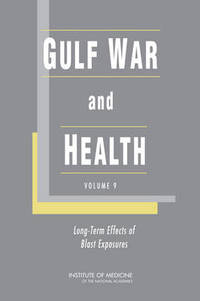
réf. ria9780309267649_inpPaperback / softback. New. New Book; Fast Shipping from UK; Not signed; Not First Edition; Although all wars since World War I have involved the use of explosives by the enemy the wars in Afghanistan and Iraq differ from previous wars in which the United States has been involved because of the enemy's use of improvised explo paperback
2014réf. 8767256National Academies Press 2014. Volume 9. This is an ex-library book and may have the usual library/used-book markings inside.This book has soft covers. In good all round condition. Please note the Image in this listing is a stock photo and may not match the covers of the actual item500grams ISBN:9780309267649 National Academies Press paperback
2000réf. Q-030907178XNational Academies Press 2000-12-15. Paperback. New. In shrink wrap. Looks like an interesting title! National Academies Press paperback
réf. 0309101069.Ghardcover. Good. Access codes and supplements are not guaranteed with used items. May be an ex-library book. hardcover
réf. A9780309267649Paperback / softback. New. Since the United States began combat operations in Afghanistan in October 2001 and then in Iraq in March 2003 the numbers of US soldiers killed exceed 6700 and of US soldiers wounded 50500. Although all wars since World War I have involved the use of explosives by the enemy the wars in Afghanistan and Iraq differ from previous wars in which the United States has been involved because of the enemy's use of improvised explosive devices IEDs. The use of IEDs has led to an injury landscape different from that in prior US wars. The signature injury of the Afghanistan and Iraq wars is blast injury. Numerous US soldiers have returned home with devastating blast injuries and they continue to experience many challenges in readjusting to civilian life. Gulf War and Health Volume 9 is an assessment of the relevant scientific information and draws conclusions regarding the strength of the evidence of an association between exposure to blast and health effects. The report also includes recommendations for research most likely to provide VA with knowledge that can be used to inform decisions on how to prevent blast injuries how to diagnose them effectively and how to manage treat and rehabilitate victims of battlefield traumas in the immediate aftermath of a blast and in the long term. paperback
2008réf. 79429Washington DC: The National Academies Press 2008. Presumed First Edition First printing. Hardcover. Very good. xviii 339 pages. Oversized book measuring 11-1/4 inches by 8-1/2 inches. Includes Acronyms Preface Summary Introduction Considerations in Identifying and Evaluating the Literature Deployment-Related Stressors The Stress Response Posttraumatic Stress Disorder Health Effects Phychosocial Effects Conclusions and Recommendations and Index. Also includes Tables Boxes and Figures and Acronyms. In this report the committee equated deployment-related stress with being deployed to a war zone although it recognized that not everyone deployed to a war zone would respond to stressors in the same way and that not everyone would necessarily find a particular event stressful. The reaction to deployment-related stressors would depend on numerous factors that were present before during and after deployment. The committee understood that stressors that people experienced in childhood their interactions with friends and family and whether they were wounded during deployment would all play a role in the nature of the response. The committee also understood that some military personnel would have minor reactions and transient health effects some would have severe reactions and more chronic health effects and some would go on to develop posttraumatic stress disorder which could be associated with additional health effects. The sixth in a series of congressionally mandated reports on Gulf War veterans' health this volume evaluates the health effects associated with stress. Since the launch of Operation Desert Storm in 1991 there has been growing concern about the physical and psychological health of Gulf War and other veterans. In the late 1990s Congress responded by asking the National Academy of Sciences NAS to review and evaluate the scientific and medical literature regarding associations between illness and exposure to toxic agents environmental or wartime hazards and preventive medicines or vaccines in members of the armed forces who were exposed to such agents. Deployment to a war zone has a profound impact on the lives of troops and on their family members. There are a plethora of stressors associated with deployment including constant vigilance against unexpected attack difficulty distinguishing enemy combatants from civilians concerns about survival caring for the badly injured and witnessing the death of a person. Less traumatic but more pervasive stressors include anxiety about home life such as loss of a job and income impacts on relationships and absence from family. The focus of this report by the Institute of Medicine IOM Committee on Gulf War and Health: Physiologic and Psychosocial Effects of Deployment-Related Stress is the long-term effects of deployment-related stress. Gulf War and Health: Volume 6. Physiologic and Psychosocial Effects of Development Related Stress evaluates the scientific literature regarding association between deployment-related stressors and health effects and provides meaningful recommendations to remedy this problem. The National Academies Press hardcover
2014réf. __0309267641National Academies Press 2014. Paperback. New. 1st edition. 228 pages. 8.75x5.75x0.50 inches. National Academies Press paperback
2007réf. 949952Gulf Research Center, 2007. 536 S. Fadengehefteter Pappband mit Schutzumschlag.
1998réf. 1307061PN. New. 1998. Soft Cover. Date is original print. This is a reprint edition . PN paperback
1997réf. 1302135PN. New. 1997. Soft Cover. Date is original print. This is a reprint edition . PN paperback
1998réf. 1303608PN. New. 1998. Soft Cover. Date is original print. This is a reprint edition . PN paperback
1999réf. 1316254PN. New. 1999. Soft Cover. Date is original print. This is a reprint edition . PN paperback
1997réf. 299304PN. New. 1997. . Soft Cover. Date is original print. This is a reprint edition . PN paperback
1999réf. 1314627PN. New. 1999. Soft Cover. Date is original print. This is a reprint edition . PN paperback
1998réf. 1308689PN. New. 1998. Soft Cover. Date is original print. This is a reprint edition . PN paperback
1999réf. 1317589PN. New. 1999. Soft Cover. Date is original print. This is a reprint edition . PN paperback
2000réf. 1326257PN. New. 2000. Soft Cover. Date is original print. This is a reprint edition . PN paperback
8vo. 12, 483, (1) pp. Contemporary half calf on four raised bands with sparsely gilt spine; pink cloth covers and marbled endpapers. First printing of this prose and verse anthology on the subject of Islamic ethics, containing eight chapters on virtues and another eight on vices. - Al-Watwat al-Kutubi (1234-1318), celebrated as an entertaining compiler, lived in Mamluk Egypt all his life. Unlike many writers of his era was not a member of the Mamluk administration, but rather a wealthy bookseller (hence his byname "Al-Kutubi", "the Bookseller"). - Binding slightly rubbed; paper evenly browned as common. Blank first page has contemporary ink ownership of Fernand Patorni (b. 1837), chief interpreter in Algiers and author of "Les Tirailleurs algériens dans le Sahara" (1884). GAL II, 55. OCLC 253615769.
8vo. 12 vols. With 72 engr. maps. Contemp. French full calf with giltstamped labels and gilt spines. All edges red; marbled endpapers. A fine copy of the twelve-volume octavo edition of the most detailed and accurate geography of its day (published simultaneously in four quarto volumes). All the maps are taken from the "Atlas Portatif" (1748-49) of Robert de Vaugondy. The fine map of the Arabian Peninsula is derived, via Vaugondy, from Delisle; "it includes the three classic divisions of the Arabian Peninsula and the following regional subdivisions: Tahama in the south west, Bahrain, which extends along the east coast and includes the town of Cathema, Yemen in the south which includes Oman, the States of the Cherif of Mecca which includes Hagiaz and parts of the centre of the Arabian Peninsula. Although the width of the Red Sea is exaggerated, the Sinai peninsula's shape is very close to reality. The topographical features and watercourses are not very different to how they are shown on other maps of the same period. A town named Naged is shown to the north west of the town of Janama" (Al Ankary). - Some bindings slightly bumped at extremeties. Contemporary ms. ownership "Leon. van Berg" to pastedowns; titles bear stamp of the La Valsainte Charterhouse, Switzerland (dissolved in 1825). Slightly browned. Formerly in the collection of the Swiss industrialist Herry W. Schaefer. Streit 17, p. 252, n. 6198. Brunet VI, 19613. OCLC 34221488. For the map of Arabia cf. Tibbetts 278. Sultan Bin Muhammad Al-Qasimi, The Gulf in Historic Maps, S. 162. Al Ankary Collection 338 (all referencing Vaugondy's map).
4to (20.5 x 15.5 cm). [20], 211, [1] pp. With the title in red and black in an ornamental, architectural woodcut frame with a palm tree at the head, and woodcut palm tree device above the colophon (both acquired from Erpenius), a decorated woodcut initial, a woodcut factotum and factotums and decorative bands built up from cast fleurons. Set in serto Syriac, meruba Hebrew, Greek and roman types, with incidental estrangela Syriac and italic. Contemporary or near contemporary vellum, sewn on 4 velum tapes laced through the joints, with a hollow back, red edges. The first edition of any early text of the Book of Revelations in the ancient Syriac language, a book that had been lacking in the manuscripts followed by the earlier Syriac New Testaments. It is also the first book the Elzeviers printed with Syriac or any other "oriental" type, their earlier forays into printing with non-Latin types having been limited to Greek and Hebrew. The main text is set in two columns, with the Syriac text set in Syriac type on the outside and the Syriac text set in Hebrew type on the inside, an aid to scholars less familiar with the Syriac script. Two columns in smaller type at the foot provide the original Greek text and a literal Latin translation of the Syriac. The whole is well printed and laid out, showing why the Elzeviers were quickly gaining a reputation as the leading scholarly printers and publishers. Thomas Erpenius made Leiden University the leading centre for the study of oriental languages when appointed professor of oriental languages in 1613. He set up his own printing office, acquiring or commissioning types for Arabic, Syriac, Samaritan and Ethiopic, and inaugurating it with his edition of Lockman's fables in Arabic (1615). His death from the plague at age forty cut his work short in 1624. Ludovicus de Dieu (1590-1642), Regent of the Walloon College associated with the University, had studied under Erpenius and his successor in Arabic studies Jacob Golius, but for Syriac he became Erpenius's spiritual successor. The present book was nearly his first publication. Although Syriac New Testaments had been published earlier, no source had been found for the Syriac text of the Book of Revelation, which was lacking in the standard "Peshitta" Bible, a Syriac Old and New Testament whose text was probably established in the 4th century. In his 1599 Polyglot, Elias Hutter therefore filled the gap with his own new translation, but De Dieu published the present text based on a manuscript from the library of the great orientalist Joseph Scaliger, apparently a copy made in Rome ca. 1580 of an ancient manuscript of the Syriac text established by the Persian Philoxenus, Bishop of Mabbug, in Mesopotamia in 508 and corrected by the Palestinian monk Thomas of Harkel near Alexandria in 616. For that reason, Darlow & Moule, Smitskamp and others call the present book the "editio princeps". Erpenius's widow briefly continued her husband's printing office, completing the Syriac psalter that he had begun, but it was published jointly by the Elzeviers and Johannes Maire, and on 9 October 1625 the Elzeviers bought her printing office and took over most of its materials and workmen. At the same time they began to acquire and commission new printing materials, greatly expanding the printing office they had added to their publishing house in 1617. This made the period 1625 to 1640 the press's golden age. Erpenius had commissioned the woodcut of the present title-page for his Arabic Historia Josephi in 1517 and most of the types and fleurons came from him as well. Plantin commissioned the serto and estrangela Syriac types from Robert Granjon for volume 5 (1571) of his Polyglot Bible (Erpenius added and revised a few characters in the serto) and Daniel Bomberg commissioned the Hebrew type for his press in Venice, where he used it in 1517. The lovely arabesque initial V with a face in the centre, however, belongs to a series cut exclusively for the Elzeviers and used here nearly for the first time. The book also shows them beginning to supplement their 16th-century French types (Garamont romans and Granjon italics) with 17th-century types cut in the Dutch Republic. The New Testament was originally written in Greek, the language of the Christian Church and Christian scholars in the first centuries of the Christian era, and a lingua franca among the diverse groups living in the Middle East at that time. But it relates stories that would have first been told (and in some cases probably also written down) in Aramaic, the vernacular language of Palestine in Jesus's time. It also presents Jesus's words in Greek translation, while he would have spoken them in Aramaic. While no early New Testament survives in Palestinian Aramaic, the Greek was translated into Syriac, probably already in the second century, and surviving manuscripts may date back to the fifth century. Syriac, another dialect of Aramaic, served as the vernacular language of much of the Middle East (it has nothing to do with today's Syria, where the native language is Arabic). The Syriac text therefore provides valuable clues to the Aramaic sources of the New Testament. The Peshitta Bible remains the standard text among some Christian groups. Debates continue as to how much of the "original" Aramaic can be found in the surviving Syriac versions. - The watermark in the endpapers (a simple bend) does not closely match any found in the literature, but the nearest is Heawood 129, used in Amsterdam in 1646. In fine condition, with only an occasional minor spot and at the edge of the last few leaves some tiny (0.2 mm!) worm holes, and with large margins (the leaves are a couple millimetres taller than those noted by Berghman and Rahir). The binding is very slightly rubbed but still very good. A fine copy of an important work of biblical scholarship and a showpiece of the Elzevier's press at the beginning of its golden age. Berghman, Cat. Raisonné 48; Copinger 1310; Darlow & Moule 8962; Rahir 230; Smitskamp, Phil. orientalia 303; STCN (9 copies); Willems 269; www.bibliasacra.nl, 1627.Rev.poly.BE.a.; for the types: J.F. Coakley, Typography of Syriac W3B & S3.
Small 4to (125 x 175 mm). 67, (5) pp. Original printed wrappers. A description of travels throughout Lebanon, written in Hebrew and including a map of the region labeled in Hebrew as well as numerous half-tone illustrations from photographs. Rafael Sverdlov (b. 1885) was a geography teacher at schools in Tel Aviv, and as both resident and teacher had both a personal and professional understanding of the landscapes of the area. The in-text illustrations show Roman-era ruins, rivers, and tree plantations. - A touch of wear, otherwise quite well preserved. OCLC 19179078.