Best.-Nr. 116427aafno date ( early 60ties), sm. in-8vo, (15x10.5 cm), 30 p. with coloured Golf Corse sketches + folde plate at the end, text in japanese & english, illuistrated wrappers.
1860545 x 165 mm. Watercolour on paper, signed at bottom right "Gab. Carelli". Carelli was a "watercolourist of great repute. His life was adventurous. He studied unter Leith, the Englishman, in Naples, then went to Rome; later, in Paris, he took commissions from the court and painted for the Versailles Gallery and the Palais Royal [...] For Napoleon III he designed an album of one hundred drawings, and Tsar Alexander III bought several of his works" (cf. Thieme/Becker V, 591).
1990Illustrations de Ken Lewis.
12mo. (4), 292 pp. With woodcut vignette on title page, 13 plates and a folding map. Original printed wrappers. First edition of this account of a journey made from Port Said, down the Red Sea to Mascate, and then along the Arabian Gulf ending in Baghdad. - Some foxing. OCLC 254176761.
8vo. With 8 woodcut tailpieces. Later mottled calf, red spine labels, red edges. Rare edition of the collected works of Luis de Camões, including Os Lusiadas and three Rimas. In the same year, Antonio Craesbeeck published another edition with the same title but with less content and with a different frontispiece. This collection of works is made up of separate publications. - Os Lusiadas is the great epic poem of Portuguese exploration, in the original Portuguese, a monument of Portuguese literature that gave a Homeric aura to Renaissance voyages of discovery and colonial conquests, here together with the other works of Camões. Camões's work was first published in Portuguese at Lisbon in 1572. - In the early 1530s the great Portuguese historian, João de Barros, most famous for his Decadas de Asia, had called for an epic poem of Portuguese exploration and discovery. Luis de Camões (1524-80) answered that call four decades later. Camões was educated in a monastic school in Coimbra, and produced poetry and plays at an early age. In his early twenties he was banished from Lisbon after producing a play considered disparaging to the royal family. He served as a soldier in the Portuguese forces besieging Ceuta in North Africa, where he lost an eye. Camões returned to Lisbon in 1550, but found himself in more trouble, and was pardoned by the King on condition that he serve the Crown in India for five years. He arrived at Goa in late 1553 and stayed there briefly before joining an expedition to the Malabar Coast. Later he participated in a campaign against pirates on the shores of Arabia. In 1556 he left Goa again for the East Indies, taking part in the military occupation of Macao, where he remained for many months. On his return trip to India, he was shipwrecked off the Mekong and wandered in Cambodia before reaching Malacca and eventually returning to Goa. He did not return to Lisbon until 1570. The Lusiads gives a fine description not only of Portuguese exploits in the East, but also of the flora and fauna of Asia and India, the ethnographic details of the peoples there, and the geography of the region, informed by Camões's own experiences as well as his familiarity with Ptolemy and Barros. - With the bookplate of "Aulo-Gélio", 1961, with a view of Lisbon. The first few pages slightly worn with some repairs. Stained throughout. Some contemporary annotations in ink in the margins. Bibliotheca Lusitana p. 62. Inocêncio XIV, 78. José de Canto, 37.
8vo. VIII, 351, (1) pp. Handsome period style brown gilt tooled half calf with marbled boards and red gilt morocco label. Period ink inscription on the first page of the Preface: "G. Matcham". With an autograph letter signed from Colonel Francklin to Major Moor, dated 1835, attached to the front endpaper. 4to. 2 pp. Brown ink on laid paper. Second edition, with an autograph letter signed by the author. While the writing is not particularly clear, the letter is in very good condition. Most likely from the library of English explorer and Officer of East India Company George Matcham (1753-1833). Being William Francklin's older contemporary, Matcham served in the Company in 1771-85 and extensively travelled across the Near East and the Red Sea on the way from India to England and back (cf. ODNB). William Francklin (1763-1839) was an Officer of the East India Company and a prominent orientalist; member, and in later years, librarian of the council, of the Royal Asiatic Society. He was also a member of the Asiatic Society of Bengal. "A distinguished officer, Francklin also enjoyed considerable reputation as an oriental scholar. In 1786 he made a tour of Persia, in the course of which he lived at Shiraz for eight months as the close friend of a Persian family, and was thus able to write a fuller account of Persian customs than had before appeared. This was published as 'Observations Made on a Tour from Bengal to Persia' (Calcutta, 1788) and was translated into French in 1797" (ODNB). Francklin's account was also published in German the same year as our English edition. The first edition was published in Calcutta in 1788. "An important book in the growing interest of 'Orientalism.' There are numerous references to Hafez. (Francklin's book was read by Byron, among others). The book is also important because of the retelling of comments the author had heard about Karim Khan Zand. The author states eye-witnesses had told him Karim Rhan always rode at the head of his troops; his soldiers liked him; there was nothing great in him but he was considered a just man even though during the last year of his reign he committed some cruel acts. We are also informed that Karim Khan was a 'debaucher.' The author saw a full cycle of Ta'zie during his stay in Shiraz" (Ghani). "Describes Cochin, Tellicherry, Anjengo, Goa, Bombay etc." (Kaul Travels 858). - A very good, handsome copy. Howgego I, E8. Ghani 138. Cox I, 257. Henze II, 165.
Small 4to. (2), 112 pp., final blank leaf. Slightly later full cloth with giltstamped title to cover and spine. Re-issue of this important guide to falconry by the "grand old man of British falconry" (Gallagher), Ronald Stevens (d. 1994), first published in 1956. The book questions several age-old concepts of the sport, such as the attempt of teaching falcons to wait on through flying to the lure, and introduces methods of teaching the birds to home to the falconer's house, which "caused a great deal of rethinking among falconers" (Gallagher). - Stevens settled in the remote Fermoyle Lodge in Connemara in Ireland in the early 1960s, the place quickly turning into something of a Mecca for falconers from all across the world, his treatises inspiring generations of aspired falconers. - Handwritten ownership of Charles Garton, dated Wadeford House, December 1987, to front pastedown. A typescript letter signed by John Cox from The Clock House bookshop to Garton is loosely enclosed, regarding his order of "A Falcon in the Field" by Jack Mavrogordato (London, Knightly Vernon Ltd., 1966), which could not be fulfilled as the work was not to be reprinted due to the author's recent death, offering to send him Stevens's work instead. With Garton's autograph reply on the same sheet, accepting the offer, and asking Cox to refund him the difference. The Clock House's advertisement for "A Falcon in the Field", with handwritten notes by Garton, is stapled to the letter. - Occasional light foxing. A very good copy of this influential work. Gallagher, Falcon Fever 74. OCLC 974238561.
4to. 139, (5) pp. With folding engr. map. Later cloth. First edition. - Includes observations "on the Plague in Egypt", "on the Overflowing of the RIver Nile, and the Qualities of its Water", "on the Climate and Seasons of the Year in Egypt", and "on the Situation of Egypt relative toi commercial Advantages", as well as "A Specimen of Turkish Justice, or, rather, of that of the Mamelucks in Egypt". John Antes was a missionary of the Moravian Church resident in Egypt from 1770 to 1781. He "produced this work in answer to those of Savary and Volney" (Blackmer). - Some foxing to title page. This copy is from the collection of the author's descendants, with several inscriptions on the flyleaf. Later in the Ottoman collection of the Swiss industrialist Herry W. Schaefer. Atabey 25. Blackmer 36. Ibrahim-Hilmy I, 38. Blake 16. OCLC 4415058.
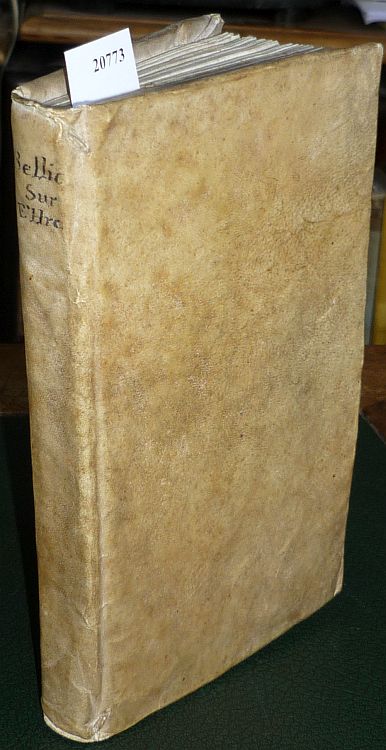
1757Best.-Nr. 20773Paris, Ch. Ant. Jombert, 1757. 8vo. Mit 38 (statt 42) teils gef. Kupfertaf. XXXXI, 84 S. Pgt. d. Zeit m. hs. Rückentitel.
4to. (167) ff. on smoothed paper. With many magic squares containing letters and numbers. Somewhat damaged contemp. blindstamped calf with fore-edge flap. Unsophisticated manuscript for private practical use, showing signs of heavy wear and apparently continued until fairly recently (with several modern ballpoint entries). Many postscripts on the flyleaves and empty leaves at the beginning and end (7 and 5 ff., respectively) are written in Maghribi style, suggesting a northern African provenance, but the main text is written in a different style. Sprinkled throughout the ms. are numerous magical squares, some bearing numbers, others words (such as "Allah", "light", "earth", etc.), sometimes both combined. Many quotations from the Qur'an and Islamic scholars. Continued at the end by other hands, with many prayers and invocations. Occult manuscripts are rare in the Islamic tradition, as the official taboo against such items was very strong. - Incomplete, but supplemented by an early hand. Occasional loose leaves; frequent fingerstaining and browning; numerous marginalia; edge wear throughout.
1997Best.-Nr. 1302134PN. New. 1997. Soft Cover. Date is original print. This is a reprint edition . PN paperback
19349" x 4" map folds out to 24" x 18". Printed in two colours - the traditional Gulf blue and orange. Moderate wear. Unmarked. A quality copy of this wonderful vintage road map. Map
Best.-Nr. 188014137X.Gpaperback. Good. Access codes and supplements are not guaranteed with used items. May be an ex-library book. paperback
2023Best.-Nr. __3885795841Köllen Druck 2023. Hardcover. New. German language. 8.86x6.14x1.14 inches. Köllen Druck hardcover
2022Best.-Nr. x-030926913XNational Academies Press 2022. Paperback. New. 86 pages. 9.02x5.98x0.79 inches. National Academies Press paperback
Best.-Nr. 1981491422.Gpaperback. Good. Access codes and supplements are not guaranteed with used items. May be an ex-library book. paperback
4to. (4), 44 pp. Contemporary full cloth with silver title stamped to spine. With the original dust jacket. Only edition. - Inscribed copy signed by the author: "To Larry and Marion / With best wishes, Glenn W. Swanson". - Scholarly account of the age-old struggle of the Middle East to find a balance between the abundance of oil and the scarcity of water. "In this overview of an important geographical area, the author shows the various ways in which Middle Eastern societies have coped with their water shortage, as well as the methods they use to develop their vast oil reserves and to move the oil from under the ground to overseas destinations [...]". OCLC 859002451.
Best.-Nr. ria9781285451374_inpMixed media product. New. New Book; Fast Shipping from UK; Not signed; Not First Edition; Created through a "student-tested faculty-approved" review process with input from more than 150 students and faculty this book provides a streamlined introduction to the core concepts techniques and applications of contemporary ope unknown
2007In – 4to ( misure 37x29 ), legatura editoriale con sovraccoperta illustrata, pp. 287 ( 1 ). Completamente illustrato con foto a colori. Eccellente esemplare, niente strappi, macchie, mancanze, sottolineature o altro difetto degno di nota.
Best.-Nr. 322Relations Internationales & Culture . Paris 1994
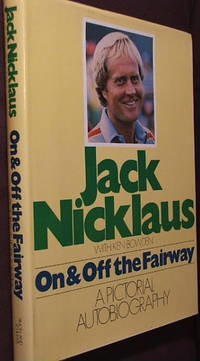
1978Best.-Nr. 000167NY: Simon and Schuster. First Edition. Hard cover in dust jacket. Published NY: Simon and Schuster 1978 first printing. 4to. 256 pp. illus. Near fine in near fine price clipped dj. . Near Fine. Hard. 1st. 1978. Simon and Schuster unknown
1979Updated edition. VG pbk. ISBN 0091349915. 19099. eng
Best.-Nr. 63672Berkshire:: Eaton Crane & Pike Co. no date. enclosed in publisher's two-part box illustrated in color with printed wraparound bands around envelopes and notepaper. Contents fine. Minor repairs to the joints of the illustrated box top which is a little sunned and dust-soiled. The unprinted box bottom has had several voids neatly supplied in facsimile. Box size 5-1/2 x 8-1/2 x 1 inch. Four color scenes of pairs of children playing golf in Victorian attire are illustrated on the box top; present here are three of those four illustrating 12 folded sheets of notepaper initialed by the artist W. C. O. with envelopes. Eaton, Crane & Pike Co., unknown
Folio (265 x 340 mm). (6), II, 47, (1) pp.; 6 pp. (ads). With 77 plates and plans (some collotype, 4 double-page). Original cloth (rebacked preserving original spine). First and only edition of this superbly illustrated description on the Muslim architecture of the more provincial towns of the state of Gujarat on the western coast of India. "Among the many varieties in the style of the Muhammadan architecture prevailing in different provinces of India, that which arose in Gujarât in the fourteenth and fifteenth centuries is one of the most instructive and deserving of study, as it is also the most beautiful" (preface). - The Scottish archaeologist James Burgess (1832-1916), founder of "The Indian Antiquary", did educational work in Calcutta, 1856 and Bombay, 1861, and was Secretary of the Bombay Geographical Society 1868-73. He was Head of the Archaeological Survey, Western India, 1873, and of South India, 1881. From 1886 to 1889 he was Director General of the Archaeological Survey of India. - Binding rubbed; original spine rebacked. Modern endpapers. Still a fine copy.
1996xviii, 414 pages. Index. Glossary. Colour and black and white photographic plates. Black and white maps in text. "Five years in the writing, this comprehensive record includes coverage of training, tactics, the pronounced changes in the armed forces and the views and anecdotes of the Non Commissioned Officers and Guardsmen. A dedicated history of the senior infantry regiment in the British Army and what is probably the most famous Regiment in the world." - dust jacket. Gift bookplate upon front free endpaper, otherwise clean and unmarked with light wear. Binding tight. Dust jacket now preserved in glossy new archival-grade Brodart. A quality copy of this excellent history. Book