4 432 résultats
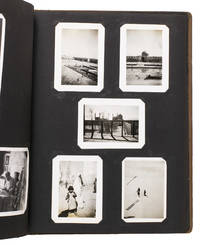
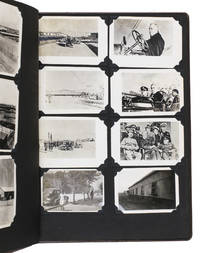
1943réf. ABC_484281943. Contemporary embossed brown cloth with the title embossed in silver on the front board and the green shoulder sleeve insignia of the Persian Gulf Command embedded in the front board. Ca. 32.5 x 26 cm. With 150 gelatin silver photographs various sizes. Unusual military photo album with 150 photographs of the activities of the Persian Gulf Command PGC at the base in Andimeshk Iran. The PGC was a branch of the United States Army established to facilitate the supply of material from the U.S. Lend-Lease programme through the Persian Corridor. This material was sent to the Soviet Union to strengthen it so it could help defeat Nazi Germany. The photographs in this album which cannot be found anywhere else offer a visual documentation of this time. However they show the simple soldiers; the men tasked with driving trucks maintaining oil supply lines or working alongside Iranians at the two factories producing trucks for the war effort. The work therefore offers a fascinating insight into daily life of PCG members in Persia in the Second World War.This album was compiled by John Stefano dates unknown a technician fourth grade in the PGC. It includes photographs of the Tehran conference in 1943 the first World War II conference between the Soviet Union the United States and the United Kingdom where it was decided to open a second front against Germany. Other than this there are photographs of the barracks the men lived in the military vehicles they used the marches and excercises they partook in but also the surrounding landscape and the local people.Inserted in the album is a booklet with images and information about Persia with a letter by PCG commander Donald Prentice Booth 1902-1993 which was sent to PCG members after the war to congratulate them on a job well done. He hoped the booklet would serve as a memento. Together with the album it continues to do so until this day.With the shoulder sleeve insignia of the Persian Gulf command mounted on the inside of the frfont board some of the photographs are captioned on the back. The eyelets for the string on the front board have come loose. The corners of the leaves are slightly creased. Overall in very good condition. hardcover
1943réf. ABC_484291943. Contemporary embossed brown cloth with the title embossed in silver on the front board the name of the owner painted in silver and the green shoulder sleeve insignia of the Persian Gulf Command embedded in the front board. Ca. 32.5 x 26 cm. With 76 gelatin silver photographs various sizes. Remarkable military photo album with 76 photographs of the activities of the Persian Gulf Command PGC at various locations in Iran. The PGC was a branch of the United States Army established in 1941 to assure the supply of U.S. Lend-Lease war material to the Soviet Union through the Persian Corridor. After the war members of the PCG received an empty album to fill with personal memories of their time in Iran. These albums are now relatively rare. The present one was compiled by Colonel S. Morgan Thomas dates unknown a PGC member who carried out inspections of the railroads. It includes various photographs of him at work.This album also contains photographs of PCG commander Donald Prentice Booth 1902-1993 a visit by Soviet soldiers and a young child military activity in Teheran locals and soldiers sending telegrams. Loosely inserted in the album are maps of Iran the lands surrounding Hamadan and the Trans Iranian Railroad which would have been important to carry for someone who inspected the railroads. The work offers a rare insight into life of a PGC member stationed in Iran.The corners of the boards are somewhat scuffed. One of the inserted maps is somewhat foxed and another has a tear that has been repaired with tape in the lower margin not affecting the image some leaves are missing one of the corner mounts the photographs are mounted on possibly missing a photograph on the verso of leaf 4. Otherwise in very good condition. hardcover
199424mo, 98 pages, not illustrated. eng
8vo. XVI, 668 pp. With a frontispiece printed in colours and gilt in the style of an Arabic title (lith. Bastide). Elegant oriental-style red morocco binding with fore-edge flap, covers blindstamped with gilt borders, spine gilt in western style. Marbled endpapers. Widely received introduction to Arabic by L. J. Bresnier (1814-69), a disciple of Silvestre de Sacy and the first professor of Arabic in Algiers. - Some insignificant foxing to margins, but a fine copy in a unique binding, from the library of the Algerian essayist and Muslim leader Mourad Kiouane, a participant in the World Muslim Conference held in Karachi in February 1951 (with his ownership stamps). Even many leaders among the Algerian Muslims of the 1950s, educated by the French colonial system, spoke good French but only Algerian Arabic rather than the standard variety, which hampered their ability to converse with the leaders of other Arab nations. Famously, Algeria's first president Ahmed Ben Bella broke out in tears when invited by Nasser to speak for the first time before an Egyptian audience, but finding himself unable to do so. Partly in response to this, and to promote pan-Arabism, Nasser sent droves of Arabic instructors to Algeria in the 1960s. OCLC 929616431.
Large folding map (64 x 86 cm), hand-coloured and mounted on linen. Scale 1:6,969,000. Alai, General maps E.323. Not in Al Ankary; Al-Qasimi.
1932réf. GIT0116cParis Flammarion 1932. In-8 broché 283pp. Edition originale. 1 des 100exp hors commerce, sur papier de couleur non numérotés, réservés à l'auteur. Celui-ci avec un bel envoi signé de sa main.
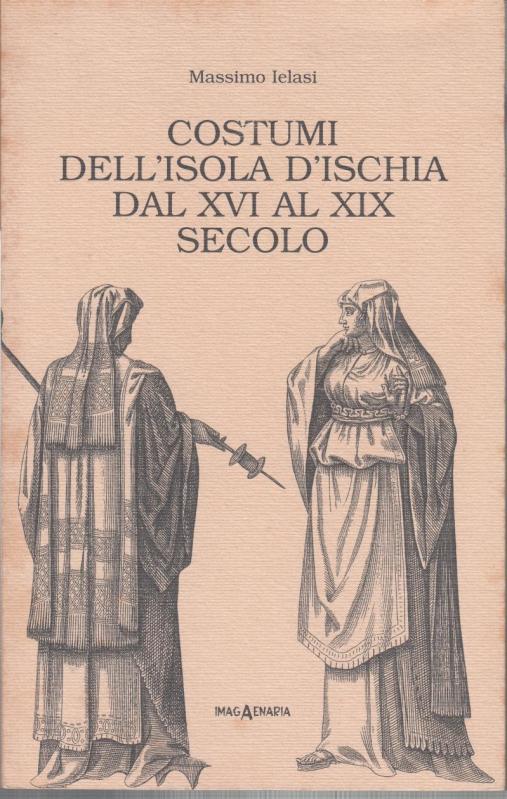
2000réf. 503465ImagAenaria edizioni, Ischia Lacco Ameno 2000. 22 x 14 cm. Opuscolo originale con patta. 61 (2) Pagine con numerose illustrazioni, per lo più a tutta pagina, a colori e in bianco e nero che mostrano i costumi femminili di Ischia. Leggermente volpe sul retro. Buona copia. --- Originale Klappenbroschur. 61 (2) Seiten mit zahlreichen, zum großen Teil ganzseitigen Abbildungen in Farbe und schwarzweiss, die die weiblichen Trachten von Ischia zeigen. Am Rücken leicht stockfleckig. Gutes Exemplar.
Folio. (24), 1162, (2) pp. With woodcut printer’s device on the final leaf by Urs Graf, 14 double-page maps as well as 37 double-page views and approximately 900 woodcuts in the text. Modern vellum. A very early edition of Münster’s monumental work. The Cosmographia by Sebastian Münster (1488-1552), a German cartographer and cosmographer, was one of the most successful and popular books of the 16th century. It passed through 24 editions in 100 years, and was most important in reviving geography in 16th-century Europe, being the most valued of all cosmographies. - In very good condition, with some very slight overall discoloration; map of the Americas shows unobtrusive rust mark. VD 16, M 6717. Burmeister 89. Hantzsch 77.32. BM-STC German 633. Adams M 1910. Sabin 51381. Borba de Moraes II, 90. BNHCat M 834. Brunet III, 1945. Graesse IV, 622.
in-8°, 159 pp, croquis et illustrations photographiques, broche, couverture illustree plastifiee. Bel exemplaire. [SP-1]
8vo. 18 pp. With a colour-printed folding map. Wrappers stapled as issued. First official publication of the famous exchange of letters written between 1915 and 1916, between the Sharif of Mecca, Husayn bin Ali, and Sir Henry McMahon, British High Commissioner in Egypt, concerning the future political status of the lands under the Ottoman Empire. A special controversy concerned Palestine: Great Britain's pledged support for Arab independence in the region was not to be realized, and the correspondence went on to haunt Anglo-Arab relations for many decades thereafter. Unofficial excerpts from the letters had been circulated in the press as early as 1923; excerpts appeared in the 1937 Peel Commission Report, and the correspondence was unofficially published in George Antonius's 1938 book "The Arab Awakening". - A few slight edge flaws; corner loss to lower wrapper, but still very good copy. Cmd. 5957.
1876réf. 173034London: Printed by Harrison and Sons 1876. We should no longer be looked on as the friendly protectors of the maritime Arabs First edition traced in only five libraries. The opening section centres on the important political implications of receiving fugitives on vessels in the Gulf and reproduces correspondence to and from Edward Charles Ross the Acting Political Resident concerning HMS May Frere whose commanding officer granted safe harbour to a slave from a pearl boat while anchored near Abu Dhabi. London saw curtailing the slave trade in the Indian Ocean and Arabian Sea as a means to consolidate Britain's power in the region and signed anti-slavery treaties with the sultans of Muscat and Zanzibar in 1873. Although guidance from 1871 stated that slaves who were accepted onto naval vessels gained freedom Ross understood the inherent dangers of such an emancipatory approach: "It is however necessary to consider the consequences which would ensue on an excessive exercise in the Persian Gulf of the powers vested in Commanders of vessels-of-war. Nowhere would these be more serious than on the Pearl Banks where the diving is carried on almost entirely by domestic slaves. If the slave should find an opportunity to run off to a British vessel one can easily understand the dismay of the master and the general feeling of consternation and disgust that would be caused by a frequent recurrence of such incidents. We should no longer by looked on as the friendly protectors of the maritime Arabs" p. 2. In Ross's view commanders were best advised not to accept runaways and protect Britain's superior position. We have traced copies at the Senate House Library NYU Abu Dhabi Harvard Florida International University and Leiden. Quarto 315 x 205 mm. Recent blue wrappers. Leaves paginated on verso at top-right. Some rust-marking light creasing and short closed tears internally: about very good. unknown
1987réf. 0754389Washington DC: US Department of the Interior. 1987. 4to - over 9¾" - 12" tall. First Thus Used. S Boxed. Very Good. A boxed set of 33 large color maps covering the Correlation of Cenozoic Sediments: Gulf of Mexico Outer Continental Shelf: Part 1: Galveston Area Offshore Texas Through Vermilion Area Offshore Louisiana Texas- louisiana line. OCS Report MMS 87-0026. Scarce set of geologic and minineral maps for the recently Hurricane battered Gulf coast area near the Texas-Louisiana border. boxed maps only US Department of the Interior unknown
1908réf. 40807Chicago Illinois 1908. Tall 8vo. Contemporary pale cloth with title stamped on spine. 6 338 pp with folding plates that are included in the pagination. Binding dusted text and plates clean. Very Good. President William Joyce informs "The Tremont & Gulf Railway Company is the outgrowth of the Tremont & Gulf Railroad which in its initial stages was merely a logging road with rather poor grades and alignment." He proudly recounts the Company's development. "The storied Tremont & Gulf Railway began life in 1902 when it laid rails from a Tremont Lumber Company railhead 9 miles from the town of Tremont to Winnfield Louisiana some 40 miles to the south. Various small expansions occurred up through 1908 when the original company the Tremont & Gulf Railroad went into foreclosure. The T&G Railway emerged as successor and promptly completed another branch of 20 miles. The shortline served a timber - rich region situated amid the mainlines of several prominent Louisiana carriers: Chicago Rock Island & Pacific; Illinois Central; Louisiana & Arkansas; Missouri Pacific. Nevertheless despite these advantages the pike lost money throughout its existence" web site of Hawkins Rails online. The Railway's original records "which had been found to be more or less incomplete and scattered" are organized compiled and printed here. OCLC 817757631 1- SMU as of March 2025. unknown books
8vo. 5 booklets: (2), 14; 5, (3); (4), 15, (1); (4), 29, (3); (4), 20 pp. Original printed wrappers. Stapled. Set of booklets on Aramco benefit plans, informing employees of terms and conditions of life insurance, retirement income, a medical payment plan, and a savings plan offered by the company, the latter seeking "to encourage Employees to save part of their earnings systematically so they will have additional financial security in the later years of their lives". - Front cover of one booklet scratched with loss to text; front cover of another somewhat foxed.
1908réf. 40807Chicago Illinois 1908. Tall 8vo. Contemporary pale cloth with title stamped on spine. 6 338 pp with folding plates that are included in the pagination. Binding dusted text and plates clean. Very Good. President William Joyce informs "The Tremont & Gulf Railway Company is the outgrowth of the Tremont & Gulf Railroad which in its initial stages was merely a logging road with rather poor grades and alignment." He proudly recounts the Company's development. "The storied Tremont & Gulf Railway began life in 1902 when it laid rails from a Tremont Lumber Company railhead 9 miles from the town of Tremont to Winnfield Louisiana some 40 miles to the south. Various small expansions occurred up through 1908 when the original company the Tremont & Gulf Railroad went into foreclosure. The T&G Railway emerged as successor and promptly completed another branch of 20 miles. The shortline served a timber - rich region situated amid the mainlines of several prominent Louisiana carriers: Chicago Rock Island & Pacific; Illinois Central; Louisiana & Arkansas; Missouri Pacific. Nevertheless despite these advantages the pike lost money throughout its existence" web site of Hawkins Rails online. The Railway's original records "which had been found to be more or less incomplete and scattered" are organized compiled and printed here. OCLC 817757631 1- SMU as of March 2025. unknown
Small folio (224 x 284 mm). 15 vols. (final vol. in 2 parts), uniformly bound in half tan sheep over decorated boards, spines gilt with raised bands in five compartments, decorated endleaves. Some original printed wrappers bound within. All edges sprinkled. First editions; all that was published of this massive project. The "Corpo diplomatico" deals with the relations between Portugal and the Roman Curia, presenting a chronologically arranged sequence of documents from the 16th and 17th centuries. The Portuguese Empire was the first global empire in history, and the sources here edited - frequently citing the significant Portuguese royal title of "King of Portugal and the Algarves, on this side of the sea, and on the other side in Africa, lord of Guinea and of the naval and commercial conquest of Ethiopia, Arabia, Persia, and India" - provide substantial information on the principal world issues and conflicts during that vast Empire's first era. Much of the diplomatic correspondence concerns conflicts between the worlds of Christianity and Islam: in one letter, King Manuel describes his attacks on and victories over the local Muslim rulers ("the Saracens are thrown into confusion"; "our men attacked and burned maritime towns belonging to the Saracens, situated on the mainland"; cf. vol. I, p. 116f.), and in a Papal Breve, Pius V praises the strengthening of the Maltese fortifications after the Great Siege of Malta ("erit opportunissimum adversus Turcas, et praedones Afros totius christiani populi propugnaculum", vol. X, p. 226). Many volumes, but VII through XI in particular, contain material on the Arabian Gulf (Basra, Bahrain, Muscat, and Ormuz): "Ormuz, que he cabeça de todo o Reino de Ormuz [...] e na dita Cidade de Ormuz fortaleza minha com muita gente de christâos portuguezes" (vol. II, p. 374); "o vejo, que se se faz guerra ao Turco e Vossa Alteza quer, sem despesa de quasi nada, o Egipto e Suria e Arabia seraom vossos" (vol. III, p. 243); "e asy mandou que se reteuessem todas as naos, que viessem da India a Judá e a Meca" (p. 397); "se entende hum muito boom socedimento pella armada de Vossa Alteza na ilha de Banrrehem [= Bahrain] de que se deve ter muito contentamento assi pella reputaçâo" (vol. VIII, p. 372); "e depois em Ormuz poderia saber o acontesimento de Baharem" (p. 468); "toda a costa de Melinde ate Moçambique e assi da outra de Adem ate Ormuz quererâo por alguma d aquellas tentar ardis [...] A Baçora vai tambem muita somma de especiaria" (vol. IX, p. 110f.); "O negocio he grave e de muita consideraçâo e em ser muita a somma da speciaria que vem pello mar Roxo ao Cayro e pello de Ormuz a Bacora" (p. 135); "Andre Ribeiro que com Joâo de Lisboa foi cativo em Mazcate" (p. 175); "creo tambem que elles lá ou nos quá nâo sabemps o que passa em Bacora porque se n aquella ilha creserem galees sem hirem do mar Roxo, como as que ali vierâo quando de caminho tomarâo Mascate nâo sey por onde viessem as outras" (p. 305); "pera o resgate dos portugueses que estam cativos no Cayro, e forom presos em Mazcate" (p. 382; cf. p. 485); etc. - Furthermore, there are reports on the Portuguese in Suez, Africa (including Angola, Mozambique, Guiné, Sofala, Morocco, Arguin, Cabo Verde, Congo, São Thomé, Ethiopia), Brazil (Bahia, Maranhão, Rio de Janeiro, Pernambuco), the Azores, India (in nearly every volume, including Goa, Cochin, Damão, Malabar), and the Far East (Malacca and the Moluccas, with a few sections on Macau, China, and Japan scattered in vols. X-XIV). The work also provides a wealth of detail about the Inquisition and "cristãos novos" (both discussed in almost every volume), the Jesuits (vols. V-XV), the Council of Trent (vols. VI-X), Protestant activity (particularly in England), the Restauração, the Dutch in Brazil, the wars with the Turks on land and sea, and the activities of D. Sebastião and St. Charles Borromeu, the Order of Malta, and Cardinal Mazarin. Among the most notable texts are Ambassador Martinho's 1533 letter describing the forces defending Christianity in India and Africa, Bishop Lourenço Pires de Tavora's account of monasteries in India in 1561, and 25 letters written by P. Antonio Vieira from 1671 to 1675 (vol. XIV). - Marginal spotting in vol. XV, part 1; last 5 leaves remargined. Very discreet library markings on rear pastedown of each volume. Overall a very good set. Innocêncio IX, 95. OCLC 55783574.
8vo. 289-405 [= 117] pp. One folding table and 3 folding maps (1 belonging to another article in the journal). Brown paper wrappers, with title information of the journal on the front and spine, and the contents on the back wrapper. This issue of the journal of the Royal Dutch Geographical Society contains the first and only publication of the original text of the primary logbook documenting the first Dutch expedition to the Arabian Gulf in 1645. This logbook was kept by the leader of the expedition, Captain Cornelis Cornelisz Roobacker, and it is one of three logbooks to have survived the journey. They are kept at the National Archives of the Netherlands as part of the collection of the VOC official Wollebrand Geleynssen de Jongh (1594-1647). - Roobacker's logbook was the only one of the three to have been selected for publication; it was edited by Albert Paulus Hermanus Hotz (1855-1930), a Dutch businessman in Iran and consul in Beirut. Hotz also wrote other articles on Dutch activities in the Gulf region and formed a large collection of Arabic manuscripts, early photographs and books on the Middle East. - "In the year 1645, two small Dutch ships, the Delfshaven and the Schelvis, set out from Bandar Abbas [on the coast of Iran] on their first trading mission to Basra [Iraq]. Only small ships could be used to reach Basra. [...] As was the custom for shipping to Basra, the Dutch ships took a local pilot on board on Kharg island. The pilot took the ships directly to the Shatt al Arab, but there trouble began. The Shatt al Arab was very shallow at that time [...]" (Slot, Kuwait). In his logbook, Roobacker gives a detailed description of the expedition, including the various problems and navigational errors they faced due to the size of the two Dutch ships and - according to Roobacker - the inaccuracy of the English nautical charts that were used on board the ships. He ended up drawing his own charts of the region, which survived among the papers of VOC official Artus Gijsels (1577-1647) and are now kept at the Badische Landesbibliothek in Karlsruhe. The illustration of a chart Hotz added to his publication of Roobacker is one of a different Dutch nautical chart that was made during the second half of the 17th century, since Hotz did not know about the original in Karlsruhe. Regardless of what chart Hotz used, it is a useful addition to illustrate the locations in the Arabian Gulf region, mentioned in the text of Roobacker's logbook of the expedition. - Very slight foxing throughout, 2 of the 3 maps at the end of the work are loose, overall in very good condition. Slot, The Arabs of the Gulf, p. 11. Slot, The Origins of Kuwait, pp. 18-19.
Diameter: 31 cms. A beautiful copper gilt tray in a rounded flat form, engraved with geometric designs in the Mamluk revival style, the Star of David and Hebrew and Arabic lettering. - Exceedingly well preserved.
16998vo. 13, (1) pp., final blank f. Contemp. papered spine. One of several impressions of this pamphlet, all published simultaneously, about the Treaty of Karlowitz signed on 26 January 1699 in Sremski Karlovci (today in Serbia), which ended the Austro-Ottoman War of 1683-97 after the Ottoman side had been defeated at the Battle of Zenta. - Dated at the end: "Anno 1698 Mense Decembri Die 25." Rare. VD 17, 12:194179A.
8vo. 8 pp. With woodcut title vignette. Wrappers. First (and only?) printing of the letter by the Capuchin friar Pacifico Scaliger, leader of his order's mission to Persia and Armenia, written to the Capuchin Guardian of Leghorn (dated 21 May 1627), with the two mandates received from Sultan Murad IV: the first a permit to found a hospital at Aleppo, Syria (12 April 1627); the other granting the Capuchins free passage and permission to reside and teach throughout the Ottoman Empire, wherever there are Christians (26 April 1627). - Some brownstaining; old pagination in manuscript and stamped (apparently removed from an old collection). Of special interest is the title woodcut, showing a round moon within the oriental crescent. The round moon bears a crudely drawn face, incorporating the western notion of a "man in the moon", but the heavily structured lunar surface also provides a curious counterpiece to the famous woodcuts which had appeared in Galileo's groundbreaking "Sidereus Nuncius" but eighteen years previously. - Excessively rare: a single copy in library catalogues (HAB Wolfenbüttel); no records via WorldCat or in Italian libraries via SBN. OCLC 258074666 (no holding records). HAB Wolfenbüttel shelfmark M:Gv Kapsel 7 (46).
4to. (3) pp., final blank page. With woodcut illustration on the title-page. Sewn. Scarce account of a naval battle in the Mediterranean that took place near Cap de Begur (Catalonia) between a Spanish vessel and a ship of corsairs from Algiers in April 1623. The latter, carrying "50 Turcs, 4 captured Christians, a black Moorish woman, and a Mallorcan renegade", went up in flames. Allegedly the copy of a letter by a soldier of the Spanish Armada. The illustration shows the Ottoman vessel features 11 sailors at the helms wearing turbans. - Slightly dampstained. Near-contemporary foliation in ink (137-138), suggesting the work was originally part of a larger volume. Palau 61131. Not in OCLC.
8vo (175 x 252 mm). (4), IV, (2), 150, (8) pp. With a portrait frontispiece of the author. Original printed wrappers bound within private gilt full brown morocco. First and only edition, limited to 138 copies. A posthumous collection of stories by the Franco-Swiss explorer and writer Isabelle Eberhardt (1877-1904), famous for her intrepid lifestyle and exploits undertaken in male costume throughout the Sahara Desert and Northern Africa. She converted to Islam, disregarding many of its commandments, and adopted the name of Si Mahmoud Saadi. Her works and colourful persona were rediscovered by the women's movement of the early 1970s, and she is today regarded as an early feminist icon. - Inscribed by the editor, René-Louis Doyon, to the French writer Jacques-Napoléon Faure-Biguet (1893-1954). Traces of worming to lower endpapers, otherwise an excellent copy of a rare work. OCLC 550675807.
réf. 0266840515.Ghardcover. Good. Access codes and supplements are not guaranteed with used items. May be an ex-library book. hardcover
12mo. (20), 168 pp., including a folding genealogy of Mohammed as *10, bound here before *2. With a woodcut vignette of the Blue Mosque (?) on title-page as well as an engraved frontispiece of Mohammed presenting the Qur'an to the world, along with Zulfiqar (his legendary double-bladed sword), and a dove on his shoulder. - Bound with (II): Orientalischer Kirchen-Staat. Gotha, Jakob Mevius, 1699. (2), 155, (1) pp. (and 2 other works). Contemporary vellum. Very rare sole edition of this detailed exposition of the Qur'an for German readers, replete with a frontispiece depicting Mohammed giving the 'Alcoran' to the world as well as a folding genealogy of the Prophet. The preface discusses the threat which Islam poses to the West; and yet Pritius remarks that "meanwhile no-one will be hurt by learning a little more precisely about the opinions of these people, against whom Christendom has so long struggled" (*2v). - Chapter I covers the tenets of Islamic faith, rituals, customs, and pilgrimage. This includes numerous excerpts from the Qur'an and a lengthy discussion of the entire process of the Hajj, as well as the rituals the pilgrims take part in once they arrive in Mecca (pp. 89-113). Chapter II concerns the role of "muftis, priests, monks, and hermits" in Islam; and Chapter III recounts the life and death of Mohammed, taken from the usual European sources. - The inner workings of Islam had long fascinated the German Protestants, who saw an ally in their struggle against the common enemy of the Habsburgs / Roman Catholic Church. The present work is exceptionally detailed, however, and offers far more than the usual brief discussions of Mohammed's life; indeed, it is evident that Pritius had access to one of the Qur'an translations available in Europe at the time. - Extremely rare: OCLC shows no copies in American or UK libraries; VD 17 shows holdings in six German libraries. - Bound at the end of the volume is a manual of the various faiths of the orient, which includes a chapter on Islam and a discussion of the schism between Sunni and Shiite Muslims. Two other theological works bound first: (III) Spener, Philipp Jakob. Die Seligkeit der Kinder Gottes [...]. Frankfurt, Johann David Zunner, 1692. (138), 427, (25) pp. - (IV) Schmidt, Sebastian. Regenten-Predigten, welche zu gewissen Zeiten des Jahrs der christlichen Gemeine in Straßburg aus dem Alten Testament erkläret und vorgetragen worden. Braunschweig, Caspar Gruber, 1694. (2), 308 pp. - Some browning and occasional waterstaining throughout; binding darkened. Some edge chipping to the genealogical plate. VD 17, 39:144883H. Chauvin XI, p. 186, no. 667. Imaginationen des Islam: Bildliche Darstellungen des Propheten Mohammed, no. 20. Cf. also Fischer, Bildung durch Reisen? Deutsche Aufklärung und Islam II, p. 85 (note); on Pritius cf. ADB XXVI, 602ff. - (II): VD 17, 39:144877G. BL (German books) O224.
8vo. (4), XLIV, 525, (1) pp. Contemporary half calf with giltstamped spine title. With the folio atlas: 6 engr. maps and plans and 4 lithogr. views. Contemporary half calf over marbled boards, with original printed wrapper cover on upper cover. First edition, text and atlas together. Descended from a family of canal builders, Antoine François Conte Andreossi (1761-1828) served at the French embassy in Constantinople from 1811 to 1814, when he was recalled to France by Louis XVIII, much to the dismay of the local French community. Some of the plates show his beloved waterways and fountains; they also include a view of the Hippodrome and Mosque of Sultan Ahmed. - Slight worming to hinges of atlas; old stamp to first engraved plates. Bookplate of Dr. Th. Weber (no. 518). Atabey 22. Blackmer 33. Weber I, 154f. Brunet I, 276. Graesse I, 122. Not in Aboussouan.