4.438 Ergebnisse
Diameter: 31 cms. A beautiful copper gilt tray in a rounded flat form, engraved with geometric designs in the Mamluk revival style, the Star of David and Hebrew and Arabic lettering. - Exceedingly well preserved.
16998vo. 13, (1) pp., final blank f. Contemp. papered spine. One of several impressions of this pamphlet, all published simultaneously, about the Treaty of Karlowitz signed on 26 January 1699 in Sremski Karlovci (today in Serbia), which ended the Austro-Ottoman War of 1683-97 after the Ottoman side had been defeated at the Battle of Zenta. - Dated at the end: "Anno 1698 Mense Decembri Die 25." Rare. VD 17, 12:194179A.
8vo. 8 pp. With woodcut title vignette. Wrappers. First (and only?) printing of the letter by the Capuchin friar Pacifico Scaliger, leader of his order's mission to Persia and Armenia, written to the Capuchin Guardian of Leghorn (dated 21 May 1627), with the two mandates received from Sultan Murad IV: the first a permit to found a hospital at Aleppo, Syria (12 April 1627); the other granting the Capuchins free passage and permission to reside and teach throughout the Ottoman Empire, wherever there are Christians (26 April 1627). - Some brownstaining; old pagination in manuscript and stamped (apparently removed from an old collection). Of special interest is the title woodcut, showing a round moon within the oriental crescent. The round moon bears a crudely drawn face, incorporating the western notion of a "man in the moon", but the heavily structured lunar surface also provides a curious counterpiece to the famous woodcuts which had appeared in Galileo's groundbreaking "Sidereus Nuncius" but eighteen years previously. - Excessively rare: a single copy in library catalogues (HAB Wolfenbüttel); no records via WorldCat or in Italian libraries via SBN. OCLC 258074666 (no holding records). HAB Wolfenbüttel shelfmark M:Gv Kapsel 7 (46).
4to. (3) pp., final blank page. With woodcut illustration on the title-page. Sewn. Scarce account of a naval battle in the Mediterranean that took place near Cap de Begur (Catalonia) between a Spanish vessel and a ship of corsairs from Algiers in April 1623. The latter, carrying "50 Turcs, 4 captured Christians, a black Moorish woman, and a Mallorcan renegade", went up in flames. Allegedly the copy of a letter by a soldier of the Spanish Armada. The illustration shows the Ottoman vessel features 11 sailors at the helms wearing turbans. - Slightly dampstained. Near-contemporary foliation in ink (137-138), suggesting the work was originally part of a larger volume. Palau 61131. Not in OCLC.
8vo (175 x 252 mm). (4), IV, (2), 150, (8) pp. With a portrait frontispiece of the author. Original printed wrappers bound within private gilt full brown morocco. First and only edition, limited to 138 copies. A posthumous collection of stories by the Franco-Swiss explorer and writer Isabelle Eberhardt (1877-1904), famous for her intrepid lifestyle and exploits undertaken in male costume throughout the Sahara Desert and Northern Africa. She converted to Islam, disregarding many of its commandments, and adopted the name of Si Mahmoud Saadi. Her works and colourful persona were rediscovered by the women's movement of the early 1970s, and she is today regarded as an early feminist icon. - Inscribed by the editor, René-Louis Doyon, to the French writer Jacques-Napoléon Faure-Biguet (1893-1954). Traces of worming to lower endpapers, otherwise an excellent copy of a rare work. OCLC 550675807.
Best.-Nr. 0266840515.Ghardcover. Good. Access codes and supplements are not guaranteed with used items. May be an ex-library book. hardcover
12mo. (20), 168 pp., including a folding genealogy of Mohammed as *10, bound here before *2. With a woodcut vignette of the Blue Mosque (?) on title-page as well as an engraved frontispiece of Mohammed presenting the Qur'an to the world, along with Zulfiqar (his legendary double-bladed sword), and a dove on his shoulder. - Bound with (II): Orientalischer Kirchen-Staat. Gotha, Jakob Mevius, 1699. (2), 155, (1) pp. (and 2 other works). Contemporary vellum. Very rare sole edition of this detailed exposition of the Qur'an for German readers, replete with a frontispiece depicting Mohammed giving the 'Alcoran' to the world as well as a folding genealogy of the Prophet. The preface discusses the threat which Islam poses to the West; and yet Pritius remarks that "meanwhile no-one will be hurt by learning a little more precisely about the opinions of these people, against whom Christendom has so long struggled" (*2v). - Chapter I covers the tenets of Islamic faith, rituals, customs, and pilgrimage. This includes numerous excerpts from the Qur'an and a lengthy discussion of the entire process of the Hajj, as well as the rituals the pilgrims take part in once they arrive in Mecca (pp. 89-113). Chapter II concerns the role of "muftis, priests, monks, and hermits" in Islam; and Chapter III recounts the life and death of Mohammed, taken from the usual European sources. - The inner workings of Islam had long fascinated the German Protestants, who saw an ally in their struggle against the common enemy of the Habsburgs / Roman Catholic Church. The present work is exceptionally detailed, however, and offers far more than the usual brief discussions of Mohammed's life; indeed, it is evident that Pritius had access to one of the Qur'an translations available in Europe at the time. - Extremely rare: OCLC shows no copies in American or UK libraries; VD 17 shows holdings in six German libraries. - Bound at the end of the volume is a manual of the various faiths of the orient, which includes a chapter on Islam and a discussion of the schism between Sunni and Shiite Muslims. Two other theological works bound first: (III) Spener, Philipp Jakob. Die Seligkeit der Kinder Gottes [...]. Frankfurt, Johann David Zunner, 1692. (138), 427, (25) pp. - (IV) Schmidt, Sebastian. Regenten-Predigten, welche zu gewissen Zeiten des Jahrs der christlichen Gemeine in Straßburg aus dem Alten Testament erkläret und vorgetragen worden. Braunschweig, Caspar Gruber, 1694. (2), 308 pp. - Some browning and occasional waterstaining throughout; binding darkened. Some edge chipping to the genealogical plate. VD 17, 39:144883H. Chauvin XI, p. 186, no. 667. Imaginationen des Islam: Bildliche Darstellungen des Propheten Mohammed, no. 20. Cf. also Fischer, Bildung durch Reisen? Deutsche Aufklärung und Islam II, p. 85 (note); on Pritius cf. ADB XXVI, 602ff. - (II): VD 17, 39:144877G. BL (German books) O224.
8vo. (4), XLIV, 525, (1) pp. Contemporary half calf with giltstamped spine title. With the folio atlas: 6 engr. maps and plans and 4 lithogr. views. Contemporary half calf over marbled boards, with original printed wrapper cover on upper cover. First edition, text and atlas together. Descended from a family of canal builders, Antoine François Conte Andreossi (1761-1828) served at the French embassy in Constantinople from 1811 to 1814, when he was recalled to France by Louis XVIII, much to the dismay of the local French community. Some of the plates show his beloved waterways and fountains; they also include a view of the Hippodrome and Mosque of Sultan Ahmed. - Slight worming to hinges of atlas; old stamp to first engraved plates. Bookplate of Dr. Th. Weber (no. 518). Atabey 22. Blackmer 33. Weber I, 154f. Brunet I, 276. Graesse I, 122. Not in Aboussouan.
Oblong album (370 x 284 mm) with 47 large albumen photographic prints, generally ca. 20 x 26 to ca. 22 x 28 cm, mostly signed and captioned in the negative (in French), mounted on both sides of the album's leaves. Original half calf binding with burgundy cloth covers, title gilt to upper cover. All edges gilt. A rare souvenir album containing 40 photographs of Istanbul and 7 of Athens. The Turkish images are almost exclusively signed by the renowned studio of Guillaume Berggren (1835-1920), the Swedish-born photographer who had come to Constantinople in 1866 and remained there for the rest of his life. Berggren's photographs were particularly popular with Scandinavian, German and Austrian tourists seeking souvenirs of their Middle-Eastern journey. The present album includes landscapes and city views, famous sights such as the Galata Tower and Bridge, the Yeni Cami Mosque, the Hagia Sophia with its interiors, a "shadirvan" fountain for ritual ablutions in front of the Hagia Sophia, the Sultan Ahmed Mosque, Rüstem Pasha Mosque, Skutari Cemetery, views of the Golden Horn, street scenes, dervishes, the Bosporus, the French embassy in Tarabya, the city port, the steps leading up the Grand Street of Pera (where Berggren's studio was located), etc. The Greek views include Mount Lycabettus, a two-image panorama of the Acropolis, the Olympieion and the so-called Theseion (Temple of Hephaestus). - A few photographs show insignificant loss of contrast, but they are altogether in good condition, mostly preserving their original crispness. A few images captioned in pencil on the backboard. Corners of binding bumped; leather chafed and spine-ends more markedly flawed. A fine collection.
Small folio (ca. 215 x 337 mm). 64 pp., interleaved by 30 blank pp., 3 of which with manuscript notes. Contemporary full blue leather with giltstamped spine and red spine-label. One of the founding documents of the 20th century's oil industry: the personal copy of Fuad Rouhani (1907-2004), later the first Secretary General of OPEC, with his autograph annotations and signature. - The historic agreement that provided Western oil companies with 50% ownership in Iranian oil production after its ratification in 1954. It expired in 1979. The agreement, which was heavily pressured by President Dwight D. Eisenhower, gave U.S. oil companies complete control over how much petroleum Iran pumped and the price it could sell for, and obliged Iran to compensate the AIOC with a sum of 25 million pounds - £15 million for the AIOC's loss of oil revenue from 1951 to 1954, and £10 million to transfer ownership to Iran of the Naft-e Shah oil fields, a small refinery in Kermanshah and domestic fuel distribution facilities. - Several marginal notes as well as 3 pp. of handwritten notes by Rouhani, listing the oil companies involved in the consortium, including references to later corporate developments such as the merger of Hancock Oil Company with Signal Oil and Gas Company in 1958. Rouhani, who was involved in the negotiations on behalf of Iran, was one of the founders of OPEC a few years later in 1961, and became OPEC's first Secretary General. - Extremities slightly rubbed, first leaf a little fingersoiled. A very good copy of the historic contract that overturned nationalization and placed control over Iran's oil in the hands of a group of international oil companies. Cf. OCLC 922021728.
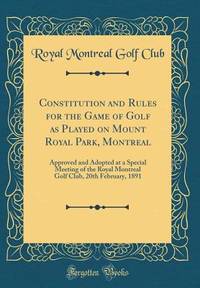
2000Folio in a white DJ; xi, 180 p. : b&w ill (some col), ports (some col) ; 26 cm Golfers -- United States -- Biography
Small folio (222 x 296 mm). (12), 407 (but: 411; 316-319 numbered twice), (1) pp. Engraved figurative title (lower border cropped with loss of imprint, as common). 18th century red gilt morocco, boards with richly gilt floral décor, gilt edges of covers, richly gilt spine in seven compartments with raised bands, black title label, speckled edges. Marbled endpapers. In modern custom-made chemise of auburn cloth and a cloth case with spine in red morocco and five raised bands, title in gold. First edition of the author's principal work, very rare, especially with the engraved title. The book mostly discusses the Philippines and the Moluccas, but also deals with China, Java, Sumatra, and Ceylon, with references to "los estrechos Persico y Arabico" (p. 12). The Portuguese naval commander Afonso de Albuquerque had conquered Malacca in the early 16th century, several decades after Arab merchants had introduced Islam to the islands. - "Few narratives are written with so much judgment and elegance [...] One of the most important works for the history of the Philippine islands [...] The book also contains matter relating to Sir Francis Drake and American voyages, and to the history of Spanish and Portuguese exploration in the Indies" (Cox). "Very lucidly and elegantly written" (cf. Ebert). "Copies with the engraved title are rare, and still more difficult to find are copies in which the printer's name and date of printing are preserved at its bottom" (cf. Salvá). "For the compilation of this work, the author had the command of all authentic manuscript relations, which were either in official custody, or in private hands, besides the testimony of such persons then living as had been eyewitnesses to any part of what he delivers" (Griffin). - Boards somewhat worn and rubbed, a few spots, some small cracks in the joints, slight defects at head and foot of spine, but altogether a beautifully preserved copy. Final leaf laid down, some small, inconspicuously repaired wormholes near headlines. Some occasional foxing and browning; pages 65-68 with a remargined flaw at the edge (no loss to text). Provenance: Engraved bookplate of Jeremiah Hill (early 18th century). Later in the famous library of Sir Thomas Phillips (1792-1872, with shelfmark and inscription "MHC" in pencil). Sold at Sotheby's June 23, 1988 for £3,800 (lot 110); latterly in the private collection of the Swedish antiquarian bookdealer Björn Löwendahl (1941-2013). Palau 16089. Cat. Nederl. Scheepv. Mus. 494. Cox I, 284. Brunet I, 419. Ebert 994. Graesse I, 193. Griffin/Ph. 23. Penney 304. Maggs (Spanish Books) 54a. Pardo de Tavera 121. Reiss & Auvermann 40 (Travel & Exploration) 408. Sabin 1946. Salvá 3349.
1994Milano, 1994, 8vo br. cop. ill. col. pp. 66 con ill. col.
19564to. 4 pp. Speech of Herbert H. Lehman in the Senate of the United States, March 1, 1956, on "The Saudi Arabian Policy of Discrimination Against Americans of Jewish Faith", including subsequent correspondence. - Folded.
Small 4to (140 x 187 mm). 68 ff. (but title is fragmentary, preserving the letterpress only, laid down to old paper). Near-contemporary full leather binding, spine rebacked. All edges red. Rare edition of this famous and scare refutation of the Qur'an. The Dominican Ricoldus (ca. 1243-1320) was sent to the orient as a missionary in 1288. He visited the Holy Land and travelled to Baghdad via Cilicia, Erzurum, and Tabriz. During his stay in Baghdad, Ricoldus studied the Qur'an and other works of Islamic theology, for controversial purposes, arguing with Nestorian Christians. He is said even to have begun a translation of the Qur'an about 1290, but it is not known whether this work was completed. - Ricoldus returned to his native Florence around the year 1300 to compose or edit several works about the Middle East. While many of his writings praise the Muslims' social behaviour, hospitality and sense of honour, his best-known work, the "Contra legem Sarracenorum", is a notorious refutation of the Islamic doctrines. Largely a compilation from William of Tripolis, Marcus of Toledo and the "Contrarietas alpholica", and probably an early effort written in preparation of Ricoldus's mission, it contends that the Qur'an's self-contradictory passages, confused arrangement and want of miracles prove that Islam cannot be a true revealed religion. Despite Ricoldo's hostility towards Islam his work shows specific knowledge of the Qur'an and overcomes one important prejudicial error common to other medieval criticisms of Islam: the perception that Muhammad introduced a christological heresy. The work was widely received; a Greek translation was prepared as early as 1385 by Demetrius Kydones, which was re-translated into Latin by Bartolomeo Piceno as "Improbatio" or "Confutatio Alcorani". A Spanish version appeared at Toledo in 1502, and Luther translated parts into German in 1530 (his "Verlegung des Alcoran" appeared in 1542). It influenced Pope Pius II, John of Segovia and Nicolaus Cusanus (cf. LMA VII, 808). - Binding worn but professionally repaired; spine rebacked. Some fingerstaining and browning with occasional slight worming to gutter. Trimmed rather closely with printed marginalia cropped in places, title fragment torn out and mounted, preserving some old handwritten annotations. Provenance: Mehmed V (1844-1918), Sultan of the Ottoman Empire from 1909, with his his Arabic bookplate on the pastedown. VD 16, R 2328. BNHCat R 296. This edition not in Panzer.
8vo. 71 ff. (lacking final blank). All edges sprinkled in red. Contemporary limp blue boards. Last Italian edition of the 16th century: a famous account of Islam (with a life of the Prophet Muhammad) given by a Muslim convert to Christianity, first published in Spanish in 1515 and frequently reprinted and translated. The author gives his former name only as Alfaqui ibn Abdallah from Játiva near Valencia in Spain; he flourished 1487-1515. - Some browning and brownstaining throughout due to paper; a few pages waterstained; old ink notes to title page (some ink corrosion). Rare; only two copies in WorldCat (Paris-BnF and Mazarine); four in Italy (Venice, Prato, Modena, Messina); none in the U.S. Edit 16, CNCE 1728. Chauvin XII, p. 21, no. 83. Göllner 2280. I.A. 105.567. Palau 12175 (note). OCLC 800261833.
6 telegram folios (208 x 304 mm), dated 6 to 18 January 1922, pinned together with a cover note marked "very confidential" with the oval embossed seal of the Government of India. Includes a Grant of the Dignity of a Companion of "the Most Eminent Order of the Indian Empire" to Eardley Garforth Bryan Peel, issued by King George V, dated 2 June 1923, signed by the King and by Viscount William Peel as Secretary of State for India, to acknowledge the services rendered to secure British interests in the southern provinces of Persia. Stored loosely in later dark green calf document holder box, spine stamped in gold "Residency Ahwaz Bushire 1922/3" (257 x 375 mm). A collection of confidential Anglo-Persian diplomatic cables relating to the appointment of Eardley Garforth Bryan Peel (1888-1976) as British Consul General at Ahwaz (Southern Iran) in view of his good relations with the Bakhtiari Khans, Sheikh Khazal of Mohammerah and the Anglo-Persian Oil Company (APOC). - This group of important telegram exchanges from Percy Lyham Loraine (Envoy Extraordinary and Minister Plenipotentiary at Tehran), Arthur Prescott Trevor (Consul General at Bushehr, Southern Iran), and the Indian Political Service at Delhi, are pinned together with a cover note dated 18 January 1921, marked "very confidential" and bearing the stamp of the Government of India, indicating their subtle and yet relevant relation. They testify to the British government's shift of alliance from Sheikh Khazal of Mohammerah to Reza Khan and the central government in Tehran. The Grant of Dignity appointed to Peel further emphasises the connection between this prominent stakeholder and British oil interests. Thus, this collection plays a crucial role in shedding light and understanding the 'behind the scenes' of British foreign politics related to the protection of their oil fields in Khuzestan, and their procurement and management of Iranian oil in the first two decades of the 20th century. - Ever since the British discovery of oil in the Southern Iranian Province of Khuzestan in 1908, and the formation of the APOC the following year, a fine balance was maintained by knowledgeable British Consuls General between the Bakhtiari leaders, seated in Bushehr, and the powerful Sheikh Khazal (who inherited the Emirate of Mohammarah in 1897), seated at Mohammarah. The Khans and the Sheikh, ruler of Arabistan, received annual payments, political support, as well as arms and munitions from the British in return for guaranteeing support and protection of British interests against external attacks and providing security for the oil establishment. Until Reza Shah’s rise to near-absolute power and his coup d’état of 1921, the Iranian government had little control of the de facto autonomous province of Khuzistan and their local leader. This explains why all of Loraine’s formal and informal efforts, as British Envoy Extraordinary and Minister Plenipotentiary in Iran from 1921 until 1926, were directed towards achieving the peaceful submission of Britain’s Southern Iranian allies to the regime in Tehran. - In such delicate circumstances and given the inevitability of a conflict between the burgeoning central government in Tehran and the Southern Iranian tribal powers, the re-appointment of Eardley Garforth Bryan Peel, whose term of office at Ahwaz had ended in 1921 at the same time Loraine assumed office at Tehran, became a necessity to be able to mediate between the two litigious parties. In fact, Peel was the only person who not only had an in-depth understanding of the situation but was trusted by all members involved. As shown in our telegrams, the Indian Political Service at Delhi not only accepted Loraine’s advice to allow Peel to remain Consul General at Ahwaz but also nominated him to receive a British CIE order. Peel proved a skilled negotiator and succeeded in his mission of yielding a peaceful transition of power in Southern Persia and avoiding any threats to British interests in the oilfields. He managed to convince Khazal and the Bakhtiari Khans to meet in Dare Khazinah from 22 April to 2 May 1922 and made them promise to cooperate in virtue of protecting British interests, but also to continue to serve the Persian government faithfully and loyally, in order not to irritate Reza Khan. - Despite Peel’s tactful diplomacy, which averted great bloodshed, the British soon abandoned their Southern Iranian allies in favour of good relations with the increasingly powerful central government. Khazal was persuaded to surrender unconditionally and Reza Khan had him abducted and brought to Tehran, where he was kept for several years. His sheikhdom was abolished, and the provincial authority took full control of regional affairs. The Sheikh was stripped of all his powers and Iranian assets, and when he denied relocation to Iraq or Kuwait, he was assassinated in Mohammarah (now Khorramshahr) in 1936. These documents play a crucial role in unravelling the extremely complicated and confidential sequence of events that took place in those years, which stained early 20th-century Anglo-Persian diplomatic relations with the uncontrollable force of nature oil was to be in modern history, and specifically, in the geopolitical chessboard of Middle Eastern foreign affairs. - E. G. B. Peel was a British diplomat who, after achieving the rank of Captain in the Indian army, was posted first as Assistant-Superintendent of Police in Moradabad (Agra province, India) and later as a member of the Indian Political Service to the consulate at Mohammerah, where he rose to the rank of Acting Vice-Consul. In 1918 he was transferred to the consulate in Ahwaz, where he served until 1924 in the posts of Acting Vice-Consul (1918-21), Local rank Consul (1921-22), and Consul (1922-24). After completing his service at Ahwaz, he was posted to Agra and Kashmir provinces in India. He received the illustrious CIE (Companion Order of the Indian Empire) in 1923. - Provenance: the former property of a private English bibliophile, purchased from J & S. L. Bonham's, London, in 1999.
11 pp. Re-stapled paper. A detailed war-time newsletter from the Middle East, relaying through the soldier's wives at home the regiment's movements at the front for family members back in the UK. Covering August 1942 to March 1943, it focuses on general updates of the regiment's position and provides lists of soldiers, facts which would give some comfort to their families. Whilst there are humorous bits on the trivialities of warfare, the confidential nature and redacted passages remind the reader that this was an internal communication with the bare minimum of information allowed. - The letter starts with addresses which a reader would need to write to for inquiries as to whether family members had been wounded or captured as prisoners. It then proceeds into "regimental letter number 1", which describes the regiment boarding a steamer and at sea; the typical routine is portrayed as a "wild rush to get the mess deck clean, hammocks and mattress stacked, blankets rolled and so on before breakfast" (p. 3). - The 2nd letter commences with 8 Dec. 1942, making reference to landing in Egypt and preparations for fighting Germany. In the same format as the first letter, it is followed by a battery notes section, listing ill or other soldiers who had to remain at HQ, promotions, soldiers injured and casualties sustained from the fighting. - A humorous note concerns an incident involving poisonous creatures of the desert, where "Battery Commander was dragged from his bed to take L/Bdr. Tait to the M.O. for treatment for scorpion sting. The scorpion, later in the night, was captured alive [...] and severely dealt with. Bdr. Hood G's scorpion sting turned out to be a piece of sardine tin, and it's thought that the piece of hand grenade alleged to have fallen on Gnr. Elliot's truck may have been the remainder of the tin" (p. 10). As discussed at the end of the letter, the paper rationing introduced in the UK meant that "it will be impossible to make the future circulation of these letters as wide as it has been" and that in the future a lady in each area of the UK would pass a single letter around for the families eager to find out about the loved ones on distant shores. - Some spotting and staining with a 3 cm tear along the central hold line to some pages. In good condition for a fragile letter.
1986In 8°, t.t. edit. con sovrac. ill., pp. (8),209,(7), riccamente ill. con fot. b.n. in tavv. f.t.; coll. "Golf. 5"; ottimo es.. (m199)
Folio (225 x 300 mm). 23, (1), 15, (1), 3, (1) pp. Original printed wrappers. Separately paginated offprint from the proceedings of the Royal Academy dei Lincei. The Damascus-based scholar Abu'l-`Abbas Ahmad bin Yahyá bin Fadlallah al-`Omari (1301-49) is famous for his 27-volume encyclopedia of geography, history and biography, from which is taken this essay on the Christian occident as seen through the eyes of a Mediaeval Muslim ("R. tastamil `ala kalam gumli fi amr masahir mamalik al-Fireng [...]"). - Wrappers stained, edges chipped. Uncut, untrimmed copy. GAL S II, p. 176. OCLC 7089983. Reale accademia dei Lincei (anno CCLXXX 1882-83), Serie 3a, Memorie della Classe di scienze morali, storiche e filolgiche, vol. XI.
8vo. French manuscript on paper. 216 pp. Text in brown ink with some word highlighted in red, enclosed within red and brown borders. With 5 hand-drawn plates, one of which folding, one in original hand colour. Contemporary full calf with gilt spine and green morocco label; name "Mr Decullant" gilt to upper cover within florally gilt borders; leading edges gilt. Marbled endpapers. All edges lightly sprinkled red. Unpublished hippological manuscript in neat French calligraphy, discussing horse breeds, proportions, balance, paces, coats, horseshoes, and warranty issues. A separate section on Arabian horses discusses the breeders' practice of issuing certificates of authenticity for each individual animal, as well as that of branding: "L'origine des individus [...] est attestée par des Certificats à l'authenticité des quels ils tiennent avec une Extrème Rigeur, ils les marquent de plus au feu sur nombre d'endroits du Corps" (p. 109f.). The Arabian horse is singled out for its speed and praised for its boldness, as are the riders' impressive skills, envied by many a European army: "Nos armées ont admiré [...] et deploré souvent, cette petulance des chevaux, aussi bien que la Bravour de leurs Cavaliers pour qu'il soit Bésoin d'en faire un éloge plus pompeux" (p. 111). Furthermore, the author collects useful advice for buying horses and on distinguishing features to appreciate, including various deformities to be considered. The drawings illustrate the horse's proportions, displaying the animal in profile, from front and from behind; they also show the effects of leverage and equilibrium, and illustrate basic concepts of geometry. Throughout the text, the author repeatedly refers to hippiatric authorities such as the veterinarians Charles Bourgelat (1712-79), François Alexandre de Garsault (1691-1778), and Philippe-Étienne Lafosse (1738-1820). The wording "cette troisième section du cours" (p. 1) suggests that the present manuscript was conceived as part of a series of hippological textbooks, but no publication could be traced, nor could the author be identified. - Early 20th century handwritten notes on the treatment of a riding horse, probably transcribed from another work, loosely inserted. Extremities slightly rubbed, interior crisp and clean. A unique survival.
8vo. VI, 22 pp. With 4 chromolithographed plates showing 3 stained-glass portraits and an architectural elevation, 2 double-page etched views and a lithographed facsimile of a letter written and signed by Margaret of Austria. Half grey-brown cloth (ca. 1900?). With the publisher’s lavender printed paper wrappers bound in, repeating the arms of the title-page. A remarkable bibliophile edition (limited to fifty copies) of financial accounts and other documents concerning hunting and falconry from the archives of King Charles VIII of France in the years 1485 to 1486. These documents are essential primary sources for the history of hunting and falconry, giving detailed and very specific data to throw light on falconry ca. 1485/86. The text was prepared in conjunction with a publication about Margaret of Austria (1480-1530), Duchess of Savoy, and Quinsonas (1818-1901) wrote a brief introductory chapter to the present book, “Documents pour servir a l’histoire de Marguerite d’Autriche”. The daughter the future Holy Roman Emperor Maximilian I, she was betrothed to Charles VIII in 1483 and came to the French court to be educated as the future Queen of France. He broke off the engagement to marry her stepmother for political reasons in 1491. So at the time of the book’s documents about Charles VIII she was still betrothed to him and living at the French court. After he broke off their engagement she married twice, the second time in 1501 to Philibert II, Duke of Savoy who died of pneumonia that he caught during a hunt in 1504. The chromolithographs show details from two stained-glass portraits of her, one of her husband Philibert and a view of her “tower” in his chateau in Pont d’Ain. The etchings show Pont d’Ain and Louis XIII’s chateau at Poncin. After Margaret’s brother King Philip I of Spain died in 1506, she became governor of the Low Countries for most of 1507-30. Although the title-page names no compiler and the imprint names only the printer, Quinsonas’s arms appear on the title-page and front wrapper. He was clearly the motive force behind the publication, using the services of the printer Louis Perrin, who pioneered historically allusive book design. - With a presentation inscription from the compiler Comte de Quinsonas to Mr [Louis] de Mas-Latrie (1815-97), historian and palaeographer, on the front wrapper. With an 1890 (?) bookseller’s ticket, the bookplate of Paul Couturier de Royas (1853-1934), and a modern armorial bookplate of the Verne d’Orcet family, whose great library on the subject of hunting was begun ca. 1900. With offsetting of the chromolithographs (in spite of the tissue guards bound in to prevent it), the ribbon marker has left a browned shadow in the gutter margin between 2 pages and the margins of the wrappers have faded to grey-brown, but otherwise in very good condition. A bibliophile edition of documents concerning King Charles VIII’s hunting and falconry in the years 1485-86. Schwerdt 119. Thiébaud 763. For the type cf. Ponot, Louis Perrin & l’énigme des Augustaux (1998).
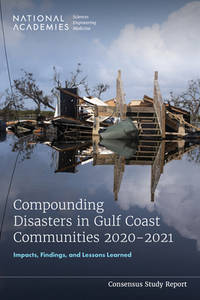
2024Best.-Nr. 2-0309707161National Academies Press 2024. Paperback. New. 288 pages. 5.98x0.63x8.98 inches. National Academies Press paperback
2006223p., illus. Hardcover Very good condition good
4to. (4), 68, 60 pp. (without 16 pages of preliminaries). - (Bound with) II: Manuale equestre, oder Compendium der Reichs-Ritterschafftlichen alt-hergebrachten Rechten [...]. Ulm, Johann Gassenmeyer, 1720. (8), 120, 144, 48, (18) pp. - (Bound with) III: Harpprecht zu Harpprechtstein, Stephan Christoph. Speculi Suevici et praesertim iuris feudalis Amamannici [...]. Kiel, Johann Christoph Reuther, 1723. (10), 240, (2), 154, (6) pp. Contemporary full vellum with handwritten spine label. All edges coloured. Collection of three 1720s manuals on the Holy Roman Empire's legal foundations of the Imperial Knightage and Swabian feudal law. The second part of the first work contains a condensement of Georg Rüxner's famous tournament book, first published in 1530. Burgermeister (1663-1722), who compiled the first two works, was the legal counsel of the Swabian free knights in the Neckar-Schwarzwald district and later served as Imperial councillor in Ulm. "He was the most fervent apologist for the privileges of the free baronetage, and this is the subject of almost all his writings, composed in German. While conceived without plan or discrimination, they do contain valuable source material for the history of the lower nobility of the Empire" (cf. ADB). - The German jurist Harpprecht (1676-1735), a native of Sindelfingen near Stuttgart, taught at the University of Tübingen, later serving in Vienna and then as professor in Kiel in Northern Germany, where he published the present study of his native Swabia's feudal law. - Occasional light browning, but altogether a good, tight copy. VD 18, 1050284X. Pütter (Staatsrecht) I, 320. ADB III, 601. VD 18, 12892033.