Various ContributorsMareMagnum

4 081 résultats
1960136 pages. Features: Nice color photo Lord & Taylor ad; Cuba - Profile of a Revolution - the old order has been swept away forever - many photos; Lament for the Rocking Chair; The Bantu Listens to a Louder Drum - the South African Negro call to freedom frightens the ruling whites; America's 500,000 Migrant Farm Workers; 'Marxist Mandarin' on Another Sales Trip - China's Premier Chou En-lai Revisits his South Asian Neighbors; Long-Run Plays - The Top Ten; photos of ice-breaking in the Great Lakes; Photos of interesting Senatorial Doors; Nice color photo ad for B. Altman & Co.; Photos of excavation in New York City; Peter M. Dawkins compares the attitudes toward collegiate sports in the United States and Great Britain - he was captain of the West Point Football Team and a unanimous All-America choice at halfback; 'April in Paris' for New York - Joseph Wechsberg is excited at the prospect of bringing Gallic imports to NYC; First Night Party for "Bye Bye Birdie" sponsored by L. Slade Brown; Let the Native Indian Be the Hero, by Stanley Walker; Rudolph Valentino was born 65 years ago - 5 nice photos; Restless Ports for the City's Food - Washington and Fulton Markets are colorful, obsolete, and about to be moved - article with photos; Golf Fever in Japan; Cut Out for Leisure - sexy photos by Gleb Derujinsky; Color photo ad for Knickerbocker Beer; Nice color Pepsi ad "The Sociables Prefer Pepsi"; About Polygamy - a fading practice in Africa; and more. Clean and unmarked with moderate wear. Some yellowing with age. A sound vintage copy. Book
8vo. (4), 168 pp. Contemporary blue wrappers with original printed cover label. Second edition; rare: not in Copac or OCLC. The first edition appeared in 1817. Also includes the coasts of Syria, Egypt, and North Africa (Tripoli, Tunis, Algiers). John William Norie (1772-1843) was one of the most important hydrographic publishers of his time. - Some dog-earing, but still a good copy. OCLC 851876144.
194750 pages. Features: Should Husbands and Wives Take Separate Holidays?; New Hope for High Blood Pressure - the Rice Diet; Dr. Harold Taylor - photo-illustrated article on the young President of Sarah Lawrence College; Little Audrey - great photo-illustrated article on actress Audrey Totter; Do You Want to Run a Resort?; Rides That Thrill - and Sometimes Kill - a look at amusement park rides; Movie reviews - including 11 photos; Dinah Shore's favourite laugh; Why a Golf Ball has Dimples. Stories: Forty Words; Animal Crackers for Breakfast. Condensed Book: The Border Lord (part 2 of 2). Ads: Colour Carling's ad insdie front cover urges forest fire prevention; Nice photo ad for movie 'Dear Ruth'; Lysol - for feminine hygeine(?); Colgate dental cream; Vaseline Hair Tonic; Johnson Sea-Horse Outboard Motors; O'Keefe's colour ad on back cover features map of Alberta. Unmarked with average wear. Binding intact. A sound and pleasing vintage copy. Book
4to. (4 [instead of 10]), 464 [instead of 466] ff. (wants the first 6 ff. of prelims, final 2 ff. of text and the 6 ff. of "special advices" and index, all supplied in facsimile). With historiated woodcut initials. Splendid modern red morocco, both covers richly gilt, gilt fillets to raised bands. Stored in custom-made cloth clamshell box with gilt spine title. The first English edition of Ludovico di Varthema's famous travels to Arabia, Persia, and India: the highly important and adventurous narrative containing the first printed eyewitness account of any place in today's United Arab Emirates. On his return journey from Mecca (which he was the first Westerner to describe), Varthema visited Ras al-Khaimah ("Giulfar") and portrayed the city as "most excellent and abounding in everything", with "a good seaport", and whose inhabitants are "all Muslims". While Montalboddo's famous anthology of discoveries, printed in 1507, contained the first printed reference to the Arabian Gulf region, it was Varthema's work, published only three years later, that offered the first actual report from the region by a Western traveller who had visited the coast. All early editions of Varthema’s "Itinerario" are exceedingly rare (even the 2013 Hajj exhibition at the MIA, Doha, only featured the 1654 reprint; cf. below). - Varthema, a gentleman adventurer and soldier from Bologna, left Venice at the end of 1502. In 1503 he reached Alexandria and ascended the Nile to Cairo, continuing to Beirut, Tripoli, Aleppo and Damascus, where, adopting Islam and taking the name of Yunas, he joined a Mameluke escort of a Hajj caravan and began the pilgrimage to Mecca. Varthema was amazed by what he observed: "Truly I never saw so many people collected in one spot as during the twenty days I remained there", he begins, and arriving at the Great Mosque, continues, "it would not be possible to describe the sweetness and the fragrances which are smelt within this temple." Thanks to his knowledge of Arabic and Islam, Varthema was able to appreciate the local culture of the places he visited. Impressed and fascinated, he describes not only rites and rituals, but also social, geographical, and day-to-day details. "I determined, personally, and with my own eyes", he declares in the prefatory dedication, "to ascertain the situation of places, the qualities of peoples [...] of Egypt, Syria, Arabia Deserta and Felix, Persia, India, and Ethiopia, remembering well that the testimony of one eye-witness is worth more than ten hear-says." His good fortune did not continue unabated, however: after embarking at Jeddah and sailing to Aden, he was denounced as a Christian spy and imprisoned. He secured his release and proceeded on an extensive tour of southwest Arabia. Stopping in Sanaa and Zebid as well as a number of smaller cities, he describes the people, the markets and trade, the kind of fruits and animals that are plentiful in the vicinity, and any historical or cultural information deemed noteworthy. Returning to Aden, and after a brief stop in Ethiopia, he set sail for India. In addition to visiting Persia, Varthema explored the coasts of Malabar and Coromandel, including a stay at Calicut at the beginning of 1505. He also purports to have made extensive travels around the Malay peninsula and the Moluccas. Returning to Calicut in August 1505, he took employment with the Portuguese at Cochin and, in 1508, made his way back to Europe via the Cape of Good Hope. - First published in 1510, Varthema's account became an immediate bestseller. In addition to his fascinating account of Egypt, Syria, the Arabian Peninsula, and the holy Muslim cities, "Varthema brought into European literature an appreciation of the areas east of India [...] which it had previously not received from the sea-travelers and which confirmed by firsthand observations many of the statements made earlier by Marco Polo and the writers of antiquity" (Lach, I. i. 166). "Varthema was a real traveller. His reports on the social and political conditions of the various lands he visited are reliable as being gathered from personal contact with places and peoples. His account of the overland trade is of great value in that we are made to see it before it had begun to give way to the all-seas route. He even heard of a southern continent and of a region of intense cold and very short days, being the first European probably after Marco Polo to bring back the rumor of Terra Australis" (Cox I, 260). - Published as an extensive part of "The History of Travayle in the West and East Indies" - one of the first English versions of the significant collection edited by Pietro Martire d'Anghiera (Peter Martyr, 1457-1526). The first independently published English translation would not appear until 1863: Varthema's travelogue was included for the first time in the present translated edition of Martyr's "History". The translation, with some omissions, is that of Decades I-III of "De Orbe Novo" by Martyr, with additions from other sources, edited by Richard Eden and Richard Willes. Willes was a member of the Jesuits from 1565 to 1572 and was familiar with Maffei, the Jesuit chronicler whose account he drew on for this work. Under the benefaction of the Earl of Bedford, Willes expanded Eden's translation to include, apart from Varthema's travels, four Decades and an abridgement of Decades V-VIII; Frobisher's voyage for a Northwest Passage, Sebastian Cabot's voyages to the Arctic for the Moscovy Company, Cortez's conquest of Mexico, Pereira's description of China, 1565, Acosta and Maffei's notices of Japan, 1573, and the first two English voyages to West Africa. Also, this is the first account in English of Magellan's circumnavigation, as well as the first printed work to advocate a British colony in North America. - First 6 and final 8 ff. supplied in facsimile. Occasional faint contemp. marginalia. 19th c. calligraphic note, quoted from Brunet, on flyleaf. From the library of Sir Arthur Helps (1813-75), English writer, dean of the Privy Council, and Cambridge Apostle, with his armorial bookplate and autograph ownership. Howgego M65. Brunet I, 294. OCLC 5296745. LCCN 02-7743. European Americana 577/2. Church 119. Streeter Sale 24. Arents 23. Borba de Moraes, p. 33. Hill 533. BM-STC 649. Sabin 1562. Cordier, Japonica 71. Field 485. Cf. exhibition cat. “Hajj - The Journey Through Art” (Doha, 2013), p. 90 (1655 Dutch ed. only). Macro, Bibliography of the Arabian Peninsula, 2239f. (other editions only). Not in the Atabey or Blackmer collections.
4to. (10), 466, (6) ff. With historiated woodcut initials. Splendid modern full navy blue morocco, bands on spine with title showing faded gilt, covers double-ruled gilt. The first English edition of Ludovico di Varthema's famous travels to Arabia, Persia, and India: the highly important and adventurous narrative containing the first printed eyewitness account of any place in today's United Arab Emirates. On his return journey from Mecca (which he was the first Westerner to describe), Varthema visited Ras al-Khaimah ("Giulfar") and portrayed the city as "most excellent and abounding in everything", with "a good seaport", and whose inhabitants are "all Muslims". While Montalboddo's famous anthology of discoveries, printed in 1507, contained the first printed reference to the Arabian Gulf region, it was Varthema's work, published only three years later, that offered the first actual report from the region by a Western traveller who had visited the coast. All early editions of Varthema’s "Itinerario" are exceedingly rare (even the 2013 Hajj exhibition at the MIA, Doha, only featured the 1654 reprint; cf. below). - Varthema, a gentleman adventurer and soldier from Bologna, left Venice at the end of 1502. In 1503 he reached Alexandria and ascended the Nile to Cairo, continuing to Beirut, Tripoli, Aleppo and Damascus, where, adopting Islam and taking the name of Yunas, he joined a Mameluke escort of a Hajj caravan and began the pilgrimage to Mecca. Varthema was amazed by what he observed: "Truly I never saw so many people collected in one spot as during the twenty days I remained there", he begins, and arriving at the Great Mosque, continues, "it would not be possible to describe the sweetness and the fragrances which are smelt within this temple." Thanks to his knowledge of Arabic and Islam, Varthema was able to appreciate the local culture of the places he visited. Impressed and fascinated, he describes not only rites and rituals, but also social, geographical, and day-to-day details. "I determined, personally, and with my own eyes", he declares in the prefatory dedication, "to ascertain the situation of places, the qualities of peoples [...] of Egypt, Syria, Arabia Deserta and Felix, Persia, India, and Ethiopia, remembering well that the testimony of one eye-witness is worth more than ten hear-says." His good fortune did not continue unabated, however: after embarking at Jeddah and sailing to Aden, he was denounced as a Christian spy and imprisoned. He secured his release and proceeded on an extensive tour of southwest Arabia. Stopping in Sanaa and Zebid as well as a number of smaller cities, he describes the people, the markets and trade, the kind of fruits and animals that are plentiful in the vicinity, and any historical or cultural information deemed noteworthy. Returning to Aden, and after a brief stop in Ethiopia, he set sail for India. In addition to visiting Persia, Varthema explored the coasts of Malabar and Coromandel, including a stay at Calicut at the beginning of 1505. He also purports to have made extensive travels around the Malay peninsula and the Moluccas. Returning to Calicut in August 1505, he took employment with the Portuguese at Cochin and, in 1508, made his way back to Europe via the Cape of Good Hope. - First published in 1510, Varthema's account became an immediate bestseller. In addition to his fascinating account of Egypt, Syria, the Arabian Peninsula, and the holy Muslim cities, "Varthema brought into European literature an appreciation of the areas east of India [...] which it had previously not received from the sea-travelers and which confirmed by firsthand observations many of the statements made earlier by Marco Polo and the writers of antiquity" (Lach, I. i. 166). "Varthema was a real traveller. His reports on the social and political conditions of the various lands he visited are reliable as being gathered from personal contact with places and peoples. His account of the overland trade is of great value in that we are made to see it before it had begun to give way to the all-seas route. He even heard of a southern continent and of a region of intense cold and very short days, being the first European probably after Marco Polo to bring back the rumor of Terra Australis" (Cox I, 260). - Published as an extensive part of "The History of Travayle in the West and East Indies" - one of the first English versions of the significant collection edited by Pietro Martire d'Anghiera (Peter Martyr, 1457-1526). The first independently published English translation would not appear until 1863: Varthema's travelogue was included for the first time in the present translated edition of Martyr's "History". The translation, with some omissions, is that of Decades I-III of "De Orbe Novo" by Martyr, with additions from other sources, edited by Richard Eden and Richard Willes. Willes was a member of the Jesuits from 1565 to 1572 and was familiar with Maffei, the Jesuit chronicler whose account he drew on for this work. Under the benefaction of the Earl of Bedford, Willes expanded Eden's translation to include, apart from Varthema's travels, four Decades and an abridgement of Decades V-VIII; Frobisher's voyage for a Northwest Passage, Sebastian Cabot's voyages to the Arctic for the Moscovy Company, Cortez's conquest of Mexico, Pereira's description of China, 1565, Acosta and Maffei's notices of Japan, 1573, and the first two English voyages to West Africa. Also, this is the first account in English of Magellan's circumnavigation, as well as the first printed work to advocate a British colony in North America. - Sympathetically washed but not pressed; some minor repairs to title not affecting printed surface. Some remaining toning and staining in small areas of a few leaves. Generally a wide-margined and appealing copy. - Provenance: acquired from Quaritch in 1975 by Gregory S. Javitch (1898-1980), a Russian-born, Canadian leader in the land reclamation sector in Ontario. Javitch formed an important collection of 2,500 items entitled "Peoples of the New World", encompassing both North and South America, which was acquired by the Bruce Peel Special Collections at the University of Alberta. It was considered the finest such private collection in Canada at the time and formed the cornerstone of the library’s Special collections. The present volume remained in Javitch's private collection was acquired directly from his heirs. Howgego M65. Brunet I, 294. OCLC 5296745. LCCN 02-7743. Alden, European Americana 577/2. Church 119. Streeter Sale 24. Arents 23. Borba de Moraes, p. 33. Hill 533. BM-STC 649. Sabin 1562. Cordier, Japonica 71. Field 485. Cf. exhibition cat. “Hajj - The Journey Through Art” (Doha, 2013), p. 90 (1655 Dutch ed. only). Macro, Bibliography of the Arabian Peninsula, 2239f. (other editions only). Not in the Atabey or Blackmer collections.
Large 8vo (165 x 240 mm). 40 volumes, prettily gilt to covers and spines. With more than 400 engraved and aquatint plates, maps, charts and portraits (many by Nicholas Pocock). Marbled endpapers. The complete 40-volume run of the "Naval Chronicle", the most influential maritime publication of its time and today a key source for British maritime and military history. Founded by the Royal Navy chaplain James Stanier Clarke and the naval officer James Stanier Clarke, the monthly periodical ran for two full decades from January, 1799 to December, 1818. It contains a wealth of information about the Royal Navy of the United Kingdom, including biographies, histories, anecdotes and news, essays on nautical subjects, as well as poems and ballads on a variety of related topics. - Several volumes include material on events in the Arabian Gulf and Sea, often recounting episodes of "piracy" against British vessels, such as the capture of the East India Company's ships "Shannon" and "Trimmer" on 1 Dec. 1804 (an account is found in vol. XV, pp. 24f.) or the Arab raid on the "Minerva" on 29 May 1809, during which the crew were massacred and the vessel converted into the Al-Qasimi flagship (reported in vol. XXIII, p. 281f.; vol. XXIV, p. 30f.). Such events provoked the British "Persian Gulf" campaign of 1809, in which a large British force was deployed to destroy Al-Qasimi bases and ships. The Battle of Ras al-Khaimah, fought on 11-13 Nov. 1809, is reflected in reports printed in vol. XXIV (pp. 73 and 363), and renewed interest in the region and its history, customs and religion prompted a lengthy article on "The Wahebite Arabs" (vol. XXIV, pp. 293ff.; 371ff.), or "the Wahebbi, whose name is much connected with the Iowassimi pirates". A decade later, the British Navy would return in another massive operation against Ras Al Khaimah, which would lead to the signing of the General Maritime Treaty of 1820 between the British and the Sheikhs of the coast which today comprises the United Arab Emirates. - Bindings variously rubbed and bumped, some quite severely with hinges split and extremeties chipped; some spines rebacked, some labels lost. Occasional brownstaining throughout, but largely confined to tissue guards and opposite pages. In all a worn but still appealingly bound set, often encountered in separate volumes only. Sabin 52076. ZDB-ID 1053834-3.
2002Features: Norrona - a new flagship next year for Smyril-Line; Finnmarken - a new ship for popular Hurtigrute service; Maximum wave bending moment - back to basics?; Momantika - stylish new ferry for Gulf of Finland; Carnival Legend joins the Panamx-Max cruiser line class; Russia; Germany; Fast Ferries. Table of Contents partially loose, otherwise clean and unmarked with light wear. Book
4to. 2 vols. XXIV, 446, XXIII, (3) pp. VII, (1), 430, XXXIV, (26) pp. With engraved frontispiece and 20 numbered engraved plates (5 of which folded) on 19 sheets. Contemporary full calf with giltstamped spine labels. All edges red. Second edition of this authoritative account of Aleppo and Ottoman life and manners, based on Russell's experience as physician to the British factory in Aleppo from 1740 to 1753. Enlarged with 3 additional plates compared to the 1756 first edition. Includes an engraved frontispiece with a view of the city, a plan by Carsten Niebuhr (vol. I, plate I), and an additional plate showing fish (vol. II, plate VI). Apart from the Syrian flora and fauna as well as the local climate, Russell's monograph discusses the everyday life of the local population, including that of European merchants living in Aleppo, the organisation of their trade activity, and their social life. Also includes a section on the plague and other epidemic diseases in the 1740s. The descriptions of the education system, of the production of manuscripts, and of the commercial activity in Syria are unusually detailed and can be considered unique in contemporary travel literature on the Ottoman Empire (cf. Chatzipanagioti-Sangmeister). The botanical plates were produced by G. D. Ehret, and one plate of fish bears the name of W. Skelton, while the remainder of plates, including the ones depicting birds and domestic life, are unsigned, but were probably produced by Russell himself. - Binding lightly scuffed; interior fresh and extremely well preserved. A charmingly bound set documenting an era of scientific and economic prosperity in Syria. Blackmer 1458. Nissen BBI 3534. Navari 1458. Cox I, 227. Chatzipanagioti-Sangmeister 893. ESTC T149605. Cf. Atabey 1064 (1762 Dutch edition).
194972 pages. Features: Nice ballerina cover art by R. York Wilson; Colour ad for the Parker "51" pen inside front cover; One-page colour recruiting ad for the Canadian Army entitled V.I.P. shows young man in uniform walking on sidewalk; Nice one-page colour ad for the 1949 Monarch car shows a red two-door; Photos of the Sandler's Wells Ballet; One-page colour Waterman's Pen ad presents the Crusader, Stalwart and Dauntless; Excellent photo-illustrated article on the Women's Penitentiary in Kingston; The River (short story); Toronto the Terrible - photo-illustrated article by Hugh Garner; Daniel Boone and his trusty Five-Iron (golf short story); Can Les Lear and the Calgary Stampeders (football club) Make It? - photo-illustrated article; Ram's Way (short story about a cop); Simis - photo-illustrated article on the Service d'Information Montreal Information Service which answers questions about anything (permitted by law) by phone - with photos of Roger Nadeau - a fascinating predecessor to modern-day search engines; One-page Seagram ad features grain threshing scene with horse-drawn wagon; Morley Callaghan explains how to talk to high-brows; Massey-Harris one-page colour ad features tractor in rural European town; Elegant half-page colour-photo ad for Sovereign Potters presents their Montcalm Pattern, Number 718; Nice half-page Canadian Admiral Corp. ad presents their model 5V12 radio-phonograph; Article on Teen-agers in Hollywood includes photos of Elizabeth Taylor, Joan Evans, Terry Moore, Shirley Temple, Barbara Lawrence and Claudia Barrett; Article on the wonderful freedom in Canada, compared to post-war Europe; Uncommon half-page ad for Black Horse Brewery explains why rice is thrown at weddings; Colour one-page Calvert Distillers ad says "The Canadian Family Owes Much to... Ireland"; One-page photo ad for Northern Electric's Gainaday 200 washing machine; Half-page colour-photo ad for Canada Dry; One-page colour-photo Marboleum ad shows nostalgic 1949 kitchen design; One-page colour-photo ad for Singer Sewing Centers; One-page colour-photo ad for Northumbria Sterling Silver cutlery; Back to school fashion photos; Nice half-page colour ad for Aylmer canned peaches; Half-page colour ad for Heinz Vinegars; Article on table manners for children; Half-page colour-photo Baker's Coconut ad; One-page colour-photo ad for Burns Corned Beef Hash, Wieners and Beans, and Chili Con Carne; Recipes for preserves; World Sayings; Colour ad inside back cover for Wabasso Cottons shows lady making bed; Back cover colour ad for O'Keefe's features lovely illustration by Rex Woods of penny bazaar scene with boy buying muffin; and more. Average wear. Unmarked. A nice copy of this wonderful vintage issue. Book
Royal folio. 2 vols. XXVI, 290 pp. XXIV, 300 pp. With 251 plates and numerous text illustrations. Publisher's original green cloth. First edition, printed in 550 copies only. Principal work of the great architectural historian of Muslim Egypt. Beginning where his "Early Muslim Architecture" left off, this monumental two-volume set traces the history of Egyptian Islamic architecture from the dynasty of the Ikhshids and Fatimids (A.D. 939-1171) to that of the Ayyubids and early Bahrite Mamluks (A.D. 1171-1326). Creswell had begun his work in 1920 with a generous grant of King Fuad I; the present publication is dedicated to Fuad's son, Farouk I. - The publisher's voucher copies: numbers 4 and 2 of 550 copies printed, removed from Printer's Library of Oxford's famous Clarendon Press. In perfect condition. - Rare, the last complete copy sold in 1999 (Sotheby's, Oct 14, lot 185). OCLC 1105072.
4to. XL, 657, (1) pp. 3 blank ff. With several illustrations and maps in the text. Publisher's cloth. Dustjacket. A compilation of translated sources covering the period from 1700 to the present. Sources include official and private archives, the periodical press, memoirs, Western journalists and travellers' accounts, literature, and official reports (including statistical data). Each document has been prefaced, translated and annotated by a specialist in the history and culture from which it was drawn. Enough information is provided so that every student can appreciate the value of a document and begin further exploration either of its historical context or its relationship to broader themes in modern Middle Eastern history. Themes include expansion of state power, changing gender roles, religious revival, nationalist mobilization, increasing participation in a wider global culture and economy, and the redefinition of traditions and identities. - With publisher's dustjacket. In excellent condition.
1924réf. k3297London: W. Collins Sons & Co. Ltd. G : in good condition without dust jacket. Covers lightly rubbed and sunned. Sm. chip to head of spine. Previous owner's inscription to fep. Occasional light foxing. 1924. First Edition. Green hardback cloth cover. 180mm x 130mm 7" x 5". viii 292pp. ads. B/w plates and b/w illustrations within the text. . W. Collins Sons & Co. Ltd hardcover
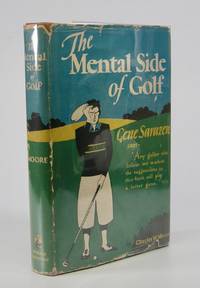
1929réf. 205593New York: Horace Liveright 1929. First edition. Bookplate; tips slightly rubbed else fine in an edgeworn dust jacket with a scratch on the spine and evidence of general dampness book unaffected. 8vo 167pp; cloth-backed plush green boards mimicking the manicured texture of a putting green. A psychological study of the game. Gene Sarazen was a dominant golfer of his generation winner of seven major tournaments and a career grand slam. Bookplate of H.E. McFaddin apparently a Maryland businessman. Horace Liveright unknown
1990réf. 016936Augusta Ga: Augusta National Golf Club 1990. Book. Fine. Hardcover. Inscribed and Dated in the Year of Publication. 1st Edition. A lovely copy in green leatherette inscribed & signed by Jay Hebert. Jay Herbert " Junius Joseph "Jay" Hebert February 14 1923 - May 25 1997 was an American professional golfer. He won seven times on the PGA Tour including the 1960 PGA Championship". Augusta National Golf Club Hardcover
8vo. (14), 242 pp. With a frontispiece, 3 maps in text (including 1 double-page) and 32 plates with reproductions of 109 photographs. Green cloth with illustrated dust jacket. First edition, second impression, of an account of the Arabs living in the marshes of southern Iraq, written by Wilfred Thesiger (1910-2003), who stayed with them from 1951 to 1958. "From my recollections, helped by my diaries, I have tried to give a picture of the marshes and of the people who live there. Recent political upheavals in Iraq have closed this area to visitors. Soon the marshes will probably be drained; when this happens, a way of life that has lasted for thousands of years will disappear" (Introduction). In 25 chapters Thesiger describes his experience in the marshes. The book is illustrated with over 100 photographs showing the people, their homes, boats, horses and kettle, and some common activities like fishing, preparing food and making homes and buildings out of water reed. Thesiger also wrote "Arabian Sands", published in 1959. - In very good condition. Dust-jacket only slightly worn at head and foot of the spine. For the author see: A. Maitland, Wilfred Thesiger: The Life of the Great Explorer (2011).
Folio. (10), 148, 116, (48) pp. (pages 109, 100, 111, and 112 bound out of order). With plates, tables and 3 volvelles. 18th century panelled calf with the binding dated "1734" and with a newer, and heavily buttressed, spine added. A very good copy of this important, influential and rare-to-the-market nautical classic, being the fourth edition with "Useful Additions". - Samuel Sturmy states that he was apprenticed to a Bristol sailmaker and thereafter commanded ships sailing out of Bristol, primarily to Virginia and to the West Indies. His experiences formed the core of the work herein described, a work produced by him to provide his three brothers, his sons, and other young seamen with all of the information they would need - even if their own mathematical abilities were restricted to ordinary arithmetic. Sturmy wrote in a lively fashion, and in the sections pertaining to seamanship the usual commands and responses were set forth as a dialogue between the ship's captain and the crew, parts of which were used verbatim by Jonathan Swift in "Gulliver's Travels". It is from Sturmy's book that Dampier remembered the recipe ("receipt") for gunpowder. Sturmy's work also contains what may be one of the earliest complete explanations of the construction of a polar gnomonic chart, presenting a detailed example of a great circle route from the Lizard to the Bermudas. The Oxford Reference states: "The gnomonic chart became popular with the publication by Hugh Godfray in 1858 of two polar gnomonic charts covering the greater part of the world, one for the northern and the other for the southern hemisphere. Although it was generally believed that Godfray was the original inventor of this method of great circle sailing, it is interesting to note that a complete explanation of the construction of a polar gnomonic chart, with a detailed example of a great circle route from the Lizard to the Bermudas, appeared in Samuel Sturmey's 'Mariners' Mirror', of 1669." - A superior copy of a rare and highly notable book: an early classic of navigation, of which few copies in any edition have come to auction over the last several decades and which constitutes a critical component of any any nautical library.
4to. (2), 51-130 pp. With several black-and-white photographic and schematic illustrations. Original printed wrappers bound within contemporary full cloth with giltstamped spine-title, signed by R. Numans. Scarce essay on medieval carpet weaving in Egypt, particularly on the so-called Marby Rug, the oldest preserved oriental carpet in Sweden discovered in 1925 in the abandoned church of Marby in the province of Jämtland. The personal copy of Carl Johan Lamm with his bookplate to front pastedown. In an attempt "to fix the place of the Marby rug in the early evolution of Oriental carpet knotting", the essay discusses 29 fragments of carpets obtained from antiquity dealers in Cairo, including Abbasid rugs, carpets of the "Konya" type, chiefly Seljuq, and Anatolian carpets of the 14th and early 15th centuries, as well as Anatolian or Caucasian carpets of "nomad" type, Mamluk carpets, and Anatolian "Holbein" carpets of the 15th century. - Lamm studied archaeology at the University of Stockholm. He wrote about the glass excavated at Samarra in 1928 and became a leading scholar on Islamic arts and crafts, notably in glass and carpets. He was on the staff of the Stockholm Museum and taught at Uppsala University. - Offprint from the Swedish Oriental Society's yearbook. In near-mint condition. OCLC 472515825.
8vo. XVI, 298 pp., (4) pp. of ads. With the author's photo portrait frontispiece, 35 plates, and a folding colour map. Publisher's gilt blue cloth. First edition. "The book is a plain and unvarnished tale of the experiences of a frontier officer in times of peace as well as in those of war" (preface, p. IX). - Algernon Durand (1854-1923) was military secretary to the Viceroy of India and one of the earliest members of the Central Asian Society. He "found his métier as a soldier when he was appointed to command the troops in the brilliant little Hunza Nagar campaign in 1891, when he was wounded. He was then district commander at Gilgit. His [...] much read book, 'The Making of a Frontier', [...] is just a thrilling tale of happenings in that remote corner of the Empire at that time. He possessed the family gift or writing a clear and graphic account of his experiences, and it may be doubted whether any book written since is of greater value in describing the singularly wild nature of the country and people with whom he had to deal" (Obituary, JRCAS 11 [1924], p. 114). - Binding somewhat rubbed. Light brownstaining throughout; a faint waterstain to the portrait; inner hinges professionally repaired. Untrimmed copy with blindstamped presentation by the publisher on title-page. With accurate pencil underlinings and French annotations throughout, as well as numerous additions to the index, expanding the number of references to "Slave trade" from two to ten. - Provenance: ink ownership of the British officer H[enry] L[indsay] Archer Houblon (1877-1954), dated May 1904, to pastedown; somewhat later ownership "Fremont" on first blank. OCLC 8454039.
1999472pp. 24 cm. Hardcover Very good condition good
8vo. (117)-127, (1) pp. Original printed wrappers. Offprint from the Journal of the Royal Asiatic Society. About the Mahmal, the closed rectangular pyramidal canopy taken along on camelback on Egyptian and Syrian pilgrimages to Mecca before Ibn Saud's conquest of the Hejaz in 1925 - a "very curious custom in Islam", the origin and purport of which the present essay undertakes to investigate. "It is very improbable that the Mahmal [...] will be seen in the Hejaz again [...] The Mahmal is heretical to Islam, and the Wahhabis [...] have declined to admit the Mahmal into the Hejaz" (p. 117). - Wrapper shows insignificant ruststains from staples, otherwise in perfect condition. OCLC 47931240. Not in Macro.
19961st edition. Fine/Fine.10578. eng
1996No marks or inscriptions. A lovely clean very tight copy with bright unmarked boards and no bumping to corners. Dust jacket not price clipped or marked or torn or creased with small indents to front spine edge. 308pp. The compelling story of the LPGA and its players, chronicled from the 1930s to the 1990s. Includes the biographies of 50 LPGA women who speak frankly about themselves and their chosen way of life.
19961st edition. Fine in green cloth with white lettering.8894. eng
1992Green octavo hardback in plastic shrink wrap ; xvi, 334 p., [48] p. of plates : ill., ports. ; 23 cm Golf -- Novel -- History
8vo. (26), 237 pp., final blank. Title within double-ruled border. 19th century half calf over marbled boards with giltstamped spine and spine label. Marbled endpapers. Very scarce English translation of this popular chronicle of the 8th-century Moorish invasion of Spain, purportedly translated from an Arabic manuscript that the Moorish apologist and interpreter Miguel de Luna claimed to have found in the Escorial library, but in fact a work of historical fiction of his own composition. Originally issued as "La verdadera hystoria del Rey Don Rodrigo" in two parts (in 1592 and 1600), the present edition, which encompasses only the first part (a second volume announced in the publisher's letter "To the reader" was never published), is the third one in English, following that of Robert Ashley in 1627 and the slightly more common edition published by Leach in 1687. Further translations appeared in French and Italian. It was not until almost a century after its publication that de Luna's book was discovered to be a literary forgery, and even today it remains important as a sympathetic account of the Moorish conquest of Spain. - Binding insignificantly rubbed. Occasional very light foxing; title-page slightly trimmed at foot affecting border. A tiny rust-hole to I5 and a larger tear to K8. Provenance: Handwritten ownership of the Revd. Thomas Watkins (1761-1829), F.R.S., of Pennoyre, Breconshire (dated 1806) to p. 1. Later in the library of the art collectors Howard and Linda Knohl at Fox Pointe Manor, California, with their bookplate to front pastedown. Rare; a single copy in auction records. Palau 144.080. Wing L3484C.