4 114 résultats
Folio (32 x 20 cm). 2 vols. in one. (58), 614, (42) pp. (12), 632, (86) pp. Elaborate woodcut device on title-page; woodcut initials, head and tailpieces. 19th century half morocco & marbled boards, spine tooled in blind, lettered in gilt, raised bands. Pliny the Elder's renowned Natural History in its first publication in English, translated by Philemon Holland, the greatest translator of the Elizabethan age. The "Naturalis Historia" is one of the largest single works to have survived from the Roman empire to the modern day and purports to cover the entire field of ancient knowledge, based on the best authorities available to Pliny. He claims to be the only Roman ever to have undertaken such a work. It comprised 37 books in 10 volumes and covered over 20.000 facts on topics including the fields of botany, zoology, astronomy, geology and mineralogy as well as the exploitation of those resources. It remains a standard work for the Roman period and the advances in technology and understanding of natural phenomena at the time. Some technical advances he discusses are the only sources for those inventions, such as hushing in mining technology or the use of water mills for crushing or grinding corn. Much of what he wrote about has been confirmed by archaeology. "We know from Pliny that there were important pearl fisheries in the Gulf [...] Pliny identifies Tylos (Bahrain) as a place famous for its pearls [... He] attests that pearls were the most highly rated valuable in Roman society, and that those from the Gulf were specially praised [...] The pearl related finds at the site of El-Dur indicate the site was integrated into the maritime trade routes linking the Roman Empire, the Persian Empire, India and South Arabia" (Carter). Book 6 holds a chapter that gives the first detailed account of the regions around the Gulf, including what are now Qatar, the Emirates and Oman. - Includes the final printed leaf in vol. 2, containing the errata and printer's colophon. In this copy, the title-page was evidently cut horizontally, above the device, then pieced back together, backed with early laid paper, with the lower half slightly darkened. STC 20029. Pforzheimer 496.
Folio (235 x 320 mm). 2 vols. in one. (58), 614, (42) pp. (12), 632, (86) pp. Elaborate woodcut device on title-page; woodcut initials, head- and tailpieces. Contemporary calf, spine in six compartments, tooled and lettered in gilt. Pliny's renowned Natural History in its second publication in English (repeating, with corrections, the 1601 first publication), translated by Philemon Holland, the greatest translator of the Elizabethan age. The "Naturalis Historia" is one of the largest single works to have survived from the Roman empire to the modern day and purports to cover the entire field of ancient knowledge, based on the best authorities available to the author. Pliny claims to be the only Roman ever to have undertaken such a work. It comprised 37 books in 10 volumes and covered over 20.000 facts on topics including the fields of botany, zoology, astronomy, geology and mineralogy as well as the exploitation of those resources. It remains a standard work for the Roman period and the advances in technology and understanding of natural phenomena at the time. Some technical advances he discusses are the only sources for those inventions, such as hushing in mining technology or the use of water mills for crushing or grinding corn. Much of what he wrote about has been confirmed by archaeology. "We know from Pliny that there were important pearl fisheries in the Gulf [...] Pliny identifies Tylos (Bahrain) as a place famous for its pearls [... He] attests that pearls were the most highly rated valuable in Roman society, and that those from the Gulf were specially praised [...] The pearl related finds at the site of El-Dur indicate the site was integrated into the maritime trade routes linking the Roman Empire, the Persian Empire, India and South Arabia" (Carter). Book 6 holds a chapter that gives the first detailed account of the regions around the Gulf, including what are now Qatar, the Emirates and Oman. - Binding rubbed; front hinge splitting. Includes the final printed leaf in vol. 2, containing the publisher's advertisement to the reader that all errors have been corrected in the present edition and the errata leaf (included in the same position in 1601) has become unnecessary rather than having been mistakenly omitted. Some slight browning and brownstaining, but an excellent copy removed in 1973 from the Royal Meteorological Society (Symons Bequest, 1900) with their bookplate on the front pastedown. STC 20030. Cf. Pforzheimer 496 (1601 ed.).
8vo. (2), 348, (6), 44 pp. Contemporary full mottled calf with gilt spine (hinges weakened, binding professionally restored and lacquered). All edges sprinkled red. Rare news journal containing the lengthiest entry on pirates known in any contemporary periodical, spanning eleven closely printed pages (pp. 246-256) that went on to be cited in numerous piracy studies. The relevant section begins with a report from Jamaica that the pirates have been so active that they now number about 1500. There is a letter from Andrew Kingston detailing the loss of his ship to John Roberts (also known as Bartholomew Roberts, and later "Black Bart") about four miles from Antigua, followed by proclamations and speeches of Nicholas Lawes, Governor of Jamaica, and an attempt by him to collect recompense from the alcaldes of Trinidad in Cuba ("I find the Port of Trinidado a Receptacle to Villains of all Nations"). The English governor also demanded that the two pirates Nicholas Brown and Christopher Winter be handed over, which was refused - on the grounds that they had been baptized in the Catholic faith. Pages 253-256 contain an account by Captain Mackra who lost his ship Cassandra to pirates in the East Indies "between the coasts of Arabia and Malabar", and the unfortunate seaman's negotiations with the pirates' "chief Captain", the notorious Edward England. - The "Historical Register" was a quarterly news periodical originally issued to the clients of London's Sun Fire insurance. First printed in 1716, it ceased publication with no. 92 in 1738. This is the complete 1721 volume, comprising numbers 21 through 24 of the Register as well as the Chronological Diary for 1721. Complete year-volumes are rare: Bonhams NY (11 April 2016, lot 30) estimated a disbound copy of issue no. 23 only at $2500-$3500. ESTC T154297. OCLC 642461330.
18448vo. 2 vols. LXXXIII, (1), 357 pp. VI, 509, (1) pp. With two large folding frontispiece maps of the Arabian Peninsula (56 cm x 41 cm), a large folding chart of inscriptions, 1 engraved plate of inscriptions, and one further folding translation of the same inscription. Apparently never bound with the "vignette plate of Nakab el Hajar" supposed to face p. 335. Repairs to both maps. Only edition of this detailed study of place names, tribal geneaologies, and pre-Islamic inscriptions. "An attempt at the proof of the descent of the Arabs from Ishmael" (Ghani). Includes an interesting attack on Edward Gibbon's 'geographical' explanation for the rise of Islam out of Mecca; Forster denounces Gibbon's "scepticism" and "artful insinuations" by pointing out some of his errors in historical geography, meanwhile defending the claim of a Scriptural prophecy in favour of the descendants of Ishmael. Gay 3570. Ghani 136. Brunet 19594. NYPL Arabia Coll. 166. OCLC 4892705.
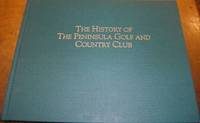
réf. 68-4885San Mateo CA: Peninsula Golf and Country Club. 1993. 4to. Green Cloth Oblong. 92 pp. Very Good. B&W plates. Provenance: Everett Mathews attorney from Millbrae CA. San Mateo, CA: Peninsula Golf and Country Club., [1993]. hardcover
4to. IX, (3), 188 pp. With 24 black-and-white photographic prints and 2 sketch maps of the route (one double page). Original blue full cloth with white stamped spine-title. Original illustrated dust jacket. First edition. Illustrated account of exploration along the Incense Route in Yemen and Saudi Arabia, written by "probably the first woman to have made the journey" (blurb). A gift copy with an 1969 inscription to flyleaf: "To Fred with love & best wishes for many happy returns of your birthday from Mina". - The seventh book in Toy's famous travel series involving her Landrover Pollyanna - or 'the desert gazelle', as it came to be called - narrating how her plan to follow the Incense Route was fraught with a disabling combination of immense danger - crossing war-torn Yemen - and burdensome bureaucracy. Her first attempt to cross the Saudi Arabian border was foiled, but she was able to join a pilgrimage caravan and became a valued member of the group due to her first aid box. - Toy's fascinating travelogue describes the sights and sounds along the route, includes anecdotes of Bedouin fables, and compares the rapidly developing country with memories of her previous travels in the Middle East. It includes an account of the Hejaz railway, some sections of which Toy followed on her trip, as well as the railroad's history and the various attempts to re-establish it after the destruction caused by T. E. Lawrence and his men. - Dust jacket unclipped, slightly worn at extremities. Block edges slightly spotted. A fine copy of this important piece of travel literature by one of the first Westerners to visit Saudi Arabia. OCLC 778317775.
19858vo., First Edition, with half-title in blue, title in blue and black, very numerous photographs and facsimiles in the text; blue cloth, upper board lettered in blue, a fine copy in unclipped dustwrapper. EDITION LIMITED TO 750 PRIVATELY PRINTED COPIES
Small folio (220 x 273 mm). 4 vols. (2), LXXXIX, (1), XII, 561, (3) pp. VIII, 727, (3) pp. VIII, 609, (3) pp. VIII, 574, (54) pp. Errata leaf in rear of each volume. Expertly bound to style in half calf over period marbled paper covered boards, flat spine divided into six compartments with gilt roll tools, black morocco lettering piece in the second, the others with a repeat arabesque decoration in gilt. First English edition of "al-Hidayah", the authoritative guide to Islamic jurisprudence, printed in a small number of copies only (cf. Brunet). The understanding of Islamic law was critical to the colonial administration of India, and in particular of Bengal with its large Muslim population, and this work was intended to enable English officials to understand local proceedings. - Commonly referred to as al-Hidayah or The Guidance, this work originated as a 12th-century Hanafi work by Sheikh al-Islam Burhan al-Din al-Farghani al-Marghinani (1135-97) and is considered an authoritative guide to Islamic law among Muslims throughout the world. The Hidayah presents a legal tradition developed over many centuries and represents the corpus of Hanafi law in its approved and preferred form. The primary reason for its popularity is the reliability of its statements and the soundness of its legal reasoning. It is arguably the most popular and important work in fiqh literature. - Hamilton's English translation is based on a Persian translation by Ghulam Ya Khan from the original Arabic. Intended for a British audience, chapters relating to rituals were omitted, while his coverage of contracts, torts, and criminal law is more complete. Hamilton explains in his preface: "The permanence of any foreign dominion (and indeed, the justification of holding such a dominion) requires that a strict attention be paid to ease and advantage, not only of the governors, but of the governed; and to this great end nothing can so effectually contribute as preserving to the latter their ancient established practices, civil and religious and protecting them in the exercise in their own institutes [...] they must be infinitely more acceptable than anything we could offer; since they are supported by the accumulated prejudice of ages, and, in the opinion of their followers, derive their origin from the Divinity himself" (Preliminary Discourse). A second edition of Hamilton's translation was published in 1870, though the first edition is rare. - Light browning throughout with occasional brownstains, but generally a very finely preserved copy in an appealing modern binding. Brunet III, 75. OCLC 10111750.
réf. 1332228194.Gpaperback. Good. Access codes and supplements are not guaranteed with used items. May be an ex-library book. paperback
8vo. 210 pp. Illustrated with 26 colour plates. Brown cloth with gilt lettering on spine. First edition of a survey of the influence of birds of prey on the agriculture in the United States, published as bulletin no. 3 of the U.S. Department of Agriculture, Division of Ornithology and Mammalogy. Understanding the feeding pattern of these birds was crucial to gauge their role in the ecosystem. Therefore the birds were caught and dissected and their stomach contents studied. This explains why the plates show the birds with their typical food. The 26 full-page chromolithographed plates are signed JLR (J. L. Ridgway and R. Ridgway) and show most birds in their natural habitat with a kill at their paws. Number 26 is placed between 23 and 24. - Bottom of spine damaged and repaired. Nissen IVB 316.
8vo. 210 pp. With 26 chromolithographed plates, some heightened with gum arabic, tissue guards. Original cloth. Some foxing, rubbed. Anker 144. Nissen 316. Wood 342. OCLC 1171516.
4to. (12) ff. With 21 original colour photographs (230 x 200 mm) inserted into protective sleeves. In a black full cloth binder with giltstamped title to cover and spine. Scarce records on the Hateiba gas field development project of Esso Standard Libya. The archive includes several schemes and diagrams as well as a brief description of the production facilities, an organization chart, and a capital cost summary - the total cost of the project amounting to $46,470. Of particular interest are the photographs of the low temperature separation gas plant installed at Hateiba, depicting l.t.s. units and air fin coolers, water tanks, the safety shutdown station and the knock-out drum, as well as the maintenance building and the central control panel operated by two employees. - In excellent condition. Interesting material on an otherwise little documented project in the desert of Eastern Libya.
1986176pp. Hardcover Very good condition good
1988199 pages. Whether you arrive by ferry, plane, or private boat, this book tells you everything you need to know for memorable trips to the Gulf Islands. Unmarked. Very light wear. Clean. Excellent copy. Book
réf. 44513925like new. unknown
2022réf. x-9354781659Zinc Read 2022. Hardcover. New. 204 pages. 6.00x0.50x9.00 inches. Zinc Read hardcover
19801st edition. Hardback in dust jacket. VG/VG. ISBN 0851122159. 17158. eng
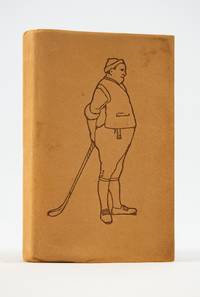
1903réf. ST20237New York: The Gorham Manufacturing Co 1903. FIRST EDITION. ONE OF 500 COPIES. 102 x 64 mm. 4 x 2 1/2". 4 p.l. 9-148 pp. CHARMING PUBLISHER'S LIMP SUEDE illustrated covers with a rotund golfer on front and a long-suffering caddy at rear top edge gilt other edges untrimmed. In a later glassine wrapper. Housed in a very sturdy custom-made buckram folding box with inlaid marbled spine label. Color floral and foliate headpieces tailpieces and title page and 16 DELIGHTFUL MOUNTED COLOR PLATES BY JOHN HASSALL. Front endpaper with the ownership inscription "W. P. Rockwell November 1905." Murdoch 888; Donovan & Murdoch 19030. Trivial smudges to the suede but A NEARLY PRISTINE COPY of this delightful little book an item that is simply never found this well preserved. This is a diminutive golf manual with immense charm and offered in the most immaculate condition possible. In a small-pocket format the book provides the golfer with the game's rules etiquette technical terms names of golf clubs and their various uses a list of American champions since the organization of the United States Golf Association and a roster of the "leading players in the United States." Accompanying the text are a group of quite charming colored plates done by John Hassall 1868-1948 an active and celebrated watercolorist poster designer and illustrator from 1895 onwards. Houfe calls him "an original and versatile designer." As can be seen in the present volume Hassall seems to have been influenced by "the flat colors and two-dimensional decorative quality of Japanese prints which he adapts to his own work with thick outline and careful patterning." Whatever the influence one can't help but smile when looking at his work. Hassall depicts golf costume through the ages here including golfers in kilts trousers cloaks knickers and other attire; he also shows us a pair of disarmingly shabby young caddies two women and a boy incongruously dressed in Napoleonic greatcoat and tricorn hat. The most memorable thing about this item is its condition: as a book intended to be put in one's pocket and as a volume that was never sturdy to begin with there is absolutely no explanation for how our copy has survived to the present day in its remarkable state of preservation. When this copy without its box was sold in 2004 at PBA Galleries the most prominent auction purveyor of golf books and equipment the catalogue called it "the finest copy we have ever offered of this exceedingly scarce and fragile book.". The Gorham Manufacturing Co unknown books
1903réf. ST20237New York: The Gorham Manufacturing Co 1903. FIRST EDITION. ONE OF 500 COPIES. 102 x 64 mm. 4 x 2 1/2". 4 p.l. 9-148 pp. CHARMING PUBLISHER'S LIMP SUEDE illustrated covers with a rotund golfer on front and a long-suffering caddy at rear top edge gilt other edges untrimmed. In a later glassine wrapper. Housed in a very sturdy custom-made buckram folding box with inlaid marbled spine label. Color floral and foliate headpieces tailpieces and title page and 16 DELIGHTFUL MOUNTED COLOR PLATES BY JOHN HASSALL. Front endpaper with the ownership inscription "W. P. Rockwell November 1905." Murdoch 888; Donovan & Murdoch 19030. Trivial smudges to the suede but A NEARLY PRISTINE COPY of this delightful little book an item that is simply never found this well preserved. This is a diminutive golf manual with immense charm and offered in the most immaculate condition possible. In a small-pocket format the book provides the golfer with the game's rules etiquette technical terms names of golf clubs and their various uses a list of American champions since the organization of the United States Golf Association and a roster of the "leading players in the United States." Accompanying the text are a group of quite charming colored plates done by John Hassall 1868-1948 an active and celebrated watercolorist poster designer and illustrator from 1895 onwards. Houfe calls him "an original and versatile designer." As can be seen in the present volume Hassall seems to have been influenced by "the flat colors and two-dimensional decorative quality of Japanese prints which he adapts to his own work with thick outline and careful patterning." Whatever the influence one can't help but smile when looking at his work. Hassall depicts golf costume through the ages here including golfers in kilts trousers cloaks knickers and other attire; he also shows us a pair of disarmingly shabby young caddies two women and a boy incongruously dressed in Napoleonic greatcoat and tricorn hat. The most memorable thing about this item is its condition: as a book intended to be put in one's pocket and as a volume that was never sturdy to begin with there is absolutely no explanation for how our copy has survived to the present day in its remarkable state of preservation. When this copy without its box was sold in 2004 at PBA Galleries the most prominent auction purveyor of golf books and equipment the catalogue called it "the finest copy we have ever offered of this exceedingly scarce and fragile book.". The Gorham Manufacturing Co unknown
1979réf. 031873Seattle Washington: Star System Press 1979. Very Good condition. Square and tight. NOT a remainder. NOT a library discard. We have only this one copy but it is available now and ready to ship today from Henderson Nevada. $12.50 printed price. Inscription at the end of the Foreword to: "Hal May your golf rise higher higher. " but signature below is illegible. Pages are otherwise clean and unmarked -- apparently seldom if ever read. Illustrated with step-by-step how-to-do-it photos. Index. Bound in the original green-stamped yellow pictorial boards. The Golfing Machine Its Construction Operation and Adjustment. G.O.L.F. stands for Geometrically Oriented Linear Force. From the Introduction: "It may be that an octopus -- or a "thing" from outer space -- would need a different procedure but for people -shaped golfers there is actually only "one swing" as depicted in Chapter 8 and discussed in Chapter 7. This Basic Stoke is not a basic procedure but is basic geometry. Almost anyone can do an imitation that could appear to the untrained eye to be as good looking as those of many experts. And all that would need to be added would be more precision in the Component relationships. And that this book can supply. In fact that is all it is intended to supply. Without that 'Basic Motion' it couldn't even do that. See 3-0. The relationships in the Golf Stroke can be explained scientifically only by geometry because geometry is the science of relationships. So learn Feel from Mechanics rather than Mechanics from Feel. 'Alignment Golf' -- Feel from Mechanics -- dispenses with all dependence on 'mandatory' Positions which can be perfectly executed and still miss the ball. They facilitate things but guarantee nothing -- unless you know the relations that are supposed to facilitate.". 1979 edition. Hardcover. Very Good condition/No jacket probably as issued. Illus. by NOT a library discard. 8vo. xi 232pp. Great Packaging Fast Shipping. Star System Press Hardcover
19828vo, 190 pages, not illustrated. Edited by Peter Dobereiner, foreword by Henry Cotton. eng
19518vo, 132 pages, illustrated. eng
1952No marks or inscriptions. A very clean very tight copy with bright unmarked boards, slightly dusty top of page edges and no bumping to corners. Dust jacket not price clipped or marked with a few old tape repairs. Now protected in a fully-removable transparent sleeve. 132pp.
1962réf. 120657Glasgow, The Golfer s Handbook, 1962.
19378vo., First Edition, with a coloured double-page frontispiece by Allan Stewart and numerous illustrations by Rountree in the text, neat signature on front free endpaper verso; cloth, gilt back, pictorial endpapers, covers rubbed at edges, some mild age-staining else a good, sound copy. Includes an extended bibliography of golf books.