7,581 results
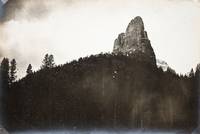
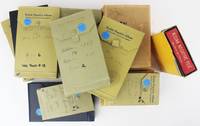
1959ref. 4928Saltese Mt. and various places across the American West 1959. Very good to near fine. Approximately 2150 photo negatives each about 3 x 5 inches contained in twenty-two fully-annotated Kodak negative albums. A bit of exposure bleeding at edges hardly affecting image areas. Occasional light scratching visible in margins. Fine strong images overall. A comprehensive and meticulous collection of photo negatives comprising well over 2000 images of Saltese Montana -- its industry development and culture -- over the first six decades of the 20th century. The images present here were compiled across two generations of the Rogers family primarily by Herbert Rogers and his son Gale Rogers both influential citizens in the very small town of Saltese during its brief heyday. Herbert moved to Montana in the late-19th century and began this photo record soon after; and until his retirement in the late 1920s he was the chief owner and operator of the power and water services for the town. Gale attended a small business school in Butte and thereafter was involved in many of the Rogers' local business interests including the Woodburn Mining Company the aforementioned Saltese Electric Light and Water Company and the Rogers Tourist Cabins and Standard Service Station. The elder Rogers was perhaps the prime mover of this archive's generation as the photo series ends in 1959 following quickly upon his death the year prior. Today the town of Saltese in the northwest corner of Montana near the border with Idaho is a small collection of houses with a bar and a general store sandwiched between Interstate 90 and the St. Regis River. The 2020 census recorded a population of ten souls. In its former life Saltese was a gold and silver mining town established in the 1880s as Silver City and renamed after the Nez Perce chief in 1891; for a time in the early-20th century and during the period covered by the present archive it could boast over 2000 residents and a stop on the Northern Pacific Railroad. The twenty-two albums that house the negative collection each contains an index filled with manuscript dates and descriptions for each image. The core of this archive is an almost sixty-year visual record of life in Saltese with images of town architecture views industry business social activity and citizens. The preponderance of images date from the early 1920s to the late 1950s with one album covering the period before World War I. The negatives include classic mining images railroad views and town floods; floods of the St. Regis River winter storms and their effects and various weather mitigation efforts; social events town baseball games and family gatherings; group and individual portraits of town citizens friends and members of the Rogers family. In addition to the images of mining efforts there is ample documentation of other industry in the region such as lumbering and milling; the local water and power plants which the Rogers owned; and construction of various edifices and businesses. The negatives are also an excellent record of town life showing schoolhouse gatherings town sports teams fire lookouts and Rogers family activities. A substantial portion of the collection documents automobile journeys taken across the intermountain West by the Rogers who traveled extensively in Montana Idaho Wyoming Utah Colorado and elsewhere. A subset of these is an interesting group of major dam projects and construction such as Polson Dam on the Flathead River and the Grand Coulee Dam on the Columbia River. In all a fabulous and expansive visual archive of a small town in northwestern Montana and life in the mountain West as it was lived by the Rogers family during the first half of the 20th century. unknown
1899ref. 365579Montana 1899. 21 silver print photographs. Captioned in pencil on verso. Approx. 4-3/4x7 inches each. Uniformly matted. 21 silver print photographs. Captioned in pencil on verso. Approx. 4-3/4x7 inches each. Although the photographer is unidentified the captions on the verso are in the same hand and the image quality suggests a pictorialist such as Dan Dutro or an extremely talented amateur. The group if noted for its images on the Blackfeet reservation including several of the Grass Dance dated 1899. The captions comprise: Grass Dance 1899 Grass Dance 1899 Inside Medicine Lodge Camp on Cut Bank on Reserve Cut Bank Cut Bank Creek Cut Bank in winter Cut Bank in winter Camp in Cut Bank in winter View in the large park on Cut Bank Peak up Two Medicine Upper St. Mary's Lake Upper St. Mary's Up Birch River Birch Creek south line of reserve Birch Creek Birch Creek Fish Lake south of reserve Fish Lake Grinnell Mt and Swift Current Fall On the trail to Bull's Head Mine in the Swift Current country back of Grinnell Mt. Mt Wilbur in distance. unknown
ref. 2081502111906888Guangxi Normal University Publishing House N.A. Soft Cover. Fine. The book is in fine condition. Guangxi Normal University Publishing House paperback
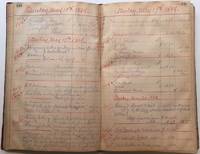
1882ref. 267192Territory of Montana 1882. hardcover. very good-. 478 pages folio 12.5 x 7.75 inches original marbled boards worn re-backed with maroon linen designated: "Minute Book No. 10" the proceedings of the 1st District Court Territory of Montana November 13 1882 - April 11 1886 the official record of hundreds of criminal and civil cases almost entirely in the hand of Theophilus Muffly - 1833 - 1898 a pioneer of the Territory who emigrated to Virginia City in December of 1864 and who was appointed to the bar by the United States Supreme Court. He was one of the lawyers present at the opening of the District Court of the Judicial District and subsequently served as Clerk of the Court Attorney Probate Judge Justice of the Peace and Police Magistrate. This remarkable offering provides great insight into the inner workings of the Territory's Judicial system which on the surface amounted to little more than a glorified "good ol' boys club" with little concern given to the issue of "conflict of interest." There are instances whereby District Attorneys prosecuted cases one day and then represented defendants in the same court room the next. Thus it created an environment whereby prosecutors opposed each other in some cases and then jointly prosecuted defendants in similar cases. In one instance James E. Callaway a signer of the 1884 Montana State Constitution was appointed by the court to represent a defendant who could not procure counsel. Ordinarily this would not raise eyebrows except for the fact that Callaway was one of the most prominent District Attorneys in the court. Henry N. Blake First Chief Justice of the Montana Supreme Court and arguably one of the most gifted jurists in the Territory had no qualms about handling an exorbitant amount of divorce cases collecting his usual fee of $50.00. This was done while he was an Associate Justice serving on the Montana Territorial Supreme Court! One thing that is evident is that this ledger is a virtual who's-who of many of the most prominent figures in Montana history including entries for lawmen who would eventually be murdered lawyers who would become important legislators including a Governor and pioneers who would become founders of the State Constitution. Many of these people lived colorful and distinguished lives while others would be forever clouded by controversy. Of special interest to historians will be the very last cases of Justice Everton Judson Congers 1834 - 1918 -- a Civil War hero who sustained several wounds in combat but who will forever be remembered for his role in the capture of John Wilkes Booth. He was appointed to the Court in 1880 by his friend Rutherford B. Hayes despite being a confirmed alcoholic morphine addict and habitual gambler. He made many political enemies and in 1883 was suspended from the bench due to "incompetence neglect of duty and keeping companionship of low vile people" a decision upheld by President Chester A. Arthur. Public outcry and an internal investigation later attributed his drinking and drug addiction to injuries sustained during the war. Congers was re-appointed to the bench but it was just one day before his term was set to expire and he was out of a job. Interestingly in his later years he relocated to Hawaii where he served as the attorney for Queen Liliuokalani. Congers presides over several interesting cases including an indictment for "marking and branding a calf with intent to steal same" of which he set bail at a staggering $500.00. On the other hand a person convicted of "manslaughter with malice" received a generous sentence of six years incarceration. Charles W. Turner 1846 - 1907 a prominent attorney who appeared many times before Congers might have summed it up best when he said "He called them the way he saw them with little left to the imagination or reason." Turner became a law partner of Andrew F. Burleigh 1846 - 1907 who is also heavily represented in this book and was subsequently murdered by a gunman in 1907. Burleigh performs his duties as District Attorney but also represents gold mine owners and railroad interests throughout the book. There is no doubt that the experience he acquired from these cases laid the groundwork for his becoming Receiver of the Northern Pacific Railroad. Another prominent District Attorney whose earliest known cases are documented is Robert B. Smith 1854 - 1908. He was appointed to the job by President Cleveland in 1885 launching his political career which culminated in his being elected Governor in 1896. Smith procures indictments and then prosecutes defendants charged with a host of frontier crimes including "grand larceny" "drawing and exhibiting a deadly weapon in an intimidating manner" and "driving away steer." Approximately half of the cases cited pertain to Civil Court issues several with high-powered litigants such as Simon R. Buford 1845 %u2013 1905 a pioneer and prominent businessman who owned S.R. Buford & Co. Another litigant was Amos C. Hall -- the most prominent banker in the Territory and owner of Hall-Harrington & Co. There are several entries of "Officers of the Court" who would later become prominent sheriffs and marshals including Frank S. Metzel who was shot and killed while intervening in a bank robbery and James E. Summers who was killed while attempting to serve an arrest warrant. It should be noted that this book contains many more names of prominent people. All cases presented be they criminal or civil are adjudicated from beginning to end -- from indictment to sentencing and from service of warrant to final litigation. The rarity of this book lies in the fact that it is unique and that it is the only documentation of the proceedings within. Staining inside the covers does not affect the interior. Very good- condition. unknown books
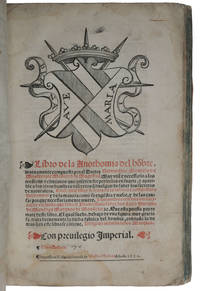
1551ref. 5399Valladolid: Sebastian Martinez 1551. First edition. First edition very rare of the first separate and first illustrated anatomical work in the vernacular printed in Spain. "While Valverde di Hamusco's Historia de la composicion del cuerpo humano 1556 is often credited with introducing into Spain the Vesalian anatomical iconography coupled with a vernacular text this honor actually belongs to Montaña de Monserrate's Anothomia" Norman. . FIRST SPANISH ILLUSTRATED ANATOMY IN THE VERNACULAR . First edition very rare of the first separate and first illustrated anatomical work in the vernacular printed in Spain. "While Valverde di Hamusco's Historia de la composicion del cuerpo humano 1556 is often credited with introducing into Spain the Vesalian anatomical iconography coupled with a vernacular text this honor actually belongs to Montaña de Monserrate's Anothomia. Montaña's Anathomia represents the first separate anatomical work in the vernacular printed in Spain as Lobera de Avila's unillustrated Libro de Anatomia was only a section of the more general Remedio de cuerpos humanos 1542. Montaña's text like that of another Vesalian propagandist Thomas Geminus was largely derived from the popular Anatomy of the medieval surgeon Henri de Mondeville and was thus more likely than that of Valverde to have been immediately accessible to Spain's barber-surgeons" Norman. "The book contains twelve anatomical crosscuts of which nine are copied from Vesalius' Fabrica or Epitome. These nine drawings are reduced and simplified and include three of Vesalius' male muscle figures two plates representing the central nervous system two plates of the venous and arterial systems Vesalius' figure combining genito-urinary and thoracic organs and a reversed copy of the Fabrica's first skeleton plate. Of the remaining three drawings two illustrate skeleton views derived from Berengario and Dryander while the third a crude semi-schematic representation of the thoracic and abdominal organs is probably an original by an unknown author. This book does not have any anatomical drawings of a female corpse. As the woodcut border bears the initials of the book's printer Sebastian Martinez it is likely that he executed the woodcuts" Reveron pp. 14-16. ABPC/RBH list four complete copies in the last half-century. Provenance: A few early annotations throughout including a small diagram of a jointed limb. "The Anothomia of Montaña consists essentially of three parts. The first comprises the anatomy proper to which are appended two chapters one of which deals with the generation and development of man and the other with the causes which necessarily lead to death. The second part is a colloquy the dream of the Marques de Mondejar presented in the manner of a typical renaissance dialogue between the Marques and Montaña on certain aspects of humoral physiology. And the final section is devoted to the illustrations. "The anatomical section together with the dedicatory epistle occupies the first seventy-three folios. After the proemium in which the author exhorts the would-be surgeon to select for his training an institution where actual dissection of the human cadaver is performed there follow three chapters of preliminary materials devoted to definitions the simple and the compound members. Thereafter the rest of the anatomy of the body is treated successively in the following order: the cranial cavity and contents the vertebral column the facial region the neck the upper extremities the thorax the abdomen the organs of generation and finally the lower extremities. One immediately recognizes in the arrangement from head to foot the scholastic order so popular in mediaeval texts and found in the anatomical treatise of the great French surgeon Henri de Mondeville 1260-1320. "The second part of the anatomical treatise is divided . into two chapters which treat of generation development of the foetus birth and the causes which necessarily lead to death. The principal agent of generation says Montaña is arterial blood which is elaborated and prepared in the testes to be converted into semen. Blood he continues is either venal and therefore gross earthy and impure; or arterial a purified and subtle form of the former. The purification and conversion of venous into arterial blood is carried on through the medium "of the pores of the substance of the heart." This arterial blood prepared by the testes and converted into semen when mixed with arterial blood is the basis of generation. The process of development then proceeds owing to a sort of selective fermentation which thus engenders the natural heat. Thereafter he continues with a discussion of the foetal membranes the umbilical chord and the placenta the successive development of the foetus and the mechanism of its formation with a consideration of the true termination of conception. These conclusions he informs us are the result of forty-five years of experience and he asks pardon for the shades of Hippocrates Aristotle Galen and Avicenna because he does not follow their teaching in this regard. "The section on embryology and the mechanism of developmental processes especially the concept of fermentation as a major factor in the formation of the natural heat and in the elaboration of the various organs of the body is quite unique. However we immediately recognize despite Montaña's protestations the fusion of Aristotelian and Galenical ideas and therefore suspect that he is for the most part dependent on Arabian sources. His indebtedness is notably evident in his use of anatomical terminology and we often meet with such terms as mirach for the anterior abdominal wall and siphac for the peritoneum" Saunders & O'Malley pp. 91-95. The dream of the Marques de Mondejar which has a separate title page is a work on physiology in which the principal functions of the human body are presented in allegory. The colloquy begins with the narration of a dream experienced by the Marques as told to his doctor the author himself in order that he may account for the figures and images that in the character's words 'appeared' to him 'most mysteriously.' The Marques' vision was of the magnificent architecture of a stately and gracious mansion in whose interior he sees a fortress being built. Montaña uses footnotes to reveal the links between the architectural images he is describing and the different parts of human anatomy: the stately mansion he describes is none other than the body of a pregnant woman with its respective regions organs and substances as well as the function of each of these in the reproductive process; the fortress is evidently the growing embryo. The colloquy is particularly notable for Montaña's account of the cardiac cycle. In it "he presented several observations from life on the cardiac cycle and he probably owed to Vesalius his knowledge of the function of the valves of the heart and the correct relationship of cardiac systole and diastole to the arterial pulse. Based upon an inexact interpretation of his discussion of the heart some Spanish historians have tried to credit Montaña with discovering the circulation of the blood but his writings show no understanding of the circulation in the Harveian sense" Norman. "At the end of Montaña's volume we come to the illustrations which would seem but for the collation to have been added as an afterthought since no mention is made of them in the text proper nor are they indicated on the title page the dedicatory letter or in the table of contents. We are simply told in the heading to this section that these figures will be found useful in following the author's discussion of the anatomical structure of man" Saunders & O'Malley pp. 101-102. These anatomical illustrations "included nine copies from either the Fabrica or the Epitome. These nine cuts all of them reduced and simplified included three Vesalian 'musclemen' two plates representing the venous and arterial systems two plates of the peripheral and central nervous systems a figure combining Vesalian representations of the genitourinary and thoracic organs and a reversed copy of the Fabrica's first skeleton plate. Of the remaining three plates two illustrating views of the skeleton were derived from Berengario and Dryander while the third a crude semi-schematic representation of the thoracic and abdominal organs is probably original" Norman. The woodcut illustrations like the woodcut border on K2 were presumably executed by 'S.M.' i.e. Sebastian Martinez. Little is known of the life of Montaña de Monserrate. A Catalan he was born ca. 1480 in the small hamlet of Monserrate near Barcelona. After studying medicine probably in Montpelier he returned to his native country living for many years in Valladolid. It was here that he established his reputation eventually being called to the position of physician to the emperor Charles V. Cushing Vesalius addenda 598; Durling 2339; Garrison-Morton 378.01; Norman 1540; Waller 6647; Wellcome 4406. Pedraz 'Body and society in the Libro de la anathomia by Bernardino Montaña de Monserrate: an anatomist's political dream' Historia Ciencias Saude 20 2013 pp. 1-14. Reveron 'The first human anatomy book in Spanish .' Vesalius 25 2019 pp. 8-18. Saunders & O'Malley 'Bernardino Montaña de Monserrate' Journal of the History of Medicine and Allied Sciences 1 1946 pp. 87-107. Folio 289 x 200mm ff. viii i-ii iii-cxxxvi. Title in red and black with large woodcut coat-of-arms presumably of his patron the Marques sectional title on K2 within elaborate woodcut border signed 'S.M.' and 12 large three-quarter page anatomical woodcuts in text initial and final few leaves with some light marginal staining and some rubbing to corners of last few leaves. Contemporary vellum hand-lettered spine endleaves consisting of sheets printed with a full-page devotional woodcut broadside of the Virgin repeated twice on the front endleaves and once at the rear upper corner of back cover torn. Housed in a cloth clamshell box with leather spine label. A genuine untouched copy. Sebastian Martinez unknown
ref. UUI-9510Gravure en couleurs, "Pont du Diable", format 15/16 cm pour la feuille, 6,8/9,3 pour la gravure elle-même. Bel état. Éditée par Fuessli à Zürich, sans date, vers 1840. Une date manuscrite en revanche sur la feuille, peut-être une date de voyage dans la région. Frais d'envoi 3,80 euros sur la France, 6 euros UE et Suisse, 6,50 euros pour le reste du monde (tarifs de base hors envois suivis). Possibilité de remise en mains propres sur Paris, n'hésitez pas à me contacter avant de passer commande. Twitter : @Pontneuf06.