7,851 results
1938ref. 25505Edition chez l'auteur (Lausanne) 1938. In 4 (325 X 240 ) broché de 132 p. Ex.numéroté (1282) sur vélin 1/2000 d'un tirage de 1225
2 volumes In-4, XV-559-494p. Edition originale au tirage limité et numéroté 1/2400 exemplaires. Splendides ouvrages agrémentés de 657 illustrations en noir d'après des documents anciens. Une référence incontournable de la littérature montagnarde. Exemplaire de première fraicheur agréablement relié. [Perret 2031]
ref. 52203aafAarau und Thun, Christen, (später:) Aarau, Wirz, 1838-1918, in-8vo, 2-spaltiger Text, mit ca. 850 meist gestochenen Abbildungen, auf Vorsatz Stempel ‘Georg Zähnler, Furth’, auf Titel des 1863 Nummers hs. Besitzeintrag ‘Hulebrüch, Glettig, St. Peterzell. ’, spätere Halbleineneinbändehs. Titeletikette auf den Rücken.
ref. 142183aafMarseille, Barthelet et Cie., 1896, gr. in-8vo, 1 f. blanche + 27 p. + 3 pages d’illustration (carte du massif du Mont-Blanc; Vue du Mont-Blanc prise du Brévent avec l’indication des routes d’ascension; Coupe du massif du Mont-Blanc). envoi manuscrit de l’auteur sur couverture de la brochure / exlibris Peter E. Obergfell, reliure récente en demi-maroquin vert avec coins. Bel exemplaire avec la brochure orig, cons.
1928ref. 026420Boston MA U.S.A.: AMC 1928. Seventh Edition 1st Printing. Hardcover. Very Good. 16mo - over 5¾" - 6¾" tall. Assorted Maps. 7Th Edition 1928. Dark Mustard/Tan cloth. Black illustrated titles light wear. Includes The Original 1928 Mt. Washington Large Folding Map In About Fine Condition. Book Is In Near Fine Condition 'Field' Variant with the Flap. 528 pp With 4 All Clean 'Memoranda' Pages. Complete with all maps. AMC hardcover
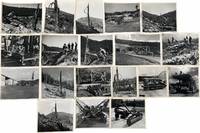
1960ref. 231891960. Labor Industrial rock drilling photograph archive documenting Gardner Denver and drill carrier machinery in factory yard and field settings circa 1960s recording how specialized drilling equipment was designed serviced and operated in steep-cut and tunnel construction environments. The group centers on crawler-mounted drills compressor-fed hose systems and rail-mounted heavy equipment photographed both as machines and in use by work crews. Gardner Denver is identified directly by company stamps and visible signage while the field views place the machinery within active excavation and blasting work rather than isolated product display. Photo archive of 19 Large silver gelatin photographs all 8 x 10 inches Quincy Illinois and unidentified mountain construction sites circa 1960s. Views include operators seated or standing at tracked drill carriers on exposed rock faces; close mechanical studies of valves feed assemblies hoses and fittings; factory-yard portraits of articulated drill rigs parked on pavement; and a large rail-mounted drilling platform photographed on tracks with crew members standing above it. Several photographs show men in work clothes and caps monitoring or operating the machines on steep slopes with forested ridgelines behind them. One image records a tunnel portal marked BLUE MOUNTAIN with adjacent heavy construction equipment and rails leading into the opening. Blue Mountain Tunnel belonged to the original Pennsylvania Turnpike system opened in 1940 and by the 1960s it stood within a corridor undergoing major modernization as rising traffic as Americans in the postwar years increasingly relied on automobile ownership suburban commuting and highway expansion ultimately reshaping infrastructure construction and everyday mobility from the late 1940s through the 1960s. Advances in carrier-mounted rock drilling concentrated labor on machine operation positioning maintenance and coordinated blasting making work at Blue Mountain Tunnel faster more systematized and less dependent on earlier hand-held drilling methods. After World War II postwar conditions produced the demand capital and public-works agenda that made this machinery necessary: rising automobile traffic highway expansion tunnel widening and large earthmoving projects pushed contractors toward faster more powerful and more standardized drilling systems. Drilling was one of the mechanical developments that transformed rock excavation in the 1950s and 1960s and moved from more limited portable systems toward carrier-mounted equipment able to work faster more consistently and on more difficult terrain for highway cuts tunnel approaches and other large infrastructure projects. Because the group includes stamped manufacturer views shop and yard photographs working machine close-ups and field operation scenes it shows the full operating system of industrial drilling technology rather than a single machine in isolation. Light handling wear and minor curling at edges; one print with blueprint attached to verso; all images otherwise clean and in good condition. Depicting the industrial postwar boom and infrastructure investments carried out by mid-century American excavation technology manufacturer documentation and construction labor in practice. unknown
1960ref. 231891960. Labor Industrial rock drilling photograph archive documenting Gardner Denver and drill carrier machinery in factory yard and field settings circa 1960s recording how specialized drilling equipment was designed serviced and operated in steep-cut and tunnel construction environments. The group centers on crawler-mounted drills compressor-fed hose systems and rail-mounted heavy equipment photographed both as machines and in use by work crews. Gardner Denver is identified directly by company stamps and visible signage while the field views place the machinery within active excavation and blasting work rather than isolated product display. Photo archive of 19 Large silver gelatin photographs all 8 x 10 inches Quincy Illinois and unidentified mountain construction sites circa 1960s. Views include operators seated or standing at tracked drill carriers on exposed rock faces; close mechanical studies of valves feed assemblies hoses and fittings; factory-yard portraits of articulated drill rigs parked on pavement; and a large rail-mounted drilling platform photographed on tracks with crew members standing above it. Several photographs show men in work clothes and caps monitoring or operating the machines on steep slopes with forested ridgelines behind them. One image records a tunnel portal marked BLUE MOUNTAIN with adjacent heavy construction equipment and rails leading into the opening. Blue Mountain Tunnel belonged to the original Pennsylvania Turnpike system opened in 1940 and by the 1960s it stood within a corridor undergoing major modernization as rising traffic as Americans in the postwar years increasingly relied on automobile ownership suburban commuting and highway expansion ultimately reshaping infrastructure construction and everyday mobility from the late 1940s through the 1960s. Advances in carrier-mounted rock drilling concentrated labor on machine operation positioning maintenance and coordinated blasting making work at Blue Mountain Tunnel faster more systematized and less dependent on earlier hand-held drilling methods. After World War II postwar conditions produced the demand capital and public-works agenda that made this machinery necessary: rising automobile traffic highway expansion tunnel widening and large earthmoving projects pushed contractors toward faster more powerful and more standardized drilling systems. Drilling was one of the mechanical developments that transformed rock excavation in the 1950s and 1960s and moved from more limited portable systems toward carrier-mounted equipment able to work faster more consistently and on more difficult terrain for highway cuts tunnel approaches and other large infrastructure projects. Because the group includes stamped manufacturer views shop and yard photographs working machine close-ups and field operation scenes it shows the full operating system of industrial drilling technology rather than a single machine in isolation. Light handling wear and minor curling at edges; one print with blueprint attached to verso; all images otherwise clean and in good condition. Depicting the industrial postwar boom and infrastructure investments carried out by mid-century American excavation technology manufacturer documentation and construction labor in practice. unknown books
1899Pages 562-676. Features: In the Khalifa's Clutches - part IV of Charles Neufeld's ordeal; Impressions of Pekin - sensational photo-illustrated article; Two Loves Affairs, and How They Ended - Colonel Hervey Tryon falls headlong into a deep well of garbag; The Hook-Swinging Ceremony as I Saw It - Rev. Joshua Knowles describes a South Indian pagan festival in which devotees have hook placed in their flesh before they are swung into the air at the end of long poles - with photos; A Desperate Plight - travails of Captain H.V. Barclay in the arid Australian interior; The Great Grottos of Han - photo-illustrated article on the marvelous caverns near Han-sur-Lesse in the Belgian Ardennes; Held by An Octopus - Herbert Perkins explains how he was grabbed from out of the water; Shooting the Reversible Falls - photo-illustrated story from St. John, New Brunswick involving Xavier Francis and Louis Mitchell; Life in an Italian Village (near Pallanza); On the War-Path with Redskins - a retaliatory raid of natives is recounted by J.W. Schultz, a Rocky Mountain guide who was married to a Blackfoot and lived among them in Montana; The Fantastic Carnival at Pangau in a remote part of the Austrian Tyrol; Twenty-Seven Days in an Open Boat - Part II - the castaways are finally rescued, but in ghastly condition; Naia, The Witch of Rochefort-en-Terre, in Brittany - photo-illustrated article; Through Italy in Bedouin Dress - photo-illustrated account; One Thousand Miles on Mule-Back - Part I of this photo-illustrated article of the amazing journey of Mabel Penniman from New York to London via Central and South Amerca; The Bogus "Rush" at Coolgardie - photo-illustrated of a fake gold rush in Australia as told by John Marshalll of Kalgoorlie; Photo of women coal heavers in Dresden; Full-page photo from Kelsey Creek, California showing a river of fish three feet deep - with no water!; Photo of Tunisian camel fight; and more. Average external wear and soiling. Few pencil markings. Binding intact. A sound vintage copy of this excellent issue. Book
ref. 138585aafZürich, Orell, Gessner, Fuessli, 1793, Quer-8vo. 1 kalligraphischer radierter Titel mit Vignette + 2 Bl. + 75 S. (76 S., letzte S. leer) mit gestoch. Schlussvignette + 12 ganzseitigen Radierungen mit Ansichten, hs. Besitzverm. ‘M. Holzmann’ auf Vorsatzbl. / Ex libris Peter E. Obergfell. Hübscher späterer roter Leinenband. Titel vergoldet am Rücken.
ref. 140107aafZürich, Orell, Gessner, Fuessli, 1793, quer-8vo. gestoch. Titel mit Vign. + 2 Bl. + 75 S., mit gestoch. Schlussvign. (S. 3-4 mit kl. Eckabriss) + 12 radierte Tafeln, stellenw. leicht stockfl. am Rand, breitrandig, hs. Besitzverm. Hans Wismer auf Vorsatz, auf Titel hs. ,J. Wismer’ / Exlibris’ Peter E. Obergfell, Ppbd. mit grünem verg. Rsch., berieben u. etwas angestaubt, eine Ecke geknickt, Rotschnitt.
ref. DADAX157510024XNew unknown
1867ref. 19750Paris et Genève, Victor Masson et filles, 1867. 3 volumes in-8 de XX-464 + [4]-437-[3] + [4]-587-[4]p. pour l'errata, demi-percaline prune, dos (passé) lisses.
1813ref. 2110502151100763Hishiya jihyoe 1813. Soft Cover. Fine. Number of books: 2 Hishiya jihyoe paperback
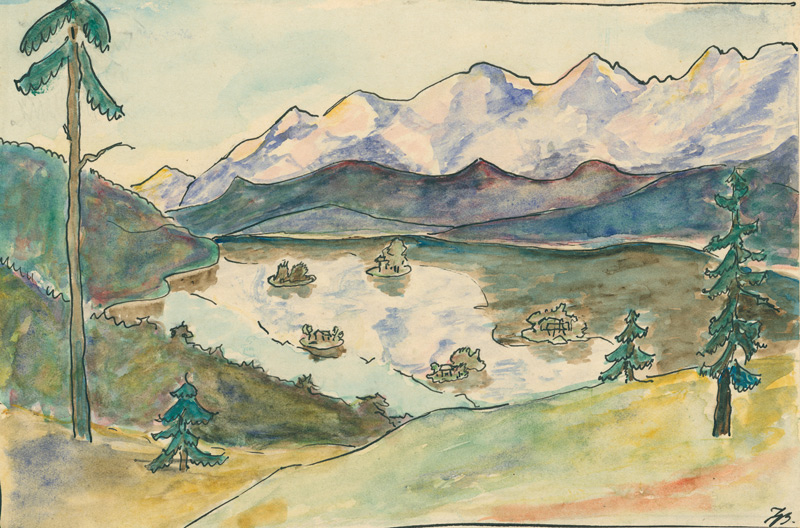
ref. 006-Wo.J. Aquarell und Feder in Schwarz, um 1926/1928, auf chamoisfarbenem Velin, auf Karton aufgezogen, rechts unten monogrammiert ?HB. (ligiert) ?. 13,2:20 cm.
1948ref. 130424Durel éditeur Paris, Durel éditeur, 1948. In-4 carré relié demi-basane prune, dos à nerfs, titre doré. Couverture illustrée conservée de 185 pages. Illustrations de Xavier de Poret dans et hors-texte + planches en fin réunissant 41 figures avec explications en regard. Tirage limité numéroté. Celui-ci sur Alfa. Exemplaire comportant un très bel envoi autographe signé, daté, de Germaien Tillion à Georges Segrette. Parfait état.
1948Paris, Durel éditeur 1948. In-4 carré relié demi-basane prune, dos à nerfs, titre doré. Couverture illustrée conservée. 185 pages. Illustrations de Xavier de Poret dans et hors-texte + planches en fin réunissant 41 figures avec explications en regard. Tirage limité numéroté. Celui-ci sur Alfa. Exemplaire comportant un très bel envoi autographe signé, daté, de Germaien Tillion à Georges Segrette. Parfait état.
1867ref. 14955Paris et Genève, Victor Masson et filles, 1867. 3 volumes in-8 de XX-464 + [4]-437-[3] + [4]-587-[4]p. pour l'errata, demi-veau brun, dos à nerfs ornés de filets et fleurons dorés, coupes et coiffes inférieures frottées, quelques rousseurs. 1 volume in-folio pour l'atlas, relié en demi-vélin blanc à coins, pièces de titre rouge au premier plat.
ref. 131-Eo.J. Aquarell über Bleistift, auf cremefarbenem Velin. 29:18,2 cm.
ref. SONG1842460889Used: Good unknown
ref. 100737aafAmsterdam, R. Hentzi / Yntema, s.d. 1785, 33x22 cm (Vue), aquatinte tirée en couleurs, Passepartout - Encadrement or. (60x45 cm).
ref. 92681aafParis, Cuchet, 1788, in-8vo, VI + 525 p. + 1 tableau et 4 cartes dépliantes (les 4 îles Ponces: Ponza, Palmarola, Ventotene et Zannone), non rogné, pages seulement partiellement coupées, papier très légèrement bruni, rares petites taches, timbre ex-libris de la famille de ‘... Saussure’, brochure d’attente d’époque, dos avec pièce de titre ms., début de fentes, couverture détachée, manque le 2e plat. (à relier)
ref. DADAX1892469146New unknown
ref. DADAX0871568055New unknown
ref. 431914No place: no publisher 1976. Softcover. Near Fine. Oblong 16mo. Spiral bound paper and cardboard wrappers with tipped-on elements on the front. 24pp. An artist sketch book repurposed to serve as a prospectus for a new comic strip written by Peg Montana wife of Archie creator Bob Montana along with his art assistant Jeff Cuddy following Bob's sudden death in 1975. The prospectus consists of photomechanically produced cover and interior illustrations with a single strip mounted on the verso of each page along with a slogan fact or pithy comment about the strip's appeal. The inside front wrap also has two mounted tipped-in paper slips one summarizing the strip and the other listing Cuddy's address in Manchester New Hampshire. The strip's humor was came from the alien's observations and misinterpretation of Earth culture. Our research turned up no evidence that the strips was published outside of a brief showing in a small newspaper in Delaware County Pennsylvania which may have been its only appearance in print. A unique survivor. no publisher] unknown
ref. 431914No place: no publisher 1976. Softcover. Near Fine. Oblong 16mo. Spiral bound paper and cardboard wrappers with tipped-on elements on the front. 24pp. An artist sketch book repurposed to serve as a prospectus for a new comic strip written by Peg Montana wife of Archie creator Bob Montana along with his art assistant Jeff Cuddy following Bob's sudden death in 1975. The prospectus consists of photomechanically produced cover and interior illustrations with a single strip mounted on the verso of each page along with a slogan fact or pithy comment about the strip's appeal. The inside front wrap also has two mounted tipped-in paper slips one summarizing the strip and the other listing Cuddy's address in Manchester New Hampshire. The strip's humor was came from the alien's observations and misinterpretation of Earth culture. Our research turned up no evidence that the strips was published outside of a brief showing in a small newspaper in Delaware County Pennsylvania which may have been its only appearance in print. A unique survivor. no publisher] unknown books