(Montana)ABAA
7,830 results
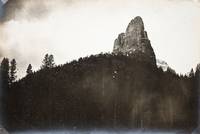
1899ref. 365579Montana 1899. 21 silver print photographs. Captioned in pencil on verso. Approx. 4-3/4x7 inches each. Uniformly matted. 21 silver print photographs. Captioned in pencil on verso. Approx. 4-3/4x7 inches each. Although the photographer is unidentified the captions on the verso are in the same hand and the image quality suggests a pictorialist such as Dan Dutro or an extremely talented amateur. The group if noted for its images on the Blackfeet reservation including several of the Grass Dance dated 1899. The captions comprise: Grass Dance 1899 Grass Dance 1899 Inside Medicine Lodge Camp on Cut Bank on Reserve Cut Bank Cut Bank Creek Cut Bank in winter Cut Bank in winter Camp in Cut Bank in winter View in the large park on Cut Bank Peak up Two Medicine Upper St. Mary's Lake Upper St. Mary's Up Birch River Birch Creek south line of reserve Birch Creek Birch Creek Fish Lake south of reserve Fish Lake Grinnell Mt and Swift Current Fall On the trail to Bull's Head Mine in the Swift Current country back of Grinnell Mt. Mt Wilbur in distance. unknown books
1899ref. 365579Montana 1899. 21 silver print photographs. Captioned in pencil on verso. Approx. 4-3/4x7 inches each. Uniformly matted. 21 silver print photographs. Captioned in pencil on verso. Approx. 4-3/4x7 inches each. Although the photographer is unidentified the captions on the verso are in the same hand and the image quality suggests a pictorialist such as Dan Dutro or an extremely talented amateur. The group if noted for its images on the Blackfeet reservation including several of the Grass Dance dated 1899. The captions comprise: Grass Dance 1899 Grass Dance 1899 Inside Medicine Lodge Camp on Cut Bank on Reserve Cut Bank Cut Bank Creek Cut Bank in winter Cut Bank in winter Camp in Cut Bank in winter View in the large park on Cut Bank Peak up Two Medicine Upper St. Mary's Lake Upper St. Mary's Up Birch River Birch Creek south line of reserve Birch Creek Birch Creek Fish Lake south of reserve Fish Lake Grinnell Mt and Swift Current Fall On the trail to Bull's Head Mine in the Swift Current country back of Grinnell Mt. Mt Wilbur in distance. unknown
ref. 2081502111906888Guangxi Normal University Publishing House N.A. Soft Cover. Fine. The book is in fine condition. Guangxi Normal University Publishing House paperback
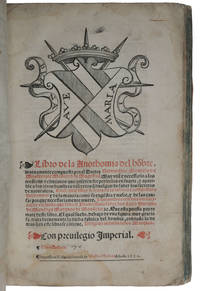
1551ref. 5399Valladolid: Sebastian Martinez 1551. First edition. First edition very rare of the first separate and first illustrated anatomical work in the vernacular printed in Spain. "While Valverde di Hamusco's Historia de la composicion del cuerpo humano 1556 is often credited with introducing into Spain the Vesalian anatomical iconography coupled with a vernacular text this honor actually belongs to Montaña de Monserrate's Anothomia" Norman. . FIRST SPANISH ILLUSTRATED ANATOMY IN THE VERNACULAR . First edition very rare of the first separate and first illustrated anatomical work in the vernacular printed in Spain. "While Valverde di Hamusco's Historia de la composicion del cuerpo humano 1556 is often credited with introducing into Spain the Vesalian anatomical iconography coupled with a vernacular text this honor actually belongs to Montaña de Monserrate's Anothomia. Montaña's Anathomia represents the first separate anatomical work in the vernacular printed in Spain as Lobera de Avila's unillustrated Libro de Anatomia was only a section of the more general Remedio de cuerpos humanos 1542. Montaña's text like that of another Vesalian propagandist Thomas Geminus was largely derived from the popular Anatomy of the medieval surgeon Henri de Mondeville and was thus more likely than that of Valverde to have been immediately accessible to Spain's barber-surgeons" Norman. "The book contains twelve anatomical crosscuts of which nine are copied from Vesalius' Fabrica or Epitome. These nine drawings are reduced and simplified and include three of Vesalius' male muscle figures two plates representing the central nervous system two plates of the venous and arterial systems Vesalius' figure combining genito-urinary and thoracic organs and a reversed copy of the Fabrica's first skeleton plate. Of the remaining three drawings two illustrate skeleton views derived from Berengario and Dryander while the third a crude semi-schematic representation of the thoracic and abdominal organs is probably an original by an unknown author. This book does not have any anatomical drawings of a female corpse. As the woodcut border bears the initials of the book's printer Sebastian Martinez it is likely that he executed the woodcuts" Reveron pp. 14-16. ABPC/RBH list four complete copies in the last half-century. Provenance: A few early annotations throughout including a small diagram of a jointed limb. "The Anothomia of Montaña consists essentially of three parts. The first comprises the anatomy proper to which are appended two chapters one of which deals with the generation and development of man and the other with the causes which necessarily lead to death. The second part is a colloquy the dream of the Marques de Mondejar presented in the manner of a typical renaissance dialogue between the Marques and Montaña on certain aspects of humoral physiology. And the final section is devoted to the illustrations. "The anatomical section together with the dedicatory epistle occupies the first seventy-three folios. After the proemium in which the author exhorts the would-be surgeon to select for his training an institution where actual dissection of the human cadaver is performed there follow three chapters of preliminary materials devoted to definitions the simple and the compound members. Thereafter the rest of the anatomy of the body is treated successively in the following order: the cranial cavity and contents the vertebral column the facial region the neck the upper extremities the thorax the abdomen the organs of generation and finally the lower extremities. One immediately recognizes in the arrangement from head to foot the scholastic order so popular in mediaeval texts and found in the anatomical treatise of the great French surgeon Henri de Mondeville 1260-1320. "The second part of the anatomical treatise is divided . into two chapters which treat of generation development of the foetus birth and the causes which necessarily lead to death. The principal agent of generation says Montaña is arterial blood which is elaborated and prepared in the testes to be converted into semen. Blood he continues is either venal and therefore gross earthy and impure; or arterial a purified and subtle form of the former. The purification and conversion of venous into arterial blood is carried on through the medium "of the pores of the substance of the heart." This arterial blood prepared by the testes and converted into semen when mixed with arterial blood is the basis of generation. The process of development then proceeds owing to a sort of selective fermentation which thus engenders the natural heat. Thereafter he continues with a discussion of the foetal membranes the umbilical chord and the placenta the successive development of the foetus and the mechanism of its formation with a consideration of the true termination of conception. These conclusions he informs us are the result of forty-five years of experience and he asks pardon for the shades of Hippocrates Aristotle Galen and Avicenna because he does not follow their teaching in this regard. "The section on embryology and the mechanism of developmental processes especially the concept of fermentation as a major factor in the formation of the natural heat and in the elaboration of the various organs of the body is quite unique. However we immediately recognize despite Montaña's protestations the fusion of Aristotelian and Galenical ideas and therefore suspect that he is for the most part dependent on Arabian sources. His indebtedness is notably evident in his use of anatomical terminology and we often meet with such terms as mirach for the anterior abdominal wall and siphac for the peritoneum" Saunders & O'Malley pp. 91-95. The dream of the Marques de Mondejar which has a separate title page is a work on physiology in which the principal functions of the human body are presented in allegory. The colloquy begins with the narration of a dream experienced by the Marques as told to his doctor the author himself in order that he may account for the figures and images that in the character's words 'appeared' to him 'most mysteriously.' The Marques' vision was of the magnificent architecture of a stately and gracious mansion in whose interior he sees a fortress being built. Montaña uses footnotes to reveal the links between the architectural images he is describing and the different parts of human anatomy: the stately mansion he describes is none other than the body of a pregnant woman with its respective regions organs and substances as well as the function of each of these in the reproductive process; the fortress is evidently the growing embryo. The colloquy is particularly notable for Montaña's account of the cardiac cycle. In it "he presented several observations from life on the cardiac cycle and he probably owed to Vesalius his knowledge of the function of the valves of the heart and the correct relationship of cardiac systole and diastole to the arterial pulse. Based upon an inexact interpretation of his discussion of the heart some Spanish historians have tried to credit Montaña with discovering the circulation of the blood but his writings show no understanding of the circulation in the Harveian sense" Norman. "At the end of Montaña's volume we come to the illustrations which would seem but for the collation to have been added as an afterthought since no mention is made of them in the text proper nor are they indicated on the title page the dedicatory letter or in the table of contents. We are simply told in the heading to this section that these figures will be found useful in following the author's discussion of the anatomical structure of man" Saunders & O'Malley pp. 101-102. These anatomical illustrations "included nine copies from either the Fabrica or the Epitome. These nine cuts all of them reduced and simplified included three Vesalian 'musclemen' two plates representing the venous and arterial systems two plates of the peripheral and central nervous systems a figure combining Vesalian representations of the genitourinary and thoracic organs and a reversed copy of the Fabrica's first skeleton plate. Of the remaining three plates two illustrating views of the skeleton were derived from Berengario and Dryander while the third a crude semi-schematic representation of the thoracic and abdominal organs is probably original" Norman. The woodcut illustrations like the woodcut border on K2 were presumably executed by 'S.M.' i.e. Sebastian Martinez. Little is known of the life of Montaña de Monserrate. A Catalan he was born ca. 1480 in the small hamlet of Monserrate near Barcelona. After studying medicine probably in Montpelier he returned to his native country living for many years in Valladolid. It was here that he established his reputation eventually being called to the position of physician to the emperor Charles V. Cushing Vesalius addenda 598; Durling 2339; Garrison-Morton 378.01; Norman 1540; Waller 6647; Wellcome 4406. Pedraz 'Body and society in the Libro de la anathomia by Bernardino Montaña de Monserrate: an anatomist's political dream' Historia Ciencias Saude 20 2013 pp. 1-14. Reveron 'The first human anatomy book in Spanish .' Vesalius 25 2019 pp. 8-18. Saunders & O'Malley 'Bernardino Montaña de Monserrate' Journal of the History of Medicine and Allied Sciences 1 1946 pp. 87-107. Folio 289 x 200mm ff. viii i-ii iii-cxxxvi. Title in red and black with large woodcut coat-of-arms presumably of his patron the Marques sectional title on K2 within elaborate woodcut border signed 'S.M.' and 12 large three-quarter page anatomical woodcuts in text initial and final few leaves with some light marginal staining and some rubbing to corners of last few leaves. Contemporary vellum hand-lettered spine endleaves consisting of sheets printed with a full-page devotional woodcut broadside of the Virgin repeated twice on the front endleaves and once at the rear upper corner of back cover torn. Housed in a cloth clamshell box with leather spine label. A genuine untouched copy. Sebastian Martinez unknown
ref. UUI-9510Gravure en couleurs, "Pont du Diable", format 15/16 cm pour la feuille, 6,8/9,3 pour la gravure elle-même. Bel état. Éditée par Fuessli à Zürich, sans date, vers 1840. Une date manuscrite en revanche sur la feuille, peut-être une date de voyage dans la région. Frais d'envoi 3,80 euros sur la France, 6 euros UE et Suisse, 6,50 euros pour le reste du monde (tarifs de base hors envois suivis). Possibilité de remise en mains propres sur Paris, n'hésitez pas à me contacter avant de passer commande. Twitter : @Pontneuf06.