6 436 résultats
1996réf. 209981996. Collection of five books documenting LGBTQ travel culture during the 1990s when printed guidebooks and travel anthologies played an important role in helping gay and lesbian travelers identify welcoming businesses social spaces and destinations amid persistent discrimination and uneven legal protections. The archive reflects the cultural sphere of queer mobility and community formation through practical travel information personal essays and destination-based cultural commentary aimed specifically at LGBTQ readers. Published before online review platforms and digital travel forums became widespread these guides functioned as navigational tools for locating affirming hotels bars cafés bookstores and nightlife venues in unfamiliar cities while also fostering broader awareness of queer social geography. Together the books provide insight into LGBTQ tourism community networks and the commercialization of queer travel culture during the late twentieth century. Collection consists of five paperback volumes published between 1996 and 1998 including three travel guides and two literary anthologies. 1 Collins Andrew. Fodor's Gay Guide to the USA. New York: Fodor's Travel Publications 1996. First edition. 497 pages. Organized by city and region across approximately forty destinations in the United States the guide lists gay- and lesbian-friendly hotels inns restaurants bars cafés bookstores switchboards and community resources together with commentary on local culture from an LGBTQ perspective. The present copy contains notes in the table of contents associated with a planned trip. 2 Collins Andrew. Fodor's Gay Guide to South Florida with South Beach and Key West. New York: Fodor's Travel Publications 1997. First edition. 129 pages. Focused on South Florida during a period when Miami South Beach and Key West had become major centers of queer tourism and nightlife. Includes listings for LGBTQ-oriented businesses and travel destinations catering to gay and lesbian visitors. 3 Ferrari Guides' Gay Paris: The Definitive Guide to Gay and Lesbian Paris. Paris: Ferrari Guides 1997. First edition. 304 pages. English-language guidebook combining travel recommendations with historical and cultural commentary on Parisian LGBTQ life nightlife and community institutions. Former owner's name written on title page. 4 Bledsoe Lucy Jane editor. Lesbian Travels: A Literary Companion. San Francisco: Cleis Press 1998. First edition. Anthology of personal essays by lesbian writers addressing travel cultural encounter relationships and adventure across international settings. 5 Bledsoe Lucy Jane editor. Gay Travels: A Literary Companion. San Francisco: Cleis Press 1998. First edition. Companion anthology collecting essays by gay male writers focused on travel experiences romance intercultural exchange and queer identity abroad. Produced during a period when LGBTQ travelers frequently relied upon specialized print resources to avoid harassment and locate supportive public accommodations these books document an important phase in the development of queer tourism and commercial LGBTQ publishing. The guides emerged from broader community efforts to map safe and affirming spaces in cities and tourist destinations before the widespread availability of internet-based travel information. Their role within queer travel culture has often been compared to other minority travel guides intended to help marginalized communities navigate hostile environments. Minor handling wear throughout. Fodor's Gay Guide to the USA with creasing from use and manuscript trip-planning notes; Gay Paris with ownership inscription. Overall very good condition. Cohesive archive documenting LGBTQ travel networks queer publishing and community-oriented tourism culture at the close of the twentieth century. unknown
1996réf. 209981996. Collection of five books documenting LGBTQ travel culture during the 1990s when printed guidebooks and travel anthologies played an important role in helping gay and lesbian travelers identify welcoming businesses social spaces and destinations amid persistent discrimination and uneven legal protections. The archive reflects the cultural sphere of queer mobility and community formation through practical travel information personal essays and destination-based cultural commentary aimed specifically at LGBTQ readers. Published before online review platforms and digital travel forums became widespread these guides functioned as navigational tools for locating affirming hotels bars cafés bookstores and nightlife venues in unfamiliar cities while also fostering broader awareness of queer social geography. Together the books provide insight into LGBTQ tourism community networks and the commercialization of queer travel culture during the late twentieth century. Collection consists of five paperback volumes published between 1996 and 1998 including three travel guides and two literary anthologies. 1 Collins Andrew. Fodor's Gay Guide to the USA. New York: Fodor's Travel Publications 1996. First edition. 497 pages. Organized by city and region across approximately forty destinations in the United States the guide lists gay- and lesbian-friendly hotels inns restaurants bars cafés bookstores switchboards and community resources together with commentary on local culture from an LGBTQ perspective. The present copy contains notes in the table of contents associated with a planned trip. 2 Collins Andrew. Fodor's Gay Guide to South Florida with South Beach and Key West. New York: Fodor's Travel Publications 1997. First edition. 129 pages. Focused on South Florida during a period when Miami South Beach and Key West had become major centers of queer tourism and nightlife. Includes listings for LGBTQ-oriented businesses and travel destinations catering to gay and lesbian visitors. 3 Ferrari Guides' Gay Paris: The Definitive Guide to Gay and Lesbian Paris. Paris: Ferrari Guides 1997. First edition. 304 pages. English-language guidebook combining travel recommendations with historical and cultural commentary on Parisian LGBTQ life nightlife and community institutions. Former owner's name written on title page. 4 Bledsoe Lucy Jane editor. Lesbian Travels: A Literary Companion. San Francisco: Cleis Press 1998. First edition. Anthology of personal essays by lesbian writers addressing travel cultural encounter relationships and adventure across international settings. 5 Bledsoe Lucy Jane editor. Gay Travels: A Literary Companion. San Francisco: Cleis Press 1998. First edition. Companion anthology collecting essays by gay male writers focused on travel experiences romance intercultural exchange and queer identity abroad. Produced during a period when LGBTQ travelers frequently relied upon specialized print resources to avoid harassment and locate supportive public accommodations these books document an important phase in the development of queer tourism and commercial LGBTQ publishing. The guides emerged from broader community efforts to map safe and affirming spaces in cities and tourist destinations before the widespread availability of internet-based travel information. Their role within queer travel culture has often been compared to other minority travel guides intended to help marginalized communities navigate hostile environments. Minor handling wear throughout. Fodor's Gay Guide to the USA with creasing from use and manuscript trip-planning notes; Gay Paris with ownership inscription. Overall very good condition. Cohesive archive documenting LGBTQ travel networks queer publishing and community-oriented tourism culture at the close of the twentieth century. unknown books
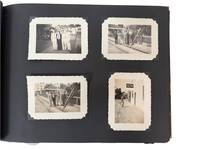
1910réf. 209951910. Photo album documenting the travels of a young woman and her companions through California Colorado and Texas during the 1910s and 1920s preserving visual evidence of female leisure travel outdoor recreation and tourism in the early twentieth-century American West. The album captures a period when increasing mobility expanding rail and automobile tourism and changing social expectations allowed middle-class women greater participation in recreational travel and outdoor activity. Particularly notable are photographs depicting women in trousers and climbing attire during excursions in Colorado including two images of the album's owner dressed in men's clothing reflecting evolving attitudes toward women's physical independence and informal dress within recreational settings. The photographs provide primary-source documentation of tourism culture women's social life regional landscapes and everyday travel experiences across the American West during the interwar period. Album containing 72 mounted black-and-white and sepia-toned silver gelatin photographs affixed to black album leaves. Photographs range in size from approximately 1 x 4.5 inches to 3.5 x 5.5 inches with most measuring about 2.5 x 4.5 inches. Early photographs depict the album owner and companions at Exposition Park in Los Angeles and along California beaches including scenes of young adults posing casually outdoors and a young man in a sailor's uniform among the group. Subsequent photographs document travel through Colorado featuring views of Garden of the Gods Pike's Peak mountain landscapes rock formations and hiking excursions. Several images show women climbing among rocky terrain while wearing trousers jackets and practical outdoor clothing associated with recreational mountaineering and travel. The Texas portion of the album includes photographs of Mission Espada in San Antonio and additional Spanish colonial architecture in southern Texas alongside informal portraits of travelers posed before mission buildings and landscaped grounds. Throughout the album the travelers appear in fashionable clothing characteristic of the 1920s including dresses hats coats and leisurewear. The final leaves contain images of puppies livestock and a contemporary automobile possibly documenting the owner's return home after her travels. Handwritten notes tucked into the rear of the album list rooms and furnishings associated with a house interior. The album documents the expansion of tourism culture and personal mobility in the American West during the early twentieth century when scenic travel destinations in California and Colorado became increasingly accessible to middle-class travelers through improved transportation infrastructure and growing interest in outdoor recreation. The inclusion of women participating in hiking and climbing activities while wearing unconventional attire for the period provides additional insight into changing gender norms associated with travel and leisure. String-bound in black cloth boards stamped "Photographs" in gilt on the front cover. Two photographs detached from leaves but present. Otherwise very good condition overall. Well-preserved photographic record of women's travel and recreation in the American West during the early twentieth century. unknown
1910réf. 209951910. Photo album documenting the travels of a young woman and her companions through California Colorado and Texas during the 1910s and 1920s preserving visual evidence of female leisure travel outdoor recreation and tourism in the early twentieth-century American West. The album captures a period when increasing mobility expanding rail and automobile tourism and changing social expectations allowed middle-class women greater participation in recreational travel and outdoor activity. Particularly notable are photographs depicting women in trousers and climbing attire during excursions in Colorado including two images of the album's owner dressed in men's clothing reflecting evolving attitudes toward women's physical independence and informal dress within recreational settings. The photographs provide primary-source documentation of tourism culture women's social life regional landscapes and everyday travel experiences across the American West during the interwar period. Album containing 72 mounted black-and-white and sepia-toned silver gelatin photographs affixed to black album leaves. Photographs range in size from approximately 1 x 4.5 inches to 3.5 x 5.5 inches with most measuring about 2.5 x 4.5 inches. Early photographs depict the album owner and companions at Exposition Park in Los Angeles and along California beaches including scenes of young adults posing casually outdoors and a young man in a sailor's uniform among the group. Subsequent photographs document travel through Colorado featuring views of Garden of the Gods Pike's Peak mountain landscapes rock formations and hiking excursions. Several images show women climbing among rocky terrain while wearing trousers jackets and practical outdoor clothing associated with recreational mountaineering and travel. The Texas portion of the album includes photographs of Mission Espada in San Antonio and additional Spanish colonial architecture in southern Texas alongside informal portraits of travelers posed before mission buildings and landscaped grounds. Throughout the album the travelers appear in fashionable clothing characteristic of the 1920s including dresses hats coats and leisurewear. The final leaves contain images of puppies livestock and a contemporary automobile possibly documenting the owner's return home after her travels. Handwritten notes tucked into the rear of the album list rooms and furnishings associated with a house interior. The album documents the expansion of tourism culture and personal mobility in the American West during the early twentieth century when scenic travel destinations in California and Colorado became increasingly accessible to middle-class travelers through improved transportation infrastructure and growing interest in outdoor recreation. The inclusion of women participating in hiking and climbing activities while wearing unconventional attire for the period provides additional insight into changing gender norms associated with travel and leisure. String-bound in black cloth boards stamped "Photographs" in gilt on the front cover. Two photographs detached from leaves but present. Otherwise very good condition overall. Well-preserved photographic record of women's travel and recreation in the American West during the early twentieth century. unknown books
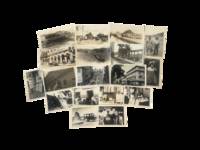
1900réf. 225611900. Panama City and Canal Zone postcard archive early twentieth century documents Panama during the period of canal construction U.S. administration and rapid urban change. The group supports research into Latin American urban history U.S.-Panama relations imperial infrastructure tourism imagery and the visual presentation of Panama as both a modern canal corridor and a city layered with Spanish colonial remains. Its value rests in the combination of engineering views civic streetscapes religious architecture harbor scenes and public entertainment sites. Fifteen sepia-toned real photo postcards each approximately 3.5 x 5.5 inches with many captions printed in the negative. Canal and infrastructure subjects include "Opening Gates Pedro Miguel Locks" "Miraflores Locks Panama Canal" and a Pacific-side vista of the canal works. Urban views include the "American Cabaret" façade with pedestrians the Panama City railway station with carriages at the entrance Cathedral Plaza from street-level and elevated perspectives panoramic views of the city grid ships moored at Balboa harbor and a bullfighting ring. Colonial and religious subjects include the Golden Altar of San José and ruins identified as the Old Spanish Fort tower. The archive captures a specific visual record of Panama at the intersection of Latin American civic life Spanish colonial memory and U.S.-directed global infrastructure. Minor handling wear and faint edge toning to some postcards; images crisp and clean; overall very good condition. A compact and varied photographic record of Panama City and the Canal Zone during a decisive period in the history of urban modernization and interoceanic commerce. unknown
1900réf. 225611900. Panama City and Canal Zone postcard archive early twentieth century documents Panama during the period of canal construction U.S. administration and rapid urban change. The group supports research into Latin American urban history U.S.-Panama relations imperial infrastructure tourism imagery and the visual presentation of Panama as both a modern canal corridor and a city layered with Spanish colonial remains. Its value rests in the combination of engineering views civic streetscapes religious architecture harbor scenes and public entertainment sites. Fifteen sepia-toned real photo postcards each approximately 3.5 x 5.5 inches with many captions printed in the negative. Canal and infrastructure subjects include "Opening Gates Pedro Miguel Locks" "Miraflores Locks Panama Canal" and a Pacific-side vista of the canal works. Urban views include the "American Cabaret" façade with pedestrians the Panama City railway station with carriages at the entrance Cathedral Plaza from street-level and elevated perspectives panoramic views of the city grid ships moored at Balboa harbor and a bullfighting ring. Colonial and religious subjects include the Golden Altar of San José and ruins identified as the Old Spanish Fort tower. The archive captures a specific visual record of Panama at the intersection of Latin American civic life Spanish colonial memory and U.S.-directed global infrastructure. Minor handling wear and faint edge toning to some postcards; images crisp and clean; overall very good condition. A compact and varied photographic record of Panama City and the Canal Zone during a decisive period in the history of urban modernization and interoceanic commerce. unknown books
1996réf. 210481996. Collection of five Fodor's gay travel guides published between 1996 and 2001 documenting LGBTQ travel culture and the geography of queer social life in the late twentieth century. Produced during a period when openly gay and lesbian travelers frequently relied upon specialized print resources to identify welcoming public accommodations and avoid hostile environments the guides reflect the cultural infrastructure of queer mobility before the widespread adoption of internet-based travel platforms. The books document networks of bars hotels cafés bookstores resorts nightlife venues and community spaces serving gay and lesbian clientele across the United States and Canada preserving evidence of many establishments that have since closed or disappeared. As such the guides now function not only as travel manuals but also as historical records of LGBTQ commercial and social geography during the 1990s and early 2000s. Collection consists of five paperback travel guides most measuring approximately 5 x 9 inches organized by city state and region with detailed listings of gay- and lesbian-friendly businesses addresses telephone numbers maps travel tips and commentary on local LGBTQ culture. 1 Collins Andrew. Fodor's Gay Guide to the USA. New York: Fodor's Travel Publications 1996. First edition. 497 pages. Comprehensive nationwide guide covering approximately forty cities and destinations with listings for bars hotels restaurants bookstores nightlife venues and community resources catering to gay and lesbian travelers. 2 Collins Andrew. Fodor's Gay Guide to New York City. New York: Fodor's Travel Publications 1997. First edition. 187 pages. Includes coverage of New York City together with surrounding destinations such as Fire Island and New Hope Pennsylvania emphasizing hotels inns cafés restaurants nightlife and local cultural commentary from an LGBTQ perspective. 3 Collins Andrew. Fodor's Gay Guide to San Francisco and the Bay Area. New York: Fodor's Travel Publications 1997. First edition. 166 pages. Covers San Francisco San Jose Santa Cruz Monterey Wine Country and the Russian River area with extensive discussion of gay and lesbian social life tourism and cultural institutions in Northern California. 4 Collins Andrew. Fodor's Gay Guide to the USA. New York: Fodor's Travel Publications 1998. Second edition. Expanded national guide featuring maps destination overviews and updated regional listings for queer-friendly businesses and accommodations throughout the United States. 5 Collins Andrew. Fodor's Gay Guide to the USA. New York: Fodor's Travel Publications 2001. Third edition. 676 pages. Revised and expanded edition including thousands of listings for accommodations restaurants bars and nightlife venues throughout the United States and Canada. Published during years when discrimination against LGBTQ travelers remained widespread and legal protections varied dramatically by region these guides helped queer individuals navigate unfamiliar spaces while also strengthening broader community networks through travel and tourism. Their detailed business listings now preserve documentary evidence for numerous LGBTQ establishments and gathering spaces that no longer exist making the guides valuable records of late twentieth-century queer urban and commercial history. Minor handling wear throughout. Overall very good condition. Substantial archive documenting LGBTQ travel networks and the printed infrastructure of queer community life before the digital era. unknown
1996réf. 210481996. Collection of five Fodor's gay travel guides published between 1996 and 2001 documenting LGBTQ travel culture and the geography of queer social life in the late twentieth century. Produced during a period when openly gay and lesbian travelers frequently relied upon specialized print resources to identify welcoming public accommodations and avoid hostile environments the guides reflect the cultural infrastructure of queer mobility before the widespread adoption of internet-based travel platforms. The books document networks of bars hotels cafés bookstores resorts nightlife venues and community spaces serving gay and lesbian clientele across the United States and Canada preserving evidence of many establishments that have since closed or disappeared. As such the guides now function not only as travel manuals but also as historical records of LGBTQ commercial and social geography during the 1990s and early 2000s. Collection consists of five paperback travel guides most measuring approximately 5 x 9 inches organized by city state and region with detailed listings of gay- and lesbian-friendly businesses addresses telephone numbers maps travel tips and commentary on local LGBTQ culture. 1 Collins Andrew. Fodor's Gay Guide to the USA. New York: Fodor's Travel Publications 1996. First edition. 497 pages. Comprehensive nationwide guide covering approximately forty cities and destinations with listings for bars hotels restaurants bookstores nightlife venues and community resources catering to gay and lesbian travelers. 2 Collins Andrew. Fodor's Gay Guide to New York City. New York: Fodor's Travel Publications 1997. First edition. 187 pages. Includes coverage of New York City together with surrounding destinations such as Fire Island and New Hope Pennsylvania emphasizing hotels inns cafés restaurants nightlife and local cultural commentary from an LGBTQ perspective. 3 Collins Andrew. Fodor's Gay Guide to San Francisco and the Bay Area. New York: Fodor's Travel Publications 1997. First edition. 166 pages. Covers San Francisco San Jose Santa Cruz Monterey Wine Country and the Russian River area with extensive discussion of gay and lesbian social life tourism and cultural institutions in Northern California. 4 Collins Andrew. Fodor's Gay Guide to the USA. New York: Fodor's Travel Publications 1998. Second edition. Expanded national guide featuring maps destination overviews and updated regional listings for queer-friendly businesses and accommodations throughout the United States. 5 Collins Andrew. Fodor's Gay Guide to the USA. New York: Fodor's Travel Publications 2001. Third edition. 676 pages. Revised and expanded edition including thousands of listings for accommodations restaurants bars and nightlife venues throughout the United States and Canada. Published during years when discrimination against LGBTQ travelers remained widespread and legal protections varied dramatically by region these guides helped queer individuals navigate unfamiliar spaces while also strengthening broader community networks through travel and tourism. Their detailed business listings now preserve documentary evidence for numerous LGBTQ establishments and gathering spaces that no longer exist making the guides valuable records of late twentieth-century queer urban and commercial history. Minor handling wear throughout. Overall very good condition. Substantial archive documenting LGBTQ travel networks and the printed infrastructure of queer community life before the digital era. unknown books
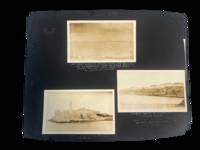
1920réf. 227281920. Havana Cuba travel photo album circa 1920s documents an American visitor's encounter with Havana during the interwar years when U.S. tourism commercial presence and Spanish-American War memory shaped how many American travelers interpreted the city. The vernacular photographs record arrival by steamship harbor landmarks civic buildings commercial streets factories boulevards monuments cemeteries and guarded public spaces giving insight into both Havana's urban landscape and the traveler's assumptions about access history and spectacle. The album's references to the USS Maine and Spanish-American War memorials place ordinary sightseeing within a longer history of U.S. intervention in Cuba; the Maine exploded in Havana Harbor on February 15 1898 killing more than 260 sailors and intensifying the crisis that led to war with Spain. Approximately 25 sepia-toned silver gelatin photographs each about 3 x 5 inches mounted to black album leaves with detailed handwritten captions in white pencil. The sequence begins aboard the S.S. Kroonland with one caption reading "My first view of Havana from the deck. three miles out at sea in a dark storm" followed by a landing view captioned "where we landed in Havana Cuba." The S.S. Kroonland returned to Panama Pacific Line service in 1923 on a New York to San Francisco route via Havana the Panama Canal and Los Angeles supporting the album's interwar travel context. The photographs then trace Havana's maritime and civic topography: harbor views Morro Castle captioned "Famous during the Spanish-American War" the waterfront in front of the fortress the Court House the President's Palace a "600-year-old church" the Henry Clay Cigar Store Havana's factory district and public boulevards "where all streets have parks in the center." Other images include a cemetery visit captioned "All people in Cuba are laid to rest above the ground" and a restricted-view street or carriage scene captioned "Officer would not let me take picture but when he turned I took it anyway" a revealing note on tourist privilege and unauthorized looking. Several images directly record the ways American travelers consumed Havana through imperial memory and Cuban nationalist commemoration. One monument is captioned "This was given by the Cuban people to the American soldiers that fell in the Spanish-American War" while another marks "the spot where the Maine sank at the entrance of the harbor." The album was made after Cuba's formal independence in 1902 and during the long aftermath of the Platt Amendment framework under which the United States retained extensive influence over Cuban affairs and intervened repeatedly in the early twentieth century. Album leaves chipped at edges several with corner losses not affecting images; prints generally sharp with strong contrast and clear annotations very good overall. Socially revealing Havana travel album documenting how a U.S. visitor pictured Cuba through steamship tourism colonial architecture cigar commerce Spanish-American War remembrance and the everyday authority structures of an interwar Caribbean capital. unknown
1920réf. 227281920. Havana Cuba travel photo album circa 1920s documents an American visitor's encounter with Havana during the interwar years when U.S. tourism commercial presence and Spanish-American War memory shaped how many American travelers interpreted the city. The vernacular photographs record arrival by steamship harbor landmarks civic buildings commercial streets factories boulevards monuments cemeteries and guarded public spaces giving insight into both Havana's urban landscape and the traveler's assumptions about access history and spectacle. The album's references to the USS Maine and Spanish-American War memorials place ordinary sightseeing within a longer history of U.S. intervention in Cuba; the Maine exploded in Havana Harbor on February 15 1898 killing more than 260 sailors and intensifying the crisis that led to war with Spain. Approximately 25 sepia-toned silver gelatin photographs each about 3 x 5 inches mounted to black album leaves with detailed handwritten captions in white pencil. The sequence begins aboard the S.S. Kroonland with one caption reading "My first view of Havana from the deck. three miles out at sea in a dark storm" followed by a landing view captioned "where we landed in Havana Cuba." The S.S. Kroonland returned to Panama Pacific Line service in 1923 on a New York to San Francisco route via Havana the Panama Canal and Los Angeles supporting the album's interwar travel context. The photographs then trace Havana's maritime and civic topography: harbor views Morro Castle captioned "Famous during the Spanish-American War" the waterfront in front of the fortress the Court House the President's Palace a "600-year-old church" the Henry Clay Cigar Store Havana's factory district and public boulevards "where all streets have parks in the center." Other images include a cemetery visit captioned "All people in Cuba are laid to rest above the ground" and a restricted-view street or carriage scene captioned "Officer would not let me take picture but when he turned I took it anyway" a revealing note on tourist privilege and unauthorized looking. Several images directly record the ways American travelers consumed Havana through imperial memory and Cuban nationalist commemoration. One monument is captioned "This was given by the Cuban people to the American soldiers that fell in the Spanish-American War" while another marks "the spot where the Maine sank at the entrance of the harbor." The album was made after Cuba's formal independence in 1902 and during the long aftermath of the Platt Amendment framework under which the United States retained extensive influence over Cuban affairs and intervened repeatedly in the early twentieth century. Album leaves chipped at edges several with corner losses not affecting images; prints generally sharp with strong contrast and clear annotations very good overall. Socially revealing Havana travel album documenting how a U.S. visitor pictured Cuba through steamship tourism colonial architecture cigar commerce Spanish-American War remembrance and the everyday authority structures of an interwar Caribbean capital. unknown books
1958réf. 237661958. Mexico travel photo album containing more than 150 photographs 1958 to 1961 documenting an American journey through cities coastal settlements fishing communities archaeological and historic sites markets and rural landscapes during the rapid expansion of postwar tourism to Mexico. The photographer traveled well beyond a single resort itinerary recording Guadalajara Guaymas San Blas Tequila Acapulco Cozumel and other locations while repeatedly turning the camera toward local residents vernacular buildings working waterfronts boats vegetation and roadside landscapes. Printed processing dates of "Dec. 58" and "Jan. 61" establish at least two photographic episodes while handwritten captions trace portions of the route and identify places and people encountered along it. Travel photo album of more than 150 color and black and white snapshots most approximately 3.5 x 3.5 inches Mexico and one page at an unidentified Southeast Asian location 1958 to 1961. The Mexico photographs range from city streets and groups of travelers to fishing boats harbors lagoons markets mountains tropical vegetation stone buildings construction archaeological or historic architecture and portraits of local residents. Handwritten captions identify "San Blas" "Guadalajara" "Guaymas" "Travel thru Mexico" "Tequila" "Cuernavaca" "Lerma Cozumel" and "Acapulco Cozumel '61" while another photograph of three women wearing traditional dress is captioned "Mayan women." A photograph identified "Tequila" records an open landscape and roadside setting while the Guaymas sequence includes fishing vessels and a man standing among their masts and rigging. Other images follow waterways by small boat showing passengers settlements along the banks dense tropical growth and working boats. The photographer also recorded companions and acquaintances including a man identified in a caption apparently reading "Ralph Glad hill" as well as paired portraits captioned "Lerma Cozumel" and "Bathing 30 '61." A group of black and white photographs records stone structures in varying states of construction or repair including one view captioned "My house as purchased." The final approximately ten photographs depart abruptly from the Mexican itinerary and depict an unidentified Southeast Asian village or settlement. The album belongs to a period when Mexico had become one of the principal foreign destinations for American travelers following decades of government investment in highways hotels archaeological tourism resort development and international promotion. By the late 1950s and early 1960s improved road and air connections allowed foreign visitors to construct itineraries extending from major cities into Pacific ports smaller towns archaeological sites and newly developing coastal destinations. The photographs register that mobility directly: named tourist centers sit beside fishing communities working harbors rural roads vernacular houses market activity and portraits of residents encountered during travel. Moderate handling wear to the album and mounts; photographs with occasional fading color shift surface wear and minor edge wear with several color prints showing pronounced red or magenta shift. Overall in good condition. A substantial photographic record of postwar American travel through Mexico preserving the movement between established tourist destinations and local communities before mass international tourism transformed many of the coastal places represented here. unknown
1958réf. 237661958. Mexico travel photo album containing more than 150 photographs 1958 to 1961 documenting an American journey through cities coastal settlements fishing communities archaeological and historic sites markets and rural landscapes during the rapid expansion of postwar tourism to Mexico. The photographer traveled well beyond a single resort itinerary recording Guadalajara Guaymas San Blas Tequila Acapulco Cozumel and other locations while repeatedly turning the camera toward local residents vernacular buildings working waterfronts boats vegetation and roadside landscapes. Printed processing dates of "Dec. 58" and "Jan. 61" establish at least two photographic episodes while handwritten captions trace portions of the route and identify places and people encountered along it. Travel photo album of more than 150 color and black and white snapshots most approximately 3.5 x 3.5 inches Mexico and one page at an unidentified Southeast Asian location 1958 to 1961. The Mexico photographs range from city streets and groups of travelers to fishing boats harbors lagoons markets mountains tropical vegetation stone buildings construction archaeological or historic architecture and portraits of local residents. Handwritten captions identify "San Blas" "Guadalajara" "Guaymas" "Travel thru Mexico" "Tequila" "Cuernavaca" "Lerma Cozumel" and "Acapulco Cozumel '61" while another photograph of three women wearing traditional dress is captioned "Mayan women." A photograph identified "Tequila" records an open landscape and roadside setting while the Guaymas sequence includes fishing vessels and a man standing among their masts and rigging. Other images follow waterways by small boat showing passengers settlements along the banks dense tropical growth and working boats. The photographer also recorded companions and acquaintances including a man identified in a caption apparently reading "Ralph Glad hill" as well as paired portraits captioned "Lerma Cozumel" and "Bathing 30 '61." A group of black and white photographs records stone structures in varying states of construction or repair including one view captioned "My house as purchased." The final approximately ten photographs depart abruptly from the Mexican itinerary and depict an unidentified Southeast Asian village or settlement. The album belongs to a period when Mexico had become one of the principal foreign destinations for American travelers following decades of government investment in highways hotels archaeological tourism resort development and international promotion. By the late 1950s and early 1960s improved road and air connections allowed foreign visitors to construct itineraries extending from major cities into Pacific ports smaller towns archaeological sites and newly developing coastal destinations. The photographs register that mobility directly: named tourist centers sit beside fishing communities working harbors rural roads vernacular houses market activity and portraits of residents encountered during travel. Moderate handling wear to the album and mounts; photographs with occasional fading color shift surface wear and minor edge wear with several color prints showing pronounced red or magenta shift. Overall in good condition. A substantial photographic record of postwar American travel through Mexico preserving the movement between established tourist destinations and local communities before mass international tourism transformed many of the coastal places represented here. unknown books
1886réf. 19413Avec une préface de Vigeant (datée 1887). Illustrations de Frédéric Régamey (1849-1925). Un frontispice, 11 compositions hors texte en 2 états et une vignette de titre.Édition originale tirée à 500 exemplaires. Celui-ci, un des 20 exemplaires de tête sur papier du Japon.Paris, A la Librairie illustrée - non daté (1886) - XVI et 243 pages. Ex-libris de la Bibliothèque de Jean Pierre Delhay, Maître d'Armes.Reliure demi basane brune marbrée à coins. Dos à nerfs orné de 2 fleurets croisés. Pièce de titre et d'auteur rouges et date en pied dorée (1886). Non rogné. Couverture illustrée et dos conservés. Pas de rousseur. Parfait état pour ce bel exemplaire bien relié. Format in-8°(23x16).Albert de SAINT-ALBIN (1843-1901), homme de lettres, vaudevilliste, rédacteur en chef du "Jockey", rédacteur au Figaro et chroniqueur sportif sous le pseudonyme de Robert Milton.Au moyen de cet ouvrage St. Albin nous fait faire la connaissance de presque toutes les salles d'armes de Paris, et nous décrit les méthodes et les mérites des différents maîtres et les qualités des meilleurs élèves. Par ses publications, St. Albin nous a donné une idée exacte et complète de l'escrime française à deux périodes distinctes et distantes l'une de l'autre de dix ans. Ses livres sont des documents qui resteront dans les bibliothèques des tireurs, car ils permettront de juger du passé et du présent, et de présager l'avenir de l'escrime en France, où l'art des armes est étudié et marche de progrès en progrès.
réf. 1911Couverture rigide 1ère Édition Editions Héracléia Monaco 37x28,5 cm
réf. 10373Avignon, François Girard & Dominique Seguin, 1738. In-8, (14)-320 pp., reliure plein vélin de réemploi, tranches rouges (reliure un peu frottée, restaurations anciennes à la page de titre, papier légèrement jauni). Ex libris armorié gravé portant la devise "Peregrinus Ubique".
réf. 6204"Lyon, Cormon et Blanc, an XIII (1805). Trois volumes in 12 cartonnages de l’époque (un peu usés aux coiffes et aux mors), VII, avertissement, 333 pp.; 300 pp.; 330 pp. + table. Avec des planches la plupart dépliantes."
réf. 3781Sans lieu ni date (milieu XIXème). Douze cartons 12 x 20 cm chromolithographiées.
réf. 3782Sans lieu ni date (milieu XIXème). Douze cartons 12 x 20 cm lithographiées en couleurs (manques à quatre carton).
1880réf. 2545Sans lieu, sans mention d'éditeur, sans date (circa 1880). Très belle boîte rectangulaire (13,5 x 8,5 cm) en carton, ornée d'une chromolithographie représentant un enfant domptant 2 lions dans un cercle central entouré d'animaux sauvages et domestiques. Elle était destinée à accueillir 12 chocolats individuels, eux-mêmes contenus dans de petits emballages en papier (2 x 4 cm), chacun illustré d'une chromolithographie représentant un animal : chien, tigre, rhinocéros, hippopotame, chameau, éléphant, mouton, ours blanc, sanglier, cerf, loup et boeuf. A la fin du XIXe siècle, les chocolatiers ne manquent pas d'imagination pour valoriser leurs produits et la chromolithographie offre un excellent moyen d'attirer l'oeil des gourmands ! Il suffit de faire appel à un imprimeur talentueux et créatif pour proposer des contenants originaux. Le style de ces charmants contenants laisse penser à ceux des éditeurs LB (Paris), J. Minot, F. Appel, Bognard ou encore Testu et Massin. De toute rareté, nous n'en avons trouvé aucune autre identique.
1880réf. 2544Sans lieu, sans mention d'éditeur, sans date (circa 1880). Très belle boîte rectangulaire (13,5 x 8,5 cm) en carton, ornée d'une chromolithographie représentant 4 enfants déguisés en train de s'amuser, destinée à accueillir 12 chocolats individuels, eux-mêmes contenus dans de petits emballages en papier (2 x 4 cm), chacun illustré d’une chromolithographie représentant un enfant jouant : ballon, chasse aux papillons, bulles de savon, cerceau, bilboquet, pantin, jeu du volant, éventail (pour faire voler une bulle), déclamation avec une fleur, assiette tournante, musique (mandoline et violon). A la fin du XIXe siècle, les chocolatiers ne manquent pas d'imagination pour valoriser leurs produits et la chromolithographie offre un excellent moyen d'attirer l'oeil des gourmands ! Il suffit de faire appel à un imprimeur talentueux et créatif pour proposer des contenants originaux. Le style de ces charmants contenants laisse penser à ceux des éditeurs LB (Paris), J. Minot, F. Appel, Bognard ou encore Testu et Massin. De toute rareté, nous n'en avons trouvé aucune autre identique.
1880réf. 2543Sans lieu, sans mention d'éditeur, sans date (circa 1880). Très belle boîte rectangulaire (13,5 x 8,5 cm) en carton, ornée d'une chromolithographie intitulée "Les Grands Concerts", destinée à accueillir 12 chocolats individuels, eux-mêmes contenus dans de petits emballages en papier (2 x 4 cm), chacun illustré d’une représentant un musicien. Le nom des instruments de musique est indiqué au verso : violon, basson, tambour, trombone, harpe, hautbois, flûte, cor, cymbales, grosse caisse, piston et clarinette. A la fin du XIXe siècle, les chocolatiers ne manquent pas d'imagination pour valoriser leurs produits et la chromolithographie offre un excellent moyen d'attirer l'oeil des gourmands ! Il suffit de faire appel à un imprimeur talentueux et créatif pour proposer des contenants originaux. Le style de ces charmants contenants laisse penser à ceux des éditeurs LB (Paris), J. Minot, F. Appel, Bognard ou encore Testu et Massin. De toute rareté, nous n'en avons trouvé aucune autre identique.
réf. 9987P., Horizons de France, sans date (1932). Deux tomes en 15 fascicules in 4° en demi-toile éditeur, avec sur les premiers plats, les 15 couvertures originales. Illustré des photographies de François Kollar reproduites en héliogravure. Préface de Paul Valéry., 428 et 420 pp.
réf. 9805Début XIXème siècle. In 8 de 855 pages percalines, chiffré B.P. Avec une table des chansons.
réf. 23272Paris, Louis Westhausser, [vers 1898]. In-4, [6] ff. découpés en trois bandes, broché, couverture originale illustrée (couverture un peu empoussiérée, quelques frottements, quelques rousseurs marginales).
réf. 23273Paris, Louis Westhausser, [vers 1898]. In-4, [6] ff. découpés en trois bandes, broché, couverture originale illustrée (couverture un peu empoussiérée, quelques frottements, quelques rousseurs marginales).